Hitting mid-June saw birds which push the boundaries and break the rules come to the fore this week, a period that also gave rise to the rediscovery of what had initially been believed to be only a flyover Purple Heron … all of which placed the focus squarely on Summer Leys.
There was also an element of déjà vu as far as wildfowl were concerned, namely in the shape of the female Ruddy Shelduck still present at Winwick Pools on 12th and the drake Red-crested Pochard seeing another week out at Pitsford Res.
June is renowned as the month for Quail and, following this year’s first at Blueberry Farm on 2nd, two more were heard this week. The first was during the twenty-fourth hour of 10th, picked up in flight over Higham Ferrers, while the other was near Cottesbrooke, in an area with no public access, on 16th. Seeing one, of course, is a different matter entirely and presents a challenge which is rarely successfully accomplished.
Mid-June is also the time when wader numbers bottom out and, to prove the point, a Black-tailed Godwit appeared as a one-day bird at Stanwick GP on 11th, while an Avocet was reported on the dam at Pitsford, briefly, on 16th.
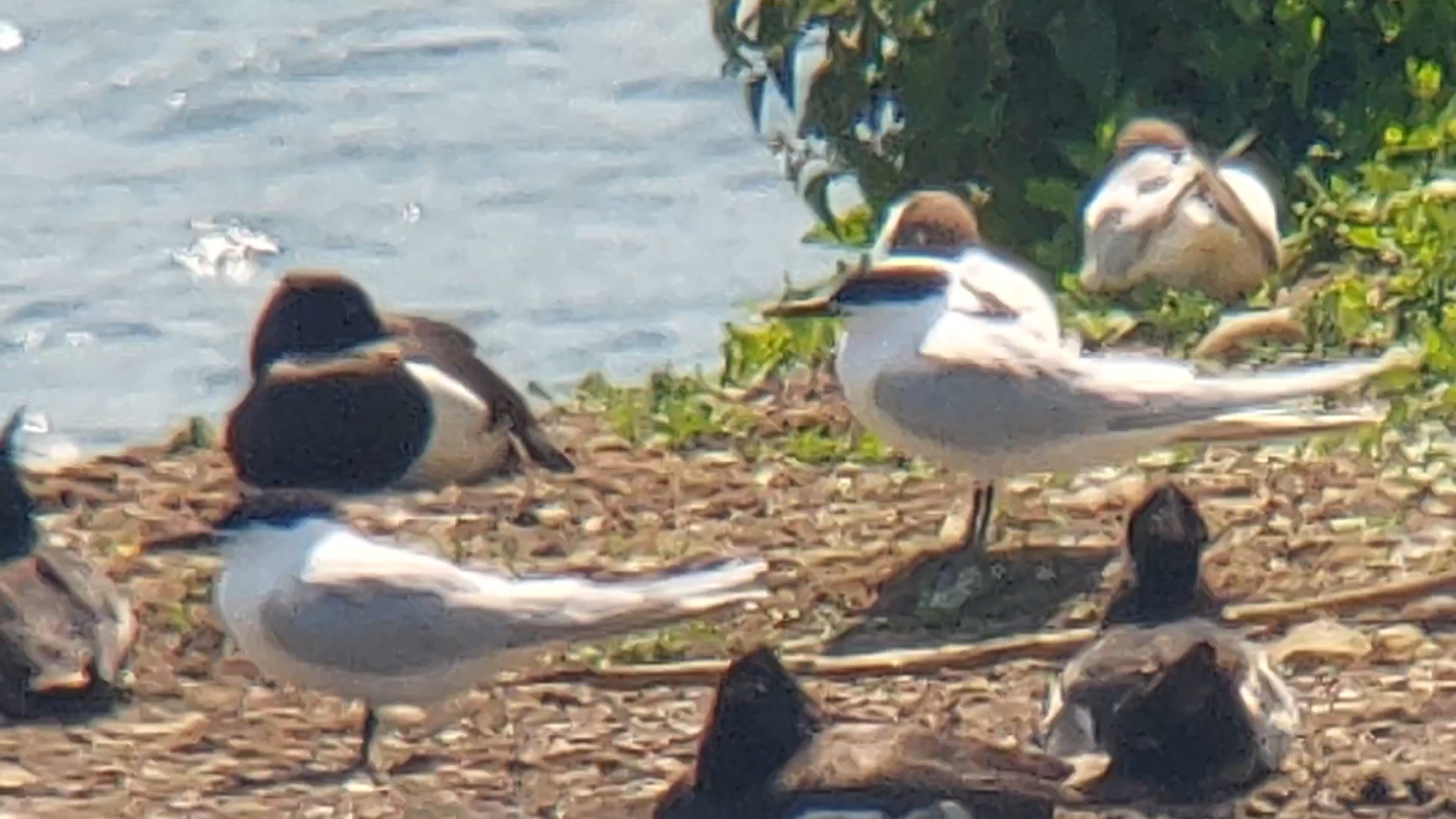
Pitsford also produced an adult Yellow-legged Gull on 11th but it was Thrapston GP’s Titchmarsh LNR that delivered the year’s only Sandwich Terns so far, bizarrely late, on 13th. There have been far fewer than is typical inland across the UK this spring.
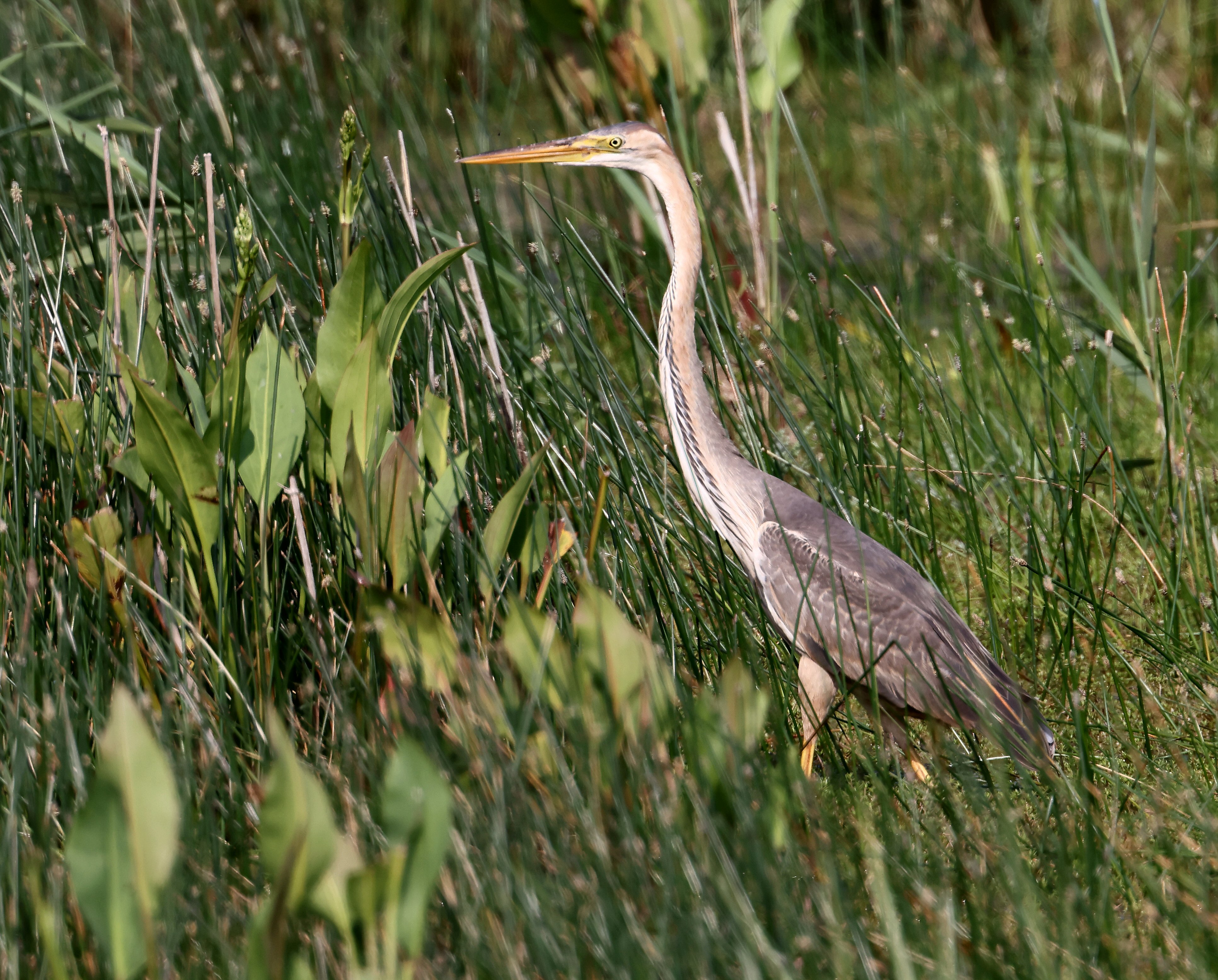
Once again, though, it was good ol’ Summer Leys which delivered the period’s best birds. With the previous week’s flyover Purple Heron, two days before the weekend, on 8th, there it was again on 10th – this time on terra firma, considerately choosing the Scrape as its favoured feeding area. It went on to spend the next four days there – more in than out of the reeds – but with patience, or just plain good luck and timing, local, and some not so local, birders connected and went away happy.



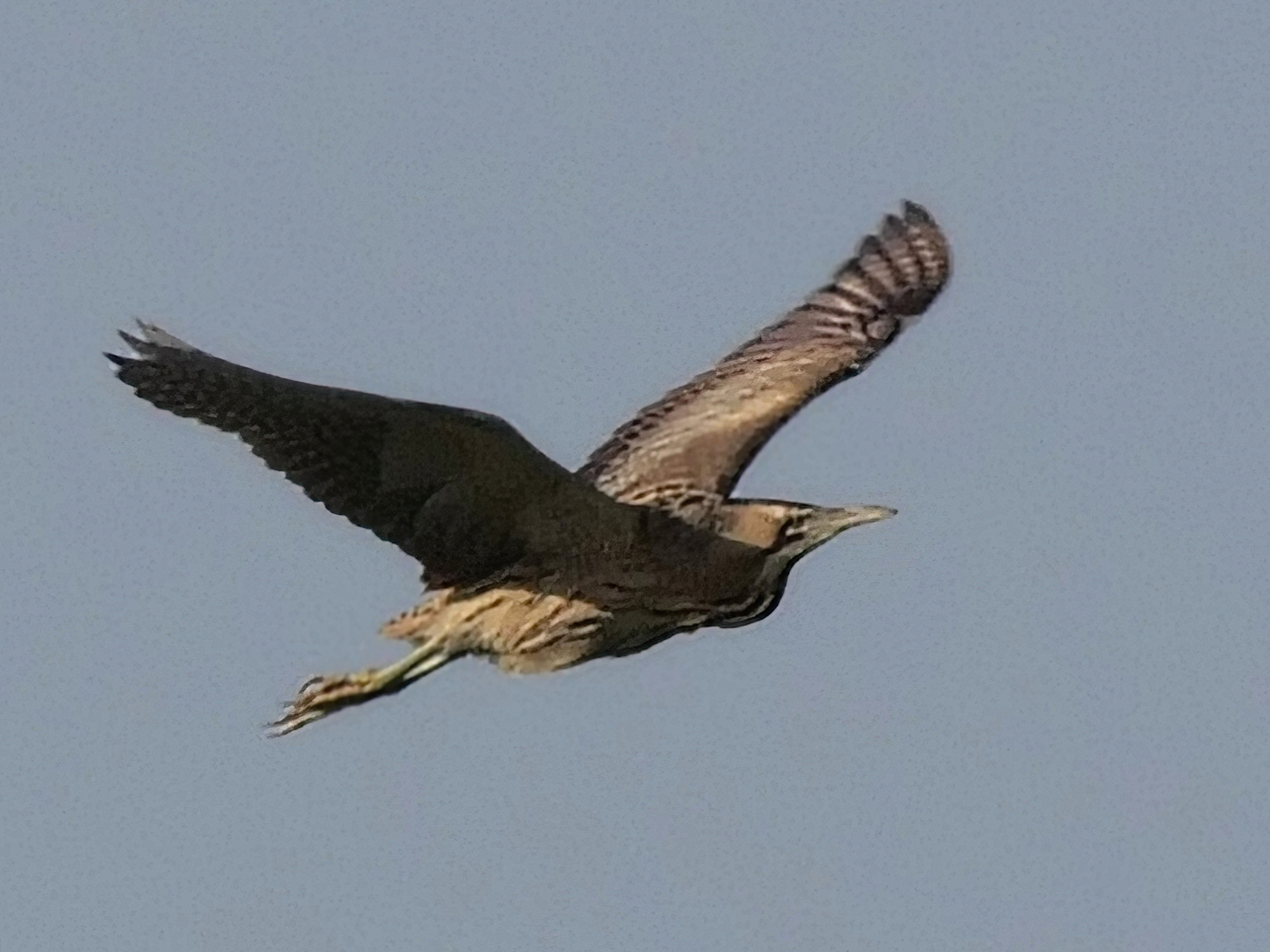
At the same locality and somewhat overshadowed by the above, was a Bittern that appeared briefly on the Scrape on 10th and again on 12th, before flying off west. This is a species which, over the past few years, has pushed the boundaries by being seen with increasing frequency during spring and summer, i.e. outside of its established autumn/winter occurrence pattern. It has yet to become a proven breeder in the county, but with plenty of suitable habitat locally and a UK population which is clearly on the up, the day surely can’t be that far away.

The week’s raptors were kept afloat by single Ospreys at Hollowell Res and Titchmarsh LNR – both on 15th and, back at Summer Leys, a Marsh Harrier on 10th.
Which brings us neatly to the other rule-breaker of the week: Bearded Tit, a female of which was seen at Summer Leys on 10th, with a possible second bird present, too. As another bird with an autumn/winter occurrence pattern, tentatively, this may be the first June record for the county. This species breeds in Bedfordshire, at Marston Vale, a mere 25 km SSE of Summer Leys, as the Beardie flies. How long before they breed in Northants …
A Common Redstart on the northern outskirts of Kettering on 14th seems likely to be an early southbound migrant, while two Crossbills flying over Fineshade Wood on 10th, two west over Wellingborough on 12th and two or three at Hanging Houghton on 14th also suggest an ‘autumn’ movement is also in the early stages for this species, too.

Discover more from Northants birds
Subscribe to get the latest posts sent to your email.

 Northants birds