While the Jetstream remained well to the south of the UK, ushering in a series of low pressure systems with attendant unsettled weather, there was clear evidence that autumn passage was now well underway on all fronts.
Against a background of slowly building numbers of wildfowl, two Barnacle Geese constituted a barrel-scrapingly desperate find at Clifford Hill GP on 12th – a frustratingly feral ‘C-list’ bird, on the cusp of not even being mentioned … While not in quite the same category but receiving ever-enduring short shrift from the masses, the Hollowell Ruddy Shelduck remained throughout the period.
Meanwhile, Garganey numbers were up on last week, with two new birds appearing – one at Daventry CP and the other at Thrapston GP – both on 10th. New in at Stanford Res was a female Red-crested Pochard on 11th, also seeing out the period there.
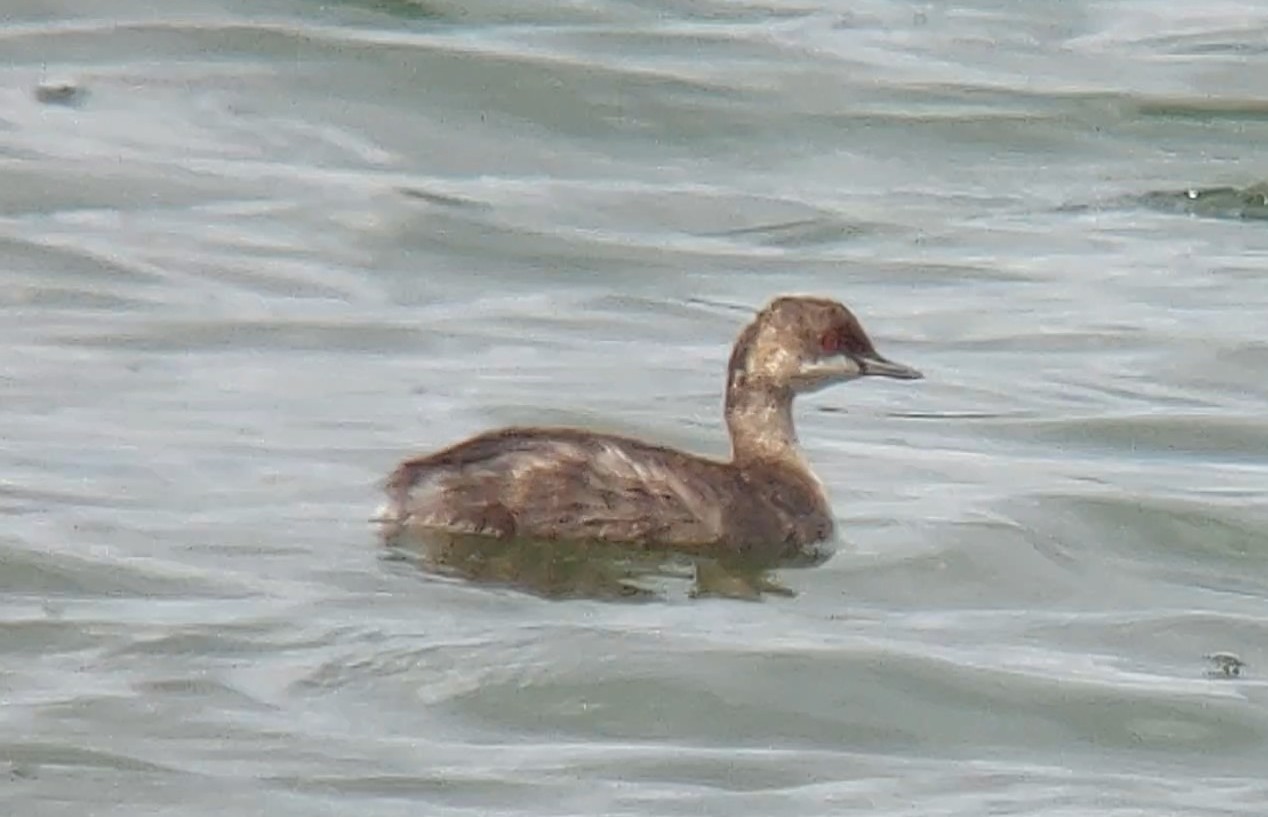
Easily upstaging all of those above, though, was a flock of four Black-necked Grebes discovered at Thrapston GP’s Titchmarsh LNR on 12th. The flock comprised one adult and three recently fledged juveniles in various stages of moult, with only the juveniles remaining there the following day. Four is not unprecedented but the July date is early – this species normally making its first autumn appearance during the latter part of August.


With wader passage already well underway, the first Whimbrel of the autumn was picked up flying west over Stanford on 11th, while the movement of Black-tailed Godwits continued unabated with singles at Hollowell on 8th, Stanford on 9th and Summer Leys LNR on 10th. The latter date also saw three more at Stanford and two at Stanwick GP, where three were also present the following day. An adult male Ruff, briefly at Summer Leys on 9th, was also the first of the autumn while, hot on its heels there the following day, a Wood Sandpiper dropped in for good measure.

Summer Leys also produced a Greenshank on 10th but this species was not exclusively the preserve of the Leys – Hollowell also hung on to last week’s bird, which remained on 8th-9th, while it, or another, was there on 12th-14th.


The first Mediterranean Gull of the autumn was, unusually, an adult present briefly at Stanwick GP on 10th. The first juvenile is no doubt on the cards for the near future.
This week’s raptor slot was again occupied exclusively by Ospreys, which were seen at four localities, namely Hollowell, where two were present on 8th, Thrapston, where singles were fishing on 10th and 12th, while both Pitsford Res and Summer Leys produced birds on 12th.
One bird which, in recent years, has rocketed to red status as a result of the conservation initiatives stemming from its drastic UK decline, is Turtle Dove. Although there have been a handful of local records this year, their presence has been kept under wraps because of disturbance at possible breeding localities. One paid a flying visit to Earls Barton GP/Summer Leys on 8th but, unfortunately, it did not linger.
Making the briefest of comebacks following its wane in popularity, the male Bearded Tit resurfaced in the reedbed below the Fishing Lodge at Pitsford on 10th.
Another autumn ‘first’ was a Common Redstart at the favoured site of the hedgerow behind the Percy Pilcher monument, at Stanford on Avon, on 9th. This one was quickly followed by further singles at Harrington AF on 12th and Blueberry Farm, Maidwell on 12th-14th. And, to round off, Common Crossbills still seem to be coming, with at least six at Fermyn Woods CP on 10th.

Discover more from Northants birds
Subscribe to get the latest posts sent to your email.

 Northants birds