The last day of the period marked the start of meteorological autumn during a week that produced three top-notch birds, all of which were firsts for the year, although none of these was readily available to the masses …
Conversely, the Pink-footed Goose of somewhat ill repute provided easy pickings for at least three days at Hollowell Res, where the female Ruddy Shelduck was also present for one day, on 29th, before resurfacing at Foxholes Fisheries, Crick on 1st. Three Red-crested Pochards were found at Pitsford Res on 30th.
Also at Pitsford, a Black-necked Grebe arrived pretty much on cue for an established run of early autumn occurrences on the last day of the week.
This week’s waders were low in numbers in no uncertain terms but they at least pushed the variety envelope a little more beyond last week’s offering. Just one Black-tailed Godwit was found, at Ditchford GP’s Irthlingborough Lakes & Meadows LNR, on 29th, while the autumn’s second Turnstone was, well, simply turning stones on the shoreline near Wader Bay at Summer Leys LNR on 1st. Summer Leys also hung on to a Ruff all week, two being present there on 31st.
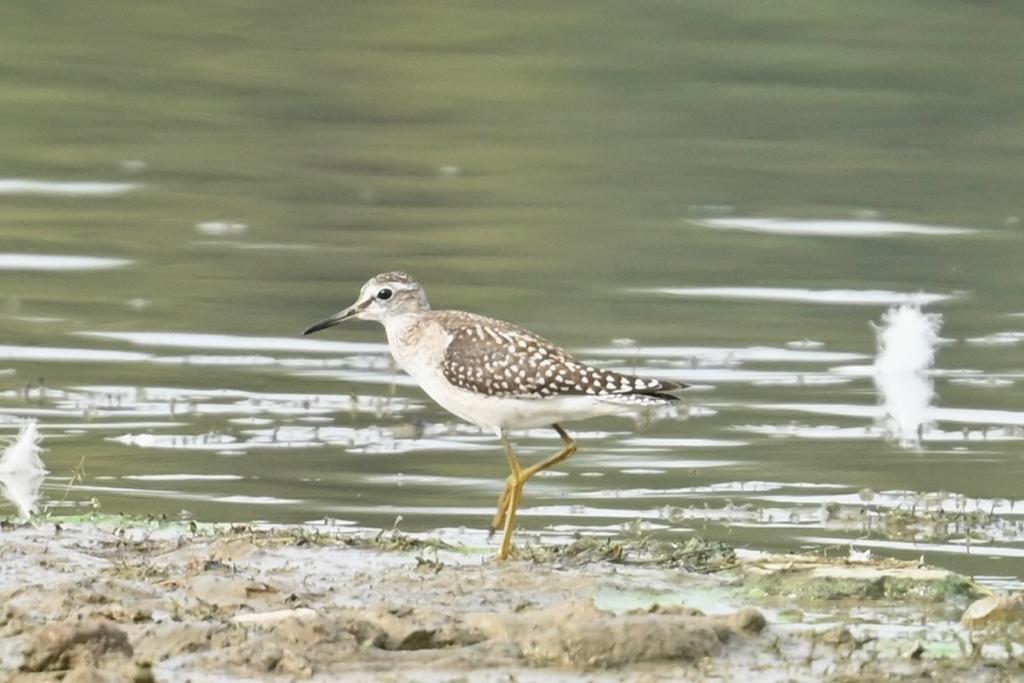
Arguably firsts for the autumn were Wood Sandpipers at three localities, which included two present only briefly at Stanwick GP on 28th and singles at Daventry CP and Hollowell on 31st and 1st, respectively. Prior to these, the last one was at Summer Leys on 10th July. Greenshanks this week were the sole preserve of Hollowell, where one on 28th was joined by a second bird from 29th to 1st.

A few more of the scarcer gulls came our way during the period, of which a juvenile/first-winter Mediterranean Gull off the dam at Pitsford on 31st was the best. Caspian Gulls were found at three localities, with single adults at Pitsford on 27th and near Ashton on 29th, while a juvenile visited Hollowell on 28th. Apart from an adult at Summer Leys on 26th, Pitsford produced all the Yellow-legged Gulls, with up to two seen there almost daily.
Terns of interest were limited to the single Black Tern, remaining from last week at Clifford Hill GP, on 26th.
Also just making it into the period was the Summer Leys Cattle Egret, which was still present on 26th but not thereafter. Two also remained at Stanwick until 29th.
Gliding into the world of raptors takes us straight to one of those aforementioned ‘firsts’ for the year in the shape of a Honey Buzzard, found by one lucky observer at Snorscombe, before gaining height towards Everdon Stubbs and drifting away to the north-east, on 26th. History has proven that late August is a prime time for connecting with this species in the county. But will there ever be a repeat of the events which took place in autumn 2000, when an amazing influx occurred in late September with literally hundreds of birds arriving on the east coasts of England and Scotland, before filtering down through the country over some two weeks. During this period, at least thirty-seven were seen in Northants between 22nd September and 2nd October. We can but dream …
More down to earth, though, was a sprinkling of Ospreys which included singles at Earls Barton GP on 26th, Summer Leys on 28th, Hollowell on 28th, 29th, 30th and 1st, and Clifford Hill GP on 30th.

Marsh Harrier numbers were up on last week with one seen north of the causeway at Pitsford on 27th and 29th-30th and further singles at Stanford Res on 27th and 31st, Harrington AF on 28th, Ditchford on 29th and Summer Leys on 1st.
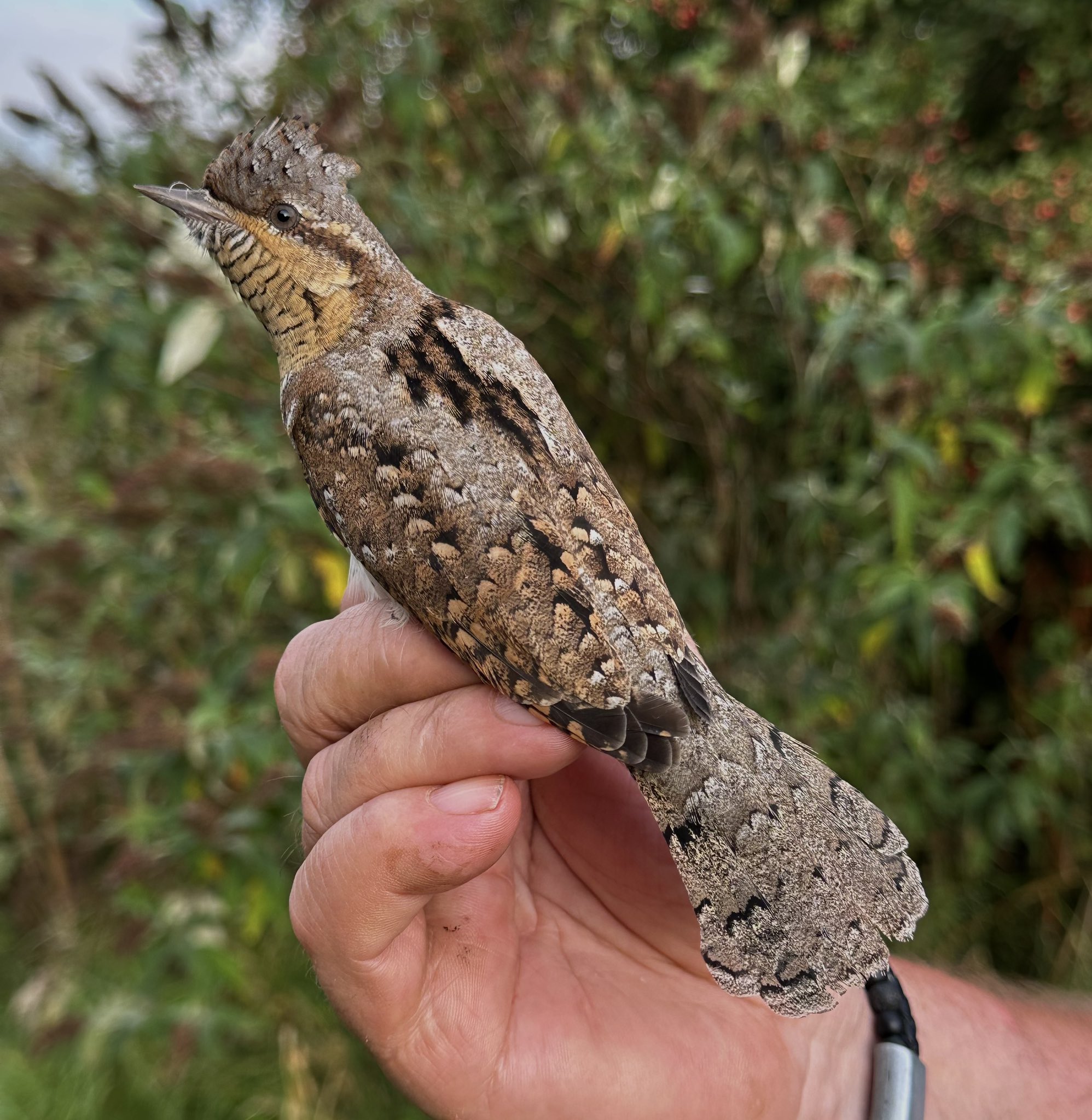
The next ‘first’ for the year was, somewhat predictably, a Wryneck, trapped and ringed at Stanford on 28th. ‘Predictably’ because this is the fourth consecutive autumn that the local ringing group has trapped one, taking the all-time total for this species ringed there to six, with nine records for the site in total.
Which takes us neatly on to the final ‘first’ for the year that appeared in the shape of a Nightjar discovered roosting on a wall at Great Harrowden. Alas, it wasn’t present the following day – a fly-by-night, if ever there was one. This species has become increasingly difficult to catch up with in the county over the last couple of decades but it surely breeds … somewhere …

The autumn’s first Merlin was seen near Hartwell – appropriately on 1st.
And this week’s passerine billing falls very much in line with the recently established trend. Kicking off with the rarest first, another Pied Flycatcher was found at Lamport on 26th, the same site being one of nine to also hold Common Redstarts as part of this autumn’s continuing and unparalleled run of records. Unsurprisingly, the Stanford Ringing Group trapped and ringed a further eleven – the highest day total being six on 26th – and, in addition to these, at least a further two were present on site. Blueberry Farm, Maidwell, where birds were seen daily, produced the next highest day count of four on 29th, followed by Harrington AF and Old with three apiece on 28th and 30th, respectively. Elsewhere, Brampton Valley, Clifford Hill, Duston and Pitsford held one/two birds each.

A further surge of Whinchats appearing in the county brought a high site total of five to Brampton Valley on 30th, with smaller numbers there on other dates throughout the period. A close second was Pitsford Res, where up to four were seen within spitting distance of the causeway, providing a popular draw for a number of local birders. Seven further localities produced one/two birds, including Blueberry Farm, Clifford Hill, Corby (two sites), Harrington, Kislingbury GP and Stanford.

Northern Wheatears were also well represented with site maxima of three in Brampton Valley on 26th, twos at Old on 26th, Harrington on 28th and Clifford Hill on 1st, and one at Hollowell on 30th.

Meanwhile, a trickle of Tree Pipits consisted of singles in flight over Harrington and Stanford on 26th and Pitsford on 29th. Fly-over Crossbills were also seen at Harrington, where there were two on 26th, and Blueberry on 29th.

Discover more from Northants birds
Subscribe to get the latest posts sent to your email.

 Northants birds