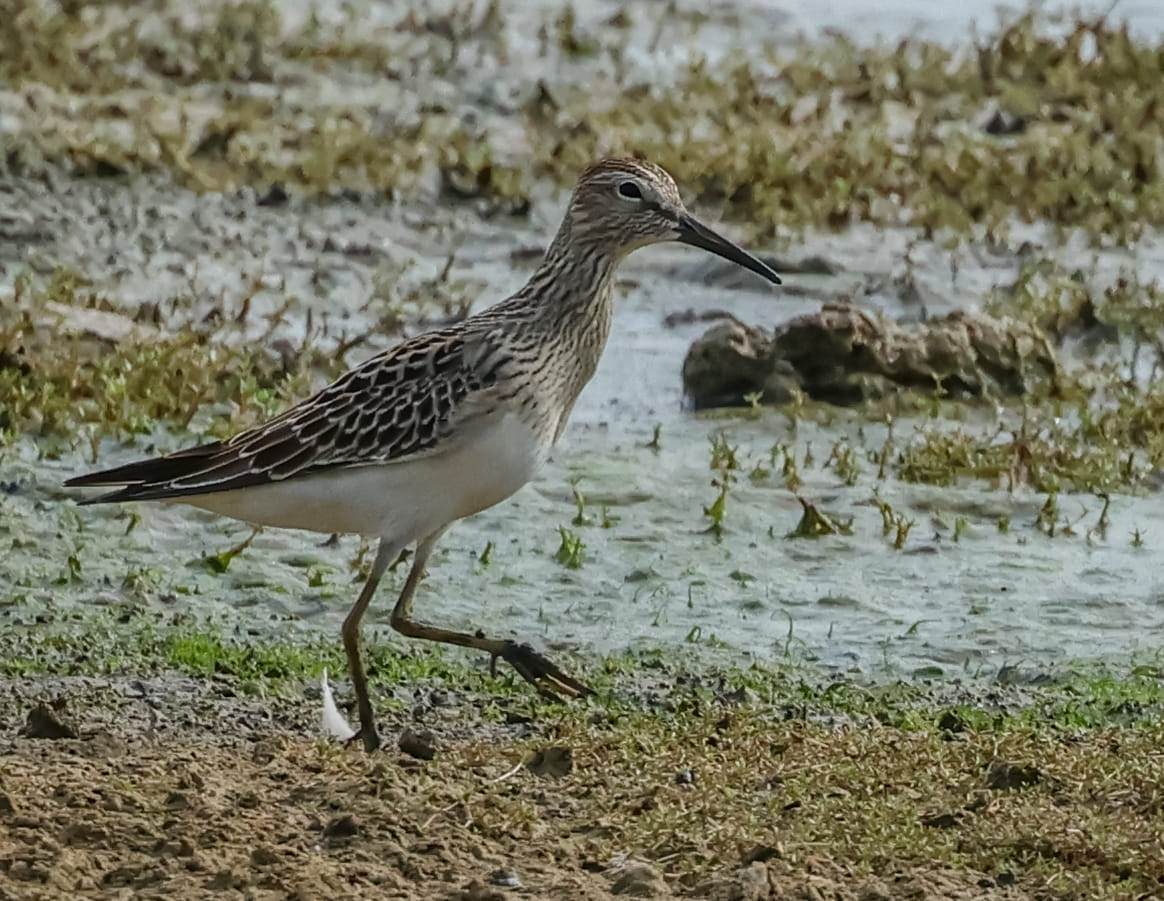
In the last of the early autumn heat, as migrant passerine numbers began to tail off, Summer Leys produced a Pectoral Sandpiper which proved to be a popular pull.
After no sightings last week, the female Ruddy Shelduck was back in the frame again – this time at Stanford Res, where it was seen for four days running, between 10th and 13th. This just left the Pink-footed Goose heading up the local wildfowl cast at Hollowell, remaining there until at least 14th. A Garganey put in a brief appearance at Pitsford Res on 11th.
Rarely seen in autumn – in fact, rarely seen at all – a Common Quail was flushed in the Brampton Valley, between Cottesbrooke and Hanging Houghton, on 14th. This year has been a poor one for this species, with just five single-date occurrences between 2nd June and 27th July … and two of these were after dark fly-overs.
But for many, this was a week when waders came to the fore, both little and large. In the latter category, a lone juvenile Black-tailed Godwit remained at Summer Leys LNR between 9th and 12th, with the same locality hosting up to two Ruffs throughout the period. One also visited Stanwick on 11th-12th and another was found at Earls Barton GP’s New Workings (South) the following day.

But the undoubted star of the show in the Nene Valley was the juvenile Pectoral Sandpiper found on the Scrape at Summer Leys on 10th. The county hasn’t done as well for this – the most commonly occurring Nearctic wader in the UK – in recent years compared to a decade or so ago, when it appeared to be a more frequent visitor. This week’s bird remained throughout, attracting a fair few local observers.

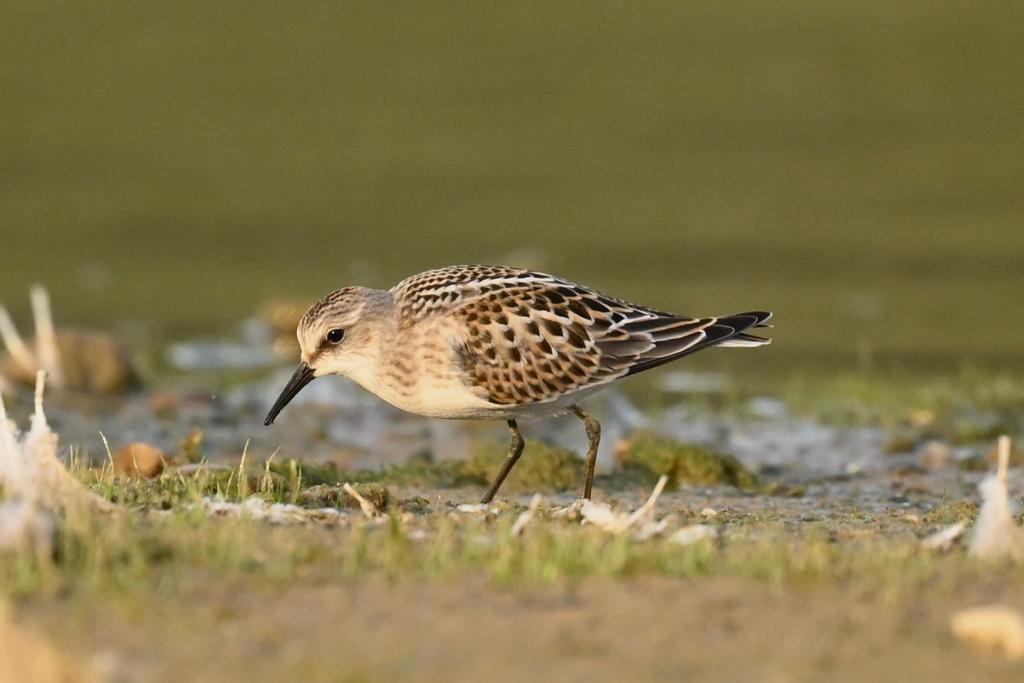
Left somewhat in the shade, but nevertheless popular, was last week’s juvenile Little Stint, which remained on view at Hollowell until 13th. The same site also held up to two Greenshanks until 14th, while a Wood Sandpiper was found at Pitsford on 9th.

The period’s scarce gulls were thin on the ground and Hollowell was the only locality to produce Caspian Gull, a juvenile of which was present there on 11th. This week’s Yellow-legged Gulls were the sole preserve of Pitsford, where one was found on 11th, followed by five on 13th.
Pitsford also pulled in a short-staying Black Tern on the first of these two dates, otherwise it was down to Clifford Hill GP to produce a lingering bird, present for three days between 11th and 13th.
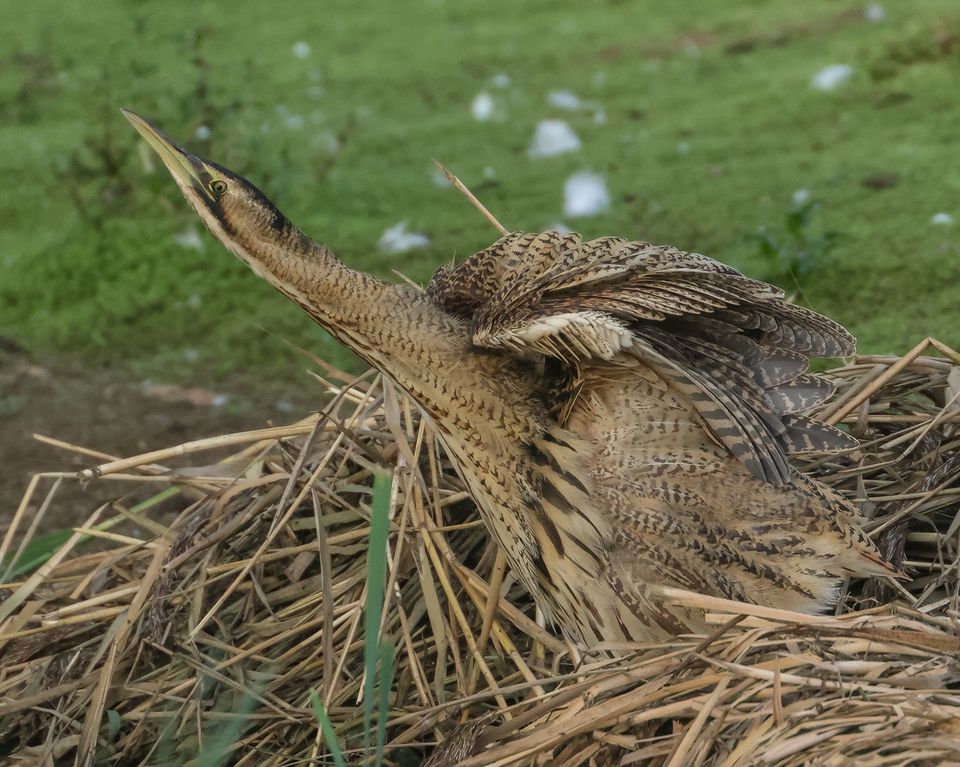
Last week’s Bittern seemed settled at Summer Leys, clearly having acquired a taste for the Scrape, where it was on show intermittently throughout the period, providing some fantastic photographic opportunities for those with the patience to sit and wait …

The run of Cattle Egrets kept going with four leaving a roost site on the Main Lake at Stanwick early morning on 11th.
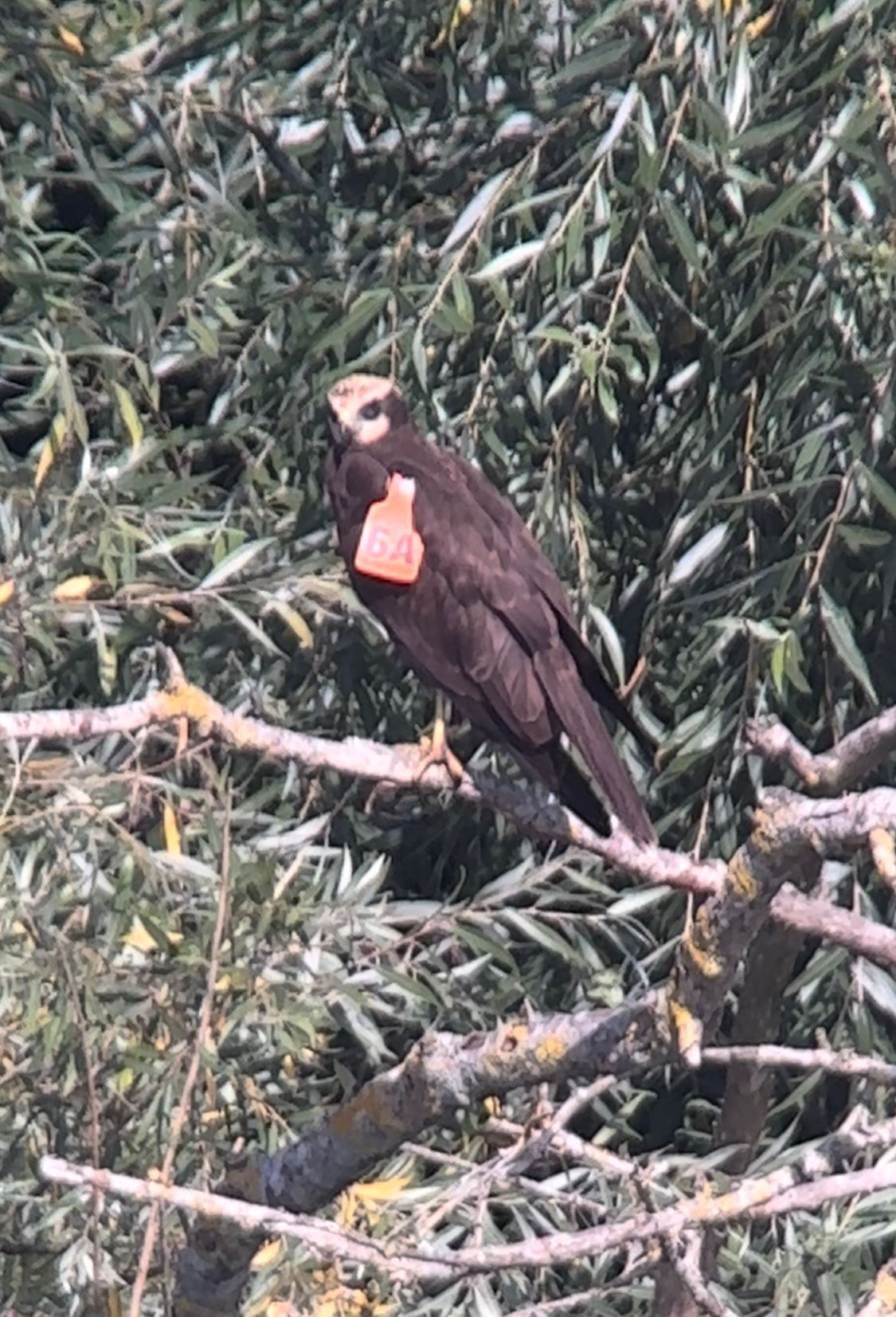
With Ospreys now leaving the country, the number of birds being seen locally is on a downward trend. Just two were seen – one at Hollowell on 9th, the other at Pitsord two days later, on 11th. It’s not the same for Marsh Harriers, though, numbers of which, it seems, see no signs of abating. Once again, Stanford was up there as top producer, with birds present daily until 14th, three being present on both the latter date and on 9th. Two of these sported red wing-tags marked with letters ‘ZC’ and ‘6A’ – the first of these identifying the individual as being a female ringed and tagged on 19th June 2023 at Breydon Water, Norfolk, while ‘6A’ was identified as a female ringed and tagged at Welney WWT, Cambridgeshire on 2nd July 2023. This was the first time either bird had been reported since fledging (per North West Norfolk Ringing Group). One was also seen in the Brampton Valley, between Cottesbrooke and Hanging Houghton, on 11th-12th.
And what about ‘Raptor of the Week’, should such a beast exist? Well, that accolade falls to a Honey Buzzard viewed for approximately 1.5 minutes over The Orchard at Stanford Res on 15th. This is only the second for the year, following the recent bird over Everdon Stubbs on 26th August. Inevitably a fly-over, there has not been a twitchable individual since the bird that lingered at Daventry CP between 15th and 25th June 2002.
Dwindling numbers of scarce passerines saw Whinchats outnumbering Common Redstarts for the first time this autumn with maximum counts of four at Hollowell Res on 13th, threes in the Brampton Valley on 9th and at Harrington AF on 11th and two at Blueberry Farm, Maidwell between 11th and 14th. Common Redstarts numbered two/three at Harrington on 11th, two at Lamport on 10th and singles at Pitsford on 11th and at Blueberry Farm between 11th and 13th. Northern Wheatears reached a respectable five in the Brampton Valley between 9th and 13th, while Blueberry Farm produced up to two between 12th and 14th and Harrington held on to one on 10th-11th. And to round off, two Crossbills were seen at Pitsford on 11th.

Discover more from Northants birds
Subscribe to get the latest posts sent to your email.

 Northants birds