As it turned out, a somewhat rumbustious week saw the arrival of some quality birds from the get-go. The run of unseasonally warm weather quickly gave way to overnight frosts, mid-week, before storm force winds and gales kicked in, courtesy of the widely publicised ‘Storm Babet’. In part, this was instrumental in giving rise to a sustained easterly airstream across the North Sea, the first results of which became evident at the eleventh hour on the last day of the period.
While our local Pink-footed Goose was back and forth between Ravensthorpe and Hollowell Reservoirs again this week, some unquestionably wild birds arrived in the form of a flock of ten seen heading west over the Brampton Valley on 20th. Whooper Swans, too, were again passing through – three flying over the causeway at Pitsford Res on 15th and singles making short stopovers at Stanford Res on 14th and at both Ravensthorpe and Earls Barton GP on 16th.
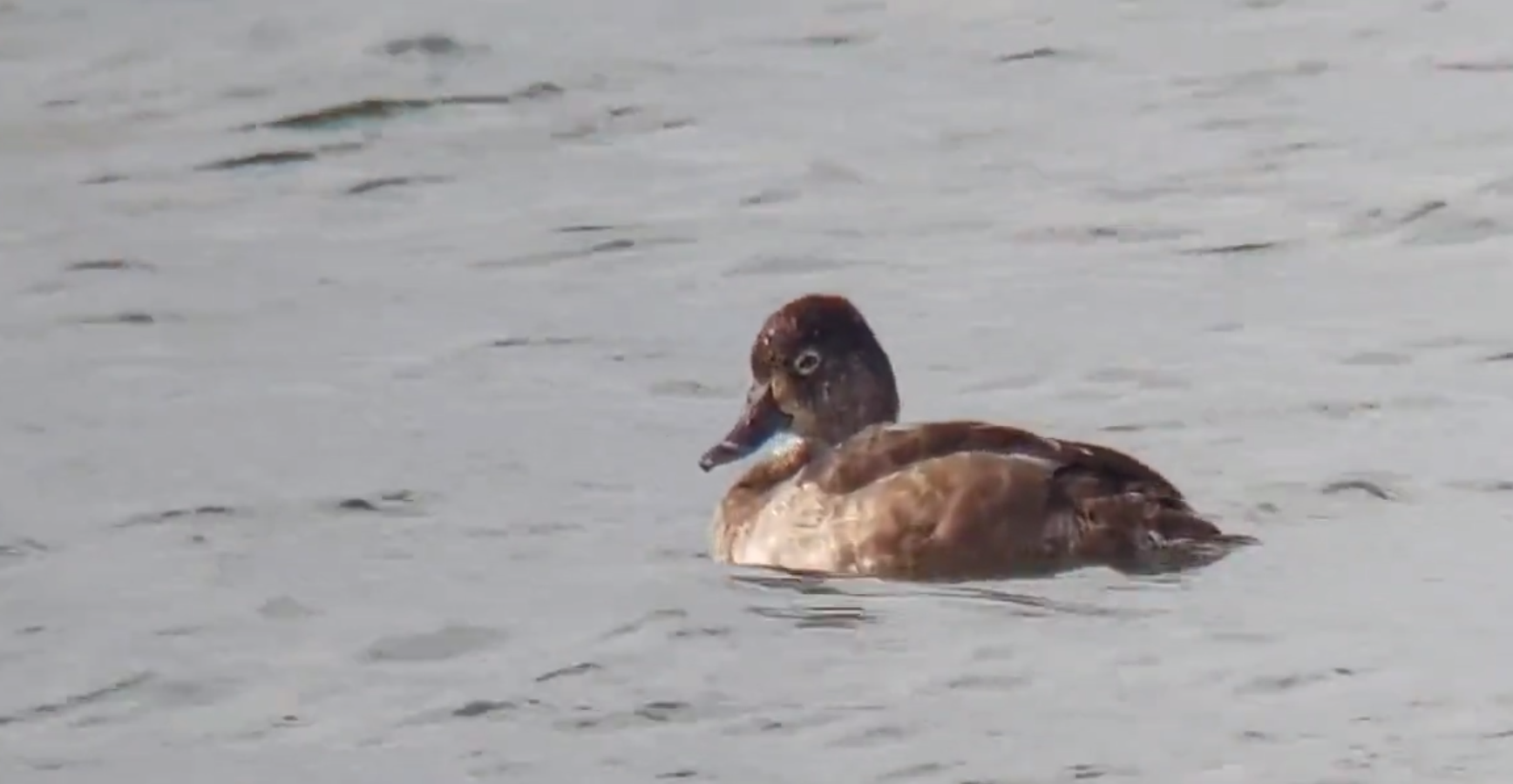
Stanford hung on to its four drakes and a female Red-crested Pochard for the first day of the week, all of which apparently left the site thereafter, while a drake turned up at Pitsford on 19th. That just leaves us with the female or first-winter Ring-necked Duck at Thrapston GP’s Titchmarsh LNR to occupy the ‘wildfowl of the week’ slot and, although it won no prizes for glamour, it remained there on show until at least 19th. With birds present there in 2019, 2021-2022 and early in the year in 2023, Thrapston is beginning to earn itself a reputation for turning up this species.
And now for something completely different … A Nightjar – only the second of the year – was picked up in poor health at RS Components on Weldon Industrial Estate, Corby on 18th. It was taken by the finder to a vet’s in Kibworth in Leicestershire but news of its fate has yet to emerge.
Back to the birder’s staple habitat, wetlands, where, along with rising water levels, time is fast running out for passage waders – so much so that this week’s only bird of note was a Greenshank at Stanwick GP on 19th.
While Storm Babet may have delivered a deluge of water, on the back of it came seven Little Gulls, late in the day on 20th. Four of these were together at Stanwick GP, one was found on the Main Lake at Summer Leys LNR and two appeared in the gull roost at Stanford. Other gulls were available, of course, and topping the bill of those which also ran was a first-winter Mediterranean Gull, which appeared in the Stanford roost on 19th-20th. On the next level, Caspian Gulls were reasonably well represented this week, with 15th producing two adults off the dam at Pitsford, followed the next day by a third-winter at Hollowell and an adult there on 18th, when a first-winter was also found in the roost at Boddington Res. On 19th, DIRFT 3 held an adult and a third-winter and an adult also appeared at Stanwick.

In an unusual about-turn, Yellow-legged Gulls were in the minority this week. Two adults were at Pitsford and an adult appeared at Ditchford GP on 15th, an adult was at Sywell CP on 18th and eight were counted at Stanwick the following day.

Bird of the week, however, was, indisputably, the Glossy Ibis discovered on Summer Leys Scrape during the first hour of daylight on day one. Alas, it did not stay put, heading off north-east after a tussle with a Great Egret, shortly after being found. A local ‘mega’, this is only the ninth record for the county, following hot on the heels of the long-staying bird in the Nene Valley during the first half of 2022.


Staying with Summer Leys Scrape, by contrast, showing no signs of going anywhere soon, the now seemingly settled Bittern showed exceptionally well, on and off, throughout the period.

More mobile around the same locality was the Cattle Egret, having now notched up two weeks on site. Two also visited Stanwick on 14th-15th.
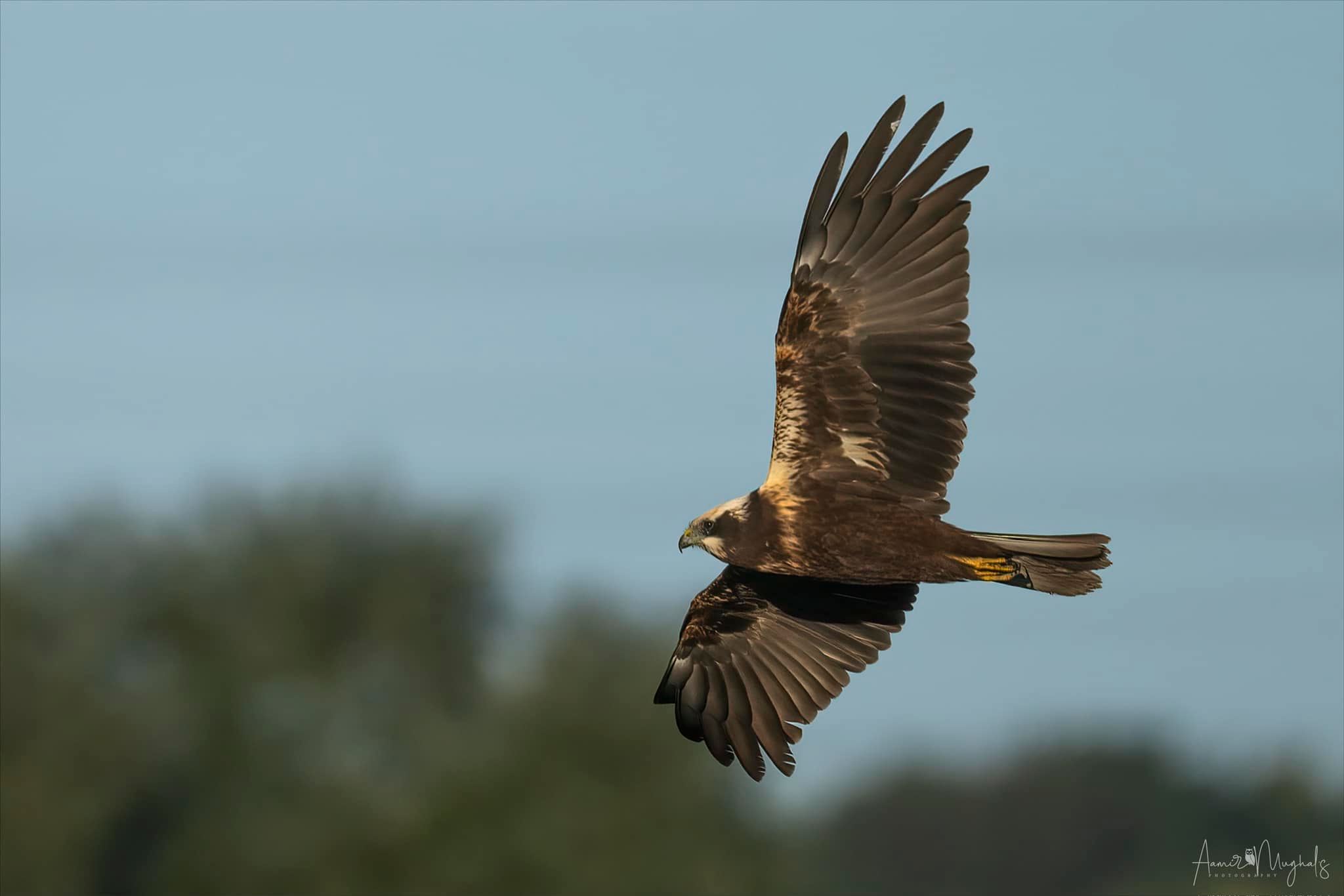
And following last week’s minimal showing, this week saw a remarkable about-turn for Marsh Harriers, which were seen at six localities, opening and closing with Stanford’s almost resident ‘ZC’ wing-tagged female. This individual has been present since the early part of September (see here for more details).

Vying with Stanford for sightings was Summer Leys, where two different birds were seen, on and off, throughout the week. Elsewhere, singles were seen at Ditchford GP, Harrington AF and Pitsford – all on 15th and at Titchmarsh LNR on 20th. Once a local scarcity, appearances of Marsh Harriers have come on in leaps and bounds in recent years. Reduced to just one breeding pair in 1971, it’s believed there are now some six hundred breeding pairs in the UK (National Trust, 2023).


Following a handful of reports of Short-eared Owls last week, there were just two during the period, both on 14th, when twos were seen at Borough Hill and Harrington AF.
Often elusive but equally often more obliging, Hoopoes have, so far this year, remained in the former camp. Following one in Oundle briefly, on 22nd September, another was photographed on a country road near Everdon on 16th and another – or more likely the same – appeared in Lower Harlestone, 12km to the north-east, on 19th-20th and was again photographed by a local resident.
Merlins were pleasingly up in numbers this week with a hanger-on from last week remaining in the Brampton Valley until at least 18th and possibly the same bird visiting Harrington AF on 17th. Others were also seen at Hinton AF on 15th, Stanford Res on 17th and DIRFT 3 on 19th.

Scarce migrant passerines continued to arrive and filter through, including a male Bearded Tit at Stanwick on 19th-20th and single Ring Ouzels at Blueberry Farm, Maidwell on 15th and Harrington on 17th. Seven localities produced Stonechats, including Brampton Valley, Borough Hill, Harrington, Hollowell, Pitsford, Stanford and Summer Leys, with the highest count of eight coming from Borough Hill on 14th.
A late showing of two Northern Wheatears comprised single birds at Orlingbury on 14th and Stanford on 16th and, hot on the heels of the firsts for the year last week, a Rock Pipit was found at Stanwick on 20th.

Discover more from Northants birds
Subscribe to get the latest posts sent to your email.

 Northants birds