Things got fresh at the weekend when Storm Isha battered the UK, followed quickly in its wake by Storm Jocelyn. While they appeared to have little or no influence on what turned up locally, two species found themselves jostlin’ for position as bird of the week.
To get to the first of these requires a quick wade through the wildfowl which, this week, were in relatively short supply. Hollowell Res’s Pink-footed Goose remained there until at least 22nd, while further north, up on the Leicestershire border, two Red-crested Pochards appeared at Stanford Res on the last day of the period. Closer to the county town, a drake Red-crested Pochard x Pochard hybrid provided a flicker of interest at Sywell CP on 21st.

Back at Hollowell, the first-winter drake Greater Scaup remained settled throughout the week, while Earls Barton GP’s more advanced first-winter was still present at Grendon Lakes on 24th.

The first contender for bird of the week, however, was found ducking an’ diving at Thrapston GP’s Titchmarsh LNR on 25th. Step forward a/the female Ring-necked Duck. Not having been seen for a good seven days since disappearing from Stanwick, it was only a matter of time before it resurfaced somewhere nearby and Thrapston, having history, was the obvious choice. Of course, it may not have been the same bird …

Quality waders were all but missing, save for a Jack Snipe in the Brampton Valley, near Brixworth STW, on 20th and four of the same at Daventry CP on 22nd.
Homing in on some of the rarer gulls proved less of a challenge for those prepared to take a punt at a gull roost in the fading light of a winter’s afternoon. Stanford provided the lion’s share, with an adult Mediterranean Gull dropping in on 26th, adult and first-winter Caspian Gulls on 20th, a first-winter again on 22nd, a third-winter on 24th and an adult on 26th. A third-winter was also found at DIRFT 3 on 26th and the regularly visiting German-ringed (XLVH) adult was at its favoured site of Naseby Res on 21st. The only Yellow-legged Gull of the week was a second-winter at Billing GP on 24th.


Mobile south of the causeway, the juvenile Great Northern Diver chalked up another week at Pitsford Res.
Numbers of Cattle Egrets remained low and included two at Summer Leys LNR on 21st, two at Ditchford GP’s Irthlingborough Lakes & Meadows LNR on 26th and one roosting at Stanford on the same date.
Now only to be expected, Marsh Harrier sightings were restricted to the weekend, when a juvenile and a male were seen around Earls Barton/Summer Leys and one flew west at Chown’s Mill roundabout near Ditchford GP. A male Merlin was seen in the Brampton Valley, between Cottesbrooke and Hanging Houghton on 20th.
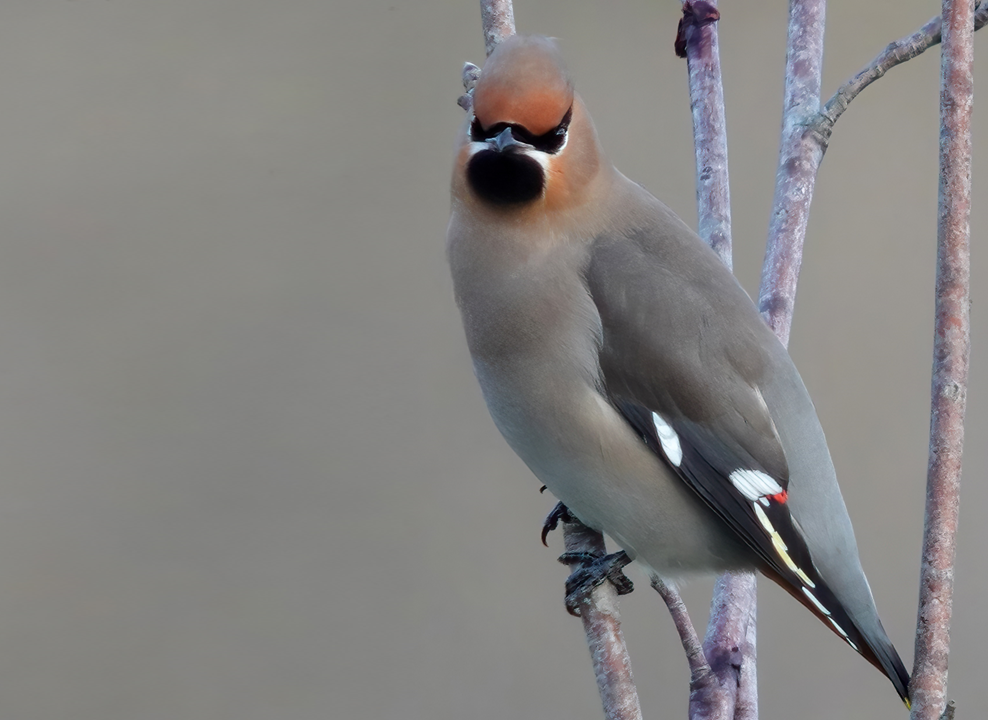
Regimented and reliable, the four Corby Waxwings had clocked up a 26-day stay by the end of the week, being joined there by a fifth bird for the last three of these. Their presence there for knocking a month must surely put them into the record books for the longest-stayers, locally, and having chosen a locality offering perfect viewing conditions, along with easy ‘roll up and see’ parking, they continue to attract a steady stream of admirers. As contender number two for bird of the week – and not classed as a rarity – in terms of pulling-power, they win hands down. Two were also briefly reported in East Hunsbury, Northampton, on 26th.
Stonechats were found at eleven localities, the highest count being five at Earls Barton GP on 26th.

Finally, Fineshade – the week’s only site for Crossbills consistently produced single figures with a maximum of at least five on 20th.

Discover more from Northants birds
Subscribe to get the latest posts sent to your email.

 Northants birds