The heat is on … and in more ways than one. Not only did we experience the UK’s hottest day of the year so far – a sizzling 34.8°C in Cambridge and 32°C in Northampton on 12th, but the quality of the birds rapidly moved up a couple of gears from day one. Yes, Lilbourne Meadows once again aptly demonstrated its pulling power for top-drawer waders from all points of the compass. Americano, anyone?
Not too far away from the now fabled meadows, the female Ruddy Shelduck extended its stay at Stanford Res by another seven days, while two Garganeys – presumably last week’s birds – reappeared at Summer Leys LNR on 10th, where they remained also until 14th. Another paid a brief visit to Lilbourne on 11th. The eclipse drake Red-crested Pochard saw another week out at Pitsford Res, with the individual at Billing Aquadrome still being present on 12th.
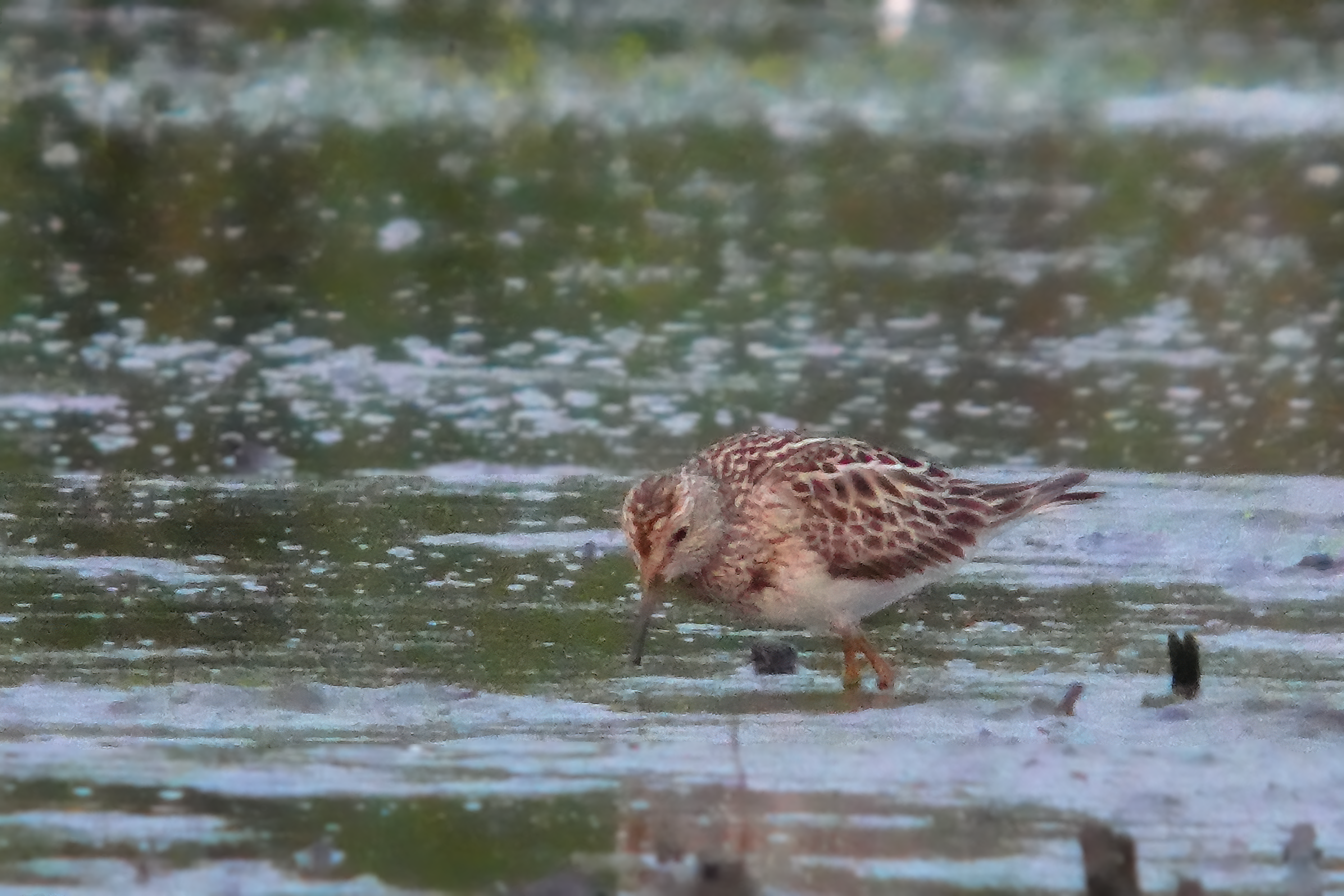
But, as far as waders are concerned and, for that matter, the period’s birds in general, it was Lilbourne Meadows NR that dealt the winning hand this week. The discovery there of an adult Pectoral Sandpiper on 10th was the second record for the site and comes hot on the heels of its first, in July 2022. It remained until 13th.
But there was more to come and, as the sun rose on the morning of the 11th, another American wader took centre stage on the very same pools at the above location. It’s been a long, 29-year wait since the last Lesser Yellowlegs graced Northamptonshire and became readily available. The latter was a 3-day bird at Stanford Res in late September 1995. This week’s individual, although still present at the end of the period, was anything but easy to see. Remaining out of view for the greater extent on the largely hidden, western section of the winter flood pools, long waits to see it became very much the norm at this reserve, which is in the final stages of completion as a mitigation scheme related to the adjacent, unfinished DIRFT 3 industrial complex.
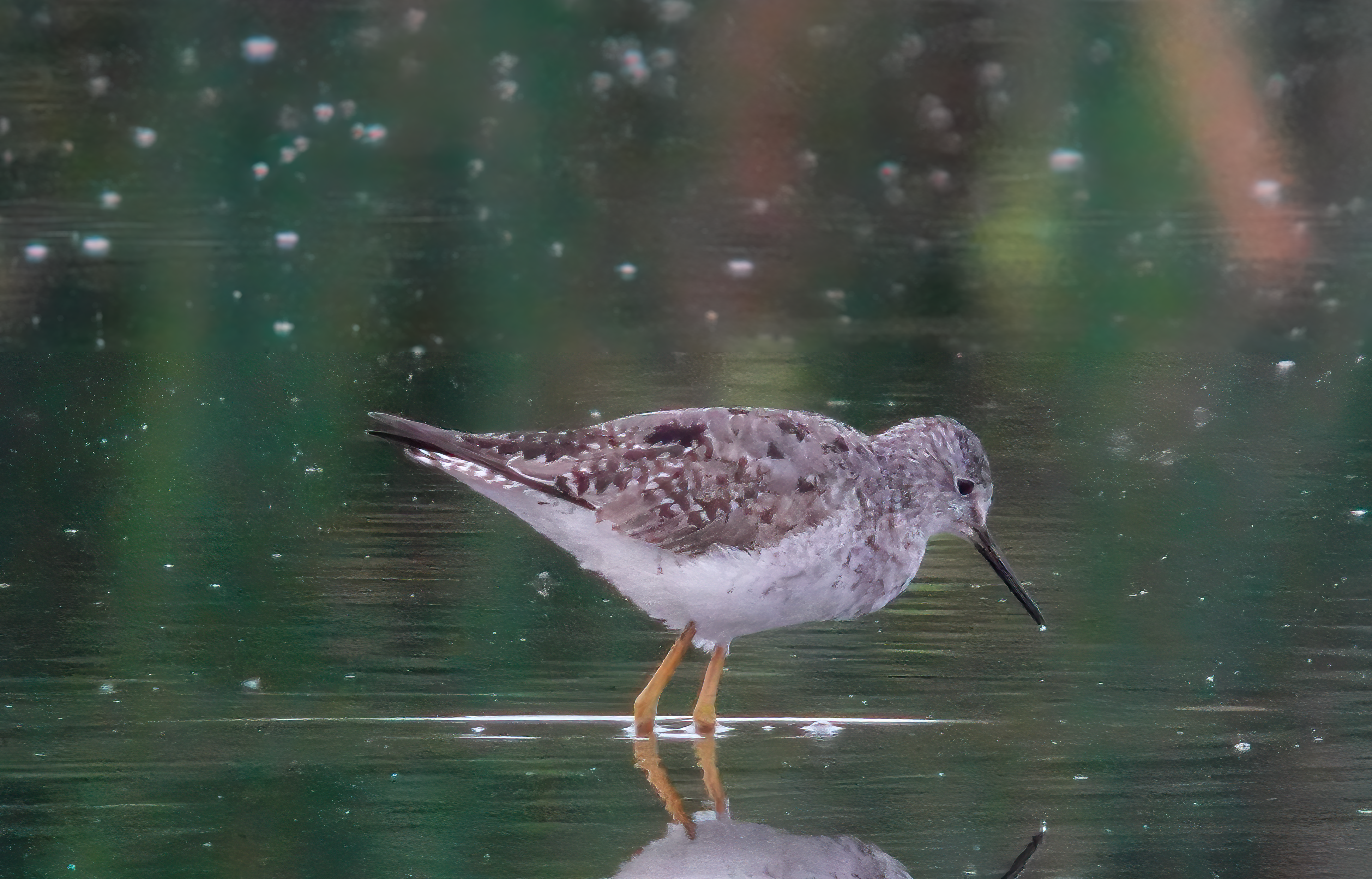
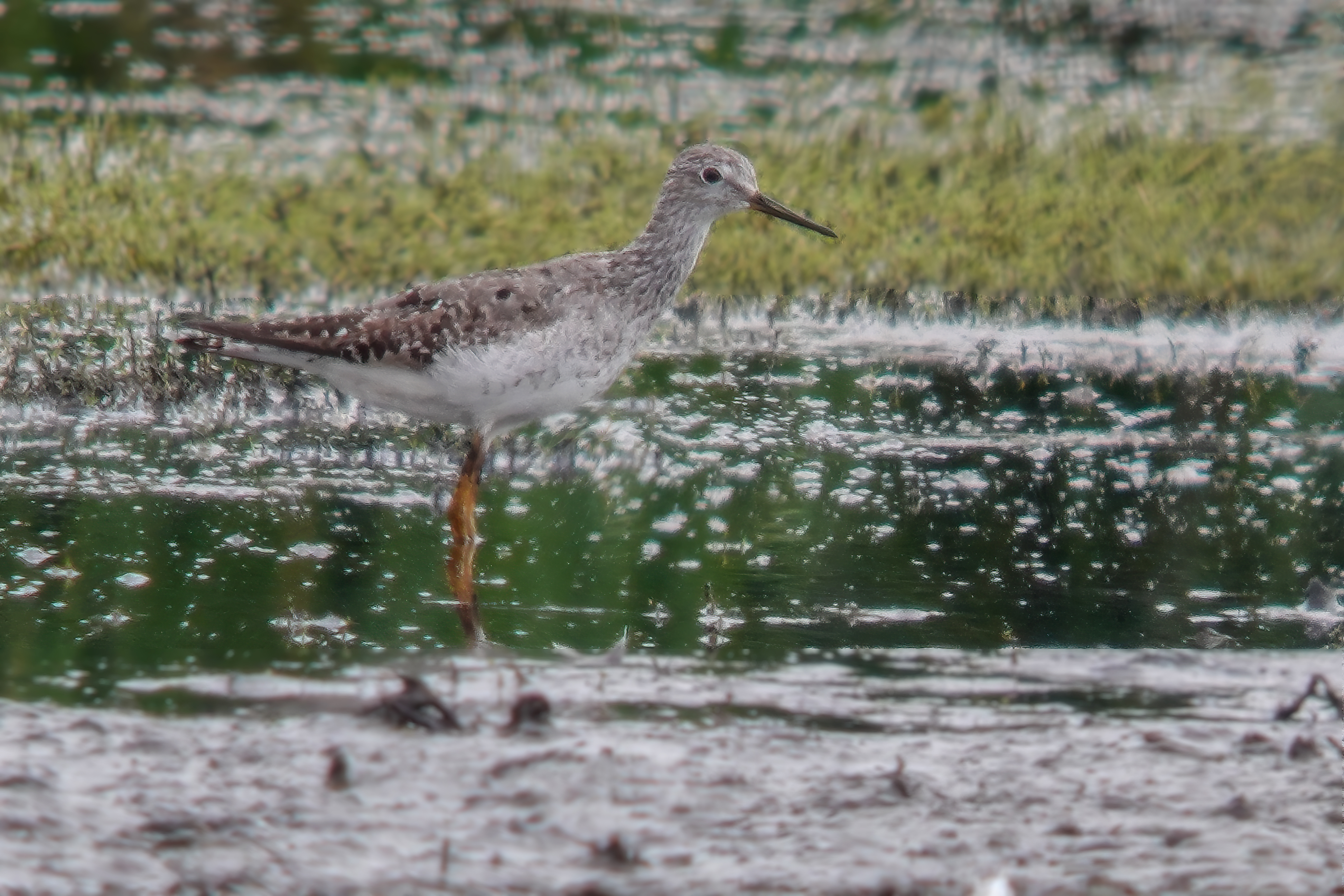
Following the aforementioned bird at Stanford, which also produced Northamptonshire’s first, in October 1964, it’s only the fifth Lesser Yellowlegs for the county. Many of us who were birding Northants in the 1970s will have fond memories of the one that arrived at Pitsford Res on 26th September 1971 and stayed throughout the winter, relocating to Ecton SF in February 1972, where it remained until 22nd April. Little more than a year later, one at Ditchford GP, on 9th-10th May 1973, was assumed to be the same, returning individual.
What’s next for Lilbourne this autumn? Or will the pools continue to dry out, as they normally have done by now in previous years?
Other waders were available, of course, including the week’s only Black-tailed Godwit at Ditchford GP’s Irthlingborough Lakes & Meadows NR on 10th and Greenshanks, with up to two at Summer Leys between 10th and 14th and singles at Lilbourne Meadows on 14th and at Stanwick GP the following day.

The period’s scarcer larids were represented solely by Yellow-legged Gull, single adults of which were present at Stanford, Pitsford and Ravensthorpe Res on 11th, 12th and 13th, respectively, while Pitsford produced three adults and two juveniles on the latter date. Thrapston GP held four on 13th and three there the following day, four were in fields adjacent to Desborough AF on 14th and a juvenile visited Earls Barton GP’s Mary’s Lake on 15th.
Autumn’s Black Tern passage kicked off on 12th, when six stayed only briefly at Stanford and three were found at Hollowell Res.
Cattle Egrets mustered just two reports of four at Stanwick on 15th and one on the outskirts of Brackley the following day.
But once again, raptors were putting on a show for many a local birder, with Ospreys more or less a daily fixture at Pitsford, where fishing and loafing in trees became almost routine. Up to three were present there throughout the week. Elsewhere, one featured daily at Stanford between 10th and 15th, Thrapston produced one on 12th and 14th, one flew over the Brampton Valley on 10th and one was at Ravensthorpe on 13th. At least two of those at Pitsford bore rings enabling their history to be traced. Of three there on 14th, one, ‘355’, fledged from a nest in Rutland in 2021, returning on 24th April this year prior to being seen regularly at Summer Leys during May. Another of the trio, ‘3AY’ is a five year old male – also from Rutland – which has not yet been recorded as breeding; it also visited Hollowell on two dates in April and Stanford on 17th July. One of this week’s Stanford birds, ‘1H5’, was a male ringed as a nestling at Rutland on 25th June 2022, first returning to Rutland on 3rd June this year.

Marsh Harriers, too, were very much in evidence. Singles were present at Summer Leys, on and off, between 10th and 15th, Harrington AF, daily, between 11th and 14th, Pitsford on 12th-13th and 16th, Stanford on 11th and 15th, Stanwick on 14th-15th, Blueberry Farm, Maidwell on 10th and at Hollowell on 15th.


And on the passerine front, Common Redstarts remained prominent with daily sightings of one or two birds across a collective eight localities, including Blueberry Farm, Brampton Valley, Desborough, Harrington, Lamport, Lilbourne Meadows, Stanford and Woodford Halse NR.
Whinchats were seen at half that number of sites, with Harrington heading the list for the maximum of four, on 11th and up to two until 14th. The Brampton Valley between Cottesbrooke and Hanging Houghton held up to two all week, Pitsford followed suit with one, being joined by a second bird on 15th and Hollowell hung on to one until at least 15th.

Northern Wheatears were in even shorter supply, with just singles at Harrington on 11th, Brampton Valley on 15th and Braunston on 16th, while the 11th saw the first Tree Pipits of the year appearing at Brixworth STW, where there were two (one trapped and ringed), and one in the Brampton Valley. Not too far away, two fly-overs were seen at Harrington on 13th followed by another there the next day.

Discover more from Northants birds
Subscribe to get the latest posts sent to your email.

 Northants birds