Moving deeper into autumn saw temperatures take a tumble in the early part of the period, followed by a momentary reprieve on the last day as a south-westerly airstream up from the Azores warmed the cockles and put some extra gloss on the week.
Keeping their tribe afloat, two Red-crested Pochards at Pitsford Res on 16th were the only ducks of note over the last seven days.
Waders continued to be well represented, however, with Boddington Res producing the pick of the bunch, kicking off with a Tundra Ringed Plover on 14th. Much further north, a Whimbrel flew over Harrington AF on 14th and a Curlew was similarly picked up in flight over Stanford Res on 16th.
Black-tailed Godwits continued to feature throughout the week with the largest number comprising a flock of twelve flying south-west over Clifford Hill GP on 14th. Two other localities held on to some longer-stayers, with one at Naseby Res from 13th until 18th and two at Pitsford on 17th.

Maintaining their stand, Ruffs were to be found at five localities – Pitsford holding on to five throughout the period, while Boddington held two from the beginning of the week, increasing to three there on 18th. Elsewhere, two were present at Clifford Hill on 13th-14th with one remaining until 16th and singles were at Summer Leys LNR on 13th and at Naseby on 13th and 17th-18th.
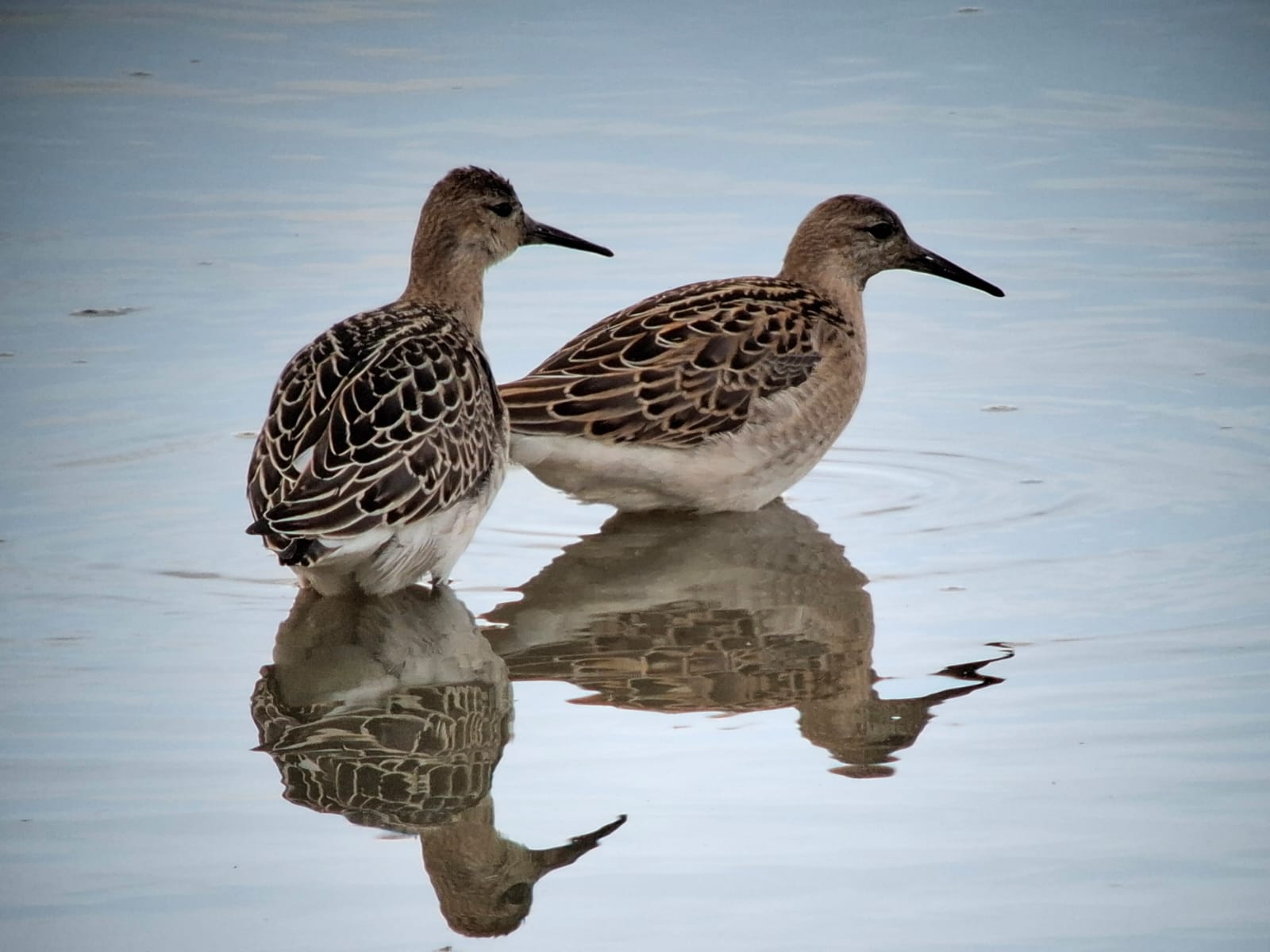

Strong winds and heavy rain delivered Boddington’s best on 14th, when a Sanderling and the county’s fourth Little Stint of the year dropped in, the latter remaining until 16th, with the former also being reported again briefly on 15th.


Getting late now for Wood Sandpiper, last week’s individual remained at Naseby until 16th and another was reported at Cransley Res on the last day of the period.

And after last week’s double-figure peak at Pitsford, Greenshanks were down to three there between 14th and 19th, while singles were at Clifford Hill and Summer Leys on 13th, Naseby on 15th and Earls Barton GP’s New Workings (North) on 19th.
On the larid front, the best of the bunch this week was a first-winter Mediterranean Gull at Daventry CP on the last day of the period.

The same site also produced three different Caspian Gulls, with a first-winter on 16th, an adult on 17th and a third-winter on 18th, while Boddington delivered a first-winter on 14th and the regular German-ringed adult was present at Naseby all week, accompanied by a juvenile/first-winter on 15th and a second adult on 17th and again on 19th.


Single Yellow-legged Gulls were at Daventry on 14th and Pitsford on 16th, the latter site holding four on 18th.
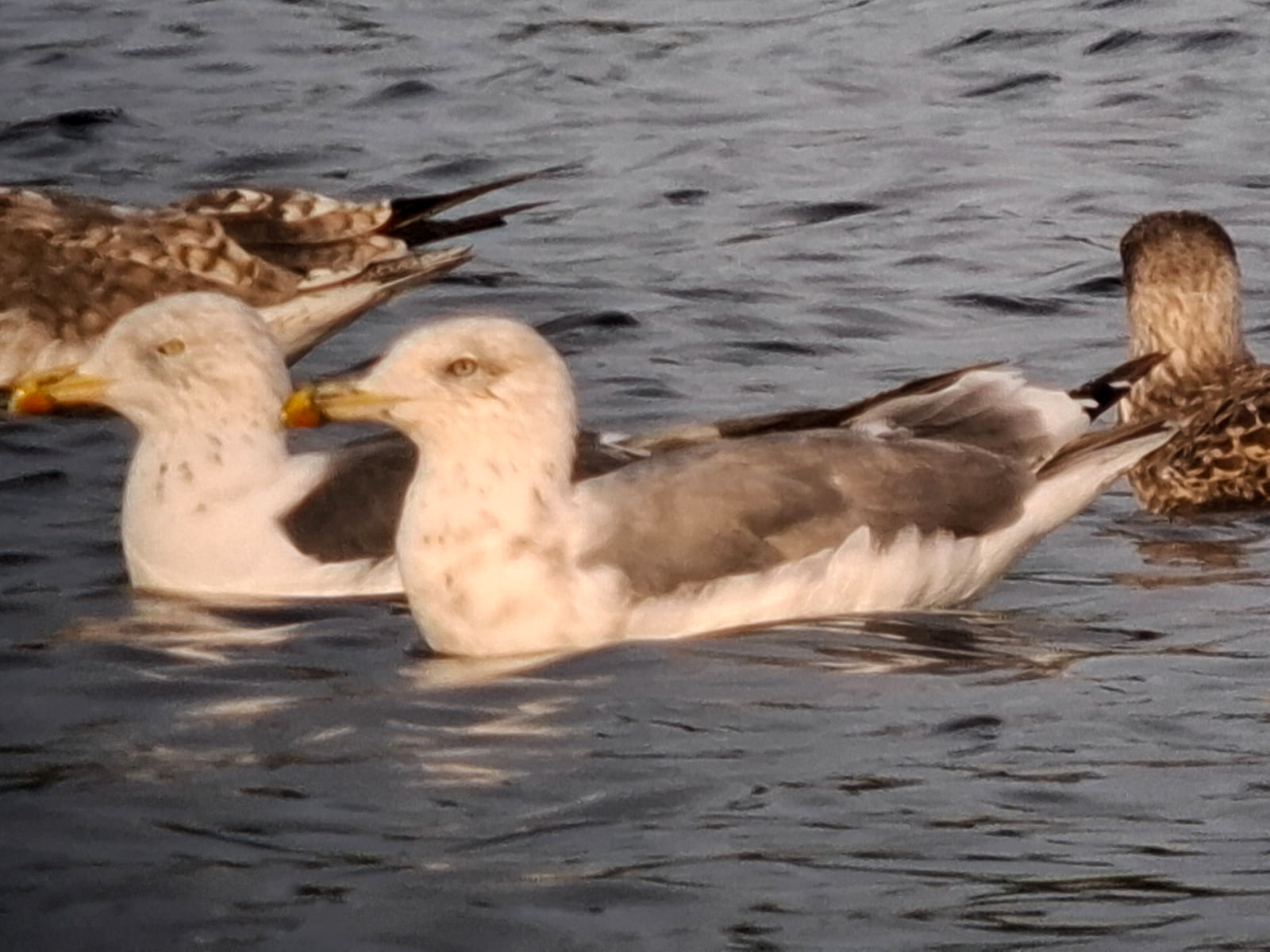
Daventry also hosted an adult Herring Gull x Lesser Black-backed Gull – resembling an Azores Gull, no less – on 18th.

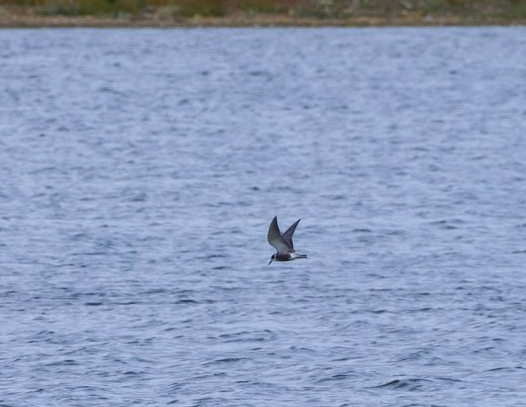
Downsizing, three species of tern were reported during the period – a Sandwich Tern at Boddington on 15th and an Arctic Tern at Hollowell Res on the same date, while the continuing trickle of Black Terns saw last week’s individual lingering at Ditchford GP’s Irthlingborough Lakes and Meadows NR on 13th, the same date producing two at Ravensthorpe Res and two at Hollowell – perhaps last week’s four, divided. One, or another, was at the latter site on 15th.
With UK numbers still well into the hundreds this week, more Glossy Ibises were again likely to be on the cards – or so one would think – and, yes, there were new arrivals. Both individuals from last week remained throughout at Pitsford and Summer Leys but, in addition to these, one flew west over Wollaston Motors Prep Centre car park and on over Earls Barton GP’s New Workings (North) on 17th, although there is a fair chance it may have been the Summer Leys individual. Undoubtedly new in, however, were three adjacent to Stanford’s Settling Pool, briefly, during the morning of 19th, before flying north-east. Another, or one of the above trio, was seen in flight going north over Stanford during the afternoon of the same date.


One each of Bittern and Cattle Egret were again at Summer Leys on 13th and Stanford on 19th, respectively.
Raptors comprised the usual suspects of late, with daily sightings of Ospreys at Pitsford, including two on 16th, while singles flew south and west over Hollowell on 13th and 16th, respectively. Single Marsh Harriers were also on offer at Pitsford, where singles were present on 13th, 14th, 15th and 18th, with two there on 19th. Further singles graced Harrington AF on 14th, Summer Leys on 15th-16th and Earls Barton GP’s New Workings (South) on 19th. Last week’s ‘ringtail’ Hen Harrier made a return visit to Blueberry Farm, Maidwell on 14th.
And, on the passerine front, Common Redstarts enjoyed a mini-resurgence with three at Borough Hill on 13th, 2 at Glassthorpe Hill, Harpole on 14th and singles at Pitsford on 13th, Blueberry Farm on 14th, Harrington on 14th and 17th and in the Brampton Valley between Cottesbrooke and Hanging Houghton on 16th.

The same area of the Brampton Valley continued to produce Whinchats, with a maximum of six there on 16th, 2 on 14th and one on 17th, two were at Harrington on 14th and one was again at Thrapston GP’s Elinor Trout Lake on 17th. And while Whinchats may be on the wane, numbers of Stonechats were on the up – this week seeing a maximum of four at Hollowell on 19th, while ones and twos were found in the Brampton Valley, at Harrington, Pitsford and Yardley Chase.
Northern Wheatears continued to trickle through, with singles at Harrington on 14th and in the Brampton Valley between 14th and 16th, while two were found at Clifford Hill GP on 17th with one remaining the following day.

Discover more from Northants birds
Subscribe to get the latest posts sent to your email.

 Northants birds