Along with a prolonged Arctic airstream delivering non-stop northerlies, low temperatures and the first settling snow of the winter, 2025 certainly didn’t run out of steam when it came to quality birds – one of which was the first of its kind in the county for more than twenty years. And, as we stepped into the new year, there was plenty to keep the birding fire burning …
Once again, wildfowl were the main attraction – even more so than last week, with the arrival of more geese as well as a certain delectable duck. Once again, top of the tribe as far as geese are concerned was Tundra Bean Goose, with the one discovered at Blatherwycke Lake on the final day of the previous week remaining there until 29th. This was quickly followed by another – or most likely the same individual – being found at Ringstead GP’s Kinewell Lake on 2nd, although it moved on swiftly after its discovery. Blatherwycke to Ringstead is a mere 21 km as the goose flies …
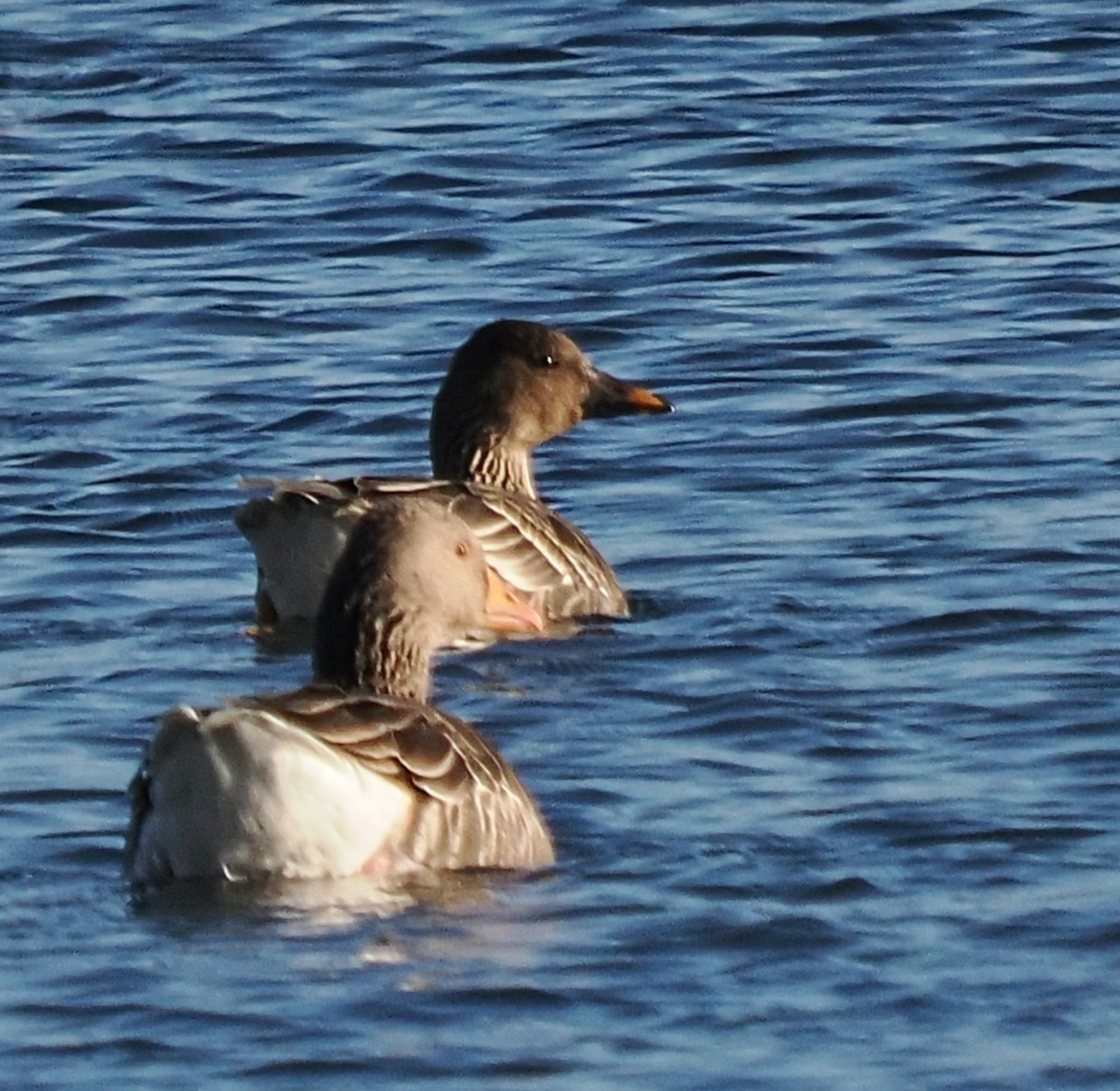
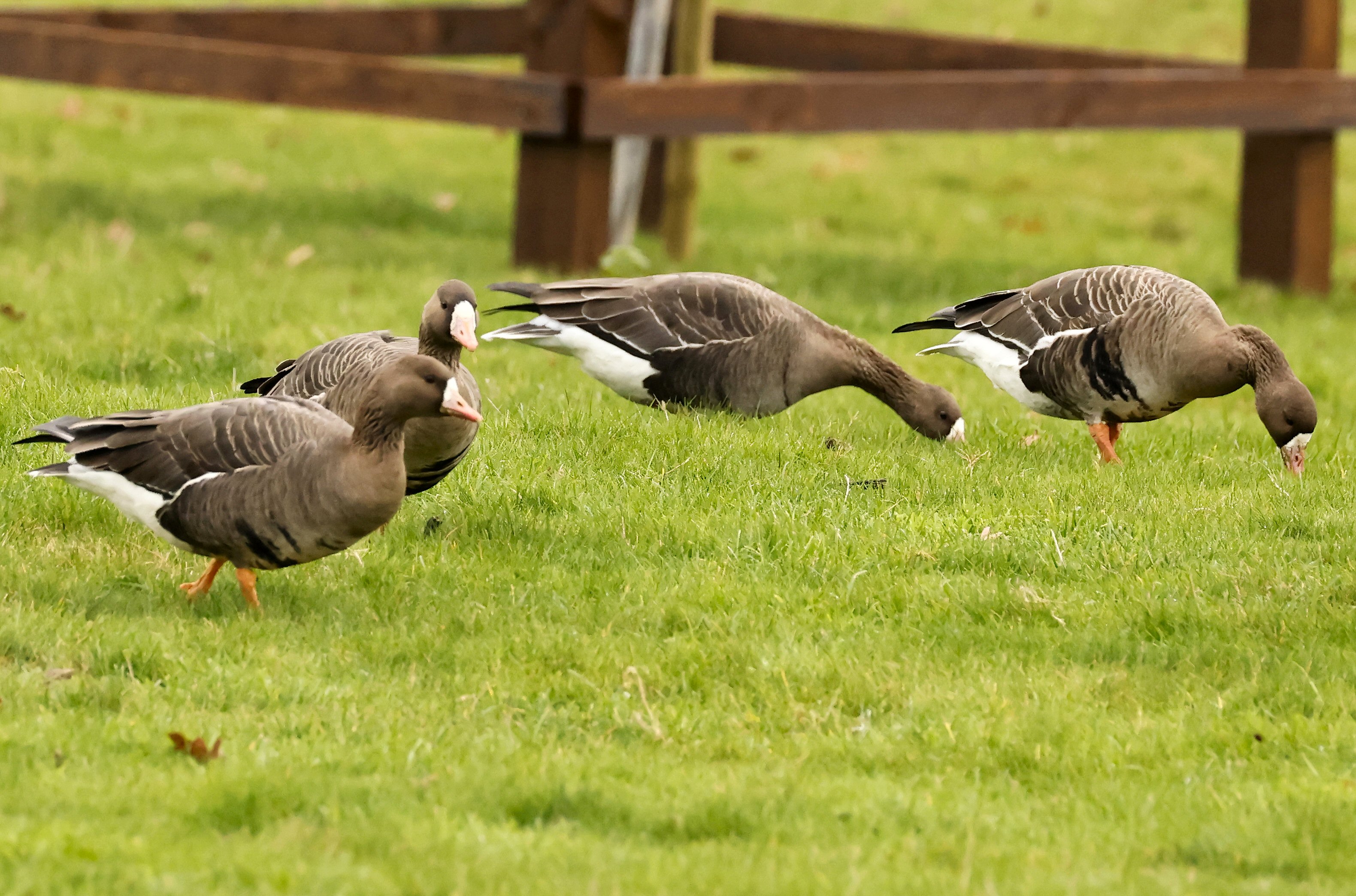
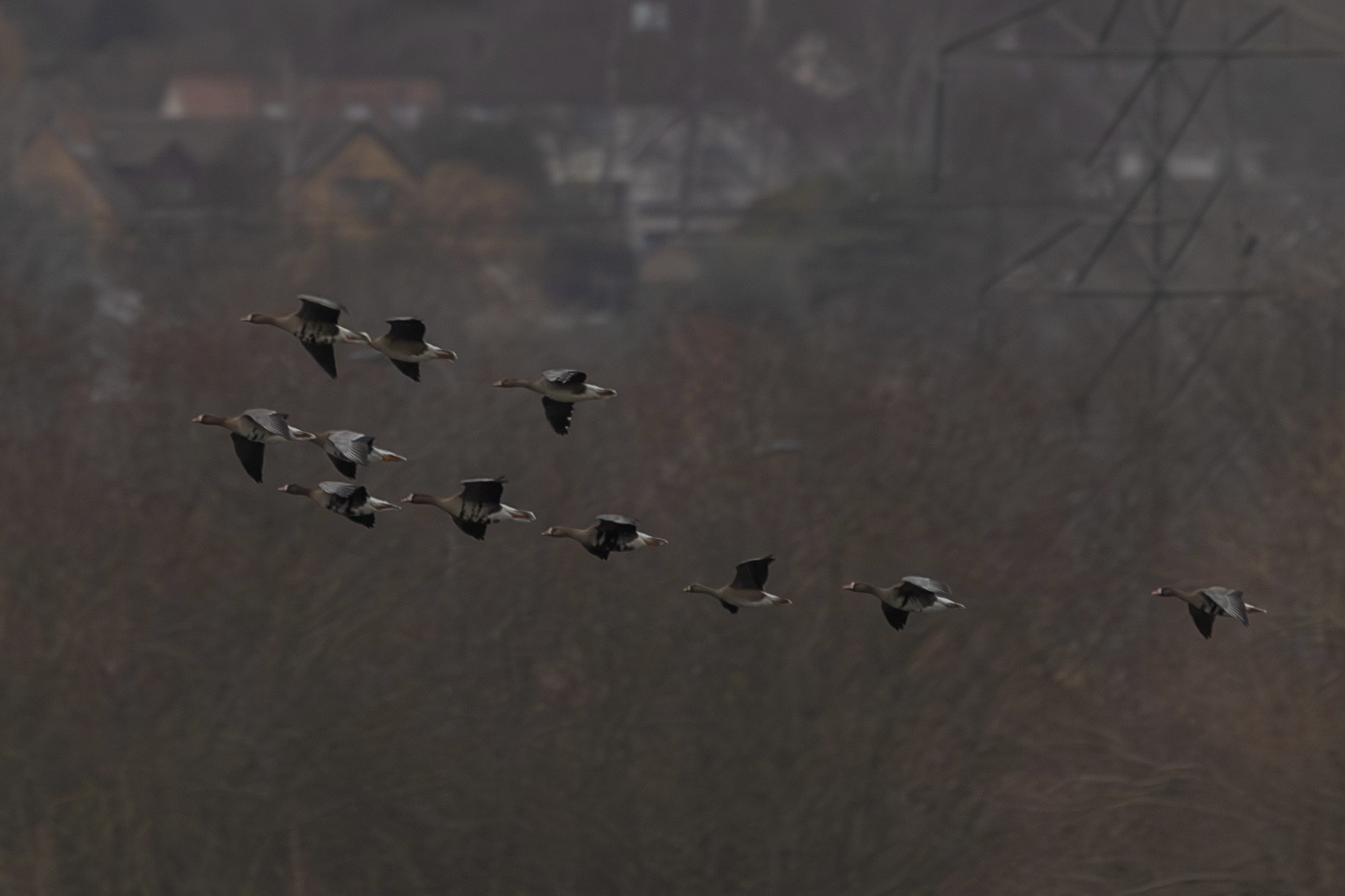
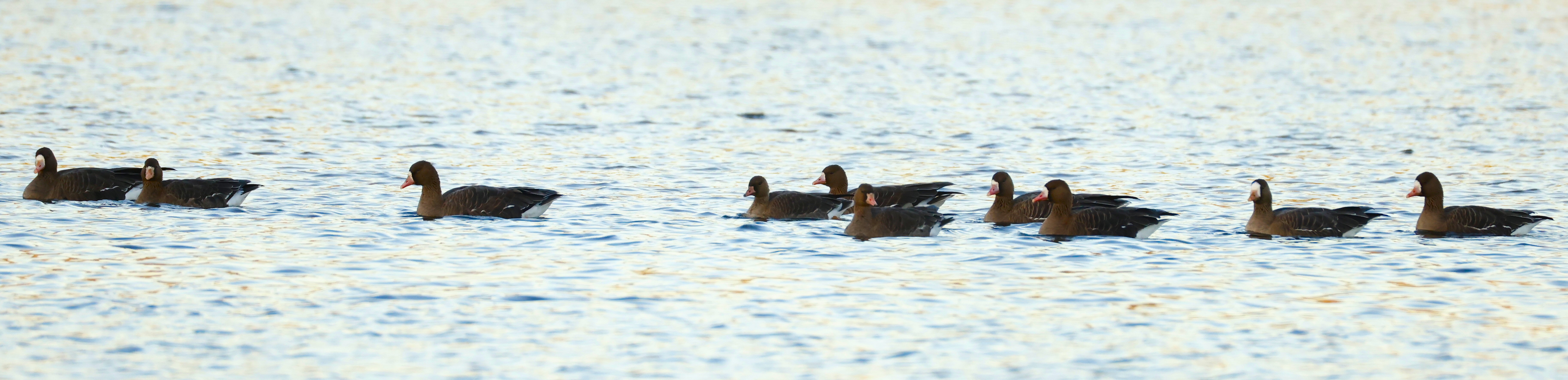
While we’re used to seeing Pink-footed Geese annually in small numbers, a skein of forty-seven heading north over Desborough on the first day of the new year was quite exceptional although unsurprisingly, given current circumstances, they were outnumbered by this week’s White-fronted Geese. Recorded daily throughout the period, nine localities held varying numbers with, once again, Stanford Res producing the highest count of seventy on 1st. Maximum site numbers elsewhere included twenty at Stanwick GP on 28th, sixteen at Blatherwycke on 28th, eleven at Clifford Hill GP on 27th-28th, ten at Pitsford Res between 30th and 1st, ten at Ringstead on 1st-2nd, six in the Cherwell Valley near Aynho on 27th, at least four at Summer Leys LNR on 29th and four in the Nene Valley near Woodford on 31st.
Still a local winter scarcity, two Whooper Swans flew south-east over the Brampton Valley between Cottesbrooke and Hanging Houghton on 31st and one visited Hollowell Res on 2nd.
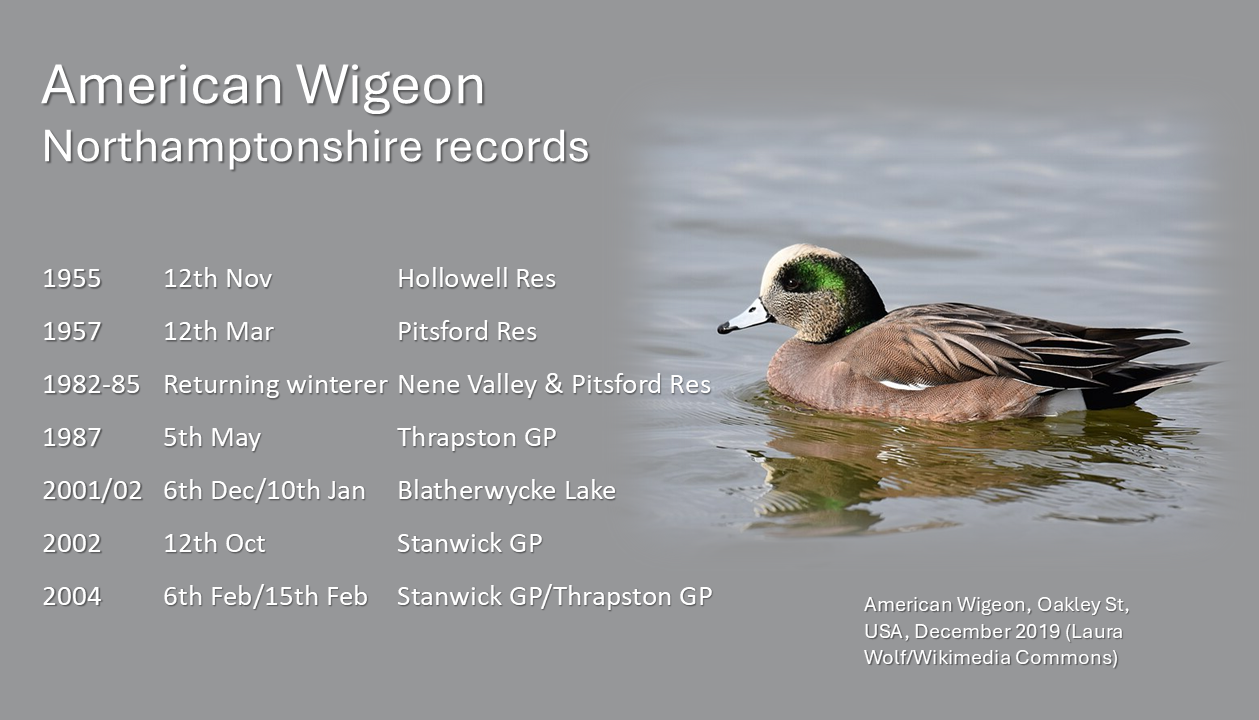
Discovered at Thrapston GP’s Titchmarsh NR on 27th and leaving all of the aforementioned in the shade, however, was Northamptonshire’s first American Wigeon for twenty-one years. Long overdue, it’s only the eighth county record and, remaining settled throughout the week, it duly attracted a steady stream of admirers, both local and from further afield.
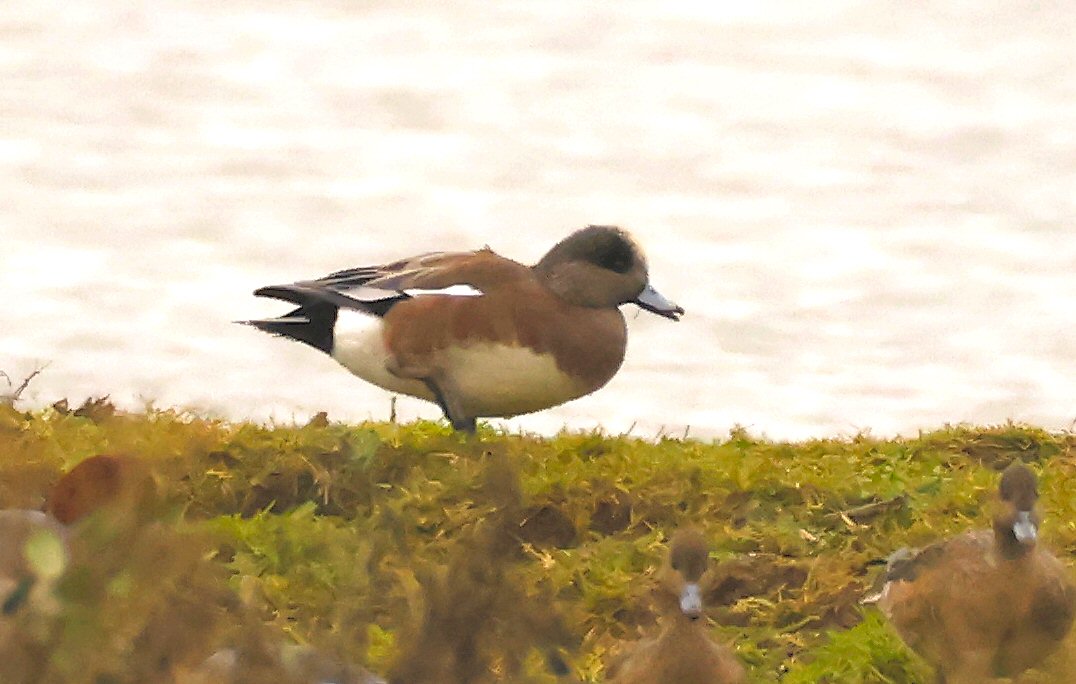
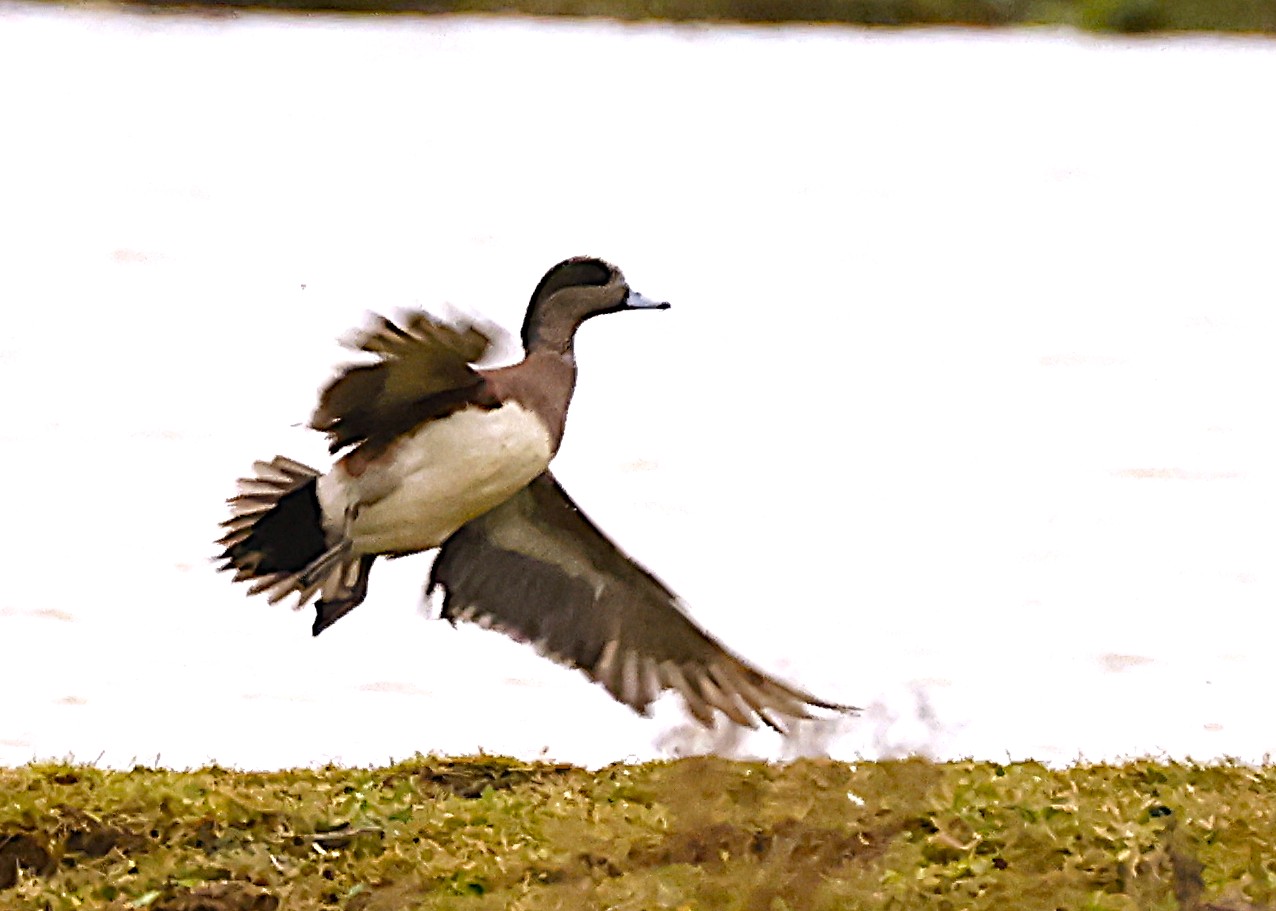
Following its apparent eleven-day absence and further escalating the attraction of Thrapston was the reappearance there of the dapper drake Ring-necked Duck on 28th. Rather more mobile than the American Wigeon, it divided its time between Town Lake, North Lake and Aldwincle Lake, being seen at the latter on 1st in close proximity to its fellow compatriot. Should we now be referring to Titchmarsh as ‘Little America’ and, if so, what else can we look forward to seeing there before the winter is out?
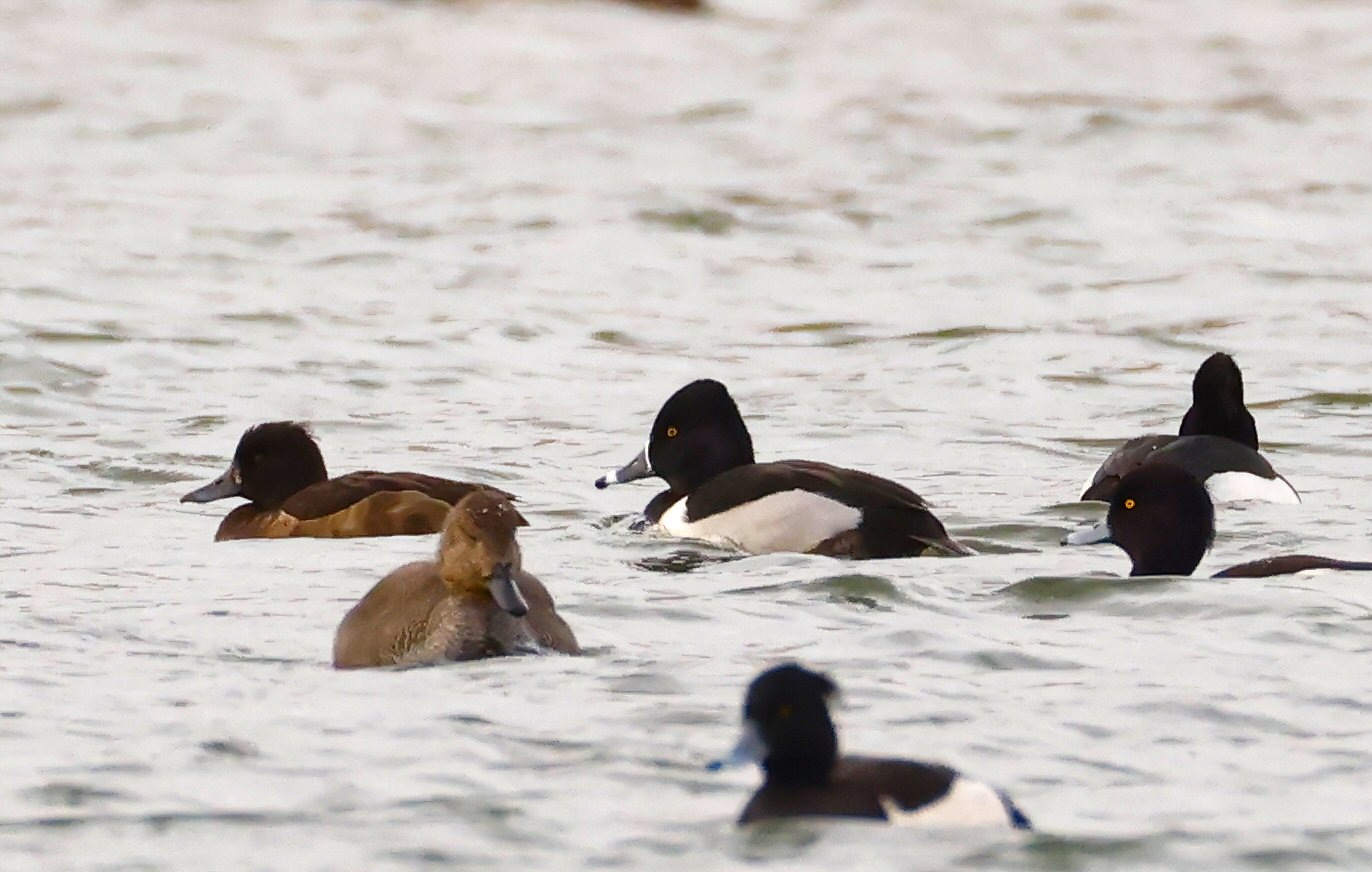
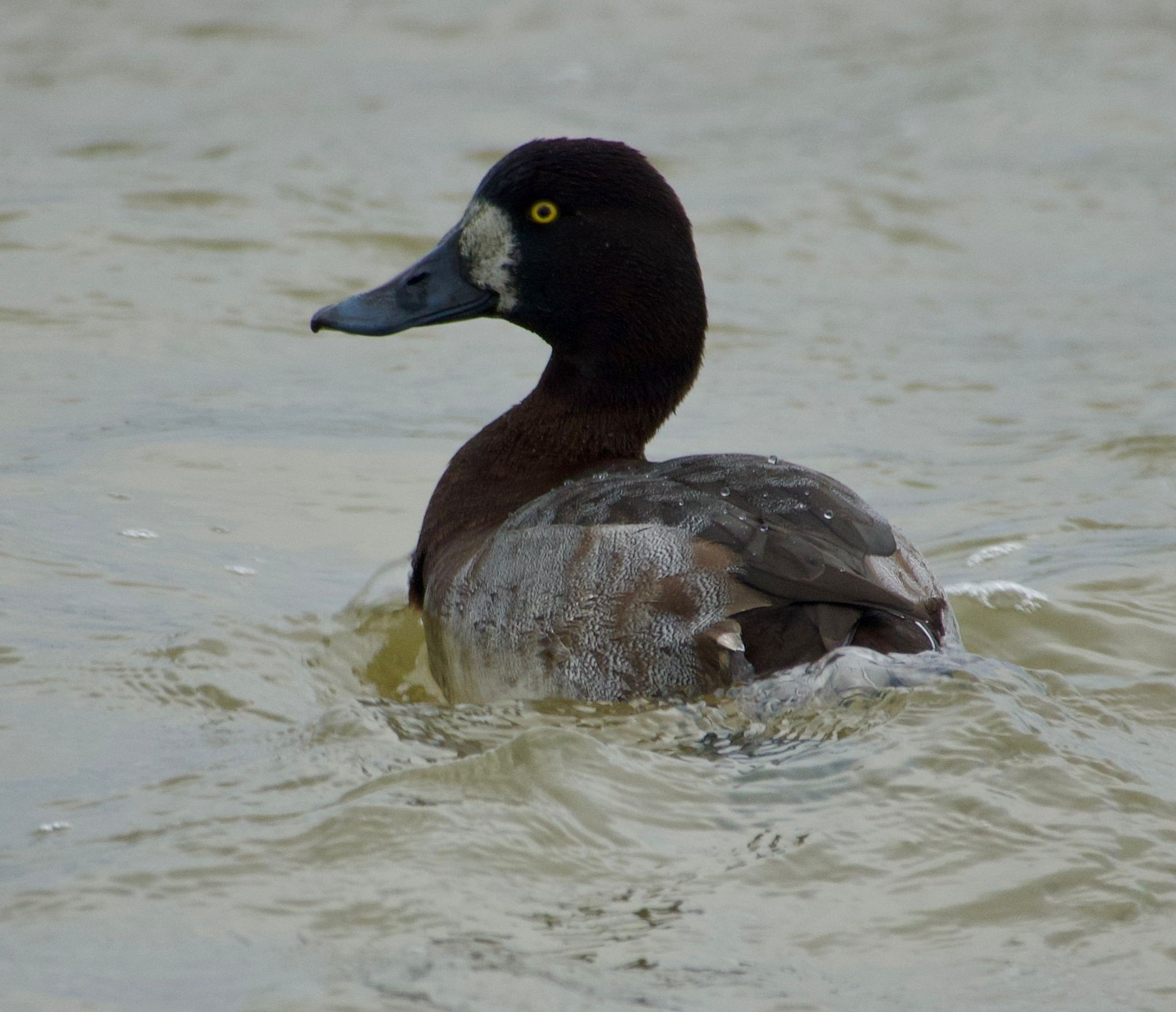
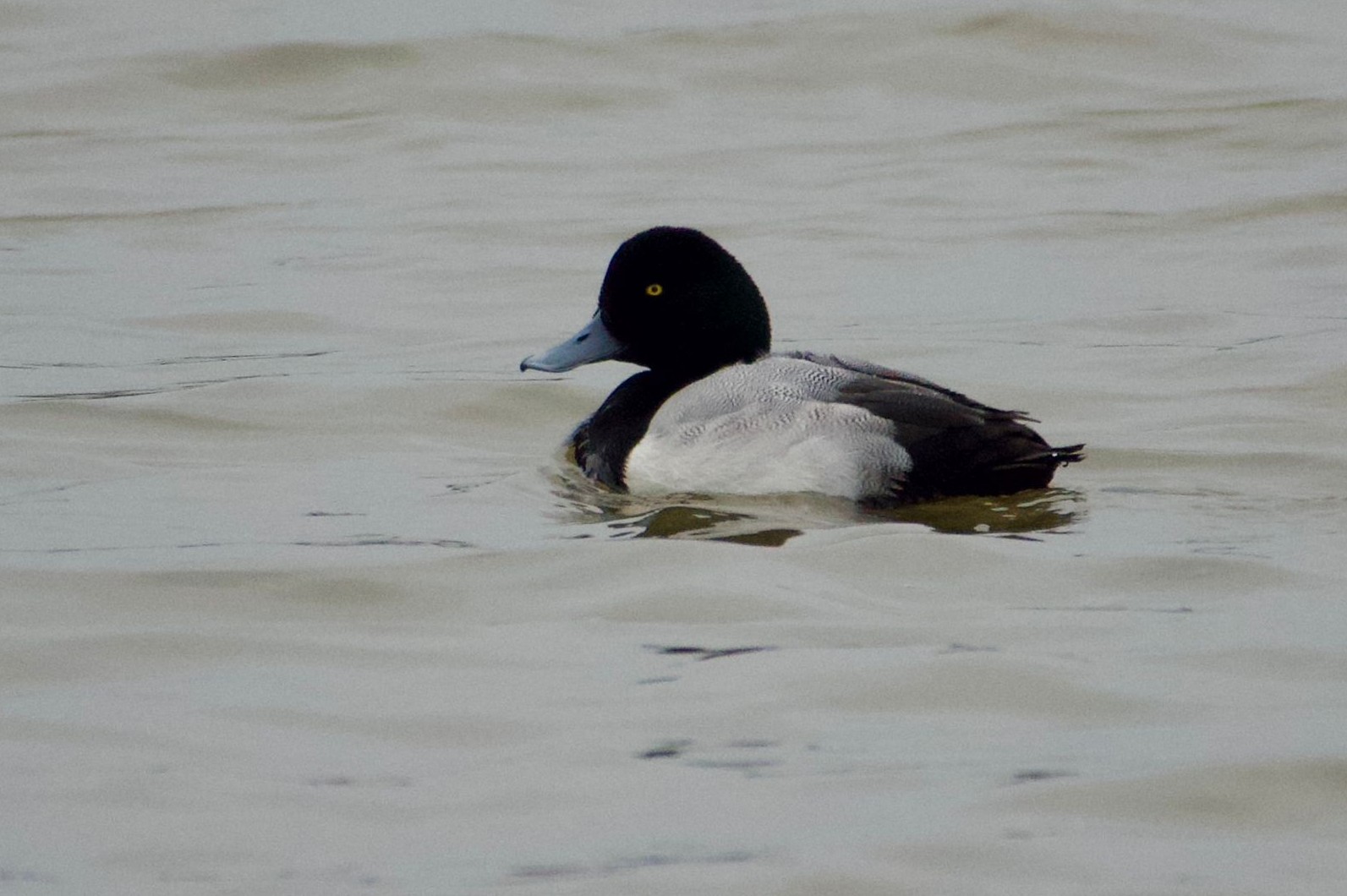
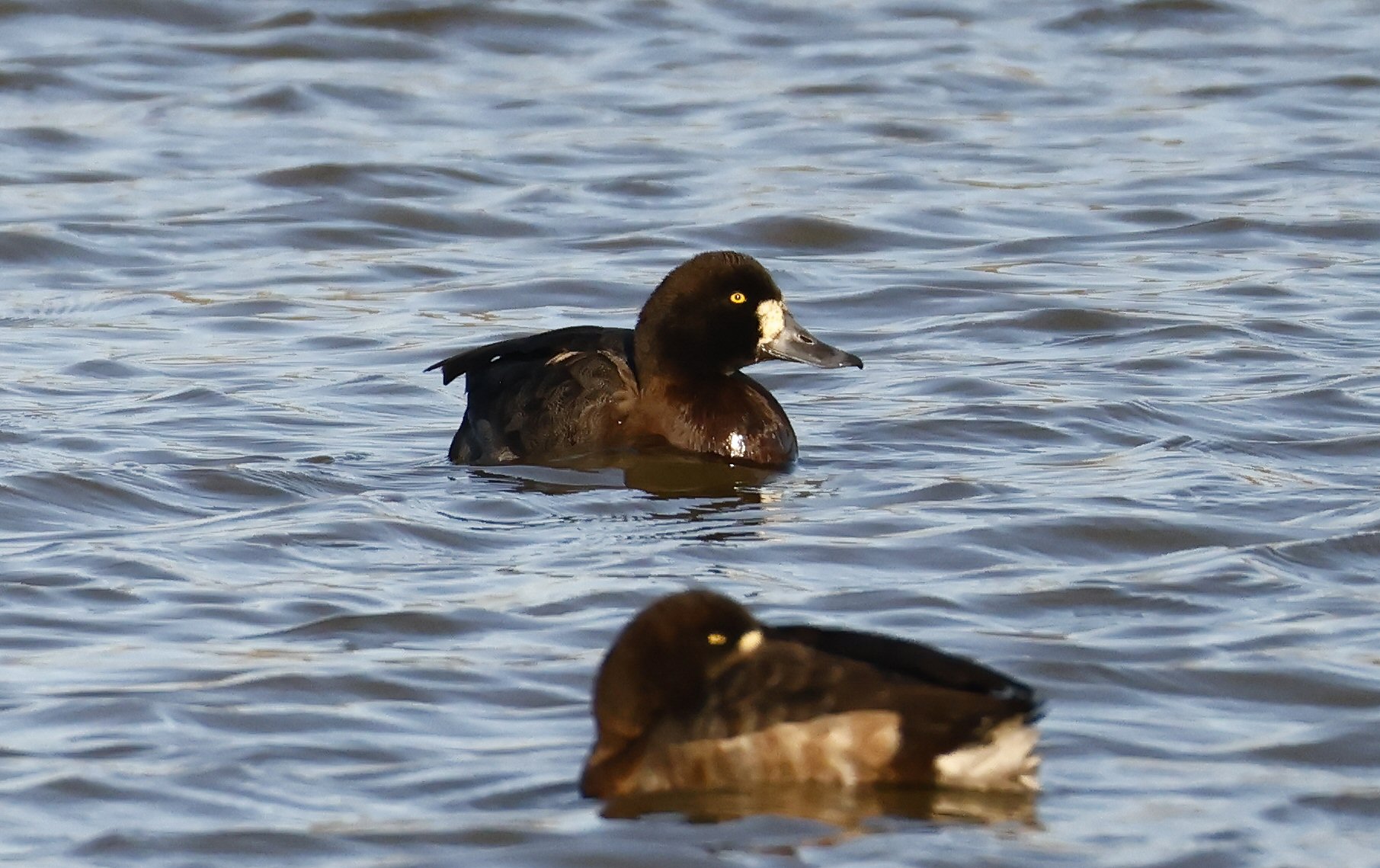
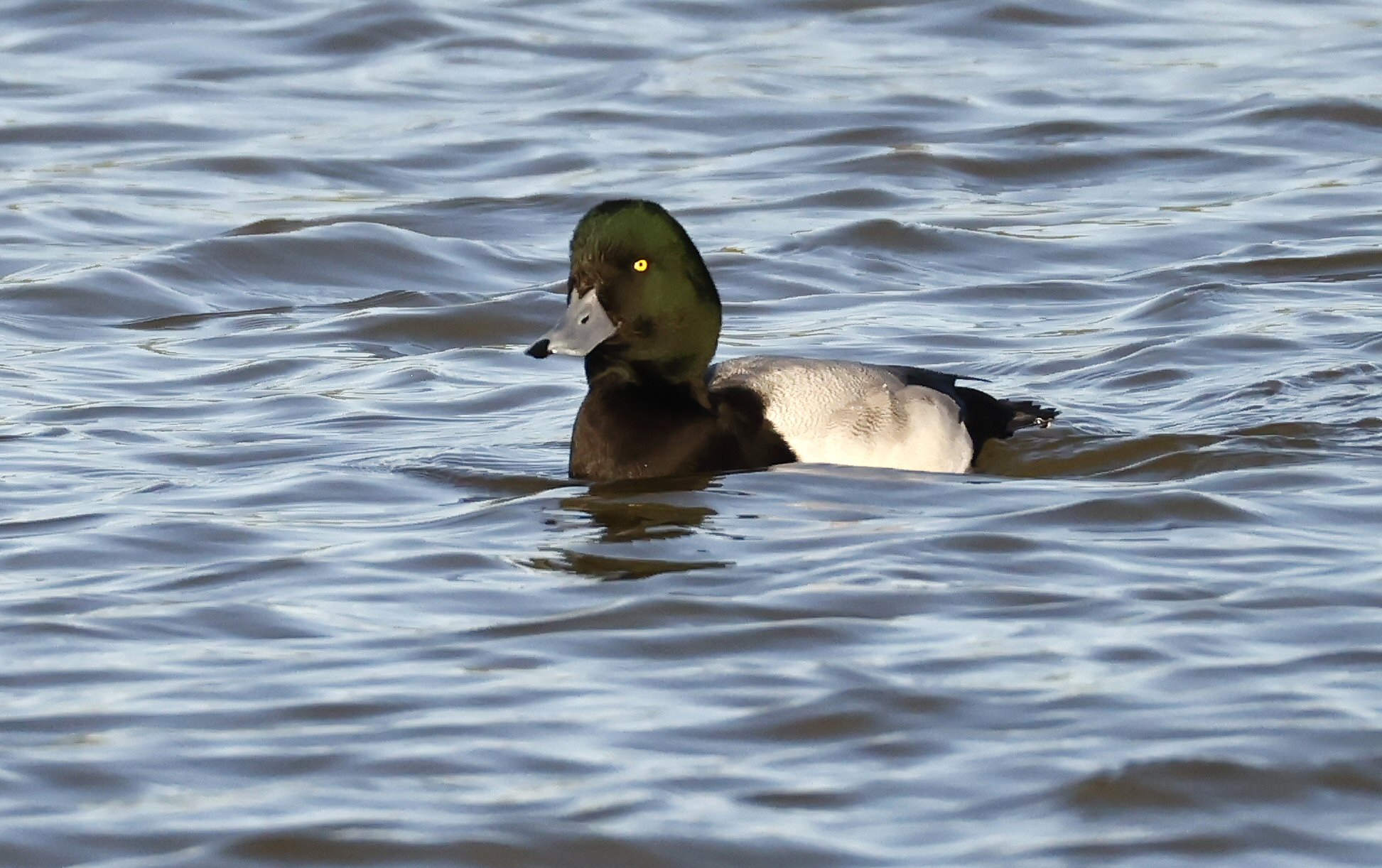
Other ducks deluxe consisted of the long-staying female and first-winter drake Greater Scaups at Thrapston/Titchmarsh throughout the week and a drake joined the previous week’s three females at Stanford from 27th until the week’s end.
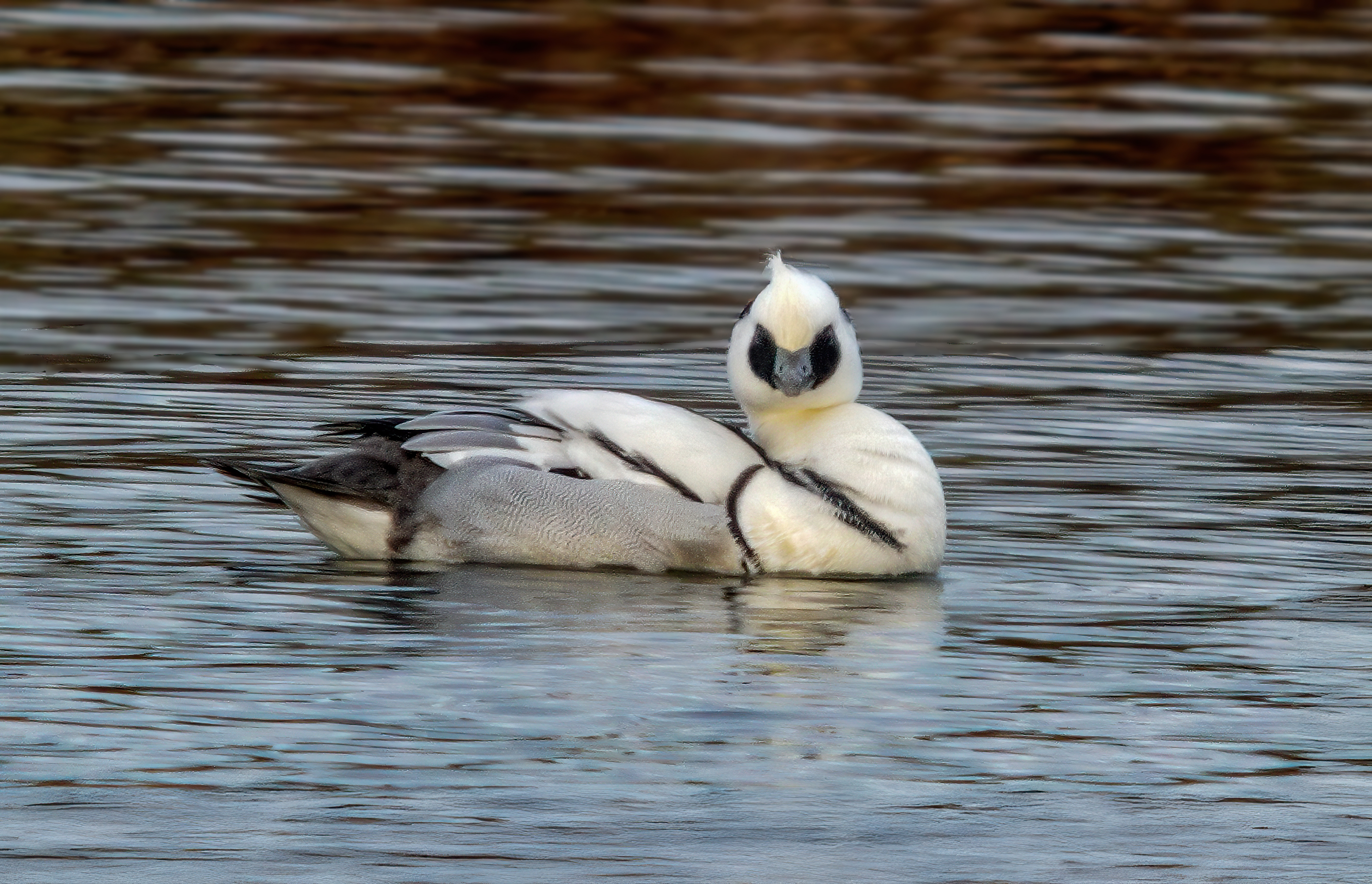
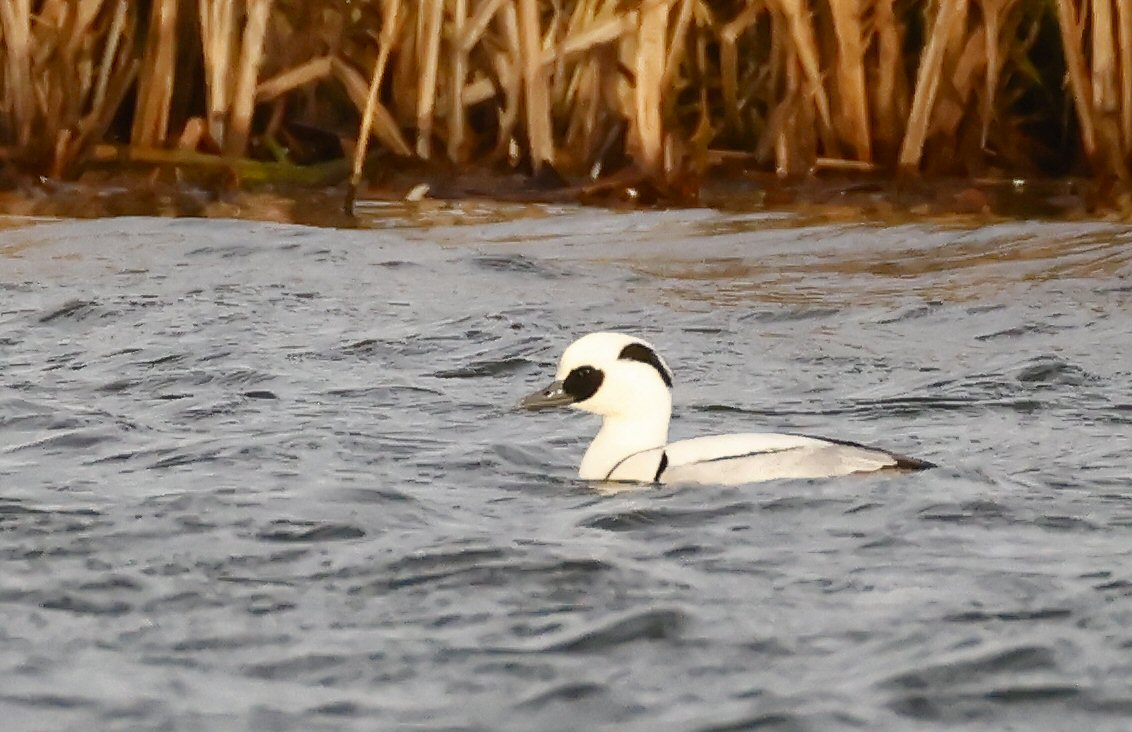
Becoming easier to see as time went by and looking as crisp as winter snow, last week’s drake Smew remained at Clifford Hill throughout the period.
Only the sixth found in the county this year, and a surprise for one observer at Blatherwycke Lake on 27th, was a fly-over Common Crane – a likely wanderer from the small wintering population in nearby Cambridgeshire. The five previous records in 2025 have all been in spring.
Last week’s Black-necked Grebe was also present at Blatherwycke on the same date but went unreported thereafter.
And while we’re used to seeing small numbers of Sanderlings passing through the county in spring, they are rare inland at this time of the year so, bucking the trend, one was found at Titchmarsh on 27th, remaining there until at least 30th. A Jack Snipe at Hollowell Res on 1st-2nd was the only one reported during the period.
The larid landscape was largely the same as last week, with Stanford’s gull roost holding a first-winter Mediterranean Gull on 28th, 30th, 31st and 2nd and an adult was in the roost at Pitsford on the first of these dates. Summer Leys produced single Caspian Gulls on 27th and 1st, plus two there on 30th, while single adults visited Hollowell and Stanford on 29th and 1st, respectively. Yellow-legged Gull sightings were restricted to an adult at Stanford on 29th and one at Summer Leys the following day.
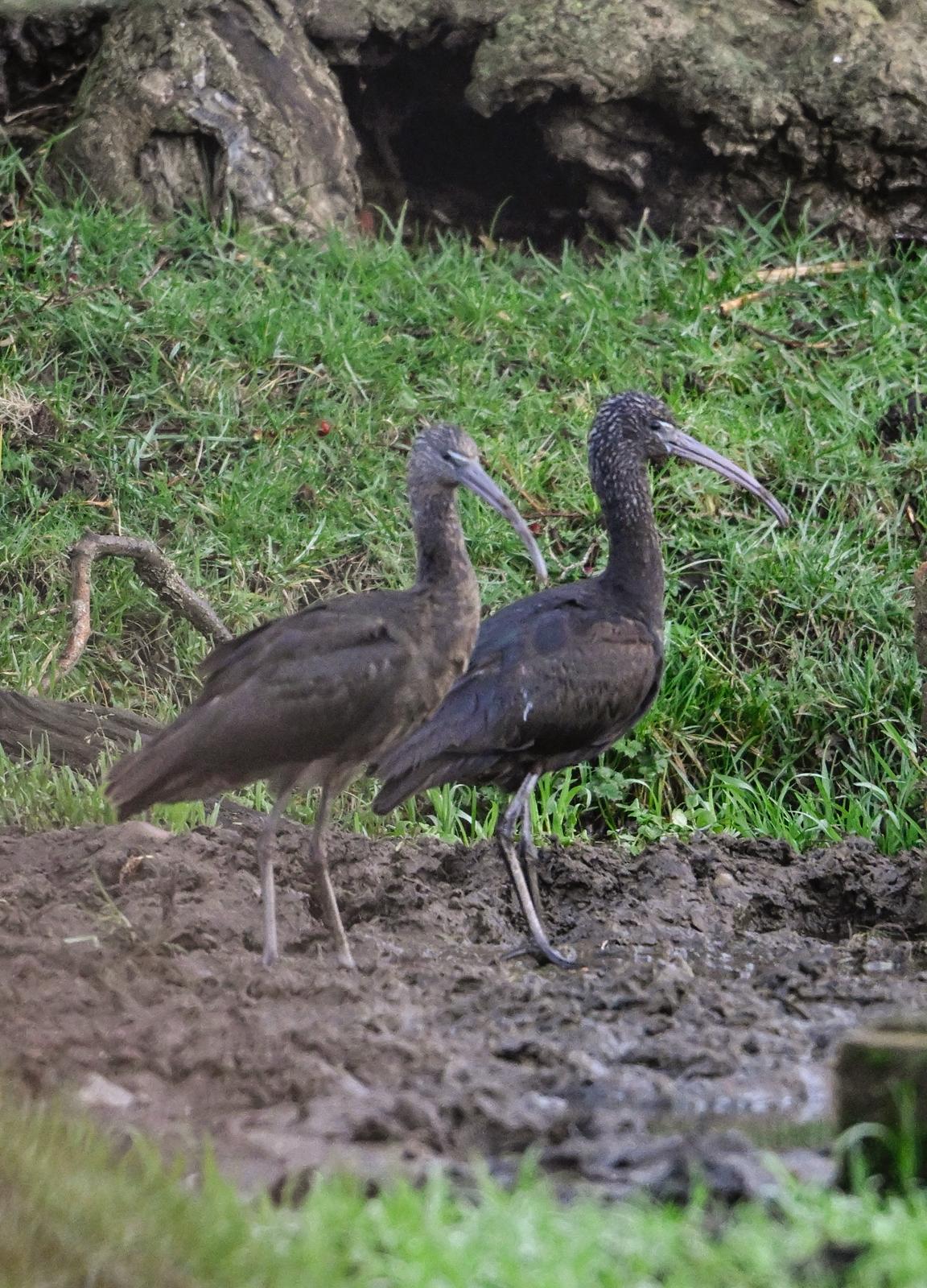
The week would not be complete without the continued presence of Glossy Ibises, of course, although the Nene Valley duo became more fidgety as the cold weather set in, being seen in the wider reaches of Earls Barton GP, briefly, on 27th, at Wellingborough Embankment – equally briefly on 28th and at Summer Leys the following day. Two continued to visit the Settling Pond area at Stanford from 27th until at least 1st.
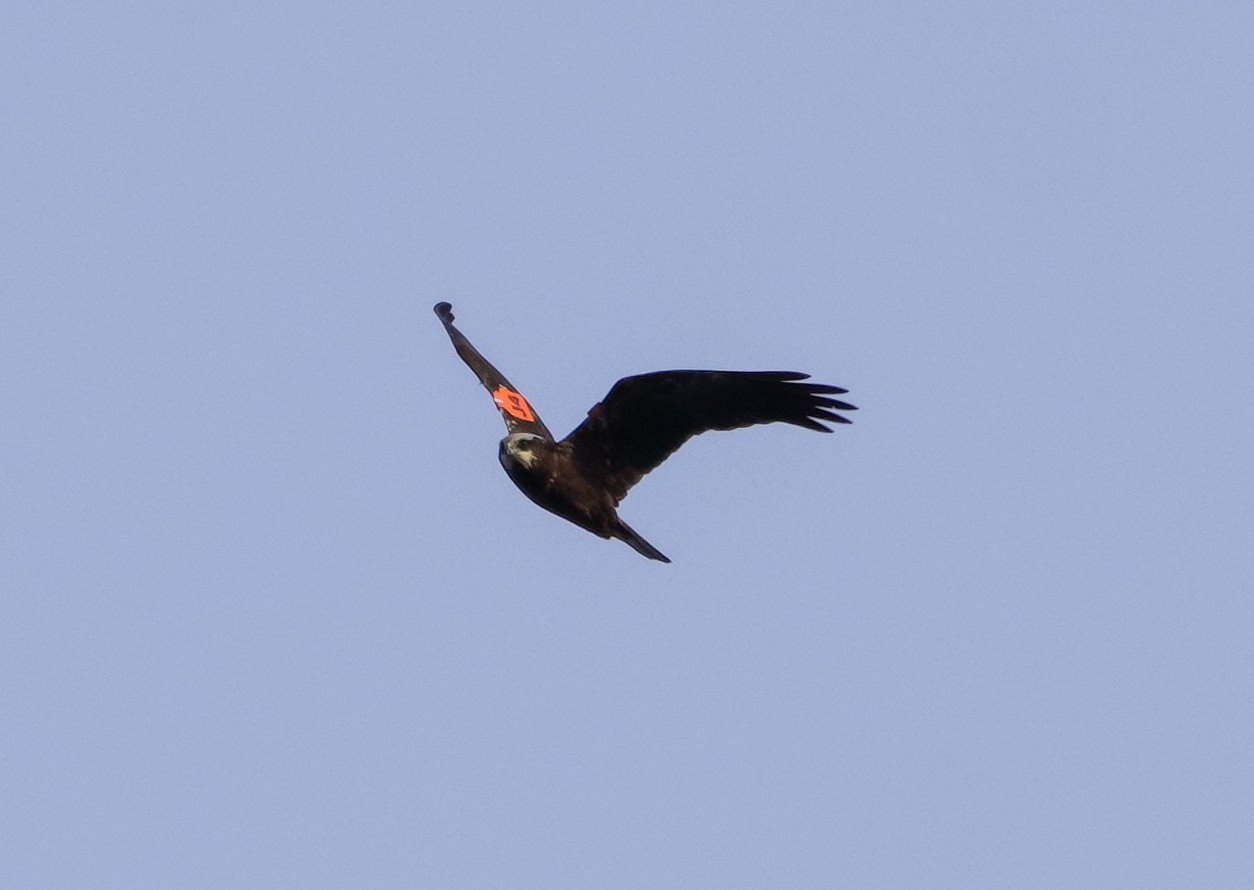
Marsh Harriers extended their occupation of the Nene Valley, with certain individuals’ movements being handily tracked through wing-tag identification. Falling into the latter category was the first-year male, ‘J4’, which flew over Ditchford GP’s Irthlingborough Lakes & Meadows NR on 1st, appearing less than an hour later at Summer Leys, where it was also seen the following day, along with an untagged bird. Untagged individuals were also present at Summer Leys on 28th and 30th while an unidentified tagged bird flew over Ringstead GP on 2nd. Sightings also came from Ditchford on 27th and Titchmarsh on 27th-28th.
And while the Brampton Valley ‘ringtail’ Hen Harrier was still present there on 1st, another ‘ringtail’ was found between Wakerley Great Wood and the nearby A43 on 27th, with undoubtedly the same bird at Laxton Park Farm, 1 km to the south, on 2nd.
Missing from last week’s summary, but back this week, was the Brampton Valley Merlin, seen again between Cottesbrooke and Hanging Houghton on 2nd.
Kicking off the new year on the passerine front was a Firecrest at New Sandy Lane Attenuation Pond, Duston on the morning of the 1st and, going back to black in more ways than one, a Black Redstart was found on ‘private farmland’ between Lamport and Scaldwell on the same day. Looks like the yearlisters will have to wait … Stonechats were again at a low ebb, with twos at Clifford Hill and Titchmarsh on 28th, one at Hollowell on 29th, two at Lilbourne Meadows NR on 30th, one at Achurch on 31st, and two in the Brampton Valley between Cottesbrooke and Hanging Houghton on 2nd.
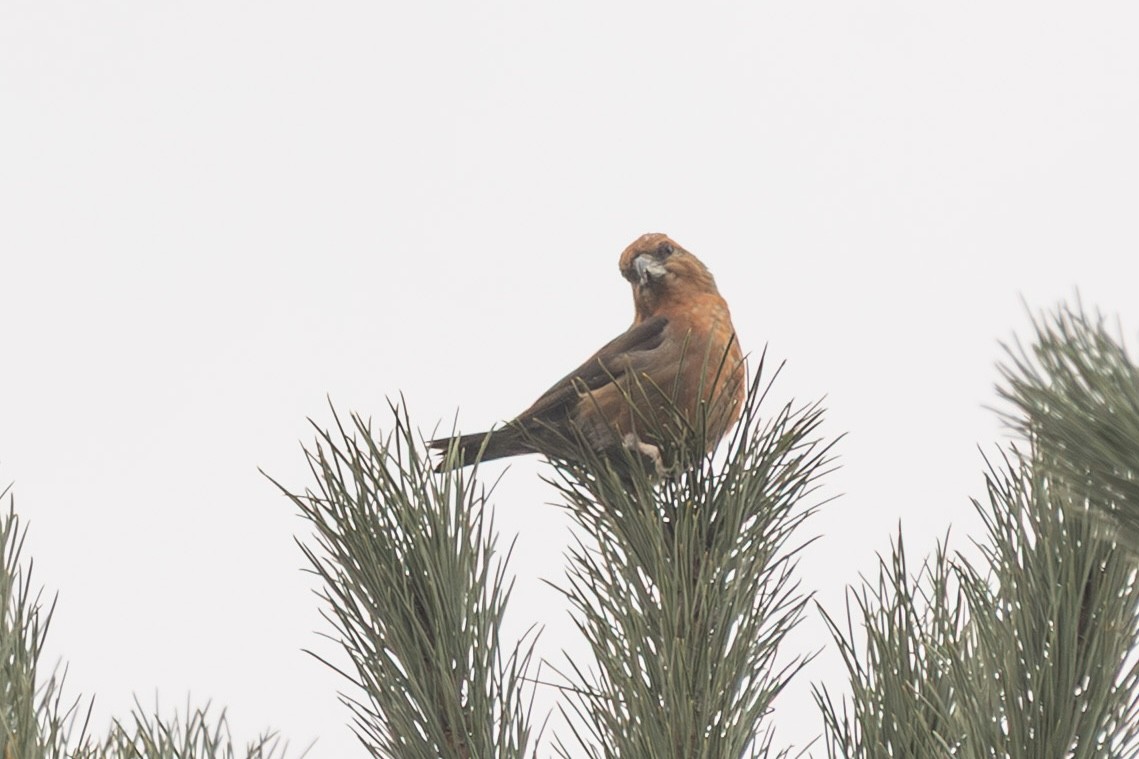
Continuing with Crossbills, at least ten were at Wakerley Great Wood on 27th, eight were found at Salcey Forest on 29th, six at Harlestone Firs on 31st and ten opened the new year, first-footing at Fineshade Wood on 2nd.
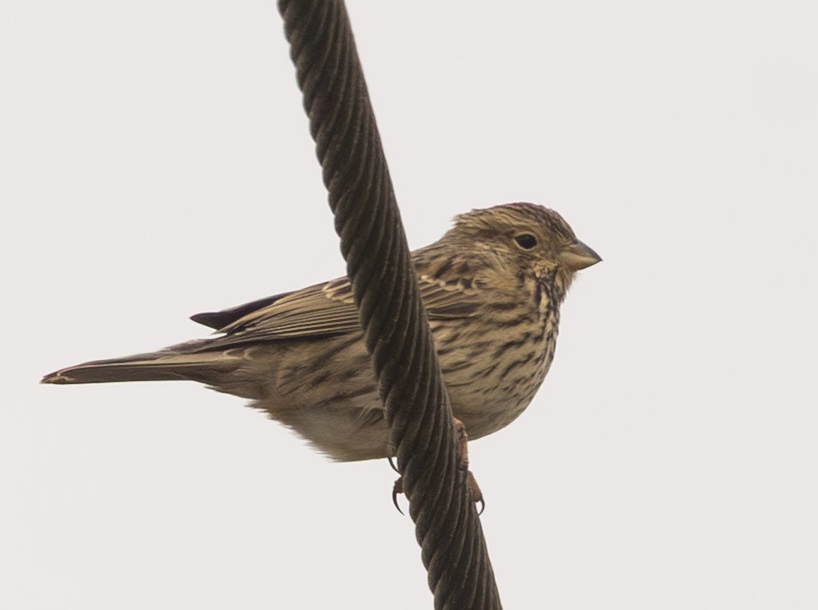
And following the recent run of Corn Buntings at the newly discovered site between Deanshanger and Wicken, a substantial total of twenty-two was an eye-watering count there on 27th, dropping to eight the following day.

Discover more from Northants birds
Subscribe to get the latest posts sent to your email.

 Northants birds