It may come as no surprise to many but Northamptonshire now joins Cheshire, Dorset, Devon, Essex, Hampshire and Somerset as counties which have played host to breeding Cattle Egrets in the UK.
Discovered by Steve Fisher on 8th June, an adult apparently incubating eggs, within a mixed Little Egret and Grey Heron colony in the Nene Valley, gave rise to optimism that we were only a few weeks away from seeing successful local breeding.

Formerly a very rare vagrant, Cattle Egret has become a more regular sight in the UK in recent years, following several large influxes. The first in 2007 saw over 200 arriving throughout Britain and Ireland and resulted in successful breeding in the Somerset Levels in 2008. Another influx in 2016 brought even larger numbers, with further successful breeding in Cheshire in 2017, during which two more colonies were discovered, giving rise to a total of 10 pairs.
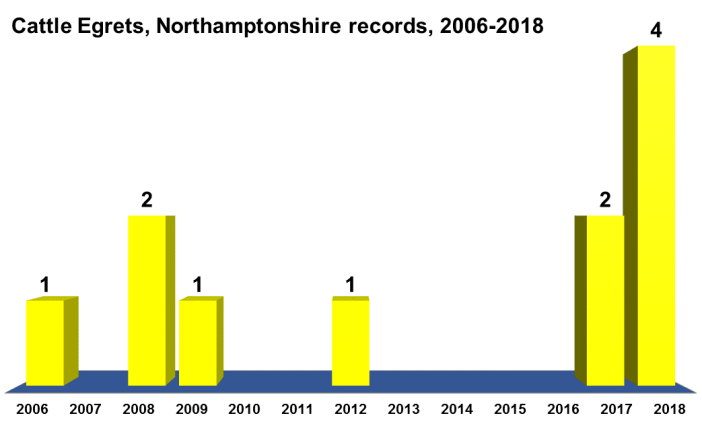
In Northamptonshire, Cattle Egret was first recorded in 2006, when one was present at Summer Leys LNR from 11th to 13th August. Others soon followed and individuals of this species were recorded in five of the twelve years between 2006 and 2017, with the first ‘multiple’ (two together) occurring only as recently as 2018. Up to 4 made a protracted stay at Stanwick GP between mid-October and mid-December 2018, after which singles appeared there and at nearby Ditchford GP in March this year, with 3 adults at Stanwick regularly from late May.
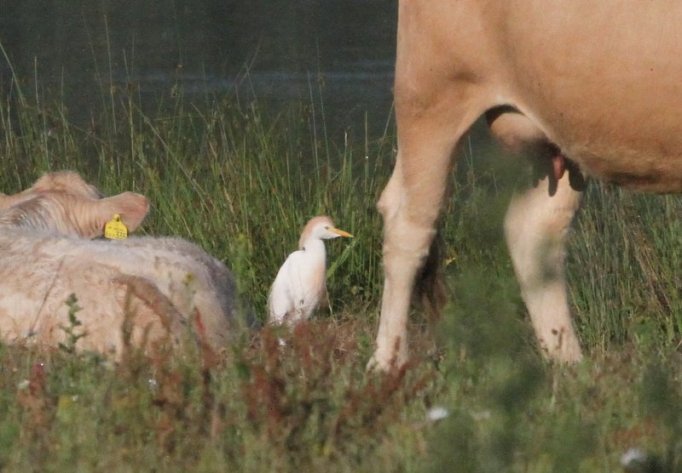
Breeding then followed and after hatching successfully, young were observed in the nest for the first time on 1st July. A week later they were looking significantly bigger and today (17th July) one was standing on the nest, stretching, walking and preening and fledging appears likely within the very near future. Because of the vegetation cover, it is not possible to be certain if there are 2 or 3 young at this point. One adult was in attendance and two more adults – making up the original ‘Stanwick three’ – flew in to join it after being observed with cattle at Stanwick some ten minutes earlier.

Interesting behaviour followed as two of the birds attended to ‘housekeeping’, one of the arrivals passing a stick to the attendant, which then proceeded to add it to the nest platform before breaking off another twig from a nearby bush and repeating the behaviour. According to BWP, both sexes engage in nest-building, the female taking sticks passed to her by the male, one at a time, before putting them in place, with material continually added to the structure during incubation and long after hatching.
Of further interest is that all three adults appear to be involved in the family business, i.e. the breeding pair has a helper, or even a ‘nanny’, if you will. Again, BWP states that temporary trios of two females and one male are not infrequent at the start of the breeding season but these three appear to have stayed together throughout.
Northamptonshire is not alone in producing a breeding pair in 2019. Others have bred in Hampshire and Essex, away from the initial location in the Somerset Levels.
The information on breeding has now been released on the basis that anyone who wants to see a Cattle Egret will have done so by now. Surrounded by water, the site is largely inaccessible and will therefore not suffer from disturbance, successful hatching precludes the possibility of potential egg-theft and the young will shortly leave the nest. It is also unlikely the site will be used again … but who knows?!
Rapid population growth and range expansion is characteristic of Cattle Egret, which is now probably the most widespread species of bird on the planet, having colonised Europe, the Middle East, and North America from Africa, and Australia from Asia.
 A more temperate period followed the previous week’s hot air and humidity as the wind mix became light northerly and westerly. Long-staying Cattle Egrets remained in the Nene Valley, while wader passage continued to trickle along and included increasing numbers of more common species.

 Following last week’s adult and a juvenile Common Redstarts near Badby, a juvenile appeared at Denton Wood in Yardley Chase on 11th. Its rather fresh, unmoulted juvenile plumage, coupled with the relatively early arrival date, gives rise to speculation that it had fledged locally. This species has occasionally bred in the county and, although there have been summer females with active brood patches there are no records of proven breeding this century.
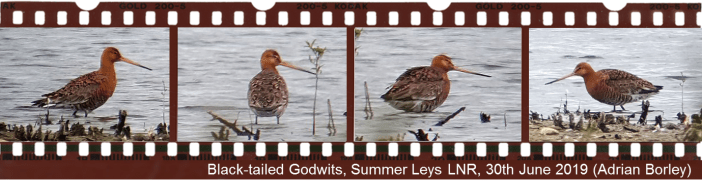 As Southern England basked in 34°C on the first day of the period, Northampton hit 30°C ahead of an overnight drop as cooler air moved in from the Atlantic, sweeping away the humidity and setting a dry and bright scene for the remainder of the week. A blink-and-you’ll-miss-it ‘first’ for Northamptonshire caught locals off guard, leaving them somewhat dazed, but is it really all over … ?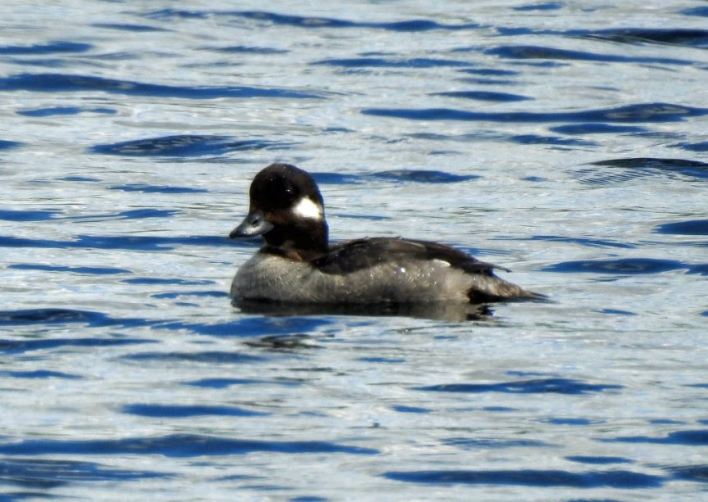

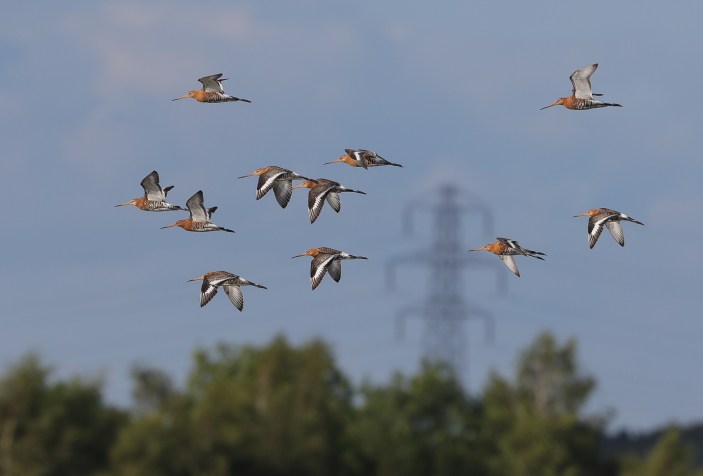

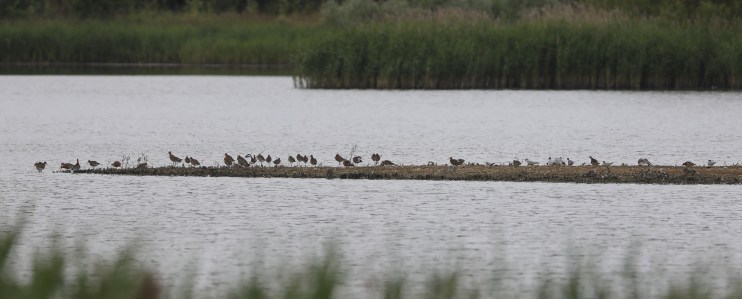

 After a dry start, the week went through a short dull and damp phase before becoming rather bright and breezy. Local winds remained mainly north/north-easterly while, nationally, a more southerly vector kicked in. Migration was expectedly slow for the masses, evidenced only by a handful of returning waders, while this week’s highlights, an audible European Bee-eater and a visible Spoonbill presented to just two lucky observers.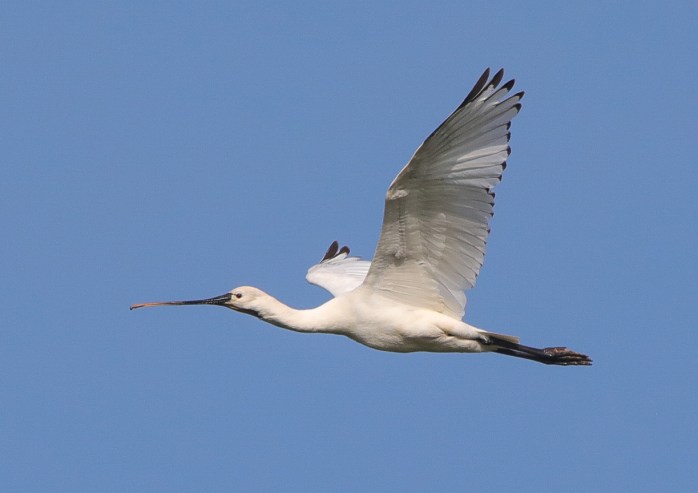

 This species is declining as a result, in part, of uncontrolled netting of migrating birds, particularly in Egypt, where Quail trapping is now taking place on an unsustainable, commercial scale. In Europe agricultural intensification has led to the loss of rough grass and uncultivated land and an increase in the use of herbicides and insecticides, which has led to a reduction on the availability of weeds, seeds and insects. In Europe the population size is estimated to be fluctuating and Quail is on the IUCN Red List of Threatened Species (BirdLife International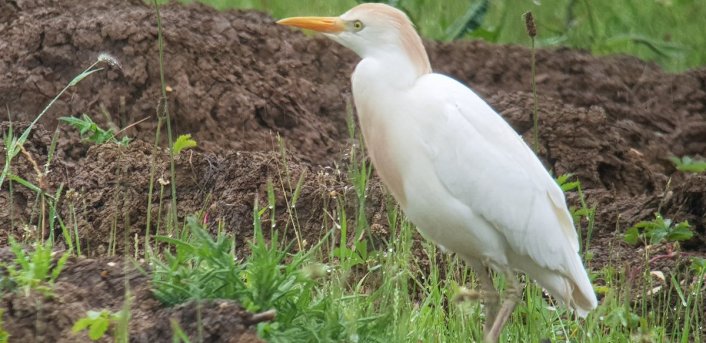





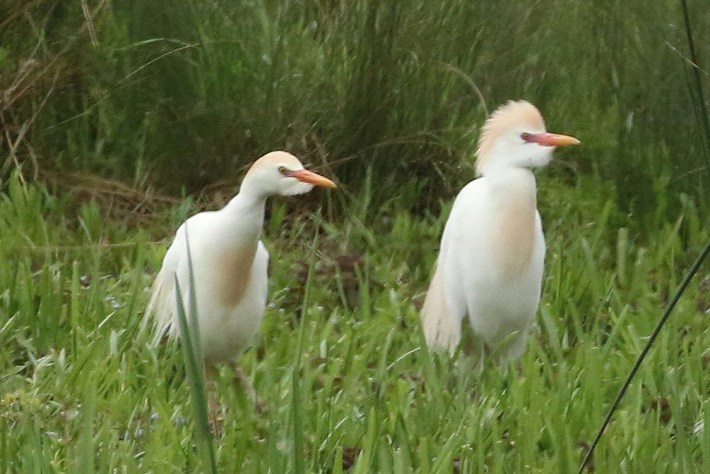
 The period’s weather fell under the influence of a westerly airflow, which brought intermittent sunshine and showers and, as it happens, very little change to the local birdscape. Topping the charts this week were three Cattle Egrets at Stanwick, all resplendent in summer plumage … and one up on last week’s total.


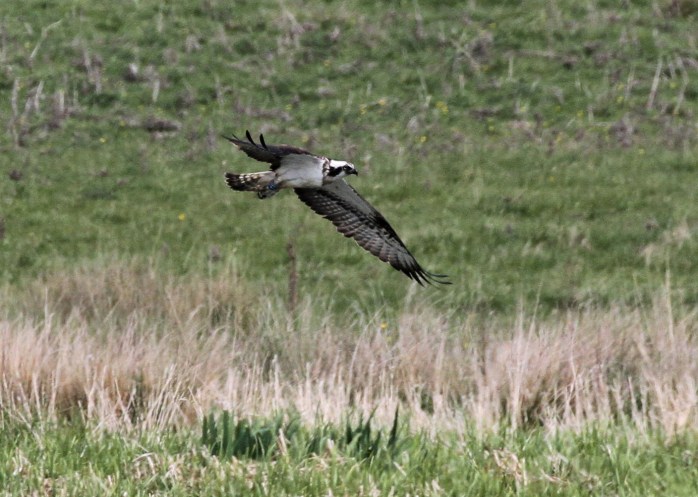

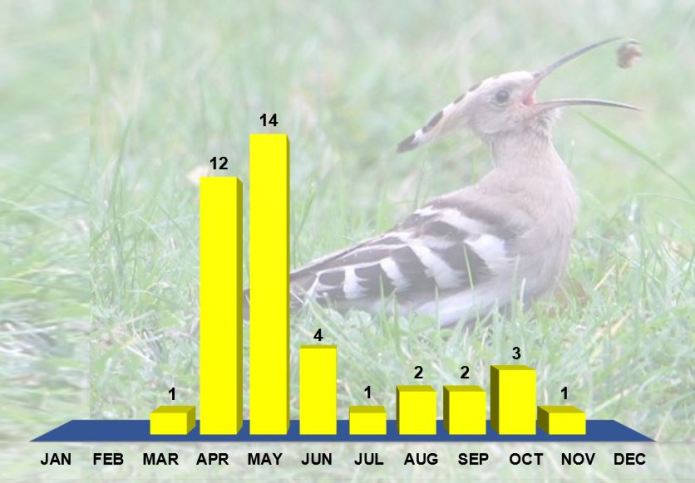
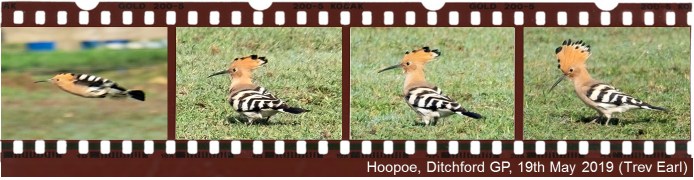 Another fine, largely dry week commenced with the convergence of two pressure systems over the central part of the country, producing only a few short-lived, local showers on northerly winds. Though fairly quiet, undoubtedly bird of the week was a Hoopoe, which stayed long enough to pose briefly for photos for just one lucky, right place, right time photographer …

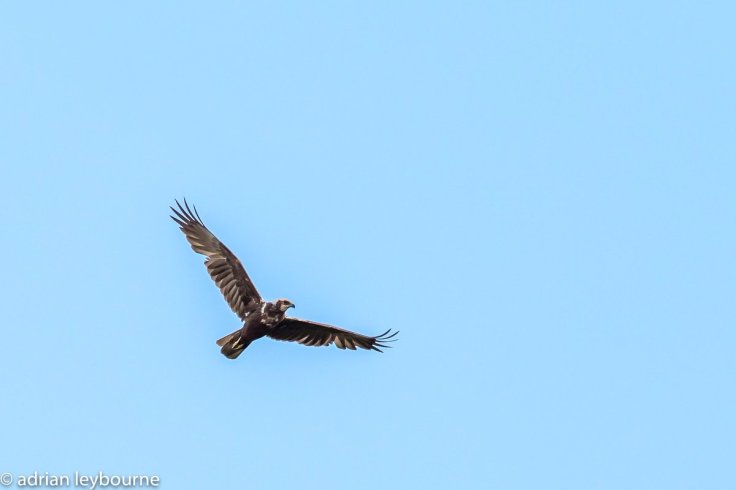

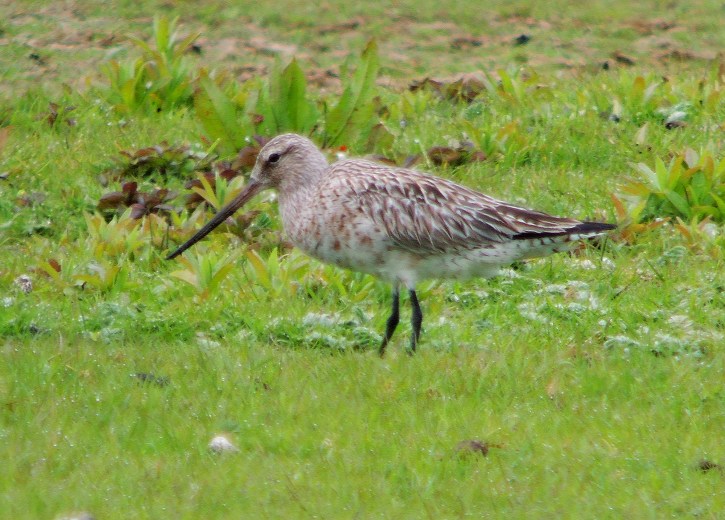


 A fine, dry week saw the pace of migration slow somewhat, although winds in the latter half were a keen north-easterly, turning to a strengthening easterly at the very end of the period. With all the summer visitors now in, speculation is running high on what might be found over the forthcoming two weeks.





 Northants birds