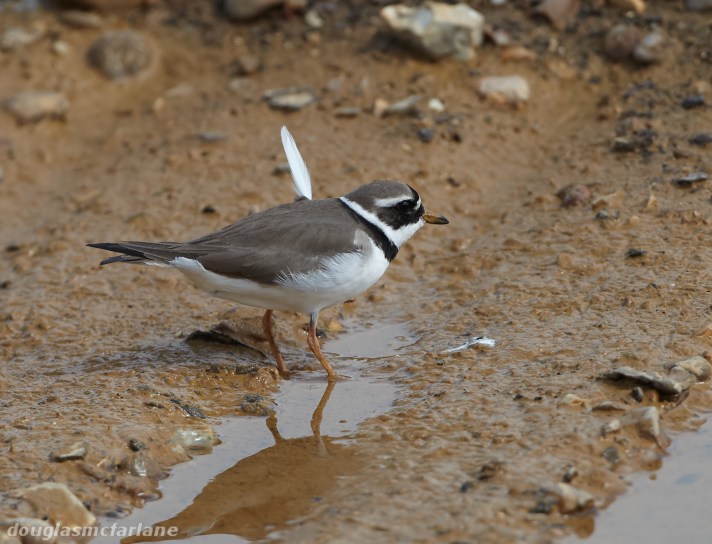
Late spring sees small flocks of Ringed Plovers inland, moving north. Most, if not all will be ‘Tundra’ types, probably of the Scandinavian/Russian/Siberian race tundrae, but possibly also psammodroma, which breeds no further away than Iceland, with its range extending to Greenland and north-east Canada. Both races are very similar, being slightly smaller, darker and marginally smaller-billed than our ‘own’ nominate race hiaticula (more here).
There have been a handful of reports this week, including 5 at Earls Barton Gravel Pits on 6th and one there on 7th, plus 6 at Stanwick Gravel Pits and 7 at Pitsford Reservoir yesterday.
This one at Earls Barton GP appears to be a female as the ear coverts are not solidly black and the band around the neck is thin and brownish at the rear but it was noticeably smaller and darker than the accompanying bird, which is presumed to be a breeding hiaticula.
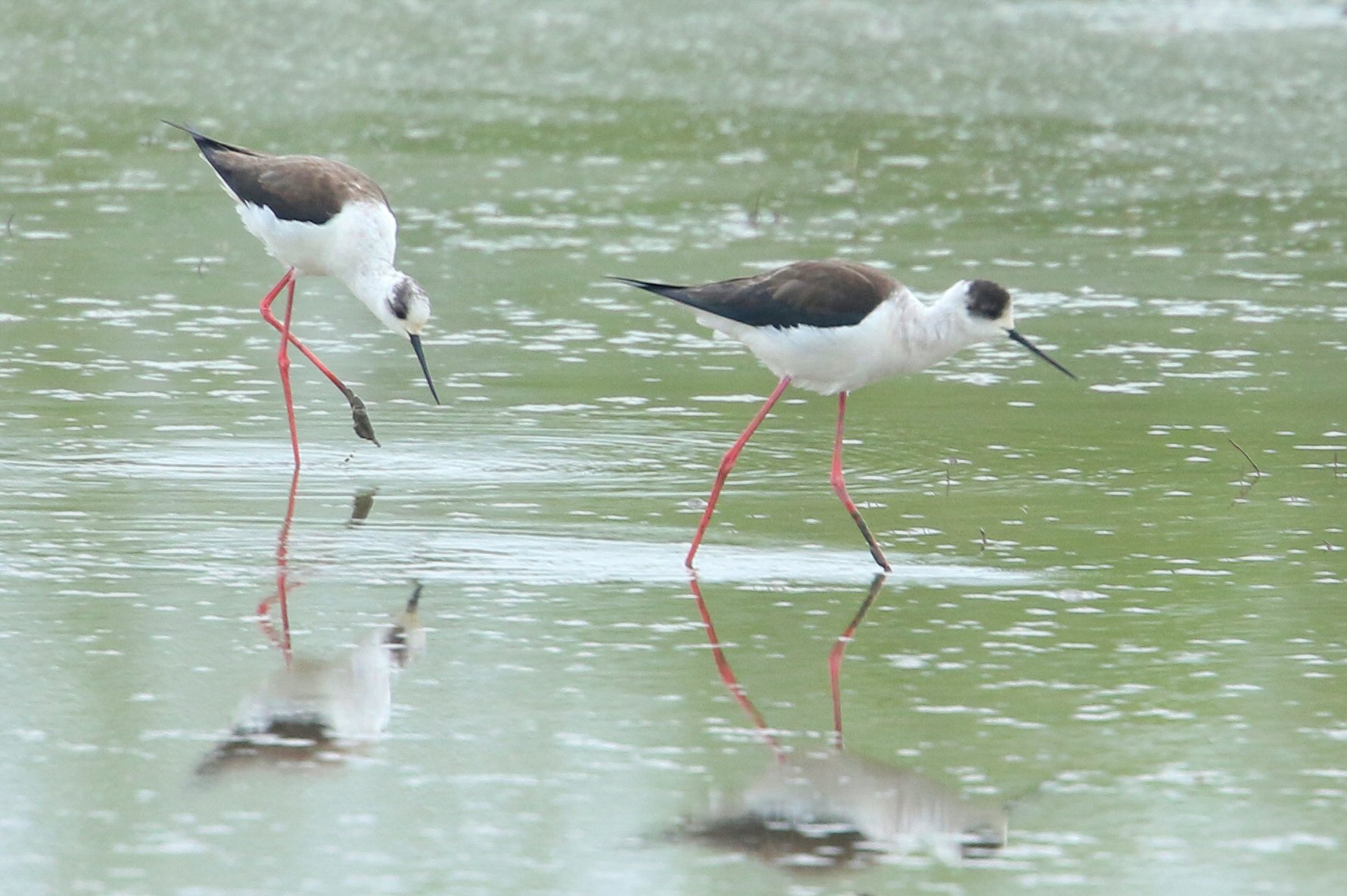
An early morning visit to partly-drained Stanford Reservoir paid off handsomely for Mel Farrar, today, with the discovery of three Black-winged Stilts close to the northern end where, fortunately, they remained into the evening.
Black-winged Stilts, Stanford Res, 20th April 2017 (Bob Bullock)
Black-winged Stilts, Stanford Res, 20th April 2017 (Bob Bullock)
Six together at Slimbridge, Gloucestershire yesterday had become three there by this morning, further supporting the existence of a flyway between the Severn Estuary and The Wash.
This is the fifth record for Northants, the previous four having all been in May, including the first at Boddington Res on 22nd-23rd May 1965 and the rest at Summer Leys, where there was one on 15th May 1997, two on 1st May 2008 and two on 18th May 2014. This species is building a local track record for one-day stays. Will they still be there tomorrow … ?
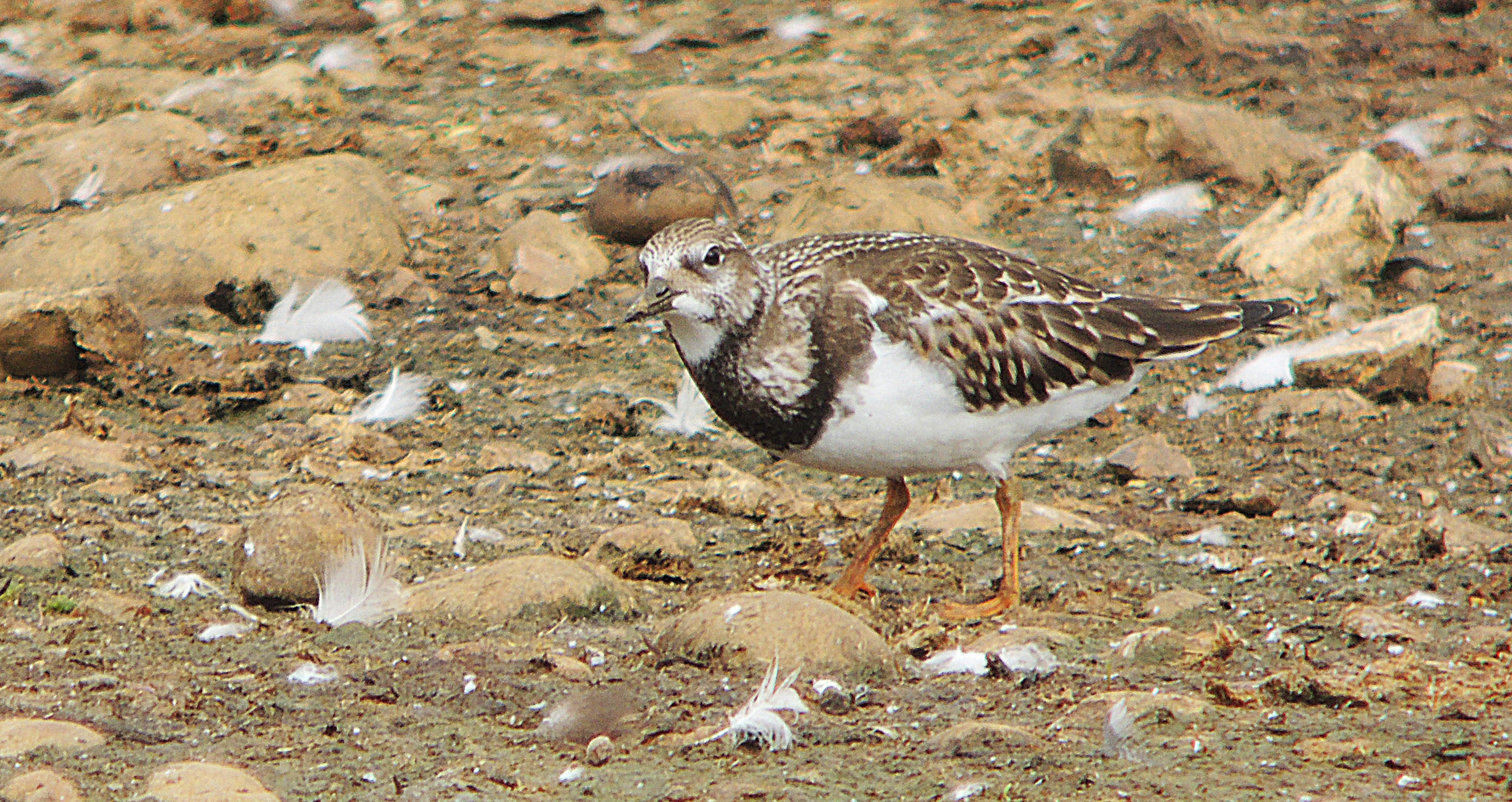
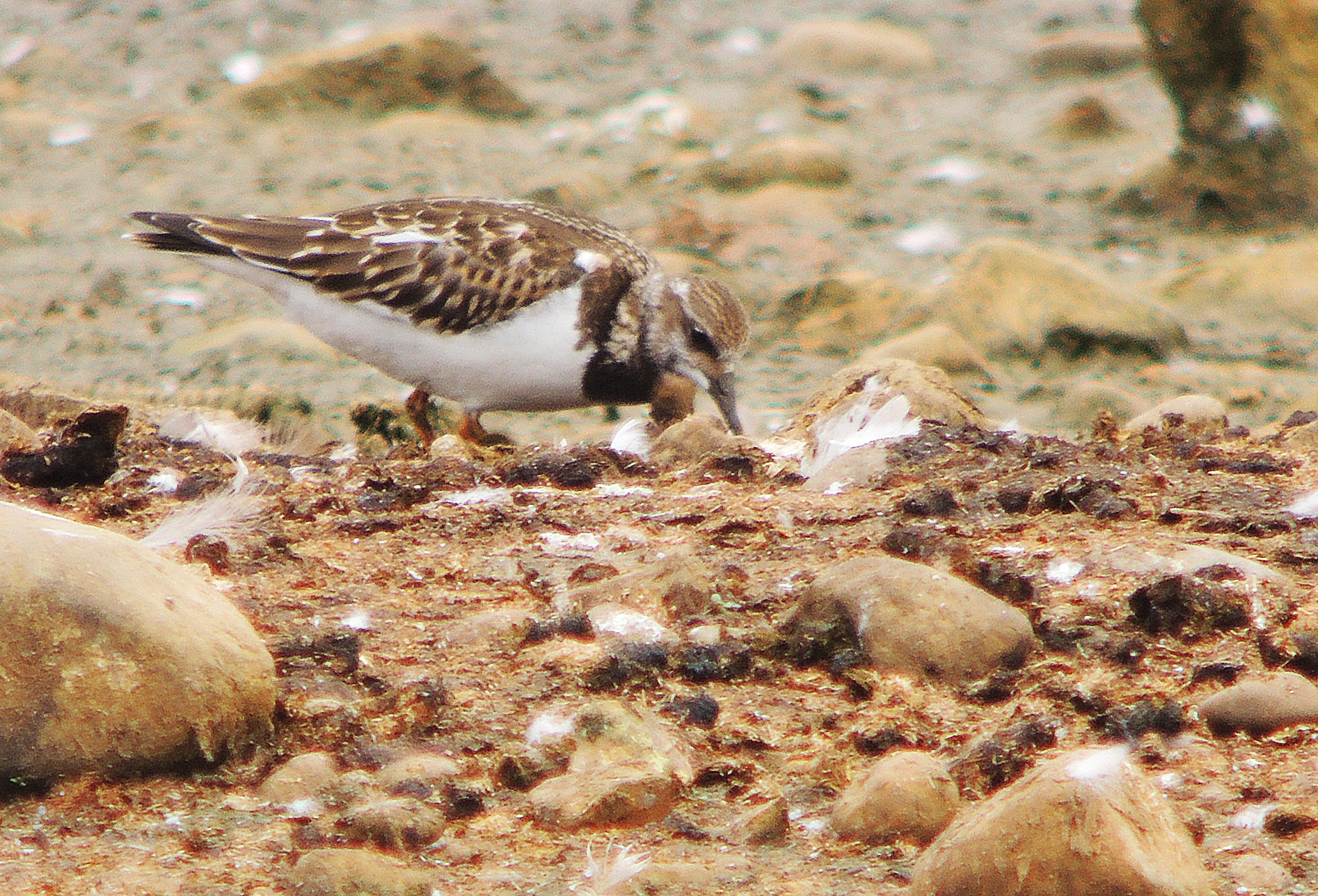
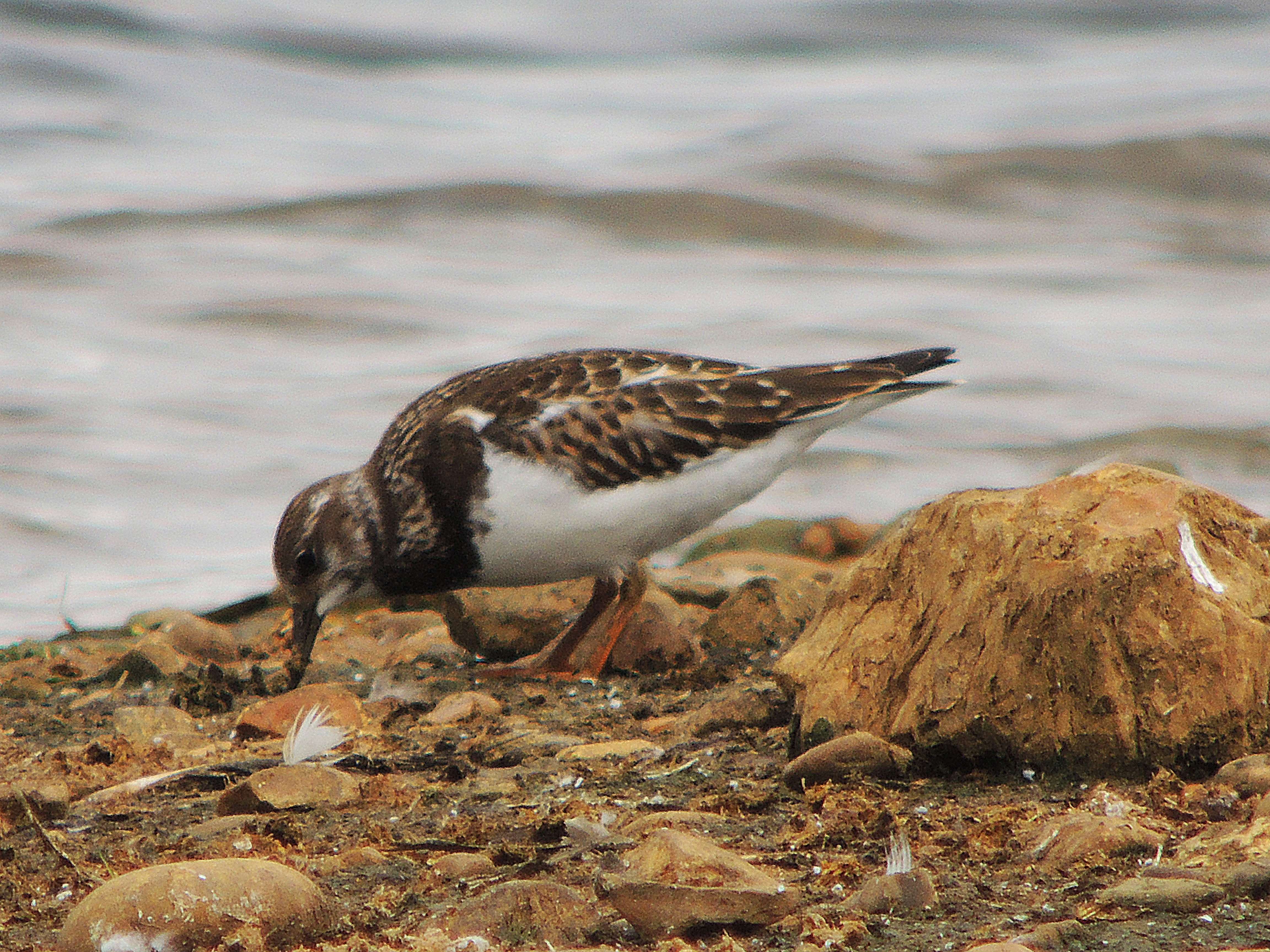
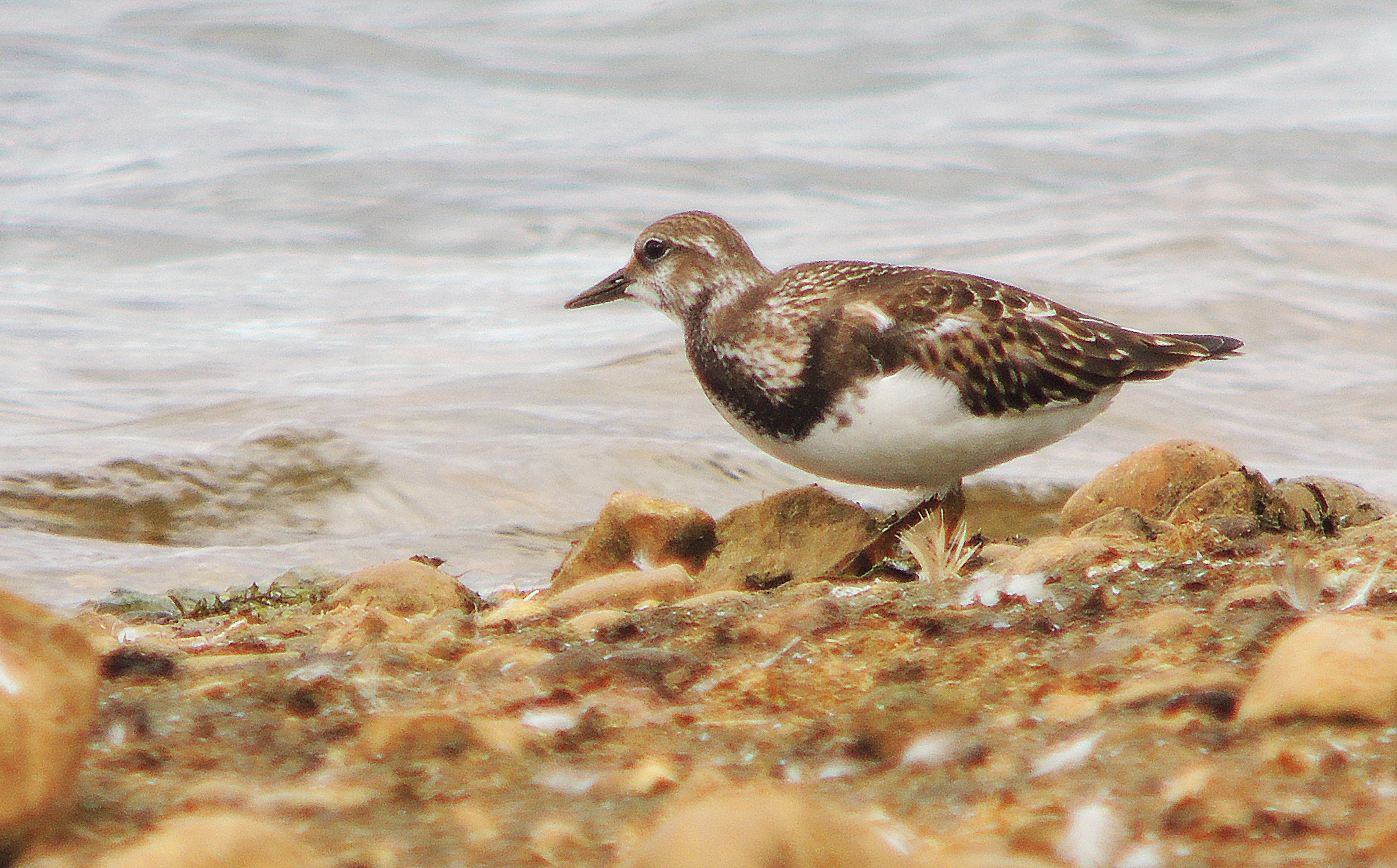
I spent a good hour with the Turnstone at Stanwick Lakes yesterday. It was pretty quiet there otherwise and the Turnstone was busy feeding, non-stop, on one of the Visitor Centre Lakes. It’s only when you try to digiscope a bird like this that you appreciate just how animated these things are – it did not stand still at all.
This was also a great opportunity to closely study the plumage. Broad, deep buff fringes to the coverts, white fringes to tertials and small, neat white tips to upperparts and primaries easily age this bird as a juvenile. Adults out of breeding plumage are much more uniform in these areas, their feathers being dull brown with only slightly paler fringes.
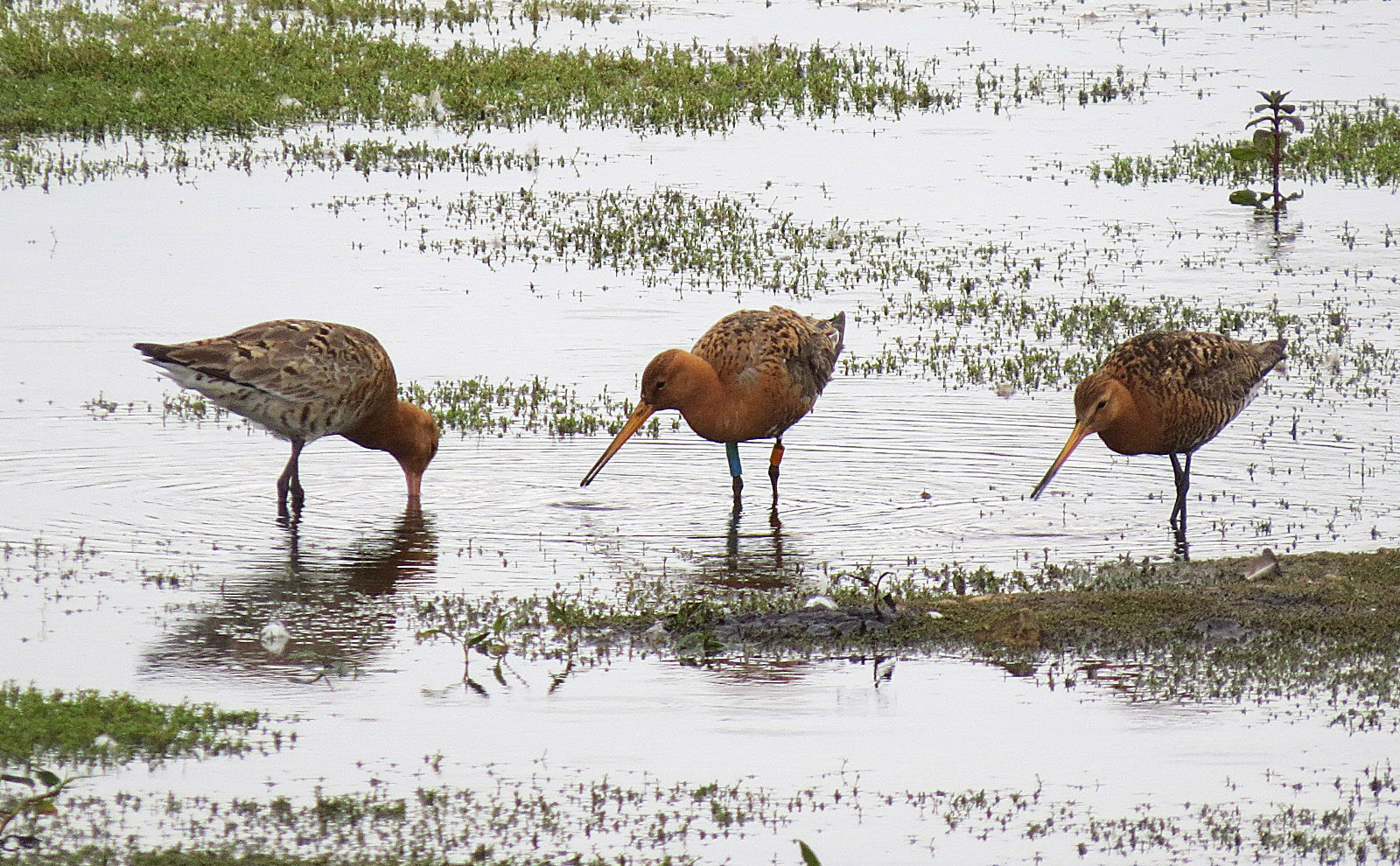
Barely is spring over and autumn wader passage has begun. June usually sees the first Icelandic Black-tailed Godwits moving south through the county and the group of three found by Kim Taylor at Summer Leys on Friday included one particularly interesting individual, images here by Adrian Borley.
Female and two male Icelandic Black-tailed Godwits, Summer Leys LNR, 24th June 2016 (Adrian Borley)
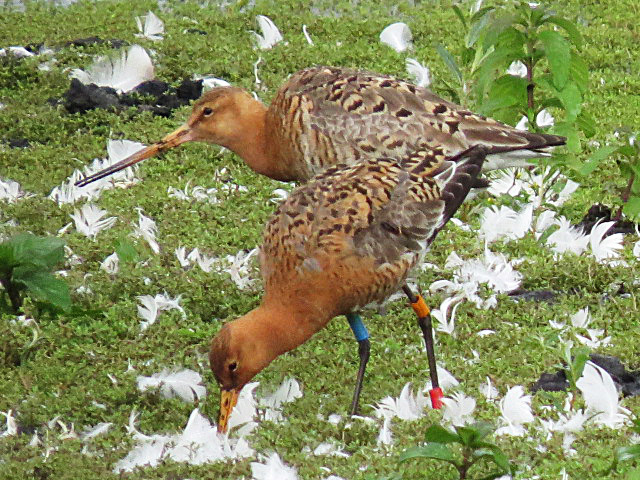
Interesting because it was colour-ringed and the combination of colours, along with the position of the rings, enabled some of this bird’s history to be traced and its movements to be revealed. It was, as they say in some quarters, a godwit with ‘previous.’
While I’m not a big fan of gaudy ‘bling’ (it looks so unnatural!), I have to acknowledge its use as a tool in providing valuable information which furthers our knowledge of a species and which can be particularly useful in, among other things, future conservation initiatives through the identification of key wintering and breeding areas.
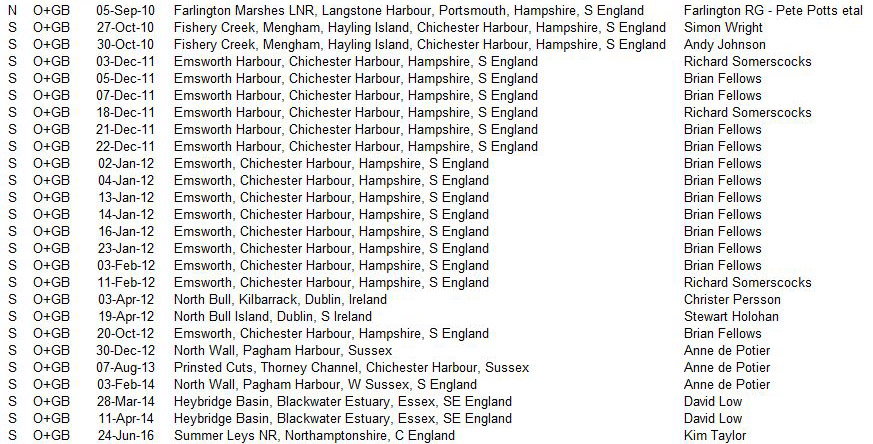
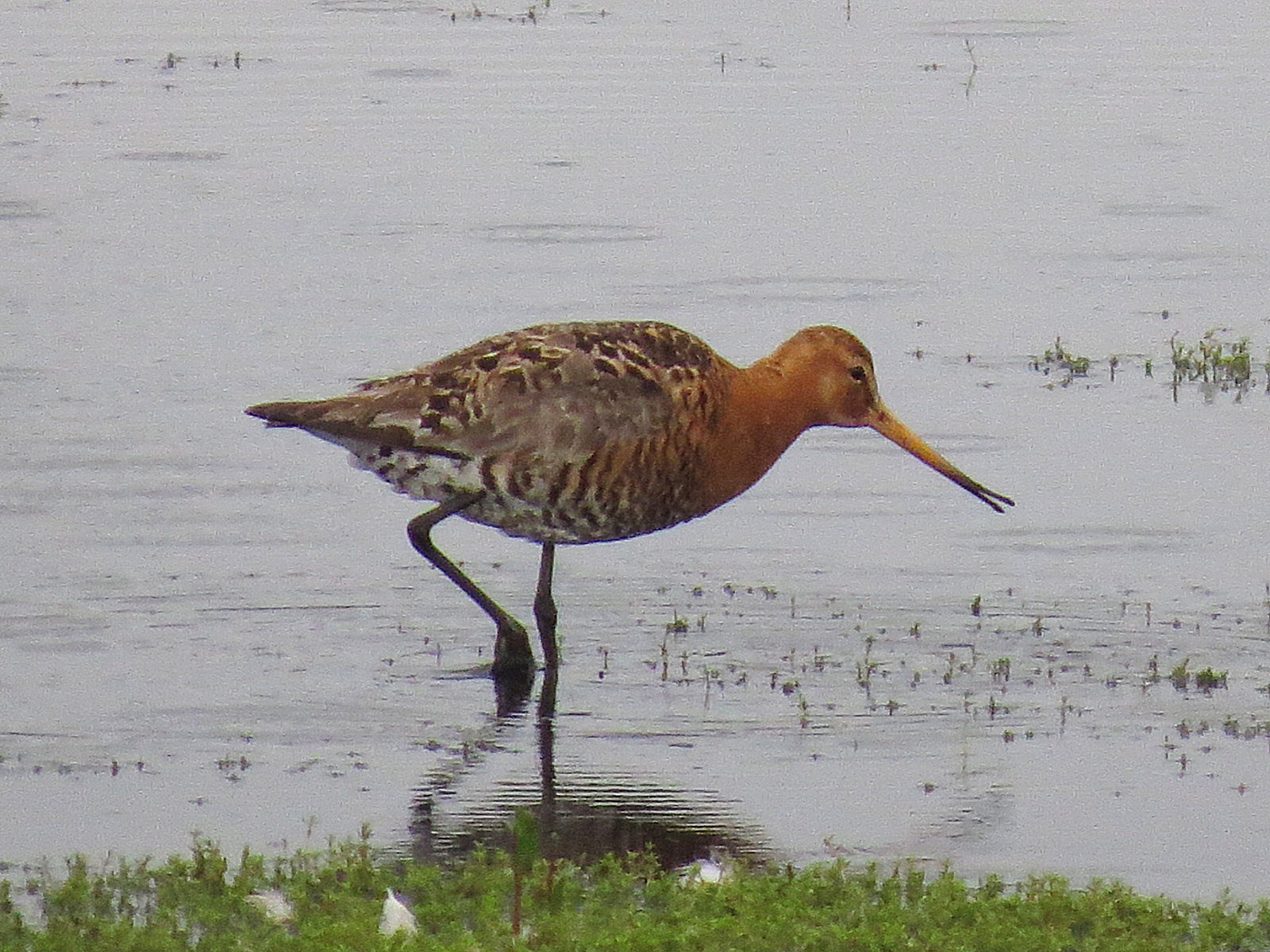
This godwit, a male, was ringed in Hampshire on 5th September 2010. It has been well-travelled during the subsequent six years as the table below – kindly provided by the ringer, Pete Potts – clearly illustrates. Anyone lucky enough to find a colour-ringed Black-tailed Godwit can check the colour combination against a detailed key to race, origin and ringing group which can be downloaded from here and observers are encouraged to contact the ringer with details of their observations.
Male Icelandic Black-tailed Godwit, Summer Leys LNR, 24th June 2016 (Adrian Borley)
Found in the morning and still present late afternoon, the godwit trio had departed by the next day. Had this male not been ringed it would have slipped by anonymously, giving no clue as to its age, travel history or possible destination.
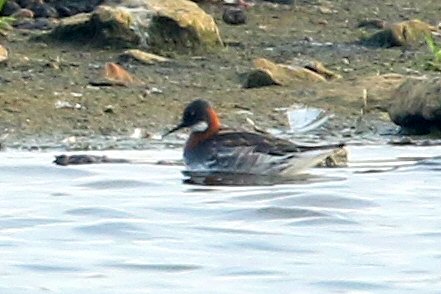
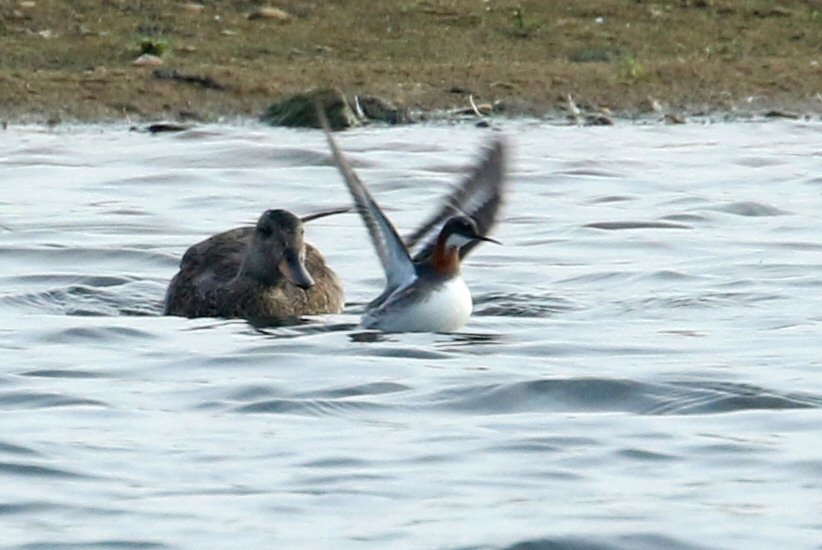
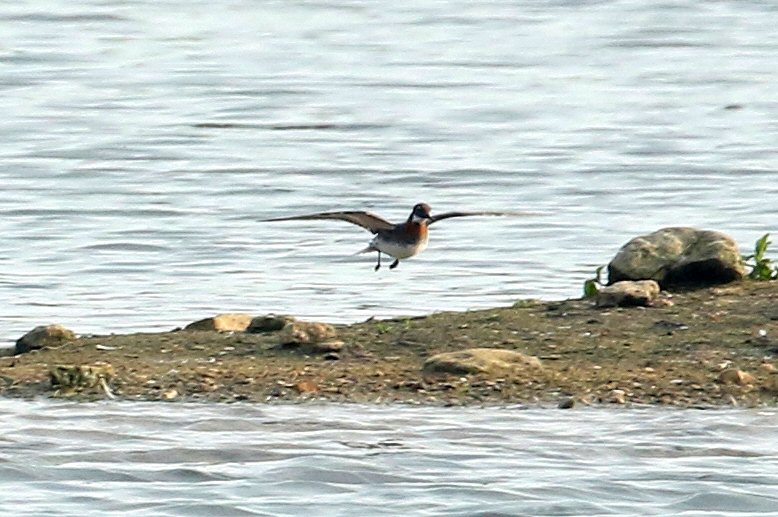
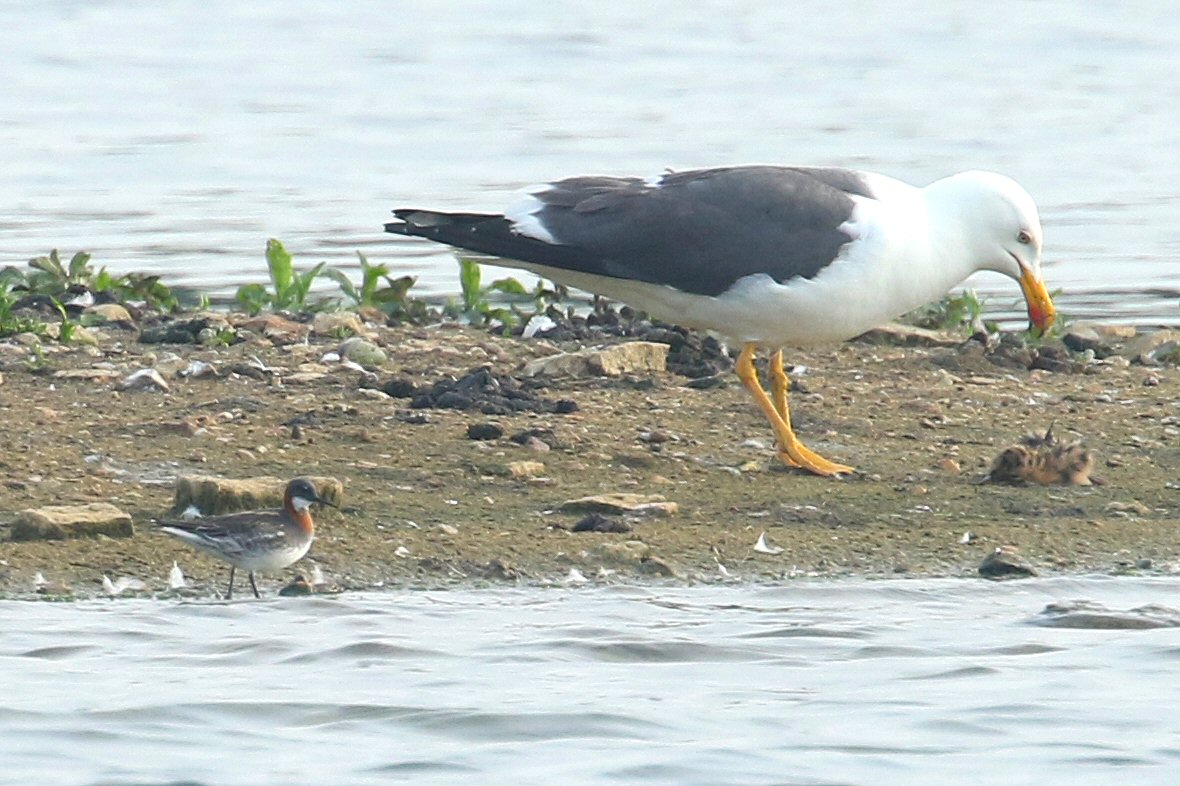
Northamptonshire’s 20th Red-necked Phalarope chose Stanwick GP as a stopover on its way north yesterday. Found by Steve Fisher on the A45 Lay-by Pit early in the evening, this first for Stanwick gave ample opportunity for local birders to catch up with a species which has been difficult to come by in the county in recent years.
Female Red-necked Phalarope, Stanwick GP, 4th June 2016 (Bob Bullock)
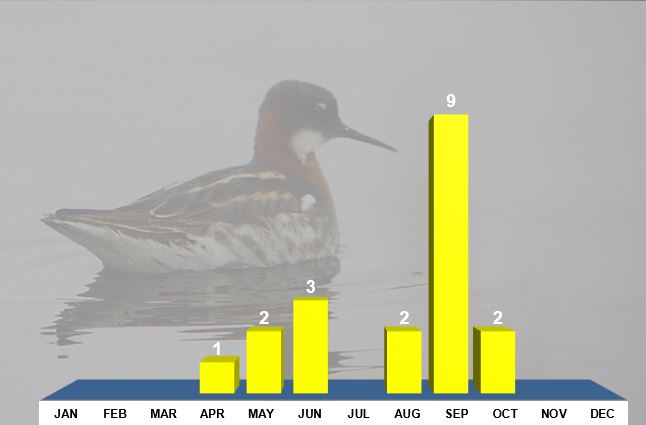
The last was in 2010 and the one prior to that was in 2002. The majority of the previous records have been of autumn juveniles – only six adults have appeared in spring with 50% of these in June.
Red-necked Phalaropes, Northamptonshire, all records. Background image, female Red-necked Phalarope, Norway, June 2015 (Mike Alibone)
Female Red-necked Phalarope, Stanwick GP, 4th June 2016 (Bob Bullock)
Female Red-necked Phalarope, Stanwick GP, 4th June 2016 (Bob Bullock)
Female Red-necked Phalarope, Stanwick GP, 4th June 2016 (Bob Bullock)
Spring birds are normally one-day wonders while those in autumn usually stay a day or two. Eight of the previous 19 have been at Pitsford Reservoir.
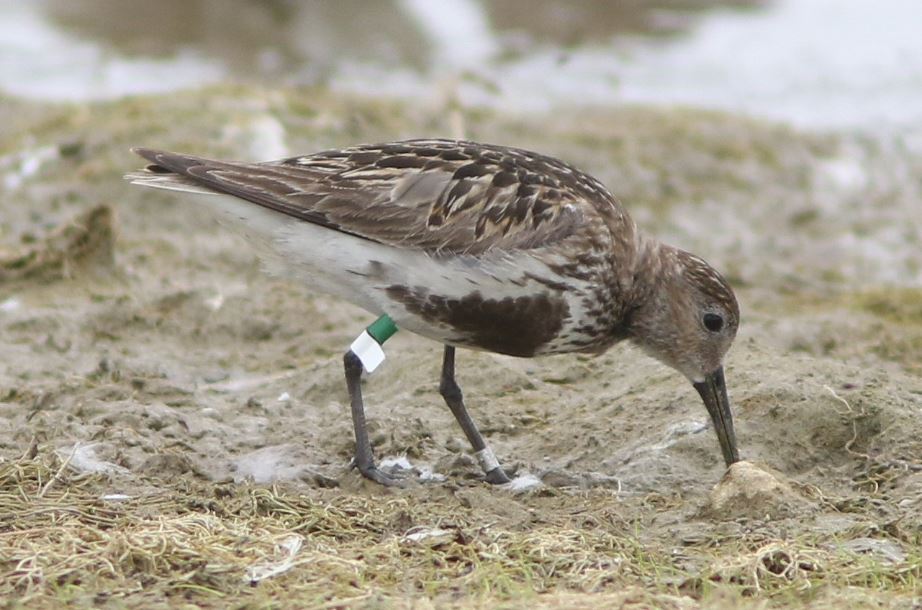
7th August. The day Hollowell Reservoir was ‘Dunlin-bombed’ by a record flock of around 440. Included among them was this flagged and ringed adult.
Spanish-ringed adult Dunlin, Hollowell Res, 7th August 2015 (Bob Bullock)
Based on the flag colour and ring combination, initial research revealed it had been trapped and ringed in Spain and this was kindly confirmed today by Edorta Unamuno, Coordinator of projects in the Urdaibai Bird Center in the Basque Country, close to Bilbao. It was trapped there as a migrant during the third week of May this year but where has it been since?
Spanish-ringed adult Dunlin, Hollowell Res, 7th August 2015 (Bob Bullock)
Spanish-ringed adult Dunlin, Hollowell Res, 7th August 2015 (Bob Bullock)
Spanish-ringed adult Dunlin, Hollowell Res, 7th August 2015 (Bob Bullock)
Racial identity might give us a clue but its worn summer plumage (it has even already grown a grey winter scapular) makes it difficult to be certain as to whether it’s a schinzii or an alpina. Both races could easily occur in Spain and the UK – schinzii breeds south-east Greenland, Iceland, southern Norway, Britain, Ireland and the Baltic and alpina breeds northern Scandinavia and the USSR and both occur in winter in the western Mediterranean.
Avocets are scarce passage migrants in Northants, mainly in spring, but they are by no means annual. When Bob Bullock found one at Clifford Hill Gravel Pits yesterday morning it seemed like we had achieved our year’s quota for 2015. Things took a turn for the better today, however, when I found two more on the islands in the A45 Lay-by Pit at Stanwick. I watched and videoscoped them between 08.50 and 09.10 after which they flew off.
I decided to take a look at the main pit and while walking round to it I received a text from Dave Warner saying he had found three Avocets on the main barrage lake at Clifford Hill GP. Fifteen minutes later he sent me another text – apparently there were now nine! At about the same time, Tony Vials emailed to say he was watching two at Irthlingborough Lakes & Meadows. Minutes later they flew off west. I guessed they must have been the Stanwick birds – although not necessarily. Meanwhile, the appeal of the small flock at Clifford Hill was too great to resist so I headed off there to take a look. They were still there, roosting on one of the pools on the main peninsula and being watched by Bob Bullock and Dave, when I arrived.
Lovely birds, even if a bit distant! By now the news had got round and other birders were arriving in time to see the largest Avocet flock in the county for a good few years …
Mid-October, low pressure, tightly-packed isobars, strong winds and rain = inland seabirds, although not many – as is usual for Northamptonshire. After a couple of foul weather fly-bys, including one watched briefly by Gary Pullan at Hollowell Res on Monday (13th) followed by fleeting views of two at Pitsford Res by David Arden yesterday, Bob Bullock finally nailed one at Pitsford at lunchtime today.
First-winter Grey Phalarope, Pitsford Res, 15th October 2014 (Bob Bullock)
First-winter Grey Phalarope, Pitsford Res, 15th October 2014 (Bob Bullock)
Grey Phalarope is by no means an annual visitor to Northants, with many previous records relating to storm-driven individuals in late autumn. Dark, rufous-fringed tertials, strong salmon wash to breast and predominantly dark bill age this bird as a first-winter.
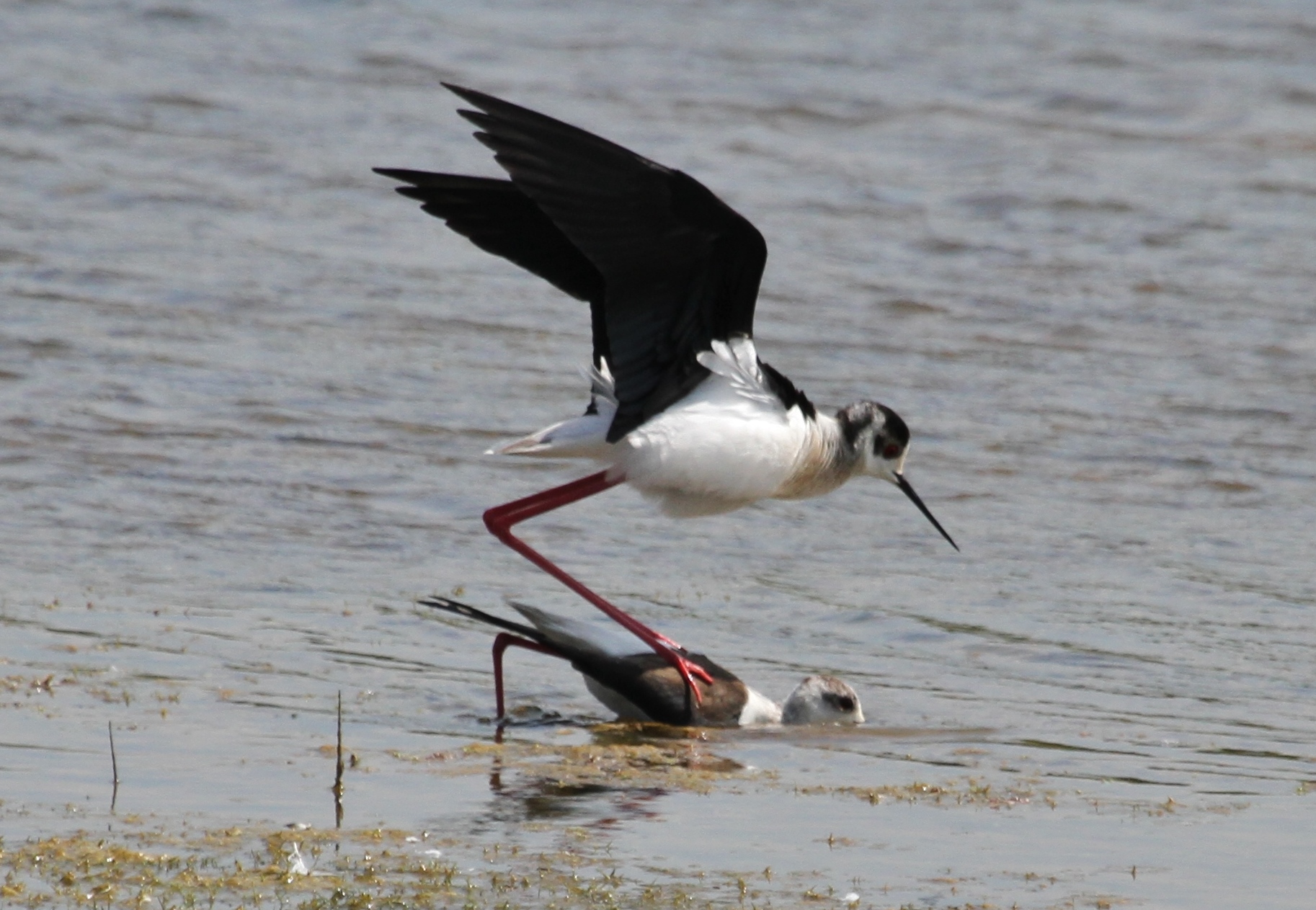
These super Black-winged Stilts were found at Summer Leys very early this morning by Steve Murfitt and John and Ruth Ward. Initially on the slips they quickly moved to the scrape where they were also seen mating several times throughout the morning.
Black-winged Stilt, Summer Leys LNR, 18th May 2014 (Simon Hales)
Black-winged Stilt, Summer Leys LNR, 18th May 2014 (Nigel Muddiman)
Making the approach …
Black-winged Stilts, Summer Leys LNR, 18th May 2014 (Alan Coles)
that mounting feeling …
Black-winged Stilts, Summer Leys LNR, 18th May 2014 (Alan Coles)
that sinking feeling …
Black-winged Stilts, Summer Leys LNR, 18th May 2014 (Alan Coles)
Black-winged Stilts, Summer Leys LNR, 18th May 2014 (Mike Alibone)
This pair has been wandering in eastern England over the past week, having last been seen in Cambridgeshire. This is the fourth record for Northants, the previous three having all been in May, including the first at Boddington Res on 22nd-23rd May 1965, one at Summer Leys on 15th May 1997 and the last, a pair, also at Summer Leys on 1st May 2008.
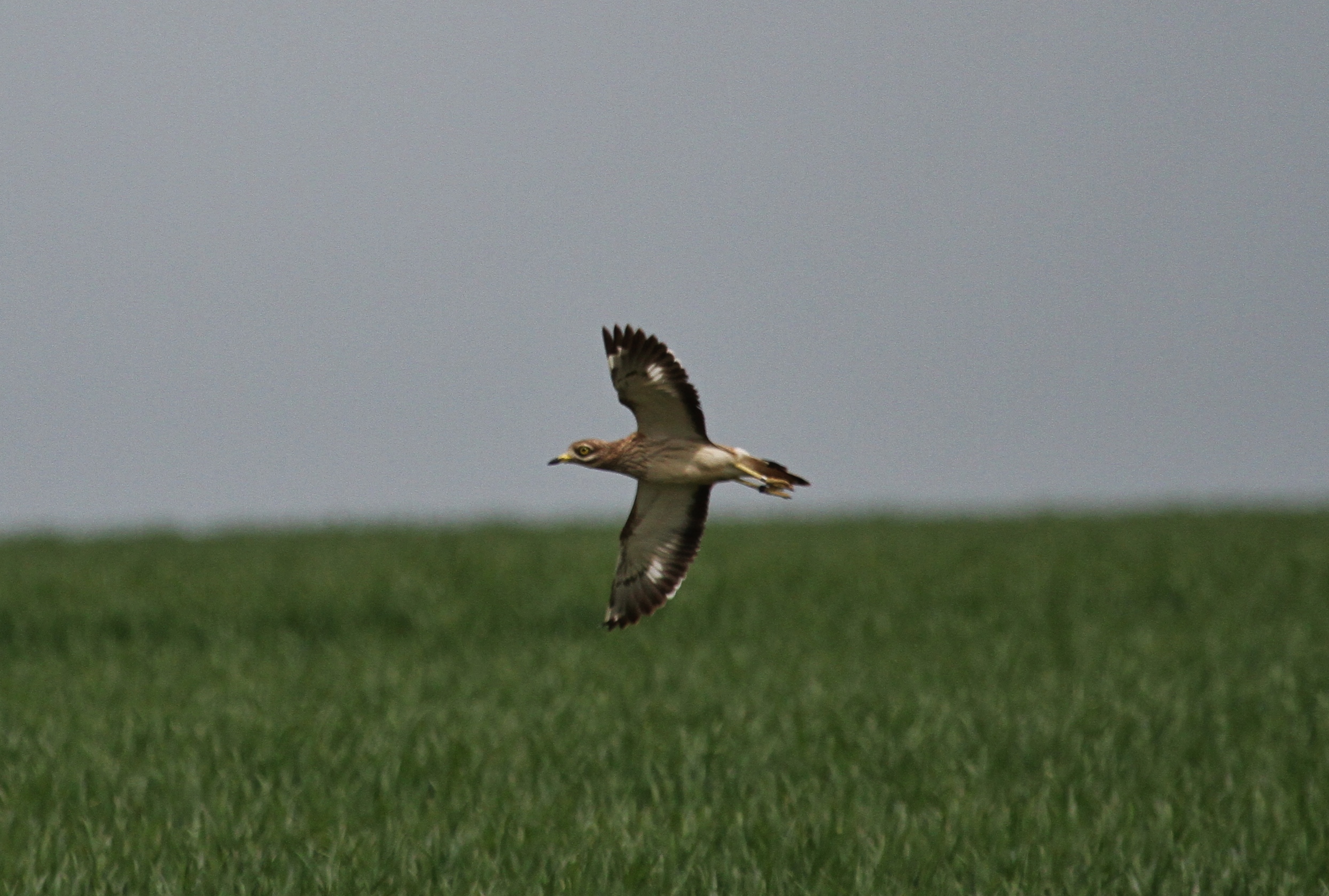
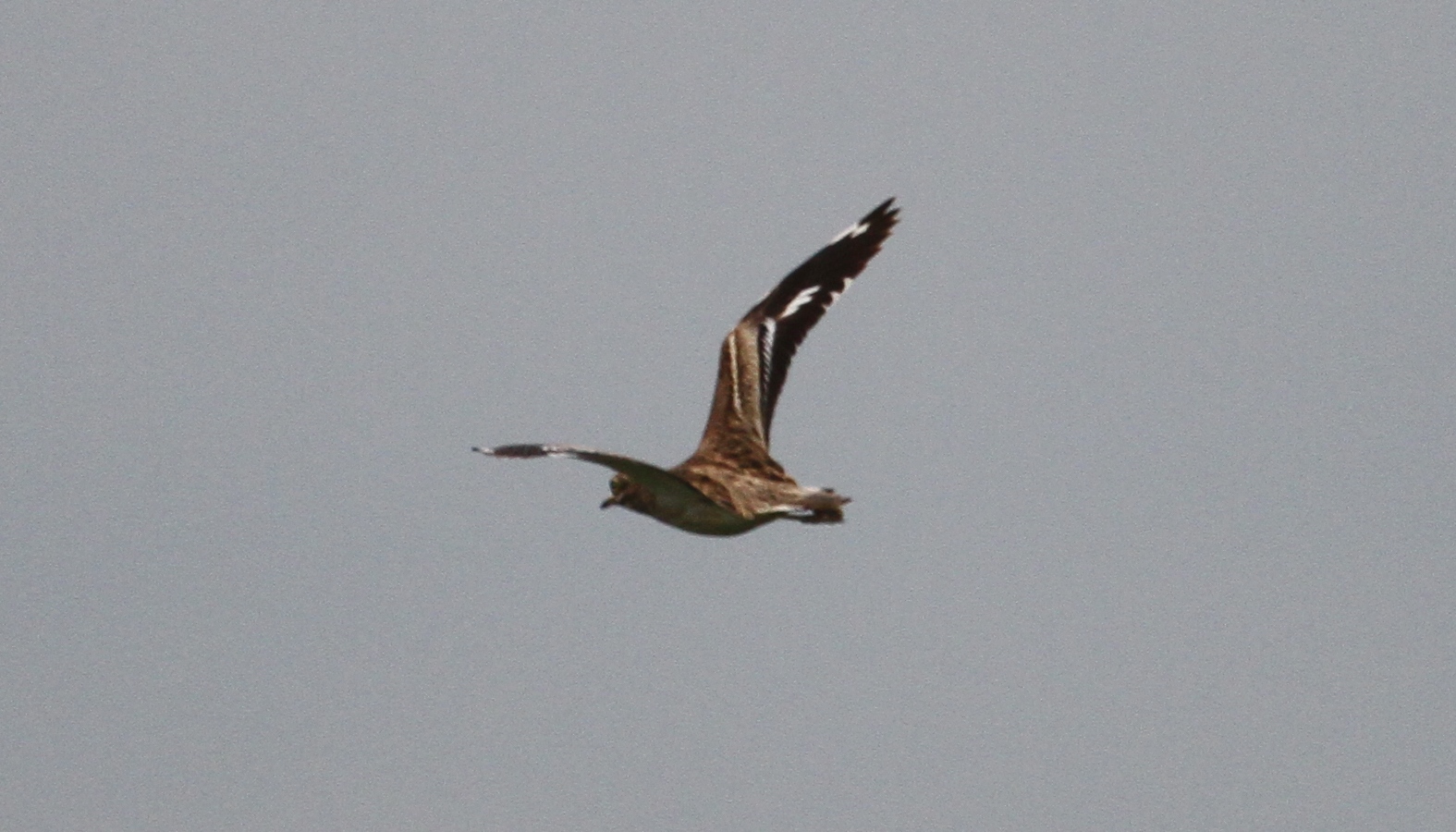
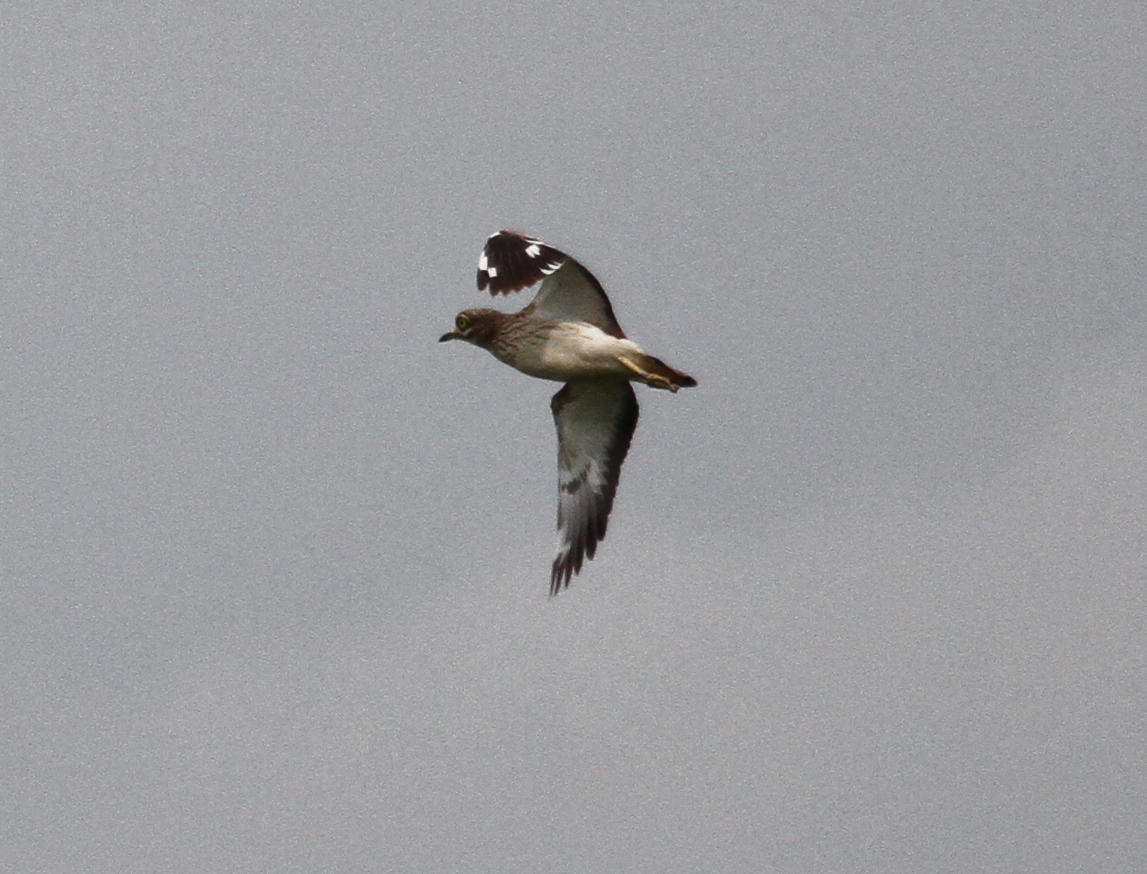
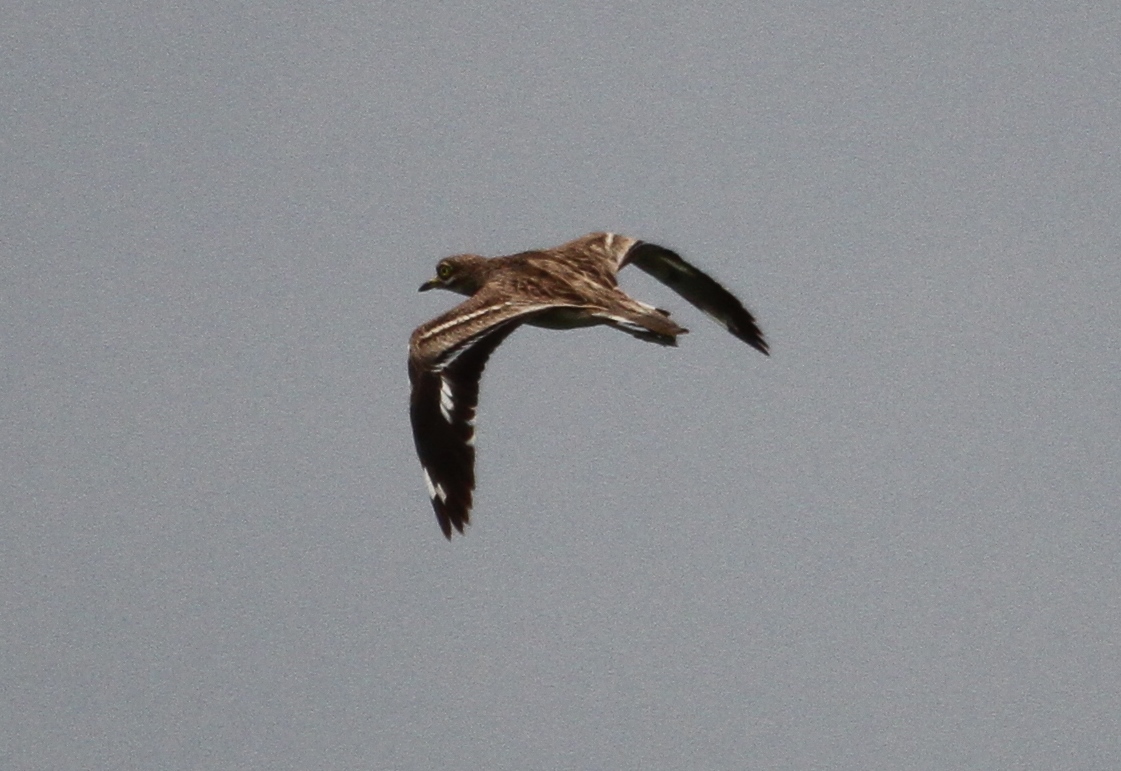
While out looking for Ring Ouzels, Gary Burrows found this rather nice Stone-curlew at Harrington Airfield this morning. It was still around – though flighty – early in the afternoon. Thanks to Alan Coles for the images below.
Sharp-eyed observers will have spotted the rings: metal on left leg and colour ring on right. Did anybody get the exact colour in the field?
We don’t get them very often. Although it breeds no further away than East Anglia, Stone-curlew is a vagrant to Northants. Including the last, in a field adjacent to Summer Leys LNR on 15th April 2009, there are eleven previous records dating back to 1880. Of these, four have been in April, two in July, and singles in May, August and October with two old records dated only to year of occurrence.



 Anyone lucky enough to find a colour-ringed Black-tailed Godwit can check the colour combination against a detailed key to race, origin and ringing group which can be downloaded from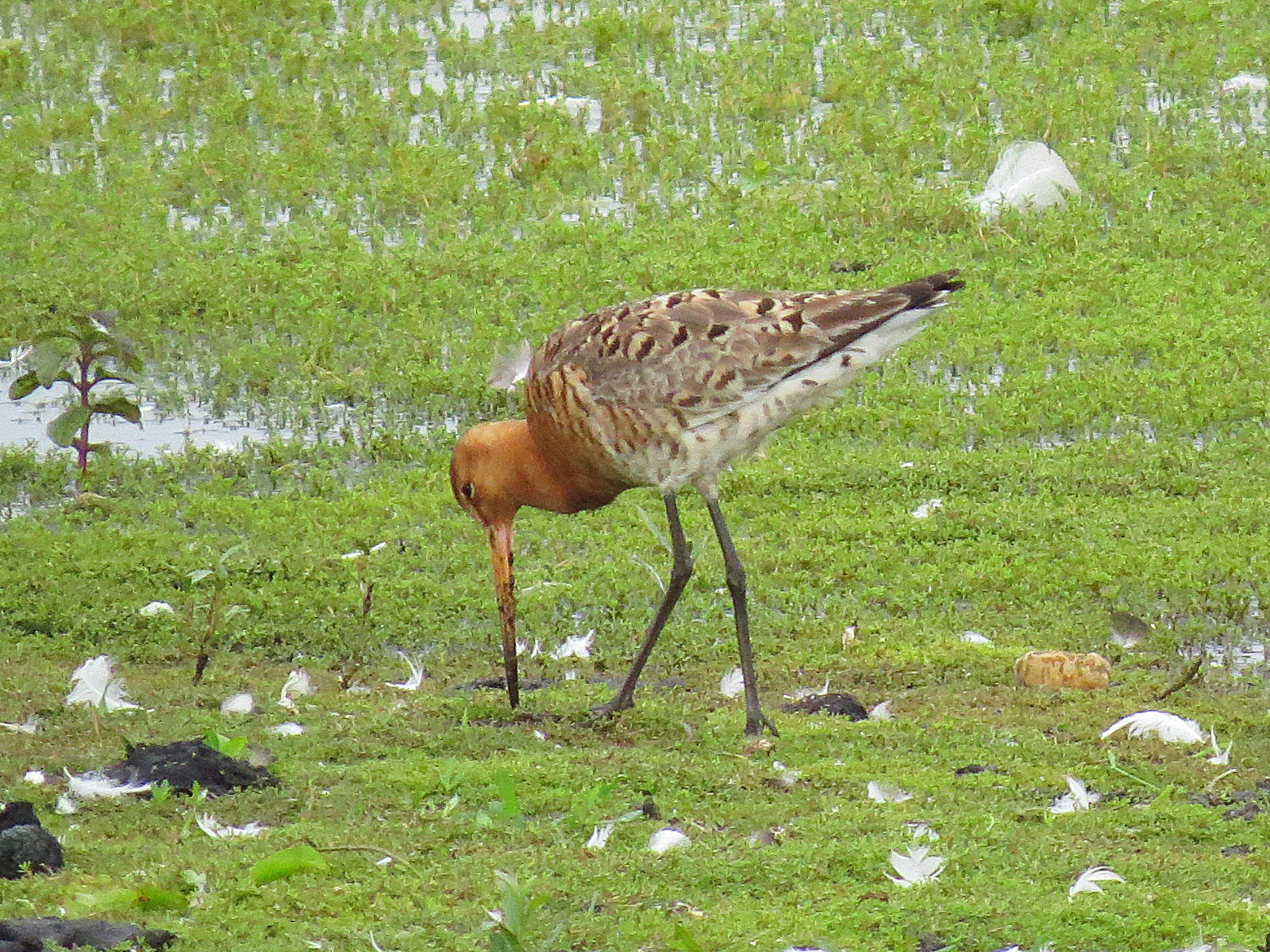






 Northants birds