The wind throughout the week took a prolonged easterly slant and temperatures fell accordingly, a high of 10°C on 17th had slipped down to a low of just 4°C on 20th.
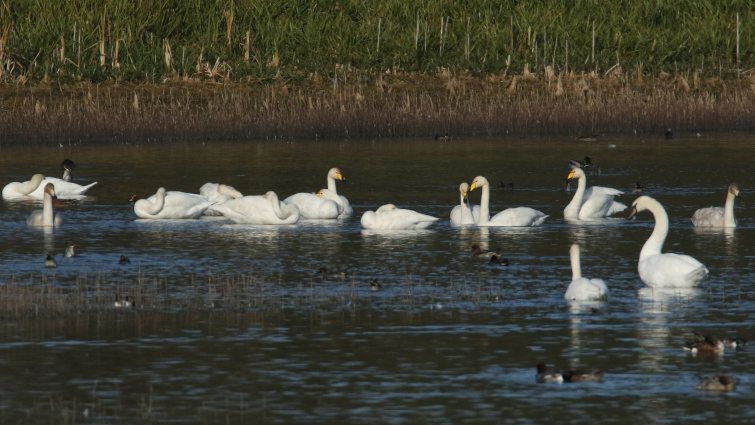
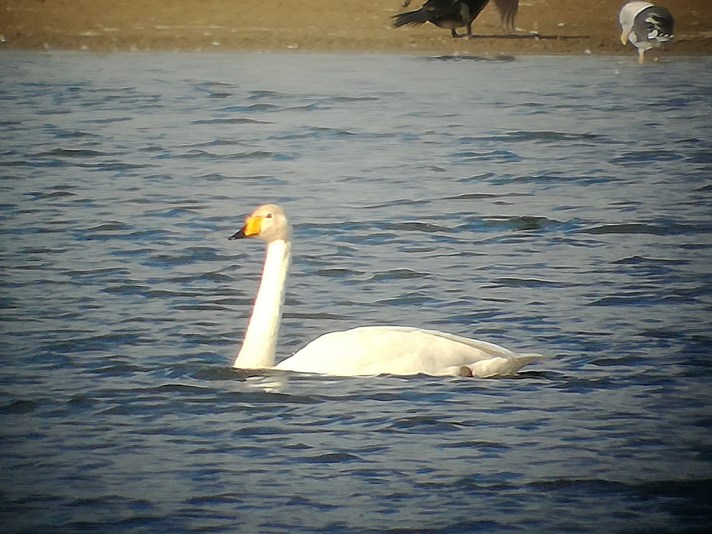
Two new Whooper Swans appeared this week, a lone adult at Earls Barton GP on 21st, followed by another youngster joining the Pitsford eleven on 22nd, while the first-year remained at Thrapston GP throughout the period.
First-winter Whooper Swan, Thrapston GP, 23rd November 2018 (Adrian Borley)
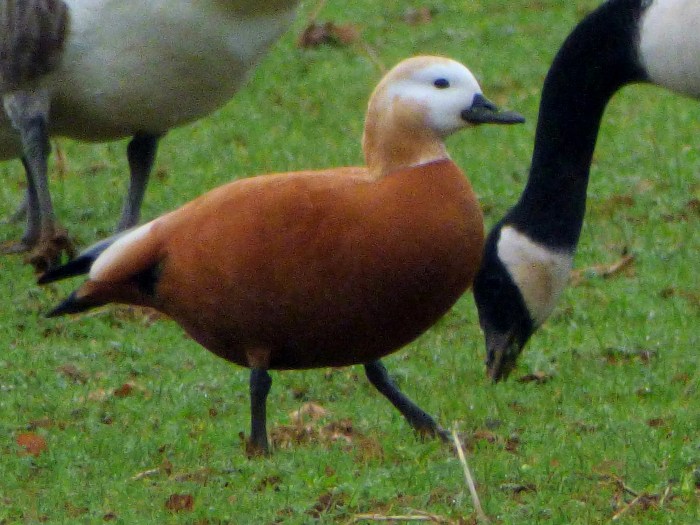
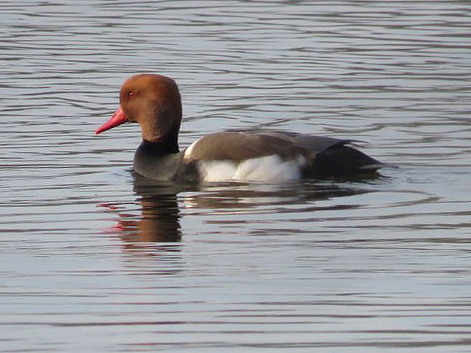
Last week’s Barnacle Goose revisited Stanwick GP on 19th and the mobile female Ruddy Shelduck dropped into Pitsford Res on 21st, the latter site again accounting for the highest total of Red-crested Pochards, which topped eighteen on the same date.
Red-crested Pochards, Pitsford Res, 18th November 2018 (Alan Coles)
Elsewhere, four were at Stanford Res on 17th, with just one remaining until 21st, one remained at Hollowell Res all week and singles were at Clifford Hill GP on 17th and Thrapston GP on 23rd, where the first-winter Scaup also remained all week.
Female Ruddy Shelduck, Pitsford Res, 21st November 2018 (Doug Goddard)
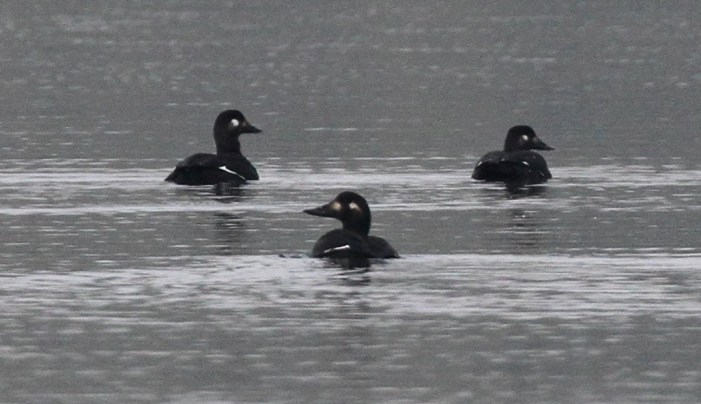
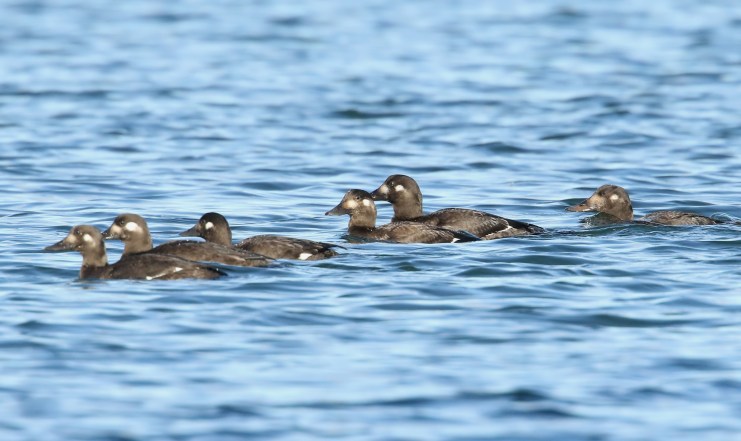
And so to this week’s puzzle: the adult drake Ring-necked Duck reported on Town Lake at Thrapston on the morning of 18th. Local observers were on site within an hour or two of the national news broadcast, diligently scanning the lake, along with all the other lakes in the complex. It was nowhere to be seen. The source is a mystery … but Thrapston has history. So, more ‘fake news’ then or, if you prefer a rather more British approach to the phraseology, ‘patent twaddle’. Nuff said. At least we know the one remaining Velvet Scoter, last seen there on 17th, was genuine and contributed to the county chalking up a ‘two-scoter week’ with two Common Scoters at Stanford Res on 19th.
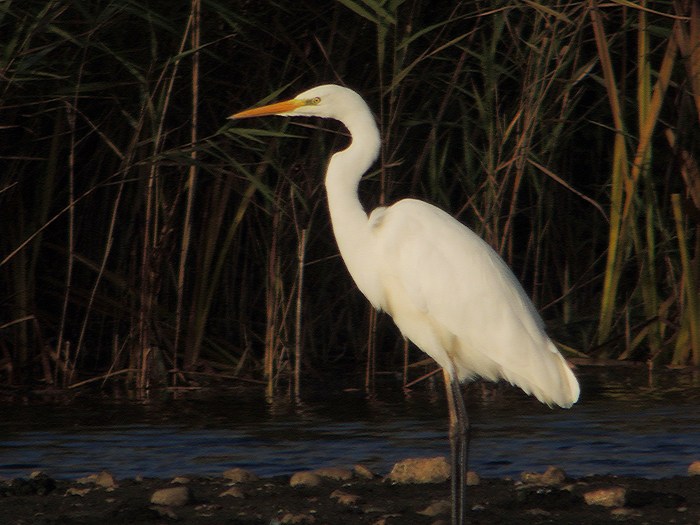
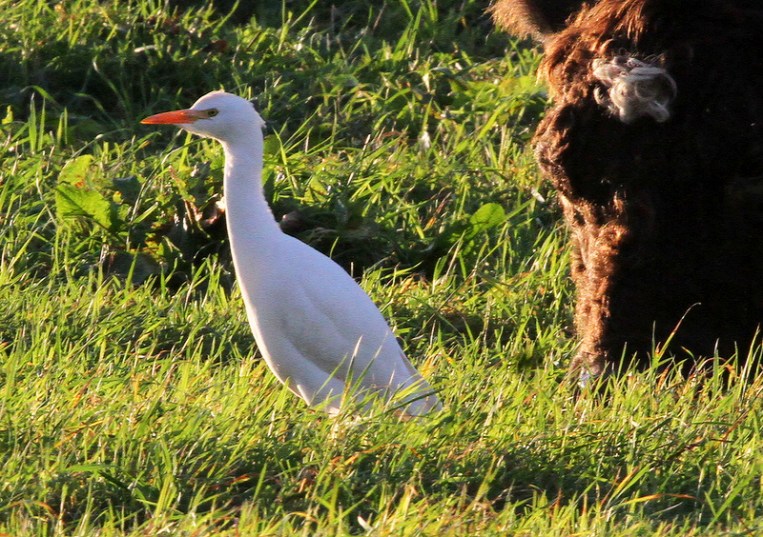
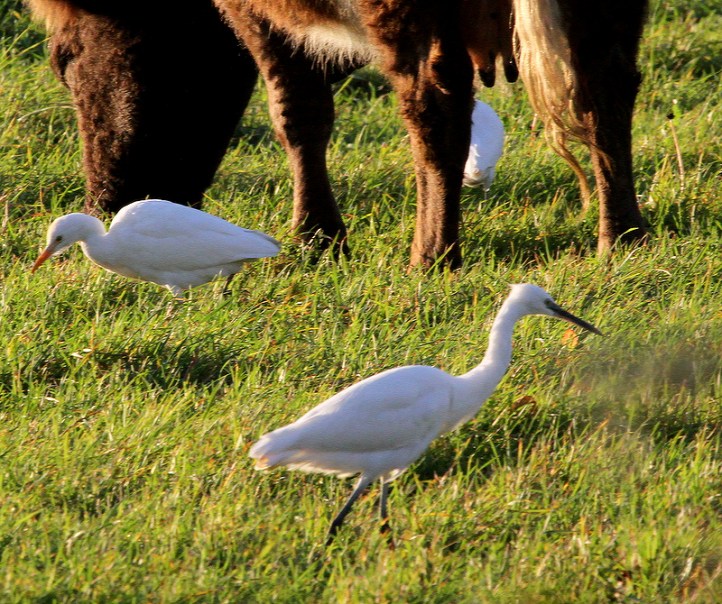
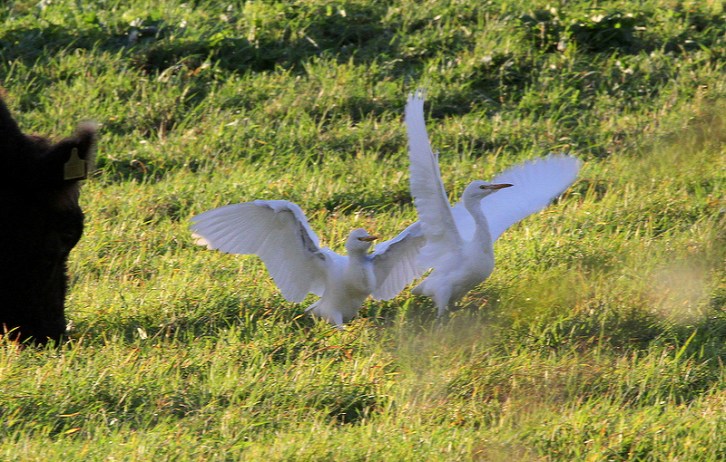
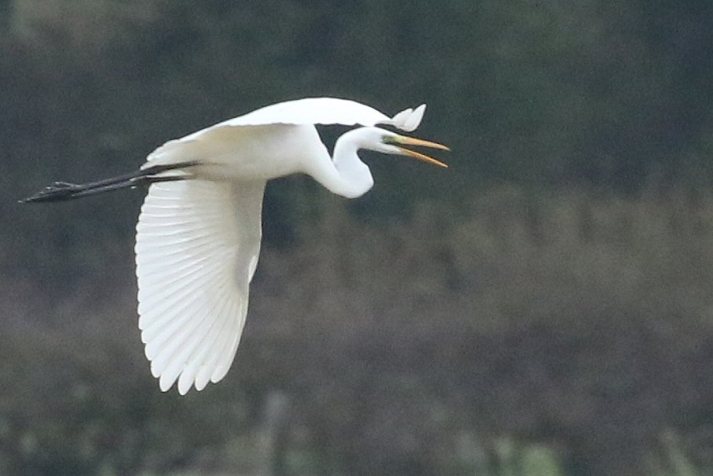
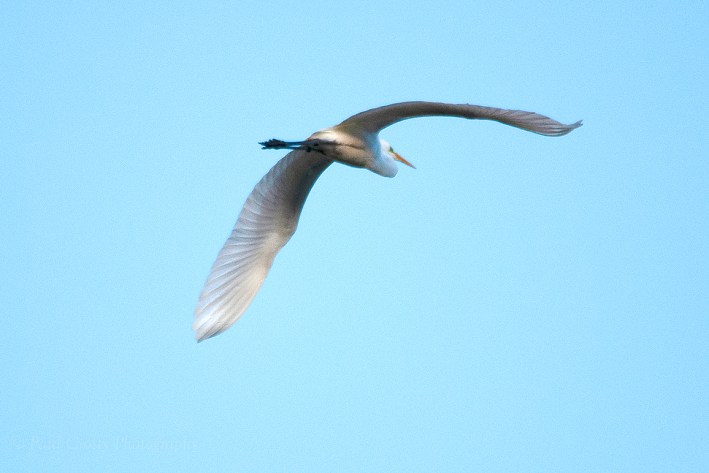
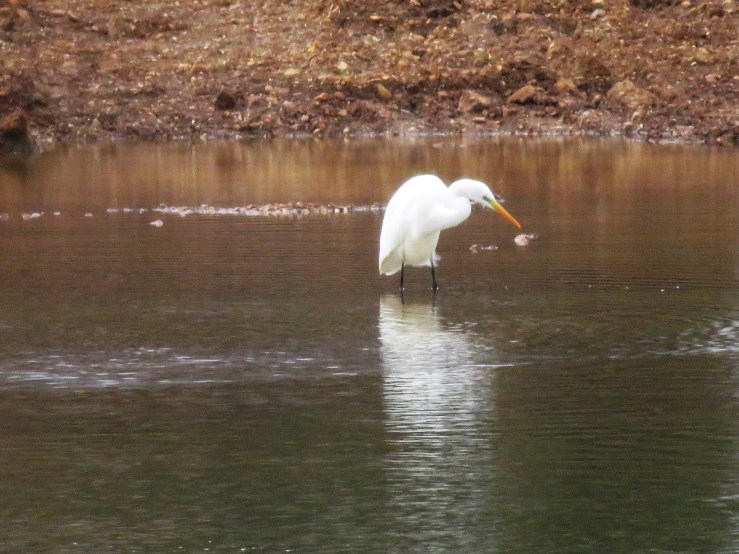
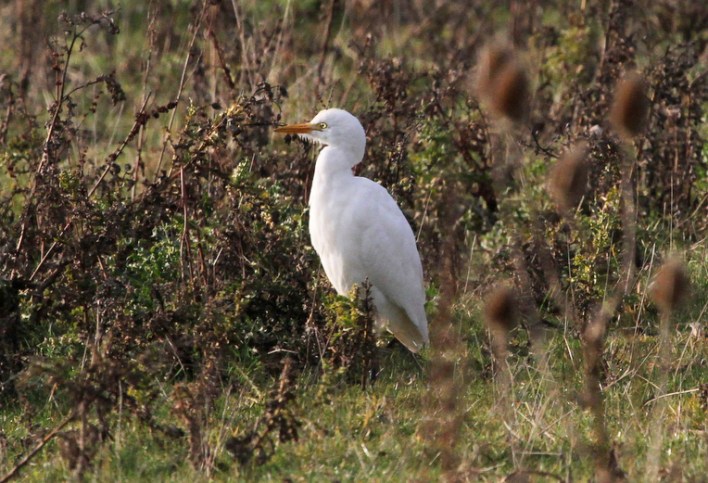
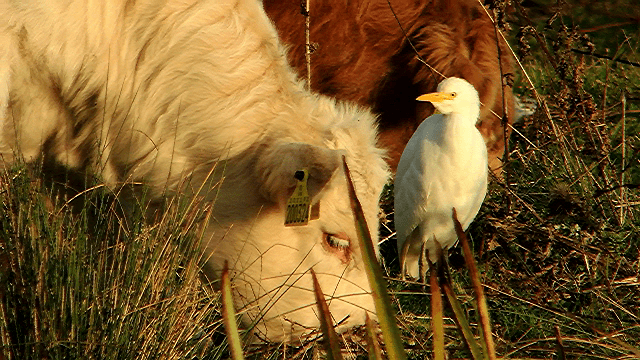
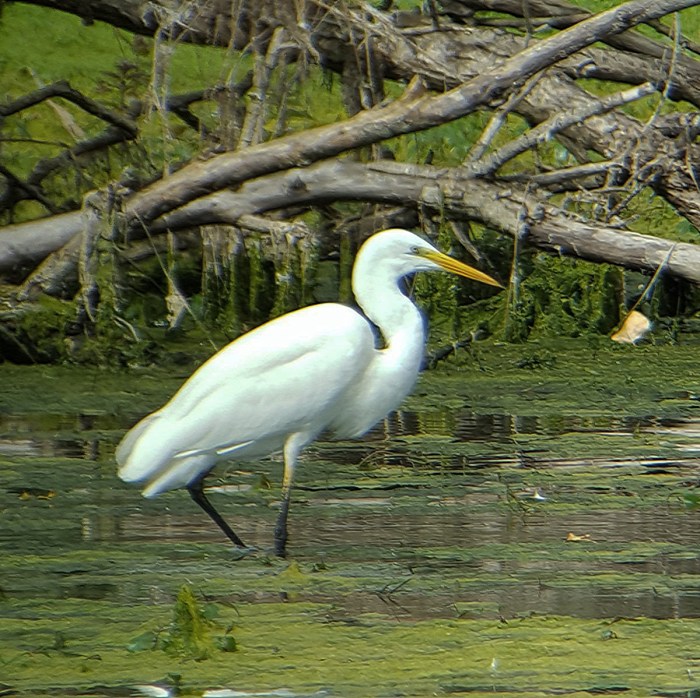
The three Cattle Egrets at the north-east end of the Stanwick GP complex were once again joined by a fourth on 21st-22nd, while one or two Great White Egrets continued to be seen at this and six other locations, Pitsford topping the bill with four on 21st-22nd.
Great White Egret, Stanwick GP, 17th November 2018 (Mike Alibone)
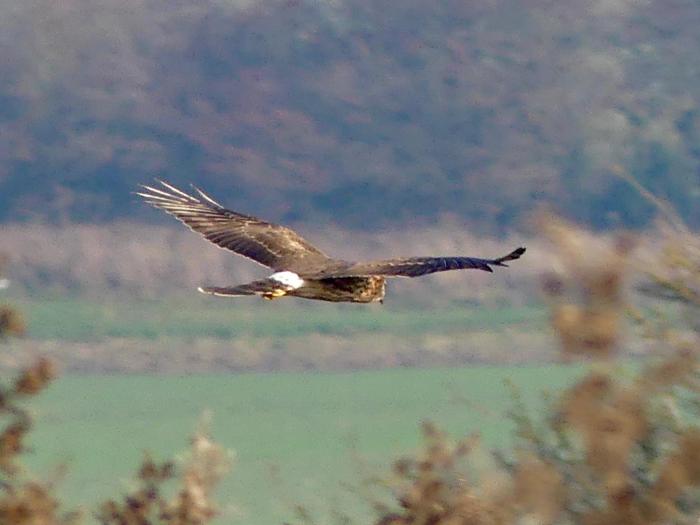
On the raptor front, Stanford Res continued to maintain its monopoly on harriers with the juvenile Hen Harrier still present until at least 18th and a Marsh Harrier there on 22nd-23rd.
Juvenile Hen Harrier, Stanford Res, 17th November 2018 (Chris Hubbard)
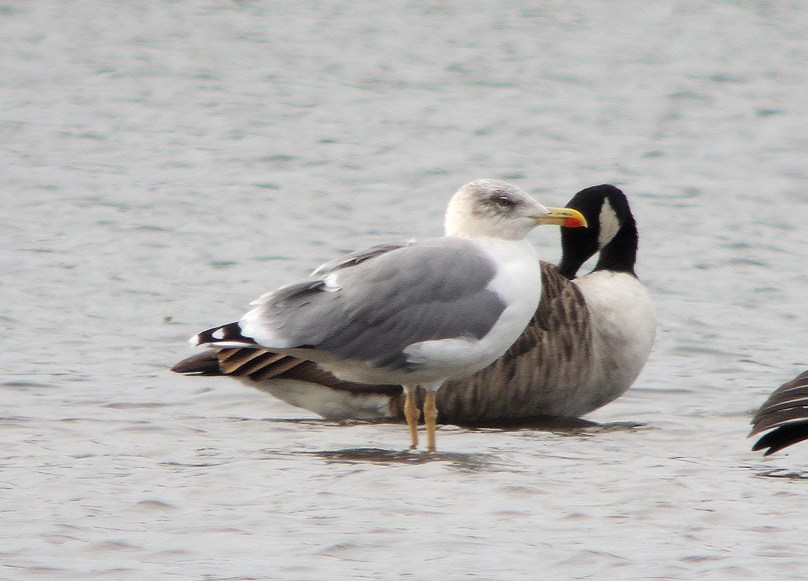
The only wader of note this week was the first-winter Black-tailed Godwit at Pitsford Res, remaining throughout, while the usual adult Yellow-legged Gull also remained there throughout the period, three were at Hollowell Res on 17th, followed by two on 21st.
First-winter Black-tailed Godwit, Pitsford Res, 21st November 2018 (Angi Harrell)
Short-eared Owls were more widespread this week, being reported from no less than five localities. Two were at Stanford Res on 17th and singles were seen at Weldon on 18th, Stanwick GP on 21st, Pitsford Res on 22nd and Borough Hill on 23rd. The only Brambling reported was one at Pitsford Res on 22nd.
Maintaining temperatures some 5°C higher than they should have been, the wind this week again blew southerly and then south-westerly, before swinging south-easterly during the last two days of the period. Making the news this week were two birds which, in all likelihood, nobody ever saw, although we know at least one of them was there …
The eleven Whooper Swans remained at Pitsford Res all week and look settled for the winter. New arrivals during the period were three adults, arriving at Stanford Res on 13th before hurriedly departing to the north-east the same day and a lone first-winter, which was discovered at Thrapston GP on 16th.
Whooper Swans, Pitsford Res, November 2018 (Bob Bullock)Whooper Swans, Stanford Res, 13th November 2018 (Bob Bullock)Whooper Swan, Stanford Res, 13th November 2018 (Chris Hubbard)
Now for the first of those two intangible birds. Belated news concerns the curious case of the Greenland White-fronted Goose, which dropped into a field near Aynho, under the cover of darkness, for just two hours on 27th October. A radio-tagged female, originally bound for Wexford, went well off course to the Dutch coast, before successfully re-orientating west across the UK, which included a short stop-off in Northants. Read the full story here. The appropriate radio telemetry, had it been available live online to the masses, would no doubt have had a good number of us reaching for those infra-red bins – well, maybe. This is only the 5th county record of this potential species, the last being in 2009. Back down to earth, the two adult White-fronted Geese remained at Sywell CP all week and a Barnacle Goose visited Stanwick GP on 12th. The top count of Red-crested Pochards was ten at Pitsford Res on 14th, followed by seven at Stanford Res on the previous day.
Red-crested Pochards, Stanford Res, 13th November 2018 (Bob Bullock)
Elsewhere, up to three were seen at Hollowell Res and one was at Stanwick GP during the period. The six first-winter Velvet Scoters remained on Thrapston GP’s Town Lake until 11th, after which only one remained until the end of the week, as did the first-winter Scaup there and the drake American Wigeon x Eurasian Wigeon hybrid at Daventry CP.
Three Cattle Egrets, happily ensconced at Stanwick, continued to entertain and remained all week, having moved to a smaller, more constrained cow field adjacent to the North Lake at the Ringstead end of the complex.
Cattle Egret, Stanwick GP, 14th November 2018 (Steve Fisher)Cattle Egret with Little Egret, Stanwick GP, 14th November 2018 (Steve Fisher)Cattle Egrets, Stanwick GP, 14th November 2018 (Steve Fisher)
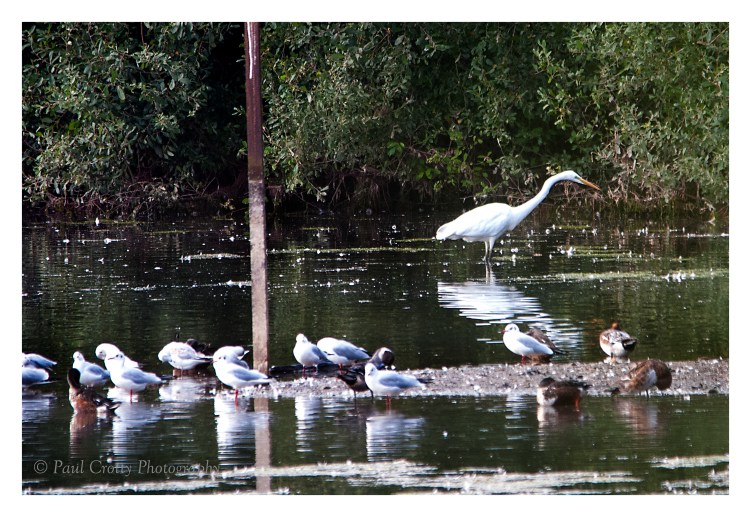
Great White Egrets continued to be seen regularly, with Pitsford and Stanwick recording three a piece, Ravensthorpe Res held two and singles were also seen at Clifford Hill GP, Earls Barton GP, Hollowell Res, Stanford Res, Summer Leys LNR and Thrapston GP.
Great White Egret, Stanford Res, November 2018 (Bob Bullock)Great White Egret, Pitsford Res, November 2018 (Bob Bullock)Great White Egret, Ravensthorpe Res, 11th November 2018 (Paul Crotty)Great White Egret, Earls Barton GP, 15th November 2018 (Leslie Fox)
On the raptor front, a Marsh Harrier flew south at Stanwick GP on 11th and the ‘ringtail’ Hen Harrier – aged as a juvenile – was seen on and off all week at Stanford Res. Though last week’s Rough-legged Buzzard near Apethorpe ultimately proved to be a Common Buzzard incognito, another was reported near Aldwincle on 11th. Said to be watched for fifteen minutes in the Brancey Bridge area, no one has stepped forward to take responsibility for the sighting and the origin of the report is vague, to say the least. Ah well, fake news it is, then. “Another glass of Tempranillo, Donald?” “Don’t mind if I do, Buddy!”
So, moving swiftly on to waders … a Black-tailed Godwit appeared at Pitsford Res on 12th and was still present on 14th and another appeared at Summer Leys, also on 12th. The late autumn lingering Common Sandpiper remained at Stanwick until at least 11th but it was joined by another one just prior to dusk on 10th, although this second individual had vanished by the following morning. Surprisingly, another Common Sandpiper was found at Hollowell Res on 16th. All three are very late occurrences and anyone coming across an Actitis sandpiper here in November is surely in with a 50:50 chance of it being a Spotted Sandpiper. While surrounding counties have enjoyed multiple records, Northamptonshire awaits its first …
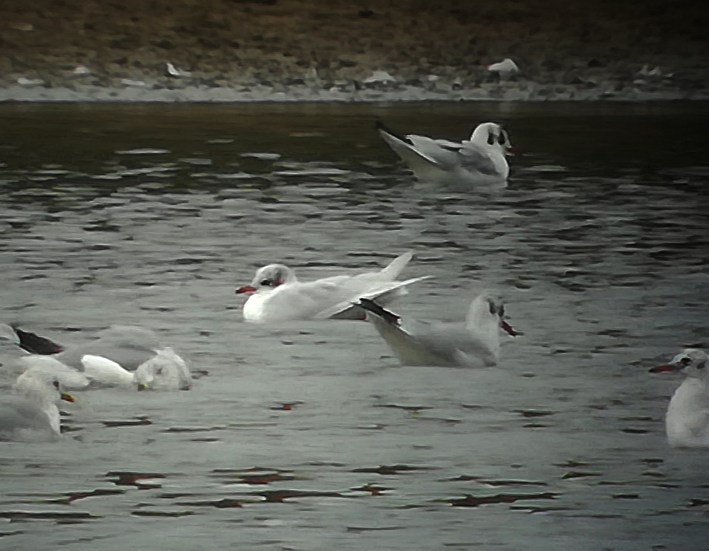
First-winter Mediterranean Gull, Daventry CP, 16th November 2018 (Gary Pullan)
Two Mediterranean Gulls – both of them first-winters – were found this week, one in the Pitsford gull roost on 14th and the other two days later at Daventry CP. The usual adult Yellow-legged Gulls were to be found at Pitsford and Hollowell, with three at the latter site on 16th, although a first-winter was in the Pitsford gull roost on 14th and a fourth-winter visited Daventry CP on 16th.
Two Short-eared Owls were found on 11th, hunting the grassy summit of Borough Hill, where they remained all week, while last week’s two Bearded Reedlings at Stanwick performed a short encore on 10th before apparently disappearing for good. Single Bramblings were seen at Hollowell on 10th and Stanwick on 12th, a female Crossbill was found at Fineshade Wood on 13th and eight more visited Ditchford GP briefly on 16th before flying toward nearby Irchester CP. Also on 13th, a single Hawfinch was heard calling at Brixworth CP.
A largely southerly airstream throughout the week kept temperatures above average, peaking at 15ºC on 5th-6th. Wildfowl numbers continued to build and most of last week’s rare fare remained settled and on show. Additionally, for the second week running, a handful of new arrivals included another species which was the first this century in Northamptonshire …
The flow of Whooper Swans over the past weeks appears now to have halted but it has left us with eleven (nine adults and two first-winters) at Pitsford Res, present north of the causeway for nigh on two weeks. Hopefully they will remain for the foreseeable future. Similarly ensconced, the two adult White-fronted Geese remained at Sywell CP and the female Ruddy Shelduck was still at Ravensthorpe Res on 4th.
Red-crested Pochard, Wicksteed Park Lake, 6th November 2018 (Alan Francis). One of three drakes present.Red-crested Pochards, Stanford Res, 9th November 2018 (Chris Hubbard). Four of six present.
Red-crested Pochards were widespread with this week’s highest count of six at Stanford Res on 9th. Elsewhere, between one and three were seen at Daventry CP, Hollowell Res, Stanwick GP, Thrapston GP and Wicksteed Park Lake and the first-winter Scaup remained at Thrapston GP all week.
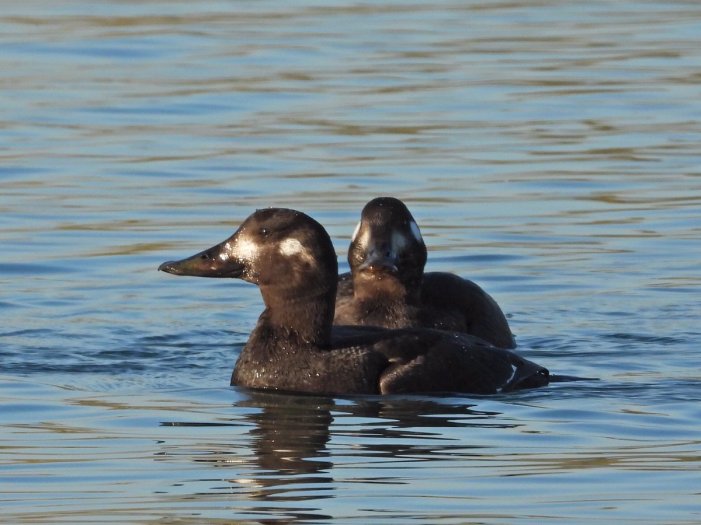
Velvet Scoters, Thrapston GP, 5th November 2018 (Alan Coles). Three of the six present.
Held over by popular demand, the six first-winter Velvet Scoters remained on Thrapston GP’s Town Lake for a second week, still showing well there on 9th. Conversely, of interest but of limited appeal, a very distinctive drake American Wigeon x Eurasian Wigeon hybrid visited Daventry CP on 7th.
Drake American Wigeon x Eurasian Wigeon hybrid, Daventry CP, 7th November 2018 (Gary Pullan)
Last week’s Bittern was again seen on the A45 Lay-by Pit at Stanwick on 3rd but the site’s main attraction continued to be Cattle Egrets – last week’s two having doubled to four by the end of the week. Great White Egrets were reported from eight localities including Clifford Hill GP, Ditchford GP, Hollowell Res, Pitsford Res, Ravensthorpe Res, Stanford Res, Stanwick GP, Summer Leys LNR and Thrapston GP with Pitsford again boasting the highest count of five on 6th.
Cattle Egret, Stanwick GP, 5th November 2018 (Steve Fisher). One of up to four present.
Raptors were limited to the ‘ringtail’ Hen Harrier, remaining elusive at Stanford Res between 3rd and 5th and a Rough-legged Buzzard reported on roadkill along the relatively short stretch of road between Apethorpe and Woodnewton on 9th. Should the latter be proven to remain, it is likely to become a more popular attraction than the six smart scoters down the road. Despite occasional reports, the last accepted record, only the third this century, was in October 2014 and as always, it was a fly-over. There has never been a twitchable Rough-leg in Northants …
Save the odd Jack Snipe – of which there was one at Stanwick on 6th – it’s normally all over for waders until spring but both the Black-tailed Godwit at Daventry CP and the Common Sandpiper at Stanwick remained until 7th and 9th respectively, while a late and fleeting Spotted Redshank at the latter site was a surprise on 6th.
On the gull front it was more of the usual fare, with single adult Yellow-legged Gulls at Hollowell, Pitsford and Daventry and a third-winter at the latter locality on 5th, while a first-winter Caspian Gull was at Hollowell on 3rd and 5th and a third-winter visited Stanwick on the last of these two dates.
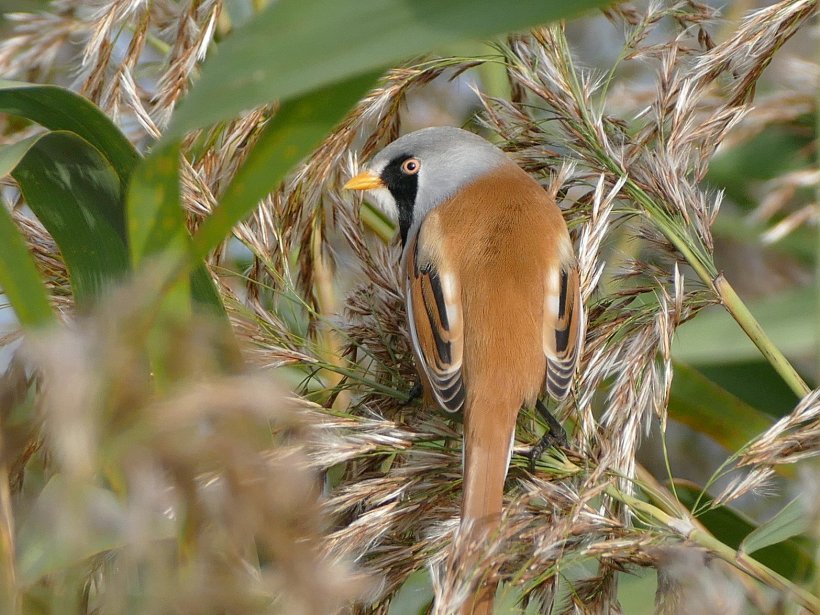
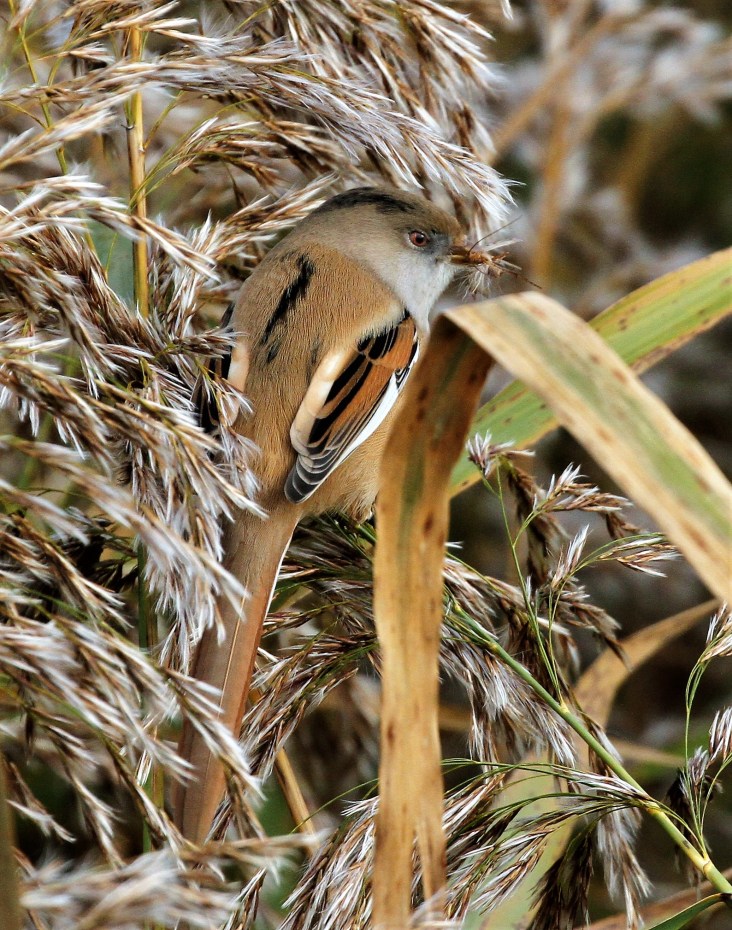
Another Short-eared Owl was found at Harrington AF on 3rd but bird of the week – at least for one observer – was the Hooded Crow which flew south-west over Pury Hill, Alderton on 7th. The species was formerly a more regular, though scarce, winter visitor to Northants but its appearance in the south, east and central parts of the UK is now much less frequent than it was during the last century. In fact, this is the first in the county since 1999. Others were seen inland during the period in Cambridgeshire, Leicestershire, Lincolnshire, Nottinghamshire and East, South and West Yorkshire. More readily accessible and guaranteed to delight, however, were two Bearded Reedlings, which were discovered at Stanwick on 4th and did the decent thing of posing well for photos until at least 6th.
Female Bearded Reedling, Stanwick GP, 5th November 2018 (Steve Fisher)Male Bearded Reedling, Stanwick GP, 5th November 2018 (Steve Fisher)Female Bearded Reedling, Stanwick GP, 5th November 2018 (Martin Dove)Male Bearded Reedling, Stanwick GP, 5th November 2018 (Martin Dove)Female Bearded Reedling, Stanwick GP, 5th November 2018 (Alan Coles)Male Bearded Reedling, Stanwick GP, 5th November 2018 (Alan Coles)
The only Brambling this week was one at Harrington AF on 3rd.
The period started with northerly winds, rain and temperatures significantly depressed, while the first frosts since last spring served to remind that it is now late autumn. Many a glove came on as BST slipped mercilessly into GMT, plunging the late afternoons into near-darkness and curtailing any after-work birding activity for those of us still having to earn a crust. Surprisingly, wildfowl well and truly stole the show this week, which saw the arrival of one species not seen in Northamptonshire for nearly a quarter of a century …
So, they just keep coming. Smashing all previous records for autumn occurrences in Northants, Whooper Swans continued to pile in … and some lingered. The 27th saw two adults at Thrapston GP and two further adults at Pitsford Res, the number at the latter location doubling by close of play, with all four remaining throughout the following day. On 29th, they were joined by another adult and two first-winters during the morning and then by four more adults during the afternoon, giving eleven birds in total – all of which remained throughout the week. Elsewhere, during late morning on 28th, twelve – including two first-winters – arrived at Earls Barton GP’s Mary’s Lake and on 29th an adult was found at Daventry CP.
Whooper Swans, Earls Barton GP, 28th October 2018 (Bob Bullock)Whooper Swan, Daventry CP, 29th October 2018 (Gary Pullan)
Last week’s Pink-footed Goose was seen again at Stanwick GP on 29th and 1st, while the two adult White-fronted Geese at Sywell CP remained throughout the period and the female Ruddy Shelduck moved back from Hollowell Res to Ravensthorpe Res, where it was seen on 28th and 30th.
Female Ruddy Shelduck, Ravensthorpe Res, 28th October 2018 (Paul Crotty)
Red-crested Pochards featured heavily this week, particularly at Pitsford Res, where up to seventeen were present from 27th until the week’s end. Elsewhere, two were at Daventry CP on 29th and 30th with two at Thrapston GP on the latter date and singles were at Stanford Res on 28th and 2nd and Stanwick GP between 31st and 2nd. With winter fast approaching, Scaup were also getting in on the act with a first-winter at Thrapston GP from 28th until the week’s end and one at Pitsford Res on 1st, where a female Ferruginous Duck x Pochard hybrid provided an interesting distraction in Scaldwell Bay on 27th-28th.
Indisputably, however, this week’s star birds were the eight Velvet Scoters discovered on Thrapston GP’s Town Lake, late in the morning of 28th. Two had departed by the following day but the remaining six continued to delight local observers throughout the period, sometimes being pushed close to the shoreline by yachts from the sailing club at the south-western end of the lake.
Velvet Scoters, Thrapston GP, 28th October 2018 (Bob Bullock)
Although all appeared to be first-winters, it is possible to sex at least one as a male, based on its emerging bill pattern. This is the 21st record for Northants and the first since 1995, the last prior to which was in 1988 – the 1980s enjoying records in five out of ten years, with November being the peak month for arrivals.
First-winter drake Velvet Scoter, Thrapston GP, 31st October 2018 (Alan Boddington)Velvet Scoters, Thrapston GP, 28th October 2018 (Bob Bullock)Velvet Scoters, Thrapston GP, 28th October 2018 (Bob Bullock)Velvet Scoter, Thrapston GP, 31st October 2018 (Alan Boddington)Velvet Scoters, Thrapston GP, 31st October 2018 (Alan Boddington)
Nene Valley locations continued to provide the focus for more interesting birding, with Stanwick producing a Bittern on its A45 Lay-by Pit on 30th, while continuing to host the two the two Cattle Egrets until at least 31st. The same locality also held a Great White Egret from 27th to 29th and reports of singles seen intermittently came from Clifford Hill GP, Summer Leys LNR, Thrapston GP, Hollowell Res, Ravensthorpe Res, Stanford Res and Sywell CP but Pitsford claimed the lion’s share, with possibly as many as six on 27th and certainly at least four on 2nd.
Great White Egret, Stanford Res, 2nd November 2018 (Chris Hubbard)
And so to reports of raptors – or Hen Harriers, to be more precise … and both on the same day, 2nd, when a ‘ringtail’ was at Stanford Res just after midday, followed by a male at Harrington AF just before dusk.
But it was the west of the county that scored points once again with another flock of Common Cranes – this time eight, flying west over Fawsley Park on 27th and like the five reported over Shutlanger on 2nd, not obligingly hanging around for photographs as did the ‘Daventry six’ on 27th September. Assuming acceptance of all these, of course, this latest flock constitutes about the twenty-fifth record for the county.
In the wake of this autumn’s wader passage, Black-tailed Godwits continued to put in appearances in the Nene Valley at Stanwick on 28th and Summer Leys on 31st and the lingering, though fidgety, adult, still at Daventry CP on 30th, was seen again on 2nd. Noteworthy for its unusually long, late stay, the Common Sandpiper at Stanwick made it into November and was still present there on 2nd while, just up the valley, a Jack Snipe was found at Summer Leys on 27th.
There was little to write home about on the gull front, with an adult Mediterranean Gull visiting Daventry CP on 1st and single adult Yellow-legged Gulls at Pitsford Res on 28th-29th and Hollowell Res on 29th, while a third-winter Caspian Gull also visited Hollowell on 30th.
Adult Mediterranean Gull, Daventry CP, 1st November 2018 (Gary Pullan)
Again this week, another ‘heard only’ Yellow-browed Warbler was reported – this time from a residential road in Corby on 28th and there were more Bramblings on the move, with Stanwick producing one on 28th, followed by five there the next day, when one was also seen at Daventry CP. Single flyover Crossbills were seen and heard over Pitsford on 27th and Kingsthorpe, Northampton on 30th.
The beginning of the period started off unseasonally warm with westerly winds, swinging north-west before eventually adopting a strong northerly element with associated showers toward the week’s end.
The above conditions were no doubt highly conducive to Whooper Swan migration and Northants benefited from more UK arrivals on 22nd, when seventeen were found at Hollowell Res and six appeared at Clifford Hill GP, followed by four in flight over nearby Brackmills Industrial Estate the next day. In fact, it would appear that this autumn has seen the most arrivals of this species in the county for decades – perhaps reflecting the long-term trend, which has seen a 21% increase the UK wintering population over the 25 years 1989/90 – 2014/15 (WWT).
Adult Whooper Swans, Clifford Hill GP, 22nd October 2018 (Bob Bullock)
So, this former rare visitor is now the commonest wild swan to visit the county – a huge role reversal when comparing it to the now sadly declining Bewick’s Swan which, in former years, wintered relatively commonly in Northants, as this extract from the Bewick’s species summary in the 1978 Northamptonshire Bird Report illustrates:
Making it into this week were the two adult White-fronted Geese, which moved from Clifford Hill GP to relocate at Sywell CP, where they remained throughout from 21st. A solitary Pink-footed Goose appeared at Stanwick GP on 24th, remaining until the week’s end, while the female Ruddy Shelduck was still at Hollowell Res on 24th. Red-crested Pochards continued to be seen and included six at Summer Leys on 20th and three at Thrapston GP the following day, with four there on 26th.
The two Cattle Egrets, discovered among cattle around the main lake at Stanwick GP on 18th, ultimately found their herd of choice by 20th as they chose to move about one kilometre up the valley to accompany the west end cows which grazed around the rough and reedy ditches opposite the Diamond Centre complex. Sometimes out of sight and difficult to see, they remained at Stanwick throughout the week.
Cattle Egret, Stanwick GP, 20th October 2018 (Ady Leybourne)Cattle Egret, Stanwick GP, 24th October 2018 (Mike Alibone)
There were no ‘high’ counts of Great White Egrets during the period and, apart from two at Stanwick GP on 25th, singles could be found at Abington Meadows/Clifford Hill GP, Daventry CP, Hollowell Res, Pitsford Res, Stanford Res and Summer Leys.
Great White Egret, Summer Leys LNR, 24th October 2018 (Ady Leybourne)
The autumn’s fourth Gannet was seen in flight, late in the afternoon on 21st as it passed west over Long Buckby.
Disregarding a long-staying, now late Common Sandpiper at Stanwick on 25th, Black-tailed Godwit was the only wader species of note, with last week’s juvenile remaining until 22nd at Summer Leys, while the lingering adult continued to frequent Daventry CP all week.
Yellow-legged Gulls continued to be seen in small numbers, with a maximum of eight at Boddington Res on 24th. Elsewhere, at least three were at Ditchford GP on 23rd, up to two were at Hollowell Res between 20th and 24th and one was at Stanwick on 20th. Like last week, one Short-eared Owl was seen at Harrington AF on 20th.
On the passerine front, the second Yellow-browed Warbler of the autumn was heard at Stoke Wood, north of Desborough, on 26th but promptly vanished; it must still be there … somewhere. A Rock Pipit was seen briefly at Hollowell Res on 20th and another flyover Brambling was on the move over Brackley on 23rd, while eight Crossbills flew over the University of Northampton’s Waterside Campus in Northampton on 24tth.
After a dry, bright, though blustery ‘day one’ the weather deteriorated rapidly with almost continual rain over the following two days – all courtesy of ‘Storm Callum’ as its eastern flank brushed the UK. The week in Northants was eventful, with a host of new migrants and three top rarities …
Another week, another Whooper Swan – or twenty-four of them, to be precise. Twenty-two flew north-east at Thrapston GP on 18th, quickly followed by two pitching down on the water there shortly afterward. Also appearing as a double, two adult White-fronted Geese were found with the local Greylags at Clifford Hill GP on 19th, while the female Ruddy Shelduck appeared to be settled at Ravensthorpe Res at the week’s end. Rounding off the cast of wildfowl were six Red-crested Pochards – two at Pitsford Res on 18th had become four the next day, when two were also found at Thrapston GP.
White-fronted Geese, Clifford Hill GP, 19th October 2018 (Bob Bullock)
The first-winter Cattle Egret, present in the cattle field immediately north of Summer Leys throughout the previous week, remained until 14th, after which there were no further reports. Two more were then discovered among cattle around the main lake at Stanwick GP on 18th, although they appeared not to be present the following day. Another great record, this represents the first ‘flock’ for the county and surely augers well for future occurrences.
Cattle Egret, Earls Barton GP, October 2018 (Bob Bullock)Cattle Egret, Earls Barton GP, October 2018 (Bob Bullock)
In the meantime, Great White Egret numbers peaked with five at Pitsford Res on 19th, three still at Daventry CP until at least 17th and singles at both Summer Leys and Stanford Res on 18th and at Ravensthorpe Res throughout the period.
Another ‘one raptor week’ saw a Merlin at Chelveston Airfield on 19th and one of last week’s waders – the Daventry CP Black-tailed Godwit lingering until 16th. Another Black-tailed Godwit appeared at Summer Leys on 18th, a Ruff was found at Hollowell Res on 17th and the second Jack Snipe of the autumn was at Bozeat GP the following day.
The news that a Great Skua was loafing on the water off the dam at Sywell CP, during the afternoon of 16th, initiated a rush of adrenalin as those who were not hampered by the necessity to go to work headed quickly to site. It was found initially at 13.30 and fortunately remained throughout the afternoon.
Great Skua, Sywell CP, 16th October 2018 (Leslie Fox)Great Skua, Sywell CP, 16th October 2018 (Bob Bullock)Great Skua, Sywell CP, 16th October 2018 (Bob Bullock)Great Skua, Sywell CP, 16th October 2018 (Alan Coles)Great Skua, Sywell CP, 16th October 2018 (Alan Coles)Great Skua, Sywell CP, 16th October 2018 (Bob Bullock)
Exuding brute and charisma, this Bonxie was a welcome catch-up for local birders, being the first in the county for nine years. And they seem to be getting rarer. This species is now occurring less frequently than it did in the last century, when it appeared in seven out of ten years during the 1980s. This week’s individual was the twenty-first for the county.
With just a first-winter Mediterranean Gull at Daventry CP on 17th and single adult Yellow-legged Gulls at Pitsford Res on 14th and Thrapston GP on 17th, larids were thin on the ground. Pitsford, however, produced a flyover Short-eared Owl on the latter date.
Whinchat, Bozeat GP, 18th October 2018 (Bob Bullock)
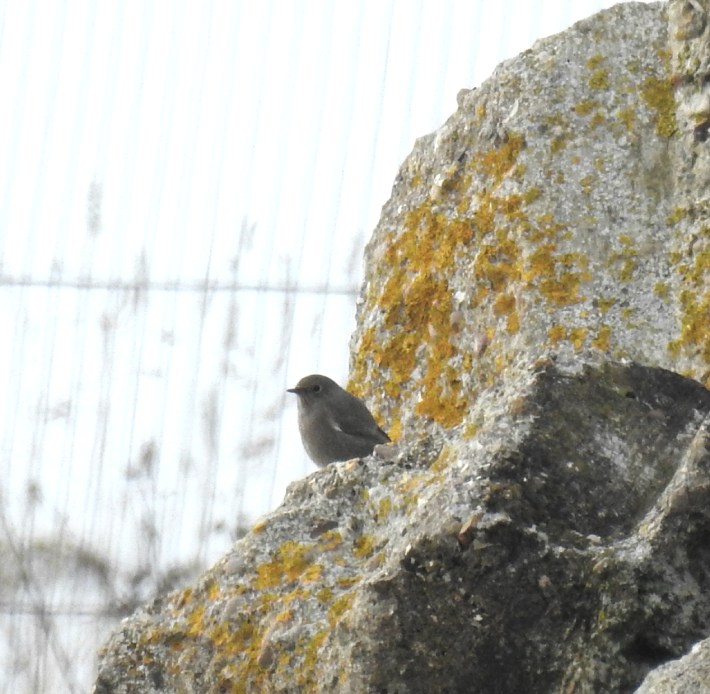
On the passerine front, a late Whinchat was at Bozeat GP on 18th and, conforming to their late autumn occurrence pattern, Black Redstarts were found on private land between Towcester and Abthorp on 15th, followed by one at Chelveston AF on 16th, joined there by another from 17th to 19th, and two were at an undisclosed site at Great Oakley on 17th.
Black Redstart, Chelveston AF, 17th October 2018 (Leslie Fox)
Back at Chelveston AF, a Northern Wheatear was present on 17th but Northamptonshire’s tenth-ever Richard’s Pipit was discovered on 13th, where it remained until 15th. Residing in a high-fenced, gate-locked sheep field, it was not easy to see for the twenty or so birders who braved the inclement weather the following day. However, a kindly farmer granted access and the birders – many of whom were from Bedfordshire – duly connected. The Bedfordshire connection is of particular significance. The Northants/Beds county boundary runs through the middle of the site and the pipit did the honourable thing by appearing in both counties, thereby giving Bedfordshire a new county first. All this raises the inevitable question: is Chelveston the new Harrington? We’ll see … Back on indisputably home turf, a Rock Pipit was found at Hollowell Res on 13th and vizmiggin’ (no ‘G’) at Pitsford Res produced a flyover Brambling on 19th and a Hawfinch heading south-west on 17th. Are we in for another invasion?
Apart from northerly winds and persistent rain on the first day of the period, the remainder of the week saw the winds blow southerly, bringing unseasonally warm weather from Iberia and temperatures peaking locally at 23ºC on 11th. The wind intensified on the last day, as ‘Storm Callum’ approached from the Atlantic.
The weather, however, appeared to have little effect on migrants from the north-east, with the first Fieldfares arriving on 7th and the first Brambling on 9th, while other factors were clearly responsible for delivering the main rarity of the week – Northamptonshire’s seventh-ever Cattle Egret.
Against a backcloth of coincident arrivals inland, an adult Whooper Swan was discovered at Cransley Res on 7th, while the mobile female Ruddy Shelduck continued to yo-yo between Ravensthorpe and Hollowell Reservoirs, last being seen at the latter site on 11th. Summer Leys attracted far in excess of its usual quota of regulars and casual visitors this week, following the discovery of a first-winter Cattle Egret among a herd of cows in the field immediately north of the reserve on 7th. A popular pull for photographers, it remained throughout the week, commuting frequently between its favoured cattle field, Summer Leys and nearby Mary’s Lake.
Cattle Egret, Summer Leys LNR, 9th October 2018 (Alan Coles)Cattle Egret, Summer Leys LNR, 9th October 2018 (Alan Coles)Cattle Egret, Summer Leys LNR, 9th October 2018 (Alan Coles)Cattle Egret, Summer Leys LNR, 9th October 2018 (Alan Coles)
With a liberal scattering of some two hundred across the UK, including at least one hundred and five roosting at Shapwick Heath, Somerset on 28th September, its occurrence was only to be expected. It was just a question as to who was going to be the first to find one. In this instance, it was Matt Hazleton’s lucky day! The first Cattle Egret for Northants was also found at Summer Leys, back in August 2006. In fact, only one of the six previous records has occurred away from the Summer Leys/Earls Barton GP complex. It would appear highly likely that many more will follow as this species seems to be on the brink of imminent colonisation.
Firmly in the shade this week, Great White Egrets continued to be seen at six localities, with Daventry CP hosting the period’s maximum of three between 10th and 12th. Elsewhere, Ravensthorpe Res held one all week – joined by a second individual on 10th, one remained at Pitsford Res throughout, with two there on 9th, while singles visited Ditchford GP on 7th, Summer Leys on 7th and 10th and Stanford Res on 8th.
Great White Egrets, Daventry CP, 12th October 2018 (Gary Pullan)
Summer Leys again featured with a Gannet, photographed on the main lake on 10th, ‘back of camera’ images from an unknown photographer being on view to egret-watchers on the day.
Reports of raptors were thin on the ground but what was missing in quantity was made up for by quality in the shape of a Honey Buzzard, which was seen twice – including in a tree – at Kingsthorpe Golf Course, Northampton on the afternoon of 10th. Waders, too, only narrowly made it into this week’s copy, with a Black-tailed Godwit lingering at Daventry CP from 8th until 12th and the autumn’s first Jack Snipe appearing at Hollowell Res on 10th.
No autumn would be complete, however, without a visit by a late, juvenile Arctic Tern and Hollowell duly obliged with one of these crisp little classics on show between 6th and 10th. The same reservoir produced a third-winter Caspian Gull on 12th – the same date that a first-winter was mobile around the Moulton Grange Bay/dam area of Pitsford Res.
First-winter Caspian Gull, Pitsford Res, 12th October 2018 (Mike Alibone)
Lest they should be forgotten, small numbers of Yellow-legged Gulls were scattered with up to three at both Pitsford Res and Daventry CP, two at Hollowell Res and one at Stanwick GP during the period.
Adult Yellow-legged Gull, Pitsford Res, 7th October 2018 (Alan Coles)
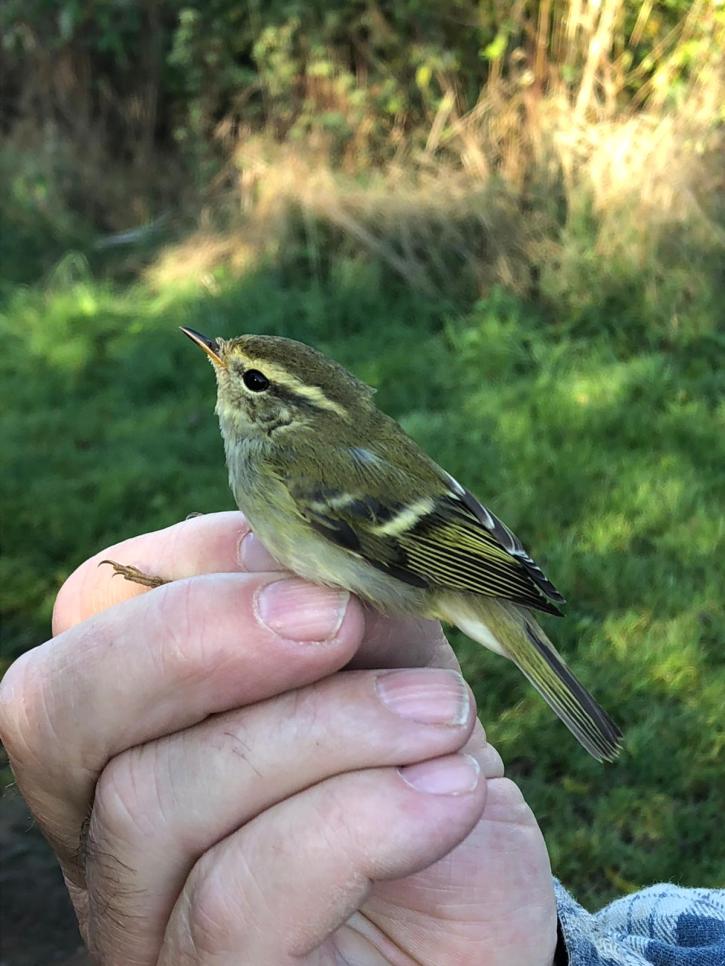
Passerines were again making news this week and heading the cast was Northamptonshire’s tenth-ever Yellow-browed Warbler, pulled from a net at Stanford Res (just for a change) on 10th. Overall, some 500 were recorded nationwide in the run up to this date, so there are surely more out there to be found.
Yellow-browed Warbler, Stanford Res, 10th October 2018 (Chris Hubbard)
The first migrant Ring Ouzel of the autumn was a juvenile at Fermyn Wood CP on 7th when, back at Stanford, a late (for Northants) Common Redstart was trapped and ringed, while the autumn’s second Rock Pipit stayed briefly at Daventry CP on 11th.
Another dry week – in terms of both weather and birds – with a primarily westerly airstream, plenty of sunshine and temperatures reaching a high of 21ºC.
Female Ruddy Shelduck, Ravensthorpe Res, 3rd October 2018 (Gary Pullan)
Still doing the rounds, the mobile female Ruddy Shelduck decided to drop into Ravensthorpe Res on 3rd before relocating to nearby Hollowell Res on 5th. Ravensthorpe also continued to host a Great White Egret throughout the period, while others included singles at Stanford Res on 1st-2nd and Pitsford Res to 30th, with three there on 2nd.
Great White Egret, Ravensthorpe Res, 2nd October 2018 (Gary Pullan)Great White Egret, Ravensthorpe Res, 5th October 2018 (Paul Crotty)
Following the tracking of last week’s five Common Cranes from Scotland to their departure over the English Channel, via Daventry CP, five were also reported flying south over Shutlanger on 4th. Waders were, however, scarce, with just a juvenile Grey Plover paying the briefest of visits to Boddington Res before flying off south-east on 2nd. Also at Boddington, three juvenile ‘Tundra’ Ringed Plovers were present on 29th, with two remaining until 5th.
An adult Caspian Gull again visited Hollowell Res on 29th, while three adult Yellow-legged Gulls were at Stanwick GP on 29th and single adults continued to be seen at Thrapston GP on 1st, Pitsford Res on 2nd, Ravensthorpe Res on 3rd and one visited Boddington Res on 5th.
In contrast to last week, passerines featured a little more prominently, with a report of a Wryneck in an Earls Barton front garden on 30th, which was followed by several observers the following day but not seen subsequently. A Firecrest was in the vicinity of the Heronry Hide at Thrapston GP on 1st, while a Northern Wheatear at Harrington AF on 29th was the only one this week and a Rock Pipit flying south-west at Pitsford Res on 3rd was the first of the autumn.
Apart from a period of persistent rain on 23rd, local weather remained dry and mainly sunny. South or south-westerly winds from 25th raised temperatures to a peak of 23ºC on 27th, after which northerlies caused the temperature to fall to a maximum of 14°C at the week’s end, on 28th. After producing a Grey Phalarope at the end of last week, Daventry Country Park remained firmly in the spotlight, positioning itself as ‘locality most likely to deliver’ … and it did.
Following a general coastal influx during the month, the second Pink-footed Goose of the autumn (or the first relocating) was found with Greylags at Summer Leys LNR on 24th, while the only other wildfowl of note was the juvenile Garganey still present at Pitsford Res on 22nd. On 24th, a juvenile Gannet was reported flying over Clifford Hill GP and it, or another, was subsequently reported flying low north-west over the road and fields between Church Brampton and Holdenby later in the day, at 16.00. Meanwhile, single Great White Egrets were seen at six locations, which included Stanford Res on 22nd, Pitsford Res on 23rd and 28th, Thrapston GP on 24th and 27th, Summer Leys and Daventry CP on 25th and Ravensthorpe Res on 28th.
On the raptor front, Thrapston GP again produced a Marsh Harrier on 24th and, like last week, just one Osprey was seen – this time at Stanwick GP, where it was observed carrying a fish on 27th. Bird, or birds, of the week, however, were the five Common Cranes watched circling above Daventry CP for fifteen minutes, late in the morning on 25th. About the twenty-third record for the county, it was unusual as ‘flocks’ are scarce, most previous records having been of ones and twos.
Common Cranes, Daventry CP, 25th September 2018 (Gary Pullan). Three of five adults circling the site before all five headed south.
Even more interesting, however, is the fact that this particular flock has history. All five were unringed adults which had spent the summer in north-east Scotland, where there is a small breeding population. These five had spent much of their time around Loch of Strathbeg and they were last seen on Sunday, 23rd. They subsequently flew south over Saltholme Pools, Teeside the following day before their arrival at Daventry CP at 10.45 on 25th. Continuing their journey south, they were tracked over Knap Hill, Wiltshire at 13.00 and then east over Pennington, Hampshire at 19.00. They were then found at nearby Lymington the following morning, before flying south-east and then finally flying out to sea, south, over St Catherine’s Point, Isle of Wight. Who needs satellite tags?!
Daventry Common Cranes presumed migration route, 23rd to 26th September 2018. Background image of the Daventry birds by Gary Pullan.
Back to the 25th and Daventry where, on the ground, a Little Stint was found and the GreyPhalarope was still present. The phalarope had departed by the following day but the stint remained until 27th. Another juvenile Grey Phalarope was discovered off the dam at Pitsford Res mid-afternoon on 23rd. It remained by the dam until late afternoon the following day, after which it became more mobile and was last seen off the northern shoreline, east of Pintail Bay on 25th.
Juvenile Grey Phalarope, Daventry CP, 24th September 2018 (Gary Pullan)Juvenile Grey Phalarope, Daventry CP, 23rd September 2018 (Ken Prouse)Juvenile Grey Phalarope, Pitsford Res, 24th September 2018 (Doug Goddard)
Pitsford’s long-staying juvenile Black Tern remained throughout the week and another juvenile visited Clifford Hill GP, briefly, on 22nd and a first-winter Caspian Gull was found at Daventry CP on 23rd. The usual sprinkling of Yellow-legged Gulls included singles at Ravensthorpe Res on 22nd, 24th and 28th, Pitsford Res on 23rd, 26th and 27th and Thrapston GP on 24th with two there on 28th.
Yellow-legged Gull, Stanwick GP, 23rd September 2018 (Mike Alibone)Yellow-legged Gull, Stanwick GP, 23rd September 2018 (Mike Alibone)Yellow-legged Gull, Ravensthorpe Res, 24th September 2018 (Paul Crotty)Yellow-legged Gull, Pitsford Res, 26th September 2018 (Alan Coles)
Three were at Stanwick GP on 23rd, including one with a partial hood, closely resembling the individual muted as an Azorean Gull candidate which was present at this site on 4th October 2017.
Many thanks to Gary Pullan for Common Crane movement information.
The week’s weather was strongly influenced by the Atlantic storm track with SSW winds pushing up from the continent and raising the temperature to a local high of 26°C on 17th. The following day, ‘Storm Ali’ (nothing to do with the author!) was named as it advanced rapidly eastwards, bringing strong west to south-westerly wind and rain and delivering at least one storm-driven bird to the county on 21st.
This week’s wildfowl included the female Ruddy Shelduck putting in two appearances at Stanford Res on 15th and 18th with the same site also producing a flock of eight Red-crested Pochards on the latter date.
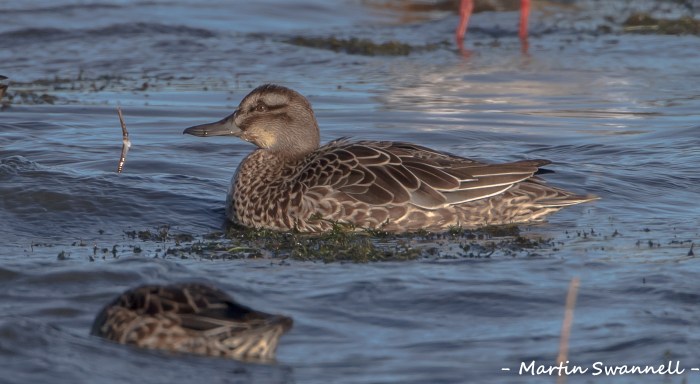
Juvenile Garganey, Pitsford Res, 21st September 2018 (Martin Swannell)
The Garganey at Daventry CP remained until at least 20th and a, or ‘the’, juvenile at Pitsford Res was again seen between Moulton Grange Bay and the dam on 20th-21st. Meanwhile, Great White Egrets increased in both number and the number of sites they were found at this week – the latter from three to five.
Great White Egret, Pitsford Res, 16th September 2018 (Adrian Borley)
The Thrapston GP individual remained all week, one was at Pitsford Res on 15th-16th while last week’s bird at Summer Leys LNR was still present on 21st, being joined by another there on 18th. Two were also together at Sulby Res on 16th and one flew west over Ditchford GP on 17th.
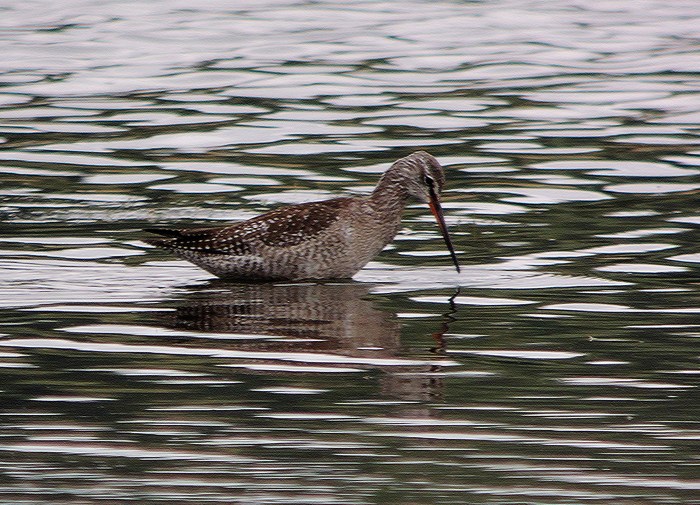
Juvenile Spotted Redshank, Hollowell Res, 9th September 2018 (Mike Alibone)
Just one Osprey was seen – a migrant flying south at Cosgrove on 17th – and against a flimsy backcloth of commoner waders, the juvenile Spotted Redshank at Hollowell Res chalked up its second full week in residence on 21st. Bird of the week, however, was the Grey Phalarope deposited at Daventry CP, courtesy of ‘Storm Ali’, on 21st. Showing well, as they so frequently do inland, it pushes the number of county records this century into double figures.
Juvenile Grey Phalarope, Daventry CP, 21st September 2018 (Gary Pullan)Juvenile Grey Phalarope, Daventry CP, 21st September 2018 (Bob Bullock)Juvenile Grey Phalarope, Daventry CP, 21st September 2018 (Martin Swannell)
Pitsford’s juvenile Black Tern remained until at least 19th, ranging widely between the northern reserve area and ‘The Narrows’, well south of the causeway.
Juvenile Black Tern, Pitsford Res, 17th September 2018 (Alan Coles)
Another was found at Thrapston GP on 17th, where last week’s juvenile Little Gull remained on Town Lake until the same date. Just one Mediterranean Gull made it on to the weekly list, a first-winter at Daventry CP on 17th, and an adult Caspian Gull at Ravensthorpe Res on 15th, visiting nearby Hollowell Res on 21st, was the only one the county could muster for this species, as well. Numbers of Yellow-legged Gulls were down further on last week, with a juvenile at Daventry CP on 17th, an adult at Hollowell Res on 21st and up to three at Pitsford Res during the period.
Yellow-legged Gull, Pitsford Res, 17th September 2018 (Angus Molyneux)
Numbers of passerines also took a plunge, although a Pied Flycatcher seen briefly in canalside bushes near Thrupp, between Long Buckby Wharf and Welton, on 15th would constitute the only record for Northamptonshire so far this year. Otherwise, single Whinchats at both Blueberry Farm, Maidwell and Stanford Res on 15th and two again at the latter site on 17th, were a poor show considering this species had been present at seven localities during the previous week. Only one Northern Wheatear was found – on Pitsford dam on 18th – while a single White Wagtail was identified at Boddington Res on 17th, where it remained until 20th.


 The three Cattle Egrets at the north-east end of the Stanwick GP complex were once again joined by a fourth on 21st-22nd, while one or two Great White Egrets continued to be seen at this and six other locations, Pitsford topping the bill with four on 21st-22nd.







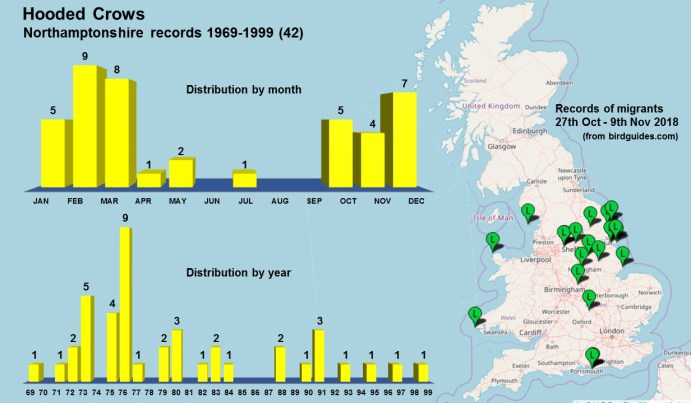 The species was formerly a more regular, though scarce, winter visitor to Northants but its appearance in the south, east and central parts of the UK is now much less frequent than it was during the last century. In fact, this is the first in the county since 1999. Others were seen inland during the period in Cambridgeshire, Leicestershire, Lincolnshire, Nottinghamshire and East, South and West Yorkshire. More readily accessible and guaranteed to delight, however, were two Bearded Reedlings, which were discovered at Stanwick on 4th and did the decent thing of posing well for photos until at least 6th.







 Nene Valley locations continued to provide the focus for more interesting birding, with Stanwick producing a Bittern on its A45 Lay-by Pit on 30th, while continuing to host the two the two Cattle Egrets until at least 31st. The same locality also held a Great White Egret from 27th to 29th and reports of singles seen intermittently came from Clifford Hill GP, Summer Leys LNR, Thrapston GP, Hollowell Res, Ravensthorpe Res, Stanford Res and Sywell CP but Pitsford claimed the lion’s share, with possibly as many as six on 27th and certainly at least four on 2nd.



 There were no ‘high’ counts of Great White Egrets during the period and, apart from two at Stanwick GP on 25th, singles could be found at Abington Meadows/Clifford Hill GP, Daventry CP, Hollowell Res, Pitsford Res, Stanford Res and Summer Leys.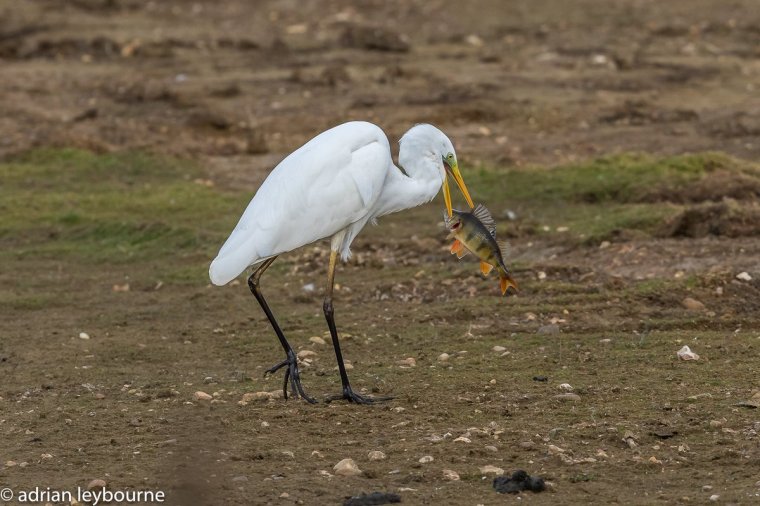


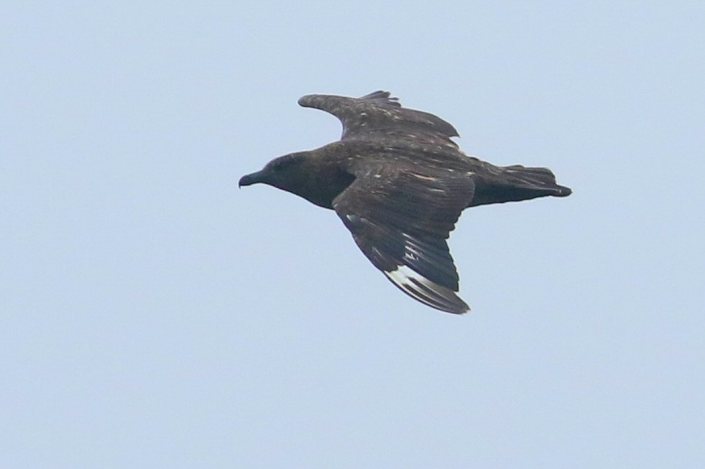

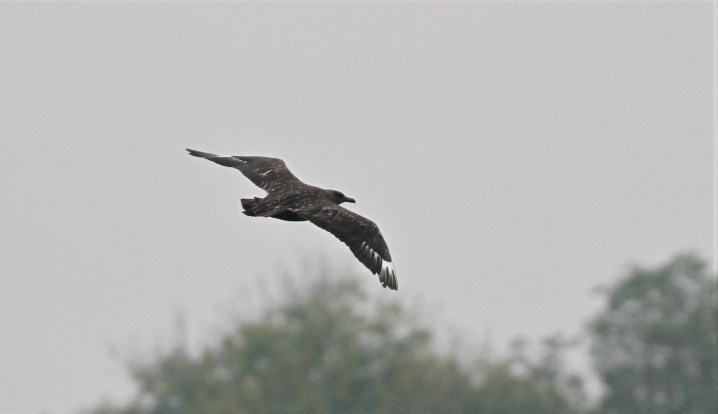


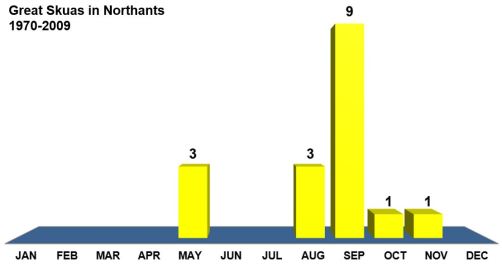 Exuding brute and charisma, this Bonxie was a welcome catch-up for local birders, being the first in the county for nine years. And they seem to be getting rarer. This species is now occurring less frequently than it did in the last century, when it appeared in seven out of ten years during the 1980s. This week’s individual was the twenty-first for the county.

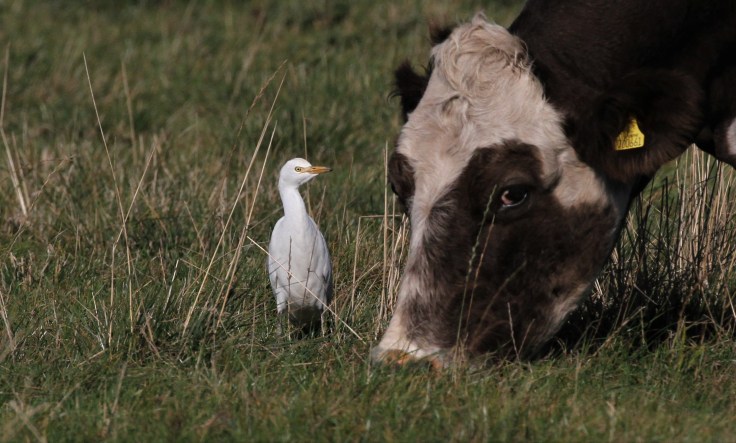


 With a liberal scattering of some two hundred across the UK, including at least one hundred and five roosting at Shapwick Heath, Somerset on 28th September, its occurrence was only to be expected. It was just a question as to who was going to be the first to find one. In this instance, it was Matt Hazleton’s lucky day! The first Cattle Egret for Northants was also found at Summer Leys, back in August 2006. In fact, only one of the six previous records has occurred away from the Summer Leys/Earls Barton GP complex. It would appear highly likely that many more will follow as this species seems to be on the brink of imminent colonisation.
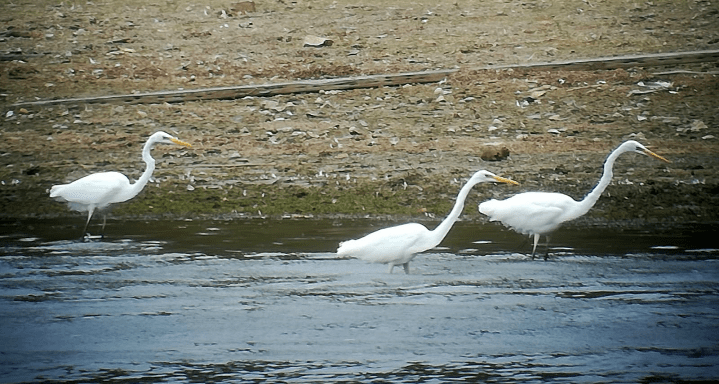
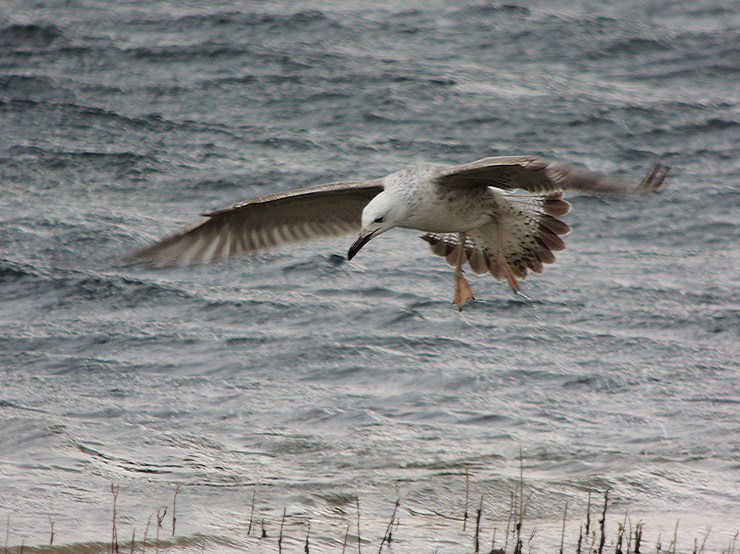
 Lest they should be forgotten, small numbers of Yellow-legged Gulls were scattered with up to three at both Pitsford Res and Daventry CP, two at Hollowell Res and one at Stanwick GP during the period.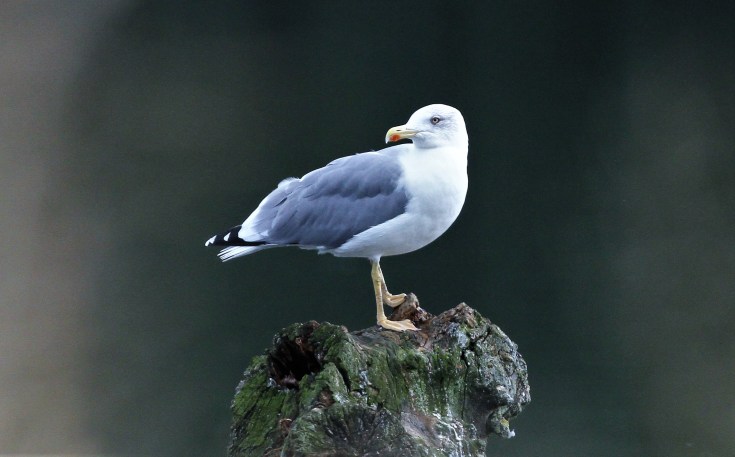










 Northants birds