Widely predicted to break records, temperaturewise, the second week of the period saw Northamptonshire reach an astonishing 40.2°C at the Met Office climate station in Pitsford on 19th – just short of the record-breaking national high of 40.3°C. Never mind dry January, we were deep into experiencing an uncomfortably dry July. As the period progressed, though, the birds appearing were none too shabby and provided ample reward for those willing to don their sunhats or to hit the field early doors.
Unsurprisingly, the water level has been dropping at Hollowell Res, where the female Ruddy Shelduck remained, intermittently, until at least 21st, while a Garganey pitching up at Stanford Res on 12th turned out to be a long-stayer, still being present there on 22nd. Another was found at Pitsford Res on 14th, the latter site hosting up to three drake Red-crested Pochards between 11th and 20th.

A Common Quail was reported near Grimscote on 12th.
Pitsford and Summer Leys LNR shared the period’s Great Egrets between them – the former site holding up to three and the latter, two.

But bucking the trend in terms of drying out and producing those eagerly-awaited muddy margins, lush herbaceous borders of the overgrown, reedy kind were instead the order of the day at Summer Leys. Perfect, in fact, to deliver the reserve’s saving grace, which appeared in the form of up to three pristine, juvenile Marsh Harriers, present and performing well between 19th and 22nd. In most instances only one was visible at any one time but all three were present at the same time on 21st and could be individually identified from images taken by local – and some not so local – photographers.


More regular raptor fare was available in the form of single Ospreys, which were seen at Pitsford on 10th, Stanford on 11th, Hollowell on 14th, 18th and 22nd and north of Guilsborough on 15th.
On the wader front, the autumn’s first returning Whimbrel flew over Ringstead GP on 16th but numbers of the more prevalent Black-tailed Godwit continued to ramp up with twenty at Pitsford on 9th, followed by two there on 22nd and Stanford, meanwhile, enjoying a run of at least six on 9th, two on 10th, ten on 13th and one on 14th. At least four were at Summer Leys on 22nd and one visited Thrapston GP on the same date.

A moulting male Ruff was present at Summer Leys on 16th-17th but most unusual were two Sanderlings at Hollowell on 22nd – a regular, though scarce, spring migrant in small numbers but much rarer as far as autumn passage goes. The first of the autumn’s Greenshanks appeared at Daventry CP on 13th, ahead of more due before the month’s end.


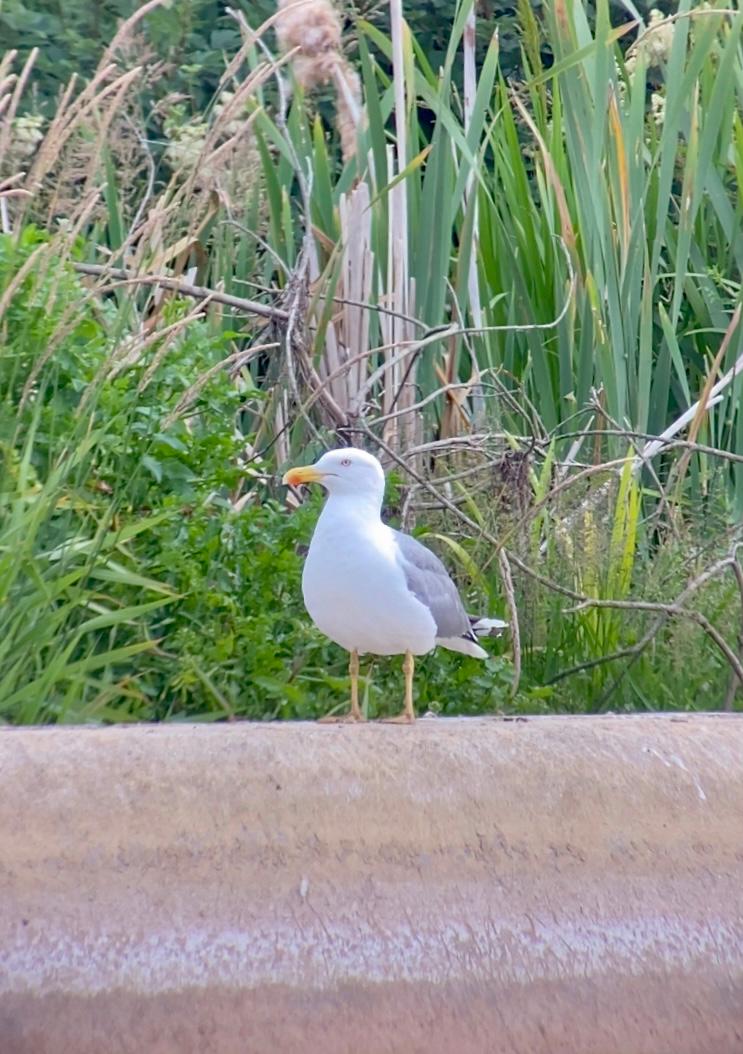
By contrast, the period’s gulls were restricted to just one species – Yellow-legged Gull. Most records came from Pitsford, where a maximum of three was present on 20th, although Stanford produced singles on 12th and 22nd and four were at Wicksteed Park Lake (Kettering) on 13th and one was there on 21st.
Passerines were limited to an unseasonal Redwing photographed in Wellingborough on 17th and, after a very poor spring for the species, a succession of early passage Common Redstarts, which included the long-staying male at Lilbourne Meadows until at least 17th. Additionally, up to two were at Harrington AF between 11th and 20th, two were present at Stanford-on-Avon on 13th-14th, at least one was at Blueberry Farm (Maidwell) on 13th and 18th-19th, while one-day singles were at Braunston on 12th, Woodford Halse on 15th, Lamport on 17th, Pitsford on 20th and Honey Hill on 21st. A solitary Crossbill flew over Lamport on 17th.

Discover more from Northants birds
Subscribe to get the latest posts sent to your email.

 Northants birds
Glad you reported a redwing because I saw one in Wellingborough but thought I was mistaken, though obviously not