The week just gone can only be described as one of those which was neither good nor bad in terms of what it actually produced. A high pressure system firmly anchored over the country provided excellent conditions for non-stop migration and the majority of the week’s best birds seemingly took full advantage, moving rapidly through the county in little more than the blink of an eye.
Two more summer visitors clocked in – both of them on the same day.


While the Wood Sandpiper arrived pretty much on cue, it could be argued that the Spotted Flycatcher had plenty of scope to do better, having set a record as long ago as 1971 and 1976 for the earliest arrival date of 20th April. It was quickly followed by singles at Braunston, Evenley Wood and Towcester, all on 8th.
This week’s ducks deluxe were represented by four species, starting with a drake Garganey at Summer Leys LNR on 6th-7th. Currently proving scarcer than usual this spring, this is only the fifth record so far and, aside from the early, lingering drake at Ditchford GP, the other three were limited to one-day birds.

The long-staying drake Red-crested Pochard remained in place at Earls Barton GP until at least 4th, while the female Ring-necked Duck, having moved from Ditchford to Clifford Hill GP on 2nd, remained at the latter site until 6th. The only other duck new in this week was a female Common Scoter found on Thrapston GP’s Town Lake on 7th.
In addition to the aforementioned Wood Sandpiper, which stayed only briefly at Summer Leys, more waders arrived and included another teasing Tringa in the shape of a fly-over Spotted Redshank, declining to drop in at Thrapston GP’s Titchmarsh LNR as it headed north-east over the reserve on 10th. This was the first – and maybe the last – of the year, for all we know but, by contrast, the week’s Greenshanks adopted a more leisurely approach to migration with singles at Summer Leys on 4th and 6th and two there on 10th.

These were joined there by the second Grey Plover of 2024 on the latter date, following the first at the same site on 28th-30th March.
Compared to the previous week, the number of Arctic Terns appearing was somewhat subdued, with two on 4th and singles on 5th and 7th – all at Summer Leys.

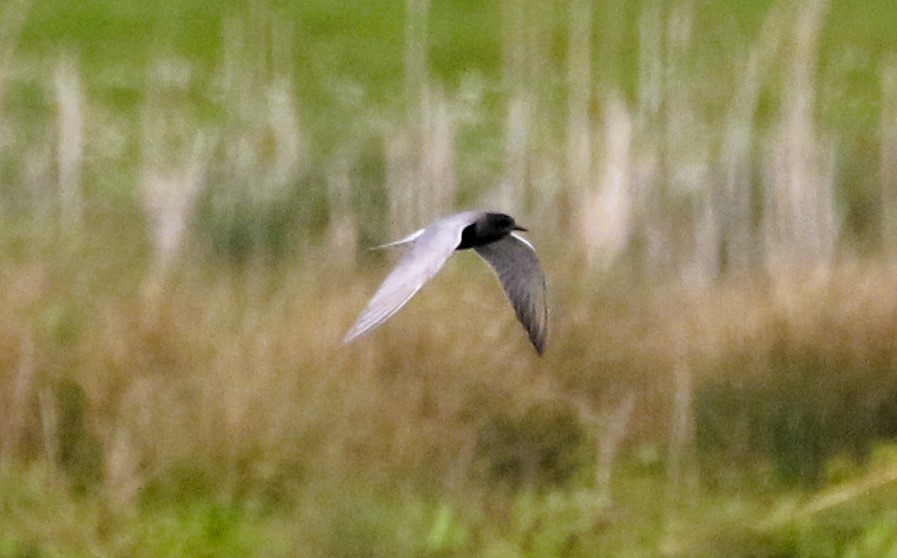
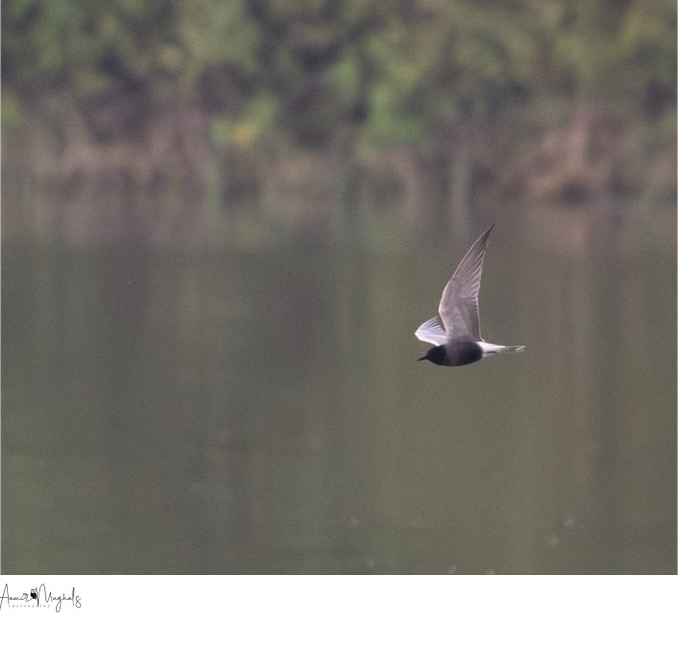
Filling the gap, Black Terns duly obliged, appearing at six localities, which included a build-up throughout the day, on 10th, of a respectable twenty at Stanford Res. Elsewhere, Summer Leys produced four on 4th and one on 6th-7th, Ditchford held two on 5th, Earls Barton and Thrapston two and one, respectively, on 6th – the latter site holding a further six on 9th, while two visited Ringstead GP on 10th.

Two Bitterns were present at one locality on 8th and Cattle Egrets were keeping up appearances, with the highest total of four reported from Thrapston GP on 6th. Smaller numbers included two at Stanwick GP on 4th, two at Summer Leys on 5th and singles there on 6th and 8th, plus singles between the River Nene and Cogenhoe from 5th until at least 8th and between Nether Heyford and Upper Heyford on the latter date.
Ospreys graced Summer Leys on 4th and 8th, Stanford on 4th and 10th, Pitsford Res on 6th and 10th and Stanwick on 7th.

And, once again, Short-eared Owls continued their late spring tenure with single birds hanging on all week at Harrington AF and in the Brampton Valley between Cottesbrooke and Hanging Houghton. One was also present at South Hill Farm near Wellingborough during the evening of 8th.
Passerine migrants were in short supply during the period and included a male Ring Ouzel between Brixworth and Hanging Houghton on 6th, two Northern Wheatears at Clifford Hill on 4th, followed by one at Harrington AF on 6th and a White Wagtail at Orlingbury on the same date.

Discover more from Northants birds
Subscribe to get the latest posts sent to your email.

 Northants birds