This week we entered the merry month of May against a background of mixed weather conditions, including both southerly and easterly winds, with activity ramping up on the last day of the period. Once again, the Nene Valley laid claim to most of the action.
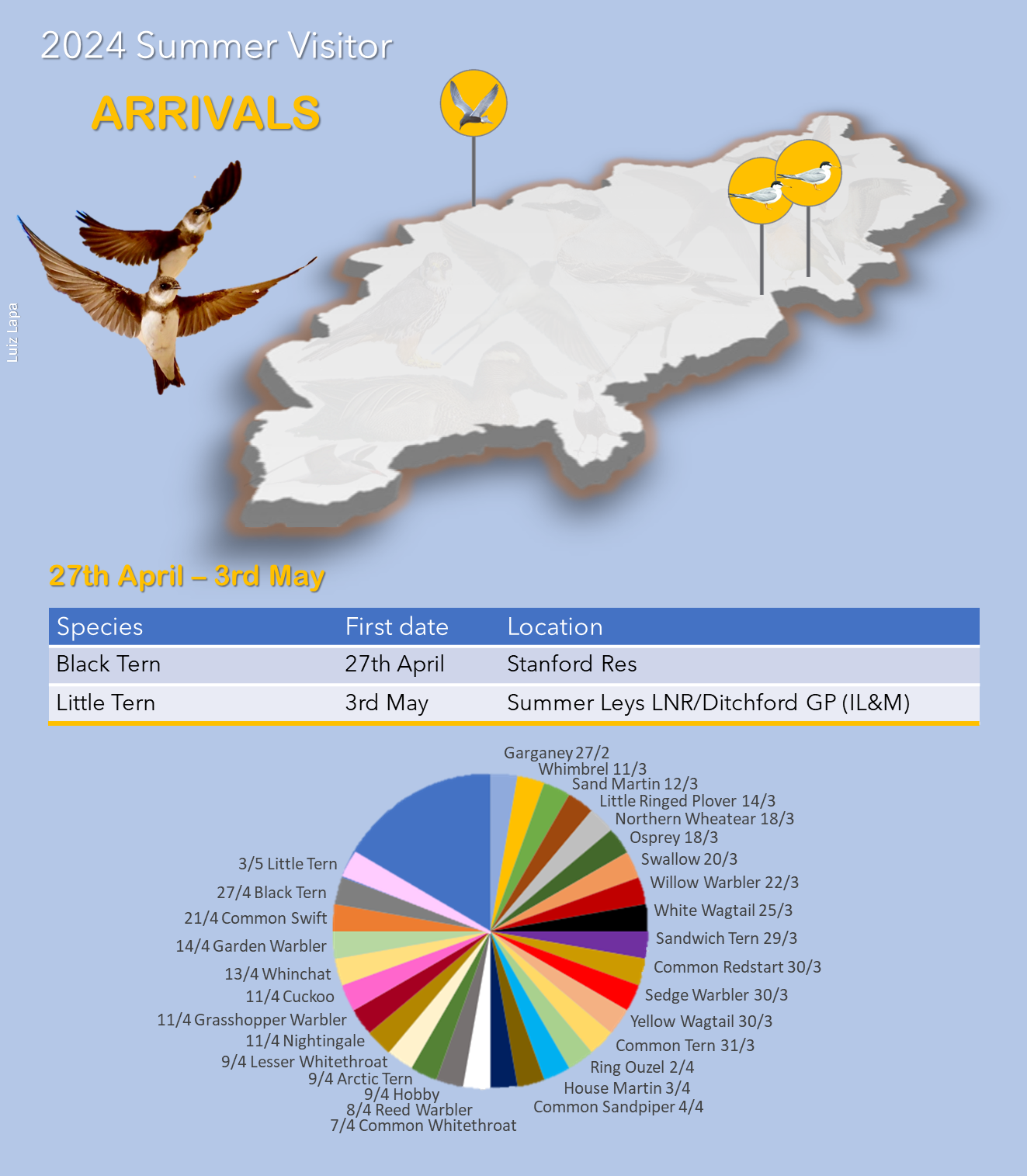
There were two new summer visitor arrivals in the shape of Black Terns and some pleasingly smart Little Terns, the dates of which were unremarkable in terms of timing.

Unusual but not unprecedented for the time of year, a Pink-footed Goose turned up at Ditchford GP’s Irthlingborough Lakes & Meadows LNR on 28th but was not reported thereafter. Other wildfowl were, unsurprisingly, in short supply and included the lingering drake Red-crested Pochard at Earls Barton GP’s New Workings (North) – also on 28th – and a female Ring-necked Duck fresh in to Clifford Hill GP on 2nd, remaining there the following day. The logical conclusion is, of course, that this is the same female which had hitherto been present at Ditchford between 5th March and 26th April, now with itchy, spring feet.

In terms of numbers, waders were, arguably, thin on the ground and fast-moving with none staying for any appreciable length of time. Four Whimbrels put in a brief appearance at Summer Leys LNR on 27th, when one also flew east over Earls Barton, while three flew west over Stanford Res on 3rd. So far proving difficult to catch up with at mainstream localities, just two individual Bar-tailed Godwits made it to the county this week, with one dropping in briefly at Clifford Hill on 27th and the other following suit at Summer Leys on 3rd. Seven Black-tailed Godwits visited Summer Leys on 27th.

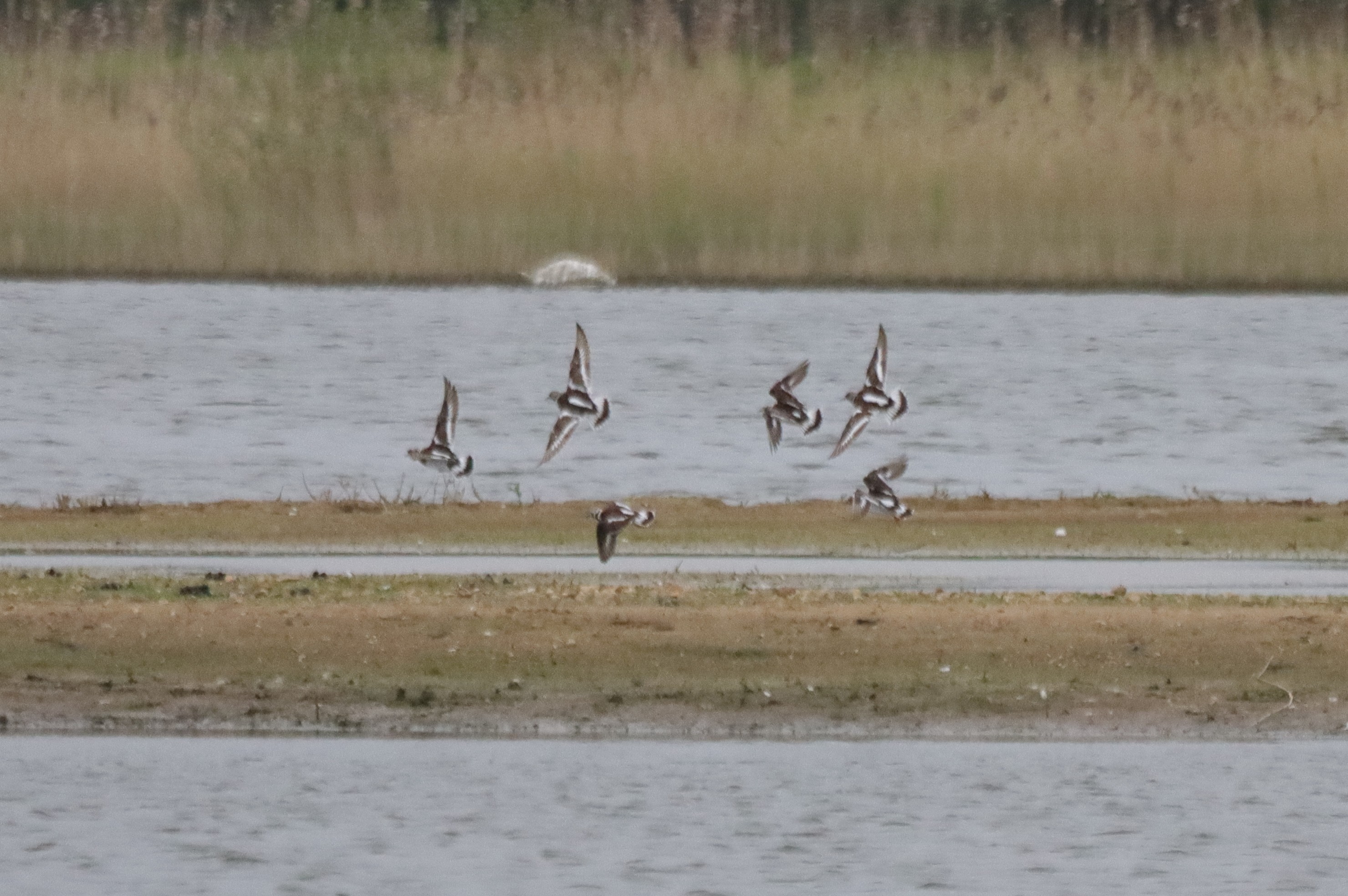
Following an obliging bird at Stanwick last week, six Turnstones at Summer Leys on 3rd were far less accommodating and were in and out in little more than a heartbeat.
Also on 3rd, the year’s first Sanderling appeared at Clifford Hill, remaining there for much of the day, while single Greenshanks were found at both Ditchford and Summer Leys on 28th.

Roundly kicked into second place by terns this week, gulls, small and large, were represented by just an adult Little Gull at Clifford Hill on 3rd and a Caspian Gull at Ravensthorpe Res on 1st.

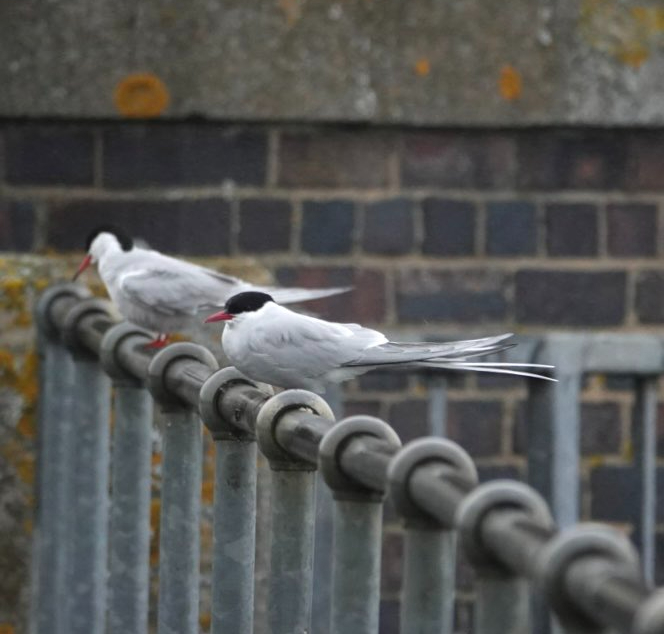
Aside from the aforementioned Little Terns, after a rough deal on Arctic Terns last week, the county came back with some for everyone, starting with at least four at Summer Leys on 27th, followed by singles there on 28th and 2nd and then at least twelve on 3rd. Elsewhere, four visited Clifford Hill on 28th ahead of three more on 3rd, while at least nine were at Stanford on the latter date when six different birds – three, two and one – passed through Hollowell Res.

Following the year’s first Black Terns, of which there were five at Stanford on 27th, further arrivals occurred during the week when singles were found at Ditchford and Thrapston GP on 28th and at Stanford again and Summer Leys on 2nd, with two at the latter site the following day, on 3rd.
While Bitterns were skulking and booming at two locations (undisclosed as they are potentially breeding) this week, numbers of the rather more showy Cattle Egrets peaked on 29th, when there were eight at Stanwick GP. Three were in the Nene Valley below Cogenhoe on 27th and up to two were seen, on and off, at Summer Leys throughout the period.

The week’s raptors were solely represented by Ospreys, all of which were found in north-central Northants. Singles visited Pitsford Res on 30th and 2nd, two flew east over Spratton on the latter date, and one was seen at both Hollowell and Ravensthorpe on 3rd.
Seemingly stretching out the winter, Short-eared Owls were again in evidence with single birds still in the Brampton Valley on 27th and 28th and at Harrington AF on the latter date, while one was over fields on the southern periphery of Clifford Hill on 2nd.
And while we’re on the subject of ‘winter’, a lone Waxwing was found on Brackmills Industrial Estate, Northampton on 29th. This bird clearly has some catching up to do …
In what has turned out to be an excellent spring for long-staying Ring Ouzels, one of the Harrington AF females remained on site until 27th, while the Weston Mill, Northampton bird appeared to have departed on 30th, having been in residence there for a good twelve days. Common Redstart numbers continued their downward trend with single males at Harrington and Blueberry Farm, Maidwell on 27th and 29th respectively and Whinchats remained thin on the ground with the Brampton Valley and Harrington producing one apiece on the last of these two dates. Northern Wheatears, too, were in short supply. Singles were at Clifford Hill GP on 27th and 1st while, on 29th, two were found in the Brampton Valley and one was at Upton CP. A Greenland Wheatear was a May Day visitor to fields north-east of Daventry CP on 1st.

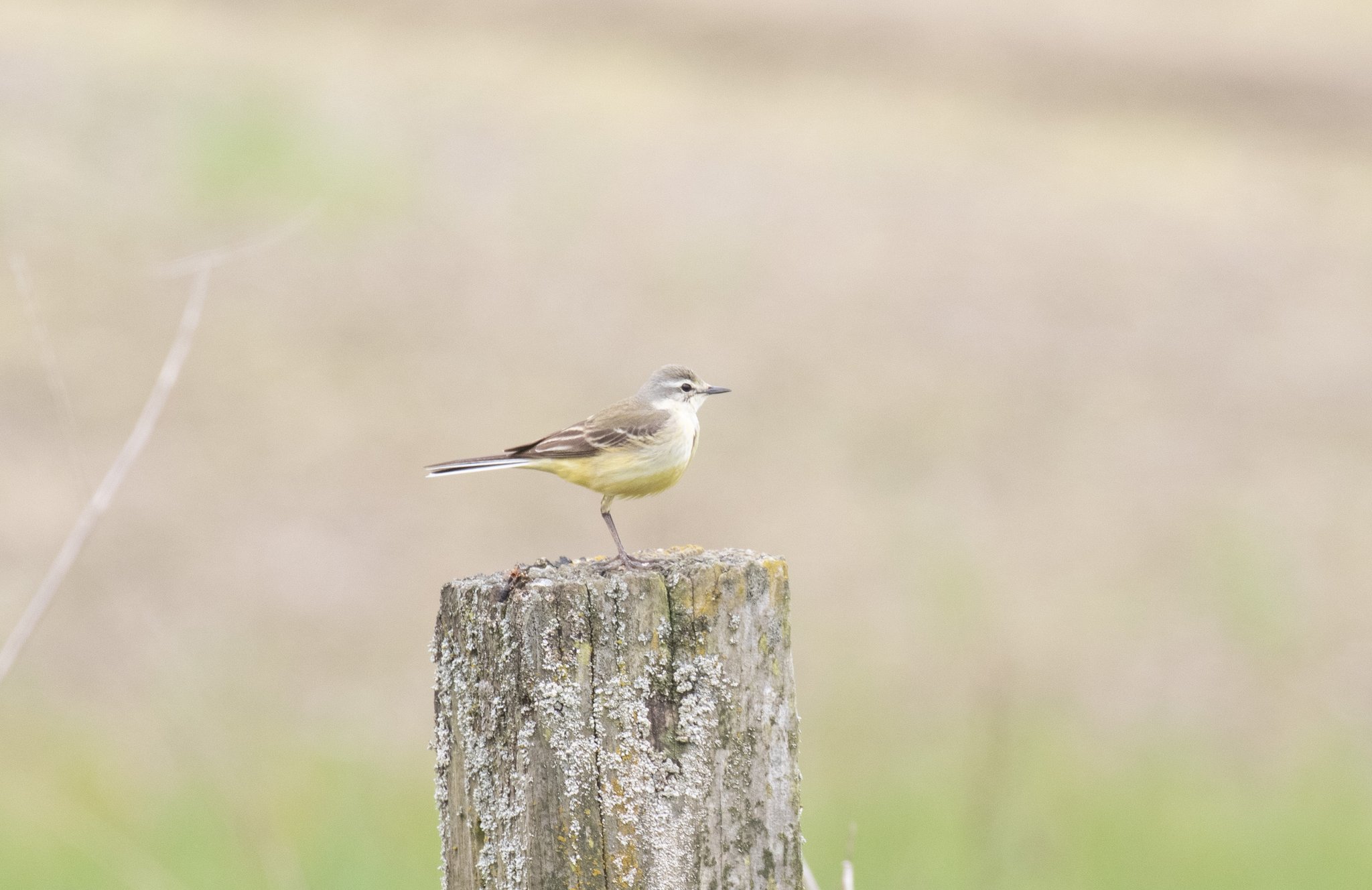
And for those who are of the view that a potential ‘Greenlander’ is best left unidentified, then spare a thought for the finders of the striking female Yellow Wagtail in fields adjacent to Stanford Res on 2nd. Initially believed to be a Channel Wagtail, or possibly a Blue-headed Wagtail, it’s fair to say that racial variation swilling around in the murky waters of hybridisation in this species produces much head-scratching, resulting in the safe relegation of these birds to ‘flava-type’ status. A fine bird, nonetheless.
Last week’s straightforward male Channel Wagtail at Aynho apparently had no such identificational baggage attached and was still present there on 27th, while the period’s only White Wagtail was found at Summer Leys on 27th.

Discover more from Northants birds
Subscribe to get the latest posts sent to your email.

