With the focus firmly on the search for, and arrival of, summer visitors, the week was otherwise fairly quiet. But let’s not forget, spring proper has yet to unfold …
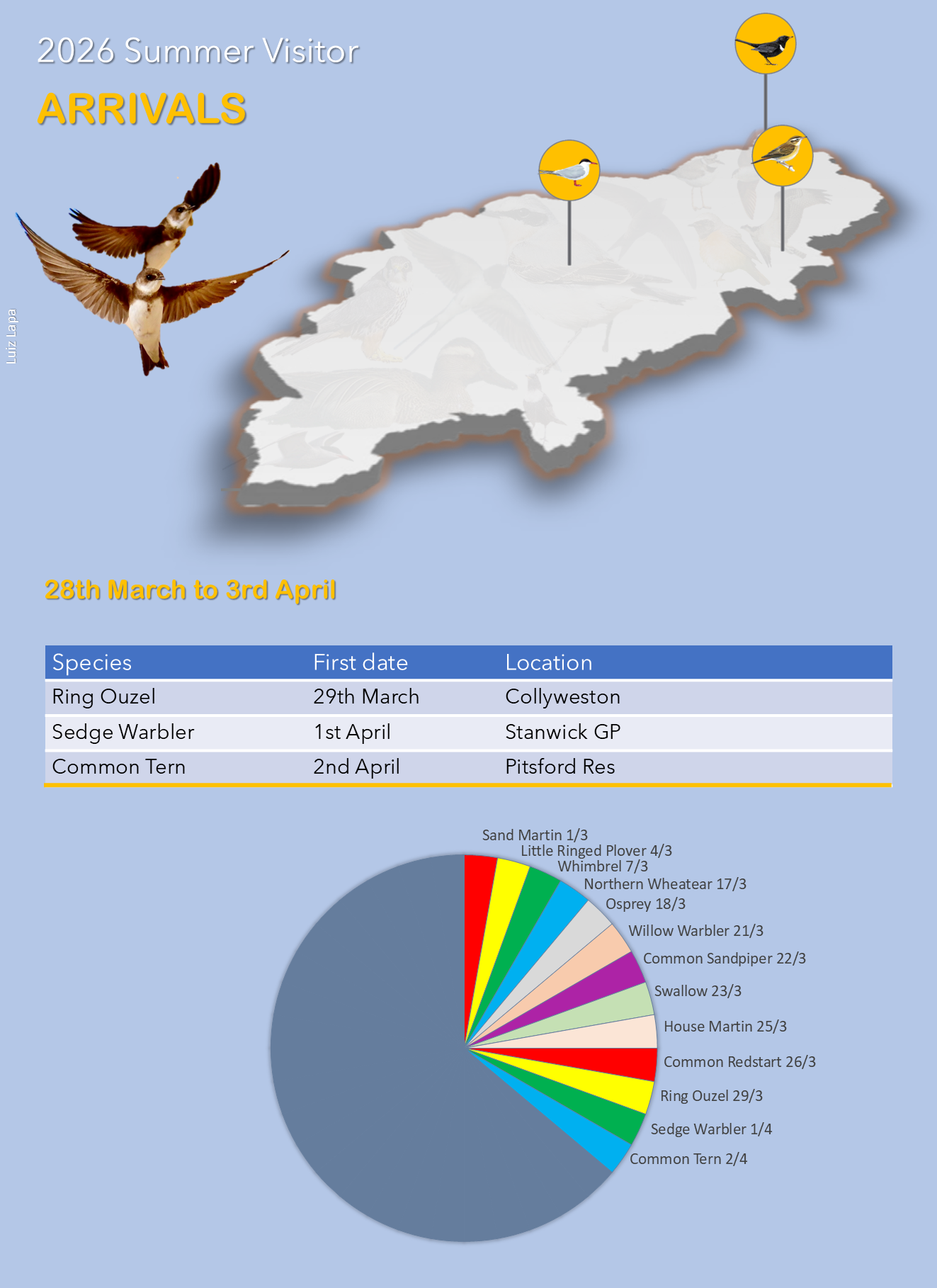
There were no early record-breakers during the period, but three more summer visitors – Ring Ouzel, Sedge Warbler and Common Tern – clocked in.
Wildfowl numbers were on the wane this week, the difference between numbers at the beginning of the period and seven days later being evident across a number of localities. With plenty of April records over the years, a Pink-footed Goose found at Thrapston GP on 1st was not untimely but, ironically, it has been the rarest of the grey geese to have visited the county during the winter just gone.
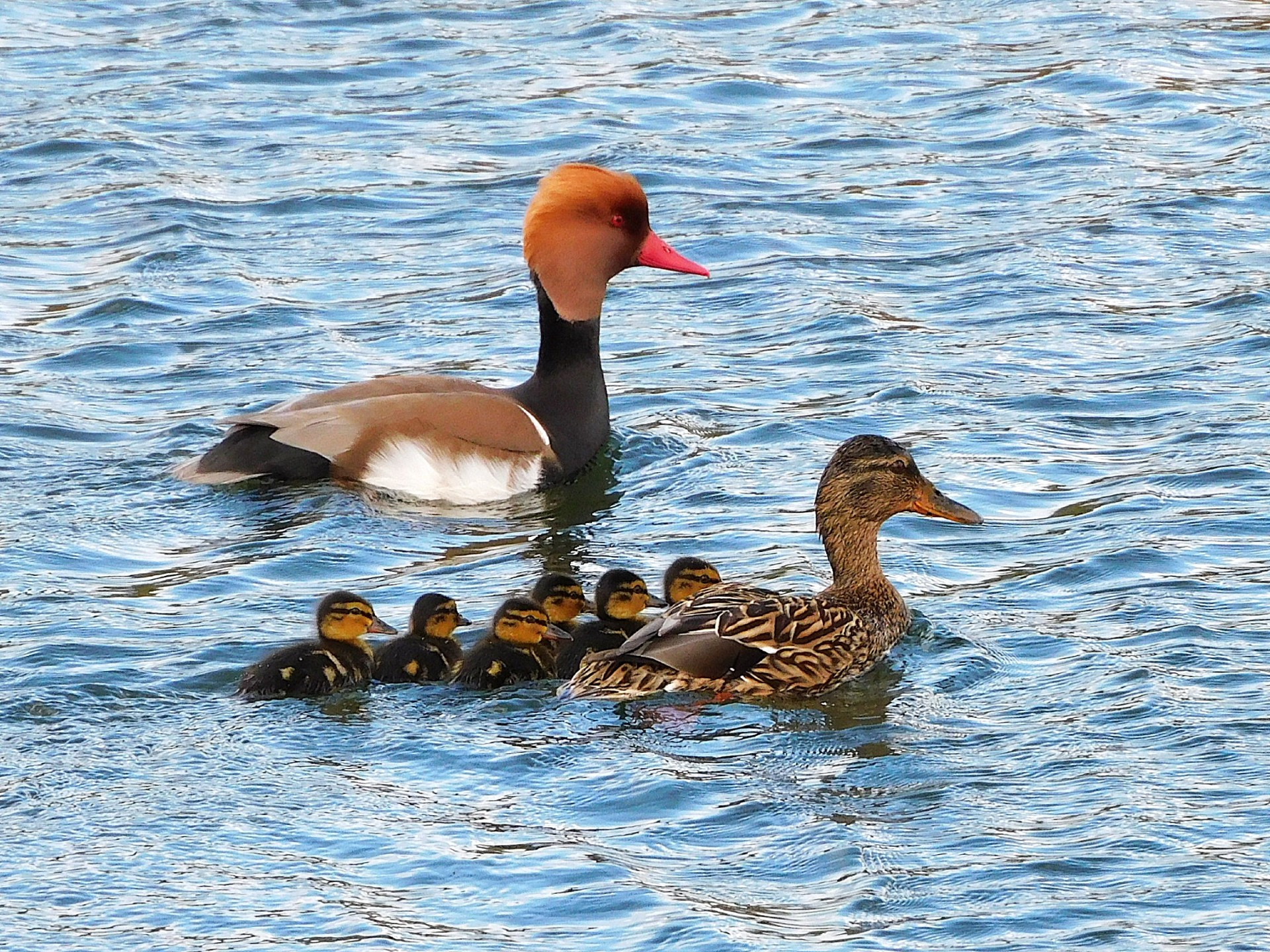
On the River Nene, at Whiston Lock/Earls Barton GP, a drake Red-crested Pochard, which spent much of the first six months of 2025 in the same area, was seen keeping company with a female Mallard and six recently hatched ducklings, on four dates during the week, prompting the belief that this is a hybrid brood between the two species. However, the ducklings of both species are quite different in appearance and all members of the above brood look to be 100% Mallard, showing no mixed characteristics. Could these be developed later, though, or has this drake simply latched on to provide an escort service? Plenty to ponder …
Back again at Ringstead GP, the drake Ring-necked Duck remained settled, short term, on Kinewell Lake from 29th until 1st.
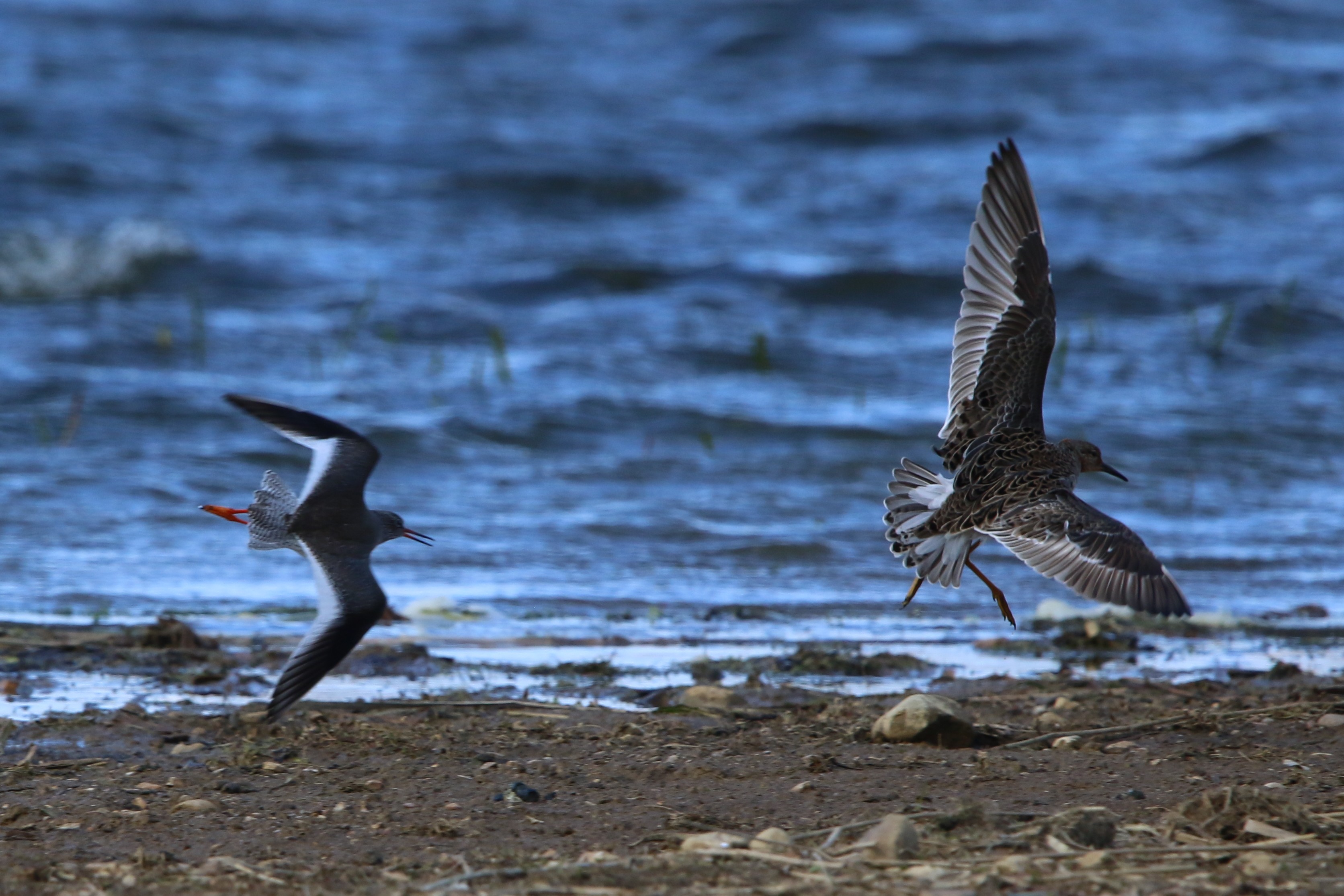
This week’s top waders included an Avocet at Clifford Hill GP on 29th, followed by three at Earls Barton GP and Summer Leys LNR on 1st, the year’s first Bar-tailed Godwit over Clifford Hill GP on 30th, and a Ruff at Summer Leys on 28th.
And on the larid front, Caspian Gulls were very much in evidence, or so it seems, with a second-winter at Clifford Hill GP and a first-winter at Earls Barton GP on 29th, a third-winter at Summer Leys on 30th, followed by one (unaged) there on 31st and an adult on 1st, while a third-winter visited Earls Barton GP on 3rd. Two adult Yellow-legged Gulls visited Clifford Hill GP on 28th and a single adult remained at Pitsford Res, being seen on 29th and 2nd.
Once again, the Red-throated Diver extended its stay at Hollowell Res by another week.
And not seen since 26th March, the Glossy Ibis was again present at Summer Leys on 2nd and at nearby Hardwater Lake on 3rd.
Following three around Ringstead GP between 28th and 30th, Cattle Egrets were on the up with seven at Stanwick GP on 31st-1st.
On the raptor front, more Ospreys made it into the county during the period with single birds over Overstone Lake on 30th, Hollowell on 30th and 2nd, Thrapston on 1st and east of Flore on 2nd. And Marsh Harriers extended their presence in the county, including the occurrence of a new bird with yellow wing-tags ‘DP’ at Summer Leys on 28th. This individual was a female ringed and tagged by the Norfolk Harrier Ringing Group near Hardley, Norfolk in 2025 and was one of a brood of three (Roger Eads/NHRG). Other, non-tagged, Marsh Harriers were seen at Earls Barton also on 28th, at Desborough AF on 29th and again at Summer Leys on 30th.
Singing male Firecrests were recorded at two localities this week with a pair nest-building observed at a third.
And, in addition to the aforementioned Ring Ouzel at Collyweston on 29th, another was found at Harrington AF on 1st. The second Common Redstart of the year appeared at Sywell CP on 31st and more Northern Wheatears were seen at Clifford Hill GP, where two were present between 28th and 30th, at Brixworth CP on 31st, Summer Leys on 1st, Harrington AF with two on 1st-2nd, and at Borough Hill where there were three on 3rd.
At least one male Corn Bunting was singing at Chelveston AF on 2nd. Clearly, if this year is anything to go by, we haven’t completely lost them yet …

 Northants birds