Rarity Round-up, 26th October to 1st November 2019

A change of month, a change of clocks and a change of wind direction back to easterlies resulted in a few new birds, the first autumnal frost on 28th and the arrival of the county’s first Smew of the ‘winter’ at Summer Leys on the last day of the week.

The adult Whooper Swan remained all week on Thrapston GP’s Town Lake and a juvenile was found in the Tove Valley, east of Grafton Regis, on 29th, although it did not linger.

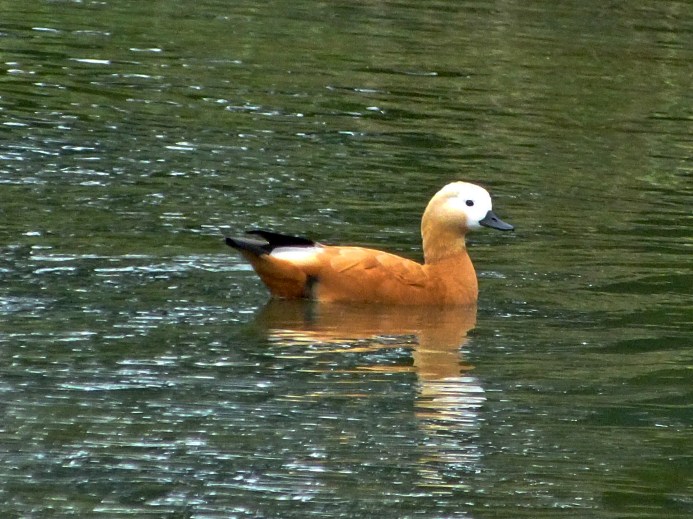
Female Ruddy Shelduck, Ravensthorpe Res, 27th October 2019 (Paul Crotty)

At Hollowell Res, the female Ruddy Shelduck put in an appearance on 27th before moving to nearby Ravensthorpe Res later in the day, while the three Red-crested Pochards at Pitsford Res had become four by 29th and the Clifford Hill GP bird was still present on 30th. In the west of the county, last week’s juvenile Greater Scaup remained at Daventry CP until at least 31st, while the juvenile at Pitsford was still present off the sailing club on 26th – the same date a female was reported at Summer Leys LNR.

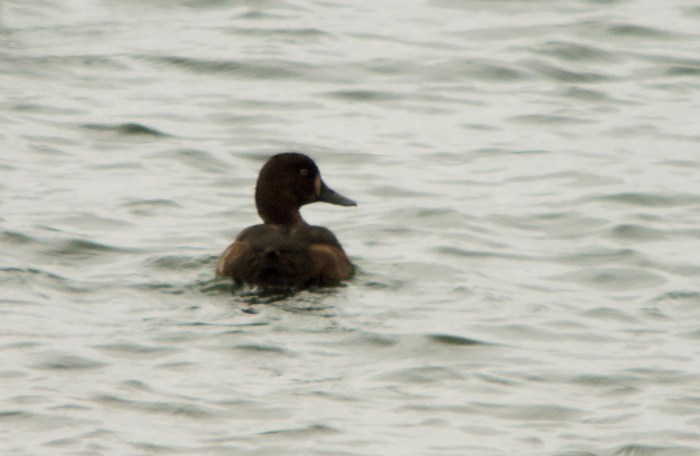
Greater Scaup, Pitsford Res, 26th October 2019 (Mike Alibone)

Summer Leys also produced the first Smew of the back end of the year, a ‘redhead’, on 1st, serving as a reminder that winter proper is only a few weeks away.

Smew, Summer Leys LNR, 1st November 2019 (Bob Bullock)

Here for the winter or simply in transit, only time will tell on the two Black-necked Grebes which found their way to Pitsford and made their way to Pintail Bay on 1st. The same could well apply to the Bittern seen briefly but ridiculously well in flight at Summer Leys on 27th.

Bittern, Summer Leys LNR, 27th October 2019 (Matt Hazleton)

This species replaces Cattle Egret in a week during which none of the latter was seen for the first time since the spring. By contrast, Great Egrets consolidated their hold, being reported in ones and twos from all of last week’s localities, including Hollowell, Pitsford, Stanford, Summer Leys and Thrapston with three at Stanwick on 1st.

Great Egret, Summer Leys LNR, 28th October 2019 (Alan Coles)

Two Marsh Harriers appeared this week, one of which showed signs of lingering at Summer Leys on 30th-31st, while the other flew over Stanford Res and into Leicestershire on 29th. A Jack Snipe at Hollowell on 27th was the week’s only notable wader.

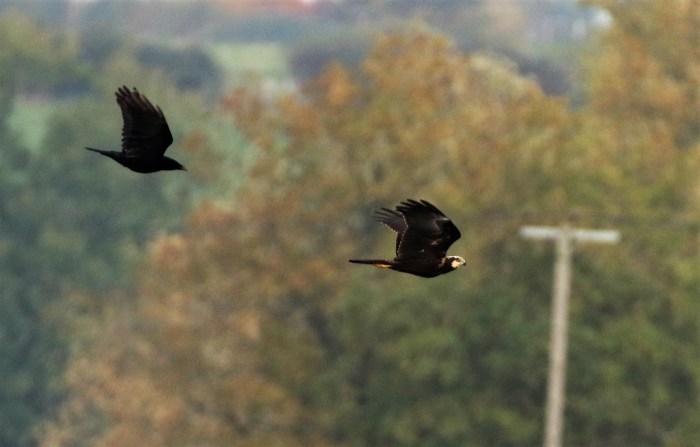
Juvenile Marsh Harrier, Summer Leys LNR, 30th October 2019 (Amir Mughal)
Juvenile Marsh Harrier, Summer Leys LNR, 31st October 2019 (Alan Coles)

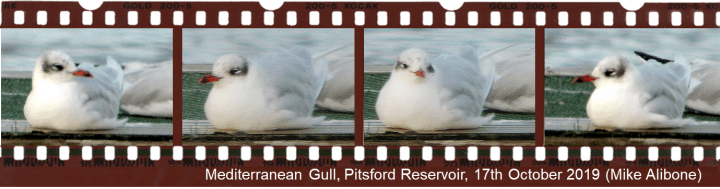
Just that bit too early for any truly winter visiting gulls, roost-watchers managed to eke out possibly up to two Mediterranean Gulls at Pitsford between 26th and 1st and another at Boddington Res on 31st. All birds concerned were adults. Along with Neville’s Lodge (Finedon) and Hollowell, the same two localities also produced Yellow-legged Gulls, with a maximum of eleven at Boddington on 31st.

Following the first Short-eared Owls of the autumn/winter period last week, Borough Hill again produced three on 27th, while single Merlins were seen at Stanford on 30th and at Harrington AF the following day.

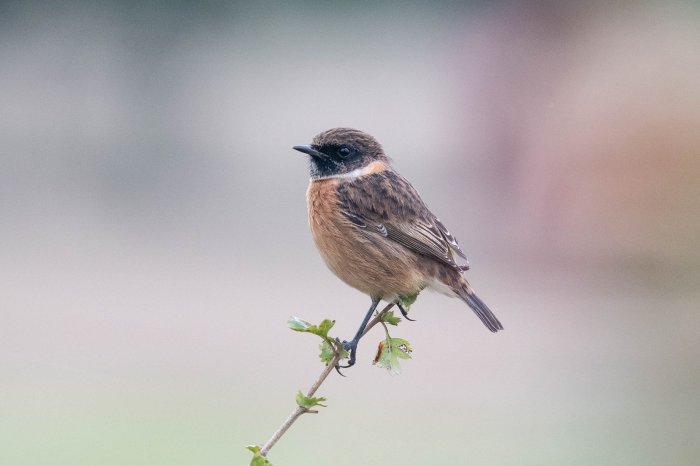
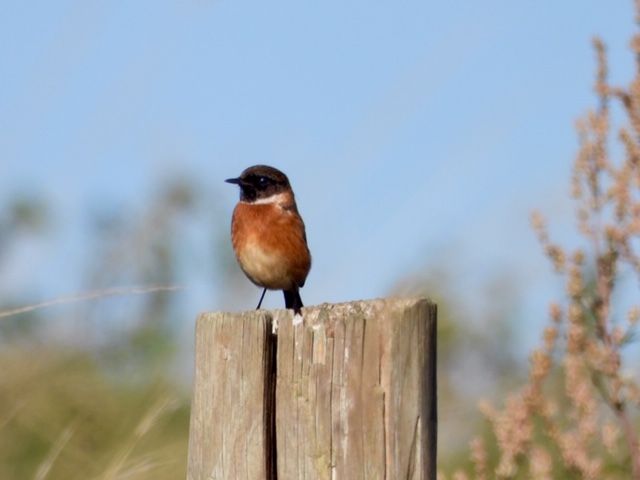
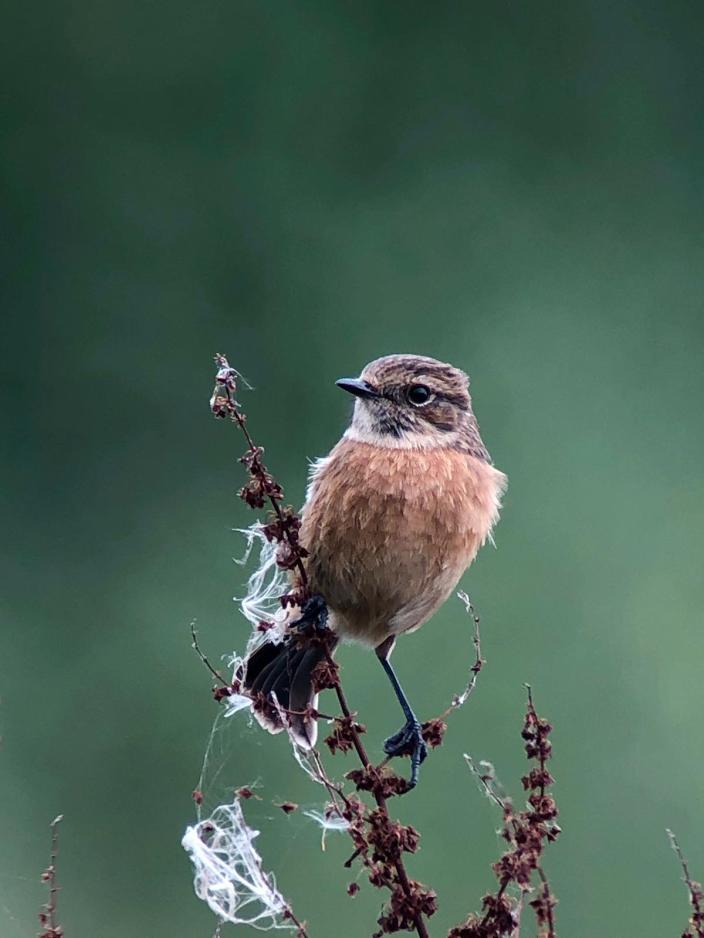
Stonechat, Pitsford Res, 29th October 2019 (Tony Stanford)
Stonechat, DIRFT 3, 30th October 2019 (Mike Alibone)

In stark contrast to last week, passerines were in short supply and following that week’s Waxwings at Stanford Res on 25th, ten were reported in flight over the same locality two days later, on 27th. Other than that, Stonechats continued and extended their recent abundance, being seen at Borough Hill, Clifford Hill, DIRFT 3, Ditchford GP, Earls Barton GP, Hollowell, Pitsford, Stanford and Thrapston, with a maximum of four at Borough Hill on 27th and the same number at Pitsford on 29th.

Rock Pipit, Pitsford Res, 1st November 2019 (Bob Bullock)

Also notably lacking in records this autumn, a Rock Pipit was a welcome visitor to the dam at Pitsford on 31st-1st.
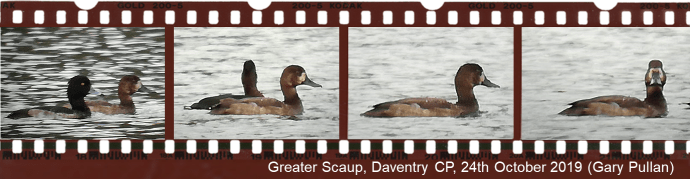
Rarity Round-up, 19th to 25th October 2019

With more unsettled weather afoot, chilly northerlies swung quickly to south-westerlies, bringing rain, bluster and birds. In the last week before taking the unwelcome plunge into late afternoon darkness for the next few months, leaf-fall accelerated and migration continued apace – especially where passerines were concerned – with the reservoirs at Pitsford and Stanford again delivering the best in class.

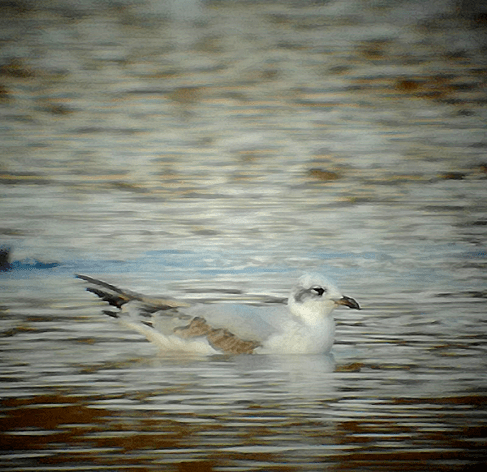
Looking set for the long haul, the adult Whooper Swan remained all week at Thrapston GP, while four adults flew north over Pitsford Res on 21st and another adult was found at Summer Leys LNR on 25th. The female Ruddy Shelduck was still at Ravensthorpe Res on 19th and the continued presence of one Red-crested Pochard at Clifford Hill GP was eclipsed by three at Pitsford on 25th. More Greater Scaup arrived this week and included three at Daventry CP on 22nd, one of which – a juvenile – remained until 25th, while the juvenile at Pitsford on 13th reappeared there on 24th.

Adult Whooper Swan, Summer Leys LNR, 25th October 2019 (Adrian Borley)

The number of Cattle Egrets present at Stanwick varied by the day and included a maximum of six on 21st, while Great Egrets were reported from the usual localities, including reservoirs at Hollowell, Pitsford and Stanford and gravel pits at Stanwick, Summer Leys and Thrapston, with no more than two at any locality.

Great Egret, Summer Leys LNR, 22nd October 2019 (Alan Coles)

Waders were understandably thin on the ground. With the recognised passage period now over and water levels at local reservoirs unseasonally high after the past few weeks’ persistent rain, it is, after all, hardly surprising. So a Ruff at Stanwick on 23rd and a Jack Snipe at Ditchford GP on 22nd, were all local observers were able to squeeze out of this week’s birding.

Just one Mediterranean Gull – a first-winter – found its way to the county this week, when a first-winter appeared in the roost at Boddington Res on 22nd, this date also producing a respectable site total of ten Yellow-legged Gulls at the same locality. Singles of the latter were also seen at Hollowell, Pitsford and Thrapston.

First-winter Mediterranean Gull, Boddington Res, 22nd October 2019 (Gary Pullan)

The first Short-eared Owl of the autumn/winter period was found on Borough Hill on 19th, quickly followed the next day by another at Harrington AF, where a Merlin was seen also on 19th, the same individual possibly accounting for one reported in the nearby Brampton Valley during the week.

Following small numbers Waxwings turning up in Orkney and Shetland as early as 2nd October and with many localities on the east coast and across the Midlands (and even Scilly) pulling in the odd bird, three making a five-minute stopover at Stanford on 25th is perhaps not as surprising as it may at first seem. Are we in for a Waxwing Winter? When and where will the next ones be in the county and who will be the claimant? The bets are on …

Much rarer locally than those jingling, colourful and charismatic berry-gobblers and altogether much less flamboyant, Woodlark remains highly prized in Northamptonshire. On 23rd, two circled Pitsford’s Scaldwell Bay before flying north. With just three previous records this century (2001, 2014, 2016) and ten in the last fifty years, it’s a puzzle as to why we don’t see more. The above two, along with earlier reports of singles at Woodford on 1st January and Pitsford on 15th April, will give us our best-ever year for this species, assuming all records are formally submitted and subsequently accepted by the local records committee.

Background image: Ron Knight/Wikimedia commons

There were no more Yellow-broweds this week but continuing the rare warblers theme was an ‘eastern’ Lesser Whitethroat at Stanwick on 21st. With the east coast – particularly East Yorkshire – having produced a number of candidates for Siberian blythi and a possible Turkestan halimodendri in the past couple of weeks, its occurrence comes as no real surprise. Siberian Lesser Whitethroat has already occurred in Northants in recent years – the first, a wintering bird, in 2014 (1, 2, 3) and the second, trapped and ringed in 2015.

Firecrest, Stanford Res, 25th October 2019 (Mick Towsend)

Stanford scored another ‘back of the net’ with a Firecrest trapped and ringed on 25th. More good stuff from the Stanford Ringing Group before the autumn’s out, I’ll wager! Stonechats continued to be seen at Borough Hill, Clifford Hill, Pitsford Res, in the Brampton Valley and at Harrington AF, where vizmig fly-overs included the hunky Anthus duo of Rock Pipit and Water Pipit on 19th and 20th respectively. With five Common Crossbills flying over Stanwick on 20th, this week the passerines have it, the passerines have it!

Rarity Round-up, 12th to 18th October 2019

The weather remained largely unsettled, with heavy rain and sporadic showers, backed by blustery south to south-westerly winds during the early part of the week. The period’s highlight was a Yellow-browed Warbler, trapped and ringed … where else other than at Stanford Reservoir.
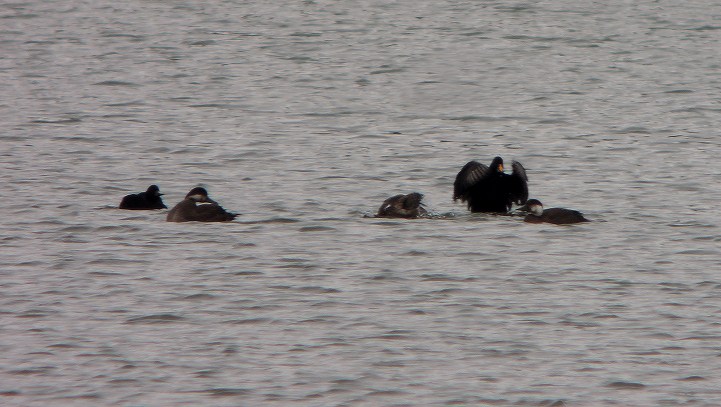
Last week’s adult Whooper Swan was present all week at Thrapston GP, where hopefully it will remain for the winter. Also remaining – though highly mobile – was at least one Ruddy Shelduck, a female having been seen at Foxholes Fisheries (Crick) on 12th and it seems likely this was the same individual seen briefly at Stanford Res later the same day and again at Ravensthorpe Res on 18th.

Female Ruddy Shelduck, Foxholes Fisheries, Crick, 12th October 2019 (Joan Chaplin)

A juvenile drake Red-crested Pochard visited Clifford Hill GP on 12th and two were present there on 15th but it was Pitsford Res which produced the best diving ducks this week, with a juvenile Greater Scaup on 13th followed by five Common Scoters two days later, on 15th. Unfortunately, this was the best we could manage during a week when, just over the county boundary in Leicestershire, Rutland Water pulled in a fine drake Lesser Scaup. Spitting distance from Northants, again, as we remain the only Midlands county to have missed out on adding this species to our list. One day, maybe, one day …

Common Scoters, Pitsford Res, 15th October 2019 (Mike Alibone)

Up to six Cattle Egrets remained at Stanwick throughout, as did up to two Great Egrets with more of the latter including singles at Ditchford GP, Thrapston and Summer Leys, Two at Pitsford and three at Stanford. On 17th, Stanford also produced a Marsh Harrier, which drifted away toward the reservoir’s namesake, Stanford on Avon, in the latter half of the morning.

Great Egret, Stanwick GP, 17th October 2019 (Steve Fisher)

Wader-wise, it was again slim pickings, which consisted of a late Whimbrel flying west over Grafton Regis on 15th and a Ruff at Stanwick the following day, on 16th.

With most of them long gone, any report of a Common Sandpiper at this time of the year is guaranteed to quicken the pulse. How well was it seen? Spotted Sandpiper ruled out? So, the chances of the late example of the aforementioned Common, which turned up on the dam at Pitsford on 17th, being one of the latter surely had to be higher than normal. But no such luck. Well, this is Northamptonshire, don’t forget and, just like Lesser Scaup, we’re still owed one – big time!

And so to gulls, with Mediterranean Gull topping the bill and kicking off with a first-winter on land cleared for housing at Upton Park (Northampton) on 12th and an adult in the roost at Boddington Res on the same date, plus a second-winter there on 18th. The roost off the sailing club at Pitsford then produced an adult and a second-winter on 13th, a second-winter on 16th, an adult again on 17th and an adult plus a first-winter on 18th, while the maximum counts of Yellow-legged Gulls were nine in the roost at Pitsford on 16th and six at Boddington on 12th and 18th. Surprisingly, last week’s juvenile Arctic Tern lingered, still being at Hollowell Res on 16th.

Thanks to the IOC, ‘new order’ raptors appeared in the shape of a Merlin or two – at Harrington AF on 16th and 18th.

Once again, those hallowed nets of the Stanford Ringing Group delivered Northamptonshire’s fourteenth Yellow-browed Warbler on 12th. With more than four hundred on the east coast during the past week (and six hundred the week before that) it came as no real surprise – especially when the group’s track record is taken into consideration.

Yellow-browed Warbler, Stanford Res, 12th October 2019 (Chris Hubbard)

With Northern Willow Warbler, Siberian Chiffchaff, Dusky Warbler, Marsh Warbler, Icterine Warbler and Siberian Lesser Whitethroat all ‘back of the net’ in recent years, the group is almost duty-bound to trap the obligatory Yellow-browed every year. This one is their fifth (including one at nearby Naseby Res) in addition to one which managed to avoid the nets altogether in October 2016!

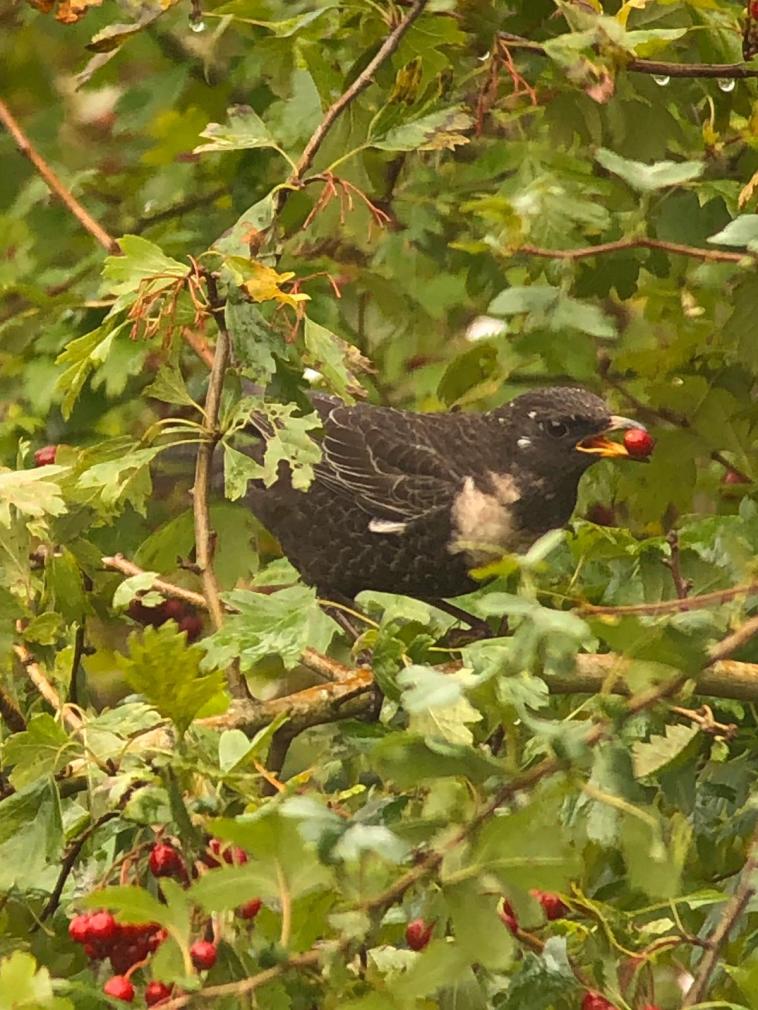
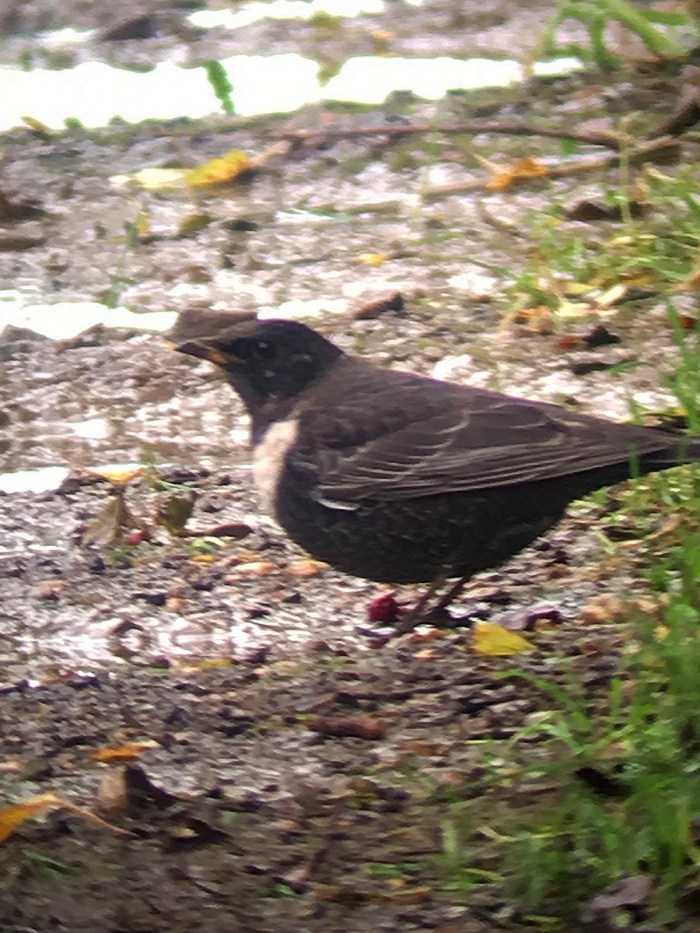
Ring Ouzel, Stanford Res, 14th October 2019 (Chris Hubbard)
Ring Ouzel, Stanford Res, 14th October 2019 (Steve Nichols)

Also at Stanford, a Ring Ouzel was discovered near the dam on 15th, remaining there until the next day, when one was also found in a Spratton garden.

Male Stonechat, Brampton Valley, 12th October 2019 (Angus Molyneux)

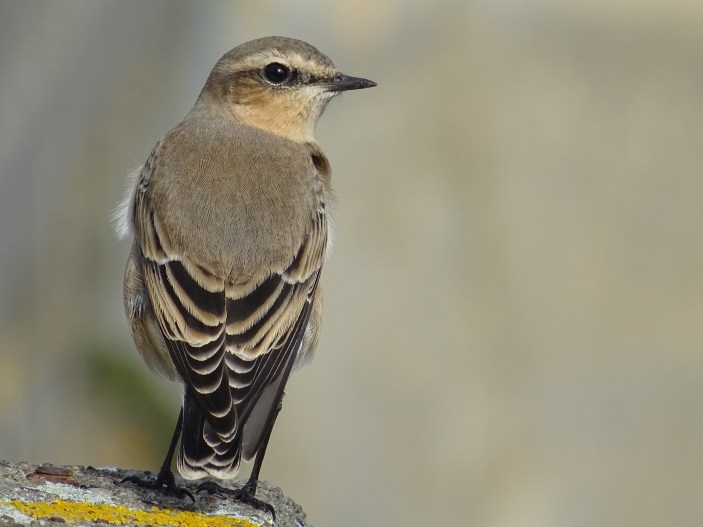
Stonechat numbers dwindled to ones and twos at Stanford Res, Harrington AF and in the Brampton Valley, while what seems highly likely to be the last Northern Wheatear was the bird lingering on the dam at Pitsford Res from last week until 15th.

Rarity Round-up, 5th-11th October 2019

An unsettled week with a strong, predominantly westerly airflow saw a couple of potentially weather-related arrivals in the respective shapes of Dark-bellied Brent Goose and Gannet, amid more winter thrushes and the autumn’s first Bramblings.

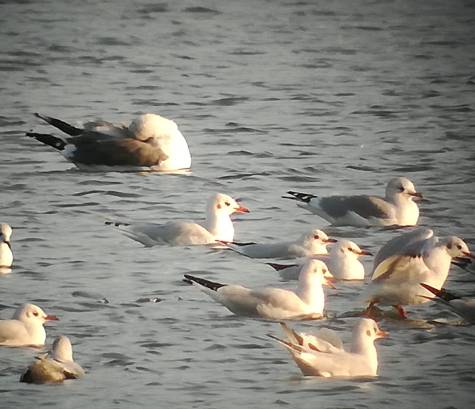
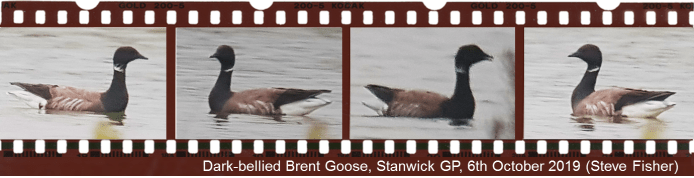
At least some reward for a seemingly endless succession of early morning visits by one observer to Stanwick GP appeared in the form of a Dark-bellied Brent Goose on the Main Lake there, albeit briefly, on 6th. Further down the valley, at Thrapston GP, there was speculation that the adult Whooper Swan there on 7th-8th was last winter’s ‘ugly duckling’ all grown up and back for the winter. Let’s see if it stays. Meanwhile, in the north of the county, the roving Ruddy Shelducks were still making sporadic appearances – the drake at Stanford Res on 8th and the female returning to Hollowell Res on 10th.

Drake Ruddy Shelduck, Stanford Res, 8th October 2019 (Chris Hubbard)

Up to six Cattle Egrets remained at Stanwick until at least 10th, the same site being visited by a Great Egret on 5th and again on 10th. Great Egrets were also at Ditchford GP on 5th, Stanford on 6th and 8th, Thrapston on 6th-7th, Pitsford Res on 7th and 9th and Summer Leys LNR on 9th-10th. Two were also at the latter locality on 5th and 7th and at Pitsford on 5th and 6th, while three visited Stanford on 11th.

It would have been surprising if we hadn’t had at least one seabird in the county over the past couple of weeks, so the juvenile Gannet found grounded at Gretton Weir on 8th was not entirely unexpected, even if the locality in which it occurred was. Discovered shortly before midday, it had disappeared when the observer returned later in the day. September is the peak month in Northants but early October has also produced numerous records.

Juvenile Gannet, Gretton, 8th October 2019 (Harriet Crawford)

And by the time we hit October it’s usually all over for the waders – this year so far proving to be no exception. A Ruff at Stanwick on 6th and the two Greenshanks remaining at Pitsford until the same date constituted this week’s meagre tally.

Conversely, Mediterranean Gull was well represented by a mix of ages, primarily at the Pitsford gull roost, where two first-winters and a second-winter were present on 5th, single second-winters on 6th and 8th, an adult and three first-winters on 7th and an adult on 10th. Elsewhere, a first-winter was at Panattoni Park (Northampton) on 7th and the gull roost at Boddington Res produced an adult on 10th, as well as an adult hybrid Mediterranean Gull x Black-headed Gull on 8th.

Mediterranean Gull x Black-headed Gull, Boddington Res, 8th October 2019 (Gary Pullan)

Hollowell Res produced the only Caspian Gull of the week, a first-winter on 10th, while the maximum count of Yellow-legged Gulls was ten in the roost at Pitsford on 5th and single-figure counts came from Boddington and Hollowell. A juvenile Arctic Tern, typically late, was found at the latter locality on 10th.

Passerine migrants were unsurprisingly on the wane this week although, in the wake of hundreds of recent east coast records, a Yellow-browed Warbler was reported in flight in a Duston (Northampton) garden on 7th. Common Redstarts hung on with one in the Brampton Valley below Hanging Houghton on 5th, while Stonechats were seen in ones

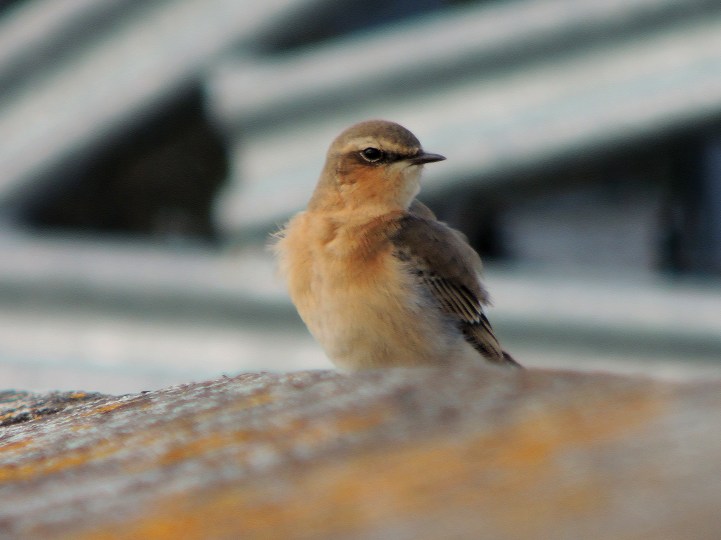
Northern Wheatear, Pitsford Res, 8th October 2019 (Mike Alibone)
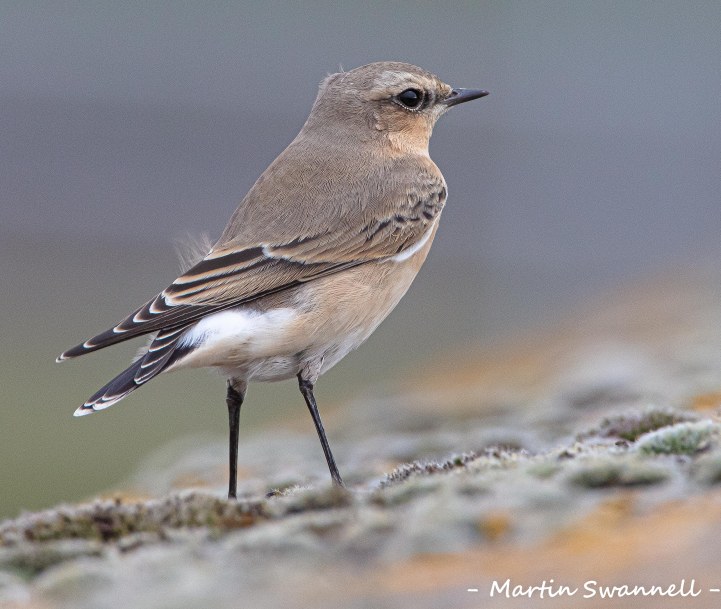
Northern Wheatear, Pitsford Res, 10th October 2019 (Martin Swannell)

and twos at Brampton Valley, Harrington AF, Panattoni Park and Pitsford, although four were at Hollowell on 10th. Northern Wheatears were still represented by singles at Panattoni Park on 5th-6th, Harrington on 6th and Pitsford from 6th to 10th.

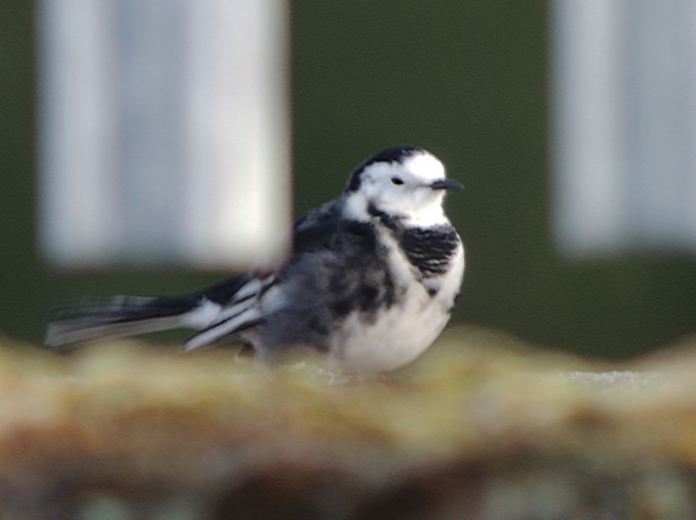
Pitsford Pied Wagtail: seeing things in black and white

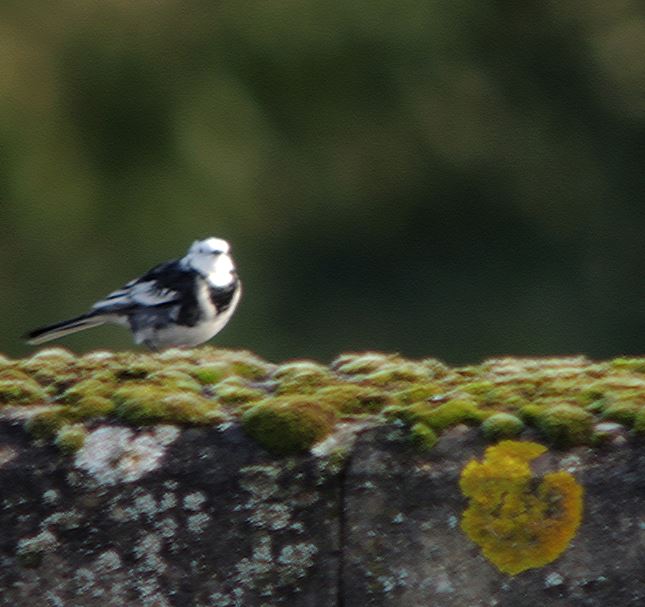
When Matthew Care posted two tweets containing mobile phone images of a Pied Wagtail on Pitsford dam showing, as he put it, ‘isolated black breast and white wing patch’, it appeared, at least in some quarters, that there were enough ingredients there to alert local birders to the possibility that it might be something worth investigating.

Amur Wagtail was flagged up as a possibility. However remote this may seem, this south-east Asian subspecies has already reached Britain (see here) and the classic eastern vagrant month of October would surely be a prime time to find one.

The images, taken only with a mobile phone camera, left a lot to be desired from an ID perspective, as well as leaving a lot to the imagination, thus telling only half the story. The bird depicted in the images, despite also looking unusually ‘white-faced’ (the origin of the scientific name leucopsis for the Amur race of White Wagtail) was surely just a Pied Wagtail, wasn’t it? It is well known that pictures can lie and it had to be worth a look, to be sure, to be sure.

The bird was in the same place, on the wall of the valve tower walkway, when I arrived late afternoon and after a quick look, I set up my camera to get some digiscoped shots. Unfortunately, at the same time, an Anglian Water engineer proceeded down the walkway and entered the tower. The bird quickly took flight and I was left with the rather messy images, below.

While the bird did indeed show a lot of white in the wing (formed by unusually broad white fringes to median coverts, greater coverts and tertials – probably freshly moulted and unworn) and an isolated, triangular black breast patch, it was the latter which lent the impression of a greater extent of white to the head. Although there are published images (see here for example) of Amur Wagtail showing the same amount of white in the wing as this bird appears to, the ‘norm’ for Amur Wagtail is more of an extensive white ‘block’ which, when combined with clean white flanks, gives this race a much cleaner, more striking appearance than the bird at Pitsford. Indeed it’s the extensive grey and blackish flanks of the Pitsford individual which, at a glance, kill the chances of it being anything other than the Pied it actually is.
However, there is nothing wrong with flagging up anything which, at first sight, appears unusual – lest something juicy should slip the net …

Rarity Round-up, 28th September to 4th October 2019

At the beginning of the period, things augured well for the end of the week, as ex-Hurricane Lorenzo looked set to deposit a scattering of inland seabirds. Unfortunately, by the time it reached the UK, it was full out of puff and brought only disappointment. As soon as September clicked into October, however, day one of the ‘magic month’ produced the first local Redwings of the autumn. Apart from that, Slavonian Grebe, Spoonbill and Spotted Redshank stole the show.

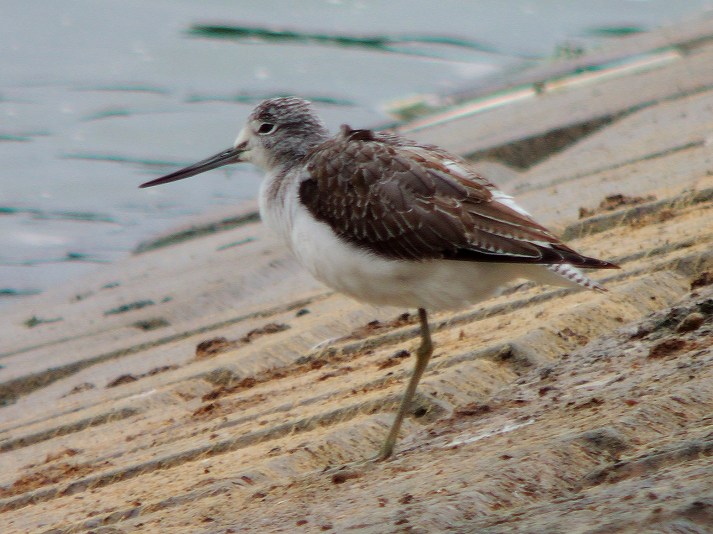
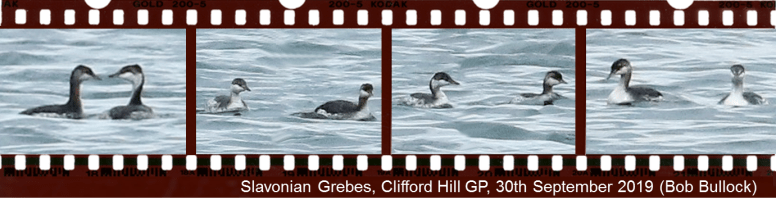
Another autumn ‘first’ appeared in the shape of six Pink-footed Geese over the Brampton Valley on 4th and Ruddy Shelducks were seen at Stanford Res and Pitsford Res on 28th and 29th respectively. A Garganey appeared briefly at Summer Leys LNR on 3rd and further up the valley, a drake Red-crested Pochard was on show at Clifford Hill GP from 28th to 2nd.

Drake Red-crested Pochard, Clifford Hill GP, 30th September 2019 (Bob Bullock)

The two Slavonian Grebes – believed to be just ‘one-day’ birds at Clifford Hill on 16th – were seen there again from 28th until 30th, with only one present on 3rd. Surprisingly easy to overlook, clearly they had been there all the time throughout the intervening period. In a bizarre turn of events, one was picked up dead below a Peregrine roost site in Kettering on 3rd, leading to speculation that it may have been from Clifford Hill.

Slavonian Grebe, found dead, Kettering 3rd October 2019 (Bob Bullock)

A Spoonbill – only the third for the county this year – flew high north over Stanford Res on 28th, while on the Cattle Egret trail, the Stanwick six were seen on 2nd and 4th. Single Great Egrets were seen, on and off, at Pitsford, Summer Leys and Thrapston GP throughout the week.

Raptors at large this week were Ospreys at Thrapston GP on 30th and 2nd and a Marsh Harrier in the Brampton Valley on 29th.

Last week’s juvenile Little Stint remained at Boddington Res until 1st, while the fifth Spotted Redshank of the autumn was discovered at Ditchford GP’s Irthlingborough Lakes & Meadows on 3rd, remaining there the following morning before quickly relocating to nearby Stanwick. Pitsford was again the favoured locality for Greenshanks, with two still on the dam on 29th, at least one of which remained until 4th.

Greenshank, Pitsford Res, 29th September 2019 (Mike Alibone)

A first-winter Little Gull flew through Boddington Res on 4th, a second-winter Mediterranean Gull was again at Pitsford on 29th and single-figure numbers of Yellow-legged Gulls were also at this locality, Thrapston, and Stanwick, with the maximum count of four at the latter site on 4th.

The first Short-eared Owl of the autumn-winter period was found at Harrington AF on 30th and what is almost certainly the last ‘Common’ Swift was seen flying north over Corby on 2nd. Interestingly, however, the observer did not identify it to species and so it should really be relegated to swift sp., as October is normally the month of the year reserved exclusively for those seriously rare Apus boys … Although the last Hobbies are now passing through, another master of the skies was present at Harrington AF on 3rd, when the third Merlin of the autumn was watched chasing Meadow Pipits there.

Harrington was also the venue for what may well turn out to be the last Common Redstart of the year, with one there on 30th. Two were also present at Borough Hill on 28th. Significantly more Whinchats coming through compared to last week included up to two at Clifford Hill and Borough Hill between 28th and 30th and the same number in the Brampton Valley below Hanging Houghton between 29th and 4th.

Whinchat, Clifford Hill GP, 30th September 2019 (Mike Alibone)

Stonechats continued to arrive in numbers, with Brampton Valley, Clifford Hill, Harrington, Neville’s Lodge (Finedon), Pitsford Res and Stanford Res producing up to two and Borough Hill between eight and ten on 30th. Northern Wheatears were down to singles at both Borough Hill and Clifford Hill on 28th and Pitsford Res on 4th.

Northern Wheatear, Pitsford Res, 4th October 2019 (Richard How)

Following last week’s Rock Pipit at Daventry CP, one was at Pitsford on 30th and another at Stanwick on 4th and to round off, fifteen Crossbills flew north-west over Borough Hill on 30th.

Rarity Round-up, 21st-27th September 2019

South-easterlies, warm continental air and sunshine at the very beginning of the period quickly gave way to the more usual Atlantic low pressure systems, a westerly airflow and periods of gusty wind and rain throughout the week. Migrant passerine numbers dwindled, while bird of the week was undoubtedly the juvenile Little Stint, which graced Boddington Reservoir for the last three days of the period.
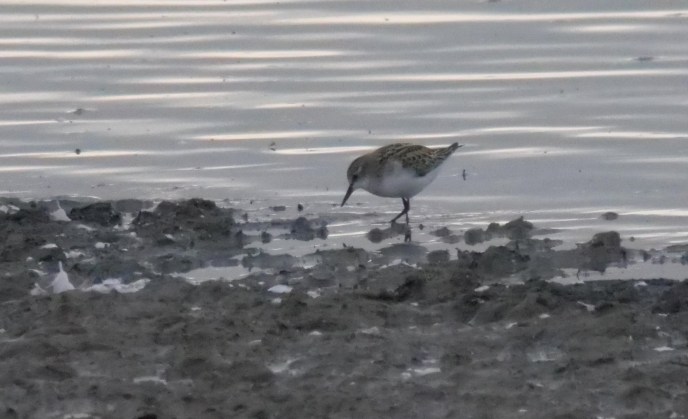
Wildfowl were thin on the water this week, with the drake Ruddy Shelduck again at Stanford Res on 22nd-23rd and the female being seen at Pitsford Res on 22nd and 27th, while a Common Scoter was reported from Summer Leys LNR on 24th.

Drake Ruddy Shelduck, Stanford Res, 22nd September 2019 (Steve Nichols)

As far as Cattle Egrets were concerned, the Stanwick six were seen only on 21st and four localities – Pitsford Res, Stanford Res, Summer Leys and Thrapston GP – enjoyed the presence of single Great Egrets at one time or another, although Pitsford produced two on 22nd.  The only raptors were two Marsh Harriers – one flying north over Hartwell on 21st and one south at Thrapston GP on 24th.

But the week’s highlight was a juvenile Little Stint at Boddington Res from 25th to 27th. This is only the second in the county this year, which is a far cry from the days when this species was a guaranteed annual passage migrant.

Juvenile Little Stint, Boddington Res, 25th September 2019 (Mike Pollard)

Also at Boddington during this period was a juvenile Ruff, on 26th – another wader exhibiting dwindling numbers in recent years. The only Greenshanks to be found were at Pitsford, where two favoured the dam throughout the week.

Greenshank, Pitsford Res, 22nd September 2019 (Mike Alibone)

On the larid front, Pitsford’s gull roost also produced all of this week’s Mediterranean Gulls, which included a first-winter on 22nd and a second-winter on 23rd, 26th and 27th, while reports of Yellow-legged Gulls fell to just five, which included two at Stanwick GP on 21st, an adult at Pitsford and four at Hollowell Res on 22nd with an adult at the latter site on 23rd and a juvenile at Boddington Res on 26th.

Adult Yellow-legged Gull, Pitsford Res, 22nd September 2019 (Mike Alibone)

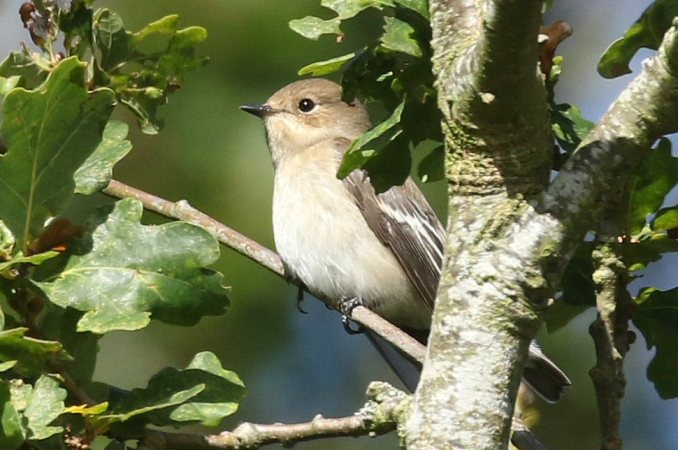
And so to passerines and just when you thought there could surely be no more Pied Flycatchers up popped two more, both of which were found at Yardley Chase on 26th, bringing this autumn’s total up to a whopping ten!

Pied Flycatcher, Yardley Chase, 26th September 2019 (Bob Bullock)

Considerably less sought-after but always guaranteed to brighten any birding day, Common Redstarts also kept coming, with singles in the Brampton Valley on 21st and at Little Irchester on 22nd and two at Harrington AF on 25th.

Whinchat, Sywell CP, 24th September 2019 (Alan Francis)

Just two Whinchats included one in the Brampton Valley on 21st and one at Sywell CP on 24th but more migrant Stonechats included one at Hollowell on 22nd-23rd and up to three at Stanford between 22nd and 27th and the week’s only Northern Wheatear was also at Hollowell Res on 21st.

Male Stonechat, Borough Hill, 21st September 2019 (Linda Honeybourne)

The first Rock Pipit of the autumn was found at Daventry CP on 24th. Hopefully there will be more of these to come over the next couple of weeks.

Rarity Round-up, 7th-20th September 2019

If a week is a long time in politics then two weeks is an even longer time – not just double – when it comes to autumn birding. For the major part of the duration, the weather was dry and temperatures were unseasonally high, hitting the mid-twenties. Winds were largely westerly, alternating between the addition of northerly and southerly components, before swinging a decisive south-easterly at the end of the period. While wader numbers tailed off, passerine migrants maintained their prominence at a number of favoured localities.

In terms of species, there was no change to the wildfowl line-up but some local movements saw Hollowell’s long-staying female Ruddy Shelduck up and go on 14th, only to pitch down again a little further north, at Stanford Res, where it remained until at least 18th. Curiously, during this time it was joined there by a male on 16th-17th. Two Garganeys paid a brief visit to Thrapston GP on 14th, another was on the scrape at Summer Leys on 20th, while Thrapston hosted up to three Red-crested Pochards between 10th and 16th and another Red-crested Pochard visited Clifford Hill GP between 15th and 18th.

Numbers of Cattle Egrets at Stanwick GP ranged between one on 9th and six on 19th, while up to two Great Egrets were at both Summer Leys LNR and Pitsford Res throughout and one was seen at Ravensthorpe Res on 17th.

Great Egret, Summer Leys LNR, 13th September 2019 (Alan Coles)
Slavonian Grebe, Clifford Hill GP, 16th September 2019 (Adrian Borley)

On 16th, two Slavonian Grebes were found at Clifford Hill GP in a rare, short-lived period of overcast and drizzly conditions. In keeping with their congener’s one-day appearances so far this autumn they had gone by the following day.
On the raptor front, a Marsh Harrier was in the Brampton Valley on 11th and the number of Ospreys fell to just two – one at Ravensthorpe Res on 7th and the other over Foxholes Fisheries, Crick on 11th, the latter date also producing a male Merlin at Easton-on-the-Hill.

Wader numbers dwindled during the period to a single Ruff at Stanwick between 9th and 11th and Greenshanks at four localities, which included up to three at Hollowell Res between 7th and 14th, two at Pitsford on 7th with one there on 13th, up to two at Boddington Res between 8th and 11th and one at Summer Leys from 9th to 13th.

Greenshank, Summer Leys LNR, 8th September 2019 (Martin Swannell)
Greenshank, Pitsford Res, 16th September 2019 (Alan Francis)

A juvenile Black Tern at Boddington was the only one of its kind during the period and the same site produced a second-winter Mediterranean Gull on 17th, while single first-winters dropped into Daventry CP on 9th and 17th. Daventry also produced a juvenile Caspian Gull on 16th and an adult visited Hollowell on 7th. Yellow-legged Gulls were found at eight sites with maximum counts of ten-plus at Stanwick on 9th and 8 at Thrapston on 14th.

Northamptonshire has enjoyed a great autumn for passerine migrants and again there was no shortage during the review period. It’s been a real ‘Pied Flycatcher autumn’ and they just keep coming, although all of this period’s remained elusive. One was found at Borough Hill on 7th before promptly vanishing and it, or another, (re)appeared there in exactly the same place, three days later, on 10th. Another at Naseby Res, on 12th, also disappeared within minutes of being found.

Common Redstarts maintained a presence with five at Borough Hill on 7th being the maximum site tally. Elsewhere, singles were at Twywell on 8th, Harrington AF on 10th, 13th 18th and 19th (the latter trapped and ringed), two were at Stanford Res on 14th with one there on 17th and two were at Hockerhill  Farm, Wilby – also on 17th.

Whinchats were also still very much in evidence, with up to three at Borough Hill on 7th-8th, up to three in the Brampton Valley between 8th and 17th, two at Neville’s Lodge, Finedon and two at Ditchford GP’s IL&M on 7th, up to two at Harrington AF between 10th and 19th and singles at Thrapston GP on 7th and at Stanford Res on 14th – the latter trapped and ringed.

Whinchat, Stanford Res, 14th September 2019 (Chris Hubbard)
Whinchat, Brampton Valley, 15th September 2019 (Alan Coles)

The first migrant Stonechats of the autumn also arrived during the period. Singles were at Harrington AF on 10th and 19th, three were at Stanford Res on 14th with one remaining the next day, two were in the Brampton Valley below Hanging Houghton on 17th and two at Summer Leys the following day and singles were found at Milton Malsor on 17th, Wicksteed Water Meadows, Kettering on 17th and 20th and at both Thrapston GP and Borough Hill on 19th.

Stonechat, Stanford Res, 15th September 2019 (Chris Hubbard)
Stonechat, Brampton Valley, 20th September 2019 (Martin Swannell)

Northern Wheatears continued to trickle through, with singles at Hollowell Res on 7th and 14th, Harrington AF on 10th and 13th, Orlingbury on 13th, Clifford Hill GP on 15th-16th, in the Brampton Valley on 17th and at Borough Hill on 19th.

Northern Wheatear, Clifford Hill GP, 16th September 2019 (Doug Goddard)

Rarely identified in autumn, for some reason, a White Wagtail was found at Boddington Res on 7th and on the same date, single Tree Pipits flew over Borough Hill and Croughton Quarry.

Rarity Round-up, 31st August to 6th September 2019

Temperatures fell as the prevailing Atlantic airflow re-established itself, delivering brisk, breezy and mainly dry conditions on the back of variable northerly to south-westerly winds. Local birding survived on the remnants of last week’s migrant rush, the usual long-stayers were still in place, with the popular well-watched sites continuing to produce small numbers of new birds.
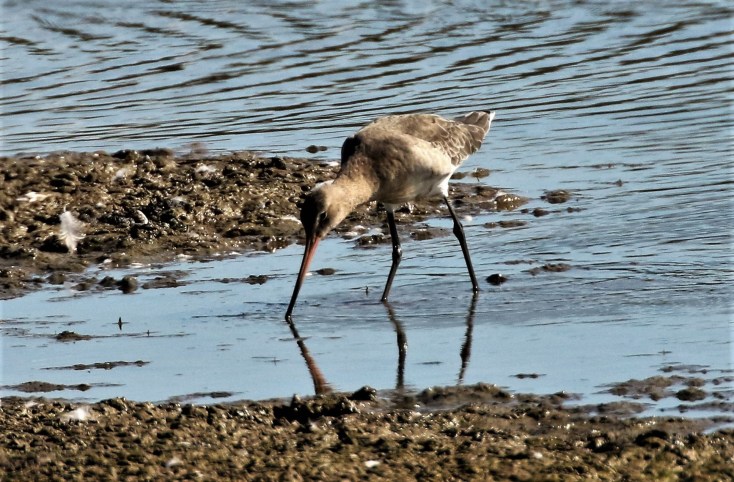
At Hollowell Res the female Ruddy Shelduck remained until at least 3rd, while single Garganeys at Pitsford Res on 31st and at Summer Leys LNR on 3rd were both new in.  Unusually scarce so far this autumn, a single drake Red-crested Pochard at Clifford Hill GP on 5th was the only one of its kind in the county this week.

Garganey, Summer Leys LNR, 3rd September 2019 (Alan Coles)

For those still following the Quail trail, it may not yet have gone completely cold, as one was flushed from setaside on the northern edge of Orlingbury on 1st. There are October records from at least one previous year …

Up to six Cattle Egrets remained at Stanwick GP throughout and Great Egrets became marginally more widespread with, in addition to the two at Summer Leys LNR and one at Pitsford Res, on and off, new birds at Ditchford GP’s Irthlingborough Lakes and Meadows LNR on 3rd and at Wicksteed Water Meadows, Kettering on the same date.

And so to the mysterious case of the Night Heron, which was reported from two sites in close proximity at Ditchford GP. Specific grid locations emerged from the ether on 31st and whys and wherefores notwithstanding, locals looked there but the willows were bare – if they ever held fruit in the first place.

Nothing so mysterious about a Black-necked Grebe at Pitsford Res on 1st – remarkably, again, only a one-day bird, or so it would seem.

On the raptor front, a Marsh Harrier flew east over Stanwick’s Visitor Centre on 5th but the number of Ospreys dwindled again to singles at Hollowell, Pitsford and Thrapston on 31st, the latter site hanging on to its bird until the next day.

A poor showing for waders this week saw just one adult Black-tailed Godwit at Summer Leys on 3rd-4th and up to three Greenshanks at Hollowell between 31st and 3rd, plus one at Summer Leys all week and two at Boddington Res on 6th.

Adult Black-tailed Godwit, Summer Leys LNR, 3rd September 2019 (Alan Coles)
Greenshank, Summer Leys LNR, 3rd September 2019 (Alan Coles)

For the second week running, a juvenile Little Tern made its way to the county, appearing at Stanwick GP early in the morning of 2nd. Aside from that, a juvenile Arctic Tern at Pitsford on the same date was noteworthy. Pitsford also attracted a juvenile Little Gull for the best part of the week, between 31st and 5th. Again, just one Mediterranean Gull was found – this time a first-winter – at Boddington on 2nd, while a juvenile Caspian Gull appeared at Stanwick on 1st.

First-winter Mediterranean Gull, Boddington Res, 2nd September 2019 (Mike Pollard)

Single adult Yellow-legged Gulls were at Ravensthorpe on 31st, Stanwick on 1st, Hollowell on 1st and 3rd and at Pitsford on 5th but seventeen were counted at Stanwick on 6th.

Adult Yellow-legged Gull, Stanwick GP, 6th September 2019 (Steve Fisher)

The flood of passerines last week had abated somewhat by the end of the period but Common Redstarts continued to appear in higher than average numbers. Stanford held two on 31st and one was trapped there on 3rd. The last day of August also produced singles near Lamport and at Pitsford and two at Twywell, while the following day saw singles at Harrington AF and Hollowell and three at Fawsley Park. On 3rd, there were four near Walgrave and two at Blueberry Farm, Maidwell – the latter having dropped to one by 5th, on which date there were up to two at Harrington and singles at Wollaston and Fleetland Farm (Duston), Northampton.

Adult female Common Redstart, Stanford Res, 3rd September 2019 (Dawn Sheffield)

Numbers of Whinchats were also still much in evidence, with five at Wollaston on 31st and 5th, up to three were in the Brampton Valley at Blueberry Farm between 1st and 5th, three were at Neville’s Lodge, Finedon on 2nd, singles were at Harrington and Pitsford on 5th and three were at Fleetland Farm on the same date. Northern Wheatears were, however, less abundant with only singles at Fawsley Park on 1st, Harrington on 1st-3rd, Blueberry Farm on 2nd and near East Haddon on 5th.

Pied Flycatcher, Barnwell CP, 1st September 2019 (John Hunt)

Another Pied Flycatcher discovered at Barnwell CP on 31st remained until the following day, continuing this species’ record run so far this autumn. Back at Blueberry Farm, a Corn Bunting on 3rd was the first record in the county since the last winter period.

A gull which doesn’t quite fit the bill

A closer look at the Ravensthorpe ‘Caspian’ Gull

Generally regarded as a Caspian Gull, this second-calendar year (first-summer) bird has been visiting Ravensthorpe Reservoir since early August. From the initial images obtained by Gary Pullan, it looked marvelously ‘snouty’ and long-legged – two features widely associated with Caspian Gull.

Second calendar year gull, Ravensthorpe Res, 16th August 2019 (Gary Pullan)

There were, however, some characteristics which simply did not ring right for Caspian Gull, leading Gary and I to debate its identity, which swung from Caspian to Yellow-legged, though Caspian x Yellow-legged hybrid and then back to Caspian. John Moon chipped in with a better image, which did not really change anything at the time.

Second calendar year gull, Ravensthorpe Res, 19th August 2019 (John Moon)

On 31st August, I managed to get some digiscoped shots (below) of which some, after scrutiny, were perhaps more suggestive of Yellow-legged Gull – not least because of the bill structure.

Summary of features based primarily on images taken on 31st August.

  • Large and lanky and legs long and good for Caspian
  • Shortish (closed) wings but renewed primaries probably still growing
  • Mantle shade of grey too light for Yellow-leggedGul but OK for Caspian (but see comments)
  • Bill long but heavy, with large gonys – looks in some images to be fine for Yellow-legged Gull but too chunky for Caspian but in others ok(ish) for Caspian
  • Underwing coverts quite dark – darker than I would expect for Caspian but Malling Olsen states some Caspians can have quite dark underwings (and see comments below)
  • Head shape, long forehead and eye position ok for Caspian and looks ‘snouty’

I forwarded a set of images to Carl Baggott – the Leicestershire Recorder, ‘King of Shawell’ and a man with a true passion for gulls and with extensive experience of Caspian and Yellow-legged Gulls in eastern Europe and Yellow-legged in Portugal.

Carl kindly commented as follows:

This is quite a difficult bird, but I don’t get a Caspian Gull feel from the images. It seems closer to YLG and I am not too concerned about the lightness of the grey feathers as this is quite variable at that age. The tertials favour YLG also, as does the large head and bill. The snouty description of Caspian Gull head is overstressed and doesn’t really help with most gulls. As you say some Caspian Gulls can have dark underwings and I have photographed birds in Germany with similar underwings. Most 2CY Caspian Gulls have pale inner primaries or a venetian blind effect across the inner primaries.

I have seen birds like this at Shawell and left them unidentified. It can be very difficult with ones like this as you don’t know their origin. I have seen Yellow-legged Gulls in Portugal that are easily confused with Caspian Gulls and even American Herring Gulls.

On the question of the possibility of a hybrid:

It could well be [a hybrid], but difficult to say for certain. There is nothing to really hang your hat on. A colour-ring is always useful as you know so at least you know where it’s from. Hybrids are easier as adults or first-winters usually as you can look at coverts (Caspian Gulls especially) on the young birds and primaries on adults. Then it comes down to matter of opinion unless you know the species of the parents. Hybrid is always the go to, but there is a great deal of variation in pure birds.

The above not only highlights the difficulty of identifying ‘odd’ gulls in the field but also the problems with trying to identify them from images taken from different angles and in different poses – for example, see the apparent change in head shape and bill thickness in the above images.

For a set of images of similarly-aged Yellow-legged and Caspian Gulls in The Netherlands  see here.

Comments welcomed!