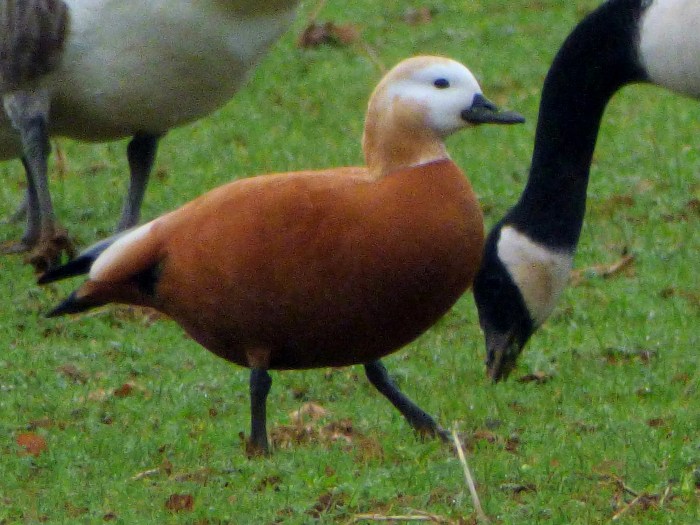
Rarity Round-up, 19th to 25th January 2019

Winter consolidated its hold on the county this week with a further light fall of snow on 22nd. Subsequent overnight temperatures of below zero and a daytime maximum of just 3º on 23rd ensured it was going nowhere fast, until almost the end of the period. This week it was all about a shrike and a bunting, with another tantalising Waxwing thrown in for good measure.

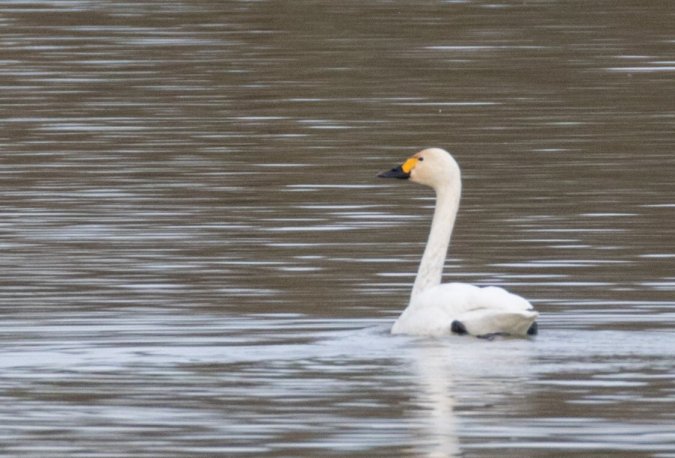
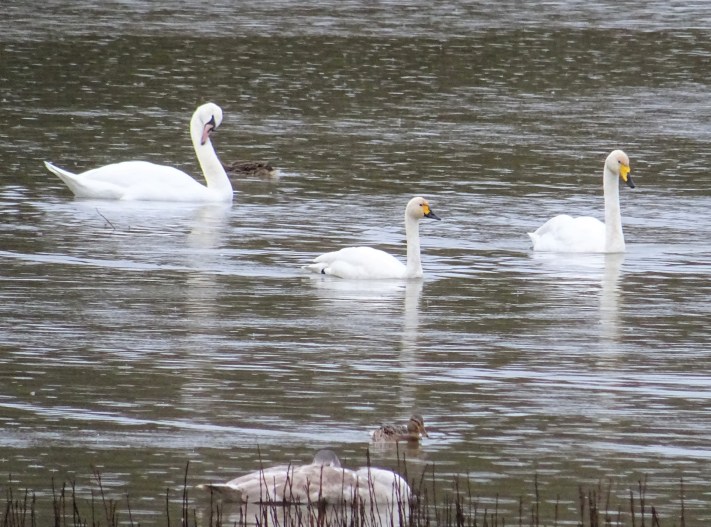
The first-winter Whooper Swan remained at Thrapston GP throughout the period and Stanwick GP’s single Pink-footed Goose materialised again on 20th, as did the Stanford Res duo on 23rd.

First-winter Whooper Swan, Thrapston GP, 19th January 2019 (Bob Bullock)

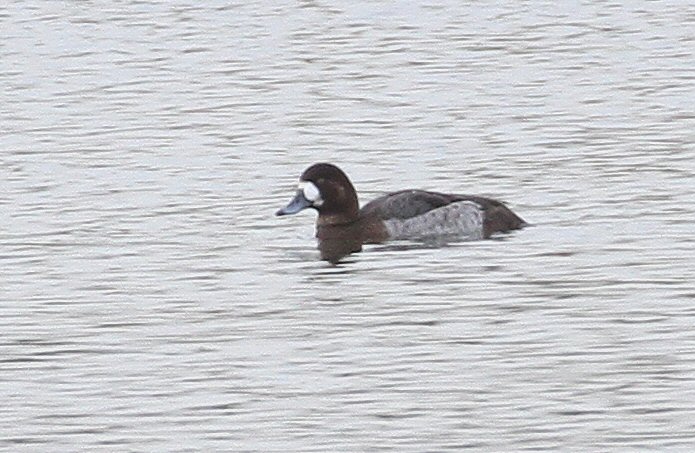
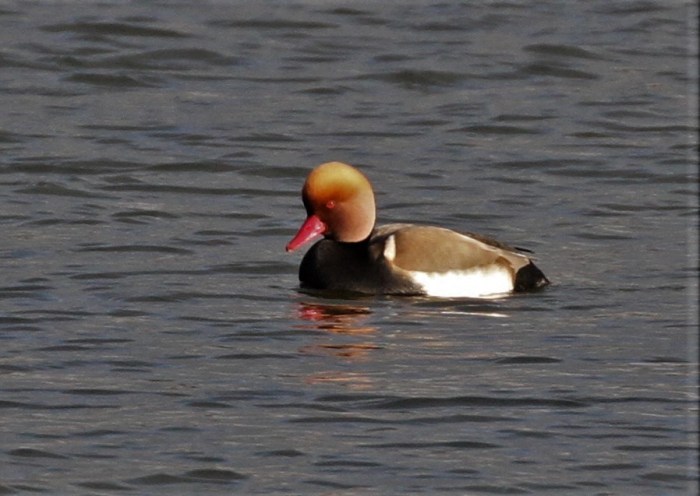
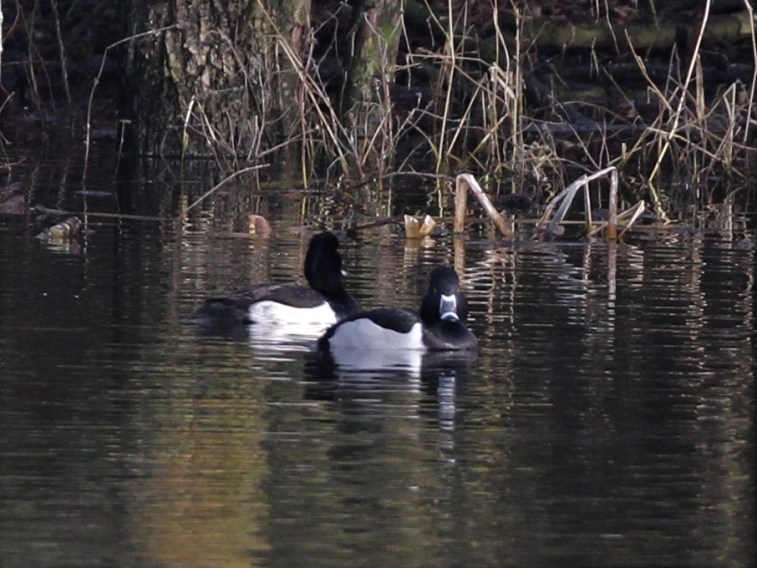
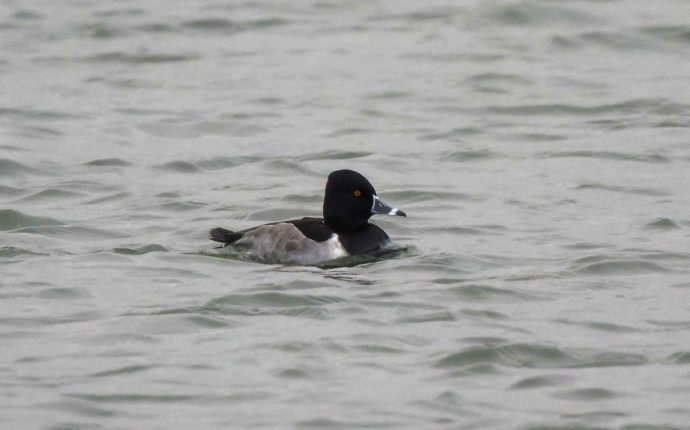
Ditchford GP produced two Red-crested Pochards on 19th-20th, while last week’s top count of twelve at Pitsford Res almost doubled to twenty-three on 24th. The drake Ring-necked Duck remained also at this site, wandering south and west to Pintail Bay on the latter date. The Summer Leys drake, last seen on 13th, was reported on the Grendon Lakes section of Earls Barton GP on 21st. The Summer Leys drake Tufted Duck x Pochard hybrid was present there the following day, while the first-winter or hybrid Scaup             remained at Ditchford GP’s Irthlingborough Lakes & Meadows LNR throughout.
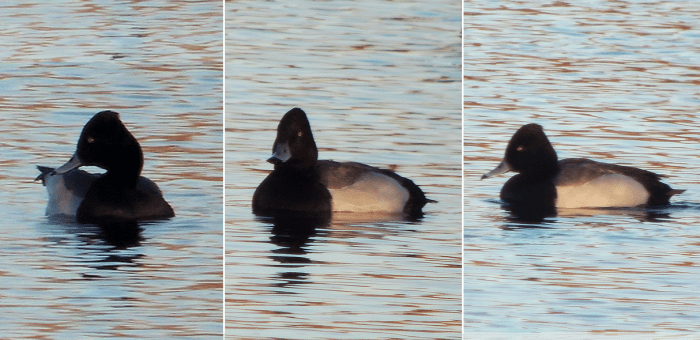
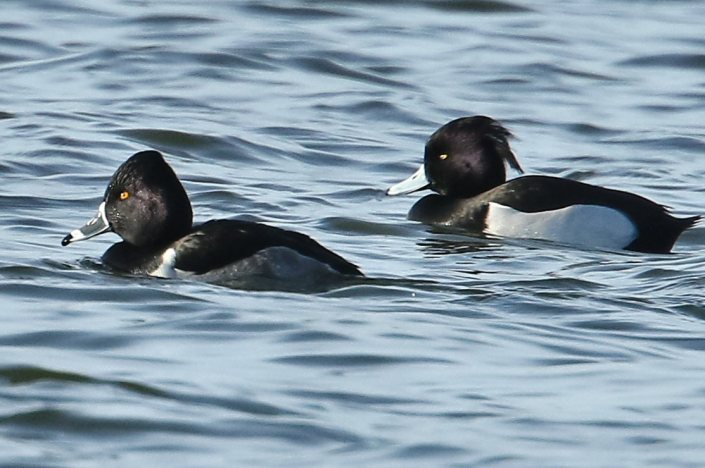
Drake Tufted Duck x Pochard hybrid, Grendon Lakes, Earls Barton GP, 22nd January 2019 (Mike Alibone)
First-winter female Scaup (or hybrid), Irthlingborough Lake & Meadows, Ditchford GP, 19th January 2019 (Bob Bullock)

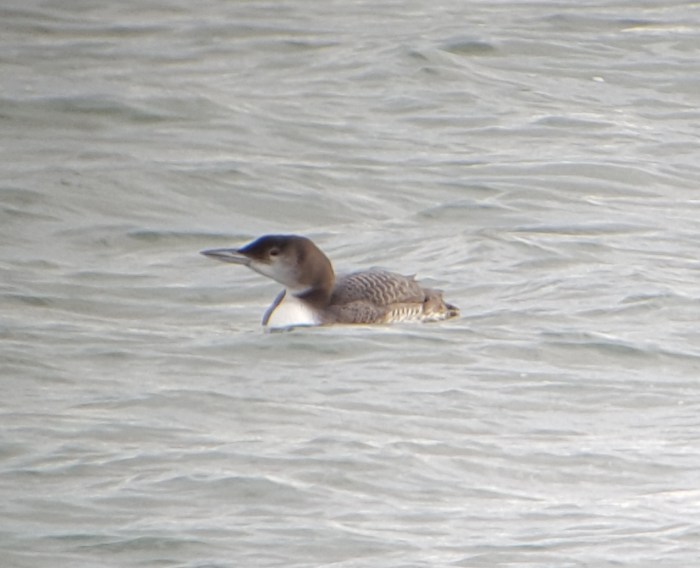
Pitsford’s, the two juvenile Great Northern Divers were still present together on 24th and the same site continued to hold up to five Great Egrets, the same number being at Thrapston GP on 25th. Elsewhere, Ditchford GP hosted up to three and singles were at Earls Barton GP/Summer Leys LNR and Stanford Res – again, numbers were a tad down on previous weeks.

Hen Harriers were still on the week’s menu, the Stanford Res juvenile showing some degree of site faithfulness to the area south of the reservoir, between the dam and the Cold Ashby to Stanford on Avon road. After the relatively long-staying second-winter male at Stanwick set its sight on horizons new and visited Neville’s Lodge, Finedon, last week, it went unreported during the period but was bizarrely replaced by a ‘ringtail’ at the latter locality on 20th and 22nd. Once again, the only other raptor of note occurring was a male Merlin seen on three consecutive days, 22nd-24th, at the site formerly known as Blueberry Farm, Maidwell. Much more on this location a little later.

Notable waders are understandably few and far between in mid-January and a single Jack Snipe at Ditchford GP on 22nd was all the week could muster. More surprisingly, however, gulls were in short supply and after the previous ‘white-winged week’, gull action was limited to single adult Yellow-legged Gulls in the roost at Boddington Res on 19th, at Pitsford Res on 23rd and Hollowell Res on 25th, while adult Caspian Gulls were seen at Rushton Landfill on 19th, at Chacombe the following day and two were at Hollowell Res on 25th.

Up to two Short-eared Owls were still present and on view in the grasslands of Neville’s Lodge near Finedon throughout on 20th-21st and two were found at Harrington AF on 22nd, while the appearance of a single Waxwing at East Hunsbury, Northampton on 25th was very short-lived, this bird flying off and eluding those who went to look for it within minutes of its discovery.

Far more obliging however, was, for many, this week’s star bird, appearing in the form of a crisp and frosty Great Grey Shrike. Discovered on 22nd at the site formerly known as Blueberry Farm, Maidwell, it performed admirably for all comers, working its way along a favoured hedgerow, occasionally approaching its admirers closely enough to be photographed.

Great Grey Shrike, Blueberry Farm area, 22nd January 2019 (Martin Swannell)
Great Grey Shrike, Blueberry Farm area, 23rd January 2019 (Martin Swannell)

This species has become much rarer as a winter visitor across the UK over the past thirty years. In its heyday in the 1970s, Northamptonshire records reached double figures annually, peaking at a whopping 20 in 1974. Nowadays it is possible to experience a five-year run with no local records. The flagging up of this
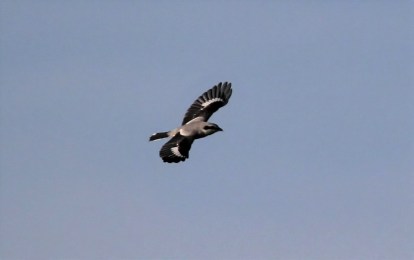
Great Grey Shrike, Blueberry Farm area, 22nd January 2019 (Alan Coles)

understandably popular bird on the internet has led to the uncovering of a hitherto unpublicised and well-photographed individual at Scaldwell last month, in mid-December 2018. Excellent images here depict a light-lored, pale-billed pulse-raiser – a Steppe Grey Shrike at first glance but diving into the detail reveals lightly-barred underparts which do not feature in any plumage or at any age in the life cycle of the latter (sub)species. So it’s an extreme example of a first-winter female Great Grey and clearly not the same individual as our bridleway beauty currently residing below Hanging Houghton and still present at the week’s end.

As if one stunner in this area isn’t enough but parachute a concentration of birders into one small area and other goodies start popping out of the woodwork. In this instance Lapland Bunting – a far rarer bird locally although, for some, perhaps not exerting the same magnetic pull as the charismatic shrike, the presence of which ultimately led to its fortuitous discovery. Found on day 2 of the shrike’s stay, it remained throughout the period within a Skylark flock feeding in millet and stubble. To date, it has been seen and heard only in flight.

This will constitute the 12th county record. The 11th was at Stanford Res in December 2014 and before that we need to go back to September 2000, when one was at Borough Hill. The first for the county was discovered by the same finder as this week’s bird, at Harrington AF in October 1987 and, despite ten subsequent records to date, none has been twitchable. For those who haven’t seen one in the county, then, this bird represents the best chance to catch up with a local ‘lappo’ for thirty-one years. Pinning it down, however, is another matter entirely. Of course, the two or three Corn Buntings also discovered on site look like taking a back seat – at least for the time being …

Rarity Round-up, 12th to 18th January 2019

Following the swing to northerly winds at the end of last week, the weather for a time reverted to being relatively mild, on the back of a more westerly airstream from the North Atlantic. However, northerlies were back by 17th and the county experienced its first taste of snow this winter, albeit a light dusting. Along with this came another winter first in the shape of three Waxwings, while the first Glaucous Gulls of the season also dropped in.

First-winter Whooper Swan, Thrapston GP, 13th January 2019 (Adrian Borley)

In the absence of any other wild swans, the first-winter Whooper Swan continued to enjoy the environs of Thrapston GP’s Elinor Trout Lake throughout the period and Stanwick GP’s erratically occurring Pink-footed Goose also remained, being seen on 14th and 17th. New in, though, were two more Pinkfeet found on the dam at Stanford Res on 13th, where they were mysteriously replaced by two White-fronted Geese the following day, the latter still present on 16th.

White-fronted Geese, 14th January 2019 (Steve Nichols) and Pink-footed Goose, 13th January 2019 (Chris Hubbard). Both images from Stanford Res.

Pitsford Res was the only locality to hold Red-crested Pochards this week with the maximum count of twelve there on 13th, while the drake Ring-necked Duck remained until at least 16th. This appeared not to be the case with the Summer Leys drake, which was last reported on 13th.

Drake Red-crested Pochard, Pitsford Res, 16th January 2019 (Alan Coles)
Drake Ring-necked Duck, Summer Leys LNR, 13th January 2019 (Martin Swannell)

Staying with the Nene Valley gravel pit chain, at Ditchford GP, the first-winter or hybrid Scaup remained at Irthlingborough Lakes & Meadows all week and a drake Smew paid a fleeting visit to Stanwick’s A45 Lay-by Pit on 12th, although it was not seen subsequently.

Back at Pitsford, the two juvenile Great Northern Divers were still present together on 16th, one being seen there the following day and the same site continued to hold at least four Great Egrets, while Thrapston GP also held at least four. Elsewhere, Stanwick GP hosted up to two and singles were at Earls Barton GP/Summer Leys LNR and Stanford Res – a relatively poor showing in comparison to previous weeks.

Great Egret, Pitsford Res, 16th January 2019 (Alan Coles)

Stanwick’s second-winter male Hen Harrier became more adventurous, ranging 5 km to the west to visit Neville’s Lodge, Finedon, where its appearance surprised and delighted local birders looking for Short-eared Owls, late in the afternoon on 12th. It was back there for an encore at the same time the following day, performing well for a small gathering of expectant and elated observers. The juvenile at Stanford Res was also still in the game, appearing there again on 16th and 17th. As with last week, the only other raptor occurring was a female or immature Merlin near Badby on 16th.

Second-winter male Hen Harrier, Neville’s Lodge, Finedon, 13th January 2019 (Angus Molyneux)

At least two species of wader – double last week’s tally – were found this week, with a Ruff at Summer Leys LNR on 12th and five Jack Snipe at Barnes Meadow LNR (Northampton) on 15th.

On to some gull action, then, with a second-winter Yellow-legged Gull at Daventry CP and an adult and first-winter at Pitsford Res – all on 16th. A second-winter Caspian Gull was still at Hollowell Res on 15th but it was Stanford Res which came up trumps with a juvenile Glaucous Gull on 12th and 16th and a second-winter Glaucous on 17th – the same date on which a second-winter Iceland Gull decided to pay a visit to the reservoir. These particular individuals have been present at nearby Shawell Landfill in Leicestershire, only 7 km to the west as the gull flies, since early this month. They usually roost on Draycote Water, not too far away in Warwickshire, so the boys at ‘Stanny’ have been lucky this week!

Up to two Short-eared Owls were present in the grasslands of Neville’s Lodge near Finedon throughout the period – no doubt overshadowed by a certain harrier during the first two days of it. The first Waxwings of the winter were found in Kettering on 16th but their stay was short-lived and they eluded all who went looking the following morning. Still, there’s plenty of time left before they all head back north … Finally, a good candidate for a Siberian Chiffchaff was discovered – but not clinched – at Stanwick GP in the last hours of daylight on the last day of the period. Up to twelve Chiffchaffs were counted at the favoured site for this (sub)species, along the outflow into the River Nene from Ecton SF, on 18th, with apparently no ‘sibes’ in tow.

Rarity Round-up, 5th to 11th January 2019

Sandwiched between a North Atlantic high and a low over north-east Europe, the country was the recipient of northerly winds from just inside the Arctic Circle for much of the week. Despite this, temperatures did not drop below the expected average for the time of year and the weather remained largely dry. Apart from the discovery of a new Ring-necked Duck, the week saw little change in what was on offer across the county.

Following our best autumn and early winter period for Whooper Swans, the sole survivor, making it through to 2019, was the first-winter at Thrapston GP, which remained throughout the week. Ravensthorpe Res continued to host the distinctive drake Wigeon x Gadwall hybrid, while over at Pitsford Res, Red-crested Pochard numbers remained stable at fourteen until at least 9th but the only others reported were two females at Ringstead GP on 5th.

Drakes and leucistic female Red-crested Pochards, Pitsford Res, 9th January (Bob Bullock)

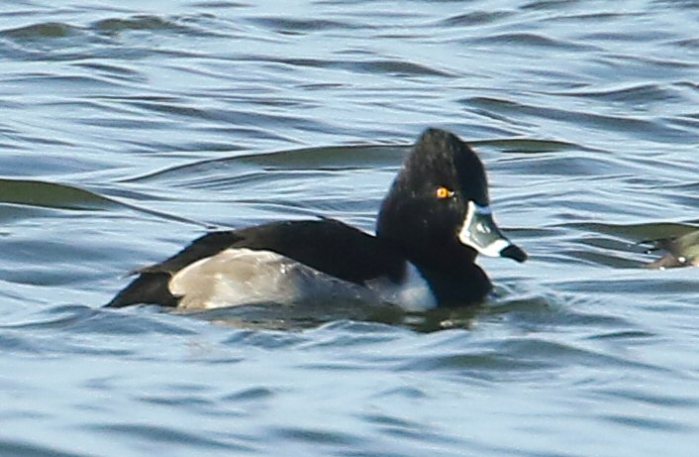
On 8th, however, Pitsford’s drake Ring-necked Duck found itself vying for attention with a newcomer in the shape on another adult drake found on the main lake at Summer Leys. Immediately after its discovery, this second individual promptly went into hiding but it reappeared, all brute and charisma, to pose for photos on 11th.

Drake Ring-necked Duck, Summer Leys LNR, 11th January 2019 (Bob Bullock)
Drake Ring-necked Duck, Summer Leys LNR, 11th January 2019 (Alan Coles)

Two Ring-necked Ducks in the county at the same time is a first and it appears these are part of a national influx involving the presence of birds at approximately twenty sites across Britain and Ireland. Also at Summer Leys was a rather striking drake Tufted Duck x Pochard hybrid, adding a sprinkling of spice to the duck mix on 10th-11th, while further down the valley, at Ditchford GP, the first-winter or hybrid Scaup remained at Irthlingborough Lakes & Meadows.

At Pitsford, the two young Great Northern Divers were seen on and off throughout the period, usually in the area east of Pintail Bay. The same site continued to host up to five Great Egrets, while Thrapston GP again held at least four, Stanford Res and Summer Leys produced up to two each and singles were found at Ditchford GP/Irthlingborough Lakes & Meadows, Earls Barton GP, Ravensthorpe Res and Stanwick GP.

Juvenile Great Northern Divers, Pitsford Res, 6th January 2019 (Doug Goddard)

The popularity of Stanwick’s second-winter male Hen Harrier showed no sign of waning as it continued to put in daily appearances. Conversely, the juvenile at Stanford Res has become far more erratic in its visits to the site, being seen only on 6th. The only other raptor occurring this week was a female Merlin between Oundle and Warmington on 9th.

Second-winter male Hen Harrier, Stanwick GP, 8th January 2019 (Martin Swannell)

Waders were limited to a solitary Jack Snipe at Hollowell Res on 11th, while an adult Yellow-legged Gull also remained at this site throughout week. Further Yellow-legged Gulls included an adult at Chacombe on 6th and a first-winter in the roost at Boddington Res on the same date. Hollowell Res also held an adult Caspian Gull all week, joined there by a second-winter on 6th, 10th and 11th, while an adult appeared in the Boddington roost on 6th and a second-winter was at Rushton Landfill on 11th.

The grasslands of Neville’s Lodge near Finedon continued to attract Short-eared Owls with two or three there on 9th and at least one on 11th, while two Crossbills were seen at Yardley Chase on 10th.

Rarity Round-up, 22nd December 2018 to 4th January 2019

The two weeks immediately following the winter solstice proved largely mild and dry, cooling down only after the winds swung northerly during the last two days of the period. A fair proportion of the birds present in the run up to Christmas made it into the New Year, the first ‘white-winged’ gull of the winter appeared and a locally sought-after species, usually considered a scarce migrant, ensured the first day of 2019 kicked off with a bit of class.

Bucking the trend of the long-stayers, the adult Bewick’s Swan, which had appeared settled at Pitsford Res after it first arrived on 5th December, did a bunk after the first day of the period, while reports of the similarly ensconced Whooper Swans at the same locality dried up beyond 29th. A first-winter Whooper paid a brief visit to a small lake near Purston, south of Farthinghoe NR, before flying off on the latter date, while the bird of the same age remained at Thrapston GP throughout. The only geese appearing during the period were a Barnacle Goose at Stanwick GP between 1st and 4th and a Pink-footed Goose there again on the latter date. Back at Pitsford, Red-crested Pochard numbers topped fourteen between 31st and 2nd, four were at Stanford Res on 27th with one remaining into the New Year, the drake was still at Hollowell Res on 22nd, two visited Thrapston GP on 30th,one was at Stanwick GP on 28th and another, or the same, at nearby Ringstead GP on 4th. Remaining faithful to Pitsford’s north side, the drake Ring-necked Duck continued its stay at the reservoir throughout the period and a female Scaup was also found there on 26th.

Drake Ring-necked Duck, Pitsford Res, December 2018 (Bob Bullock)

Elsewhere, the first-winter or hybrid Scaup was still at Ditchford GP on 2nd and the first-winter remained at Thrapston GP until at least 22nd. At Pitsford, the elusive drake Smew was seen again on 22nd and 26th, while the two young Great Northern Divers remained until at least 2nd with at least one until 4th.

Juvenile Great Northern Divers, Pitsford Res, 26th December 2019 (Richard How)

Up to five Great Egrets continued to be seen at Pitsford, while Thrapston GP hosted four – possibly five – Stanford Res and Summer Leys held three a piece and singles were found at Ditchford GP/Irthlingborough Lakes & Meadows, Earls Barton GP, Fawsley Park Lake, Foxholes Fisheries (Crick) and Hollowell Res.

Stanwick’s second-winter male Hen Harrier disappeared over the Christmas period but was back on 1st, visiting nearby Irthlingborough Lakes & Meadows the following day before returning to Stanwick on 3rd-4th. The juvenile last seen at Stanford Res on 16th was back on 28th, remaining until at least 1st.

On the somewhat narrow wader front, Stanwick produced two Black-tailed Godwits on 28th, while Hollowell Res hung on to its Jack Snipe on 1st and one was found by the River Nene at Burton Latimer Pocket Park on 30th.

Winter is traditionally gulling time and the period gave rise to an adult Mediterranean Gull at Daventry CP on 27th and 31st, the wintering adult Yellow-legged Gull was remained at Pitsford throughout with further adults at Hollowell Res on 22nd and 1st and Daventry CP on 27th and a second-winter was found at the latter site on 31st. There were more Caspian Gulls than the previous species, with a second-winter at Hollowell Res on 22nd and a first-winter and fourth-winter at Daventry CP on 31st but Rushton Landfill produced the most, with a third-winter on 24th, a first-winter and a second-winter on 28th and a first-winter again on 4th. Rushton was also the site which produced the first ‘white-winger’ of the winter, a juvenile Iceland Gull on 28th. However, with the closure of many local landfills (remember Sidegate Lane, Weldon and Welford?) Glaucous and Iceland Gulls are destined to become more difficult to catch up with in the future.

Juvenile Iceland Gull, Rushton Landfill, 28th December 2018 (Mike Alibone)

In what many birders no doubt would regard as a more hospitable environment, the grasslands of Neville’s Lodge near Finedon produced a Short-eared Owl on Christmas Day, followed by two there on 4th. One was also seen at Stanford Res on 27th. Bird of the week, however, must surely be the Woodlark found on a BTO survey of farmland near Woodford on New Year’s Day. This species is by no means annual in the county and there has not been a twitchable one for many years. Also potentially rare but all too readily dismissed as ‘just a sub’, is Nordic Jackdaw, one of which put in a brief appearance at Daventry CP on 3rd. After a surge of interest back in the early 2000s, when they became all the rage, records of this eastern European form, monedula, seem, perplexingly, to elicit little attention these days. Ah well, c’est la vie …

Rarity Round-up, 15th to 21st December 2018

No dramatic changes in weather served to shift the balance on the birding front as we slipped ever more deeply into the festive season. Cold easterlies and northerlies quickly gave way to bouts of wet and windy southerlies and westerlies at the end of the period, which ended quietly on the shortest day of the year.

As the week came to a close, the adult Bewick’s Swan remained in place at Pitsford Res, along with the eleven Whooper Swans, while the first-winter Whooper at Thrapston GP similarly showed no signs of upping and going.

Bewick’s Swan, Pitsford Res, 16th December 2018 (Mark Williams)
Whooper Swans, Pitsford Res, 16th December 2018 (Mark Williams)
Whooper Swans, Pitsford Res, 16th December 2018 (Adrian Borley)

Also apparently rooted were the Pink-footed Goose and the six White-fronted Geese at Stanwick GP and Red-crested Pochard numbers bounced back to sixteen at Pitsford Res on 17th and 21st and 17th also saw two at Thrapston GP, while the lone drake was still at Hollowell Res and a female visited Ditchford GP – both on 16th. On the latter date a first-winter Scaup was at Pitsford Res and the first-winter or hybrid was still at Ditchford GP before relocating next door to Stanwick the following day and the first-winter remained all week at Thrapston GP. Back at Pitsford, the drake Ring-necked Duck remained until at least 20th and the drake Smew reappeared on 19th, followed by a ‘redhead’ there the next day.

Drake Ring-necked Duck, Pitsford Res, 17th December 2018 (Bob Bullock)
Drake Ring-necked Duck with Tufted Duck, Pitsford Res, 17th December 2018 (Bob Bullock)

At the opposite end of Pitsford, two Great Northern Divers continued their residence throughout the week, both being seen on 16th and 21st.

Great Northern Divers, Pitsford Res, 21st December 2018 (Richard How)

This was the first blank week for Cattle Egrets since the beginning of October. We’ve enjoyed an amazing run of records of these cheeky little frog-gobblers and given their recently acquired national resident status, the next one is surely not too far away. Up to four Great White Egrets continued to be seen at Pitsford, while Stanford Res and Stanwick continued to host three each, Thrapston held two and Ringstead GP and Summer Leys produced singles during the period.

Stanwick’s male Hen Harrier, now seen closely enough to age as a second-winter, has arguably stolen the celebrity crown from the Pitsford Ring-necked Duck and although tricky to catch up with, continued to be seen almost daily throughout the week. The juvenile at Stanford Res returned this week for an encore on 16th and on the same date, a male Merlin was a surprise bonus for the harrier-watchers back at Stanwick.

Pitsford continued to host last week’s Ruff until at least 17th and Hollowell Res produced a Jack Snipe, as well as two adult Yellow-legged Gulls on 16th, while the wintering adult Yellow-legged Gull was still at Pitsford until at least 19th. Down in the extreme south-west of the county, the not so lowly cattle sheds at Chacombe continued to attract masses of gulls including still, on 16th, the adult Caspian Gull first seen there on 25th November. Three more Caspians – two adults and a first-winter – were located at Rushton Landfill on 20th.

Rarity Round-up, 8th to 14th December 2018

Under the influence of a predominantly south-easterly airstream, the past week remained dry with daytime temperatures gradually falling from the highest of 11 ºC on 8th to the lowest of 1ºC at the week’s end. Much of the previous week’s fare stayed put, providing plenty of opportunities for birders to play catch-up with any birds missed during the preceding period. Again, the spotlight was firmly on Pitsford as the place to be.

Seemingly now settled at Pitsford Res, the adult Bewick’s Swan remained throughout the week, as did the eleven Whooper Swans, now in their seventh week on site. Also staying put was the first-winter on Elinor Trout Lake at Thrapston GP, while another visited Stanford Res briefly on 14th.

First-winter Whooper Swan, Thrapston GP, 14th December 2018 (Mike Alibone)

Stanwick GP continued to play host to all of this week’s geese – the Pink-footed Goose on 9th, six White-fronted Geese on 14th and the Barnacle Goose until at least 11th, while the female Ruddy Shelduck remained north of the causeway at Pitsford Res until at least 11th. The drake wigeon resembling an American Wigeon x Eurasian Wigeon hybrid came under the spotlight this week and is now considered most likely to be a hybrid between Eurasian Wigeon and Gadwall.

Hybrid Wigeon showing some characteristics of American Wigeon but now considered most likely to be Eurasian Wigeon x Gadwall. Ravensthorpe Res, 10th December 2018 (Mike Alibone)

Whatever its genetic composition, it’s still an unusual and striking-looking bird. Red-crested Pochard numbers had fallen this week to a maximum of just four at Pitsford Res on 8th, when the lone drake was also seen at Hollowell Res. Over at Thrapston, the first-winter Scaup was still present on 13th and the genetic purity of the female – perhaps a first-winter – at Ditchford GP was the subject of some discussion on 8th. After initially proving elusive, Pitsford’s drake Ring-necked Duck finally gave itself up to photographers – even to the point of showing off its ring. Remaining principally in Scaldwell Bay, it still occasionally proved tricky to get to grips with.

Drake Ring-necked Duck, Pitsford Reservoir, 8th December 2018 (Adrian Borley)
Drake Ring-necked Duck, Pitsford Reservoir, 8th December 2018 (Angus Molyneux)

Also in Scaldwell Bay, a dapper drake Smew – the first of the winter – was discovered on 10th but it was nowhere to be seen beyond 11th.

At the opposite end of Pitsford, the juvenile Great Northern Diver remained throughout the week, often appearing close to the dam.

Juvenile Great Northern Diver, Pitsford Res, 10th December 2018 (Bob Bullock)
Juvenile Great Northern Diver, Pitsford Res, 12th December 2018 (Martin Swannell)

Bitterns have been scarce so far during the autumn and early winter period and in line with sporadic occurrences, Stanwick produced another drop-in at dusk on 11th. Rarer, though far easier to see, were the two Cattle Egrets at the same locality, while Pitsford also attracted one, albeit briefly, on 12th. Seen well with a small herd of cows below the dam, this constitutes a ‘first’ for the reservoir. Elegant, though somewhat less exciting, up to four Great White Egrets continued to be seen at the same site, while Stanford Res and Stanwick mustered three a piece, Thrapston hosted two and Ditchford GP, Earls Barton GP, Hollowell Res, Ravensthorpe Res and Summer Leys produced singles during the period.

Great White Egret, Summer Leys LNR, 10th December 2018 (Chris Donohoe)

Harriers were the only raptors of note this week and these included last week’s male Hen Harrier, ranging over farmland at the north-eastern extremity of Stanwick GP on 10th, 11th and 13th and a Marsh Harrier over Summer Leys LNR on 13th.

Marsh Harrier, probably juvenile female, Summer Leys LNR, 13th December 2018 (Ian Hicks)

Pitsford continued to host last week’s Ruff until 8th, as well as an adult Yellow-legged Gull and two adult Yellow-legged Gulls were at Hollowell Res, also on 8th.

A ‘new’ Short-eared Owl was discovered at the north-eastern end of Stanwick GP on 11th and the two Bearded Tits were still present at a site with no public access on the same date, while a single Crossbill flew east at Ditchford GP on 14th.

Rarity Round-up, 1st to 7th December 2018

The first week of winter and some may say, the end of anything new turning up, or was it? The Atlantic airstream brought predominantly south-westerly winds and rain and unseasonally high temperatures, peaking at 13ºC on both 3rd and 6th. Wildfowl were still the number one quarry for local birders in a week when persistent reservoir-watching paid dividends.

After last week’s Bewick’s Swans’ brief dalliance with Thrapston GP, another was found in Scaldwell Bay at Pitsford Res on 5th, remaining until the end of the week.

Bewick’s Swan, Pitsford Res, 5th December 2018 (Bob Bullock)
Bewick’s and Whooper Swans, Pitsford Res, 6th December 2018 (Doug Goddard)
Mute, Bewick’s and Whooper Swans, Pitsford Res, 7th December 2018 (Richard How)

Overshadowing the eleven on-site Whooper Swans with its newly acquired celebrity status – Bewick’s have become really quite uncommon in Northants over the last decade or more – it attracted a steady stream of admirers, many of whom were willing to brave the rain for an optics-sodden glimpse in miserable conditions. Only one more Whooper was seen, the young bird now looking settled for the winter at Thrapston GP, where it remained all week. In the Nene Valley, the Pink-footed Goose was again seen at Stanwick GP on 5th and 6th and last week’s five White-fronted Geese, which had previously flown west over Ditchford GP on 25th, had clearly circled back and were also located at Stanwick on 5th, while another White-front was off the dam at Sywell CP on 7th.

White-fronted Goose, Sywell CP, 7th December 2018 (Alan Francis)

Back at Stanwick, the Barnacle Goose was still present until at least 6th. The mobile female Ruddy Shelduck ventured north of the causeway at Pitsford Res, where it was seen on 4th and 6th. Meanwhile, at Ravensthorpe, the drake American Wigeon x Eurasian Wigeon hybrid failed to elicit any interest until at least 1st and the female Ferruginous Duck x Pochard hybrid was again seen at Pitsford on 3rd, where the week’s highest site total of Red-crested Pochards was fourteen on 6th. Elsewhere, last week’s two were still at Stanford Res until 3rd and the drake remained at Hollowell Res until 4th, while the first-winter Scaup also remained at Thrapston GP until at least 3rd and a female was found at Ditchford GP, remaining there until the week’s end. Apparently missing for most of last week, the drake Ring-necked Duck in Pitsford’s Scaldwell Bay reappeared on 1st, after which it was seen intermittently until 6th, although it remained elusive for a great deal of the time.

Ring-necked Duck, Pitsford Res, 2nd December 2018 (Mark Williams)

Another first for the winter, a juvenile Great Northern Diver, was discovered off the dam at Pitsford on 1st before promptly being joined by another there on 2nd. Although both were seen together on the latter date, only one has been reported subsequently, right through to the end of the period.
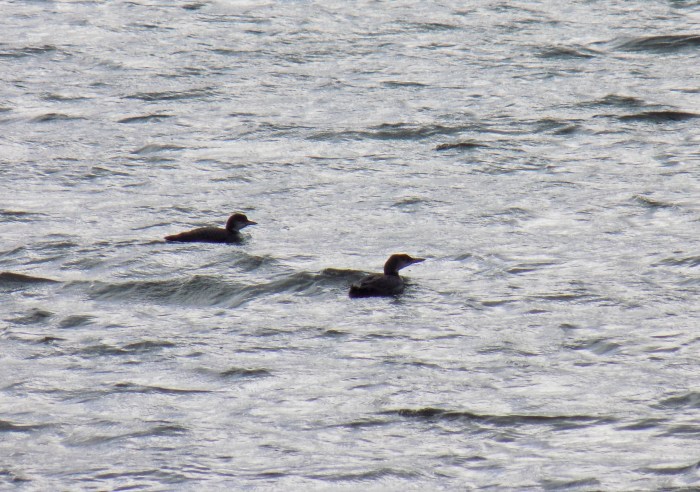
Great Northern Divers, Pitsford Res, 2nd December 2018 (Peter Grimbley)
Juvenile Great Northern Diver, Pitsford Res, 2nd December 2018 (Adrian Borley)
Juvenile Great Northern Diver, Pitsford Res, 2nd December 2018 (Adrian Borley). This bird is a different individual to the one in the above two photographs.

There was little change on the egret front, with the two Cattle Egrets still at the north-east end of the Stanwick GP complex on 6th, while up to two Great White Egrets continued to be seen there, with the same number at Hollowell Res, Ravensthorpe Res, Stanford Res and Thrapston GP, with three at Pitsford and one at Ditchford GP. Some of these will no doubt be duplicates where records from nearby localities are concerned.

Great White Egret, Pitsford Res, 5th December 2018 (Chris Donohoe)

The only raptor of note this week was a fine male Hen Harrier which flew west at Stanwick GP on 4th.

Pitsford continued to host the first-winter Black-tailed Godwit until at least 1st, along with the Ruff all week. There were also two Yellow-legged Gulls there on 5th, while another was logged at Hollowell Res the day before.

The Borough Hill Short-eared Owl remained until at least 1st, another was seen again at Harrington AF on 3rd and the Firecrest discovered near the feeding station at Pitsford Res on 29th was heard calling there again on 3rd. On the latter date, two Bearded Tits were discovered on land with no public access and eleven Crossbills were at Fineshade Wood on 4th.

Rarity Round-up, 24th to 30th November 2018

The last week of autumn saw a continuation of northerly and easterly winds accompanied by low temperatures until the middle part, when south-westerlies helped raise the temperatures to a high of 14ºC on 28th, as well as delivering prolonged heavy rain. Rare and scarce wildfowl topped the bill during the period.

Six Bewick’s Swans, two adults and four first-winters, paid a brief visit to Thrapston GP’s North Lake on 25th before departing east during the afternoon. These are the only ones to be recorded in the county so far this year. The only Whooper Swans this week were the eleven, seemingly still settled all week, north of the causeway, at Pitsford Res and the first-winter still at Thrapston GP on 30th. In the Nene Valley, five White-fronted Geese flew west over Ditchford GP on 25th and just to the east, a Pink-footed Goose was found at Stanwick GP on 28th, while the Barnacle Goose was still present there on the same date. The mobile female Ruddy Shelduck was still at Pitsford Res on 25th, while over to the west, the drake American Wigeon x Eurasian Wigeon hybrid, last seen at Daventry CP on 16th, resurfaced at Ravensthorpe Res on 27th. Back at Pitsford, the week’s highest site total of Red-crested Pochards fell from eighteen last week to thirteen on 24th. Elsewhere, two were at Stanford Res all week and one remained at Hollowell Res throughout, while the first-winter Scaup also remained all week at Thrapston GP.

Following last week’s mystery report of a drake Ring-necked Duck on Town Lake at Thrapston on 18th, one appeared in Scaldwell Bay at Pitsford Res on the afternoon of 25th. At first posing awkwardly for photos, it quickly became camera-shy, subsequently appearing to do a bunk. Making it into the record books as Northamptonshire’s sixth, it was present just long enough for one or two locals to catch up with it but it wasn’t seen for the remaining part of the week.

Adult drake Ring-necked Duck, Pitsford Res, 25th November 2018 (Adrian Borley)

Just two Cattle Egrets continued to be seen daily at the north-east end of the Stanwick GP complex, while up to two Great White Egrets continued to be seen there, with the same number at Stanford Res. Elsewhere, Pitsford continued to host up to four and singles were seen at Ditchford GP, Hollowell Res, Ravensthorpe Res and Summer Leys LNR.

Cattle Egret, Stanwick GP, 30th November 2018 (Steve Fisher)

Stanford Res continued its monopoly on harriers with the juvenile Hen Harrier still present until at least 29th and last week’s Marsh Harrier was again seen there on 24th.

The wader trade picked up with the first-winter Black-tailed Godwit still at Pitsford Res and a Ruff was discovered there on 24th, both birds remaining throughout, while a fly-through Spotted Redshank was seen there on 26th.

Single adult Mediterranean Gulls were at both Hollowell Res and Pitsford Res on 26th, although it is likely the same individual accounted for both observations, while an adult Caspian Gull was found near Middleton Cheney on 25th, being relocated later in the day at nearby Chacombe.

Adult Caspian Gull, Middleton Cheney, 25th November 2018 (John Friendship-Taylor)

A second-winter Caspian Gull visited Daventry CP on 30th. Yellow-legged Gulls continued to be logged in small numbers, with three near Middleton Cheney on 25th and the same number again at Hollowell Res the following day, while singles were at Chacombe on 25th and Pitsford Res throughout the week.

Short-eared Owl, Borough Hill, 25th November 2018 (John Friendship-Taylor)

The Borough Hill Short-eared Owl remained throughout the week, another was seen at Harrington AF on 28th and the first wintering Firecrest was discovered near the feeding station at Pitsford Res the following day. The only Bramblings reported were one at Pitsford Res on 26th, two at Hanging Houghton on 24th and up to eight in the Brampton Valley below Hanging Houghton all week.

Rarity Round-up, 17th to 23rd November 2018

The wind throughout the week took a prolonged easterly slant and temperatures fell accordingly, a high of 10°C on 17th had slipped down to a low of just 4°C on 20th.

Two new Whooper Swans appeared this week, a lone adult at Earls Barton GP on 21st, followed by another youngster joining the Pitsford eleven on 22nd, while the first-year remained at Thrapston GP throughout the period.

First-winter Whooper Swan, Thrapston GP, 23rd November 2018 (Adrian Borley)

Last week’s Barnacle Goose revisited Stanwick GP on 19th and the mobile female Ruddy Shelduck dropped into Pitsford Res on 21st, the latter site again accounting for the highest total of Red-crested Pochards, which topped eighteen on the same date.

Red-crested Pochards, Pitsford Res, 18th November 2018 (Alan Coles)

Elsewhere, four were at Stanford Res on 17th, with just one remaining until 21st, one remained at Hollowell Res all week and singles were at Clifford Hill GP on 17th and Thrapston GP on 23rd, where the first-winter Scaup also remained all week.

Female Ruddy Shelduck, Pitsford Res, 21st November 2018 (Doug Goddard)

And so to this week’s puzzle: the adult drake Ring-necked Duck reported on Town Lake at Thrapston on the morning of 18th. Local observers were on site within an hour or two of the national news broadcast, diligently scanning the lake, along with all the other lakes in the complex. It was nowhere to be seen. The source is a mystery … but Thrapston has history. So, more ‘fake news’ then or, if you prefer a rather more British approach to the phraseology, ‘patent twaddle’. Nuff said. At least we know the one remaining Velvet Scoter, last seen there on 17th, was genuine and contributed to the county chalking up a ‘two-scoter week’ with two Common Scoters at Stanford Res on 19th.

The three Cattle Egrets at the north-east end of the Stanwick GP complex were once again joined by a fourth on 21st-22nd, while one or two Great White Egrets continued to be seen at this and six other locations, Pitsford topping the bill with four on 21st-22nd.
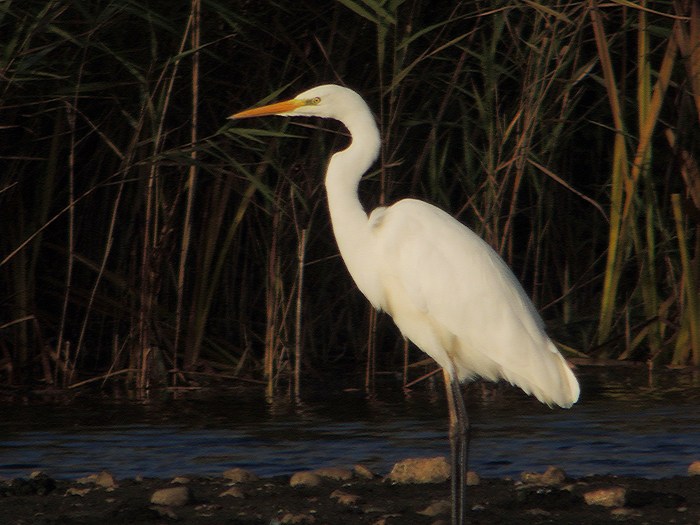
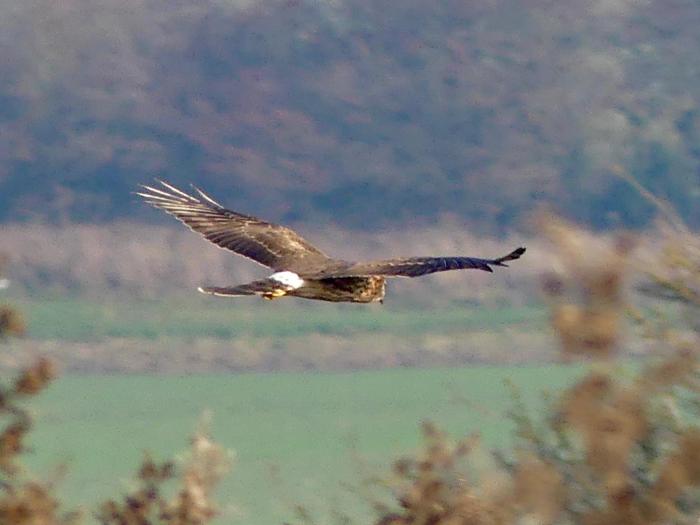
Great White Egret, Stanwick GP, 17th November 2018 (Mike Alibone)

On the raptor front, Stanford Res continued to maintain its monopoly on harriers with the juvenile Hen Harrier still present until at least 18th and a Marsh Harrier there on 22nd-23rd.

Juvenile Hen Harrier, Stanford Res, 17th November 2018 (Chris Hubbard)

The only wader of note this week was the first-winter Black-tailed Godwit at Pitsford Res, remaining throughout, while the usual adult Yellow-legged Gull also remained there throughout the period, three were at Hollowell Res on 17th, followed by two on 21st.

First-winter Black-tailed Godwit, Pitsford Res, 21st November 2018 (Angi Harrell)

Short-eared Owls were more widespread this week, being reported from no less than five localities. Two were at Stanford Res on 17th and singles were seen at Weldon on 18th, Stanwick GP on 21st, Pitsford Res on 22nd and Borough Hill on 23rd. The only Brambling reported was one at Pitsford Res on 22nd.