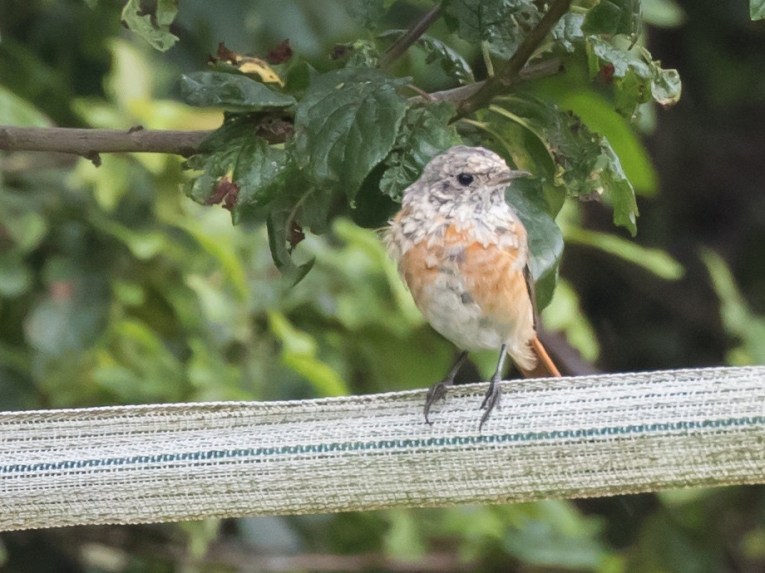
Record numbers of Common Redstarts have been moving through Northamptonshire over the past few weeks, peaking today with a double-figure count at Stanford Reservoir.
It has been an amazing autumn for Common Redstarts, giving rise to speculation that some may have bred locally. While this may have been true for one or two birds at least, there have been too many to account for the odd, out of range breeding pair and with the picture seemingly mirrored nationally, it appears this species has enjoyed a productive breeding season.
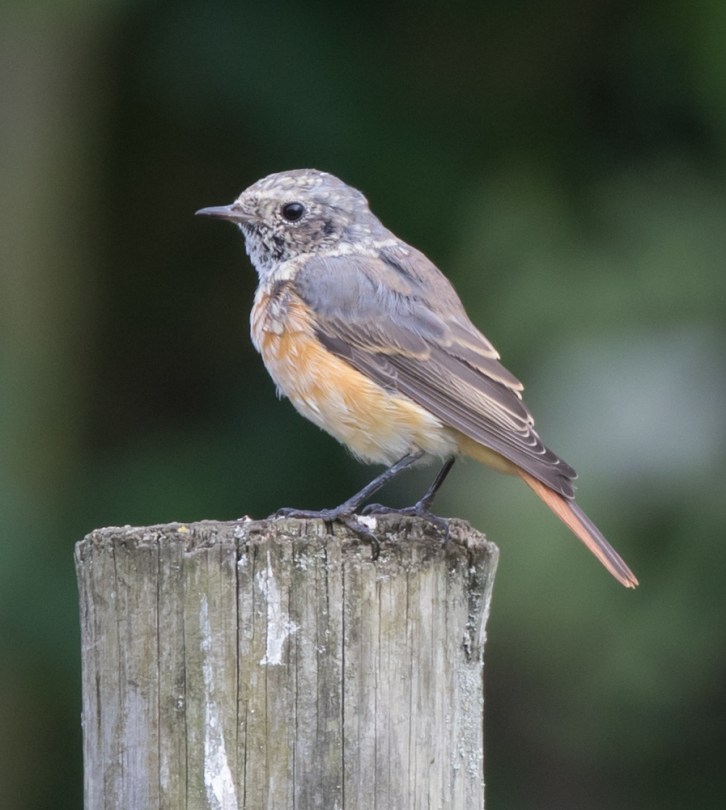
Apart from single males at Moreton Pinkney on 22nd June and at Lamport on 26th June, the first record of the autumn came from Arbury Hill, west of Badby, where an adult and a juvenile were seen as early as 2nd July, perhaps indicating local breeding. Denton Wood similarly provided views of a juvenile on 11th July, again fuelling speculation of local breeding. What was assumed to be the same bird was seen there again on 18th July and from 28th July through to 1st August and again on 10th and 17th August. It was a male and the fact that its post-juvenile moult had steadily progressed each time it was seen would indicate it was the same individual throughout.
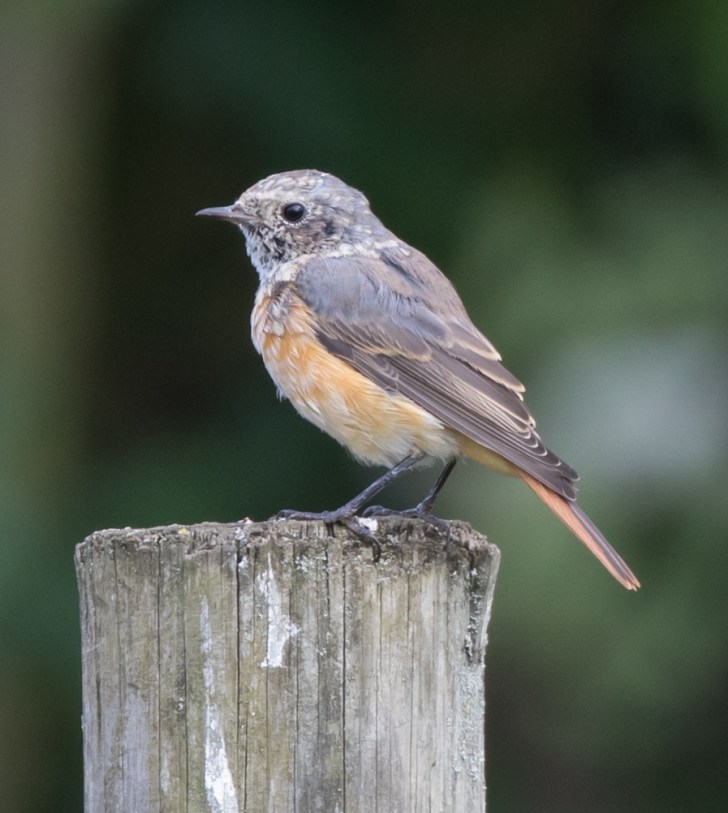
Juvenile male Common Redstart, Denton Wood, 11th July 2019 (Steve Brayshaw).Juvenile male Common Redstart, in moult to first-winter, Denton Wood, 28th July 2019 (Steve Brayshaw).Juvenile male Common Redstart, in moult to first-winter, Denton Wood, 1st August 2019 (Steve Brayshaw)First-winter male Common Redstart, Denton Wood, 17th August 2019 (Steve Brayshaw)
Following the Denton Wood bird, there have been approximately 43 records, accounting for something like 80 individuals. What an autumn! Here are some of those birds.
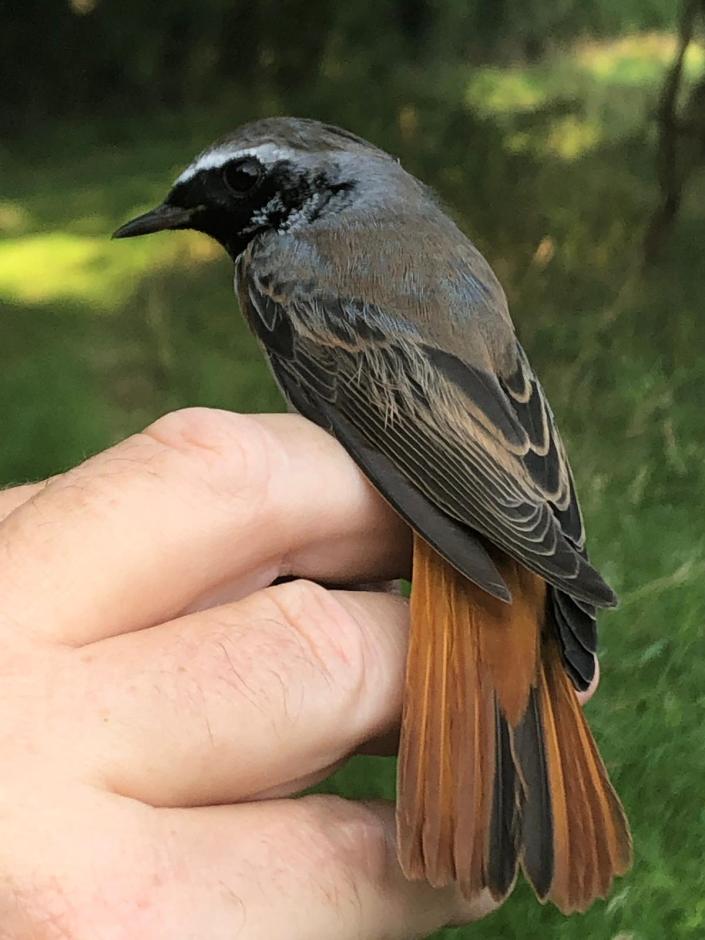
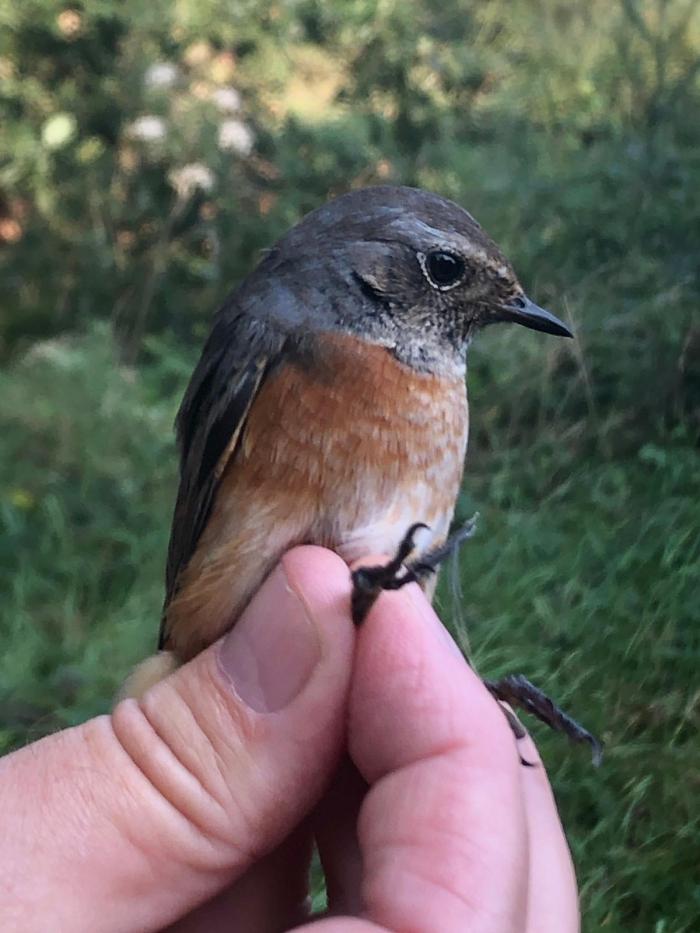
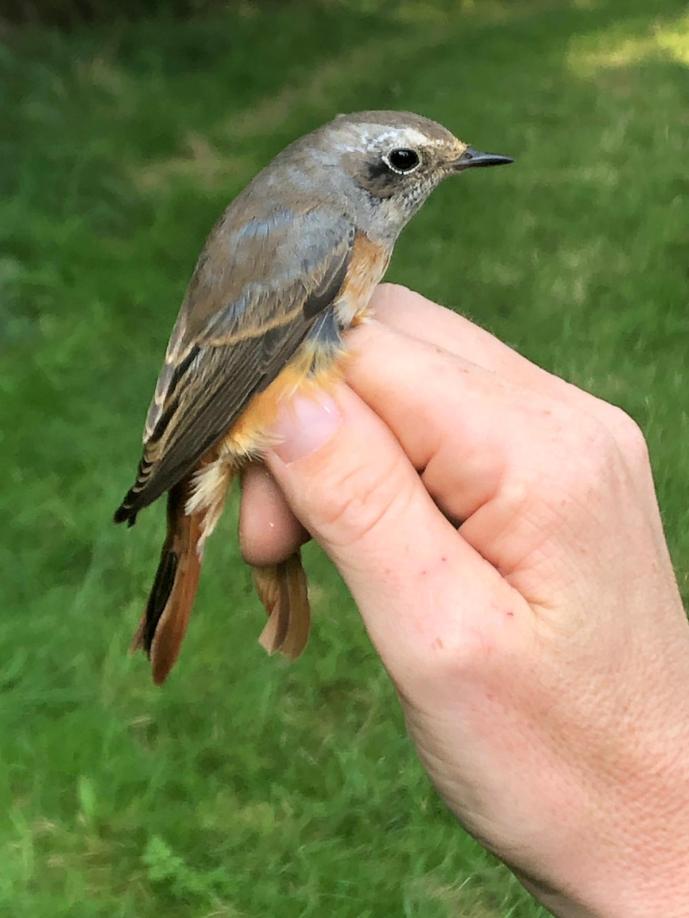
Adult male Common Redstart, Stanford Res, 27th August 2019 (Chris Hubbard). Largely black face with prominent white supercilium, combined with greyish-fringed greater coverts age this as an adult male.Adult male Common Redstart, Stanford Res, 27th August 2019 (Chris Hubbard)Male Common Redstart, presumed first-winter, Stanford Res, 27th August 2019 (Chris Hubbard). Rather dull black facial area with considerable white flecking, along with obscure supercilium point to first-winter.First-winter male Common Redstart, Stanford Res, 27th August 2019 (Chris Hubbard). Same comments apply as above. Also thickly buff-bordered juvenile greater coverts, with adult-like inner one or two grey-edged feathers age this bird.First-winter female Common Redstart, Stanford Res, 27th August 2019 (Chris Hubbard). A tricky one to age. Looks like an adult but the ringers have aged it as a first-winter.First-winter female Common Redstart, Stanford Res, 27th August 2019 (Chris Hubbard)Male Common Redstart, probably first-winter, Harrington AF, 25th August 2019 (Alan Coles)
With the Atlantic jetstream further north this week, the weather remained largely dry, bright and breezy, on the back of a predominantly west to south-westerly airflow. Topping the bill was a ‘wrecked’ Shag in Weedon, otherwise it was business as usual …
As wildfowl are still a little thin on the ground at present, the first-summer female Ruddy Shelduck continued to keep things afloat at Hollowell Res, as did Stanford’s eclipse drake Garganey, now into its fifth week on site. At least one Red-crested Pochard remained at Pitsford Res until 19th.
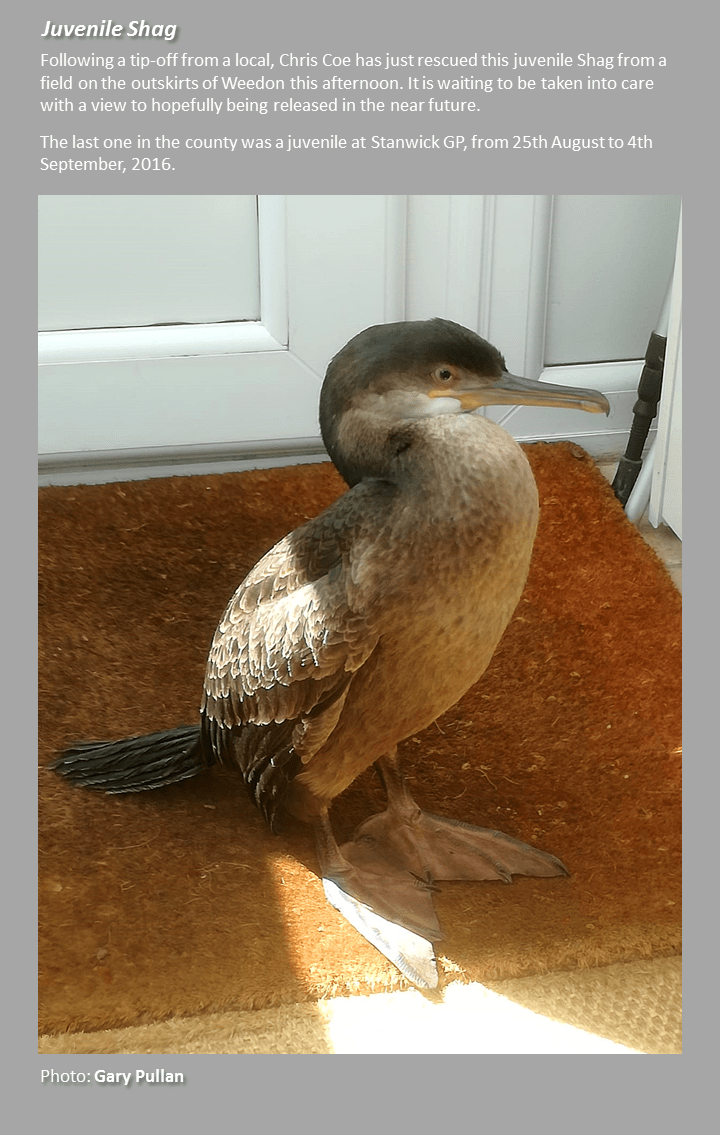
A juvenile Shag picked up on the outskirts of Weedon on 20th was a bizarre find indeed as this species is not prone to becoming grounded inland like other birds more traditionally associated with a maritime environment. Said to have been in good physical condition, it was thought to be diseased and was taken into professional care, with the aim of recovery prior to its release in the near future.
Juvenile Shag, in captivity, Weedon, 21st August 2019 (Gary Pullan)
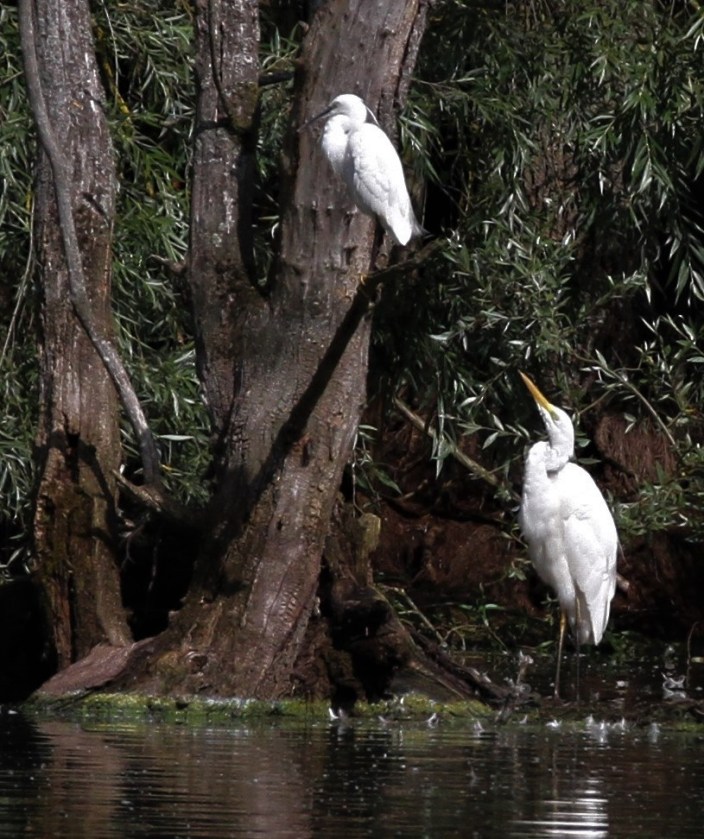
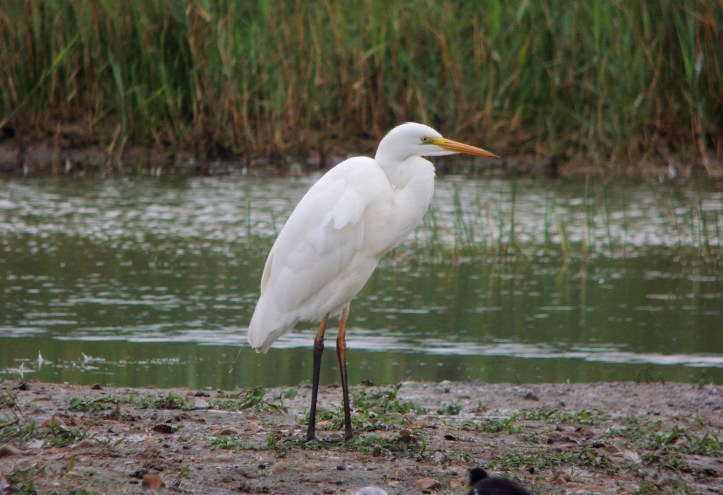
Cattle Egrets continued to be seen daily at Stanwick GP with, as last week, the maximum being six – three adults, three juveniles – on 18th. Moving up the rare egret size scale, single Great Egrets were again on the scrape at Summer Leys from 18th-23rd and at Pitsford Res on 19th.
Great Egret, Pitsford Res, 19th August 2019 (Alan Coles)
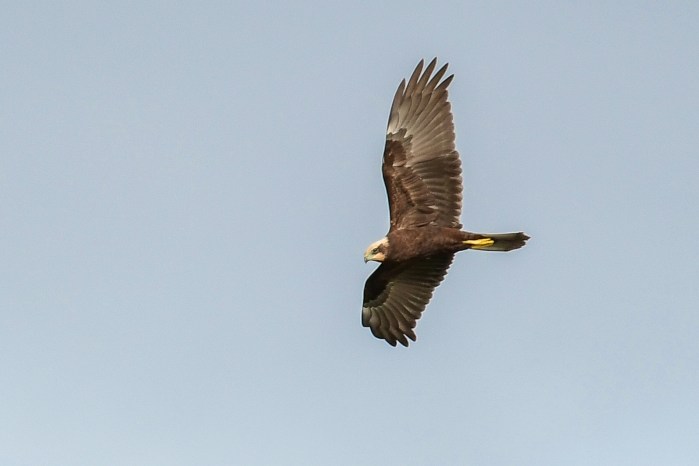
Pitsford was also one of only two sites to yield Ospreys this week, with two there on 18th followed by singles on 20th and 22nd, while singles were at Hollowell on 17th and 23rd. Pitsford also produced another Marsh Harrier – a juvenile on 18th.
Juvenile Marsh Harrier, Pitsford Res, 18th August 2019 (Duncan Cookson)
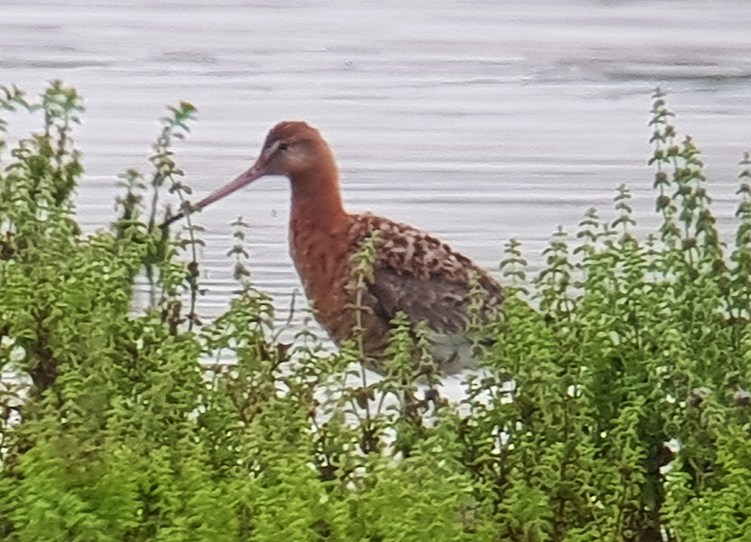
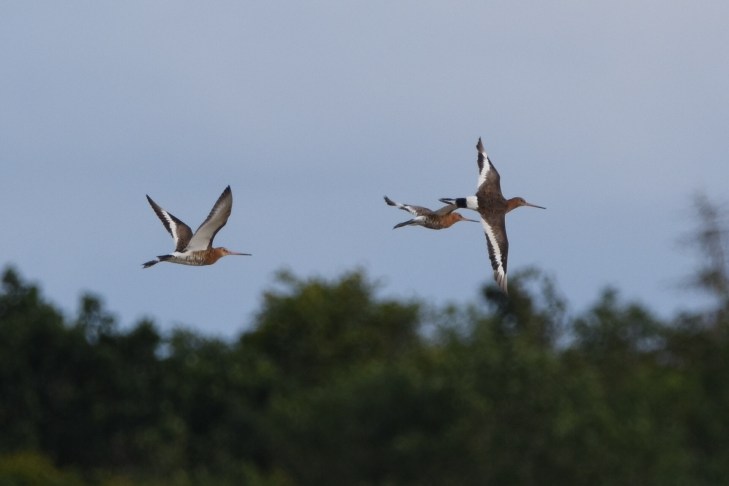
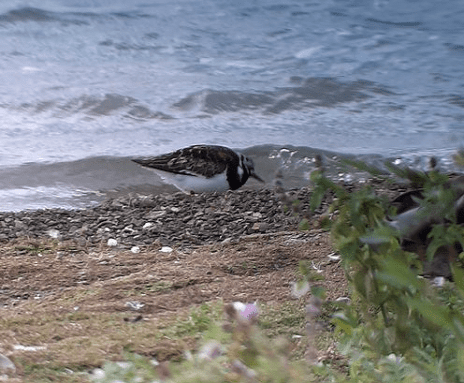
Five species of waders this week was less than impressive, as were their low numbers. In this respect, a solitary Whimbrel flew south at Daventry CP on 19th and single Black-tailed Godwits were found at Summer Leys on 18th, Ravensthorpe Res on 19th and Clifford Hill GP on 22nd. The Thrapston Turnstone hung on until 18th, a Greenshank visited Summer Leys on 22nd and five were at Hollowell res on 23rd.
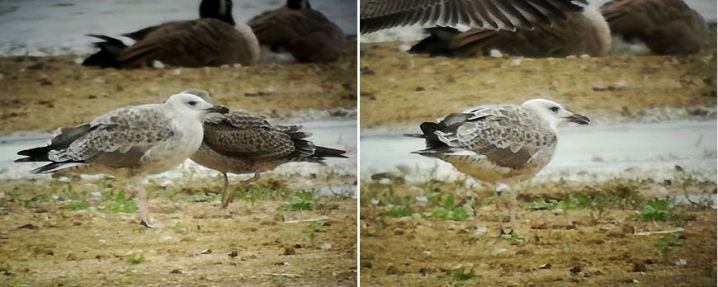
Second calendar year Caspian Gull, Ravensthorpe Res, 19th August 2019 (John Moon)
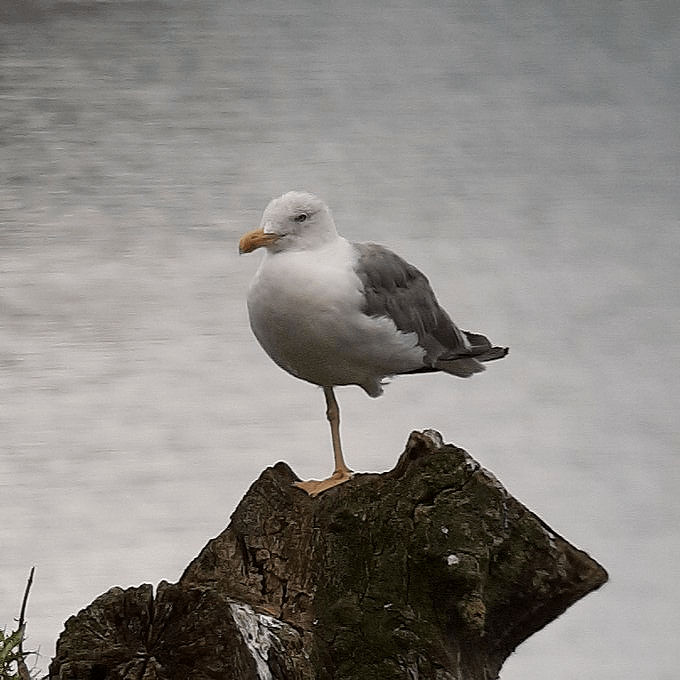
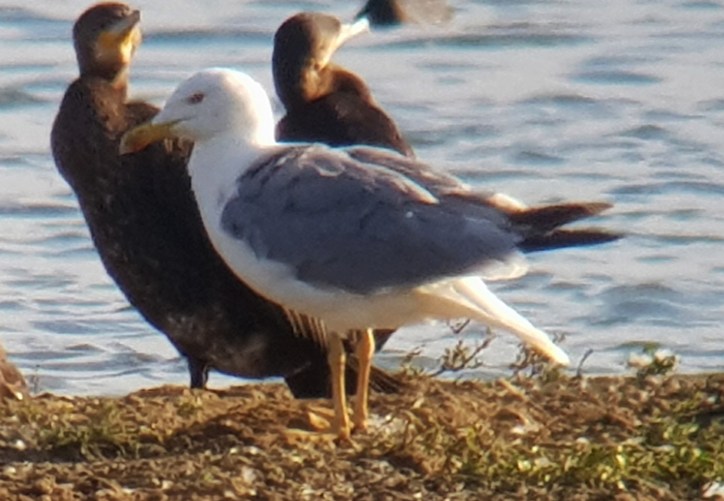
Gulls, too, were lower in numbers. Again, the only two Caspian Gulls this week were a second calendar year at Ravensthorpe Res on 19th and a juvenile at Daventry CP the following day. Similarly, there were only low, single-figure counts of Yellow-legged Gulls, comprising one at Hollowell on 17th, two at Daventry on 19th, three at Ravensthorpe on 21st with one on 23rd and one at Hollowell Res on 23rd.
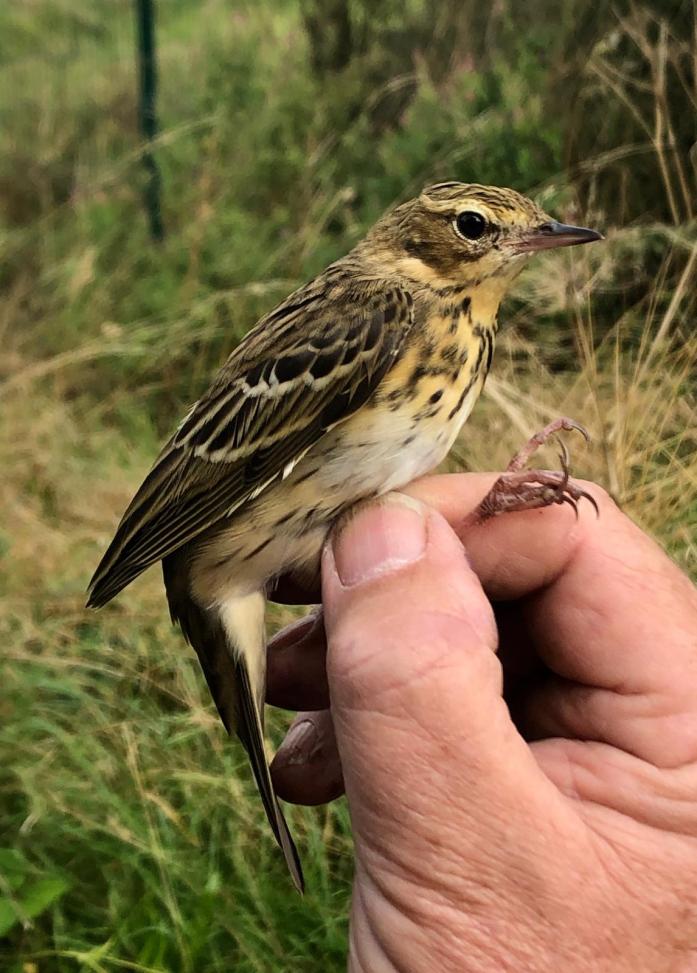
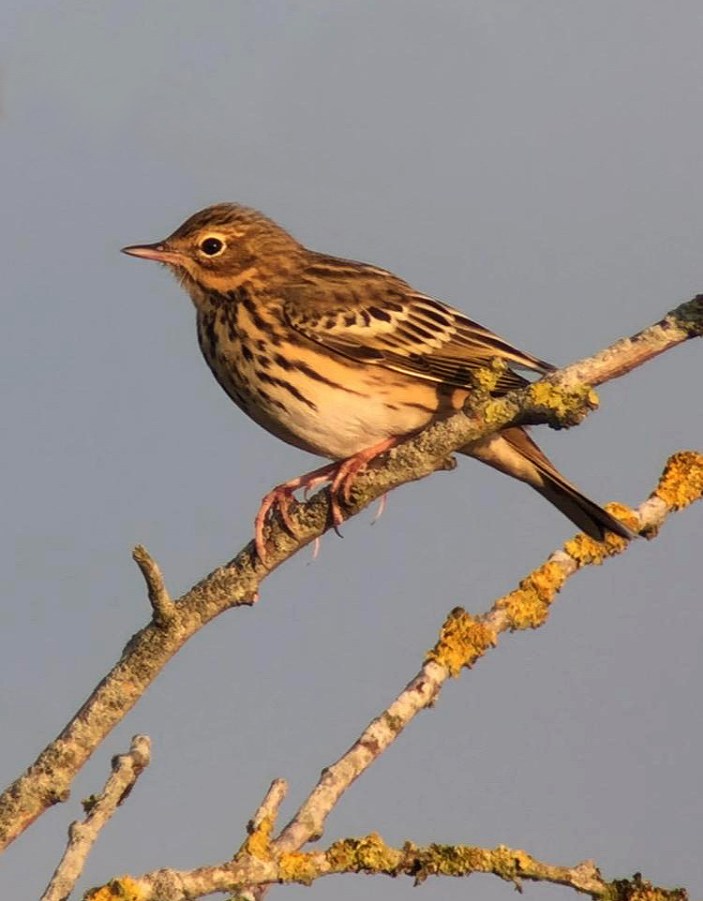
Tree Pipit, Stanford Res, 20th August 2019 (Chris Hubbard)Tree Pipit, Stanford Res, 22nd August 2019 (Chris Hubbard)
On the passerine front, it’s been a great week for Tree Pipits, with the lion’s share at Stanford Res, where one was trapped and ringed on 20th, two flew over and one was on the deck there on 21st and another was present the following day. Elsewhere, one was in the Brampton Valley below Hanging Houghton on 22nd and two were on Borough Hill on 23rd. Common Redstarts were down a little on last week’s total but a first-winter male was again at Denton Wood on 17th, two were at Fawsley Park on 18th and singles were at Blueberry Farm, Maidwell on 18th and 22nd.
First-winter male Common Redstart, Denton Wood, 17th August 2019 (Steve Brayshaw)
Whinchats, to, were also a little more in evidence, with up to four at Blueberry Farm between 18th and 22nd and singles at Borough Hill on 19th and Stanford Res on 21st. By contrast, only one Northern Wheatear was found – this being near Chapel Brampton on 21st-23rd, while four Crossbills were reported in the Brampton Valley on 22nd.
A series of Atlantic low pressure systems, moving rapidly east, delivered below average temperatures, unseasonally strong winds and some hefty bouts of rain during the week. There were also some great birds to be had – including a fifth for Northamptonshire – if you were one of the lucky few …
Having been around for several weeks, the first-summer female Ruddy Shelduck remained at Hollowell Res, although with others appearing in at least a dozen – principally east coast – counties, including a flock of eight in Northumberland, on a national level, arguably, it’s no longer alone.Stanford’s eclipse drake Garganey continued its stay throughout the week and another visited Pitsford Res on 12th, when the three drake Red-crested Pochards were also still present there. In the Nene Valley, a drake Common Scoter was found at Clifford Hill GP on 11th, remaining there until the next day.
Garganey, Pitsford Res, 12th August 2019 (Nick Parker)
Representing a potential last chance saloon for those still hoping to catch up with one this year, another illusive Common Quail was reported, this time from Fawsley Park, on 12th, continuing on the now generally established theme of ‘hear today, gone tomorrow’ for the species this year. Well, for ‘tomorrow’, read ‘immediately afterwards’, in these particular instances …
Juvenile Cattle Egret, Stanwick GP, 11th August 2019 (Steve Fisher)
More positive news came on the Cattle Egret front as the juveniles from the Ringstead family fledged this week, making their way, without delay, to Stanwick’s Main Lake to do what Cattle Egrets do around cows. The maximum seen together there at any one time was six, on 14th. Elsewhere, single Great Egrets did their best to enliven Pitsford on 10th-11th and Summer Leys on 12th-13th.
Great Egret, Summer Leys LNR, 13th August 2019 (Ray Seagrove)
In stark contrast to last week, there was a distinct lack of Ospreys during the period, with just two reported – a juvenile at Pitsford on 11th and an adult at Hollowell two days later, on 13th. More than making up, though, two Marsh Harriers were seen – one at Boddington Res on 11th, the other at Blueberry Farm (Maidwell) on 13th.
On the wader front this week, if the breadth of species couldn’t have been better, then the depth surely should have been, with just single birds representing each species in most instances, kicking off with six Black-tailed Godwits at Stanwick on 14th. A Turnstone arrived at Thrapston GP on 11th and remained all week while, back at Stanwick, a Ruff arrived on 10th, staying three days until 12th.
Turnstone, Pitsford Res, 11th August 2019 (Nick Parker)
Following in the footsteps of the previous two this autumn, a Spotted Redshank dropped in for a late evening stop-off at Summer Leys on 12th but it had made a hasty departure by early the following morning. Single Greenshanks showed up at Pitsford on 11th-12th and at Stanwick on 11th and 15th.
A Little Gull – the first since the spring rush – was in the gull roost at Pitsford on 13th and a juvenile Mediterranean Gull was there the following day but the only two Caspian Gulls this week were confined to Ravensthorpe Res, where there was an adult on 12th, followed by a second-year on 16th. Single-figure counts of Yellow-legged Gulls came from Hollowell, Pitsford, Ravensthorpe and Stanwick, with a maximum of nine at Pitsford on 13th.
Adult Yellow-legged Gull, Pitsford Res, 12th August 2019 (Nick Parker)Second calendar year Caspian Gull, Ravensthorpe Res, 16th August 2019 (Gary Pullan)
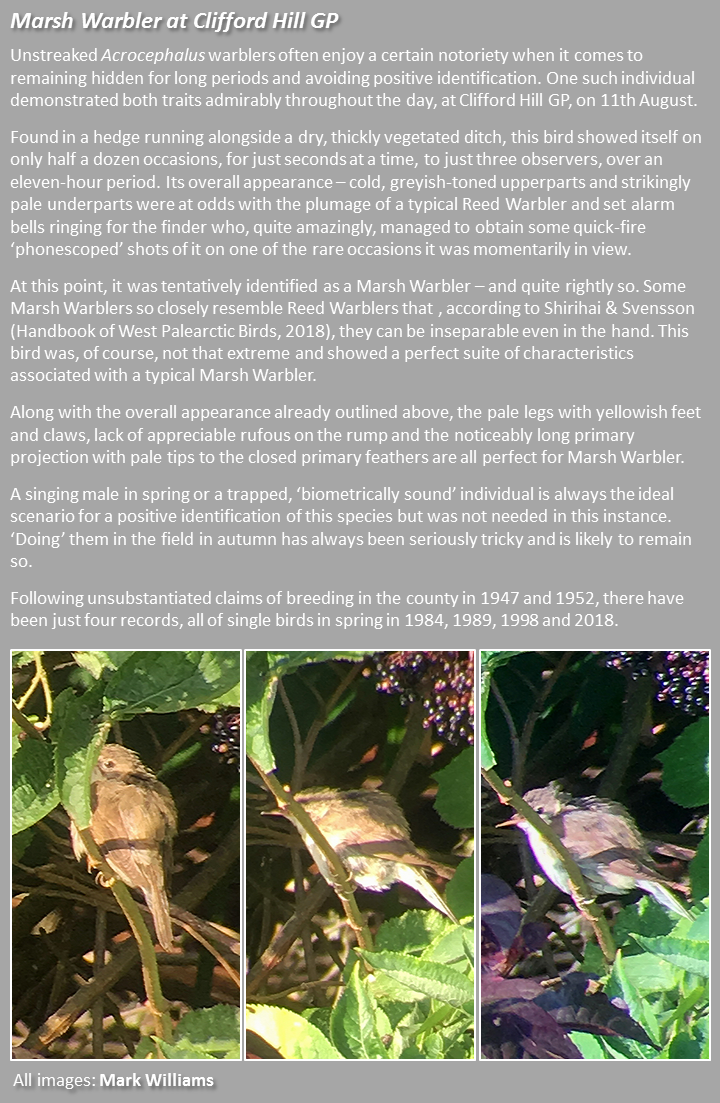
With perhaps no more than half a dozen breeding pairs in the UK now, Marsh Warbler will always be a difficult bird to catch up with in Northants but at least for some, Clifford Hill GP delivered this week.
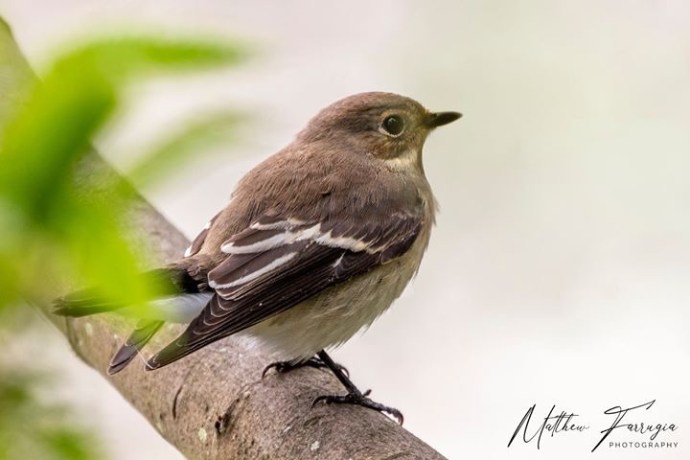
Although not quite on the same rarity scale as the above, though arguably a damn sight better looking, a crisp-plumaged, first-winter Pied Flycatcher was found at Barnwell CP on 11th. This is only the second in Northamptonshire this year, following one in spring, at Barton Seagrave, on 16th April.
First-winter Pied Flycatcher, Barnwell CP, 11th August 2019 (Matthew Farrugia)
Numbers of Common Redstarts picked up again this week, with up to two at Blueberry Farm on 11th-13th, followed by singles at Fleetland Farm, Duston (Northampton) and Twywell Hills & Dales on 12th, Pitsford Res on 13th and Ditchford GP on 16th, while at least two Whinchats were still at Blueberry Farm between 11th and 13th.
Northern Wheatear, Pitsford Res, 11th August 2019 (Ant Hall)
Hot on the heels of the autumn’s first Northern Wheatears, last week, came up to eight more, with singles at Pitsford Res on 11th and 14th, three at Fleetland Farm and two at Harrington AF on 13th and one at Clifford Hill GP on 15th. Hopefully, there will be many more to come before the autumn’s out.
Under the influence of standard westerlies off the Atlantic, the weather remained largely settled before delivering an avalanche of gales and rain at the week’s end. Some fairly standard early autumn fare was on offer throughout the period.
Having clearly developed itchy feet, the first-summer female Ruddy Shelduck flipped from Hollowell Res to Ravensthorpe Res on 3rd and was back at Hollowell on 6th-8th before returning to Ravensthorpe on 9th.
Stanford’s eclipse drake Garganey remained until at least 5th and two of last week’s three on Titchmarsh LNR, at Thrapston GP, were seen again on 4th, while the continued presence of up to three drake Red-crested Pochards at Pitsford Res came as little surprise.
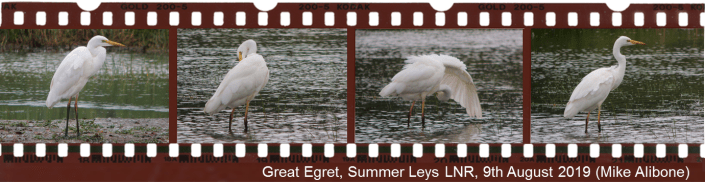
Ringstead GP’s four juvenile Cattle Egrets were still on site mid-week, while the three adults continued to feed with the local herd in the vicinity of Main Lake at nearby Stanwick. After a blank week, a Great Egret at least brought some interest to Summer Leys’ scrape between 7th and 9th, while the escaped Sacred Ibis with a penchant for visiting village gardens, dropped into one briefly at Nether Heyford on 4th.
Great Egret, Summer Leys LNR, 9th August 2019 (Ricky Sinfield)Great Egret, Summer Leys LNR, 9th August 2019 (Mike Alibone)
Back at Pitsford, a Black-necked Grebe was present in Scaldwell Bay for the afternoon of 8th but provided no joy for those searching for it the following day. There have been numerous August records from said bay at Pitsford over the years but they have tended to occur much closer to the month’s end.
This week there were Ospreys aplenty, with Pitsford producing the lion’s share, including two on 3rd, two – if not three – on 5th and singles on 6th, 8th and 9th. Elsewhere, singles visited Thrapston GP on 3rd, Hollowell on 3rd and 8th and the pool at Harrington AF on 6th, the same date upon which a female or juvenile Merlin was at Stanwick GP.
This week’s wader line-up was not as impressive as last week’s but migration continued with 9th producing single Black-tailed Godwits over Daventry CP and at Pitsford, a Whimbrel over Stanwick on 4th, a Turnstone at Summer Leys on 8th and a Ruff at nearby Ditchford GP’s IL&M the following day. Greenshanks showed up at Pitsford on 5th and 9th and also at Summer Leys on the latter date, while single Wood Sandpipers were found at Stanwick GP on 8th and 9th and at Summer Leys on 9th, only one of which stuck around long enough to be seen by observers other than the finder.
Greenshank, Summer Leys LNR, 9th August 2019 (Mike Alibone)
More juvenile Mediterranean Gulls appeared this week, three in all, comprising singles at Pitsford on 6th and 9th and at Daventry CP on the latter date. Ravensthorpe Res hung on to its adult Caspian Gull until 4th, while small numbers of Yellow-legged Gulls were found at Daventry, Hollowell, Pitsford, Ravensthorpe Thrapston and Stanwick, with a maximum of seven at the latter site on 4th.
Hot on the heels of the autumn’s first Tree Pipit, at Harrington AF last week, the same site delivered another one six days later, on 8th. These two are both two to three weeks earlier than normal and it’s interesting that coastal watchpoints (e.g. Portland) are also noting early departing migrants of this species. Fewer Common Redstarts were recorded this week, with just one at Harrington AF on 3rd-4th and another hanging on at Twywell Hills & Dales between 5th and 8th, while at least two Whinchats were still at Blueberry Farm, Maidwell on 3rd and the first Northern Wheatears of the autumn appeared on 9th, with singles at Hollowell and near Pitsford village.
With the previous week’s heat ebbing away, the country became under the influence of something more readily associated with British summertime: rain. The first two days saw plenty of it and the weather system responsible also had a dramatic effect on migrants, with many appearing far earlier than is normal.
While acknowledging the continued presence of the first-summer female Ruddy Shelduck at Hollowell Res, this week there were other ducks on offer to dazzle and delight … perhaps. Stanford’s eclipse drake Garganey remained throughout and this species’ ranks were swelled further by the discovery of first one, then two, then three on Titchmarsh LNR at Thrapston GP before the week was out.
Eclipse drake Garganey, Stanford Res, 31st July 2019 (Chris Hubbard)
Pitsford’s two drake Red-crested Pochards were still in situ at the northern end on 1st-2nd but south of the causeway up to five drake Common Scoters were found on 28th – perhaps associated with the adverse weather conditions prevailing on that date.
Looking as if they are now on the verge of vacating their nest at Ringstead GP, the four juvenile Cattle Egrets were showing a little more bravado, crashing around in the bushes of their island home, while the three adults continued to feed at nearby Stanwick. Meanwhile, a Great Egret was present again at Pitsford on 2nd.
Cattle Egrets, Ringstead GP, 29th July 2019 (Mark Tyrrell)Four juvenile Cattle Egrets, Ringstead GP, 29th July 2019 (Mark Tyrrell)
Back on the menu for early autumn, this week saw two Marsh Harriers in the county, one of which was mobile around the Brixworth/Brampton Valley area between 27th and 31st, while the other was at Stanford Res on 29th-30th. Meanwhile, single Ospreys continued to visit Hollowell on 27th and Pitsford on 30th and 1st-2nd.
But for birds susceptible to weather not conducive to overland migration, the grim conditions of the first two days resulted in some remarkably early and scarce species appearing this week. Waders were the first to fall foul and beyond a Black-tailed Godwit visiting at Stanwick on 27th and 2nd, single Whimbrels appeared there on 28th, at Pitsford on 30th and at Hollowell on 31st. A Sanderling was found at Summer Leys LNR on 28th, another visited Stanwick on the same date and a Ruff was also at Stanwick on the following day. Chief prize among this week’s waders, though, were two juvenile Spotted Redshanks, both of which were incredibly short staying. One dropped into Summer Leys on the evening of 30th and the other was discovered at Stanwick, early in the morning of 1st, before apparently moving on in haste.
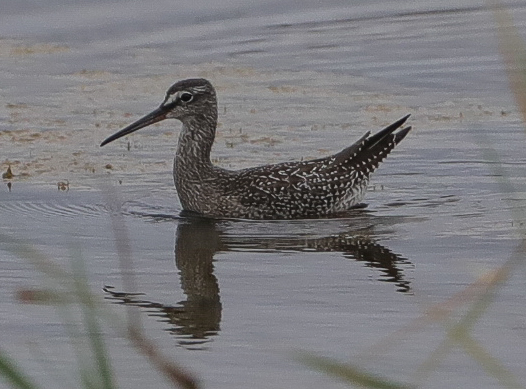
A sprinkling of Greenshanks included singles at both Summer Leys and Ditchford IL&M on 28th, one at Ravensthorpe Res on 31st and at nearby Hollowell on 1st-2nd. A Wood Sandpiper was discovered at Thrapston GP on 27th. While the date is not unusual, the isolation of the record is, as it occurred during an enormous nationwide influx, which included treble-figure counts on the east coast and many birds penetrating far inland. There should have been many more in Northants but it was not to be. Although not in the same league, also noteworthy is the unusually high number of Common Sandpipers which passed through during the week, with Hollowell producing a remarkable twenty on 1st.
And so to the other weather-related arrivals – more specifically, Arctic Terns. Made up of small groups, at least forty of them came through between 28th and 31st, with all but two of these on 28th. What is amazing, however, is that this number included several juveniles, which do not normally occur before September at the earliest. In fact, the occurrence of juvenile Arctic Terns in Northamptonshire in July is probably unprecedented. Location totals for 28th comprise seventeen at Thrapston GP, eleven at Stanford Res, five at Stanwick, at least three at Clifford Hill GP and two at Pitsford. Single juveniles were at Pitsford on 30th and Summer Leys on 31st. Early Black Terns appeared at the same time and on 28th included one at Summer Leys and two at Stanwick, followed by one at the latter locality the next day.
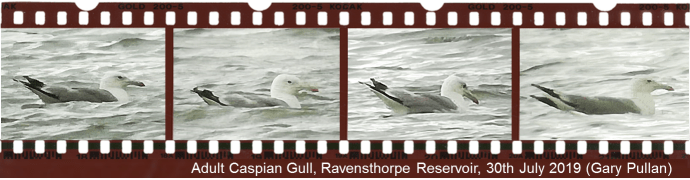
The first juvenile Mediterranean Gull of the autumn was found at Summer Leys on 29th, while numbers of Yellow-legged Gulls continued to rise, with site maxima of ten at Stanwick, five at both Pitsford and Ravensthorpe and singles at Thrapston and Hollowell. This early autumn build-up also came with added Caspian Gulls – a third-summer at Stanwick and an adult at Ravensthorpe on 30th, followed by a first-summer at the latter site on 2nd.
Adult Yellow-legged Gull, Stanwick GP, 29th July 2016 (Steve Fisher)Third-summer Caspian Gull, Stanwick GP, 30th July 2019 (Steve Fisher)
Aside from the autumn’s first Tree Pipit, at Harrington AF on 2nd, there have already been higher than usual numbers of migrant Common Redstarts so far in July and even more were added to the tally during the period. It’s difficult to know if their occurrence was weather-related but it must have at least been an influencing factor to some degree. Up to two were in the Brampton Valley/Blueberry Farm area throughout the week, two were at Upper Boddington on 30th, up to three were at Twywell Hills & Dales on 1st-2nd, a juvenile male was at Yardley Chase between 28th and 1st and singles were at Summer Leys on 29th and at Harrington AF between 29th and 31st.
Juvenile male Common Redstart, Denton Wood, 1st August 2019 (Steve Brayshaw)
The Brampton Valley/Blueberry Farm area also produced up to two Whinchats between 28th and 2nd and four Common Crossbills – presumably fly-overs – on the latter date.
Sandwiched between an unusual kink in the North Atlantic Jetstream and a high pressure system to the east, winds for the majority of the week emanated from North Africa and the UK enjoyed its potentially hottest day on record, on 25th, when Northampton hit a sweltering 36°C. Although it appeared to have little local influence on migrants, it no doubt contributed significantly to the continued evaporation at local reservoirs, exposing more muddy margins for waders, ahead of the slowly unfolding autumn passage.
But it was already déjà vu in many respects, with not a great deal of change to the birdscape this week. Still enjoying the company of local Canada Geese, the first-summer female Ruddy Shelduck remained at Hollowell Res, while an eclipse drake Garganey, which arrived at Stanford Res on 23rd, was still present at the week’s end. Pitsford’s two drake Red-crested Pochards once again became three on 24th and another drake was found at Ringstead GP on 21st, remaining there also until 24th.
Eclipse drake Garganey, Stanford Res, 23rd July 2019 (Chris Hubbard)
Cattle Egrets maintained their prominence in the Nene Valley, the trio of adults undertaking multiple commutes daily between their highly favoured herd of cows at Stanwick GP and their nest – this week proven to contain four juveniles – at nearby Ringstead GP. Somewhat overshadowed (and rightly so), two Great Egrets were at Pitsford Res on 23rd, with at least one still present the following day.
Cattle Egret, Stanwick 24th July 2019 (Steve Fisher)
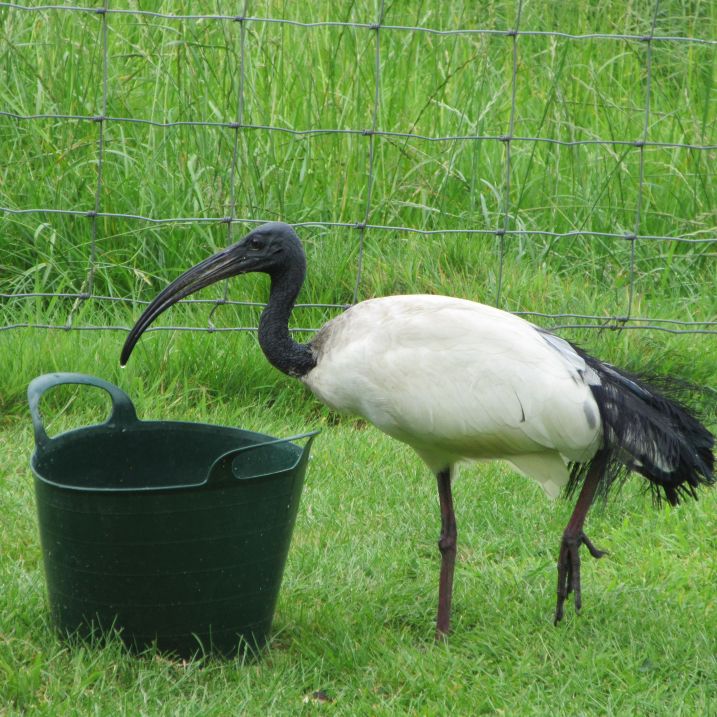
Now mucking in with free-range chickens in a large country garden in north Northants, last week’s Sacred Ibis was said to be enjoying domestic hens’ food, cream crackers, toast and sea sticks – the latter sourced from Heron Foods, no less! Despite the laudable efforts made by the landowner to locate the collection it has clearly escaped from, none of the many contacted has stepped forward to reclaim it. Still present at the week’s end, it looks like it will be around for some time to come but for anyone with this species on his or her bucket list, the nearest truly wild population is in Mauritania.
Sacred Ibis, private site, north Northants, 24th July 2019 (Dot Crowe)
With no records last week, single Ospreys put in brief appearances at Hollowell on 21st-22nd and Pitsford on 22nd.
Set against a backcloth of small numbers of commoner species, wader passage ebbed somewhat during the period, with just two Black-tailed Godwits visiting Stanwick on 23rd and a Greenshank at Stanford Res on 26th.
Meanwhile, as is usual for late summer, numbers of Yellow-legged Gulls began to increase, with up to five at Pitsford and ones and twos regularly at Hollowell, Ravensthorpe and Stanwick.
Adult Yellow-legged Gull, Pitsford Res, 20th July 2019 (Mike Alibone)
Passerines of note this week again featured Common Redstarts, with two at Harrington AF on 24th-26th plus one in the Brampton Valley below Hanging Houghton on 25th and a female Common Crossbill at Ravensthorpe on 26th.
With national weather conditions nothing to shout about, the influence on local migrants was seemingly minimal. Wader passage ramped up somewhat and despite being mid-summer, it was the white stuff that dominated the news this week ….
Not surprisingly, the first-summer female Ruddy Shelduck stayed put at Hollowell Res all week and the two Red-crested Pochards, ensconced in Walgrave Bay at Pitsford Res, remained until at least 16th.
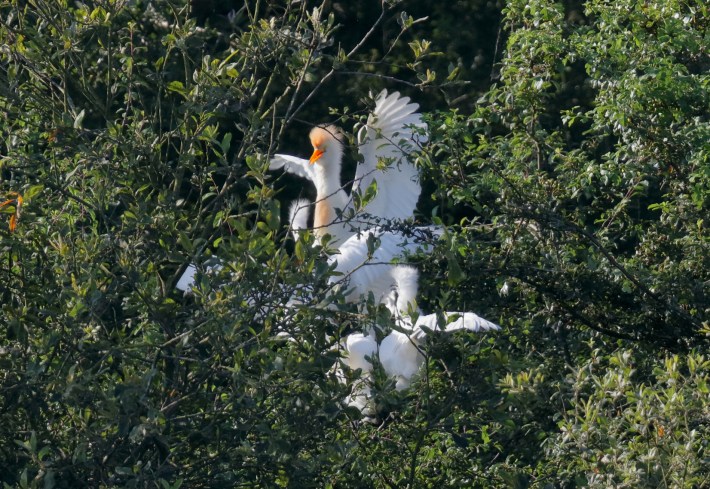
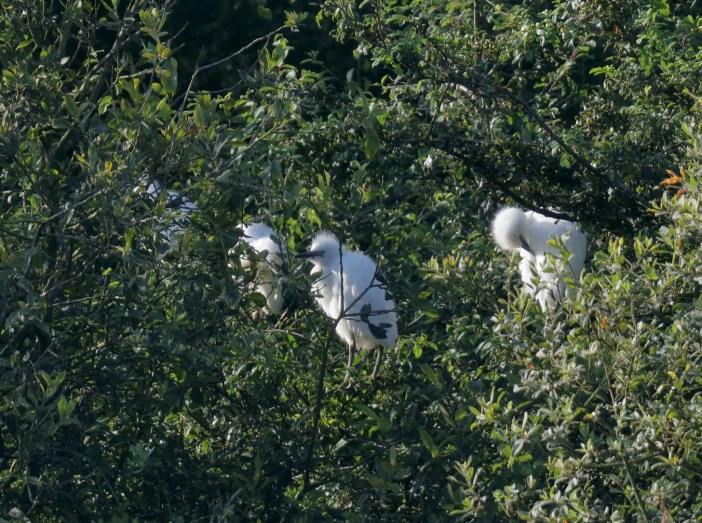
News that Cattle Egrets have bred successfully in the county for the first time became widespread in recent days. Two, possibly three, well-grown young are being raised in a nest attended diligently by the same trio of adults which has been present at Stanwick GP regularly throughout spring and early summer. More details here. Meanwhile, the period’s token Great Egret reappeared at Pitsford Res on 16th but causing rather more excitement, an adult and three immature Spoonbills flew over Stanwick without stopping, late in the afternoon of the 17th, before presumably the same quartet was relocated at Rutland Water the following morning.
Adult (left) and three immature Spoonbills, Stanwick GP, 17th July 2019 (Steve Fisher)
Rounding off the white stuff and presumably of little interest to most local birders, a roaming Sacred Ibis, photographed at Clipston on 3rd July, was again caught on camera as it flew high over both Ravensthorpe Res and Long Buckby on 16th, appearing two days later in a large garden at the latter location. Although a likely escape, a large feral population is established in France and this species breeds no further away than Brittany.
Sacred Ibis, Ravensthorpe Res, 16th July 2019 (Gary Pullan)Sacred Ibis, Long Buckby, 18th July 2019 (via Adrian Bryan)
The heat was turned up a little on this week’s wader passage when three Avocets were found at Clifford Hill GP on 14th and a Whimbrel appeared at Stanwick the following day, while transient Black-tailed Godwits included one at Stanwick on 14th, ahead of three there on 16th, followed by three at Ravensthorpe Res on 18th and two in flight at the same locality on 19th.
Black-tailed Godwit, Stanwick GP, 14th July 2019 (Steve Fisher)Black-tailed Godwits, Ravensthorpe Res, 18th July 2019 (Jon Cook)Black-tailed Godwits, Ravensthorpe Res, 18th July 2019 (Jon Cook)
Summer Leys LNR produced two Ruffs on 17th and more unusually, a very short-staying Little Stint on The Slips there on 14th. Back at Stanwick, single Greenshanks were present on 15th and 17th and two visited Hollowell on 18th.
Thrapston GP has been quiet of late – until the appearance of a Little Tern on Aldwincle Lake for just fifteen minutes on 17th. This is the second record for the site this year, following a similarly short-staying individual on 25th April. Larids this week were restricted to sightings of Yellow-legged Gulls, including the first juvenile of the autumn at Ravensthorpe Res on 19th. Additionally, single adults were at Thrapston on 16th, Stanwick and Ravensthorpe on 16th and at Hollowell and Daventry Res on 19th. Multiples – all on 17th – included two adults on ploughed land at Little Addington, two at Thrapston and four at Stanwick.
Again, the only passerines making it into this week’s report were Common Redstarts, with records including one at Hanging Houghton on 13th, two at Harrington AF on 18th and a juvenile again at Denton Wood on the same date.
It may come as no surprise to many but Northamptonshire now joins Cheshire, Dorset, Devon, Essex, Hampshire and Somerset as counties which have played host to breeding Cattle Egrets in the UK.
Discovered by Steve Fisher on 8th June, an adult apparently incubating eggs, within a mixed Little Egret and Grey Heron colony in the Nene Valley, gave rise to optimism that we were only a few weeks away from seeing successful local breeding.
Cattle Egret, Ringstead GP, 9th June 2019 (Mike Alibone)
Formerly a very rare vagrant, Cattle Egret has become a more regular sight in the UK in recent years, following several large influxes. The first in 2007 saw over 200 arriving throughout Britain and Ireland and resulted in successful breeding in the Somerset Levels in 2008. Another influx in 2016 brought even larger numbers, with further successful breeding in Cheshire in 2017, during which two more colonies were discovered, giving rise to a total of 10 pairs.
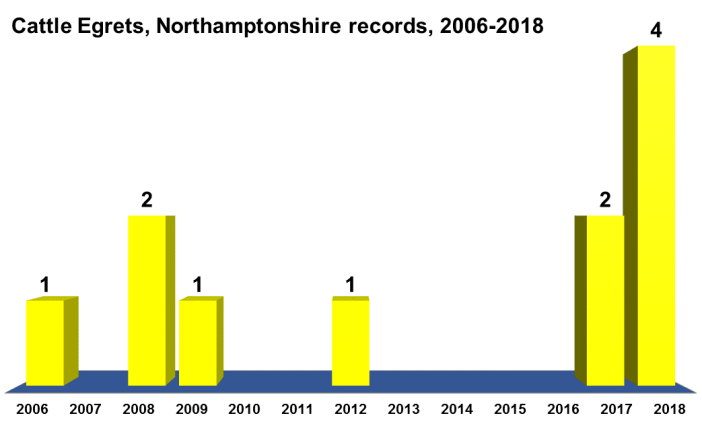
In Northamptonshire, Cattle Egret was first recorded in 2006, when one was present at Summer Leys LNR from 11th to 13th August. Others soon followed and individuals of this species were recorded in five of the twelve years between 2006 and 2017, with the first ‘multiple’ (two together) occurring only as recently as 2018. Up to 4 made a protracted stay at Stanwick GP between mid-October and mid-December 2018, after which singles appeared there and at nearby Ditchford GP in March this year, with 3 adults at Stanwick regularly from late May.
Breeding then followed and after hatching successfully, young were observed in the nest for the first time on 1st July. A week later they were looking significantly bigger and today (17th July) one was standing on the nest, stretching, walking and preening and fledging appears likely within the very near future. Because of the vegetation cover, it is not possible to be certain if there are 2 or 3 young at this point. One adult was in attendance and two more adults – making up the original ‘Stanwick three’ – flew in to join it after being observed with cattle at Stanwick some ten minutes earlier.
Interesting behaviour followed as two of the birds attended to ‘housekeeping’, one of the arrivals passing a stick to the attendant, which then proceeded to add it to the nest platform before breaking off another twig from a nearby bush and repeating the behaviour. According to BWP, both sexes engage in nest-building, the female taking sticks passed to her by the male, one at a time, before putting them in place, with material continually added to the structure during incubation and long after hatching.
Of further interest is that all three adults appear to be involved in the family business, i.e. the breeding pair has a helper, or even a ‘nanny’, if you will. Again, BWPstates that temporary trios of two females and one male are not infrequent at the start of the breeding season but these three appear to have stayed together throughout.
Northamptonshire is not alone in producing a breeding pair in 2019. Others have bred in Hampshire and Essex, away from the initial location in the Somerset Levels.
The information on breeding has now been released on the basis that anyone who wants to see a Cattle Egret will have done so by now. Surrounded by water, the site is largely inaccessible and will therefore not suffer from disturbance, successful hatching precludes the possibility of potential egg-theft and the young will shortly leave the nest. It is also unlikely the site will be used again … but who knows?!
Rapid population growth and range expansion is characteristic of Cattle Egret, which is now probably the most widespread species of bird on the planet, having colonised Europe, the Middle East, and North America from Africa, and Australia from Asia.





 With the Atlantic jetstream further north this week, the weather remained largely dry, bright and breezy, on the back of a predominantly west to south-westerly airflow. Topping the bill was a ‘wrecked’ Shag in Weedon, otherwise it was business as usual …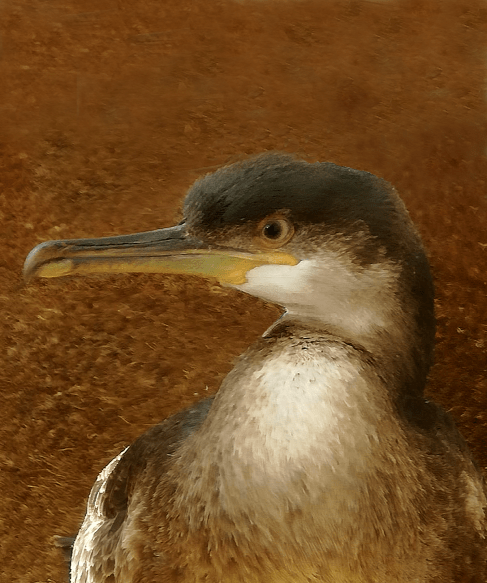


 A series of Atlantic low pressure systems, moving rapidly east, delivered below average temperatures, unseasonally strong winds and some hefty bouts of rain during the week. There were also some great birds to be had – including a fifth for Northamptonshire – if you were one of the lucky few …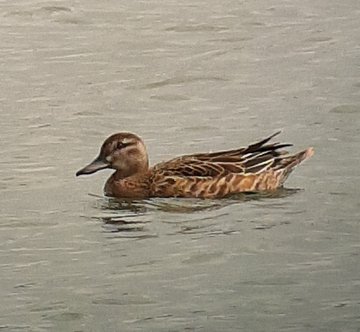




 Under the influence of standard westerlies off the Atlantic, the weather remained largely settled before delivering an avalanche of gales and rain at the week’s end. Some fairly standard early autumn fare was on offer throughout the period.


 With the previous week’s heat ebbing away, the country became under the influence of something more readily associated with British summertime: rain. The first two days saw plenty of it and the weather system responsible also had a dramatic effect on migrants, with many appearing far earlier than is normal.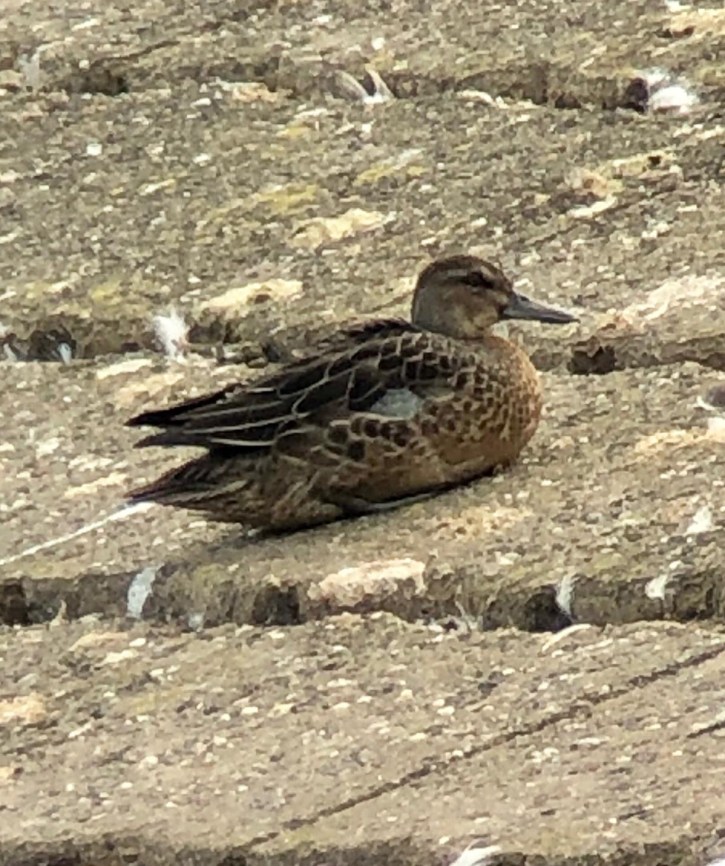

 Sandwiched between an unusual kink in the North Atlantic Jetstream and a high pressure system to the east, winds for the majority of the week emanated from North Africa and the UK enjoyed its potentially hottest day on record, on 25th, when Northampton hit a sweltering 36°C. Although it appeared to have little local influence on migrants, it no doubt contributed significantly to the continued evaporation at local reservoirs, exposing more muddy margins for waders, ahead of the slowly unfolding autumn passage.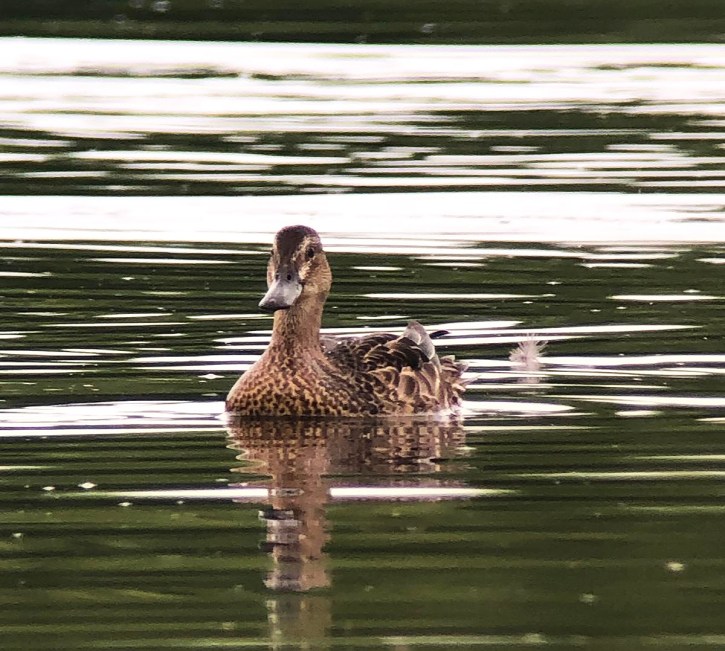


 With national weather conditions nothing to shout about, the influence on local migrants was seemingly minimal. Wader passage ramped up somewhat and despite being mid-summer, it was the white stuff that dominated the news this week ….