Although the period was largely dry, winds from the north-west produced some rain on Saturday, followed by a sunny and relatively warm Sunday, after which it became cooler as north-easterlies set in. In comparison with the previous review period this last week has been rather slow in terms of new arrivals. Ospreys at three sites and a couple of Sanderlings appeared to be the highlights – the migration tap not having been completely turned off but simply left dripping …
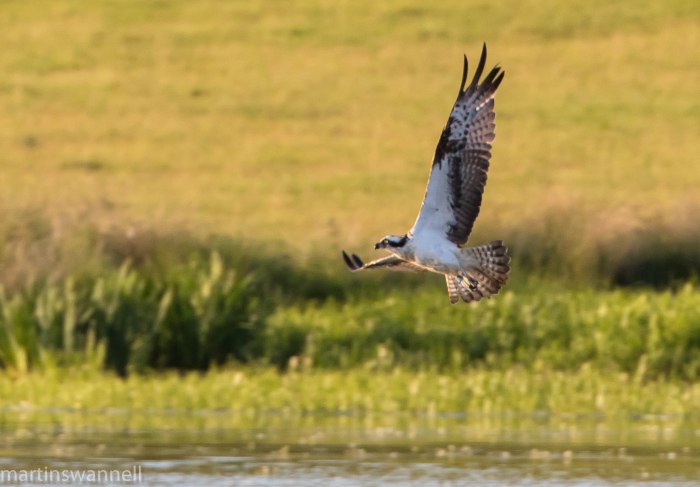
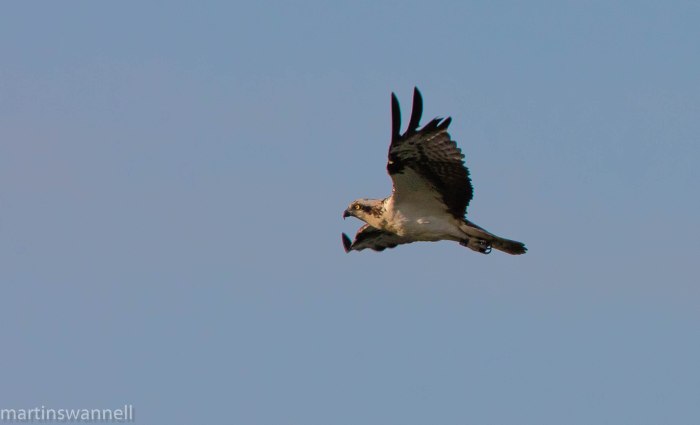
The injured Ruddy Shelduck remained at Pitsford Res, where it was present in the vicinity of the sailing club and the drake Garganey at Stanwick GP was seen again on 23rd. Another Quail was heard at Harrington AF on 22nd and then it was straight into raptors but, with nothing as glam as a Lam to look at, a handful of local birders connected with Ospreys at Stanwick GP on 22nd, at Hollowell Res on 22nd and 24th-25th and at/near Naseby Res on 24th/26th.
Osprey, Hollowell Res, 24th May 2016 (Martin Swannell)Osprey, Hollowell Res, 24th May 2016 (Martin Swannell)
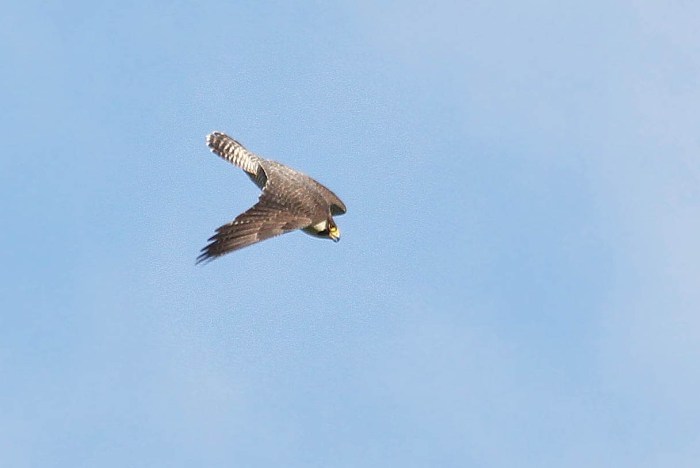
This week’s only Peregrine was an adult at Earls Barton GP on 26th but it’s also worth flagging up that a Barbary Falcon x Gyrfalcon hybrid escaped from an owner at Wellingborough on 23rd and is still on the loose …
Peregrine, Earls Barton GP, 26th May 2016 (Alan Coles)
Peregrine, Earls Barton GP, 26th May 2016 (Alan Coles)
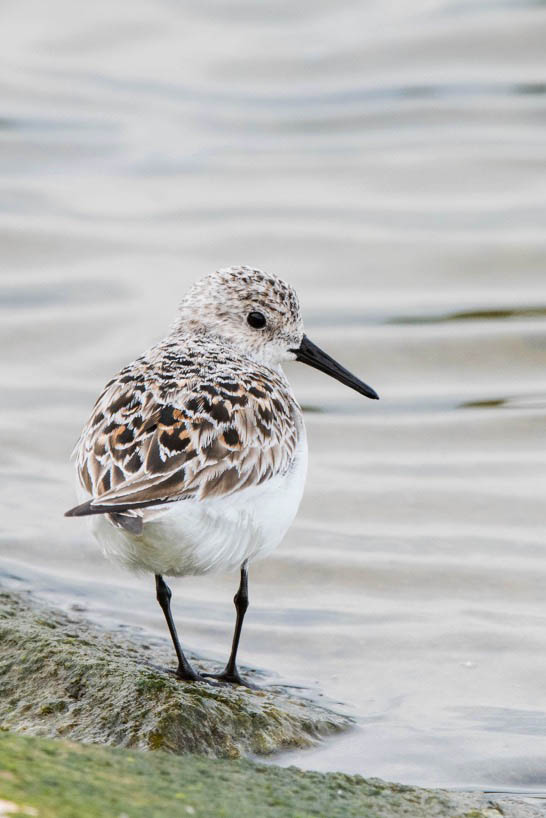
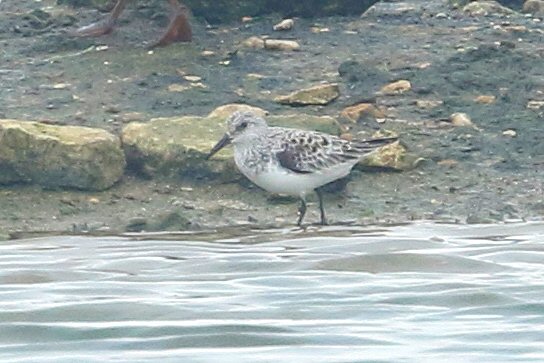
Little Ringed Plovers were reported only from Stanwick GP and Summer Leys, with both sites also producing single Ringed Plovers on 26th and 27th respectively while a Sanderling accompanied the Stanwick individual. More readily accessible and obligingly showy was a Sanderling on the dam at Pitsford Res on 22nd, providing excellent photo opportunities for those who saw it.
Sanderling, Pitsford Res, 22nd May 2016 (Stuart Mundy)Sanderling, Pitsford Res, 22nd May 2016 (Angus Molyneux)Sanderling, Pitsford Res, 22nd May 2016 (Adrian Borley)
There was just one Dunlin this week, at Summer Leys on 27th, but one which didn’t make it into the last round-up is worth a mention for the locality alone – Shelfley’s Lake, West Hunsbury on 15th May – an odd record for suburban Northampton and surely a first for this tiny, mainly tree-lined site. The only other waders this week were the three to four Redshanks present at Summer Leys throughout.
Dunlin, Shelfleys Lake, West Hunsbury, Northampton, 15th May 2016 (Bob Ansell)
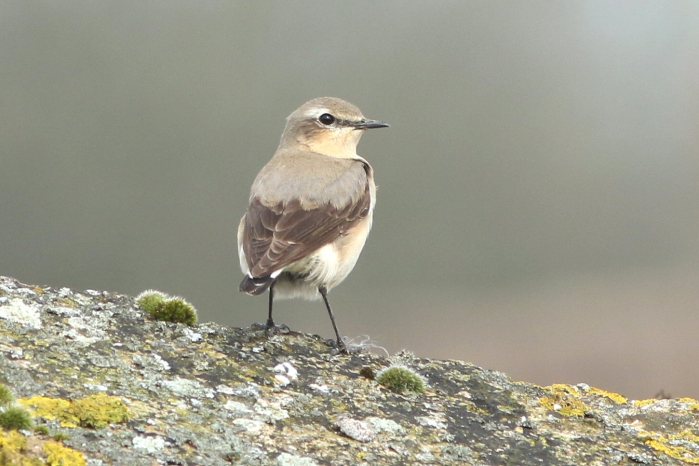
There was no improvement in the Turtle Dove situation during the period with the two still near Newton Bromswold on 19th and two at Harrington AF on 22nd and 26th, while the latter site produced a late Northern Wheatear on the first of these two dates.
The first two weeks of May proved to be particularly rewarding for migration-watchers, the highlight of which occurred during the period 4th to 9th when high pressure over north-east Europe combined with a central European low produced a prolonged spell of south-easterly winds stretching to the UK. These conditions proved conducive to opening the gates for a significant influx of Black Terns while, at the same time, delivering higher than average numbers of waders, both in terms of quantity and diversity. Summer Leys received the lion’s share – primarily as a result of habitat management through the control of water levels. It was also understandably an exceptional period for the spread and proliferation of bird news across the county, with Twitter now seemingly the principal line of communication for much of this. By contrast, the last week of the period was particularly quiet, despite some bouts of overcast and wet conditions towards the end of it, which looked likely to ground a few more migrants. Is it all over? Only the next two weeks will tell …
A late migrant Pink-footed Goose joined the Greylags at Pitsford Res on 14th and was still present the following day and, after an apparent absence, the Ruddy Shelduck returned to the same site on 18th, sadly trailing an injured left wing.
Pink-footed Goose, Pitsford Res, 14th May 2016 (Stuart Mundy)
Seven Garganeys were found, including a pair at Summer Leys LNR on 2nd followed by single drakes there on 5th and 10th and at Stanwick GP on 13th and 20th and Ditchford GP on 15th, while the female Scaup reappeared briefly at Summer Leys on 4th.
Garganey, Summer Leys LNR, 10th May 2016 (Bob Bullock)
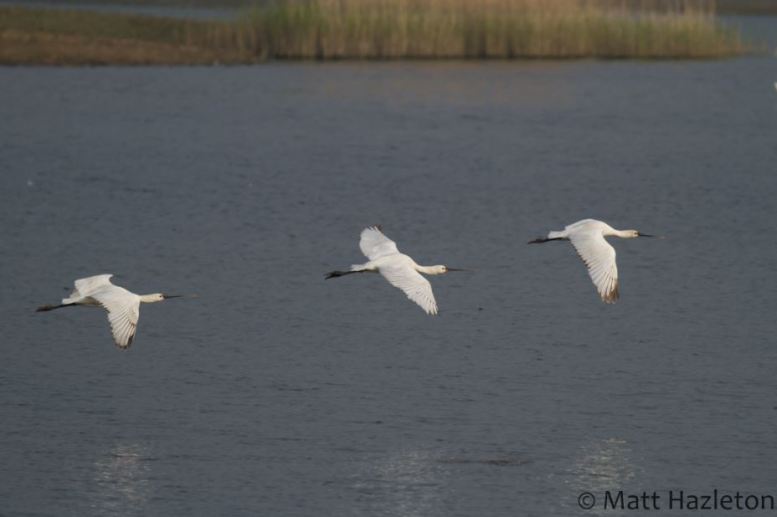
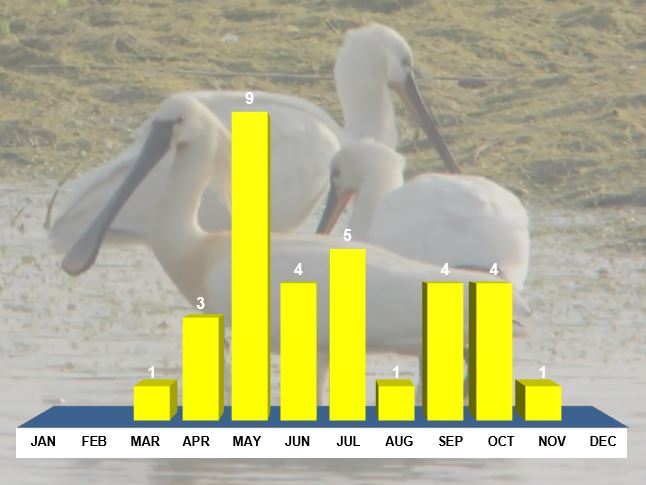
The first Quail of the year was heard at Harrington AF on 2nd, followed by another at Welford Res on 8th. Neither of these lingered beyond their discovery date. Also on the move, a Great White Egret flew over Hardwater Crossing at Earls Barton GP on 5th and, at adjacent Summer Leys, four Spoonbills arrived from the south on the morning of 7th, remaining on the scrape there for only forty-five minutes before heading off north-west – much to the delight of the handful of birders on site at the time. This is only the 33rd record for the county, with the May being the peak month of occurrence.
Spoonbills, Summer Leys LNR, 7th May 2016 (Martin Swannell). Two of the four present.
Four Marsh Harriers were logged during the period, including singles flying high north over East Hunsbury (Northampton) and in the Brampton Valley below Hanging Houghton on 30th, one at Earls Barton GP’s Quarry Walk on 1st followed by another over Hardwater Crossing there the following day.
Ospreys were seen at Hollowell Res on 30th, 2nd, 12th-13th and 17th and one visited Ravensthorpe Res on 1st. Aside from the fifteen records of Hobbies – including ten at Quarry Walk on 12th – the only other raptors of note were single Peregrines in Northampton on 5th-6th and at Summer Leys on 5th and 10th.
One of the period’s highlights – for two observers at least – was the second appearance this spring of Common Crane in the Nene Valley with one flying east at Stanwick GP on 2nd. There have been less than twenty county records in total.
The small passage of Avocets this spring continued with another at Summer Leys on 1st but a remarkable run of waders kicked off at the same locality on 5th with the discovery there of a Grey Plover, which had become three by the next day, these birds remaining until 7th, after which two remained until the following day.
Grey Plover, Clifford Hill GP, 12th May 2016 (Bob Bullock)Grey Plover, Clifford Hill GP, 12th May 2016 (Bob Bullock)
More Grey Plovers were found on floodwater at Braunston on 9th, at Stanwick GP on 9th-11th and at Clifford Hill GP on 10th-12th. Little Ringed Plovers were present at four localities, with a maximum of five at Clifford Hill GP on 10th, while Ringed Plover passage ramped up with possibly as many as seventy scattered across six localities between 1st and 18th, including one flock of twenty-four at Clifford Hill GP on 11th. Several of these were identified as belonging to the ‘arctic’ race tundrae, including four at Harrington AF on 3rd, the same number at Braunston on 9th and one at Stanwick GP on 18th, although many more – if not all – were probably of this subspecies.
Ringed Plover, Pitsford Res, 12th May 2016 (Martin Swannell)
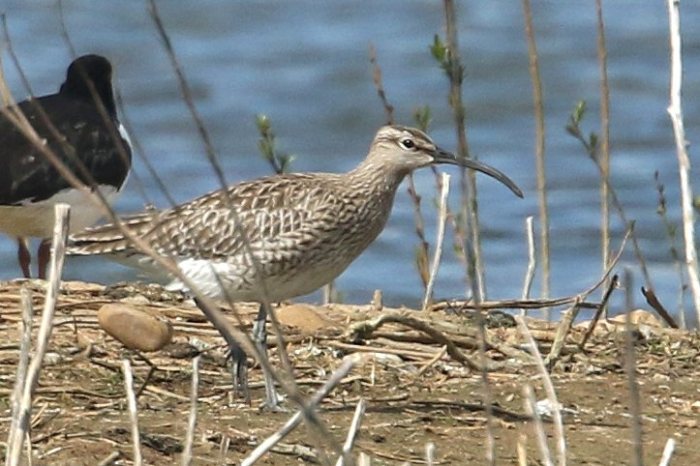
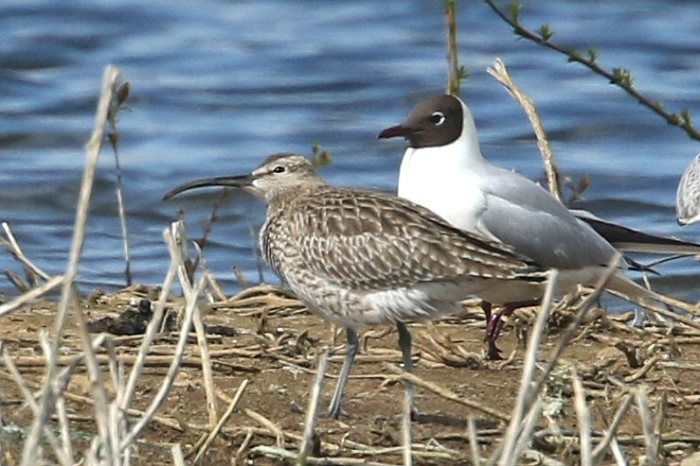
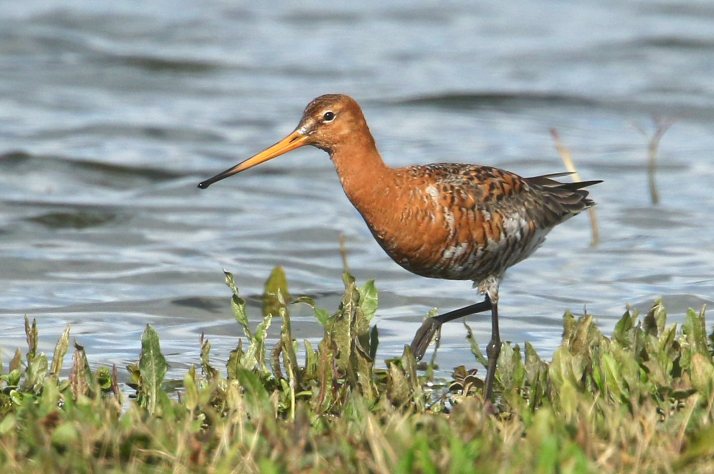
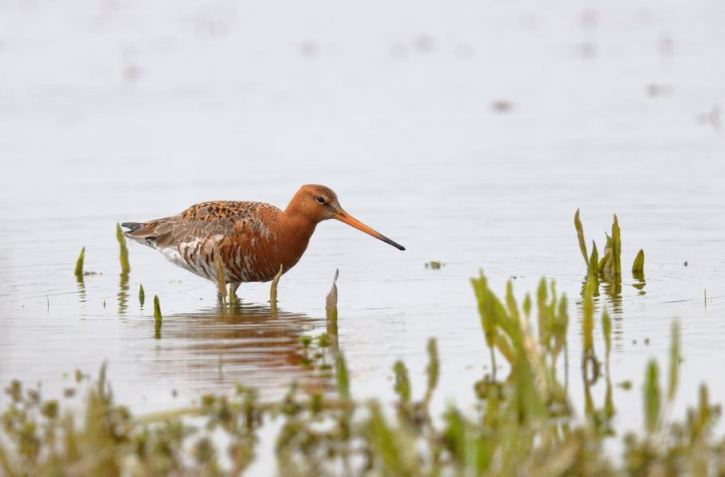
There were few Whimbrels by comparison, with one lingering at Summer Leys between 30th and 6th followed by five there on 10th, three were at Stanwick GP on the latter date and singles visited Stanford Res on 11th and Clifford Hill GP on 15th. Just one Curlew was reported during the whole of the period – one at Stanford Res on 6th. After the recent record-breaking flock of Black-tailed Godwits at Summer Leys, five there on 30th followed by one on 4th seemed meagre by comparison; one also visited Stanwick GP on 1st. Bar-tailed Godwits have been scarce this spring and, if we disregard the unconfirmed report of a flock of forty-six over Aldwincle on 10th, there was just one at Stanwick GP on the same date with two there the next day and two at Clifford Hill GP on 11th-12th.
Male Bar-tailed Godwit, Clifford Hill GP, 12th May 2016 (Bob Bullock)Female Bar-tailed Godwit, Clifford Hill GP, 12th May 2016 (Bob Bullock)
Turnstones put on a reasonable show, however, with singles visiting Stanwick GP on 2nd and 9th, two there on 11th and four on 12th, while Summer Leys produced two on 10th, four on 11th and two on 13th-14th. Elsewhere, two visited Pitsford Res on 10th and one was at Clifford Hill GP the following day.
Turnstone, Stanwick GP, 12th May 2016 (Bob Bullock)
Only one site produced any Ruff and that was Summer Leys, where up to four were present between 4th and 13th, including a rather black-looking male.
Ruff, Summer Leys LNR, 10th May 2016 (Bob Bullock)
The waders continued with the first of the few migrant Sanderlings being found on Pitsford Res dam on 10th, followed the next day by two at Stanwick GP and singles at Clifford Hill GP and Summer Leys. On 12th one remained at Stanwick and another was there on 16th and a different individual arrived two days later on 18th.
Sanderling, Stanwick GP, 12th May 2016 (Bob Bullock)
Dunlins were also on the move with a total of at least seventy-four birds spread across six sites and records almost daily until 16th. Double-figure counts came from Summer Leys, where there were ten on 4th, Clifford Hill GP, with twelve on 10th and Stanford Res, where thirteen were counted the following day.
Dunlin, Pitsford Res, 30th April 2016 (Jacob Spinks)
At least sixty Common Sandpipers were recorded across fourteen localities with a maximum of nine at Clifford Hill GP on 11th, while a rather late Green Sandpiper was found at Ditchford GP’s Irthlingborough Lakes and Meadows reserve on 7th. One or two Spotted Redshanks were reported over the three-day period 6th to 8th at Summer Leys, with the same site holding up to two Greenshanks between 1st and 8th. Other Greenshanks were at Braunston on 10th, at Stanwick between 10th and 17th (with a maximum of six on 13th) and at Ditchford GP, where four were present on 14th-15th. The scrape at Summer Leys produced another Wood Sandpiper from 6th to 8th, while another visited Stanwick briefly on the latter date.
Wood Sandpiper, Summer Leys LNR, 7th May 2016 (Bob Bullock)
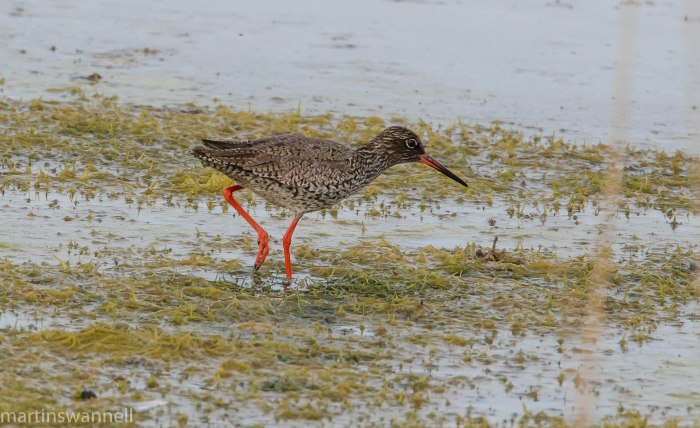
Aside from potential breeders, Redshanks were also on the move with at least twelve at Summer Leys on 6th, followed by singles at Daventry CP and Braunston on 10th, Pitsford Res and Clifford Hill GP on 11th, six at Stanwick GP on 13th and up to six – possibly eight – at Summer Leys on 20th.
Redshank, Summer Leys LNR, 6th May 2016 (Martin Swannell). A potential identification pitfall, this well marked, summer-plumaged bird accounted for several reports of Spotted Redshank at this site.Redshank, Summer Leys LNR, 11th May 2016 (Pete Garrity)
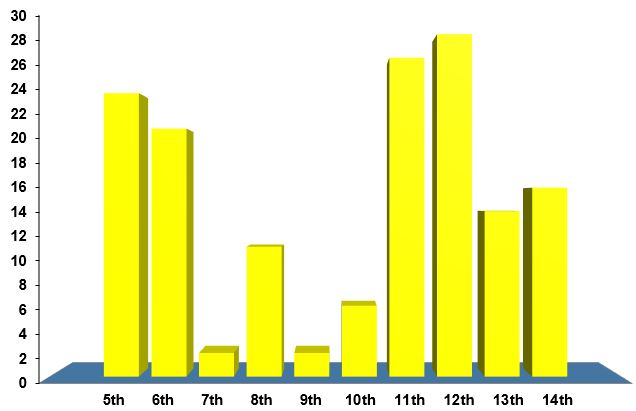
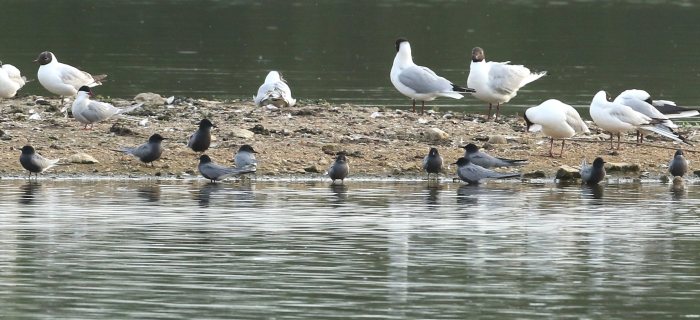
Arguably the most prominent feature of this spring has been the notable influx of Black Terns into the country – primarily as a result of the prolonged south-easterlies during the first week of the month. Records came from nine localities over a ten-day period with well over a hundred birds being logged.
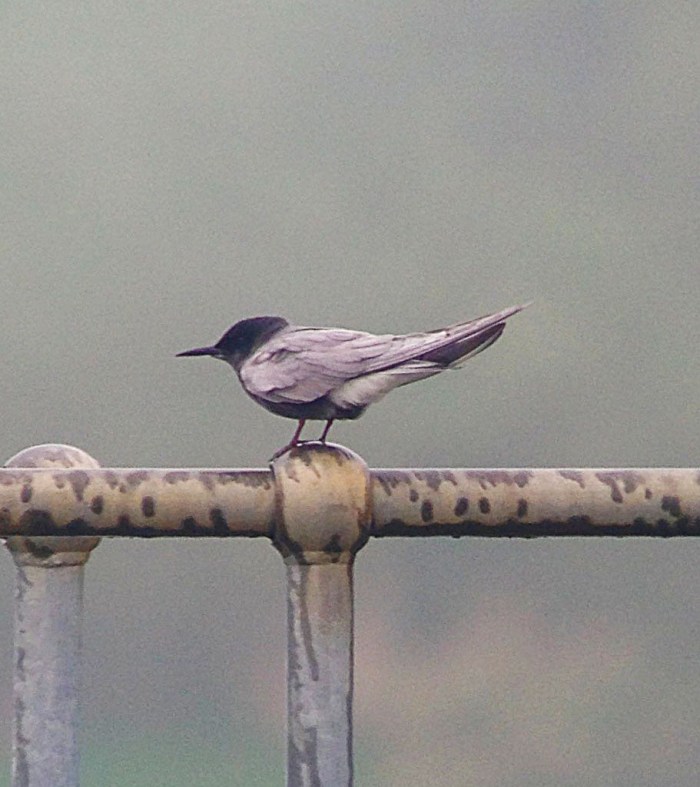
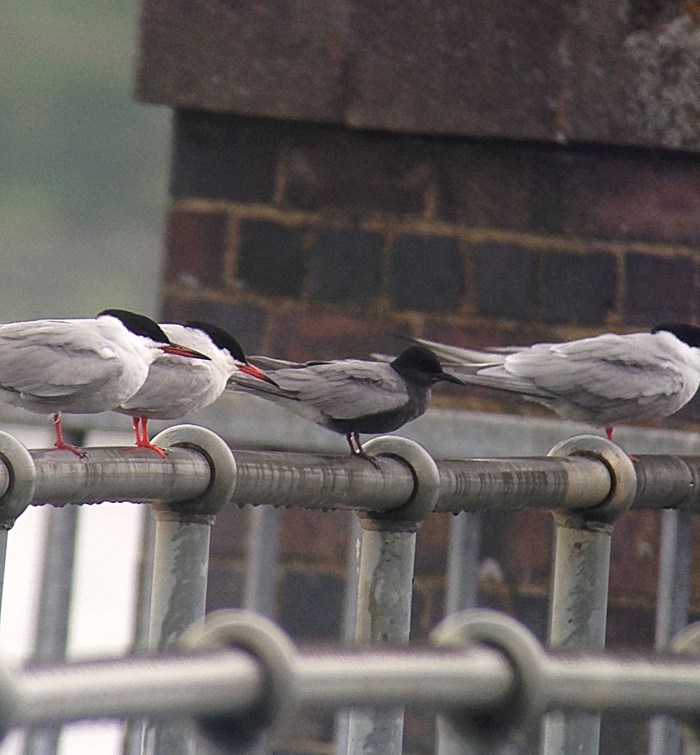
Black Terns, 5th to 14th May. Number of individuals by date.Black Tern, Stanwick GP, 6th May 2016 (Bob Bullock)Black Tern, Stanwick GP, 6th May 2016 (Bob Bullock)Black Terns, Stanwick GP, 6th May 2016 (Bob Bullock)Black Tern, Stanford Res, 11th May 2016 (Chris Hubbard)Black Tern, Stanford Res, 11th May 2016 (Chris Hubbard)Black Terns, Summer Leys LNR, 11th May 2016 (Pete Garrity)
Little Terns, too, were a nice addition to the mix with two arriving at Summer Leys on 10th, another there on 11th and one at Stanwick GP the following day.
Little Tern, Summer Leys LNR, 10th May 2016 (Bob Bullock). One of two present on this date.
Good numbers of Arctic Terns were also on the move at the same time, with Stanwick GP seeing twenty-seven over on 10th and around forty through on 11th; one was also there on 13th. Elsewhere, two visited Daventry CP on 3rd with singles there on 10th and 12th, seven on 11th and six there on 13th and at Clifford Hill GP there were two on 12th, four on 13th-14th and one on 18th.
Common, Arctic and Black Terns, Clifford Hill GP, 12th May 2016 (Bob Bullock)
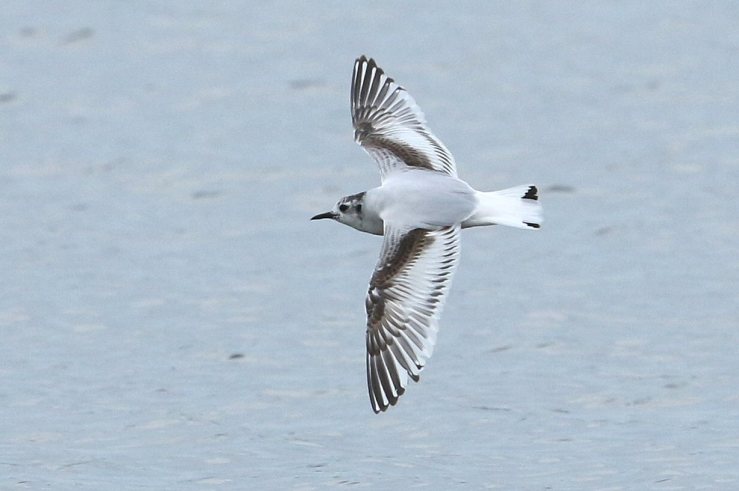
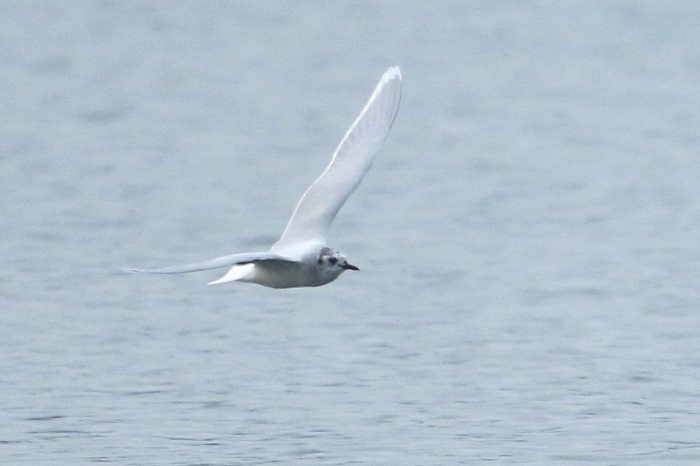
After all the Little Gulls last month it is surprising that only one was seen during the review period – a first-summer at Stanwick GP on 30th. Stanwick also produced an adult Mediterranean Gull on 11th and two adults the following day, which were doubtless those seen there at the end of last month. Where had they been throughout the intervening period? The only other gull of note was a second calendar year Yellow-legged Gull, which flew over Harrington Airfield on 2nd.
First-summer Little Gull, Stanwick GP, 30th April (Bob Bullock)First-summer Little Gull with Black-headed Gull, Stanwick GP, 30th April (Bob Bullock)
The Turtle Dove situation is currently dire. Just four local records reflect the shocking demise of this species both nationally and in Europe. Singles were purring at Polebrook AF on 8th (but subsequent searches drew a blank) and Old Sulehay on 9th, one flew north over Stanwick on 11th and two were near Newton Bromswold on 15th. A Short-eared Owl was hunting over waterside vegetation at Pitsford Res on 11th before disappearing over adjacent fields, after a relatively poor winter for this species.
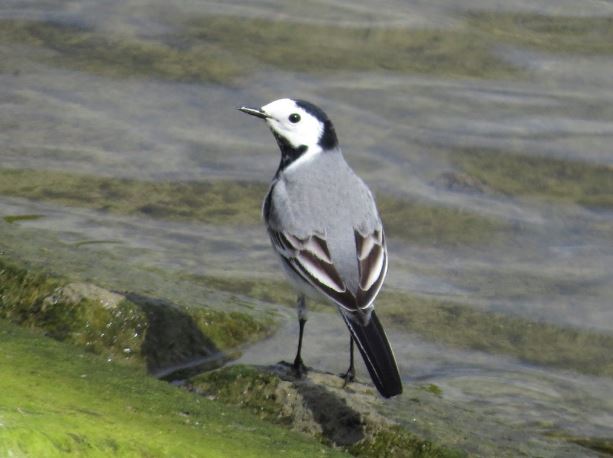
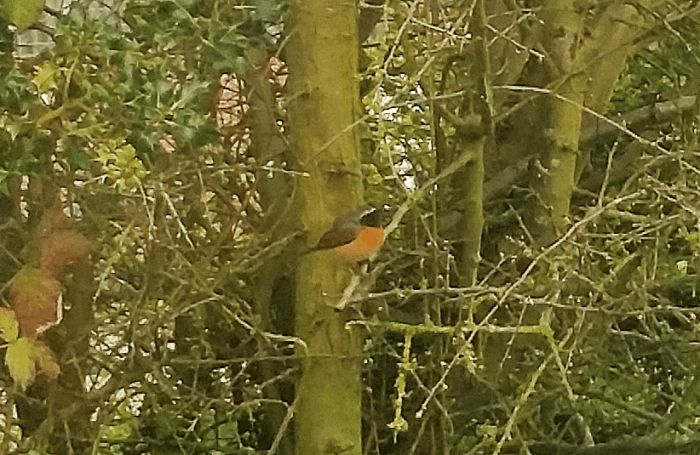
Migrant passerines included a short-staying, singing Wood Warbler at Earls Barton GP on 1st, the long-staying, singing male Ring Ouzel at Harrington AF, where it remained until 3rd and two more were found at Borough Hill on 30th, while the last migrant Common Redstarts included single females at Boddington Res, Fawsley Park and Long Buckby – all on 30th and a singing male appeared to be holding territory at Badby Wood from 8th to 15th. Northern Wheatear passage continued quite strongly into the first week of May, with 30th producing singles at Long Buckby and Earls Barton GP and ten at Borough Hill; four were at Clifford Hill GP on 1st with ten there the following day and, at Harrington AF, three to five were present on 2nd, nine on 3rd, seven on 4th and two on 5th, while a male Greenland Wheatear was in the Brampton Valley below Hanging Houghton on 2nd. There were, however, few Whinchats, with the Earls Barton GP bird from last month being joined by a second on 30th, one of which remained until 2nd, singles were at Blueberry Farm and Long Buckby on 30th and, on 4th, one was at Eastcote and two visited Harrington AF. Similarly, there were few White Wagtails with the total of four being made up of singles at Stanwick on 2nd and 11th, Pitsford Res on 3rd and Harrington AF on 5th.
White Wagtail, Pitsford Res, 3rd May 2016 (Alan Francis)
Seven Crossbills flying over Denton Wood on 17th rounded off one of the busiest spring periods locally for a long time.
One was also seen in the vicinity about two weeks ago. I’ve heard it said about 15% of female Cuckoos are rufous but I have no references on this and the proportion may well vary with geographical location. Rufous morph juveniles are much commoner, of course.
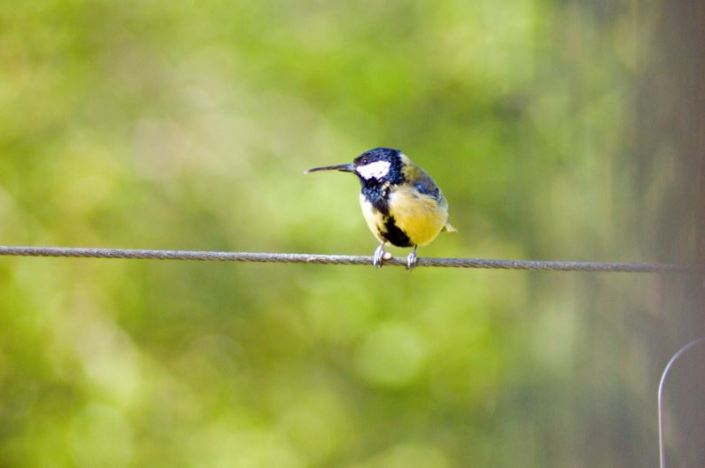
Bill deformities are widely recorded in many passerines – and with surprising regularity. Few, though, can be as eye-catching as this Great Tit, which has been visiting a garden bird feeder in Brampton Ash for the last month or so.
Great Tit with deformed bill, Brampton Ash, 14 May 2016 (James Singlehurst)
Bearing a passing resemblence to a hummingbird, it feeds from a seed feeder that enables its whole beak to enter, allowing it to take a sunflower kernels with relative ease and with apparently no detrimental effect to its health. Identical bill deformities have occurred in other Great Tits (for example, see here) and research by the BTO has uncovered abnormalities occurring in local clusters, suggesting a genetic basis or an effect of shared environmental conditions.
Summer Leys, early morning on 7th May. A steady trickle of interesting waders throughout the previous day had encouraged a handful of birders to occupy Pioneer Hide in readiness for ‘the big one.’ As it happened there were four ‘big ones’, which arrived from the south at 07.45, sweeping in a wide arc over the main lake before landing on the scrape. Spoonbills!
They stayed for approximately forty-five minutes – just long enough for some decent photos and video and for a few locals to catch up with them before they headed off to the north-west. As they flew in it was obvious that three of them were immatures, each showing variable amounts of black tips to the primaries and, on at least two of them, the secondaries also, as Matt Hazleton’s image below nicely illustrates.
Spoonbills, Summer Leys LNR, 7th May 2016 (Matt Hazleton)
Ageing Spoonbills to year is not as straightforward as it might at first seem (see Alexander Hellquist’s analysis). Bill colour, leg colour and the extent of black in the wing are all variable and relate to hatching time, wear and the condition of the bird in general. However, looking at the three immatures, it would appear we have one 2nd calendar year and two 3rd calendar year birds – as well as an adult, of course.
Spoonbills, Summer Leys LNR, 7th May 2016. Comparison of 2nd calendar year (left two) and 3rd calendar year (right three) birds.
The 2nd calendar year individual shows all the features of a bird of that age, i.e. extensively dark fleshy-yellowish bill with darker grey basal part and yellowish base to lower mandible, plain pale yellowish lores, dark brown eye, lack of short plumes at rear of crown and grey legs. The 3rd calendar year birds show extensively darker bill with paler yellowish-flesh toward tip, blackish base to lower mandible, obvious black loral line, redder eyes, beginnings of short plumes (short tuft) at rear of crown and dark grey-black legs. What is puzzling, however, is the more extensive black tips to primaries and secondaries of the 3rd calendar year birds (both are also different) than the 2nd calendar year. In theory, this should be reversed!
Spoonbills are still rare visitors to Northants. The first county record was as recently as 1965 and there have been thirty-two records in total, the vast majority of which relate to single birds.
Northamptonshire Spoonbills. Monthly distribution, all records. Background image: Mike Alibone.
A flock of four is not unprecedented, however, with this number having occurred in April 1983 and eight in September 1984 – both records from Pitsford Reservoir. May is the month to find one and there are still three weeks left …
Unsettled and cold weather, with below average temperatures, were the hallmarks of the last week of the month, which was characterised in the main by stiff northerly winds bringing rain, sleet and snow – albeit in mercifully small quantities across the county. Spring migration continued unabated, however, with plenty of new birds turning up to keep local birders busy.
Still very much part of the furniture, Pitsford’s Ruddy Shelduck remained but rather more transient were a drake Garganey at Summer Leys LNR and a drake Common Scoter at Clifford Hill GP – both one-day wonders on 24th.
Another Great White Egret was seen around the north side of Pitsford Res on 25th but, more interestingly, a White Stork reported over Northampton on 23rd has the potential to make it on to the record as the county’s 20th – if anyone bothers to submit a description.
The 23rd also produced a couple of Marsh Harriers – one at Summer Leys and the other in the Brampton Valley below Hanging Houghton – while another was seen moving high north-east over Thrapston GP the following day. Also on 23rd, a ‘ringtail’ Hen Harrier was at Lyveden but apart from this there were no more scarce raptors reported during the period.
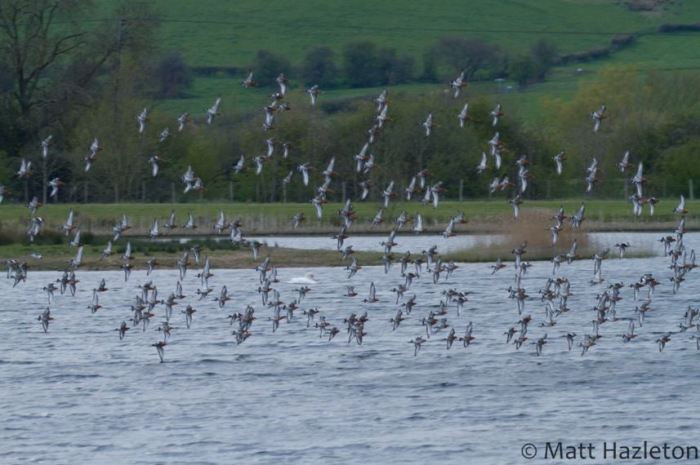
This week, however, belonged to the waders. More specifically – Black-tailed Godwits. While we’ve had ‘big’ flocks before they have not run into triple figures, let alone triple hundreds! But this was indeed the case on the evening of 27th, when an astonishing three hundred and twenty-five descended on Summer Leys, much to the amazement of the handful of birders on site at the time.
Black-tailed Godwits, Summer Leys LNR, 27th April 2016 (Matt Hazleton). Part of a gathering of some 325 individuals.
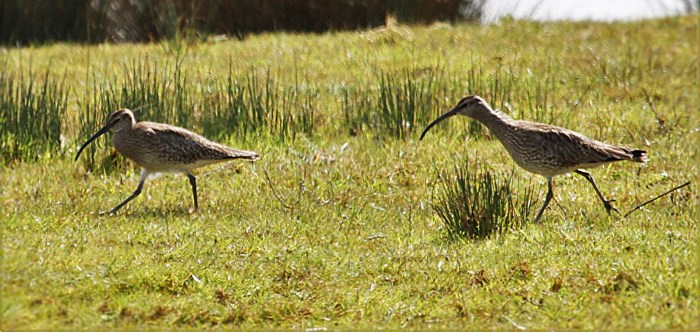
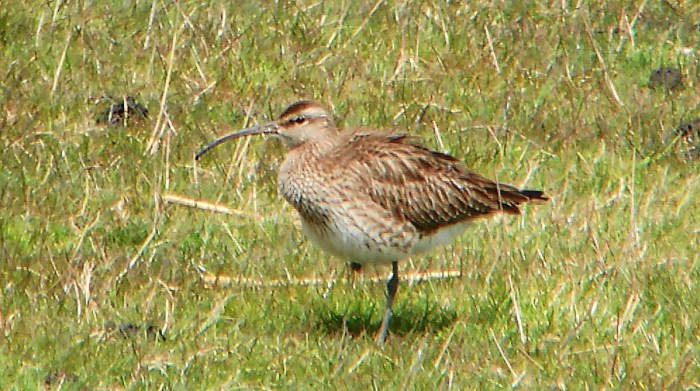
Arriving just after 7 pm, the majority had departed by 8 pm, leaving just four or five on 28th-29th, one of which was colour-ringed. Of course, this small group may have been new, later arrivals. This remarkably short-staying flock gives rise to speculation of what else goes through the county that we must be missing. In much smaller numbers other waders included an Avocet at Clifford Hill GP on 25th and Little Ringed Plovers at three sites throughout the week, while the Whimbrel passage continued with one on Mary’s Lake at Earls Barton GP on 23rd, two at adjacent Summer Leys from 23rd until 25th with one remaining until 29th, two at Clifford Hill GP on 24th with three there on 28th and one over Daventry CP on 26th.
Whimbrel, Earls Barton GP, 23rd April 2016 (Bob Bullock)Whimbrel, Earls Barton GP, 23rd April 2016 (Bob Bullock)Whimbrel, Summer Leys LNR, 24th April 2016 (Alan Coles)Whimbrel, Clifford Hill GP, 28th April 2016 (Mike Alibone)
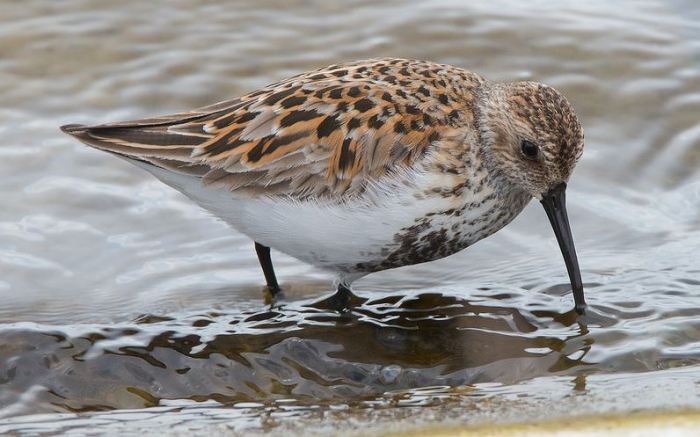
Curlews were scarce by comparison with a pair at a potential breeding site on 24th. Small numbers of Dunlin included three at Stanwick GP on 25th, singles at Pitsford Res on 27th, Summer Leys on 28th and Stanford Res on 29th and four at Summer Leys on the last of these dates.
Dunlin, Pitsford Res, 27th April 2016 (John Nicholls)
Common Sandpipers were recorded from six localities with a maximum of six at Stanford Res on 29th, while 24th saw Green Sandpipers arriving at Upton Valley (Northampton), Summer Leys and Clifford Hill GP, where there were two. Last week’s Spotted Redshank remained at Summer Leys until 24th, with the same site holding up to three Greenshanks to 27th and the relatively long-staying Wood Sandpiper until 26th. The scrape at Summer Leys provided ideal habitat for Common Snipe, where the maximum count came to at least twenty-three on 24th.
Greenshank, Summer Leys LNR, 26th April 2016 (Alan Coles)Greenshank, Summer Leys LNR, 26th April 2016 (Alan Coles)Wood Sandpiper, Summer Leys LNR, 24th April 2016 (Bob Bullock)
Arctic Tern passage was still very much in evidence this week with five at Summer Leys and ten at Daventry CP on 23rd – with one at the latter site on 24th-25th – fourteen at Stanwick GP and two at Clifford Hill GP on 25th and one at Earls Barton GP on 27th. Two adult Mediterranean Gulls joined the Black-headed Gull colony at Summer Leys on 28th but then chose to move to the Stanwick GP colony the next day, when they were seen displaying.
Mediterranean Gull, Stanwick GP, 29th April 2016 (Steve Fisher)
Migrant passerines included the long-staying male Ring Ouzel at Harrington AF, where it was observed singing on 29th. Common Redstarts were thin on the ground this week with a female at Daventry CP from 24th to 26th, two near Walgrave on 25th, and singles at Stanwick GP on 27th and Summer Leys on 29th, while Northern Wheatears again maintained their presence all week at Harrington AF with the site attracting up to eight on 24th, the same date seeing six at Clifford Hill GP, while two were at Chelveston AF on 26th. The first migrant Whinchat was discovered at Earls Barton GP on 25th, remaining there until 29th and another appeared at Blueberry Farm (Maidwell) on 27th, while single Bramblings in gardens at Hanging Houghton on 25th and 27th and at Kettering on 26th-29th represented the last remnants of winter …
Brambling, Kettering, 26th April 2016 (Phil Jackman)
The week commenced with cold northerlies and biting rain on 16th, when observers at Harrington Airfield also experienced snow showers. Following overnight frost, the 17th dawned bright and sunny and occasionally relatively warm, dry weather ensued for the remainder of the week, with the wind taking on an easterly element. Migrants – it seems – were undeterred and both new arrivals and fly-overs were logged in numbers throughout the county.
The law of diminishing ducks kicked in this week and, aside from Pitsford’s Ruddy Shelduck, the female Scaup remained at Summer Leys LNR until 20th, after which it promptly disappeared. Speculation it is incubating eggs containing Tufted Duck DNA has been running high …
Just when we thought we’d seen the back of them, another Great White Egret was seen flying north-east along the River Nene Valley at Summer Leys on 17th; it did not linger.
There was a better showing of raptors this week with a Marsh Harrier between Wollaston and Strixton on 21st, the immature male Goshawk again in Scaldwell Bay at Pitsford Res on 18th and an Osprey at the same location on 16th-17th, while reports of
Osprey, Pitsford Res, 16th April 2016 (Alan Coles)
Peregrines were limited to one at Stanford Res on 16th and a pair at a potential breeding site all week. The first Hobbies of the spring were singles between Pitsford Res and Holcot on 19th and at Blueberry Farm, Maidwell two days later.
Preceding a flurry of wader activity at Summer Leys later in the week, three Common Cranes were picked up flying low north-east along the River Nene Valley there late in the morning on 17th. This species remains a scarce visitor and, following the fourteenth county record in 2013, four reports in 2015 have yet to be assessed.
Reports of Ringed Plovers were limited to singles at Pitsford Res on 20th-21st and Summer Leys on 22nd, while Little Ringed Plovers were present at Summer Leys, Stanwick GP and near Northampton, with a fly-over at Harrington AF on 18th. Following the first Whimbrel of the spring at Pitsford Res on 15th, more appeared with singles at Thrapston GP on 17th, Pitsford Res on 18th and 22nd and three at both Summer Leys and
Whimbrel Summer Leys LNR, 20th April 2016 (Bob Bullock)
Stanwick GP on 20th, while single Curlews visited both Summer Leys and Stanford Res on 16th and single Bar-tailed Godwits appeared at both Summer Leys and Stanwick GP
Bar-tailed Godwit, Summer Leys LNR, 20th April 2016 (Bob Bullock)
on 20th. The latter site held the week’s only Ruff for one day, on 17th, and half of the week’s Dunlin, with three there on 16th – the others being two at Clifford Hill GP on the same date and one at Pitsford Res on 18th.
Dunlin, Pitsford Res, 18th April 2016 (Alan Francis)
Common Sandpipers were recorded throughout the week at Pitsford Res, Stanford Res, Stanwick GP and Summer Leys with no more than two at any one site, while single Green Sandpipers were still at the Northampton end of the Brampton Valley on 16th, Pitsford Res between 16th and 20th and at Ditchford GP on 20th. Two splendid full summer-plumaged Spotted Redshanks arrived at Summer Leys on 20th, with one remaining
Spotted Redshank, Summer Leys LNR, 22nd April 2016 (Bob Bullock)
there until the week’s end and being joined by up to two Greenshanks and a Wood Sandpiper from 21st. The only Common Snipe reported were two at Stanford Res on 16th.
Greenshank, Summer Leys LNR, 22nd April 2016 (Bob Bullock)Wood Sandpiper, Summer Leys LNR, 22 April 2016 (Alan Coles)
Following last week’s influx of Little Gulls, this week seemed strangely quiet with just a first-winter at Pitsford Res on 16th and it, or another, there on 18th.
Little Gull, Pitsford Res, 16th April 2016 (Alan Coles)
The latter date saw the arrival at Stanwick GP of an adult Kittiwake but the only other gulls of note were a second-summer Yellow-legged Gull at Stanwick on 16th and one at Pitsford Res on the same date.
Kittiwake, Stanwick GP, 18th April 2016 (Steve Fisher)
A Black Tern visited Hollowell Res on 19th and Arctic Terns continued to move through with 16th seeing eight at Stanwick GP, five at Boddington Res and one at Hollowell Res, while eleven were at Stanwick and one at Stortons GP the next day, followed by singles at Clifford Hill GP on 21st and Stanwick again on 22nd.
Ring Ouzels continued to be seen at Harrington AF until 21st with up to three there on the latter date, including a male which often showed well in a ploughed field adjacent to the shooting wall. One was also found at Blueberry Farm, Maidwell on 17th. Harrington also attracted migrant Common Redstarts with three there on 17th and one on 21st, while two were at Fawsley Park on 16th and one at Brackley on 21st.
Common Redstart, Brackley, 21st April 2016 (Gary Mears)
Harrington AF again proved to be the principal location for Northern Wheatears with the site attracting up to six between 16th and 21st. Interestingly four were trapped and ringed on 17th with two of these proving to be of the Greenland race leucorhoa – colloquially known as Greenland Wheatear. Elsewhere, single Northerns were at both Pitsford Res and Hollowell Res on 16th with four at Blueberry Farm the following day. Similarly northbound, White Wagtails again occurred in small numbers which included two at Pitsford Res on 16th with one there on 20th, two at Summer Leys on 17th, three at Clifford Hill GP on 18th and one at Hollowell Res on 22nd, while single Tree Pipits flew over Harrington AF on 18th and Hollowell Res the following day.
Heavy showers combined with an intermittent southerly airstream did much to both further the northward movement of migrants while at the same time grounding many of them. The most prominent event of the week was the passage of Little Gulls, which was most obvious in, though not restricted to, locations in the Nene Valley.
‘Old faithful’ – Pitsford’s Ruddy Shelduck – remained present throughout but the only other notable wildfowl were two Garganeys at Daventry CP on 12th and the Summer Leys Scaup, which remained throughout the period and appeared to be paired with a male Tufted Duck at the week’s end.
An immature male Goshawk appeared briefly in Scaldwell Bay at Pitsford Res on 9th and was again there equally briefly on 15th. Despite ‘healthy’ populations located not too distantly elsewhere in the UK, this species remains rare and difficult to catch up with in Northants. The only Ospreys reported were singles at Pitsford Res on 11th and flying west at Summer Leys on 14th, while reports of Peregrines were limited to just three, all at Summer Leys, on 11th, 13th and 15th.
The week produced two more Avocets, which included one at Clifford Hill GP late in the evening on 11th and one at Summer Leys, which remained all day on 14th. Just one report of Golden Plovers comprised approximately forty at Clifford Hill GP on 12th, while reports of Ringed Plovers were limited to one near Corby on 11th, two at Stanwick GP on 12th and one at Clifford Hill GP on 15th. Little Ringed Plovers numbered no more than two at each of Clifford Hill GP, Stanwick GP and Summer Leys during the week. Last week’s Icelandic Black-tailed Godwit remained at Summer Leys until 11th, probably making it into the record books as the most photographed godwit in Northants, ever.
Black-tailed Godwit, Summer Leys LNR, 9th April 2016 (Bob Bullock)Black-tailed Godwit, Summer Leys LNR, 9th April 2016 (Bob Bullock)Black-tailed Godwit, Summer Leys LNR, 9th April 2016 (Simon Wantling)Black-tailed Godwit, Summer Leys LNR, 11th April 2016 (Mark Tyrrell)
Following this, there were five at Earls Barton GP on 12th, while a Black-tailed Godwit at Stanwick GP on the same date was identified as being of the nominate, European race, limosa. The first Whimbrel of the spring flew over Pitsford Res on 15th. Numbers of Dunlin ramped up this week with records from Earls Barton GP/Summer Leys LNR, Stanwick GP and Clifford Hill GP, where fifteen were counted on 15th and the first Common Sandpiper appeared at Stanwick on 10th, followed by no more than two at Daventry CP, Pitsford Res, Stanford Res and Wicksteed Park Lake. The only Green Sandpipers were one at the Northampton end of the Brampton Valley on 11th and the Pitsford Res individual below the dam until at least 13th, while the only Redshanks reported were two at Stanwick GP on 12th, four at Summer Leys on 13th and one at Stanford Res the following day. A Jack Snipe was again seen at Boddington Res on 10th along with ten Common Snipe on the same date, while one was at Stanwick GP on 11th-12th and another at Summer Leys on 14th.
Little Gull is now very much to be expected – and often in some numbers – in early to mid-April and this year did not disappoint. They arrived en masse between 11th and 13th with possibly as many as eighty-six individuals involved in the three-day passage, the highest count being a flock of twenty-two at Stanwick GP on 11th.
Little Gulls by location, 11th-13th April 2016. Background image: Bob BullockFirst-summer Little Gull, Earls Barton GP, 12th April 2016 (Bob Bullock)Little Gull, Earls Barton GP, 12th April 2016 (Bob Bullock)Little Gull and Black-headed Gull, Earls Barton GP, 12th April 2016 (Bob Bullock)Little Gull, Earls Barton GP, 12th April 2016 (Bob Bullock)
The only other gulls of note were a second-summer Yellow-legged Gull at Stanwick on 11th-13th and one at Pitsford Res on 13th. Black Terns arrived a little earlier than normal with two at Pitsford Res on 12th and one at Summer Leys on the same date, while the maximum count of Common Terns was at least twenty-five at Stanwick GP on 11th.
Black Tern, Summer Leys LNR, 12th April 2016 (Bob Bullock)
Arctic Terns also arrived on the latter date, when seven were at Stanwick GP, followed by two at Pitsford Res and singles at Summer Leys and Boddington Res on 12th, singles at Daventry CP and Stanwick on 14th and, on 15th, five were at Clifford Hill GP, at least three at Summer Leys and two at Thrapston GP. Sandwich Tern appeared at three localities which included one at Clifford Hill GP on 11th, two at Stanford Res on 12th and three at Summer Leys on 15th.
Sandwich Terns, Stanford Res, 12th April 2016 (Chris Hubbard)
The first Cuckoo was discovered at Wakerley Great Wood on 13th and, although only a scarce resident, a particularly showy Lesser Spotted Woodpecker at Lings Wood during the week drew an appreciative crowd as it performed close to the on-site Wildlife Trust offices. Others were seen at Pitsford Res, near Kelmarsh and in Salcey Forest.
Lesser Spotted Woodpecker, Lings Wood, 9th April 2016 (Alan Coles)
Arriving in exactly the same location as last year, a male Wood Warbler was singing in trees by the Fishing Lodge at Pitsford Res on 15th, while the second singing male Siberian Chiffchaff of the spring was discovered at Cotton Park, Long Buckby on 9th. Neither of these scarce phylloscs stayed beyond the date of their discovery. Three more species of warbler arrived this week with a Lesser Whitethroat at Clifford Hill GP on 12th, a Common Whitethroat at Summer Leys on 9th and a Reed Warbler at Stanwick GP on 11th. The first Nightingale was also logged at Wakerley Great Wood on 13th. One of the traditional sites for Ring Ouzel – Harrington AF – attracted a male between 12th and 15th while a female was in a field between Blisworth and Milton Malsor
Ring Ouzel, Harrington AF, 12th April 2016 (Cathy Ryden)Ring Ouzel, Harrington AF, 12th April 2016 (Cathy Ryden)
on 9th and a female or first-summer Black Redstart was a brief visitor to a Byfield garden on 14th. Byfield also produced a male Common Redstart on 13th, the same date that three more arrived at Harrington AF, the latter site producing the week’s maximum count of five Northern Wheatears on the same date. More Northern Wheatears included singles at Borough Hill on 10th and Stanford Res on 12th plus three at Clifford Hill GP the next day. The only White Wagtails during the period were three at Stanwick GP on 12th, while lingering Bramblings included singles at both Harrington AF and Hanging Houghton on 9th and two near Walgrave the following day.
With a southerly airstream and temperatures reaching the mid- to high teens, the first two days of the period felt like spring but this was short-lived. Temperatures fell away mid-week, showers ensued and the winds were on the verge of becoming easterly at the end of the period. This was not enough to deter more migrants, though, and the first Common Swift, Grasshopper Warbler and Sedge Warbler had been logged by the week’s end.
A potentially ‘new’ Barnacle Goose appeared at Thrapston GP on 6th and the Pitsford Ruddy Shelduck was still present until at least the same date, while just one drake Garganey remained at Earls Barton GP/Summer Leys LNR until 2nd. On the brink of qualifying as a long-stayer, the Summer Leys Scaup remained throughout the period.
A single Great White Egret made it into this week, when it was seen at Summer Leys on 2nd and flying over the main Earls Barton GP complex the following day. Two rare grebes – both short-stayers – were found at the weekend. A Slavonian Grebe spent most of the day at Daventry CP on 2nd and a Black-necked Grebe made a brief appearance in Pintail Bay at Pitsford Res the following day.
Although the diversity of raptors was at a low point, at least three Ospreys were around to hold the interest with singles visiting Pitsford Res on 2nd and 5th, while reports of fly-overs at Clifford Hill GP and Summer Leys on the morning of 4th are likely to refer to the same individual and, in addition to this, one flew north-west at Boddington Res on 8th.
Osprey, Pitsford Res, 2nd April 2016 (Bob Bullock)
Aside from potential breeders, reports of Peregrines dwindled to just three, with singles at Borough Hill on 3rd and at Summer Leys on 5th and 8th.
Early April is traditionally the best time to find an Avocet and this year is no exception. Two appeared, both on 3rd, both were in the Nene Valley and both were characteristically short-stayers. The first was at Stanwick GP, where it was found on the A45 Lay-by Pit first thing in the morning and the second was seen later at Summer Leys. On 2nd,
Avocet, Stanwick GP, 3rd April 2016 (Bob Bullock)Avocet, Summer Leys LNR, 3rd April 2016 (Tony Vials)
approximately four hundred and fifty Golden Plovers were counted at Stanford Res and twenty were at Blueberry Farm (Maidwell), while a Ringed Plover plus three pairs of Little Ringed Plovers were at a Nene Valley breeding site on 3rd and single Little Ringeds were at Stanwick GP and Summer Leys up to 8th. Lone Curlews visited Pitsford Res on 1st, Bozenham Mill and Hanging Houghton on 2nd and two were at a potential breeding site in the Nene Valley on 3rd, while an Icelandic Black-tailed Godwit was at Summer Leys on 7th-8th.
Black-tailed Godwit, Summer Leys, 8th April 2016 (Alan Coles)
After an absence last week, single Dunlins visited Stanwick GP and Summer Leys on 4th and the only Green Sandpiper was the malingerer at Pitsford Res on 2nd-4th, while the only Redshanks reported were six at Stanwick GP on the last of these dates. A Jack Snipe was flushed at Harrington AF on 5th and Common Snipe numbers were pegged to three at Stanford Res on 2nd and one at Stanwick GP on 6th.
If it had not been for an adult Little Gull at Sywell CP on 3rd there would have been no rare gulls this week but an arrival of terns went some way to make up for this with the first
Little Gull, Sywell CP, 3rd April 2016 (Bob Bullock)Little Gull, Sywell CP, 3rd April 2016 (Bob Bullock)
of the year’s Common Terns found on Thrapston GP’s Town Lake on 2nd, followed next day by two at Stanwick GP. The latter site also produced a fly-over Sandwich Tern on 4th.
Sandwich Tern, Stanwick GP, 4th April 2016 (Steve Fisher)
The first Common Swift – the second earliest ever by a day – was at nearby Finedon on 6th, the first Grasshopper Warbler of the spring was singing behind Mary’s Lake at Earls Barton GP on 8th and the first Sedge Warbler was at adjacent Summer Leys on 8th. After a relative paucity of Northern Wheatears last week this species was recorded from nine localities during the period, with a maximum of five at Borough Hill on 4th.
Northern Wheatear, Harrington AF, 4th April 2016 (Bob Bullock)
More White Wagtails came through, although only in small numbers, which included two at Thrapston GP on 3rd and singles at Clifford Hill GP and Stanwick GP on 4th and 6th respectively, while lingering Bramblings remained at Maidwell, where there were two on 2nd and in gardens in Hanging Houghton, where there were two on 2nd and one on 5th and in Geddington, where seven were present on 3rd, dwindling to one on 7th.
House Martins are in rapid decline in the UK and the BTO is undertaking a nest monitoring survey over two years to collect more information on population size, breeding ecology and habitat preferences so they can begin to tackle some key questions about this now ‘Amber Listed’ summer visitor.
This BTO tutorial video will help you to get up and running with the 2016 House Martin Nest Study. If you have House Martins nesting in your area, you could help collect vital data.



























 Northants birds