The Week in Focus: 8th to 14th March 2014

A high pressure system became established over the UK from the beginning of the week, bringing mild, settled conditions with 19-20°C recorded locally on 9th. Such conditions were clearly conducive to migration and several early summer visitors were found, along with the reappearance of a potential ‘mega’ from the east.

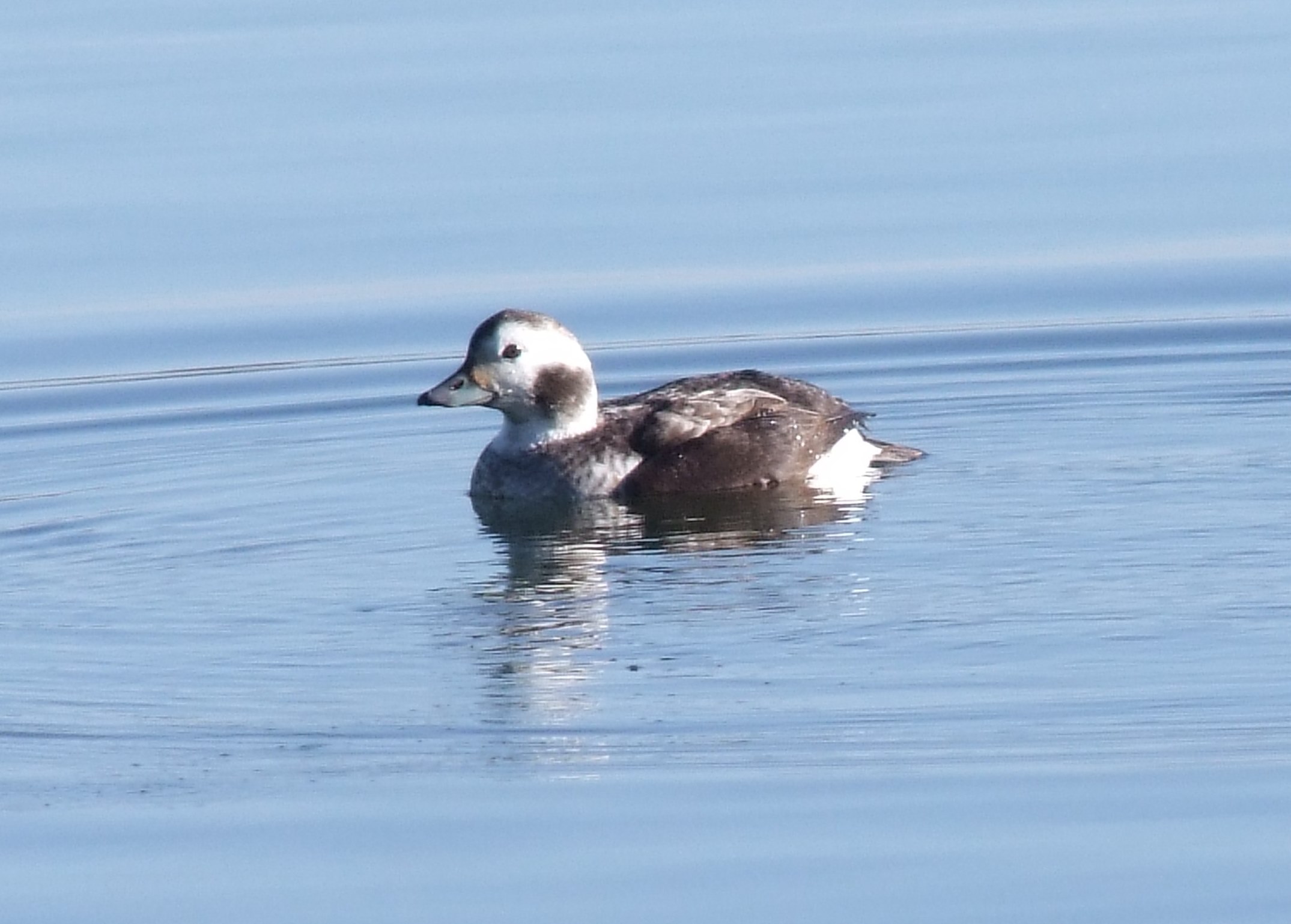
Wildfowl numbers were noticeably down but the red colour-ringed Marbled Duck remained at Stanwick GP until at least 12th, when up to eight Pintails were there, a pair of Red-crested Pochards visited Ditchford GP on 13th and both the drake Scaup and the long-staying Long-tailed Duck were still on Thrapston GP’s Town Lake on 9th. Similarly, the Long-tailed Duck remained Earls Barton GP on Mary’s Lake until at least 11th, the only Smew reported were single drakes at Ravensthorpe Res on 8th and Stanwick GP on 12th, while the female Red-breasted Merganser was still at Stanford Res on 11th. Goosanders were reported only from Stanford Res, Stanwick GP and Daventry CP, with a maximum of nine at the latter site on 9th.

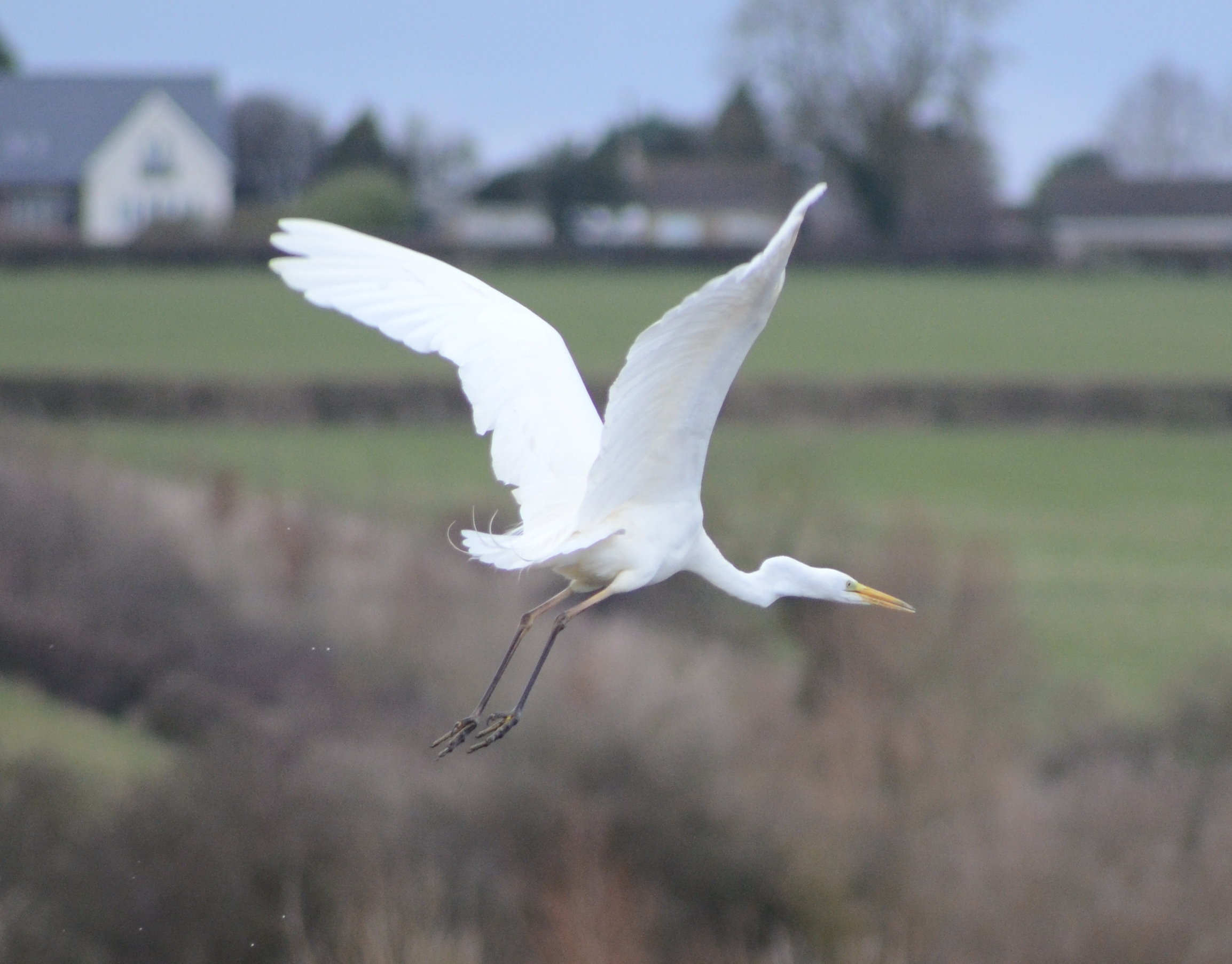
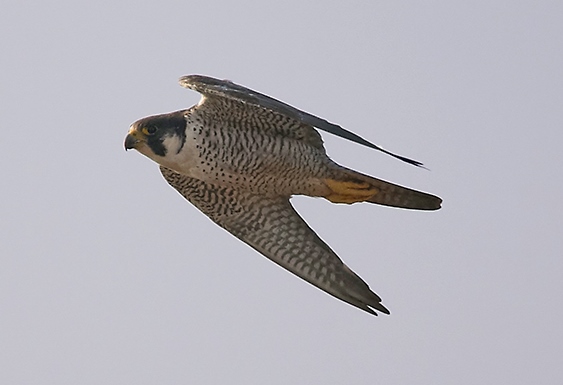
The wintering juvenile Great Northern Diver continued its protracted stay at Pitsford Res until at least 11th while the only locality at which Great White Egrets were reported was Summer Leys LNR, where there were two to be found on most days during the week. Sunday 9th saw the arrival of the first summer visitor with an Osprey heading north over Daventry CP which was quickly followed by another at Pitsford Res just two days later on 11th. A male Merlin went through at Boddington Res on 13th, while Peregrines were seen in the Brampton Valley on 8th, at East Hunsbury, Northampton on 9th, Stanwick GP on 10th and at Harrington AF on 11th.

Jack Snipe are on the move this month and singles were found at Stortons GP on 9th, 12th and 14th and a Boddington Res on 10th and two were at Ecton SF on 8th, while a significant count of sixty Common Snipe was made at Pitsford Res on 8th. Redshanks were seen at Pitsford Res, Summer Leys LNR, Clifford Hill GP and Stanwick GP with a maximum of twelve at the latter site on 11th, while a single Green Sandpiper remained at Harrington AF until 13th and one was at Pitsford Res on 9th and 11th.

Spring passage of Mediterranean Gulls continued with a first-winter at Daventry CP on 8th, two adults in the roost at Pitsford Res on 9th and an adult at Boddington Res the following evening. An adult Glaucous Gull was still in the vicinity of Ditchford GP on 8th and a second-winter visited Clifford Hill GP briefly on 11th, while a second-winter Caspian Gull was at Stanwick GP on 10th-11th, a third-winter was watched at Rushton Landfill the following day and a second-winter Yellow-legged Gull was at Daventry CP on 8th-9th.

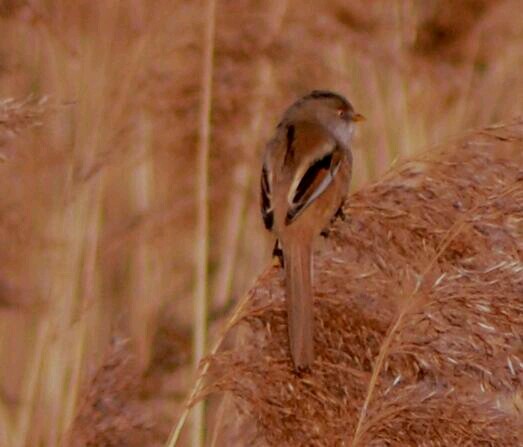
The status of Ring-necked Parakeet in Northants is unclear and it is not known if they breed but one in a Polebrook garden on 8th-9th and six in Stoke Bruerne on 8th gave rise to a modicum of local interest this week. A pair of ringed Bearded Tits at Stortons GP had not been seen since January until they resurfaced on 9th and they remained there all week; a male was also found at Summer leys LNR on the same date and was still present on 12th.
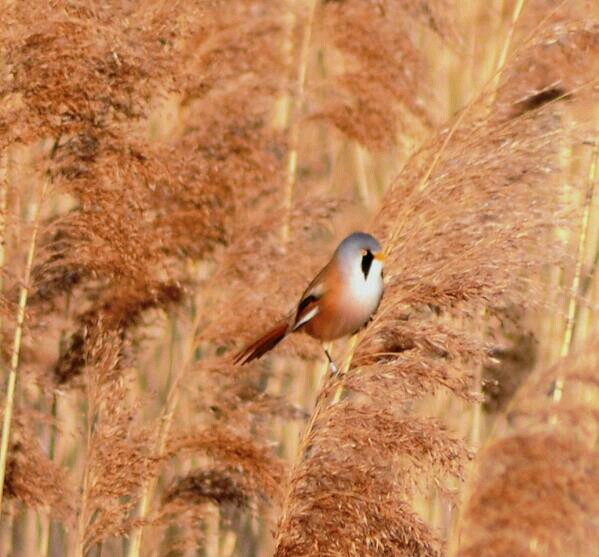
Male Bearded Tit, Stortons GP, 9th March 2014 (Stuart Mundy)


Female Bearded Tit, Stortons GP, 9th March 2014 (Stuart Mundy)

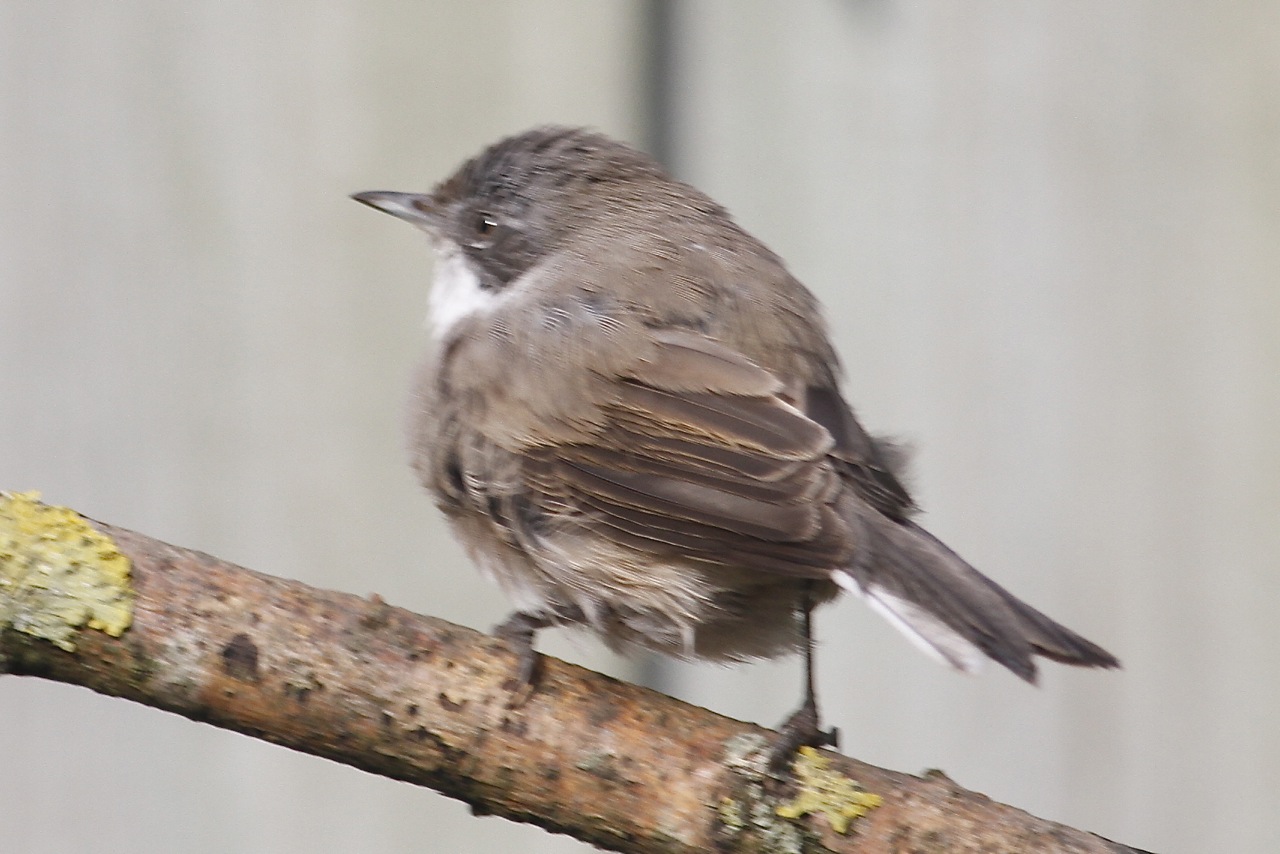
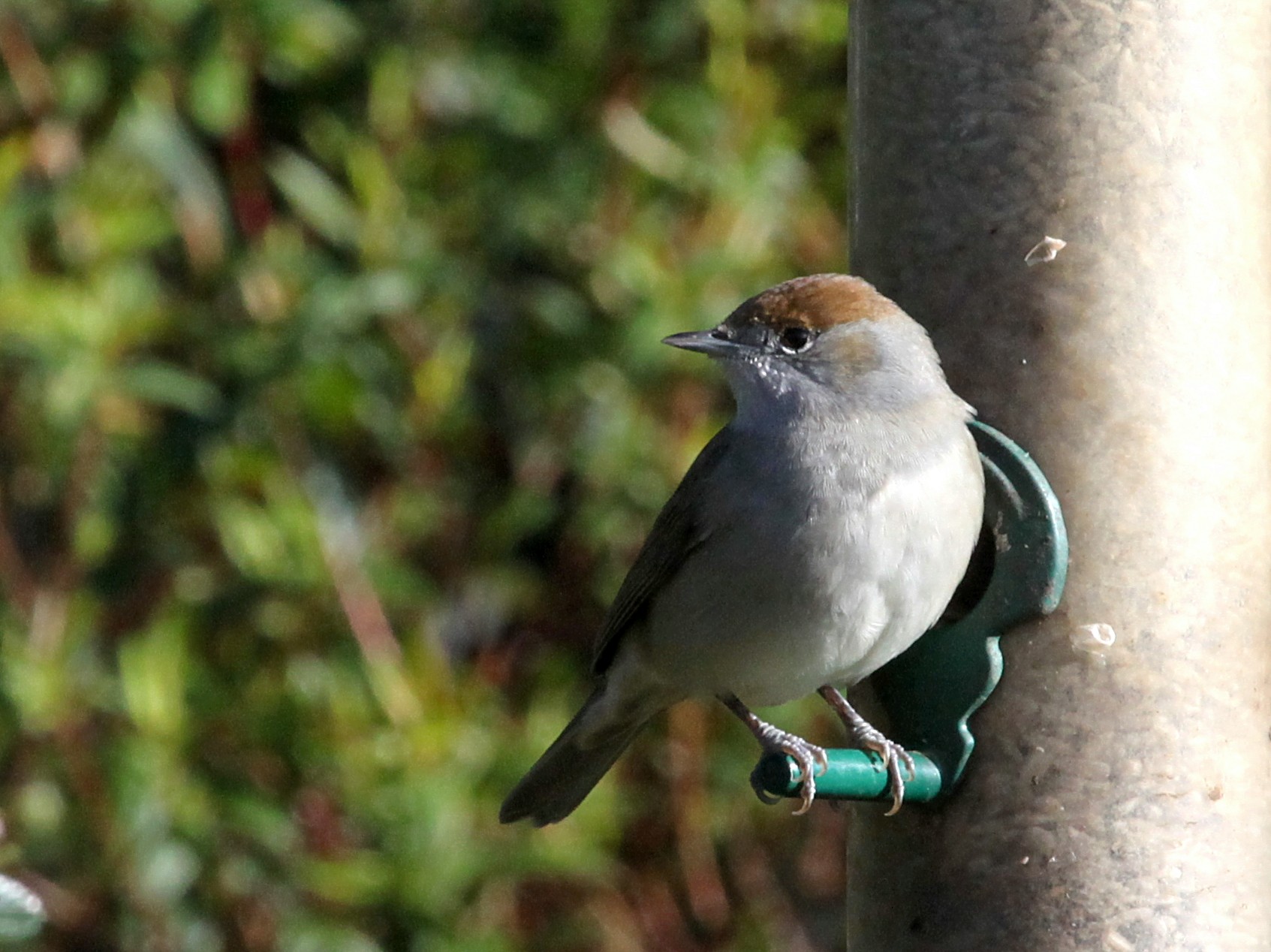
A sure sign of spring was the first Sand Martin at Stanwick GP on 10th and the distribution of Chiffchaffs this week, with singing males reported from half a dozen sites, while also singing were male Central European Blackcaps which continued to be seen in gardens at Wellingborough, Northampton and Spratton. More exciting than this ‘subspecies in waiting’ was the reappearance in a Northampton garden of a potential species in waiting – ‘Central Asian’ Lesser Whitethroat – the name now being suggested for birds falling within the blythihalimodendri spectrum.

'Central Asian' Lesser Whitethroat, Kingsthorpe, Northampton, 11th March 2014 (Bob Bullock)
‘Central Asian’ Lesser Whitethroat, Kingsthorpe, Northampton, 11th March 2014 (Bob Bullock)


'Central Asian' Lesser Whitethroat, Kingsthorpe, Northampton, 11th March 2014 (Bob Bullock)
‘Central Asian’ Lesser Whitethroat, Kingsthorpe, Northampton, 11th March 2014 (Bob Bullock)

This bird popped up after an absence of more than six weeks, showing itself for just two days on 11th and 12th, before promptly disappearing again. This individual just about ticks all the boxes for acceptance as a sight record of a bird from this eastern group and, if the taxonomists can ever agree, it may, one day, be granted full specific rank. Another summer visitor, a Yellow Wagtail, flew north, calling, over Grange Park, Northampton on 9th. This appears to be the first in the whole of the UK this spring and was quickly followed by another in Hampshire the next day. Both birds are extremely early as the mean arrival date for this species in Britain is 7th April but the earliest ever recorded in Northants is 10th March (1975).

Mealy Redpoll, East Hunsbury, Northampton, 11th March 2014 (Mike Alibone)


Mealy Redpoll, East Hunsbury, Northampton, 11th March 2014 (Martin Dove)

Up to twelve Bramblings remained at Harrington AF during the week and nine were at Hellidon on 13th, while a Mealy Redpoll visited feeders in and East Hunsbury, Northampton garden on 11th and six Crossbills were in Salcey Forest on 10th.
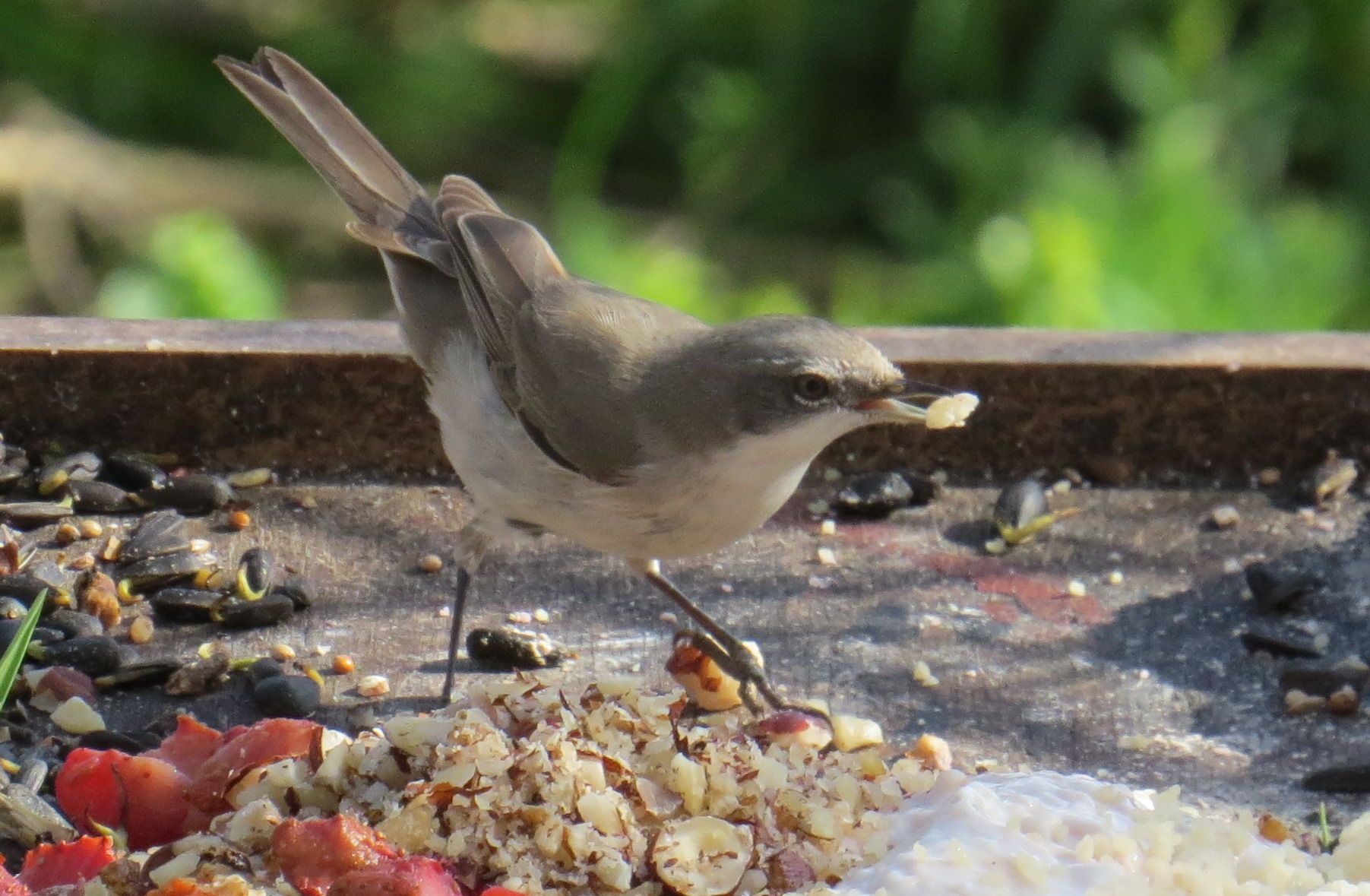
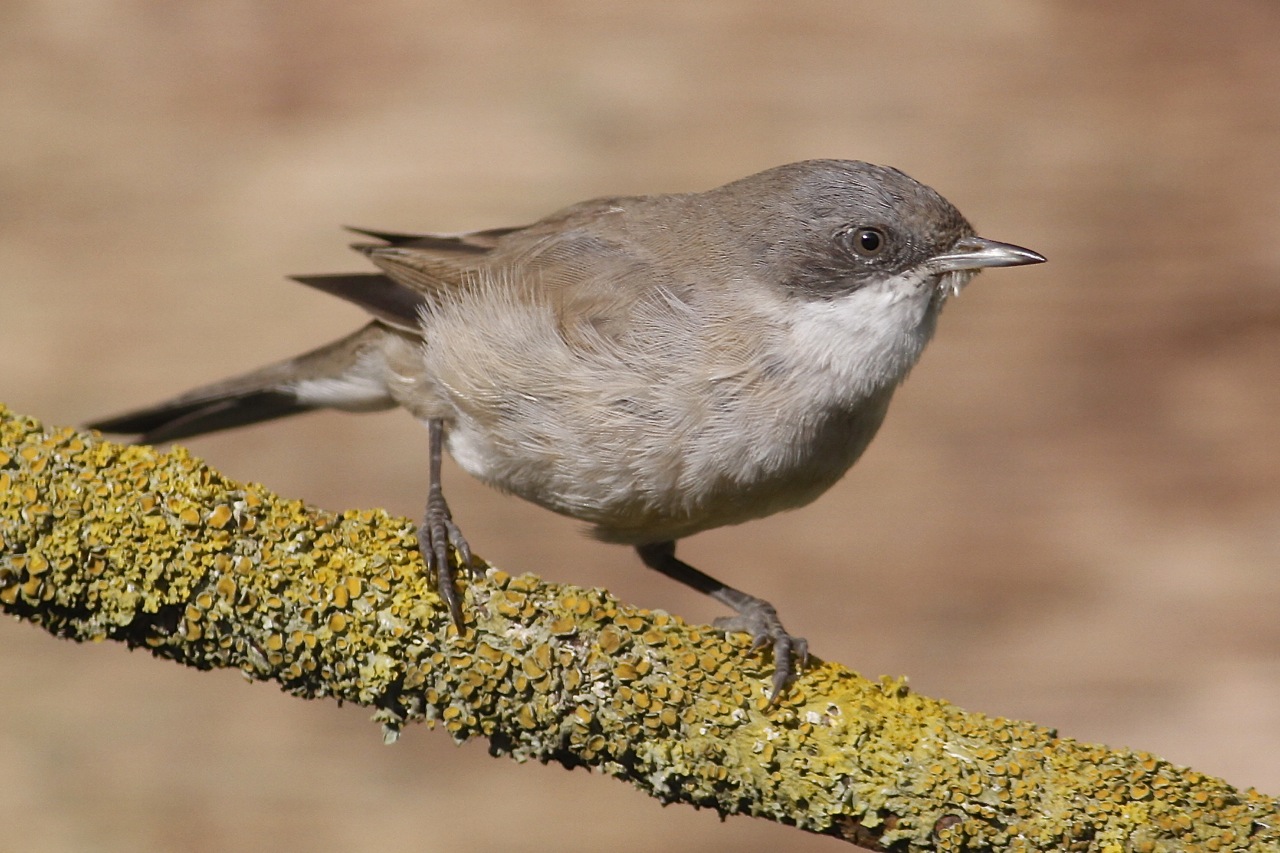
Not all winter whitethroats are eastern …

My old buddy Pete Campbell, who divides his time between Northants and the Isle of Wight, sent these images of a Lesser Whitethroat taken in his garden on the island on 7th March. It has been present daily since January.  This looks all the world like a standard grey and white curucca therefore we should not assume that all wintering Lesser Whitethroats are of eastern origin. Compare it here with our Northampton bird.

Lesser Whitethroat, Isle of Wight, 7th March 2014 (Pete Campbell)
Central Asian Lesser Whitethroat, Northampton, 11th March 2014 (Dave Jackson)


Central Asian Lesser Whitethroat: it’s back!

After an absence of forty-seven days, the ‘eastern’ Lesser Whitethroat, which had made sporadic appearances in Dave Jackson’s Northampton garden back in January, returned today.!cid_84C8967F-563F-4BB1-86AF-C1CE84A1EC60 Dave managed to capture some images which partly show the tail pattern – a largely white outer tail feather (some faint clouding at the distal end of the inner web) but it’s still not possible to see if there is any white at the tip of the adjacent feather, T5.!cid_0E5171D5-9804-4779-97F9-E5DF0446781E Is it there or has it worn away (as the tail feathers appear quite abraded)? A video-grab of mine made back in January hinted at its presence but may be inconclusive. !cid_734F3360-04E3-4280-B0E5-141AFD0AD623Either way, this bird pretty much ticks all the boxes for Central Asian Lesser Whitethroat, the name now being proposed here for birds in the group somewhere within the blythihalimodendri spectrum.

The Weeks in Focus: 1st to 7th March 2014

A quiet and generally mild week with occasional moderate rainfall and a mainly south-westerly airstream heralded conditions conducive to spring migrants, although local birders were left wanting …

Sporadic appearances of two Egyptian Geese at Ditchford GP continued with their presence noted again on 1st, while Pitsford Res continued to host the escapee Bar-headed and Ross’s Geese throughout the week. Falling into the same category, the red colour-ringed Marbled Duck also remained at Stanwick GP all week and at nearby Ditchford GP the drake Scaup was still present on 1st, as were drakes at Pitsford Res on 6th and at Thrapston GP on 1st along with the long-staying Long-tailed Duck still on Town Lake on the same date. Similarly, the Earls Barton GP individual remained on Mary’s Lake throughout the period, both birds appearing to have made it into the record books for their length of stay in the County.

Long-tailed Duck, Earls Barton GP, 3rd March 2014 (Doug Goddard)

Numbers of Smew began to fall away this week with two drakes remaining at  Ravensthorpe Res on 1st and a pair there on 5th, a ‘redhead’ at Ditchford GP on 1st, a drake at Stanwick GP on the same date with a pair there on 3rd-7th, two ‘redheads’ at Clifford Hill GP on 5th and four at Pitsford Res on 6th. Playing ‘hard to get’ (it’s not always there), the female Red-breasted Merganser was again at Stanford Res on 7th, while Goosanders were reported from only two localities localities, with a maximum of eight at Clifford Hill GP on 5th.

The wintering juvenile Great Northern Diver remained at Pitsford Res until at least 6th while Great White Egrets were still very much in evidence at Summer Leys LNR throughout the period with a maximum of three there on 2nd and one still at Pitsford Res on 6th. The sole scarce raptor was a Peregrine at Ditchford GP on 1st.

Great White Egret, Summer Leys LNR, 3rd March 2014 (Stuart Mundy)

The largest count of Golden Plovers was approximately three hundred at Summer Leys LNR on 2nd, a Jack Snipe was at Hollowell Res on 7th, a significant count of fifteen Redshanks was made at Stanwick GP on 6th and a single Green Sandpiper remained at Harrington AF until 4th.

Spring passage of Mediterranean Gulls continued this week with an adult at Fawsley Park on 2nd and two adults in the roost at Pitsford Res on 5th, the latter site also hosting a juvenile Glaucous Gull on 1st, while a juvenile Glaucous visited Stanwick GP on 7th. An adult Caspian Gull was at Stanford Res on 1st with a third-winter at Stanwick GP on 7th and an adult Yellow-legged Gull was at Hollowell Res on the same date.

Last week’s two Firecrests were still in the bramble clump at Thrapston GP on 1st with at least one remaining on 3rd but the only Chiffchaff reported was one at Hanging Houghton on 2nd. Male Central European Blackcaps were singing this week in gardens at Brackley and Wellingborough and in two gardens at Barton Seagrave, while others visited gardens in Raunds and Kettering.

Male Central European Blackcap, Barton Seagrave, 4th March (Geof Douglas)

A Rock Pipit visited Clifford Hill GP briefly on 5th, a Mealy Redpoll was seen at Grange Park on 3rd and Bramblings were continually present at Harrington AF throughout the period, with a maximum of fifteen there on 1st-2nd.

Two Weeks in Focus: 15th to 28th February 2014

Much to the relief of many, the Atlantic depressions in the week prior to this reporting period appeared to have run out of steam, resulting in relatively calmer conditions for birding. Signs of spring migration were thin but tangible …

If you look at Slimbridge as a ‘barometer’ then, by the end of this week, most of the Bewick’s Swan wintering there had departed, commencing their long journey back to Siberia. Perhaps from there, then, thirty-seven were seen flying north over Byfield on 22nd – the largest herd reported in Northants for a good many years. Two Egyptian Geese at Ditchford GP on 27th were more standard fare while twenty-three Shelduck at Deene Lake on 19th was an exceptional count. Pintail were clearly on the move with twos at Ditchford GP on 15th and Clifford Hill GP on 17th, nine at Thrapston GP on 22nd and the same number at Stanwick GP two days later and eight at the latter site on 26th-28th. Last month’s Marbled Duck reappeared at Stanwick GP on 20th, remaining until at least 26th. Rumour has it that it was seen to be bearing a red ring – a sure sign of its captive origin.

Marbled Duck, Stanwick GP, 20th February 2014 (Bob Bullock)

Diving ducks were well represented with a drake Red-crested Pochard at Ditchford GP from 15th to 22nd and the drake Scaup there until at least 27th, with one again at Thrapston GP on 23rd and the first-winter drake at Pitsford Res until 25th. After a brief sojourn to Clifford Hill GP, the Earls Barton Long-tailed Duck returned to Mary’s Lake, where it remained until at least 22nd and the Nene Valley also saw some ‘new’ Smew appearing, including a pair at Ditchford GP between 21st and 27th, a pair at Stanwick GP on 26th-28th while up to seven (four drakes) were at Ravensthorpe Res until at least 26th. The Stanford Res Red-breasted Merganser remained until at least 27th and  Goosanders were reported from seven localities, with a maximum of twenty at Boddington Res on 19th.

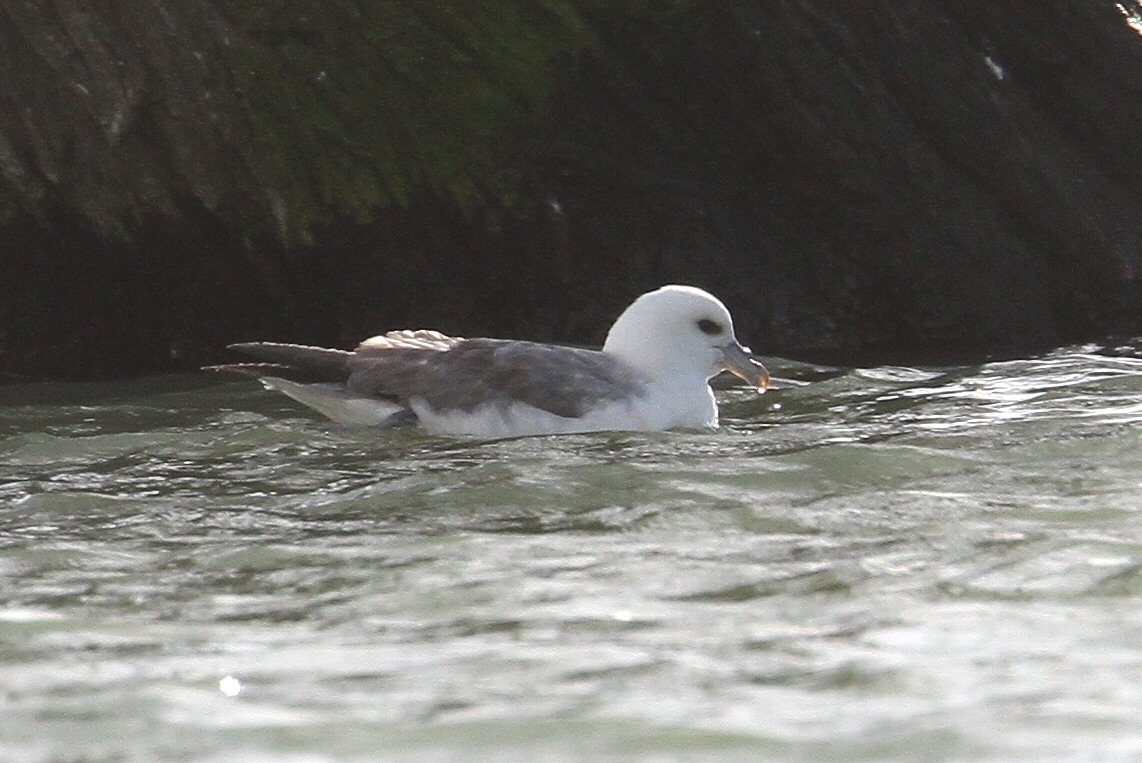
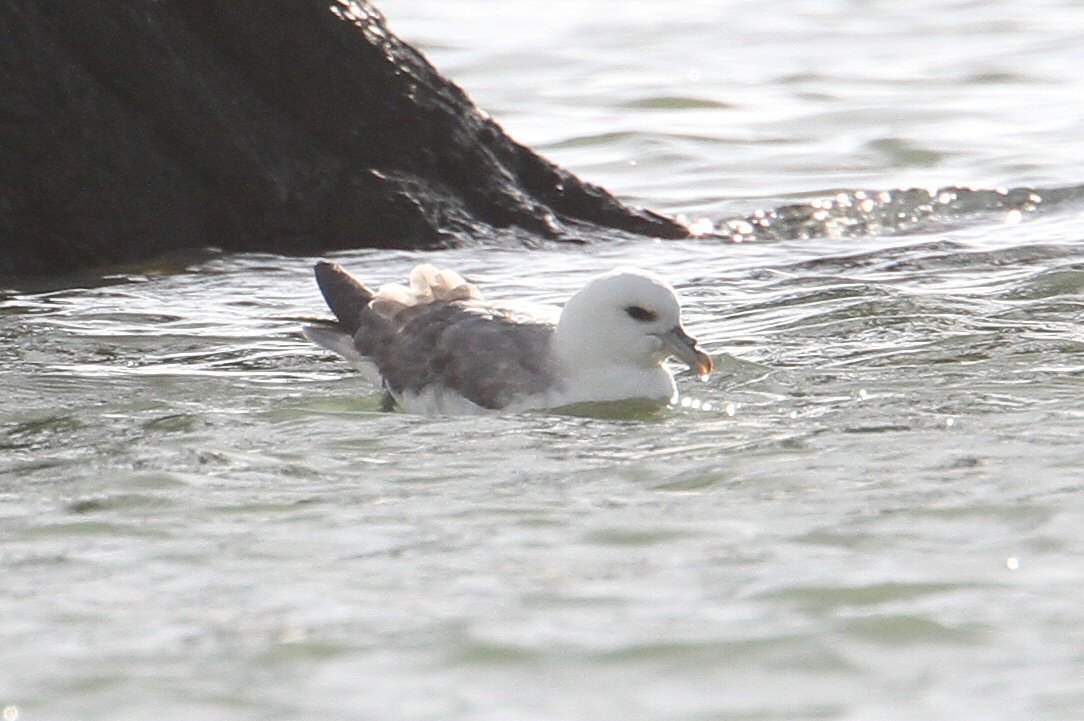
The wintering juvenile Great Northern Diver remained at Pitsford Res until at least 24th and Northamptonshire’s twenty-third ever Fulmar was found at Ravensthorpe Res on 26th.

Fulmar, Ravensthorpe Res, 26th February 2014 (Bob Bullock)

Just how many Great White Egrets we have wintering is anyone’s guess. With an amazing count of fourteen at one locality in Somerset this week, this species is fast losing its UK rarity status. Individuals continue to be reported from Stanwick GP, Ditchford GP, Summer Leys LNR/Earls Barton GP and Pitsford Res with twos at the last three of localities on several dates. On the raptor front, a female Merlin was at Harrington AF between 20th and 25th, while Peregrines were seen at Blueberry Farm, Maidwell on 16th, in the nearby Brampton Valley and at Deene Lake on 19th, Ditchford GP on 21st, between Moulton and Holcot on 22nd, in Northampton on 23rd, at Pitsford Res on 24th and at Ditchford GP on 27th.

The largest count of Golden Plovers was approximately five hundred at Stanwick GP on 20th. There have been no high counts of this species in recent weeks, the traditional Nene Valley roost site of Clifford Hill GP producing very few. The only Dunlin during the period was one at Stanwick GP on 20th, two Jack Snipe were at Hollowell res on 23rd and one was at Pitsford Res the following day, on which sixty-seven Common Snipe were also counted at the same locality. Further signs of spring were indicated by the appearance of Black-tailed Godwits, which are now clearly on the move, with singles at Stanwick GP on 18th and Summer Leys LNR on 22nd and two more arriving at Stanwick GP on 23rd. Both localities also produced Redshank, with up to fourteen at the latter locality throughout the period and one at Summer Leys on 22nd, while single Green Sandpipers were at Stanford Res on 16th, Harrington AF on 23rd-26th and Pitsford Res on 24th.

While March is traditionally the best month for spring passage of Mediterranean Gulls we have been seeing them appear a little earlier this year with the Black-headed Gull roost at Boddington Res proving to be as reliable as ever for producing this species. Four different individuals (two adults and two first-winters have been present, on and off, between 16th and 25th, one of the adults seen to be bearing a ring). Another adult visited Stanwick GP on 26th. An adult Glaucous Gull was again in the Ise Valley near Wellingborough on 16th and single juveniles were in the gull roost at Pitsford Res (the first there for many years) on 25th, Ditchford GP and Rushton Landfill on 27th and at Stanwick GP on 28th. Single adult Yellow-legged Gulls visited Stanford Res on 15th and Pitsford res on 19th, while Caspian Gulls during the period included a first-winter in the Ise Valley at Wellingborough on 17th and a third-winter at Rushton Landfill on 27th. Surprising for the time of year were Little Gulls in the roost at Boddington Res on 16th and flying over Irthlingborough on 18th, the latter being accompanied by twelve Kittiwakes! Another Kittiwake visited Daventry CP briefly on 27th.

Great Grey Shrike, Lowick, 23rd February 2014 (Geof Douglas)

After an apparent absence of a month, the Lowick Great Grey Shrike was back on its favoured hedgerow from 22nd until at least 25th, proving to be a popular draw for local birders, and a ‘Nordic’ Jackdaw appeared at Hanging Houghton on 21st. A Firecrest was found at Thrapston GP on 21st and one became two on the following day, both birds staying until 24th.

Firecrest, Thrapston GP, 23rd February 2014 (Kirsty Philpot)

Ten Chiffchaffs were counted at Ecton SF on 21st, singles were at Thrapston GP on 22nd-23rd and Ditchford GP on 27th, while two were at Pitsford Res on 24th and the wintering Central European Blackcap tally from gardens in Barton Seagrave, Northampton, Kettering and Wellingborough reached nine.

Female Central European Blackcap, Kettering, 26th February 2014 (Phil Jackman)

Migrant Stonechats appeared at Ditchford GP on 22nd and Daventry CP on 24th, up to two Mealy Redpolls were still frequenting the alders at Daventry CP until 17th and Bramblings were present at Harrington AF, Hanging Houghton and Pitsford Res with a maximum of twenty-five at the first of these locations on 17th.

Fulmar at Ravensthorpe Reservoir

Following the somewhat tongue-in-cheek story about Fulmar ‘breeding’ in Northamptonshire a couple of weeks ago, it’s a bizarre coincidence that one should turn up at Ravensthorpe Reservoir this week.

Fulmar, Ravensthorpe Res, 26th February 2014 (Bob Bullock)

Fulmar, Ravensthorpe Res, 26th February 2014 (Bob Bullock)

Fulmar, Ravensthorpe Res, 26th February 2014 (Bob Bullock)

Fulmar Records by month


There have been twenty-three since the first record in 1958, so they’re by no means annual and they are frequently difficult to catch up with, averaging approximately 0.4 records per year! Fortunately the Ravensthorpe individual lingered long enough to be photographed and appreciated by a number of local birders. Analysis of past records reveals that May is the peak month of occurrence so keep your eyes open! Many thanks to Bob Bullock for his excellent series of images.

Marbled Duck at Stanwick Gravel Pits

The Marbled Duck, first discovered by Steve Fisher at Stanwick GP’s main lake on 13th January and still present today, promptly disappeared almost immediately until rediscovery on 19th February. Or did it? With persistent inclement weather, rising water levels and less than ideal viewing conditions, it appears it may have been there, somewhere, all the time as it is now known to hide among the overgrown islands on the western side of the lake.

Marbled Duck, Stanwick GP, 20th February 2014 (Bob Bullock)

Despite being recorded sporadically in the UK, this species remains on category D of the British List as it is common in captivity but an established pattern of records suggests it is likely that some wild individuals occur.  Vagrants have been recorded in Northern Spain and in the Camargue in Southern France with most French records in August-September and a secondary spring peak in April. The pattern of British records also reflects this and Marbled Duck has been accepted as a genuine vagrant in the Netherlands.

Pouring at least some cold water on the vagrancy hypothesis, analysis of the stable-hydrogen isotope content of feathers taken from a first-winter shot in Essex on 1st September 2007 suggested that the bird originated from outside of the normal breeding range of the species and was most likely to have been of captive origin (see British Birds).

Although thought to be in decline, the global population is estimated at c.50,000-55,000 individuals, based on estimates of 3,000-5,000 in the west Mediterranean and West Africa, 1,000 in the east Mediterranean 5,000 in south Asia, and at least 44,000 individuals counted in Iraq in 2010 according to BirdLife International.

There has been one previous record of Marbled Duck in the county – coincidentally at Stanwick GP, on 29th June to 3rd July 1990.

Peregrine Survey

Peregrine, Summer Leys LNR, 27th September (Doug McFarlane)
Peregrine, Summer Leys LNR, 27th September 2013 (Doug McFarlane)

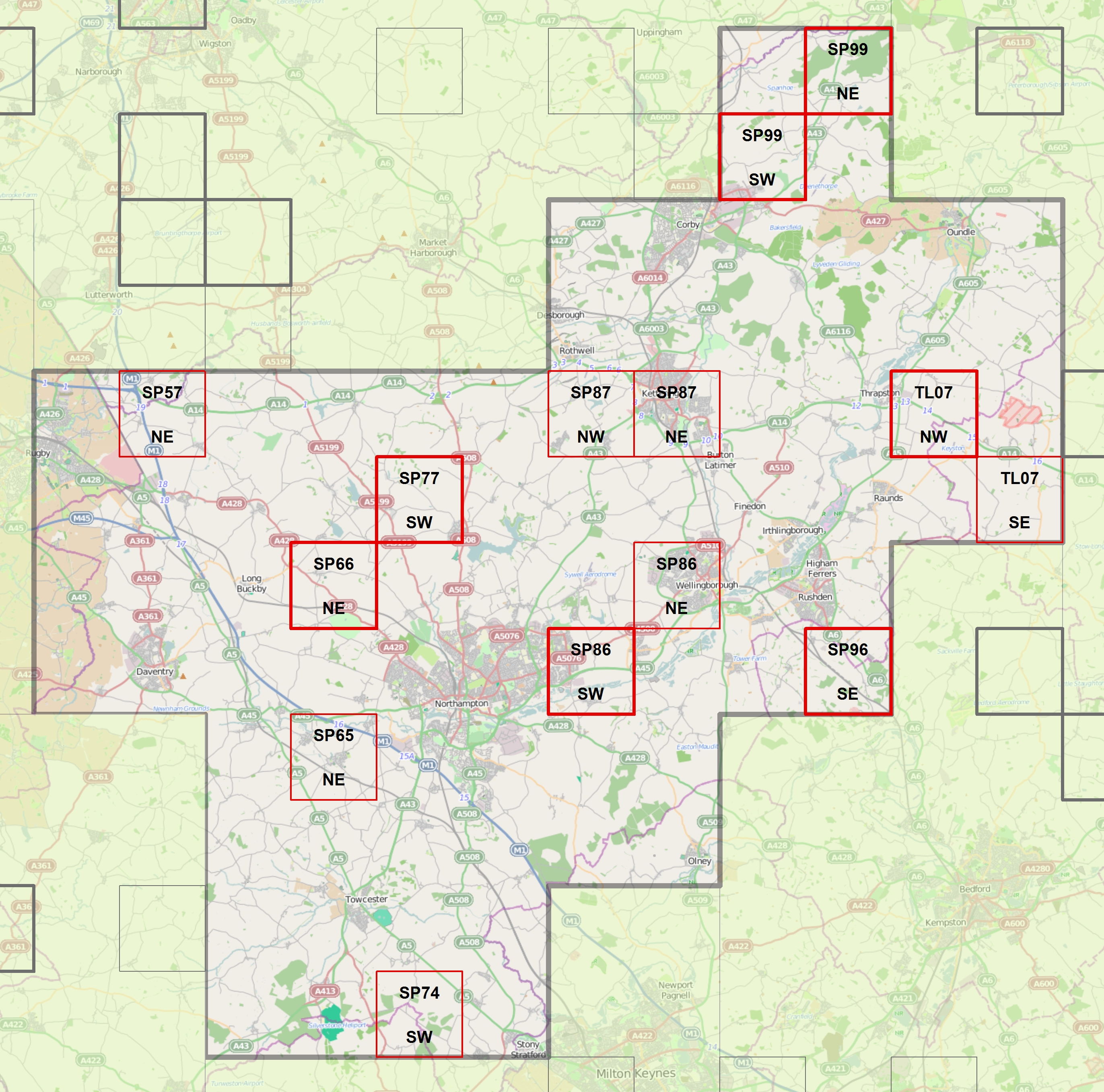
This spring the BTO is organising a nationwide Peregrine survey to record the number of occupied territories in the UK, Isle of Man and the Channel Islands. Details are on the BTO website here and they will be working closely with established groups that study raptors to complete a comprehensive survey of all known territories. Another aspect of the survey is checking for possible breeding in randomly selected 5×5 km squares and there are 14 of these squares in Northants (below).Peregrine map

So far volunteers are lined up to cover 10 of these squares – the remaining vacant squares are in the centre of the county:

SP77_SW   Cottesbrooke, Creaton, Brixworth
SP66_NE   East Haddon, Holdenby, Gt Brington
SP86_NE   Wellingborough
SP86_SW   East Edge of Northampton, Ecton

The aim will be to search each square for suitable habitat (e.g. quarries, pylons, industrial buildings, church towers) and to look for the presence of Peregrines. Apparently in some regions Peregrines will also nest in trees. Three visits to the square are recommended between March and mid-July. The first and second visits will be used to establish the presence or otherwise of Peregrines and the third visit to look for evidence of breeding success or as a further check for Peregrine presence in squares in which Peregrine detection may be particularly challenging.

Volunteers are required for the four remaining squares. If you would like to help, then please contact Barrie Galpin, BTO Regional Representative for Northants, 15 Top Lodge, Fineshade, Corby NN17 3BB barrie.galpin@zen.co.uk

Champions of the Flyway

Champions of the Flyway Logo B&W

I am delighted to be taking part in the Champions of the Flyway bird race in Israel, which is being staged by The Society for the Protection of Nature in Israel (BirdLife’s national partner in Israel) and is a BirdLife International Migratory Birds & Flyways Programme initiative. The race will take place on April 1st 2014, starting and ending in Eilat. In the course of just 24 hours, a number of international teams will compete to see the highest number of bird species in southern Israel. This is not just a bird race, but a massive fundraising campaign to support conservation work and, while the race will be fun, the goal is serious – to raise funds to help BirdLife International tackle the illegal killing of birds in southern and eastern Europe.Champions of the Flyway Playing Field

I am a member of the Birdwatch-BirdGuides Roadrunners team and we are looking for sponsors/donors to support our fundraising efforts. Our team’s target is to raise £5000. If you care about the perils which are faced by ‘our’ birds as they migrate to and from the UK and elsewhere in northern Europe then please consider visiting our donation page and pledging even a small amount. Many thanks for your kind support!

Blast from the past: Fulmar ‘breeding’ in Northamptonshire

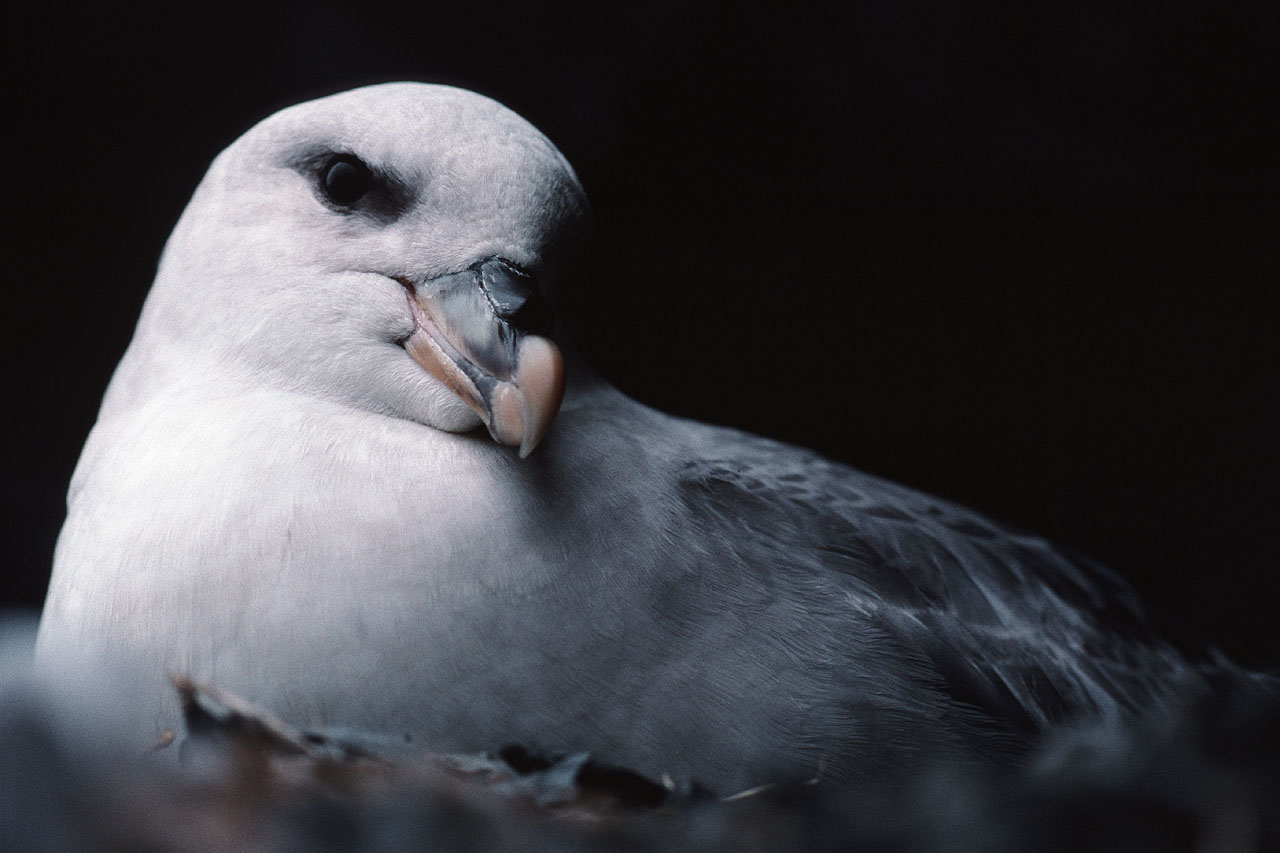
Fulmarus_glacialis_1_2 (Michael Haferkamp, Wikimedia Commons)I received a nice letter today from Jan Pickup, daughter of AJB (‘Tommo’) Thompson, who was an eminent Northamptonshire birder in the latter part of the last century.  Jan and husband, Tony, had kindly given me some literature which formerly belonged to AJBT and Jan had posted me a ‘missing’ bird report from 1969 – the very first edition of the Northamptonshire Bird Report, the forerunner of today’s annually produced Northants Birds.

In her letter she drew my attention to a note relating to an interesting local encounter with a Fulmar in May 1961, published by Laurie Taylor in British Birds in 1962, a transcript of which is reproduced below. What was not published, however, was the personal account from the Thompson family perspective, which Jan remembers well and recounts as follows:

Laurie lived in Bush Hill, quite close to us in The Headlands and came round and knocked on the door. He said to Dad, “I’ve got something to show you.” Dad said, in protest, “I can’t come now, I’m listening to Beethoven’s Seventh.” Laurie said “Blow Beethoven, I’ve got a new breeding record for the County.” So Dad went!

And this is what it was all about …

Fulmar laying egg in Northamptonshire garden. – On 27th May 1961, I was told by my aunt that a “sea-gull” had laid an egg in her garden in Northampton and that the bird was still there. Very dubiously I investigated and to my astonishment I was confronted with a Fulmar (Fulmarus glacialis). I captured the bird and released it at Pitsford Reservoir, Northamptonshire that evening. It settled on the water to preen and bathe before flying off in a southerly direction. The egg, which is now in my possession, was also seen by A. J. B. Thompson and M. Goodman. It is a typical Fulmar’s egg, white with a rough surface and slightly pyriform, measuring 73 mm. x 53 mm. It seems extraordinary that a Fulmar in breeding condition should be so far inland during the nesting season, but this hardly constitutes a breeding record for Northamptonshire!                                     British Birds (1962) Vol  55: 164

Header image Fulmar (Michael Haferkamp, Wikimedia Commons)