The Week in Focus: 22nd to 28th November 2014

The country remained largely under the influence of a south-easterly airstream for much of the week, with overnight temperatures low enough to produce frost on two consecutive days in the early part. Otherwise, intermittent mist, fog and drizzle produced murky conditions which hampered birding to some extent.

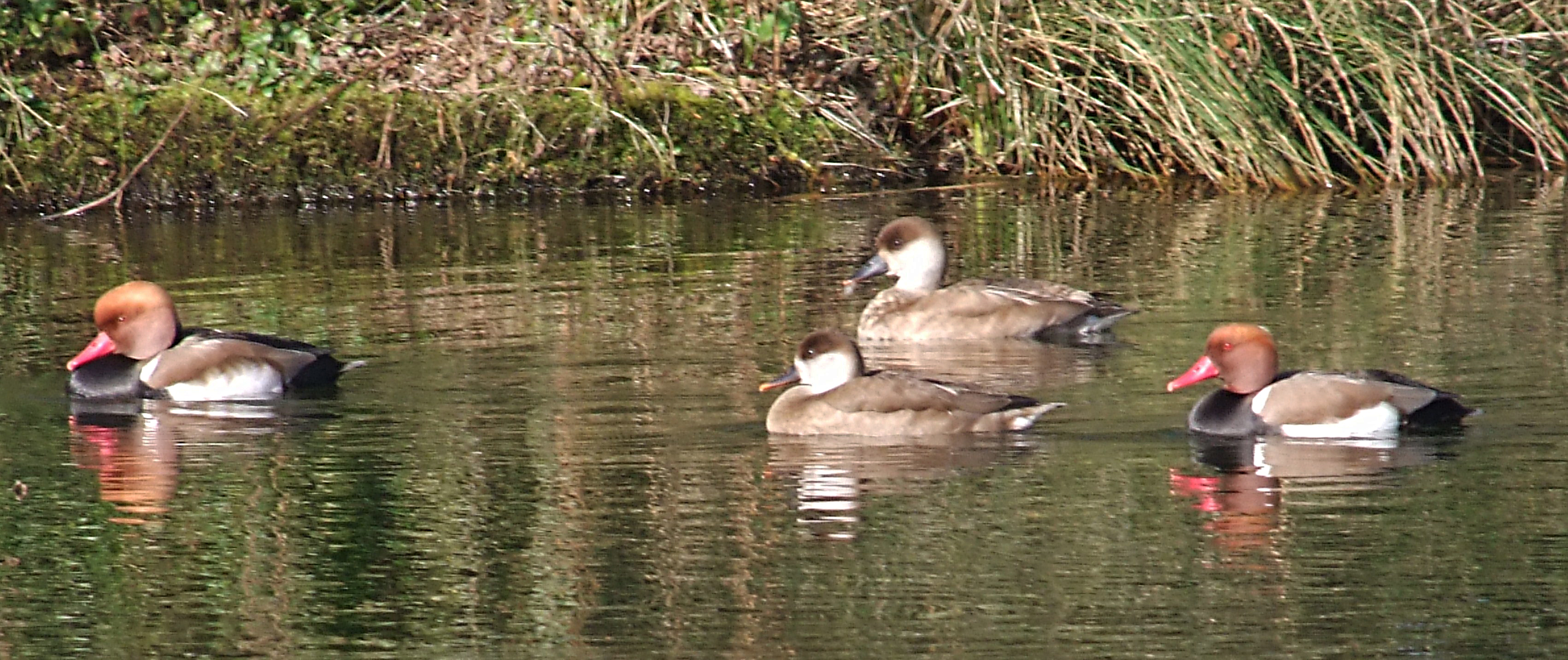
The two Ruddy Shelducks remained mobile around Pitsford Res, being seen only on 27th this week, at the same time that Red-crested Pochard numbers appeared to have fallen to just three there, although Wicksteed Park Lake, Kettering still mustered two on the same date, remaining until 28th. Meanwhile, the Daventry CP female Scaup appears to have vacated the site while, up and over to the north-east a bit, a first-winter drake was discovered at Hollowell Res on 24th, remaining there throughout the week.

All three Great White Egrets were on show simultaneously at Pitsford Res on 23rd and another – presumably last week’s Nene Valley wanderer – but in a brief appearance at Summer Leys LNR on 26th. The Black-necked Grebe was still on Town Lake at Thrapston GP on 28th and raptors were again thin on the ground – and in the air – with just two Peregrines over Badby on 22nd and singles at both Stanwick GP and Summer Leys LNR on 24th.

Small numbers of Golden Plovers were reported intermittently from Clifford Hill GP while approximately two hundred were counted at Summer Leys LNR on 24th and a belated report of some four hundred last week on the recently reprofiled scrape at Ditchford GP’s Irthlingborough Lakes & Meadows reserve is encouraging for the site. On 22nd, three Sanderlings circling Clifford Hill GP’s main barrage lake before heading off west represented a most unseasonal record for this species in the county as most occur as spring passage migrants in May. The same site also held two or three Dunlins on the same date while two were at Hollowell Res on 24th. This week’s Green Sandpipers were two at Ravensthorpe Res on 24th and singles there on 28th, at Stanford Res on 27th and Ecton SF the following day, while twos of Common Snipe were at the latter site at the same time, at Pitsford Res on 26th and at Clifford Hill GP on 27th.

Adult Mediterranean Gulls were found at Wicksteed Park Lake on 22nd and at Hollowell Res on 27th with the latter site producing an adult Caspian Gull on 24th, two on 27th and one on 28th, while a third-winter Caspian visited Daventry CP on the last of these two dates. Yellow-legged Gulls were equally scarce with just singles at Hollowell Res on 24th and 27th with two there on 28th and one at Ravensthorpe Res on the same date.

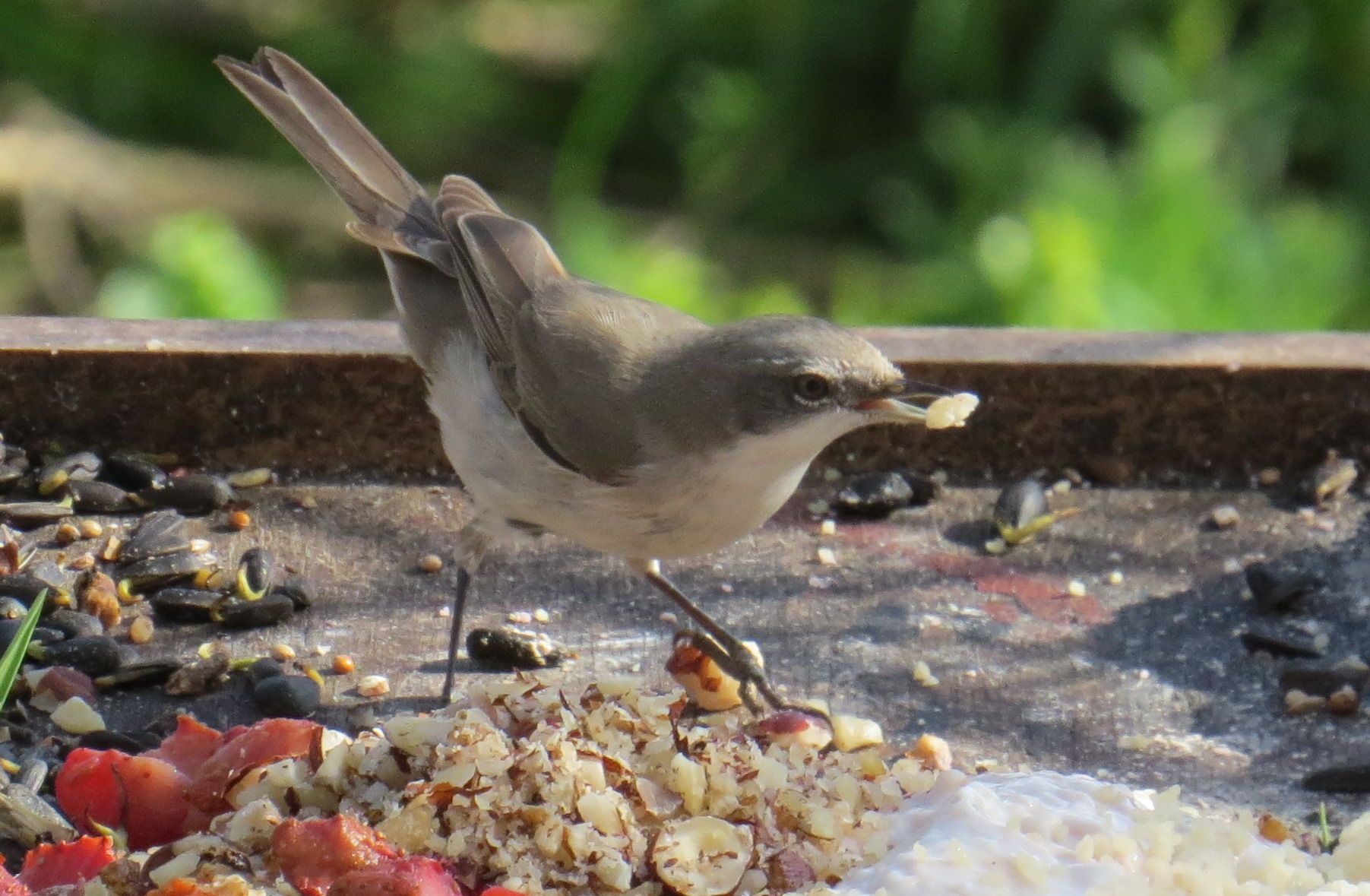
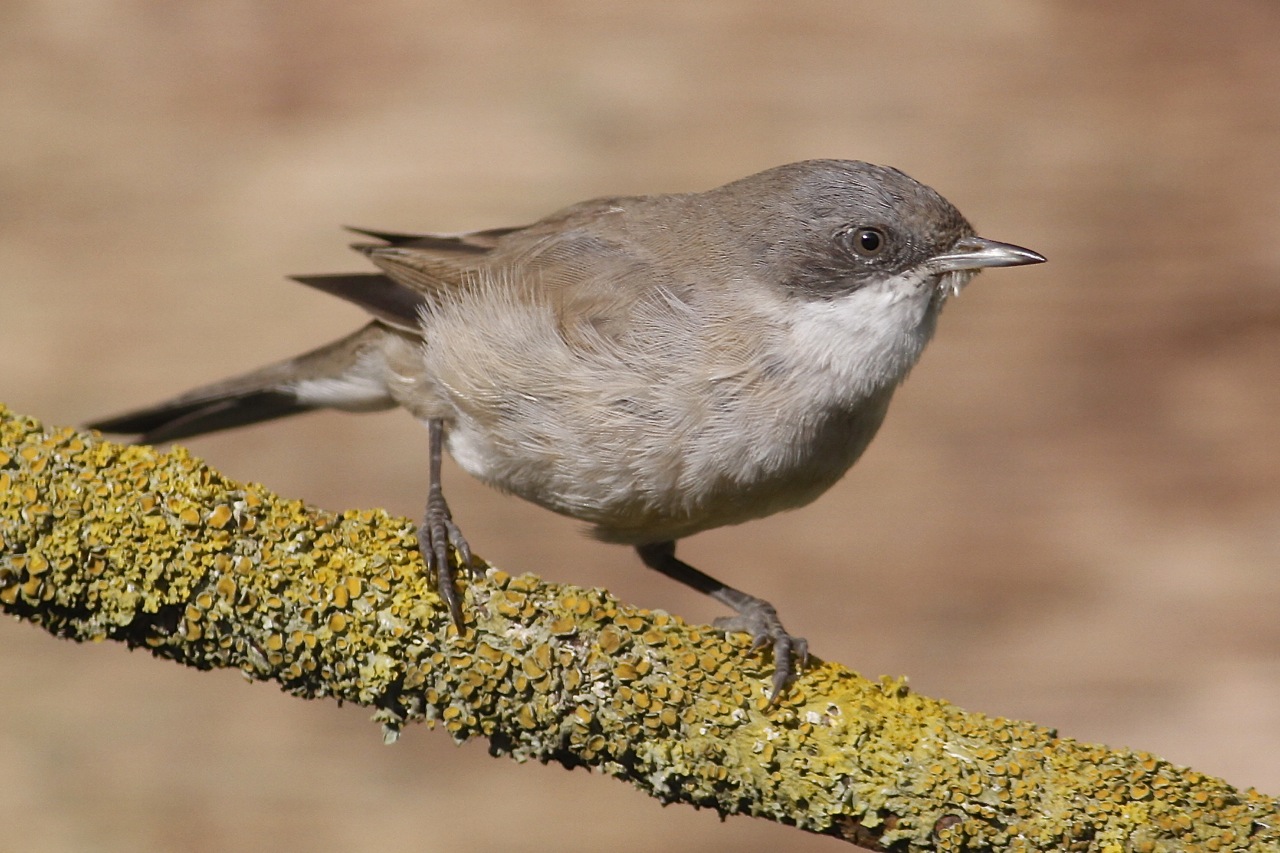
Scarce passerines are always at a premium by the time we get to November but noteworthy this week were Central European Blackcaps – all males – with two in a Duston,

Male Blackcap, Northampton 22nd November 2014 (Stuart Mundy)

Northampton Garden on 22nd-23rd, two in a Kingsthorpe, Northampton garden on 25th and one in a Wellingborough garden on 27th-28th. The only other wintering warbler reported was a Chiffchaff at Clifford Hill GP on 22nd, although there must surely be more … A single Stonechat was at Summer Leys LNR on 23rd while the usual two were at Hollowell Res all week, the latter site producing a Snow Bunting on 27th.

Further Habitat Improvement for Wildfowl and Waders in the Nene Valley

It’s very satisfying to again see people working hard to improve habitat in our river valley wetlands! Following last year’s reprofiling of the peninsula on Clifford Hill Gravel Pits’ main lake, Northampton Washlands, and before that, the scrape at Summer Leys LNR, a new project has recently been completed to create habitat for wildfowl and waders further along the Nene Valley at Irthlingborough Lakes & Meadows.

The far eastern end of the old Ditchford Gravel Pits complex has just gone under the knife but the resultant effect is far more than simply cosmetic. The area has SSSI and SPA designations for overwintering wetland birds and, as there is floodplain meadow grassland adjoining some of the lakes, Natural England asked the Wildlife Trust for Bedfordshire, Cambridgeshire & Northamptonshire (Wildlife BCN) to prioritise work on the lakes and grasslands either side of the King’s Meadow Lane cycle path.

Ian Wilson, Reserves Officer, Wildlife BCN said “The management aims were pretty simple: to improve the site for overwintering ducks and waders by visually reconnecting the grassland to the lakes, starting summer grazing of the grassland to create a shorter sward, helping water to move through the site and off the grassland rather than being dammed by the cycle path and sitting on the grassland for months at a time and creating additional high quality habitat by providing scrapes and an island.”

Throughout September 2013 and 2014 contractors, staff and volunteers all removed huge amounts of ten-year-old self-set willow from the grasslands, lake margins and ditch banks. The willow was burnt on site and the stumps treated to minimise re-growth.

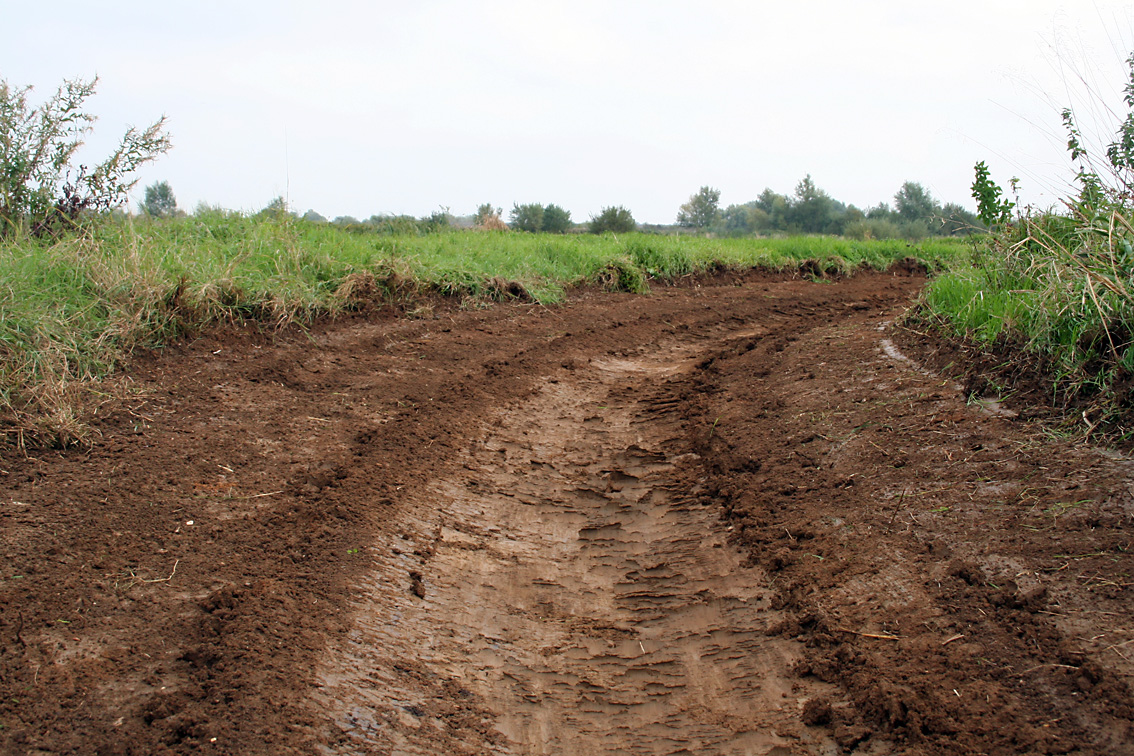
New scrape area, 27th November 2014 (Ian Wilson)
Scraping (Steve Brayshaw)

Over a two year period fencing and grazing infrastructure has been installed ready for grazing the site in spring 2015. This fencing also creates a disturbance-free area as it excludes dogs and people from the vicinity of the most wildlife-sensitive lakes.

Completing the scrape and shallows (Steve Brayshaw)

In July 2014 a bridge was installed and a channel cut across the cycle path to allow water to move on and off the site more quickly as well as clearing the back channel to help water flow through site.

In early August, Western Power removed three of the four lines of power cables crossing the grassland and lakes. These have been routed underground after a year of digging and mess and the fourth line will be removed next year. The removal of a large number of predator perches increases the potential for ground-nesting birds to use the grassland area to breed as well as eliminating bird-strikes on the wires and improving the look of the site no end.

The RSPB rotary ditcher was used to create a series of level foot-drains to allow water to flow on and off the grassland as well as creating good wader habitat.

Ditcher (Ian Wilson)
'Ditch 1' (Ian Wilson)
‘Ditch 1’ (Ian Wilson)

Under Steve Brayshaw‘s direction, contractors removed a large ridge of soil which was trapping floodwater on the grassland and visually separating the lake from the grassland. Steve also designed the scrape and island work from the planning phase some years ago to completion this September, managed the contractors on site and ensured the job came in on budget. Steve also gave much invaluable advice and consultative assistance with the back channel clearing, the bridge and channel on the cycle path and numerous other facets of the project.

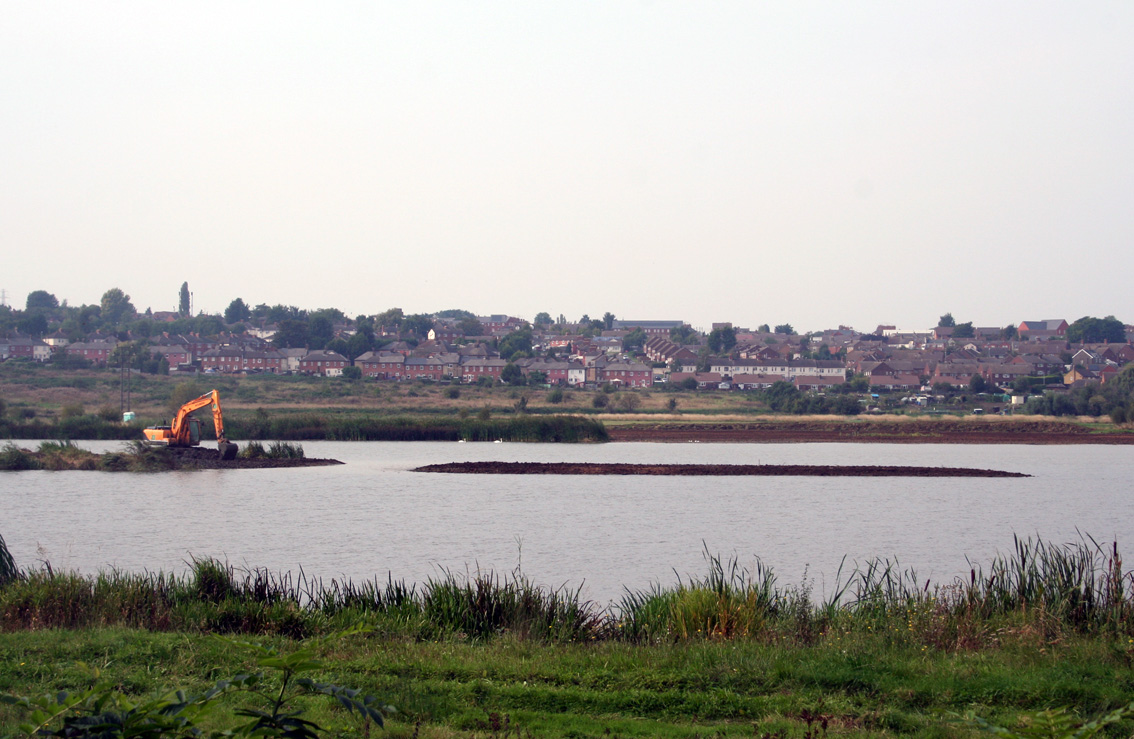
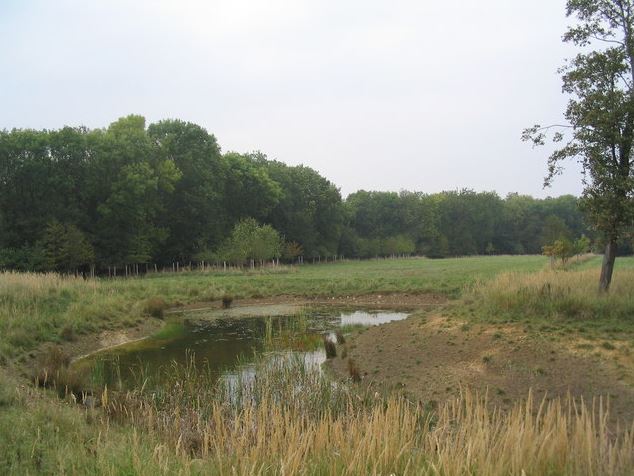
The resulting bare ground now drops very gradually from the meadow to the lake and includes a couple of scrape areas as well as a very gently varying topography to create numerous small wet areas. At the same time a tree-covered spit was cleared, lowered and cut off from the mainland to create a new island in the middle of the lake.

Island in the making (Ian Wilson)
Island completed (Ian Wilson)

Finally Ian’s team have cut some viewing ‘windows’ in the hedge along the old railway track to let people see across the area they have been working on as well as improving the state of the path along the old railway. The project was funded by the Heritage Lottery Fund and Sita.

Good numbers of Common Snipe and around four hundred each of Lapwing and Golden Plover last week serve to demonstrate that the scrape works are achieving their aims already! Hopefully once the weather gets colder we will see an increase in the number of ducks too.

Don’t forget the lakeside and meadow habitat is just one of many as there are some good mature hedges, mixed scrub, reed fringes, wet woodland and plenty of willow left to attract a broad spectrum of avian and other wildlife.

Access                                                                                                                                                                                                                The site map below provides a general overview of the area and the few yellow dots indicate where best to view the main area of improvement.

Site map (Ian Wilson)

Today’s photo – the first of the series above – was taken from the dot midway between the 11 and 12 labels. Note that the path around wader flats is prone to flooding and is often wet and slippery. The old railway and the new greenway are much better all-weather surfaces from which to explore the area. The site can be accessed most easily from Station Road at the Stanwick GP Lakes end or from St Peter’s way near to the town centre car park.

Many thanks to Ian Wilson for providing commentary, photographs and the map and to Steve Brayshaw for additional detail and photographs.

The Week in Focus: 15th to 21st November 2014

The country fell under the influence of an easterly or south-easterly airstream for much of the week, although it remained largely dry with temperatures around, or above, the seasonal norm.

This week’s round-up is, then, a subtle blend of predictability and paucity, with a fair proportion of last week’s and long-staying birds remaining and few new discoveries being made. The Stanford Res Pink-footed Goose was still present on 15th and the same site still held at least seven Red-crested Pochards until 20th, with six at Wicksteed Park Lake the following day. The two Ruddy Shelducks were also still present at Pitsford Res on 20th and just one female Scaup remained at Daventry CP on 18th, while the female Ring-necked Duck was still at Wicksteed Park Lake, Kettering on 16th, although there have been so subsequent reports.

At least two Great White Egrets seem set to winter at Pitsford Res, having been seen on and off throughout the week, while one visited Thrapston GP on 15th and Stanwick GP two days later. A Black-necked Grebe resurfaced on Thrapston GP’s Town Lake on 15th and the only Peregrine to put in an appearance was one further up the Nene Valley at Stanwick GP on 20th.

An Oystercatcher at Stanwick GP on 17th was unseasonal but six hundred Golden Plovers there at the same time was the highest number in the county so far this autumn.  A Green Sandpiper at Pitsford Res on 15th was the week’s only record, as were up to three Redshanks at Stanwick GP between 17th and 20th and three Common Snipe there on the last of these dates. Stanwick also produced a Yellow-legged Gull on 17th, while two were at Pitsford Res on 15th along with an adult Caspian Gull at the same time.

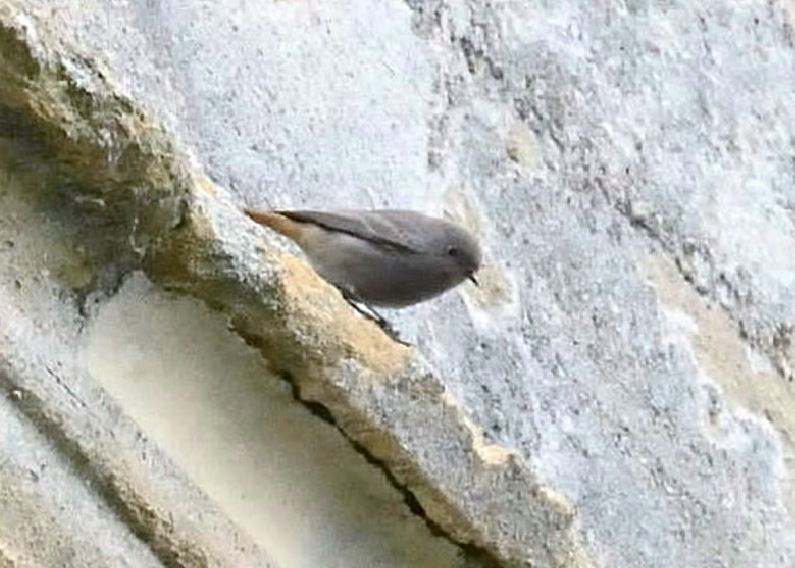
A Ring-necked Parakeet visited a garden in Aldwincle on 15th while, just up the road in Oundle, a late autumn Black Redstart spent two days on St Peters Church spire on 17th-18th.

Black Redstart, Oundle, 18th November 2014 (Alex Barclay)

More usual fare included returning Central European Blackcaps with two different birds on consecutive days, 16th and 17th, in one Northampton garden and a male in a Wellingborough garden on 17th. Other wintering warblers were three Chiffchaffs at Stanford Res on 15th (one on 16th) and one at Stanwick GP on 19th, while a Cetti’s Warbler at Spring Marsh in the Brampton Valley on 16th was an unusual find away from this species’ favoured Nene Valley locations.

Starling Murmuration and Sparrowhawk

The Starling murmuration at Thrapston Gravel Pits’ Titchmarsh Reserve continues to attract attention – not just from us birders but from predators, too. Alan Coles captured this Sparrowhawk on the edge of the flock, having a go, this evening.

Starling murmuration and Sparrowhawk, Thrapston GP, 21st November 2014 (Alan Coles)

One recent estimate has put the total of Starlings roosting in the reedbed at between fifteen and twenty thousand! To view, park in the Aldwincle car park, walk down the track to the gate, turn right and walk to the second hide.

Bingo! It’s a Ringo!

This female Ring-necked Duck swam into the record books as Northamptonshire’s 5th when Nick Parker picked it up during heavy rain at Wicksteed Park Lake, Kettering yesterday afternoon. Poor light hampered serious photography and the identification was tentative.

Not so today, though, when the bird showed well all day on the south-east side of the lake. A nice adult female: defined, though narrow while subterminal bill band (less defined and more diffuse on juv/1st winter), restricted, dull yellow-tinged feathering around bill base (whiter and more extensive on juv/first-winter) and uniformly patterned underparts (patchy/whitish in juv/1st winter) offer clues to age and sex of this individual.

Female Ring-necked Duck, Wicksteed Park Lake, 9th November 2014 (Bob Bullock)
Female Ring-necked Duck, Wicksteed Park Lake, 9th November 2014 (Mike Alibone)

CaptureThis bird follows hot on the heels of last year’s female at Stanwick GP on 20th November, images and previous records here.

Significant Threat to Wildlife in Fineshade Wood

by Barrie Galpin

Many of you will know Fineshade Wood, even though it is at the far north of Northants. It is a large area of Forestry Commission Woodland, and part of the historic Rockingham Forest.

View from the wildlife hide, Fineshade Wood (Tim Heaton, Wikimedia Commons). Views expressed in the accompanying text are not necessarily those of the photographer.

There is a proposal by Forest Holidays to build a 70-cabin holiday park on 96 acres of this part of the Public Forest Estate – a proposal that will devastate a very important wildlife-rich area.  Fineshade has been developed as a walking and cycling destination in recent years with a network of forest trails and the former RSPB Visitor Centre. There are still important undisturbed areas where human access is difficult – which is what makes it great for birds and reptiles in particular.  In one of these areas of semi-natural woodland, north east of the visitor centre Forest Holidays plan to build a network of 2 miles of new forest tracks leading to 70 cabins, a central leisure block, maintenance site and 189 parking spaces. There will be year-round accommodation for 352 people within the depths of the wood. 352 people having a normal holiday experience i.e. making noise, having barbecues, walking dogs, starting and driving cars, switching on lights, playing music etc..

Such a devastating development would normally require an Environmental Impact Assesment but the planning application now before East Northants Council is accompanied by only a “Preliminary Ecological Report”. There has been a partial survey of reptiles and amphibians, no survey of breeding birds (they rely  BTO and county records) , no bat survey, no survey of dormice, a partial plant survey. They do not even appear to have considered Butterflies, Moths and other invertebrates.

The Wildlife Trust together with local and national wildlife groups will be making their comments to the Council but we really need a huge swell of supporting objections from individual birders and naturalists. Please can you help? You can do so simply by sending an email now. Details are below.

The threat to birds

The following birds are listed in the FH report

“Red list species that have been recorded include: Song Thrush, Tree Pipit, Yellow Hammer, Marsh Tit, Grasshopper Warbler, Nightjar, Willow Tit, Skylark and Cuckoo. Amber list species that have been recorded include: Dunnock, Garden Warbler, Red Kite, Redstart, Willow Warbler, Whitethroat, Green Woodpecker, Bullfinch and Mistle Thrush.”

To that I can add Long-eared Owls and roding Woodcock this year.

They conclude “therefore the site is of at least county importance for birds”. They reach a similar conclusion for reptiles, particularly adders.

Suggested “Mitigation and Enhancement” amounts to don’t clear the vegetation during the nesting season, try to create some good habitat elsewhere and stick up some bird boxes!

The planning application

The full application is online here, where objections can also be lodged

www.east-northamptonshire.gov.uk/planningapplications

The reference number for the application is 14/01156/FUL.
The deadline for objections is 23 July but please do it now

How to object:

You can object by email to:   planning@east-northamptonshire.gov.uk
or online or by letter to
Planning comments,  East Northants Council, Cedar Drive, Thrapston  NN14 4LZ

You must give your name and address  and include the reference number 14/01156/FUL and use the word objection very clearly.

More reasons to object?

Please email Fineshade.wood@zen.co.uk for more details, particularly about unsuitable vehicle access.

PLEASE OBJECT NOW

2012 Northamptonshire Bird Report now out!

Northants Birds

NBR 2012The latest Northamptonshire Bird Report, with records for 2012, is now available. Contents include full Systematic List compiled using records from more than 230 local observers, sections on Escapes and Ferals and Corrections and Additions from previous years, as well as many photos and illustrations. There is also an account detailing the occurrence of Northamptonshire’s first Bonaparte’s Gull, the East Midlands Red Kite Report, Barn Owl Project Report, Nightingale Survey and ringing data from the Storton’s Pits Ringing Group as well as the full list of species ever recorded in Northants, tables of arrival and departure dates for summer and winter visitors and a County site map.


Copies and back issues from:

R W Bullock, 81 Cavendish Drive, Northampton NN3 3HL

Price £7.00 + £1.20 p&p

Cheques payable to ‘Northamptonshire Bird Report’

The 2013 Report will soon be completed and is expected to be available later this year.

The Week in Focus: 15th to 21st March 2014

The week started warm, bright and dry under a continued south-westerly airstream, which turned more westerly with falling temperatures as the week progressed. However, it remained relatively mild and largely dry, providing ideal conditions for the arrival of more spring migrants.

A pair of Ruddy Shelduck was present near Slipton until 18th, having been present in the area since 12th. The reduction in wintering wildfowl numbers became more evident this week but the 2 Egyptian Geese were seen at Ditchford GP on 16th, the unringed female Wood Duck of unknown origin was still being seen on the River Nene at Northampton on 18th and the red colour-ringed Marbled Duck remained at Stanwick GP until at least 19th. The first Garganey arrived this week at Daventry CP, where four were found on 20th and two pairs of Red-crested Pochards dropped into Stortons GP on

Red-crested Pochards, Stortons GP, 17th March 2014 (Doug Goddard)

17th, while the drake Scaup remained at Ditchford GP on 16th, the same date that the Thrapston GP Long-tailed Duck was still on Town Lake and the ever popular Earls Barton GP individual remained on Mary’s Lake there until at least 20th. The only Smew left over from the winter were a pair at Stanwick GP until at least 19th while single-figure counts of Goosanders came from nine localities throughout the week.

The wintering juvenile Great Northern Diver continued its protracted stay at Pitsford Res all week and at least one Great White Egret remained faithful to Summer Leys LNR until at least 18th, while two were again at Ditchford GP on 16th. Bird of the week, for many, however, was the Red-necked Grebe discovered off the dam at Pitsford Res late on 19th and still showing well to all comers on 21st. Red-necked Grebe has become a bit of a local rarity in recent years, this individual being the first in the County since one put in a brief appearance at Stanwick GP on 22nd November 2008.

Red-necked Grebe, Pitsford Res, 20th March 2014 (Bob Bullock)

Hot on the heels of the first two Ospreys last week came two more – one over Brackmills, Northampton on and another over Ditchford GP on 21st. Four in the County already bears testament to the growing UK population, which is now estimated to be in the region of two hundred and fifty pairs. Aside from this, Peregrines were seen in the Brampton Valley, Ditchford GP, Hanging Houghton, Hardingstone GP and at Harrington AF.

The Brampton Valley continued to host up to 300 Golden Plovers throughout the week and six Jack Snipe were found at Hollowell Res on 16th, while 2 Dunlin were at Summer Leys on 16th-18th. A Curlew visited Thrapston GP on 19th, twelve Redshanks were at Stanwick GP on 17th with smaller numbers at Aldwinckle and Summer Leys, while a single Green Sandpiper was seen below the dam at Pitsford Res on 20th.

Winter gulls have begun to disperse but there are still good numbers moving through on passage with adult Mediterranean Gulls in reservoir roosts at Pitsford on 15th and two different individuals at Boddington on 20th and 21st. A second-winter Caspian Gull was again at Stanwick GP on 17th, and a first-winter Kittiwake visited Pitsford Res on 16th. The pair of ringed Bearded Tits at Stortons was seen again on 16th. Interestingly, the ringers on site believe there are two pairs present. More Sand Martins drifted through at several sites with approximately twenty at Stortons GP on 20th being the maximum count, while more and more Chiffchaffs piled in this week, with singing males widely reported. Central European Blackcaps began to melt away with established long-stayers remaining in gardens at Barton Seagrave until 16th and Wellingborough, where there were two males and a female until 21st. Singing males in Wellingborough and Hardingstone may have been early summer visitors or winterers on the move. The first Ring Ouzel of the spring, a male, was found at Harrington AF on 17th and the first Northern Wheatears were found at Harrington AF and in the Brampton Valley on 18th and another was at Borough Hill on 20th.  Hot on the heels of last week’s early Yellow Wagtail three more were seen – two at Middleton Cheney on 15th and one in the Brampton Valley on 18th, while Northamptonshire’s only know wintering Water Pipit showed itself again at Ditchford GP on 16th. Serving to remind us that winter is not yet over, Bramblings hung on all week at Harrington AF with sixteen still there on 18th and one was also at Kelmarsh on 17th.

Not all winter whitethroats are eastern …

My old buddy Pete Campbell, who divides his time between Northants and the Isle of Wight, sent these images of a Lesser Whitethroat taken in his garden on the island on 7th March. It has been present daily since January.  This looks all the world like a standard grey and white curucca therefore we should not assume that all wintering Lesser Whitethroats are of eastern origin. Compare it here with our Northampton bird.

Lesser Whitethroat, Isle of Wight, 7th March 2014 (Pete Campbell)
Central Asian Lesser Whitethroat, Northampton, 11th March 2014 (Dave Jackson)


Champions of the Flyway

Champions of the Flyway Logo B&W

I am delighted to be taking part in the Champions of the Flyway bird race in Israel, which is being staged by The Society for the Protection of Nature in Israel (BirdLife’s national partner in Israel) and is a BirdLife International Migratory Birds & Flyways Programme initiative. The race will take place on April 1st 2014, starting and ending in Eilat. In the course of just 24 hours, a number of international teams will compete to see the highest number of bird species in southern Israel. This is not just a bird race, but a massive fundraising campaign to support conservation work and, while the race will be fun, the goal is serious – to raise funds to help BirdLife International tackle the illegal killing of birds in southern and eastern Europe.Champions of the Flyway Playing Field

I am a member of the Birdwatch-BirdGuides Roadrunners team and we are looking for sponsors/donors to support our fundraising efforts. Our team’s target is to raise £5000. If you care about the perils which are faced by ‘our’ birds as they migrate to and from the UK and elsewhere in northern Europe then please consider visiting our donation page and pledging even a small amount. Many thanks for your kind support!