Newsround – 17th to 23rd April 2021

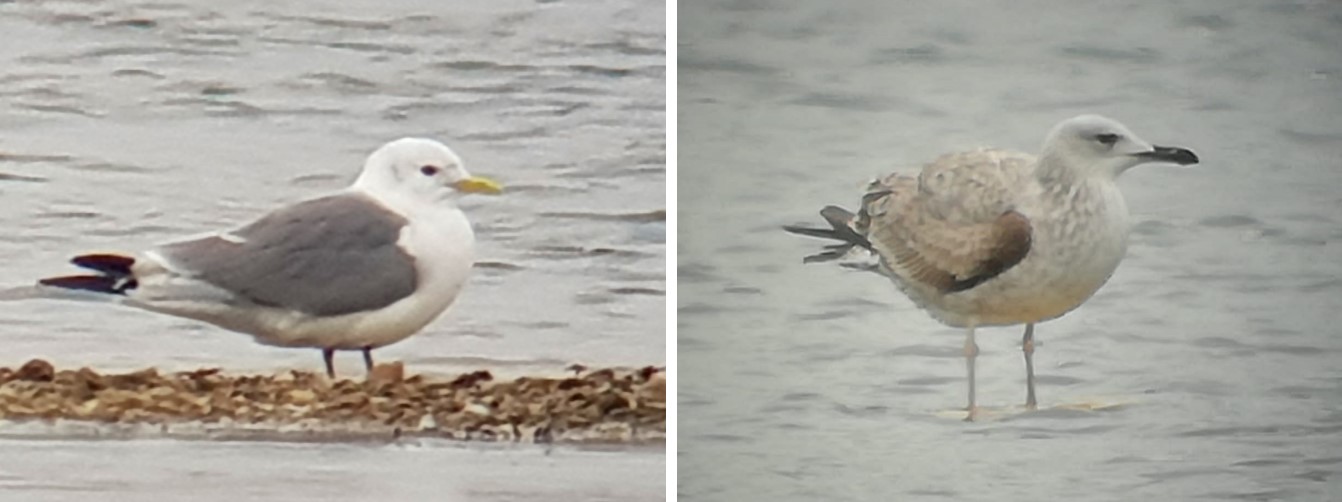
A bright, rain-free and erratically warm week, with a high pressure system sitting over Scandinavia in part, brought a mixture of north-easterlies and easterlies, with some short-term southerlies thrown in for good measure. SET AGAINST A BACKCLOTH OF THE CONTINUED ARRIVAL OF SPRING MIGRANTS AND a huge, unprecedented influx of Little Gulls, the first true rarity of the spring – a potential fifth record for Northamptonshire – livened things up, albeit briefly, on 17th.
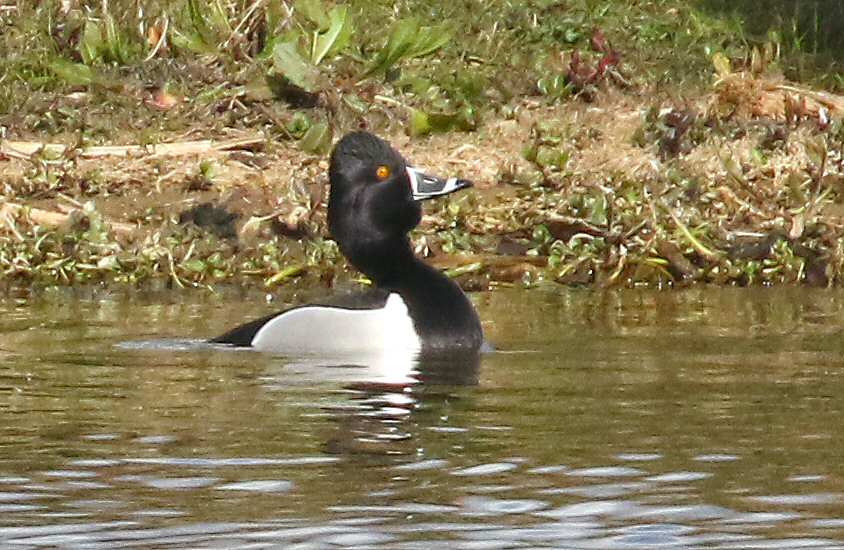
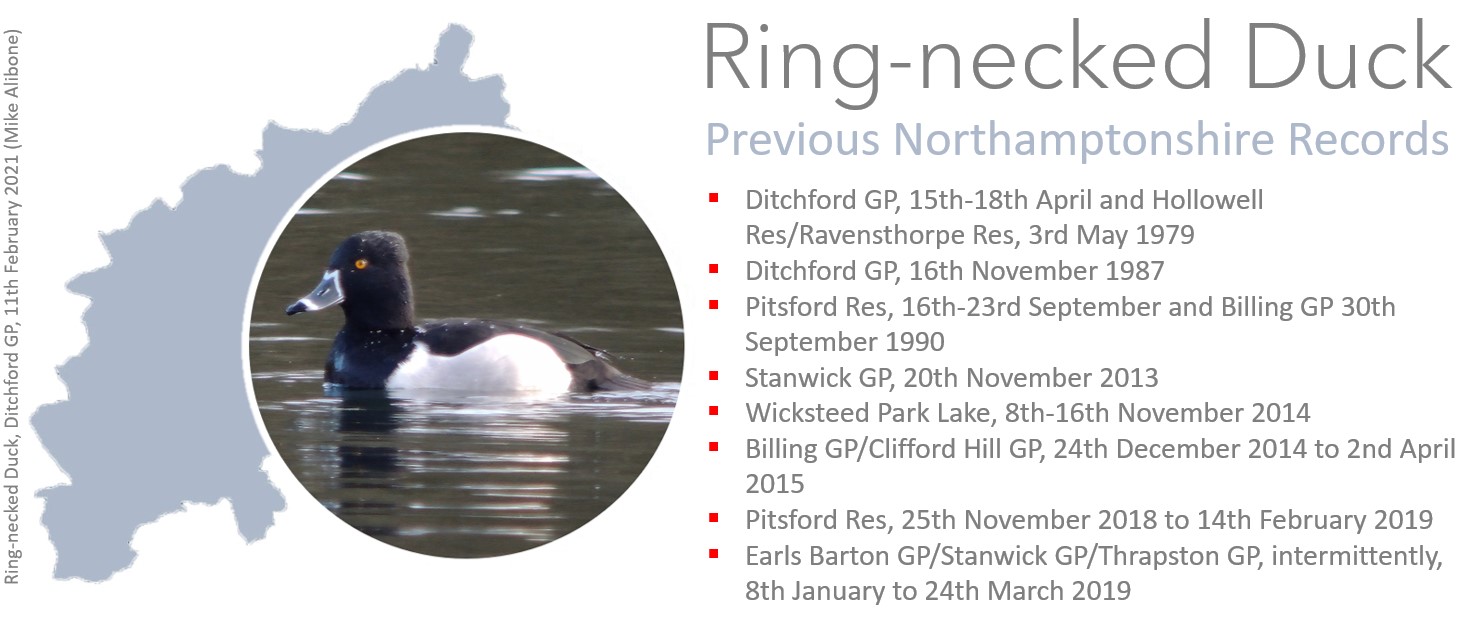
With winter wildfowl well and truly on the wane, a lone White-fronted Goose dropping in to Stanford Res on 23rd, along with a Ruddy Shelduck flying over nearby Honey Hill on 17th, summed up the anserine oddballs for the week. Indisputably more pukka credentials were attached to the Garganey pairs remaining at Summer Leys until 17th and throughout the week at Pitsford Res, while a lone drake visited Stanwick GP on 18th. Finally, it looked this week like the winter’s long-staying drake Ring-necked Duck decided to call it a day – that day being 19th – the last date it was seen at Clifford Hill GP.

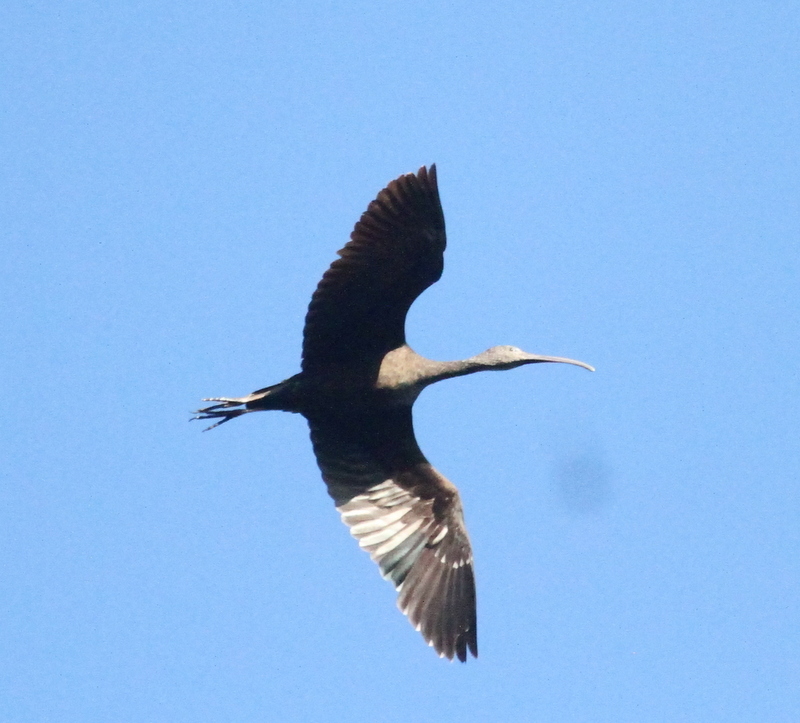
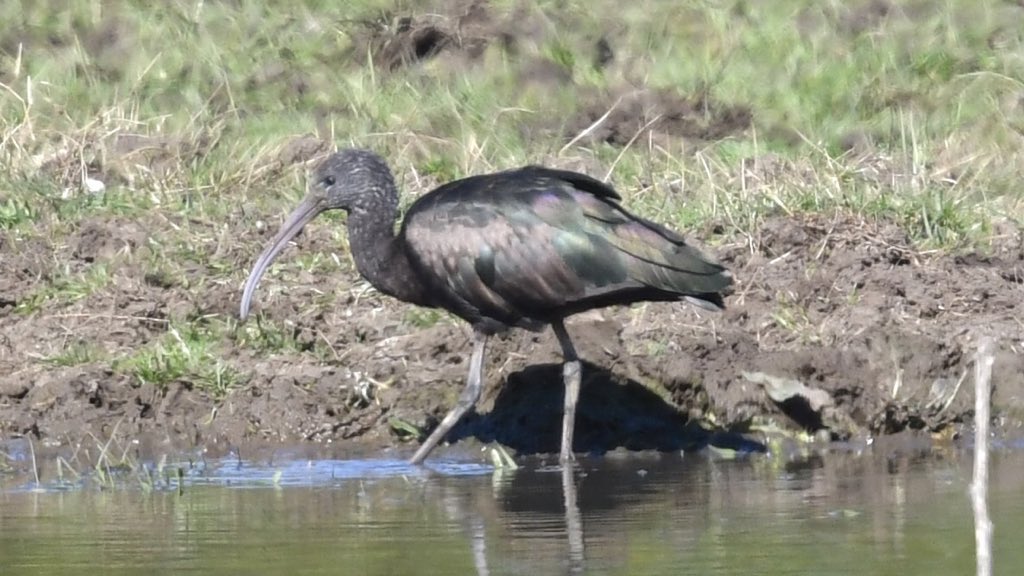
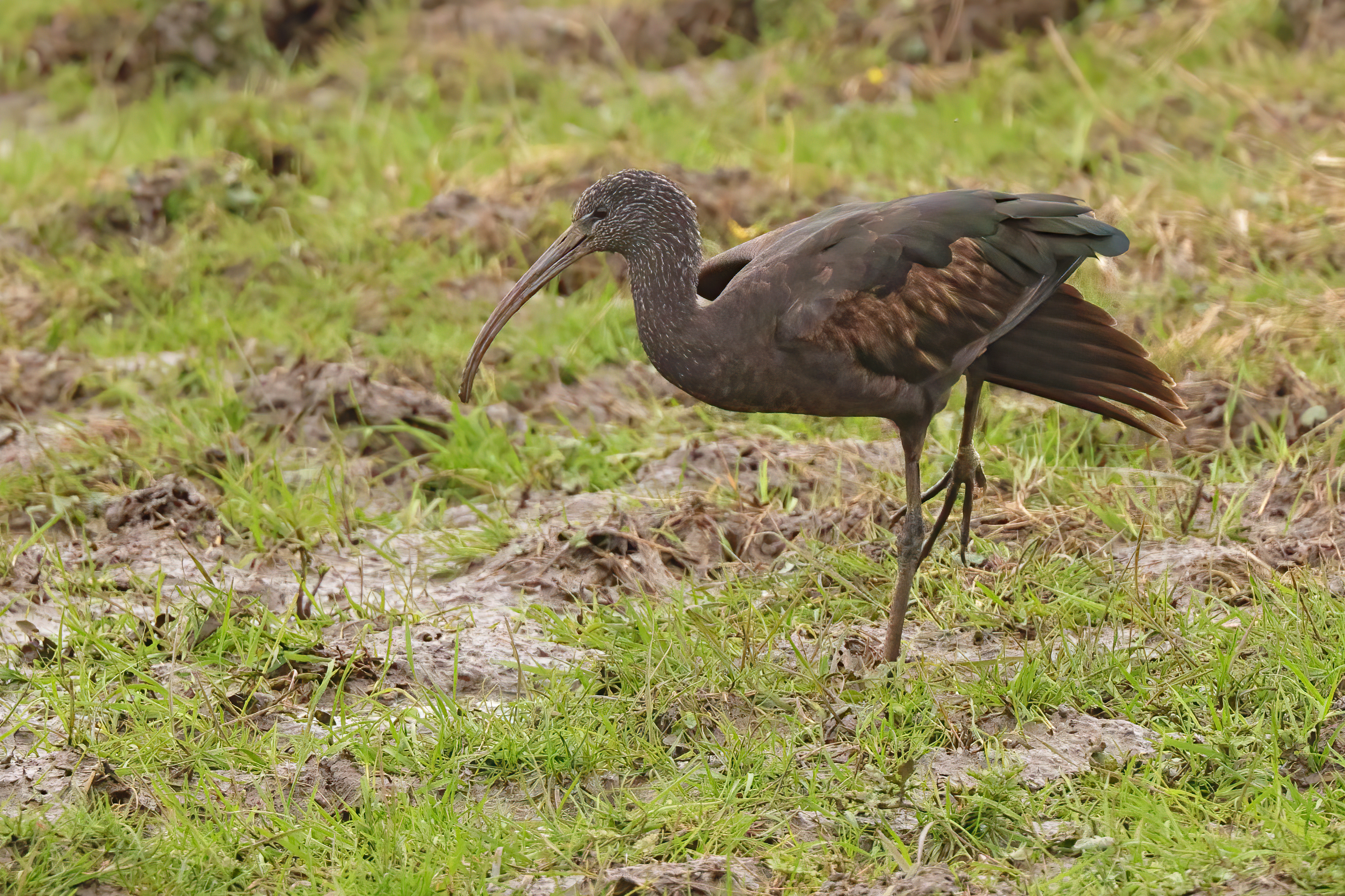
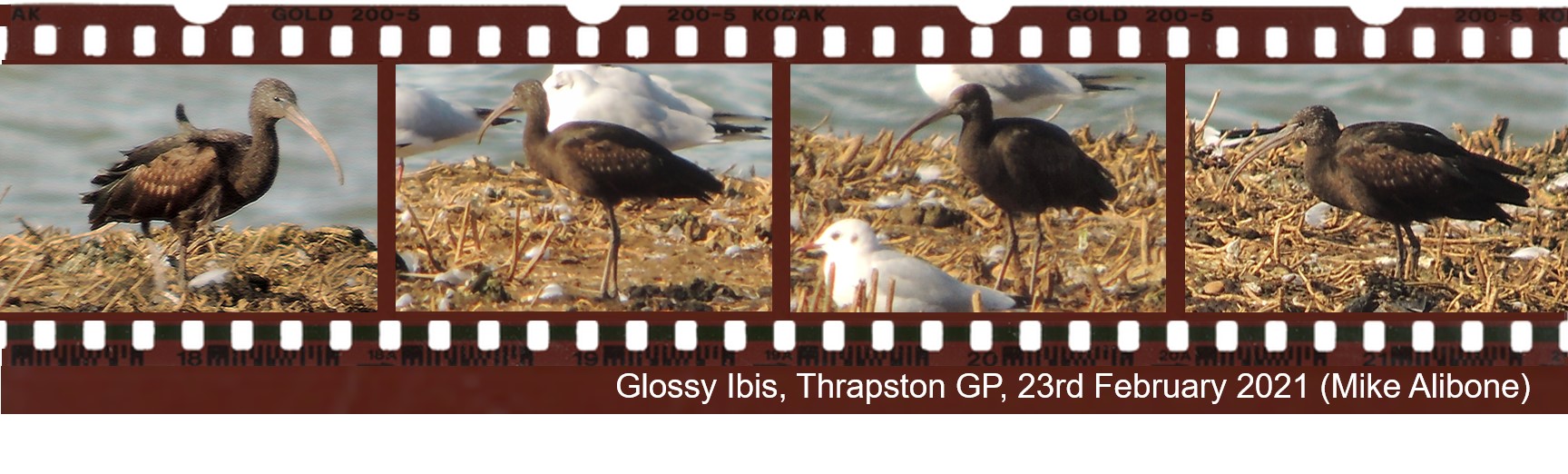
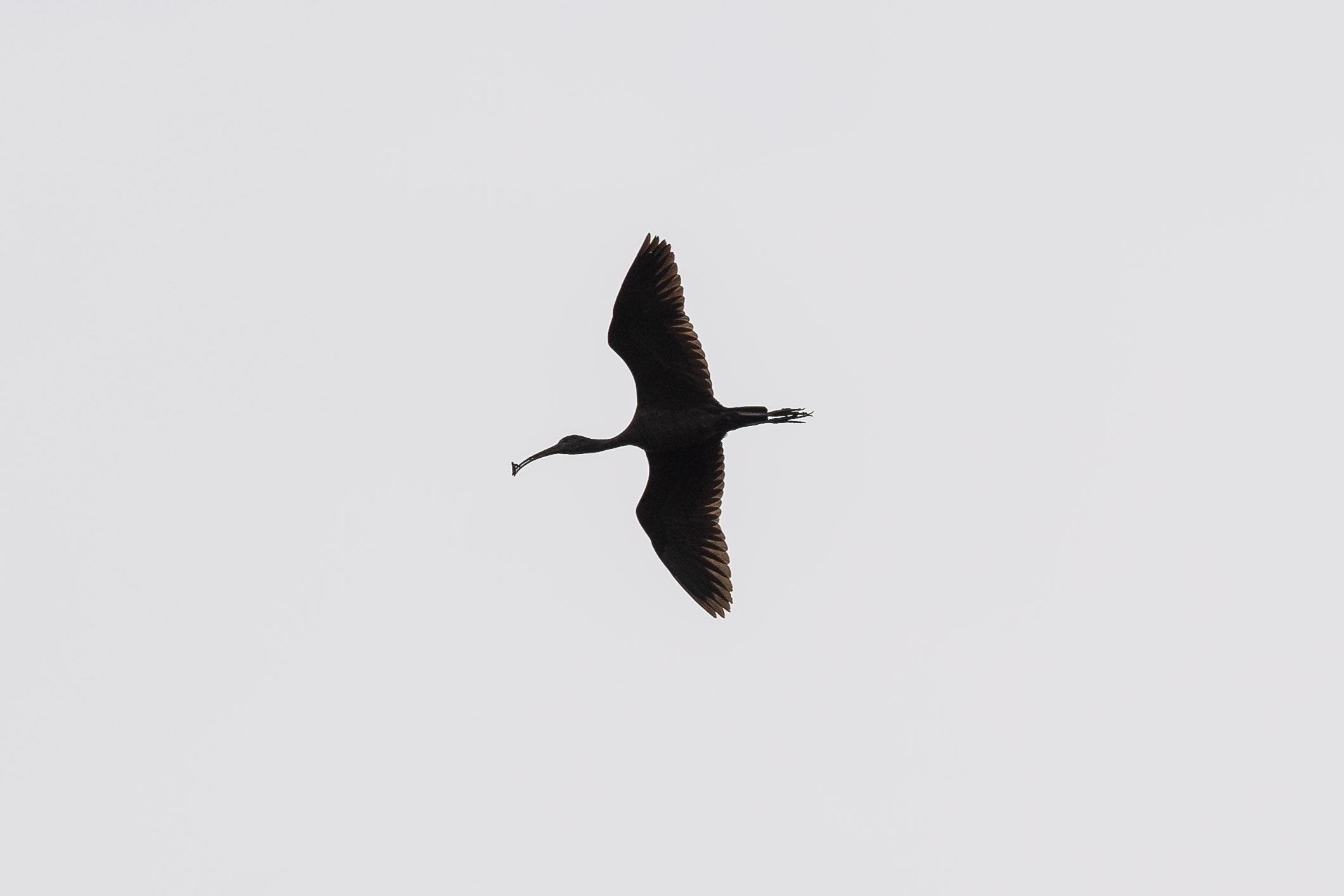
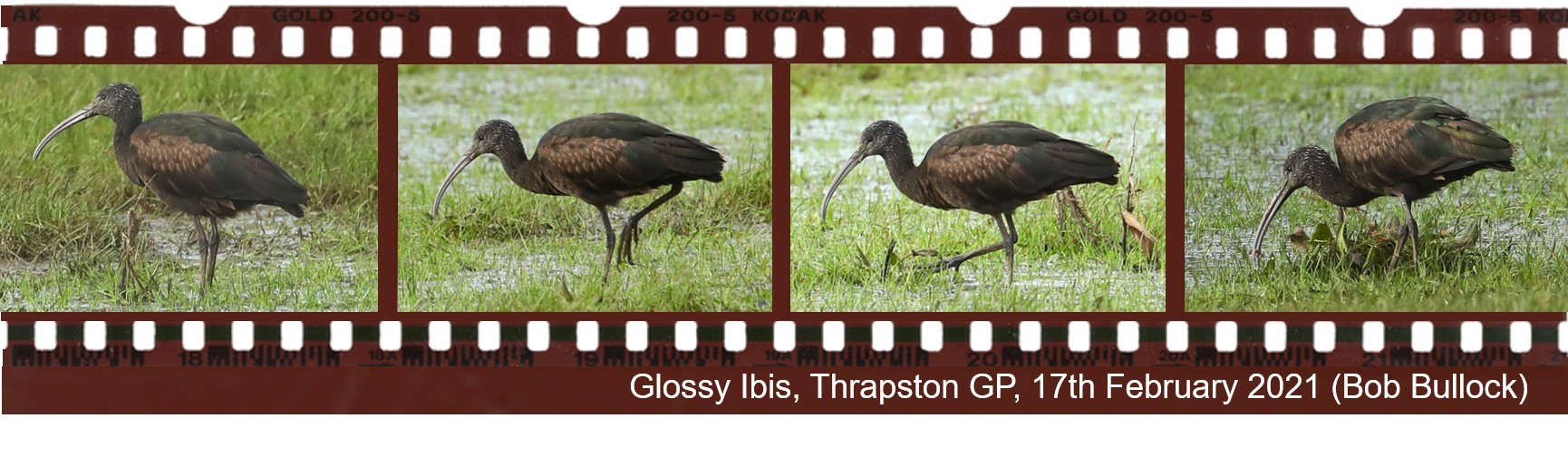
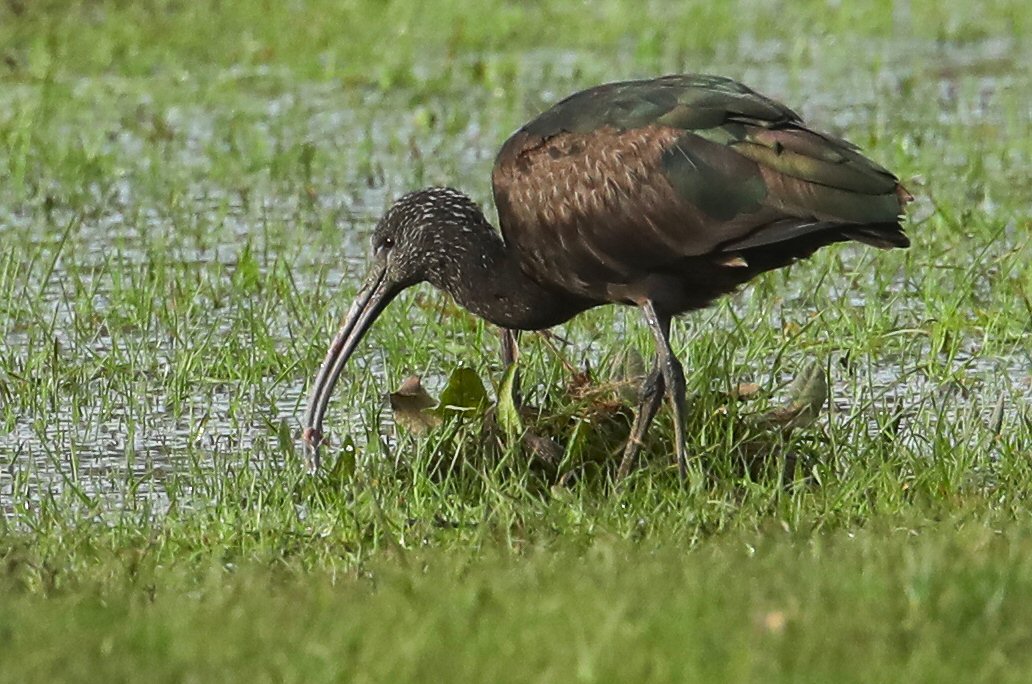
Another long-stayer, which had become increasingly restless in recent weeks, also appears to have done a bunk, having last been seen at both Stanwick and Thrapston GP on 17th. Yes, the lengthening daylight hours finally called time on the county’s most obliging Glossy Ibis to date, after completing a marathon 63-day sojourn in the Nene Valley.

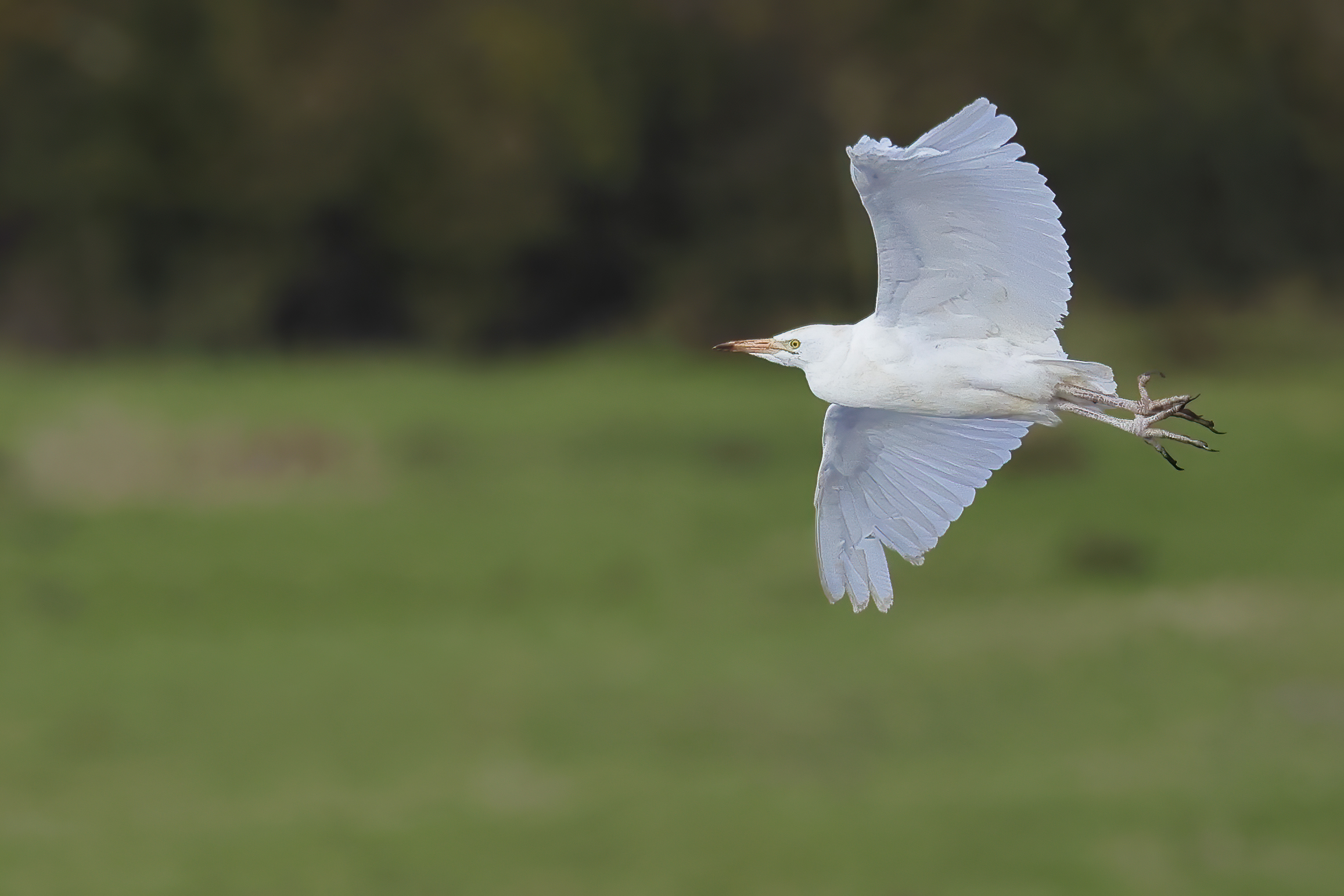
And had it not been for one at Stanwick on 18th and four on 22nd, Cattle Egrets would have slipped under the radar this week, while Great Egrets were still to be found at four locations – namely Clifford Hill, Pitsford, Stanford and Thrapston, with a maximum of three at the latter site on 20th.

Following the two short-stayers earlier in the month, Daventry CP again pulled in another of Draycote’s first-winter Shags. It remained all week.

First-winter Shag, Daventry CP, 18th April 2021 (Gary Pullan)

In contrast to last week, Ospreys were limited to just three sightings of singles, these being at both Stanford and Thrapston on 20th and a ringed individual at Hollowell on 22nd. The latter, believed to be unpaired, was ‘blue T3’, a male from the Rutland project, hatched in 2016.
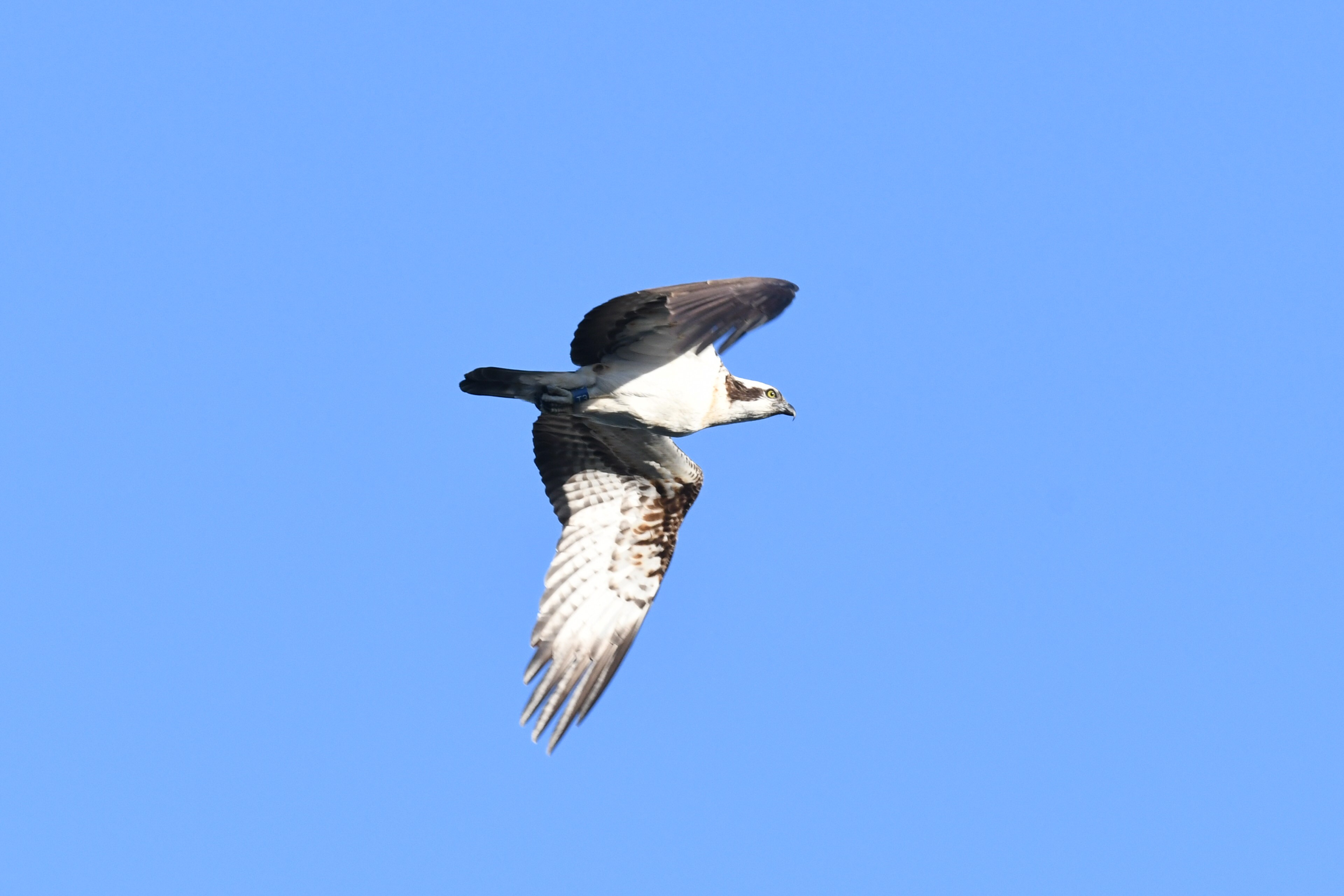
Adult male Osprey ‘blue T3’, Hollowell Res, 22nd April 2021 (Jon Cook)

Other raptors were also available – if you were there at the time, that is – and with a sharp eye to boot. The venue: Pitsford causeway. The date: 23rd April. The bird: probable male Pallid Harrier. An all-too-brief flythrough to the south-east and, by all accounts, giving a frustratingly below par performance that will win no Oscars. Intriguingly, a ‘possible male Pallid Harrier’ was also reported near Sandy, Bedfordshire, approximately 40 km to the south-east, some 35 minutes later …

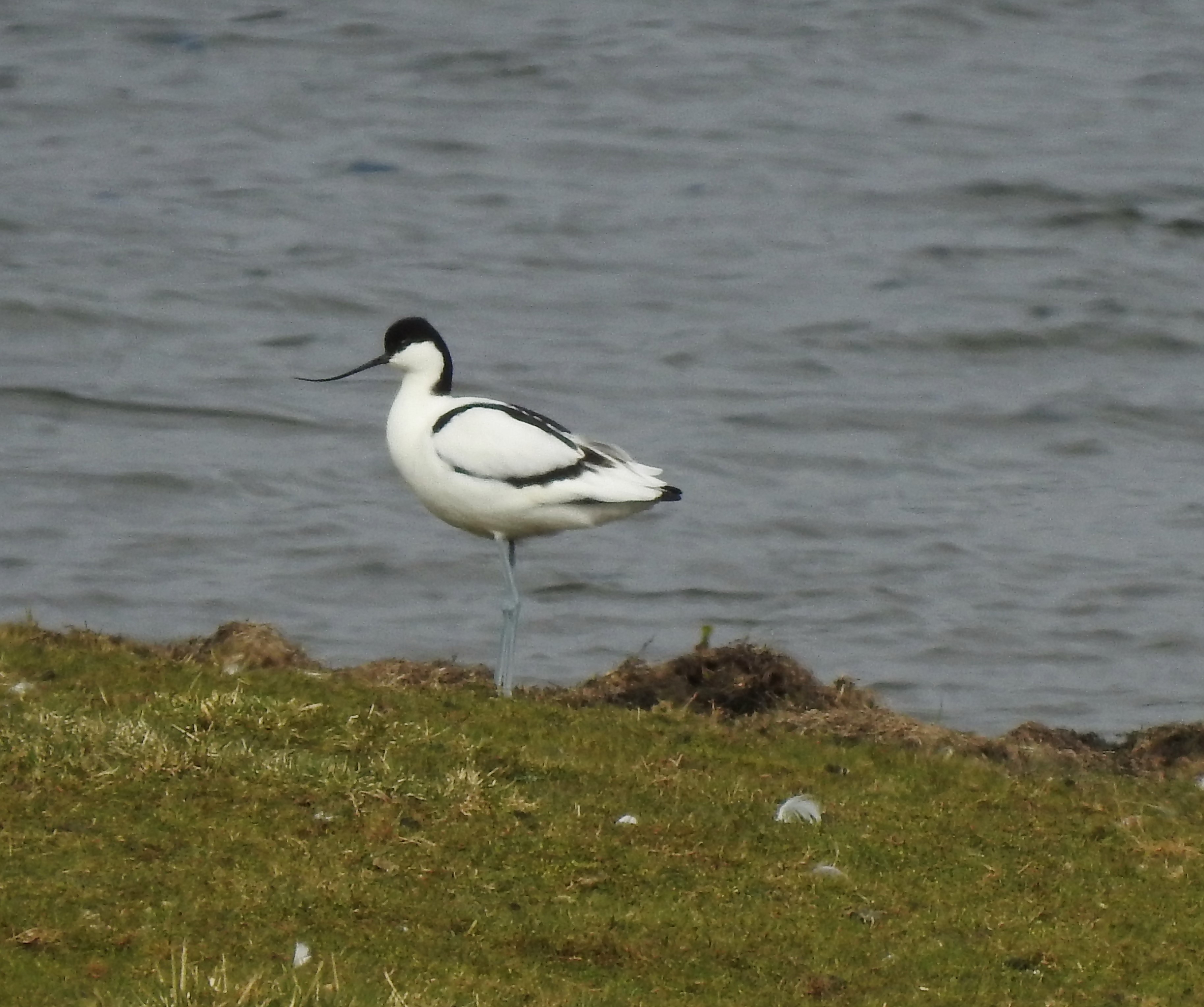
This week’s wader numbers were on the up, the birds themselves panning out better than those in last week’s meagre line-up. Three Avocets spent less than an hour in Pitsford’s Scaldwell Bay during the morning of 22nd, before quickly departing to the north-west and another dropped in at Clifford Hill GP the following evening, on 23rd.
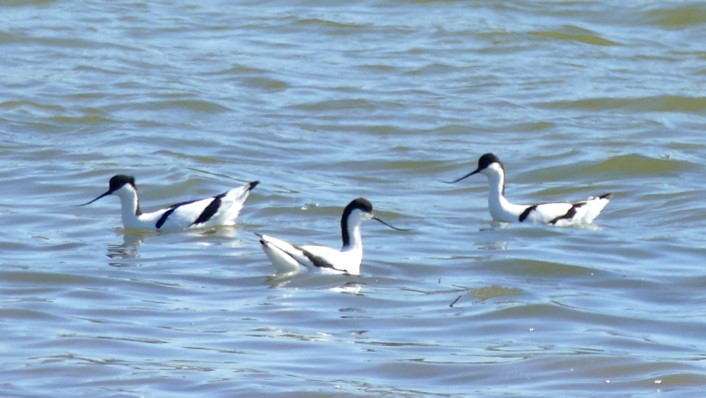
Avocets, Pitsford Res, 22nd April 2021 (David Arden)

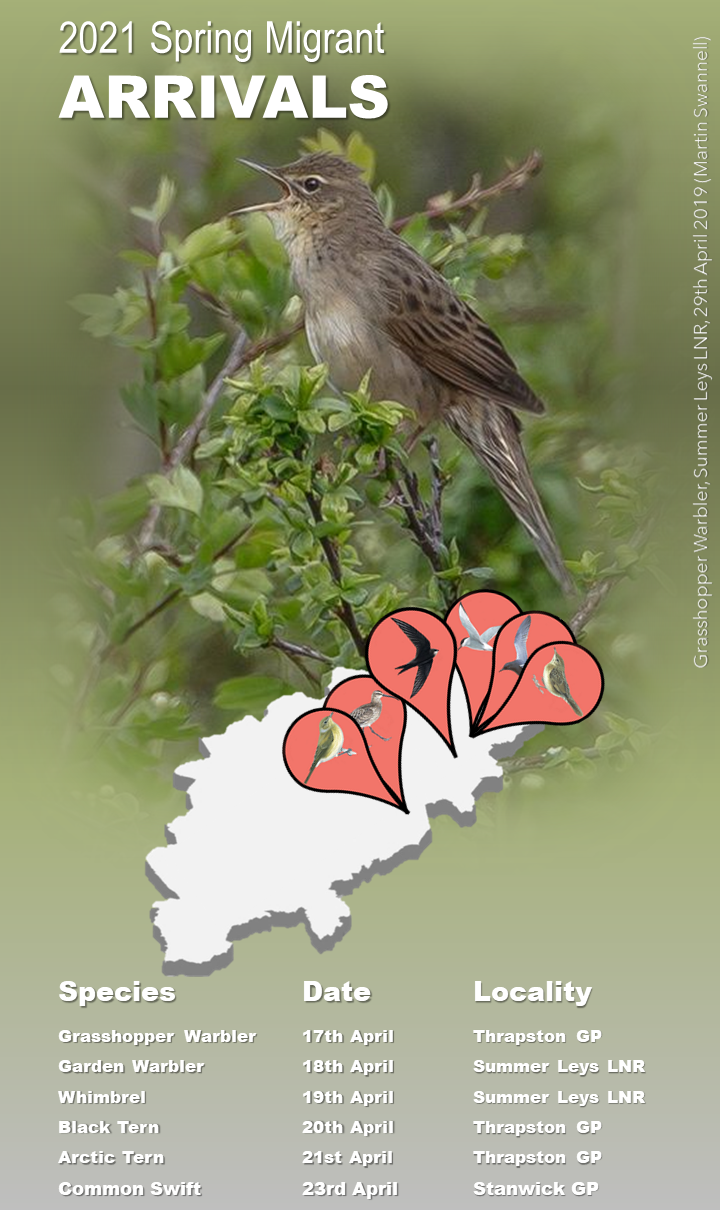
The year’s first Whimbrel arrived at Summer Leys on 19th, followed the next day by further singles at the same site and at Stanwick, while two more appeared again at Summer Leys on 22nd.
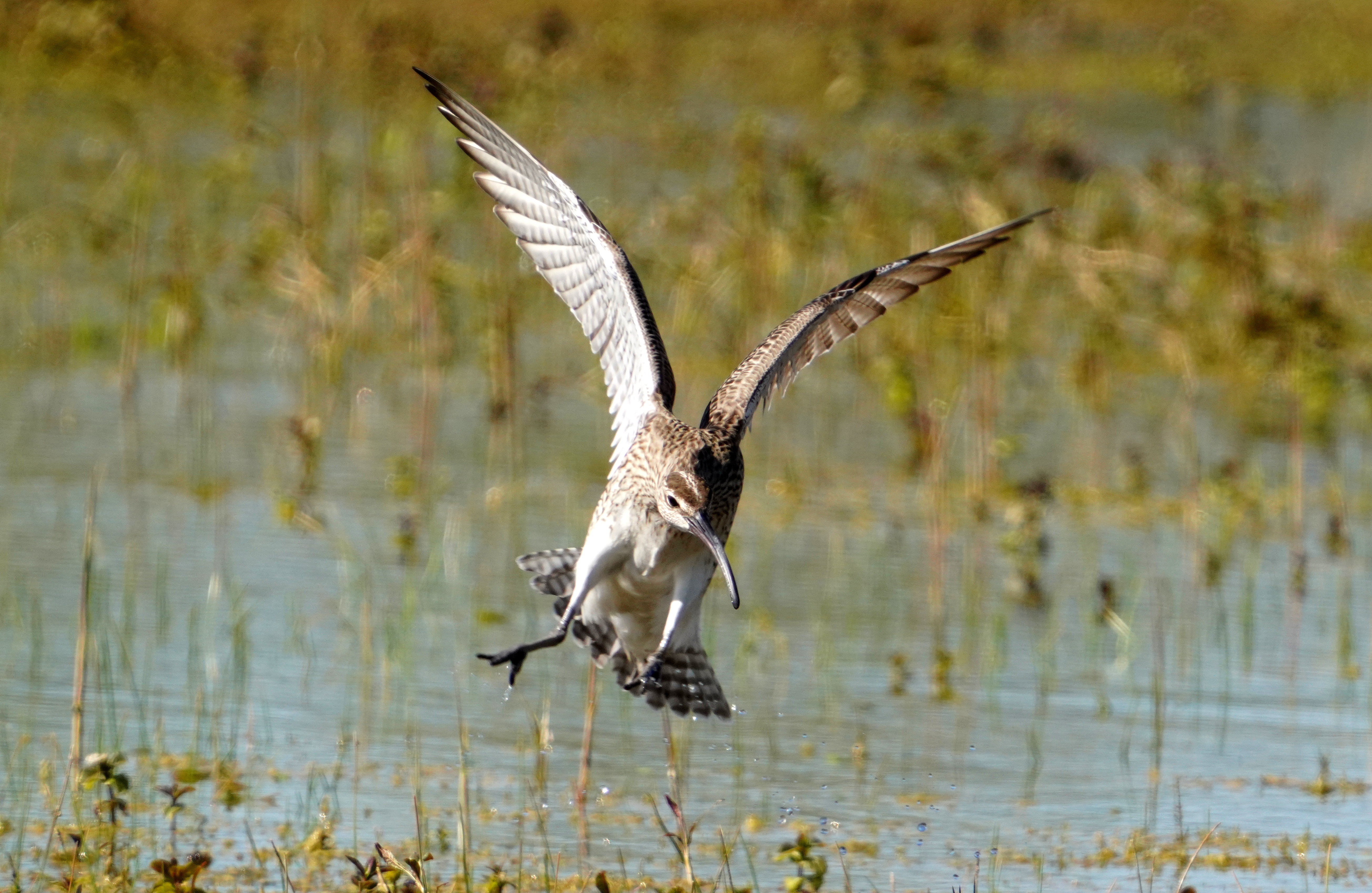
Whimbrel, Summer Leys LNR, 22nd April 2021 (Steve Hemming)
Whimbrels, Summer Leys LNR, 22nd April 2021 (Steve Hemming)

Curlews were limited to three in flight over Pitsford on 18th and one at Thrapston the same day, followed by another over Stanford on 21st, while Bar-tailed Godwits came into their own, this week being recorded from six localities. The top site for numbers was Summer Leys, where eleven were seen on 22nd, followed by Clifford Hill, where three arrived on 19th and were joined by three more on 22nd, after which two remained the following day. Five flew north-east over Boddington Res – also on 22nd and singles were at Thrapston on 17th and at both DIRFT 3 and Stanwick on 23rd.
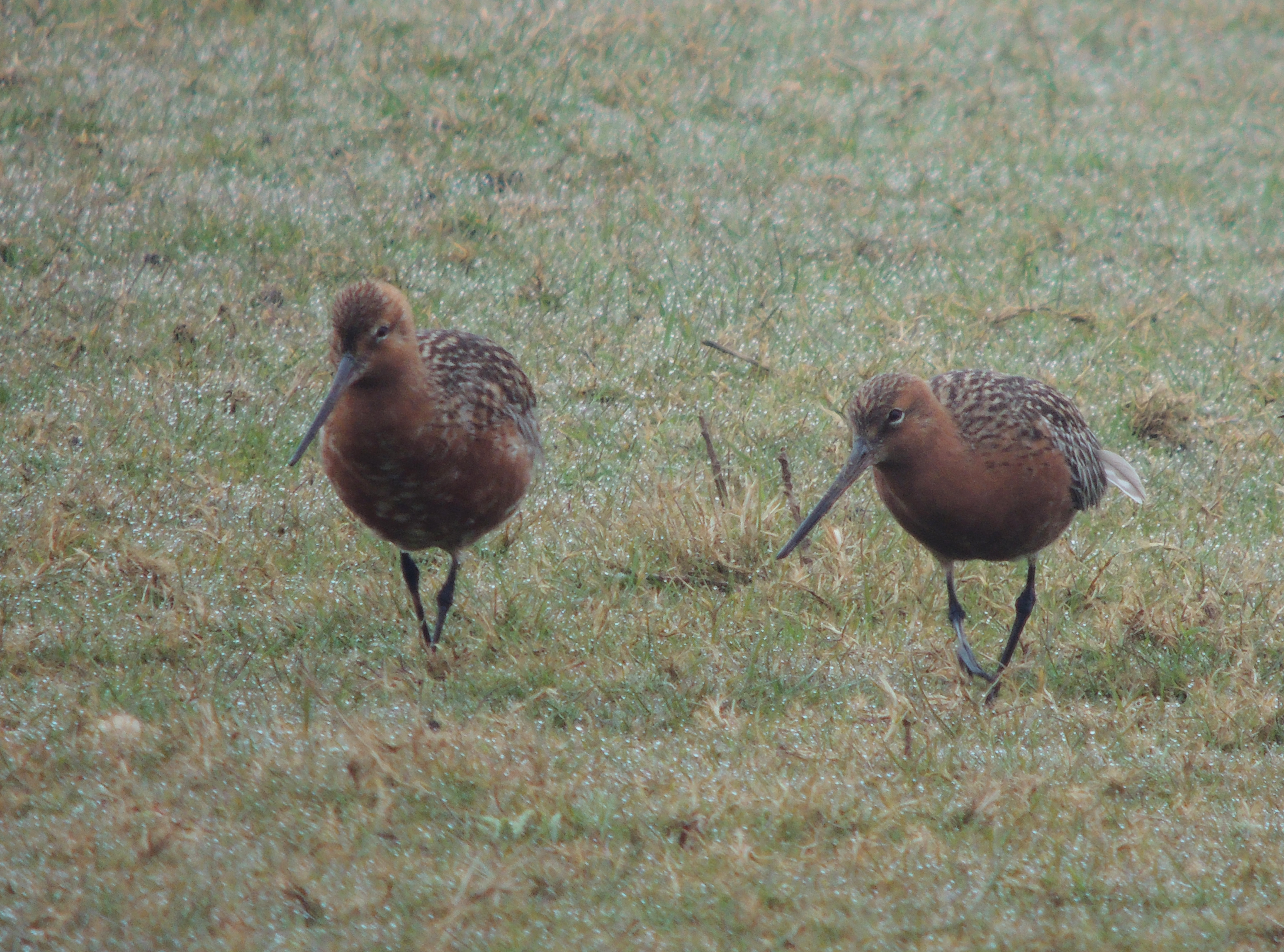
Male Bar-tailed Godwits, Clifford Hill GP, 21st April 2021 (Mike Alibone)
Female Bar-tailed Godwits, Clifford Hill GP, 22nd April 2021 (Mike Alibone)
Bar-tailed Godwits, Clifford Hill GP, 22nd April 2021 (Mike Alibone)

In the shade, then, were Black-tailed Godwits, with singles (or perhaps the same bird) at Summer Leys on 17th and 19th. A Ruff visited DIRFT 3 on 21st, when two Dunlins were at Clifford Hill, remaining there until the following day.

Now rarer in the county than Avocet, a Spotted Redshank was found on 22nd at Summer Leys, where it remained on the following day, when another flew north over the causeway at Pitsford. A Greenshank arrived at Thrapston on 17th, remaining until 19th and two were present there on 20th. Elsewhere, singles were at both Stanford and Stanwick on 22nd and two visited DIRFT 3 the following day.

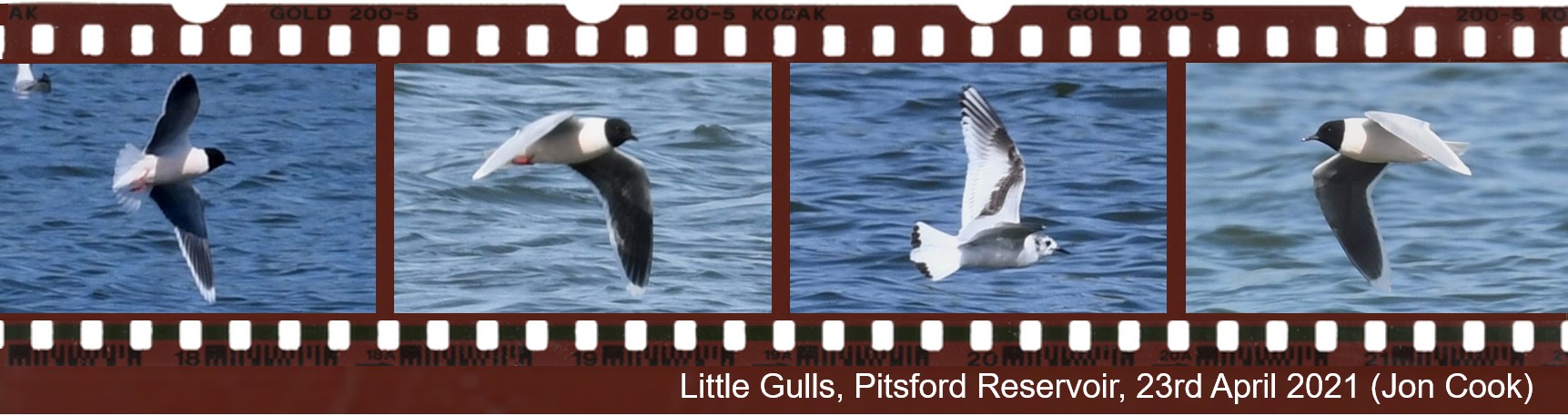
But it was Little Gulls that really stole the show this week. An influx involving hundreds took place across the Midlands and southern England, peaking hugely on 23rd, when localities in neighbouring counties saw what must surely be unprecedented inland numbers. Rutland Water, in Leicestershire held one hundred and seven at one point, Farmoor Res in Oxfordshire scored eighty-one and Draycote in Warwickshire had more than forty. Numbers here in Northants were also not too shoddy, kicking off with singles at Summer Leys on 17th and 19th and at Pitsford on 21st, the latter site producing three the following day before the floodgates opened on 23rd. The ‘big day’, then, delivered a very respectable minimum of seventy-five to Pitsford, twenty-six at Clifford Hill, minima of twenty-five at Stanwick and nineteen at Summer Leys, while Stanford and Thrapston scraped in with five and two, respectively.
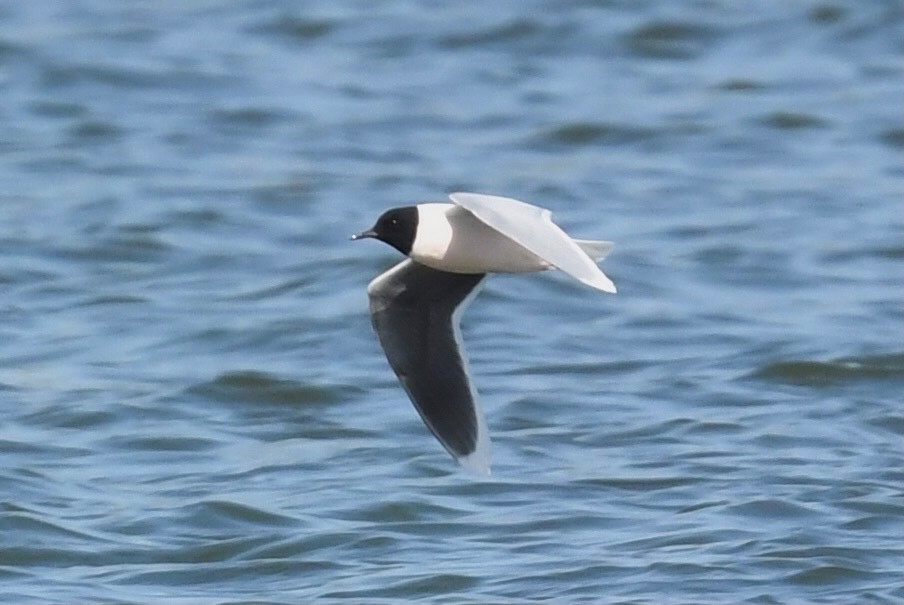
Adult Little Gull, Pitsford Res, 23rd April 2021 (Jon Cook)

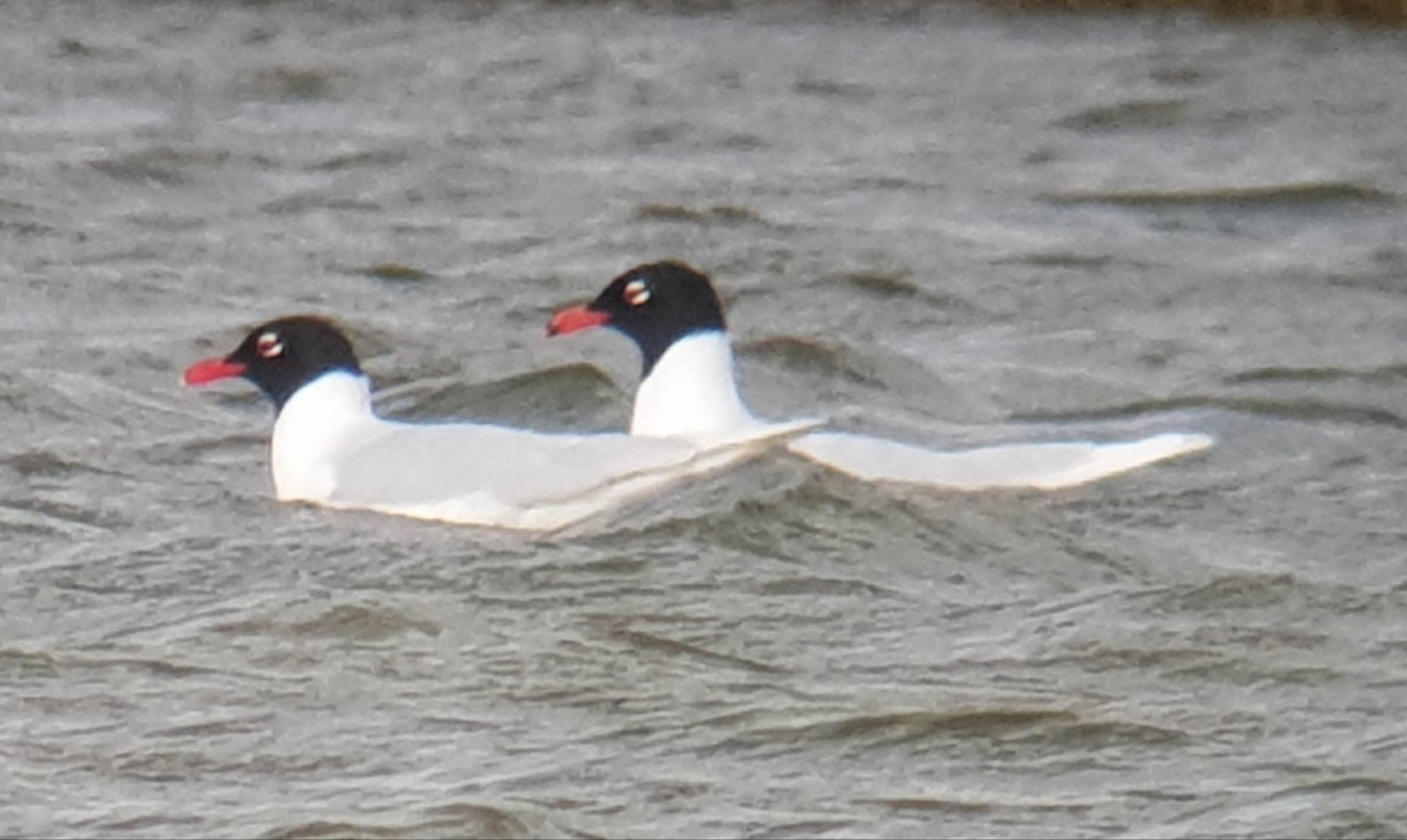
With any focus of attention on Mediterranean Gulls momentarily halted, at least two remained on and off at Summer Leys all week. Caspian Gulls were also in evidence with an adult visiting Daventry CP on 17th and a first-winter at DIRFT 3 on 23rd, while Yellow-legged Gulls included the usual one or two Pitsford ‘semi-residents’, a third-winter at DIRFT 3 on 21st, followed by an adult and a first-winter there on 23rd and a third-summer at Clifford Hill GP on the same date.
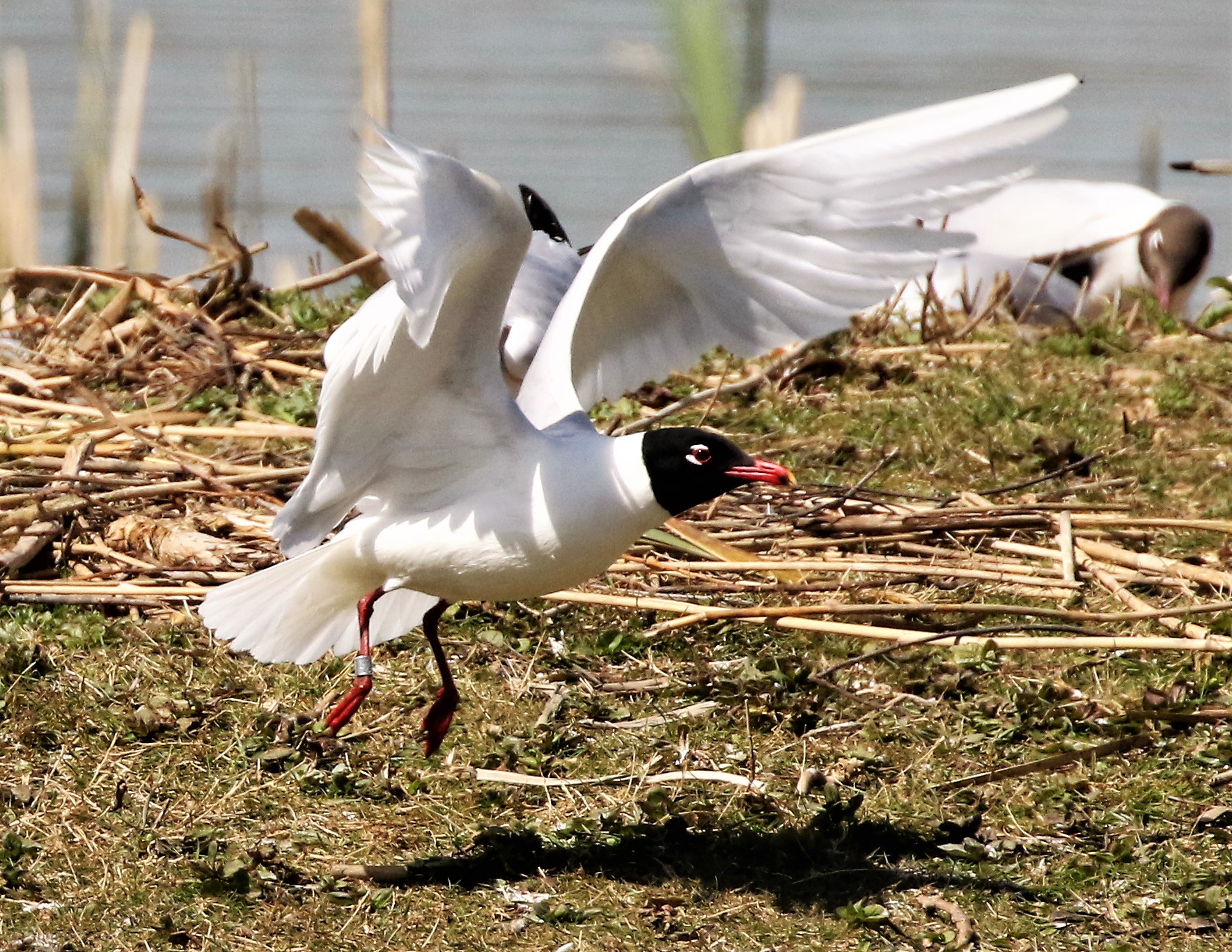
Adult Mediterranean Gull, Summer Leys LNR, 23rd April 2021 (Alan Coles)

Back on the migration theme and the spring’s first Black Tern was seen at Thrapston GP, where there were two on 20th, quickly followed there by the first five Arctic Terns the next day, when seventeen also visited Stanwick. On 22nd, fifteen dropped in at Boddington Res and one was again at Stanwick, while the following day brought several more to Thrapston, four were at Clifford Hill, two at Sywell CP and one at Pitsford.

Arctic Tern, Stanwick GP, 21st April 2021 (Steve Fisher)
Arctic Tern, Boddington Res, 22nd April 2021 (Mike Pollard)
Arctic Tern (right) and Common Tern, Boddington Res, 22nd April 2021 (Mike Pollard)

Another first for the year materialised in the form of a Common Swift over Stanwick on 23rd, followed by two more at Kislingbury later in the day. What no-one was prepared for, however, was a little less tangible: a European Bee-eater flew west over Summer Leys on 17th, calling three times. Frustratingly for the two birders tuned in to it, it remained invisible, high up in the clear blue of the troposphere. If accepted, it becomes the fifth county record. Others were found in Cornwall and Scilly during the previous week.

Slightly more down to earth, a male Merlin flew low north-west at Boddington Res on 20th.

More spring migrant ‘firsts’ arrived in the shape of a Grasshopper Warbler at Thrapston on 17th and a Garden Warbler at Summer Leys on 18th, while a male Pied Flycatcher was found in the grounds of Kelmarsh Hall – apparently ‘closed to riff-raff’ – on 23rd and another was reported behind Mary’s Lake at Earls Barton GP on the same date.

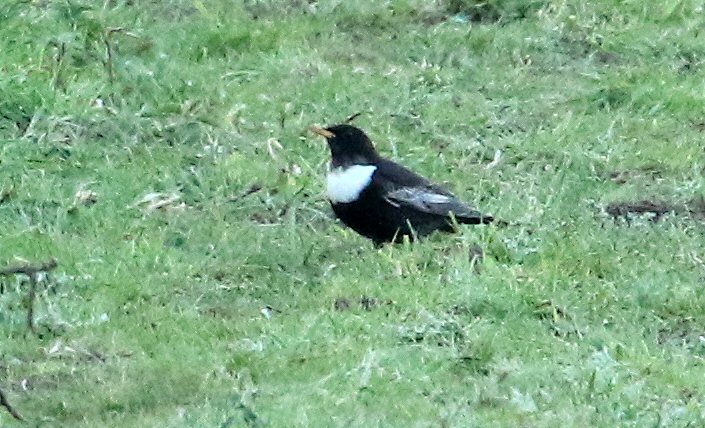
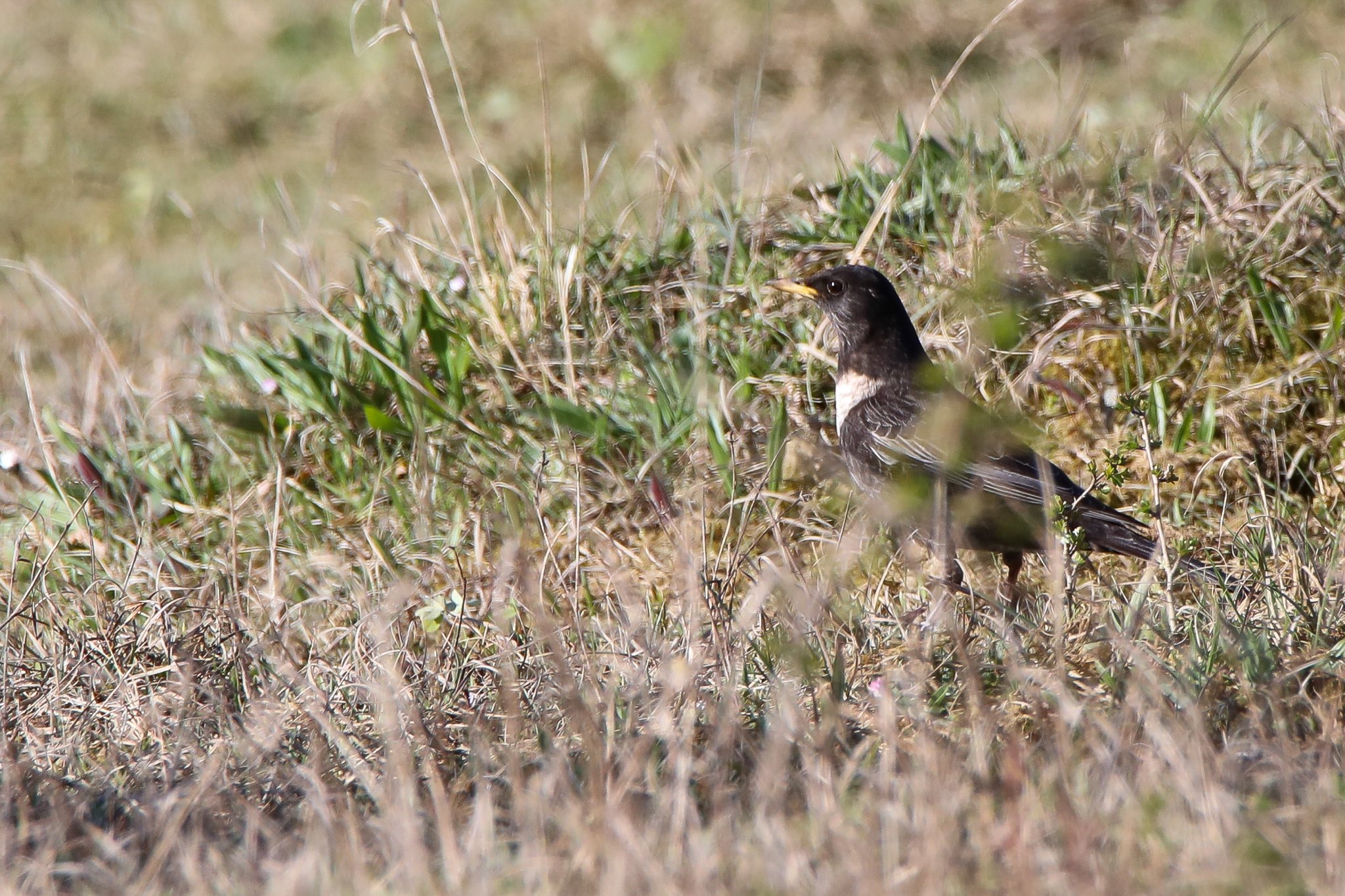
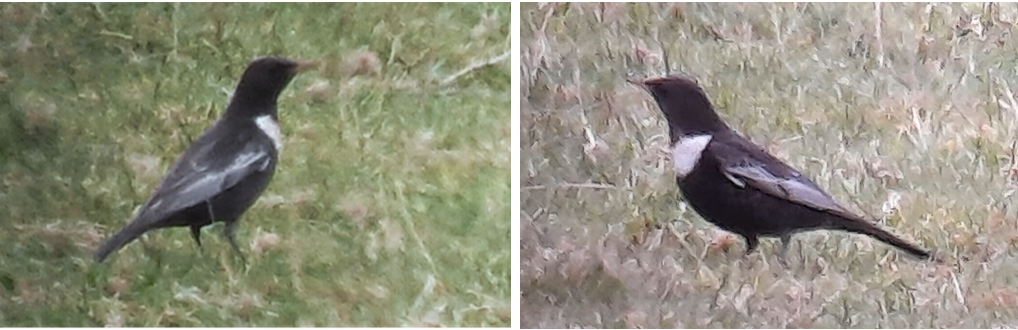
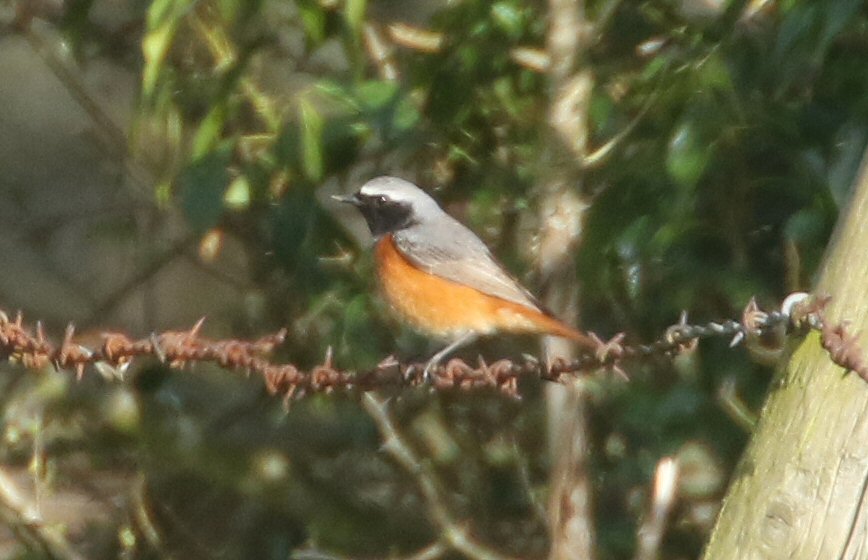
More Ring Ouzels this week included the popular Harrington AF male, still present on 17th, another male at Earls Barton GP on the same date and, on 18th, two were found at Honey Hill when last week’s male was still near Byfield, east of Boddington Res. Meanwhile, Common Redstarts continued to trickle through, this week’s four including single males at Harrington on 17th and Kingsthorpe Meadows, Northampton on 19th, a female at Honey Hill on 20th and a male at Sywell CP on 23rd.

Female Common Redstart, Honey Hill, 20th April 2021 (Jon Cook)
Male Common Redstart, Sywell CP, 23rd April 2021 (Sophie Rowell)

Northern Wheatears were also still on the move, with one at Harrington on 17th, three at Honey Hill on 18th, two at Borough Hill on 19th with one there on 22nd, one at Wicksteed Park on 21st and one Clifford Hill GP on the same date, rising to two on 22nd-23rd.

Female Northern Wheatear, Hinton AF, 19th April 2021 (John Friendship-Taylor)
Male Northern Wheatear, Clifford Hill GP, 23rd April, 2021 (Mike Alibone)

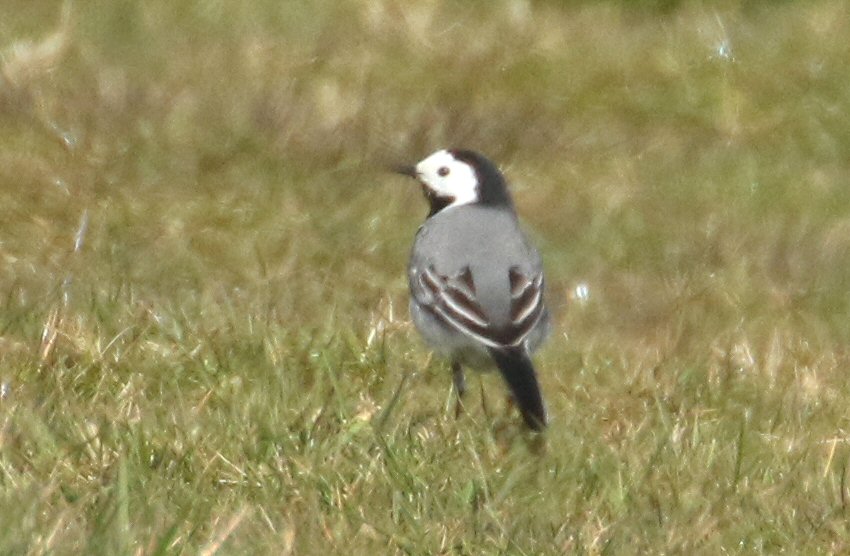
Alongside a report of a female Blue-headed Wagtail at Summer Leys on 22nd, single White Wagtails were at Clifford Hill on 22nd and 23rd.

A busy week with more to look forward to …

Newsround – 10th to 16th April 2021

A predominantly northerly airstream, changing to easterly at the week’s end, ensured temperatures remained depressed, although the migrants just kept coming, with passerines aplenty …

The continued popularity of the four Garganeys at Summer Leys LNR was a draw to the site for many and at least two remained until 14th. Pitsford Res also chipped in with two in Scaldwell Bay, from 11th until the week’s end, as well as producing two Common Scoters at the opposite end on 14th – the latter being the dambusters in ending the dry run for this species which, hitherto, had been confined to ‘nocmig only’ records this year.

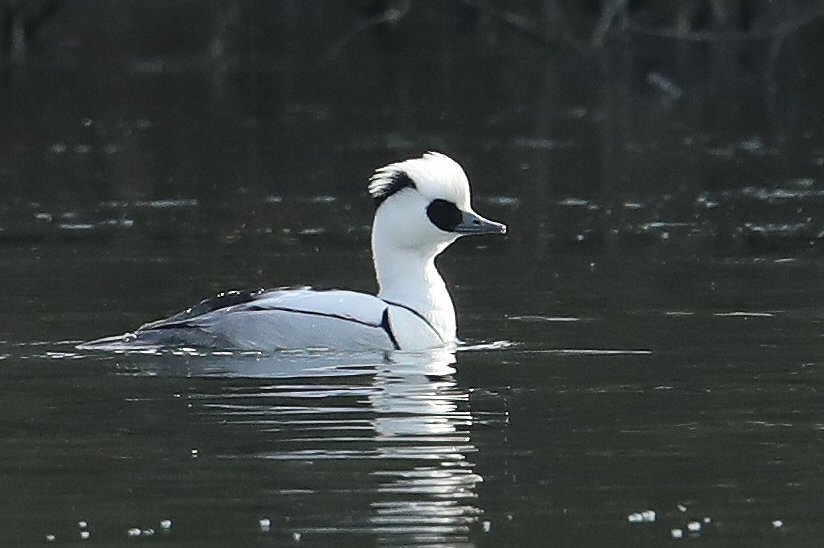
This winter’s long-staying drake Ring-necked Duck sat another week out at Clifford Hill GP, sometimes displaying to female Tufted Ducks – well, when in Rome … and the Ditchford/Stanwick drake Smew appeared to be edging closer to its homeland as it moved just that little bit further east, to Thrapston GP, on 10th-12th.

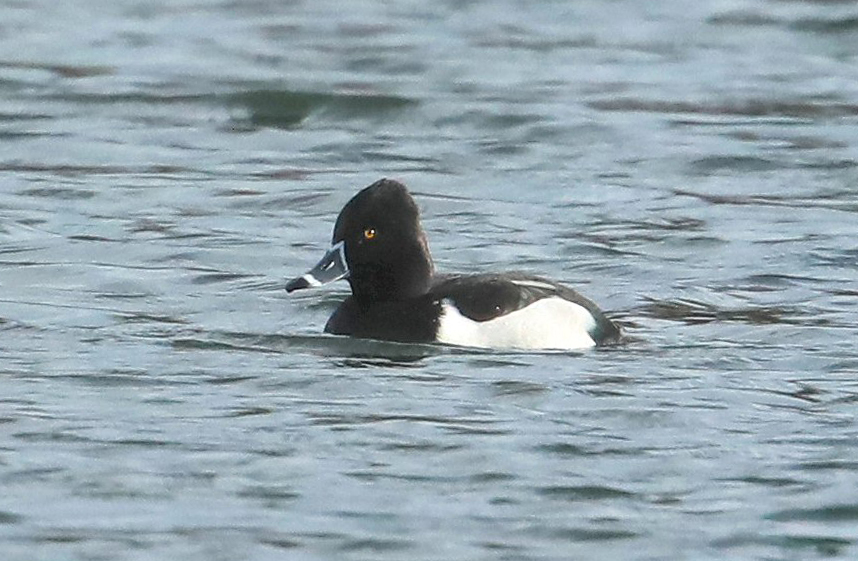
Drake Ring-necked Duck, Clifford Hill GP, 12th April 2021 (Bob Bullock)

Meanwhile, back at Pitsford, after a dearth this winter, a Great Northern Diver was found on 14th, remaining there until 16th.

The pattern of early morning sightings at Stanwick continued this week for the county’s historically most accessible and much admir’d Glossy Ibis, which duly became more difficult to pin down. It was still present, at its formerly favoured location of Aldwincle Lake at Thrapston, as we moved into the new week.

Glossy Ibis, Stanwick GP, 15th April 2021 (Steve Fisher)

Stanwick also continued as usual to be the main site for Cattle Egrets, four being present there on 10th and two on 16th, while one visited Ditchford GP’s Irthlingborough Lakes & Meadows LNR on 15th. Great Egrets continued to make their normal spring exit from the county, with singles, only, hanging on at Pitsford, Stanford Res, Stanwick and Summer Leys as the week progressed.

Great Egret, Summer Leys LNR, 11th April 2021 (Ricky Sinfield)

Single Ospreys were seen at the eight sites of Chapel Brampton, Clifford Hill, Deene Lake, Ditchford, Hollowell Res, Pitsford, Stanwick and Summer Leys, while other raptors also available – if you were there at the time – were, as last week, a Marsh Harrier over Earls Barton GP’s new workings (south) on 11th and a ‘ringtail’ Hen Harrier flying south-west over Stanwick on 16th.

Waders this week were limited. Single Curlews were at Hinton AF on 13th, Ecton SF on 15th and at both Stanford Res and Summer Leys on 16th. The year’s second Bar-tailed Godwit – a proper spring passage bird – pitched up at Thrapston GP on 16th, while single Black-tailed Godwits were at Ditchford on 15th and Summer Leys on 16th and single Greenshanks were also at Ditchford on 15th and Thrapston the following day.

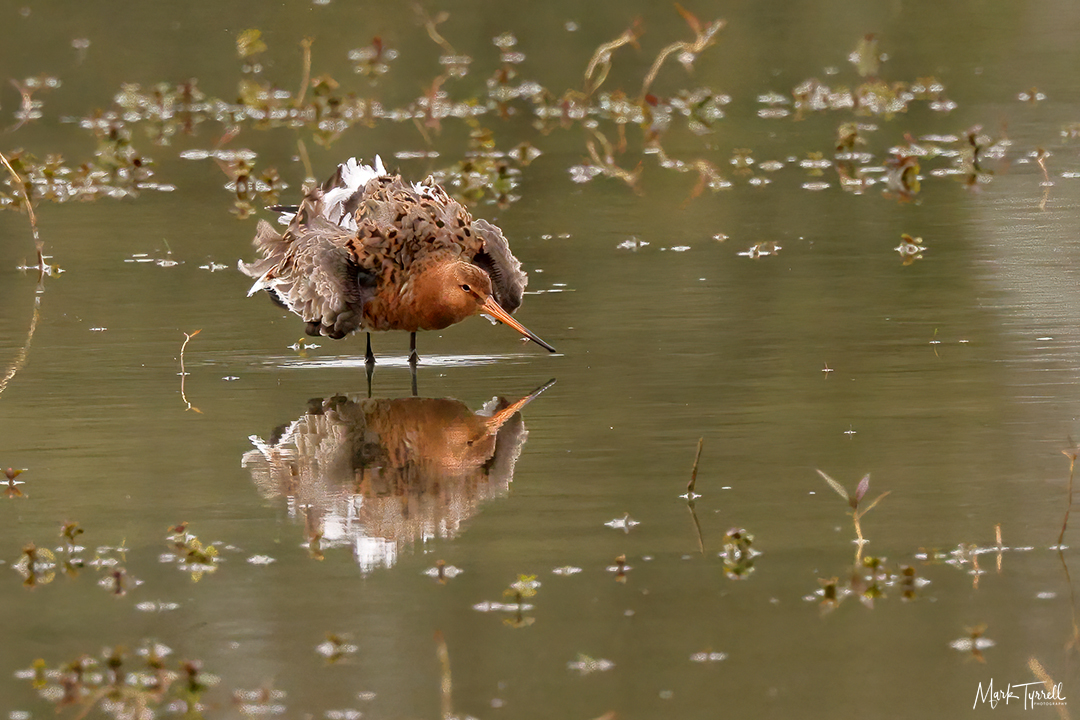
Black-tailed Godwit, Summer Leys LNR, 16th April 2021 (Mark Tyrrell)
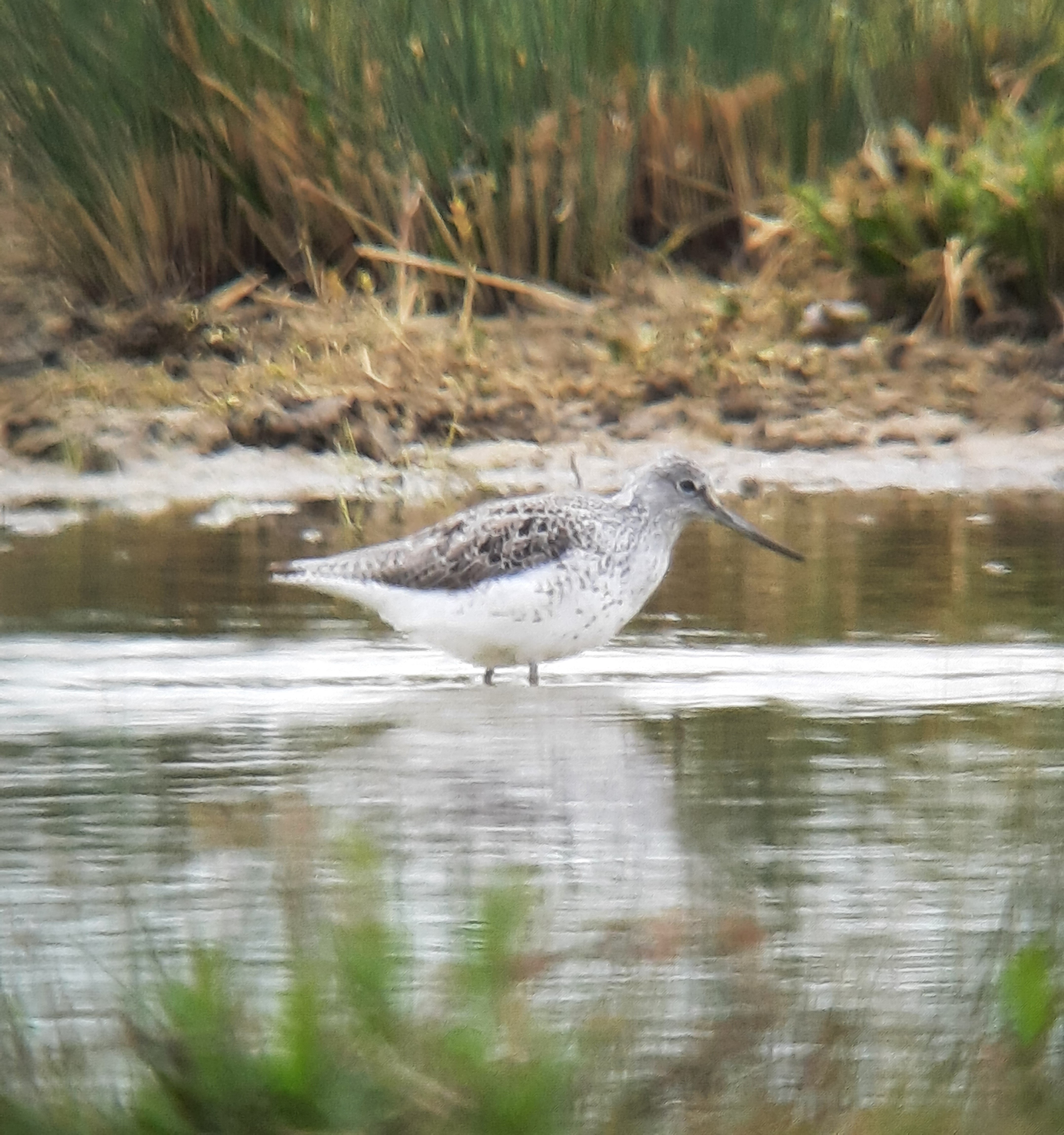
Greenshank, Thrapston GP, 16th April 2021 (Nick Parker)

Another week, another Kittiwake – an adult being a brief visitor to Stanwick on 10th. Other fixtures and fittings included the now weekly Mediterranean Gull line-up at Earls Barton/Summer Leys, where two or three adults and a second-summer were present, on and off, and another adult was at Chelveston AF on 10th. Last week’s juvenile Glaucous Gull put in another appearance at DIRFT 3 on 11th, the same site holding both adult and third-winter Yellow-legged Gulls on 15th, while an adult and a second-summer of the latter species remained at Pitsford on 16th.

Passerines came very much to the fore this week. We kick off with the first Cuckoo of the year, at Southwick Wood on 14th – a pretty much average arrival date – but a Woodlark flying north at Onley on 16th was only the second to be reported this year, as well as constituting a near-miss for Warwickshire, as it cruised through on our side of the border.

The year’s first Reed Warblers were both found on 13th, one at Summer Leys just pipping one at Stanwick to the post by a mere forty minutes!

But it was the first Ring Ouzel which proved to be a popular draw for many of the county’s birders this week – a male in the fields just east of Summer Leys on 12th and 13th, the warm sunshine, a Blue-headed Wagtail and the point-blank drake Garganey nearby no doubt strongly contributing to the observer build-up there on the latter date. Another was was found at Harrington AF, also on 13th, again proving popular there until the week’s end.

Male Ring Ouzel, Earls Barton GP, 12th April 2021 (Bob Bullock)
Ring Ouzel, Harrington AF, 15th April 2021 (Dave Smith)
Ring Ouzel, Byfield, 16th April 2021 (Gary Pullan)

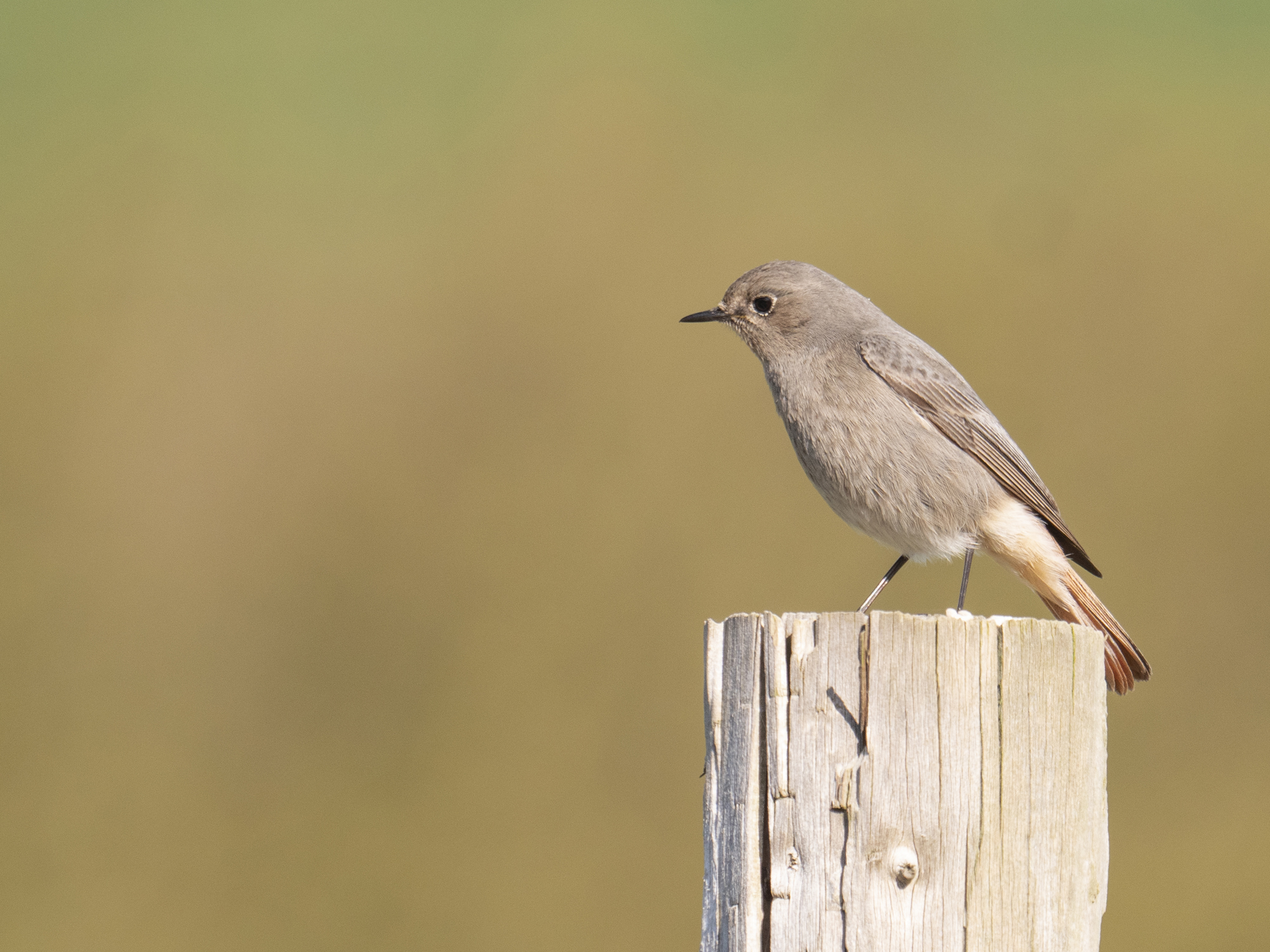
Another first in for the year was a Nightingale at Stanwick on 11th, while another Black Redstart, this week at Long Buckby on 13th, continued this species’ remarkable run so far this spring.

Black Redstart, Long Buckby, 13th April 2021 (Chris Ebbage)

More Common Redstarts also followed on from last week’s sprinkling, with ones and twos at Daventry CP, Eydon, Fawsley Park, Harrington, Hinton, Summer Leys and Stanford, the latter trapped and ringed. Most, if not all, were males.

Male Common Redstart, Stanford Res, 12th April 2021 (Chris Hubbard)
Male Common Redstart, Harrington AF, 15th April 2021 (Dave Smith)

Northern Wheatears pretty much followed suit, with Chelveston, Clifford Hill, Deenethorpe AF, Harrington, Hinton and Hollowell all holding one or two migrants, the exception being four at Chelveston on 10th and three at Deenethorpe on 11th.

Male Northern Wheatear, Deenethorpe Airfield, 11th April 2021 (James Underwood)

But generating considerable interest this week were wagtails. Set against a backcloth of the largest number of Yellow Wagtails we have seen in spring for several years was a series of potential oddballs and some not so oddballs. We begin with a swanky male Blue-headed Wagtail, which became the focus of attention for many, in the fields behind Summer Leys from 10th until at least 13th. Following this  was the subsequent discovery of a female (or possibly ‘Channel’-type hybrid) in the same area from 13th, intermittently until 16th. Two more classic male ‘Channel’ Wagtails were also discovered – one at Earls Barton’s New Workings (North) on 12th, swiftly followed the next day by another at Clifford Hill GP.

‘Channel’ Wagtail, Clifford Hill GP, 13th April 2021 (Trevor Ellery)

White Wagtail passage also gathered pace, with Clifford Hill, DIRFT 3, Earls Barton, Hollowell, Pitsford, Stanwick and Summer Leys all producing multiples, the highest counts being eleven at Pitsford on 16th, at least ten at Summer Leys on 10th and six at Earls Barton on 15th.

White Wagtail, Clifford Hill GP, 12th April 2021 (Bob Bullock)

Another first for the year was a Tree Pipit flying over Stanford on 10th, while another  Water Pipit was also seen and head in flight at Pitsford on 16th.

Also in flight, a Hawfinch heard at Harrington on 10th, while Crossbill makes it into this week’s round-up by the skin of its teeth with one at Hollowell on the same date.

Newsround – 3rd to 9th April 2021

From a balmy 15°C on 4th, to bone-chilling northerlies and a touch of the white stuff on 6th, weatherwise, this week had it all. And from long-legged things to classy passerines, the birds were not to be sniffed at, either …

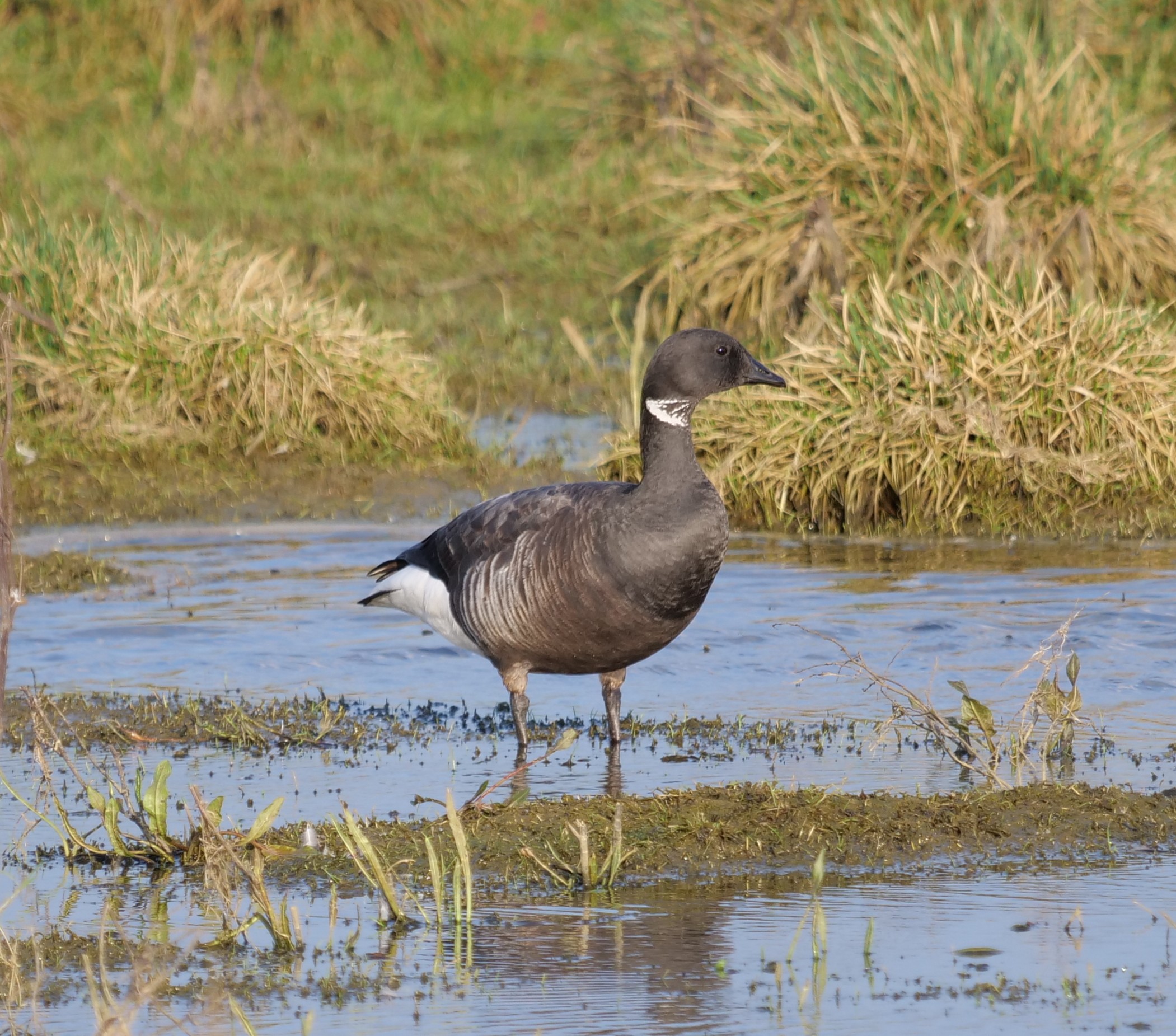
So, inching into what was undoubtedly another great early spring week in the county, the adult Dark-bellied Brent Goose at Ditchford GP’s Irthlingborough Lakes and Meadows LNR was still present on 3rd although, apparently, not subsequently. Unsurprisingly, then, there was no further change to the line-up in geese with another – or perhaps last week’s relocating – Pink-footed Goose, dropping into Stanwick GP for one day, on 9th.

Two Garganeys were discovered at Summer Leys LNR on 6th, remaining until the week’s end, when they were joined there by two more – the striking and intricately patterned drakes posing within spitting distance of the hides and drawing many a murmur of appreciation from observers and photographers alike.

Drake Garganey, Summer Leys LNR, 6th April (Bob Bullock)
Drake and female Garganeys, Summer Leys LNR, 6th April (Bob Bullock)
Drake Garganey, Summer Leys LNR, 7th April (Mark Tyrrell)
Drake Garganey, Summer Leys LNR, 8th April (Ray Seagrove)

Two stops west along the Nene, the drake Ring-necked Duck continued its stay at Clifford Hill GP throughout the period, after first showing up there on 31st March. As we move deeper into spring, its days there are now surely numbered and perhaps this is already the case with the drake Greater Scaup and the presumed female Greater Scaup x Tufted Duck hybrid, neither of which has been reported from Pitsford Res since 6th.

Reaching out across the night sky, Scaldwell’s nocmig tracking station picked up a migrating flock of Common Scoters as they passed over at 23.15 on 4th. So far, this spring, none has yet been nailed on the water during the hours of daylight … but there is still time. Back in the Nene Valley, the drake Smew commuted daily between Ditchford GP and Stanwick and was still present at the week’s end.

The latter site was also nicely in line to be the first to receive the now mobile Glossy Ibis, which had established a pattern of being seen there early in the morning before heading back to Thrapston GP later in the day. At least, that’s what it looked like initially but by the end of the week, its appearances at Thrapston had become far more erratic.

Glossy Ibis, Thrapston, 5th April 2021 (Jon Cook)

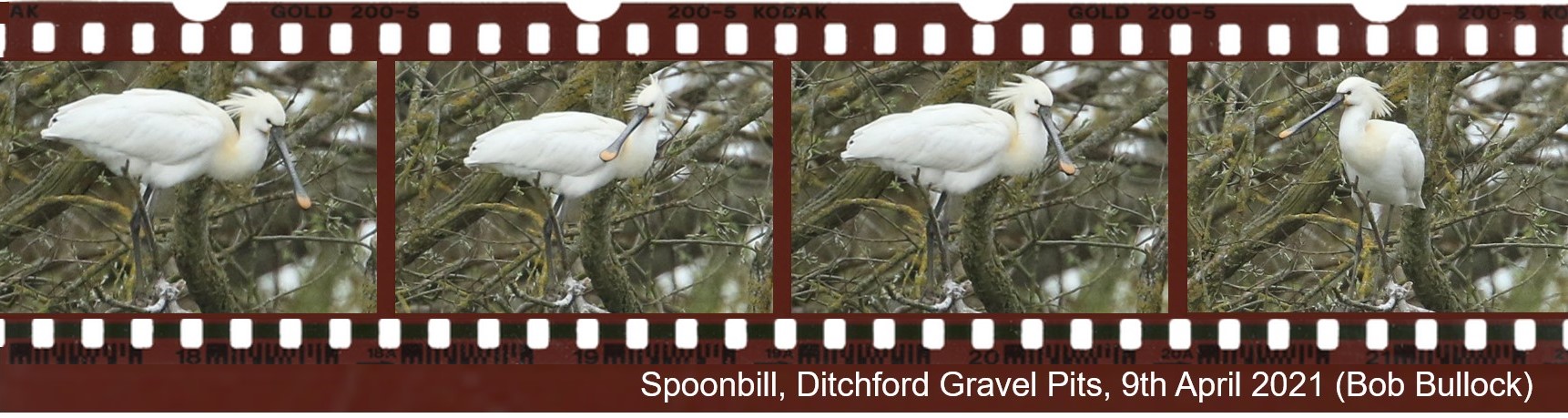
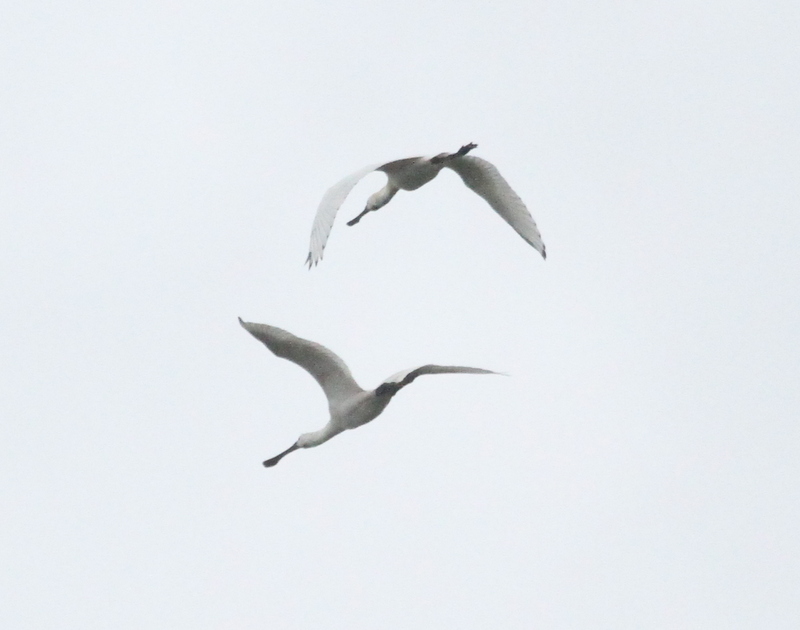
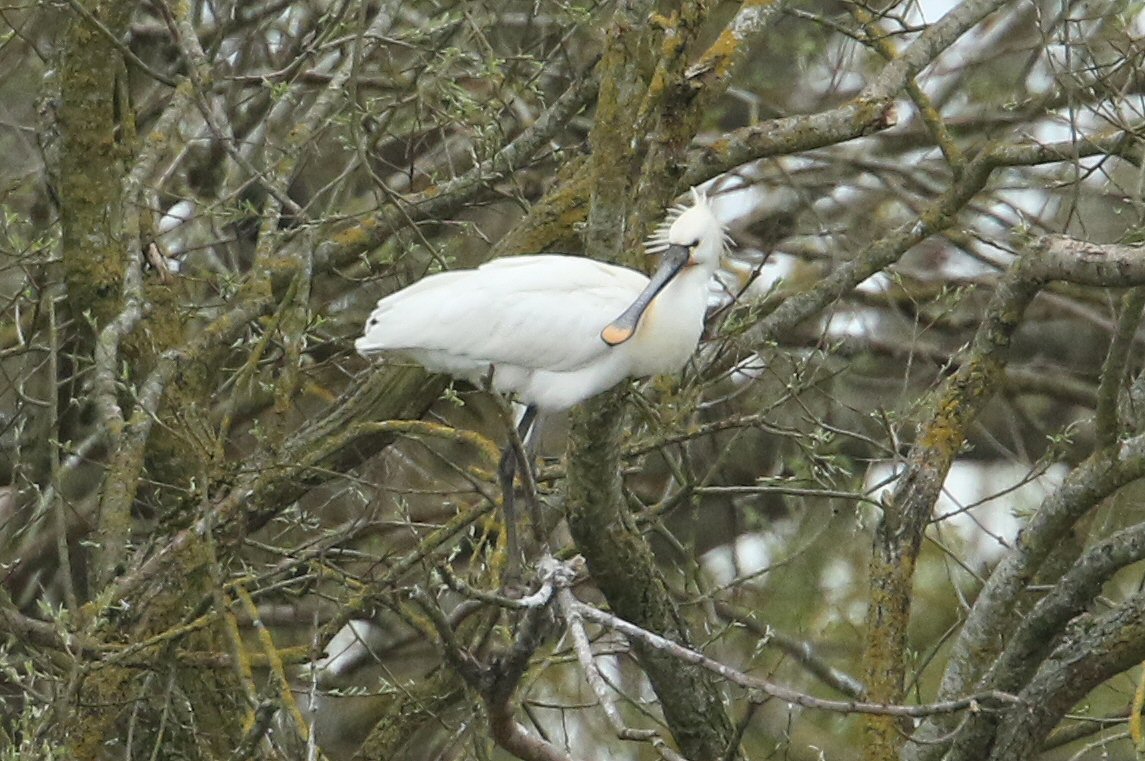
Not to be entirely outdone, Summer Leys LNR attracted what later transpired to be two somewhat capricious Spoonbills, which were first seen flying west over the reserve early in the afternoon of 8th before later returning to settle on the scrape. Their stay there, however, was short-lived and by late afternoon they were picked up flying south-west over Stanwick before being seen again over the same site little more than an hour later, this time flying north-east. The following day, they were relocated in trees near the Cormorant colony on Ditchford’s Delta Pit during the early part of the afternoon, before again flying off north-east. The conduct of these two conforms nicely to the ‘catch-me-if-you-can’ behaviour, which has been the stuff of late for this species in Northants.

Spoonbills, Summer Leys LNR, 8th April 2021 (Ray Seagrove)
Spoonbills, Stanwick GP, 8th April 2021 (Steve Fisher)
Spoonbills, Ditchford GP, 9th April 2021 (Bob Bullock)
Spoonbill, Ditchford GP, 9th April 2021 (Bob Bullock)

The opposite is true, of course, for Cattle Egrets, at least two of which continued to be seen at Stanwick while Great Egrets were still on the wane, with Thrapston producing four, Pitsford two, and Stanford Res and Summer Leys one apiece.

Great Egret, Summer Leys LNR, 5th April 2021 (Mark Tyrrell)

Away from the all the Nene Valley razzamatazz, Daventry CP pulled in two very short-staying, first-winter Shags – presumably on an awayday from nearby Draycote Water, just over the border in Warwickshire, where three have seen the winter out and any number of which sometimes go missing.

Collectively, the seven sites of Harlestone Lake, Hollowell Res, Pitsford, Ravensthorpe Res, Stanford Res, Stortons GP and Thorpe Malsor Res accounted for daily sightings of Ospreys during the week but the only other raptors were a Marsh Harrier at Stanwick on 3rd and a ‘ringtail’ Hen Harrier close to the A14, near Kettering on 4th.

Ruffs, DIRFT 3, 8th April 2021 (Mike Alibone)

On the wader front, what were presumably last week’s two Avocets worked their way down the Nene, turning up at Thrapston GP on 7th, while single Curlews were at both Stanford and Summer Leys on 3rd. Three Black-tailed Godwits were at Summer Leys on 3rd-4th, three visited Stanwick on 3rd, with two still present on 5th and three dropped in to Ditchford GP’s Irthlingborough Lakes & Meadows LNR on 4th.

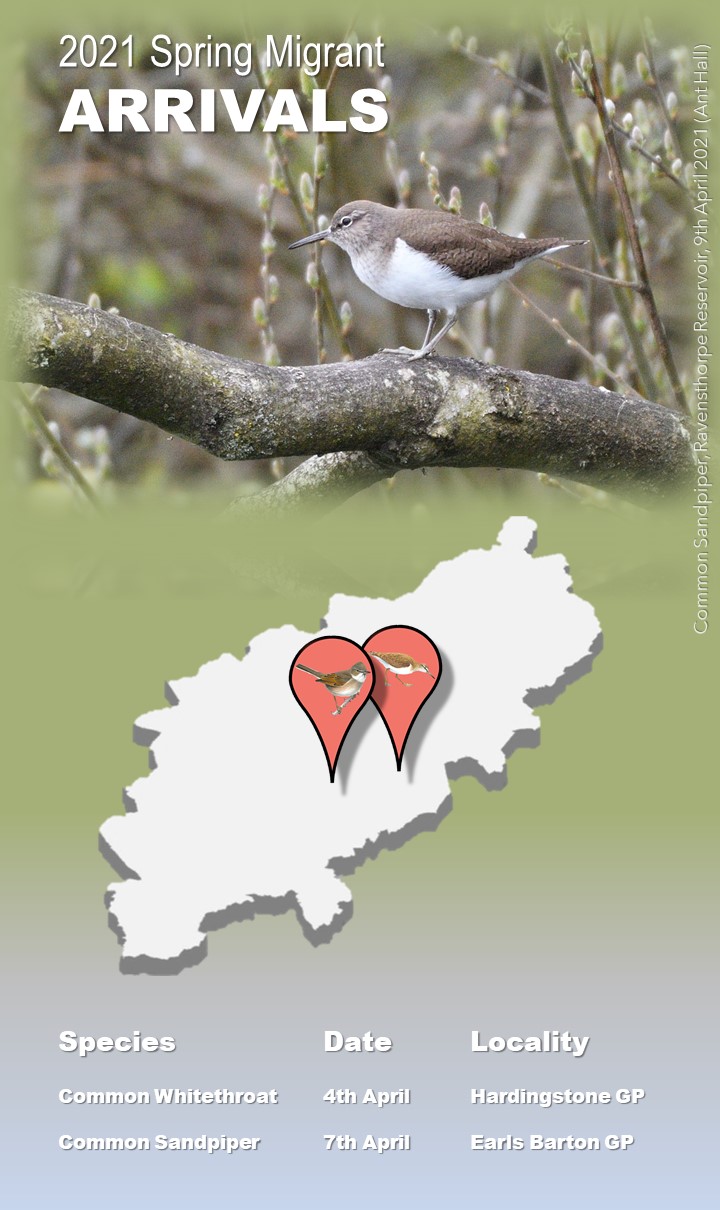
Ruff is quite uncommon as a spring migrant locally and on reflection, these days, autumn is not much better, with numbers over the last few years also being relatively low. So, a ‘flock’ of three together at DIRFT 3 A5 Pools on 8th-9th was a nice find for the site. Dunlins remained thin on the ground this week, with just singles at Clifford Hill and Summer Leys – both on 3rd, while a Jack Snipe remained at Hollowell until at least 5th. And the last wader in this round-up is actually the first – that is, the first Common Sandpiper of the year, appearing on 7th Apr on the new workings at Earls Barton GP, a site within a site, which is rapidly gaining in popularity with birders. It covers a sizeable area and for the purposes of pinpointing individual birds is perhaps best regarded as two sub-sites, split as ‘New Workings (North)’ for the pits between the A45 and the River Nene and ‘New Workings (South)’ for the actively quarried area between Whiston Road and Whiston Lock.

In an even more eventful week for gulls, DIRFT 3’s A5 Pools came once more to the fore – and quite rightly so. This somewhat unique, arguably transient habitat may not be to everyone’s taste but there’s no denying it does deliver the goods from time to time.

Juvenile Glaucous Gull, DIRFT 3, 8th April 2021 (Mike Alibone)

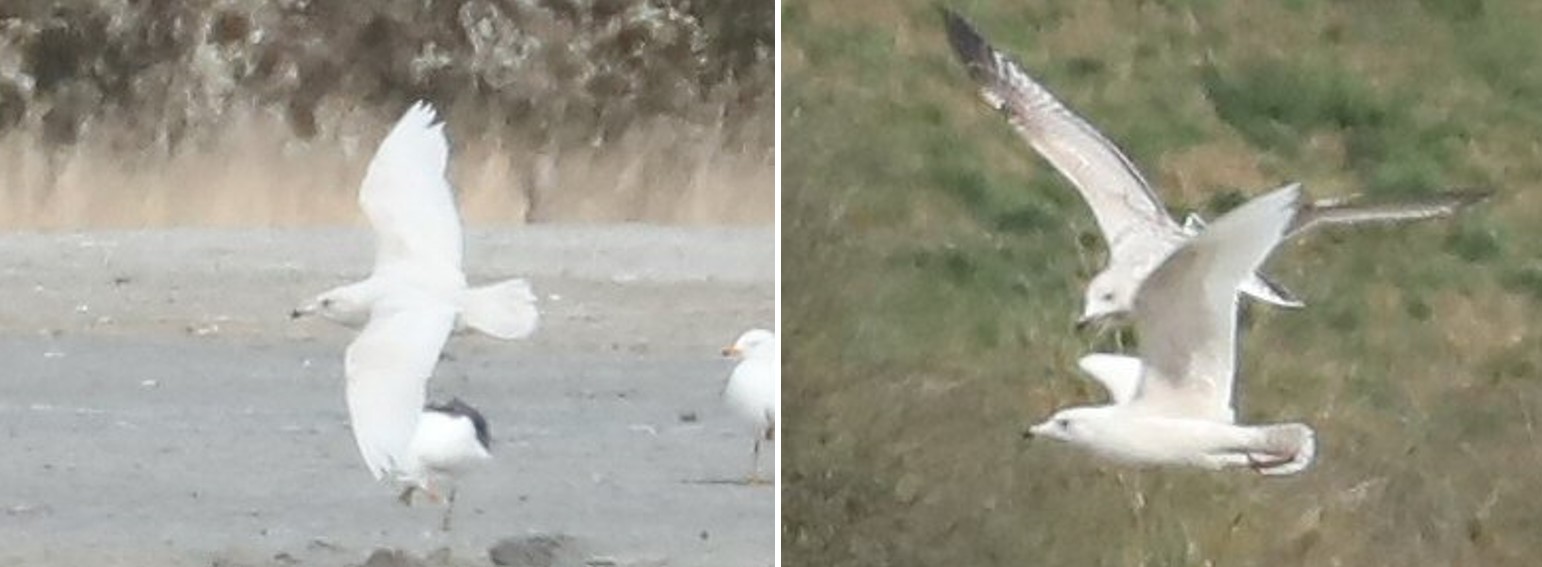
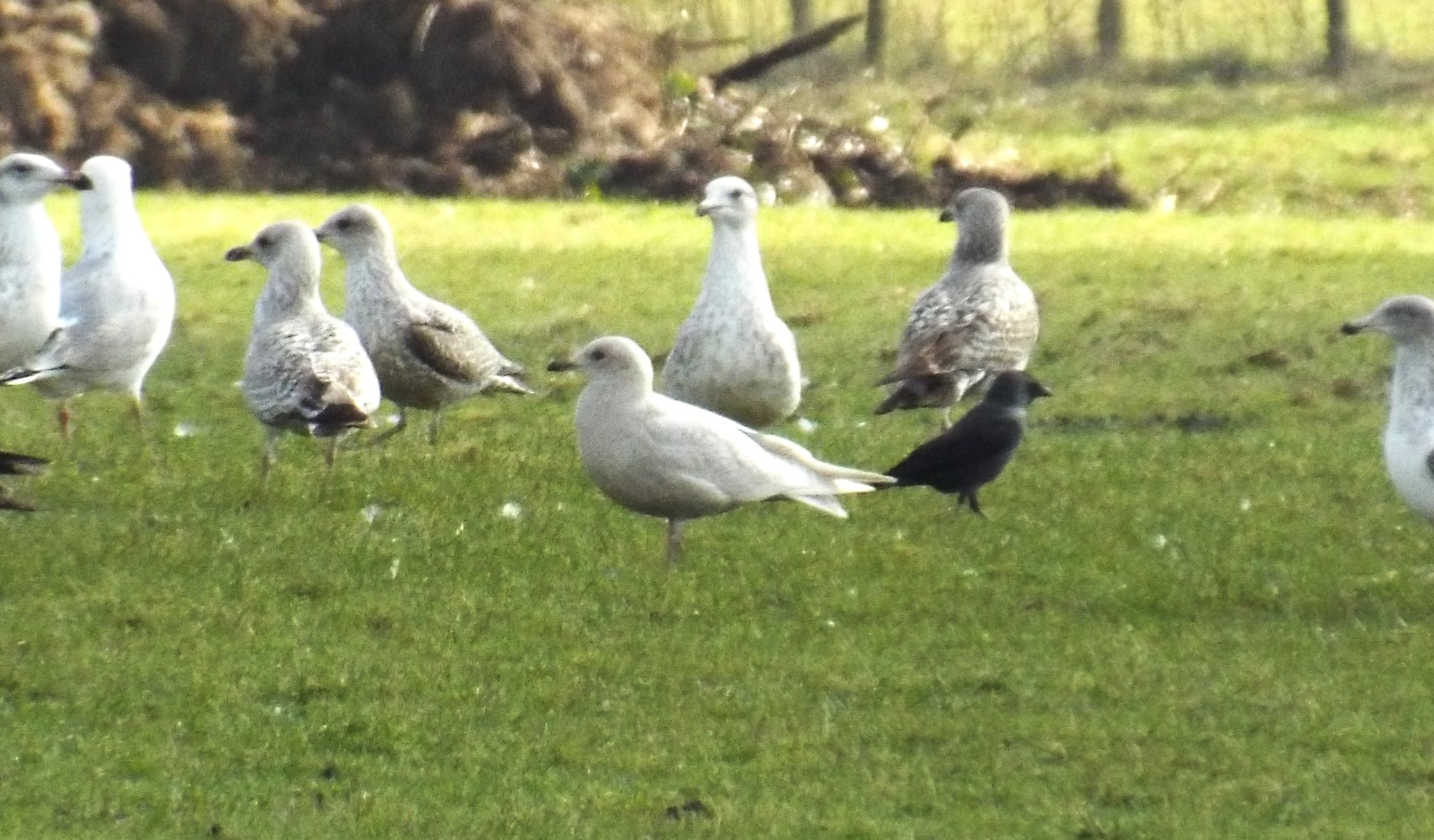
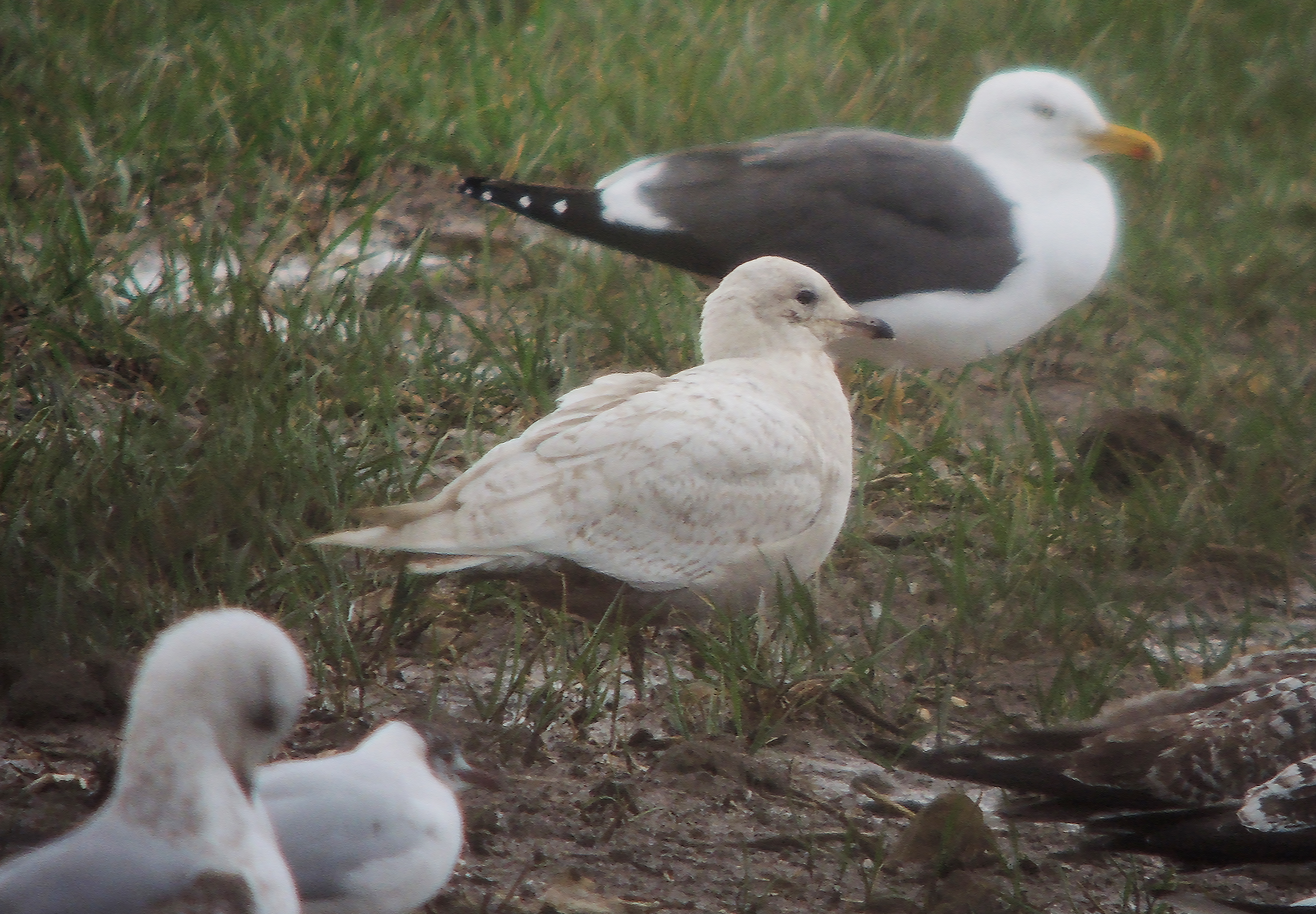
April 8th proved to be one of those times when, in addition to the aforementioned Ruffs, diligent roadside viewing returned a juvenile Glaucous Gull, second-winter Iceland Gull, second-winter Caspian Gull plus second-winter and third-winter Yellow-legged Gulls. Two of the latter species were also present at Pitsford at the week’s end, while up to three adult Mediterranean Gulls were still on the loose at Summer Leys throughout and two were at Stanwick GP on 9th.

Second-winter Iceland Gull, DIRFT 3, 8th April 2021 (Bob Bullock)
Adult Mediterranean Gull, Summer Leys LNR, 4th April 2021 (Ricky Sinfield)
Second-summer Caspian Gull, DIRFT 3, 8th April 2021 (Mike Alibone)

The month so far continued to deal out more Kittiwakes, single adults being seen at Thrapston GP on 5th and at Stanwick, two days later, on 7th. Sandwich Terns, too, were not done with yet, with another, much more obliging bird loafing for a couple of hours on a semi-submerged post in Ditchford’s Watersports Pit on 9th. A male Merlin flew north over Raunds on 4th, on the same date as the county’s first Common Whitethroat of the year, at Hardingstone GP, on 4th, beating the previous earliest, on 5th April 1998, by one day.

Male Common Redstart, Alderton, 3rd April 2021 (Bob Bullock)

More Common Redstarts appeared in the wake of last week’s, with one at Fawsley Park on 7th and up to two near the River Tove, between Alderton and Shutlanger, on 3rd-4th, the latter site also producing a Black Redstart on the same dates. Coincidentally, another Black Redstart was also in a private garden in Wellingborough on these dates and another was found at Chelveston AF on 4th, crossing the county boundary into Bedfordshire shortly after its discovery.

Black Redstart, Alderton, 3rd April 2021 (Bob Bullock)
Black Redstart, Wellingborough, 3rd April 2021 (Amir Mughal)

Other chats were, of course, available in the shape of Northern Wheatears, with up to four favouring the above site at Chelveston on 4th and 5th, singles at both Harrington and Hollowell on the last of these two dates and three south-east of Mawsley on 9th.     

White Wagtails continued to trickle through, with two at Ravensthorpe Res on 8th, while singles were at Clifford Hill on 8th and DIRFT 3 on 9th.

Water Pipit, Hollowell Res, 3rd April 2021 (Jon Cook)

For the second consecutive week, Hollowell was again the place to be for Water Pipit with one on the dam there, albeit briefly, on 3rd.

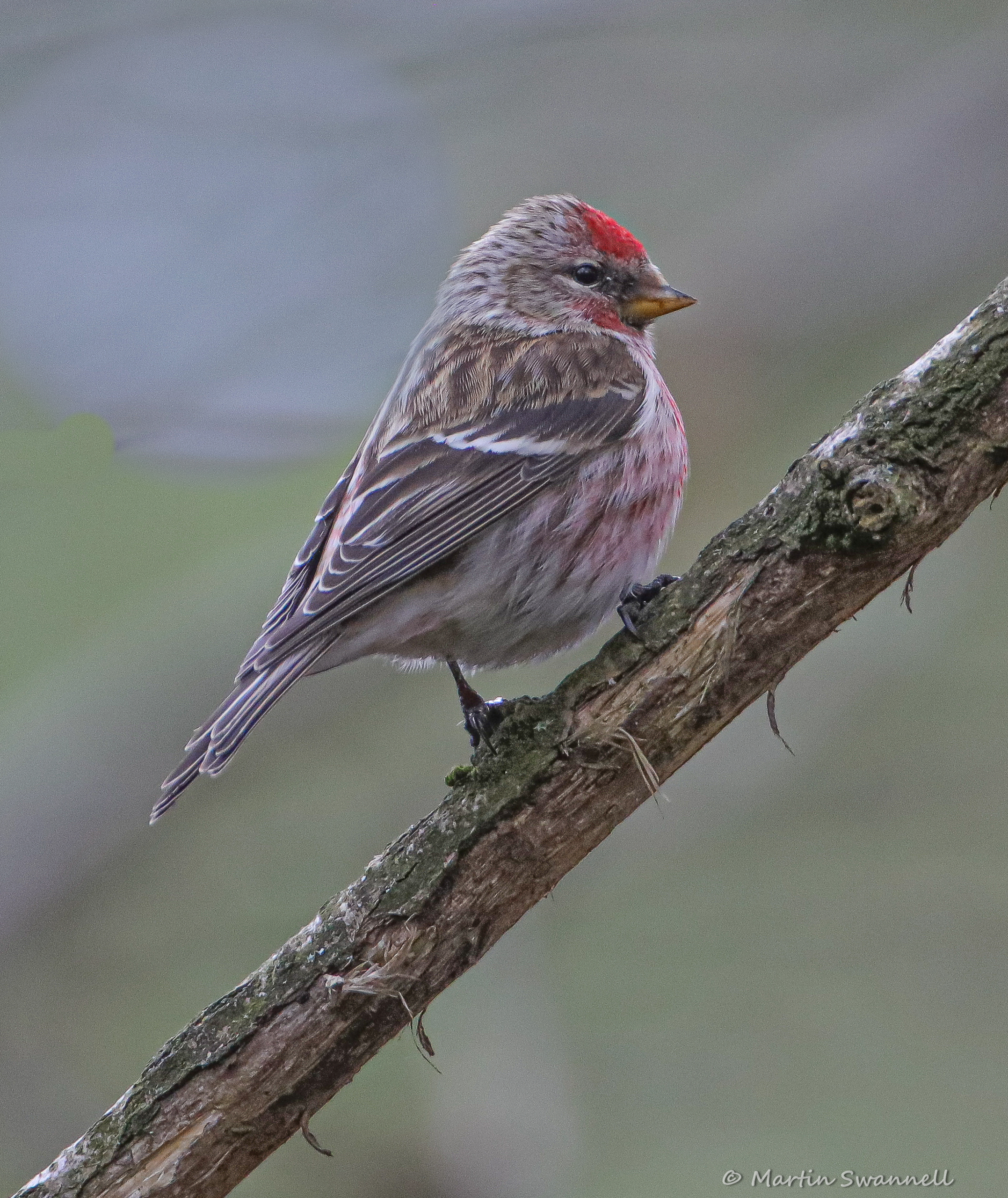
Male Mealy Redpoll, Wakerley Great Wood, 8th April 2021 (Martin Swannell)
Crossbills, Wakerley Great Wood, 8th April 2020 (Martin Swannell)

The same scenario came in to play with Wakerley Great Wood and Mealy Redpoll, with a new bird – a male – in the same area as last week’s on 8th, while up to four Crossbills also remained there throughout and two were still at Hollowell on 6th.

Newsround – 20th to 26th March 2021

It was a cool start to the week before northerly winds quickly gave way to westerlies and south-westerlies, temperatures rose a touch and migration began to gain a little more momentum. In fact, with the arrival of more spring migrants, some tantalisingly brief encounters and long-staying rarities still on tap, it was a great week for late March, whichever way you slice it …

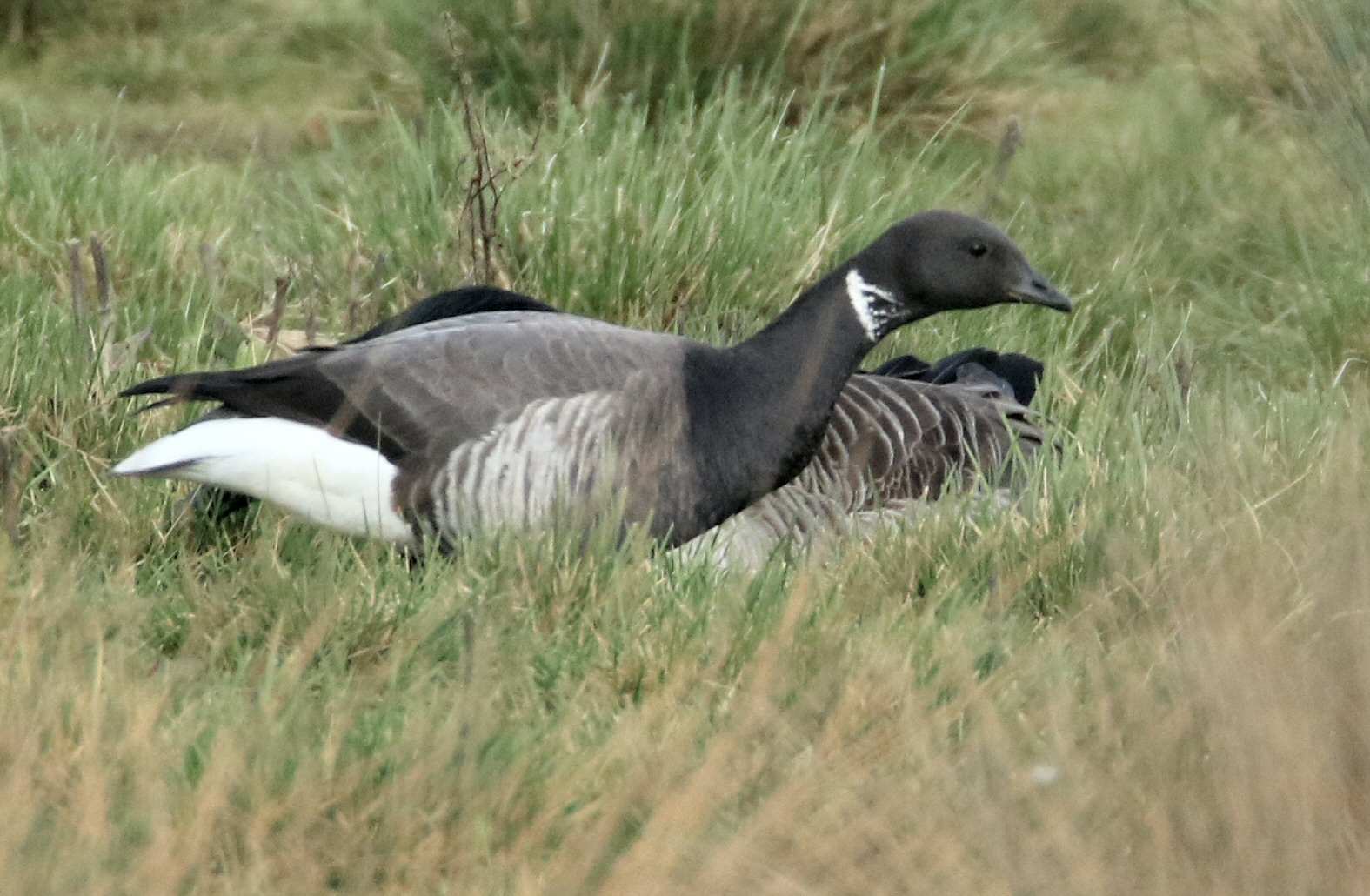
Geese made a comeback this week, albeit in minimum numbers. Among them, an adult Dark-bellied Brent Goose at Ditchford GP’s Irthlingborough Lakes and Meadows LNR from 23rd until the week’s end – a species which has established itself as a regular spring passage migrant over recent years.

Dark-bellied Brent Goose, Ditchford GP, 23rd March 2021 (Bob Bullock)
Dark-bellied Brent Goose, Ditchford GP, 23rd March 2021 (Nick Parker)

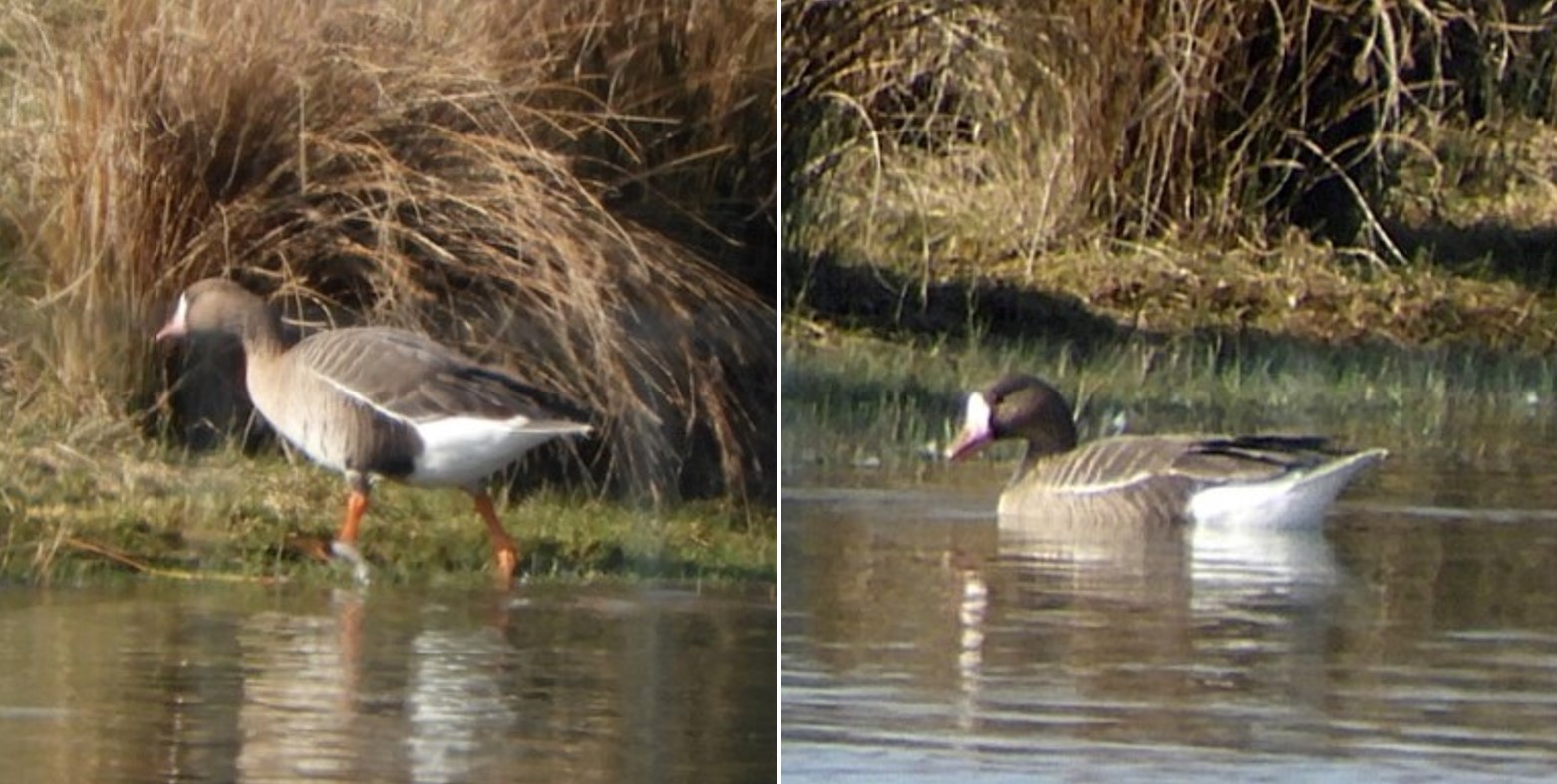
A first-winter White-fronted Goose joined local Greylags at Stanford Res over exactly the same period while, overnight on 22nd, microphones pointing skyward picked up a calling Pink-footed Goose on nocturnal migration over Scaldwell.   

First-winter White-fronted Goose, Stanford Res, 24th March 2021 (Chris Hubbard)

The same migration station also picked up flight calls of seven Common Scoters (groups of one, 4 and 2) over an hour’s duration, late in the evening on 24th. How did we ever manage without ‘nocmig’ in the past?

The appearance of a drake Ring-necked Duck at Stanwick GP, for one day on 21st, sparked interest and speculation that it was a new bird, as opposed to the Ditchford drake on an awayday. The latter was still in situ on 25th, so who knows … Also sticking it out for the duration was the drake Greater Scaup, accompanied the presumed female Greater Scaup x Tufted Duck hybrid, off Pitsford dam. A puzzling individual which is more ‘Greater Scaup’ than anything else and in the right light, shows a green sheen to the head. Work that one out! It also roamed to the causeway on at least one occasion.

Hybrid female Greater Scaup x Tufted Duck, Pitsford Res, 25th March 2020 (Tony Stanford)

Star rarity of the winter, the Thrapston Glossy Ibis, remained settled in its favoured horse field throughout the period.

Glossy Ibis, Thrapston GP, 21st March 2021 (Mark Tyrrell)

Four Cattle Egrets were at the established feeding site of Stanwick on 20th, while Great Egrets were at Pitsford, Stanford, Summer Leys and Thrapston, with a maximum of four at the last of these sites on 23rd.

And if the above is old hat, then from now on our county’s bodies of water will be livened up somewhat with the return of this year’s Ospreys, the first of which was seen flying north over Spratton on 21st. Others quickly followed, with one over Bulwick on 24th and reservoirs at Hollowell, Ravensthorpe and Pitsford each receiving a slice of the action on 25th.

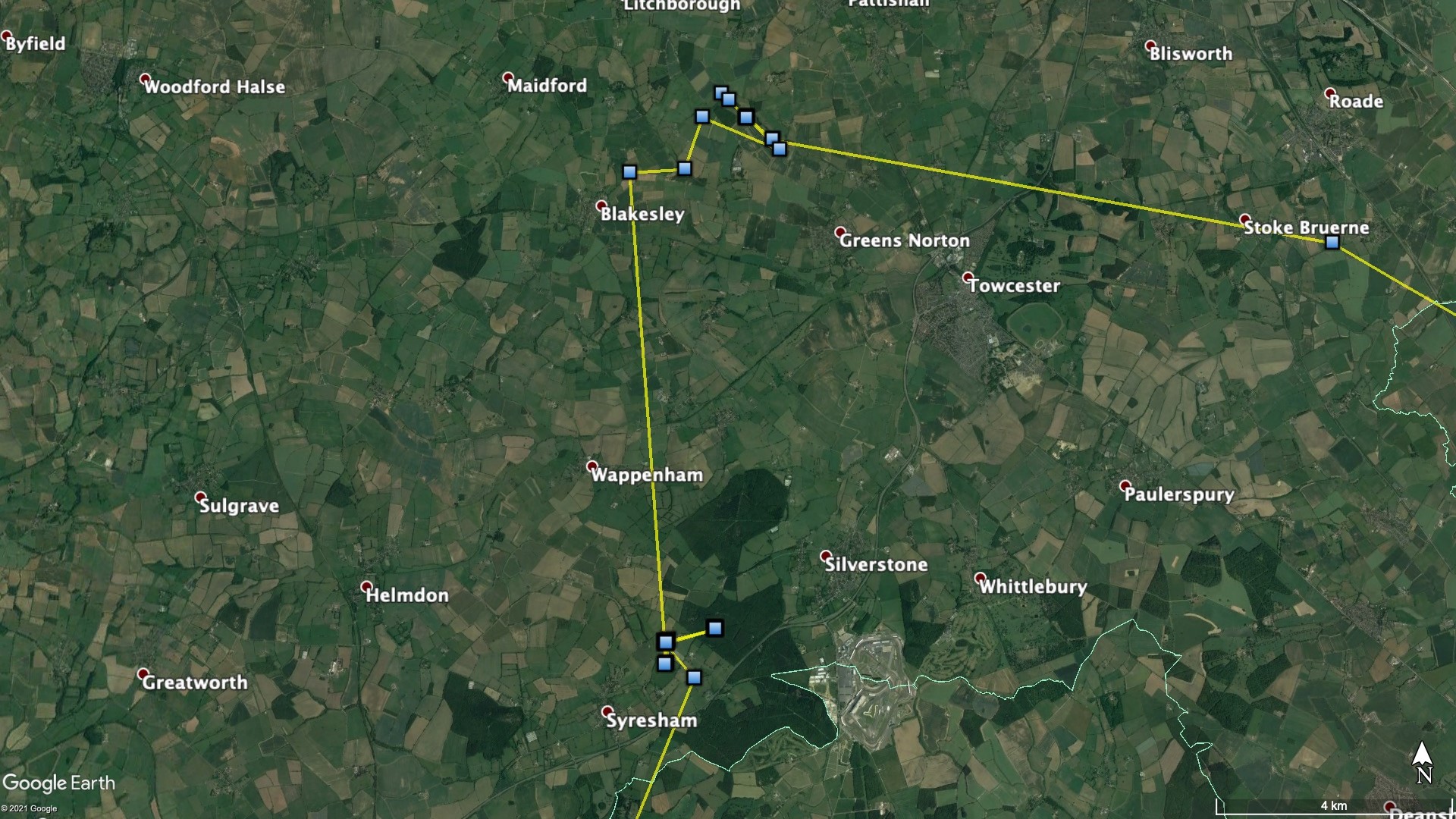
So, from the tangible to the intangible. Enter … another White-tailed Eagle from the Isle of Wight – the third to have visited us so far this year. This week’s, a second calendar year female, G405, flew north from Wiltshire on 22nd and amazingly, chose to roost is in exactly the same location, near Silverstone, as G318 a few weeks ago. Her journey north continued the following day, having left the roost site at 08.30 and taking two hours to fly north-east through the county and on into Lincolnshire. Again, it’s astonishing that such a large bird can slip through unnoticed. Clearly nocmig and satellite tracking are helping us to ‘see the unseen’ – although clearly not in the same context as suggested in the tagline of one leading optical manufacturer …

Female White-tailed Eagle G405 movements through Northamptonshire 23rd March 2021 (Tim Mackrill)

Continuing on the ‘big bird’ theme, though arguably less spectacular, a Common Crane flew north over Thrapston GP, late in the morning, on 24th.

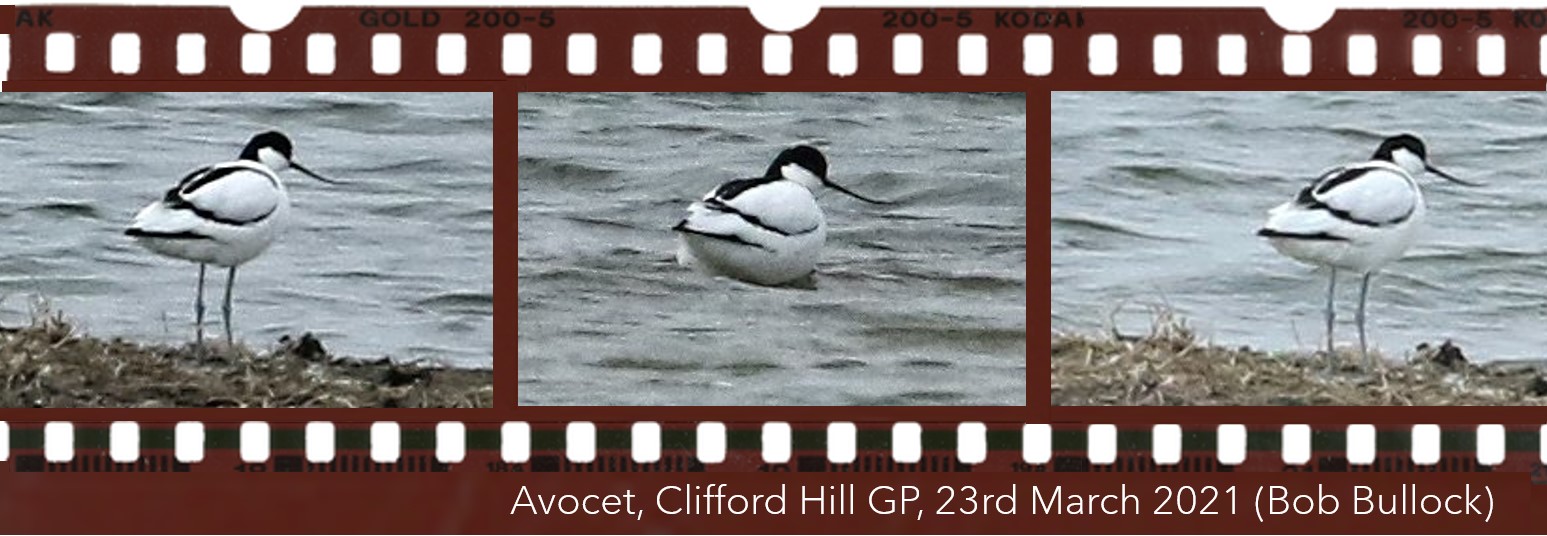
On the wader front – and somewhat predictably these days – the first Avocets started to come through, beginning with a short-staying bird on floods at Lower Barnwell Lock on 20th, followed by an all-day stayer at Clifford Hill GP on 23rd and two at Ditchford GP’s Irthlingborough Lakes and Meadows LNR the following day.

Avocet, Clifford Hill GP, 23rd March 2021 (Ant Hall)

Single Curlews were at DIRFT 3 Pools on 21st and in flight, north, over Pitsford on 24th, while a first-summer Black-tailed Godwit remained at Summer Leys from 22nd until the week’s end. Apart from two at Stanwick on 20th and the same number at Pitsford on 23rd, Summer Leys grabbed the lion’s share of this week’s Dunlins with up to six between 20th and 23rd. Single Jack Snipes were at Hollowell on 20th and 23rd and at Clifford Hill GP on 21st.

Adult Mediterranean Gulls, Stanwick GP, 26th March 2021 (Steve Fisher)

In contrast to last week, Mediterranean Gulls were confined to the two Nene Valley locations of Stanwick and Summer Leys, where they were seen almost daily, the first of these sites producing up to three on 23rd and Summer Leys, one throughout the period. All were adults. At least one Yellow-legged Gull continued to frequent Pitsford and Caspian Gulls materialised in the form of an adult at Hollowell on 23rd and a first-winter at Boddington Res on 25th.

Coming to a gravel pit near you: Common Tern at Thrapston on 26th just misses earliest ever, on 23rd March in 2005. In the vanguard for our summer breeders, it’s the first of many more soon to come.

Meanwhile, Harrington Airfield’s Short-eared Owl was still present on 22nd, as was the female Merlin there and a male turned up on site on 24th, while another was seen at Stortons GP on the same date. It’s been a good winter for them locally.

To passerines and an early House Martin, at Raunds on 21st, constitutes another near miss, just two days off the earliest ever, on 19th March in 2001. And upholding the scarcity flavour of the week … a Black Redstart, seen only briefly at Ashton STW on 24th. Two Stonechats clung on to the ashes of winter still this week, with one at Summer Leys on 20th and another at Clifford Hill on 21st, subsequently being replaced by Northern Wheatears – the first being at Wigsthorpe on 22nd, followed by one at Clifford Hill on 26th. Two were also reported from the Blueberry Farm/Brampton Valley area on 22nd. They have arrived in the county a little later than expected this year. Two more White Wagtails arrived this week – one at Ecton SF on 22nd and the other at Thrapston the following day but neither beats a nice spring Rock Pipit, one of which paid a brief visit to Stanwick on 21st before flying of east.

Female Crossbill, Hollowell Res, 22nd March 2021 (Jon Cook)
Male Crossbill, Hollowell Res, 22nd March 2021 (Jon Cook)

All of this week’s Crossbills were seen at Hollowell between 20th and 23rd, with a maximum of fifteen there on 22nd.

Newsround – 13th to 19th March 2021

In stark contrast to last week’s rush of early spring migrants, blustery north-westerlies, quickly followed by cold north-easterlies, effectively put the lid on any further arrivals of summer visitors. Meanwhile, Thrapston’s long-staying Glossy Ibis remained top of the leaderboard as far as rarities were concerned.

There were no new wildfowl, either – ‘nocmig’ notwithstanding, of course. The two Barnacle Geese which arrived at Pitsford Res last week were still in place on 17th, with another appearing at Summer Leys LNR on the same date. Pitsford also retained its showy drake Greater Scaup off the dam, with the female Greater Scaup x Tufted Duck hybrid in tow, all week, while Ditchford GP’s drake Ring-necked Duck remained until at least 15th, as did the drake and ‘redhead’ Smew there.

Drake Greater Scaup, Pitsford Reservoir, 16th March 2021 (David Smith)

Which brings us neatly to this week’s ‘nocmig’ events. The nocturnal equivalent of visible migration watching, employing sound recording equipment to capture the flight calls of migrating birds, is gaining in popularity. After delivering the county’s earliest-ever Little Ringed Plover last week, Scaldwell’s migration station was again tuned in, producing recordings of flocks of migrating Common Scoters during the hours of darkness on 15th and 18th. As we enter the peak season for this species, hopefully there will be some more tangible, ‘on the ground’ birds found during the next week or two.

Arguably best new bird of the week – at least for those who were in the vicinity of Summer Leys on the last day of the period – was Black-necked Grebe. One found on the main lake there during the morning was shortly followed by the discovery of two more over the other side of Mary’s Lane, on the lake of the same name, early in the afternoon. Three of these dapper, summer-plumaged birds in close proximity is unusual but still falls short of matching the recent ‘flock’ of four at Daventry CP in April 2019.

Black-necked Grebe, Summer Leys LNR, 19th March 2021 (Bob Bullock)
Black-necked Grebes, Earls Barton GP, 19th March 2021 (Mike Alibone)

Meanwhile, further down the Nene Valley, last week’s rumours of the Glossy Ibis frequenting the horse field behind the lay-by on the A605 east of Thrapston, morphed into reality when it was found to be feeding happily there on 14th. It remained settled for the next three days, after which it became more elusive.

Glossy Ibis, Thrapston GP, 16th March 2021 (Mike Alibone)

Also more elusive this week were Cattle Egrets, with sightings at Stanwick limited to one on the ground on 15th and two flying over, two days later, on 17th. And as for Great Egrets, well, they were restricted to just the five localities of Ditchford – where there were potentially up to eight on 17th, Pitsford, Stanford, Summer Leys and Thrapston.

Great Egrets, Summer Leys LNR, 14th March 2021 (Ricky Sinfield)

After last week’s Marsh Harrier at Summer Leys, another flew over Byfield on 19th, and then we entered the unidentified raptor zone, with the same day producing a harrier sp. flying north-east over Little Irchester and, potentially more exciting, an eagle sp. flying over Byfield in the direction of Fawsley later in the day. The latter escaped positive identification but was presumed to be a White-tailed Eagle and with the Isle of Wight reintro birds criss-crossing the country in recent weeks, that would seem to be the logical conclusion. Now, that would have been the end of it, except for the fact that, praise be to satellite-tracking … none of the IoW birds was in the area at the time. What with a ‘wild’ White-tailed Eagle moving through Suffolk and Cambridgeshire earlier in the week, speculation is rife …

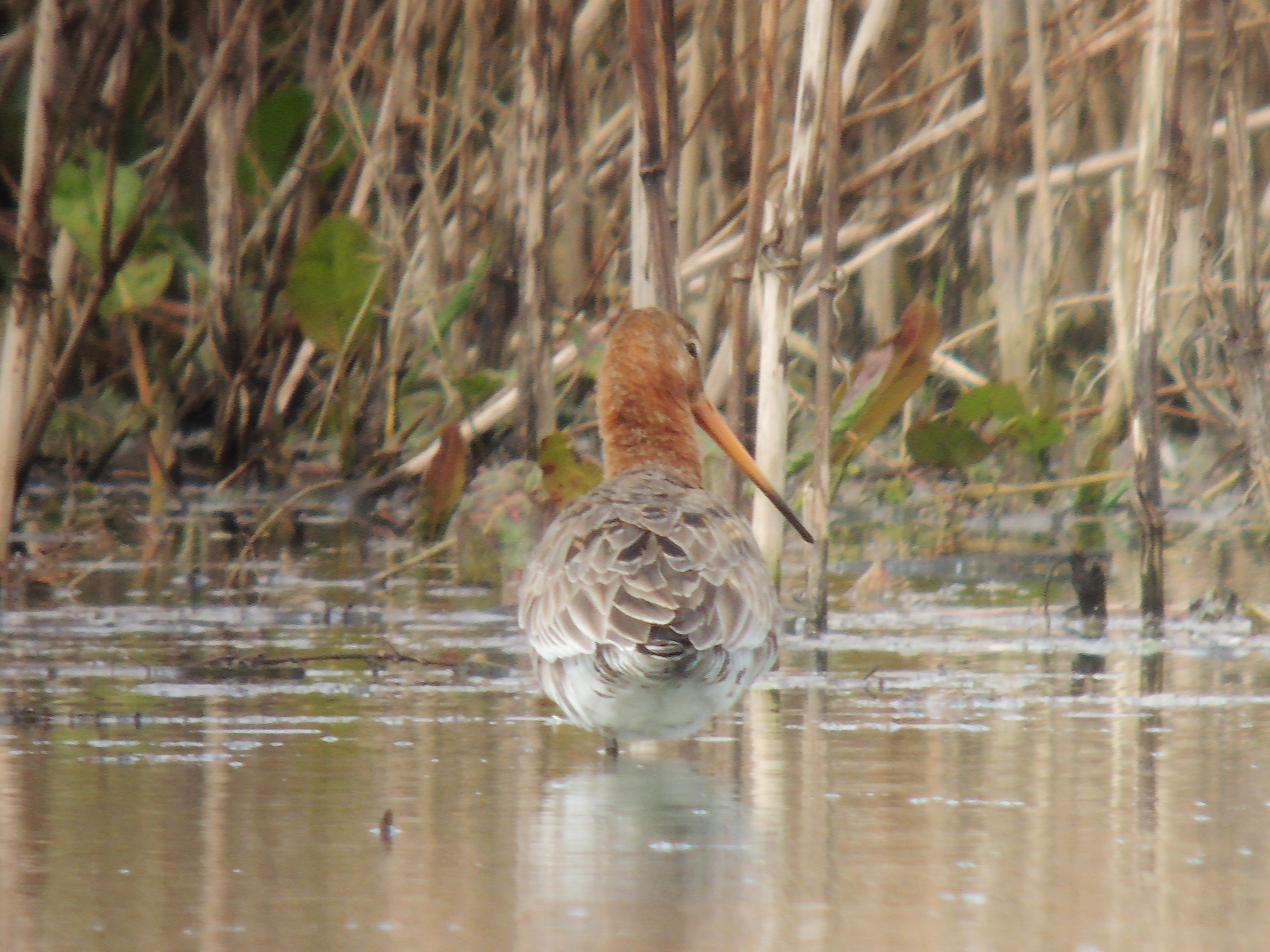
In terms of species selection, this week’s waders were … last week’s waders. Single Curlews visited Stanford on 14th, Pitsford on 15th and Summer Leys on 15th-16th, while, of two which were present at Clifford Hill GP on 16th, one was multicolour-ringed, the combination of which narrowed it down to one of five or six individuals from the population breeding in the Brecks. This is currently being monitored by the BTO with the aim to better understand how habitat is influencing breeding success and how management may be better targeted to help the species, which is currently in decline. A rather smart, summer-plumaged Icelandic Black-tailed Godwit visited Summer Leys from 14th to 16th and the same site produced a Dunlin on 15th-16th and three on 19th. One also visited Stanwick on 17th. Two Jack Snipes were at Pitsford on 15th and one was found at Ditchford on 17th.

Black-tailed Godwit, Summer Leys LNR, 16th March 2021 (Doug Goddard)

Hot on the heels of last week’s first-winter at Boddington Res came more Kittiwakes and Stanford was in line to receive its own in the well-watched gull roost there on 15th. This was followed by an adult at Stanwick on 16th and sadly, an adult was found dead at Hollowell on 17th. Caspian Gulls made a comeback on 16th, when a first-winter appeared at Daventry CP and a second-winter was found in less salubrious surroundings at Rushon Landfill.

Adult Kittiwake, Stanwick GP, (Steve Fisher) and first-winter Caspian Gull, Daventry CP, (Gary Pullan) – both 16th March 2021.

Daventry also produced a couple of Yellow-legged Gulls, with a third-winter on 15th and a second-winter the following day, while up to two were at Pitsford throughout the week. The recent run of Mediterranean Gulls also continued with Stanwick stealing the crown from Stanford in terms of numbers. Three were present on 19th, two on 13th and one on 14th-16th, while Stanford’s gull roost held single adults on 13th and 17th plus a second-winter on 14th. Elsewhere, single adults were at Daventry CP on 15th and Summer Leys on 19th.

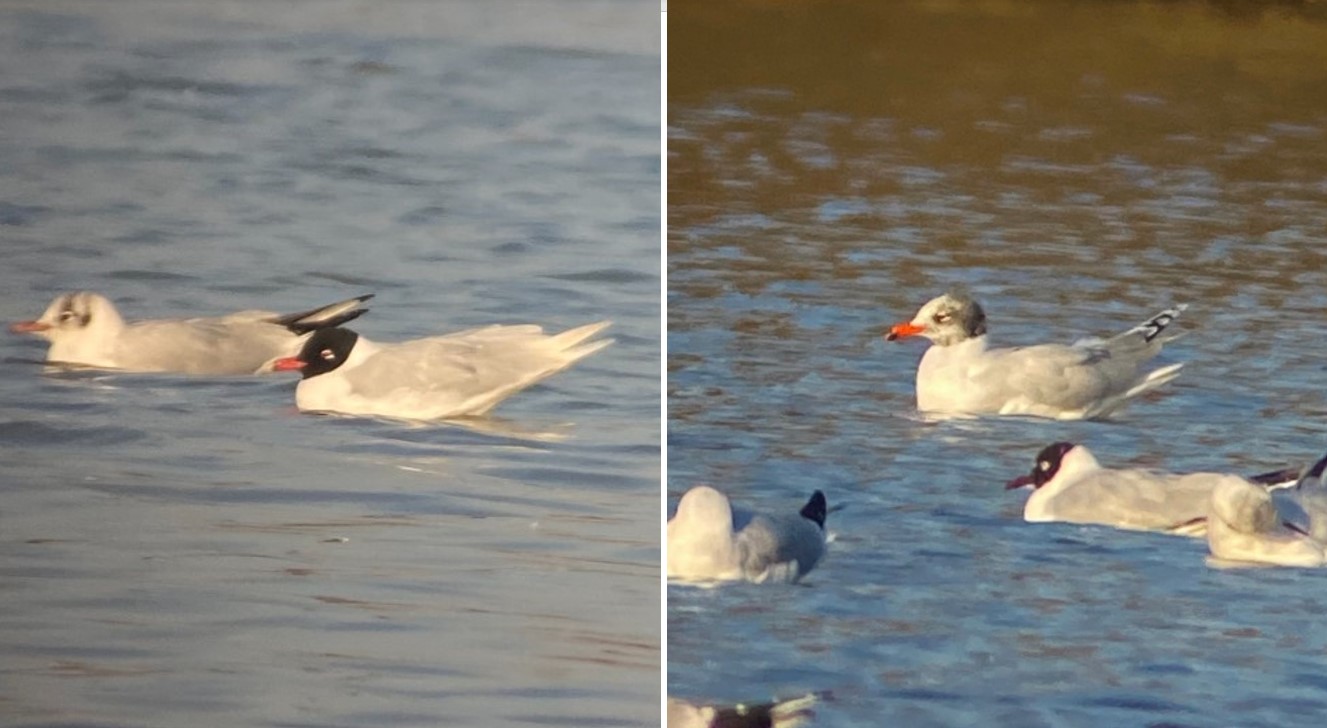
Adult Mediterranean Gulls. Left: Stanford Res, 17th March 2021 (Chris Hubbard), right: Summer Leys LNR, 19th March 2021 (Bob Bullock)

On dry land, Harrington Airfield’s Short-eared Owl made it through to another week, being seen again on 16th, when the onsite Merlin was also present until at least 18th. Another Merlin flew north at Boddington Res, also on 16th.

Passerines mustered two Stonechats – one at Harrington on 14th, the other being at Clifford Hill on 18th, while Crossbills held steady with in excess of twenty at Salcey Forest on 16th, several still at Wakerley Great Wood on 14th, three at Hollowell on 15th and one at Pitsford on the same date.


Newsround – 6th to 12th March 2021

This week was very much a tale of two halves, the first of which saw us under a relatively mild southerly airflow that proved to be highly conducive to spring migration. The second half of the period delivered persistently strong to gale force west to south-westerlies, with gusts topping 55 mph but as far as spring migrants were concerned, we were very much in the zone …

The wildfowl line-up didn’t change appreciably and beyond two Barnacle Geese putting in an appearance and settling at Pitsford Res from 6th until 11th, the only really new arrivals were a briefly staying Pink-footed Goose at Daventry CP on 12th, a White-fronted Goose at Priors Hall, Corby, for one day only, on 7th and a drake Greater Scaup, off the dam at the aforementioned reservoir, on 9th.

White-fronted Goose, Priors Hall, 7th March 2021 (James Underwood)
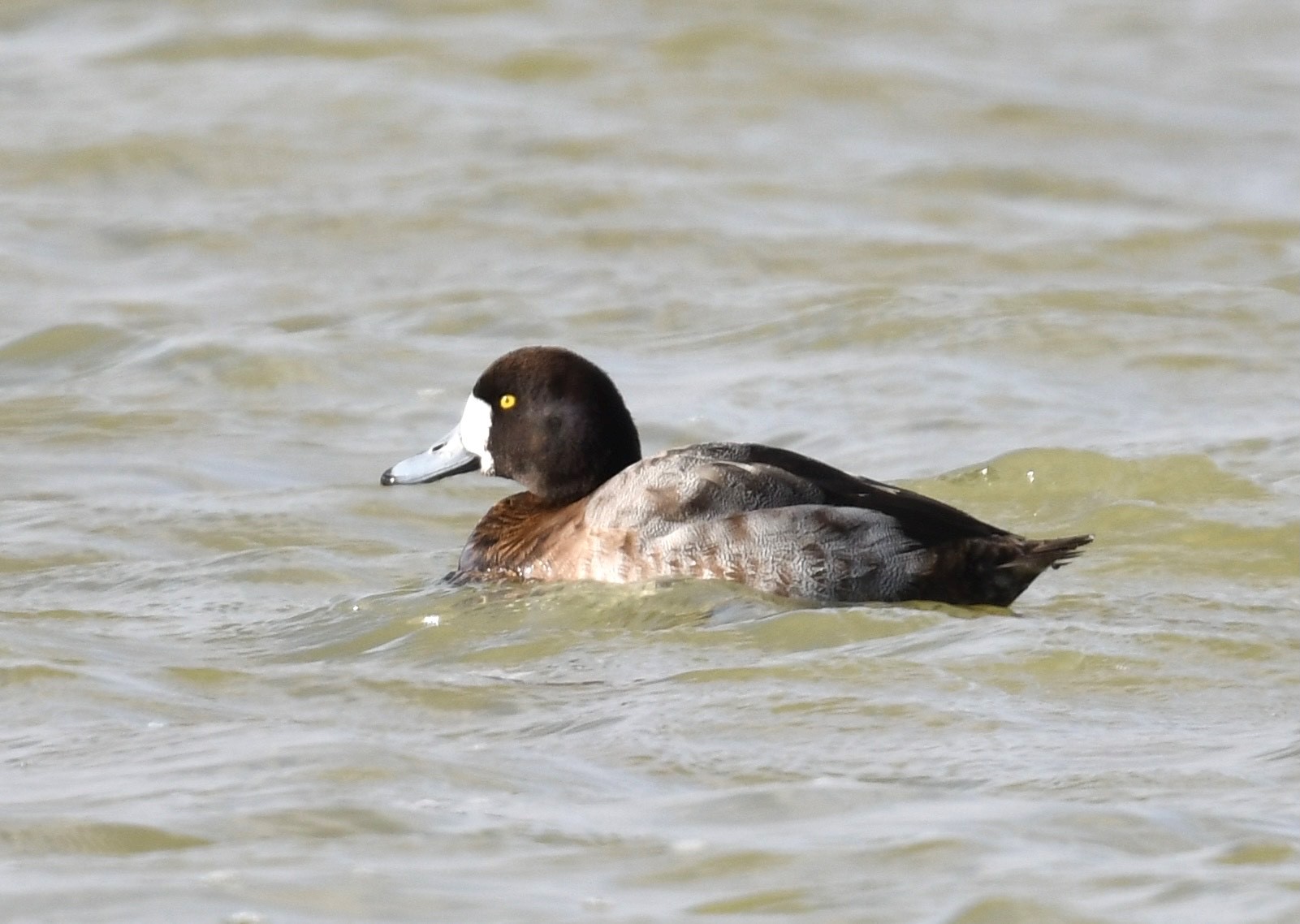
Adult drake Scaup, Pitsford Res, 11th March 2021 (Ant Hall)
Adult drake Scaup, Pitsford Res, 12th March 2021 (Bob Bullock)

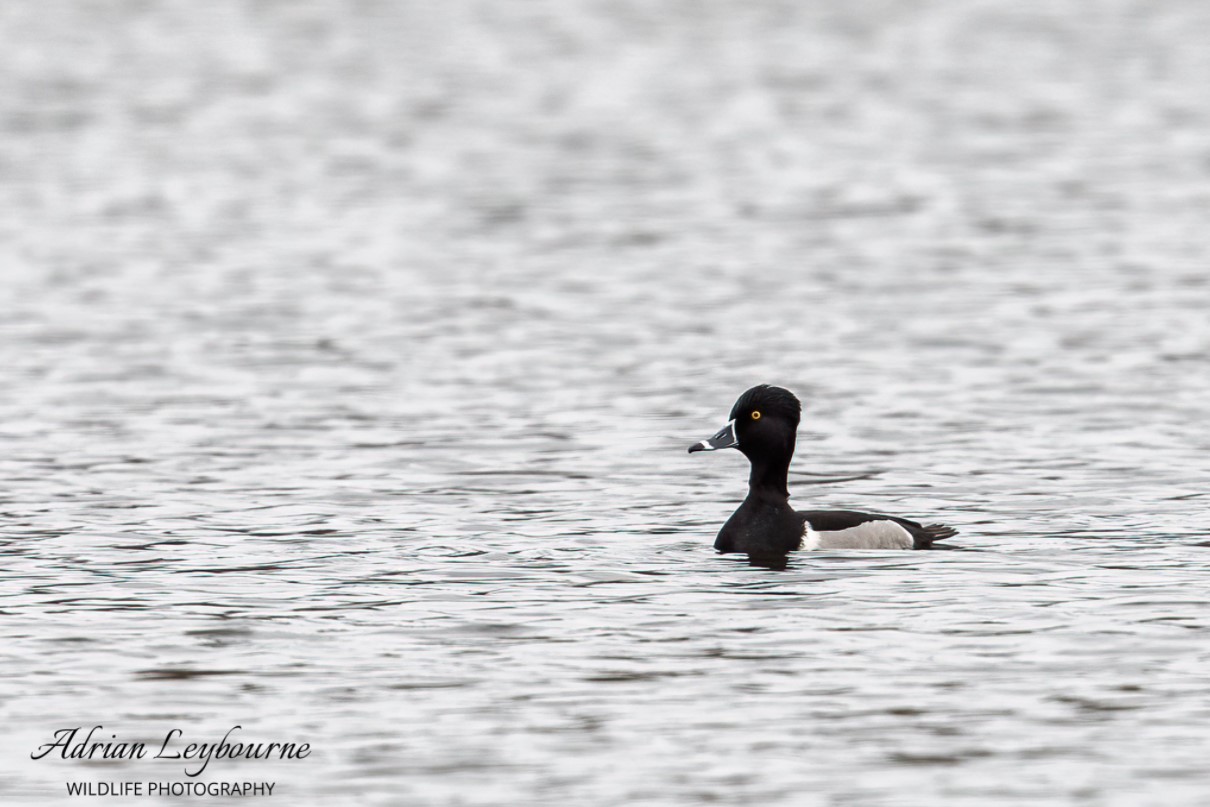
It was still present at the week’s end, accompanied by a female which showed the hallmarks of a Greater Scaup x Tufted Duck hybrid, although it appeared to display mainly Scaup characteristics. The other hybrid of the back end of this winter – the female Ferruginous Duck x Pochard – surfaced again at Stanwick GP on 8th. The ongoing presence of Ditchford GP’s drake Ring-necked Duck continued until at least 9th, as did that of the drake Smew there, accompanied by the fidgety ‘redhead’ for one day only, on 6th.

Drake Ring-necked Duck, Ditchford GP, 6th March 2021 (Adrian Leybourne)

Further down the Nene Valley and after a week with no reports, the Glossy Ibis was back on Thrapston GP’s Aldwincle Lake – if only intermittently – on 7th-9th. Prior to this it was rumoured to have been frequenting the horse field behind the lay-by on the A605, just east of Thrapston. Also in the same area, a Cattle Egret was seen in fields between the edge of the town and the footpath from said lay-by to Town Lake during the evening of 11th, before being relocated on the nearby Heronry Lake the following morning. Likely though it is to be one of the Stanwick troop, a new bird can’t be fully ruled out and up to five were still at the latter locality on 6th-7th. Thrapston also trumped all other sites for Great Egrets this week, with up to six there on 11th, while three were at Summer Leys, on and off, and singles were seen at Blatherwycke Lake, Clifford Hill GP, Pitsford, Stanford Res and Stanwick. Arguably more attractive and undoubtedly more difficult to get to grips with than any of the above this week, was the Bittern that dropped into reeds at Summer Leys on 7th.   

Summer Leys also briefly attracted a Marsh Harrier for half an hour on 9th, another Marsh Harrier went through at Stanford Res on 7th and in the north of the county, a ‘ringtail’ Hen Harrier coasted over the road between Deenethorpe and Upper Benefield on 6th.

‘Ringtail’ Hen Harrier, Upper Benefield, 6th March 2021 (Bob Bullock)

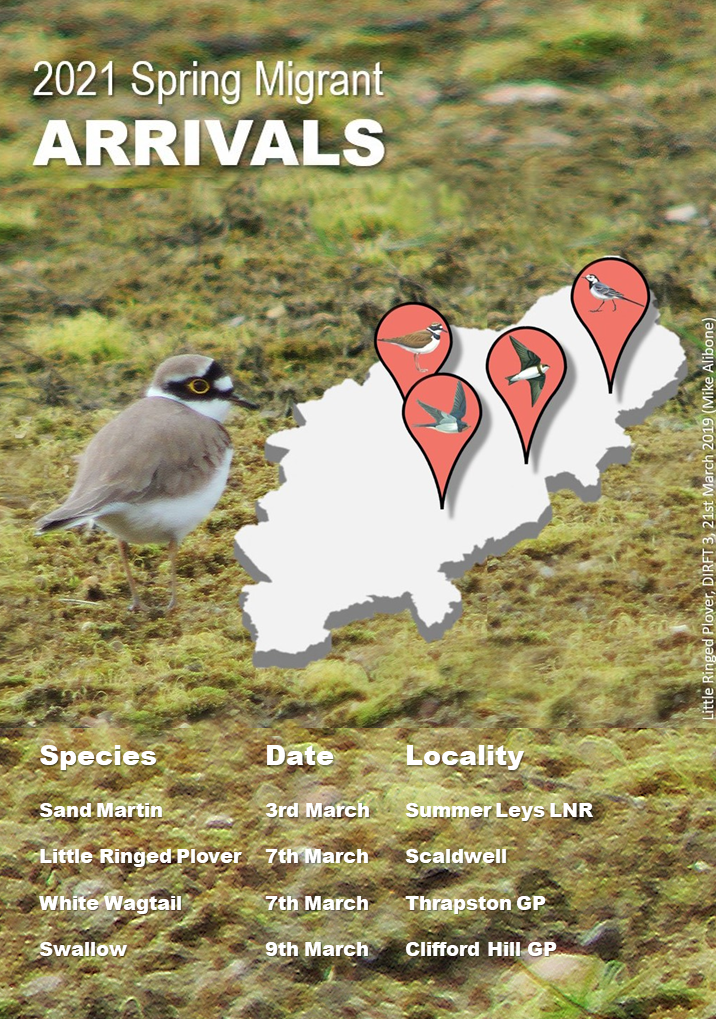
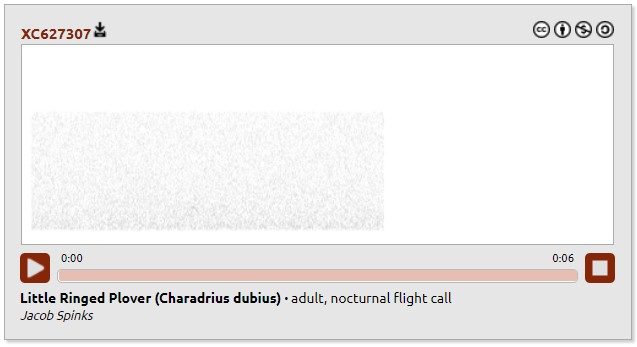
So, more on that Little Ringed Plover touched on above. A single call on a nocmig recording device, at 00.03 hours on 7th was all it took to make its way into the record books as Northamptonshire’s earliest ever spring record, beating the previous earliest, which was on 10th March 1983. Now, imagine if it had been four seconds earlier … Following this one, another was seen flying around the new workings at Earls Barton GP on 9th.

Little Ringed Plover, Scaldwell, 7th March 2021. Click image for recording & further details.

Single fly-over Curlews occurred at Stanford Res on 6th and 8th and this week, other large waders were also available in the form of Black-tailed Godwits, with singles on 8th and 9th at Pitsford and the same two days at Stanwick, while one which flew over Ecton Brook, Northampton on the morning of 9th seems highly likely to have been the same individual located at Ecton SF later in the day.

Black-tailed Godwit, Pitsford Res, 8th March 2021 (Ant Hall)
Black-tailed Godwit, Ecton SF, 9th March 2021 (Mike Alibone)

Single Dunlins visited Stanwick GP on 9th and 11th and two were at Summer Leys on 10th, while wintering Jack Snipes were up to four at Pitsford and three at Hollowell Res.

Jack Snipe, Hollowell Res, 7th March 2021 (Jon Cook)

Associated with that big south-westerly blow was a first-winter Kittiwake, which joined the gull roost at Boddington Res on 11th. It was not entirely alone as others were also seen well inland in Nottinghamshire, Shropshire, Staffordshire and Warwickshire during the adverse weather.

First-winter Kittiwake, Boddington Res, 11th March 2021 (Gary Pullan)

Mediterranean Gulls continued to appear nightly at Stanford’s gull roost, which peaked at three on 7th, while last week’s Thrapston individual was again seen on 9th and single Yellow-legged Gulls appeared at three sites, which included adults at Hardingstone GP on 8th, Stanford on 12th and at least one at Pitsford all week.

Adult and second-winter Mediterranean Gulls, Stanford Res, 7th March 2021 (Chris Hubbard)

Continuing the poor winter for this species, the Harrington Airfield Short-eared Owl remained until at least 9th.

Well, if last week delivered our first Sand Martin of the year, this week it was the turn of the first Swallow, with two appearing at Clifford Hill on 9th. Once again, these proved to be record-breakers, the previous earliest being a full week later, on 16th March 1977. Wow! It wasn’t quite the same for White Wagtail, though, with this week’s birds at Thrapston and Stanford on 7th, Hollowell on 9th and by the A14 east of Woodford on 12th coming nowhere near the earliest, which was on 25th February 1995.

Another sign that winter is in full retreat was, once again, the lack of Stonechats, with just one being seen, at Welford Res, on 11th. Crossbills still abound, however, with as many as fifteen still at Hollowell on 7th and nine still on 9th, while 6th saw one at Bucknell Wood and two at Scotland Wood, 7th saw three still at Wakerley Great Wood, four flew south over Denton Wood on 8th and two flew south-west over Harrington AF on 12th.

Newsround – 27th February to 5th March 2021

Under the influence of a southerly airstream, the mild weather continued into the early part of the week, bringing with it a waft of Saharan dust which, having entered the atmosphere, resulted in some spectacular sunrises. Along with this came our first summer visitor … and another eagle.
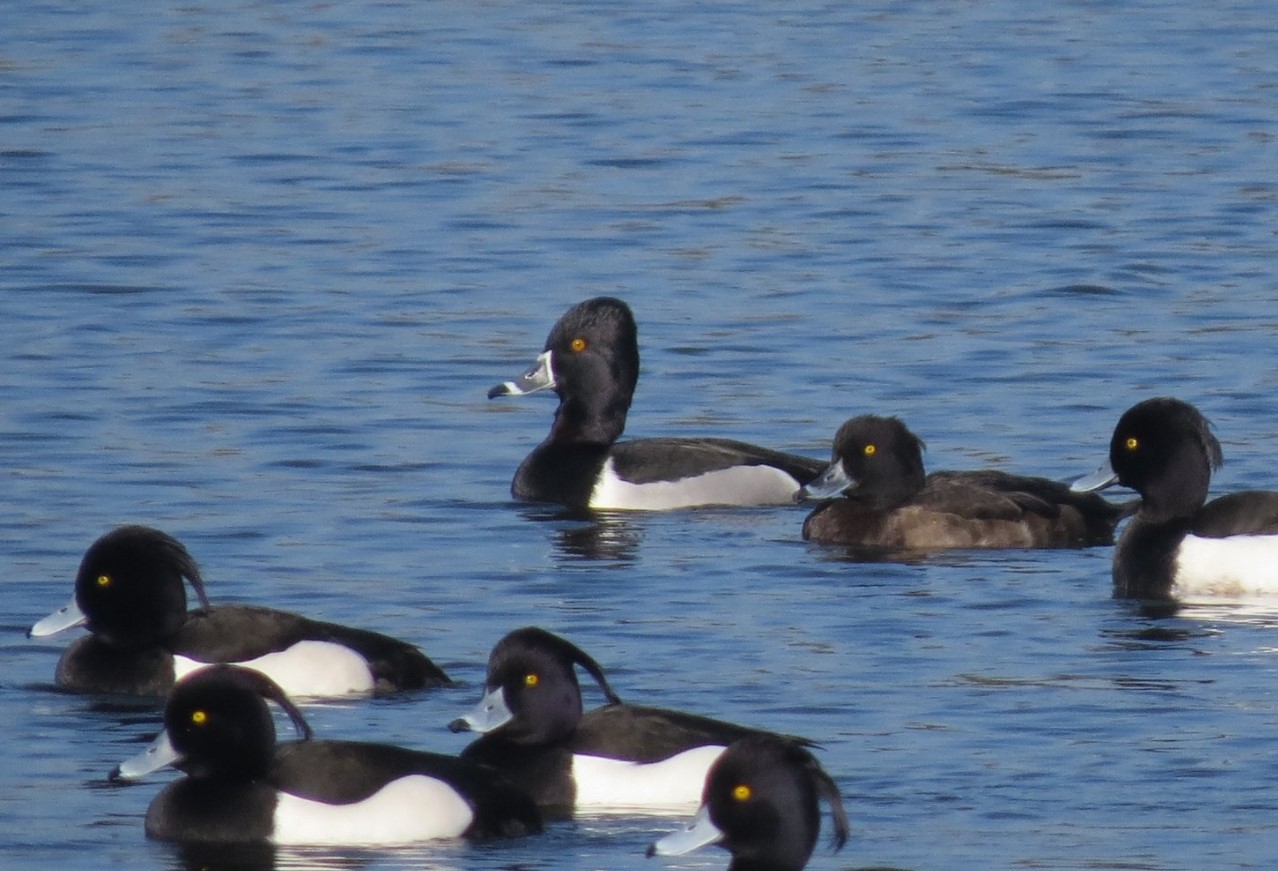
In the first gooseless week since early October last year, we were left with barely a handful of quality quackers propping up the local wildfowl cohort. On which note the drake Ring-necked Duck remained settled on Ditchford GP’s Big Lake throughout the period while, on the adjacent Skew Bridge Lake, the drake Smew also saw the week out, although the accompanying ‘redhead’ appeared to be absent after 27th. Another – or perhaps the same – ‘redhead’ appeared at Summer Leys LNR on 3rd. Colourful but no cigar, a drake Red-crested Pochard was found at Clifford Hill GP on 4th.

Drake Ring-necked Duck, Ditchford GP, 28th February 2021 (Adrian Borley)

Cattle Egrets continued to feature regularly in their favoured Stanwick feeding area but four were also found among sheep on the reserve at Summer Leys on 28th. In stark contrast to last week, Great Egret numbers were down, with no more than three reported at any one of the seven localities they were found at.

Great Egret, Pitsford Res, 4th March 2021 (Tony Stanford)

Another week, another White-tailed Eagle or, more correctly put, ‘G318’ paid a return visit. After her previous visit last month, the ‘Lady from the Island’ flew west into the county from Buckinghamshire on the afternoon of 3rd and ended up roosting in a small wood approximately 2.5 km south of Grimscote. The following day, she flew 18.5 km south and roosted in Bucknell Wood near Silverstone before leaving the county on 5th and moving 66 km south-west through Oxfordshire. If such a large bird can slip through the county unnoticed, what else are we routinely missing?!

Movement of White-tailed Eagle G318 through Northants, 3rd-5th March 2021 (Tim Mackrill)

This week saw numbers slide on the wader front, with three Ringed Plovers returning to an undisclosed breeding site on 1st and single fly-over Curlews at DIRFT 3 on 28th and Stanford Res on 4th. Dunlins were limited to singles at both Clifford Hill GP and Stanwick GP on 4th, while the only Jack Snipes were two at Pitsford Res on 3rd.

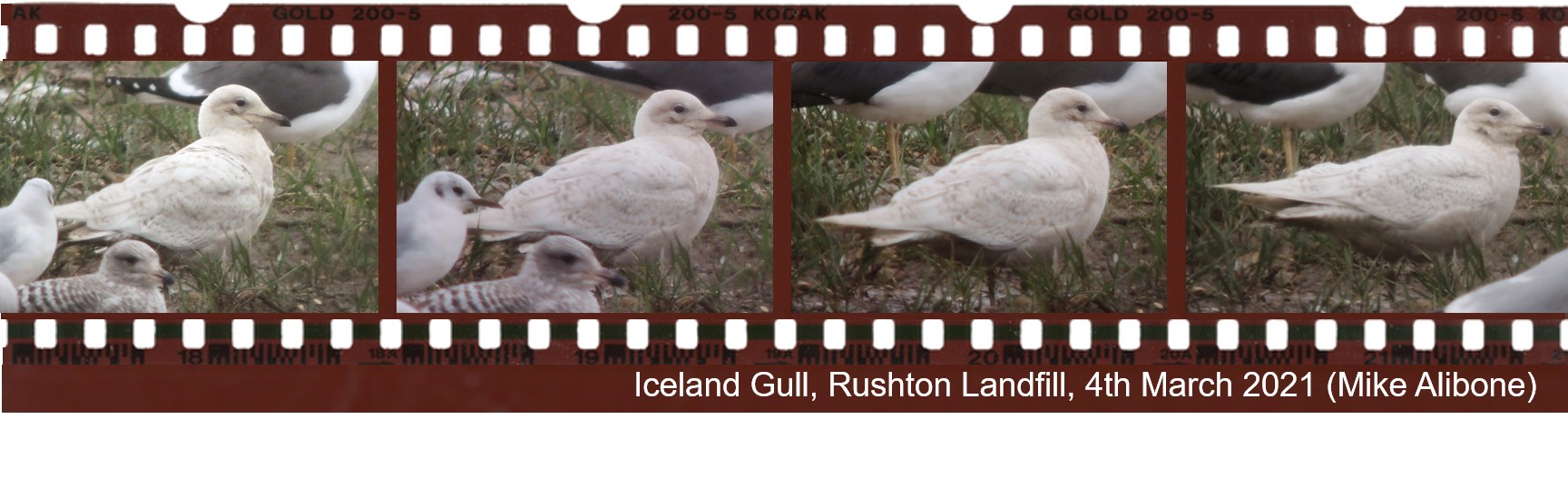
Conversely – and unsurprisingly – numbers of Mediterranean Gulls ramped up considerably, with Stanford’s gull roost claiming the lion’s share of at least two different birds over 27th, 1st-2nd and 5th. Boddington Res also produced its own duo in the roost there on 28th. Others were more readily available during ‘normal’ daylight hours at Thrapston GP daily on 3rd to 5th, at Earls Barton GP on 3rd, at Stanwick on 4th and Daventry the following day. Again, all birds were adults. Rushton Landfill’s long-staying juvenile Iceland Gull chalked up twenty-eight days on site this week, still being present there on 4th, while more meaty fare in the shape of a first-winter Caspian Gull was at DIRFT 3’s A5 Pool on 28th and single Yellow-legged Gulls were seen at Pitsford on 2nd and 5th.

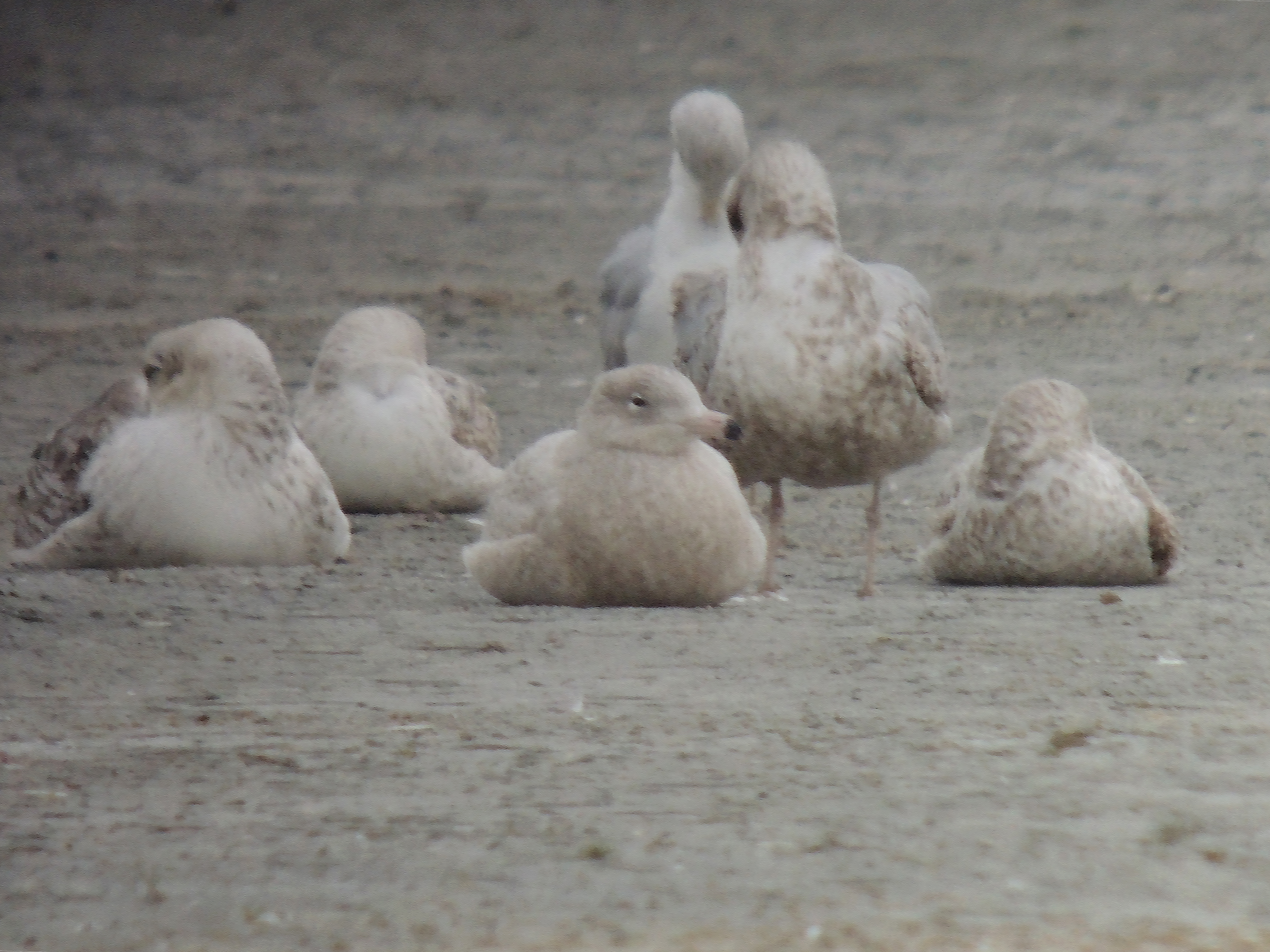
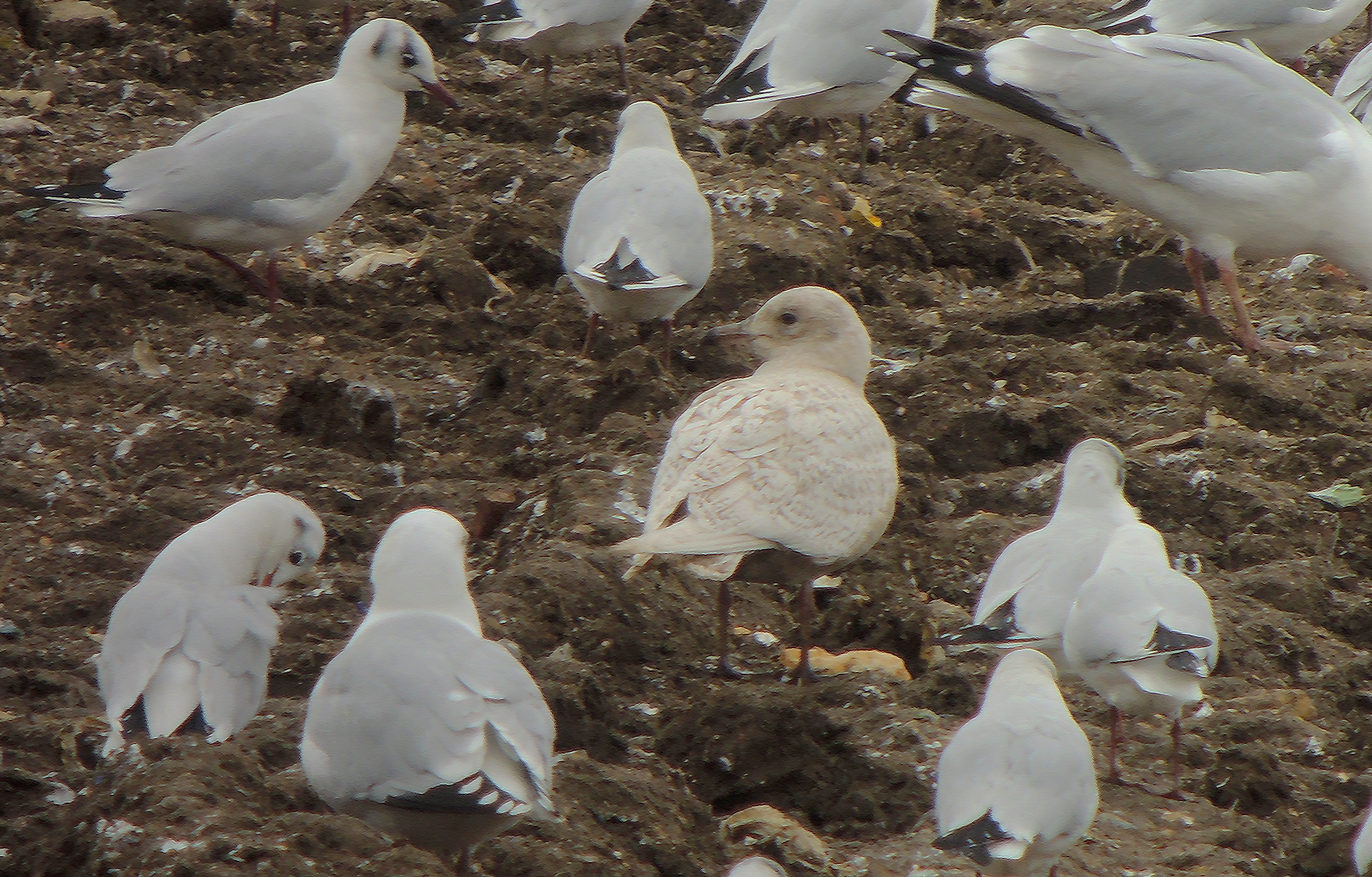
Juvenile Iceland Gull, Rushton Landfill, 27th February 2021 (Alex Holt)

Juvenile Iceland Gull, Rushton Landfill, 4th March 2021 (Mike Alibone)

The Harrington Airfield Short-eared Owl – one of the very few in the county this winter – remained throughout the week but it’s proving to be a good one for Merlins, this week’s comprising singles at both Rockingham and Upper Benefield on 1st and Pitsford Res on 3rd.

Topping the passerines, the male Bearded Tit resurfaced at Stortons GP on 28th and fittingly, out of that Saharan dust, came our first Sand Martin of the year, at Summer Leys on 3rd. Otherwise, it appears numbers of Stonechats plummeted this week – Pitsford being the only site from which they were reported. But we’re hanging on to our Crossbills, with as many as ten still at Hollowell throughout the period and fifteen still at Wakerley Great Wood on 5th.

Newsround – 20th to 26th February 2021

A south to south-westerly airstream ensured temperatures remained above average throughout the period. This week the spotlight remained firmly on Thrapston.
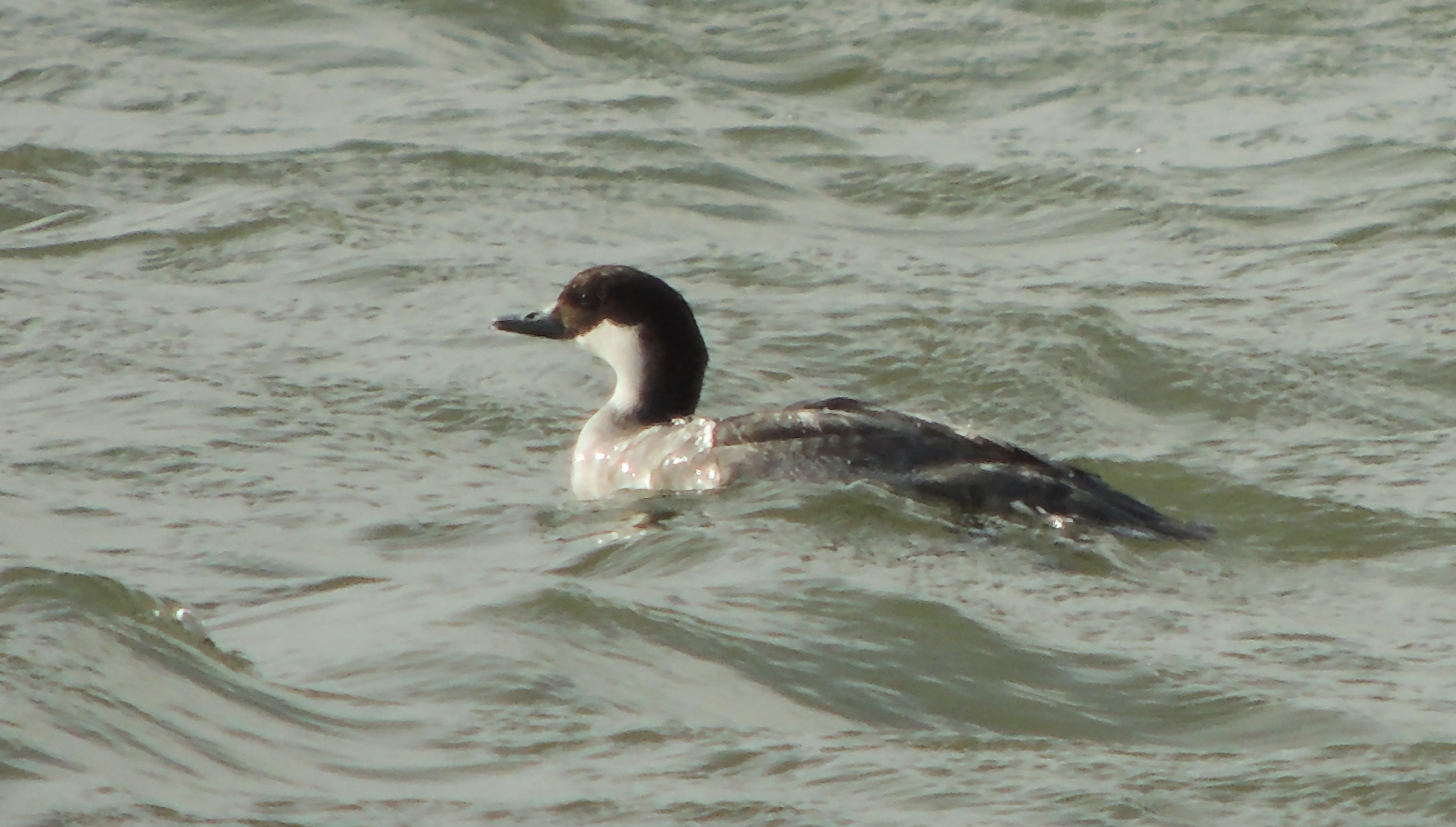
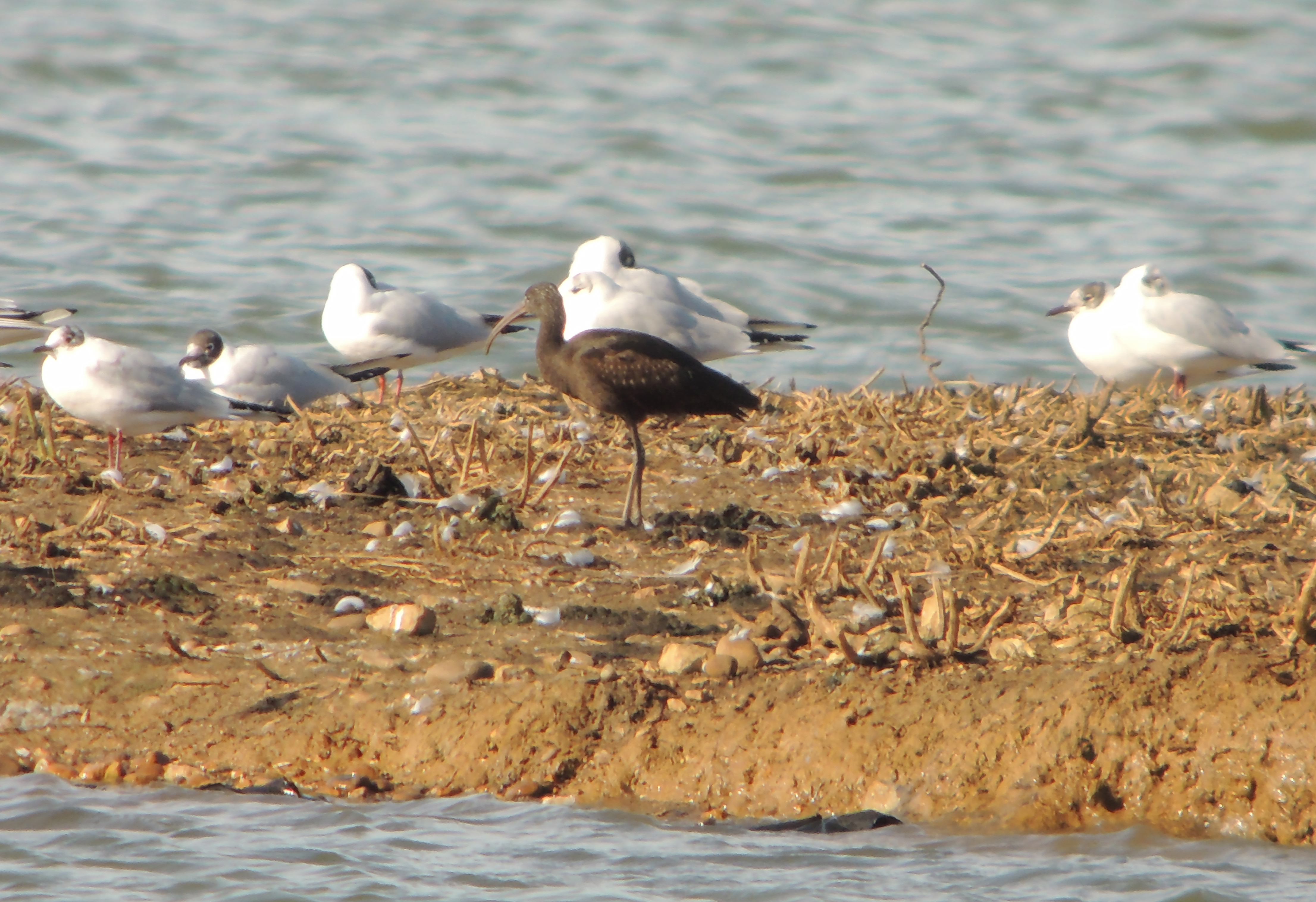
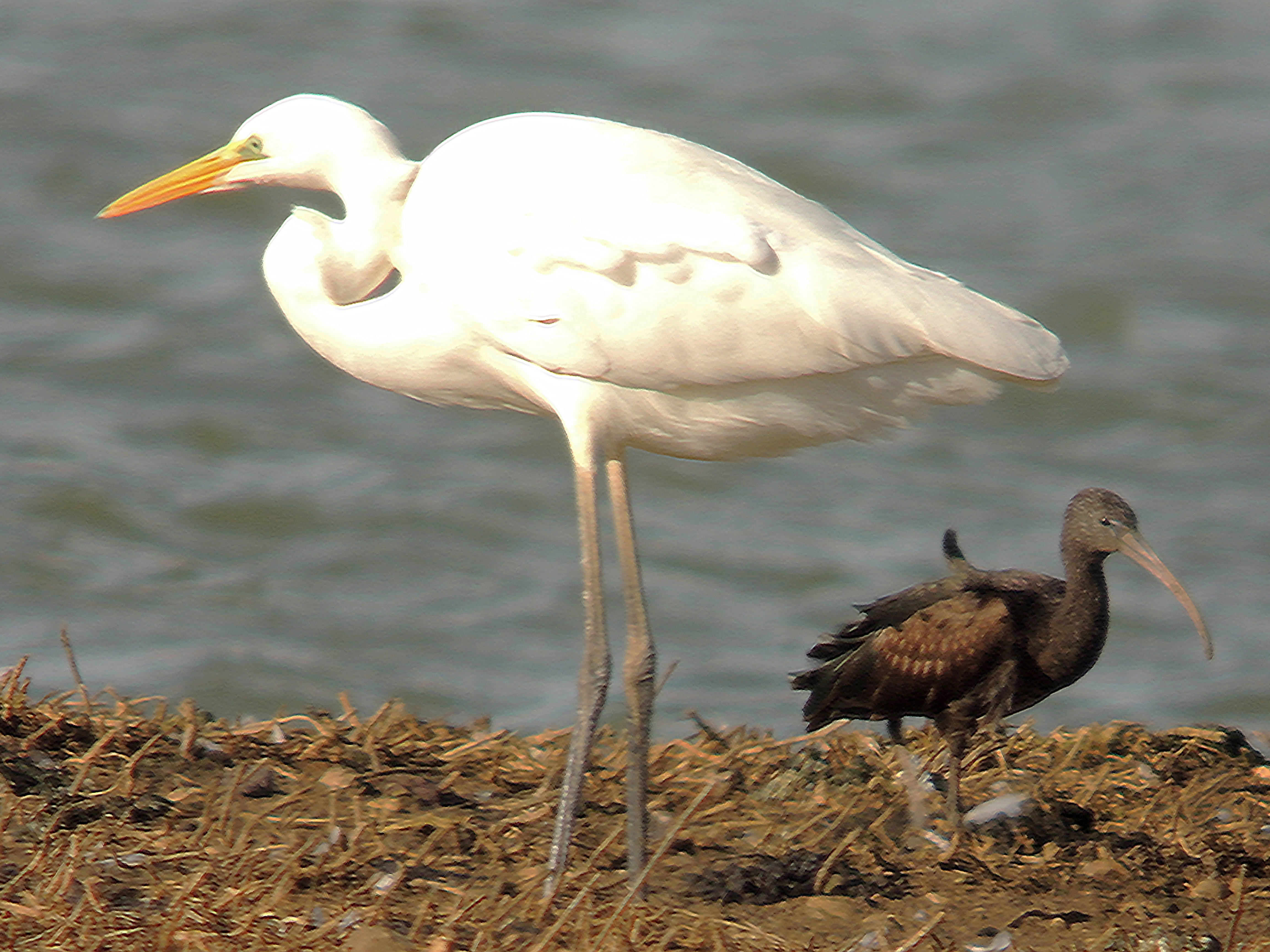
Barnacle Geese came to the fore in this week’s wildfowl line-up, with nine at Stanwick GP, apparently replacing the White-fronted Geese there on 23rd. In fact, the only White-fronts during the period were two in flight over Byfield on 20th, while single Pink-footed Geese were at both Ringstead GP and Stanwick on 20th.

Stanwick was also paid another visit by the itinerant female Ferruginous Duck x Pochard hybrid on 21st, the day on which the drake Ring-necked Duck was refound back on Ditchford GP’s Big Lake, where it was still present at the week’s end. Paralleling this, last week’s two Smews at the same locality also re-emerged on Higham Lake on 23rd and on the same date, a new ‘redhead’ was discovered on Thrapston GP’s Aldwincle Lake, where it, too, remained until the end of the week.

‘Redhead’ Smew, Thrapston GP, 23rd February 2021 (Mike Alibone)

Looking set to see the winter out, Pitsford’s juvenile Great Northern Diver stayed mobile between the causeway and the dam there until at least 23rd.

The focus of attention remained, however, on Thrapston’s Glossy Ibis, having abandoned its regular haunt of Islip Water Meadows in favour of Aldwincle Lake, where it appeared settled throughout the week, mercifully free of human disturbance.

Glossy Ibis, Thrapston GP, 23rd February 2021 (Mike Alibone)

Glossy Ibis, Thrapston GP, 23rd February 2021 (Mike Alibone)

Glossy Ibis, Thrapston GP, 24th February 2021 (Angus Molyneux)

Thrapston’s purple patch continued with the appearance, albeit briefly, of a Cattle Egret on 21st – seemingly the first record for this locality while, further up the valley, up to three remained at the usual Stanwick stronghold.

Back at Thrapston, a milestone was reached this week in the shape of a single-site, double-figure count of Great Egrets, with a likely ten there on 25th. So it looks very much like the county’s wintering population is now twenty plus, the majority of which are in the Nene Valley. Common as muck, as they say …

No so common and, in reality, at the other end of the scale, a White-tailed Eagle was seen drifting high over the Boughton Estate, north of Kettering, on 21st. With those from the Isle of Wight reintroduction scheme floating around off the leash, it might not ordinarily have raised too many eyebrows but we have it on good authority that all the satellite-tagged birds were accounted for elsewhere. Boom! Somewhat overshadowed, under the circumstances, was a Marsh Harrier, which passed through almost unnoticed, at Stanford Res on 20th.

Numbers held up on the wader front this week, with Stanwick’s Bar-tailed Godwit continuing to occupy the prime slot until at least 22nd, while new in was a Black-tailed Godwit at Summer Leys LNR on 21st. Also new were single Curlews at Stanford Res on 21st, Lilbourne Meadows on 22nd and at Clifford Hill GP on 25th, while numbers of Dunlins again fell to just four at the DIRFT 3 development area and 2 at Stanwick GP – all on 21st. Only two localities hosted Jack Snipes with possibly up to eight present in suitable habitat near Ravensthorpe – again on 21st – and up to four at Hollowell between 23rd and 26th.

With only a few more days to go until March, the prime spring month for the movement of Mediterranean Gulls, a few have already started coming through. Stanford’s gull roost held two on 24th and 26th, while the second of these two dates saw one in a gathering of gulls at Hollowell during the last hour of daylight. All birds were adults. By contrast, a young bird with nowhere to go anytime soon was the juvenile Iceland Gull at Rushton Landfill, which remained there throughout the period.

Juvenile Iceland Gull, Rushton Landfill, 20th February 2021 (Mike Alibone)

This week’s Yellow-legged Gulls were all adults, with singles seen at Ditchford GP on 20th and sporadically throughout at Pitsford, plus four at Hollowell on 26th.

The 23rd saw Merlins at Sutton Bassett and Harrington AF while, on the passerine front, Stonechats were found at ten sites this week, with no more than three at any one of these.

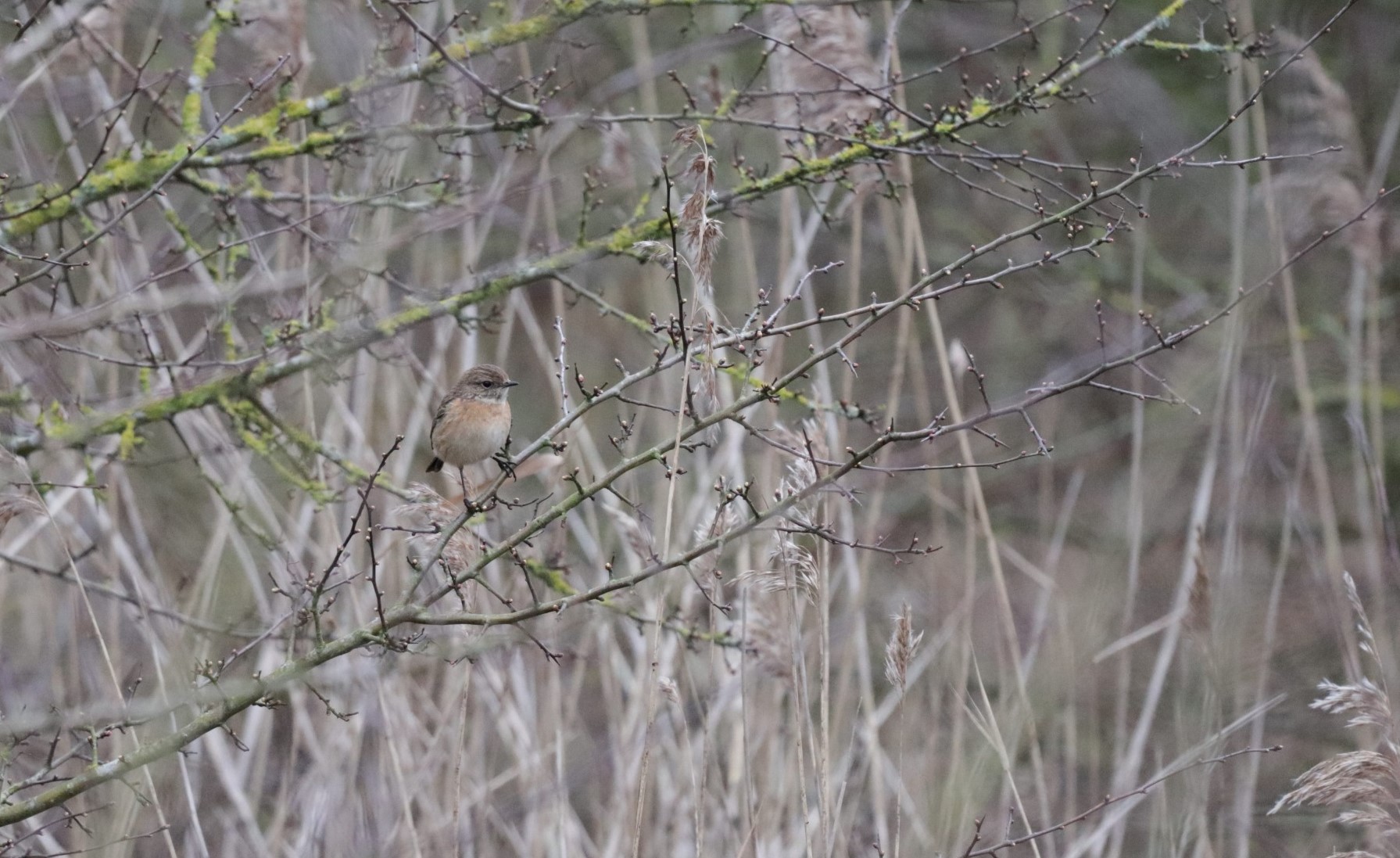
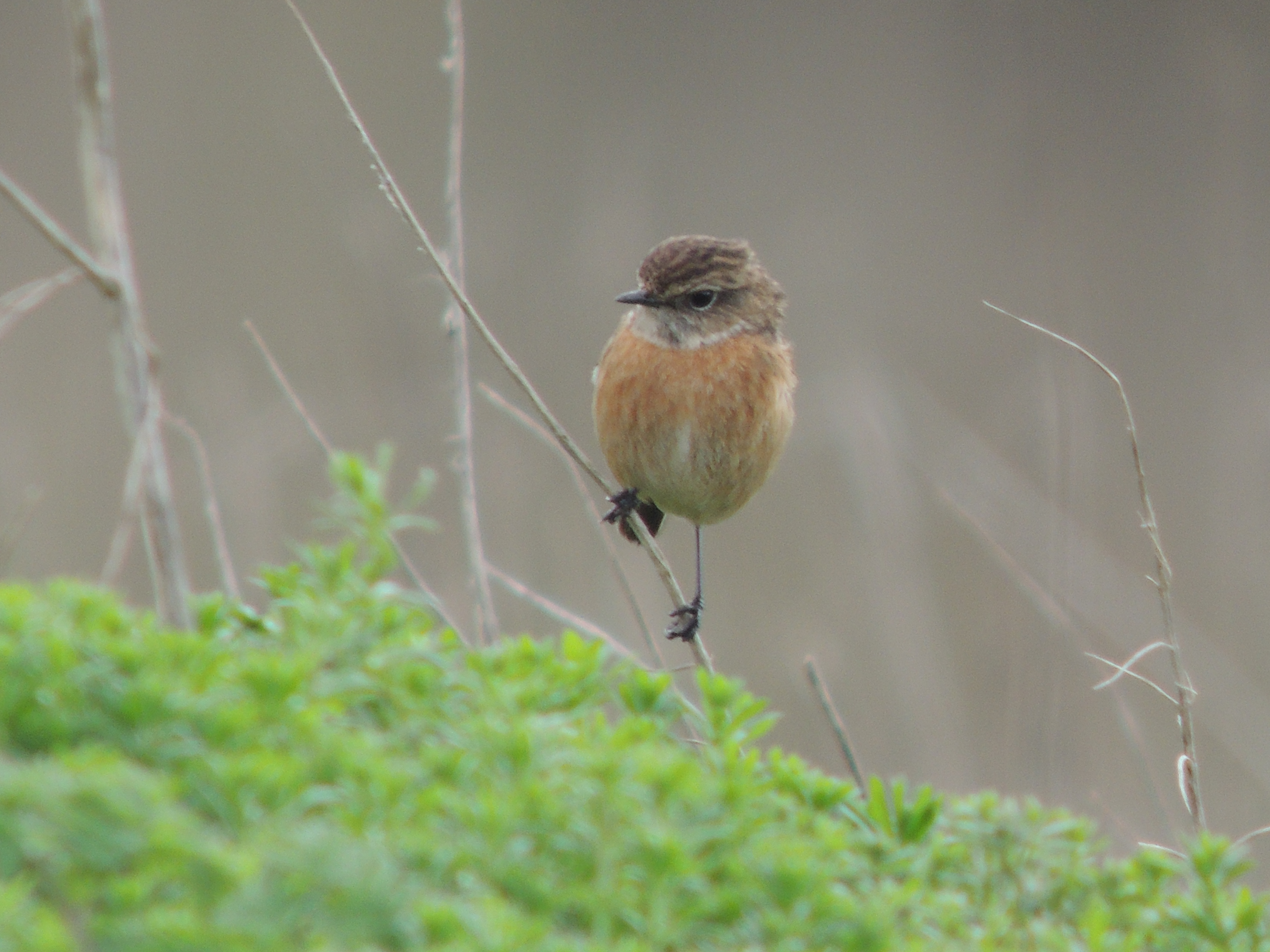
Stonechat, Stortons GP, 21st February, 2021 (Tony Stanford)

Stonechat, Ecton SF, 25th February 2021 (Mike Alibone)

Although it’s late February and Crossbills should be breeding, it appears we still have flocks locally, with up to twenty at Wakerley Great Wood on 25th-26th and up to fifteen still at Hollowell between 21st and 26th. Maybe our birds are from further north …

Newsround – 13th to 19th February 2021

This week, the meteorological pendulum swung in the opposite direction and almost at the flick of a switch, temperatures soared from well below, to significantly above, average. South-westerlies were back and the ice melted as one celebrity bird ended the long wait for many local birders to catch up with it in the county.
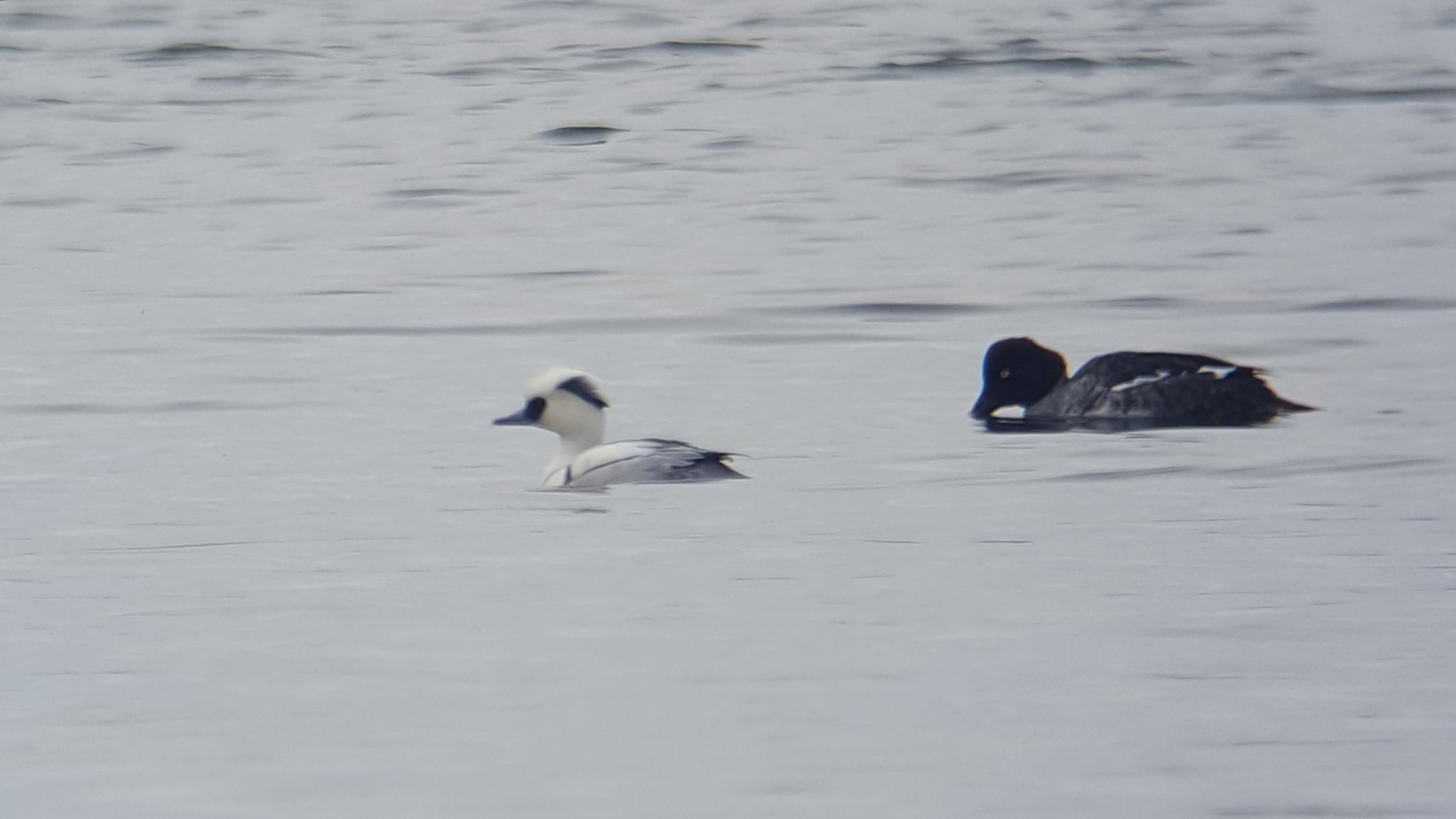
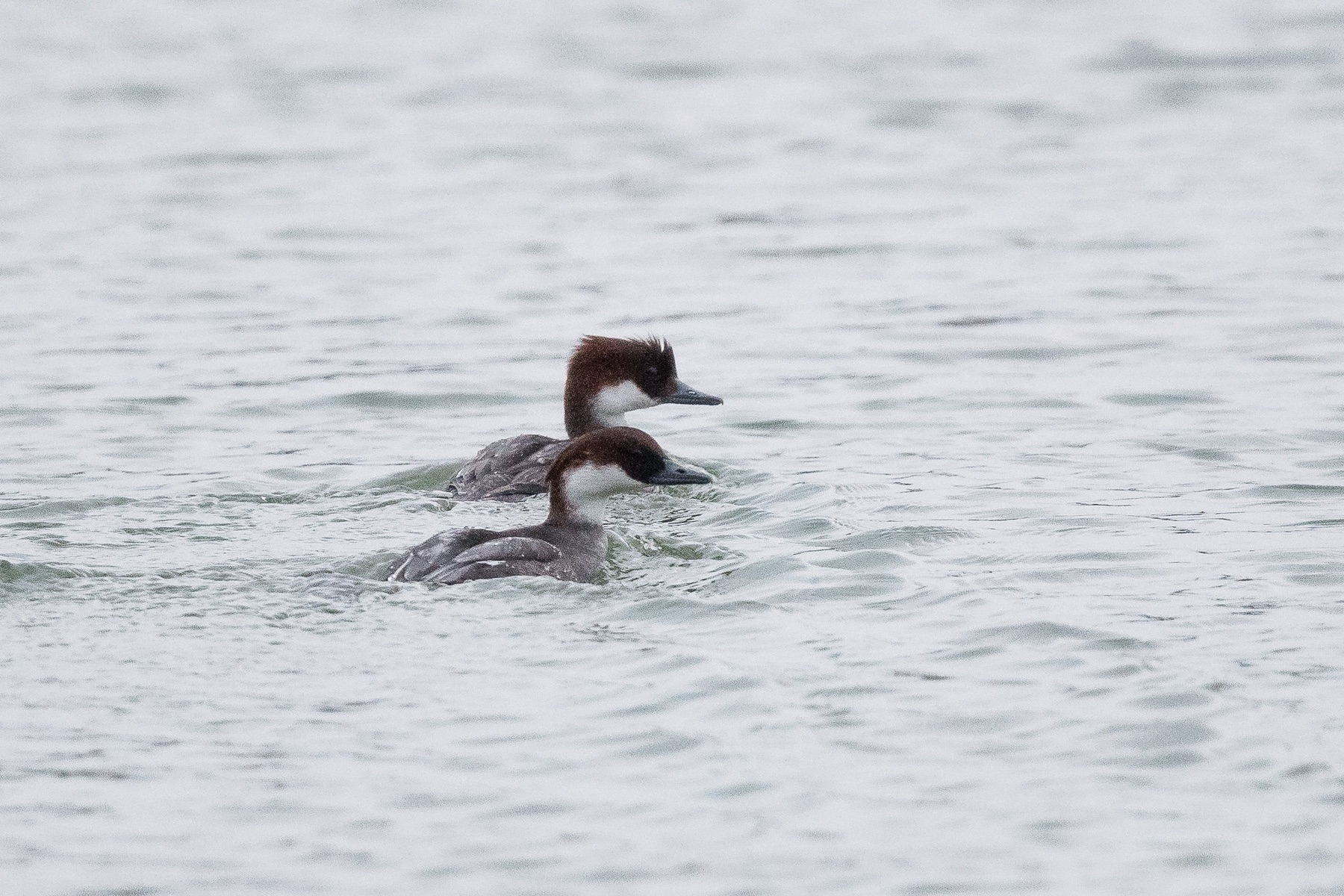
But first things first and new on the scene this week were more Pink-footed Geese – one at Stanwick GP from 13th until at least 17th and two just along the valley near Ringstead GP on 17th with at least one remaining until 19th. Back at Stanwick, the wintering White-fronted Geese topped thirty-three – a highly respectable total for the county in recent years.

All the pizzazz exuded by Ditchford’s glitzy drake Ring-necked Duck quickly evaporated as it seemingly vanished after 14th, the date it was last seen on Higham Lake. It might just be that no one has looked since, of course. Perhaps the same could be said about the two Smews at the same locality – the ‘redhead’ not having been seen since the day it was found and the drake coincidentally appearing to do a bunk after 14th. What is it about Valentine’s Day?

Drake Smew, Ditchford GP, 14th February 2021 (Adrian Borley)

‘Redhead’ Smews, Ravensthorpe Res, 13th February 2021 (Angus Molyneux)

Perhaps the drake making a brief appearance in Pitsford’s Holcot Bay on 16th was the same bird. Some consolation was subsequently provided by a bevy of three ‘redheads’ which turned up at Ravensthorpe Res on 13th, remaining there until 15th, after which only one appeared to be present the following day. Across the road, at Hollowell Res, a female Greater Scaup was discovered on 14th, remaining there until the week’s end.

Female Greater Scaup, Hollowell Res, 15th February 2021 (Jon Cook)

Meanwhile, fast fading into the background was Pitsford’s juvenile Great Northern Diver, which was reported only on the first day of the period.

In a bizarre and unexpected turn of events, however, it was a species hitherto notoriously difficult to catch up with locally that stole the limelight this week. After multiples in neighboring Cambridgeshire and a roving bird in Bedfordshire this winter, a Glossy Ibis finally found its way into Northants. First seen flying south over Thrapston GP on 13th it was subsequently discovered three days later on Islip Water Meadows, only a stone’s throw from where it had originally been seen in flight. Providing respectable views from the track running down the western flank of Thrapston’s Town Lake and from Islip’s Mill Lane, unlike the previous six seen in the county, it did the decent thing and settled there throughout the remainder of the week, allowing many a local to catch up with it. Hopefully, it has now dug in for the rest of the winter.

First-winter Glossy Ibis, Islip Water Meadows, 17th February 2021 (Bob Bullock)

First-winter Glossy Ibis, Islip Water Meadows, 18th February 2021 (Mike Alibone)

Undoubtedly overshadowed by the above, just two Cattle Egrets were reported, not a million miles away, at this species’ favoured location of Stanwick on 13th. Nine wetland localities produced between one and four Great Egrets apiece this week with, once again, Summer Leys LNR laying claim to the lion’s share of seven on 13th. A Bittern was reported from Thrapston on 19th.

Cattle Egret, Stanwick GP, 13th February 2021 (Mark Tyrrell)

Some of last week’s hard weather waders remained in the county throughout the period, most notably Stanwick’s Bar-tailed Godwit, which crossed the A6 to visit Irthlingborough Lakes and Meadows LNR on 16th before returning to Stanwick to see out the remainder of the week. A single Knot further contributed to putting Islip Water Meadows firmly on the map during its brief visit on 13th, while Dunlins maintained a presence of sorts, with lower numbers this week including up to four at Stanwick and Clifford Hill GP, three at Earls Barton GP and one at Pitsford. Only to be expected were Jack Snipes at the usual locality of Hollowell, where there were up to three and at the less renowned sites of Wicksteed Water Meadows, Kettering – again with three and two at Clifford Hill GP.

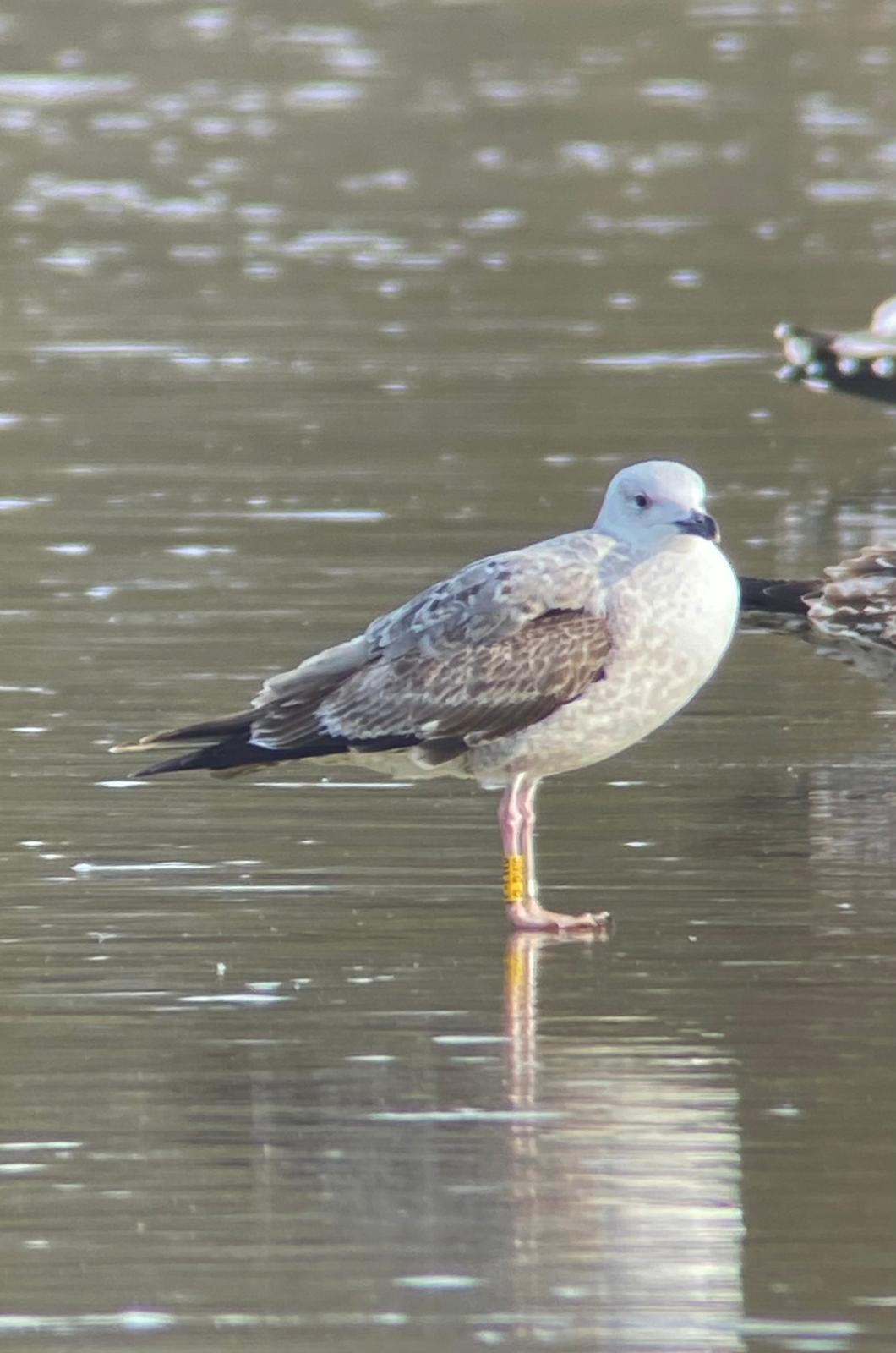
Apart from an adult Yellow-legged Gull at Pitsford on 16th-17th, a gull with ‘form and history’ visited Stanford Res on 13th, identifying itself to observers as a Polish-ringed, first-winter Caspian Gull by way of its decorative legwear. Yellow ring, number P:PW6, enabled its movements to be followed since being ringed as a nestling at Mazowieckie, Poland on 16th May 2020. On 12th December 2020, it visited Zeeland in The Netherlands, subsequently crossing the North Sea to appear at Tanholt Landfill, Peterborough on 26th January 2021, before being seen again at Shawell Landfill in Leicestershire on 5th February – a distance of 1522 km from its Polish colony.

First-winter Caspian Gull, Stanford Res, 13th February 2021 (Chris Hubbard). This individual was ringed as a nestling in Poland.

On dry land, last week’s Short-eared Owl remained at Harrington AF throughout and another was seen nearby, in the Brampton Valley, on 14th, while a female Merlin was at Harrington on 13th.

Stonechats were found at eight sites this week, with Hollowell producing the highest count of six between 16th and 19th, as well as solely accounting for this week’s Crossbills the highest number of which was eight or nine on 13th.

That would be it, other than for the fact that we now know the first summer visitors have arrived in the UK this week, with South Wales producing the first Northern Wheatear and Sand Martin, Dorset seeing the country’s first Swallow and the first Ring Ouzel appearing in Devon. Dare we hope the forthcoming week will deliver at least one early migrant to our own county … ?

Newsround – 6th to 12th February 2021

From some way beyond Scandinavia, cold Arctic air on the back of so-called ‘Storm Darcy’ delivered little more than a sprinkling of snow during a week in which daytime temperatures reached a low of -3°C. Factor in the wind chill and you were down to -8°C. Associated with these conditions there was also a sprinkling of rather unseasonal waders, along with the discovery of the county’s 9th record of Ring-necked Duck. Other ducks were also available …
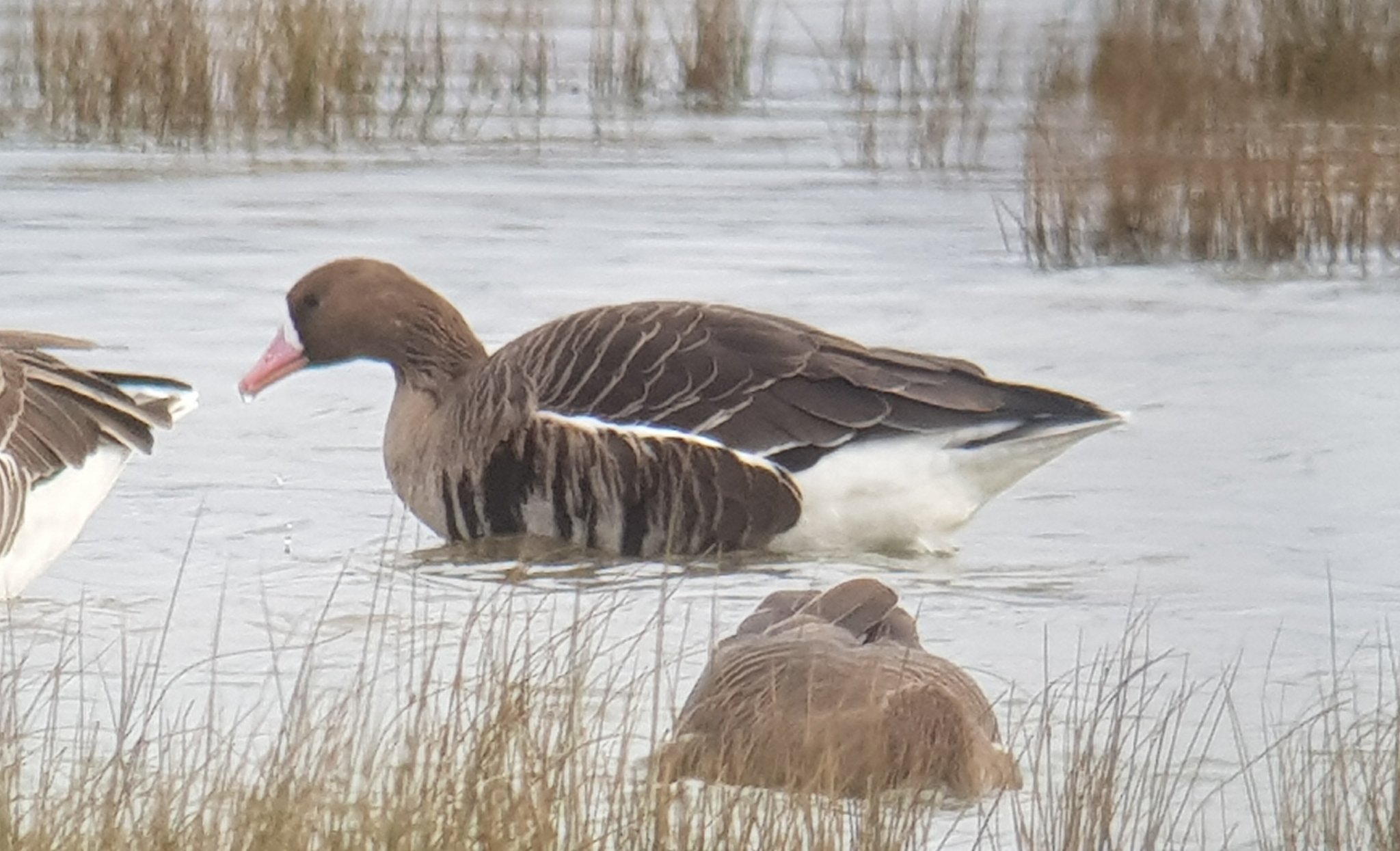
And so were geese, with another sizeable flock of Barnacles – this time twenty-four – appearing on land adjacent to Boddington Res on 11th. The same winter gaggle of at least twenty-nine White-fronted Geese continued to find Stanwick GP to their liking, remaining on, and around, the site all week.

White-fronted Goose, Stanwick GP, 8th February 2021 (Steve Fisher)

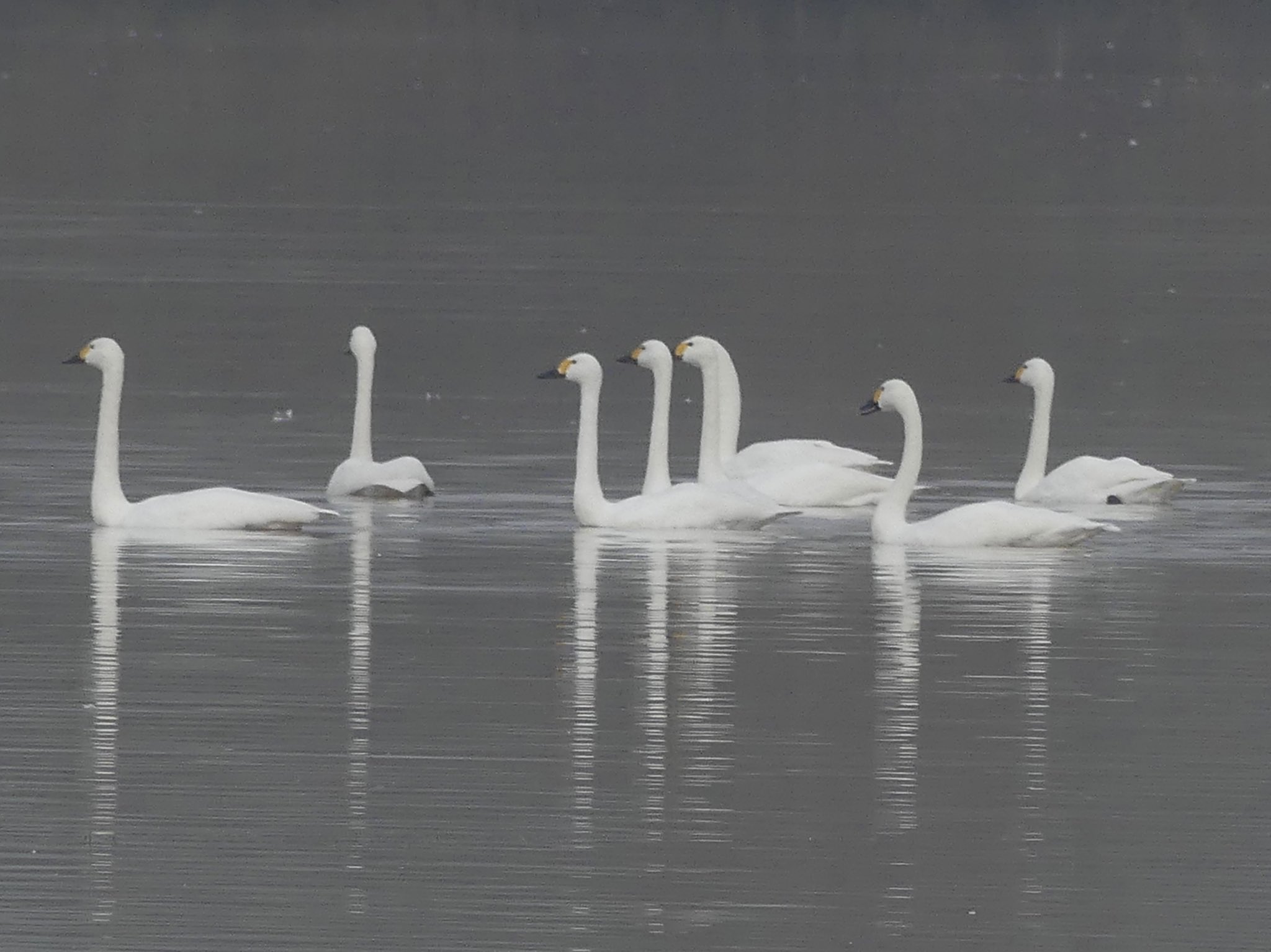
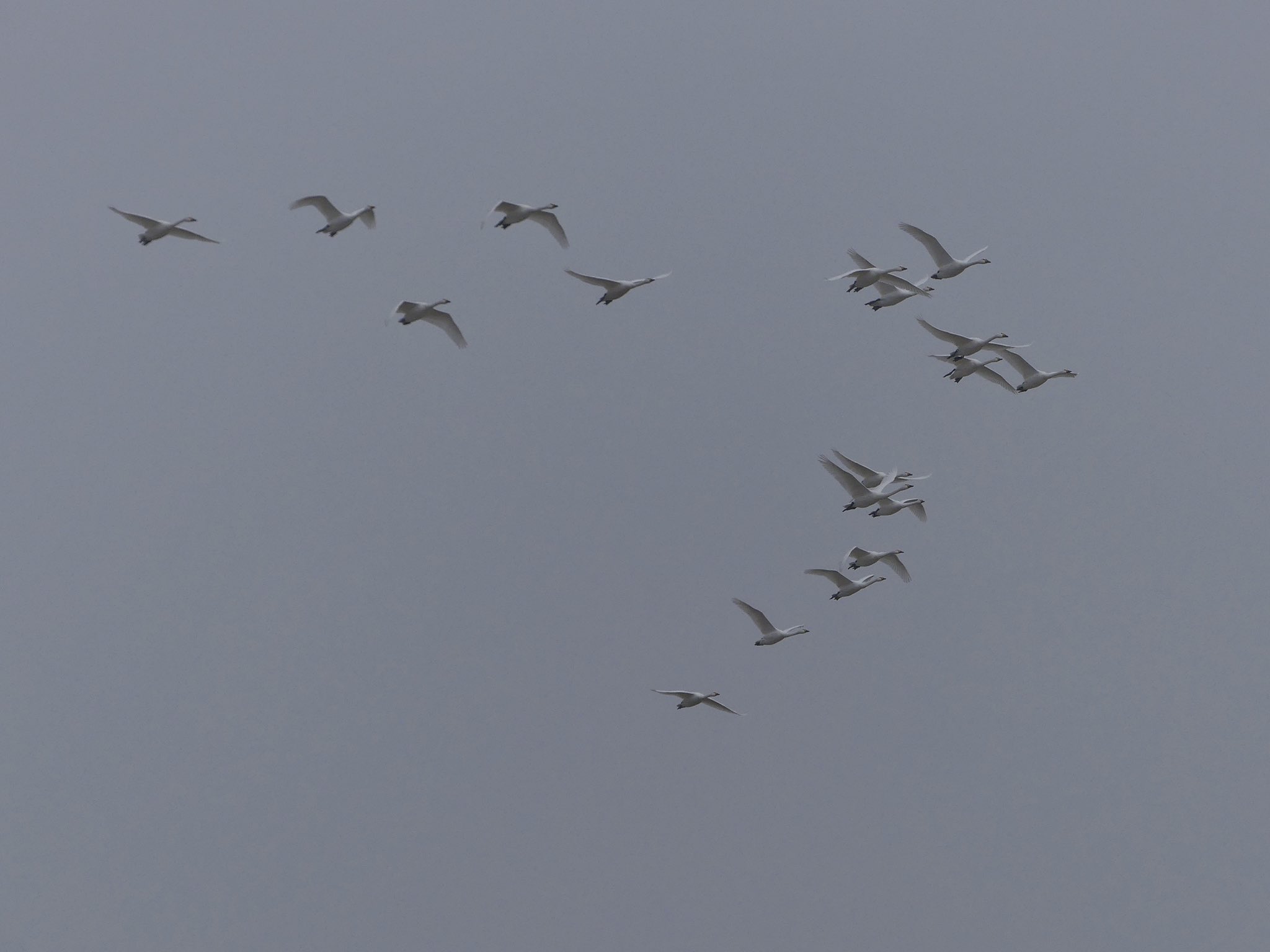
Meanwhile, some observers were treated to a white-out at Stanford Res, where eighteen Bewick’s Swans were discovered early on 6th. Seemingly ‘grounded’ in foggy conditions, they were off as soon as the mist cleared, being seen minutes later flying north-east over nearby Sulby. Interestingly, at least two of these birds were identified from the Stanford photos (on bill pattern) as having recently left their wintering grounds at WWT Slimbridge in Gloucestershire, setting out on the long journey back to their breeding area. However, they seemingly aborted their migration in the face of adverse weather conditions and returned to Slimbridge shortly afterward. More Bewick’s were subsequently logged in the area, with five south-west over Sulby on 11th and two over, north-east, on 12th, when five also flew east over the Brampton Valley Way between Clipston and Arthingworth.

Bewick’s Swans, Stanford Res, 6th February 2021 (Chris Hubbard). Part of the flock of 18 briefly present at this site.

Bewick’s Swans, Stanford Res, 6th February 2021 (Chris Hubbard)

Quickly glossing over the appearance of the female Ferruginous Duck x Pochard hybrid again at Stanwick on 8th, the focus this week was on the discovery of a fine drake Ring-necked Duck at Ditchford GP on 6th. Mobile between Big Lake and Skew Bridge Lake, it remained until the morning of 12th, after which it promptly did a bunk. To set this occurrence in context, we are in the midst of a sizeable influx, this winter having so far seen almost forty birds across the UK and Eire, with multiples of up to four to be found at some sites.

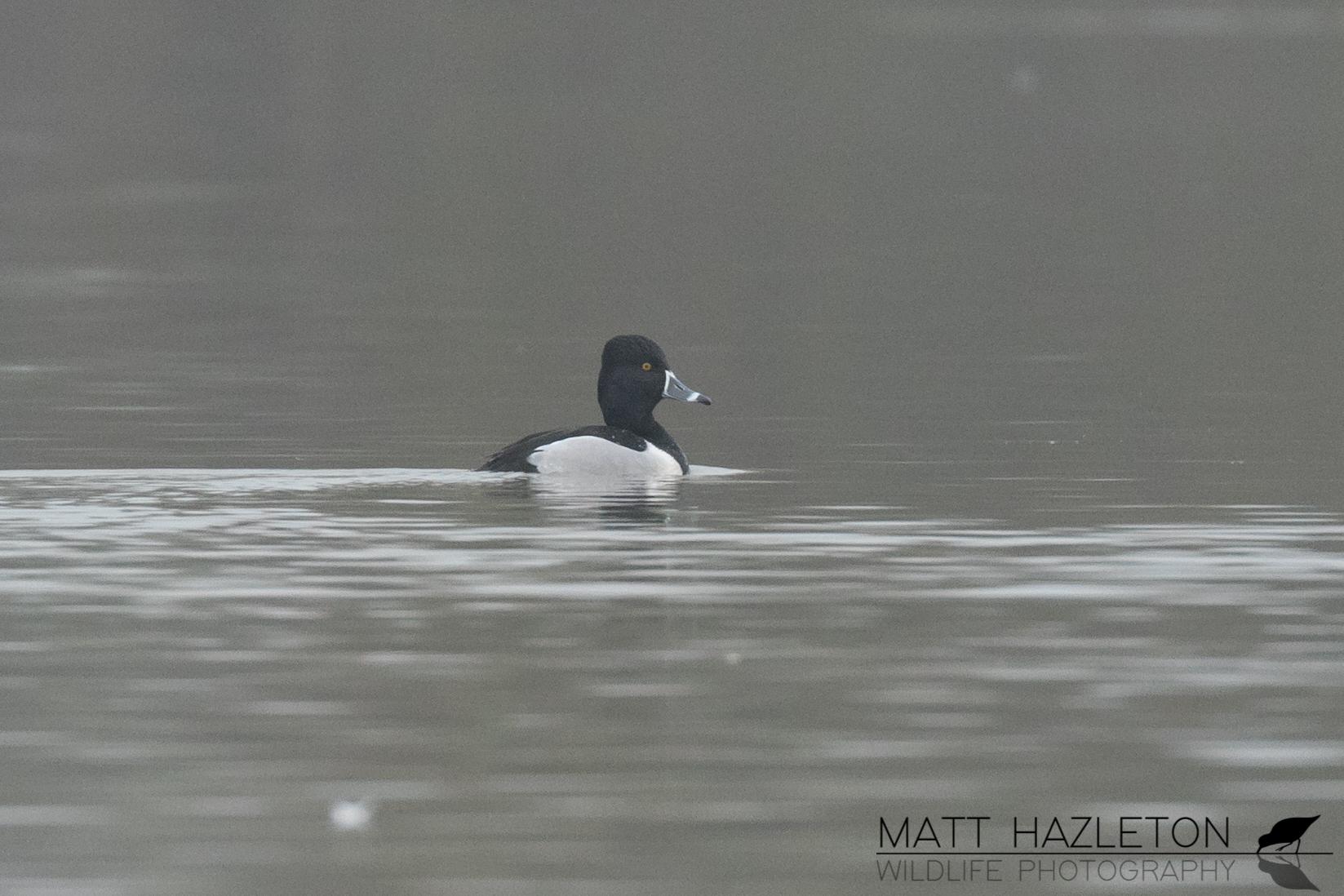
Drake Ring-necked Duck, Ditchford GP, 6th February 2021 (Matt Hazleton)

Drake Ring-necked Duck, Ditchford GP, 6th February 2021 (Bob Bullock)


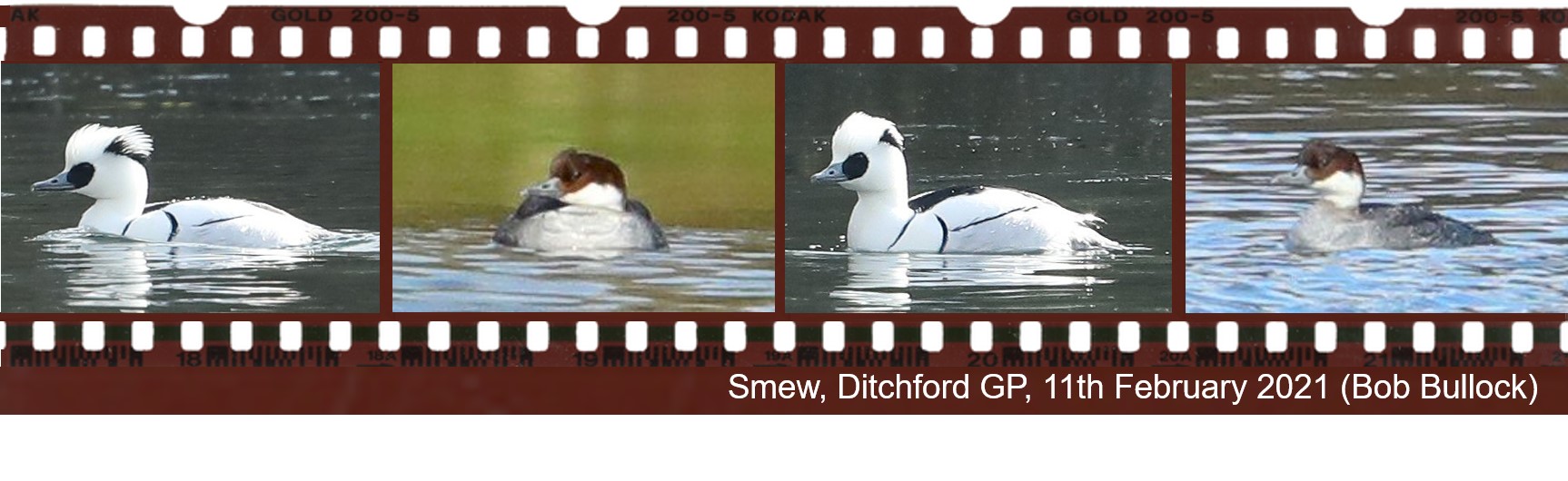
Vagrants aside – no matter how smart they might be – no winter is complete without that final vital ingredient – a drake Smew. The first one this side of the New Year again put Ditchford firmly on the map, being found on 11th, along with a ‘redhead’, both birds being independently mobile throughout the day before teaming up on Delta Lake at dusk. Neither was seen subsequently.

Drake Smew, Ditchford GP, 11th February (Bob Bullock)

Drake Smew, Ditchford GP, 11th February 2021 (Mike Alibone)

Demonstratively more dependable, though eliciting seemingly less interest, Pitsford’s juvenile Great Northern Diver remained all week, as did up to three Cattle Egrets at Stanwick. Four localities – Ditchford, Stanford, Stanwick and Thrapston GP – produced between one and two Great Egrets apiece, while Summer Leys LNR notched up at least five on 12th.

Great Egret, Summer Leys LNR, 12th February 2021 (Ricky Sinfield)

Perhaps an indication of just how severe the freezing conditions have been this week was the arrival in the county of a number of waders which would normally be found wintering in coastal locations. Hard weather movements resulted in the unseasonal appearance of a Ringed Plover at Willowbrook Industrial Estate in Corby on 7th, a Bar-tailed Godwit, which remained at Stanwick from 9th until the week’s end and Knots at four localities.

Bar-tailed Godwit, Stanwick GP, 11th February (Steve Fisher)

Knot, Gretton, 9th February 2021 (Bob Bullock)

The latter included a flock of thirteen flying NNE over Byfield on 8th, three on floodwater by the River Cherwell near Kings Sutton on the same date, one at Stanwick GP on 9th and one by the River Welland, south of Gretton, from 8th to 10th. This last bird was accompanied by around thirty Dunlins, dropping to about twenty over the following two days. This is an exceptional number in modern-day Northamptonshire – especially in winter! There were more. Five near Kings Sutton and singles at Ditchford GP and Pitsford Res on 8th, up to three at Stanwick between 9th and 12th, five on floods near Barnwell on 10th and two at Summer Leys on the same date. More in season were Jack Snipes, with singles at Hollowell on 6th, Stanford on 7th and Clifford Hill GP on 12th.

Dunlins, Gretton, 9th February 2021 (Bob Bullock)

Meanwhile, scarce gulls remained just that, with two adult Mediterranean Gulls in the roost at Stanford on 12th, the juvenile Iceland Gull seemingly settled at Rushton Landfill all week and an adult Caspian Gull there on 7th.

‘Scarce’ is also undoubtedly applicable to Short-eared Owls this winter, one of which was seen this week at Harrington AF, on 6th. Surely Northants can do better than this? Two Merlins comprised single females in flight at Pitsford on 10th and Boddington the following day.

Stonechats were present in the Brampton Valley and at Hollowell and Stanford, while after a week with no reports, Crossbills were back, with up to five at Harlestone Heath between 8th and 10th and between five and ten at Hollowell on 9th.