Rarity Round-up, 17th to 23rd March 2018

Once more, the county was plunged back into winter as the easterly airstream from Siberia again took hold for the first two days of the period. However, the resultant deposit of snow was short-lived as rising temperatures got to work and the winds subsequently swung north and then south-westerly by the week’s end. In contrast to last week’s flurry of spring migrants, local birders faced a lean period in the field, with little sign of anything new to show for their efforts.

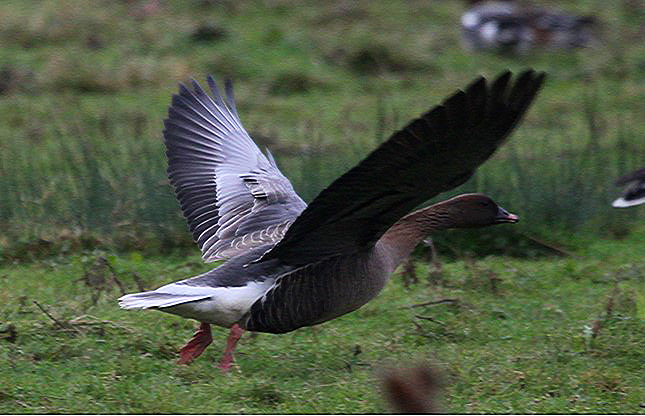
Still hanging with the Greylags, the Stanwick Pink-footed Goose put in an appearance again on 23rd and it seems likely to be around for a while yet as pinkfeet into April are not unusual. The three Scaup from the same locality transferred to the Watersports Pit at nearby Ditchford GP, where they were discovered on 17th, remaining there until at least 20th.
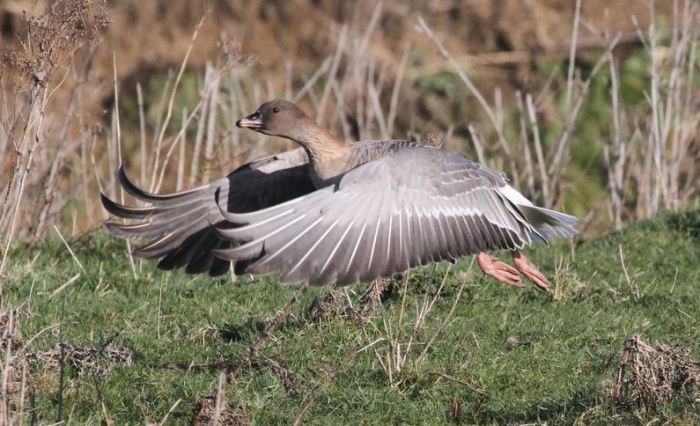
Pink-footed Goose, Stanwick GP, 23rd March 2018 (Steve Fisher)

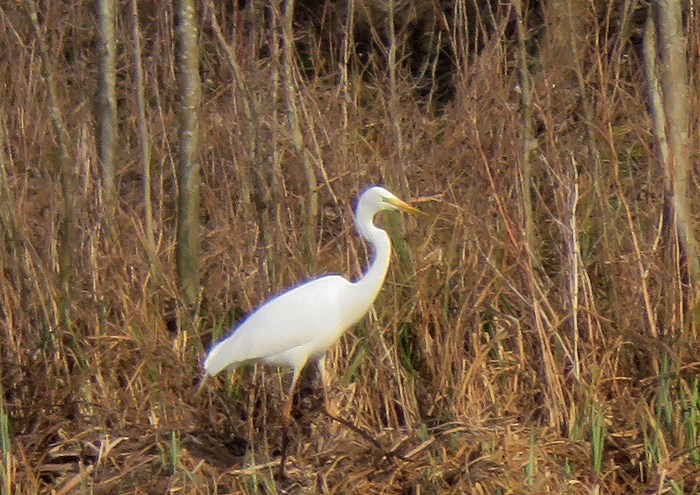
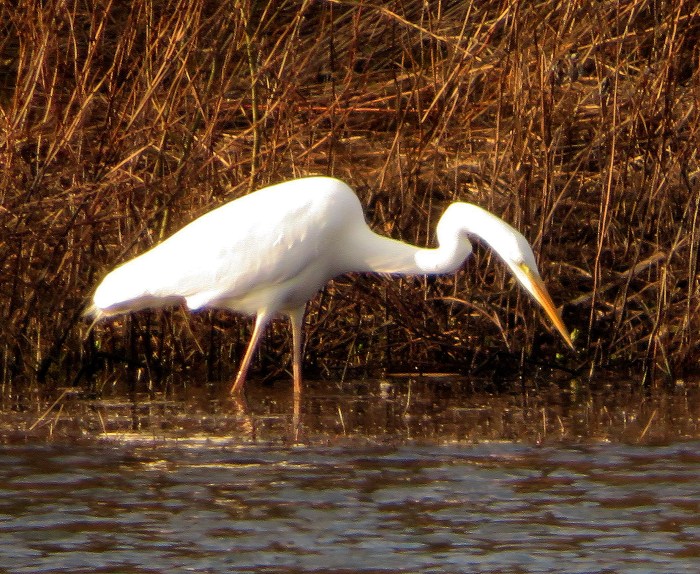
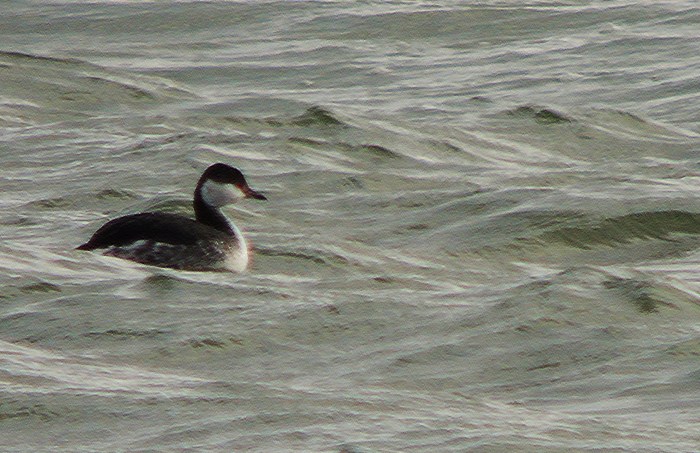
The Pitsford Slavonian Grebe – now qualifying for long-stayer status – was still present on 21st, while Great White Egrets lingered in all the usual sites in the Nene Valley, which again included Ditchford GP, Earls Barton GP/Summer Leys LNR (four), Stanwick GP (two) and Thrapston GP.
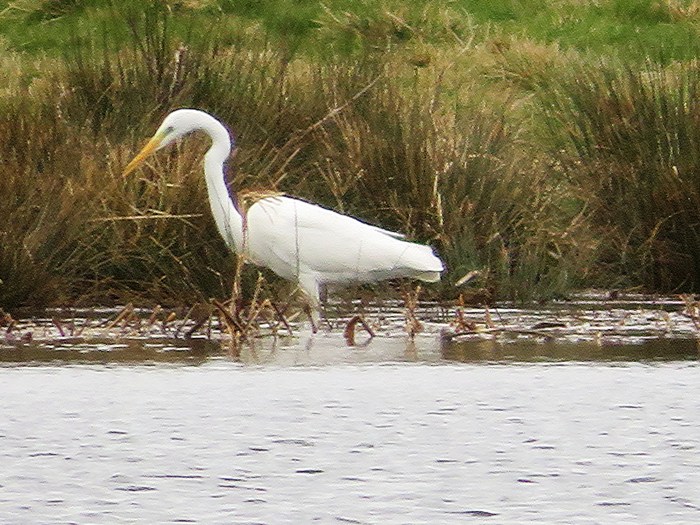
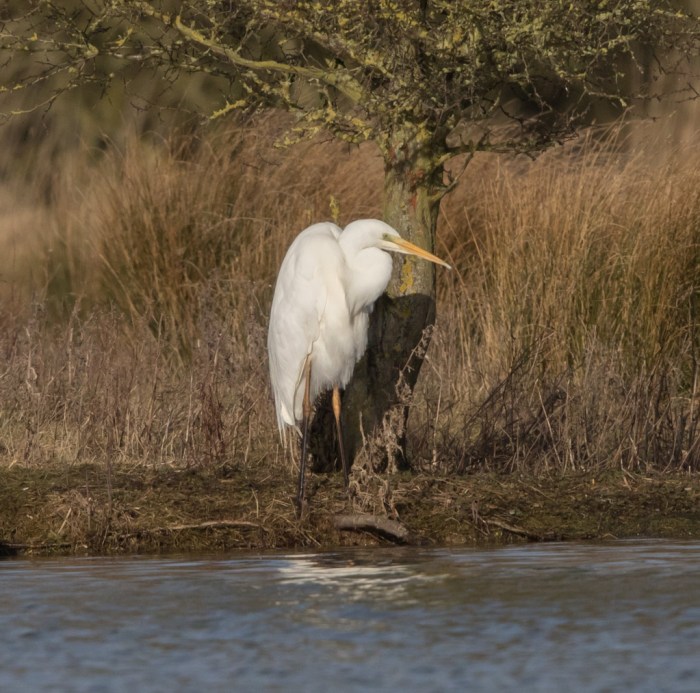
Great White Egret, Earls Barton GP, 23rd March 2018 (Leslie Fox)

Last week’s ‘cream-crown’ Marsh Harrier at Earls Barton GP was again seen on 18th and 19th over Summer Leys on both dates.

Back along the Nene, at Stanwick, four Black-tailed Godwits arrived on 17th and remained until 19th, with one staying until the following day

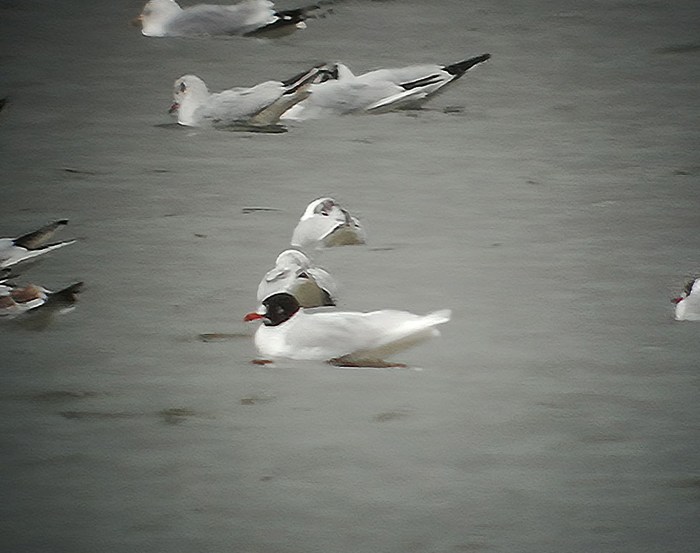
Last week’s adult Mediterranean Gull at Stanwick was still present on 17th and single adults also appeared at Daventry CP on 18th and 23rd, while the only Yellow-legged Gull during the period was a first-winter in the roost at Pitsford Res on 19th. Caspian Gulls, too, were fewer in number this week, with the Boddington Res roost holding an adult on 17th and Pitsford’s roost producing a second-winter on 17th and 20th and an adult on 19th.

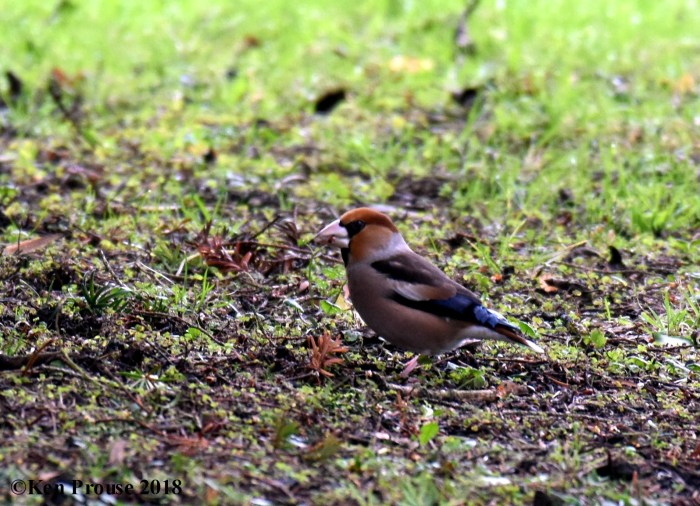
Though still low in numbers, Hawfinches continued to be seen and this week’s comprised one in Dallington Cemetary, Northampton on 17th and up to two still at Cottesbrooke on 19th-20th.
Rarity Round-up, 10th to 16th March 2018

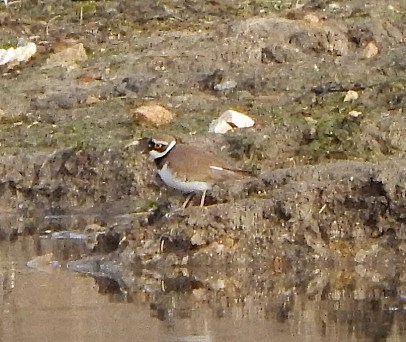
Little Ringed Plover, Priors Hall, Corby, 11th March 2018 (James Underwood)

A predominantly southerly airstream from west coast Europe helped not only to lift temperatures but also undoubtedly gave a welcome boost to northward migration for our earliest summer visitors. This week saw the arrival of Osprey, Little Ringed Plover and Sand Martins, as well as some scarce migrants and the visible movement of winter visitors, including wildfowl and thrushes, beginning their departure.

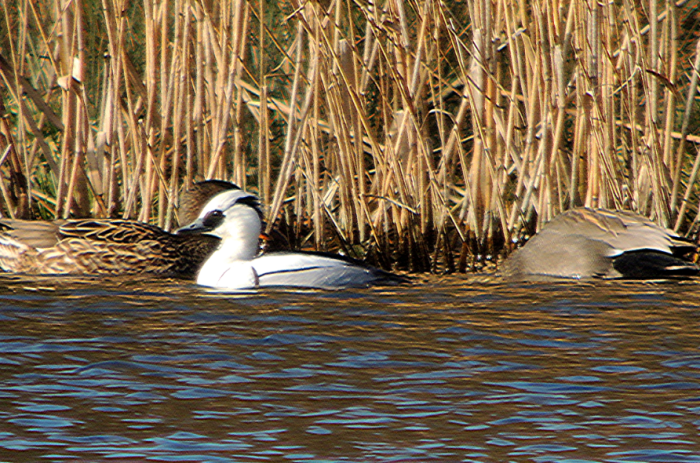
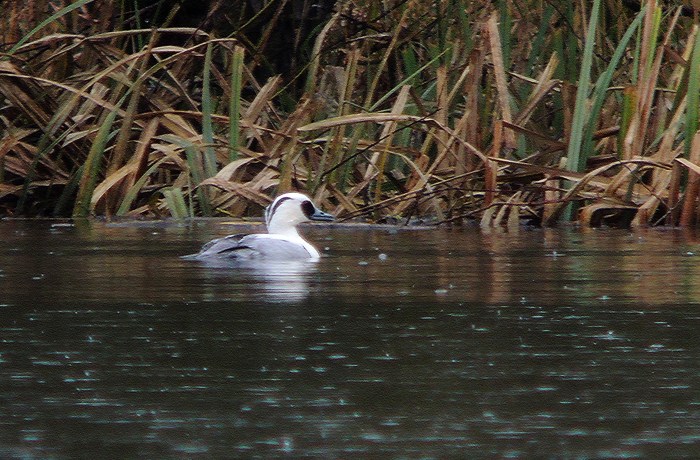
In fact, there was not much to write home about when it came to wildfowl. The three Scaup remained on the main lake at Stanwick GP until 11th and a ‘redhead’ Smew spent three days, from 10th to 12th, on Clifford Hill GP’s Deep Water Lake before moving on.

Smew, Clifford Hill GP, 12th March 2018 (Mike Alibone)

Less willing to budge, the Slavonian Grebe remained all week in the vicinity of Pintail Bay at Pitsford Res, while Great White Egrets also seemed in no hurry to move from the usual sites in the Nene Valley, which again included Ditchford GP, Earls Barton GP/Summer Leys LNR (up to four), Stanwick GP (two) and Thrapston GP (two). Mercifully, on rare occasions, not all things big and white in the Nene Valley are the latter species and one such bird at Stanwick, on 11th, proved to be a nice adult Spoonbill. Arriving in the early evening, it stayed for just forty minutes before heading off west at dusk. This is the 36th county record and only the second to be recorded in March, after one at Ditchford GP in 1980.

After five weeks without a mention, raptors were back on the agenda this week with a ‘cream-crown’ Marsh Harrier flying west at Earls Barton GP on 16th and the first migrant Osprey of the year heading east over Billing GP/Ecton SF three days earlier, on 13th. More will surely follow in the not too distant future.

Hot on the heels of last week’s Avocet, at Summer Leys, came another on 13th – again in the Nene Valley – at Clifford Hill GP. A Black-tailed Godwit flying east at Ditchford GP’s Irthlingborough Lakes & Meadows LNR on 16th may have been the same as that reported sporadically at adjacent Stanwick GP over the past few weeks. The only other wader of note was a Jack Snipe at Hollowell Res on 11th.

March has produced a fair proportion of our Kittiwakes in the past and this week saw a notable overland movement, which resulted in an adult at Daventry CP on 13th and twelve at Pitsford Res on 16th, none of which lingered. Following last week’s trickle of Mediterranean Gulls at Boddington Res, another adult was found in the roost there on 10th, one was in the Pitsford roost on 13th, an adult remained at Stanwick between 13th and 16th and a first-winter visited Clifford Hill GP on 12th.

Adult Mediterranean Gull, Pitsford Res 13th March 2018 (Jacob Spinks)

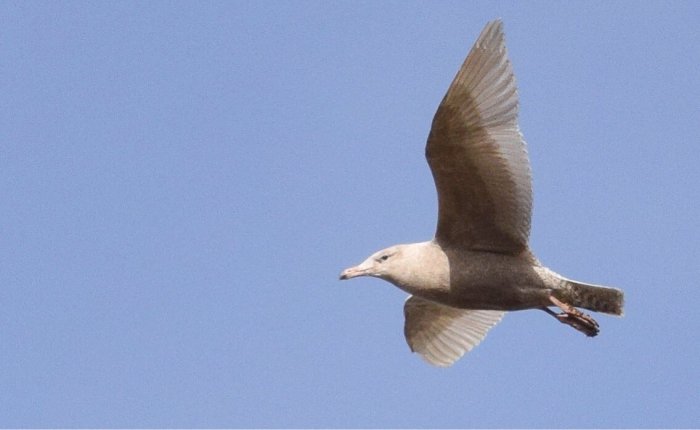
Numbers of Yellow-legged Gulls remained low, with two first-winters at Pitsford Res on 11th and an adult at Stanwick on the same date while, back at Pitsford, a first-winter was in the roost on 14th. Things were looking up as the same roost attracted a juvenile Iceland Gull on 13th – surprisingly the first ‘white-winged’ gull to be found here for many years. Back in the day, when Brixworth had a landfill instead of a Mercedes commercial centre, they were encountered rather more frequently in the roost. Meanwhile, Hollowell Res grabbed the lion’s share of Caspian Gulls this week, producing a second-winter on 11th, an adult, a second-winter and a first-winter on 13th, with the second-winter remaining until the following day. Elsewhere, single second-winters were found at both Pitsford Res and Rushton Landfill on 15th.

There was only one Hawfinch this week, along the road to Irchester CP on 14th. Perhaps this is the last to be seen in what can only be described as the most fantastic winter ever for this species in the UK, probably an event unlikely to be repeated.

Rarity Round-up, 3rd to 9th March 2018

A marked change in wind direction dragged warmer air from the Atlantic via south-west Europe, initiating a rapid thaw in lying snow from the beginning of the week. With this came the first migrants but most winter visitors continued to frequent favoured localities, although some had clearly registered the rapidly lengthening days and decided to move on.

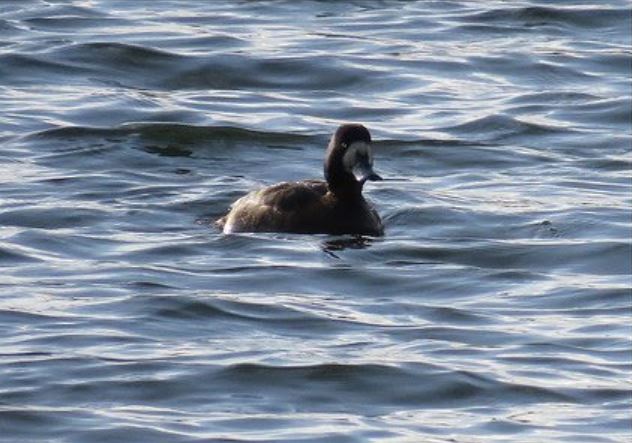
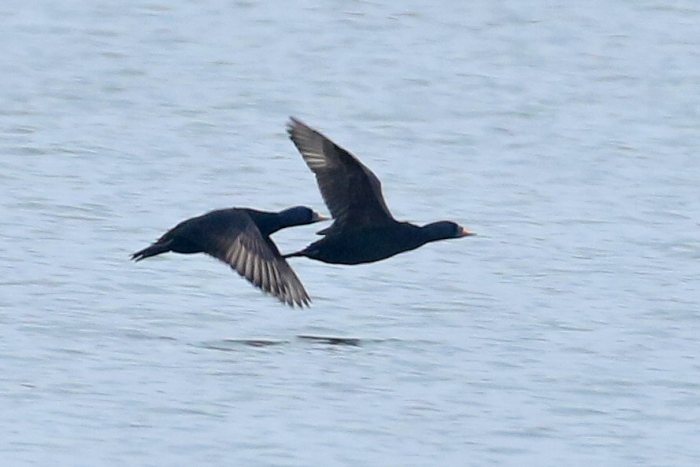
The juvenile Whooper Swan wintering at Ravensthorpe Res was still present on 4th but appeared to have departed by 8th, when there was no sign of it, while Stanwick GP’s Pink-footed Goose remained until at least 5th. The two Scaup there were joined by a third on 6th, all three remaining until the week’s end and the female at Sywell CP was still off the dam there on 8th. It was difficult to be certain if two drake Common Scoters, discovered on Thrapston GP’s Town Lake on 4th, were a product of hard weather movements or simply spring migrants.

Drake Common Scoters, Thrapston GP, 4th March 2018 (Bob Bullock)

The Slavonian Grebe completed another full week between the sailing club and Pintail Bay at Pitsford Res, while Great White Egrets remained at the usual sites in the Nene Valley, which included Ditchford GP, Earls Barton GP/Summer Leys LNR (three), Stanwick GP (two) and Thrapston GP (two). One also flew south at Hollowell Res on 4th.

Great White Egret, Earls Barton GP, 6th March 2018 (Leslie Fox)

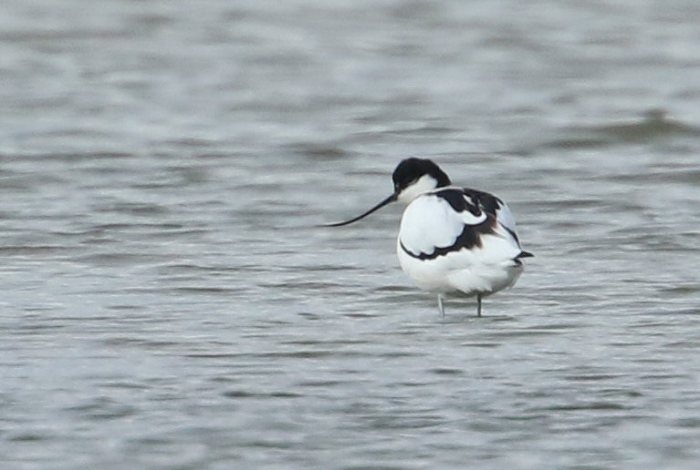
The first signs of spring wader passage were evident this week with an Avocet, which made a stopover at Summer Leys on 7th, and an early Grey Plover in flight near Clifford Hill GP the following day.

Avocet, Summer Leys LNR, 7th March 2018 (Bob Bullock)

Also relatively early was an adult Little Gull at Thrapston GP on 4th, although winter and early spring records for this species are not unprecedented. March is typically the major spring passage month for Mediterranean Gulls and the easy to watch gull roost at Boddington Res has a track record for producing them. This year is no exception, with single adults there on 4th and 5th, followed by two adults on 6th.

Adult Mediterranean Gull, Boddington Res, 4th March 2018 (Gary Pullan)

The same roost produced a juvenile Iceland Gull on 4th and adult Caspian Gulls on 4th and 5th plus a sub-adult the following evening, on 6th. Elsewhere, further Caspian Gulls included an adult and a second-winter at Hollowell Res on 4th, plus a second-winter in the Thrapston GP roost on the same date, a sub-adult and a second-winter in the Pitsford Res roost on 5th and a sub-adult there on 8th plus a second-winter at Rushton Landfill the same day.

Second-winter Caspian Gull, Pitsford Res, 5th March 2018 (Jacob Spinks)

Proving scarce and difficult to find throughout the winter, Short-eared Owls have been largely absent from traditional localities but one was found this week on farmland near Milton Malsor on 8th.

There were still Hawfinches to be had for those still looking, although numbers were down on previous weeks and included singles at Fawsley Park on 4th, Salcey Forest on 5th and Thenford on 9th, while a Mealy Redpoll was still visiting garden feeders in Irthlingborough on 5th.

Rarity Round-up, 17th February to 2nd March 2018

Although signs of spring weather were apparent during the first week of the two covered by this review, the lengthening, sunny days and blue skies belied the fact that temperatures were low and were about to tumble dramatically from the beginning of week two. A veritable ‘polar vortex’ of strong winds whirling around arctic and sub-arctic latitudes brought sustained, biting, sub-zero easterlies to the UK from Siberia and snow … lots of it, dispelling any hopes of finding early spring migrants. Considering previous years have seen arrivals in the county of Sand Martin as early as 26th February and Northern Wheatear on 3rd March, the prospect of either of these occurring any time soon seems, well, a long way off …

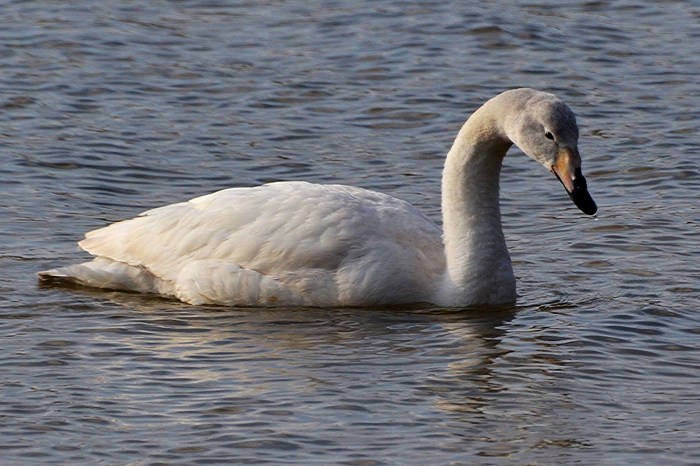
Whooper Swans, Stanford Res, 1st March 2018 (Chris Hubbard)

So, hard weather movements is what it’s all about but braving the grim conditions to discover what’s moving is another matter entirely. However, some avid patchwatchers did just that and the discovery of three Whooper Swans at Stanford Res on 1st was, perhaps, ample reward. They had gone the following morning but the juvenile Whooper wintering at Ravensthorpe Res stayed put until at least 24th, while the other long-stayer – Stanwick GP’s Pink-footed Goose – was still being seen sporadically throughout the period. Stanwick also produced two Scaup on 2nd, following one at Ditchford GP on 18th. The only other wildfowl of note were two Smew – a drake visiting

Juvenile Whooper Swan, Ravensthorpe Res, 24th February 2018 (Stuart Mundy)

Pitsford Res briefly on 21st and the drake still at Ditchford GP throughout the period, seemingly having become settled on Wilson’s Pit. Smew has remained a very scarce bird in the county this winter so this drake has become a popular attraction since its arrival back in December last year.

Drake Smew, Ditchford GP, 24th February 2018 (Mike Alibone)

The Slavonian Grebe remained between the sailing club and Pintail Bay at Pitsford Res until at least 23rd but there have been no subsequent reports. Site-loyal Great White Egrets continued to be seen at Ditchford GP, Earls Barton GP/Summer Leys LNR, Stanwick GP and Thrapston GP with maxima of three at Stanwick GP on 19th-20th and at Summer Leys on 23rd. Away from the Nene Valley, singles were at Ravensthorpe Res on 17th and Stanford Res on 18th and 27th.

Great White Egret, Mary’s Lake, Earls Barton GP, 23rd February 2018 (Leslie Fox)

After a week without any, waders made a bit of a comeback during the period. A Black-tailed Godwit was again at Stanwick on 21st, followed by a Knot at the same locality on 2nd. The latter stayed only briefly, flying off west shortly after its discovery. Also of note were Jack Snipe duos at Hollowell Res on 17th, Ditchford GP on 18th and near Hartwell on 1st and one at Stanwick GP on 2nd.

And so to gulls … Not quite equalling the splash of northerners to be found the previous week but two Mediterranean Gulls visited the Pitsford roost on 20th, five Yellow-legged Gulls were at Daventry CP on 18th and Caspian Gulls were scattered, with Rushton Landfill producing the lion’s share of two adults on 17th, one on 18th and a second-winter and third-winter on 25th. Elsewhere, the wintering adult was seen at Hollowell Res on 17th and a second-winter was present there on 22nd and 26th, a second-winter was at Pitsford Res on 20th, followed by a third-winter on 1st and a first-winter was in the roost at Thrapston GP on 22nd. Rushton Landfill retained its juvenile Glaucous Gull until at least 17th and an adult appeared there on 25th.

Juvenile Glaucous Gull, Rushton Landfill, 17th February 2018 (Mike Alibone)

Six localities produced Hawfinches, including the favoured sites of Cottesbrooke (three on 17th, one on 18th), Thenford (at least five on 20th-21st and twelve on 27th) and Blatherwycke, (four on 22nd). Elsewhere, one was at Lings Wood, Northampton on 19th and two were at a ‘traditional’ site in Oundle on 19th-20th. A Corn Bunting – only the second in Northants this year – was found near Upper Benefield on 22nd. Surely there must be more of these now scarce buntings out there, somewhere …

Rarity Round-up, 10th to 16th February 2018

A mixed bag of weather, predominantly north-west Atlantic-driven, delivered dollops of persistent, heavy rain to the county on 10th and 14th, in between and after which, low temperatures and dry conditions ensued. In the absence of anything else significant, northern gulls took centre stage with three new arrivals teasing at least some local birders out of their comfort zones to visit a habitat just a little more challenging than the regular, easy birding, ‘path-and-hide’ localities.

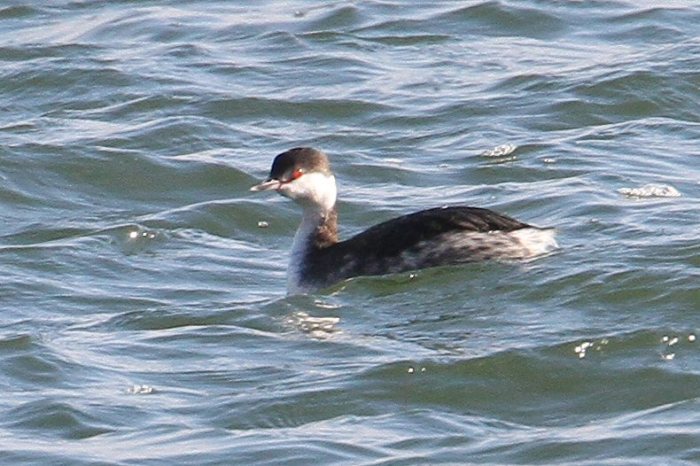
Now firmly established as part of the winter décor at Ravensthorpe Res, the juvenile Whooper Swan continued its stay, while Earls Barton GP/Summer Leys LNR held on to at least three of last week’s Red-crested Pochards – a male and female on 10th and two drakes on 15th. The only other wildfowl of note were the drake Smew again at Ditchford GP on 16th and a female Common Scoter in Pitsford’s Pintail Bay on 13th, the same locality continuing to host the wintering Slavonian Grebe – now having notched up four weeks on site.

Slavonian Grebe, Pitsford Res, 5th February 2018 (Bob Bullock)

Great White Egrets continued to be seen at Ditchford GP, Ravensthorpe Res, Earls Barton GP/Summer Leys LNR, Stanwick GP and Thrapston GP with maxima of three at Stanwick GP on 10th and at Earls Barton/Summer Leys on 15th.

Great White Egret, Summer Leys LNR, 16th February 2018 (Ray Seagrove)

Landfill Larids steal the show

In keeping with their current high abundance in the UK, white-winged gulls from the north made a splash alongside some of the regulars at Rushton’s landfill site this week. Viewing conditions at this locality can often be awkward. The active refuse area faces north and on a clear, sunny day, observation from the road which overlooks it is invariably difficult as a result of the area having to be viewed against the light. The contours of the site provide areas for large numbers of loafing gulls to hide, thereby evading detection, so birding there can be both challenging and frustrating. Meeting the challenges, however, can reap rewards, as this week aptly demonstrated.

A second-winter Iceland Gull, discovered in fields immediately south of the landfill on 10th, was still present the following day, when a fourth-winter Glaucous Gull was also discovered there. On 12th, yet another Glaucous Gull was found at the site – this time a juvenile.

Second-winter Iceland Gull, Rushton Landfill, 10th February 2018 (Bob Bullock)
Juvenile Glaucous Gull, Rushton Landfill, 12th February 2018 (Beth Clyne)

For anyone willing to put the time in, there is great potential for further discoveries. Taking a back-seat, an adult Caspian Gull was present there on 10th and 13th and a Yellow-legged Gull was there on 12th plus two the following day. Elsewhere, the wintering adult Caspian Gull at Hollowell Res was seen on 10th and 12th, while an adult was in the roost at Thrapston GP on 11th and 12th, accompanied by a second-winter on the first of these dates. The Thrapston roost also produced an adult on 11th and two on 12th and 14th and one was in the roost at Pitsford on 12th.

Adult Caspian Gull, Rushton Landfill, 10th February 2018 (Mike Alibone)

Up to four Mealy Redpolls were visiting feeders in an Irthlingborough garden on 12th, having been seen there, on and off, over the previous week, while this week’s crop of Hawfinches was much reduced, with Cottesbrooke producing one on 11th and four on 13th, while singles were at Thenford Churchyard on 12th and Salcey Forest on 14th.

Rarity Round-up, 3rd to 9th February 2018

A return to weather more typical of winter this week, with an overcast, miserable and wet start quickly being replaced by cold, easterly winds from northern Europe, turning northerly toward the week’s end.

The Ravensthorpe Whooper Swan showed no signs of departure this week and, at Stanwick, the Pink-footed Goose was still present on 6th. Five Red-crested Pochards appeared at Summer Leys LNR on 3rd but their number had quickly dwindled to two by 5th, while the Thrapston two had grown to three by 4th and the female Scaup remained off the dam at Sywell CP the following day.

A little on the scarce side this winter, a Bittern was seen coming into roost at dusk in the reedbed at Stanwick GP on 6th and 8th and Great White Egrets continued to be seen at the currently favoured localities of Ditchford GP, Ravensthorpe Res, Stanwick GP and Summer Leys, with a maximum of three at the latter locality on 4th, although two were at Stanwick GP on 6th and 9th. Pitsford’s Slavonian Grebe remained until at least 8th, staying faithful to the area between the sailing club and Pintail Bay.

After being seen at Pitsford Res once last week, the ‘ringtail’ Hen Harrier put in another appearance there on 3rd, constituting this week’s only scarce raptor and, for the first time in a ‘long time’, there were no notable waders during the period.

The gull roost at Pitsford Res harboured a first-winter Kittiwake on 4th and two Mediterranean Gulls – a first-winter and a second-winter – on 8th, all perhaps early spring migrants, while 4th also produced a first-winter Yellow-legged Gull at Rushton Landfill, an adult at Hollowell Res on the same date and a second-winter was in the Pitsford roost on 8th. The wintering adult Caspian Gull at Hollowell Res was joined there by a first-winter on 4th and the only other was a second-winter at Pitsford roost on 8th.

Male Hawfinch, Thenford, 6th February 2018 (Tony Vials)

Apart from a Firecrest in scrub alongside Harper’s Brook, at Lowick on 4th, the only other passerine action was restricted to that flock of at least twenty Hawfinches at Thenford Churchyard, which were still present on 6th, while one was found at Pitsford Res on 3rd.

Rarity Round-up, 27th January to 2nd February 2018

Although an uneventful week weatherwise, mild, south-westerly winds off the Atlantic produced the warmest day of the year so far on 28th, when local daytime temperatures reached 13ºC (15ºC nationally). Perhaps reflecting the generally mild winter, wrapped up in the wider parameters of global climate change, a newly fledged juvenile Blackbird in a Hartwell garden on 31st January was early, to say the least!

The week opened with a new Whooper Swan – this time an adult – in flight over Bragborough, near Daventry, on 27th, while the long-staying juvenile remained on site at Ravensthorpe Res. In the Nene Valley, at Stanwick, the Pink-footed Goose was still present on 30th and the forty-four-strong flock of Barnacle Geese remained there until 28th, after which they moved north to Leicestershire, where they were seen circling over Rutland Water. This movement – clearly not hard weather-related – resurrects the earlier speculation that perhaps they are wild – after all, how far do the ‘Bedfordshire ferals’ travel? Further down the Nene Valley, at Thrapston GP, two Red-crested Pochards were discovered on Town Lake on 30th, the female Scaup was still off the dam at Sywell CP on the same date and the drake Smew at Ditchford GP was perhaps ‘dunroamin’ as it was seen there on a record three consecutive days, 28th-30th, at Higham Lake.

Female Scaup, Sywell CP, 30th January 2018 (Alan Francis)

Apart from one at Ravensthorpe Res on 31st, sightings of Great White Egrets were restricted to locations in the Nene Valley, with at least two at Summer Leys LNR all week, two at Ditchford GP on 27th, one at Thrapston GP on the same date and one at Stanwick GP on 28th-30th. Pitsford’s Slavonian Grebe remained until at least 1st.

Great White Egret, Summer Leys LNR, 30th January 2018 (Alan Coles)

Just one locality on just one day, 28th, produced the week’s star raptors in the shapes of Merlin and Hen Harrier at Pitsford Res. Similarly, the only waders during the period – the Stanwick Black-tailed Godwit and one of the Hollowell Jack Snipes – were both still present from last week – again, both on the same day, 27th.

Two Yellow-legged Gulls visited the gull roost at Pitsford Res on 29th and two adults were at Ravensthorpe Res on 31st, while the wintering adult Caspian Gull was still at Hollowell Res on 27th-28th, a second-winter was on floodwater near Hinton-in-the-Hedges on 28th and the gull roost at Pitsford produced a first-winter on 28th, followed by a second-winter on 29th.

Male Hawfinch, Thenford, 28th January 2018 (John Friendship-Taylor)

Passerines fared slightly better this week, with two Waxwings reported briefly at Gretton on 30th, the flock of at least twenty Hawfinches at Thenford Churchyard on 28th and one at Silverstone on the same date, plus a minimum of six at East Carlton CP on 30th. At least one Corn Bunting was still with a mobile flock of Yellowhammers between Sulgrave and Thorpe Mandeville on 27th.

Rarity Round-up, 20th-26th January 2018

Encompassing a mixed bag of weather conditions, the week kicked off miserably with wet and windy conditions depositing a light covering of snow during the first two days. A subsequent dry and calm period was short-lived, as the tail-end of Storm Georgina produced rain on the back of south-westerly winds, gusting to 50-60 mph locally, mid-week before a mild and settled spell set in at the week’s end. Unsurprisingly, there was little change on the birding scene and, if there were any new arrivals, they did a grand job of evading detection …

Ravensthorpe Res received a little less coverage than is usual but the juvenile Whooper Swan remained in residence until at least 23rd. After missing a week, the Pink-footed Goose made a last-minute reappearance at Stanwick GP on 26th, when it was found feeding there with a flock of forty-four Barnacle Geese, first seen flying south-west over the site two days previously, on 24th.

Barnacle Geese, Stanwick GP, 25th January 2018 (Steve Fisher). Part of a flock of forty-four birds.

On the same date, this flock – or part of it – was also seen in flight further up the Nene Valley over White Mills Marina/Earls Barton GP. This the largest flock of Barnacle Geese in the county in recent history and, while there is always the outside chance they could be wild, an offshoot of the four hundred or so feral birds resident in neighbouring Bedfordshire seems a much more likely point of origin.  Meanwhile, the female Scaup remained off the dam at Sywell CP all week and the itinerant drake Smew at Ditchford GP revisited Wilson’s Pits for one day only, on 20th.

Drake Smew, Ditchford GP, 20th January 2018 (Mike Alibone)

Numbers of Great White Egrets remained low, with singles at Pitsford Res and Ravensthorpe Res, two at Stanwick and up to three at Earls Barton GP/Summer Leys LNR, while Pitsford’s Slavonian Grebe remained on station off Yacht Bay all week.

Slavonian Grebe, Pitsford Res, 23rd January 2018 (Mike Alibone)

Once again, Merlin was the only reported raptor of note and this week’s were both in the south-west of the county, where singles were near Sulgrave on 21st and at Hinton-in-the-Hedges on 23rd. On the wader front, the Stanwick Black-tailed Godwit reappeared there on 25th-26th and the period’s only Jack Snipe was at Hollowell Res on 20th, while the wintering adult Caspian Gull remained at the latter site on the same date and two were in the gull roost at Pitsford on 25th. Meanwhile, up to four Hawfinches were still showing at the much favour’d site of Cottesbrooke to the week’s end, when 26th also produced one with Bullfinches behind the feeding station at Summer Leys and a whopping twenty-plus in trees above Church Cottages at Thenford.

Rarity Round-up, 13th-19th January 2018

Remaining largely dry and, apart from south-easterly winds over the first two days, the remainder of the period was dominated by west-south-westerly winds, reaching gale force overnight on 17th/18th, during which gusts of up to 105 mph were recorded locally. Unsurprisingly for mid-January, the established long-staying winter visitors stayed put and Northamptonshire birding offered little more than slim pickings in terms of new arrivals.

So, this week’s ball and chain birds predictably included the juvenile Whooper Swan at Ravensthorpe Res and the female Scaup at Sywell CP, while the fidgety drake Smew at Ditchford GP returned to Higham Lake but continued to remain elusive.

Female Scaup, Sywell CP, 16th January 2018 (Leslie Fox)

Continuing their winter tour, the average white band of Great Egrets played it out at Ditchford GP, Earls Barton GP, Ravensthorpe Res and Summer Leys LNR – the latter the only locality to hold more than one individual. For the first time in weeks, none was reported at Pitsford Res, where a small grebe off the yacht club, initially identified and reported as a Black-necked on 19th, later proved to be a Slavonian Grebe.

In a dearth of raptors, a Merlin at Pineham (Northampton) on 13th managed to stave off a total absence for the period, while the same date also produced the week’s only notable wader, Jack Snipe, with singles at Barnes Meadow (Northampton), Welford Quarry and two at Hollowell Res.

On the Larid front, three Yellow-legged Gulls were at Ravensthorpe Res on 13th and one was there on 15th, while another visited Pitsford Res on 13th but the only Caspian Gull reported this week was the wintering adult at Hollowell on 13th.

Apart from a flyalong Short-eared Owl at Ditchford GP on 19th, the remainder of the week’s quota belongs to Hawfinches, although none was reported from any new sites. Cottesbrooke remained the firm favourite with observers, with up to three there until at least 17th, Thenford Churchyard retained the same number until at least 19th and one was at East Carlton CP on 14th.

Rarity Round-up, 6th-12th January 2018

The start of the week was cold and largely dry and bright, with west to north-westerly winds preceding rather dank, dull, misty and sometimes wet conditions during the middle and at the tail-end. A few new discoveries added potential interest to this otherwise murky period of early January.

The juvenile Whooper Swan remained all week at Ravensthorpe Res, while Stanwick GP’s Pink-footed Goose was similarly ensconced deep in the Nene Valley.

Pink-footed Goose, Stanwick GP, 10th January 2018 (Steve Fisher)

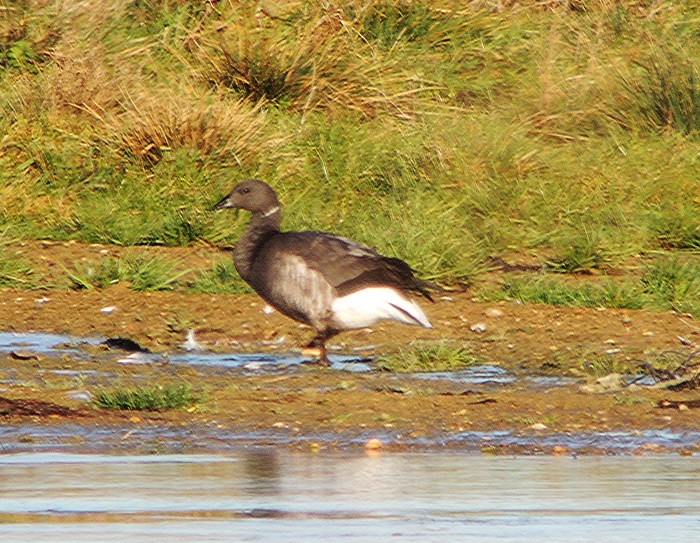
Doubling the winter goose line-up, meanwhile, was an adult Dark-bellied Brent, discovered on roadside pools alongside the A5 at DIRFT 3, just north-west of Crick, on 7th. Averaging little more than two records per year, this species, has failed to appear in only three out of the last twenty, while the pale-bellied race has never been recorded locally and, if it ever appears, the first example would no doubt prove itself popular. Lower down the pecking order, the long-staying female Scaup notched up nine weeks at Sywell CP and the roaming drake Smew appeared again at Ditchford GP on Wilson’s Pit on 7th-8th, before again vanishing into the murk of the Nene Valley. This species is proving to be very scarce in the county so far, this winter.

Adult Dark-bellied Brent Goose, DIRFT 3, 7th January 2018 (Mike Alibone)
Records of Brent Geese in Northamptonshire, by month, last 20 years (1998-2017)

The Great Northern Diver – presumably the Hollowell individual – which turned up at Pitsford on 5th, stayed until early morning on 6th, before promptly vanishing, while one or two Great White Egrets continued to be seen at Pitsford and Ravensthorpe Reservoirs, Earls Barton, Ditchford, Stanwick and Thrapston Gravel Pits and Summer Leys LNR, with a maximum of three at Ditchford GP on 9th.

Raptors hit the headlines this week. A male Hen Harrier taking a Woodpigeon in ploughed field by the A5, just north of Grafton Regis on 11th, was said by locals to have been in the general area for several days previously. Prior to this, a Rough-legged Buzzard, reportedly seen well along the minor road between Greens Norton and Blakesley on 7th, could not be found during brief searches in inclement weather over the following two days. Also in the south of the county, a Merlin was seen in flight near Chacombe on 6th.

No new waders were found this week – the Black-tailed Godwit remaining at Stanwick GP throughout the period, while 6th saw the number of Jack Snipes up on last week, with two now at Hollowell and three at Welford Quarry.

Scarce gulls were at a low ebb, with just one Yellow-legged Gull at Ravensthorpe Res, on 7th, along with a first-winter Caspian Gulls there on the same date. The only other Caspians were recorded on 6th, when the wintering adult was still at Hollowell and an adult plus a first-winter joined the scavenging mass of large gulls at Rushton Landfill.

Waxwing, Corby, 10th January 2018 (Sophie Barrell)

Given the current paucity of Waxwings, one photographed from an office window in Corby provided much excitement for the observer on 10th. It would not be surprising if this remains the only one locally this winter. Another Mealy Redpoll was reported this week, this one accompanying Lesser Redpolls in a Scaldwell garden on 11th, while the run on Hawfinches continued.

Male Hawfinch, Cottesbrooke, 12th January 2018 (Ken Prouse)

Two were at Aynho and three over Edgcote on 6th, singles were roosting with Greenfinches in Northampton on 7th and at Badby on 9th and six were at Thenford Churchyard again on 12th. Meanwhile, the small flock at Cottesbrooke – numbering up to eight – continued to attract a steady trickle of admirers throughout the week.