Rarity Round-up, 7th to 13th April 2018

Although this week’s winds were largely migrant-friendly south to south-easterlies, the overcast, wet and murky conditions, which ensued throughout the period, were not and left many migrants temporarily grounded. Among these, a ‘mini-invasion’ of northbound Common Scoters marked the week, while summer visitors new in were Common Sandpiper and Sedge Warbler on 8th, Cuckoo and Grasshopper Warbler on 9th and Hobby on 13th.

After a recent dearth of wildfowl, things changed dramatically this week. Keeping a generally low profile, the Stanwick Pink-footed Goose was still associating with Greylags there on 8th and the same site also hosted a Dark-bellied Brent Goose on 13th after one had flown south-west there two days previously, on 11th. Seven Dark-bellied Brents also made landfall during the drizzle at Clifford Hill GP on 12th.

Dark-bellied Brent Geese, Clifford Hill GP, 12th April 2018 (Terry O’dell). Four of seven present.
Dark-bellied Brent Goose, Stanwick GP, 13th April 2018 (Adrian Borley)

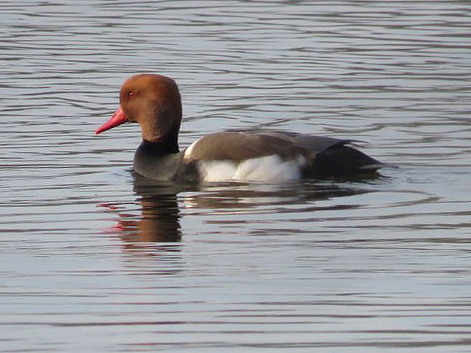
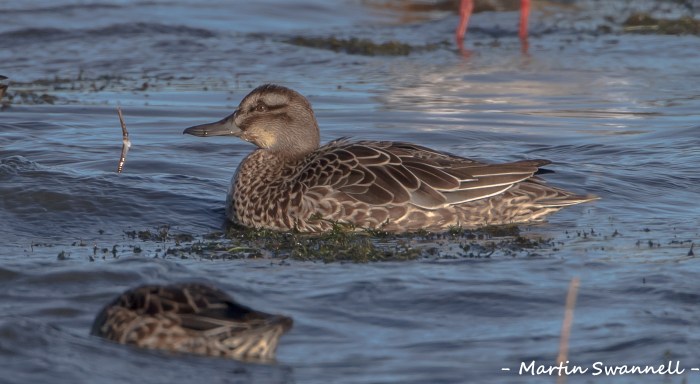
Back at Stanwick, a drake Garganey was located on 13th and is still only the second record, so far, this spring. Diving ducks were well-represented during the period, with a drake Red-crested Pochard at Stanford Res on 9th, followed by a male and female at Kislingbury GP on 11th but more interesting was the report of a female Ring-necked Duck, south of the causeway at Pitsford Res, on 11th. Despite subsequent searching, it was not relocated, although a female Scaup was discovered there during the process.

Drake Garganey, Stanwick GP, 13th April 2018 (Adrian Borley)

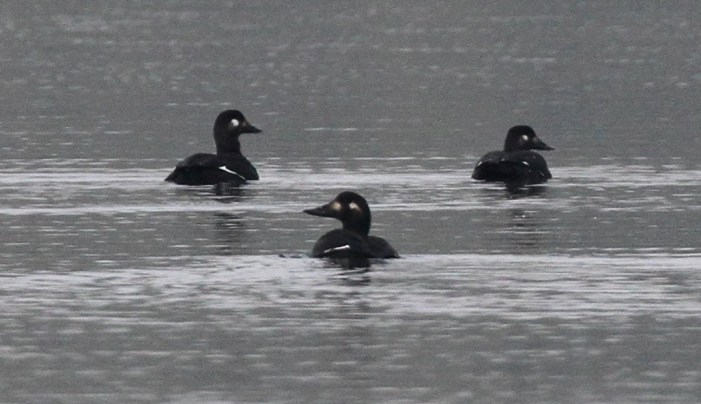
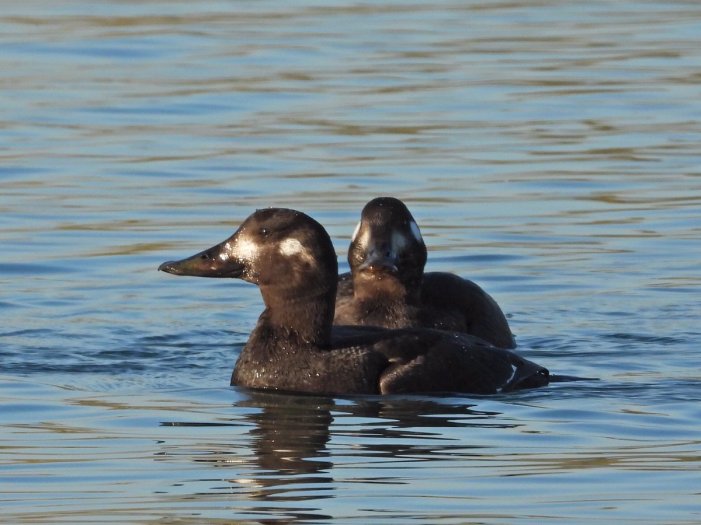
In all this duckin’ n divin’ the week belonged to Common Scoters, which continued to come through in what seems likely to be an unprecedented local ‘spring of scoters’ – perhaps giving rise to a new collective noun for the species. Six – including four drakes – were at Daventry CP on 9th, followed by four more (two drakes) there on 11th. Two also visited Boddington Res on 9th, two drakes were at Pitsford Res on 10th-11th, three (one drake) lingered at Clifford Hill GP from 10th to 13th and a drake was at Hollowell Res on 11th. Interestingly, nine different groups of Common Scoters were sound recorded on nocturnal migration north over one locality in neighbouring Bedfordshire in the early hours of 9th.

Localities visited by Common Scoters in Northamptonshire Spring 2018
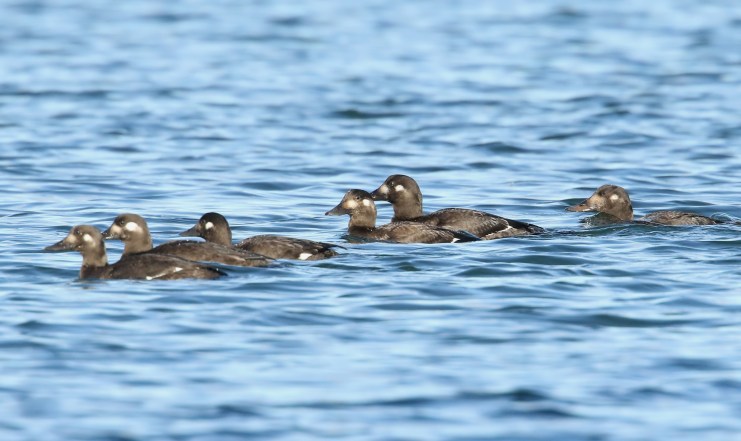
Common Scoters, Daventry CP, 9th April 2018 (Gary Pullan)
Common Scoters, Clifford Hill GP, 10th April 2018 (Bob Bullock)

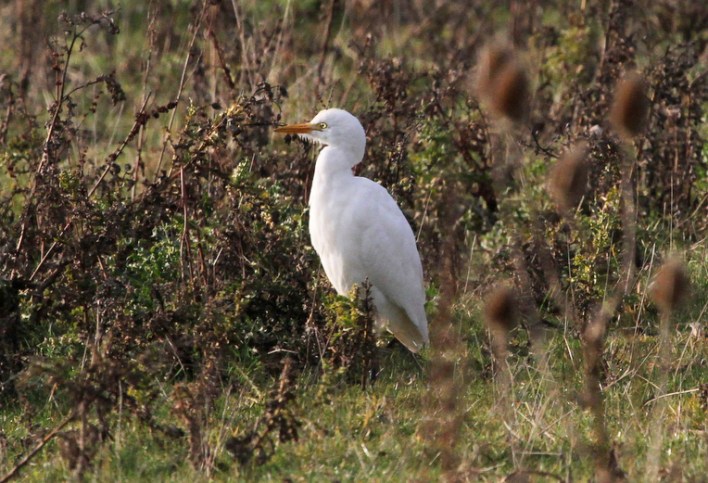
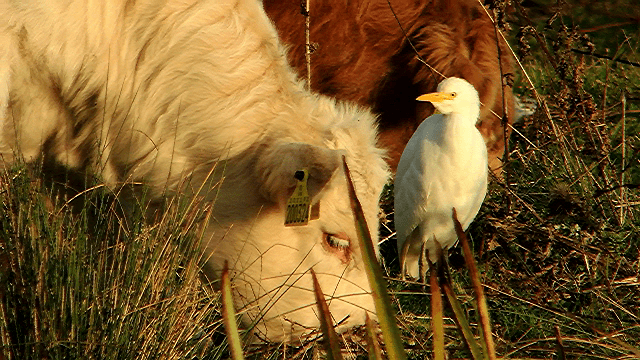
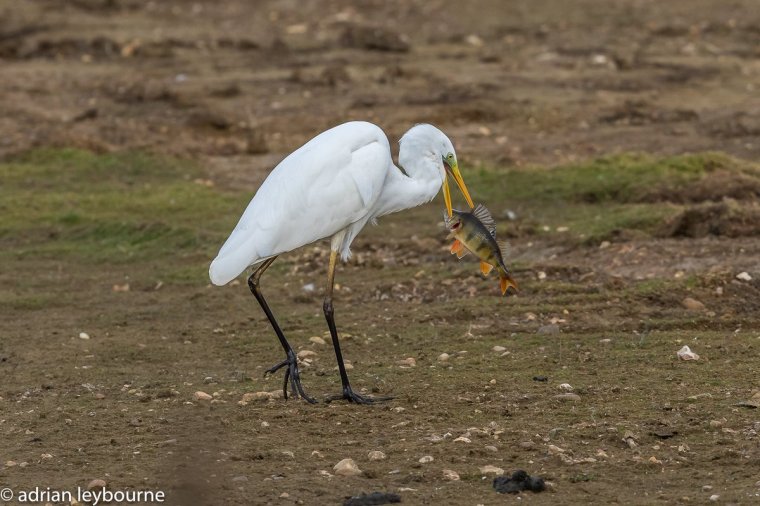
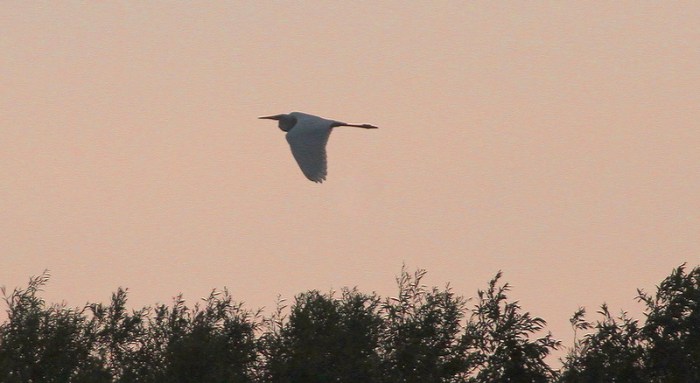
Apart from two flying east along the Nene Valley on 8th, just one Great White Egret remained in the vicinity of Hardwater Lake and the weir at Earls Barton GP/Summer Leys LNR until 13th.

Single Ospreys were seen at six localities during the period, these comprising Pitsford Res on 7th, Hollowell Res, Stanford Res and Thrapston GP on 8th, Ravensthorpe Res on 9th and Welford/Sulby Res on 13th. There were no reports of any other scarce raptors this week.

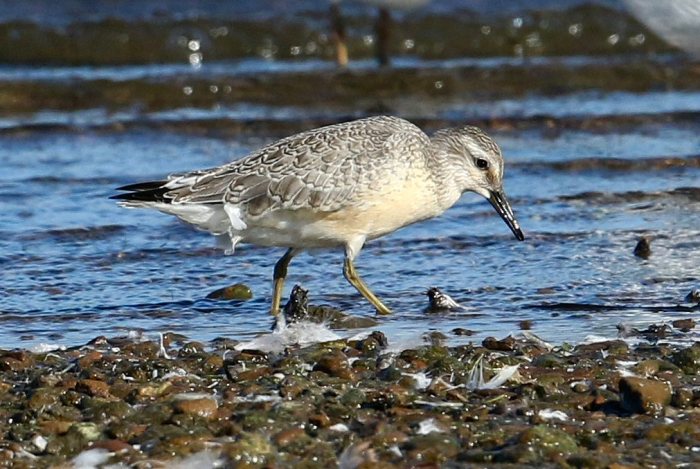
Wader passage begins to ramp up from hereon but, apart from a Knot at Stanwick GP on 8th, there was little change to last week’s line up, with a Black-tailed Godwit at the aforementioned Stanwick on 7th-8th, followed by another there on 13th and one on floodwater near Oundle on 9th. Stanford Res notched up its second Greenshank of the spring, with one on 8th and a Jack Snipe remained at Hollowell Res on 7th.

Black-tailed Godwit, Stanwick GP, 13th April 2018 (Adrian Borley)

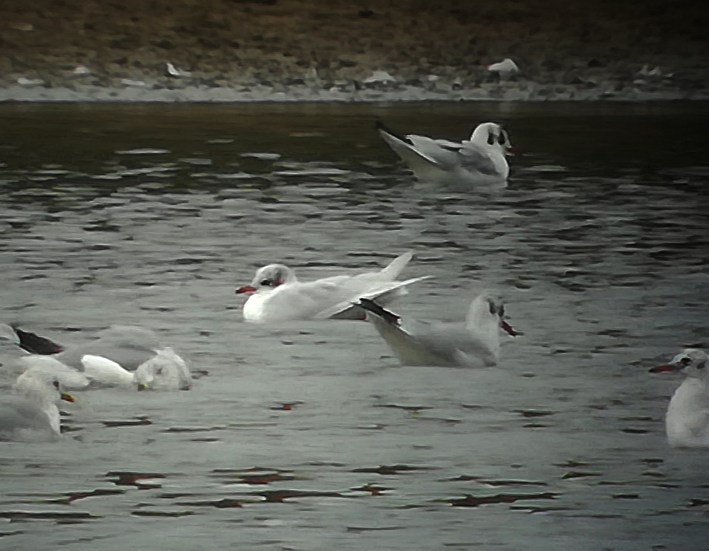
April wouldn’t be complete without a Sandwich Tern, so the one which completed a couple of laps of Stanford Res on 8th, before swiftly moving on, was right on cue. Hopefully more will follow. The year’s first Arctic Tern was found at Clifford Hill GP also on 8th, quickly followed by another at Earls Barton GP on the same date and another at Daventry CP on 11th. For the first time this year there were no reports of scarce ‘large’ gulls during the period, although arguably more attractive – and a lot easier to identify – Little Gulls appeared at a couple of localities, with Ditchford GP hosting two adults on 10th and Daventry CP producing three adults the following day.

Adult Little Gull, Ditchford GP, April 2018 (Tony Vials)

Kittiwake is another species which has enjoyed a remarkable series of records so far this spring. The run continued with single adults at both Daventry CP and Stanwick on 8th, with the latter site producing another flying east on 9th followed by one on floodwater at Oundle minutes later, leading to speculation it may have been the same individual.

Adult Kittiwakes, 9th April 2018. Left, Stanwick GP (Steve Fisher), right, Oundle (James Underwood)

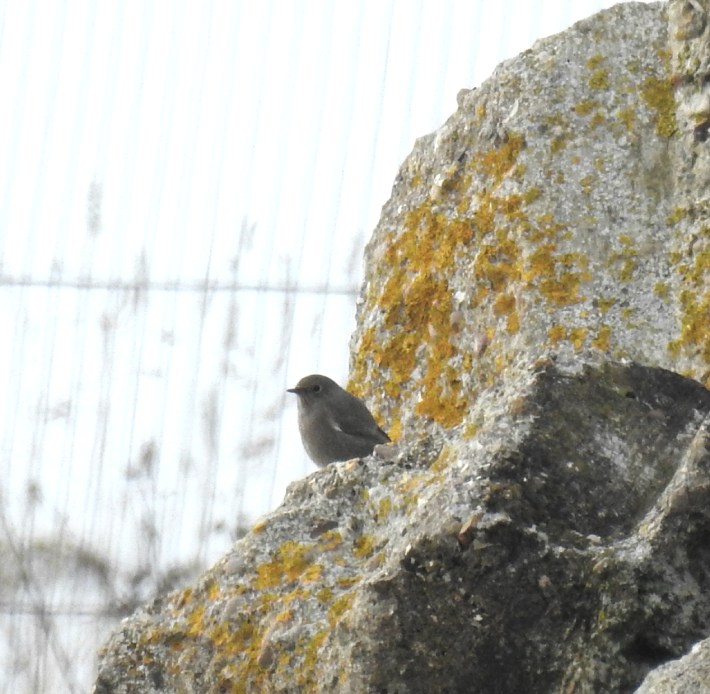
The pick of the passerines this week were single Ring Ouzels reported from Chelveston AF on 8th and another in the Brampton Valley, near Chapel Brampton, the following day. Just prior to these two arriving, birders hunting for this species at the traditional site of Newnham Hill on 6th failed to locate any but were amply rewarded with the discovery of a Black Redstart by way of compensation.

Black Redstart, Newnham Hill, 6th April 2018 (Bob Bullock)

Staying in the west of the county, a Common Redstart was found at Boddington Res on 10th and a Northern Wheatear put in an appearance at Borough Hill on 7th. The east, however, produced the only White Wagtails which included two near floods at Oundle on 9th and one near Barnwell on 11th. At least one Hawfinch hanging on at Cottesbrooke this week, on 8th, may well be the last of an outstanding winter’s run for this species. Probably.

Rarity Round-up, 31st March to 6th April 2018

Last week’s downpours morphed into a weekend deluge, creating widespread flooding which was most evident in the Nene Valley. Water levels there rose dramatically, creating additional – though short-lived – marshland habitats and engulfing well established islands at several wetland localities. As the floods drained slowly away, the end of the week saw a return toward normal water levels and temperatures rose as a southerly wind predominated. Summer visitors new in were House Martin and Yellow Wagtail on 3rd and Willow Warbler on 5th.

A Pink-footed Goose was discovered with Greylags at Clifford Hill GP on 31st but it had departed by the following day. The bill pattern and lack of white feathers at the bill base confirmed it was not the bird which has remained throughout the winter in the vicinity of Stanwick GP, where it was seen again on 6th.

Pink-footed Goose, Clifford Hill GP, 31st March 2018 (Bob Bullock)
Pink-footed Goose, Clifford Hill GP, 31st March 2018 (Mike Alibone)

Also in the Nene Valley, single Great White Egrets were seen at Earls Barton GP/Summer Leys LNR on 31st, 2nd and 6th, at Ditchford GP on 1st and at Stanwick GP on 6th. Again, a considerable difference in bare part colouration confirmed the presence of at least two different individuals.

Two more Ospreys this week – both on 2nd – included one around Ravensthorpe Res and one over the A43 between Broughton and Cransley. More will surely follow but there was a notable absence of other raptors during the period.

On the wader front, an early Bar-tailed Godwit flew east at Stanwick GP on 2nd and two Black-tailed Godwits visited Summer Leys LNR on 5th, a Greenshank – an uncommon spring migrant – visited Stanford Res on 5th and a Jack Snipe remained at Hollowell Res on 1st.

Greenshank, Stanford Res, 3rd April 2018 (Chris Hubbard)

Eleven Little Gulls flew east through Clifford Hill GP on 2nd but a first-winter Kittiwake, discovered in Pitsford’s Pintail Bay on the same date, was unfortunately found dead there the next day.

First-winter Kittiwake, Pitsford Res, 2nd April 2018 (Richard How)

Last week’s total of Mediterranean Gulls was doubled this week, with two being seen – one at Stanwick GP on 3rd and the other at Daventry CP the following day; both were adults. Larger larids included two Yellow-legged Gulls at Daventry CP on 4th, a second-winter Caspian Gull at Hollowell Res on 1st, followed by a first-winter there, two days later, on 3rd.

Male Northern Wheatear, Clifford Hill GP, 31st March 2018 (Bob Bullock)

Passerine migrants continued this week with two more Northern Wheatears at Clifford Hill GP on 31st and three near Brackley on 2nd, while the same Brackley locality produced two White Wagtails on 2nd-3rd and another was found at Thrapston GP on 6th. Hawfinches lingered into April with two at Dallington Cemetery, Northampton on 31st and four or five still at Thenford Churchyard on the same date, while Polebrook AF produced one on 5th. Last week’s Corn Bunting again visited private feeding stations in Hinton on 2nd and adjacent Woodford Halse on 4th.

Rarity Round-up, 24th to 30th March 2018

In contrast to the previous week, this last week was milder with the more usual Atlantic airstream dominating – and bringing some hefty downpours to boot. Summer visitors new in were Garganey, Common Tern and Swallow on 30th and the first migrant Northern Wheatear on 26th.

Remaining until at least 27th, the wintering Pink-footed Goose kept up its visits to the main lake at Stanwick GP while, further down the Nene Valley at Oundle, the first Garganey of the year, a male and female, were found on floodwater on 30th, although they did not linger. More Common Scoters came through this week, with two drakes at Daventry CP on 24th, quickly followed by six – including five drakes – at Stanford Res the following day.

Common Scoter, Daventry CP, 24th March 2018 (Gary Pullan)
Common Scoters, Stanford Res, 25th March 2018 (Chris Hubbard)

Pitsford’s Slavonian Grebe was last reported on 27th, while Great White Egrets were dramatically reduced to one, mobile around Earls Barton GP/Summer Leys LNR between 27th and 30th.

Great White Egret, Summer Leys LNR, March 2018 (Bob Bullock)

Following the first, on 13th March, two more Ospreys were seen heading north this week – one high over Daventry CP on 26th, followed by another over Pitsford Res the following day. The only other raptors of note were single Merlins, both on 26th, comprising a female flying north at Daventry CP and a male hunting over farmland at Merry Tom Lane, north of Chapel Brampton.

Among more common fare, this week’s scarcer waders were limited to a Black-tailed Godwit on floodwater at Oundle on 28th and two Jack Snipes at Hollowell Res on 24th plus one at Stanwick GP on 26th.

Kittiwake, Stanwick GP, 24th March 2018 (Steve Fisher)
Kittiwake, Ravensthorpe Res, 25th March 2018 (Stuart Mundy)

Single adult Kittiwakes visited Stanwick GP on 24th and Ravensthorpe Res the following day but the only Mediterranean Gull this week was an adult at Thrapston GP on 29th. Larger gulls, too, were in short supply with just two Yellow-legged Gull at Daventry CP on 24th and a second-winter Caspian Gull at Hollowell Res on the same date.

Male Northern Wheatear, Whiston Locks, 26th March 2018 (Leslie Fox)

The first migrant Northern Wheatear was found at Whiston Lock on 26th while Hawfinches were still in evidence this week, with seventeen at Polebrook AF on 24th, dropping to three by 30th and a Corn Bunting visited a private feeding station in Woodford Halse on the latter date.

Rarity Round-up, 17th to 23rd March 2018

Once more, the county was plunged back into winter as the easterly airstream from Siberia again took hold for the first two days of the period. However, the resultant deposit of snow was short-lived as rising temperatures got to work and the winds subsequently swung north and then south-westerly by the week’s end. In contrast to last week’s flurry of spring migrants, local birders faced a lean period in the field, with little sign of anything new to show for their efforts.

Still hanging with the Greylags, the Stanwick Pink-footed Goose put in an appearance again on 23rd and it seems likely to be around for a while yet as pinkfeet into April are not unusual. The three Scaup from the same locality transferred to the Watersports Pit at nearby Ditchford GP, where they were discovered on 17th, remaining there until at least 20th.

Pink-footed Goose, Stanwick GP, 23rd March 2018 (Steve Fisher)

The Pitsford Slavonian Grebe – now qualifying for long-stayer status – was still present on 21st, while Great White Egrets lingered in all the usual sites in the Nene Valley, which again included Ditchford GP, Earls Barton GP/Summer Leys LNR (four), Stanwick GP (two) and Thrapston GP.

Great White Egret, Earls Barton GP, 23rd March 2018 (Leslie Fox)

Last week’s ‘cream-crown’ Marsh Harrier at Earls Barton GP was again seen on 18th and 19th over Summer Leys on both dates.

Back along the Nene, at Stanwick, four Black-tailed Godwits arrived on 17th and remained until 19th, with one staying until the following day

Last week’s adult Mediterranean Gull at Stanwick was still present on 17th and single adults also appeared at Daventry CP on 18th and 23rd, while the only Yellow-legged Gull during the period was a first-winter in the roost at Pitsford Res on 19th. Caspian Gulls, too, were fewer in number this week, with the Boddington Res roost holding an adult on 17th and Pitsford’s roost producing a second-winter on 17th and 20th and an adult on 19th.

Though still low in numbers, Hawfinches continued to be seen and this week’s comprised one in Dallington Cemetary, Northampton on 17th and up to two still at Cottesbrooke on 19th-20th.

Rarity Round-up, 10th to 16th March 2018

Little Ringed Plover, Priors Hall, Corby, 11th March 2018 (James Underwood)

A predominantly southerly airstream from west coast Europe helped not only to lift temperatures but also undoubtedly gave a welcome boost to northward migration for our earliest summer visitors. This week saw the arrival of Osprey, Little Ringed Plover and Sand Martins, as well as some scarce migrants and the visible movement of winter visitors, including wildfowl and thrushes, beginning their departure.

In fact, there was not much to write home about when it came to wildfowl. The three Scaup remained on the main lake at Stanwick GP until 11th and a ‘redhead’ Smew spent three days, from 10th to 12th, on Clifford Hill GP’s Deep Water Lake before moving on.

Smew, Clifford Hill GP, 12th March 2018 (Mike Alibone)

Less willing to budge, the Slavonian Grebe remained all week in the vicinity of Pintail Bay at Pitsford Res, while Great White Egrets also seemed in no hurry to move from the usual sites in the Nene Valley, which again included Ditchford GP, Earls Barton GP/Summer Leys LNR (up to four), Stanwick GP (two) and Thrapston GP (two). Mercifully, on rare occasions, not all things big and white in the Nene Valley are the latter species and one such bird at Stanwick, on 11th, proved to be a nice adult Spoonbill. Arriving in the early evening, it stayed for just forty minutes before heading off west at dusk. This is the 36th county record and only the second to be recorded in March, after one at Ditchford GP in 1980.

After five weeks without a mention, raptors were back on the agenda this week with a ‘cream-crown’ Marsh Harrier flying west at Earls Barton GP on 16th and the first migrant Osprey of the year heading east over Billing GP/Ecton SF three days earlier, on 13th. More will surely follow in the not too distant future.

Hot on the heels of last week’s Avocet, at Summer Leys, came another on 13th – again in the Nene Valley – at Clifford Hill GP. A Black-tailed Godwit flying east at Ditchford GP’s Irthlingborough Lakes & Meadows LNR on 16th may have been the same as that reported sporadically at adjacent Stanwick GP over the past few weeks. The only other wader of note was a Jack Snipe at Hollowell Res on 11th.

March has produced a fair proportion of our Kittiwakes in the past and this week saw a notable overland movement, which resulted in an adult at Daventry CP on 13th and twelve at Pitsford Res on 16th, none of which lingered. Following last week’s trickle of Mediterranean Gulls at Boddington Res, another adult was found in the roost there on 10th, one was in the Pitsford roost on 13th, an adult remained at Stanwick between 13th and 16th and a first-winter visited Clifford Hill GP on 12th.

Adult Mediterranean Gull, Pitsford Res 13th March 2018 (Jacob Spinks)

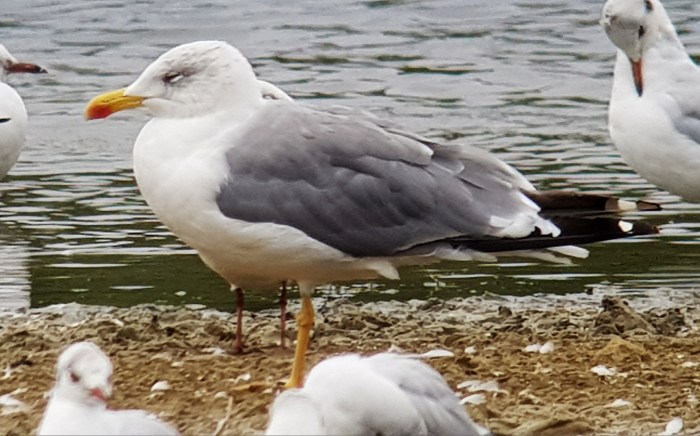
Numbers of Yellow-legged Gulls remained low, with two first-winters at Pitsford Res on 11th and an adult at Stanwick on the same date while, back at Pitsford, a first-winter was in the roost on 14th. Things were looking up as the same roost attracted a juvenile Iceland Gull on 13th – surprisingly the first ‘white-winged’ gull to be found here for many years. Back in the day, when Brixworth had a landfill instead of a Mercedes commercial centre, they were encountered rather more frequently in the roost. Meanwhile, Hollowell Res grabbed the lion’s share of Caspian Gulls this week, producing a second-winter on 11th, an adult, a second-winter and a first-winter on 13th, with the second-winter remaining until the following day. Elsewhere, single second-winters were found at both Pitsford Res and Rushton Landfill on 15th.

There was only one Hawfinch this week, along the road to Irchester CP on 14th. Perhaps this is the last to be seen in what can only be described as the most fantastic winter ever for this species in the UK, probably an event unlikely to be repeated.

Rarity Round-up, 3rd to 9th March 2018

A marked change in wind direction dragged warmer air from the Atlantic via south-west Europe, initiating a rapid thaw in lying snow from the beginning of the week. With this came the first migrants but most winter visitors continued to frequent favoured localities, although some had clearly registered the rapidly lengthening days and decided to move on.

The juvenile Whooper Swan wintering at Ravensthorpe Res was still present on 4th but appeared to have departed by 8th, when there was no sign of it, while Stanwick GP’s Pink-footed Goose remained until at least 5th. The two Scaup there were joined by a third on 6th, all three remaining until the week’s end and the female at Sywell CP was still off the dam there on 8th. It was difficult to be certain if two drake Common Scoters, discovered on Thrapston GP’s Town Lake on 4th, were a product of hard weather movements or simply spring migrants.

Drake Common Scoters, Thrapston GP, 4th March 2018 (Bob Bullock)

The Slavonian Grebe completed another full week between the sailing club and Pintail Bay at Pitsford Res, while Great White Egrets remained at the usual sites in the Nene Valley, which included Ditchford GP, Earls Barton GP/Summer Leys LNR (three), Stanwick GP (two) and Thrapston GP (two). One also flew south at Hollowell Res on 4th.

Great White Egret, Earls Barton GP, 6th March 2018 (Leslie Fox)

The first signs of spring wader passage were evident this week with an Avocet, which made a stopover at Summer Leys on 7th, and an early Grey Plover in flight near Clifford Hill GP the following day.

Avocet, Summer Leys LNR, 7th March 2018 (Bob Bullock)

Also relatively early was an adult Little Gull at Thrapston GP on 4th, although winter and early spring records for this species are not unprecedented. March is typically the major spring passage month for Mediterranean Gulls and the easy to watch gull roost at Boddington Res has a track record for producing them. This year is no exception, with single adults there on 4th and 5th, followed by two adults on 6th.

Adult Mediterranean Gull, Boddington Res, 4th March 2018 (Gary Pullan)

The same roost produced a juvenile Iceland Gull on 4th and adult Caspian Gulls on 4th and 5th plus a sub-adult the following evening, on 6th. Elsewhere, further Caspian Gulls included an adult and a second-winter at Hollowell Res on 4th, plus a second-winter in the Thrapston GP roost on the same date, a sub-adult and a second-winter in the Pitsford Res roost on 5th and a sub-adult there on 8th plus a second-winter at Rushton Landfill the same day.

Second-winter Caspian Gull, Pitsford Res, 5th March 2018 (Jacob Spinks)

Proving scarce and difficult to find throughout the winter, Short-eared Owls have been largely absent from traditional localities but one was found this week on farmland near Milton Malsor on 8th.

There were still Hawfinches to be had for those still looking, although numbers were down on previous weeks and included singles at Fawsley Park on 4th, Salcey Forest on 5th and Thenford on 9th, while a Mealy Redpoll was still visiting garden feeders in Irthlingborough on 5th.

Rarity Round-up, 17th February to 2nd March 2018

Although signs of spring weather were apparent during the first week of the two covered by this review, the lengthening, sunny days and blue skies belied the fact that temperatures were low and were about to tumble dramatically from the beginning of week two. A veritable ‘polar vortex’ of strong winds whirling around arctic and sub-arctic latitudes brought sustained, biting, sub-zero easterlies to the UK from Siberia and snow … lots of it, dispelling any hopes of finding early spring migrants. Considering previous years have seen arrivals in the county of Sand Martin as early as 26th February and Northern Wheatear on 3rd March, the prospect of either of these occurring any time soon seems, well, a long way off …

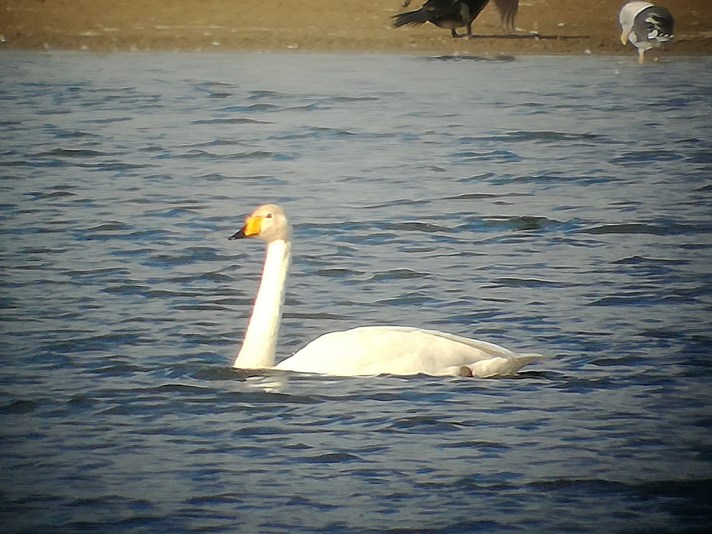
Whooper Swans, Stanford Res, 1st March 2018 (Chris Hubbard)

So, hard weather movements is what it’s all about but braving the grim conditions to discover what’s moving is another matter entirely. However, some avid patchwatchers did just that and the discovery of three Whooper Swans at Stanford Res on 1st was, perhaps, ample reward. They had gone the following morning but the juvenile Whooper wintering at Ravensthorpe Res stayed put until at least 24th, while the other long-stayer – Stanwick GP’s Pink-footed Goose – was still being seen sporadically throughout the period. Stanwick also produced two Scaup on 2nd, following one at Ditchford GP on 18th. The only other wildfowl of note were two Smew – a drake visiting

Juvenile Whooper Swan, Ravensthorpe Res, 24th February 2018 (Stuart Mundy)

Pitsford Res briefly on 21st and the drake still at Ditchford GP throughout the period, seemingly having become settled on Wilson’s Pit. Smew has remained a very scarce bird in the county this winter so this drake has become a popular attraction since its arrival back in December last year.

Drake Smew, Ditchford GP, 24th February 2018 (Mike Alibone)

The Slavonian Grebe remained between the sailing club and Pintail Bay at Pitsford Res until at least 23rd but there have been no subsequent reports. Site-loyal Great White Egrets continued to be seen at Ditchford GP, Earls Barton GP/Summer Leys LNR, Stanwick GP and Thrapston GP with maxima of three at Stanwick GP on 19th-20th and at Summer Leys on 23rd. Away from the Nene Valley, singles were at Ravensthorpe Res on 17th and Stanford Res on 18th and 27th.

Great White Egret, Mary’s Lake, Earls Barton GP, 23rd February 2018 (Leslie Fox)

After a week without any, waders made a bit of a comeback during the period. A Black-tailed Godwit was again at Stanwick on 21st, followed by a Knot at the same locality on 2nd. The latter stayed only briefly, flying off west shortly after its discovery. Also of note were Jack Snipe duos at Hollowell Res on 17th, Ditchford GP on 18th and near Hartwell on 1st and one at Stanwick GP on 2nd.

And so to gulls … Not quite equalling the splash of northerners to be found the previous week but two Mediterranean Gulls visited the Pitsford roost on 20th, five Yellow-legged Gulls were at Daventry CP on 18th and Caspian Gulls were scattered, with Rushton Landfill producing the lion’s share of two adults on 17th, one on 18th and a second-winter and third-winter on 25th. Elsewhere, the wintering adult was seen at Hollowell Res on 17th and a second-winter was present there on 22nd and 26th, a second-winter was at Pitsford Res on 20th, followed by a third-winter on 1st and a first-winter was in the roost at Thrapston GP on 22nd. Rushton Landfill retained its juvenile Glaucous Gull until at least 17th and an adult appeared there on 25th.

Juvenile Glaucous Gull, Rushton Landfill, 17th February 2018 (Mike Alibone)

Six localities produced Hawfinches, including the favoured sites of Cottesbrooke (three on 17th, one on 18th), Thenford (at least five on 20th-21st and twelve on 27th) and Blatherwycke, (four on 22nd). Elsewhere, one was at Lings Wood, Northampton on 19th and two were at a ‘traditional’ site in Oundle on 19th-20th. A Corn Bunting – only the second in Northants this year – was found near Upper Benefield on 22nd. Surely there must be more of these now scarce buntings out there, somewhere …

Rarity Round-up, 10th to 16th February 2018

A mixed bag of weather, predominantly north-west Atlantic-driven, delivered dollops of persistent, heavy rain to the county on 10th and 14th, in between and after which, low temperatures and dry conditions ensued. In the absence of anything else significant, northern gulls took centre stage with three new arrivals teasing at least some local birders out of their comfort zones to visit a habitat just a little more challenging than the regular, easy birding, ‘path-and-hide’ localities.

Now firmly established as part of the winter décor at Ravensthorpe Res, the juvenile Whooper Swan continued its stay, while Earls Barton GP/Summer Leys LNR held on to at least three of last week’s Red-crested Pochards – a male and female on 10th and two drakes on 15th. The only other wildfowl of note were the drake Smew again at Ditchford GP on 16th and a female Common Scoter in Pitsford’s Pintail Bay on 13th, the same locality continuing to host the wintering Slavonian Grebe – now having notched up four weeks on site.

Slavonian Grebe, Pitsford Res, 5th February 2018 (Bob Bullock)

Great White Egrets continued to be seen at Ditchford GP, Ravensthorpe Res, Earls Barton GP/Summer Leys LNR, Stanwick GP and Thrapston GP with maxima of three at Stanwick GP on 10th and at Earls Barton/Summer Leys on 15th.

Great White Egret, Summer Leys LNR, 16th February 2018 (Ray Seagrove)

Landfill Larids steal the show

In keeping with their current high abundance in the UK, white-winged gulls from the north made a splash alongside some of the regulars at Rushton’s landfill site this week. Viewing conditions at this locality can often be awkward. The active refuse area faces north and on a clear, sunny day, observation from the road which overlooks it is invariably difficult as a result of the area having to be viewed against the light. The contours of the site provide areas for large numbers of loafing gulls to hide, thereby evading detection, so birding there can be both challenging and frustrating. Meeting the challenges, however, can reap rewards, as this week aptly demonstrated.

A second-winter Iceland Gull, discovered in fields immediately south of the landfill on 10th, was still present the following day, when a fourth-winter Glaucous Gull was also discovered there. On 12th, yet another Glaucous Gull was found at the site – this time a juvenile.

Second-winter Iceland Gull, Rushton Landfill, 10th February 2018 (Bob Bullock)
Juvenile Glaucous Gull, Rushton Landfill, 12th February 2018 (Beth Clyne)

For anyone willing to put the time in, there is great potential for further discoveries. Taking a back-seat, an adult Caspian Gull was present there on 10th and 13th and a Yellow-legged Gull was there on 12th plus two the following day. Elsewhere, the wintering adult Caspian Gull at Hollowell Res was seen on 10th and 12th, while an adult was in the roost at Thrapston GP on 11th and 12th, accompanied by a second-winter on the first of these dates. The Thrapston roost also produced an adult on 11th and two on 12th and 14th and one was in the roost at Pitsford on 12th.

Adult Caspian Gull, Rushton Landfill, 10th February 2018 (Mike Alibone)

Up to four Mealy Redpolls were visiting feeders in an Irthlingborough garden on 12th, having been seen there, on and off, over the previous week, while this week’s crop of Hawfinches was much reduced, with Cottesbrooke producing one on 11th and four on 13th, while singles were at Thenford Churchyard on 12th and Salcey Forest on 14th.

Rarity Round-up, 3rd to 9th February 2018

A return to weather more typical of winter this week, with an overcast, miserable and wet start quickly being replaced by cold, easterly winds from northern Europe, turning northerly toward the week’s end.

The Ravensthorpe Whooper Swan showed no signs of departure this week and, at Stanwick, the Pink-footed Goose was still present on 6th. Five Red-crested Pochards appeared at Summer Leys LNR on 3rd but their number had quickly dwindled to two by 5th, while the Thrapston two had grown to three by 4th and the female Scaup remained off the dam at Sywell CP the following day.

A little on the scarce side this winter, a Bittern was seen coming into roost at dusk in the reedbed at Stanwick GP on 6th and 8th and Great White Egrets continued to be seen at the currently favoured localities of Ditchford GP, Ravensthorpe Res, Stanwick GP and Summer Leys, with a maximum of three at the latter locality on 4th, although two were at Stanwick GP on 6th and 9th. Pitsford’s Slavonian Grebe remained until at least 8th, staying faithful to the area between the sailing club and Pintail Bay.

After being seen at Pitsford Res once last week, the ‘ringtail’ Hen Harrier put in another appearance there on 3rd, constituting this week’s only scarce raptor and, for the first time in a ‘long time’, there were no notable waders during the period.

The gull roost at Pitsford Res harboured a first-winter Kittiwake on 4th and two Mediterranean Gulls – a first-winter and a second-winter – on 8th, all perhaps early spring migrants, while 4th also produced a first-winter Yellow-legged Gull at Rushton Landfill, an adult at Hollowell Res on the same date and a second-winter was in the Pitsford roost on 8th. The wintering adult Caspian Gull at Hollowell Res was joined there by a first-winter on 4th and the only other was a second-winter at Pitsford roost on 8th.

Male Hawfinch, Thenford, 6th February 2018 (Tony Vials)

Apart from a Firecrest in scrub alongside Harper’s Brook, at Lowick on 4th, the only other passerine action was restricted to that flock of at least twenty Hawfinches at Thenford Churchyard, which were still present on 6th, while one was found at Pitsford Res on 3rd.

Rarity Round-up, 27th January to 2nd February 2018

Although an uneventful week weatherwise, mild, south-westerly winds off the Atlantic produced the warmest day of the year so far on 28th, when local daytime temperatures reached 13ºC (15ºC nationally). Perhaps reflecting the generally mild winter, wrapped up in the wider parameters of global climate change, a newly fledged juvenile Blackbird in a Hartwell garden on 31st January was early, to say the least!

The week opened with a new Whooper Swan – this time an adult – in flight over Bragborough, near Daventry, on 27th, while the long-staying juvenile remained on site at Ravensthorpe Res. In the Nene Valley, at Stanwick, the Pink-footed Goose was still present on 30th and the forty-four-strong flock of Barnacle Geese remained there until 28th, after which they moved north to Leicestershire, where they were seen circling over Rutland Water. This movement – clearly not hard weather-related – resurrects the earlier speculation that perhaps they are wild – after all, how far do the ‘Bedfordshire ferals’ travel? Further down the Nene Valley, at Thrapston GP, two Red-crested Pochards were discovered on Town Lake on 30th, the female Scaup was still off the dam at Sywell CP on the same date and the drake Smew at Ditchford GP was perhaps ‘dunroamin’ as it was seen there on a record three consecutive days, 28th-30th, at Higham Lake.

Female Scaup, Sywell CP, 30th January 2018 (Alan Francis)

Apart from one at Ravensthorpe Res on 31st, sightings of Great White Egrets were restricted to locations in the Nene Valley, with at least two at Summer Leys LNR all week, two at Ditchford GP on 27th, one at Thrapston GP on the same date and one at Stanwick GP on 28th-30th. Pitsford’s Slavonian Grebe remained until at least 1st.

Great White Egret, Summer Leys LNR, 30th January 2018 (Alan Coles)

Just one locality on just one day, 28th, produced the week’s star raptors in the shapes of Merlin and Hen Harrier at Pitsford Res. Similarly, the only waders during the period – the Stanwick Black-tailed Godwit and one of the Hollowell Jack Snipes – were both still present from last week – again, both on the same day, 27th.

Two Yellow-legged Gulls visited the gull roost at Pitsford Res on 29th and two adults were at Ravensthorpe Res on 31st, while the wintering adult Caspian Gull was still at Hollowell Res on 27th-28th, a second-winter was on floodwater near Hinton-in-the-Hedges on 28th and the gull roost at Pitsford produced a first-winter on 28th, followed by a second-winter on 29th.

Male Hawfinch, Thenford, 28th January 2018 (John Friendship-Taylor)

Passerines fared slightly better this week, with two Waxwings reported briefly at Gretton on 30th, the flock of at least twenty Hawfinches at Thenford Churchyard on 28th and one at Silverstone on the same date, plus a minimum of six at East Carlton CP on 30th. At least one Corn Bunting was still with a mobile flock of Yellowhammers between Sulgrave and Thorpe Mandeville on 27th.