Rarity Round-up 15th to 21st April 2017

The week remained largely dry, dominated initially by brisk north-westerlies, which gave way to a spell of north-easterlies and cold overnight temperatures for a short spell during the latter part of the period. Allowing extra birding time for some, the Easter bank holiday did not fail to disappoint but the undoubted highlight of the week was the one-day stay of three Black-winged Stilts at Stanford Reservoir on 20th. Summer visitors continued to arrive, including the first Common Swifts, Common and Lesser Whitethroats, as well as Yellow Wagtails en masse but there were still some lingering winter visitors which included up to eight Bramblings at one site.

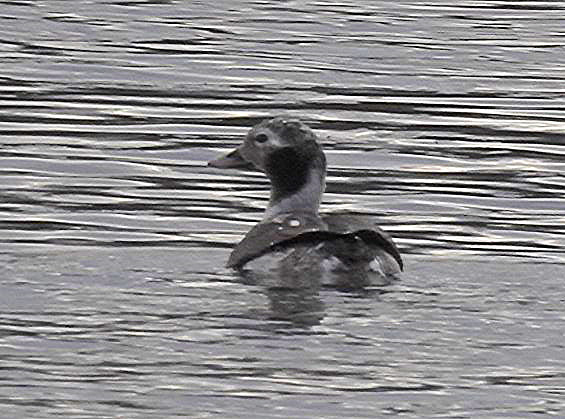
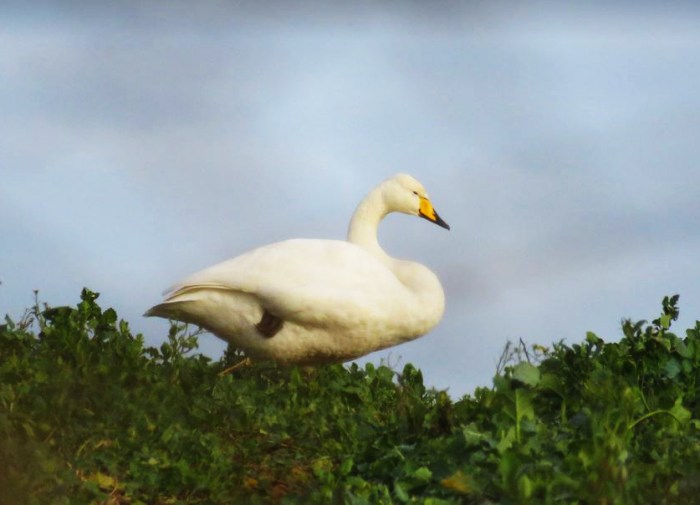
The Whooper Swan which spent the winter at Sywell CP went unreported this week but one flying south over Bozenham Mill on 18th may, or may not, have been the same individual. Single female Garganeys visited Pitsford Res on 16th and Ditchford GP on 19th, up to two drake Red-crested Pochards were at Thrapston GP between 17th and 20th and the female Scaup was still present at Stanwick GP until at least 17th. Stanford’s long-staying first-year drake Long-tailed Duck remained throughout the period, having gone on an away-day to Draycote Water in neighbouring Warwickshire on 9th, before duly returning the following day. Admirably site-faithful, it surely can’t stay there for much longer … can it?

First-summer drake Long-tailed Duck, Stanford Res, 16th April 2017 (Chris Hubbard)

Wholly unpredicted, Sywell CP pulled this year’s Easter Bunny out of the hat in the shape of an adult Gannet there on 15th. Approachable and seemingly moribund, it appeared to go to roost on the dam as dusk fell but it was nowhere to be found the following morning; most records are of juveniles in autumn.
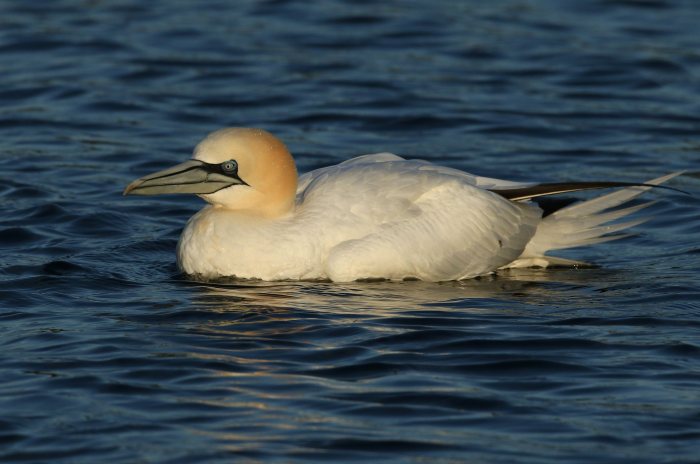
Adult Gannet, Sywell CP, 15th April 2017 (Bob Bullock)

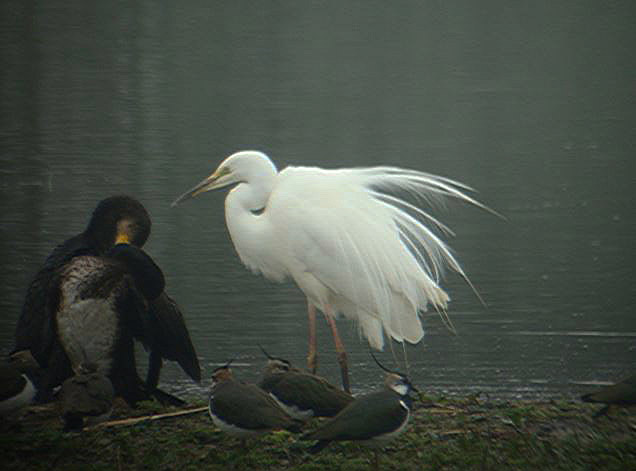
And it seems we are still not yet done with Great White Egrets as one was seen flying north-east along the Nene Valley at Stanwick GP on 19th. Compared with last week, there were few Ospreys reported during the period, with sightings at Pitsford Res on 15th and 16th probably relating to the same bird, which performed well, by all accounts.

Osprey, Pitsford Res, 15th April 2017 (Adrian Borley)

Looking to seriously rival Summer Leys as this year’s spring hotspot, Stanford Res went and did it again, delivering a trio of Black-winged Stilts on 20th. In all their pink, black and white glory, they remained on show from dawn until dusk but had duly departed by the following morning.

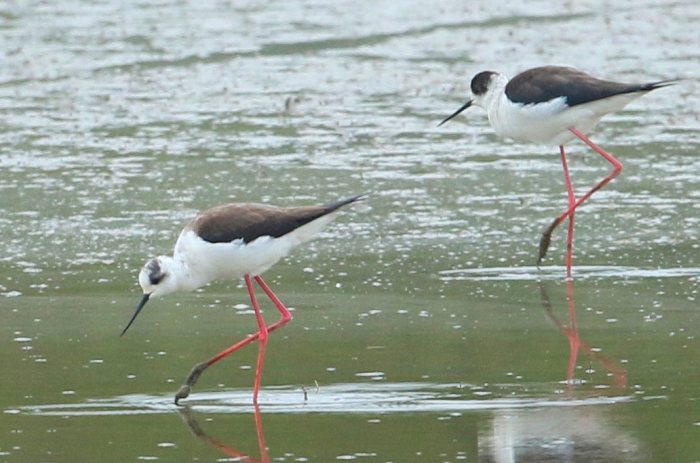
Black-winged Stilts, Stanford Res, 20th April 2017 (Bob Bullock)

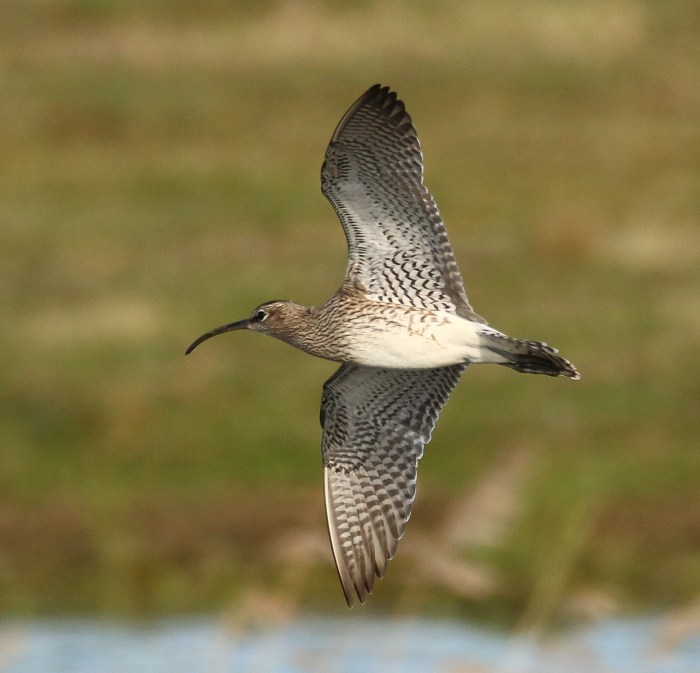
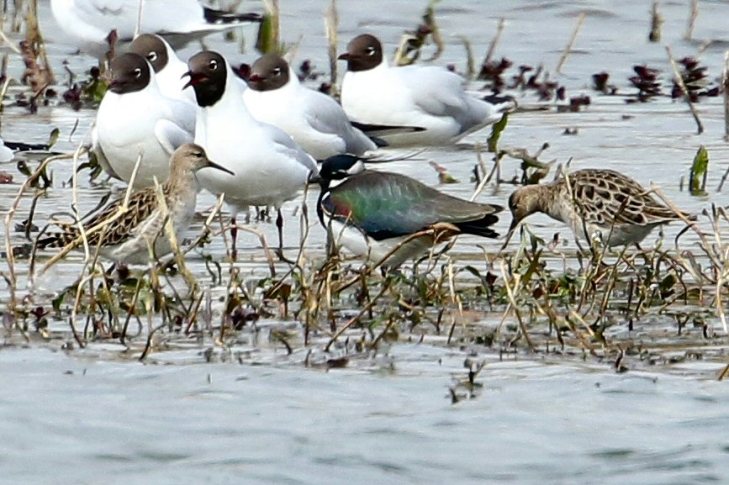
So, after last week’s Common Cranes: Stanford 2-0 Summer Leys. Stanford also produced a Whimbrel on 18th plus five more the following day, five Black-tailed Godwits on 19th and one on 20th and a Bar-tailed Godwit from 19th to 21st. Imagine what could happen if we drained Pitsford during the spring … Single Whimbrels were also at Pitsford Res on 15th and at Summer Leys from 18th to 21st, with the latter site holding up to two Ruffs between 15th and 21st.
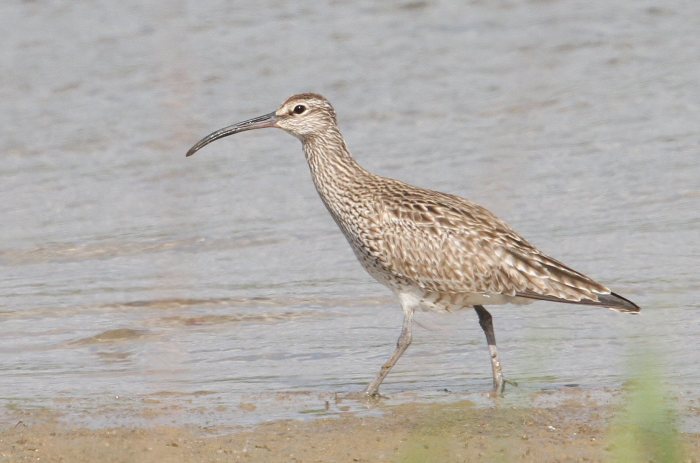
Whimbrel, Pitsford Res, 15th April 2017 (Bob Bullock)
Whimbrel, Summer Leys LNR, 18th April 2017 (Ricky Sinfield)
Icelandic Black-tailed Godwit (left) and Bar-tailed Godwit, Stanford Res, 20th April 2017 (Chris Hubbard)

A Black Tern at Pitsford Res on 21st was the second record of the spring, while the first migrant Arctic Terns showed up this week and included single fly-throughs at Pitsford Res on 15th, 16th and 19th, one at Thrapston GP on 17th, followed by twelve at Clifford Hill GP on 18th and one there the next day.

Arctic Tern, Clifford Hill GP, 18th April 2017 (Bob Bullock)

The week’s only Little Gull visited Pitsford Res on 18th and the same site produced a Yellow-legged Gull on 16th, while a near-adult was at Summer Leys the following day.

It’s been a poor spring for Common Redstarts so far and the last week produced just three on 15th, comprising two on Borough Hill and one near Long Buckby but Northern Wheatear numbers picked up with Borough Hill and Harrington AF hosting three a piece, again on 15th, when there was also one at Stanford Res. At least two remained at Harrington on 16th-17th, eight were near Castle Ashby on 16th, Thrapston GP and Shutlanger held four a piece on 17th, three were at both Bozenham Mill and Newton Bromswold on 18th and one was at Clifford Hill GP on the same date with three there on 20th.

Northern Wheatears, Harrington AF, 17th April 2017 (Simon Hales)

A decent influx of Yellow Wagtails – maxing out at more than fifty at Pitsford Res on 18th – brought with it a couple of smart ‘Channel’ Wagtails, both on that date, the first at Clifford Hill GP and the other accompanying the Pitsford yellows and remaining until the following day.

‘Channel’ Wagtail, Clifford Hill GP, 18th April 2017 (Mike Alibone)
‘Channel’ Wagtail, Pitsford Res, 19th April 2017 (Bob Bullock)

The county also enjoyed astonishing numbers of White Wagtails with Stanford Res taking the lion’s share of twenty-two present on 18th and double-figure counts there on most days during the week. Elsewhere, singles were at Pitsford Res on 15th, 16th and 17th plus two there on 21st, one visited Stanwick GP on 17th and five were at Clifford Hill GP on 18th.

White Wagtail, Clifford Hill GP, 18th April 2017 (Bob Bullock)

A Tree Pipit – a county scarcity which now attracts a description submission in neighbouring Bedfordshire – flew over Hazelborough Forest on 16th and single Rock Pipits (or perhaps just one lingering bird) were at Pitsford Res on 15th and 17th-18th.

Rarity Round-up 8th to 14th April 2017

For the first two days of the period, an eastwardly-moving high pressure system drew deeply into southern Europe, sucking up warm, southerly winds and producing a summer teaser of local temperatures hitting the mid-twenties. This proved highly conducive to migration with an array of scarcities and common migrants appearing during this two-day period alone. The following five days saw a return to a cooler, more westerly airstream with temperatures closer to average. The arrival of more summer visitors included Hobby, Cuckoo, Lesser Whitethroat, Grasshopper, Garden and Reed Warblers, to name but a few, and the two rarest visitors to the county in the period were, of course, the shortest stayers.

Wildfowl still firmly anchored this week were the Sywell CP Whooper Swan, the Daventry CP Eurasian White-fronted Goose, the Stanwick Scaup and the Stanford Long-tailed Duck, although doubts are now being expressed about the origins of the goose. There were three new Garganeys, including one at Summer Leys LNR on 9th and single females at Stanwick GP on 11th and Pitsford Res on 12th, while Red-crested Pochards included single drakes at Pitsford Res on 9th, Clifford Hill GP on 10th and Thrapston GP on 13th.

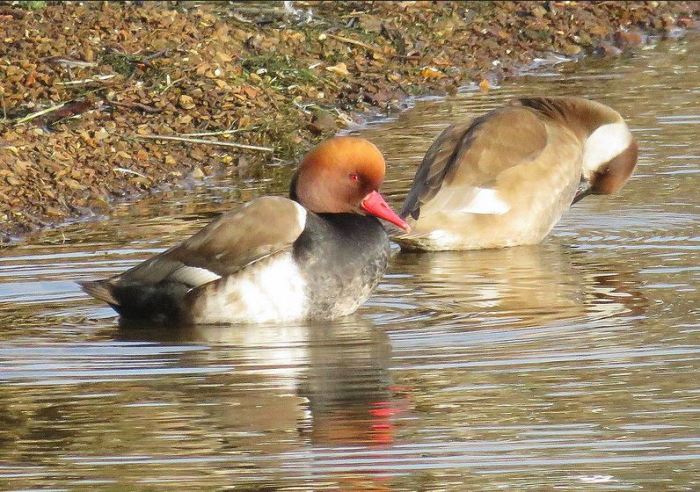
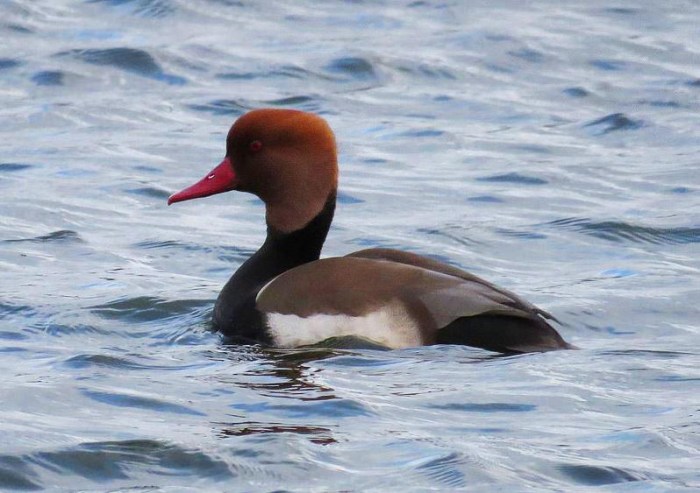
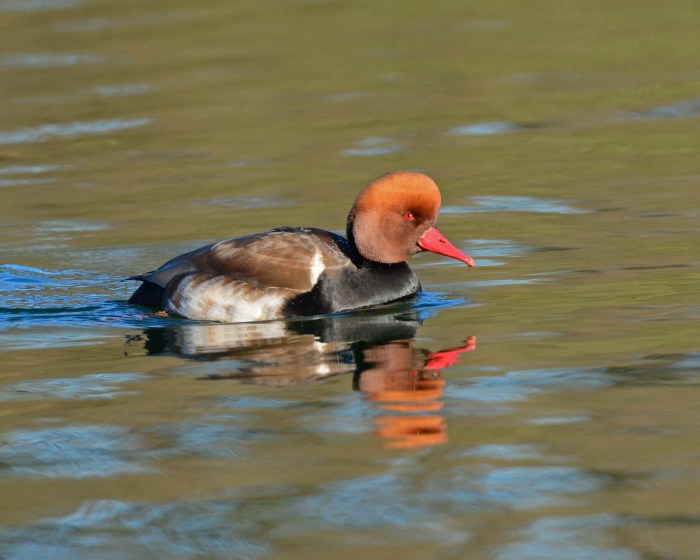
Red-crested Pochard, Clifford Hill GP, 10th April 2017 (Mike Alibone)

Back on the agenda – albeit briefly – this week was Great White Egret with one flying west along the Nene Valley at Sixfields, Northampton on 11th but clearly more impressive were two Spoonbills clocked circling low over Thrapston GP’s Aldwincle Lake before heading off toward Oundle, late in the morning of 8th. This will be approximately the 34th record for Northamptonshire and it’s a shame they didn’t pitch down there for the remaining part of the day.

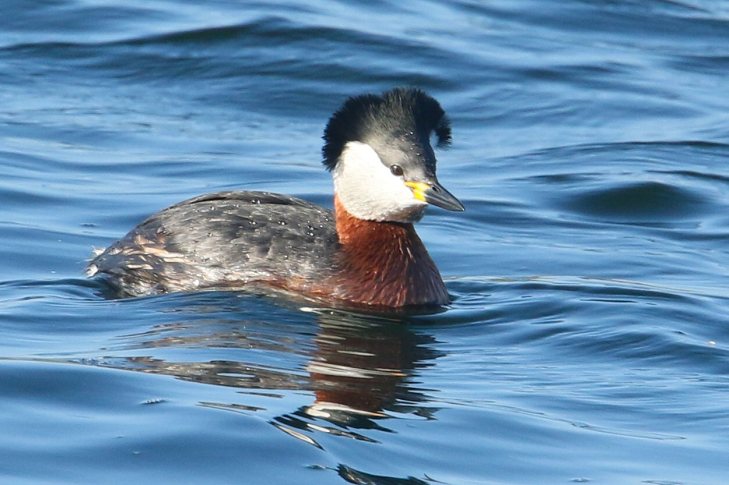
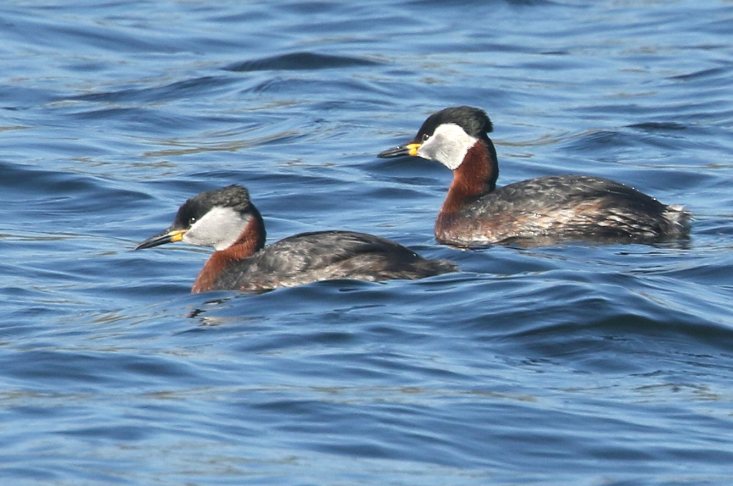
More obliging, however, were two small crowd-pleasing Red-necked Grebes, which were discovered at Daventry CP on the same date, with both still present the following day and one remaining until 13th. Last week’s Black-necked Grebe also remained on site until 11th – a tussle ensuing between it and one of the Red-necked Grebes at one point!

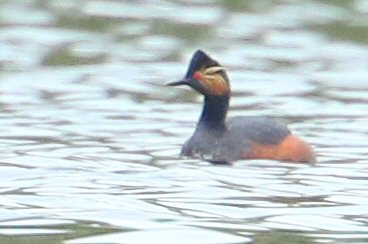
Red-necked Grebes, Daventry CP, 9th April 2017, (Bob Bullock)

Marsh Harriers again featured in this week’s line-up. One was hunting over the reedbeds surrounding the scrape at Summer Leys on the evening of 12th and it, or another, was seen flying high over Irthlingborough Lakes & Meadows LNR, at Ditchford GP, the following morning, while another flew north at Pitsford Res on 14th.

Marsh Harrier, Summer Leys LNR, 12th April 2017 (Ricky Sinfield)

Given the success and the proximity of the Rutland Osprey scheme, it is not surprising we are seeing more locally each year. This week’s migrants included singles north over Sywell and Foxholes Fisheries, Crick – both on 8th, one (a ringed male from the Rutland scheme) over Hollowell Res on 9th, one between Ravensthorpe Res and Hollowell on 12th with one – possibly the same – fishing at Pitsford Res on the same day and one flying north-west over Fotheringhay on 13th.

Male Osprey, Hollowell Res, 10th April 2017 (Martin Swannell)

The first rarity to occur at the now half-drained Stanford Res was not predicted. On 9th, two Common Cranes were discovered ‘on the deck’ at 08.00 but both took to the air shortly afterward and they were last seen heading south-west over the dam at 08.30. Both bore colour rings and the combination indicates they had been ringed in the UK.With barely twenty county records they were a great find for the three observers who saw them.

Common Cranes, Stanford Res, 9th April 2017 (Richard Mays)

More spring waders were on the move this week with the first Whimbrel flying north over Pitsford Res on 12th, two Ruff were at Summer Leys on 11th-12th followed by a male there on 13th and a Greenshank was there on 12th.

Ruffs, Summer Leys LNR, 13th April 2017 (Bob Bullock)

With Common Terns now arriving in some numbers (twenty-eight at Stanwick GP on 12th) other terns are only to be expected. Three Black Terns at Irthlingborough Lakes & Meadows on 9th were early. In fact they were the earliest in the 48-year history of the Northamptonshire Bird Report – the previous earliest being on 12th April 1980. Sandwich Terns, however, are renowned for being early and, following the one at Pitsford Res on 31st March, another arrived at Daventry CP on 9th, stayed for less than thirty minutes and then was off.

Sandwich Tern, Daventry CP, 9th April 2017 (Bob Bullock)
Sandwich Tern, Daventry CP, 9th April 2017 (Mike Alibone)

Another record broken was the amazing flock of twenty Sandwich Terns which arrived at Clifford Hill GP at about the same time as the Daventry individual. Twenty is apparently unprecedented in Northants but, again, they did not stay long, prematurely helped on their way by dog-walkers straying from the path and down to the shoreline where they had chosen to rest. A Little Gull was at Pitsford Res on 9th-10th but the only other relatively scarce Larid was, understandably for the time of year, a third calendar year Yellow-legged Gull at Daventry CP on 10th.

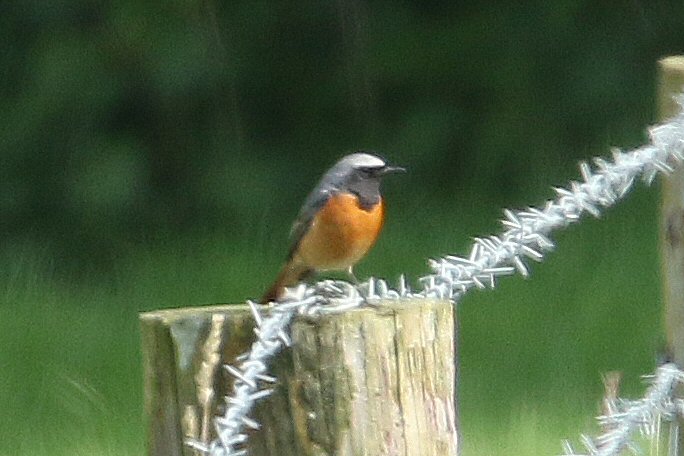
Some of last week’s Waxwings remained in Northampton in the vicinity of Rushmere Road, where they were feeding in lime trees until 12th. Surely this must be the last we’ll see of this species this spring?  Meanwhile, in the west of the county, Daventry CP hosted a male Common Redstart on 11th, while the top of Newnham Hill featured again (after last week’s Ring Ouzel) on the same date with another male Common Redstart and two Northern Wheatears.

Common Redstart, Newnham Hill, 11th April 2017 (Bob Bullock)

More Northern Wheatears were at Harrington AF, where up to two were present between 8th and 14th, and near Castle Ashby with two on 14th. The lion’s share of this week’s White Wagtails was at Stanford Res, where there were up to three between 8th and 10th, six on 12th and three on 13th-14th, while one was between Pitsford Res and Scaldwell on the latter date and one appeared at Clifford Hill GP on 14th.
Rarity Round-up 1st to 7th April 2017

With the country under the influence of a slowly moving high pressure system, the weather remained dry and relatively warm, with southerly winds at the beginning of the period changing briefly to north-easterlies, before reverting to southerly at the week’s end. More migrants appeared, including the first Common Sandpiper, Common Redstarts and Ring Ouzel.

Wildfowl numbers continued to drop, although the Sywell CP Whooper Swan – seemingly under the radar last week – was found still to be present until at least 5th and a new Eurasian White-fronted Goose turned up at Daventry CP on 7th.

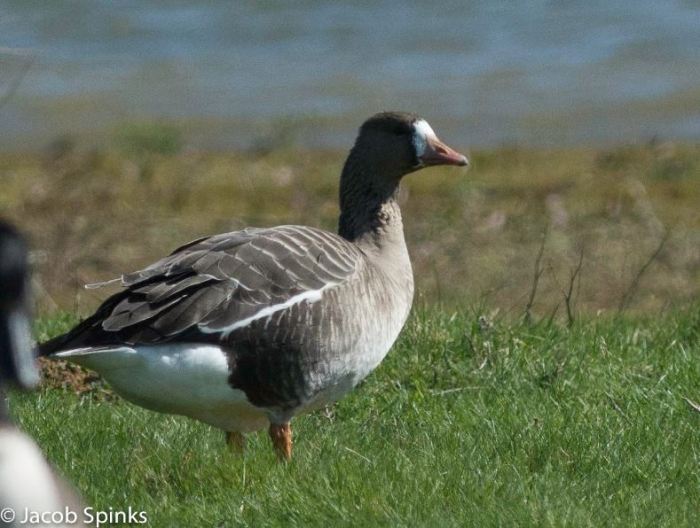
Eurasian White-fronted Goose, Daventry CP, 7th April 2017 (Gary Pullan)

Also new were two Garganeys – both on 7th – including a female at Summer Leys LNR and a drake at Hollowell Res. Staying put, though, were the drake Red-crested Pochard at Earls Barton GP, which was still present on 4th – with the Thrapston three still in situ on 2nd – while the long-staying female Scaup at Stanwick GP remained until at least 5th and the Long-tailed Duck at Stanford Res was still present at the week’s end.

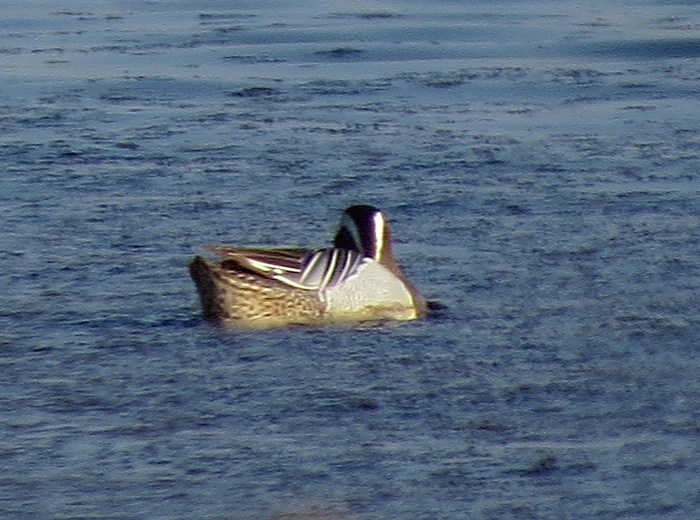
Garganey, Hollowell Res, 7th April 2017 (Cathy Ryden)

There were no reports of the Pitsford Slavonian Grebe this week but a Black-necked Grebe at Daventry CP from 4th to 7th and a Red-necked Grebe at Stanford Res on 7th – both resplendent in summer plumage – more than made up for its absence.

Black-necked Grebe, Daventry CP, 3rd April 2017 (Bob Bullock)

Harriers took precedence in this week’s raptor rares, with a Marsh Harrier over the reedbed at Stanwick GP on the evening of the 1st and a ‘ringtail’ Hen Harrier in flight over wind turbines near Burton Latimer on 5th. There was, perhaps surprisingly, just one Osprey reported – a male flying over Blatherwycke Lake on 2nd.

Hen Harrier, Burton Latimer, 5th April 20127 (Alan Francis)

Just two more Little Gulls were seen – appropriately enough a first-summer at Summer Leys on 1st and an adult at Daventry CP two days later, on 3rd, while the latter site also briefly hosted a fourth calendar year Caspian Gull the following day. A first-summer Mediterranean Gull appeared equally briefly at Stanwick GP on 2nd.

First-summer Little Gull, Summer Leys LNR, 1st April 2017 (Martin Swannell)

With the local winterers gone, a migrant Short-eared Owl over Pitsford Res on 2nd was a nice surprise and there were yet more Waxwings to be found – up to thirty-five in Northampton were in the vicinity of Rushmere Road/Billing Road East between 4th and 7th, some eighteen of which moved to nearby Abington Park on the latter date.

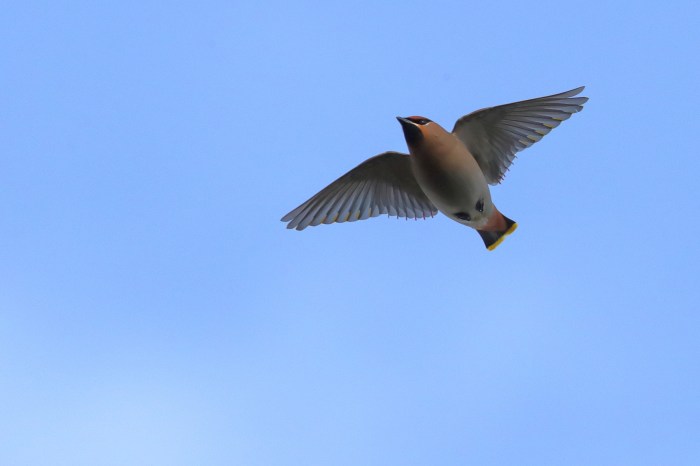
Waxwings, Northampton, 6th April 2017 (Bob Bullock)
Male Waxwing, Northampton, 6th April 2017 (Cathy Ryden)
Waxwing, probably young male, Northampton, 5th April 2017 (Bob Bullock)

In the west of the county, a male Ring Ouzel was ranging widely in the region of the footpath near the top of Newnham Hill on 2nd while, back in Northampton, a female Common Redstart was found at Bradlaugh Fields on the same date, followed by a male near Long Buckby on 7th.

Male Ring Ouzel, Newnham Hill, 2nd April 2017 (John Friendship-Taylor)

Two more White Wagtails appeared – both at Stanford Res – where there was one on 1st and another on 6th and two Crossbills were located in Bucknell Wood an 2nd.

Rarity Round-up 25th to 31st March 2017

Spring ramped up this week, local temperatures topping 20ºC as winds turned southerly. With winter well and truly on the retreat, more summer birds arrived, including firsts of Common Tern, Sedge Warbler, Willow Warbler, Swallow, House Martin and Yellow Wagtail – all between 28th and 31st. Apart from a couple of obstinate ducks and a grebe, this week also saw a significant clear-out of winter visitors.

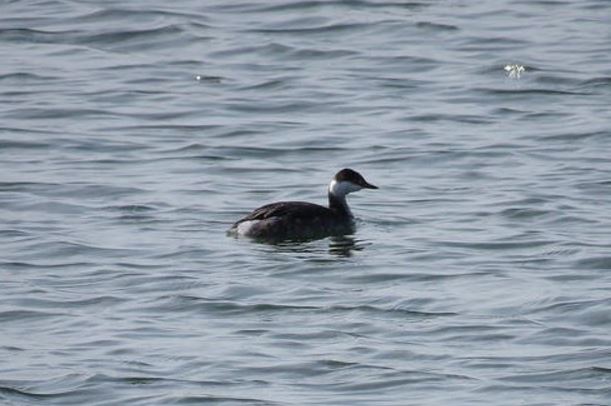
The Pitsford White-fronted Goose lingered into the early part of the week, still present with Greylags on 25th. The drake Red-crested Pochard remained at Earls Barton GP until 28th and three were still at Thrapston GP on 30th, while both the long-staying female Scaup at Stanwick GP and – aside from one reported at Pitsford on 31st – the Long-tailed Duck at Stanford Res (the latter chalking up its three-month anniversary this week) were present all week. The same goes for Pitsford’s Slavonian Grebe, although the Red-necked Grebe appears to have ended its stay there, having not been seen since 20th.

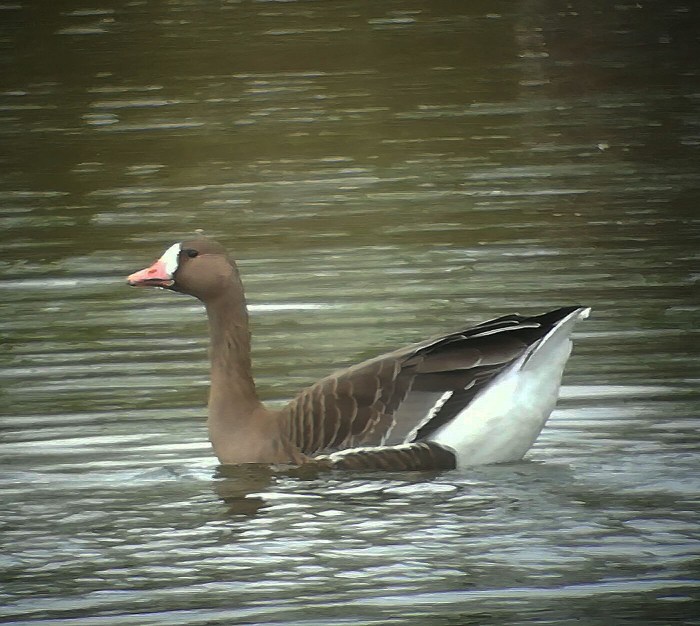
Eurasian White-fronted Goose, Pitsford Res, 25th March 2017 (Jacob Spinks)

Five more Ospreys came through – a green colour-ringed female ‘5N’ from the Rutland Water scheme at Pitsford Res on 25th, two over Welford on 26th and singles over Daventry CP and another at Pitsford Res on 30th.

Female Osprey, Pitsford Res, 25th March 2017 (Jacob Spinks)
Male Osprey, Pitsford Res, 30th March 2017 (Matthew Rivers). Diffuse, almost absent breast band and clean underwing coverts indicate this as a male.

Four Ruffs – less common in spring than in autumn – were at Stanwick GP on 26th and they were the only waders of note, despite the beckoning mud of Stanford.Last week’s run of Little Gulls continued, with 27th producing two adults at both Ditchford GP and Summer Leys LNR, plus a single adult at Pitsford Res, while a first-summer appeared at Stanwick GP the following day and further singles were at Pitsford Res and Summer Leys LNR on 31st.

Adult Little Gull, Pitsford Res, 27th March 2017 (Martin Swannell)
First-summer Little Gull, Stanwick GP, 29th March (Bob Bullock)

Stanwick also hosted a first-summer Caspian Gull on 26th followed by a second-summer Yellow-legged Gull the next day. Part of a series of national inland records, a Sandwich Tern flew through at Pitsford Res on the last day of the month.

The show wasn’t quite over as far as Waxwings were concerned and migrant flocks lingered briefly at Hardingstone, where there were twelve on 26th, Eastfield Park (Northampton), where there were at least thirty on 27th, Rothwell, where there were four also on 27th, Castlethorpe, where there were at least five on 29th, and Brackley, which held a singleton from 26th to 28th. Two more White Wagtails appeared – one at Harrington AF on 25th and one, briefly, at Stanford Res on the same date. There is much to look forward to over the coming weeks …

Rarity Round-up 18th to 24th March 2017

Despite the winds coming from the south-west, the majority of the week remained cold as a North Atlantic low dragged winds down from northern latitudes and these were subsequently replaced by easterlies at the week’s end. Summer migrants continued to arrive, however, with the first Garganey, Osprey, White Wagtail and Northern Wheatear all making an appearance during the period. Despite this, some of our long-staying winter visitors remained, clearly waiting to choose their moment for migration.

The wintering adult Whooper Swan was still present at Sywell CP on 22nd and the Eurasian White-fronted Goose stayed put with Greylags at Pitsford Res all week, while the first Garganeys appeared on 21st – a male and female at Summer Leys LNR – but they had promptly moved on by the following day. Three Red-crested Pochards were still at Thrapston GP on 19th and a solitary drake remained at Earls Barton GP all week, as did the long-staying female Scaup at Stanwick GP and the Long-tailed Duck at Stanford Res, where the water level continues to drop nicely.

Low Water at Stanford Res, 18th March 2017 (Mike Alibone)

Just one wintering Great White Egret lingered at Summer Leys until 21st while Pitsford’s two rare grebes, Slavonian and Red-necked, remained until at least 20th. Aside from belated news of a male Hen Harrier on the edge of the Rowley Estate, north of Croughton on 13th, the only scarce raptor of the week was the first migrant Osprey, over Little Irchester, on 20th.

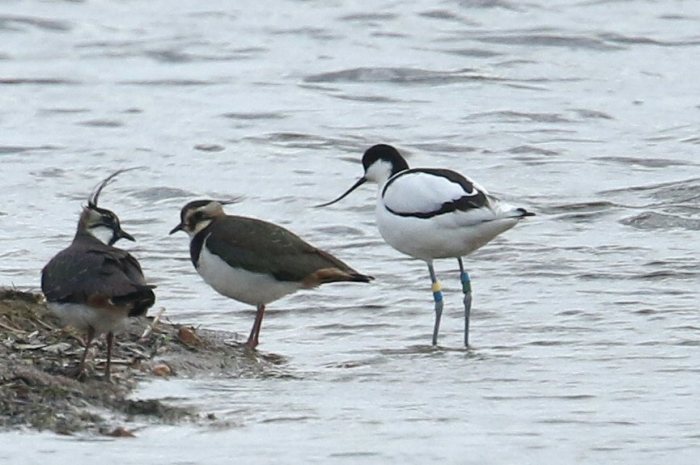
Sporting an array of coloured bling, an Avocet pitched up at Summer Leys on 24th and remained throughout the day but, like the Garganeys there before it, it had gone by the following day – well, it is spring, after all …

Colour-ringed Avocet, Summer Leys LNR, 24th March 2017 (Bob Bullock)

More Black-tailed Godwits duly piled in, with the 18th seeing one at Stanford Res and thirteen over Summer Leys, Ditchford GP hosting two on 20th and the 23rd producing one at Summer Leys and three at Stanwick GP. Jack Snipes continued to be seen at Hollowell Res, where two were still present on 24th.

With the end of March nigh, most wintering gulls have all but melted away and a lingering first-winter Caspian Gull, at Hollowell Res on 18th, may well prove to be the last of the season as it makes way for the migrants, one of which was a second-winter Mediterranean Gull at Stanford Res on the same date. Four days later, on 22nd, four Little Gulls visited Daventry CP and at least seven were at Summer Leys, followed by six at Boddington Res briefly the following day.

Waxwings clinging to the remnants of winter included approximately fifteen in Little Billing on 21st and one in Brackley three days later, on 24th but, pushing north out of Africa came the first of the summer’s Northern Wheatears – a male at Clifford Hill GP on 19th-20th and the first migrant White Wagtails arrived, including singles at Pitsford Res on 21st and 23rd and at Hollowell Res on 24th.

Rarity Round-up 11th to 17th March 2017

Mild south to south-westerlies coupled with lengthy bouts of unhindered sunshine were largely responsible for Northants hitting its highest temperature (16.2 deg C) of the year so far this week. More summer migrants arrived, with Chiffchaffs widespread by the week’s end – one site hosting at least seventeen on 13th – more Sand Martins and the first Little Ringed Plovers at Stanford Res on 16th, increasing to six there the following day. Stanford is shaping up nicely as the place to watch for wader passage this spring. Maintenance work being carried out on the dam has resulted in a significant drop in the water level there, which is likely to hit an all-time low over the forthcoming weeks.

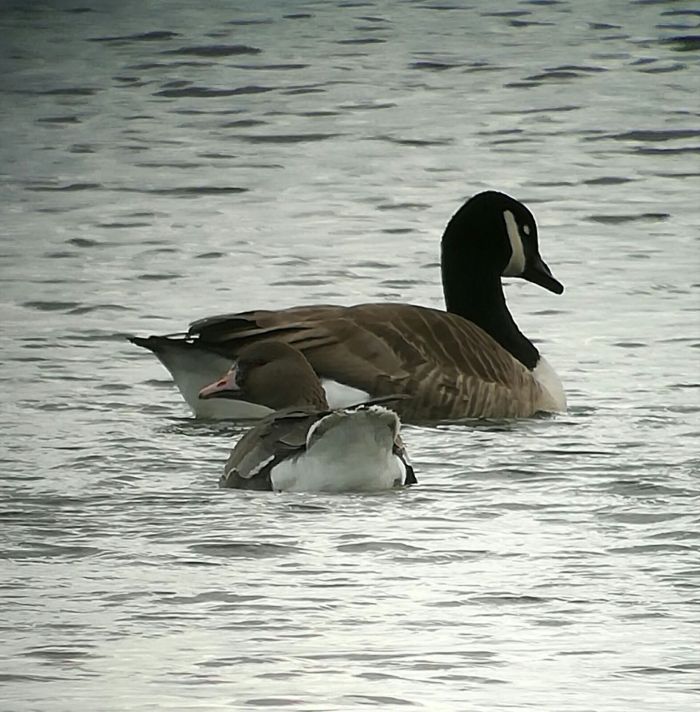
The wintering adult Whooper Swan remained at Sywell CP until at least 13th, as did the Eurasian White-fronted Goose at Pitsford Res, while another was discovered with the Greylag flock at Blatherwycke Lake on the same date. Up to four Red-crested Pochards (three drakes) were still at Earls Barton GP/Summer Leys LNR until 14th, the long-staying female Scaup remained at on the main lake at Stanwick GP until at least 13th and, despite the drop in water level, the Long-tailed Duck remained on site at Stanford Res throughout the period. Also at Stanford, the ‘redhead’ Smew was still present on 13th, while two (one drake) were found at Clifford Hill GP’s main lake on 11th, where they remained until 13th.

Long-tailed Duck, Stanford Res, 12th March 2017 (Alan Boddington)

The clear-out of wintering Great White Egrets continued, with one still at Ravensthorpe Res on 13th and up to two at Summer Leys between 11th and 17th, while Pitsford’s rare grebe duo of Slavonian and Red-necked lingered all week.

Great White Egret, Summer Leys LNR, 12th March 2017 (Adrian Borley)
Slavonian Grebe, Pitsford Res, 13th March 2017 (Alan Francis)

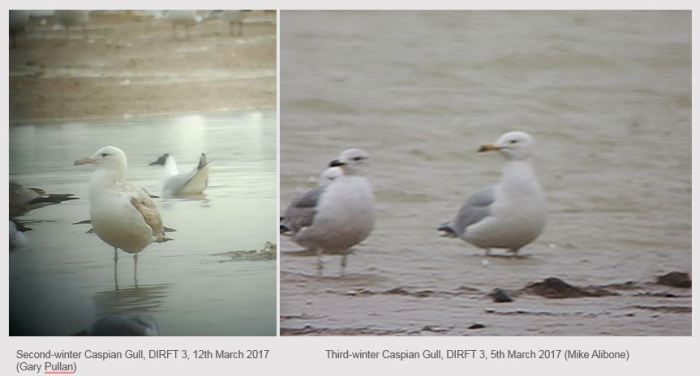
The 12th proved itself to be a bit of a ‘godwit day’ with single Black-taileds appearing at Clifford Hill GP, Pitsford Res and Summer Leys while, either side of it, single Jack Snipes were at Stanford Res on 11th and Pitsford Res on 13th.With northward Common Gull passage well under way, less common species were also in evidence in the shape of a first-winter Mediterranean Gull at Stanwick GP and an adult at Daventry CP – both on 11th. Single Yellow-legged Gulls visited Stanwick GP on 11th and at Daventry on 12th, while three were found on the latter date at DIRFT 3 (near Lilbourne), this site also hosting a first-winter Caspian Gull on 11th and five (an adult, two first-winters and two second-winters) the following day. A third-winter Caspian Gull also visited Rushton Landfill on 17th.                  No Short-eared Owls have been reported since 13th, when one was near Sulgrave and two were still at Neville’s Lodge, near Finedon and, in contrast to last week, the winter’s Waxwings ebbed away with just three briefly in Wellingborough on 13th and five over Moulton on 15th.

Rarity Round-up 25th February to 10th March 2017

Edging closer toward spring saw rapidly extending daylight hours on both sides of the ‘dark zone’. There was also little in the way of frost and low temperatures, with most of the variations in weather resulting from a series of low pressure systems bringing mild, though wet and blustery conditions from a south-westerly airstream, which turned southerly at the end of the period. The first Sand Martins of the spring were seen at Pitsford Res on 6th and further evidence of northward migration came in the form of a Kittiwake moving over Ravensthorpe Res on 8th.

The wintering adult Whooper Swan remained at Sywell CP until at least 8th and, first discovered on 15th February, the only remaining Eurasian White-fronted Goose from this winter’s generous hand-out was the one at Pitsford Res until at least 7th.

Eurasian White-fronted Goose, Pitsford Res, 2nd March 2017 (Alan Francis)

Two drake Red-crested Pochards also remained at Earls Barton GP/Summer Leys LNR until 3rd with one still present on 9th, while two (one drake) were at Thrapston GP on 28th. The long-staying female Scaup remained at on the main lake at Stanwick GP, where it was joined by a drake from 7th to 10th and the wintering Long-tailed Duck remained on site at Stanford Res throughout the period, as did the ‘redhead’ Smew, while another ‘redhead’ was again at Earls Barton GP on 25th and 26th.

As winter turned to spring there was a noticeable easing up on the number of Great White Egrets reported, with just two at Pitsford Res to 26th with one remaining until 2nd, one still at Thrapston GP until 7th, one at Summer Leys from 26th – joined by another on 8th and 9th – one flying east along the Welland Valley at Wakerley on 27th, one still at Ravensthorpe Res on 5th and it, or another, flying over Hollowell Res on 10th and one at Earls Barton GP on 10th. Pitsford’s Slavonian Grebe was still present on 8th, as was the Red-necked Grebe on 7th – the latter having moved north of the causeway during the period.

Slavonian Grebe, Pitsford Res, 1st March 2107 (Stuart Mundy)

While scarce raptors were sadly lacking, a belated report of a ‘ringtail’ Hen Harrier came from the disused airfield at Grafton Underwood on 24th and scarce waders were limited to single Jack Snipe at Pitsford Res on 26th and Stanford Res on 4th with four at Hollowell Res on 10th.

Things were looking up on the gull front during the period with a Kittiwake flying low north over Ravensthorpe Res on 8th, a Little Gull reported from Clifford Hill GP on 6th and single first-winter Mediterranean Gulls at Pitsford Res roost on 26th and Hollowell Res on 6th, while an adult visited Daventry CP on 28th.

Adult Mediterranean Gull, Daventry CP, 28th February 2017 (Gary Pullan)

Three Yellow-legged Gulls comprised an adult at Rushton Landfill on 25th and single first-winters at Pitsford Res on 26th and Daventry CP on 28th. Caspian Gulls have consistently outnumbered the former species this winter and this trend continued, with Rushton Landfill providing the lion’s share, which included single adults on 25th and 28th, two adults on 1st and an adult plus a first-winter on 4th. Elsewhere, single first-winter Caspians were found at Stanford Res on 1st and at Hollowell Res on 6th with single third-winters at DIRFT 3 (near Lilbourne) on 5th and at Pitsford Res two days later. Stanford Res pulled in another roosting Iceland Gull – this time a juvenile – on 25th but, just like the last one on 2nd February, there was no repeat performance on subsequent dates.

Juvenile Iceland Gull, Stanford Res, 25th February 2017 (Chris Hubbard)

More obliging, however, was the juvenile Glaucous Gull which was found at Rushton Landfill on 25th and seen almost daily, either in the roadside field at Storefield Lodge Farm or on the landfill itself, until 4th. This bird was considered to be a different individual to the juvenile present the week before. An adult Glaucous was also discovered roosting with Lesser Black-backed Gulls in heavy rain at DIRFT 3 before flying off east on 5th.

Juvenile Glaucous Gull, Rushton Landfill, 25th February 2016 (Mike Alibone)

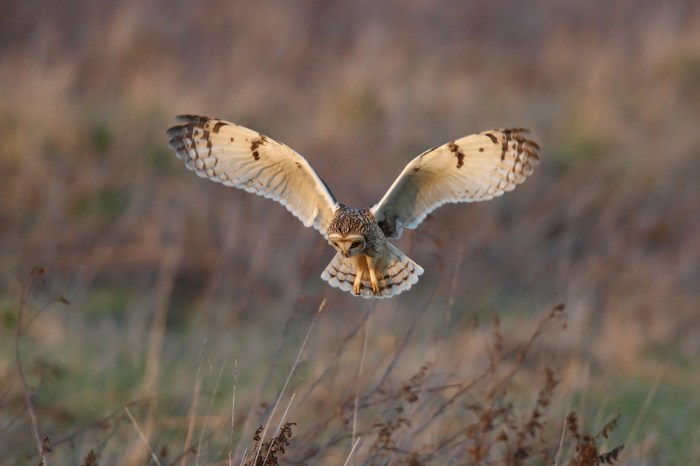
Up to four Short-eared Owls were still at Neville’s Lodge, near Finedon, until at least 1st but this number appeared to have dwindled to just two by 9th. Another was seen in the Brampton Valley on 3rd.

Short-eared Owl, Neville’s Lodge, Finedon, 24th February 2017 (Ricky Sinfield)
Short-eared Owl, Neville’s Lodge, Finedon, 1st March 2017 (Ricky Sinfield)
Short-eared Owl, Neville’s Lodge, Finedon, 2nd March 2017 (Mark Tyrrell)
Short-eared Owl, Neville’s Lodge, Finedon, 9th March 2017 (Ricky Sinfield)

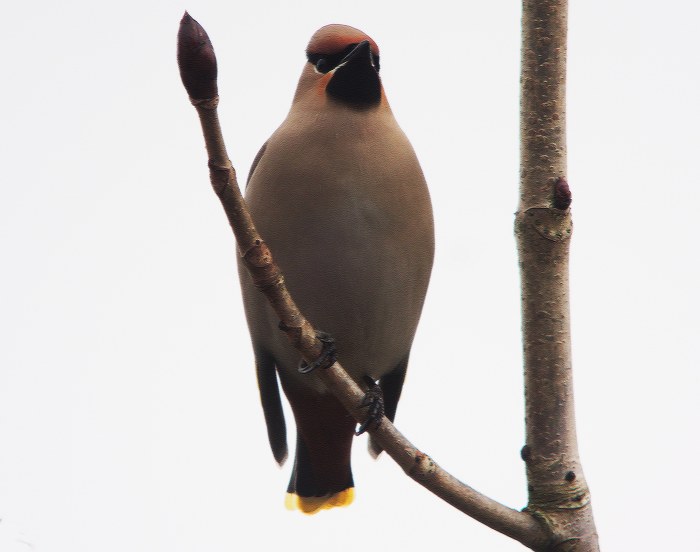
Waxwings were still very much in evidence throughout the period, with cotoneasters in East Hunsbury (Northampton) providing a ready source of food for more than fifty between 25th and 1st. The focus then shifted to Duston, where up to sixty-six were present in the Kent Road/St Crispin Drive area between 4th and 9th.

Waxwing, East Hunsbury, Northampton, 28th February 2017 (Mike Alibone)

Waxwings, Duston, 5th March 2017 (Martin Swannell)
Waxwing, Duston, 5th March 2017 (Martin Swannell)

Elsewhere, two visited Brackley on 26th, two were in Hanging Houghton the following day and a dozen visited a garden in Nassington on 9th. Overshadowed and outnumbered was a single Crossbill idling at Kelmarsh on 4th and the lingering Corn Bunting near Warmington on 26th.

Rarity Round-up 28th January to 24th February 2017

The extended round-up period saw the arrival of more traditional winter fair in the shape of white-winged gulls, scarce grebes and more Waxwings, the largest flock of which exceeded fifty. Wildfowl, too, remained prominent, with long-stayers remaining and a few new ones being thrown into the wetland mix.

Like the first on 5th January, the second record of Bewick’s Swan for 2017 consisted of a small, fly-over flock of four flying east along the Nene Valley on 13th, while the adult Whooper Swan remained at Sywell CP until at least 19th.

Whooper Swan, Sywell CP, 2nd February 2017 (Alan Francis)

There were more fly-overs to come as eight Pink-footed Geese were seen heading south over Pitsford Res on 17th and the wintering Eurasian White-fronted Geese appearing to break up, with fourteen commuting erratically between riverside locations at Great Doddington and Whiston between 28th and 8th. During, and beyond, this period there were reports of small numbers elsewhere – possibly as a result of the original flock of twenty-four dispersing and remaining local.  In this respect, two visited Wicksteed Park Lake on 28th, six were at Clifford Hill GP on 1st, two remained on Thrapston GP’s Town Lake between 4th and 18th, one was at Pitsford Res between 15th and 19th and a first-winter visited Daventry CP on 20th.

First-winter Eurasian White-fronted Goose, Daventry CP 20th February 2017 (Gary Pullan)

Keeping tabs on escapes which could be future additions to the British List is always worth doing but in the case of the Wood Duck, which turned up at Shelfley’s Lake, Northampton on 14th this could be stretching things a bit as far as this individual is concerned. Nevertheless, this species is always a nice bird to see.

Drake Wood Duck, Shelfley's Lake, Northampton, 14th February 2017 (Sarah & Bob Ansell)
Drake Wood Duck, Shelfley’s Lake, Northampton, 14th February 2017 (Sarah & Bob Ansell)

With no more than two at any location, five sites produced Red-crested Pochards, including Earls Barton GP, Pitsford Res, Summer Leys LNR, Thrapston GP and Wicksteed Park Lake, while the long-staying female Scaup remained at on the main lake at Stanwick GP until at least 20th. The two drake Scaup were still at Earls Barton GP on 29th, a drake was at Ditchford GP on 19th and two females visited Daventry CP the following day – all combining to represent a healthier than average showing for this species during the first two months of the year.

Red-crested Pochards, Pitsford Res, 16th February 2017 (Alan Francis)
Drake Red-crested Pochard, Wicksteed Park Lake, 23rd February (Alan Francis)
Drake Scaup, Earls Barton GP, 29th January 2017 (Martin Swannell)

Stanford’s Long-tailed Duck, now into its ninth week, remained throughout the period and another sea duck – a female Common Scoter – was reported from Sywell CP on 3rd. Smew have been relatively scarce this winter in comparison to recent previous years and a drake seen at Pitsford Res on 30th, 6th and 7th was probably the same individual which visited Ravensthorpe Res on 4th, 5th and 11th. Elsewhere, single ‘redheads’ were seen at Stanford Res on 5th and 10th and at Earls Barton GP from 16th to 18th.

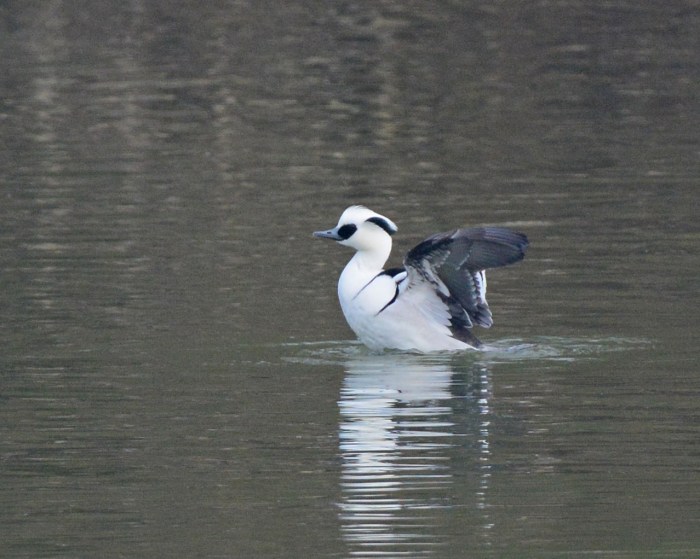
Drake Smew, Pitsford Res, 6th February 2017 (Clive Bowley)

Skulking Bitterns were present on the Heronry Lake at Thrapston GP on 5th and 12th and another was seen at Stanwick GP on 6th. Rather more obvious, though, was the period’s crop of Great White Egrets and, while there were no stunningly high single-site totals, this species was on show with up to two almost daily somewhere or other in the county, records coming from Ditchford GP, Hollowell Res, Pitsford Res Ravensthorpe Res, Summer Leys and Thrapston GP.

Great White Egret, Pitsford Res, 28th January 2017 (Martin Swannell)
Great White Egret, Ravensthorpe Res, 5th February 2017 (Alan Coles)

Upstaging Pitsford’s Slavonian Grebe, which remained until at least 21st, a Red-necked Grebe was found close to the causeway there on 13th, thereafter remaining until the end of the period. The only scarce raptor reported was a Merlin at Pitsford Res on 13th. This species has, so far, been unusually scarce this winter.  Predictably the only scarce waders were single Jack Snipe at Stanford Res on 4th and 10th, two at Barnes Meadow LNR, Northampton on 16th and one at Ditchford GP on 19th.

Slavonian Grebe, Pitsford Res, 9th February 2017 (Alan Francis)
Red-necked Grebe, Pitsford Res, 13th February 2017 (Alan Francis)
Red-necked Grebe, Pitsford Res, 13th February 2017 (Bob Bullock)

While gulls are currently enjoying a good deal of renewed adverse media publicity, the demise of their favourite inland habitat, landfill sites, is making them more sought after by local birders. With apparently just one active landfill in Northants the second best option is a local gull roost in fading light … There was a first-winter Mediterranean Gull at the Boddington Res roost on 18th but, as we move into March, more Meds will appear at roosts as they move through the county on passage. Caspian Gulls have also been visiting our roosts, with Pitsford and Boddington attracting adults sporadically throughout the period. Hollowell, Stanford and Daventry have also produced singles during the day but better by far has been the Rushton Landfill site which has produced up to three adults and a first-winter, on and off, throughout. This site has also attracted two different, ‘one-day’ Glaucous Gulls – a fourth-winter on 18th, quickly followed by a juvenile the following day. An adult Iceland Gull visited Stanford Res briefly on 2nd but, apart from these three ‘white-wingers’ along with the recent Glaucous near Chacombe, the winter has been treating Northants rather meanly. A trickle of Yellow-legged Gulls has included singles at Boddington Res, Chacombe, Daventry CP, Pitsford Res, Thrapston GP and, of course, Rushton Landfill, where two were present on 19th.

Up to four Short-eared Owls were still at Neville’s Lodge, near Finedon, until at least 6th and one was at Twywell Hills & Dales on 13th.

Short-eared Owl, Neville's Lodge, Finedon, 28th January 2017 (Ricky Sinfield)
Short-eared Owl, Neville’s Lodge, Finedon, 28th January 2017 (Ricky Sinfield)

Are birders still looking for them at Finedon or has interest diminished in the wake of the continuing winter Waxwing invasion, which continues to illicit considerable interest from birders and the general public alike? The maximum counts for the nine areas in which they have occurred during the last four weeks are as follows: East Hunsbury, fifty-plus on 23rd; Wootton, forty-five/fifty on 18th; Irthlingborough, forty-one on 7th; Kettering, thirty-eight on 29th; Bush Hill (Northampton), twenty-five on 29th; Boughton Green Road (Northampton), ten on 18th; Oundle, nine/twelve on 13th and Rushton, nine on 6th.

Waxwings, Kettering, 3rd February 2017 (Mark Tyrrell)
Waxwing, Kettering, 3rd February 2017 (Mark Tyrrell)
Waxwing, Sywell, 3rd February 2017 (Alan Coles)
Waxwing, Sywell, 4th February 2017 (Ricky Sinfield)
Waxwings, Sywell, 9th February 2017 (Jim Dunkley)
Corn Bunting, Woodford Halse, 19th February 2017 (Ian Dobson)

Out in the country, away from all the panache and pizzazz, the second and third Corn Buntings of the year were found: one was with Yellowhammers and Reed Buntings near Warmington on 18th-19th and the other visited a feeding station at Woodford Halse on 20th. Good try in both cases but time is fast running out for the discovery of a Pine or a     Little …

Rarity Round-up 21st to 27th January 2017

The days in the early part of the week remained cold but were marred by more damp and foggy starts. The murky conditions cleared, however, as the winds swung to the south-east, bringing cold, sharp air and frosts from the continent. Many bodies of water became covered with a thin layer of ice, albeit for the short term. The first white-winged gull of the winter put in an all too brief appearance but the Waxwing influx continued to dominate, with new birds found at a number of localities.

Fourteen Eurasian White-fronted Geese remained in the Nene Valley below Great Doddington, with varying numbers of them paying almost daily visits to the main lake at Summer Leys LNR. The two Red-crested Pochards were still at Pitsford Res on 24th, and two also visited Summer Leys on the same date, while the latter site, along with adjacent Earls Barton GP, continued to host the long-staying drake Scaup, which was joined by another drake on 22nd (when two females were also reported) and a third drake on 24th. The female remained on the main lake at Stanwick GP until at least 23rd. Meanwhile, Stanford Reservoir’s Long-tailed Duck remained all week and the drake Smew at Ditchford GP was joined there briefly by a ‘redhead’ on 21st, on which date both birds flew off in the direction of nearby Stanwick GP.

Three Great White Egrets were at Summer Leys on 21st, this locality competing for highest site total with Ravensthorpe Res, where the three long-stayers were still present on 24th. Apart from almost daily sightings at the first of these two locations, there was one at Thrapston GP on 21st and up to two were still at Pitsford Res throughout the week.

Thought to have departed some time ago, Pitsford’s Slavonian Grebe was seen again in Pintail Bay on 23rd. Where has it been in the intervening period? The week went by with no uncommon raptors reported, while the only scarce waders were single Jack Snipe at Stanford Res on 21st and 27th and at Summer Leys on 26th.

While gulls-a-plenty is not a term applicable to the distribution of this week’s larids, there was a first-winter Mediterranean Gull in the roost at Pitsford Res on 21st and    Caspian Gulls continued to be seen in reasonable numbers, with three adults at Rushton Landfill on 21st and 2 there on 27th, single adults at Stanford Res on the same dates, at Chacombe on 22nd and at Boddington Res on 24th and single first-winters at the latter site on 22nd and at Pitsford Res the next day. Only one Yellow-legged Gull was seen – at Pitsford Res on 21st. Highlight of the week, however, was the adult Glaucous Gull which was discovered near Chacombe on 22nd, subsequently appearing in the gull roost at nearby Boddington Res late in the afternoon.

Adult Glaucous Gull, Chacombe, 22nd January 2017 (Mike Pollard)

In a winter frequently remarked upon for its higher than usual numbers of white-winged gulls – including inland – it’s surprising that this is the first and only one which has been discovered in the county so far. Even more remarkable is the fact that up to twelve different individual Glaucous Gulls have recently been identified visiting the gull roost just over the border at Draycote Res in Warwickshire …

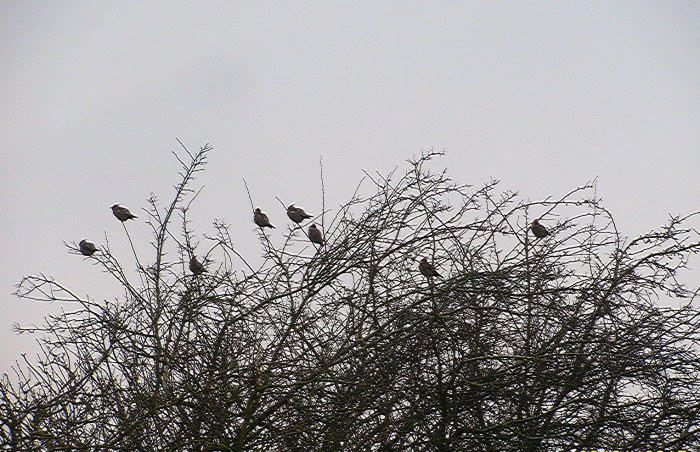
A new maximum count of six Short-eared Owls was made at Neville’s Lodge, near Finedon, on 22nd with at least three still present the following day. But it was Waxwings which stole the show again this week, with seven visiting Summer Leys briefly on 21st, up to sixteen at Hanging Houghton on 23rd-24th, separate flocks of eight and twenty in

Waxwing, Summer Leys LNR, 21st January 2017 (Bob Bullock)
Waxwings, Broughton, 26th January 2017 (Jon Lyles)

Northampton’s eastern district on 24th, ten at Kettering on 26th, eight in Broughton on 26th-27th and nine at Little Stanion, Corby on 27th. Drabber but, these days, arguably rarer at a local level, a Corn Bunting was seen at Harrington AF on 22nd.

Rarity Round-up 14th to 20th January 2017

The northerly wind, which brought lower temperatures at the end of last week, shifted back westerly for the first half of the period, bringing overcast and wet conditions before high pressure delivered colder, drier weather on the back of an easterly airflow from the continent. There were no major surprises, however, and Waxwings remained firmly in the limelight at the very beginning of the week.

Predictably, the adult Whooper Swan remained at Sywell CP until at least 17th but a herd of fifteen flying up the Nene Valley between Elton and Fotheringhay on 19th was more unusual in terms of the number involved.

Whooper Swan, Sywell CP, 17th January 2017 (Alan Francis)

At least eleven Eurasian White-fronted Geese were still with Greylags below Great Doddington on 17th, while a juvenile was reported at Kislingbury GP on the same date. Oddball of the week was a female Wood Duck on the Nene at Wellingborough Embankment on 15th. Although mooted as a potential vagrant, this one must surely have been a fence-jumper at some previous point in time.

Female Wood Duck, Wellingborough Embankment, 15th January 2017 (Paul Gosling)

Just two Red-crested Pochards were at Pitsford Res on 17th, with one remaining to 20th and both Scaups remained on station all week on the large lake east of Mary’s Lake at Earls Barton GP and on the main lake at Stanwick GP.

Red-crested Pochards, Pitsford Res, 17th January 2017 (Doug Goddard)
Red-crested Pochard, Pitsford Res, 21st January 2017 (Clive Bowley)

The Long-tailed Duck – apparently unreported last week – was still at Stanford Res, by the reedbed on the northern bank, at the week’s end, while a ‘redhead’ Smew was seen there again on 14th. The drake Smew from last week remained on the large lake between Higham Ferrers and Irthlingborough at Ditchford GP until 14th.
Long-tailed Duck, Stanford Res, January 2017 (Bob Bullock)

The usual fixtures and fittings included three Great White Egrets still at Ravensthorpe Res on 17th, apparently dwindling to one there by 20th, up to two were still at Pitsford Res to 17th and one was at Summer Leys all week, with two there on 19th. Two species of harrier were notched up during the period, both on 15th, beginning with with a male Marsh Harrier at Stanford Res and followed by a ‘ringtail’ Hen Harrier at Polebrook AF, which was also reported at nearby Lutton on 12th. The 15th also saw an unconfirmed report of a Black-tailed Godwit at Summer Leys.

Caspian Gulls came to the fore this week. On 14th they were found at no less than five different localities, which may actually constitute a local ‘day record’. On this date, there were three (two adults and a first-winter) at Rushton Landfill, a first-winter near Chacombe and single adults at Hollowell Res (remaining all week), Pitsford Res and Stanford Res. The following day saw three adults at Rushton Landfill and an adult plus a first-winter in the gull roost at Pitsford and subsequent to this, near Chacombe, a second-winter on 18th and an adult the following day. The number of Yellow-legged Gulls looked poor by comparison, with an adult and a second-winter near Chacombe on 14th – the second-winter remaining on 19th, a first-winter in the Pitsford roost on 14th and two there the following day and a first-winter at Rushton Landfill also on 14th.

Short-eared Owl, Neville's Lodge, Finedon, 18th January 2017 (Doug Goddard). One of four long-staying individuals wintering in this area.
Short-eared Owl, Neville’s Lodge, Finedon, 18th January 2017 (Doug Goddard). One of four long-staying individuals wintering in this area.

Four Short-eared Owls remained at Neville’s Lodge, near Finedon until at least 18th, while Waxwings continued to prove a popular draw in downtown Kettering, where twenty-seven entertained observers (and bemused shoppers) around the Sainsbury’s/Pets At Home/School Lane area on 14th, the flock subsequently moving to St Mary’s Road the following day.

Waxwing, Kettering, 14th January 2017 (Mike Alibone)
Waxwing, Kettering, 14th January 2017 (Stuart Mundy)

Following this, six or seven were feeding on apples in a Great Billing Garden on 18th and approximately twenty were in the Boothville area of Northampton briefly on 20th.

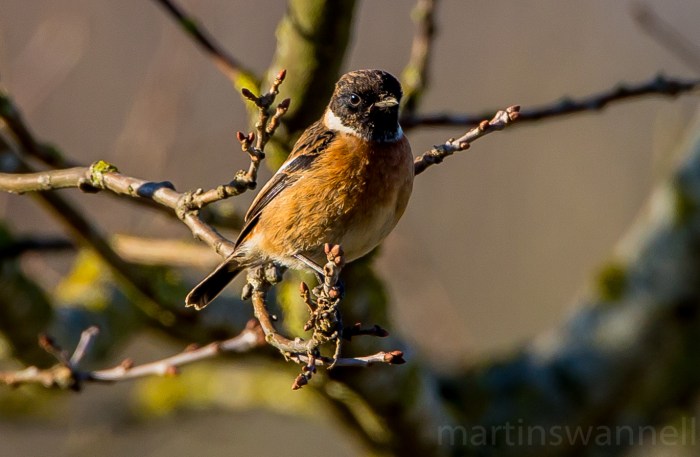
Stonechat, Blueberry Farm, Maidwell, 20th January 2017 (Martin Swannell). A maximum site count of six came from Hollowell Res during the week.