The Week In Focus, 15th to 21st October 2016

This week saw the easterly airstream, which had become a protracted feature over the preceding two weeks, slipping away and being replaced by southerly, south-westerly, north-westerly and northerly winds as the week progressed. Temperatures fell and, despite some local heavy showers, conditions remained largely dry. Migrants continued to be found as large numbers of thrushes – principally Redwings – moved through the county and, at last, two Yellow-browed Warblers were reported, seen briefly, then, slipping into the ether … and gone …

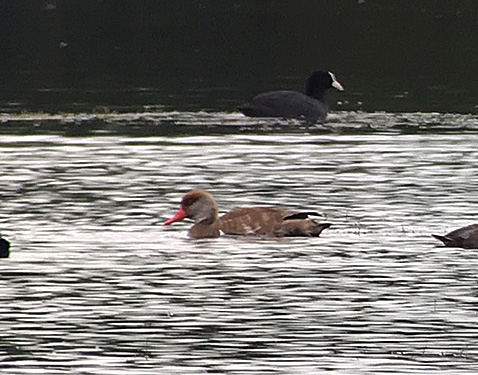
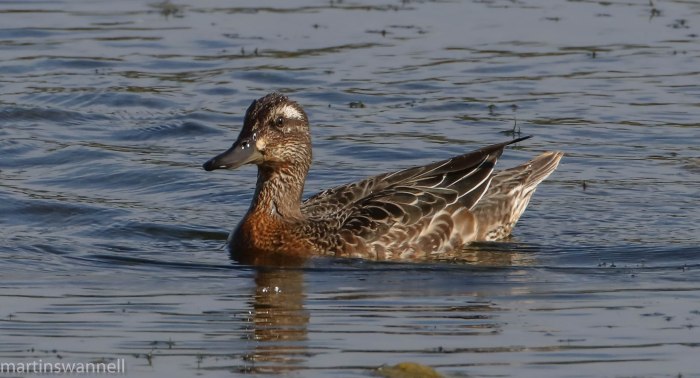
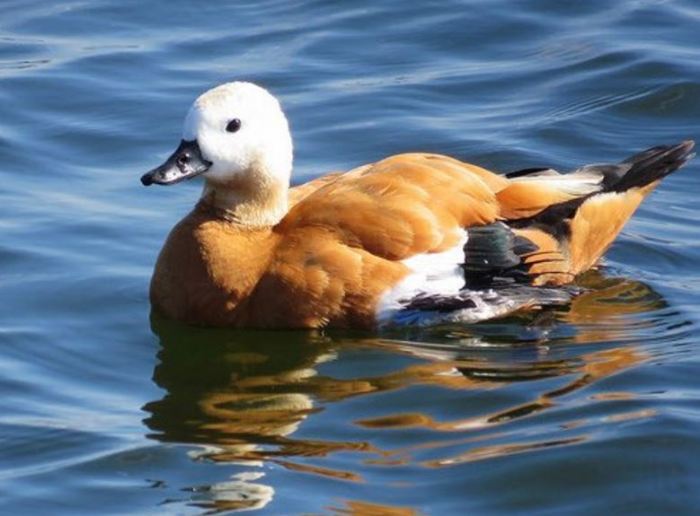
The Ruddy Shelduck, still by the sailing club at Pitsford Res, remained throughout the period and the same location held up to nineteen Pintails and four Red-crested Pochards. More Pintails were seen on 21st, with singles at Stanford Res and Summer Leys LNR and four at Earls Barton GP.

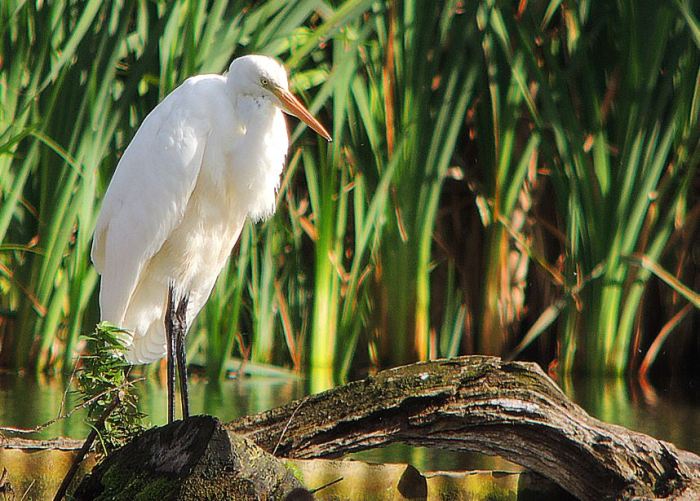
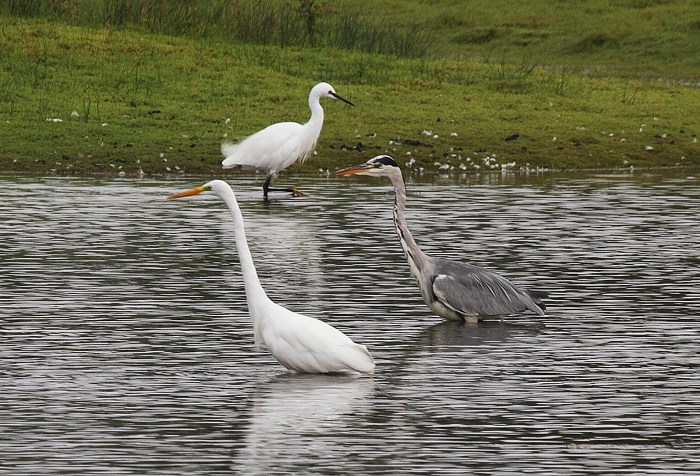
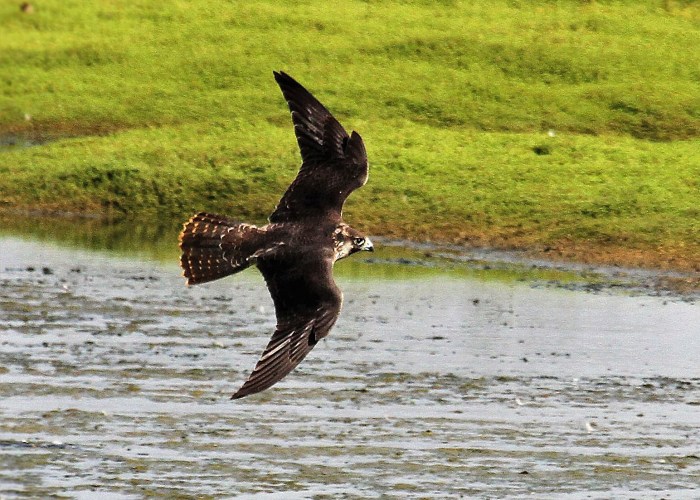
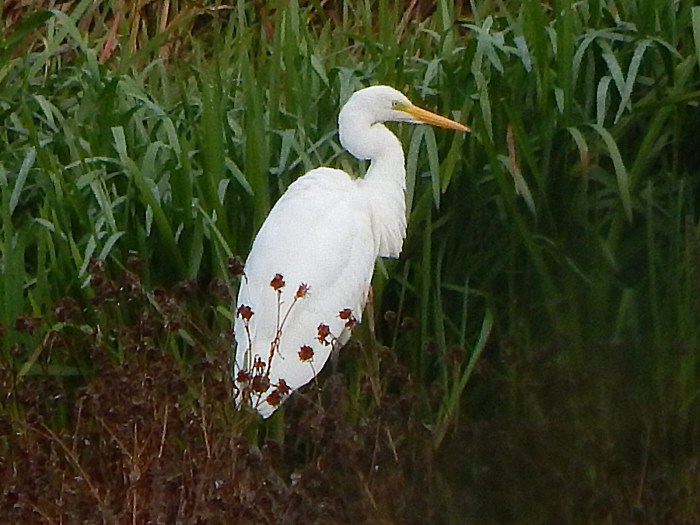
The Stortons GP Bittern was again seen in only flight on 19th and Great White Egrets were less numerous or widespread this week, with up to three throughout Pitsford Res and one continuing to linger at Daventry CP, where the Black-necked Grebe remained until at least 15th. The best raptor materialised in the shape of a ‘ringtail’ Hen Harrier, which was seen flying from Blueberry Farm toward Haselbech on 19th but the only other raptors reported were Peregrines, including singles in Northampton on 15th and 17th, in Brampton Valley on 18th and at Blueberry Farm, Maidwell the following day.

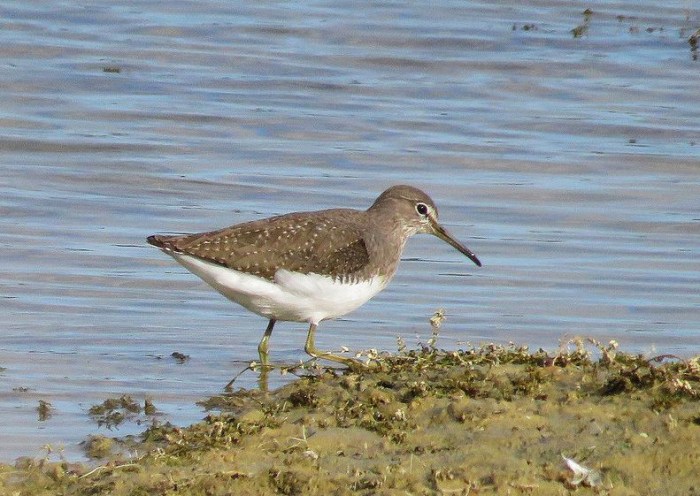
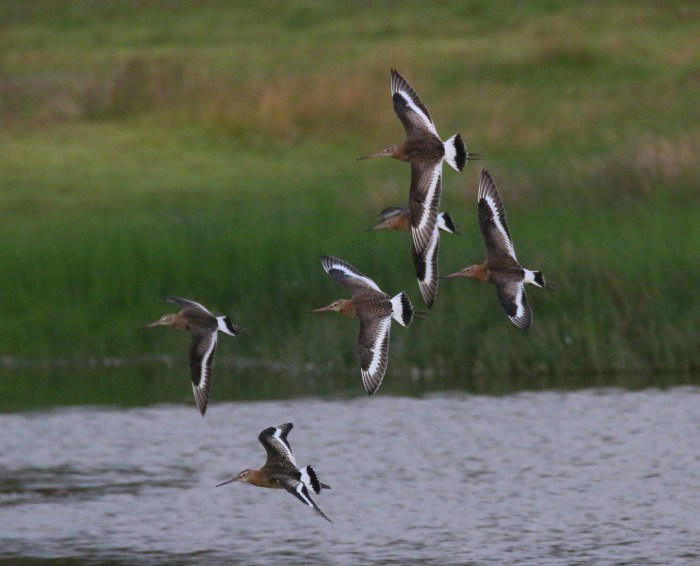
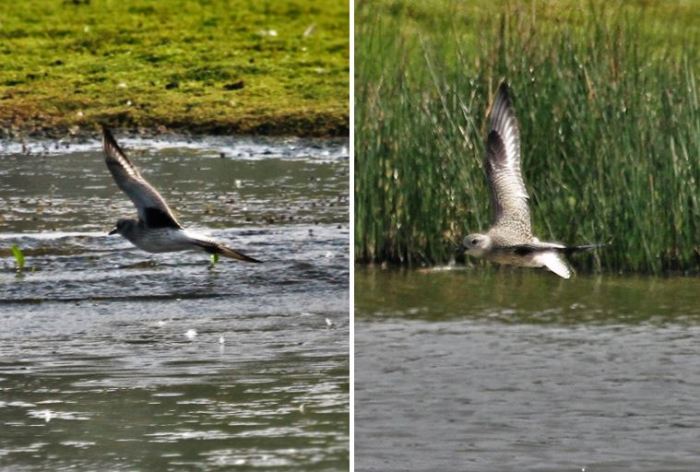
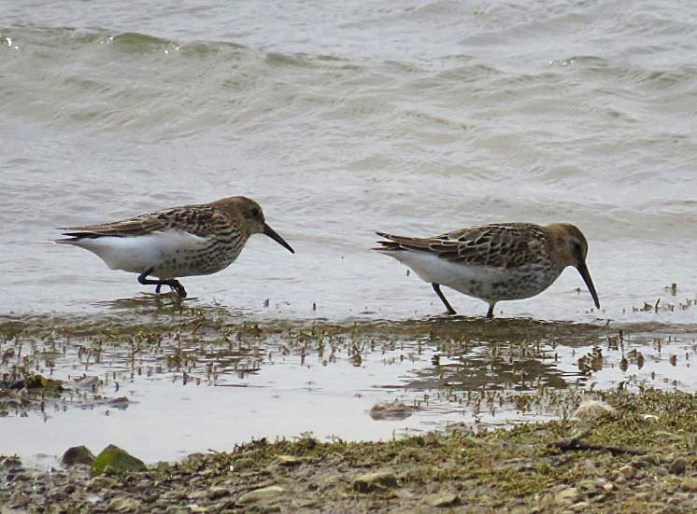
The wader supply continued to dry up, with barrel-scraping highlights restricted to fifty-three Golden Plovers at Pitsford Res on 16th, also up to fifty at Harrington AF all week, three Green Sandpipers at Pitsford Res on several dates and twenty-one Common Snipe at Barnes Meadow, Northampton on 15th, when seven Jack Snipe were also counted there. Smaller numbers of Common Snipe were also seen at Pitsford Res, Ditchford GP and Summer Leys.

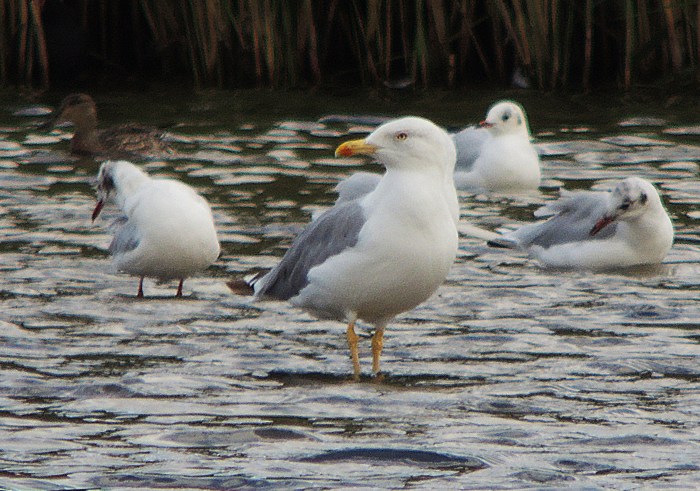
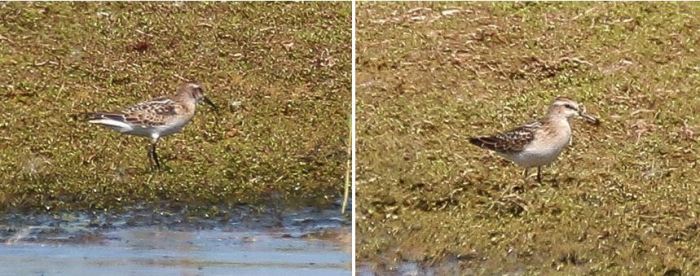
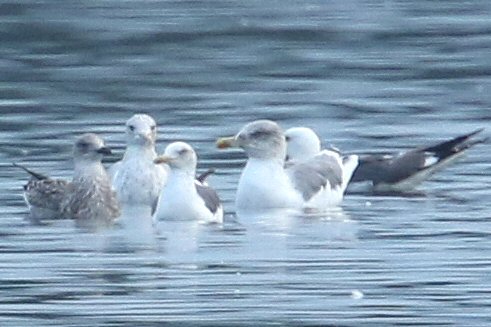
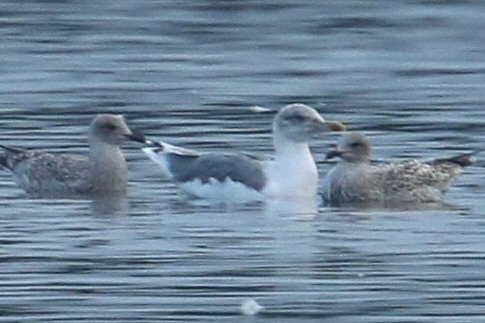
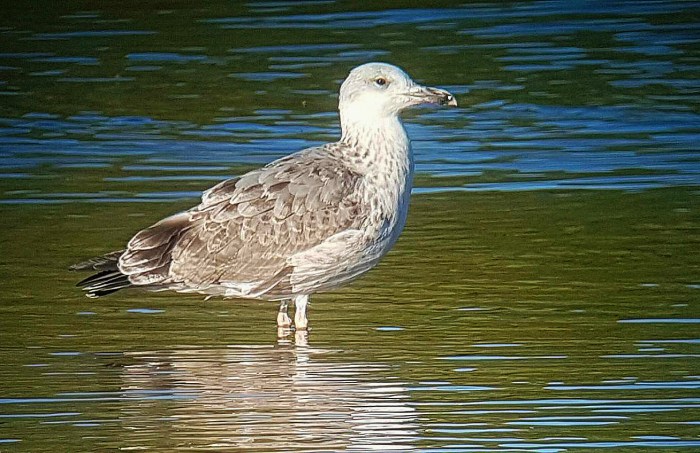
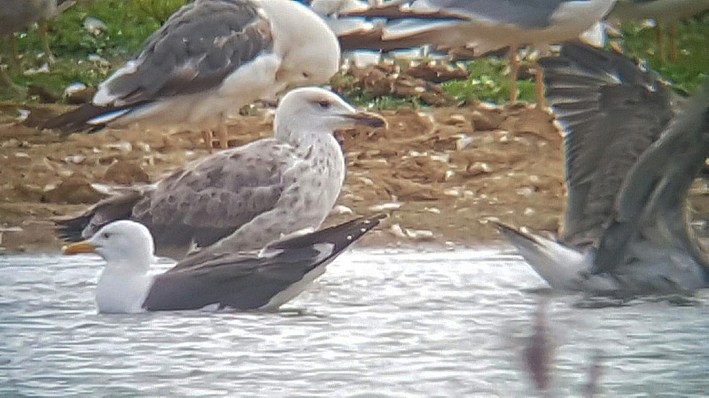
An adult Caspian Gull at Boddington Res briefly on 17th and an adult Yellow-legged Gull at Pitsford Res all week represented the poorest weekly showing of gulls for a long, long time. With the nights drawing in there’s never been a better time to find Northamptonshire’s first Laughing Gull in a roost on the way home from work …

And as we head into winter are we destined to see any decent numbers of Short-eared Owls? One at Harrington AF on 19th seems more likely to have been a passing migrant than a local winter visitor. The two Bearded Tits at Summer Leys were seen again on 17th but there was no further sign of any of last week’s at Stortons GP. With record numbers both on the coast and inland and, after a good three weeks of high expectation, two Yellow-browed Warblers were finally found – one at Stanford Res on 20th, the other at Harrington AF the following day. Both were with roving tit flocks, they were not pinned down and if accepted, they will represent only 9th and 10th Northamptonshire records.

A suburban Northampton garden would appear to be an unlikely setting for a migrant Ring Ouzel but, as unlikely as it seems, a confiding first-winter male remained in one at Bush Hill for four days from 19th.

First-winter male male Ring Ouzel, Northampton, 18th October 2016 (David and Sally Irven)

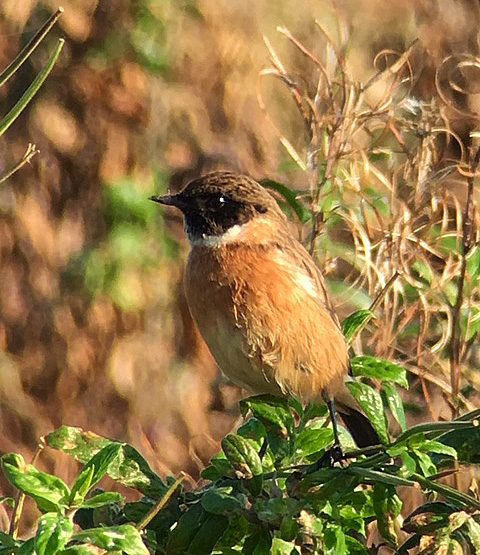
It’s proving to be a good autumn for Stonechats, which were recorded from Blueberry Farm, Boddington Res, Borough Hill, Harrington AF, Pitsford Res and Sywell CP, with a maximum of four at Blueberry Farm on 19th.
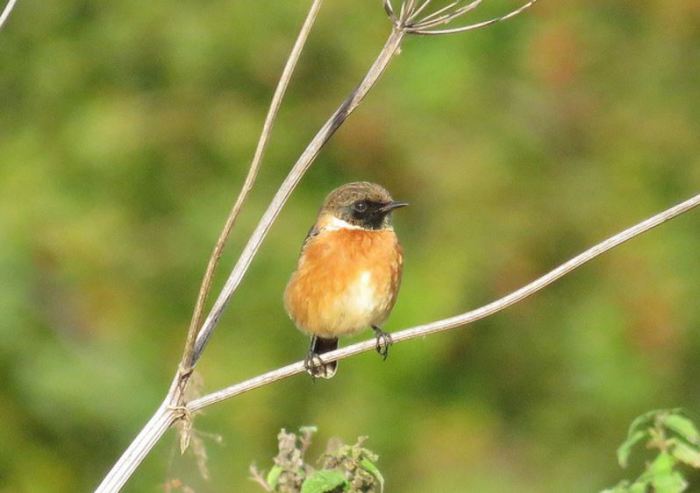
Male Stonechat, Sywell CP, 17th October 2016 (Alan Francis)

Two very late Tree Pipits were reported this week – one from Blueberry Farm on 20th and two at Stanford Res on 21st, although they don’t quite beat the latest ever, which was also at Stanford Res on 29th October 1995. More Bramblings arrived this week with single-figure counts from Fawsley Park, Hellidon, Harrington AF, Pitsford Res, Brampton Valley and Blueberry Farm with possibly as many as ten at the latter site on 20th, the same locality and date also producing a Corn Bunting – still very much a local rarity.

The Week in Focus 8th to 14th October 2016

The easterly airstream, resulting from a blocking area of high pressure over Scandinavia, continued throughout the week, bringing with it a substantial numbers of common migrants, along with potentially the highest number of eastern vagrants to be recorded in any one autumn in the UK. Meanwhile, Northamptonshire is still awaiting its first untrapped Yellow-browed Warbler for several years.

The first of the winter geese materialised in the shape of four Pink-feet flying south over Stanford Res on 14th, while the Ruddy Shelduck remained, as usual, by the sailing club at Pitsford Res throughout the period. Pintails became more widespread this week with five at Earls Barton GP on 8th and two still there three days later, one at Thrapston GP and two at Stanford Res on 9th, one at Boddington Res on 10th and another at Hollowell Res the next day. Hollowell also produced two Red-crested Pochards on 11th, the same date that four were also at Pitsford.

Patience and a potentially long vigil are likely to be required for those wanting to see the Bittern discovered at Stortons GP on 9th and which was still present the following day. Sitting on the bench on the south side of the reedbed, armed with a hip flask or copious amounts of coffee as sustenance, may produce the desired result of flight views for anyone who has all day – just don’t blink …

Bittern, Stortons GP, 8th October 2016 (Bob Bullock)

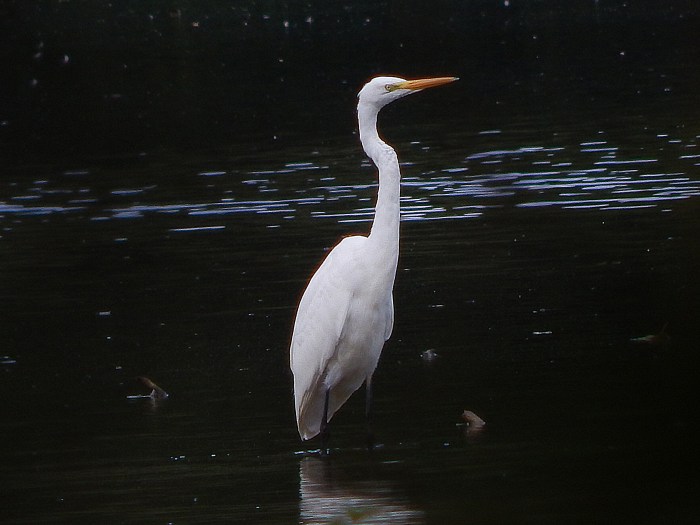
This week’s brace of Great White Egrets included one at Ringstead GP – the first record for this site – on 8th, one at Thrapston GP and the settled individual at Deene Lake on 9th, when there were also three at Pitsford Res, where the tally increased to five on 11th and one was at Daventry CP from 12th until the week’s end.

Great White Egret, Deene Lake, 9th October 2016 (James Underwood)

The latter site again continued to host last week’s Black-necked Grebe throughout the period. The only raptors reported this week were Peregrines – singles at Summer Leys and Harrington AF on 8th, two near Sidegate Lane, Wellingborough on the same date and one at Stanford Res on 12th.

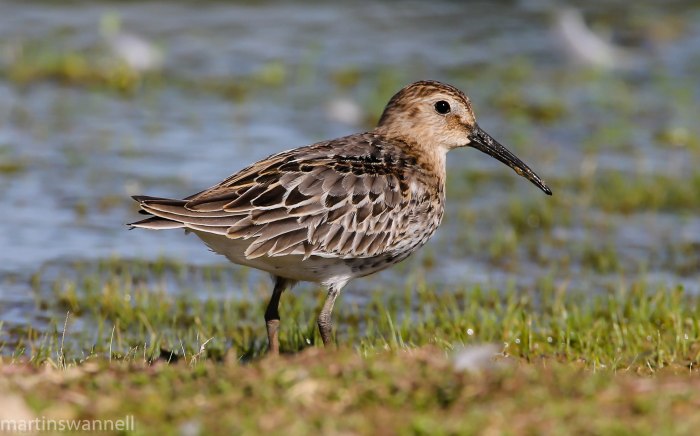
With wader passage all but over, up to forty Golden Plovers were at Harrington AF during the week, two Dunlins were at Pitsford Res on 9th and one visited Summer Leys on 11th and surely, this time, the last Common Sandpiper of the year was at Daventry CP on 13th.

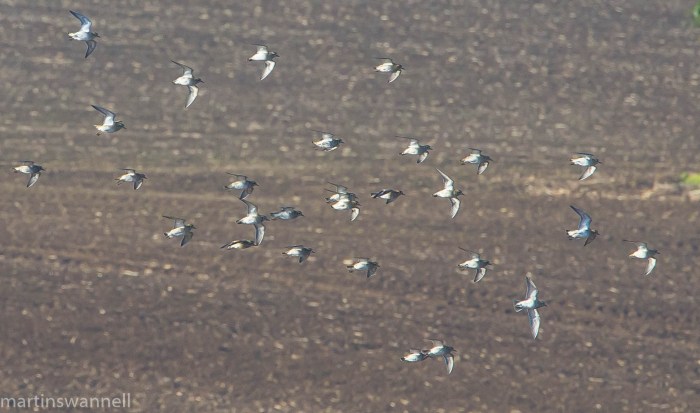
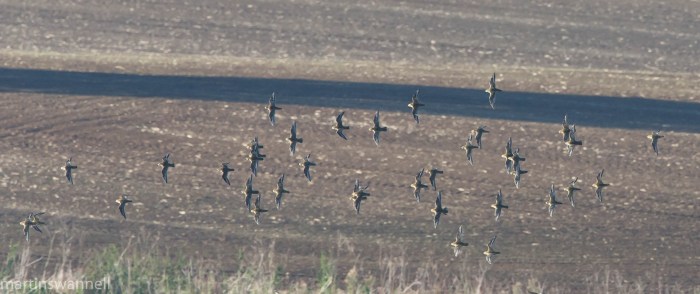
Golden Plovers, Harrington AF, 9th October 2016 (Martin Swannell)

Daventry CP also held a Green Sandpiper on the same date, while singles were at Ditchford GP and Deene Lake on 8th and 9th respectively and one was at Pitsford Res on 8th followed by two there on 11th. Small numbers of Common Snipe included singles at Ditchford GP and Summer Leys on 8th, fourteen at Deene Lake the following day, two at Hollowell Res and at least five at Pitsford Res on 11th and four at Boddington Res on 12th.

The potential highlight of the week would have been the Arctic Skua flying west, just south of Borough Hill on 10th but viewing conditions at the time precluded a positive ID. This is the first skua of any species in the county since 2011 when, again, an unidentified skua (thought probably to be a Long-tailed) was seen in flight near Weedon on 20th September. The few scarce larids included a first-winter Mediterranean Gull in the roost at Stanford Res on 12th and an adult Caspian Gull in the Pitsford Res roost the following evening, while the latter site produced single adult Yellow-legged Gulls on 8th, 13th and 14th while Boddington Res held three on 10th and two on 12th.

‘Pinging’ in the reedbed at Stortons GP, two Bearded Tits gave themselves away on 9th and there were at least four there the following day, while two were again at Summer Leys on 14th.

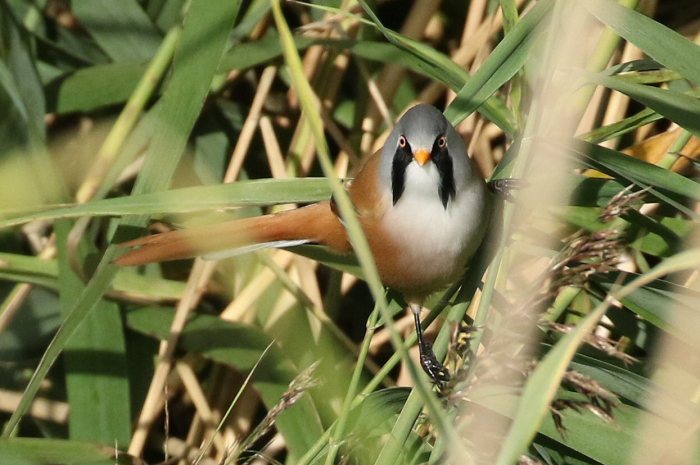
Male Bearded Tit, Stortons GP, 8th October 2016 (Bob Bullock)
Female Bearded Tit, Stortons GP, 8th October 2016 (Bob Bullock)

A Ring Ouzel was discovered in fields north-east of Long Buckby on 8th, a relatively late Whinchat was at Borough Hill on 10th and there were four Stonechats there on the same date. Elsewhere, between one and two Stonechats were seen at Blueberry Farm (Maidwell), Harrington AF, Hollowell Res, Pitsford Res, Stanford Res, Summer Leys and Sywell CP and two Northern Wheatears appeared at Harrington AF on 8th and one was at Preston Deanery the following day.

Northern Wheatear, Preston Deanery, 9th October 2016 (Mike Alibone)

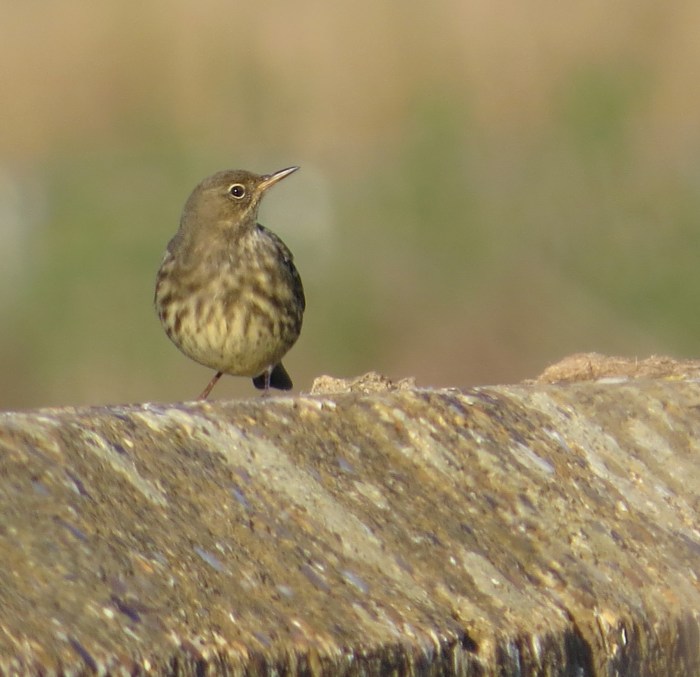
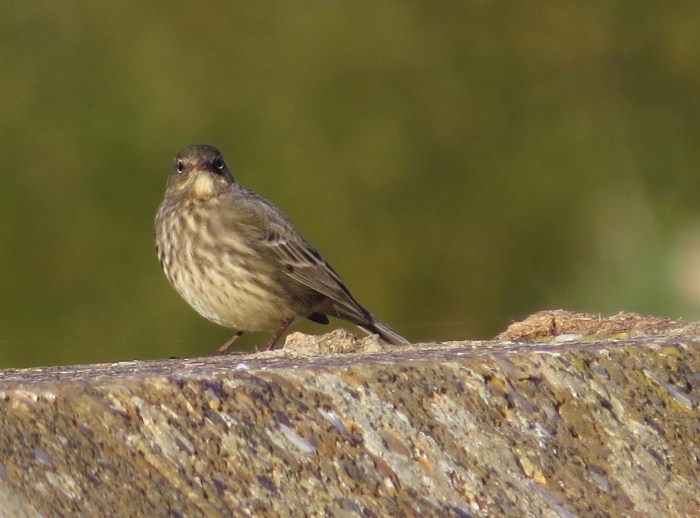
Two more Rock Pipits were found this week – one at Stanford Res on 9th and the other at Boddington Res on 12th, with the latter site producing a Hawfinch briefly on 10th.

Rock Pipit, Stanford Res, 9th October 2016 (Chris Hubbard)

The Week in Focus 1st to 7th October 2016

Aside from some fast moving heavy showers accompanied by thunder and lightning on 1st, the remainder of the week was dry, largely sunny with the winds variable between north-east and south-east. The easterly airstream stretched from well beyond Scandinavia, bringing with it many scarce eastern migrants to coastal UK. With many Yellow-browed Warblers also making it well inland, Northamptonshire surely has one or two lurking somewhere not too far away …

The Ruddy Shelduck remained at Pitsford Res throughout as Pintail numbers there continued to rise to reach a total of twenty-one on 1st and one also visited Stanford Res on 7th. A Garganey was also present at Pitsford from 1st to 5th and another was found at Hollowell Res on 2nd, while up to three Red-crested Pochards were also at Pitsford between 1st and 5th and, on 1st, an eclipse drake was at Stanford Res and five visited Hollowell Res.

Eclipse drake Red-crested Pochard, Stanford Res, 2nd October 2016 (Chris Hubbard)

Totting up this week’s Great White Egrets brings us to a total of at least six. The bird from Hollowell Res was seen to depart in the direction of Pitsford Res late in the day on 1st, from when the Pitsford two became three, and singles also lingered on at Deene Lake until 2nd and at Summer Leys LNR intermittently between 3rd and 5th. Elsewhere, further singles visited Thrapston GP on 2nd, Stanwick GP on 4th and Daventry CP on 7th, with the latter site continuing to host the last week’s Black-necked Grebe throughout the period.

Great White Egret, Deene Lake, 2nd October 2016 (Mike Alibone)

caption

Great White Egret, Summer Leys LNR (Terry Armstrong)

A Honey Buzzard drifted low south over Pitsford Res on 1st and a Marsh Harrier between Upton Mill and Pineham (Northampton) on 5th were the only large raptors of note, while just two Peregrines – singles at Harrington AF on 2nd and Pitsford Res on 5th – quickly rounds off the raptor offering for this week.

On the wader front, around fifteen Golden Plovers were at Harrington AF on 2nd and a Grey Plover visited Hollowell Res on 1st but had gone by the next day. Small numbers of Ringed Plovers included two at Clifford Hill GP on 1st, followed by singles at Daventry CP on 4th and at both Boddington Res and Pitsford Res on 5th. Black-tailed Godwits continued to migrate through with three at Summer Leys on 1st which were seen later in the day flying east over Ditchford GP. Again, the week’s only Ruff was the Daventry CP individual, which remained until at least 3rd and, after an absence last week, Dunlin again appeared in small numbers with two at Clifford Hill GP on 1st, one at Hollowell Res on 1st-2nd, two at Ditchford GP on 2nd, four at Pitsford Res on 3rd and one at Daventry CP on 7th. Potentially the last Common Sandpiper of the year was one at Sywell CP on 5th, while between one and three Green Sandpipers were noted at Daventry CP, Deene Lake and Pitsford Res throughout the week.

Common Sandpiper, Sywell CP, 5th October 2016 (Alan Francis)
Green Sandpiper, Pitsford Res, 6th October 2016 (Alan Francis)

A couple of late Greenshank comprised singles at both Ditchford GP and Pitsford Res on 2nd, while Common Snipe numbers remained in single figures with three at Hollowell Res on 1st, six at Deene Lake on 2nd and two at Daventry CP on 7th.

Scarce gulls remained in short supply, with two adult Caspian Gulls in the roost at Pitsford Res on 2nd, up to two adult Yellow-legged Gulls were there on 1st-2nd and three at Boddington Res on 5th. A migrant Short-eared Owl at Harrington AF on 2nd was the first one of the autumn as were two Bearded Tits – perhaps the only ones of the autumn – at Summer Leys on 7th. The only hint of flavour from the east was a Siberian Chiffchaff trapped and ringed at Stanford Res on 5th.

Siberian Chiffchaff, Stanford Res, 5th October 2016 (Mick Townsend)

Whinchats were still being encountered in the early part of the week, with singles at Harrington AF and Pitsford Res plus two at Staverton – all on 2nd, while up to three Stonechats were at Stanford Res on 1st-2nd, one was at Ditchford GP on 2nd and up to two were at Harrington AF between 2nd and 6th.

Male Stonechat, Stanford Res, 2nd October 2016 (Chris Hubbard)
Rock Pipit, Hollowell Res, 3rd October 2016 (Cathy Ryden)

A Rock Pipit – another typical scarce autumn migrant and the first of the season – was found on the dam at Hollowell Res on 3rd and a male Brambling appeared at Stanford Res on 7th.

The Week in Focus 24th to 30th September 2016

Under the influence of a south to south-westerly airstream for the majority of the week, the county enjoyed largely dry weather with occasional heavy showers and temperatures in the low twenties on a couple of occasions. With the shorter day lengths and the nights rapidly drawing in, the amount of daylight time for birding is quickly being eroded – but the waiting game was over, at least for some, on 28th.

Still in the vicinity of the dam and sailing club, the Ruddy Shelduck remained at Pitsford Res as Pintail numbers there increased to fifteen by 29th, along with one at Daventry CP on the same date. The only Red-crested Pochards were also at Pitsford Res, where there were up to three all week and at Stanford Res, where two were present on 30th.

Ruddy Shelduck, Pitsford Res, 26th September 2016 (Alan Francis)

Stanford Res also added itself to the list of localities producing Great White Egrets this week with a fly-over moving south-west on 26th. Elsewhere it was business as usual with singles appearing settled at Hollowell Res and Deene Lake as well as two still at Pitsford Res all week, although the Summer Leys individual was nowhere to be seen during the period.

Great White Egret, Deene Lake, 25th September 2016 (James Underwood)

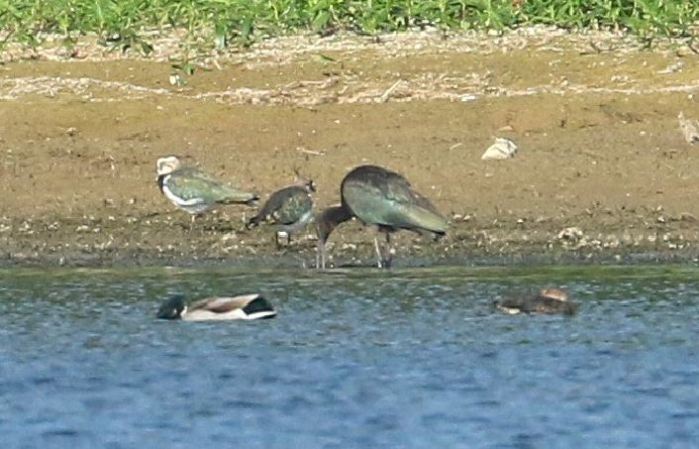
The dearth of rarities was finally broken – somewhat spectacularly – this week with the appearance of Northamptonshire’s fourth-ever Glossy Ibis at Daventry CP on the morning of 28th. A seriously glossy adult, true to form it did a bunk shortly after its discovery, allowing only a handful of quick off the mark locals to catch up with it before its hasty departure to the south.

Adult Glossy Ibis, Daventry CP, 28th September 2016 (Bob Bullock)

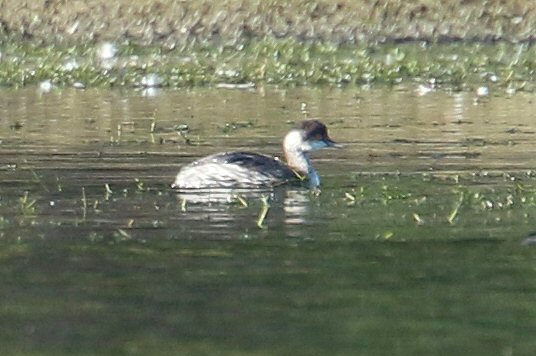
A Black-necked Grebe found at the same locality at the same time (and still present the following day) provided little in the way of a consolation prize for those who missed it.

Black-necked Grebe, Daventry CP, 28th September 2016 (Bob Bullock)

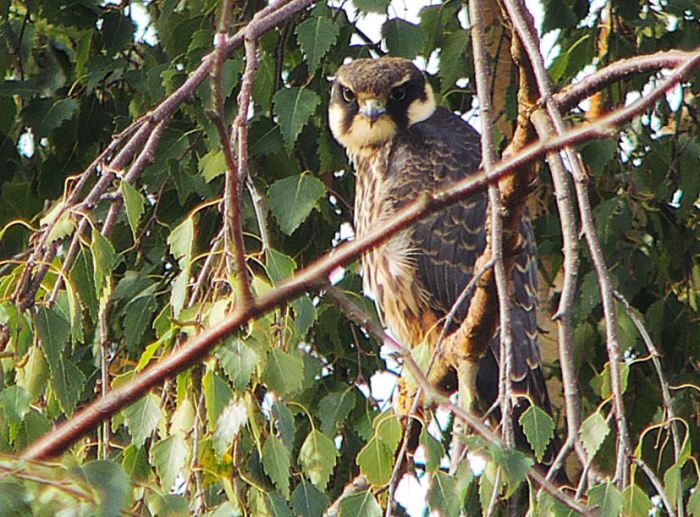
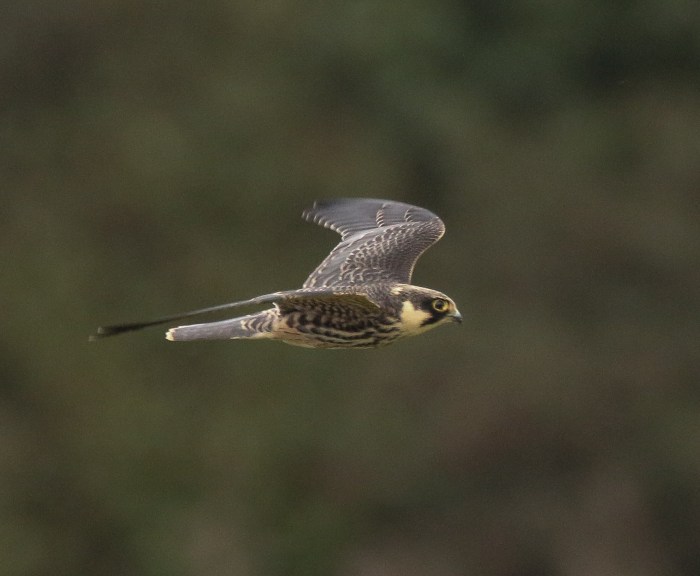
On the raptor front notables this week included a Marsh Harrier at Blueberry Farm, Maidwell 25th, an Osprey lingering at Ditchford GP’s Irthlingborough Lakes & Meadows on 29th, which was possibly the same individual seen leaving Clifford Hill GP and flying over Far Cotton, Northampton on 30th and the autumn’s first Merlin at Harrington AF on 25th. Hobbies were still very much in evidence with two regularly at Summer Leys LNR between 24th and 27th and singles at Stanwick GP on 24th and over Higham Ferrers on 27th and a Peregrine visited Summer Leys on 30th.

Juvenile Hobby, Stanwick GP, 24th September 2016 (Mike Alibone)
Juvenile Hobby, Summer Leys LNR, 26th September 2016 (Ricky Sinfield)

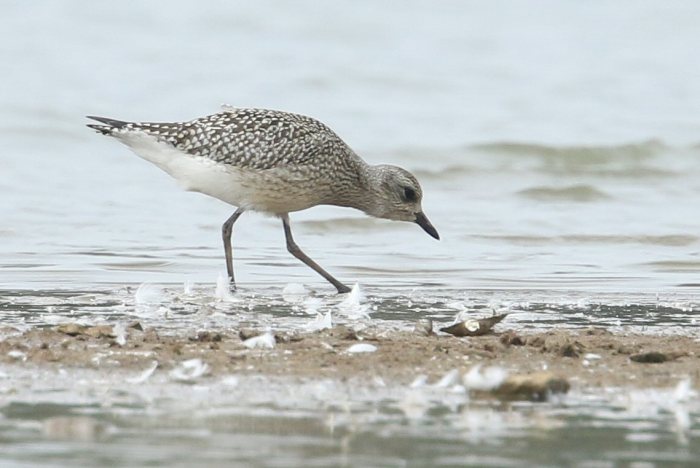
Wader numbers continued to dwindle. The long-staying juvenile Grey Plover at Boddington Res had departed on 24th, while the only Ringed Plovers were up to six at Pitsford Res between 25th and 28th.

Juvenile Grey Plover, Boddington Res, September 2016 (Bob Bullock)

Eight Curlews flew east at Stanford Res on 24th, around twenty Black-tailed Godwits were flushed by a female Sparrowhawk at Ditchford GP’s Irthlingborough Lakes & Meadows and flew off west on 25th and six dropped in at Summer Leys just before dusk on 27th.

Black-tailed Godwits, Summer Leys LNR, 27th September 2016 (Ricky Sinfield)

The week’s only Ruff was an apparently injured bird at Daventry CP on 28th-29th, while Common Sandpipers were reduced to singles at Stanford Res on 24th, Naseby Res on 26th and Pitsford Res on 26th-27th with two at Boddington Res on 27th.

Juvenile Common Sandpiper, Pitsford Res, 26th September 2016 (Alan Francis)

A Green Sandpiper was at Pitsford Res on 25th, two were at Naseby Res the following day and up to three were at both Deene Lake until 27th and Daventry CP on 28th-29th. Eight Common Snipe at Deene Lake between 25th and 27th and three at Summer Leys on the latter date were the only ones reported this week.

Scarce gulls were in short supply, with a first-winter Caspian Gull at Boddington Res on 24th and a second calendar year individual at Pitsford Res the following day, while small numbers of Yellow-legged Gulls included two near Thenford and two at Boddington Res on 24th, one at Pitsford Res on 25th and six again at Boddington Res on 27th. Single juvenile Common Terns remained at Ditchford GP until 24th and at Hollowell Res until 28th.

Scarce migrant passerines were also difficult to find this week, with the only Whinchats being one at Hollowell Res on 24th and two at Blueberry Farm the following day, while the three Stonechats were still at the latter locality on the same date and a single Northern Wheatear remained at Summer Leys until 27th.

The Week in Focus 17th to 23rd September 2016

The week kicked off with a drop in temperature, winds from the northern quarter, overcast skies and heavy drizzle – perfect skua weather but the reality of standing exposed on Pitsford causeway (no sitting in cars, remember) waiting, waiting, waiting, quickly lost its appeal for some of us at least. Aside from similar conditions on day 3, the week turned out mainly fine with the eastern side of the UK benefiting bird-wise from an easterly airstream, although there was no change in land-locked Northants – still waiting, waiting, waiting …

The Ruddy Shelduck remained, as expected, at Pitsford Res, and more Pintails arrived this week – not in any large numbers but up to two at each of Daventry CP, Hollowell Res, Pitsford Res, Stanford Res and Stanwick GP, while the only Garganey were two at Hollowell Res on 20th. A female Red-crested Pochard x Mallard hybrid was found at nearby Ravensthorpe Res on the same date. Up to three ‘thoroughbred’ Red-crested Pochards remained at Pitsford Res on 17th-18th and a drake Common Scoter visited Hollowell Res on 19th.

A Bittern was a surprise discovery on the ‘new diggings’ at Earls Barton GP on the WeBS count on 17th, nowadays much more difficult to see in the County than Great White Egret, more of which piled in this week.

Great White Egret, Summer Leys LNR, 17th September 2016 (Ricky Sinfield)
Great White Egret, Summer Leys LNR, 22nd September 2016 (Ricky Sinfield)
Great White Egret, Hollowell Res, 22nd September 2016 (Cathy Ryden)


Great White Egret, Summer Leys LNR, 23rd September 2016 (Martin Swannell)

Last week’s individual at Pitsford Res remained until at least 18th, when it was joined by a second bird, one remained all week at Summer Leys LNR, another was found at Deene Lake on 18th and, on the same date, another was discovered at Ravensthorpe Res and commuted between there and nearby Hollowell Res until at least 22nd. The partial summer-plumaged Black-necked Grebe remained for two more days off the feeding station at Summer Leys but had departed after the weekend.

Adult Black-necked Grebe, Summer Leys LNR, 17th September 2016 (Bob Bullock)

In a week notable for its absence of raptor reports Hobbies were still being seen – in most instances moving south – at Pitsford Res and Thrapston GP on 17th, Daventry CP and Stanford Res on 20th, Preston Deanery on 21st and Daventry CP again on 23rd.

As the end of September approaches, wader numbers begin to dwindle. The long-staying juvenile Grey Plover at Boddington Res remained all week, while Ringed Plovers included one at Stanwick GP on 17th, two at Hollowell Res on 18th increasing to five there on 22nd and, on 19th, twos at Pitsford Res and Daventry CP and four at Clifford Hill GP. A juvenile Icelandic Black-tailed Godwit visited Summer Leys on 18th – the same day that a juvenile Knot chose the unlikely location of the car park at Ravensthorpe Res to spend the day, albeit intermittently.

Juvenile Icelandic Black-tailed Godwit, Summer Leys LNR, 18th September 2016 (Martin Swannell)
Juvenile Icelandic Black-tailed Godwit, Summer Leys LNR, 18th September 2016 (Alan Coles)
Juvenile Knot, Ravensthorpe Res, 18th September 2016 (Lee Loveridge)
Juvenile Knot, Ravensthorpe Res, 18th September 2016 (Allan Maybury)

The only Ruff were singles at Ditchford GP on 18th, Daventry CP on 19th-23rd and Naseby Res on 20th and the only Dunlin was one at Hollowell Res on 18th-19th, while Common Sandpipers were reduced to two at Boddington Res and one at Daventry CP on 17th and 23rd and singles at Naseby Res on 18th-20th, Hollowell Res on 19th, at Stanford Res the following day, with one again at Boddington Res on 23rd. Up to two Green Sandpipers were at Daventry CP between 17th and 20th and three on 23rd, one was at Pitsford Res on 17th, two were found at Deene Lake on 18th and one visited Naseby Res on 20th.  Common Snipe were recorded at seven localities with maxima of seven at Ditchford GP on 18th and at Hollowell Res on 20th.

Few scarce gulls were in evidence this week with the rarest of the few all being seen on 17th – these comprising a first-winter Mediterranean Gull at Boddington Res, a first-winter Caspian Gull at Daventry CP and an adult Caspian Gull at Pitsford Res. Small numbers of Yellow-legged Gulls were found at Boddington Res, Pitsford Res, Hollowell Res, Daventry CP and in the Brampton Valley with the first named of these site holding the maximum of five on 17th. Getting late now, single Common Terns visited Ditchford GP on 18th and Hollowell Res on 20th.

Most of our Common Redstarts have now moved through, reflected this week by just one, at Blueberry Farm, Maidwell on 17th. Similarly, the only Whinchats were two at the latter locality on the same date and one at Bozenham Mill on 23rd. There were also three Stonechats at Blueberry Farm, followed by further singles at Summer Leys on 19th and Sywell CP the next day.

Stonechat, Sywell CP, 20th September 2016 (Alan Francis)

Northern Wheatears also appeared in slightly smaller number with singles again at Blueberry Farm on 17th, at Summer Leys and Preston Deanery on 21st and 23rd followed by three between Quinton and Preston Deanery on 22nd.

Northern Wheatear, Preston Deanery, 21st September 2016 (Mike Alibone)

Much commoner in autumn than we probably believe, a White Wagtail was identified at Pitsford Res on 17th and, on the same date, a Tree Pipit was working its way across fields near the Grand Union Canal, north of Daventry and east of Welton.

The Week In Focus, 10th to 16th September

The warmest September day since 1911 saw temperatures rise to 34.4ºC on 13th, backed by a south to south-easterly airstream. Otherwise, largely dry weather prevailed locally until the week’s end, the wind having changed to west or south-westerly. The flow of migrants continued although, once again, the period produced little to write home about.

The Ruddy Shelduck remained throughout at Pitsford Res, principally by the dam, while single Pintails were at the same site on 14th and at Stanwick GP from 12th to 14th. Also remaining were the juvenile female Garganey at Daventry CP until 14th and the juvenile male at Summer Leys LNR until 16th, plus the eclipse drake Goldeneye at Stanford Res on 11th.

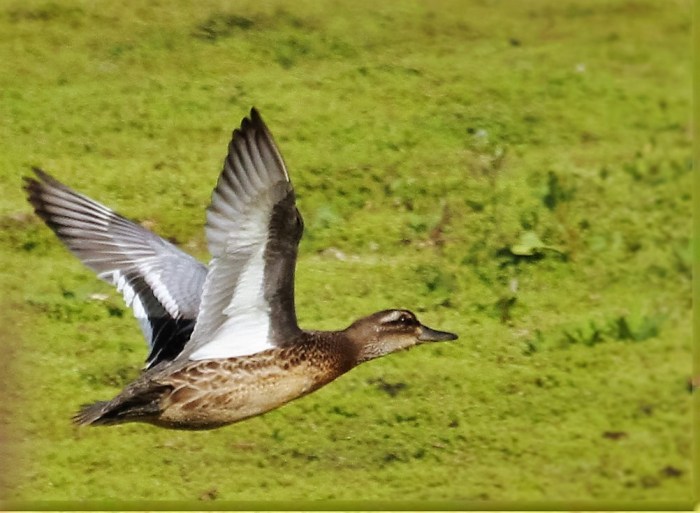
Juvenile drake Garganey, Summer Leys LNR, 14th September 2016 (Ricky Sinfield)
Juvenile drake Garganey, Summer Leys LNR, 14th September 2016 (Martin Swannell)

This week’s Red-crested Pochards included one at Hollowell Res on 14th and up to six at Pitsford Res, where the female Red-crested Pochard x Ferruginous Duck hybrid was also seen again on 14th.

A Great White Egret was found at Pitsford Res on 14th, remaining at the week’s end and a partial summer-plumaged Black-necked Grebe took up residence off the feeding station at Summer Leys from 15th. In contrast to last week, just one Marsh Harrier was seen on 11th and 13th, quartering fields in the Brampton Valley, below Hanging Houghton while, nearby, an adult Osprey visited Pitsford Res on 12th, another adult was seen flying south over Daventry on the same date and one flew south over Elton the following day.

Adult Osprey, Pitsford Res, 12th September 2016 (Alan Coles)

A Peregrine was at Rushden on 10th and a juvenile showed well at Summer Leys on 13th, while lingering Hobbies were still at six localities during the week.

Juvenile Peregrine, Summer Leys LNR, 13th September 2016 (Alan Coles)
Hobby, Summer Leys LNR, 10th September 2016 (Ricky Sinfield)

In terms of numbers there was a notable shortage of waders but variety was up this week, kicking off with single juvenile Grey Plovers – long-staying at Boddington Res from 11th and briefly at Summer Leys on 14th.

Grey Plover, Boddington Res, 14th September 2016 (John Friendship-Taylor)
Grey Plover, Summer Leys LNR, 14th September 2016 (Alan Coles)

Single Ringed Plovers visited Ditchford GP on 12th and Naseby Res on 14th, while Hollowell Res produced six on 16th and Pitsford Res held two on 14th with eight more flying south there on the same date.

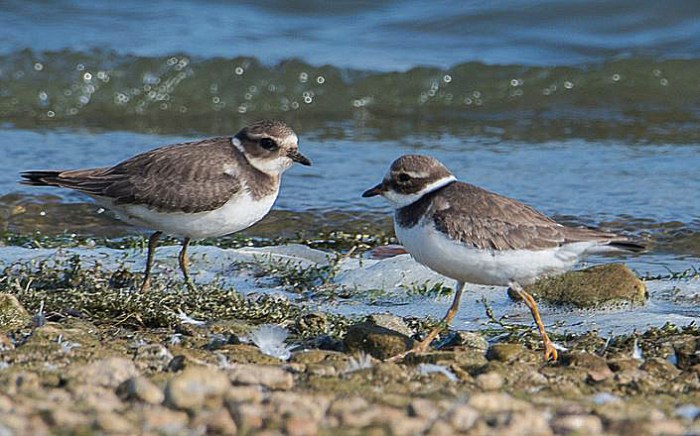
Ringed Plovers, Pitsford Res, 14th September 2016 (John Nicholls)

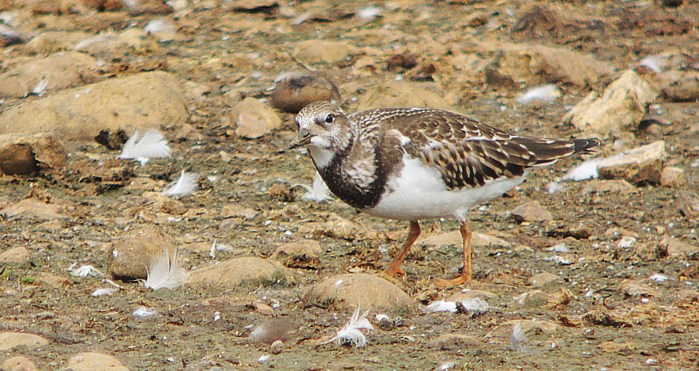
Twenty-four Bar-tailed Godwits flying north-west over Boddington Res on the evening of 10th was a very unusual autumn record – this species is far more often seen in spring – and the second Turnstone to visit Stanwick GP this autumn appeared there on 14th, while a flock of seven flew west, just north of Daventry CP on 12th. Two Ruff were at Pitsford Res between 10th and 14th and a juvenile male visited Hollowell Res before moving to nearby Naseby Res on the latter date. This species has been much scarcer than usual in the county this autumn. Even more scarce, a juvenile Curlew Sandpiper was a one-day visitor to Daventry CP on 10th; despite record numbers on the east coast (and inland) earlier in the autumn we have not fared at all well for this species locally. Hollowell Res produced the week’s only Dunlins with up to three there during the period, while Common Sandpipers were again recorded from ten sites, with no more than two at any one locality. Six sites produced Green Sandpipers with a maximum of four Daventry CP on 13th and the same number at Naseby Res on 16th but Greenshank numbers remained low with just a 25-minute stopover being made by three at Summer Leys on the morning of 16th. A relatively late Wood Sandpiper flew south, calling, over Boddington Res on 13th, the same site holding the week’s only Redshank the following day, while small numbers of Common Snipe were recorded at this site as well as at Ditchford GP, Pitsford Res, Stanwick GP and Summer Leys with a maximum of eleven at the latter site on 16th.

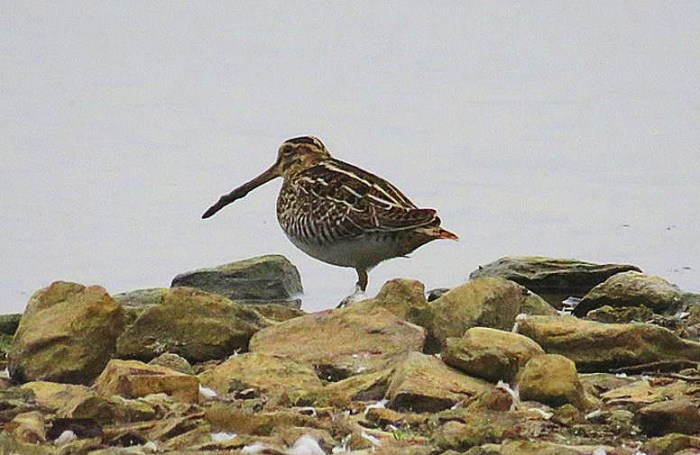
Common Snipe, Pitsford Res, 15th September 2016 (Alan Francis)

After good numbers in spring, Black Tern is another species which has been scarce this autumn and six at Boddington Res on 12th did not linger. There was also a Sandwich Tern at Stanwick GP on 14th, which was part of a national inland movement and a juvenile Little Gull appeared at the Pitsford Res gull roost on the same date. Three first-winter Mediterranean Gulls comprised singles at Naseby Res on 12th, Daventry CP on 14th and Boddington Res on 16th, while three localities produced small numbers of Yellow-legged Gulls with Boddington Res holding two on 12th, four on 15th and one on 16th, Ditchford GP hosting three on 12th and Pitsford Res producing one on 12th, six on 14th and three on 16th. This week’s Caspian Gulls were limited to just three records of a juvenile and second-winter at Boddington Res on 12th plus a first-winter there on 15th and a fourth-winter at Naseby Res on 16th.

Adult Yellow-legged Gull, Pitsford Res, 12th September 2016 (Alan Coles)

A Turtle Dove – probably the last to be seen this year – was at Harrington AF on 10th, and the same site continued to produce Common Redstarts with two there from 10th to 13th, while the 11th saw singles near Walgrave and at Twywell Hills & Dales and four were together at Fawsley Park on the same date; one or two were also present at Blueberry Farm, Maidwell on 13th. Whinchats continued to trickle through with singles at Pitsford Res on 10th and 13th, Clifford Hill GP on 11th and Hollowell Res on 14th, while twos were at both Blueberry Farm and Harrington AF on 13th and reports of Northern Wheatears were restricted to singles at both Walgrave and Warmington on 11th, Pitsford Res on 12th-13th and at both Blueberry Farm and Harrington AF also on 13th.

Northern Wheatear, Pitsford Res, 12th September 2016 (Alan Coles)

The Week in Focus, 3rd to 9th September 2016

Conditions remained warm and dry as a westerly airstream gave way to winds from the south from mid-week, bolstered by a high pressure system over eastern Europe. There was no shortage of migrants across the board but the week again passed with no sign of the long overdue ‘big one.’

Predictably, the Ruddy Shelduck remained at Pitsford Res and the juvenile male Garganey at Summer Leys LNR throughout, while the juvenile female was still present at Daventry CP until at least 7th and another visited Hollowell Res on 4th. Of potential interest to some was the rediscovery of the female Red-crested Pochard x Ferruginous Duck hybrid at Pitsford Res on 5th.

Juvenile drake Garganey, Summer Leys LNR, 4th September (Mike Alibone)

Remaining slippery and elusive, the juvenile Shag continued its exclusively early morning/late evening appearances at at Stanwick GP until at least 4th and the Great White Egret from 1st reappeared at Summer Leys/Earls Barton GP on 4th-5th.

Continuing their autumn run, Marsh Harriers were seen in the Brampton Valley on 5th and 7th, at Harrington AF and Summer Leys on 6th and at Pitsford Res on 9th.

Marsh Harrier Pitsford Res, 9th September 2016 (Alan Coles)

In contrast to last week, four passage Ospreys comprised singles at Pitsford Res on 3rd, over Fotheringhay on 6th, flying east along the Nene valley between Wollaston and Irchester on 8th and south-west over the M1 near Flore on the same date. Peregrines, too, were up, with singles at Clifford Hill GP on 3rd, Daventry CP on 6th, at Elton and in the Brampton Valley on 7th, at Harrington AF on 7th-8th and at Bozenham Mill on 8th, while lingering Hobbies were still at seven localities during the week.

Waders continued to be reported from a variety of localities and, in a week with no Little Ringed Plovers, Ringed Plover numbers were on the up with two at Summer Leys on 4th-5th, five at Hollowell Res on 4th increasing to six on 6th and then ten from 7th to 9th and one at Pitsford Res on 6th-7th.

Juvenile Ringed Plover, Pisford Res, 6th September 2016 (Martin Swannell)
Juvenile Ringed Plovers, Hollowell Res, 7th September 2016 (Martin Swannell)

A Black-tailed Godwit visited Daventry CP on 4th and, again, there was only one record of Ruff – five at Hollowell Res on 9th. Apart from one at Boddington Res between 3rd and 6th, Hollowell produced the week’s only Dunlins with up to four there throughout the period. The most widespread and commonly occurring wader of the autumn, Common Sandpiper, continued to be seen in good numbers throughout the period, being recorded from ten localities with a maximum of four at Hollowell Res on 5th, while Green Sandpipers were down on last week with one at Naseby Res on 4th and up to two at Daventry CP between 4th and 7th and the same number at Summer Leys between 5th and 9th. A Spotted Redshank was found at Naseby Res on 9th, this species having become a regular – though very scarce – passage migrant in the county over the last ten to fifteen years. It’s not proving to be a good autumn for Greenshanks and numbers continued at a very low ebb with just one at Summer Leys from 4th to 7th.

Greenshank, Summer Leys LNR, 7th September 2016 (Ricky Sinfield)

This week’s gulls threw up a couple of first-winter Mediterranean Gulls – Pitsford Res on 3rd, Boddington Res on 4th and two more at Daventry CP on 7th while, again, the adult gull showing characteristics of Azorean Yellow-legged Gull briefly visited Stanwick GP on 9th, the same individual having also visited Grafham Water in Cambridgeshire (less than 20 km distant) on 5th. Small numbers of Yellow-legged Gulls formed the basis of records from Draughton, Pitsford Res, Hollowell Res and Daventry CP with no more than five or six at any one location, while this week’s Caspian Gulls comprised a juvenile at Daventry CP and a third-winter at Boddington Res – both on 6th.  What was potentially the year’s last Common Swift was seen over Raunds on 3rd and, hot on the heels of last week’s Pied Flycatcher at Denton Wood, three more appeared – all in suburban Northampton – with two at Harlestone Road Allotments and one at Bradlaugh Fields, all three of which were found on the evening of 7th.

Pied Flycatcher, Northampton, 7th September 2016 (Stuart Mundy)

Common Redstart numbers dwindled somewhat to one at Clifford Hill GP on 3rd, a male at Pitsford Res on 5th, single juveniles trapped and ringed at Stanford Res on 6th and 8th, twos at each of Blueberry Farm, Walgrave and Harrington AF on 7th and one at the latter locality the following day. Whinchats were found again at six localities, with up to three at both Clifford Hill GP and Sywell CP, singles at Creaton, Lilbourne and Walgrave but the maximum was six at Blueberry Farm on 5th, when there were also up to three Stonechats there.
Whinchat, Clifford Hill GP, 6th September 2016 (Bob Bullock)
Whinchat, Sywell CP, 8th September 2016 (Alan Francis)

Fewer Northern Wheatears were in evidence this week with singles near Finedon on 3rd and Clifford Hill GP the following day, rising to two there on 6th and one was at Harrington AF on 8th. Still in short supply, a Tree Pipit flew over Blueberry Farm on 5th, while a juvenile Crossbill visited a lone pine tree in a Wellingborough garden briefly on 6th.

The Week in Focus, 27th August to 2nd September 2016

Conditions remained largely dry again with, in the main, a south-westerly airstream. Water levels at local reservoirs and lakes remained surprisingly high so limiting wader action to only a very few localities.

The Ruddy Shelduck remained at Pitsford Res and the Garganey at Daventry CP until 2nd and another frequented the scrape at Summer Leys LNR from 31st until 2nd, while the only other duck of note was a female Red-crested Pochard at Pitsford Res on 29th.

Juvenile drake Garganey, Summer Leys LNR, 1st September 2016 (Alan Coles)
Juvenile drake Garganey, Summer Leys LNR, 1st September 2016 (Ricky Sinfield)

The juvenile Shag also remained at Stanwick GP until at least 30th, vacating its island roost on the A45 Lay-by Pit during the day for fishing areas unknown and a Great White Egret appeared at Summer Leys on 1st.

Marsh Harriers continued to be reported with one flying north-west at Hellidon on 28th, another at Harrington AF on 29th and 30th and a third at Stanwick GP on the last of these dates. Just one Osprey was seen – at Hollowell Res on 29th and the only Peregrines were up to two at Hellidon on 28th and 30th, while soon to be departing Hobbies were still at five localities during the week.

Adult Hobby, Summer Leys LNR, 1st September 2016 (Ricky Sinfield)

Numbers of Little Ringed Plovers were down on last week with two at Clifford Hill GP on 27th and one at Daventry CP from 27th to 29th and Ringed Plovers mustered up to four at Clifford Hill GP between 27th and 29th and one at Stanwick GP on 28th. A Black-tailed Godwit visited Hollowell Res on 29th and nine dropped in briefly at Summer Leys on 31st, while the juvenile Turnstone at Stanwick GP, from 17th, finally departed at some time on 29th, having completed a record thirteen-day stay.

Juvenile Turnstone, Stanwick GP, 29th August 2016 (Mike Alibone)

Stanwick also hosted the week’s only Ruff – a juvenile on 28th-29th. More unusual for August was a juvenile Sanderling at Clifford Hill GP on 29th, the latter locality

Juvenile Ruff, Stanwick GP, 29th August 2016 (Mike Alibone)

additionally producing three Dunlins on the same date, three were also at Hollowell Res from 31st to 2nd and one at Stanwick GP on 28th-29th.

Dunlin, Hollowell Res, 31st August 2016 (Martin Swannell)

Hollowell also delivered the autumn’s second Little Stint, a juvenile, on 1st. Common Sandpipers continued to be seen in good numbers throughout the period, being recorded from eight localities with no more than four at any one locality, while Green Sandpipers were recorded at four with a maximum of seven at Daventry CP on 27th.

Juvenile Little Stint with Dunlin, Hollowell Res, 1st September 2016 (Cathy Ryden)

Greenshank numbers remained low with singles at both Thrapston GP and Stanwick GP on 29th, followed by one at Summer Leys on 31st, while single Redshanks appeared at Pitsford Res on 27th and Clifford Hill GP on 29th. Just four Common Snipe were at Summer Leys on 28th, one at Hollowell Res on 31st and three at Earls Barton GP on 2nd.

A juvenile Little Gull visited Summer Leys on 31st and first-winter Mediterranean Gulls this week included singles at Pitsford Res on 27th and Stanwick GP on 29th, while two visited Summer Leys on 30th. Again, the adult gull showing characteristics of Azorean Yellow-legged Gull briefly visited Stanwick GP – this time early in the

Putative 'Azorean' Gull, Stanwick GP, 2nd September 2016 (Steve Fisher)
Putative adult ‘Azorean’ Gull, Stanwick GP, 2nd September 2016 (Steve Fisher)

afternoon – on 2nd, while Yellow-legged Gulls included single adults at Pitsford Res on 27th-29th and Stanwick GP on 28th, a first-winter at Daventry CP on 29th, four at Summer Leys the following day and one at Hollowell Res on 2nd.

Adult Yellow-legged Gull, Stanwick GP, 28th August 2016 (Mike Alibone)

All of this week’s Caspian Gulls were restricted to Stanwick GP, where there was a second-summer on 27th, an adult and a first-summer on 30th, two adults and two second-summers on 1st and a first-summer on 2nd.

Again, Turtle Doves were found only at Harrington AF, where there were two on 29th, a Pied Flycatcher turned up in a garden at Denton Wood on 31st and Common Redstarts were still very much in evidence with records from Blueberry Farm, Brampton Valley, Clifford Hill GP, Daventry CP, Eydon, Fawsley Park, Harrington AF, Hellidon and Walgrave, with a maximum of at least four at the latter site on 29th. Whinchats were more widespread than in the previous review period, with records from Blueberry Farm. Brampton Valley, Finedon, Harrington AF, Hollowell Res, Sywell CP and Walgrave

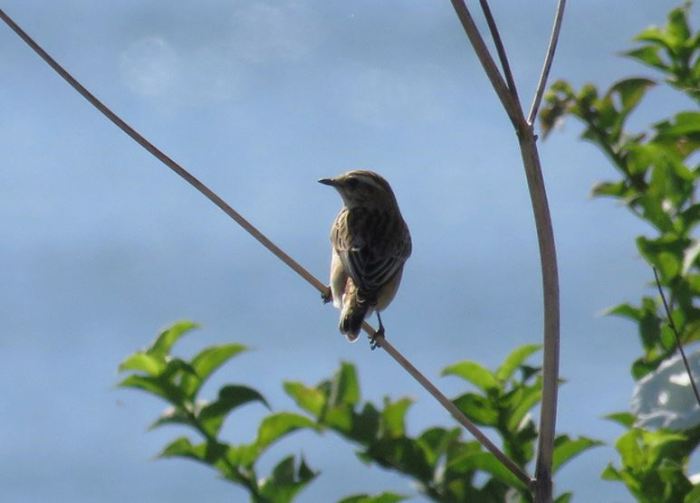
Whinchat, Sywell CP, 2nd September 2016 (Alan Francis)

and there were still three Stonechats lingering at Blueberry Farm. More Northern Wheatears appeared this week with singles at Denton Wood and in the Brampton Valley on 29th, two at Hellidon on 30th and singles at Summer Leys and near Finedon on 1st. A Tree Pipit flew over Harrington AF on 28th.

Two Weeks in Focus, 13th to 26th August 2016

A largely dry couple of weeks saw temperatures hit 30º C as the winds swung south-easterly, for a time ushering in hot air from mainland Europe. A two-week period makes a significant difference to what can be expected as migration gathers pace and we head into autumn proper. Numbers of waders, gulls and especially passerines are ramping up as September looms large in the birding calendar.

The Ruddy Shelduck remained at Pitsford Res, where it was seen on 20th, while the same locality saw the beginning of the annual autumn build-up of Red-crested Pochards with up to six there from 23rd.

Ruddy Shelduck, Pitsford Res, 15th August 2016 (Alan Francis)

Elsewhere, the drake Goldeneye remained at Stanford Res until at least 24th and a Garganey was at Daventry CP on 25th-26th and, back at Pitsford Res, another was found on 26th. The same dates saw a juvenile Shag at Stanwick GP, which was only the second record for the site, while this species is by no means annual in the county with the last being in December 2013.

Juvenile Shag, Stanwick GP, 25th August 2016 (Bob Bullock)

Raptors this in the period included a Marsh Harrier in the vicinity of Scaldwell and Walgrave Bays at Pitsford Res between 15th and 25th with perhaps the same individual visiting the nearby Brampton Valley on 23rd-24th. Single Ospreys were also at Pitsford Res on 14th and 24th-25th while others were seen at Hollowell Res on 14th and at Sywell CP on 23rd, although it is possible that just one roaming individual could account for all of these records. Peregrines appeared at Hellidon on 14th, Ditchford GP on 15th, at Summer Leys LNR on 17th and 23rd and at Hollowell Res on 25th.

Adult Peregrine, Summer Leys, 23rd August 2016 (Ricky Sinfield)

The autumn’s first Golden Plover appeared at Blueberry Farm, Maidwell on 17th and Little Ringed Plovers were recorded from Daventry CP, Hollowell Res, Pitsford Res, Summer Leys and Sywell CP. Most, if not all, were single juveniles.

Juvenile Little Ringed Plover, Sywell CP, 22nd August 2016 (Alan Francis)

By contrast there were only two Ringed Plovers, which consisted of singles at Ditchford GP on 13th and Stanwick GP on 21st-22nd. A Whimbrel flew south-west at Daventry CP on 26th, while three Curlews flew west at Stanford Res on 23rd and two were at Hollowell Res two days later but, compared with the previous period, Black-tailed Godwit passage had slowed to just one at Summer Leys on 19th and two there on 21st. A juvenile Turnstone took up residence on the Visitor Centre Lake at Stanwick GP from 17th and was still present on 26th, while the first of the autumn’s Ruffs appeared with singles at Summer Leys on 15th and 19th and at Hollowell Res on 16th and 21st.

Juvenile Turnstone, Stanwick GP, 21st August 2016 (Mike Alibone)

The latter locality produced three Dunlins on 25th, but numbers otherwise remained low with just singles at Summer Leys on 19th and Stanwick GP between 20th and 26th.

Juvenile Dunlin, Hollowell Res, 15th August 2016 (Martin Swannell)
Juvenile Little Stint, Summer Leys LNR, 12th August 2016 (Ricky Sinfield)

Sometimes quite elusive, a Little Stint remained at Summer Leys between 12th and 14th. Common Sandpipers continued to be seen in good numbers throughout the period, being recorded from eight localities with a maximum count of six at Daventry CP on 24th,

Juvenile Common Sandpiper, Sywell CP, 22nd August 2016 (Alan Francis)

while Green Sandpipers were recorded at six with a maximum of five at Summer Leys on 17th. A Spotted Redshank appeared briefly at Summer Leys on 25th and Greenshank numbers were surprisingly low with, apart from four at Stanwick GP on 22nd, singles at Summer Leys on 13th, Stanwick on 18th and 21st, Stanford Res on 23rd and Hollowell Res on 25th. Hollowell and Summer Leys were the only localities to host Common Snipe with the former producing singles on 13th and 21st, two on 16th and six on 25th and the latter with two on 14th and three on 21st.

Green Sandpiper, Summer Leys LNR, 21st August 2016 (Ricky Sinfield)
Green Sandpiper, Summer Leys LNR, 22nd August 2016 (Ricky Sinfield)

Along with diminishing numbers of Common Terns, the period saw a short-staying Little Tern at Stanford Res on 19th – the same date on which ten Black Terns paid an equally brief visit to Summer Leys, departing high to the west during the evening. Three Mediterranean Gulls included a juvenile at Daventry CP on 18th, a second-summer there on 24th and another juvenile at Hollowell Res the following day. Potentially hugely rarer, however, was the adult gull showing characteristics of Azorean Yellow-legged Gull at Stanwick GP’s pre-roost gathering on 24th and 25th. We’ve been here before, of course, and with this well-marked race now officially on the British List and a previous record of a returning individual (Stanwick 2013, 2014) pending acceptance by BBRC, this bird – believed by some to be the same individual – clearly warrants further study if it lingers.

Caption AZGU
Caption AZGU

Putative adult Azorean Gull, Stanwick GP, 25th August 2016 (Bob Bullock)

Normal’ Yellow-legged Gulls were recorded in smaller numbers than during the lastperiod at Stanwick, Daventry CP, Summer Leys and Pitsford Res with a maximum of eight at the latter site on 13th.

Cartion YLGU


Adult Yellow-legged Gull, Summer Leys LNR, 14th August 2016 (Mike Alibone)

Caspian Gulls, represented largely by immatures, were found at Daventry CP on 13th, with two there on 15th, one on 16th and 25th, Stanwick GP, where there were two on 15th, 17th (one adult) and 23rd, one on 25th and four the next day and Clifford Hill GP, where there was an adult on 14th.

First-summer Caspian Gull, Stanwick GP, 26th August 2016 (Steve Fisher)

Again, Turtle Doves were found only at Harrington AF, where there were four to five on 21st and one on 24th. The ringing highlight of the second week was undoubtedly a Wryneck which was trapped on 26th at Stanford Res by the Stanford Ringing Group, which has an enviable track record for pulling scarce migrants from its nets.

Wryneck, Stanford Res, 26th August 2016 (Mick Townsend)

Common Redstarts came through in good numbers with records from Blueberry Farm, Borough Hill, Daventry CP, Eydon, Fawsley Park, Harrington AF, Hellidon, Hollowell Res and Walgrave, with a maximum of four at the latter site on 25th and, in addition, a first-year female was trapped and ringed at Stanford Res on 18th. Related species remained scarce, however, with reports of Whinchats limited to two at Borough Hill on 13th, two at Blueberry Farm on 17th and 23rd and one in the Brampton Valley on 24th, where there were still two Stonechats on the same date. Just three Northern Wheatears included singles at Blueberry Farm on 17th and at both Stanford Res and Harrington AF on 21st. The latter site also produced two Tree Pipits on 26th – following the autumn’s first over Fineshade Wood on 14th – and a Corn Bunting on 24th.

The Week in Focus, 6th to 12th August 2016

Winds remained between north-westerly and south-westerly throughout, gusting quite strongly for a short time at beginning of week. Warm, mainly dry weather ensued throughout the period as migrants continued to trickle through.

Clearly still going nowhere, the Ruddy Shelduck remained at Pitsford Res, where there was also a female Red-crested Pochard x Ferruginous Duck hybrid and a Goldeneye on 10th. Pitsford also produced an Osprey, fishing south of the causeway on 6th, the same date as a Marsh Harrier visited Summer Leys LNR along with a Peregrine. Further Peregrines were seen at Ditchford GP on 8th and in the Brampton Valley the following day.

On the wader front, the only Little Ringed Plovers this week were two at Clifford Hill GP on 6th and singles at Stanwick GP and Summer Leys on 7th. Three Ringed Plovers included singles at Ditchford GP on 8th, Hollowell Res on 9th and Pitsford Res on 10th

Ringed Plover, Hollowell Res, 9th August 2016 (Martin Swannell)

and a Curlew also visited the latter site on 6th. Up to two Dunlins remained at Pitsford Res between 8th and 11th and up to three were at Hollowell Res between 7th and 10th and

Juvenile Dunlins, Pitsford Res, 8th August 2016 (Alan Francis)
Adult Dunlin, Hollowell Res, 10th August 2016 (Martin Swannell)

two were at Summer Leys on 12th along with a Little Stint. Just two Greenshanks this week include one that visited Stanwick GP on 10th and one at Summer Leys on 12th, and a solitary Redshank was at Daventry CP on 8th. Common Sandpipers were reported from Boddington Res, Daventry CP, Hollowell Res, Pitsford Res, Stanwick GP, Summer Leys LNR and Welford Res with no more than two at any one location, with the exception of four at Stanwick GP on 8th and six at Pitsford Res

Adult Common Sandpiper, Pitsford Res, 11th August 2016 (Alan Francis)

on 10th. Similarly, Green Sandpipers were seen in ones and twos throughout the week at Hollowell Res, Pitsford Res, Stanford Res, Stanwick GP and Summer Leys, while twos of Common Snipe were at Hollowell Res on 7th and at Clifford Hill GP and Summer Leys on 10th but the best count was six at Ditchford GP on 8th.

Three Mediterranean Gulls – all juveniles – continued last week’s run with one at Clifford Hill GP on 6th and two at Boddington Res on 12th, while numbers of Yellow-legged Gulls rallied with at least fifty at Stanwick GP late on 8th and approximately seventy there the following evening, with adults visiting Pitsford Res on 10th and Boddington Res on 12th and four juveniles were at Daventry CP during the week. Stanwick, as usual, produced all the week’s Caspian Gulls with a second-summer on 8th, an adult and two third/fourth-summers on 9th-10th, a first-summer plus a third/fourth-summer on 11th and a juvenile, first-summer and third/fourth-summer on 12th.

First-summer Caspian Gull, Stanwick GP, 11th August 2016 (Steve Fisher)

Again, this week’s only Turtle Doves were two at Harrington AF between 6th and 8th but rarer on a local level was a Nightjar found on private land adjacent to Stanford Res on 12th. More migrant passerines included single Common Redstarts at Harrington AF on 6th and 8th, Pitsford Res on 10th and Twywell Hills & Dales on 12th but five were at Eydon on 10th, while two Whinchats were at Harrington AF on 6th and one on 9th, four were at Blueberry Farm (Maidwell) on 6th and two were in Brampton Valley on 9th-10th. At least two Stonechats remained at Blueberry Farm, Maidwell, on 9th and the autumn’s first Northern Wheatears visited Harrington AF on 6th, Brampton Valley on 9th-10th and Hollowell Res on 10th.