The Week in Focus: 29th August to 4th September 2015

The country remained sandwiched between a high pressure system to the west and a low to the east, with the net result of northerly winds (with some easterly influence) and low temperatures. The predicted heavy rain throughout the bank holiday Monday duly materialised, promised much but delivered little and led to localised flooding outside the county.

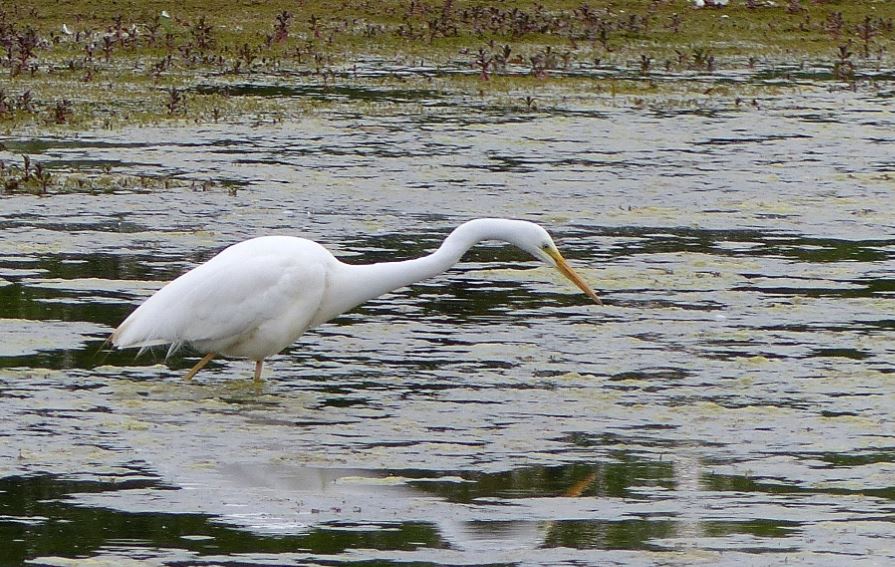
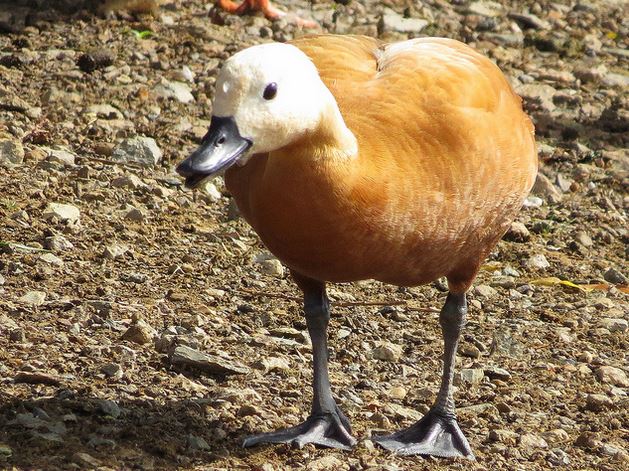
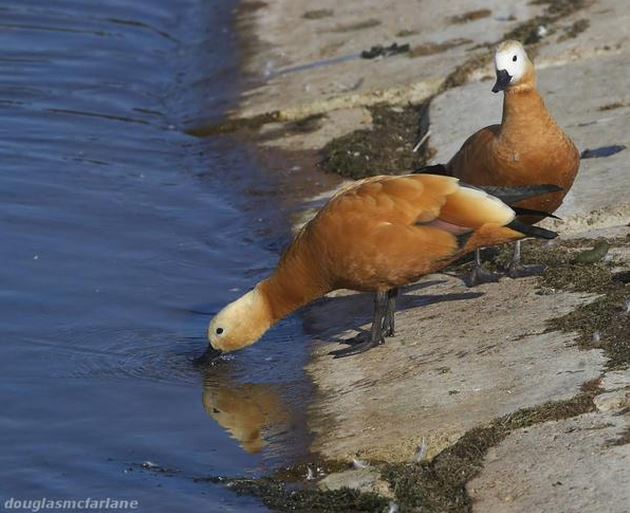
Although a ‘C lister’, visits to the county by Barnacle Geese remain sporadic but this week saw one at Clifford Hill GP between 1st and 3rd and five at Hollowell Res on 2nd, while the two Ruddy Shelducks remained at Pitsford Res throughout the period. Aside from a Pintail at Summer Leys LNR on 31st, the only other ducks of note were three eclipse drake Red-crested Pochards at Pitsford Res on the same date. Visits by last week’s Great White Egret to Pitsford Res became erratic with reports from there on 29th and 2nd, while another visited Hollowell Res on the latter date and again on 4th and one was at Summer Leys on 31st and again on 3rd and 4th.
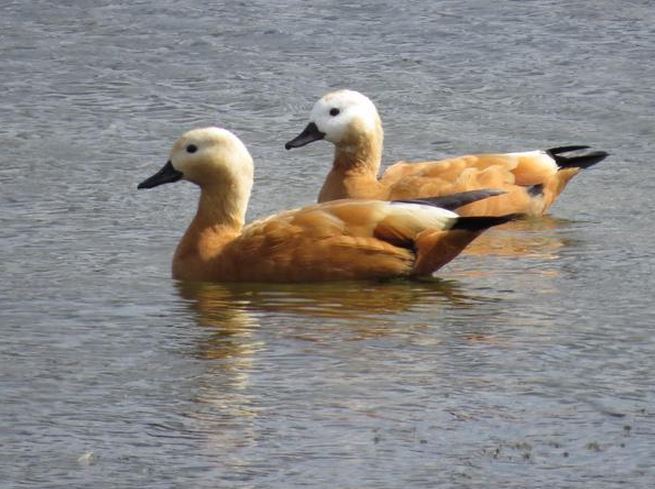
Ruddy Shelducks, Pitsford Res, 1st September (Alan Francis)

Juvenile Marsh Harriers visited Blueberry Farm, Maidwell on 29th-30th, Clifford Hill GP on 1st and Pitsford Res the following day but, after a notable run in records, the week’s only Ospreys were one flying east at Naseby Res on 2nd and another at Hollowell Res on 4th.  Peregrines this week were singles at Pitsford Res and Stanwick GP on 31st, Higham Ferrers on 1st and Clifford Hill GP on 3rd.

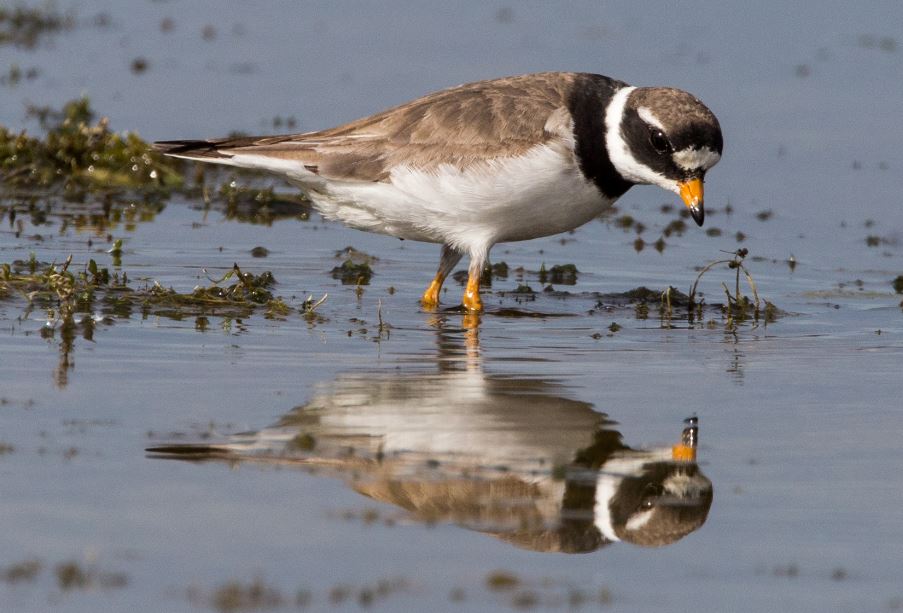
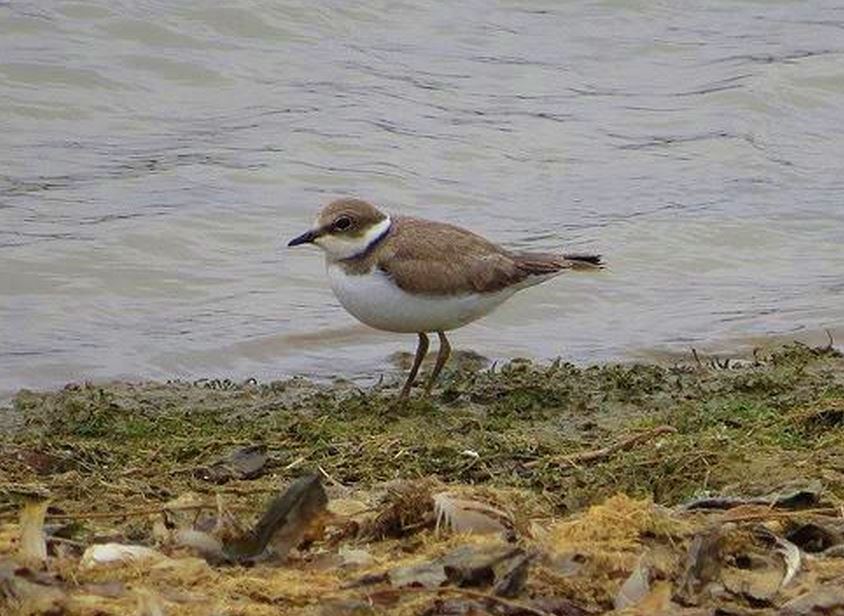
The only Little Ringed Plovers were single juveniles at Clifford Hill GP on 29th and Naseby Res on 30th with six reported from Hollowell Res on 2nd, when there were six Ringed Plovers there (seven on 1st and 3rd-4th) with singles of the latter species at Naseby Res on 30th-31st, Pitsford Res on 2nd and up to three at Clifford Hill GP between 29th and 3rd. A juvenile Black-tailed Godwit was at Hollowell Res between 31st and 4th, being joined there by a second bird on 1st, the same date that another visited Clifford Hill GP.

Juvenile Black-tailed Godwit, Hollowell Res, 3rd September 2015 (Martin Swannell)

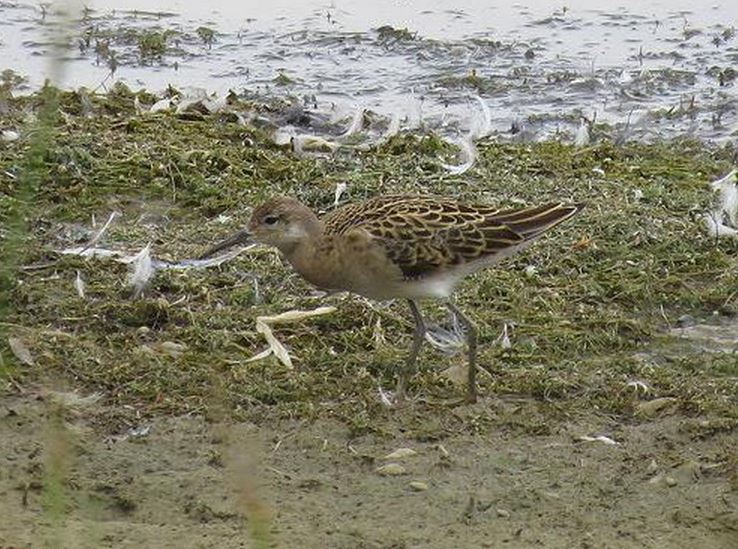
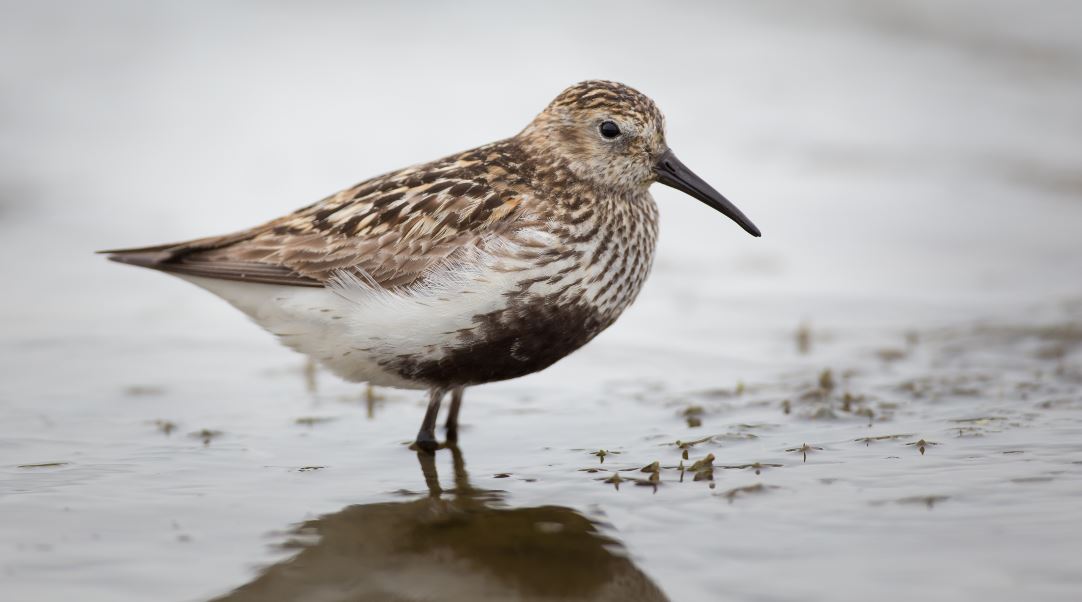
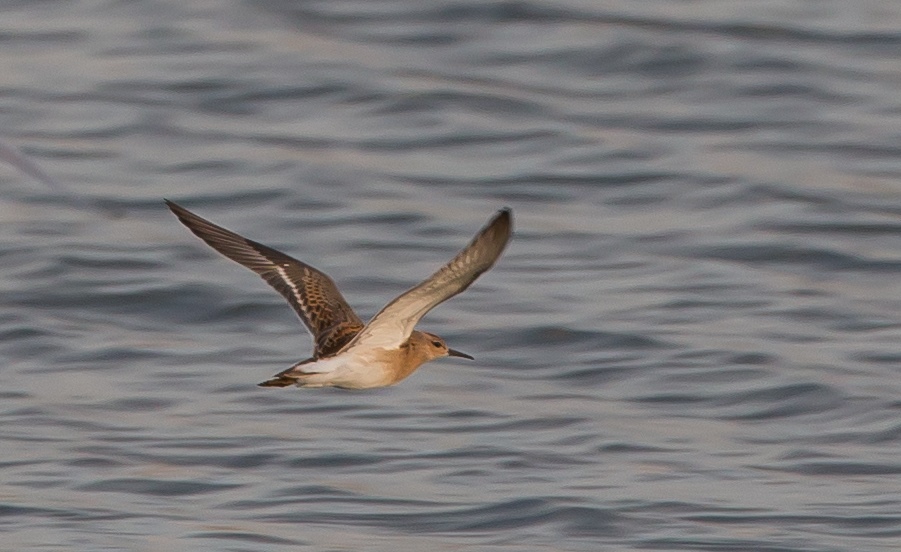
The Stanwick Little Stint remained from last week until at least 2nd and small numbers of Dunlin were located at Hollowell Res, Naseby Res, Pitsford Res, Summer Leys, Clifford Hill GP and Stanwick GP with a maximum of four at Hollowell on 3rd-4th. Ruff were found only at Hollowell Res and Naseby Res with a maximum of eleven at the latter site representing a sizeable local count by today’s standards, while Common Sandpiper
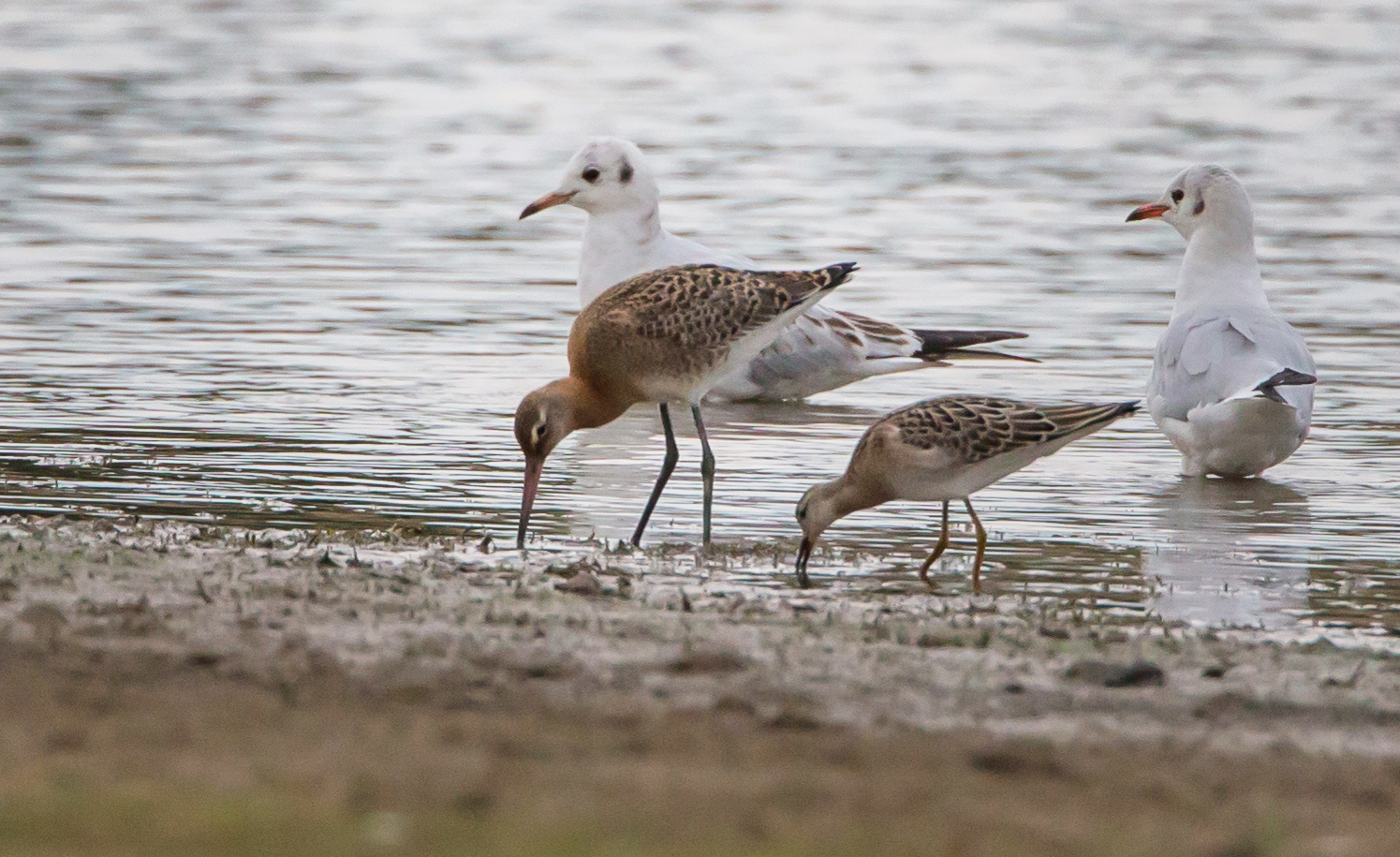
Juvenile Black-tailed Godwit and juvenile Ruff, Hollowell Res, 3rd September 2015 (Martin Swannell)

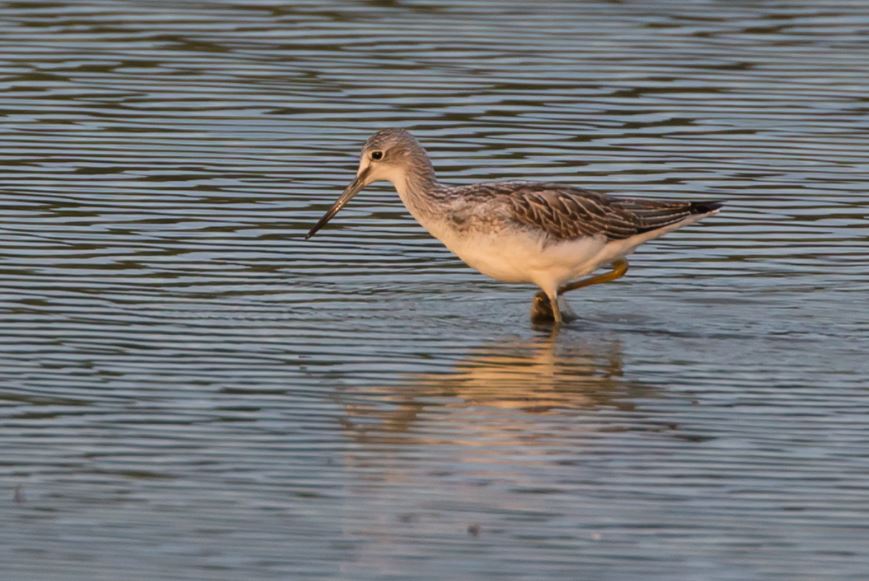
Caption Wadersnumbers were down on the previous period with records from reservoirs at Pitsford, Hollowell, Welford and Naseby plus Clifford Hill GP and Stanwick GP, with a maximum of eight at Hollowell on 31st. Green Sandpipers were found at Naseby, Pitsford, Ravensthorpe and Welford Reservoirs and Stanwick GP with a maximum of 9 at Naseby on 30th, while the only Wood Sandpiper this week was a one-day bird at Clifford Hill GP on 1st.
Caption Wood SandpiperUncannily, after last week’s Spotted Redshank at Naseby Res on 27th, another turned up at the same site, exactly a week later, on 3rd. Greenshank numbers remained low, with just one at Summer Leys on 30th-31st and two at Naseby Res on 30th and 3rd, and Redshanks were similarly – though not unusually – scarce with singles at Clifford Hill GP on 29th and at Naseby Res the following day. The only Common Snipe were at Stanwick GP – where there was one on 30th and three the following day – and Summer Leys, where eight were counted on 31st.

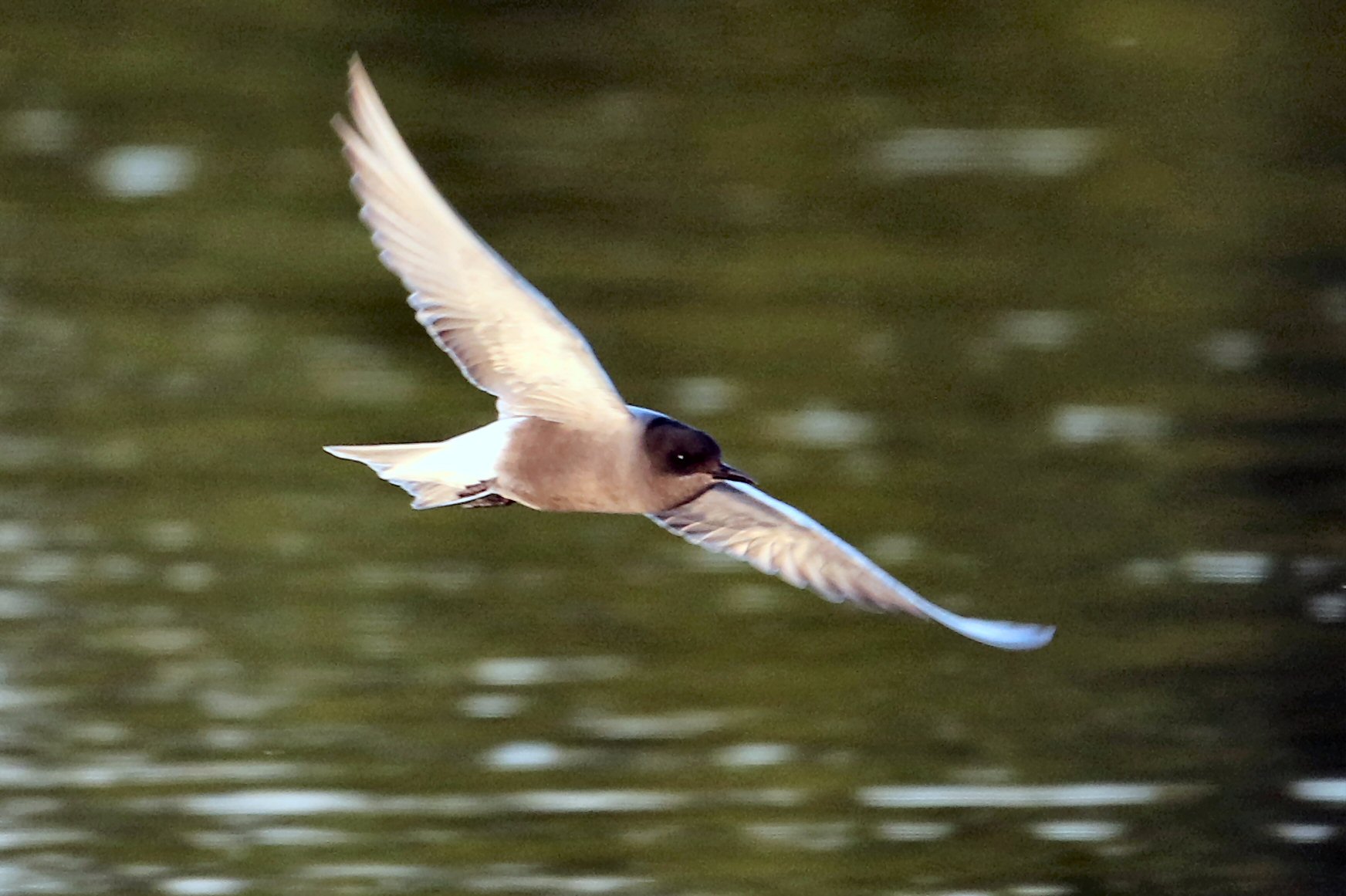
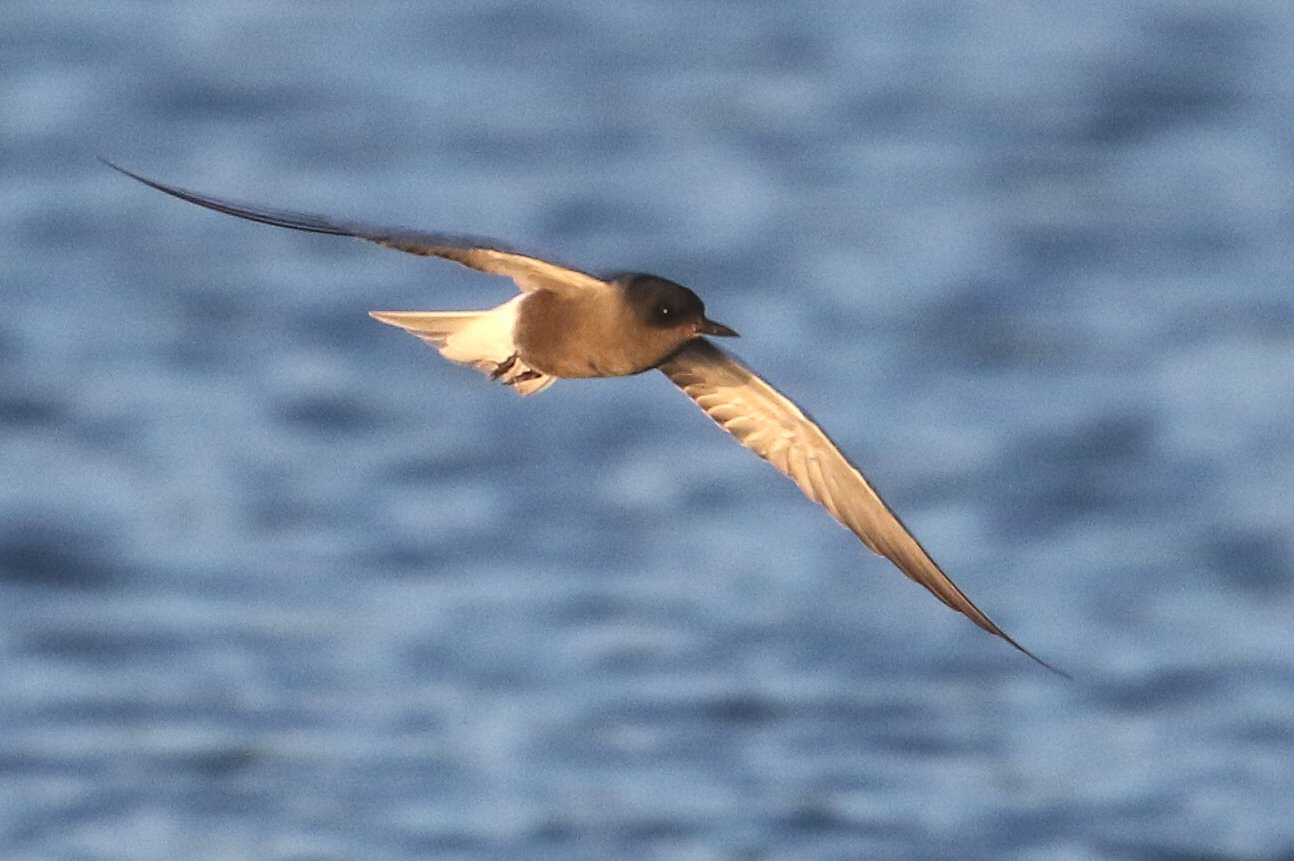
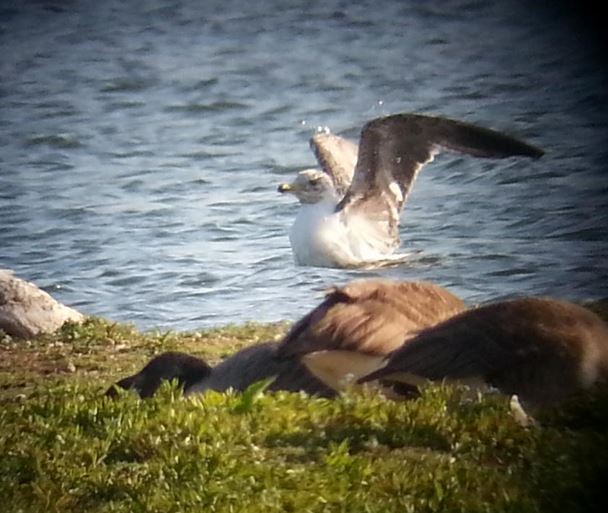
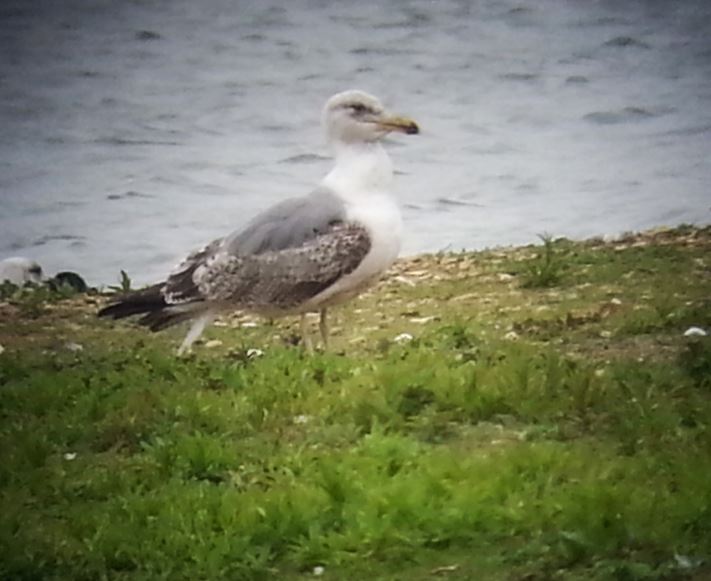
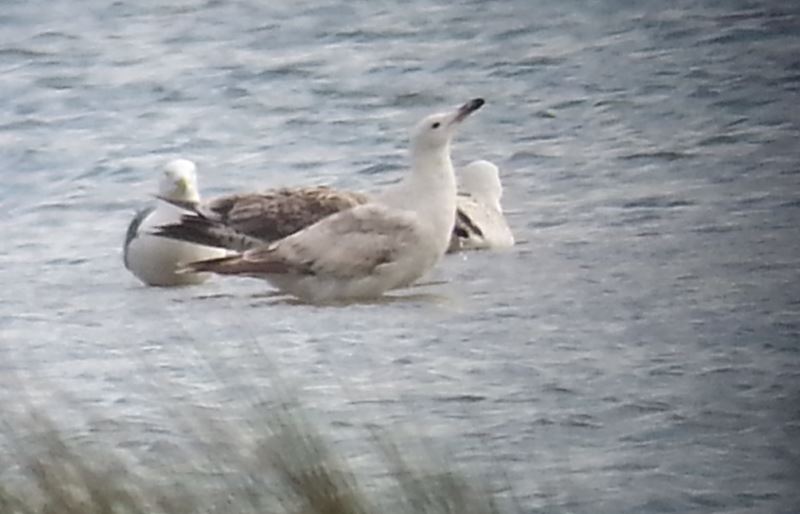
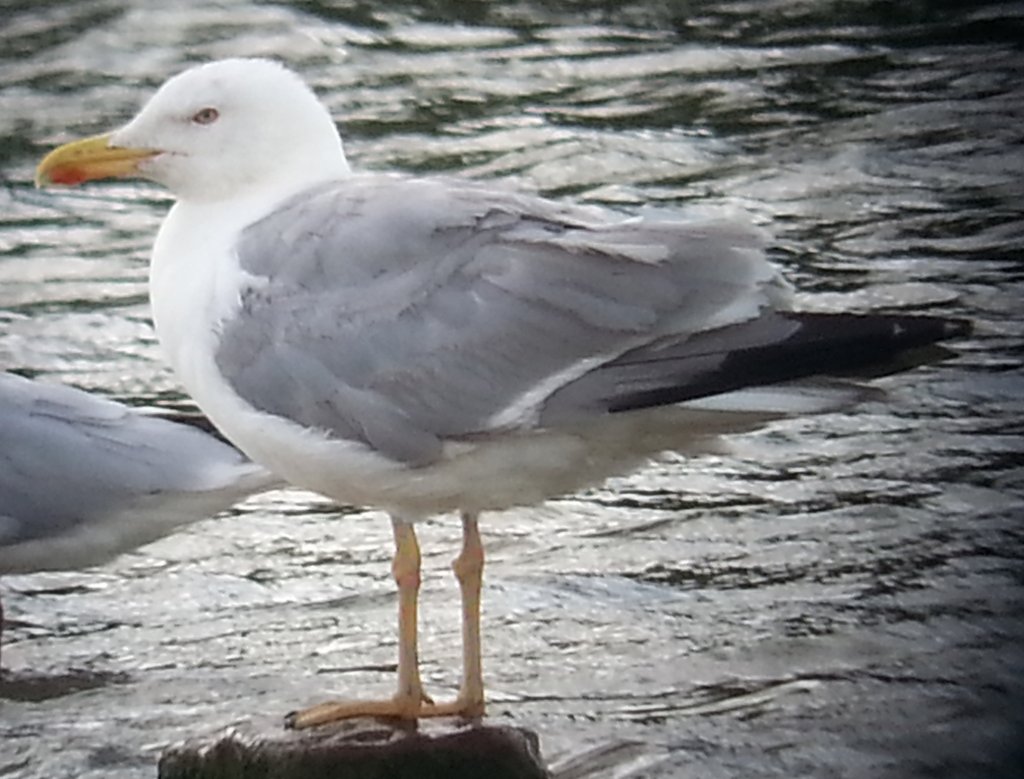
Last week’s Hollowell Black Tern lingered to 2nd – so far it’s proving to be a lean year for this species – and two Arctic Terns were recorded including one at Stanwick GP on 31st and another at Hollowell Res the following day, while a first-winter Little Gull briefly visited Summer Leys LNR on 31st. The only Mediterranean Gull this week was a first-winter at Pitsford Res on 30th, the same date an adult Caspian Gull was found at Stanwick GP followed by a juvenile there the next day and two on 4th. There were far fewer Yellow-legged Gulls reported this week with just one or two adults at Pitsford Res on 31st-1st, an adult at Hollowell Res on 31st-2nd and a juvenile at Clifford Hill GP on 1st-3rd.

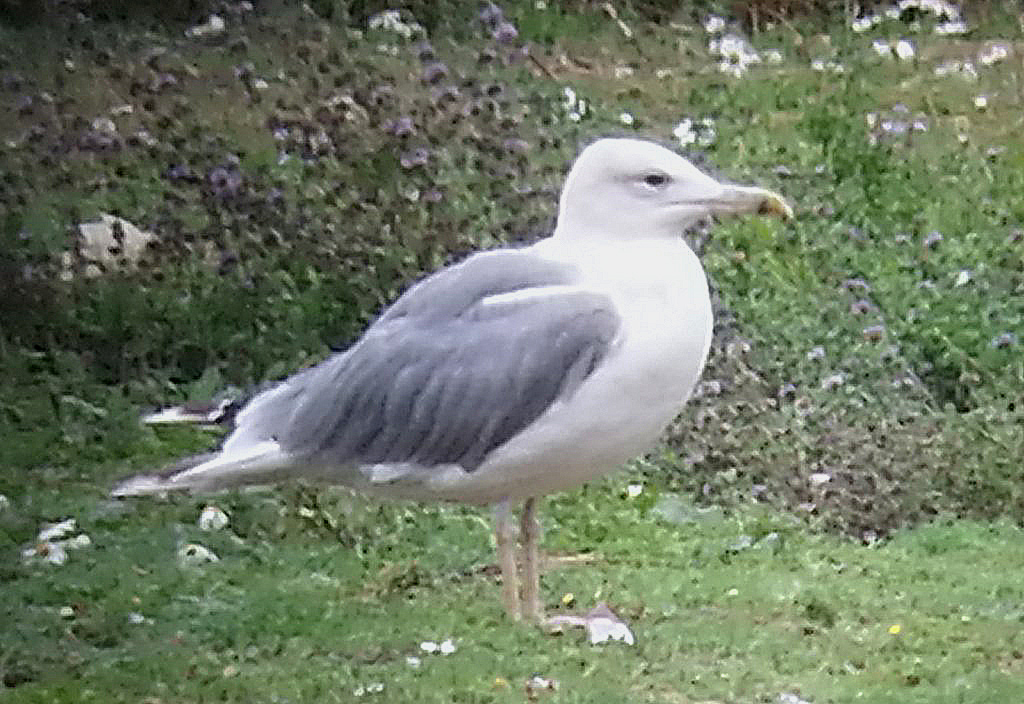
First-winter Mediterranean Gull, Pitsford Res, 30th August 2015 (Bob Bullock)
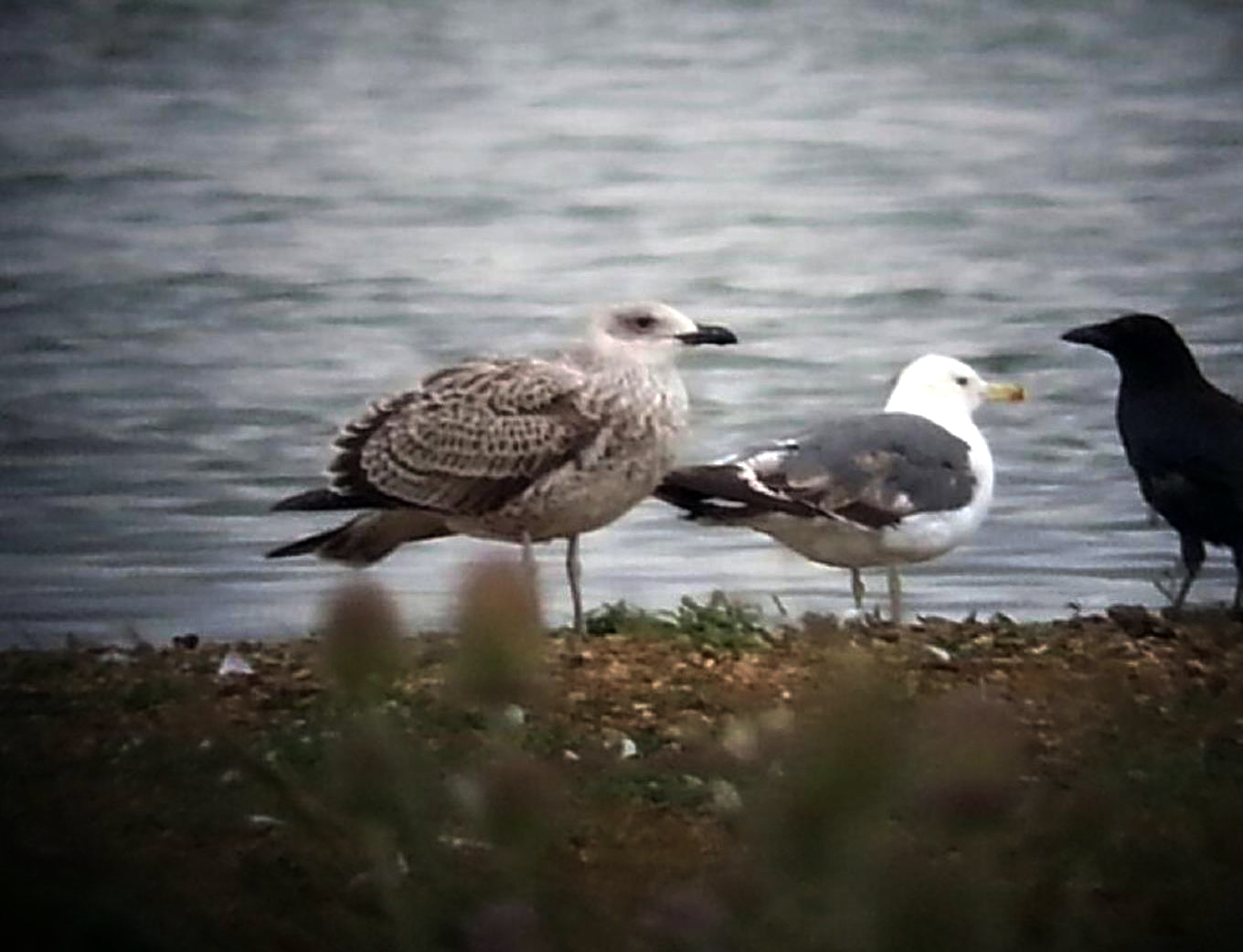
Caspian Gull, Stanwick GP, 4th September 2015 (Steve Fisher)

Some observers took their last 2015 look at a Cuckoo when a juvenile was found adjacent to Pitsford Res at Brixworth CP on 3rd, while scarce passerines included a Pied Flycatcher at Borough Hill on 1st followed by another between Pitsford Res and Walgrave the following day.

Juvenile Cuckoo, Brixworth CP, 3rd September 2015 (Alan Coles)

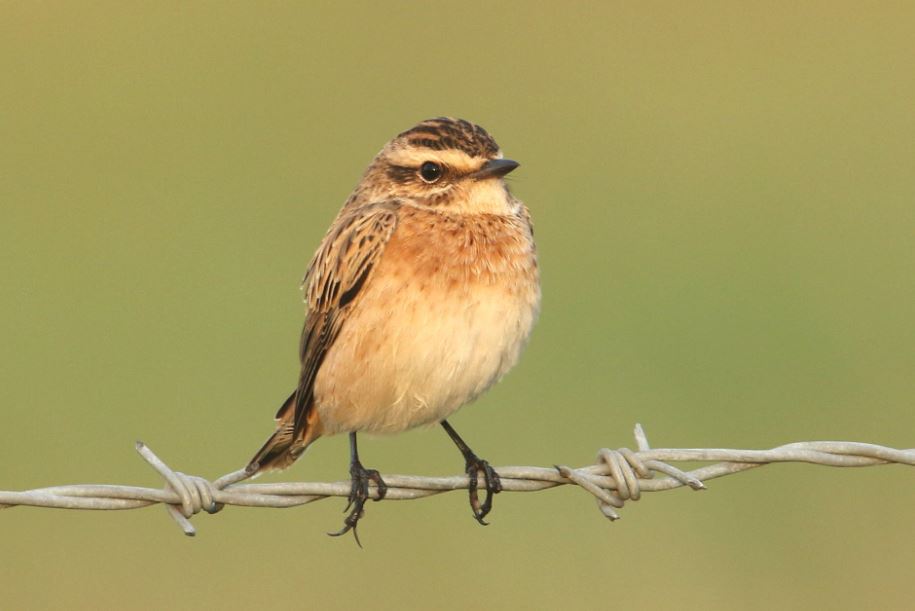
Whinchats were recorded between 29th and 3rd from five localities, Borough Hill and Blueberry Farm clocking up six each on 31st, while Common Redstarts continued to be seen in profusion with records from ten localities including ten birds together in an area of scrub between Pitsford Res and Walgrave on 2nd.
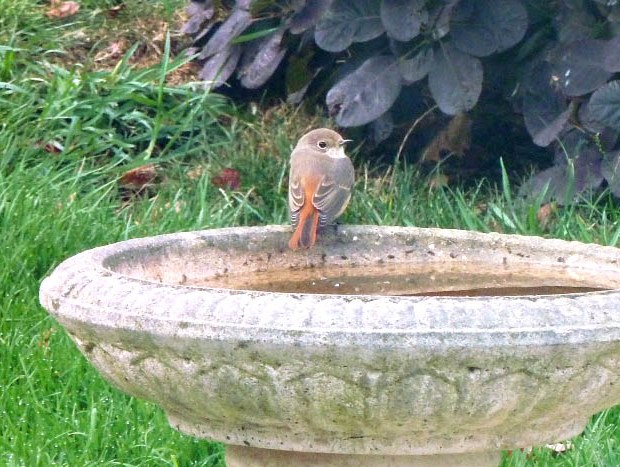
Common Redstart, Wellingborough, 29 August 2015 (Barbara Nunn)This must be one of the very few autumns where they have outnumbered Northern Wheatears – the latter appearing as singles at only Pitsford Res, Hollowell Res and Blueberry Farm. Long lost as a local breeding species, Tree Pipits now appear only as scarce passage migrants so two at Harrington AF on 29th, one there the next day and four at Borough Hill on 31st constituted a reasonable quota for the week, during which four Crossbills over Hanging Houghton on 29th was the only record of this specialised feeder which also occurs only as a migrant and scarce winter visitor.
Two Weeks in Focus: 15th to 28th August 2015

With a mixed bag of weather conditions and largely lower than expected temperatures the last two weeks have had more of a September feel to them. Duck numbers began to build significantly, wader passage remained strong and a couple of blasts of easterly and south-easterly winds off the continent just prior to the start of the period, and again midway through it, produced some more interesting passerine migrants.

Almost a permanent fixture, it seems, the two Ruddy Shelducks remained at Pitsford Res throughout and two Garganeys visited Stanwick GP briefly on 21st, this same site hosting three Pintails on 19th-21st, while another Pintail visited Summer Leys LNR on 24th-25th.

Ruddy Shelduck, Pitsford Res, 25th August 2015 (Alan Francis)
Ruddy Shelducks, Pitsford Res, 27th August 2015 (Douglas McFarlane)

The autumn build-up of Red-crested Pochards commenced at Pitsford Res with three on 16th rising to seven there on 27th and the first of the autumn’s Great White Egrets appeared at the same site on 22nd, where it remained until 28th, being joined briefly by a second individual on 23rd. This second bird then promptly relocated to Summer Leys LNR the following day, remaining in the area until 28th. Just along the valley, the Bittern was seen again at Stanwick GP on 16th while, further east, a juvenile Black-necked Grebe was found at Thrapston GP on 25th, remaining there until at least 27th.

Marsh Harriers continued to be seen, with two ‘cream-crowns’ at Pitsford Res on 23rd, one through east at Summer Leys LNR on 27th and two juveniles at Blueberry Farm, Maidwell the following day. Ospreys were seen at four localities, including singles at Hollowell Res on 15th, 22nd and 26th with two there on 19th and three on 28th, Pitsford Res on 21st, 24th and 28th with two there on 17th, Stanford Res on 22nd and over Badby Wood on 19th.  Peregrines this week were singles at Higham Ferrers on 19th, 25th and 26th with one at nearby Ditchford GP on 22nd.

Single Golden Plovers visited Stanwick GP on 16th-17th and Harrington AF on 17th and numbers of Little Ringed Plovers were reduced to singles at Clifford Hill GP on 15th and Hollowell Res on 20th-22nd with two again at the latter site on 26th. Numbers of Ringed Plovers continued to rise with reports from Hollowell Res, Naseby Res, Pitsford Res, Clifford Hill GP, Summer Leys LNR and Stanwick GP, with a maximum of seven at the latter locality on 24th.

Ringed Plover, Pitsford Res, 15th August 2015 (Martin Swannell)

The only Whimbrels during the period were all singles at Pitsford Res, where one flew south on 16th and a juvenile was on the ground on 20th with another there on 22nd.

Juvenile Whimbrel, Pitsford Res, 20th August 2015 (Alan Francis)

With the majority having passed through in late July/early August, there were also few Black-tailed Godwits to be had during the period – just four over Pitsford Res on 23rd and one at Stanwick GP on 26th.

Black-tailed Godwits, Pitsford Res, 23rd August 2015 (Douglas McFarlane)

Two Little Stints flew through at Hollowell Res on 25th and the same date saw one arrive at Stanwick GP, where it stayed until at least 27th, while single-figure counts of Dunlin came from seven localities, with a maximum of five at Stanwick GP on 26th. Ruff were found at Pitsford Res, Hollowell Res, Naseby Res, Stanwick GP, Daventry CP and Wicksteed Park Lake with a maximum count of four at Pitsford Res on 22nd, while

Juvenile Ruff, Pitsford Res, 19th August 2015 (Alan Francis)
Juvenile Ruff, Wicksteed Park lake, 21st August 2015 (Alan Francis)

Common Sandpipers appeared to be enjoying a local migrational boom with continual records from eleven localities, including double-figure counts from Hollowell Res of twelve on 22nd, fourteen on 25th and ten on 26th. Green Sandpipers were found at eight sites, with a maximum of seven at Daventry CP on 18th-20th and single Wood Sandpipers visited Pitsford Res on 16th and 25th, Stanwick GP on 19th and nearby Ditchford GP on 22nd. Greenshank numbers fell a little as this species was recorded from only five localities – all single birds, except two at Pitsford Res on 21st and the only Redshanks

Greenshank, Summer Leys LNR, 16th August 2015 (Martin Swannell)
Greenshank, Summer Leys LNR, 20th August 2015 (Alan Coles)

reported were singles at Hollowell Res between 15th and 22nd, Pitsford Res on 17th and Stanwick GP on 19th but a flock of sixteen in adverse weather conditions at Naseby Res on 27th brought with them the autumn’s second Spotted Redshank, although all had disappeared the following day. With just one Common Snipe at Stanwick GP between 16th and 19th, followed by three there on 24th, five at Summer Leys LNR on 24th-25th and one at Pitsford Res on the latter date, numbers were looking a bit wispy …

Black Terns were few and far between with one at Ditchford GP on 22nd, followed by two at Pitsford Res on 24th and one at Hollowell Res on 27th-28th. Three juvenile Little Gulls paid a brief visit to Daventry CP on 23rd while a juvenile Mediterranean Gull visited Hollowell Res on 15th, a first-winter was at Daventry CP on 27th and a juvenile/first-winter visited Pitsford Res on 28th. Daventry CP seemed set to rival Stanwick GP for Caspian Gulls during the period with an adult there on 18th followed by a juvenile on 19th and 20th. Stanwick still managed to produce two adults on 17th, an adult on 24th, an adult and a juvenile on 26th and a juvenile on 27th; a juvenile was also at Pitsford Res on 19th. Yellow-legged Gulls were widespread, mainly in small, single-figure numbers, being seen at Pitsford, Res, Hollowell Res, Stanford Res, Daventry CP, Clifford Hill GP and Stanwick GP with a maximum count of thirty-four at the latter locality on 26th.

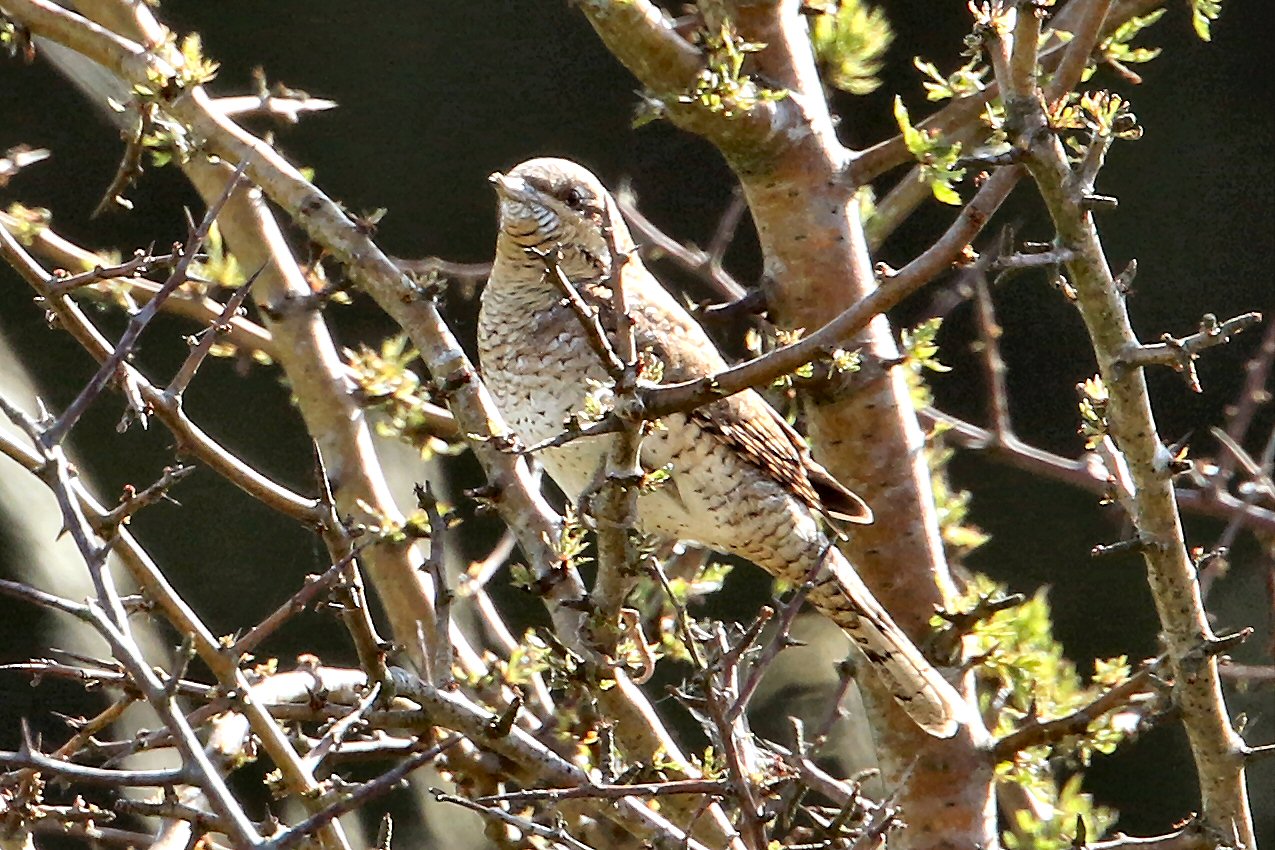
More scarce passerines migrants were found, including two Wrynecks – one at Clifford Hill GP on 15th and the other at Harrington AF on 28th; both proved to be very short-stayers and they managed to evade the many observers who came to look for them.

Wryneck, Harrington AF, 28th August 2015 (Bob Bullock)

They were both associated with east coast falls as were two Pied Flycatchers – the first, a juvenile, trapped at Stanford Res on 24th and the other found at Pitsford Res the following day.

Juvenile Pied Flycatcher, Stanford Res, 24th August 2015 (Mick Townsend)

Whinchats were found at seven sites, most of which held two birds but six were counted in the Brampton Valley on 25th, while Common Redstarts appeared in good numbers with ones and twos seen in six localities but threes were at Blueberry Farm on 16th and between Pitsford Res and Walgrave on 28th.

Whinchat, Clifford Hill GP, 25th August 2014 (Bob Bullock)

By contrast, there were few Northern Wheatears with three at Pitsford Res on 16th, singles at Harrington AF on 17th, Hollowell Res on 25th and near Blueberry Farm on 28th with two in the Brampton Valley on 25th. Eight Crossbills flew over Blueberry Farm on 16th, four were over Harrington AF the following day and three flew over Denton Wood on 23rd.

The Week in Focus: 8th to 14th August 2015

Dry conditions with westerlies at the start of the week gave way to murky weather with heavy showers moving north from the near continent during the last two days of the period playing a significant role in the inland occurrence of waders and terns. The autumn wader passage continued unabated and more southbound passerines trickled through.

The two Ruddy Shelducks remained at Pitsford Res until at least 13th and the same site hosted three Ospreys on 10th, while two were at Hollowell Res on 8th and singles visited Welford Res on 8th and 9th, Summer Leys LNR on the latter date and Pitsford on 13th and Hollowell again on 14th. August is consistently a good month for finding Marsh Harriers, which often linger in favoured areas, and so it was that a ‘cream-crown’ was seen between Pitsford Res and Walgrave on 11th, followed by single juveniles the following day at Summer Leys LNR and Blueberry Farm (Maidwell), the latter still in the area on 13th. The only Peregrine of the week was one at Summer Leys LNR on 11th and, on 10th, a Bittern (re)appeared at Stanwick GP in exactly the same place as one had been seen on 19th July, suggesting a summering individual.

Bittern, Stanwick GP, 10th August 2015 (Steve Fisher)

Wader passage was still much in evidence with the autumn’s first Golden Plovers at Harrington AF on 9th and Hollowell Res on 14th, while a Grey Plover was found at Daventry CP also on 14th and small numbers of Little Ringed Plovers included five at Hollowell Res on 8th two there on 12th and three on 14th with one at Pitsford Res on 13th.

Juvenile Little Ringed Plover, Pitsford Res, 13th August 2015 (Alan Francis)

There were more Ringed Plovers this week with two at Hollowell Res between 8th and 13th and four at Pitsford Res on 9th, increasing to eight there on 13th-14th.

Juvenile Ringed Plover, Pitsford Res, 10th August 2015 (Alan Francis)

Three Whimbrels visited Stanwick GP on 14th, three flew south over Harrington AF and another flew south at Hollowell Res on the same date. Two Black-tailed Godwits were at Summer Leys LNR on 8th and seven at Hollowell Res on the same day with two there again on 11th and the same site produced the week’s maximum Dunlin count with eight to ten there on 12th – although small numbers daily at Pitsford Res also included eight on 13th; singles were also at both Clifford Hill GP and Stanwick GP on 8th with twos at the same sites on 14th and one at Hollowell Res on the same date.

Adult Dunlin, Hollowell Res (Martin Swannell)
Juvenile Dunlin, Hollowell Res (Martin Swannell)

The 14th also produced single Sanderlings at Daventry CP and Clifford Hill GP, while a juvenile Knot appeared at Stanwick GP on the same date and a sprinkling of Ruff included up to two juveniles at Pitsford Res between 8th and 14th, one at Hollowell Res on 10th and two at Clifford Hill GP on 14th.

Juvenile Knot, Stanwick GP, 14th August 2015 (Bob Bullock)
Juvenile Ruff, Pitsford Res, 12th August 2015 (Martin Swannell)

Common Sandpipers were reported only from Daventry CP, Clifford Hill GP, Stanwick GP, Ravensthorpe Res and Pitsford Res with a maximum of three at the latter site on 9th, while Green Sandpipers were found at seven sites, with a maximum of six at Daventry CP on 14th. Greenshank numbers picked up with one at Clifford Hill GP on 9th, up to two at Pitsford Res between 9th and 12th and twos at Ravensthorpe Res and Summer Leys

Greenshank, Summer Leys LNR, 14th August 2015 (Bob Bullock)

LNR on 14th and the only Redshanks reported were at Hollowell Res with two on 8th and 13th and one on 11th, the same site along with Summer Leys hosting the week’s only Common Snipe.

Common Snipe, Summer Leys LNR, August 2015 (Martin Swannell)

The murky conditions and heavy rain on 13th brought two Black Terns to Stanwick GP with thirteen later in the day at Pitsford Res, two at Daventry CP the following day, when two also visited Hollowell Res and two more were at Stanwick GP. The same conditions produced two Little Terns at Clifford Hill GP on 14th, while a juvenile Arctic Tern paid a brief visit to Stanwick GP on 11th, two juveniles accompanied the Black Terns at Pitsford Res on 13th and another juvenile was found at the same location the following day. More juvenile Mediterranean Gulls this week included singles at Clifford Hill GP on 8th, Pitsford Res on 9th, 10th and 12th and at Hollowell Res on 11th. Up to two adults and a near-adult Caspian Gulls were at Stanwick GP between 8th and 12th, while up to two Yellow-legged Gulls lingered at Hollowell Res  and Pitsford Res, one was at Thrapston GP on 11th and six were at Summer Leys LNR the following day.

Scarce passerine migrants this week included two Whinchats at Blueberry Farm on 12th and a further two at Harrington AF on 14th, when the same site also produced a Common Redstart, a Northern Wheatear and two overflying Crossbills. Another Northern Wheatear was also seen at Broadholme STW on 13th.

The Week in Focus: 1st to 7th August 2015

A fine, dry start to the week saw, for the first time, almost nothing reportable at the weekend, although the early autumn ‘clearout’ of Common Swifts was evidently well under way with hundreds, if not thousands, reported streaming south over the county, taking advantage of the clear skies and sunshine throughout the initial two-day period. Wader passage increased in diversity and the focus shifted away from the Nene Valley and more toward the county’s reservoirs.

Pitsford’s two Ruddy Shelducks were still present to at least 5th, albeit they were mobile about the reservoir, and a Garganey appeared at Stanwick GP on 3rd. Flyover Ospreys were seen at Blatherwycke Lake on 2nd and at Pitsford Res on 3rd and 4th and Peregrines were at Higham Ferrers on 1st, Staverton on 4th and Hanging Houghton the next day.

Early autumn wader passage ramped up this week, commencing with the appearance of a Turnstone at Pitsford Res on 3rd, while Little Ringed Plover numbers remained low with four at Hollowell Res on 2nd-4th, five there on 7th and one at Clifford Hill GP on 3rd.

Adult Turnstone, Pitsford Res, 3rd August 2015 (Alan Francis)

Two Ringed Plovers were also at Hollowell Res on 2nd and 7th and singles were found at Clifford Hill GP and Pitsford Res on 3rd and 5th-7th respectively. After last month’s large numbers, just one Black-tailed Godwit put in an appearance this week, at Hollowell Res on 5th, but Dunlin more than made up for this with an astonishing flock estimated to be in the region of four hundred and forty arriving there during the afternoon of 7th – putting the 1970s Pitsford wintering flocks of two hundred or so firmly in the shade; prior to this there had been nine on 2nd, dwindling to just one there two days later.

Dunlins, Hollowell Res, 7th August 2015 (Bob Bullock). Part of a 440-strong flock present briefly at this location.
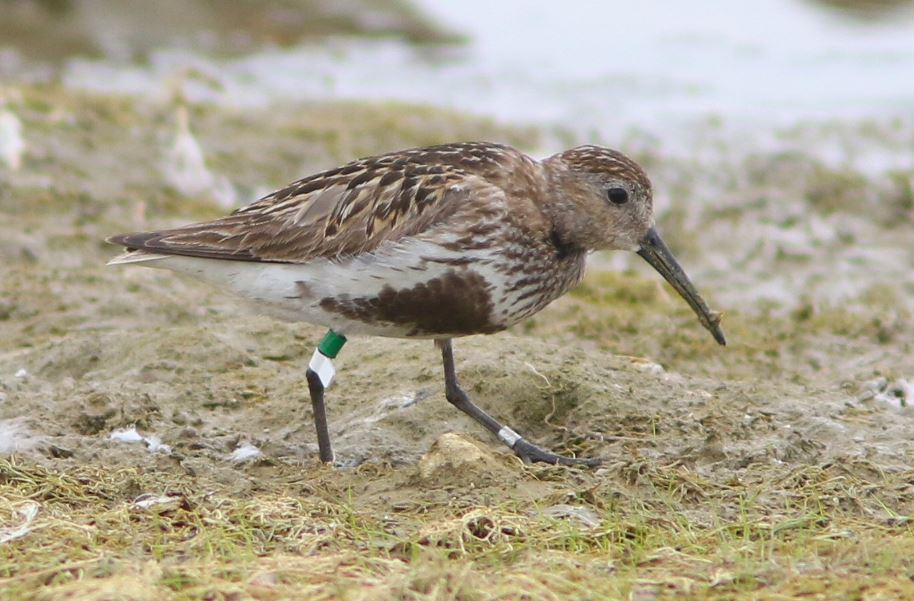
Adult Dunlin, ringed and flagged, Hollowell Res, 7th August 2015 (Bob Bullock)

Five Little Stints together at Clifford Hill GP on 3rd were unusually early while Common Sandpipers were reported from Stanwick GP, Daventry CP, Hollowell Res and Pitsford Res, with a maximum of 4 at the latter site on 4th.

Common Sandpiper, Pitsford Res, 5th August 2015 (Alan Francis)

The same four localities also held small numbers of Green Sandpipers, peaking at eight at Daventry CP. Another scarce wader in the county in recent times is Spotted Redshank, one of which appeared at Pitsford Res on 6th. The days when double-figure counts of this species were made late into the autumn at this site are now just a distant memory.

Spotted Redshank, Pitsford Res, 6th August 2015 (Bob Bullock)

No so with Greenshank, although singles at Pitsford Res on 2nd and 4th – 2 there on 7th – and Daventry CP on 5th constitute unusually slim pickings at this time of the year, as did the week’s few Common Snipe with one at Summer Leys LNR on 6th, five at Hollowell Res on the same date and one there the following day.

‘Summer gulling’ at Stanwick GP produced a juvenile Mediterranean Gull on 3rd, and three juveniles were at Clifford Hill GP on 7th. Stanwick also held a third-summer Caspian Gull on 3rd, followed by an adult two days later plus three adults on 7th, while an adult visited Daventry CP briefly also on 7th. Stanwick also produced 45+ Yellow-legged Gulls on the same date and singles visited Hollowell Res on 2nd, Pitsford Res on 5th and Clifford Hill GP on 7th while seven were at Daventry CP on 6th, with two there on 7th, when eight were at Pitsford Res.

Scarce passerine migrants were at a low ebb with single Common Redstarts at Harrington AF on 1st and near Pitsford Res the following day plus six Crossbills at Staverton on 4th.

The Week in Focus: 25th to 31st July 2015

Temperatures below the seasonal norm, low pressure systems scudding across the Atlantic and winds from every direction, except the east, combined with sometimes heavy showers to produce, well, pretty much nothing new this week.

Pitsford’s two Ruddy Shelducks remained settled north of the causeway all week but no other ducks of note were reported during the period. Last week’s excitement caused by the discovery of the adult Night Heron at Ditchford GP was rapidly curtailed as the bird disappeared on the evening of 25th immediately after giving its best performance during its four-day stay. Vigils tense with anticipation on the subsequent two evenings drew a blank, although it would not be unreasonable to expect it still to be somewhere in the area. Just one Osprey was seen this week, in flight near Pitsford Res on 29th.

Adult Night Heron, Ditchford GP, 25th July 2015 (Jim Dunkley)

Following on from the four Avocets at Clifford Hill GP on 19th, a further individual was an early morning find on the scrape at Summer Leys LNR on 26th but it quickly moved east, being seen for just ten minutes at Ditchford GP’s Irthlingborough Lakes & Meadows reserve before again departing east toward Stanwick GP. There were few Little Ringed Plovers in evidence in comparison to previous weeks with singles at Summer Leys on 25th and 28th and Pitsford Res on 27th and two at Stanwick GP on 28th, where there were also two Ringed Plovers on the same date, followed by three there the next day. A Sanderling at Hollowell Res on 25th was one of a small number of inland records around this date, while a trickle of Dunlins included singles at Stanwick GP on 28th, 29th and 31st and two at Summer Leys on 28th.  Two Curlews visited Stanwick on 31st along with the only Green Sandpiper of the week, while two Common Sandpipers were there on 28th-29th with up to two at Pitsford Res between 25th and 27th and one at Summer Leys on 26th. The only Redshanks were two at Earls Barton GP on 25th-26th.

Juvenile Yellow-legged Gull, Stanwick GP, 30th July 2015 (Steve Fisher)
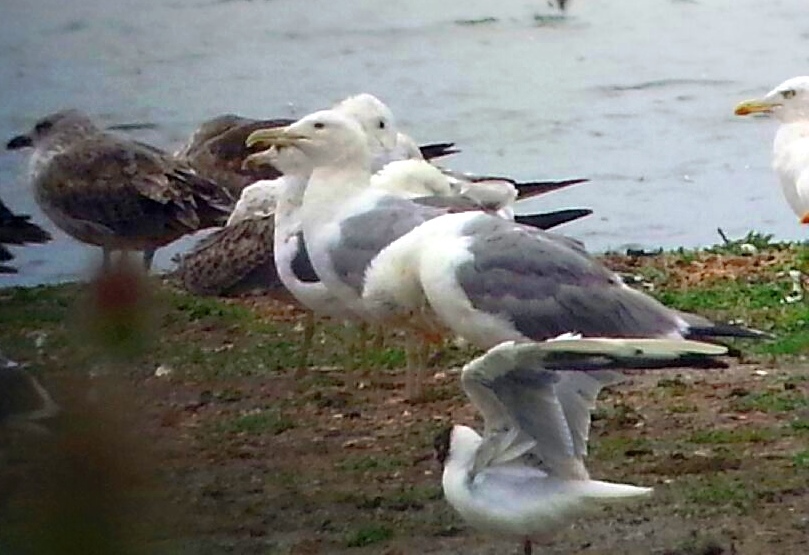
Adult Caspian Gull, Stanwick GP, 26th Jul (Steve Fisher)

Apart from single adult Yellow-legged Gulls at Ditchford GP on 26th and Thrapston GP on 27th, Stanwick GP continued to hold the lion’s share – including the summer’s first juveniles – with double-figure counts peaking at seventy-seven on 30th. The same site also continued to host two Caspian Gulls – an adult and a third-summer – all week. Some of the first autumn migrant passerines were in evidence during the period with Blueberry Farm holding four Whinchats on 25th and nearby Harrington AF producing a Northern Wheatear on 31st. It’s almost August …

Four Weeks in Focus: 27th June to 24th July 2015

Leave it a month and see what happens. In a normally quiet period of the year – at least in Northants – the last four weeks have produced some cracking birds to keep locals busy and, more latterly, very happy. Set against a backcloth of good numbers of passage waders came a number of scarcities and rarities more typical of spring or autumn proper than summer. And as for the weather, well, largely warm and dry until the forecasted twelve hours’ heavy rain set in on 24th …

Aside from one at Stortons GP on 27th, two Ruddy Shelducks were back at Pitsford Res the following day, vanishing again until 11th and then remaining there until at least 22nd. More intriguingly, three were discovered at Stanwick GP on 14th, where they remained for only a matter of early morning minutes before moving on. One had an inconspicuous pink ring on its left leg and speculation has it that this trio first appeared at Cley, Norfolk on 12th before moving to Drayton Basset Pits in Staffordshire later on 14th after a quick Stanwick stopover.

Ruddy Shelducks, Stanwick GP, 14th July 2015 (Steve Fisher)

The only other scarce dabbler was a Garganey – also at Stanwick GP – on 19th and diving ducks included two drake Red-crested Pochards at Summer Leys on 28th, three drakes at Pitsford Res on 4th with one there from 7th to 18th, two at Stanwick GP on 11th and a drake at Hollowell Res on 20th, while a drake Common Scoter was a nice summer discovery at Daventry CP on 15th.

Drake Common Scoter, Daventry CP, 15th July 2015 (Gary Pullan)

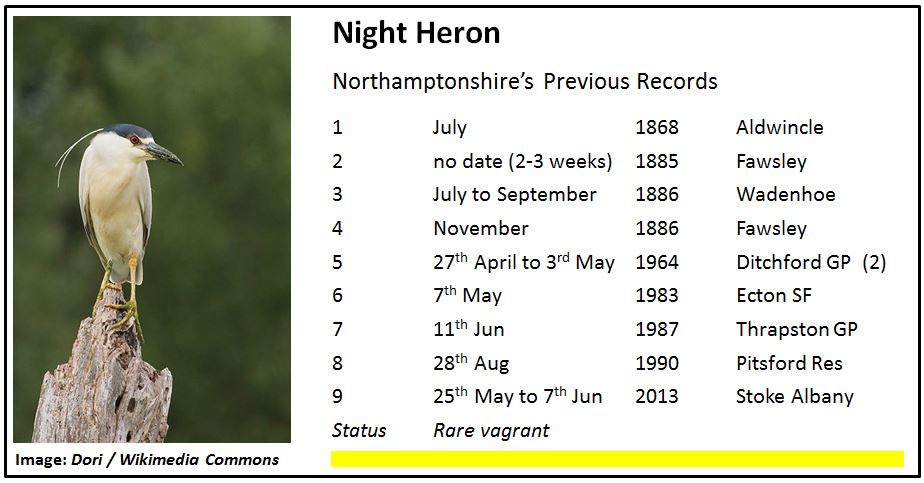
A Bittern at Stanwick GP on 19th was most unseasonal – perhaps reflecting the increase in numbers of Britain’s breeding population in recent years but even more unusual was the discovery of an adult Night Heron at Ditchford GP on 22nd. Disturbed from riverside vegetation by a passing fisherman, who was clearly well up on his bird ID (and had the good sense to report it locally), the news filtered down to Steve Fisher who, on his second search attempt of the day, located it in the same area during the evening. After some skulking in waterside willows it broke cover just as night fell and headed off presumably to feed somewhere locally.Night Heron Northamptonshire RecordsIt was back again in the same area the following evening, the end of which saw it flying east down the Nene, and was again present opposite the nearby sewage outfall on 24th. How long it has been there and will remain is anyone’s guess but it’s only the tenth record for Northants and the second in the last twenty-five years. Tame by comparison, single Great White Egrets were seen at Thrapston GP on 1st and 4th, at Summer Leys also on 4th and flying west over Stanwick GP on 20th.

Following last month’s Honey Buzzard another was seen over Daventry CP on 10th and yet another two days later, on 12th, over Corby STW, while single Marsh Harriers flew over Summer Leys on 21st and Stanwick GP on 23rd. Visiting Ospreys were observed flying over, or fishing, at Hollowell Res, Northampton, Pitsford Res and Welford/Sulby Res while Peregrines were seen at three sites with proven breeding at one of these.

Running deep into July it’s inevitable there’ll be at least a few waders coming back through but the county managed to attract more than its expected quota. Four Avocets at Clifford Hill GP on 19th constituted a bit of a mid-summer bonus, while more normal fare included both summering and passage Little Ringed Plovers at seven localities, with a maximum of ten at Hollowell Res on 15th. By contrast, however, there were just two reports of Ringed Plovers with one at Stanwick GP on 14th and two at Hollowell Res the following day. Following heavy rain, Stanwick GP produced three Little Stints on 19th, while the same site, along with Hollowell Res and Pitsford Res, held between one and five Dunlins between 15th and 22nd. Singles of Ruff visited Pitsford Res on 8th and Summer Leys on 15th and Common Snipe Hollowell Res on 15th and Summer Leys on 17th. A pronounced passage of Black-tailed Godwits occurred between 4th and 21st, with birds occurring at Pitsford Res, Clifford Hill GP, Summer Leys and Stanwick GP with the latter site producing 57 on 8th, although another double-figure count of ten was made at Pitsford Res on 19th.

Black-tailed Godwits, Stanwick GP, 8th July 2015 (Steve Fisher). Part of an evening gathering of fifty-seven on the Visitor Centre Pit.
Black-tailed Godwit, Summer Leys LNR, 14th July 2015 (Alan Coles)

Other large waders included single Whimbrels at Stanwick GP on 13th and 15th, and single Curlews at Harringworth on 2nd and Daventry CP on 15th, with three over the latter site on 21st and two over Byfield on 11th. Redshank numbers were low with one to three at Daventry CP, Hollowell Res, Pitsford Res, Summer Leys and Stanwick GP with the latter site also producing a Spotted Redshank on 4th. A handful of Greenshanks included singles at Clifford Hill GP and Daventry CP on 6th, Pitsford Res on 11th and Stanwick GP on 19th, with two at Daventry CP on 15th and Green Sandpipers were reported from six localities between 3rd and 21st with a maximum of six at Daventry CP on 8th, 17th and 21st. Early returning Wood Sandpipers comprised singles at Summer Leys on 4th and 6th with one at Stanwick GP on 11th, while Common Sandpipers were unsurprisingly more numerous with reports from five localities between 29th and 21st and with a maximum of six at Stanwick GP on 19th.

A species more scarce in the county than it used to be, a Little Tern flew west at Summer Leys on 23rd. Eclipsing this, however, was a fine summer-plumaged White-winged Black Tern at Stanwick GP early in the morning of 19th. Unfortunately it did not stay and it was relocated later in the day at Rutland Water, Leicestershire. This is the sixteenth record for the county and the first since 2003, when one spent nine days at Earls Barton GP. There were no reports of the record long-staying second-summer Mediterranean Gull at Summer Leys beyond 29th and single adults were found Daventry on 3rd and Stanwick GP on 18th and 23rd, while the county’s earliest ever juvenile appeared at the latter locality on 10th and another visited Hollowell Res on 16th. The now annual summer build-up of Yellow-legged Gulls at Stanwick GP commenced early in July with approximately thirty there on 7th, rising to an impressive minimum of ninety-two on 21st.

Adult Yellow-legged Gull, Stanwick GP, July 2015 (Steve Fisher)

Elsewhere ones and twos visited Clifford Hill GP, Daventry CP and Pitsford Res. Stanwick also played host to up to three Caspian Gulls between 8th and 23rd.

Adult, third-summer and second-summer Caspian Gulls, Stanwick GP, 13th July 2015 (Steve Fisher)

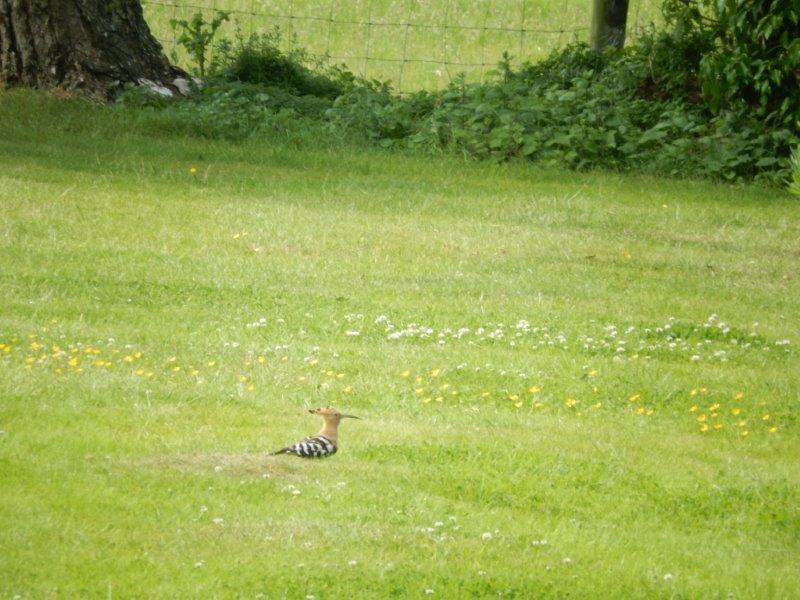
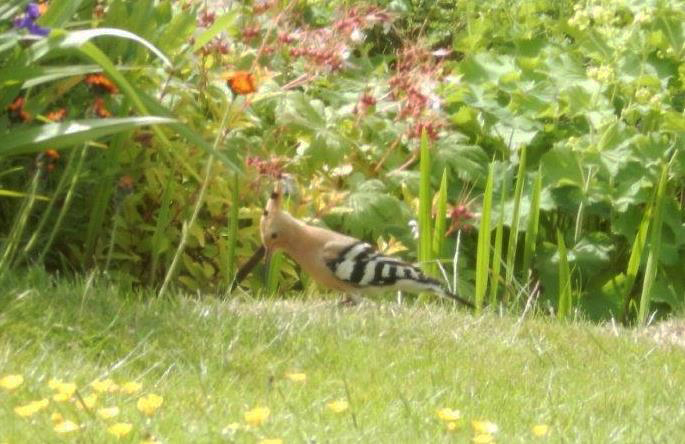
Exotic stuff rarely finds its way to Northants but barely had a belated report of a Hoopoe at Grendon on 16th June reached the ears of local birders before news broke of something even more colourful – and a whole lot rarer – in the shape of a European Bee-eater heard calling over Hanging Houghton on 19th. Constituting the fourth record for the county, this was another species seriously overdue for a repeat visit following three previous records in 1995, 1997 and 2003, all of which were in May.

Hoopoe, Grendon, 16th June 2015 (Gwen Maisey)

A female Common Redstart trapped at Stanford Res on 5th had an active brood patch suggesting it was a local breeder, while a late summer movement of Crossbills included nine over Hanging Houghton on 1st, eight over Pitsford Res on 13th, fourteen over Scaldwell on 16th, singles over Ravensthorpe Res on 17th and Stanwick GP on 23rd and approximately ten at Lady Wood on the latter date.

Two Weeks in Focus: 13th to 26th June 2015

What a difference two weeks makes as spring melts into summer. Alongside late spring scarcities and returning early autumn migrants, the last week fielded a number of ephemeral probables and possibles to ponder …

Duck was back on the menu with the apparition of (the?) two Ruddy Shelducks at Pitsford Res fleetingly on 17th, two Garganeys at Summer Leys LNR/Earls Barton GP between 13th and 20th, with two Red-crested Pochards there from 22nd to 26th, and two Common Scoters at Clifford Hill GP from 14th to 16th.

A Quail was still singing at Blueberry Farm (Maidwell) until at least 16th, while a probable Cattle Egret was seen flying west between Great Billing and Earls Barton, observed from a moving car on 23rd and a Great White Egret made a surprise – although brief – appearance at nearby Summer Leys on 26th.

June would be incomplete without a flyover Honey Buzzard and 25th saw a pale morph move high west over Daventry CP – the site of the much admir’d individual which lingered for eleven days in 2002. A probable Honey Buzzard was reported flying between Upton CP and West Hunsbury, Northampton on the same date, and a possible Black Kite wearing jesses, believed to have been seen several times at Geddington during the last week, was thought to be probably an escaped Harris Hawk, which is said to have been present in the area for the last two years … No doubt, though, about the identity of an Osprey fishing at Naseby Res on 16th. In the north of the county, two possible Common Cranes flew north-west over Corby on 15th.

Waders were surprisingly well represented for the latter half of June. Aside from a lone Little Ringed Plover at Daventry CP on 24th, two or three pairs were observed with young at two other sites and at least one pair had their breeding site ploughed up by heavy industrial development plant during the last week. A pair of Ringed Plovers successfully raised three young at one site, while presumed migrants comprised four at Summer Leys on 13th with one there again on 20th. Summer Leys also produced two Sanderlings on 13th, Little Stint on 17th and up to four Dunlins between 13th and 23rd.

Nearby at Stanwick GP two Black-tailed Godwits were found on 23rd, while a Curlew was at Islip on 15th and Redshanks were seen at Pitsford Res, Summer Leys and Thrapston GP. Single Green Sandpipers at Clifford Hill GP on 14th and Summer Leys on 24th were a sure sign that autumn is on the way.

Further remnants of spring, however, were two Black Terns at Summer Leys on 13th and one at Clifford Hill GP two days later, while a Little Gull over Stortons GP on 21st constituted an unusual record for the site. The long-staying second-summer Mediterranean Gull was still at Summer Leys on 26th and, on 25th, another visited

Second-summer Mediterranean Gull, Stanwick GP, 26th June 2015 (Steve Fisher)

Stanwick GP, where the putative second-summer Azorean Gull appeared again on 14th,  a second-summer Caspian Gull was present on 14th, 15th and 25th and up to ten Yellow-legged Gulls were a precursor to the annual late summer build-up there.

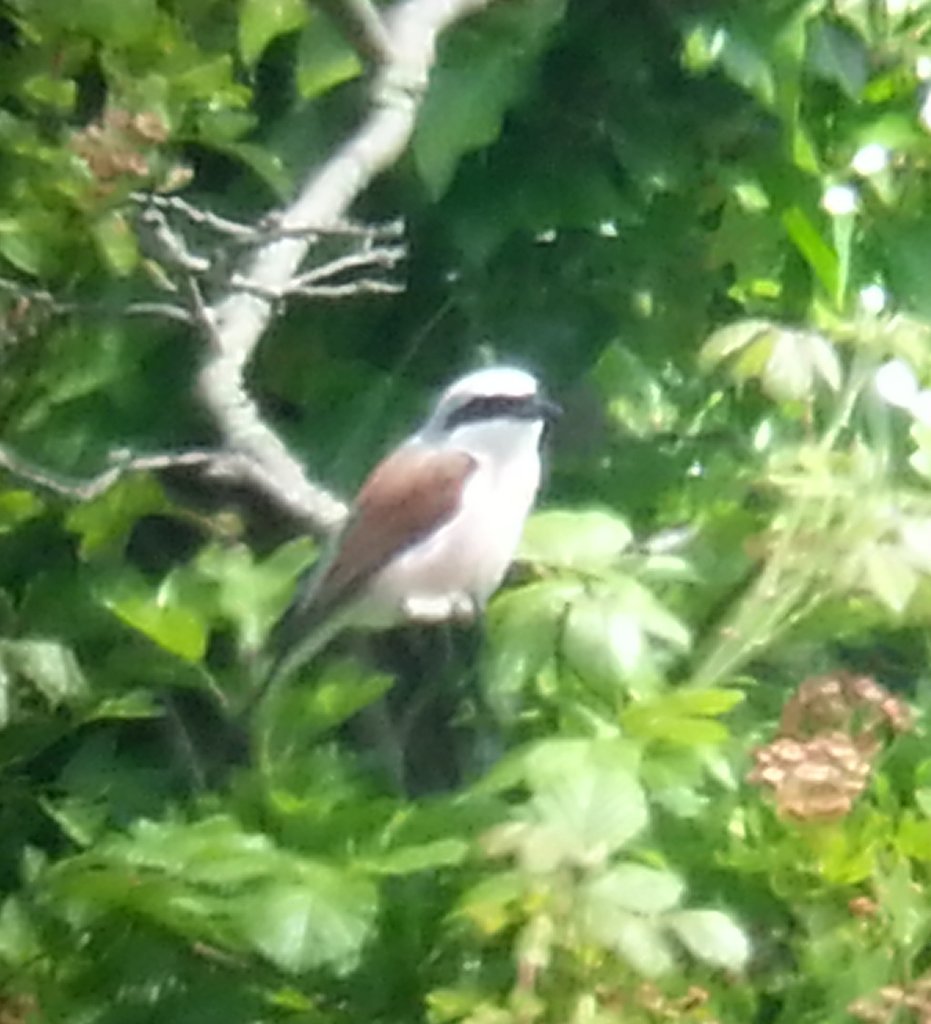
June is normally light on passerines but a male Red-backed Shrike in an area of central Northants, which was not conducive to public access, was present for one day only, on 15th, just long enough to be confirmed and photographed.

Male Red-backed Shrike, locality withheld, 15th June 2015 (Steve Fisher)

Approximately fifteen Crossbills flying west over Chelveston AF on 25th were probably in the vanguard of more to come as the autumn draws closer.

The Week in Focus: 6th to 12th June 2015

Temperatures hovered around, or below, average as a high pressure system positioned across Britain brought cool east to north-easterly winds for most of the week, although it warmed up at the week’s end. While some coastal counties continued to enjoy a trickle of scarce and extremely rare migrants, Northants slipped into the annual mid-June lull …

A Quail was singing at Harrington AF when last week’s male was also still at Blueberry Farm (Maidwell). Just one Peregrine was reported this week, at Stortons GP on 7th while the  wader collection comprised Little Ringed Plovers breeding at three sites plus two at Daventry CP on 7th, a Ringed Plover at Thrapston GP on 10th, along with four Redshanks and a Greenshank there on the same date.

At Stanwick GP, six Yellow-legged Gulls and a second-summer Caspian Gull were present on 9th and seven Yellow-leggeds and two second-summer Caspians were there on 11th. Most unseasonal, however, was a Short-eared Owl near Kettering on 8th.

The Week in Focus: 30th May to 5th June 2015

The period included a bout of unseasonal gales, brought in by a deep Atlantic low pressure system on 1st/2nd but the week’s end enjoyed a southerly, warm airflow from the continent, albeit short-lived.

A Pink-footed Goose at Clifford Hill GP on 30th and a drake Garganey at Stanford Res on 3rd-4th emerged as the only scarce wildfowl of the week, while hot on the heels of last week’s Polebrook Quail came three more, with singles in the Brampton Valley near Kelmarsh on 30th, at Blueberry Farm, Maidwell from 30th to 4th and at Harrington AF on 31st.

Then came the fly-overs. An adult Gannet reportedly south over the A14 near Thrapston following the gales on 2nd, a Great White Egret south over Harrington AF on 31st and another Teflon County Special – a female Red-footed Falcon, which was hawking over the feeder stream just north of Boddington Res for five minutes on 30th. The latter is the first in spring since 2000 and a bird which the single Peregrine at Hanging Houghton on the same date – plus numerous Hobbies elsewhere – can never make up for.

Aside from the now summering Little Ringed Plovers at three sites, spring’s final wader fling came in the form of six ‘tundra’ Ringed Plovers at Clifford Hill GP on 30th (nine had been present there the previous evening) followed by two at Stanwick GP the next day and six at Hollowell Res on 2nd – all of which it seems logical to assume were also likely to have been of the race tundrae. Sanderlings also chose this week to make up for their apparent absence earlier in the spring with singles at Clifford Hill GP on 31st, Stanwick GP on 2nd and Summer Leys LNR the following day, while three visited Stanwick GP on 1st.
Sanderling, Summer Leys LNR, 3rd June 2015 (Bob Bullock)

Not to be outdone, Dunlin too put in appearances at Clifford Hill GP, where there were eight on 30th (following twelve on the previous evening), at Stanwick GP, where there were twelve on 31st, at Hollowell Res (two on 2nd) and at Stanford Res (one on 3rd).

BlackTern, Stanwick GP, 31st May 2015 (Bob Bullock)
Black Tern, Stanwick GP, 31st May 2015 (Bob Bullock)

One of the few Black Terns to be recorded this spring appeared at Stanwick GP on 31st while a ‘portlandica’ Arctic Tern put in a brief appearance at Summer Leys on 3rd – the same site continuing to host the long-staying second-summer Mediterranean Gull until at least the same date.

'Portlandica' Arctic Tern, Summer Leys LNR, 3rd June 2015 (Bob Bullock)
‘Portlandica’ Arctic Tern, Summer Leys LNR, 3rd June 2015 (Bob Bullock)

Other rare larids were, unsurprisingly, restricted to Stanwick GP, where year-round gull watching continued to yield results in the form of the putative second-summer Azorean Gull again on 4th and up to five Yellow-legged Gulls and a second-summer Caspian

Putative second-summer Azorean Gull, Stanwick GP 4th June 2015 (Steve Fisher)

Gull between 2nd and 4th. This week’s scarce passerines came in the form of an uncharacteristically late spring Black Redstart at Harrington AF on 30th, a male Greenland Wheatear near Boddington Res on 30th plus a Northern Wheatear (probably also Greenland) at Duston Mill, Northampton on 31st and two parties of Crossbills which were heard only at both Yardley Chase and at Pitsford Res on 30th.

The Week in Focus: 23rd to 29th May 2015

A predominantly westerly airstream brought sporadic showers, but conditions remained largely dry until the week’s end. Few new migrants were reported, although two Cattle Egrets flying west over Blueberry Farm on 27th would have constituted a popular draw had they been relocated.  Conversely the Summer Leys Great White Egret appeared intent to stick it out at that locality until at least 25th.

Great White Egret, Summer Leys LNR, 24th May 2015 (Phil Jackman)

The year’s first Quail was reported singing near Polebrook on 28th, while raptors worthy of note this week were a Marsh Harrier flying south along the Brampton Valley on 24th, an adult male Hen Harrier near Twywell Hills and Dales on 27th and single Peregrines at Corby, Higham Ferrers and Thrapston.

Little Ringed Plovers were seen at three localities and the only Ringed Plover reported was one at Pineham on 23rd, while the only Dunlin were singles at Hollowell Res on 27th and at Stanwick GP the following day. Stanwick also held a Turnstone from 24th to 26th and a Redshank on the latter date and two remained at Summer Leys, where a Wood Sandpiper dropped in on 27th.

The long-staying second-summer Mediterranean Gull was also still present at Summer Leys throughout the week while, at Stanwick, the putative second-summer Azorean Gull

Putative second-summer Azorean Gull, Stanwick GP 25th May 2015 (Steve Fisher)

also remained with up to Yellow-legged Gulls and a second-summer Caspian Gull was also present between 26th and 28th.

Second-summer Caspian Gull, Stanwick GP 26th May 2015 (Steve Fisher)

A late spring Arctic Tern visited Daventry CP on 29th but scarce passerines this week were restricted to six Crossbills flying west at Kelmarsh on 25th.