Two Weeks in Focus: 21st March to 3rd April 2015

The first week of the period enjoyed relatively mild conditions facilitated by light south-westerlies – all this in stark contrast to the unsettled second week, which featured gale-force winds and intermittent squally showers.

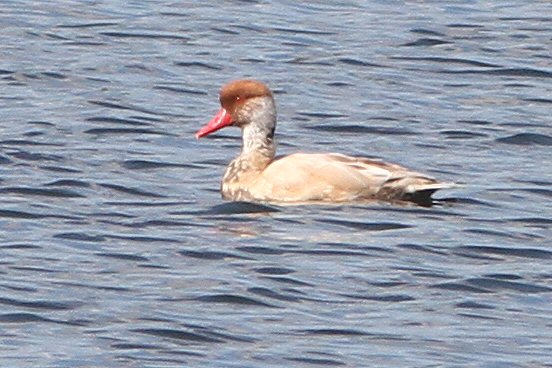
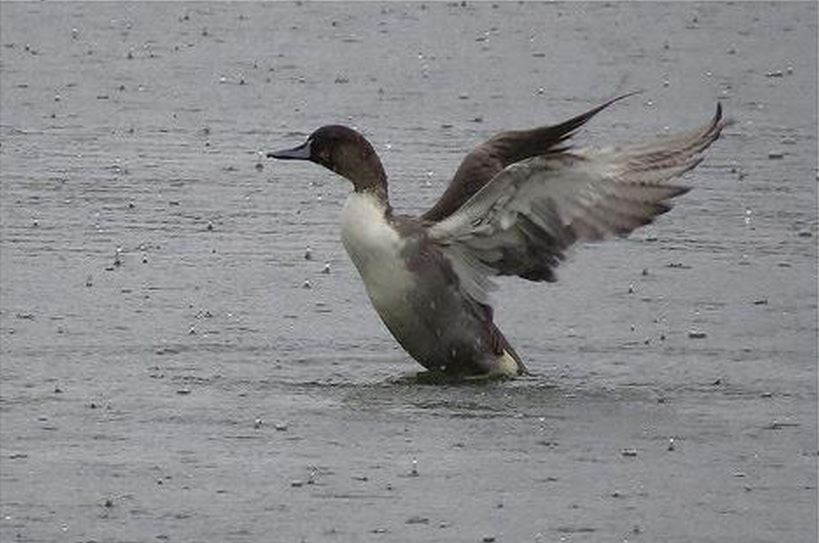
With most of the winter wildfowl well out of the way, the focus for the period was on summer migrants. A few winterers lingered, however, including a Pink-footed Goose which dropped in with Greylags on Brooke Weston football pitch, Corby on 25th and up to three Pintails at Summer Leys LNR between 21st and 26th. The drake Red-crested Pochard also remained at Stanford Res until 21st and another appeared at Daventry CP on 3rd, while two were at Summer Leys on the same date. The long-staying female Ring-necked Duck was still at Billing GP until at least 2nd and what was presumably the last of the winter’s Smew – a ‘redhead’ – stuck it out at Stanwick GP until 25th.

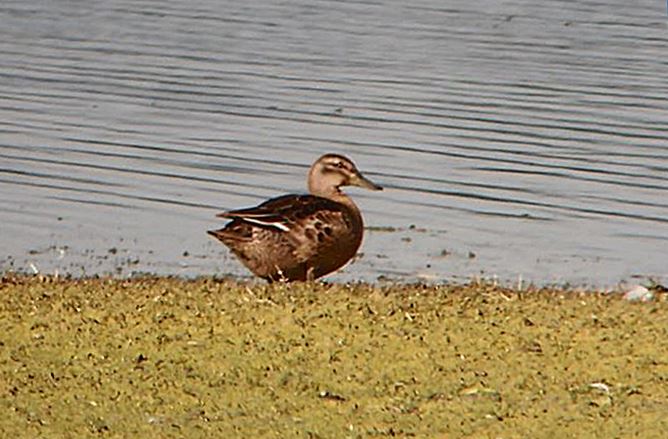
Female Ring-necked Duck, Billing GP, 27th March 2015 (Bob Bullock)

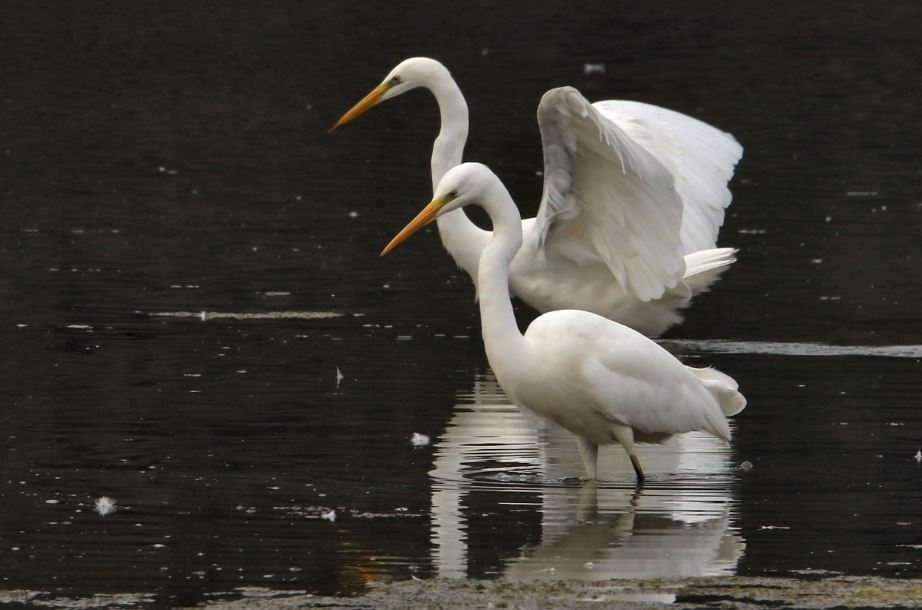
DJ RND CaptionSimilarly, just one wintering Great White Egret remained at Summer Leys until 1st before moving to nearby Ditchford GP on 3rd. Spring would not be spring without an April migrant Black-necked Grebe and one turned up right on cue at Daventry CP on 3rd, as did the first Ospreys, with singles at Pitsford Res on 23rd, Scaldwell and two other sites on 24th, Boddington Res on 2nd and Ravensthorpe Res the following day. The latter bird was satellite-tagged and is known as ‘Yellow 30’ – a female from Rutland Water which was seen there the previous day, as well as being seen near Stamford and at Eyebrook Reservoir.

Female Osprey, Ravensthorpe Res, 3rd April 2015 (Bob Bullock)
Female Osprey, Ravensthorpe Res, 3rd April 2015 (Alan Coles)

Much rarer these days, however, was an immature Goshawk which sparred briefly with local Common Buzzards over Boddington Res before moving off on 30th. Not long to go before the first Hobby of the year finds its way into the county but until then a Merlin at Blueberry Farm (Maidwell) on 23rd and single Peregrines at five other sites will have to suffice.

Considering the low numbers of Golden Plovers in the county this winter, the largest count for months came from Preston Capes on 28th, when some 1500-2000 were estimated to be present there. Smaller numbers were at Harrington AF, Scaldwell, Boddington Res and Clifford Hill GP. Both Ringed Plovers and Little Ringed Plovers appear to be slow to come through this spring with just one Ringed at Stanwick GP on 24th and one Little Ringed over Daventry CP on 3rd. A Curlew visited Hollowell Res on 31st and two in the Tove Valley on 3rd were not unusual at this site but a Sanderling at Daventry CP on 26th was – they are not normally seen locally before May. Three Dunlins at Stanwick GP on 31st were the only ones during the period, between one and three Common Snipe were found at Hollowell Res and Summer Leys, while up to two Jack Snipe were at Hollowell Res between 21st and 27th and two were found at Boddington Res on 30th. Other waders included two to three Redshanks at both Stanwick GP and Summer Leys and two Greenshanks at the latter locality on 2nd were unusually early (but one turned up in Hertfordshire on the same date). Green Sandpipers appeared on floodwater near Everdon, at Upton Valley Way (Northampton), near Welford and at Pitsford Res.

It was a great time for gulls! Stealing the award for most showy Larid was a second-summer Mediterranean Gull which arrived in the Black-headed Gull colony on Summer Leys’ Rotary Island on 29th, staked its claim for territory and remained for the following five days. Other Meds included an adult at Stanwick GP on 23rd and single first-winters at Summer Leys on 27th and at Daventry CP on 31st.

Second-summer Mediterranean Gull, Summer Leys LNR, 30th March (Bob Bullock)

Better than this, though not as easy to get to grips with, was a first-summer Ring-billed Gull – only the fourteenth county record – which visited the gull roost at Boddington Res on 27th and 28th. Boddington has a track record for producing this species, more than half of the county records of which have been found by just one observer, Gary Pullan.

First-summer Ring-billed Gull, Boddington Res, 28th March 2015 (Bob Bullock)

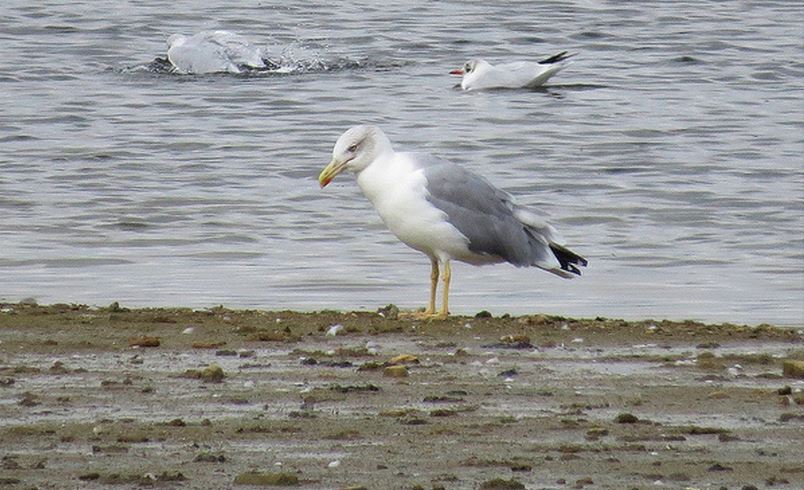
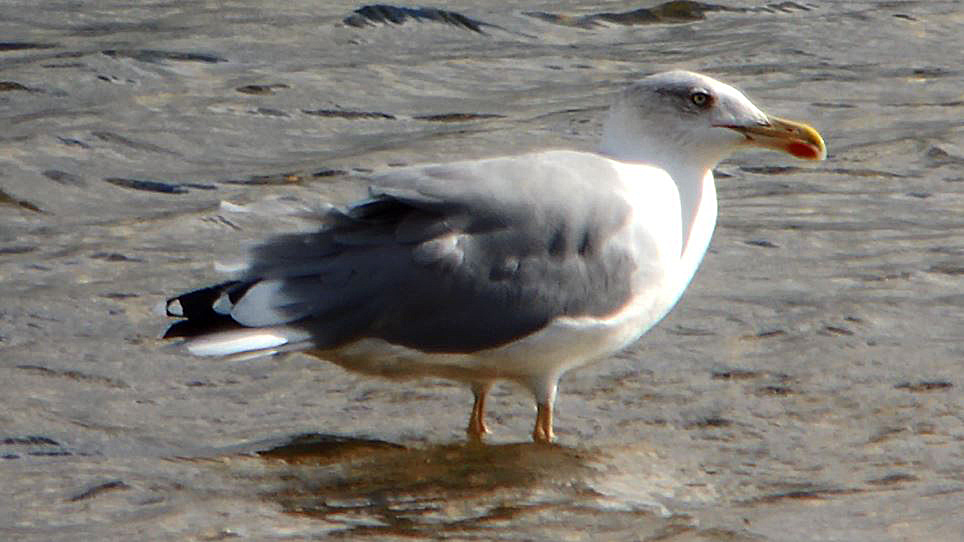
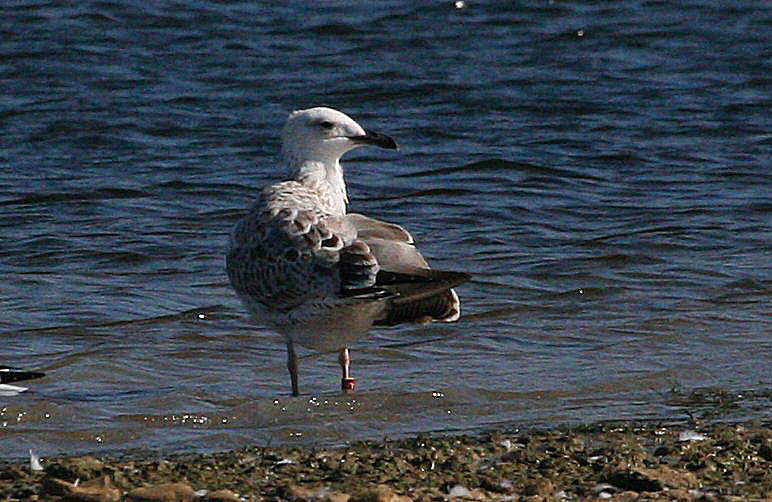
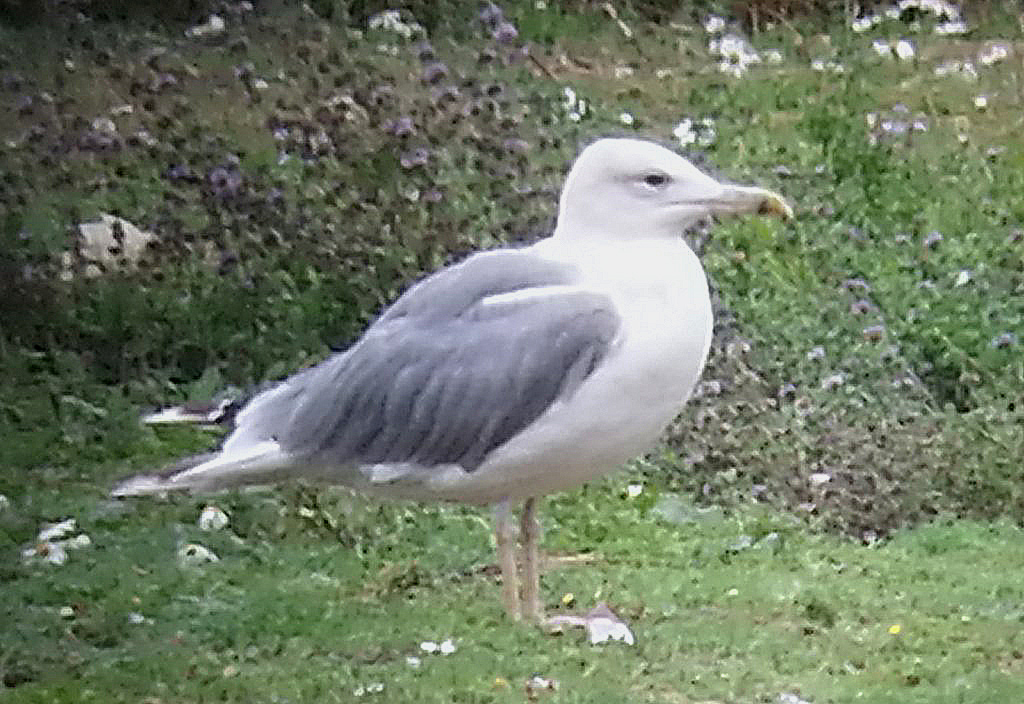
Yellow-legged Gulls are relatively scarce at this time of year and the three records in the period were an adult at Stanford Res on 21st, a second-summer at Stanwick GP on 31st and a fourth-year at Daventry CP on 3rd, while the only Caspian Gulls were restricted to Stanwick GP with an adult on 24th-25th, a second-summer on 27th and two second-summers on 31st. After first being seen flying around Wellingborough Recycling Centre on 23rd, an adult Glaucous Gull became a regular late afternoon visitor to the main lake at Stanwick GP between 24th and 2nd. This individual had been ringed as recently as 21st March, at Pitsea Landfill in Essex, before making the journey north-west to Northants.

Adult Glaucous Gull, Stanwick GP, 31st March 2015 (Steve Fisher)

DJ Glauc CaptionLate March is also a prime time for inland Kittiwake passage and Pitsford Res featured two on 30th.

Adult Kittiwake, Pitsford Res, 30th March 2015 (Bob Bullock)

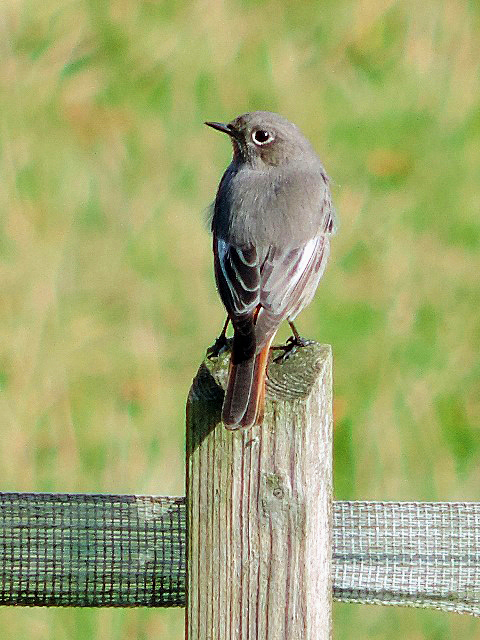
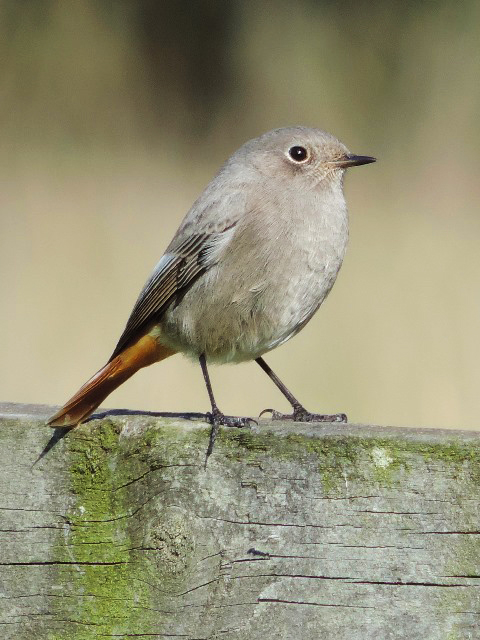
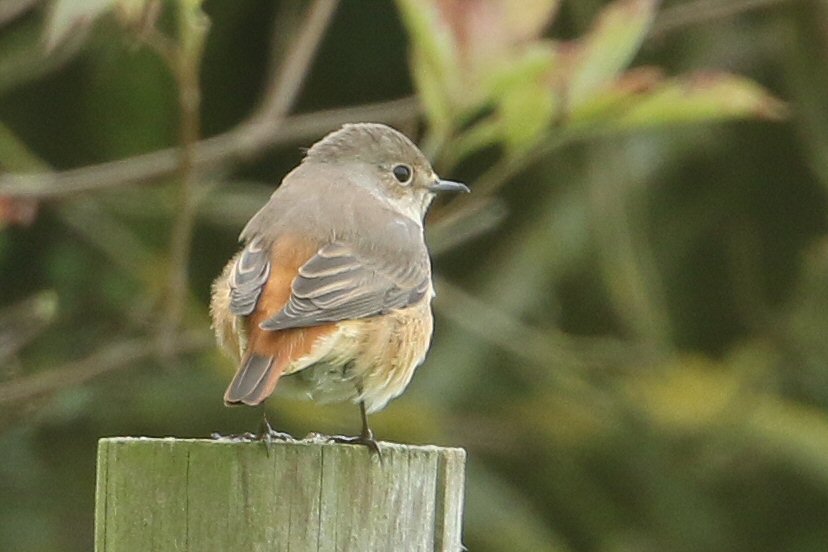
And so to landbirds, which appear to have been somewhat overshadowed during the period … Two outgoing Short-eared Owls were reported from the far eastern end of Stanwick GP on 27th, while incoming Swallows were at Stanford Res on 29th, Boddington Res on 2nd and Summer Leys on 3rd. The first northbound White Wagtails appeared, including singles at Stanford Res on 21st and 27th and at Summer Leys on 26th with two there on 3rd. A Black Redstart frequented gardens in Byfield on 21st, while two

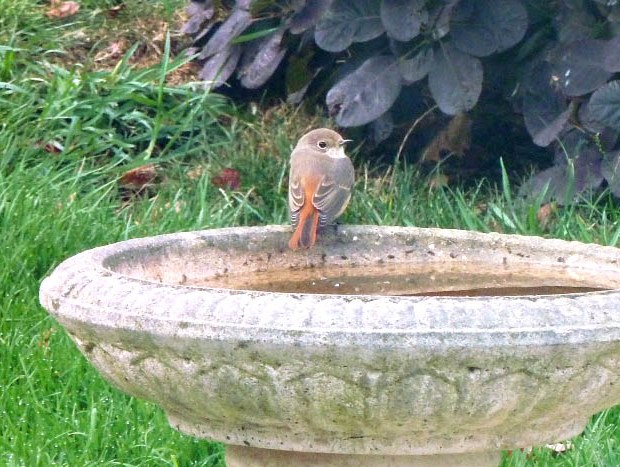
Black Redstart, Byfield, 21st March 2015 (Bob Bullock)

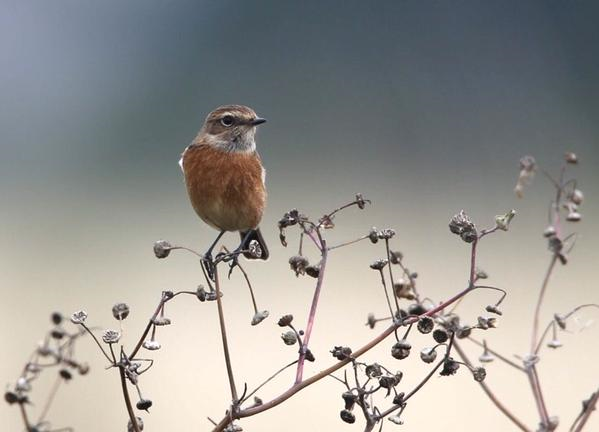
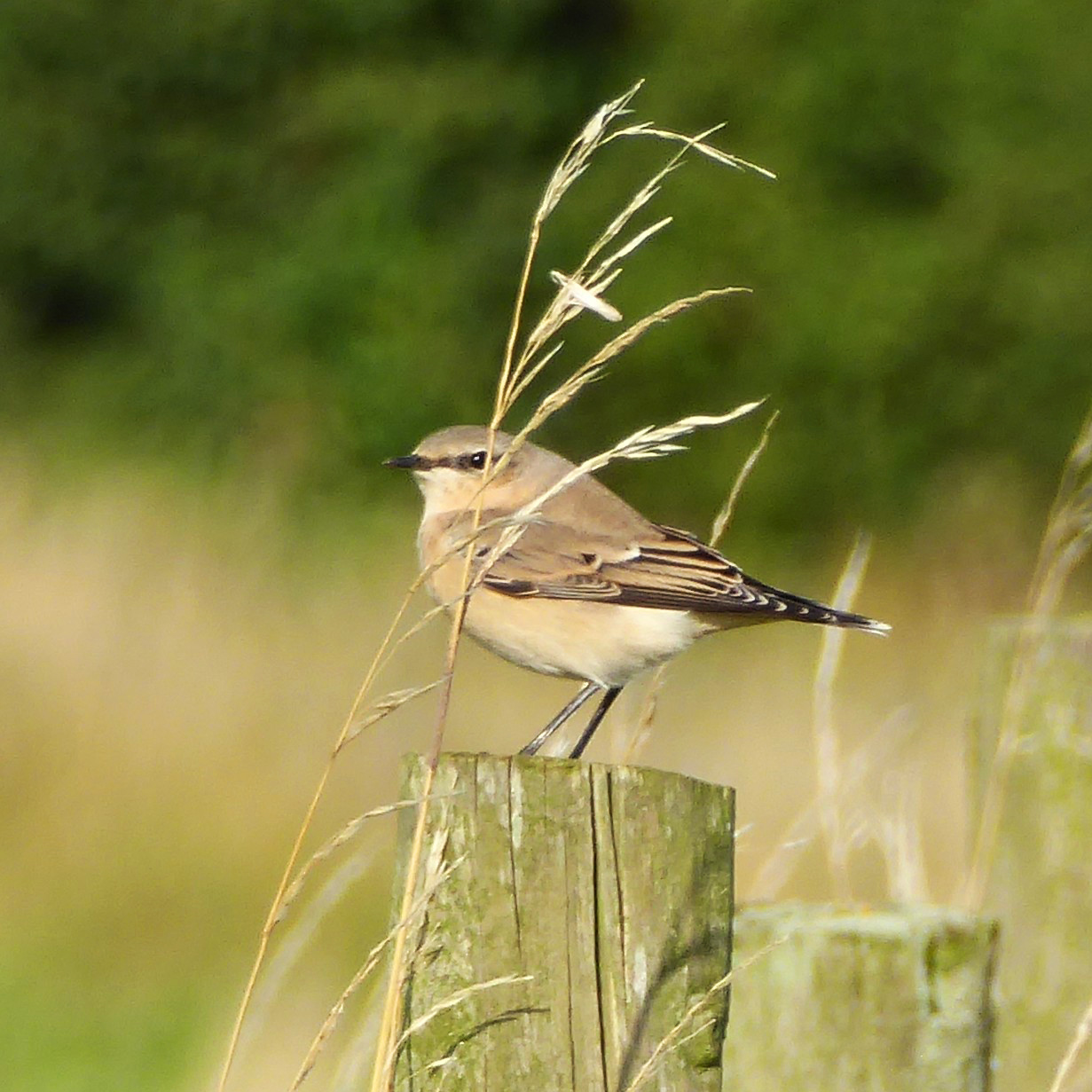
Stonechats lingered at Blueberry Farm on 23rd but just one Northern Wheatear was found – a male at Clifford Hill GP on 3rd. Several Bramblings near Scaldwell on 28th was a sign that winter was not quite over …

The Week in Focus: 14th to 20th March 2015

A stiff east-northeasterly breeze ensured a cold start to the week, which then remained chilly but largely dry and bright. Early common migrants began to appear in some numbers including more Sand Martins and a noticeable large wave of Chiffchaffs, while some of our less common winter visitors maintained a presence.

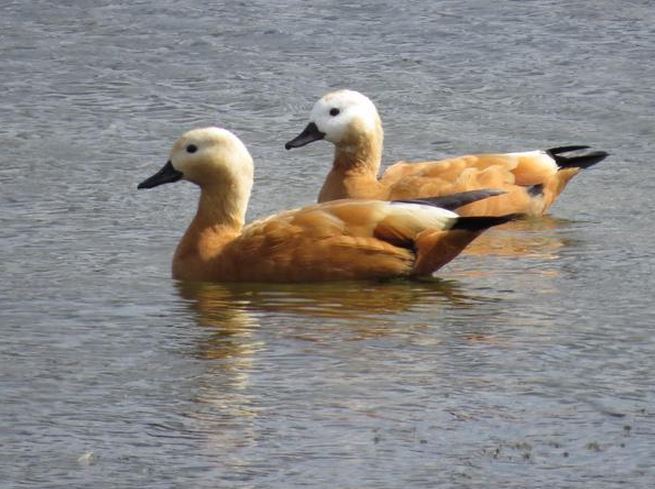
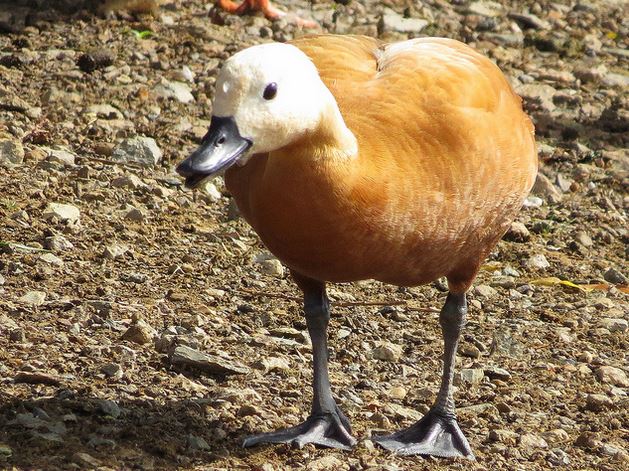
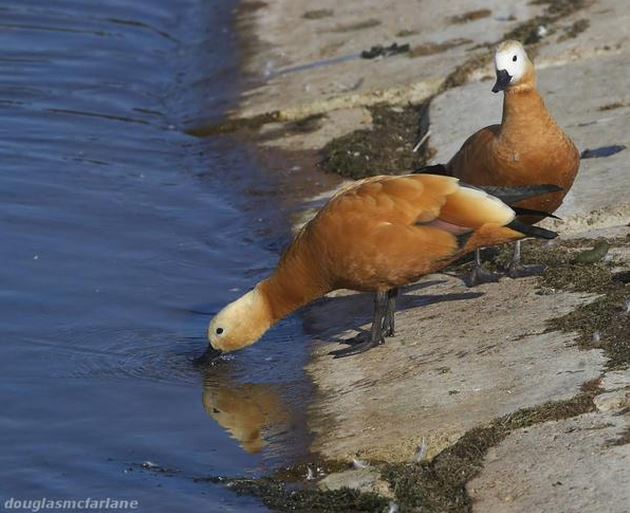
Falling into the latter category the three European White-fronted Geese were still at Pitsford Res until at least 18th and the two Ruddy Shelducks – now sporadic in their appearances – were still at the same site on 15th. The drake Pintail also remained at Summer Leys LNR until at least 18th, as did the drake Red-crested Pochard at Stanford Res, while two were found at Sywell CP on 16th. The long-staying female Ring-necked Duck was still at Billing GP until at least 18th as were two Smew at Ravensthorpe Res and a ‘redhead’ at Stanwick GP on 20th.

Drake Pintail, Summer Leys LNR, 17th March 2015 (Simon Hales)

The two Great White Egrets remained at Summer Leys until 15th with one there until 20th, while two were found at Ditchford GP on 16th while the best on the raptor front was a ‘ringtail’ Hen Harrier hunting by the concrete track at Harrington AF on 19th and single Peregrines at Old Sulehay on 15th and Ditchford GP the following day.

Golden Plover records were restricted to the Brampton Valley, Harrington AF and Scaldwell with a maximum of one hundred and twenty-five at the latter locality on 14th – the same date that the first Ringed Plover of the spring was photographed at Earls Barton GP. A Curlew was in the Tove Valley on 18th-19th, Common Snipe were found at Brixworth STW, Stanford Res and Summer Leys, while eleven were counted on 14th at Hollowell Res, which also produced a Jack Snipe on the same date. Other waders included one to three Redshanks at Clifford Hill GP and Summer Leys and a Green Sandpiper at Stanford Res on 18th. This week saw rather more in the way of quality Larids. The gull roost at Boddington Res again produced adult Mediterranean Gulls on 16th and 18th as did Pitsford Res on 14th and 15th and further singles visited Daventry CP on 17th and Summer Leys the following day. The best, however, was an adult Iceland Gull in the Pitsford Res roost on 14th, followed by a second-winter Caspian Gull there on 18th, while the only other gulls of note were two adult Yellow-legged Gulls at Hollowell Res on 14th and a third-winter in the Pitsford Res roost on 17th.

First-winter Waxwing, Corby, 15th March 2015 (Simon Hales)

Last week’s first-winter Waxwing remained in Corby until 15th and, arguably not in the same league, a Rock Pipit was found at Boddington Res on 16th and a Water Pipit at Summer Leys on 18th. Four Stonechats were still at Blueberry Farm on 14th and the first Northern Wheatears of the year were at Clifford Hill GP and Blueberry Farm (Maidwell) on 18th followed by singles at Harrington AF and in the nearby Brampton Valley the next day.

The Week in Focus: 7th to 13th March 2015

What a difference a week makes! South-westerlies, rising temperatures and largely mild conditions created ideal conditions for the northward movement of the first summer migrants into the UK, with Northants receiving at least a sprinkling. Other birds were also plainly on the move – a clear indication that spring migration is now well and truly underway.

They should surely have been on their way by now but the three European White-fronted Geese were still at Pitsford Res until at least 11th with the two Ruddy Shelducks remaining there on 7th. A drake Pintail was again at Summer Leys LNR on 7th-8th and the drake Red-crested Pochard remained at Stanford Res over the same two days, while the female Ring-necked Duck – after going unreported last week – was still at Billing GP until at least 11th.

Female Ring-necked Duck, Billing GP, 10th March 2015 (Bob Bullock)
Female Ring-necked Duck, Billing GP, 10th March 2015 (Bob Bullock)

R-n Duck CaptionIf we hadn’t enjoyed the generous helpings of wintering Long-tailed Ducks last year then the first-winter drake which paid a brief visit to Pitsford Res on its way north on 10th would perhaps have elicited more interest than it actually did; this species is still a rare visitor to the county on any account. Most of our wintering Smew have departed and those remaining this week included two at Pitsford Res on 7th, a ‘redhead’ at Stanwick GP on 10th and 11th, the two ‘redheads’ still at Stortons GP on the latter of these two dates and three at Ravensthorpe Res on 13th.

The only Great White Egrets to be found during the period were the Summer Leys duo, which remained until at least 12th. And then there was ‘Klio’. The name given to the White Stork which, having escaped from the Exotic Pet Refuge near Deeping St James last week, appeared in Northants by the River Nene near Nassington on 7th and then border-hopped to various sites in nearby Cambridgeshire the following day. On 11th ‘he’ was back – this time at Ditchford GP’s Irthlingborough Lakes and Meadows Reserve for an hour or two before flying to Brigstock and finally Lowick, where he was eventually recaptured on 12th. A smart bird with no rings which would surely have passed muster had its origin remained unknown …

White Stork, Lowick, 12th March 2015 (Dave Holden)

A grebe found on the main lake at Stanwick GP on 8th ultimately proved to be a Slavonian Grebe after giving rise to some debate over its initial identification as a Red-necked. It was not present the following day so this was another bird which had moved swiftly on. It, or another, was found at Ravensthorpe Res on 13th.

And so to the vanguard of our summer visitors. An Osprey moved north over Harrington AF on 10th, no doubt the first of many to come, while Peregrines at Greens Norton on 7th and at both Stanwick GP and Summer Leys on 13th, and single Merlins at both Daventry CP and Blueberry Farm on the latter date were the only other raptors reported during the week.

Golden Plovers were recorded from Harrington AF, Byfield, Bozenham Mill and Blueberry Farm (Maidwell) with a maximum of three hundred at the latter site on 10th. This has been a poor winter for this species with no four-figure counts anywhere. A Curlew visited Clifford Hill GP on 8th, Common Snipe were found at Blueberry Farm, Bozenham Mill, Stanwick GP and Pitsford Res, with a maximum of thirty-four at the latter locality on 11th, which also produced two Jack Snipe on the same date. After last week’s double-figure count at Stanwick GP, Redshanks appeared to be unduly scarce with just one at Clifford Hill GP on 7th, two at Summer Leys the following day and up to four there on 13th, while single Green Sandpipers were found at Stanford Res on 7th and 8th, Pitsford Res on 7th and 11th, at Upton Valley (Northampton) on 10th and between Everdon and Fawsley on 13h.

Green Sandpiper, between Everdon and Fawsley, 13th March 2015 (Ray Vessey)

The gull roost at Boddington Res is consistently the most reliable site in the county for passage Mediterranean Gulls when they come through in March. This week saw three adults there on 9th, two adults and a second-winter on 10th and an adult on 11th. No doubt more will be seen there as the month progresses. The only other gulls of note were an adult Yellow-legged Gull in the Pitsford Res roost on 12th and three at Hollowell Res on 13th.

Mediterranean Gull caption

Second-winter Mediterranean Gull, Boddington Res 10th March 2015 (Mike Alibone)

Rather more scarce this winter, a Short-eared Owl was at Blueberry Farm on 7th and again on 13th; other than passage birds it seems unlikely this species will be seen in any numbers now before next autumn. The same cannot be said for Sand Martin, the first of which appeared at Ditchford GP’s Broadholme SWT on 9th – arguably the first true summer migrant of the year, Chiffchaffs notwithstanding, of course, this week appearing to herald an arrival en masse with records from nine widely-scattered localities. Presumed Central European Blackcaps – it’s still a bit early for the return of Iberian winterers – were a female in a Wellingborough garden on 8th and a male in a garden in Barton Seagrave on 11th.

Male (presumed Central European) Blackcap, Barton Seagrave, 11th March 2015 (Geof Douglas)

The main attraction on the passerine front this week, however, was the first-winter Waxwing which was found in Corby on 11th and remained, posing for the cameras, until 13th.

First-winter Waxwing, Corby, 12th March 2015 (Stuart Mundy)
First-winter Waxwing, Corby, 12th March 2015 (Bob Bullock)

Up to six Stonechats were still at Blueberry Farm all week and singles were also at Pitsford Res and Stanford Res on 7th.

The Week in Focus: 28th February to 6th March 2015

Bland and generally flat. Another treacle week in which long-stayers stuck, with not even the sniff of a Sand Martin on the rising temperatures to lift the spring spirits.

A ‘new’ Pink-footed Goose was found at Thrapston GP on 4th and the Ravensthorpe Res individual was present again on 6th, while the three European White-fronted Geese continued to stick it out with the two Ruddy Shelducks at Pitsford Res, now becoming disconcertingly tame on the waterline along the dam.

European White-fronted Geese, Pitsford Res, 1st March 2015 (Simon Hales)

Eight Barnacle Geese which dropped into Stanwick GP briefly on 28th were surely from feral stock but you never know … Just one Red-crested Pochard was reported this week – a drake at Stanford Res on 1st and the only Smew were five still at Ravensthorpe Res on 28th, falling to three there on 6th, and two – both drakes – at Stanwick GP the following day.

Up to two Great White Egrets remained at Summer Leys LNR all week and singles were at Ditchford GP on 3rd and at Stanwick GP the next day. The only raptor of note was a Peregrine at Hollowell Res on 6th.

Few waders were reported with just one Golden Plover in flight over Ravensthorpe Res on 28th and thirty near Hanging Houghton on 6th, single Common Snipe at Hollowell Res and Stanford Res on the same date with another at Harringworth AF and at least fifteen at Stanwick GP the following day. The first day of March also saw twelve Redshanks at the latter locality, when there was also a Green Sandpiper at Stanford Res, followed by another at Pitsford Res on 2nd and another at Lower Benefield on 4th.

The gull roosts of Pitsford and Boddington Reservoirs produced single adult Mediterranean Gulls on 2nd and 5th respectively and another was at Hollowell Res on 6th, while two adult Yellow-legged Gulls were again at Hollowell Res on 28th and another visited Stanford Res on the same date.

The only Chiffchaff this week was one, also at Stanford Res on 28th, and the only Central European Blackcap, a male, frequented a garden in East Hunsbury (Northampton) until at least 4th. Other wintering passerines included the up to three Stonechats at Hollowell Res, five in the wider Maidwell Vale and one at Pitsford Res and

Female Stonechat, Pitsford Res, 1st March 2015 (Simon Hales)

a male Brambling – scarce this winter – near Burn Coppice (Deenethorpe) on 1st with another flying east over Hollowell Res on 6th.

The Week in Focus: 21st to 27th February 2015

No drama. This applies to both weather and birds this week, during which everything appears to have come to a painful standstill. Hopefully it’s the calm before the storm. Next week it’s March and that first Wheatear can’t be far away …

The rarely there Pink-footed Goose paid one of its brief visits to Ravensthorpe Res on 25th, while at Pitsford Res the three European White-fronted Geese remained all week, as did the two Ruddy Shelducks and the drake Pintail was still there on 22nd.

First-winter European White-fronted Goose, Pitsford Res, 22nd February 2015 (Mike Alibone)

Up to five Red-crested Pochards were still being seen at Ringstead GP throughout the period, while the ‘redhead’ Smew at Stortons GP was joined there by a second one from 22nd to 25th, three to five were at Pitsford Res on 23rd with five (three drakes) at Ravensthorpe Res the next day and up to three remained at Stanwick GP to 26th.

Compared to last week, the number of Great White Egrets was down with just one at Ditchford GP on 21st and two at Summer Leys LNR on the same date, followed by singles there on 22nd and 25th. Similarly, raptor records were restricted to single Peregrines at Hanging Houghton on 21st and Higham Ferrers on 26th.

Waders were also at a low ebb with Golden Plovers numbering sixty-five at Kelmarsh on 22nd, seventy-five at Hollowell Res on 25th and approximately one hundred at Hellidon on 27th. In addition to these, two Common Snipe were at Moulton Quarry on 27th and a Curlew visited Stanwick GP on 26th. The week’s rare gulls were limited to two adult Caspian Gulls at Rushton Landfill on 22nd and a Yellow-legged Gull at Stanwick GP on 24th with two at Hollowell Res on 25th.

Wintering Chiffchaff numbers held up with at least twelve along the outflow stream at Ecton SF on 23rd and eleven around Broadholme SWT, Ditchford GP the following day. A male and female Central European Blackcap frequented a garden in Byfield during the week while Stonechats were seen between Deenethorpe and Benefield, at Hollowell Res, Pitsford Res and Blueberry Farm (Maidwell), with a maximum of four at the latter site on 23rd and 25th.

The Week in Focus: 14th to 20th February 2015

With no dramatic Atlantic systems on the horizon, calm and uneventful was the order of the week as far as the weather was concerned. In fact it was positively spring-like for a couple of days, all of which did little to usher in any stunningly new arrivals.

At Pitsford Res the three European White-fronted Geese remained all week, as did the two Ruddy Shelducks and a single drake Pintail was also present on 18th.

MA White-front Video Caption The two female Red-crested Pochards were still at Stanford Res on 15th at least with five again at Ringstead GP two days later and the long-staying first-winter drake Scaup seemed settled at Ravensthorpe Res on 14th-15th. The female Ring-necked Duck was back at Billing GP on 14th, although access restrictions and difficult viewing conditions at this site may mean it was present beyond this date. At least one Smew remained at Ravensthorpe Res on 17th, up to four were at Stanwick GP all week and three were at Pitsford Res on 14th.

RND DBJ Video CaptionIn the Nene Valley, Great White Egrets were present all week, being recorded in ones, twos and threes from Thrapston GP, Ditchford GP and Summer Leys LNR respectively but movement of individuals between sites made it almost impossible to assess just how many birds were present – until 20th, that is, when a record five were together at the latter of the three locations. With one still at Pitsford Res on 15th and 17th it is highly likely there were at least six in the county this week.

Great White Egrets, Summer leys LNR, 20th February 2015 (Stuart Mundy). Four of the five present at this site on this date.
Great White Egrets, Summer Leys LNR, 20th February 2015 (Stuart Mundy). Four of the five present at this site on this date.

Another poor week for raptors saw single Merlins at Stanford Res on 15th and again at Deenethorpe AF on the same date, while a Peregrine at Higham Ferrers was the only one reported during the period.

Waders were again in short supply with just six Golden Plovers over Ravensthorpe Res on 14th, fifteen at Harrington AF on the same date with 65 there and 300 at Summer Leys on 20th, while the same date saw one or two Jack Snipe at Barnes Meadow (Northampton) and one at Hollowell Res. Single-figure counts of Common Snipe came from Barnes Meadow, Moulton Quarry and Summer Leys but 15+ were at Stanwick GP on 20th, nine Redshanks were still at Stanwick GP on 15th and one visited Summer Leys LNR on 19th while a Green Sandpiper was also at Stanwick GP on 14th.

An unconfirmed report of an adult Iceland Gull in the roost at Pitsford Res on 19th remained exactly that (it would be the first of this species at this locality for many years), while the only Yellow-legged Gull was an adult at Stanford Res on 14th. A Common Gull showing characteristics of the race heinei was present in the Pitsford roost on 20th.

Up at Deenethorpe the Great Grey Shrike continued to be seen at Burn Coppice until at least 17th, although it appears to have taken up a position further away from the road, becoming more difficult to see well. Rumours of argy-bargy with the landowner have recently emerged so pursuing it across the fields is probably not the best course of action to take in attempting to obtain better views … The outflow stream at Ecton SF continues to hold good numbers of wintering Chiffchaffs with ten counted there on 14th, although the chances of their being joined by a tristis are now looking very slim indeed; elsewhere, single Chiffchaffs were at Stanford Res on 14th and Stanwick GP the following day. Other wintering passerines of note were single female Central European Blackcaps in gardens in East Hunsbury (Northampton) throughout and three Stonechats at Hollowell Res on 14th, two at Blueberry Farm (Maidwell) on the same date, with four there on 20th, and two at Thrapston GP on 27th.

The Week in Focus: 7th to 13th February 2015

A slow moving high pressure system resulted in calm conditions throughout much of the week with an almost stationary blanket of cloud for the latter half. Signs of early spring were evident in the return of Oystercatchers to favoured Nene Valley locations and a number of species in full song.

A solitary Pink-footed Goose visited Ravensthorpe Res on 9th, while the three European White-fronted Geese remained all week at Pitsford Res, where the two Ruddy Shelducks were also present until at least 9th. Two Pintails visited Summer Leys LNR on 7th-8th and the two female Red-crested Pochards were still at Stanford Res at the same time, while single drakes remained at Hardingstone GP to 7th and Wicksteed Park Lake to 10th, with three again at Ringstead GP on 13th. The long-staying first-winter drake Scaup continued to commute between Ravensthorpe Res and Hollowell Res throughout the week but most noteworthy was the surprise reappearance of the female Ring-necked Duck – this time at Clifford Hill GP – on 11th. It is likely, of course, that it had been commuting between here and its much favoured locality of Billing GP during its apparent absence. Meanwhile, three Smew remained at Ravensthorpe Res, three at Stanwick GP and one at Stortons GP, with three or four at Pitsford Res on 13th.

Smew, Ravensthorpe Res, 8th February 2015 (Bob Bullock)

Great White Egrets were again absent from the latter site but singles were seen on and off all week at Summer Leys LNR and Ditchford GP with all reports perhaps just relating to a single mobile individual.

Great White Egret, Summer Leys LNR, 7th February (Adrian Borley)

Raptors again maintained a low profile with just one Merlin again at Deenethorpe AF on 8th and twos of Peregrine at Rushden on 9th and Ditchford GP on 12th with one also at Pitsford Res the following day.

Apart from five at Stanford Res on 9th and three over Pitsford Res on 13th, a count of just two hundred at Sywell CP on 9th constituted the only other record and the maximum figure for Golden Plover this week; where are they all this winter? The only Jack Snipe were found at Hollowell Res, Pitsford Res and Barnes Meadow (Northampton), where the highest count was five or six on 7th, while Common Snipe were found at Stanwick GP, Summer Leys LNR, Hollowell Res, Stanford Res and Pitsford Res, with a top total of fifty-nine at the latter locality on 13th. Just one Redshank was at Summer Leys LNR on 7th-8th while nine were counted at Stanwick GP the following day and a Curlew at Ditchford GP on 12th hinted of better things to come.

Scare larids included a first-winter Mediterranean Gull at Pitsford Res on 13th, adult Caspian Gulls at Stanford Res on 7th and at Ditchford GP on 12th – the latter accompanied by a first-winter the next day, while the same site held two Yellow-legged Gulls and this species was also seen at Hollowell Res and Stanwick GP.  Now present for six weeks, the Great Grey Shrike at Burn Coppice, Deenethorpe continued to be seen

Great Grey Shrike, Burn Coppice, Deenethorpe, 8th February 2015 (Adrian Borley)

daily, there was just one report of Chiffchaffs near Brixworth on 8th, while three Central European Blackcaps were in a garden in Raunds and one in a Thrapston garden on 9th.

Central European Blackcap, Thrapston, 9th February 2015 (David Holden)

This week’s wintering Stonechats included one at Pitsford Res, two at Hollowell Res and up to four at Blueberry Farm (Maidwell).


The Week in Focus: 31st January to 6th February 2015

A very uneventful week weatherwise with odd, settling snow flurries which didn’t linger and cold easterlies to finish.

The four Pink-footed Geese were still at Blatherwycke Lake on 31st and another visited Stanwick GP the next day while the three European White-fronted Geese continued to be seen at Pitsford Res until at least 1st. Back on the scene this week were the two Ruddy Shelducks at the same locality after an apparent prolonged absence and a drake Pintail visited Summer leys LNR on 5th. The two female Red-crested Pochards were still at Stanford Res on 1st and single drakes were at Wicksteed Park Lake on 31st to 6th and Hardingstone GP on 2nd.

Drake Red-crested Pochard, Hardingstone GP, 3rd February 2015 (Mike Alibone)

The long-staying first-winter drake Scaup continued to move erratically between Ravensthorpe Res and Hollowell Res all week. The early part of the week saw four Smew still present at Ravensthorpe Res and four were also at Pitsford Res and Stanwick GP, the latter being joined by a fifth on 2nd, while the lone ‘redhead’ remained at Stortons GP all week.

Smew, Ravensthorpe Res, 1st February 2015 (Simon Hales)

This week’s catch of Great White Egrets comprised three at Summer Leys LNR on 31st with one there on 5th-6th and another – or one of the same – at Ditchford GP on 1st

Capture1and few raptors were reported with just single Merlins at Pitsford Res on 1st and Deenethorpe on 6th and Peregrines at Daventry on 2nd and Higham Ferrers on 4th.

Small numbers of Golden Plovers were reported and the only Jack Snipe were two at Hollowell Res on 2nd and two Pitsford Res on 4th, while less than double-figure counts of Common Snipe came from Stanwick GP, Stanford Res, Pitsford Res and Brixworth. Four Redshanks were at Stanwick GP on 31st and 6 were at Ditchford GP on 4th-5th  along with three Green Sandpipers.

Gulls provided some interest this week in the shape of an adult Ring-billed x Lesser Black-backed hybrid in the Boddington Res gull roost on 2nd, otherwise a first-winter. Mediterranean Gull visited the Pitsford roost on 31st and an adult Glaucous Gull was found the Ditchford GP’s famous Viaduct Pit the next day. Caspian Gulls continued to be seen at Stanwick GP with an adult on 31st followed by a first-winter next day and the usual ones and twos of adult Yellow-legged Gulls lingered at both the latter locality and at Hollowell Res.

Continuing to draw a trickle of admirers, the Great Grey Shrike at Burn Coppice, Deenethorpe remained and appeared to be joined by another on 4th.

CaptureThere were fewer reports of Chiffchaffs this week with just one or two at Brixworth on 2nd and three at Ditchford GP on 4th, while single Central European Blackcaps were in gardens at Wootton on 31st and Byfield on 2nd and the only Stonechats were three at Hollowell Res on 2nd. Bramblings, however, came to the fore with singles in gardens in Wooton and Hanging Houghton and two at Harrington Airfield on 2nd.

The Week in Focus: 24th to 30th January 2015

This week presented as a tale of two halves, with a relatively mild and dry beginning giving way in the end to something rather more cold and wet. When the west wind blows, it blows – this one via Greenland, dumping significant snow ‘up north’ while Northamptonshire received only a dusting, nevertheless raising hopes of something new appearing … somewhere.

In the Stanford on Avon area the three Pink-footed Geese border-hopped from Leicestershire to visit Stanford Res on 24th-25th and the Blatherwycke four were still present with the Greylag flock on 25th. Also remaining were the three European White-fronted Geese at Pitsford Res until at least 29th. Back at Stanford Res, the two female Red-crested Pochards were still in residence on 25th and five were still at Ringstead GP on 28th, while the long-staying first-winter drake Scaup yo-yoed between Ravensthorpe Res and Hollowell Res all week.

First-winter drake Scaup, Ravensthorpe Res, 25th January 2014 (John Friendship-Taylor)

The four Smew – including two drakes – were still present at Ravensthorpe Res on 26th as were the four at Stanwick GP all week, during which two were also present at Pitsford Res.

Smew, Ravensthorpe Res, 24th January 2014 (Stuart Mundy)

CaptureSingle Great White Egrets were reported from Pitsford Res on 25th and Ditchford GP on 30th, while up to three were seen on and off throughout the week at Summer Leys LNR. This is a poor showing in comparison to recent weeks and will no doubt see the county slip from the national ratings for this species for the period!

Similarly, it was a poor week for both raptors and waders with a Merlin just inside Northants at Turtle Bridge on the River Welland on 27th and another at Blueberry Farm on 30th and single Peregrines were at Ditchford GP on 24th and Higham Ferrers on 29th. A meagre thirty Golden Plovers visited Stanford Res on 24th and fifteen were over Blueberry Farm on 30th, the only Jack Snipe were two at Pitsford Res on 29th and two at Hollowell Res the following day, while this week’s only reported Common Snipe comprised four at Cransley Res on 24th. At least eight Redshanks remained at Stanwick GP, four at Ditchford GP along with two Green Sandpipers and a Green Sandpiper was also at Ecton SF on 25th. An adult Mediterranean Gull was at Hollowell Res on 30th, Caspian Gulls were found at three sites with single adults at Stanford Res and Ditchford GP on 24th and at Stanwick GP on 24th and 27th, with a first-winter at the latter site on the first of these two dates. Stanwick also played host to two adult Yellow-legged Gulls on 24th, another adult was at Stanford Res on the same date followed by two adults at Hollowell Res on 27th.

Although at times it proved elusive, the Great Grey Shrike at Burn Coppice, Deenethorpe was still present to at least 25th. Smaller wintering passerines included thirteen Chiffchaffs at Ecton SF on 24th and singles at Thrapston GP on 26th, Northampton on 27th and Stanwick GP on 29th, while single Central European Blackcaps were in two Northampton gardens on 25th and in a Raunds garden on 29th. Stonechats were seen this week at Blueberry Farm, Burn Coppice, Ditchford GP and at Hollowell Res, with a maximum of four at the first of these sites on 30th.

Male Stonechat, Ditchford GP, 24th January 2014 (Simon Hales)
Stonechats, Ditchford GP, 24th January 2014 (Simon Hales)

A ‘Nordic’ Jackdaw appeared at Hanging Houghton on 28th, although individuals showing characteristics of this race appear to attract little attention these days after enjoying a number of years in vogue nationally.

The Week in Focus: 17th to 23rd January 2015

A largely dry week, in which temperatures oscillated between the mild and the distinctly chilly, saw little change in the birding montage as the first month of the year continued to slip by.

A different set of Pink-footed Geese this week comprised one with the goose flock at Sywell CP on 20th and nine north over Burn Coppice, Deenethorpe the following day, while the three European White-fronted Geese remained at Pitsford Res until at least 17th. The only Pintails this week were found at Stanwick GP, where two resided between 17th and 19th, the two female Red-crested Pochards were still at Stanford Res until at least 17th with this date also seeing a female at Ditchford GP, followed by up to four still at Ringstead GP between 20th and 22nd. The female Ring-necked Duck at Billing GP was at home to all comers on the weekend of 17th-18th, fuelling speculation it had been there all the time and suggesting that the brief Stanwick drop-in on 11th may have been a different individual; after all, the Billing bird had no reason to take a day return trip to Stanwick, unlike its previous foray to neighbouring Clifford Hill GP, when the lake became frozen and open water was in short supply. The long-staying first-winter drake Scaup remained at Hollowell Res until at least 20th, hill-hopping to adjacent Ravensthorpe Res on 17th and 23rd, where the four Smew – including two fine drakes – were still present on 18th. There were few Smew elsewhere, with Stanwick GP hosting a couple on 17th-18th, rising to four (two drakes) on 21st, while single ‘redheads’ continued to be seen at Pitsford Res and Stortons GP on 18th.

'redhead' Smew, Pitsford Res, 18th January 2015 (Simon Hales)
‘redhead’ Smew, Pitsford Res, 18th January 2015 (Simon Hales)

This week appears to be the first for a long time that no Great White Egrets were reported from Pitsford Res, although two seemed settled at Summer Leys/Earls Barton GP throughout, two – possibly the same – were at Ditchford GP on 17th and one was seen again at Thorpe Malsor Res the following day. A Bittern was again reported from Sywell CP on 20th and another showed itself at the regular wintering site of Stortons GP on 23rd, while the Slavonian Grebe remained at Pitsford Res until at least 17th.

Three Merlins in seven days is pretty good for Northants and this week’s crop comprised singles at Blatherwycke Lake and Fawsley on 17th followed by one at Weston on 18th, while Peregrines were seen at Barnes Meadow, Brixworth, Greens Norton, Higham Ferrers, Raunds and Rushden.

Golden Plovers remained low in numbers and reports came from Stanwick GP, Stanford Res, Weston and Harrington Airfield with a maximum of four hundred at the latter site on 18th. In contrast to last week, the only Jack Snipe, however, was a duo at Hollowell Res on 23and the only Common Snipe reported were two at Stanford Res on 17th and four at Stortons GP on 23rd. Ten Redshanks remained at Stanwick GP, five at Ditchford GP and two at Summer Leys.

Given that Mediterranean Gull is now a relatively common species in southern Britain it’s surprising it is still rather uncommon in winter in Northants. Just one was seen this week – a first-winter on the ice north of the causeway at Pitsford Res on 20th.

First-winter Mediterranean Gull with Black-headed Gulls, Pitsford Res, 20th January 2015 (Bob Bullock)

Caspian Gull, on the other hand, is seen regularly in very small numbers throughout the winter and this week single adults were at Stanford Res on 17th and at Stanwick GP on 17th and 19th. Stanwick also played host to single adult Yellow-legged Gulls on 17th and 21st and another adult was in the gull roost at Pitsford Res on 22nd.

Like last week, just one Short-eared Owl was seen between Lamport and Short Wood on 17th but ‘just one’ was enough for observers of the Great Grey Shrike at Burn Coppice, Deenethorpe, which was seen daily between 19th and 23rd, completing a third week in residence at this highly accessible roadside locality. Reports of Chiffchaffs comprised one at Pitsford Res on 17th and two at Ravensthorpe and three at Ecton SF on 23rd, while Central European Blackcaps occurred in two gardens in East Hunsbury, Northampton throughout the week.

Female Central European Blackcap, East Hunsbury, Northampton, 20th January 2015 (Corrie Griffiths)

Stonechats were seen in twos at Blueberry Farm, Maidwell and at Hollowell Res on 23rd but another duo which would have proved much more popular – had they remained – were two Hawfinches, back in a locality where they have occurred before, at Blatherwycke churchyard on 21st. Despite eliciting a ‘mini twitch’ they were nowhere to be seen the following day.