The Week in Focus: 5th to 11th July 2014

The early part of the week saw the UK sandwiched between two areas of low pressure which brought intermittent showers, some of them heavy, to the county although dry weather ultimately prevailed.

A Cackling Goose – presumably an escape – at Daventry CP on 11th has apparently been present two weeks and the two Ruddy Shelducks, ensconced by the dam at Pitsford Res all week, are clearly in it for the long haul, while a Garganey remained at Stanwick GP and two eclipse drake Red-crested Pochards dropped in there on 7th. Maidwell’s Blueberry Farm produced this week’s star raptors – an Osprey on 7th and a ‘cream-crown’ Marsh Harrier on 7th and 10th, while an adult Peregrine was at Blatherwycke Lake on 11th, but Stanwick GP stole the show with its superb run of waders this week. While Hollowell Res produced a Ringed Plover and three Little Ringed Plovers on 11th, nine Little Ringed Plovers was the top count at Stanwick on 9th, a Dunlin visited on 8th followed by a Common Snipe next day. Another Common Snipe was at Summer Leys LNR on 7th and, having attracted a Whimbrel and 4 Black-tailed Godwits on 6th, twenty-two of the latter species were there the following day; ten also turned up at Stanwick GP on 8th and one remained there between 7th and 10th, being joined by a Bar-tailed Godwit on the last of these dates.  Stanwick’s mid-summer puple patch continued with two Spotted Redshanks on 8th, with three there briefly the following day, while a Greenshank was there on 9th followed by three on 10th, two visited Hollowell Res on 11th while up to 6 Green Sandpipers remained at Stanwick all week and singles visited both Daventry CP and Hollowell Res on 11th. Common Sandpipers continued to trickle through with four at Hollowell Res on 11th, up to three at both Stanwick and Summer Leys and one at Daventry CP on 11th. The number of Yellow-legged Gulls continued to build at Stanwick, climbing to twenty-one on 10th, while two adults visited Pitsford Res on 8th and singles were at both Hollowell Res and Clifford Hill GP on 11th. Turtle Doves were still in short supply with just the regular duo remaining on site at Harrington AF on 7th, while nearby a male Black Redstart was around farm buildings at Blueberry Farm on 7th-8th, a Common Redstart was in the wider Brampton Valley on 10th and the singing male Grasshopper Warbler remained there on 7th. Three more of the latter species comprised singles Lady Wood on 6th, Fermyn Wood CP on 8th and Earls Barton GP on 6th and 10th, while eight Crossbills flew over Blueberry Farm on 7th.

The Week in Focus: 28th June to 4th July 2014

Warm and dry with variable light winds gave way to south-westerlies and rain at the very end of the period. A largely quiet week, it was marked only by the appearance of more southerly-heading passage waders.

Last week’s two Ruddy Shelducks at Pitsford Res had commenced body moult and the male, at least, had become flightless as a result. Clearly they will be there for the foreseeable future.

Ruddy Shelducks, Pitsford Res, 3rd July 2014 (Clive Bowley)
Ruddy Shelducks, Pitsford Res, 4th July 2014 (Alan Coles)

An early (or more likely mobile, summering) Wigeon was at Stanwick GP on 1st, along with last week’s female Garganey all week and the same site hosted up to eight Little Ringed Plovers while up to six, including young, were present at Summer Leys LNR. Black-tailed Godwits made their autumn debut this week with one at Pitsford Res, and seven dropping in briefly at Summer Leys, on 29th, followed by three at the latter site the following day and five at Stanwick GP on 1st. Those at Summer Leys were of the race islandica and it is more than likely the others were also Icelandic in origin. A maximum of seven Green Sandpipers was also recorded at Stanwick GP on three dates and one remained at Summer Leys from 28th to 30th, while both localities notched up a single Common Sandpiper. The number of Yellow-legged Gulls at Stanwick GP climbed to nine – up four onlast week’s total, a male Black Redstart was near Rocking ham Speedway (Corby) on 1st, the singing male Grasshopper Warbler remained at Fermyn Wood CP on 29th – the same site hosting two Crossbills on 3rd, while another Crossbill was at Denton Wood on 30th.

The Week in Focus: 21st to 27th June 2014

Officially the sixth warmest June on record delivered a largely dry week with temperatures above the seasonal average, tempered by light winds predominantly from the west and north. After last week’s whiff of autumn came further evidence that more species were already on the move.

Another breeding record of Egyptian Goose came from the River Nene at Barnwell this week, where a well grown juvenile and two adults were seen on 21st. That the population of this species is on the up in the UK is reflected by breeding records no longer being considered by the British Birds Rare Breeding Birds Panel. More questionable fare in the shape of two Ruddy Shelducks was on offer at Pitsford Res on 25th. Their true origin has yet to be fully established but the Dutch are currently in the process of unravelling the string, so to speak. Other wildfowl this week included a female Garganey at Stanwick GP on 26th-27th and the summering drake Goldeneye at Thrapston GP on 24th. Continuing this year’s run of Spoonbills, another was seen flying south over Wellingborough on 25th, while the only notable raptors were an Osprey over Duston on 24th and a Peregrine at Hardingstone GP on 23rd.

Little Ringed Plovers were reported only from Stanwick GP, where five were present on 26th, the same site hosting all of this week’s other waders on the same date, including the autumn’s first Common Snipe and Greenshank and five Green Sandpipers. Two Sandwich Terns were present there at the same time, along with up to five

Sandwich Terns, Stanwick GP, 26th June 2014 (Steve Fisher)

Yellow-legged Gulls – quite a haul for late June at a site which receives considerably less coverage than its not too distant neighbour, Summer Leys. A Black Tern visited Pitsford Res on 22nd. Continuing the theme of recent weeks, a Ring-necked Parakeet was again close to the aviaries in Northampton’s Abington Park on 21st and another adorned a street light in nearby Bewick Road on 23rd.

Male Ring-necked Parakeet, Abington Park, Northampton, 21st June 2014 (Keith J Smith)

More Grasshopper Warblers came out of the woodwork this week with reeling males at Fermyn Wood CP on 26th and at Stortons GP on the same date.

The Week in Focus: 14th to 20th June 2014

While remaining generally warm throughout, the week kicked off with isolated thunderstorms and showers, followed by alternating periods of cloud and sunshine. A high pressure system remained in place over the country, skewed to the west in the latter half, producing a gentle northerly wind. Some signs of autumn were in the air …

The summer slump kicked in big time this week, leaving local birders to contemplate jet-washing their patios or heading south to see the amazingly obliging, second British Short-toed Eagle in East Sussex – or both.  The closest we came in lookalike terms was an Osprey, which flew over Blueberry Farm, Maidwell – carrying a fish instead of a snake – on 14th. Apart from Hobbies reported from four localities, the only other raptors of note were two Peregrines cruising over Northampton town centre on 15th.

Little Ringed Plovers continued to be reported from Summer Leys LNR, where six were present on 14th and a pair was proven to have bred just outside Northampton on 15th. A male Ruff visited Stanwick GP on 19th and the same locality hosted the first of the autumn’s Green Sandpipers from 16th to 18th with three there on 19th, while up to seven Yellow-legged Gulls were there on the same dates.

Two Turtle Doves were still at Harrington AF on 18th and a Ring-necked Parakeet was dangerously close to the aviaries in Northampton’s Abington Park on 15th. Grasshopper Warblers continued to remain scarce with up to two singing males at Blueberry Farm between 16th and 19th being the only ones reported this week.


Two Weeks in Focus: 31st May to 13th June 2014

After some sporadic showers during the first week, summer finally arrived and the remnants of spring migration melted away as temperatures reached the mid-twenties during the second part of the review period.

Of feral origin but still locally scarce, two Barnacle Geese arrived at Earls Barton GP on 3rd, frequenting the sheep fields at Hardwater Crossing until 5th and a drake Garganey was at nearby Summer Leys LNR on 3rd and 4th, being joined there by a pair on 5th.

Drake Garganey, Summer Leys LNR, 4th June 2014 (Bob Bullock)

The only other wildfowl of note were a pair of Red-crested Pochards briefly on Earls Barton GP’s Mary’s Lake on 2nd, along with the summering female Goldeneye there on 4th and the drake still at Thrapston GP on 10th. A Quail sang briefly at Harrington AF on 1st and, back on Mary’s Lake, a fine summer-plumaged Red-necked Grebe appeared on 31st but decided not to linger.

Red-necked Grebe, Earls Barton GP, 31st May 2014 (Alan Coles)

A Great White Egret flying west at Stanwick GP on 10th was by today’s standards unseasonal, bucking the trend of winter occurrences. An Osprey flew over Brixworth on 1st and 6th and a Marsh Harrier was again at Harrington AF on 1st and 2nd with another over Daventry on 5th.

Little Ringed Plovers continued to be reported from Summer Leys with four on 5th being joined there briefly by a Little Stint on the same date.  The only other passage wader recorded was a Whimbrel flying over Hanging Houghton on 1st, while a second-summer Yellow-legged Gull visited Stanwick GP on 10th.

Just four localities have produced Turtle Doves this year with perhaps the most frequently encountered pair being at Harrington AF throughout the period, while up to three were also present at Ashton Wold/Polebrook Airfield and one was purring in Sywell Wood on 13th.

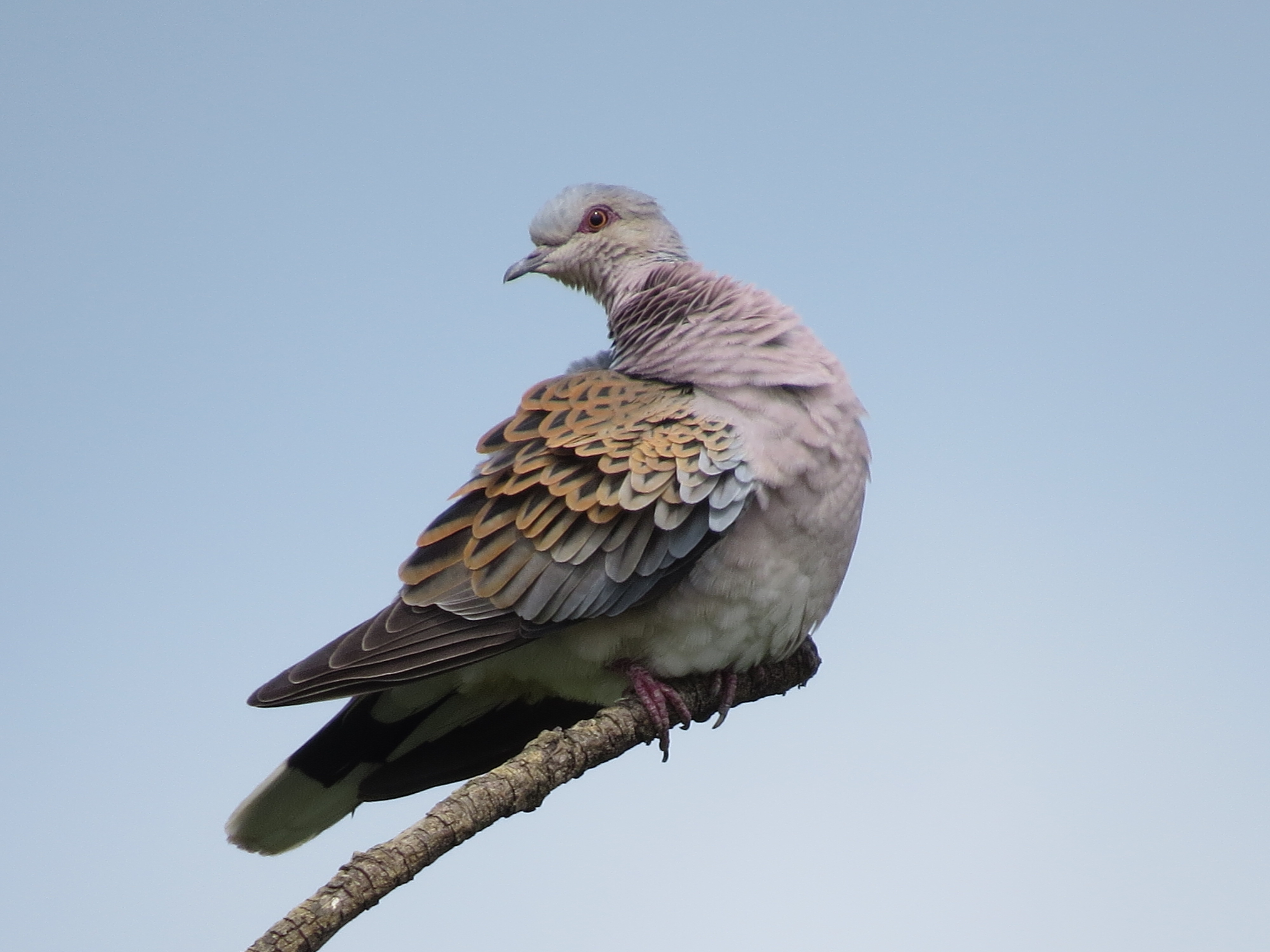
Turtle Dove, Harrington AF, 1st June 2014 (Simon Hales)

A Ring-necked Parakeet was in suburban Northampton on 13th. The future looks bleak for Grasshopper Warblers this year with the only reports in the period restricted to singing males at Harrington AF on 1st and Blueberry Farm, Maidwell also on 1st and again on 10th. It’s now generally accepted that we have lost Tree Pipit as a local breeding species so one flying over Northampton on 1st was noteworthy, as was a singing male Corn Bunting in west Northants on 5th and 9th – the only one reported in the county so far this year.

The Week in Focus: 24th to 30th May 2014

The first half of the week remained unsettled with showers from the continent initially moving north across the country before winds from the east took over in the latter half. Migration slowed considerably with few new birds being found.

Two Egyptian Geese visited Summer Leys LNR on 25th but the only other wildfowl of note were lingering Goldeneyes comprising a female still at Earls Barton GP and a drake still at Thrapston GP all week. A Quail was singing at Boddington Res on 24th and yet another Spoonbill – this time a second-summer – put in a brief appearance at Summer Leys on 29th. This is the third to visit this site this spring, being readily distinguished from last week’s individual by the amount of black present in the primaries.

Second-summer Spoonbill, Summer Leys LNR, 29th May 2014 (Alan Coles). Black tips to primaries restricted to P9 and P10.
Second-summer Spoonbill, Summer Leys LNR, 29th May 2014 (Alan Coles). Small black tips to restricted to outer two primaries.

The only Osprey reported this week was one at Pitsford Res on 26th, a Marsh Harrier visited Harrington AF on 25th and a Peregrine was near Stortons GP on 27th-28th.

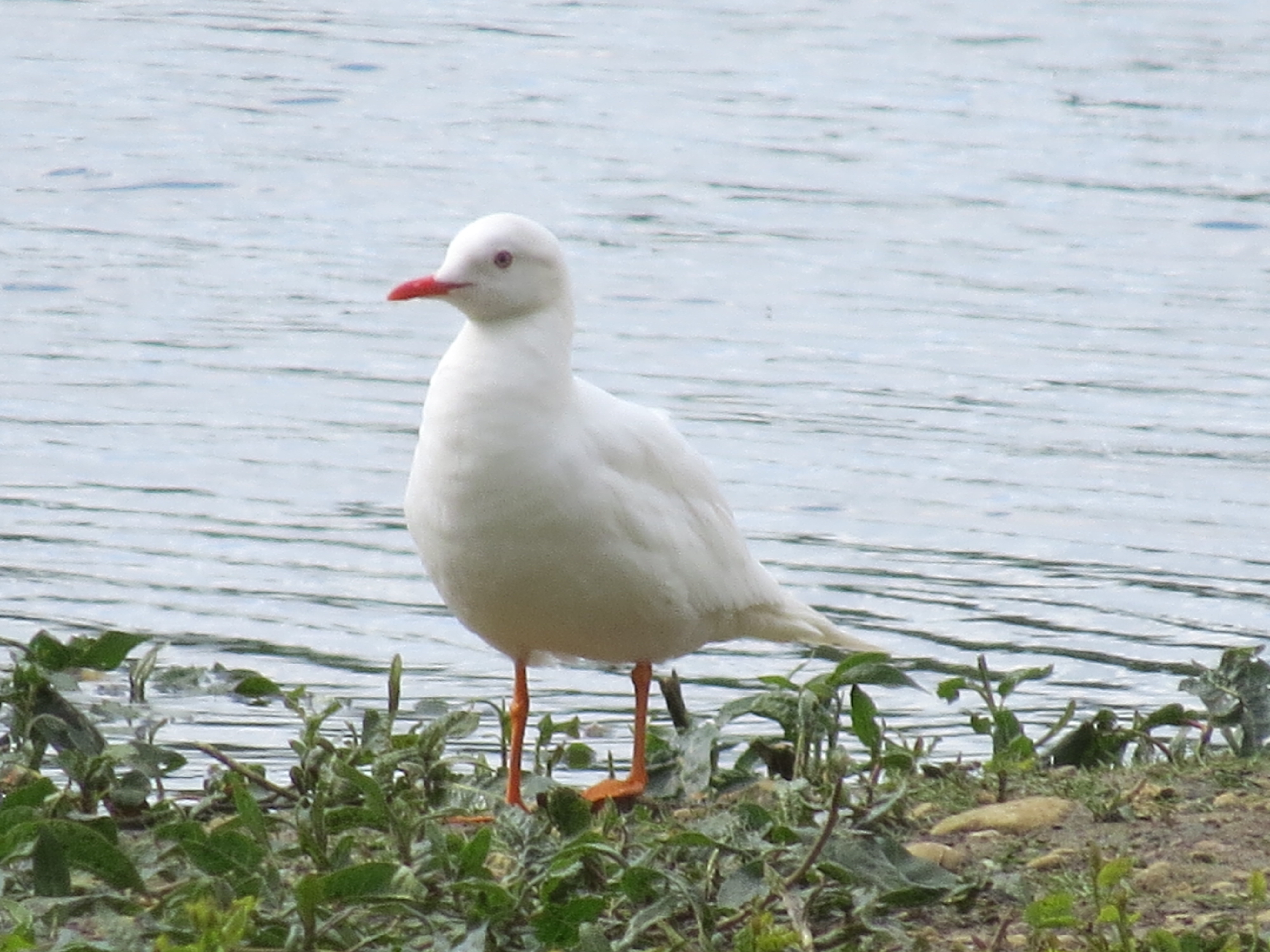
Little Ringed Plovers continued to be reported from Summer Leys and Clifford Hill GP, while 2 Ringed Plovers were at the first of these two sites on 25th and one was at the latter on 26th. Both sites also held single Dunlins – Clifford Hill GP on 24th and Summer Leys on 30th, while the only other migrant waders this week were a Wood Sandpiper and a Common Sandpiper – both being at Stanwick GP on 24th. A second-summer Yellow-legged Gull visited Clifford Hill GP on 26th but arguably more interesting was the leucistic Black-headed Gull,doing its best to look like a Slender-billed Gull but falling well short of the mark, at Summer Leys the day before.

Leucistic Black-headed Gull, Summer Leys LNR, 25th May 2014 (Simon Hales). Note obvious pale iris.
Leucistic Black-headed Gull, Summer Leys LNR, 25th May 2014 (Simon Hales). Note obvious pale iris as well as reduced pigmentation in bare parts.
Leucistic Black-headed Gull, Summer Leys LNR, 25th May 2014 (Simon Hales).

A small flurry of Arctic Terns comprised sixteen at Daventry CP on 27th and one at Boddington Res on 29th. Single fly-over Ring-necked Parakeets were seen at Ditchford GP on 28th and at Roade on 30th.

The Week in Focus: 17th to 23rd May 2014

High pressure over the country in the early part of the week brought high temperatures and a weak southerly airstream, which turned south-westerly in the latter part of the week, delivering heavy showers and thunderstorms. With fewer migrants now in evidence the emphasis turned from quantity to quality …

The escaped Ross’s Goose continued to put in sporadic appearances at Summer Leys LNR, being seen again there on 20th but the only other wildfowl of note were Red-crested Pochards, with two drakes at Stanwick GP on 18th and a pair at Earls Barton GP on 20th, moving to Pitsford Res the following day. Otherwise, lingering Goldeneyes included a female at Earls Barton GP all week and a drake still at Thrapston GP until at least 21st.

Last week’s Quail was still singing at Stanford Res on 17th and, hot on the heels of last month’s Spoonbill, another – or possibly the same – appeared at Summer Leys on 19th, where it stayed for a mere two hours during the early evening before flying high west.

First-summer Spoonbill, Summer Leys LNR, 19th May 2014 (Bob Bullock)
First-summer Spoonbill, Summer Leys LNR, 19th May 2014 (Stuart Mundy)

The only Osprey reported this week was one at Thrapston GP on 23rd and, similarly, the only Peregrine was one at Ditchford GP on the same date.

Topping the bill, though, a pair of Black-winged Stilts brought a touch of exotica to Summer Leys on 18th, these leggy wanderers earning a place in the annals of Northamptonshire’s avifauna as the fourth county record. Performing well for all comers, they remained on the scrape throughout but there was no sign of them the following day.

Black-winged Stilt, Summer Leys LNR, 18th May 2014 (Mike Alibone)
Black-winged Stilt, Summer Leys LNR, 18th May 2014 (Alan Coles)

Little Ringed Plovers continued to be reported from Clifford Hill GP and Summer Leys while Ringed Plovers continued to trickle through in small numbers, with four at Clifford Hill GP on 17th and one there on 20th and two at Stanwick GP on 19th with three there on 22nd. Following heavy rain on the latter date, two Sanderlings were also found at Stanwick GP and seven appeared at Clifford Hill GP at the same time, while the only Dunlins were singles at Clifford Hill GP on 17th and at Stanwick GP on 18th, 19th and 22nd. The three long-staying Whimbrel remained at Summer Leys on 17th, dwindling to

Whimbrel, Summer Leys LNR, May 2014 (Simon Wantling)

just one on 19th while the only Common Sandpipers were singles at Summer Leys on 18th and 23rd, Stanwick GP on 19th and Clifford Hill GP on 22nd. A first-summer Caspian Gull was at Daventry CP on 23rd and another again at Stanwick GP on 19th along with two Yellow-legged Gulls, while Black Terns – uncommon this spring – were two at Earls Barton GP on 20th and one at Daventry CP on the same date. The week’s sole scarce passerine was a male Whinchat at Summer Leys on 19th.

The Week in Focus: 10th to 16th May 2014

A blustery, showery, westerly airstream persisted for the first part of the week, eventually giving way to more settled conditions and higher temperatures in the latter part as an area of high pressure moved into position over the country.

There was no major change from last week in the wildfowl camp with the long-staying Pink-footed Goose at Thrapston GP remaining until at least 13th and, also helping to maintain the status quo, ‘Rossi’ the escaped Ross’s Goose, continued to roam the Nene Valley, being seen at Summer Leys LNR again on 11th, while two Egyptian Geese were found at Stoke Doyle the next day. The scarcity of Garganey this spring endured with just one – a drake – visiting Summer Leys on 13th and a drake Goldeneye was still at Thrapston GP on the same date.

Appearing on 10th, bird of the week was quite literally a ‘biggie’, coming in the shape of a White Stork, which was first seen as it flew low toward Cottesbrooke from Blueberry Farm at around 09.30. Evidently it swung south and was later refound in a field behind the Raybell skip company, just south of Brixworth, at midday. This is about the 22nd White Stork to be recorded in Northants, following the last over Sywell AF on 5th July last year and, prior to that, one at Weldon on 3rd June 2007. Single Ospreys continued to be seen in the Blueberry Farm/Brampton Valley area on 10th, 11th and 13th, at Pitsford Res on 11th and at Thrapston GP on 13th and a Quail, present from 9th, was singing in a rape field at Stanford Res on 15th.

Heading the cast of waders this week was an Avocet, which spent the day at Summer Leys on 15th. Little Ringed Plovers were reported from Thrapston GP, Clifford Hill GP, and Summer Leys, with a maximum of five at the latter site on 10th while Ringed Plovers occurred at the last two of these sites, peaking at fourteen at Summer Leys on 10th. D-day, where ‘D’ stands for Dunlin, was 11th when twenty-six were counted at Summer Leys and twenty-two at Clifford Hill GP; smaller numbers continued to be reported at Summer Leys throughout the week and one was at Thrapston GP on 13th.

Dunlins and Ringed Plovers, Summer Leys LNR, 10th May 2014 (Simon Wantling)

A Black-tailed Godwit visited Summer Leys briefly on 14th, while the same site continued to host three Whimbrels, present since 7th, throughout the week

Whimbrels, Summer Leys LNR, 11th May 2014 (Mike Alibone). [click cogwheel and select 1080 for HD viewing]

and two Curlews were at Blueberry Farm, Maidwell on 11th. Other waders included single Common Sandpipers at Thenford on 11th, at Sywell CP and Summer Leys on 13th and at Thrapston GP on 16th, while a Wood Sandpiper visited the latter site on 13th, a Turnstone was there on 10th and a first-summer Mediterranean Gull on 11th, while a Caspian Gull of the same age visited Stanwick GP on 15th.Single Turtle Doves – the only ones reported so far this year – were at Blueberry Farm on 11th and Harrington AF the following day, while a Firecrest was reported singing in a Wellingborough garden briefly on 13th and a Wood Warbler was singing in Cottesbrooke on 12th. The first Spotted Flycatcher of the spring was also in Cottesbrooke at the same time and the week’s only Whinchat was nearby – with a Northern Wheatear – at Blueberry Farm on 10th, while another Northern Wheatear was at Harrington AF the following day.

The Week in Focus: 3rd to 9th May 2014

For the first part of the week, the UK was sandwiched between a low pressure system to the west and high pressure to the east, resulting in a warm, southerly airstream off the near continent. Things changed mid-week, however, as winds swung westerly, heralding a period of showery and unsettled conditions, which persisted until the week’s end. The bank holiday, 5th May, took the crown for the best day in terms of both rarity and diversity of species recorded.

Now ensconced within the resident Greylag flock, the long-staying Pink-footed Goose continued to find Thrapston GP to its liking, remaining there until at least 6th, while Clifford Hill GP’s Egyptian Goose was still present on 9th. Also on 6th – and perhaps surprising for the time of year – a Ruddy Shelduck appeared by the yacht club at Pitsford Res, while a late drake Goosander was found at Thrapston GP. The first Quail of the year was heard singing at Harrington Airfield on 4th, quickly to be followed by the second at Draughton Crossing in the nearby Brampton Valley on 7th. The latter site notched up a fly-over Osprey on the same two dates and another was seen at Stanwick GP on 5th.

It shouldn’t have happened again … but this week it did. What was potentially Northamptonshire’s fourth-ever Glossy Ibis put in a tantalisingly brief appearance at Summer Leys, showing itself only to one observer as it flew east over the reserve, just before two o’clock on the afternoon of 5th. This species has carved out a local reputation for being the subject of single observer sightings and limiting its Northamptonshire visits to a matter of minutes. Will one ever stay long enough to be seen by the masses?

Fly-over Glossy Ibis notwithstanding, one rarity that did make itself available to most of those who made the trip to look for it was a female Dotterel, which was found between Hemington and Lutton – also on 5th. Distant and camera-dodging, it remained a shimmering vision in the heat haze at the centre of a pea field for most of the morning but appeared to go AWOL during the afternoon. With only ten previous records, this species remains a true rarity in Northants, the last one being in 1996. Interestingly, 50% of all previously accepted records have come from this same area of the county and 80% of these have fallen within the ten-day period 26th April to 5th May.

Not quite matching the latter’s celebrity status, a Grey Plover dropped in at Summer Leys on the same date, while Little Ringed Plovers continued to be reported from four locations and Ringed Plovers occurred at Clifford Hill GP and Summer Leys with site maxima of sixteen on 6th and seven on 7th respectively. The same two sites produced all of this week’s Dunlins, which were present daily at both, with maxima of  five at Clifford Hill GP on 7th and thirteen at Summer Leys on 9th. Three Whimbrels arrived at the latter site on the evening of 7th and were still present on 9th and single Curlews were also found here and in the Brampton Valley – both on 7th. Other waders included single Common Sandpipers at Stanwick GP, Summer Leys and Thrapston GP while four were counted at Clifford Hill GP on 5th and Summer Leys produced two Greenshanks on 4th-5th, with one remaining until 9th. The same site hosted a Wood Sandpiper on 5th, while two Turnstones visited Clifford Hill GP on the same date.

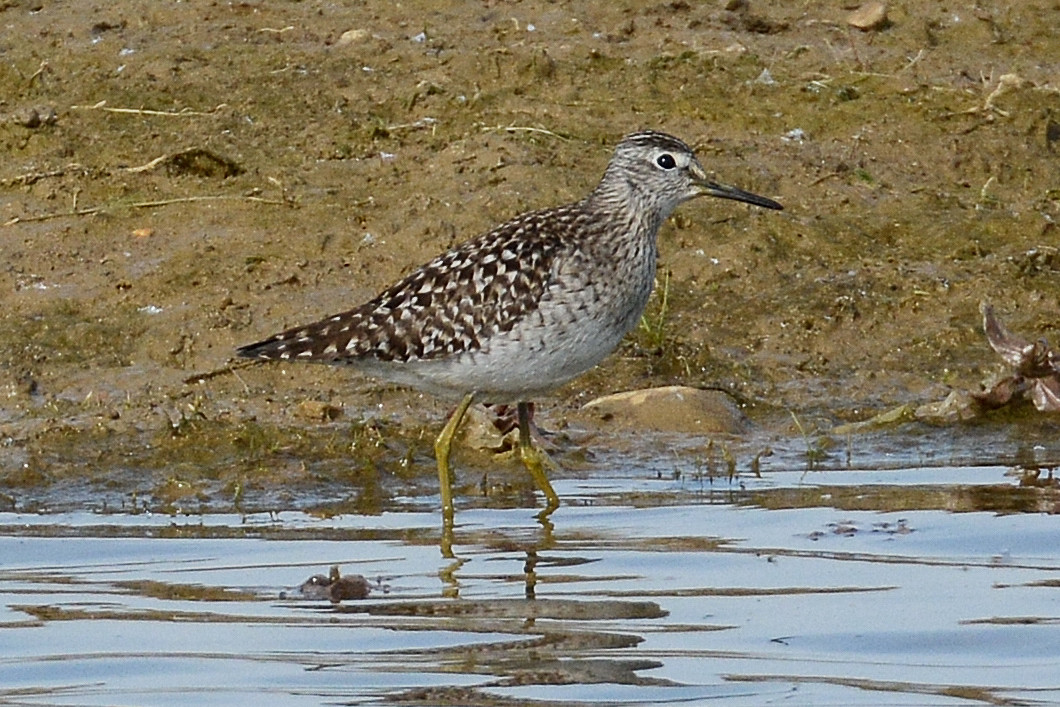
Wood Sandpiper, Summer Leys LNR, 5th May 2014 (John Moon)

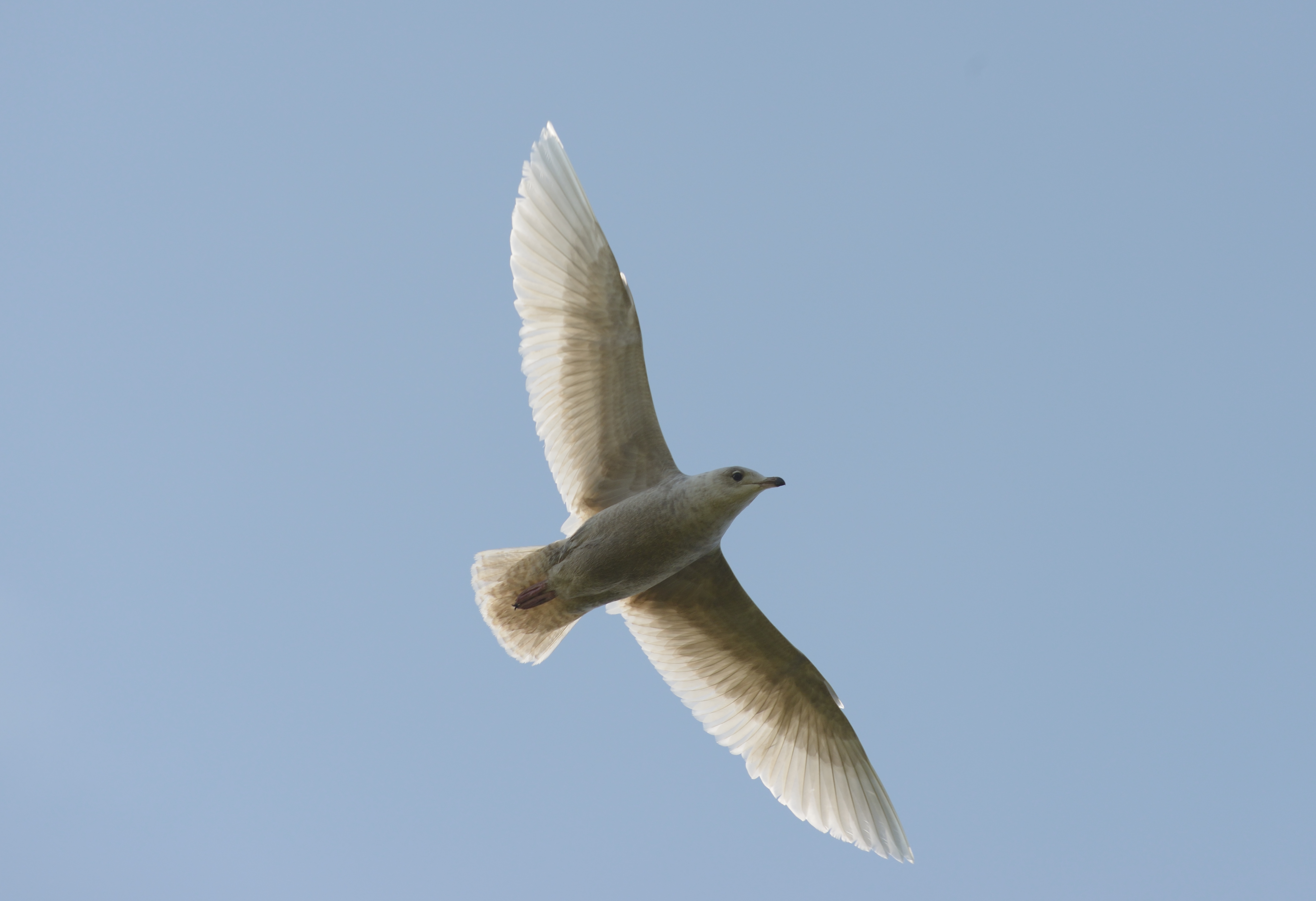
One of the week’s surprises came in the shape of a smart, second calendar year Iceland Gull,which visited Daventry CP for thirty-five minutes on 5th. This was the first record of this species for the site and probably the latest in spring to be recorded in the county.

Second calendar year Iceland Gull, Daventry CP, 5th May 2014 (Allan Maybury)

A first-winter Mediterranean Gull was at the same site the following day and a third-year Yellow-legged Gull was found at Stanwick GP on 8th. In contrast to last week, only two Little Gulls were reported – both second calendar years, including one at Summer Leys from 3rd until 6th and one at Stanwick GP on 5th. Tern numbers also dwindled with just one Black Tern at Pitsford Res on 5th, while Arctic Terns totalled just three with singles at Daventry CP on 6th and 9th and one at Clifford Hill GP on 7th.

Scarce passerines were again in short supply this week with a Black Redstart at Blueberry Farm, Maidwell on 4th, single Whinchats at Harrington AF on the same date and at Clifford Hill GP on 6th and Northern Wheatears at Blueberry Farm/Brampton Valley with 2 on 4th and 7th and 4 on 6th plus one at Clifford Hill GP on the latter date.

The Week in Focus: 26th April to 2nd May 2014

A generally mild and dry week with low pressure to the south initially delivering a southerly/easterly airstream, later giving way to a high pressure system bringing north-easterly winds at the week’s end.

The Pink-footed Goose, which joined the resident Greylag flock at Thrapston GP in early April, was still there, appearing very settled, at the month’s end, while the Egyptian Goose remained at Clifford Hill GP until 26th and a pair with nine goslings was discovered at a locality in the north of the county on 30th. Garganeys have remained scarce so far this spring but a drake at Pitsford Res broke the six-week block on 2nd, while the drake Scaup found there on 19th was still present on 26th. A drake Goldeneye lingered at Thrapston GP until 2nd.

Heading the cast of rarities this week – well, the only rarity this week, in fact – was the immature Spoonbill which flew into Summer Leys in the early afternoon of 27th and stayed for forty minutes before continuing its journey up the Nene Valley. It was later discovered at Clifford Hill GP, where it remained for just over two hours before being flushed by fishermen.

Spoonbill, Clifford Hill GP, 27th April 2014 (Mike Alibone)
Immature Spoonbill, Clifford Hill GP, 27th April 2014 (Mike Alibone)

This is the first in Northants since October 2011, when one was at Stanford Res. The only scarce raptor of the week was an Osprey reported fishing in the Elinor Trout Lake at Thrapston GP on 1st.

Little Ringed Plovers were reported from three locations in the Nene Valley, two Dunlins were at Clifford Hill GP on 27th, ten were present on 1st and six there on 2nd, while Summer Leys held two on 27th and four on 1st. Two Black-tailed Godwits were at the latter site on 26th and two Bar-tailed Godwits visited Clifford Hill GP on 29th and the week’s only Whimbrels were nine in the Brampton Valley on 27th. Other waders included single Common Sandpipers at Summer Leys on 1st and Daventry CP the following day while a Turnstone visited Clifford Hill GP on 27th.

Apart from three first-summers at Clifford Hill GP on 29th, this week’s Little Gulls were all at Summer Leys, where at least four different birds occurred during the period, with a maximum of three on 29th-30th.

Second calendar year Little Gull, Summer Leys LNR, 27th April 2014 (Alan Coles)
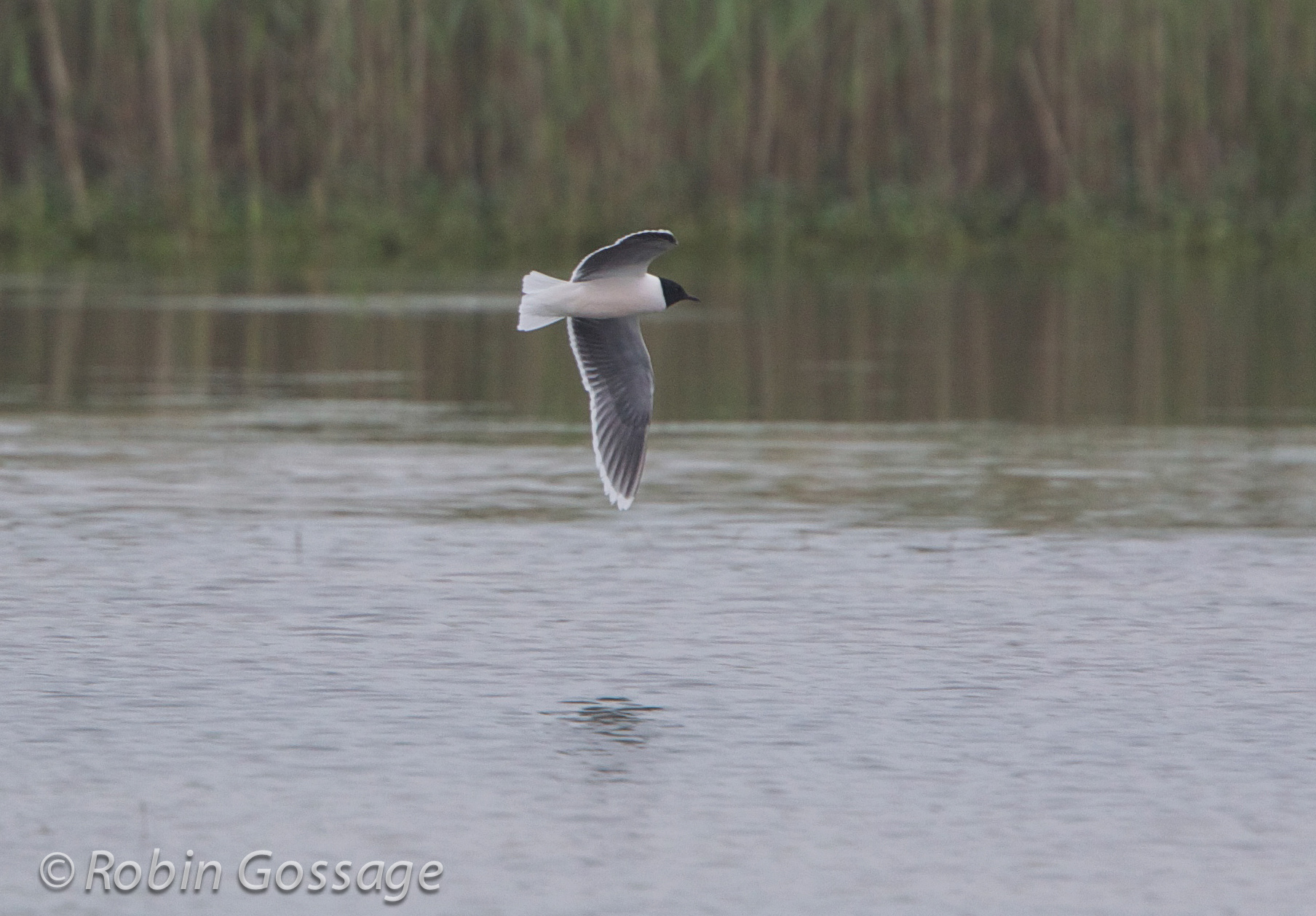
Adult Little Gull, Summer Leys LNR, 29th April 2014 (Robin Gossage)

The same site hosted a Black Tern briefly on 26th, while Arctic Terns were found at Pitsford Res, where there were three on 26th, Clifford Hill GP, where there were two on 27th, one on 1st and four on 2nd, Summer Leys, with two on 29th and Daventry CP, with seven on 2nd.

Passerines were thinner on the ground this week with a male Black Redstart in an area with no public access in Burton Latimer on 28th, a male Common Redstart at Harrington AF on 30th with a Whinchat there at the same time, another Whinchat at Sywell CP on 2nd and two Northern Wheatears at Hemington on 26th, two in the Brampton Valley on 26th-27th and one at Hardingstone GP on 28th.