The Week in Focus: 19th to 25th April 2014

An area of low pressure to the south-east ensured a north-easterly airstream in the early part of the week, with outbreaks of rain and misty/murky conditions slowing and lowering a number of northbound migrants, particularly Arctic Terns, which were seen in some numbers on 20th.

Thrapston Gravel Pits continued to host the Pink-footed Goose until at least 21st, while the roving, escaped Ross’s Goose was seen again at Pitsford Res on the same date.
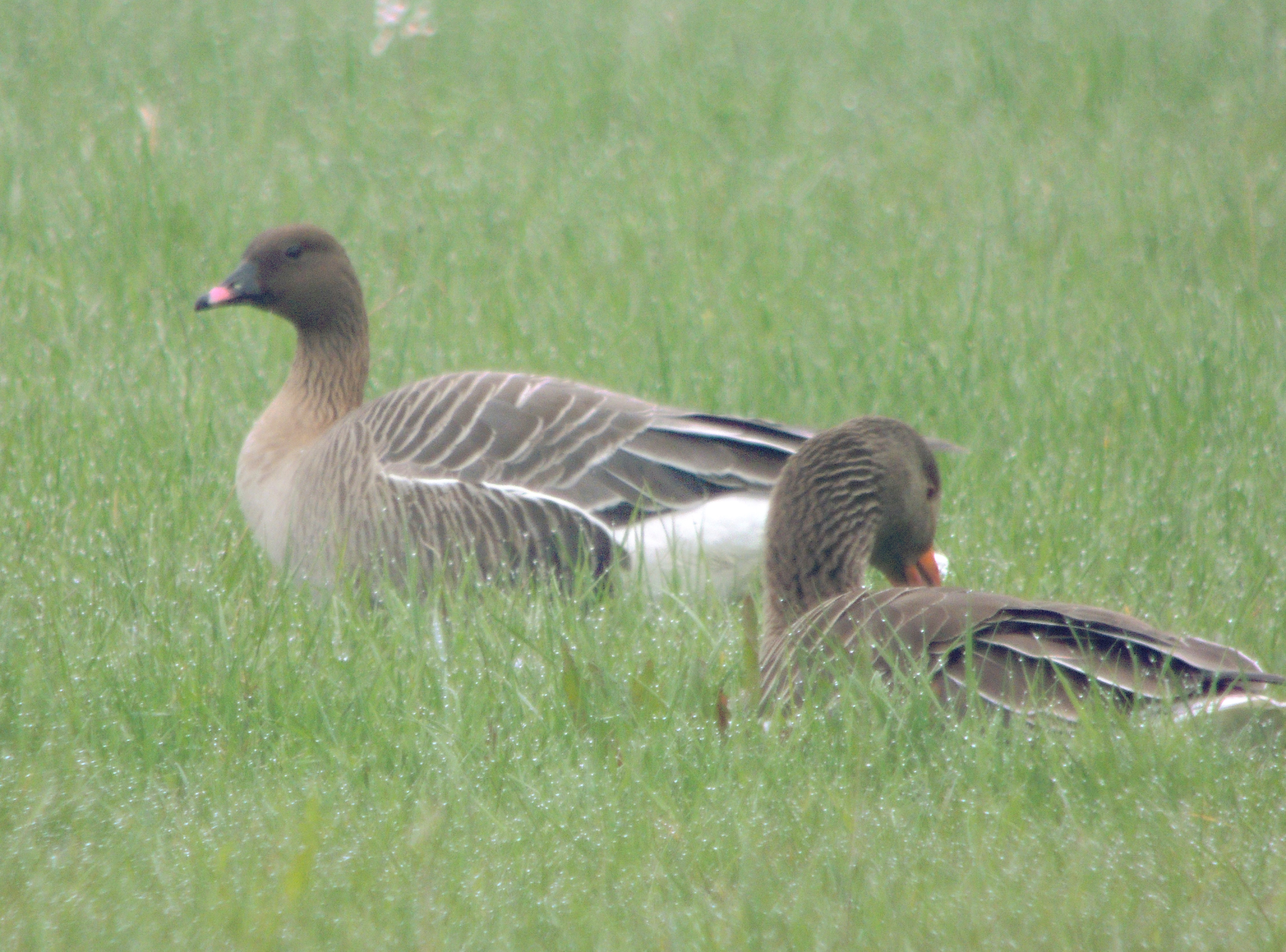
Pink-footed Goose, Thrapston GP, 21st April 2014 (Mike Alibone)

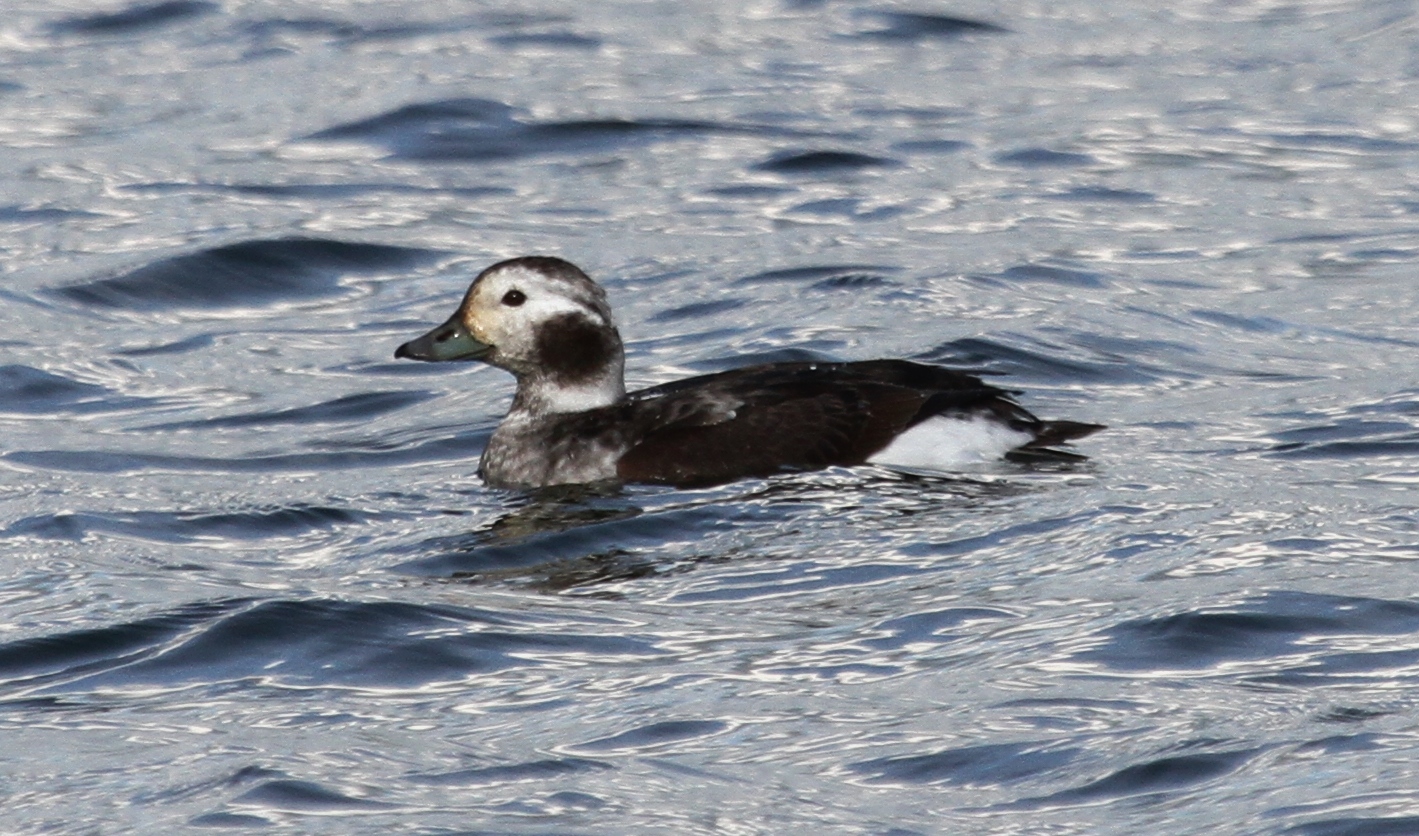
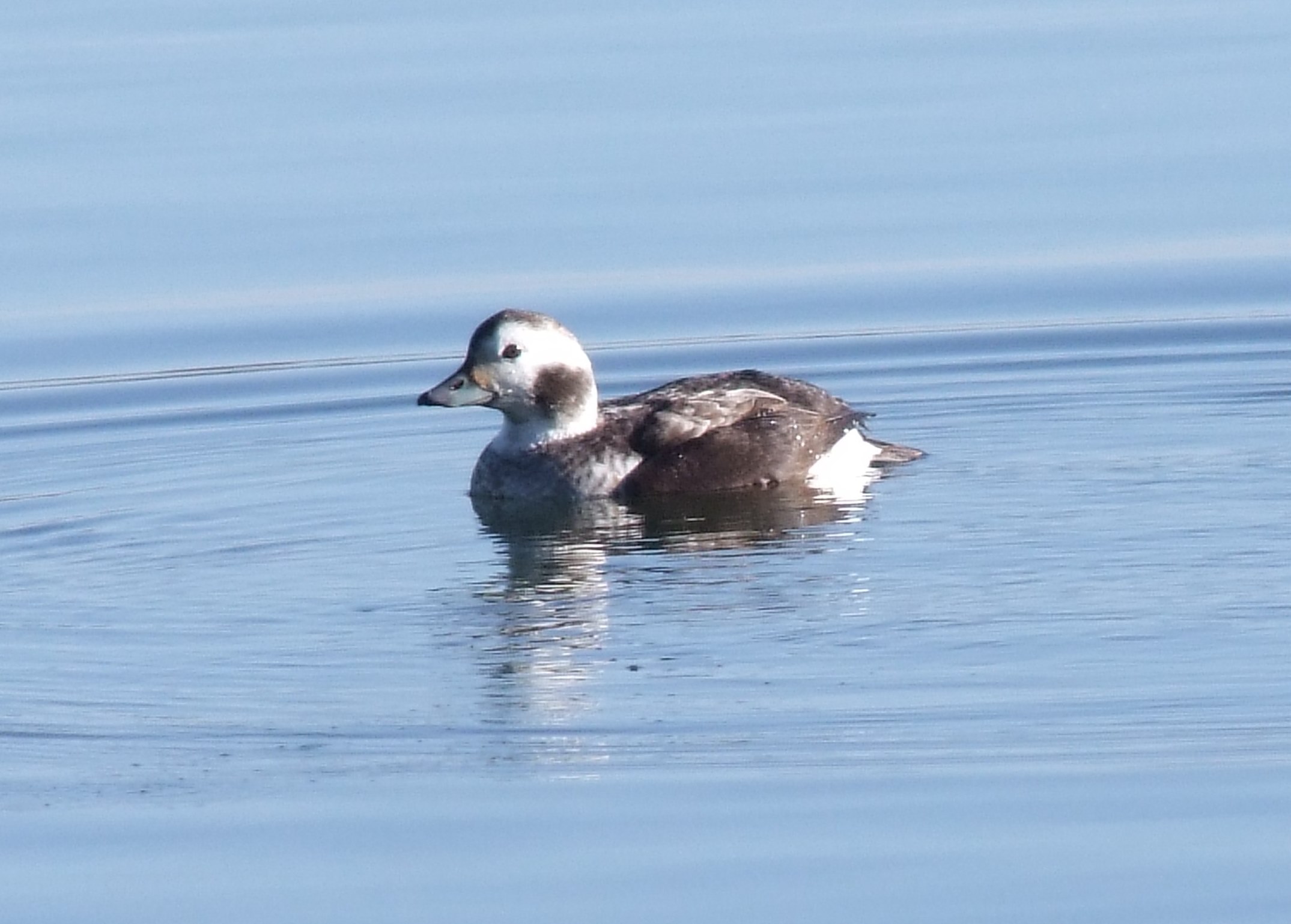
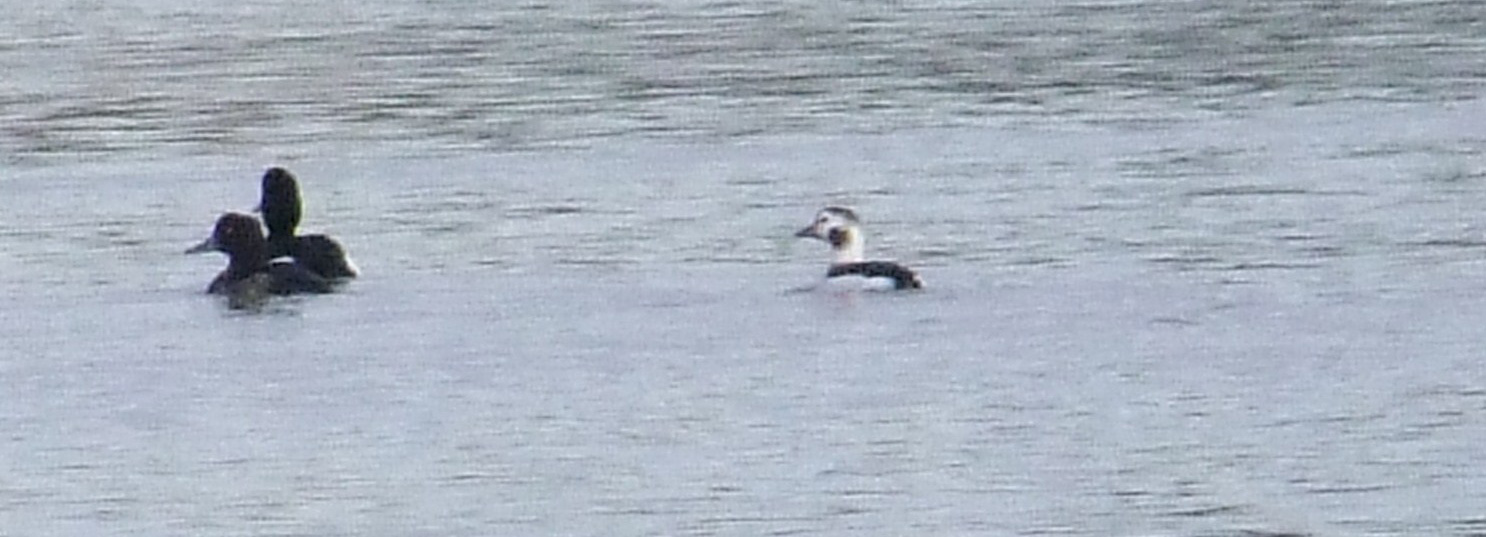
Considered by some to be fighting a losing battle with aesthetics, an Egyptian Goose was at Clifford Hill GP also on 21st, remaining there until at least 24th and a female Red-crested Pochard was discovered at the largely underwatched site of Thorpe Malsor Res – again on 21st. A drake Scaup found at Pitsford Res on 19th was still present there on 24th, the wintering Long-tailed Duck remained at Earls Barton GP all week and a female Common Scoter appeared at Thrapston GP on 24th. Other remnants of winter hung on in the form of 2 Goldeneyes at Thrapston GP on 21st and two were at Pitsford Res on 23rd and one at Summer Leys on 25th, while a drake Goosander was also at Thrapston GP on 21st and a female remained at Daventry CP on 20th.

Three fine, summer-plumaged Black-necked Grebes found their way to Pitsford Res on 19th but did not linger and a dip into the almost empty raptor bag pulled out only single Peregrines from Pitsford Res on 19th, Hardingstone on 20th and Hemington on 20th-21st.

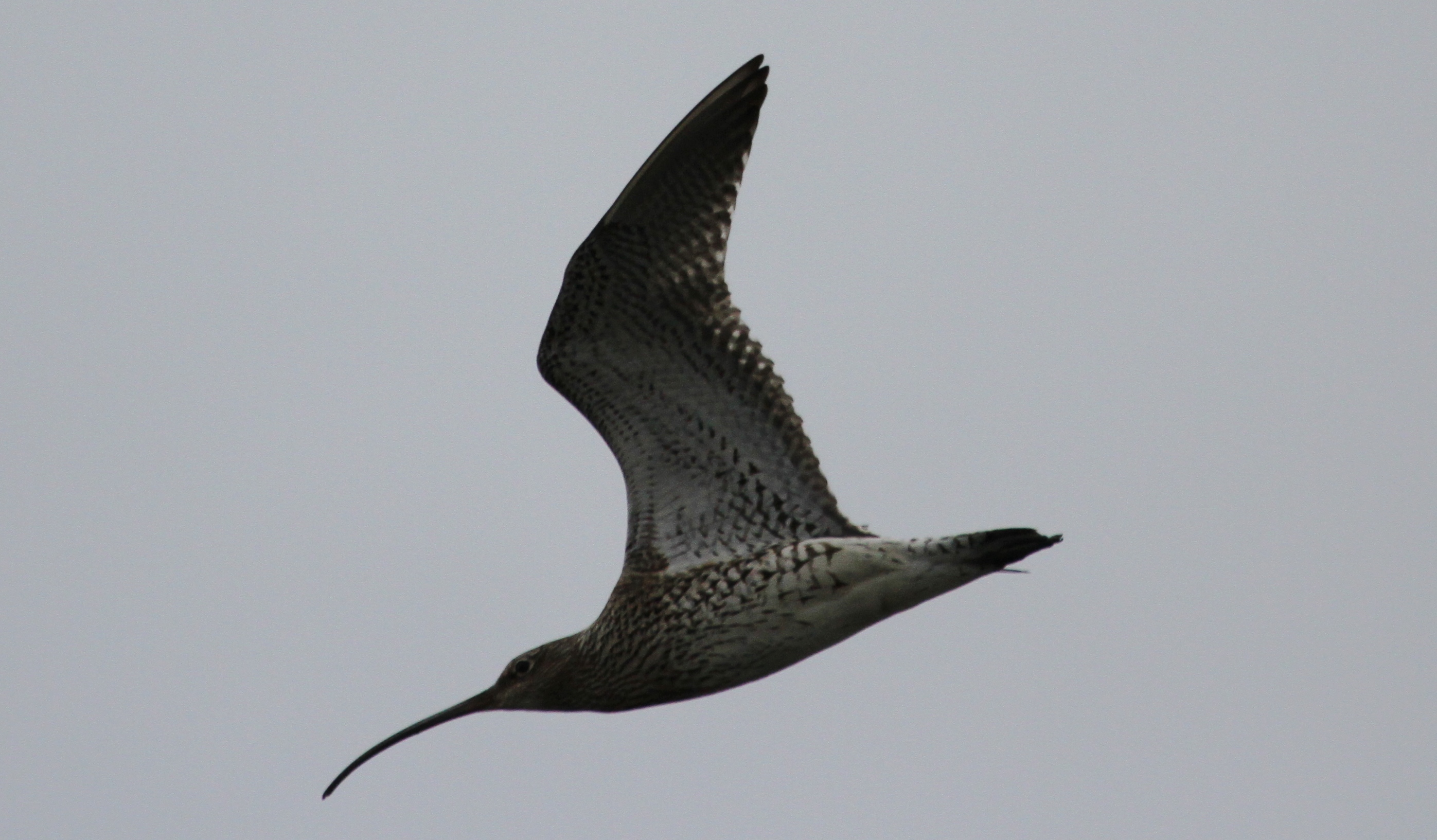
Wader passage began to gain momentum but failed to produce anything to match the quality of last week’s Harrington Stone-curlew. Little Ringed Plovers were reported from four Nene Valley localities and dwindling Golden Plover numbers included two at Hemington on 20th and six in the Brampton Valley on 22nd. Six Bar-tailed Godwits spent the day at Ditchford GP’s Irthlingborough Lakes & Meadows Reserve on 20th with two Black-tailed Godwits at Summer Leys on 25th and the week’s only Whimbrel – which was also the first of the year – flew over Summer Leys on 22nd, while the same Green Sandpiper remained at Kislingbury Meadows on 19th, a lonely Common Sandpiper visited Clifford Hill GP on 22nd-23rd and the spring’s first Turnstone lingered at Summer Leys on 20th-21st.

Turnstone, Summer Leys LNR, 21st April 2014 (Simon Hales)

On 20th, a second-summer Yellow-legged Gull was again at Stanwick GP among ninety-two loafing Greater Black-backed Gulls but the only other gulls of note were single Little Gulls at Daventry CP on 21st and Summer Leys on 25th.
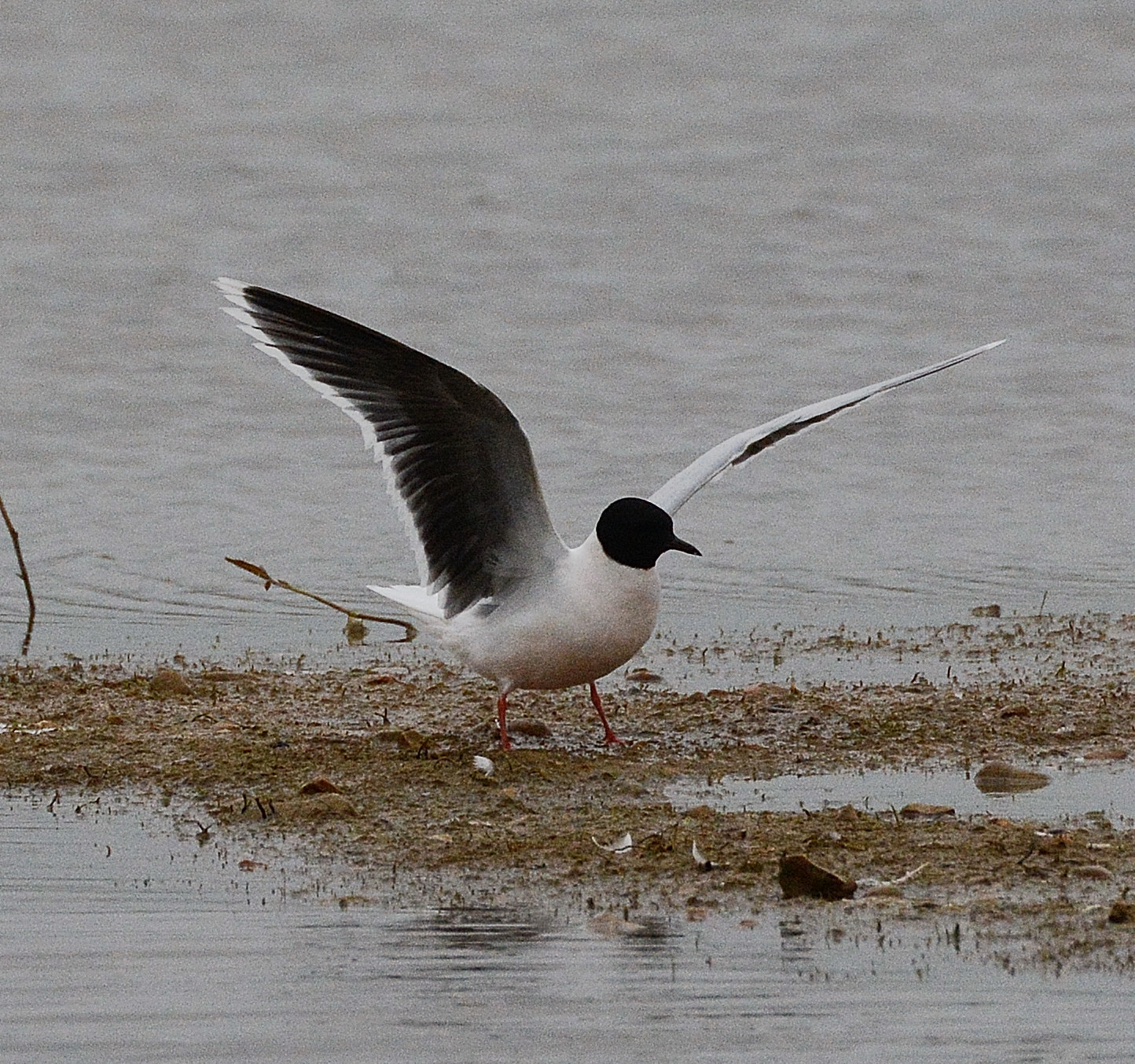
Adult Little Gull, Summer Leys LNR, 25th April 2014 (John Moon)

The spring’s first Black Terns, three, were at Daventry CP on 21st and the same site hosted twenty-four Arctic Terns on 20th, several went through Clifford Hill GP and two or three were at Summer Leys on the same date with two there again on 22nd.

A Ring-necked Parakeet was at Stoke Bruerne on 20th, the spring’s first Common Swift appeared at Pitsford Res two days later and a Firecrest was discovered at Pitsford Res on 21st. With almost all the common summer warblers already in, the first Garden Warbler was found at Pitsford Res on 19th, quickly followed by others at Summer Leys on 21st and Daventry CP on 22nd but only one Grasshopper Warbler was located, a singing male at Stortons GP on 19th.
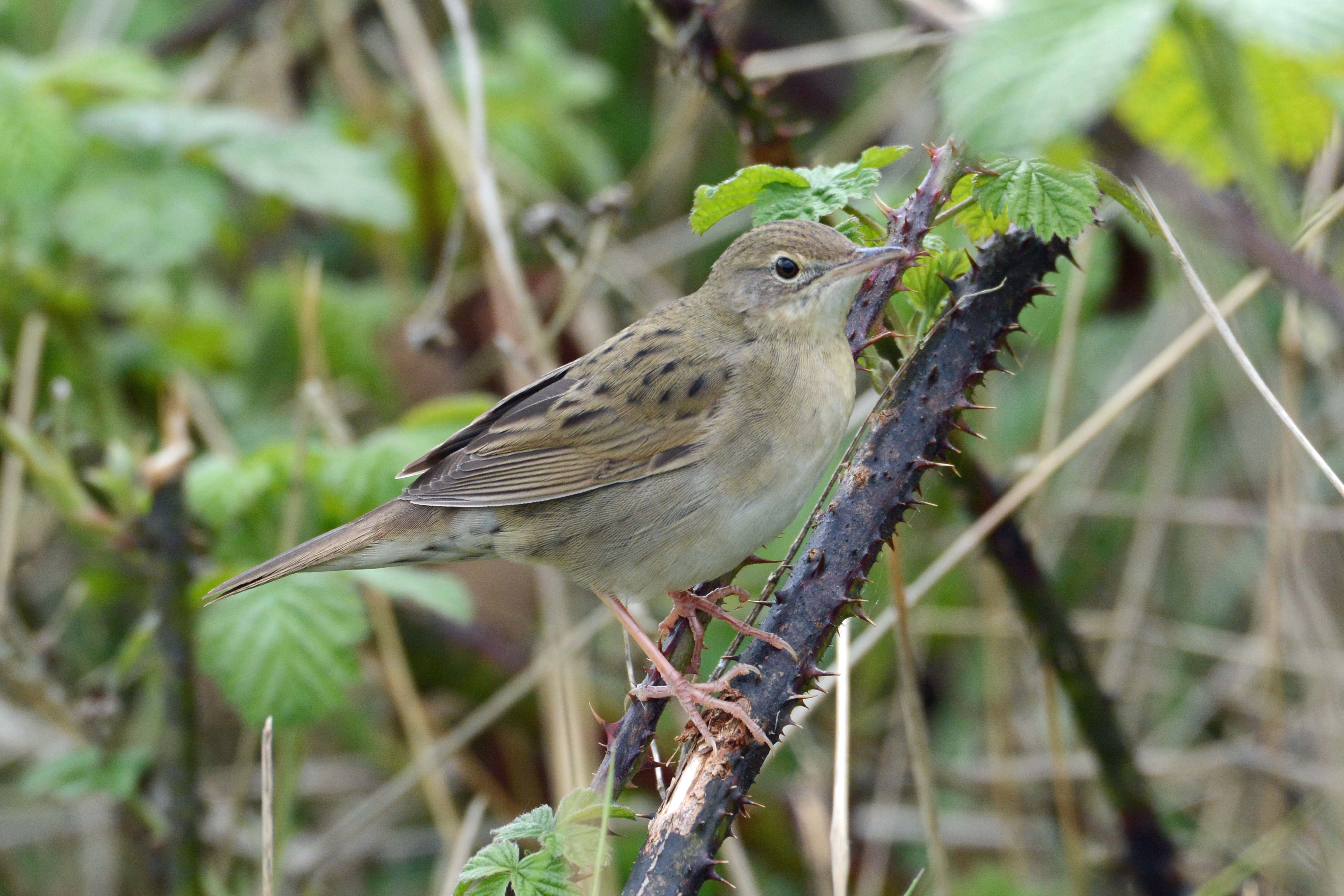
Grasshopper Warbler, Stortons GP, 21st April 2014 (John Moon)
Grasshopper Warbler, Stortons GP, 19th April 2014 (John Moon)

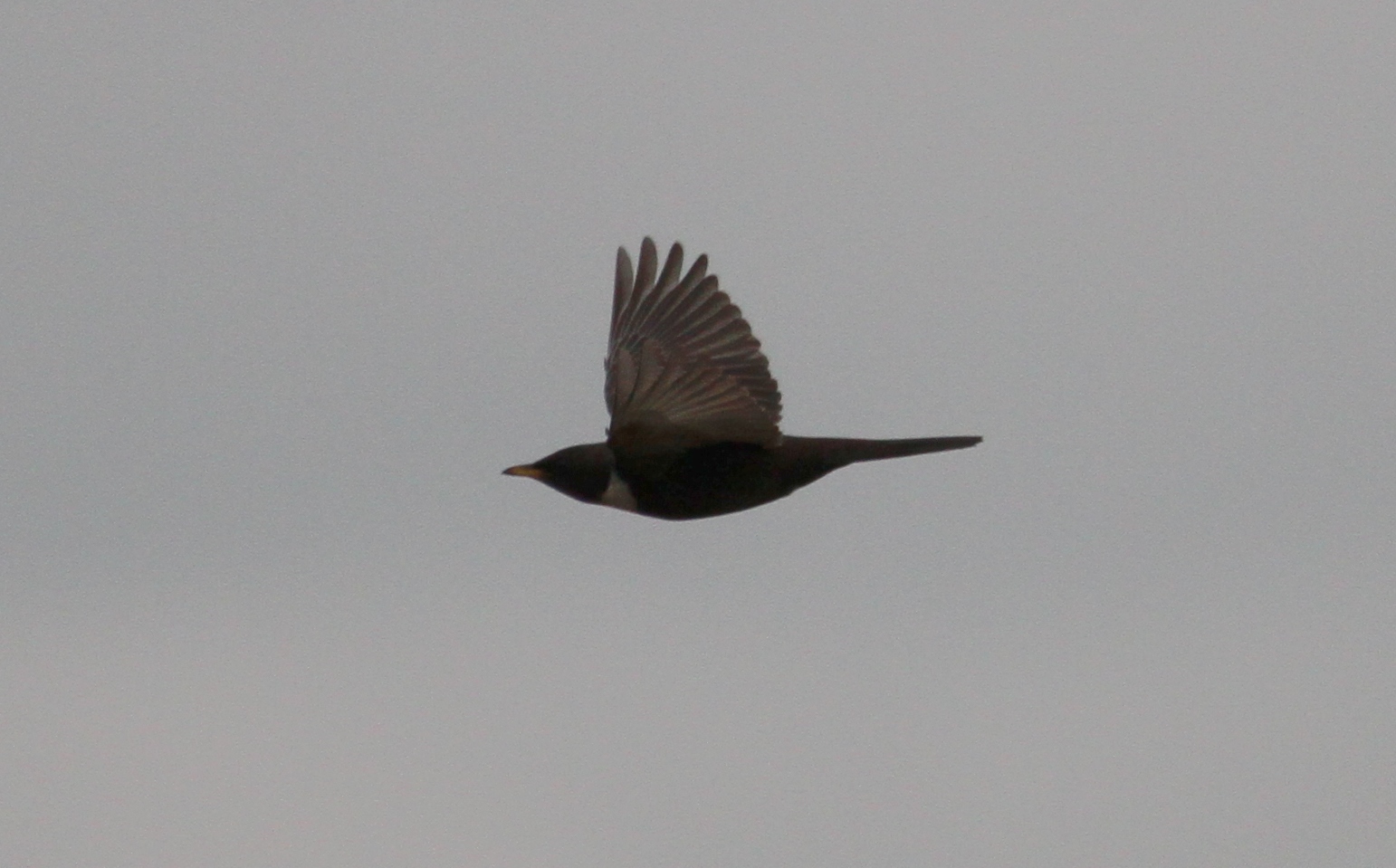
Up to three Ring Ouzels performed at Harrington AF between 19th and 24th and a male Black Redstart was discovered nearby in the Brampton Valley on 22nd, while
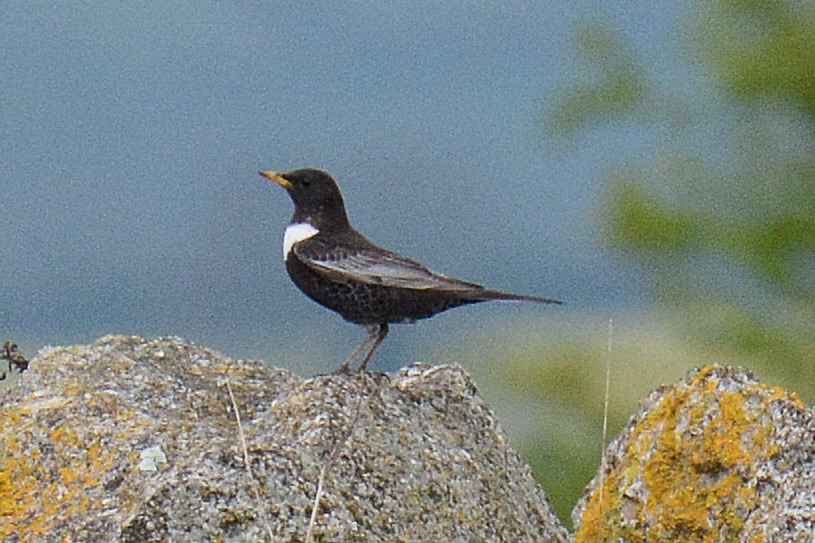
Male Ring Ouzel, Harrington AF, 22nd April 2014 (John Moon)
Ring Ouzel, Harrington AF, 22nd April 2014 (Alan Coles)

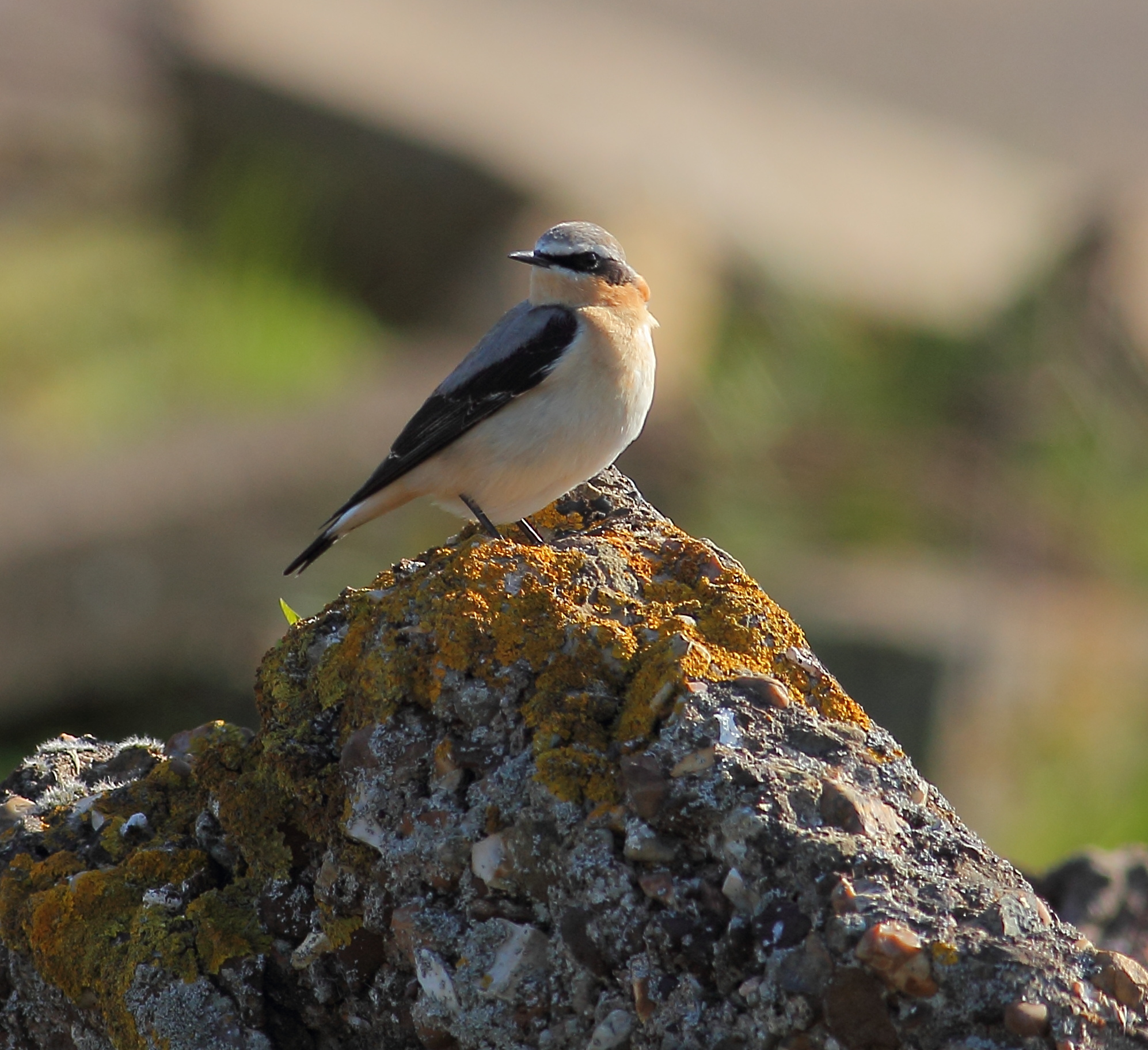
Common Redstarts, all males, were at Clifford Hill GP on 22nd, Harrington AF on 23rd and in the Brampton Valley on 25th. Northern Wheatears were reported from four localities with a maximum of at nine at Hemington on 21st. Again, only two  White Wagtails were found at this week – one at Hemington on 21st and one at Earls Barton GP on 22nd, while the only Brambling was one on a feeder in a Kettering garden on 20th.

The Week in Focus: 12th to 18th April 2014

Dominated by the presence of a slowly moving area of high pressure, the week remained dry and settled with variable light winds, initially from the west then north and southerly for a short time mid-week. The influx of summer visitors continued with one or two surprises among some notably early arrivals.

With the vast majority of winter wildfowl well on their way back to their summer breeding grounds we are now left with a handful of hangers-on and a few late passage birds stopping over briefly to break their journeys ‘up north’. Falling into the latter category a Pink-footed Goose joined the resident Greylag flock at Thrapston GP on 12th and was still present there on 18th. This species has been unusually scarce this year with no previous records this side of the New Year but its appearance at Thrapston is no great surprise as this site has an established track record for attracting small numbers of pinkfeet in spring.

Pink-footed Goose, Thrapston GP, 13th April 2014 (Mike Alibone)

Falling into the malingerers category, the wintering Long-tailed Duck remained at Earls Barton GP until at least 14th, three Goldeneyes were still at Thrapston GP on 13th with one still there on 18th and a drake Goosander was beside the River Nene at Oundle on 15th.

Raptors were in short supply this week with the most notable of the predatory elite being a male Goshawk flying over Woodford Halse in the direction of Eydon on 15th. This species remains an enigma in Northants. Believed to have bred here in the past, it is no longer being seen at localities favoured in the 80s and 90s so it’s a real local rarity these days, remaining a very difficult bird to catch up with in the county. Making less of a splash but still an essential piece in the summer jigsaw, the first Hobby was reported from Scaldwell on 15th, while single Peregrines were seen over Isham and Little Irchester on 13th and at Summer Leys LNR on 18th.

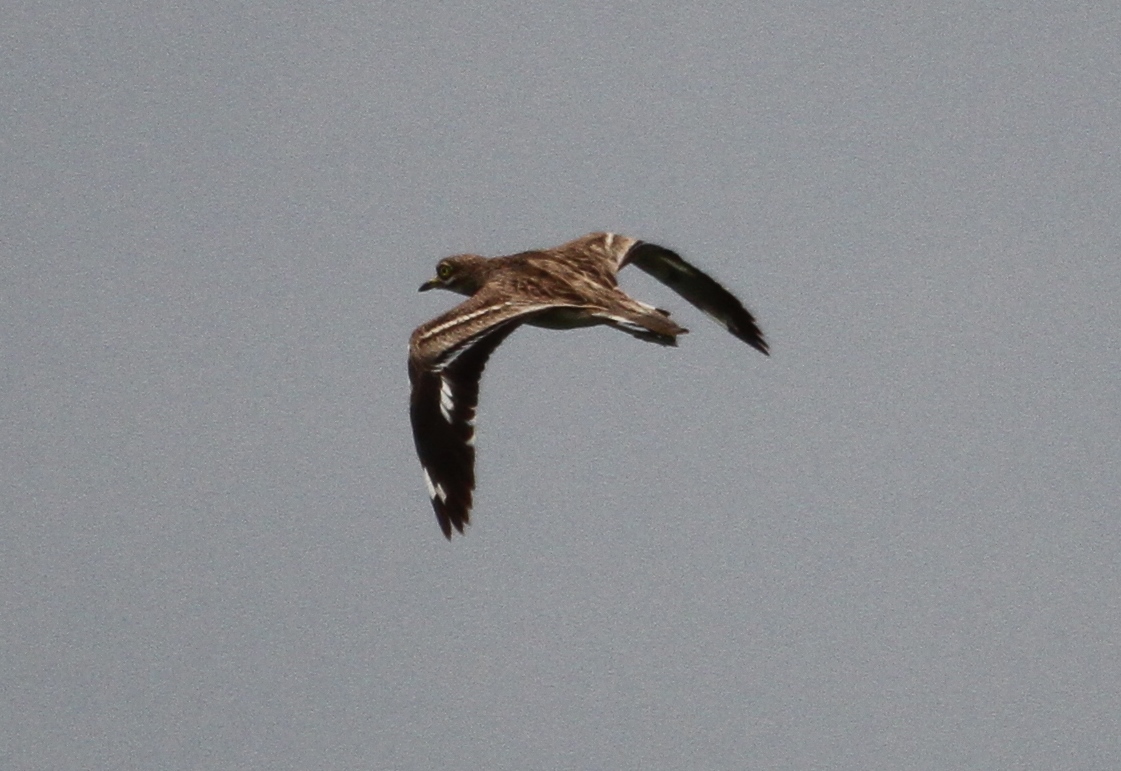
With the main thrust of passage waders still a couple of weeks away, the lack of quantity was amply made up for by quality in the shape of Northamptonshire’s twelfth-ever Stone-curlew, which was discovered at Harrington AF during the morning of 17th. Flighty and true to form, however, it did not stay long and promptly went AWOL after lunch.

Stone-curlew, Harrington AF, 17th April 2014 (Alan Coles)

Little Ringed Plovers were found at just three Nene Valley localities, the only Dunlin were five at Clifford Hill GP on 12th with four remaining on 17th-18th and the only Curlews were singles at the latter site on 12th and at Daventry CP on 17th. A Black-tailed Godwit was found at Summer Leys on 18th, while another flew northeast at Thrapston GP on the same date and single Green Sandpipers remained faithful to Pitsford Res on 13th-14th and Kislingbury Meadows on 15th.

With wintering gulls all but gone the only species of note were a second-summer Yellow-legged Gull at Stanwick GP on 13th and four Little Gulls which visited Daventry CP on 17th. With Common Terns rapidly becoming established back at traditional sites in the Nene Valley, transient Arctic Terns were a welcome addition to the local menu with two picked up heading northeast at Earls Barton GP on 14th.

An early Lesser Whitethroat was found at Harrington Airfield on 12th, rapidly followed by others at Denton Wood, Scaldwell and Summer Leys during the course of the next four days. Common Whitethroats also put in an appearance from 13th, with a male at Old, while the first Grasshopper Warbler was heard reeling at Earls Barton GP on the same day (the average date of first arrival for this species in the UK), quickly followed by others at Stortons GP on 15th and Salcey Forest on 18th. This species has been recorded as arriving as early as 1st April in the county but it is undergoing a long term decline in population and is now red-listed in conservation terms. The first Reed Warblers were heard singing at Thrapston GP also on 13th.

Two Ring Ouzels were located at Harrington AF on 14th, three were there the following day, remaining until at least 17th. One was also found at Blueberry Farm, Maidwell on 15th and another was seen at Borough Hill on 17th. The year’s first Nightingale was singing in a Blackthorn thicket alongside the River Nene at Thrapston on 17th, while more Common Redstarts continued to pour in with males located at Borough Hill and Clifford Hill GP on 12th, Foxholes Fisheries, Crick on 14th, Hellidon on 14th with two there on 18th, two at Blueberry Farm on 15th and one again at Clifford Hill GP on 18th. A male Whinchat put in a relatively early appearance at Borough Hill on 17th and was still present the following day, while Northern Wheatears were reported from seven localities with a maximum of at least eight (possibly ten) at Harrington AF on 17th.

Male Northern Wheatear, Harrington AF, 16th April 2014 (Pete Gilbert)

Only two  White Wagtails were found at this week – both at Clifford Hill GP on 12th, while a Tree Pipit – now relegated (or promoted, depending upon your viewpoint) to a scarce local passage migrant, not having bred in the county for a couple of years. Most Bramblings have now departed but four were still at Harrington AF on 14th, one there on 15th and six still at Hellidon on 18th.

Three Weeks in Focus: 22nd March to 11th April 2014

A run of relatively mild weather, with winds from a southerly quarter in the middle part of the period, served to further advance spring and to introduce a steady flow of migrants to the county.

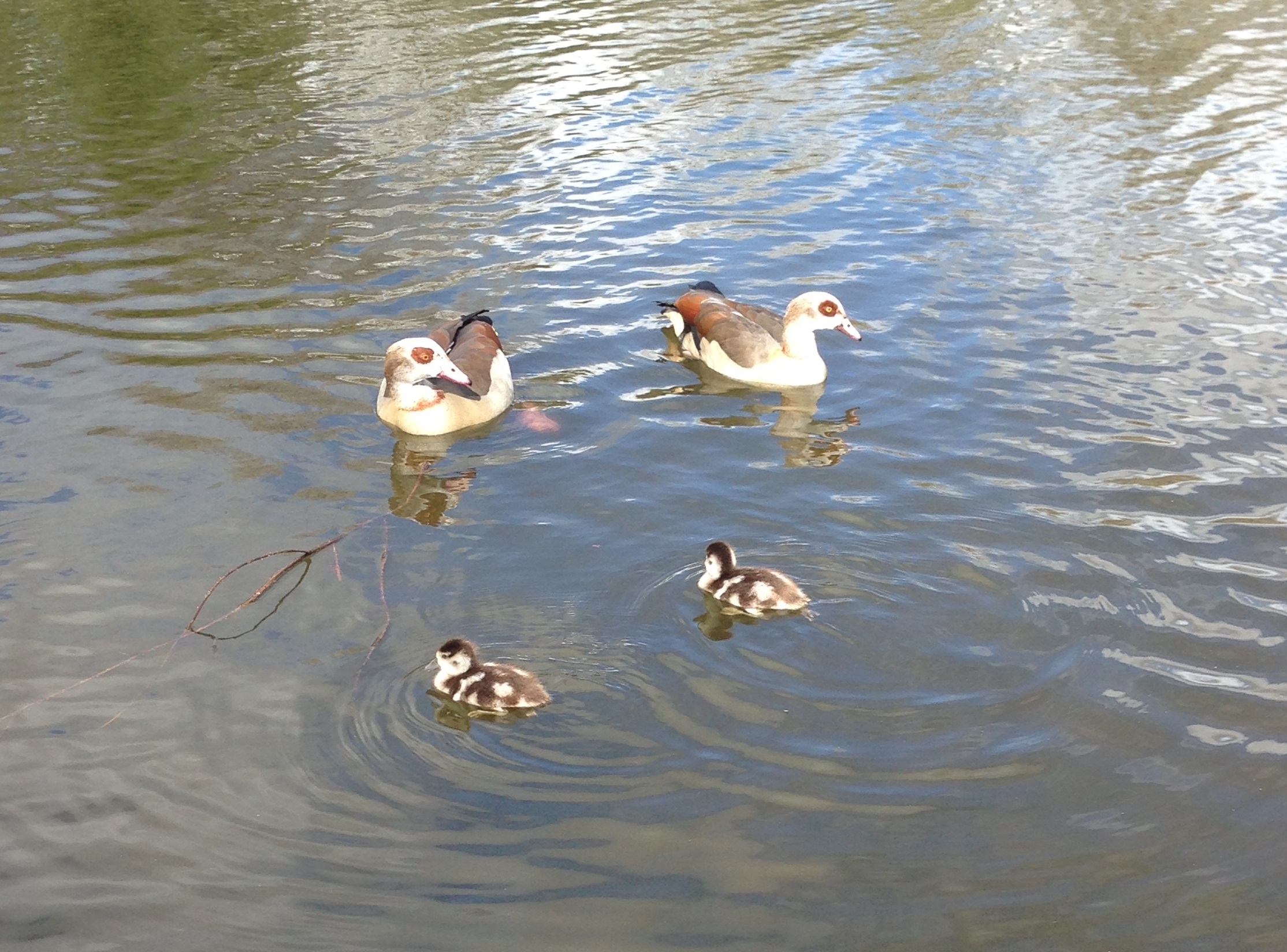
Two female Ruddy Shelducks were reported on the south bank of the River Welland, west of Rockingham on 10th – an interesting time of year for this species in not conforming to the usual pattern of late summer occurences of birds suspected of being from The Netherlands. If ever proof were needed that Egyptian Geese breed in Northants then here it is – a pair was discovered with two young goslings in the east of the County on 23rd

Egyptian Geese, site withheld, 23rd March 2014

while other, less auspicious, wildfowl remained in the shape of the unringed female Wood Duck on the River Nene at Northampton to 1st and the red colour-ringed Marbled Duck at Stanwick GP throughout the period. In a similar vein, the long-staying Ross’s Goose

Ross's Goose, Pitsford Res, 28th March 2014 (Dave Jackson)
Ross’s Goose, Pitsford Res, 28th March 2014 (Dave Jackson)

now apparently paired with a Greylag Goose – commuted between Pitsford Res and Clifford Hill GP between 28th and 4th. A pair of Pintail visiting Summer Leys LNR on

Pintails, Summer Leys LNR, 2nd April 2014 (Bob Bullock)

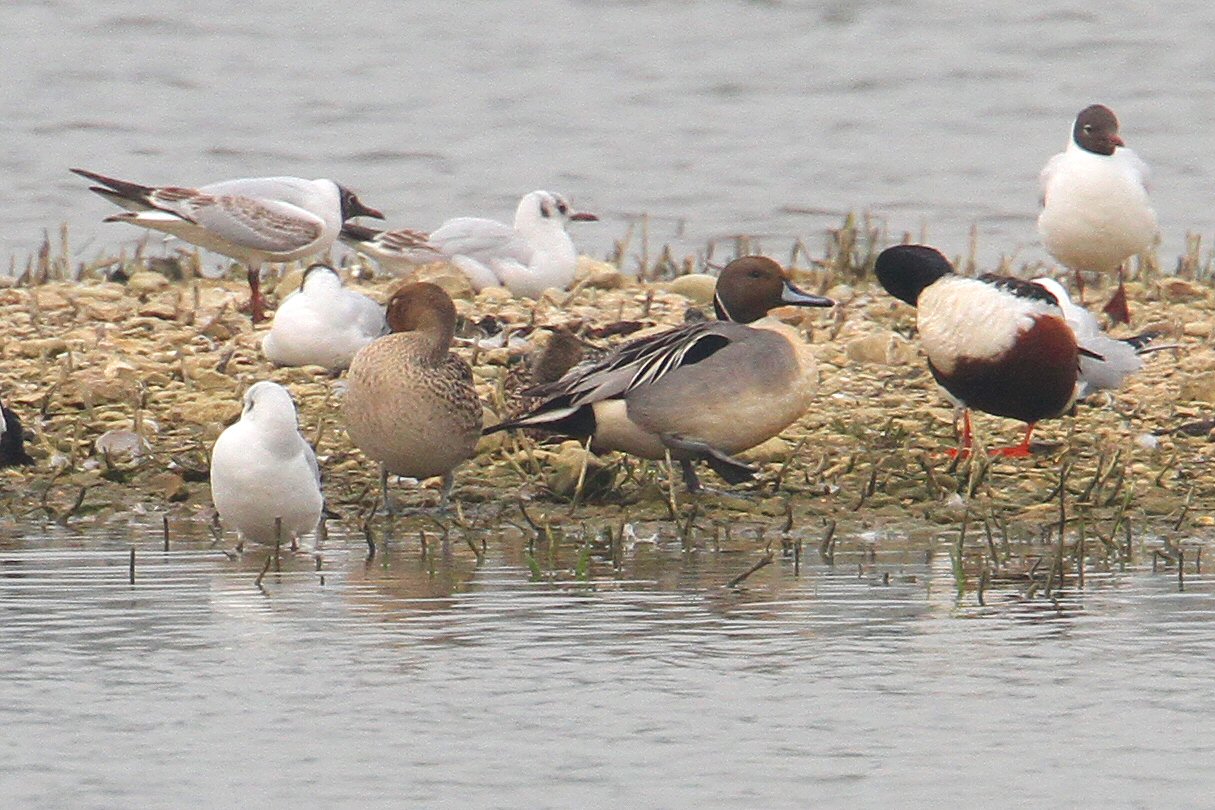
2nd were the only ones recorded but what is likely to be ‘bird of the month’ was a fine drake Blue-winged Teal which appeared only briefly at Stanwick GP on 1st before quickly departing to the north. Both wintering Long-tailed Ducks remained at Thrapston GP until 5th and at Earls Barton GP until 11th, while a handful of

Long-tailed Duck, Earls Barton GP, 24th March 2014 (Alan Coles)

Goldeneyes lingered and odd Goosanders remained at Clifford Hill, Stanwick and Thrapston GPs and at Daventry CP. The latter site hosted three Common Scoters (two drakes) from 4th to 8th and two drakes were also found at Stanwick GP on 4th and a single drake joined the Earls Barton Long-tailed Duck on Mary’s Lake from 6th to 8th.

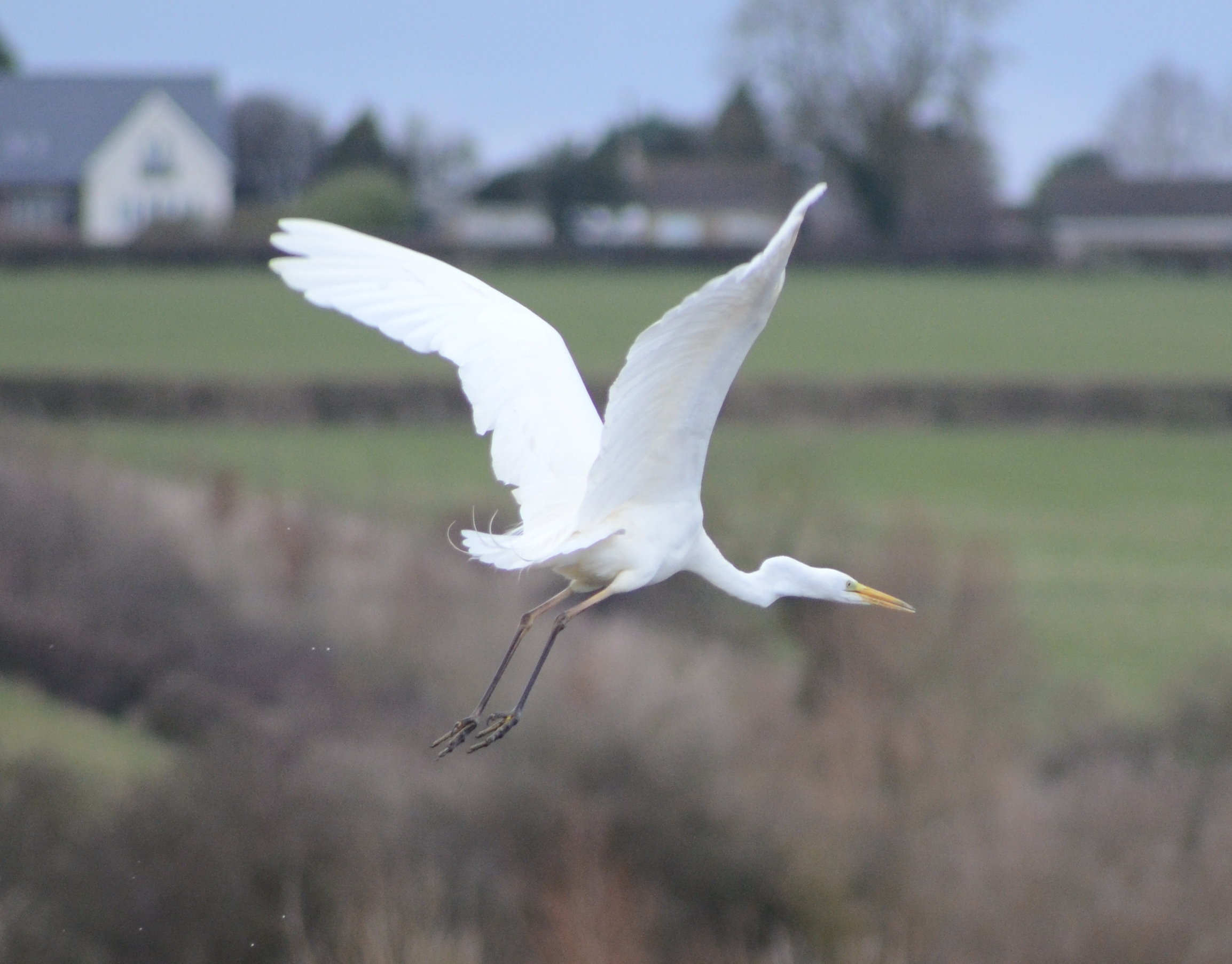
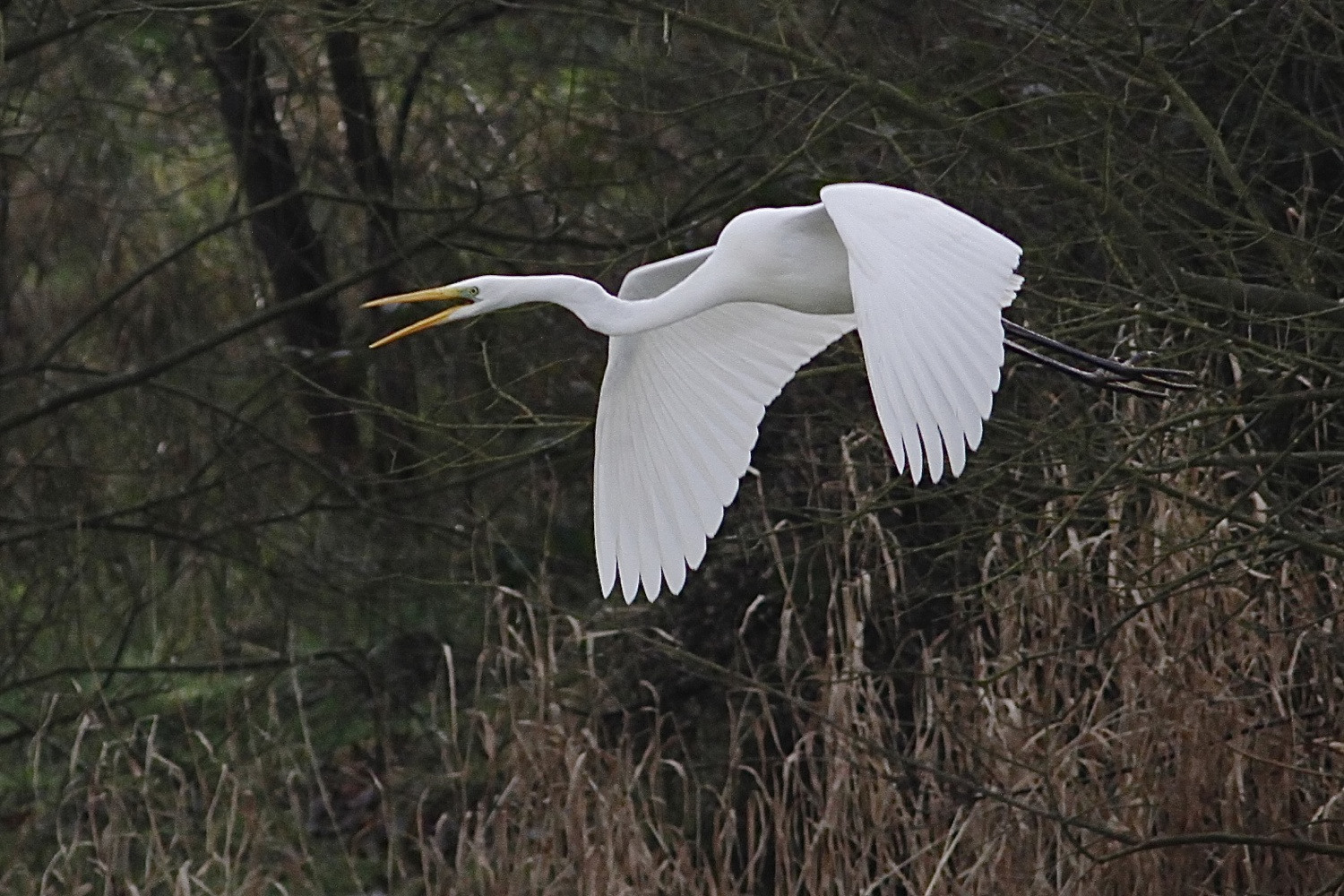
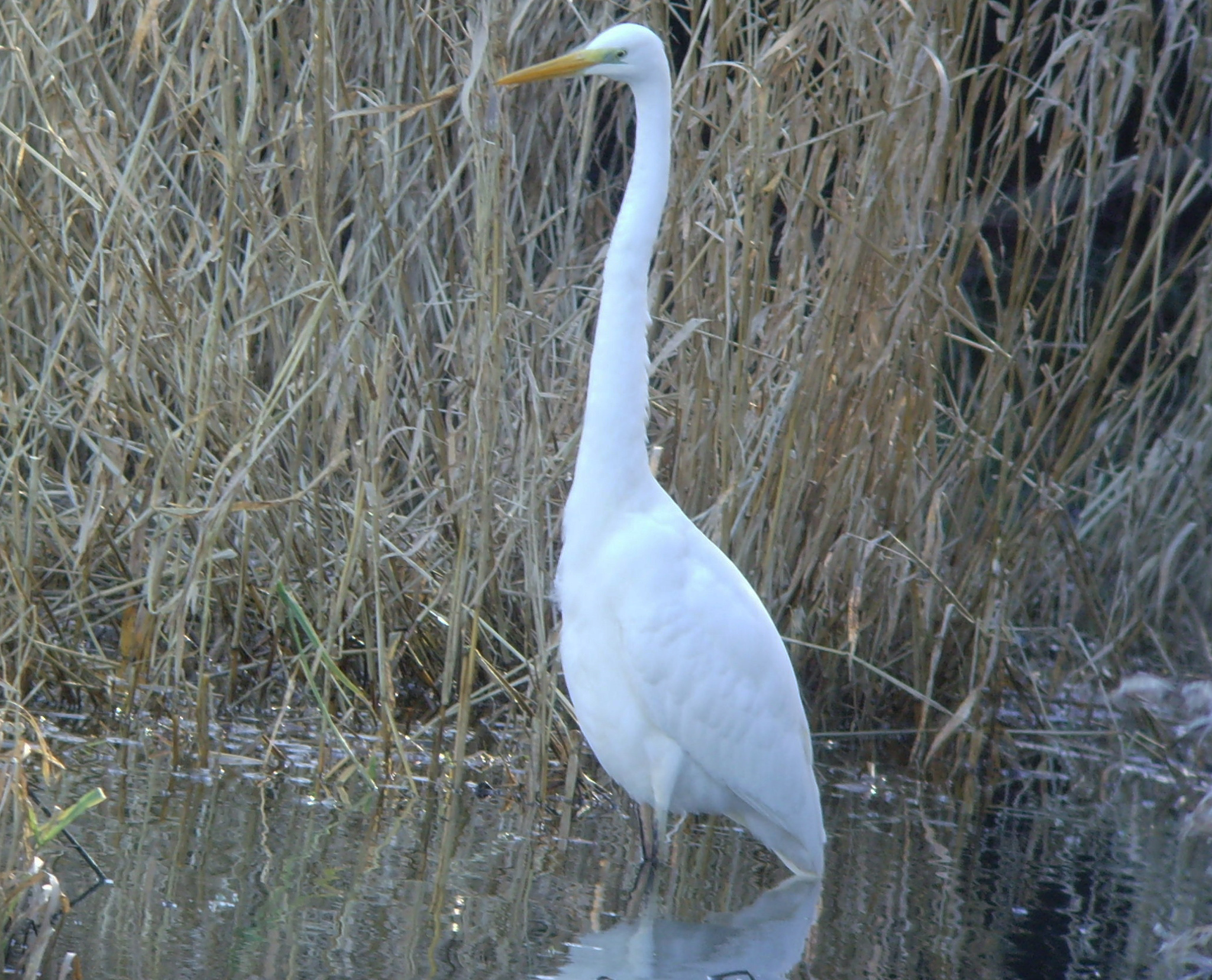
The wintering second calendar year Great Northern Diver continued its long term winter residence at Pitsford Res until at least 5th while three Bitterns – presumably migrants – were found with one at Summer Leys on 23rd, another or the same at adjacent Earls Barton GP on 31st and another at Pineham (Northampton) on 6th. Great White Egrets remained very much in evidence with singles at Stanwick GP on 22nd, 2nd and 6th with two flying east there on 10th, while one was seen intermittently at Summer

Great White Egret, Summer Leys LNR,  5th April 2014 (Mark Hill)
Great White Egret, Summer Leys LNR, 5th April 2014 (Mark Hill)

Leys/Earls Barton GP between 24th and 5th with three roosting there on 30th and one visited Ditchford GP on 6th. The Red-necked Grebe discovered off the dam at Pitsford Res on 19th remained until 8th, after which it could no longer be located.

Migrant raptors on the move were a Marsh Harrier visiting Summer Leys on 24th and, on the same date, a ‘ringtail’ Hen Harrier flew west at Stanwick GP and another ‘ringtail’

Marsh Harrier, Summer Leys LNR, 24th March 2014 (Alan Coles)

flew east at Summer Leys on 2nd. More Ospreys came through during the period, singles being noted at Pitsford Res on 26th, Great Billing on 1st, Northampton on 3rd, Brampton Valley on 4th and two north-east over Harpole on 6th. A Merlin flew high north over Borough Hill on 9th and Peregrines were seen at Summer Leys on 6th, in the Brampton Valley on 8th and in Northampton on 8th and 10th.

The first Little Ringed Plovers were found at Clifford Hill GP and Kislingbury/Upton on 31st, quickly followed by others at Pitsford Res, Stanwick GP and Summer Leys, while the Brampton Valley continued to host good numbers of Golden Plovers with up to five hundred still there on 8th and a single Grey Plover flew over Daventry CP on 4th. The only Dunlin during the period were two at Clifford Hill GP on 7th, similarly one Ruff was seen at Stanwick GP on 10th and a Jack Snipe was at Summer Leys on 5th. Single Black-tailed Godwits visited Clifford Hill GP on 31st and Ditchford GP on 2nd and a Bar-tailed Godwit put in a brief appearance at Summer Leys on 29th. The latter site

Bar-tailed Godwit, Summer Leys LNR, xx March 2014 (Stuart Mundy)

hosted a long-staying Curlew throughout the review period while others appeared at Thrapston GP on 30th and 6th, Stanwick GP on 6th and in the Brampton Valley, where there were two on 8th.

Curlew, Summer Leys LNR, 4th April 2014 (Alan Coles)

Single Green Sandpipers lingered throughout below the dam at Pitsford Res and on flooded pools at Upton/Kislingbury/Pineham, while the first Common Sandpiper appeared at Pitsford Res on 8th.

A first-winter Mediterranean Gull was at Stanwick GP on 22nd and 24th while others – all adults – turned up in reservoir roosts at Pitsford on 30th-31st and Boddington on 24th and (two) on 25th. A late second-winter Glaucous Gull put in a brief appearance at Clifford Hill GP on 6th and a first-winter Yellow-legged Gull visited the Boddington Res roost on 25th, when an adult Kittiwake was also present. An influx of Little Gulls occurred on 31st when thirteen were counted at Summer Leys, nine at Daventry CP and six at Pitsford Res; these were followed by singles at Summer Leys and Daventry CP on 2nd and 3rd respectively, with three more at the latter site on 7th and two at Stanwick GP the following day. Such high numbers are rare before mid-April.

Little Gull, Summer Leys LNR, 1st April 2014 (Bob Bullock)

Early sternas included single Sandwich Terns at Daventry CP on 31st, Stanwick GP the following day and at Boddington Res on 9th, while the first Common Tern was found at Daventry CP – again on 31st – quickly followed by others at Stanwick GP, Summer Leys and Thrapston GP from 5th. Single Arctic Terns appeared at Pitsford Res on 1st and Stanwick GP on 5th. The first Cuckoos were found at both Harrington AF and Stanwick GP on 6th, while a Woodlark – the first for several years – flew west over Daventry CP, while Swallows became evident from 31st and the first House Martin was at Byfield on 6th. More spring firsts came in the shape of Willow Warblers – widespread from 31st – and Sedge Warblers from 1st, while the first Common Redstart appeared at Hellidon on 11th and a Black Redstart was in Wollaston on 23rd. Northern Wheatears were reported from five localities with a maximum of seven at Borough Hill on 9th and three Ring Ouzels – all males – appeared in the Brampton Valley on 24th, Daventry CP on 4th and at Old Sulehay on 10th. Following last month’s very early Yellow Wagtails, small numbers were reported from five sites, while single White Wagtails were found at Summer Leys on 4th, Stanwick GP on 5th and 8th and at Braunston and Clifford Hill GP on 8th, while the wintering Water Pipit remained at Ditchford GP until 6th. Up to a dozen Bramblings continued to be seen at Harrington AF until 9th but a build-up in ‘pre-departure’ numbers at Hellidon reached an impressive eighty-two on 4th while a small

Brambling, Harrington AF, 30th March 2014 (Bob Bullock)

movement of Crossbills was noted at Pitsford Res on 30th with parties of two, eight and ten heading south-west. Finally, a very confiding Snow Bunting proved a popular

Snow Bunting, Daventry CP, 3rd April 2014 (Dave Jackson)

attraction at Daventry CP on 3rd. It was not present the next day but, amazingly, a different individual flew over the same site on 5th.

The Week in Focus: 8th to 14th March 2014

A high pressure system became established over the UK from the beginning of the week, bringing mild, settled conditions with 19-20°C recorded locally on 9th. Such conditions were clearly conducive to migration and several early summer visitors were found, along with the reappearance of a potential ‘mega’ from the east.

Wildfowl numbers were noticeably down but the red colour-ringed Marbled Duck remained at Stanwick GP until at least 12th, when up to eight Pintails were there, a pair of Red-crested Pochards visited Ditchford GP on 13th and both the drake Scaup and the long-staying Long-tailed Duck were still on Thrapston GP’s Town Lake on 9th. Similarly, the Long-tailed Duck remained Earls Barton GP on Mary’s Lake until at least 11th, the only Smew reported were single drakes at Ravensthorpe Res on 8th and Stanwick GP on 12th, while the female Red-breasted Merganser was still at Stanford Res on 11th. Goosanders were reported only from Stanford Res, Stanwick GP and Daventry CP, with a maximum of nine at the latter site on 9th.

The wintering juvenile Great Northern Diver continued its protracted stay at Pitsford Res until at least 11th while the only locality at which Great White Egrets were reported was Summer Leys LNR, where there were two to be found on most days during the week. Sunday 9th saw the arrival of the first summer visitor with an Osprey heading north over Daventry CP which was quickly followed by another at Pitsford Res just two days later on 11th. A male Merlin went through at Boddington Res on 13th, while Peregrines were seen in the Brampton Valley on 8th, at East Hunsbury, Northampton on 9th, Stanwick GP on 10th and at Harrington AF on 11th.

Jack Snipe are on the move this month and singles were found at Stortons GP on 9th, 12th and 14th and a Boddington Res on 10th and two were at Ecton SF on 8th, while a significant count of sixty Common Snipe was made at Pitsford Res on 8th. Redshanks were seen at Pitsford Res, Summer Leys LNR, Clifford Hill GP and Stanwick GP with a maximum of twelve at the latter site on 11th, while a single Green Sandpiper remained at Harrington AF until 13th and one was at Pitsford Res on 9th and 11th.

Spring passage of Mediterranean Gulls continued with a first-winter at Daventry CP on 8th, two adults in the roost at Pitsford Res on 9th and an adult at Boddington Res the following evening. An adult Glaucous Gull was still in the vicinity of Ditchford GP on 8th and a second-winter visited Clifford Hill GP briefly on 11th, while a second-winter Caspian Gull was at Stanwick GP on 10th-11th, a third-winter was watched at Rushton Landfill the following day and a second-winter Yellow-legged Gull was at Daventry CP on 8th-9th.

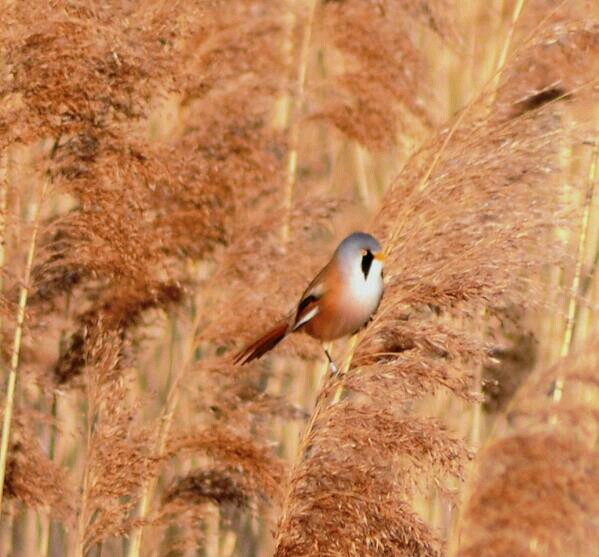
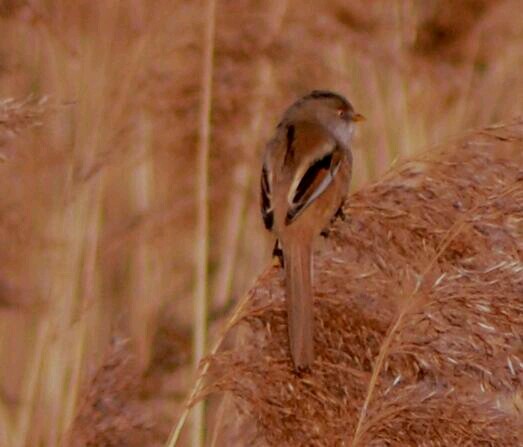
The status of Ring-necked Parakeet in Northants is unclear and it is not known if they breed but one in a Polebrook garden on 8th-9th and six in Stoke Bruerne on 8th gave rise to a modicum of local interest this week. A pair of ringed Bearded Tits at Stortons GP had not been seen since January until they resurfaced on 9th and they remained there all week; a male was also found at Summer leys LNR on the same date and was still present on 12th.

Male Bearded Tit, Stortons GP, 9th March 2014 (Stuart Mundy)


Female Bearded Tit, Stortons GP, 9th March 2014 (Stuart Mundy)

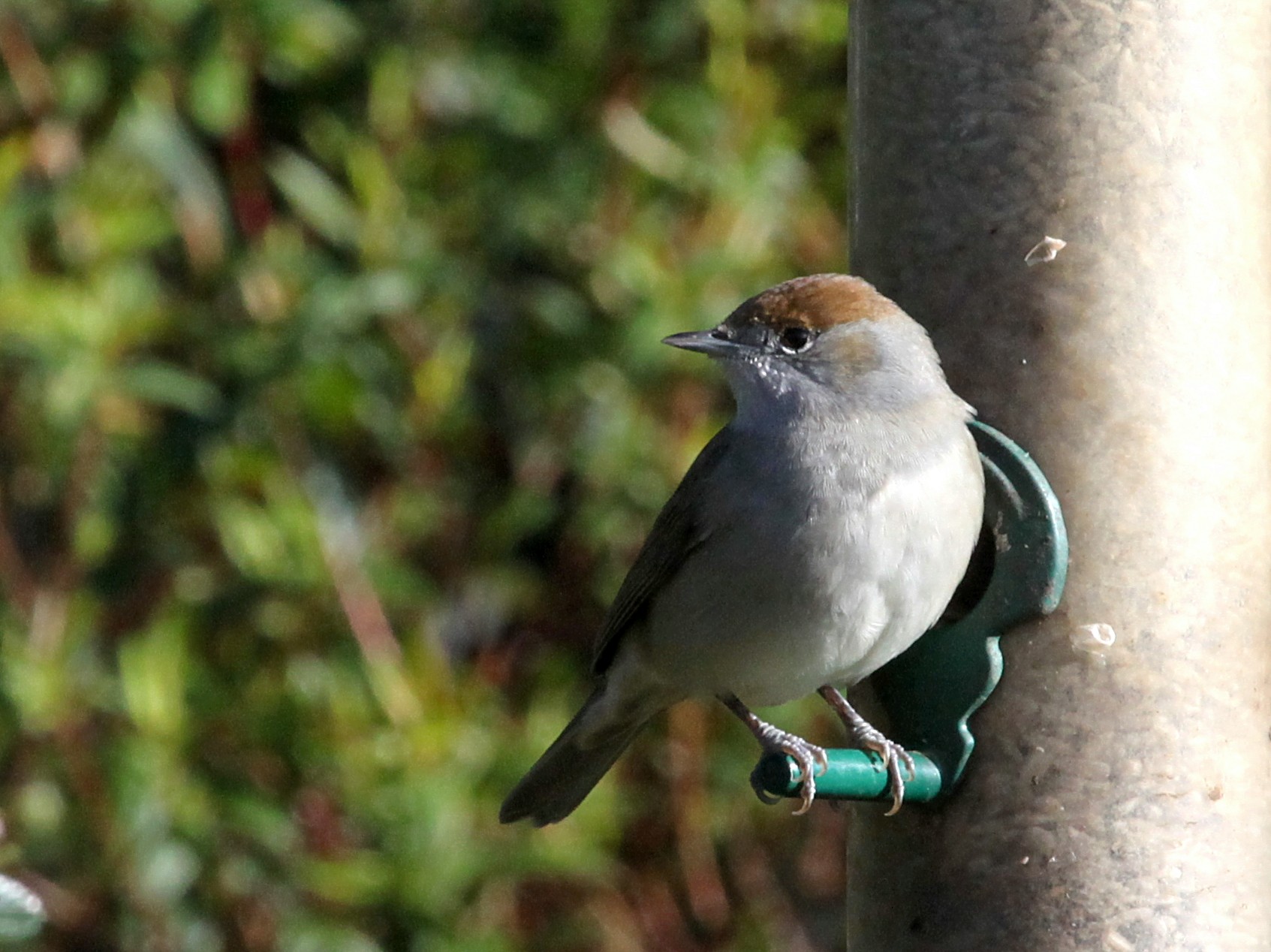
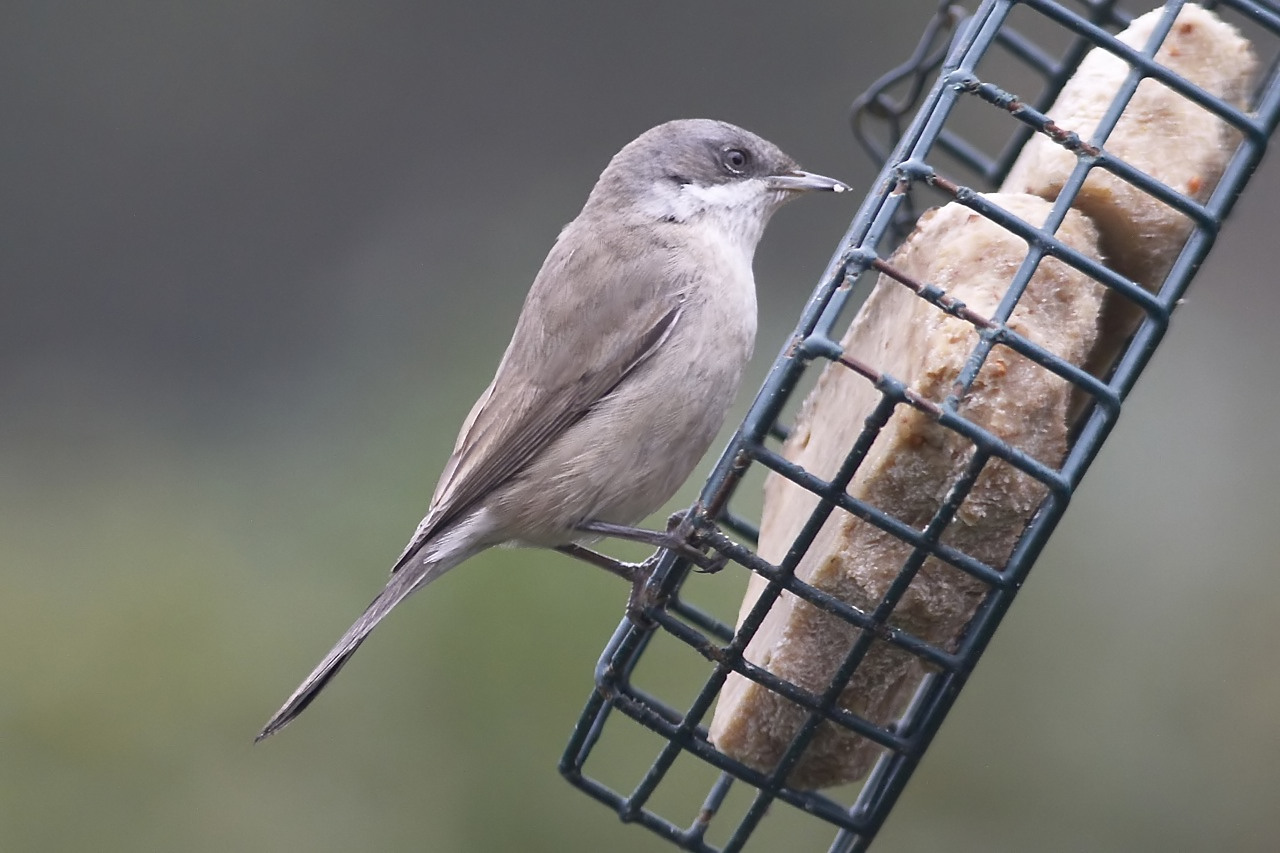
A sure sign of spring was the first Sand Martin at Stanwick GP on 10th and the distribution of Chiffchaffs this week, with singing males reported from half a dozen sites, while also singing were male Central European Blackcaps which continued to be seen in gardens at Wellingborough, Northampton and Spratton. More exciting than this ‘subspecies in waiting’ was the reappearance in a Northampton garden of a potential species in waiting – ‘Central Asian’ Lesser Whitethroat – the name now being suggested for birds falling within the blythihalimodendri spectrum.

'Central Asian' Lesser Whitethroat, Kingsthorpe, Northampton, 11th March 2014 (Bob Bullock)
‘Central Asian’ Lesser Whitethroat, Kingsthorpe, Northampton, 11th March 2014 (Bob Bullock)


'Central Asian' Lesser Whitethroat, Kingsthorpe, Northampton, 11th March 2014 (Bob Bullock)
‘Central Asian’ Lesser Whitethroat, Kingsthorpe, Northampton, 11th March 2014 (Bob Bullock)

This bird popped up after an absence of more than six weeks, showing itself for just two days on 11th and 12th, before promptly disappearing again. This individual just about ticks all the boxes for acceptance as a sight record of a bird from this eastern group and, if the taxonomists can ever agree, it may, one day, be granted full specific rank. Another summer visitor, a Yellow Wagtail, flew north, calling, over Grange Park, Northampton on 9th. This appears to be the first in the whole of the UK this spring and was quickly followed by another in Hampshire the next day. Both birds are extremely early as the mean arrival date for this species in Britain is 7th April but the earliest ever recorded in Northants is 10th March (1975).

Mealy Redpoll, East Hunsbury, Northampton, 11th March 2014 (Mike Alibone)


Mealy Redpoll, East Hunsbury, Northampton, 11th March 2014 (Martin Dove)

Up to twelve Bramblings remained at Harrington AF during the week and nine were at Hellidon on 13th, while a Mealy Redpoll visited feeders in and East Hunsbury, Northampton garden on 11th and six Crossbills were in Salcey Forest on 10th.

The Weeks in Focus: 1st to 7th March 2014

A quiet and generally mild week with occasional moderate rainfall and a mainly south-westerly airstream heralded conditions conducive to spring migrants, although local birders were left wanting …

Sporadic appearances of two Egyptian Geese at Ditchford GP continued with their presence noted again on 1st, while Pitsford Res continued to host the escapee Bar-headed and Ross’s Geese throughout the week. Falling into the same category, the red colour-ringed Marbled Duck also remained at Stanwick GP all week and at nearby Ditchford GP the drake Scaup was still present on 1st, as were drakes at Pitsford Res on 6th and at Thrapston GP on 1st along with the long-staying Long-tailed Duck still on Town Lake on the same date. Similarly, the Earls Barton GP individual remained on Mary’s Lake throughout the period, both birds appearing to have made it into the record books for their length of stay in the County.

Long-tailed Duck, Earls Barton GP, 3rd March 2014 (Doug Goddard)

Numbers of Smew began to fall away this week with two drakes remaining at  Ravensthorpe Res on 1st and a pair there on 5th, a ‘redhead’ at Ditchford GP on 1st, a drake at Stanwick GP on the same date with a pair there on 3rd-7th, two ‘redheads’ at Clifford Hill GP on 5th and four at Pitsford Res on 6th. Playing ‘hard to get’ (it’s not always there), the female Red-breasted Merganser was again at Stanford Res on 7th, while Goosanders were reported from only two localities localities, with a maximum of eight at Clifford Hill GP on 5th.

The wintering juvenile Great Northern Diver remained at Pitsford Res until at least 6th while Great White Egrets were still very much in evidence at Summer Leys LNR throughout the period with a maximum of three there on 2nd and one still at Pitsford Res on 6th. The sole scarce raptor was a Peregrine at Ditchford GP on 1st.

Great White Egret, Summer Leys LNR, 3rd March 2014 (Stuart Mundy)

The largest count of Golden Plovers was approximately three hundred at Summer Leys LNR on 2nd, a Jack Snipe was at Hollowell Res on 7th, a significant count of fifteen Redshanks was made at Stanwick GP on 6th and a single Green Sandpiper remained at Harrington AF until 4th.

Spring passage of Mediterranean Gulls continued this week with an adult at Fawsley Park on 2nd and two adults in the roost at Pitsford Res on 5th, the latter site also hosting a juvenile Glaucous Gull on 1st, while a juvenile Glaucous visited Stanwick GP on 7th. An adult Caspian Gull was at Stanford Res on 1st with a third-winter at Stanwick GP on 7th and an adult Yellow-legged Gull was at Hollowell Res on the same date.

Last week’s two Firecrests were still in the bramble clump at Thrapston GP on 1st with at least one remaining on 3rd but the only Chiffchaff reported was one at Hanging Houghton on 2nd. Male Central European Blackcaps were singing this week in gardens at Brackley and Wellingborough and in two gardens at Barton Seagrave, while others visited gardens in Raunds and Kettering.

Male Central European Blackcap, Barton Seagrave, 4th March (Geof Douglas)

A Rock Pipit visited Clifford Hill GP briefly on 5th, a Mealy Redpoll was seen at Grange Park on 3rd and Bramblings were continually present at Harrington AF throughout the period, with a maximum of fifteen there on 1st-2nd.

Two Weeks in Focus: 15th to 28th February 2014

Much to the relief of many, the Atlantic depressions in the week prior to this reporting period appeared to have run out of steam, resulting in relatively calmer conditions for birding. Signs of spring migration were thin but tangible …

If you look at Slimbridge as a ‘barometer’ then, by the end of this week, most of the Bewick’s Swan wintering there had departed, commencing their long journey back to Siberia. Perhaps from there, then, thirty-seven were seen flying north over Byfield on 22nd – the largest herd reported in Northants for a good many years. Two Egyptian Geese at Ditchford GP on 27th were more standard fare while twenty-three Shelduck at Deene Lake on 19th was an exceptional count. Pintail were clearly on the move with twos at Ditchford GP on 15th and Clifford Hill GP on 17th, nine at Thrapston GP on 22nd and the same number at Stanwick GP two days later and eight at the latter site on 26th-28th. Last month’s Marbled Duck reappeared at Stanwick GP on 20th, remaining until at least 26th. Rumour has it that it was seen to be bearing a red ring – a sure sign of its captive origin.

Marbled Duck, Stanwick GP, 20th February 2014 (Bob Bullock)

Diving ducks were well represented with a drake Red-crested Pochard at Ditchford GP from 15th to 22nd and the drake Scaup there until at least 27th, with one again at Thrapston GP on 23rd and the first-winter drake at Pitsford Res until 25th. After a brief sojourn to Clifford Hill GP, the Earls Barton Long-tailed Duck returned to Mary’s Lake, where it remained until at least 22nd and the Nene Valley also saw some ‘new’ Smew appearing, including a pair at Ditchford GP between 21st and 27th, a pair at Stanwick GP on 26th-28th while up to seven (four drakes) were at Ravensthorpe Res until at least 26th. The Stanford Res Red-breasted Merganser remained until at least 27th and  Goosanders were reported from seven localities, with a maximum of twenty at Boddington Res on 19th.

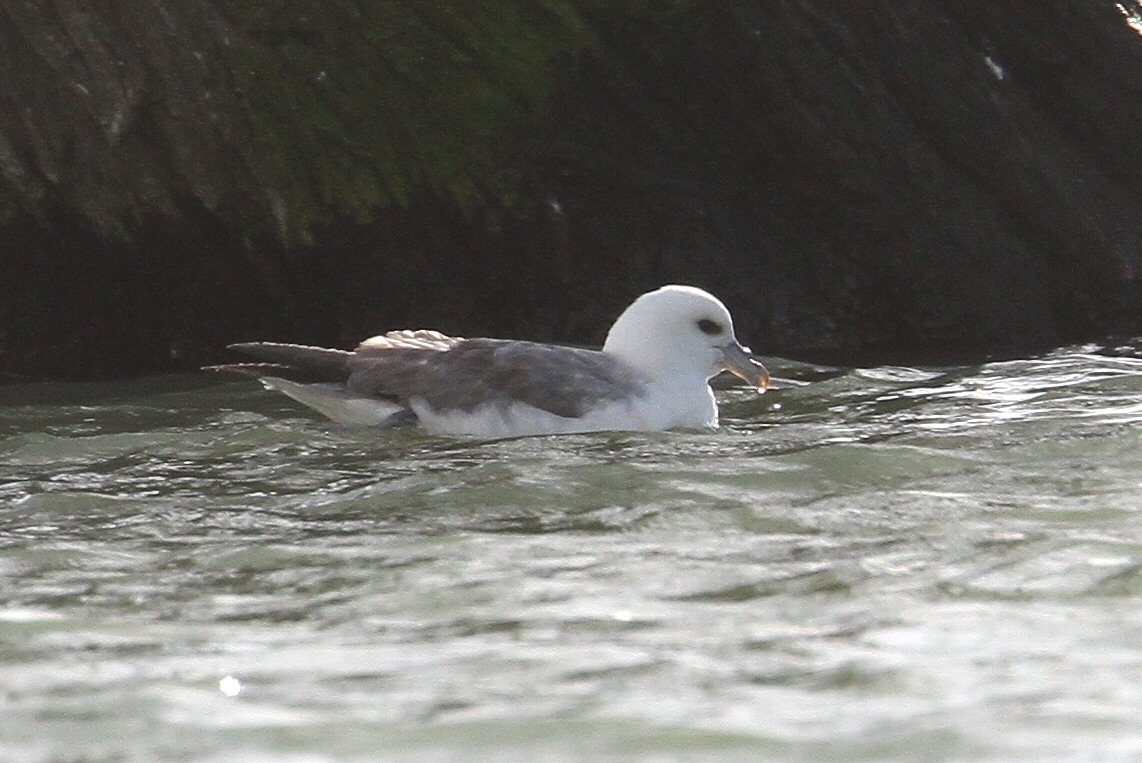
The wintering juvenile Great Northern Diver remained at Pitsford Res until at least 24th and Northamptonshire’s twenty-third ever Fulmar was found at Ravensthorpe Res on 26th.

Fulmar, Ravensthorpe Res, 26th February 2014 (Bob Bullock)

Just how many Great White Egrets we have wintering is anyone’s guess. With an amazing count of fourteen at one locality in Somerset this week, this species is fast losing its UK rarity status. Individuals continue to be reported from Stanwick GP, Ditchford GP, Summer Leys LNR/Earls Barton GP and Pitsford Res with twos at the last three of localities on several dates. On the raptor front, a female Merlin was at Harrington AF between 20th and 25th, while Peregrines were seen at Blueberry Farm, Maidwell on 16th, in the nearby Brampton Valley and at Deene Lake on 19th, Ditchford GP on 21st, between Moulton and Holcot on 22nd, in Northampton on 23rd, at Pitsford Res on 24th and at Ditchford GP on 27th.

The largest count of Golden Plovers was approximately five hundred at Stanwick GP on 20th. There have been no high counts of this species in recent weeks, the traditional Nene Valley roost site of Clifford Hill GP producing very few. The only Dunlin during the period was one at Stanwick GP on 20th, two Jack Snipe were at Hollowell res on 23rd and one was at Pitsford Res the following day, on which sixty-seven Common Snipe were also counted at the same locality. Further signs of spring were indicated by the appearance of Black-tailed Godwits, which are now clearly on the move, with singles at Stanwick GP on 18th and Summer Leys LNR on 22nd and two more arriving at Stanwick GP on 23rd. Both localities also produced Redshank, with up to fourteen at the latter locality throughout the period and one at Summer Leys on 22nd, while single Green Sandpipers were at Stanford Res on 16th, Harrington AF on 23rd-26th and Pitsford Res on 24th.

While March is traditionally the best month for spring passage of Mediterranean Gulls we have been seeing them appear a little earlier this year with the Black-headed Gull roost at Boddington Res proving to be as reliable as ever for producing this species. Four different individuals (two adults and two first-winters have been present, on and off, between 16th and 25th, one of the adults seen to be bearing a ring). Another adult visited Stanwick GP on 26th. An adult Glaucous Gull was again in the Ise Valley near Wellingborough on 16th and single juveniles were in the gull roost at Pitsford Res (the first there for many years) on 25th, Ditchford GP and Rushton Landfill on 27th and at Stanwick GP on 28th. Single adult Yellow-legged Gulls visited Stanford Res on 15th and Pitsford res on 19th, while Caspian Gulls during the period included a first-winter in the Ise Valley at Wellingborough on 17th and a third-winter at Rushton Landfill on 27th. Surprising for the time of year were Little Gulls in the roost at Boddington Res on 16th and flying over Irthlingborough on 18th, the latter being accompanied by twelve Kittiwakes! Another Kittiwake visited Daventry CP briefly on 27th.

Great Grey Shrike, Lowick, 23rd February 2014 (Geof Douglas)

After an apparent absence of a month, the Lowick Great Grey Shrike was back on its favoured hedgerow from 22nd until at least 25th, proving to be a popular draw for local birders, and a ‘Nordic’ Jackdaw appeared at Hanging Houghton on 21st. A Firecrest was found at Thrapston GP on 21st and one became two on the following day, both birds staying until 24th.

Firecrest, Thrapston GP, 23rd February 2014 (Kirsty Philpot)

Ten Chiffchaffs were counted at Ecton SF on 21st, singles were at Thrapston GP on 22nd-23rd and Ditchford GP on 27th, while two were at Pitsford Res on 24th and the wintering Central European Blackcap tally from gardens in Barton Seagrave, Northampton, Kettering and Wellingborough reached nine.

Female Central European Blackcap, Kettering, 26th February 2014 (Phil Jackman)

Migrant Stonechats appeared at Ditchford GP on 22nd and Daventry CP on 24th, up to two Mealy Redpolls were still frequenting the alders at Daventry CP until 17th and Bramblings were present at Harrington AF, Hanging Houghton and Pitsford Res with a maximum of twenty-five at the first of these locations on 17th.

The Week in Focus: 8th to 14th February 2014

The relentless, fast moving depressions from the Atlantic continued to batter Britain while local floodwater levels continued to rise in the Nene Valley and elsewhere. The first signs of early spring passage were evident on 10th.

Great weather for ducks, although nothing new was found during the period. Four Pintail were at Pitsford Res on 11th, the same site continuing to host at least two Red-crested Pochards and the drake Scaup until at least 9th, while the Earls Barton Long-tailed Duck had moved to Clifford Hill GP by 10th and the long-staying individual resurfaced at Thrapston GP’s Town Lake on 13th.

Long-tailed Duck, Clifford Hill GP, 10th February 2014 (Doug Goddard)

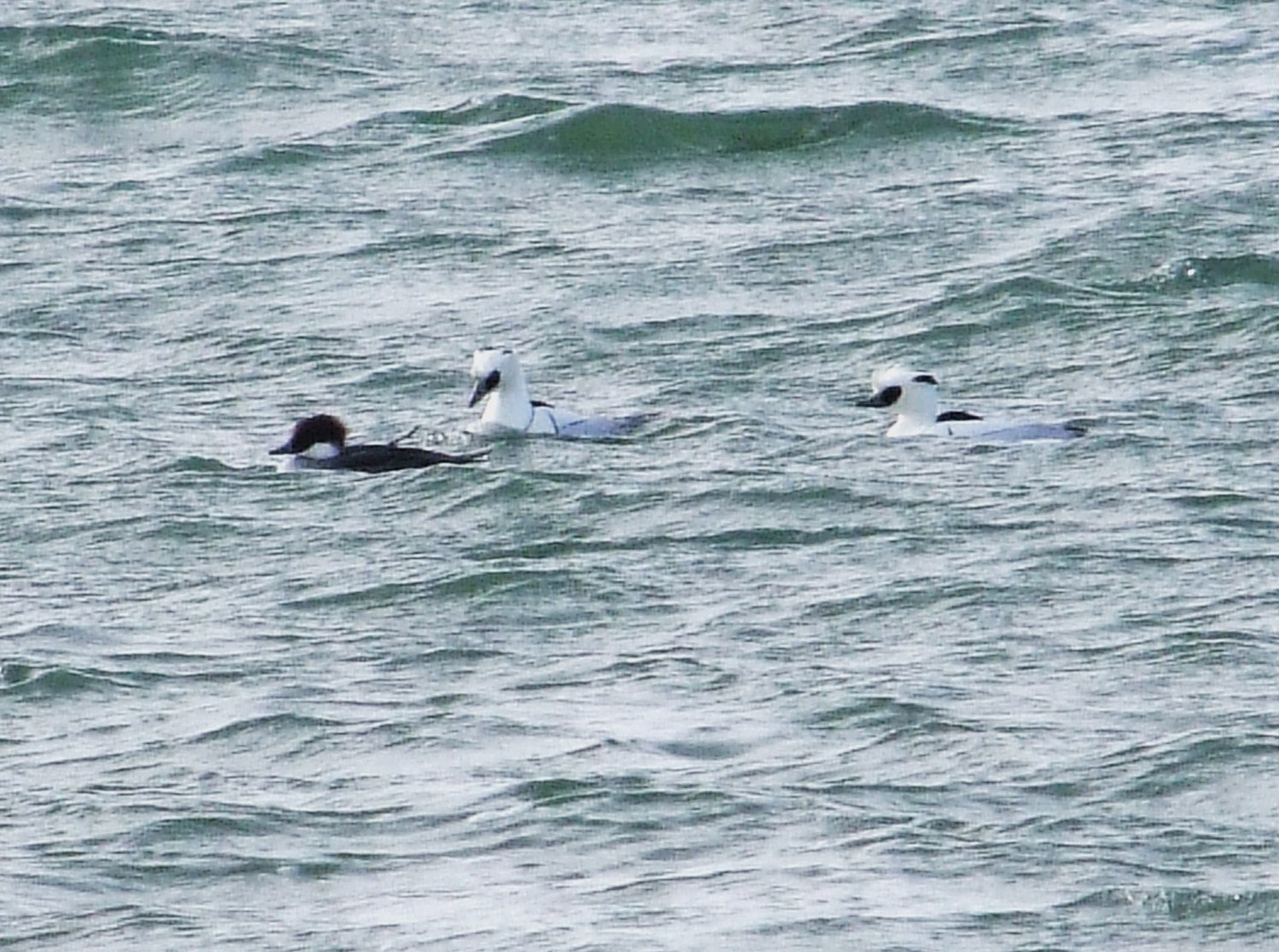
All three sawbills were available this week, with a maximum of eight Smew at Pitsford Res on 8th, one at Earls Barton GP on 9th, two at Sywell CP on 12th and five at Ravensthorpe Res the following day, while a Red-breasted Merganser reappeared at Stanford Res between 8th and 12th and Goosanders were again reported from just four localities, with a maximum of thirteen at Stanford Res on 8th.
The wintering juvenile Great Northern Diver remained at Pitsford Res all week as did at least one Great White Egret while two remained at Summer Leys/Earls Barton GP until 8th. Raptors continued to prove scarce with single Merlins at Pitsford Res on 8th and near Sulgrave on 11th and Peregrines were seen at Blueberry Farm, Maidwell and Ravensthorpe Res on 8th, Summer Leys on 9th and at Kingsthorpe LNR and Harrington AF on 13th. Scarce waders were limited to single Jack Snipes at, Stanford Res, Pitsford Res and Hollowell Res on 8th and again at the latter site on 13th.
Similarly, scarce gulls comprised adult Mediterranean Gulls at Pitsford Res on 8th, 11th and 14th, an adult and a first-winter in the gull roost at Boddington Res on 8th and 10th and a second-winter at Daventry CP on 9th with an adult Glaucous Gull in the Ise Valley near Wellingborough on 8th. The 10th produced adult Kittiwakes at Stanford Res and Boddington Res – part of a series of early storm-driven migrants inland, on their way back to breeding areas further north.

Kittiwake, Stanford Res, 10th February 2014 (John Moon)

The only Chiffchaff this week was one at Stortons GP on 10th, while six wintering Central European Blackcaps were in gardens in Northampton, Sywell, Kettering and Wellingborough, a new Mealy Redpoll was found at Daventry CP on 11th and Bramblings were present at Harrington AF, Hanging Houghton, Hollowell Res and Stanwick GP.

The Week in Focus: 1st to 7th February

The week remained mild as an incessant onslaught of depressions in off the Atlantic brought more rain and gale force winds. Few new birds were found locally.

Escapes maintained the status quo this week with the Ross’s Goose still at Clifford Hill GP on 2nd, the long-staying Bar-headed Goose at Pitsford Res still on 4th and the female Wood Duck on the River Nene in Northampton on 1st. Dapper dabblers were represented only by a drake Mandarin at Kettering Leisure Village Lake on 4th and eight Pintail at Ringstead GP on 6th with twenty over Earls Barton GP on the same date. The only Red-crested Pochards reported this week were single drakes at Ringstead GP on 4th and Ditchford GP on 7th and the only Scaup a drake at Pitsford Res on 3rd and 4th,

Drake Scaup, Pitsford Res, 3rd February 2014 (Doug Goddard)

while the Long-tailed Duck remained in residence on Mary’s Lake at Earls Barton GP all week, being joined there by a drake Smew for the same duration. The only other Smew were a ‘redhead’ at Clifford Hill GP on 2nd and three (one drake) at Pitsford Res all week, while Goosanders were reported from four localities, with a maximum of sixteen at Boddington Res on 7th. Unfortunately, the cat was out of the bag with regard to the pair of Ruddy Ducks wintering in Pitsford’s Scaldwell Bay, the government’s special boat squadron was duly despatched and it seems likely that these two met their fate on the afternoon of 4th.

Drake Ruddy Duck, Pitsford Res, 2nd February 2014 (Simon Hales). The last of the few.

The wintering juvenile Great Northern Diver remained on station at Pitsford Res all week and the same locality continued to host at least one Great White Egret while two remained at Summer Leys/Earls Barton GP throughout the period.

Great White Egret, Pitsford Res, 4th February 2014 (Dave Jackson)
Great White Egret, Pitsford Res, 4th February 2014 (Geof Douglas)

Raptors were again scarce with a male Merlin over fields north of Badby on 7th and single Peregrines at Summer Leys on 2nd, Kingsthorpe LNR on 4th and Blueberry Farm, Maidwell on the same date and again on 7th, while a pair was present at an undisclosed locality throughout the week.

Waders hit an all-time low this week with just three Redshanks at Clifford Hill GP on 2nd and a Green Sandpiper at Pineham, Northampton on the same date, while approximately two thousand Lapwings at Stanwick GP on1st was an encouragingly high count.

Similarly, scarce gulls were poorly represented by just two Mediterranean Gulls – an adult and a first-winter – in the gull roost at Boddington Res on 3rd and 7th, a juvenile Glaucous Gull flying over Wellingborough on 1st and an adult in the usual flooded field in the Ise Valley there on 3rd.

Male Central European Blackcap, Northampton, February 2014 (Stuart Mundy)

The only Chiffchaff this week was one at Pitsford Res on 3rd, while five wintering Central European Blackcaps were in gardens in Northampton, Kettering and Wellingborough, up to two Mealy Redpolls were in alders at Daventry CP between 3rd

Mealy Redpoll, Daventry CP, 7th February 2014 (Bob Bullock)
Mealy Redpoll, Daventry CP, 7th February 2014 (Bob Bullock). A striking individual at the easy to identify end of the range of variation in this species.

and 7th and single-figure counts of Bramblings were made at Summer Leys, in the Brampton Valley and at Harrington AF which hosted the week’s maximum of eight on 1st.

Brambling, Summer Leys LNR, 2nd February 2014 (Douglas McFarlane)

The Week in Focus: 25th to 31st January

A mild start to the week included an unseasonal thunder & lightning storm on 25th, before turning briefly colder under the influence of an easterly airstream mid-week.

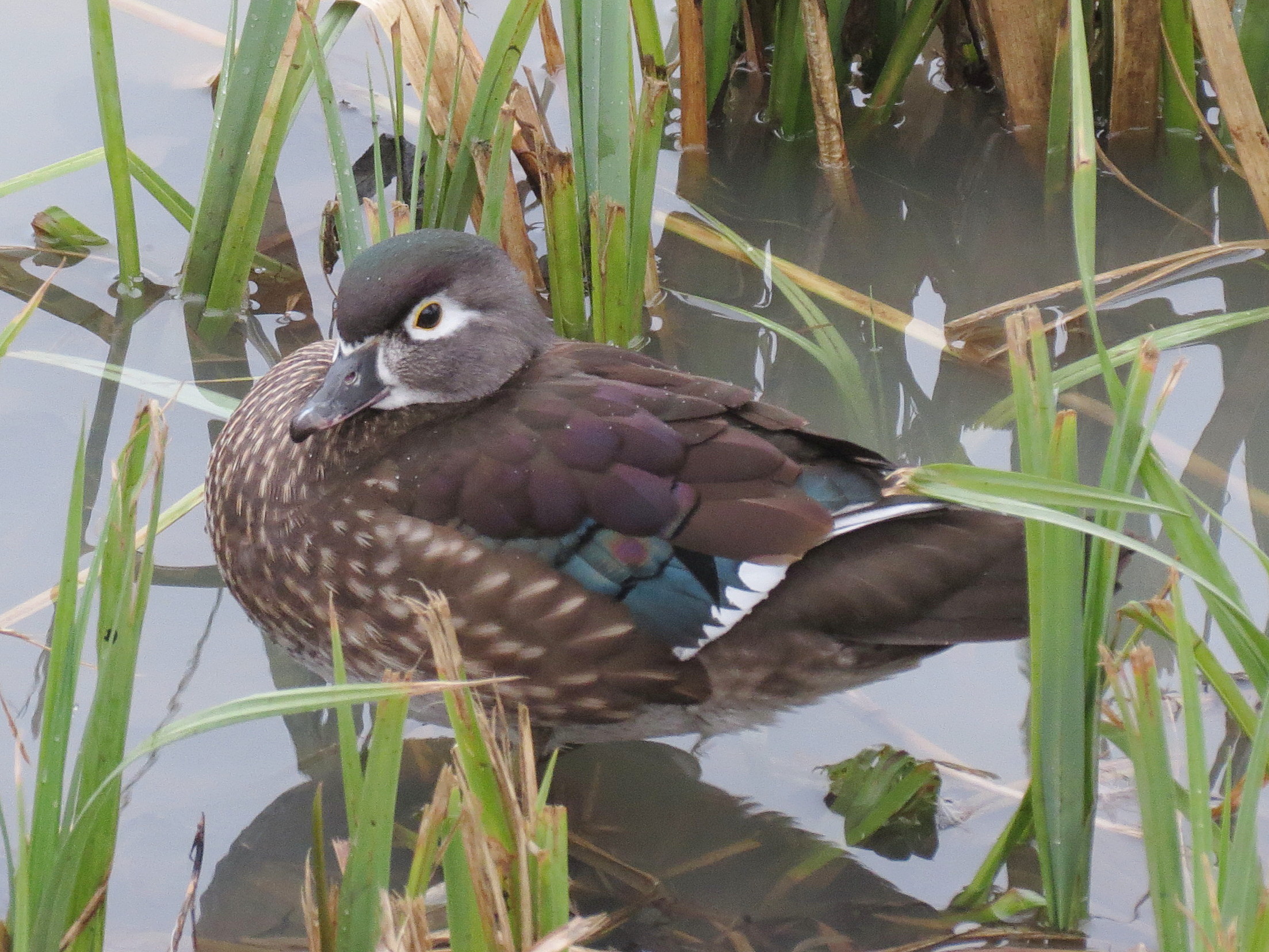
Escapes featured heavily this week with the Ross’s Goose again at Clifford Hill GP on 27th, the long-staying Bar-headed Goose at Pitsford Res still on 31st and the new kid on the block – a female Wood Duck – on the River Nene in Northampton all week.

Adult female Wood Duck, Northampton, 31st January 2014 (Martin Dove)

Otherwise, six Red-crested Pochards were at Stanford Res on 25th, while six remained at Pitsford Res until at least 29th with a Scaup at the same locality on 29th and 31st and the Long-tailed Duck remained at Earls Barton GP on 25th. Smew were reported from three localities, with three at Ravensthorpe Res on 25th, the ‘redhead’ still at Clifford Hill

Smew, Pitsford Res, 27th January 2014 (Douglas Goddard)

GP on 26th-27th and up to six at Pitsford Res all week, while a ‘redhead’ Red-breasted Merganser at Stanford Res on 25th was noteworthy and Goosanders were reported from five localities, with a maximum of thirty-five at Clifford Hill GP on 26th.

The wintering juvenile Great Northern Diver was still at Pitsford Res on 31st and it appears that there are at least five Great White Egrets wintering in the county: two at Ditchford GP, one or two at Summer Leys/Earls Barton GP and two at Pitsford Res with one also seen in flight over Stanwick GP on 30th. Raptors were in short supply with just one Peregrine at Pitsford Res on 25th and a Merlin was at Denton the following day.

The week’s waders included the two Oystercatchers at Stanwick GP all week, approximately one thousand Golden Plovers at Clifford Hill GP on 27th with the same number estimated at Stanwick GP on 30th and smaller numbers at three further sites. A count of approximately seventy-eight Common Snipe at Pitsford Res on 25th was one of the highest totals there in recent times, five Dunlins visited Stanwick GP on 30th, where twelve Redshanks were counted the previous day – with two at Pitsford Res on 25th and three at Clifford Hill GP on 27th – and a Green Sandpiper was at Pitsford Res on 25th.

White-winged gulls were again very much in evidence this week but an albino Black-headed Gull at Ditchford GP on 29th was, well, all white. The flooded field between Wellingborough and Sidegate Landfill produced three Caspian Gulls with a first-winter on 25th, an adult on 26th and a second-winter on 28th, while a second-winter was at Stanwick GP on 29th and three were there the following day. The latter site hosted two Yellow-legged Gulls on 30th, while the Wellingborough flood produced two adults on 26th and a second-winter on 28th, the same site hosting an adult Iceland Gull on 26th and a second-winter Glaucous Gull on 25th and an adult on 28th. A different adult – along with a juvenile – visited the pre-roost at Stanwick GP on 29th and a juvenile was there again the following evening.

A Chiffchaff was at Pitsford Res on 25th and two were found at Stanwick GP on 29th, while at least seven wintering Central European Blackcaps were scattered among gardens in Duston, Spratton, Kettering and Wellingborough and six Bramblings remained at Harrington AF during the week.

The Week in Focus: 18th to 24th January

The week started mild and ended more or less on the same note, with a series of uneventful depressions bringing showers from the west intermittently throughout the period.

The wandering escaped Ross’s Goose visited Clifford Hill GP on 20th and nearby Hardingstone GP on 22nd, while two Egyptian Geese remained at Ditchford GP on the same date and another was at Barnwell CP on 19th, when the first three Shelducks of ‘spring’ returned to Summer Leys LNR. The only Pintail this week were two at Stanwick GP on 22nd and the same site produced a striking bird considered to be a hybrid drake Baikal Teal x Eurasian Teal  on the same date. Four Red-crested Pochards visited Summer Leys on 20th, the drake Scaup remained at Ditchford GP until at least 22nd as did single Long-tailed Ducks at Thrapston GP until 19th and Earls Barton GP until 24th. The three reports of Smew this week consisted of five at Pitsford Res on 18th, one at Clifford Hill GP on 20th and two at Ditchford GP on 22nd and Goosanders were reported from six localities, with a maximum of seventeen at Hardingstone GP on 22nd.

The wintering juvenile Great Northern Diver was still at Pitsford Res on 22nd but it has now become difficult to assess how many Great White Egrets are now wintering in the county, with just one reported from Pitsford between 18th and 22nd, singles at Summer Leys LNR on 19th, 21st and 24th with two there on 20th and two at nearby Ditchford GP on 18th, 22nd and 24th with one there on 19th. Breaking the Peregrine monopoly, a Merlin was seen at Thrapston GP on 19th but Peregrines continued to outnumber with singles at Brixworth on 18th, Blueberry Farm, Maidwell on 20th, 22nd and 24th and at Ditchford GP on 22nd.

The week’s few waders included two Oystercatchers at Stanwick GP on 22nd, Golden Plovers at four sites, with a maximum exceeding five hundred at Summer Leys on 20th, a Green Sandpiper at Ditchford GP on 18th and 22nd and up to eleven Redshanks at Stanwick GP all week. A count of approximately one thousand Lapwings at Ditchford GP on 24th was noteworthy.

Scarce gulls were at a low ebb this week with an adult Mediterranean Gull visiting Daventry CP on 24th, single adult Caspian Gulls at Stanwick GP on 22nd and near Sidegate Landfill on 24th, a juvenile Glaucous Gull visited Broadholme Sewage Works (Ditchford GP) on 24th and adult Yellow-legged Gulls were in the same area on 22nd and 24th. A probable juvenile Kumlien’s Gull at Ditchford GP on 22nd will be only the second county record if it is eventually pinned down and the identification confirmed.

Great Grey Shrike, Lowick, 18th January 2014 (Alex Holt)

Last week’s Great Grey Shrike remained near Lowick until at least 23rd and ten Chiffchaffs were counted at Ditchford GP on 22nd, while wintering Central European Blackcaps included two in a Wellingborough garden and singles in Irthlingborough and Northampton all week.  The ‘Eastern’ Lesser Whitethroat, discovered in a Northampton garden last week, continued to visit feeders there intermittently until 22nd. Its subspecific identity has yet to be resolved, with some authorities favouring Central Asian halimodendri while others suggesting blythi as a possible candidate.

Eastern Lesser Whitethroat, Northampton 18th January 2014 (Dave Jackson)

An unconfirmed report of two Waxwings in a car park on Northampton’s Lodge Farm Industrial Estate on 24th remains just that, while the two wintering Stonechats continued their winter residence at Blueberry Farm, Maidwell all week, a Water Pipit was again at Ditchford GP on 24th and six Bramblings were at Harrington AF on 19th with one at Hanging Houghton on 22nd.