Rarity Round-up, 25th to 31st January 2020

The mild Atlantic airstream once again ensured traditional winter weather was kept firmly at bay, with local temperatures hitting a high of 12°C during the last two days of the period. The early part of the week, however, had birders ducking and diving when it came to confirming the identification of a problematic Aythya, discovered at Stanwick on day one.

Hollowell Res continued to play host to the female Ruddy Shelduck until at least 27th but it was a different shade of brown which brought a quickening of the pulse to the finder of a controversial quacker, sparking much debate over its identification during its stay at Stanwick GP from 25th to 27th. Initially looking very good for a female Ferruginous Duck, subsequent close examination revealed a hybrid in hiding, the game was up and on 29th it duly scarpered to Ditchford GP’s Irthlingborough Lakes & Meadows reserve.

Female Ferruginous Duck-type hybrid, Stanwick GP, 27th January 2020 (Bob Bullock)
Female Ferruginous Duck-type hybrid, Stanwick GP, 27th January 2020 (Bob Bullock). Grey wingbar indicates hybrid.

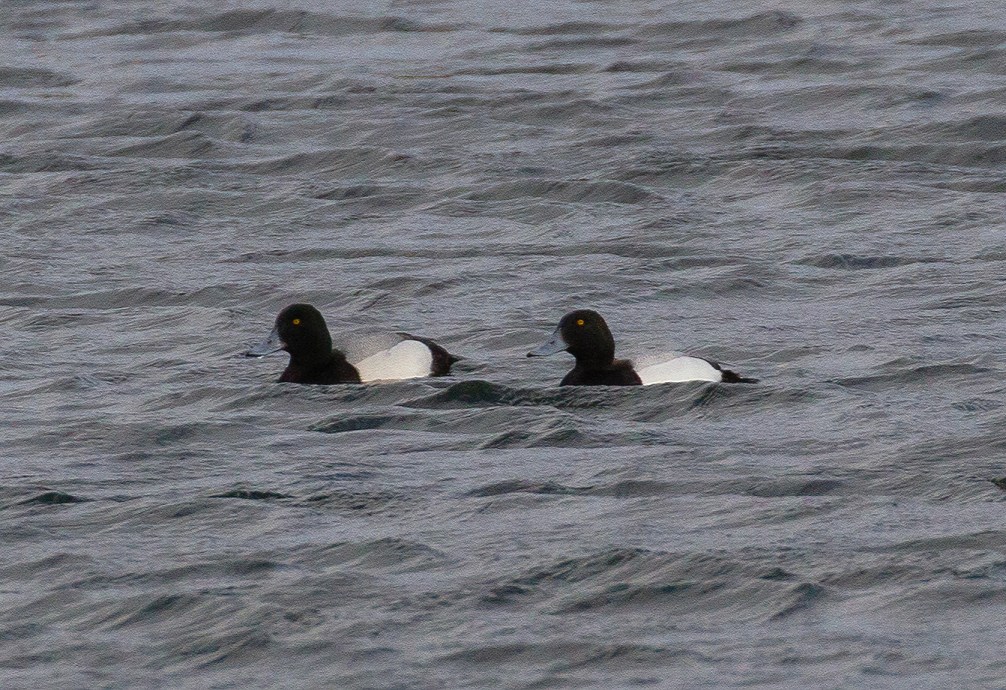
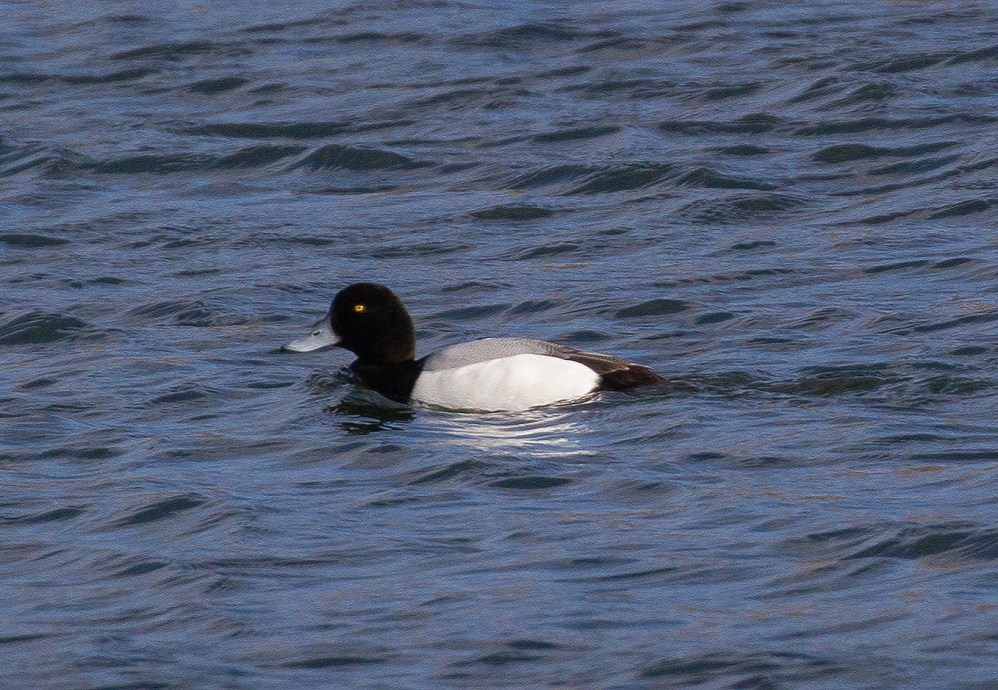
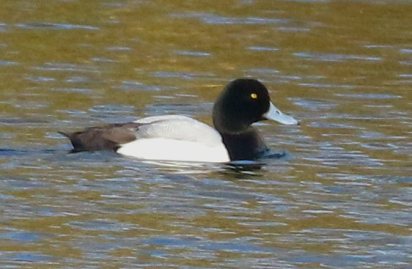
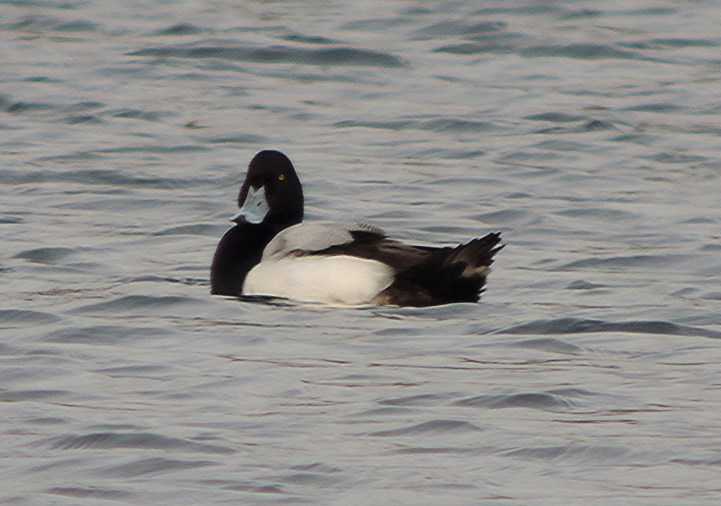
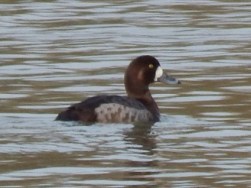
Not so controversial were this week’s Nene Valley Greater Scaups, which included the female still at Stanwick and two very different looking first-winter drakes at Clifford Hill GP from 25th – all birds remaining until at least 30th.

First-winter drake Greater Scaup, Clifford Hill GP, 26th January 2020 (Mike Alibone). In an advanced state of moult, this bird has remnant juvenile brown feathers on its right flank and a mottled lower breast.
First-winter drake Greater Scaup, Clifford Hill GP, 26th January 2020 (Bob Bullock)
Female Greater Scaup, Stanwick GP, 26th January 2020 (James Underwood)


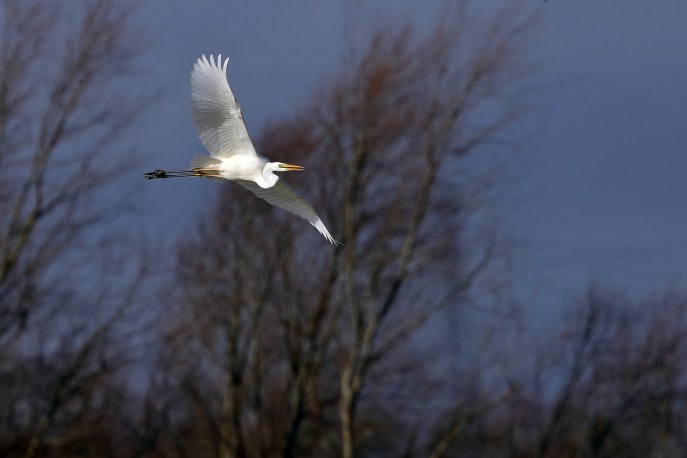
Sticking with said valley, the five Cattle Egrets were still present at Ditchford GP on 25th but they appear to have attracted little interest since. Eager to stay in the frame, though, Great Egrets were present at ten localities with Stanwick and Thrapston GP mustering three apiece. An adult Caspian Gull joined the melee of scavengers at Rushton Landfill on 25th but no ‘white-wingers’ have yet emerged at this, the county’s last bastion of larid-luring putrefaction, during the mild winter we have experienced to date.

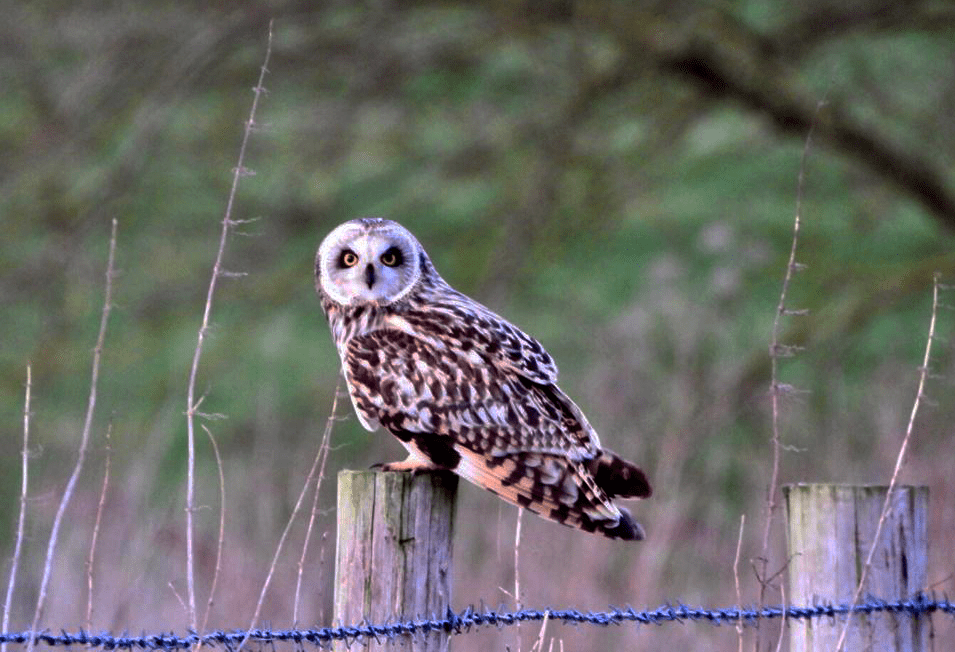
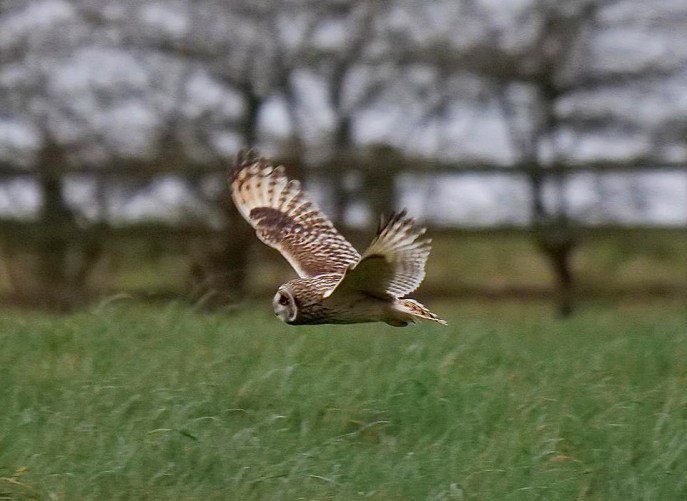
Short-eared Owls maintained their presence at last week’s four localities, the Neville’s Lodge three performing well between 25th and 29th, at least three – if not four – were at Borough Hill on 25th, two were still over setaside east of Stanford Res until 31st and one was still patrolling the bunkers at Harrington AF between 25th and 27th.

Short-eared Owl, Neville’s Lodge, Finedon, 25th January 2020 (Ricky Sinfield)
Short-eared Owl, Stanford Res, 25th January 2020 (Chris Hubbard)

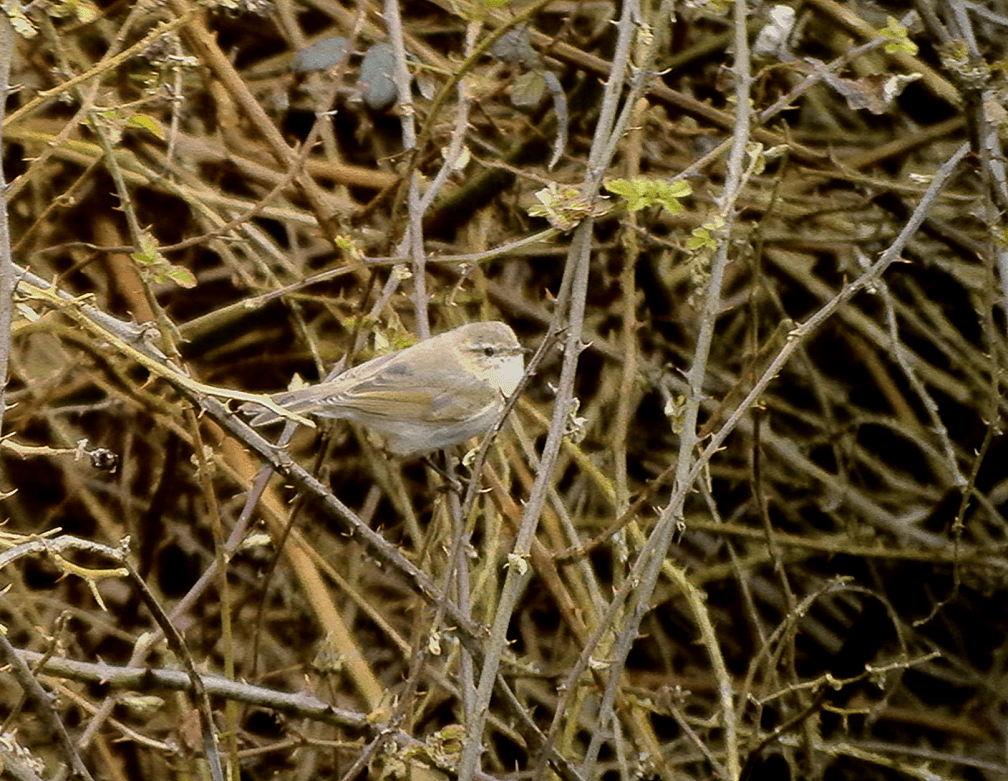
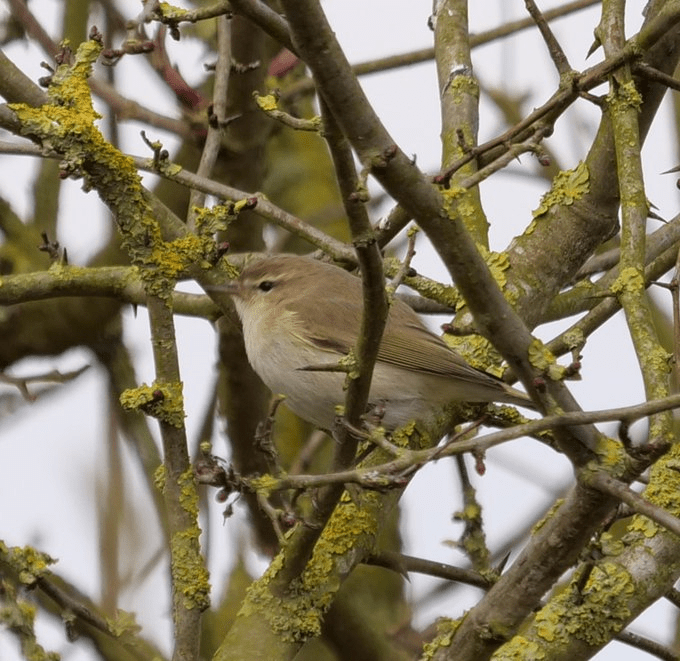
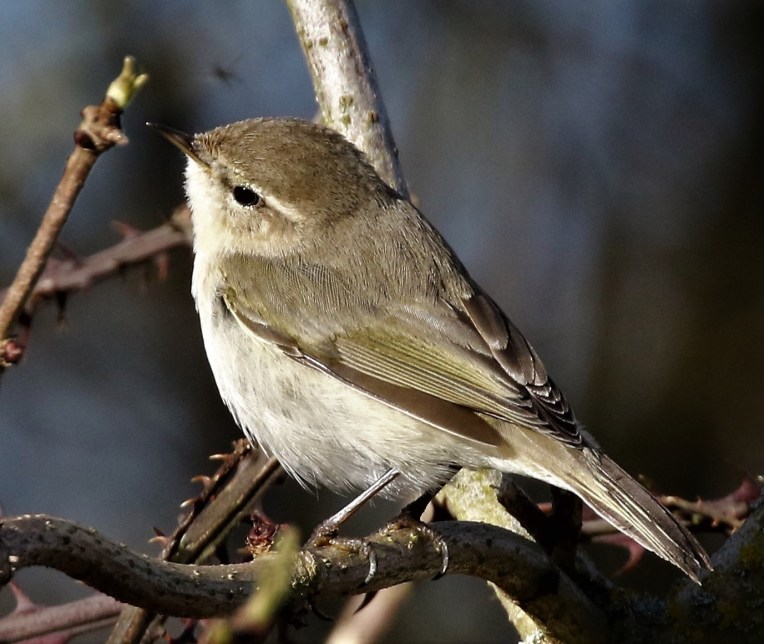
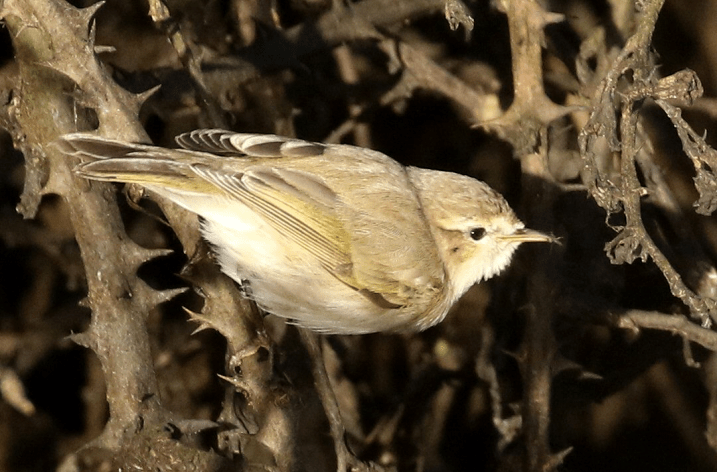
At Ecton SF, just one Siberian Chiffchaff – the original bird found on 7th – was present throughout the week, along with at least fifteen Common Chiffchaffs on 28th but bird of the week, at least for one person, was the Black Redstart which played hide-and-seek in an extensive landscape of untidy heaps of scaffolding on an industrial site in Corby on 28th-29th.

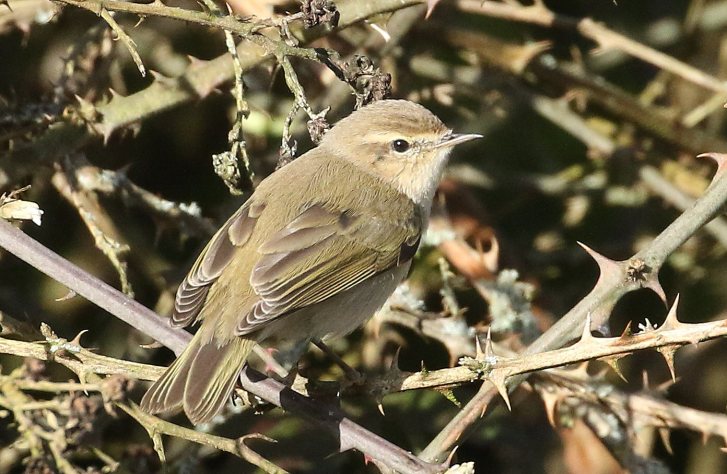
Siberian Chiffchaff, Ecton SF, 29th January 2020 (Alan Coles)

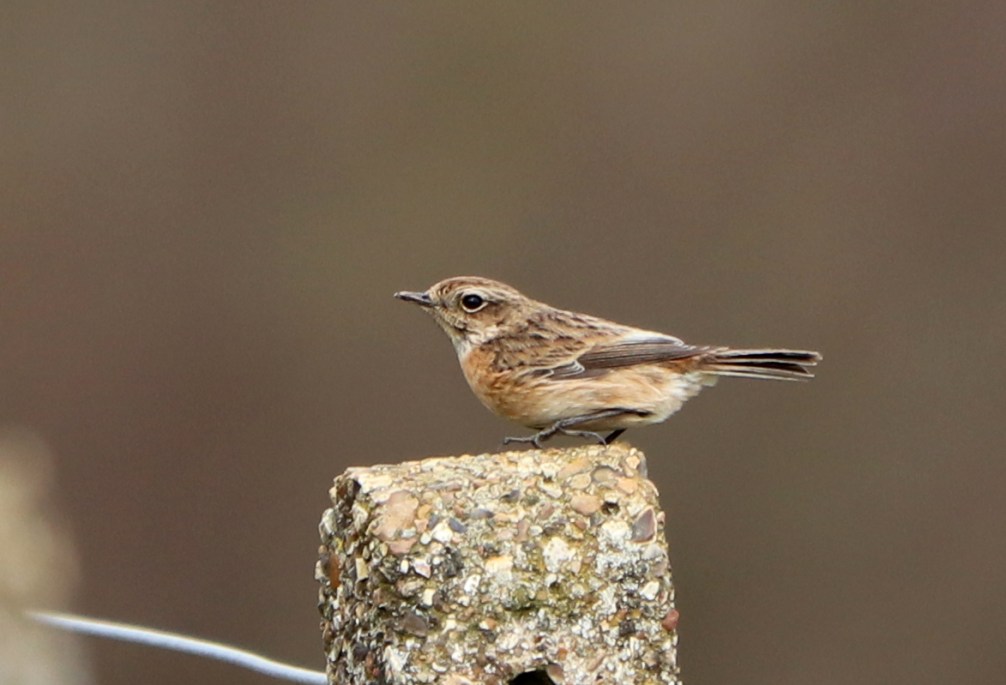
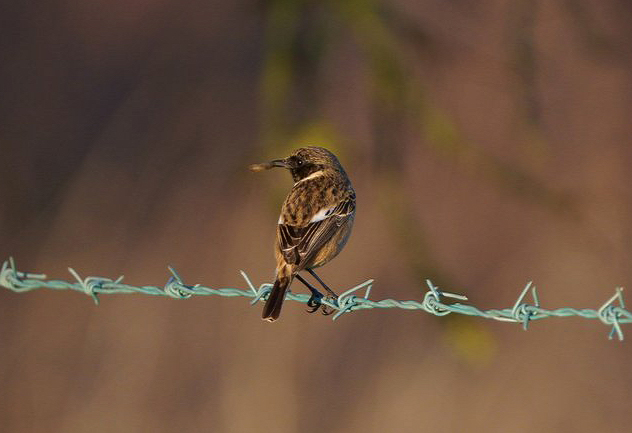
Stonechats were recorded at six sites, which included Borough Hill, Hollowell, Pitsford, Stanford, Thrapston and Kettering, with a maximum of five at Pitsford on 28th.

The Stanwick ‘Ferruginous’ Duck

It’s not called ‘Fudge Duck’ for nothing. Closely resembling the real thing, hybrids abound, enticing observers into a ticking temptation trap, in which nothing is quite what it seems …

When the news broke of Ferruginous Duck or hybrid at Stanwick GP, at around midday yesterday, it was clearly a sensible move to throw in that cautionary caveat – the dreaded ‘h’ word – as rare ducks are notorious for carrying rogue genes. Although looking good at first sight, this was one such bird which, upon closer scrutiny, clearly did not pass muster. OK, it could be said it was mainly but unfortunately, not wholly, Ferruginous. The following assessment is based upon published images of the bird and follows the most up-to-date ‘hybrid checklist’ of features given by Reeber (2015).

It is assumed the bird is an adult female on account of the iris being dark brown (paler in juvenile/first-winter). In terms of size, it’s too large for a Ferruginous Duck. Two of the images below suggest it is virtually the same size as a Pochard. It also appears too bulky. Ferruginous Duck is small and any bird close in size to, or larger than, Tufted Duck is likely to be a hybrid.

Female Ferruginous Duck-type hybrid, Stanwick GP, 25th January 2020 (Adrian Borley)

Head shape is not perfect for Ferruginous Duck and is similar to Pochard. On close inspection, the head shows two slightly paler brown patches, one at the bill base and one on the rear cheeks, which is strongly indicative of hybridisation with Common Pochard. The bill colouration also indicates a hybrid as the pale subterminal mark extends along the sides of the bill, which would form a ‘U’ shape when seen from above. The subterminal mark should not extend in this way (although many published images of so-called ‘pure’ Ferruginous Ducks show it – including some of Reeber’s – so its validity may be questionable). There also appears to be fine traces of black at the bill base – another hybrid characteristic.

Female Ferruginous Duck-type hybrid, Stanwick GP, 25th January 2020 (Steve Fisher)
Female Ferruginous Duck-type hybrid, Stanwick GP, 25th January 2020 (Adrian Borley)

The belly is not sharply demarcated as it should be for an adult and it appears a little smudgy. Also, there appears to be a slight demarcation between the breast and the flanks, which is not right for Ferruginous Duck.

Female Ferruginous Duck-type hybrid, Stanwick GP, 25th January 2020 (Steve Fisher)

All the above features exhibited by this bird indicate a hybrid origin. Reeber suggests that hybrids are relatively frequent in the wild and even goes as far as stating that in Western Europe, hybrid-like Ferruginous Ducks are commoner than pure individuals!

Rarity Round-up, 18th to 24th January 2020

With the country sitting underneath a slow-moving area of high pressure for the majority of the week, the weather delivered its own rarity in the form of overnight frost during the first four days. Otherwise, generally mild weather ensued and the range of birds on offer was distinctly narrow – nevertheless new discoveries were made as the week progressed …

The female Ruddy Shelduck, again at Hollowell Res on 18th and 24th, was the closest thing approaching a dapper dabbler this week, while rather more demure divers in the form of Greater Scaup were the first-winter female at Daventry CP all week and the female back at Stanwick GP from 20th to 24th.

First-winter female Greater Scaup, Daventry CP, 18th January 2020 (Angus Molyneux)

Great Egrets remained faithful to Daventry, Ditchford GP, Hollowell, Pitsford Res, Stanford Res, Stanwick and Summer Leys LNR/Earls Barton GP, with a maximum of three at Stanwick on 20th and the same number at Summer Leys on 24th. Summer Leys also produced the first Black-tailed Godwits of the New Year, with two there on 23rd, while three Jack Snipe at Hollowell on 18th and two on 24th ensured this species remained firmly on the radar this week. Hollowell also produced the only rare larid of the week, an adult Caspian Gull on 24th.

Short-eared Owls extended their presence to four localities, kicking off with up to three at Neville’s Lodge (Finedon) between 18th and 24th, one still at Harrington AF between 19th and 23rd, up to two still over setaside east of Stanford Res between 21st and 24th and three at Borough Hill on 21st.

Short-eared Owl, Neville’s Lodge, Finedon, 20th January 2020 (John Moon)
Short-eared Owl, Stanford Res, 21st January 2020 (Chris Hubbard)

Down in the Nene Valley, at Ecton SF, the Siberian Chiffchaff remained throughout the period, being joined there by a second individual on 19th. This new bird was what is often described as a classic ‘Mackintosh-buff’ colour and on close examination it was readily distinguishable from the original bird first discovered on 7th. Twelve Common Chiffchaffs were also present on 20th-21st.

Siberian Chiffchaff, Ecton SF, 19th January 2020 (Alan Coles). The original bird number 1.
Siberian Chiffchaff, Ecton SF, 19th January 2020 (Bob Bullock). The original bird number 1.
Siberian Chiffchaff, Ecton SF, 19th January 2020 (Bob Bullock). Bird number 2 – ‘Mackintosh-buff’ and a different individual to the one in the previous two images.
Siberian Chiffchaff, Ecton SF, 19th January 2020 (Bob Bullock). Bird number 2.

Meanwhile, Stonechats were recorded at five sites, which included DIRFT 3, Hollowell, Pitsford, Stanford and Wicksteed Water Meadows (Kettering), with a maximum of five at Pitsford on 21st. Now, the Siberian version of this species would be a most welcome addition to the county list …

Stonechat, Hollowell Res, 18th January 2020 (Martin Swannell)

Rarity Round-up, 11th to 17th January 2020

In off the Atlantic, Storm Brendan struck in the early part of the week, while the winds were consistently from the south-westerly quarter, reaching thirty miles per hour locally on 14th. Considerable rain topped up and extended local floodwater and while temperatures remained relatively high throughout, a lull ensued in the discovery of new birds during the period.

Perhaps ironically, waterfowl numbers were at a low ebb, with the female Ruddy Shelduck remaining at Hollowell Res on 11th and the drake Red-crested Pochard still present at Summer Leys LNR on 12th. Just along the Nene Valley, two Red-crested Pochards were found at Ditchford GP on 17th. A report of four Greater Scaup at Stanwick GP on 13th remained unconfirmed, while a presumed hybrid female – showing some Tufted Duck characteristics – was at Pitsford Res until at least 14th. The first-winter female, meanwhile, remained at Daventry CP throughout the week.

With no more than two at any one site, Great Egrets were all over the shop, appearing again at eight localities, this week including Clifford Hill GP, Daventry CP, Ditchford GP, Ecton SF, Pitsford, Stanford Res, Stanwick and Summer Leys.

Great Egret, Stanford Res, 12th January 2020 (Chris Hubbard)

The five Cattle Egrets were present at Ditchford throughout the week, roosting on Wilson’s Pits and favouring the small area between the Watersports Pit and the River Nene during the day. Four of them strayed to nearby Stanwick on 15th.

Waders were again in short supply this week with just a Jack Snipe at Ditchford on 12th, while single third-winter Yellow-legged and Caspian Gulls at Daventry CP on 10th were the only scarce larids on offer.

Short-eared Owl, Stanford Res, 12th January 2020 (Chris Hubbard)

Hunting on both sides of the Leicestershire/Northamptonshire county boundary, a Short-eared Owl was found close to Stanford on 12th, another re-emerged at Neville’s Lodge (Finedon) – a proven reliable wintering site for this species in recent years – on 15th and was seen again on 17th, while the Harrington AF bird was seen again on 16th. Others are surely out there, aren’t they! A Merlin was also in the vicinity of Harrington AF on 15th.

Great Grey Shrike, DIRFT 3, 15th January 2020 (Matt Jackson)

Sustained by an apparently inexhaustible supply of small mammals, the DIRFT 3 Great Grey Shrike repeatedly performed well during the period, while the constantly warm area around the processed sewage outflow stream at Ecton SF continued to provide the perfect microclimate for the Siberian Chiffchaff, still present on 14th, along with up to seven wintering Chiffchaffs.

Siberian Chiffchaff, Ecton SF, 12th January 2020 (Angus Molyneux)

Just east of there, at Summer Leys, a Firecrest was reported along the old railway track on 14th.  Stonechats were recorded at four sites, which included Earls Barton GP, Pitsford, Stanford and Wicksteed Water Meadows (Kettering), with a maximum of two at Pitsford on 14th.

Stonechat, Stanford Res, 15th January 2020 (Matt Jackson)


Rarity Round-up, 4th to 10th January 2020

 
Exceptionally cold air across Greenland this week helped to fuel a strong Atlantic Jetstream, bringing wet, windy and very mild weather to the UK from as far south as the Azores. Not that it made any real difference to the birds we were seeing but it clearly put paid to any hard-weather movements which might have been in the offing at this time of the year. Highlights included the ever-popular, long-staying Great Grey Shrike and a newly discovered Siberian Chiffchaff.

Since the recent disappearance of the adult Whooper Swan which was on the cards to winter at Thrapston GP, this species looks set to revert to its former ‘connection not guaranteed’ status. However, seven dropping into Summer Leys LNR on the afternoon of 4th gave rise to hope they might remain until the following day which, unsurprisingly, they didn’t. On 5th, two flew from Oxfordshire into the upper Cherwell Valley but were not seen subsequently.

Whooper Swans, Summer Leys LNR, 4th January 2020 (Pete Maric)

Meanwhile, the female Ruddy Shelduck was back at Hollowell Res on 4th, being seen there again on 10th. The female Greater Scaup continued to be seen at Stanwick GP until 4th and the elusive first-winter female was showing again at Daventry CP on 10th, while the drake Red-crested Pochard remained faithful to Summer Leys LNR’s Main Lake throughout the week.

Great Egrets, now considered part of the winter furniture, were at eight localities, including Ditchford GP, Hollowell, Kislingbury GP, Pitsford, Stanford Res, Stanwick, Summer Leys and Thrapston, with Stanwick holding a maximum of four on 5th. In contrast to last week, however, Cattle Egrets maintained a low profile, with just one at Stanwick on 4th and three at Ditchford GP the following day, on 5th.

Waders remained uncommonly scarce with up to three Jack Snipe remaining at Hollowell throughout the week being the only species of note during the period, while a Yellow-legged Gull at Pitsford on 10th was the only one reported. Away from the wetlands, the Harrington AF Short-eared Owl was again seen on 5th and the Great Grey Shrike remained ever-popular at DIRFT 3 throughout the week.

Great Grey Shrike, DIRFT 3, 4th January 2020 (Martin Swannell)

Not quite matching the latter’s charisma but with its own unique, charming character, was a Siberian Chiffchaff, discovered on 7th in the insect-rich vegetation along the banks of the outflow from Ecton SF into the River Nene. For many years this has been a favoured site for wintering Common Chiffchaffs and it has attracted the odd wintering ‘sibe’ from time to time, including a popular trio in 2013.

Siberian Chiffchaff, Ecton SF, 9th January 2020 (Bob Bullock)
Common Chiffchaff, Ecton SF, 8th January 2020 (Bob Bullock)

Siberian Chiffchaff is an almost annual visitor to the county, averaging 1.6 records per year over the last two decades, with more recorded on passage during November than in any other month.

Stonechat, Pitsford Res, 4th January 2020 (Ant Hall)

This week’s Stonechats were ensconced in their favoured wintering sites at Hollowell, Pitsford, Stanford, Thrapston and Wicksteed Park (Kettering), with a maximum of four at Pitsford.

Rarity Round-up, 28th December 2019 to 3rd January 2020

The week which straddled two decades and contained the magic ingredient – a bank holiday – saw renewed vigour among local birders keen to kick off their yearlists with the overspill from 2019. The weather was not a key influencer in this respect and remained mild and dry throughout. However, curious things were afoot …

Wildfowl again featured heavily during the period, kicking off with two Dark-bellied Brent Geese paying a brief visit to Hollowell Res on the morning of 31st before quickly departing. A Barnacle Goose bearing what could be a genuine ‘ringer’s ring’ at Clifford Hill GP between 1st and 3rd gave rise to suggestions that it might just be wild as opposed to one from the ever-growing UK feral population.

Barnacle Goose, Clifford Hill GP, 3rd January 2020 (Bob Bullock)

Also on site there, two adult Russian/European/Eurasian White-fronted Geese (capricious nomenclature, so choose your own name) were present from 2nd until mid-morning on 3rd while, just like buses, more Bewick’s Swans came along this week when two flew south-west over Ditchford GP on 28th.

Adult White-fronted Geese, Clifford Hill GP, 3rd January 2020 (Bob Bullock)

The itinerant female Ruddy Shelduck reappeared briefly at Hollowell on 31st before quickly relocating to Foxholes Fisheries (Crick) later in the day, remaining there until 1st, while similarly making it into the New Year was the drake Red-crested Pochard at Summer Leys LNR, on 1st-3rd. Two more drakes were subsequently found at Pitsford Res on 1st, remaining until at least 2nd. The last day of 2019 produced a first-winter female Scaup at Daventry CP ahead of another female found at Stanwick GP on 1st, remaining there until the week’s end.

Female Scaup, Stanwick GP, 2nd January 2020 (Steve Fisher)

Smew numbers dwindled to just one, last week’s drake, still at Pitsford on 30th but inconveniently going AWOL just before the New Year and, adopting the same tack, Hollowell’s two Velvet Scoters did a bunk after 28th.

With no more than two at any single location, Great Egrets were liberally sprinkled throughout the county being noted at Billing GP, Clifford Hill, Daventry CP, Ditchford GP, Earls Barton GP, Foxholes Fisheries, Hollowell, Pitsford, Stanford Res, Stanwick, Summer Leys and Thrapston GP.

Great Egret, Clifford Hill GP, 2nd January 2020 (Doug Goddard)
Great Egret, Pitsford Res, 3rd January 2020 (Tony Stanford)

After their rediscovery at Ditchford GP last week, up to five Cattle Egrets were mobile between the latter site and Stanwick throughout the period, having apparently chosen Wilson’s Pits at Ditchford as a roost site. Will they breed again in 2020?

Cattle Egrets, Ditchford GP, 30th December 2019 (Ady Leybourne)

Far away from the Nene Valley, an eclectic collection of birds included a ‘ringtail’ Hen Harrier at DIRFT 3/Lilbourne Meadows on 30th, up to five Jack Snipes at Hollowell between 28th and 1st and an adult Caspian Gull at Rushton Landfill on 31st while, somewhat vexingly, the Leicestershire gull mecca of Shawell, a mere five kilometres north of Lilbourne Meadows, was enjoying the likes of Glaucous Gull, Iceland Gull and Kumlien’s Gull during the same period. Two sites produced single Short-eared Owls – Harrington AF on 31st and DIRFT 3 the following day, with the latter site continuing to host the highly amenable Great Grey Shrike, enjoying a resurgence in popularity as the New Year broke.

Great Grey Shrike, DIRFT 3, 1st January 2019 (Mike Alibone)

Which brings us to the curious case of the ‘might be’ Penduline Tit, photographed in vegetation around the Ditchford flood pool in which the aforementioned Cattle Egrets had set up temporary home. The blurry photo taken at some distance had all the makings of a monster rare and the suggestion that it was simply an empty drinks can just didn’t hold water.

An investigations team was duly parachuted in the next day, recordings were played and forensics deployed but there was neither sight nor sound of the cameo culprit. While the jury is still out on this one, it’s worth noting that Northamptonshire’s one and only accepted Penduline Tit also occurred at Ditchford, on 22nd October 1983, barely 1,500 metres from the very spot …

Stonechat, Pitsford Res, 2nd January 2020 (Adrian Borley)

Back down to earth, this week’s Stonechats were singles at Billing GP (Whiston Locks), Clifford Hill, DIRFT 3, Hollowell, Pitsford, Stanford, Thrapston and Wicksteed Water Meadows (Kettering), with a maximum of four at Hollowell Res on 30th.

Will 2020 prove to be a record-breaking year on the rarity front? This can only be determined by local birders’ activities in the field, so get out there and pioneer some new sites – you never know what you may find!

Rarity Round-up, 21st to 27th December 2019

The week kicked off with the winter solstice, the 24-hour period with the fewest daylight hours of the year. Not that there was anything new to be missed during this year’s shortest day and, despite being the holiday season, birding activities across both county and country were understandably curtailed by mid-week festive celebrations. Wildfowl took centre stage during the period, although Cattle Egrets made a welcome return after a prolonged absence.

Stanford Res once again worked its magic, producing only the second record of Bewick’s Swan for the year when two adults arrived on 27th. Unfortunately, they remained for only twenty minutes – an even shorter period of time than the nine which were present there during the afternoon of 24th November.

Adult Bewick’s Swans, Stanford Res, 27th December 2019 (Chris Hubbard)

Just down the road, the female Ruddy Shelduck was at Ravensthorpe Res on 22nd but there were no subsequent reports. Ravensthorpe also provided a short-term break, on 21st, for  the drake Smew found last week at Pitsford Res but it was back at Pitsford on 22nd-23rd. Also on 21st, the ‘redhead’ Smew was still at Hardingstone GP, as was the ‘redhead’ at Summer Leys LNR.

‘redhead’ Smew, Summer Leys LNR, 21st December 2019 (Ricky Sinfield)
Drake Smew, Pitsford Res, 23rd December 2019 (Doug Goddard)

The week’s main attraction, however, was the continued presence of the two Velvet Scoters at Hollowell Res throughout the period, providing a Christmas bonus for some on 25th.

First-winter Velvet Scoters, Hollowell Res, 23rd December 2019 (Bob Bullock)

Hollowell also hung on to its Great Egret throughout, while singles continued to be seen at Earls Barton GP/Summer Leys, Pitsford Res, Stanford Res and Thrapston GP, with two at Stanwick GP on 27th and three leaving a roost on Wilson’s Pits at Ditchford GP, along with a Cattle Egret, on 23rd. Four Cattle Egrets were subsequently found further west, between Ditchford’s Watersports Pit and the River Nene on 27th. These are the first records since 24th November and together suggest that this species is still very much at large in the Nene Valley.

Great Egret, Stanford Res, 22nd December 2019 (Chris Hubbard)

This winter has yet to deliver a white-winged gull from the north but it’s still early days and an adult Mediterranean Gull at Boddington Res on 27th didn’t quite cut the mustard in this respect. Also at Boddington on 27th were three adult Yellow-legged Gulls, while the only other record of this species came from Pitsford on 22nd.

This week’s Stonechats were singles at Boddington, Stanford and Thrapston, while two were at Earls Barton GP on 25th and three were still at Hollowell on 21st.

Male Stonechat, Pitsford Res, 23rd December 2019 (Doug Goddard)

The next round-up will take us into a new decade, so I would like to take the opportunity to extend my heartfelt thanks to all those who have contributed news, information and images to this weekly summary, as well to the Latest Reports page. Happy New Year and here’s looking forward to a great, bird-filled 2020!

Rarity Round-up, 14th to 20th December 2019

A mixed bag of weather included strong westerly winds, sunshine, heavy rain, fog and a range of temperatures culminating in an unseasonally mild 13°C, as a result of southerly winds at the week’s end. New in, a couple of Velvet Scoters provided the week’s highlight, while the long-staying Great Grey Shrike remained as obliging as ever.

Now present since early October and looking set to see in the New Year, the adult Whooper Swan was still at Thrapston GP on 14th, while the female Ruddy Shelduck remained at Ravensthorpe Res on the same date, before moving to nearby Hollowell Res the following day.

Female Ruddy Shelduck, Hollowell Res, 15th December 2019 (Chris Hubbard)

At Summer Leys LNR, the drake Red-crested Pochard was still present on 18th and the ‘redhead’ Smew remained until at least 14th. Moving into the latter part of December often sees the arrival of more of these attractive sawbills and with the discovery, on 18th, of a drake at Pitsford Res and a ‘redhead’ at Hardingstone GP, this year is proving to be no exception. The week’s highlight, however, was two first-winter Velvet Scoters riding the waves at Hollowell between 14th and 18th. Hot on the heels of last year’s popular eight at Thrapston GP, this is the 22nd record for Northants.

First-winter Velvet Scoters, Hollowell Res, 14th December 2019 (Mike Alibone)
First-winter Velvet Scoters, Hollowell Res, 15th December 2019 (Chris Hubbard)

Hollowell also produced a Great Egret between 15th and 18th, while the usual singles were at Ditchford GP, Pitsford Res/Brixworth CP, Stanford Res, Stanwick GP, Summer Leys and Thrapston.

Great Egret, Summer Leys LNR, 18th December 2019 (Paul Crotty)

Last week’s five Ruffs remained at Summer Leys until 14th and the paucity of winter gulls continued, with a third-winter Yellow-legged Gull at Pitsford on 14th and two adults plus a first-winter in the roost at Boddington Res on 18th.

Also in the west of the county, the DIRFT 3 Great Grey Shrike continued to attract admirers until at least 16th, while Stonechats remained at Pitsford, Hollowell, Stanford and Wicksteed Park (Kettering), with a maximum of four at the first of these sites.

Rarity Round-up, 7th to 13th December 2019

Storm Atiyah’s brush with the UK did little for Northants as the cold, bright conditions at the beginning of the period were subsequently replaced by more rain, bluster and ever-changing wind direction. A lingering Dark-bellied Brent Goose and the well-installed Great Grey Shrike continued to provide the main attractions.

Following its frustratingly fleeting appearances at the beginning and end of last week, the Stanford Dark-bellied Brent Goose was finally pinned down to a regular feeding area alongside the River Avon, at Stanford Hall, from 8th until at least 11th. However, it didn’t always play ball, more often than not choosing to remain on the Leicestershire side of the river. Although there are more records in spring and autumn, winter probably provides the best opportunity for catching up with this species as its stays tend to be much more protracted than in passage periods. All previous records assigned to race appear to have been of the nominate dark-bellied form bernicla from Siberia. A pale-bellied hrota from the east Canadian Arctic, or Svalbard, would likely constitute a ‘first’ for the county and in these days of surprise splits, would be a welcome insurance addition to many a county list.

First-winter Dark-bellied Brent Goose, Stanford on Avon, 9th December 2019 (Chris Hubbard)

In the east of the county, the adult Whooper Swan was still in place at Thrapston GP on 9th, while the female Ruddy Shelduck – seemingly absent for three weeks – again visited Ravensthorpe Res on 7th. At Summer Leys LNR, the drake Red-crested Pochard seemed settled throughout the period and the ‘redhead’ Smew was present until at least 7th, although there was a report of two there the following day.

Red-crested Pochard, Summer Leys LNR, 8th December 2019 (Mike Alibone)

Up to two Great Egrets were on site at Stanwick GP, Summer Leys and Thrapston and singles were seen at Ditchford GP, Hollowell Res, Pitsford Res and Stanford Res. Waders this week were limited to five Ruffs at Summer Leys on 13th – really quite unseasonal for Northamptonshire and winter gulls remained low in numbers, with Stanford again producing an adult Mediterranean Gull on 10th, while an adult Caspian Gull was at Sulby Res on 7th and an adult Yellow-legged Gull visited Hollowell Res on the same date.

Adult Caspian Gull, Sulby Res, 7th December 2019 (Mike Alibone)

Looking settled for the long term, the DIRFT 3 Great Grey Shrike was still present on 11th, remaining faithful to a remarkably small area of scrub.

Great Grey Shrike, DIRFT 3, 7th December 2019 (Mike Alibone)
Stonechat, Pitsford Res, 13th December 2019 (Tony Stanford)

The same site held at least three Stonechats, although four were at both Hollowell on 7th and Pitsford on 13th while, elsewhere, singles were seen at Stanford, Thrapston and Wicksteed Water Meadows (Kettering).

Rarity Round-up, 30th November to 6th December 2019

With the jet stream having slipped further south, the first half of the week was dominated by high pressure, bringing cold northerly winds and sub-zero overnight temperatures. The second half, though initially still cold, saw a change in wind direction, with westerlies bringing us back up to average temperatures with showers of rain. When all is said, though, this week’s weather appeared to have little influence on the birds occurring during the review period.

Reports of wildfowl were well down on those of previous weeks but a Dark-bellied Brent Goose heading east over Stanford Res on 1st, followed by a first-winter – presumably the same individual – present there again briefly on 6th at least delivered a reasonable level of quality. It is only the second record for the county this year, following the briefly staying individual at Stanwick GP on 6th October. Conversely and unsurprisingly, the adult Whooper Swan remained at Thrapston GP – now present for its ninth week and the drake Red-crested Pochard was still at Summer Leys LNR at the week’s end.

Between one and three Great Egrets remained ensconced at Ditchford GP, Pitsford Res, Stanford, Summer Leys LNR and Thrapston, with Daventry CP joining the list of localities hosting this species during the week.

Great Egret, Stanford Res, 3rd December 2019 (Matt Jackson)

December is traditionally quiet for waders and, so far, this one is no exception with just two Jack Snipe comprising singles at Stortons GP on 2nd and Neville’s Lodge (Finedon) on 4th-5th. Gulls, too, were thin on the ground, with Stanford producing an adult Mediterranean Gull on 2nd and two adult Yellow-legged Gulls on 30th, while one of the latter species was also present at Pitsford on 5th.

Short-eared Owl, Borough Hill, 4th December 2019 (Linda Honeybourne)

On dry land, single Short-eared Owls were seen at Stanford on 30th, Lilbourne Meadows LNR on 3rd and at both Neville’s Lodge (Finedon) and Borough Hill the following day, on 4th.

Great Grey Shrike, DIRFT 3, 1st December 2019 (Mike Alibone)
Great Grey Shrike, DIRFT 3, 2nd December 2019 (Alan Coles)
Great Grey Shrike, DIRFT 3, 2nd December 2019 (Bob Bullock)

The week’s star bird – the DIRFT 3 Great Grey Shrike – for the third week running attracted a trickle of admirers and continued to perform for the duration of the period. Access to the site has, so far, been granted by the security guard manning the entrance to the development area, approached along the road running past Kinaxia Logistics.

Another week, another Firecrest: one was found in the last hour of daylight at the village institute in Upper Harlestone on 6th.

Stonechat, Pitsford Res, 3rd December 2019 (Tony Stanford)

Stonechats continued to be seen at DIRFT 3, Earls Barton, Lilbourne Meadows, Stanford and Pitsford, with a maximum of four at the latter site on 30th and 3rd.