The Week in Focus 26th March to 1st April 2016

A long bank holiday weekend – the first of the year – provided more than ample opportunity for birders to get out into the field at the beginning of the period and experience the spring migration in its ascendancy. A number of early migrants arrived, with House Martins and many more Sand Martins, the first Willow Warblers and Yellow Wagtail all putting in an appearance as the airstream swung southerly at the week’s end.

The Clifford Hill Barnacle Goose was still present with Greylags and Canadas on 28th.
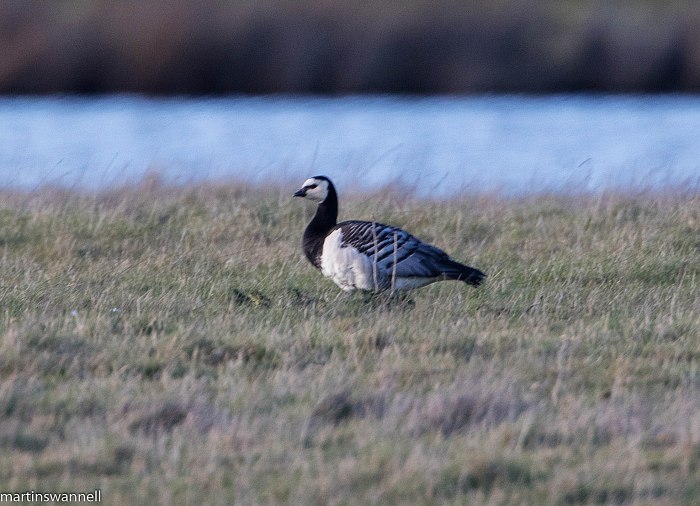
Barnacle Goose, Clifford Hill GP, 28th March 2016 (Martin Swannell)

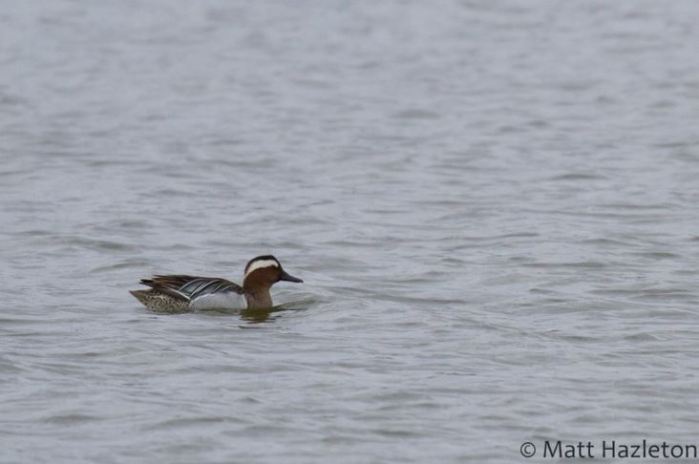
Seemingly now a permanent fixture, the Pitsford Ruddy Shelduck remained throughout and Garganeys were seen daily at Earls Barton GP, peaking at four (three drakes) on 31st and another was found on floodwater at the Northampton end of the Brampton Valley on 1st.

Garganey, Brampton Valley, 1st April 2016 (Adrian Borley)

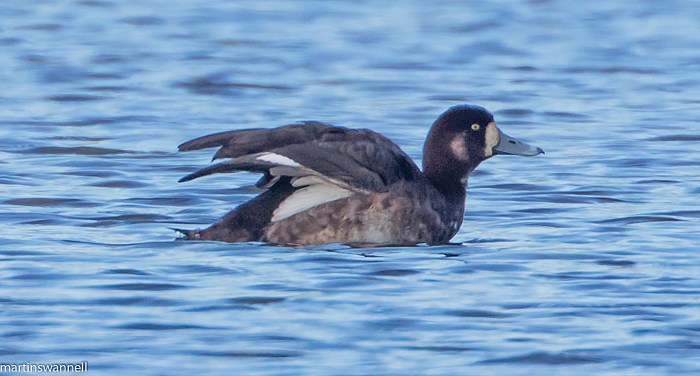
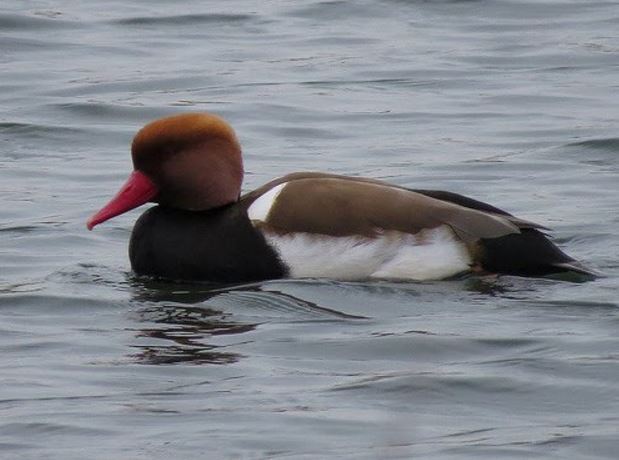
Last week’s three Red-crested Pochards were still at Sywell CP on 26th, while the Summer Leys Scaup was also still in residence on the main lake there on 31st and two Common Scoters appeared at Daventry CP on 27th.

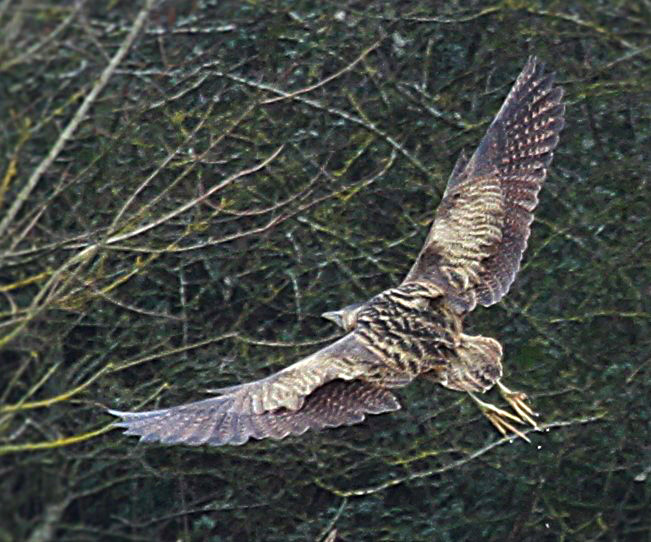
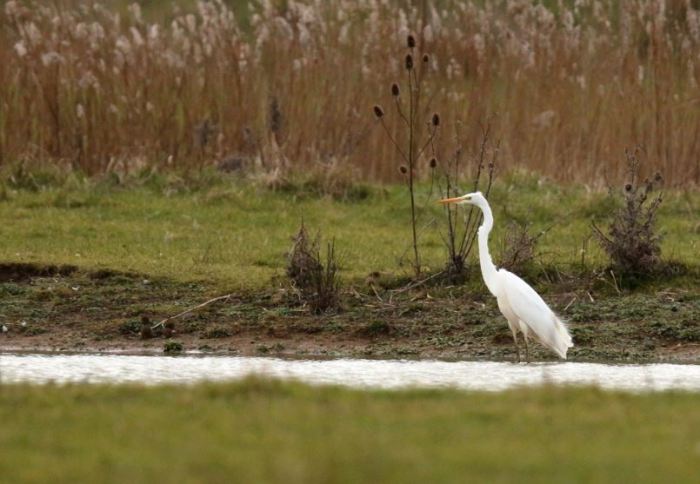
The Summer Leys Bittern was again seen briefly on 29th, while at least one Great White Egret was still in evidence there until 31st, with the one at Thrapston GP remaining until at least 30th. With so many individuals wintering and lingering into spring it is tempting to believe that someday they will remain to breed.

Following the first Osprey of the year on 12th, five more were seen commencing with a belated report of one at Pitsford Res on 20th and further singles at Boddington Res on 27th, Daventry CP on 29th, Summer Leys on 30th and again at Pitsford Res the following day.

Osprey, Pitsford Res, 20th March 2016 (Amanda Wallis)

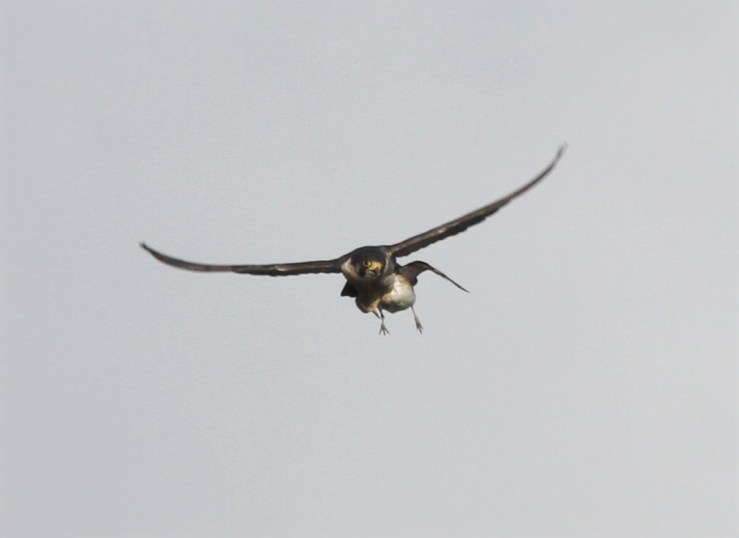
Meanwhile, Peregrines continued to be seen at Blueberry Farm (Maidwell), Earls Barton GP/Summer Leys, Higham Ferrers and Northampton with further individuals at Daventry CP, Hellidon and Kettering.

Wader numbers fell back compared with last week with between one hundred and one hundred and fifty Golden Plovers near Walgrave, in the Brampton Valley and at Blueberry Farm (Maidwell) during the week and up to two hundred between Scaldwell and Brixworth on 26th, while a Ringed Plover was at Pitsford Res on 31st and a pair plus three pairs of Little Ringed Plovers were at a Nene Valley breeding site on 28th and the count of the latter species at Stanwick GP had reached four by 30th.

Ringed Plover, Pitsford Res, 31st March 2016 (John Nicholls)

Other waders included single Curlews at Chacombe on 29th and Pitsford Res on 1st, a Black-tailed Godwit at Summer Leys on 26th and a Ruff at Stanwick GP on the same date. Perhaps surprisingly there were no Dunlins this week and the only Green Sandpipers were singles at Pitsford Res on 26th-28th and on floodwater at the Northampton end of the Brampton Valley on 1st, while the only Redshanks were five at Summer Leys on 30th and three at Stanwick GP the following day. The end of the week produced stripy waders  in the form of a Jack Snipe with thirteen Common Snipe at Boddington Res on 30th, one Common Snipe at Stanwick GP the following day and three at Daventry CP on 1st.

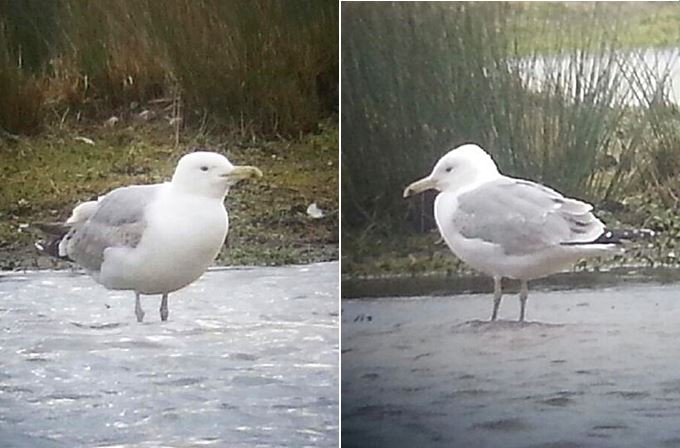
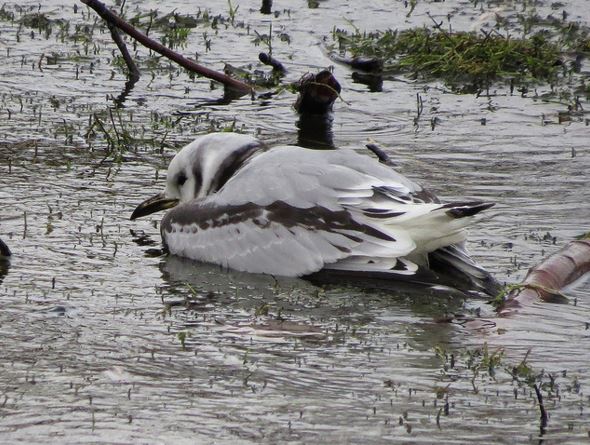
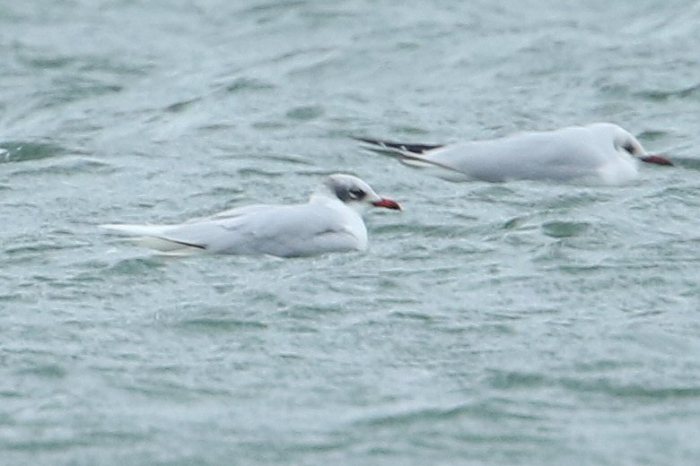
Scarce, large larids were in short supply with only a third-year Yellow-legged Gull at Daventry CP also on 1st and, further down the size scale, a first-winter Mediterranean Gull was found at Summer Leys on 28th. An adult Little Gull spent a few minutes at Daventry CP early on 28th before heading off north and an adult Kittiwake spent most of the day on the roadside A45 Lay-by Pit at Stanwick GP on 31st.

Kittiwake, Stanwick GP, 31st March 2016 (Steve Fisher)

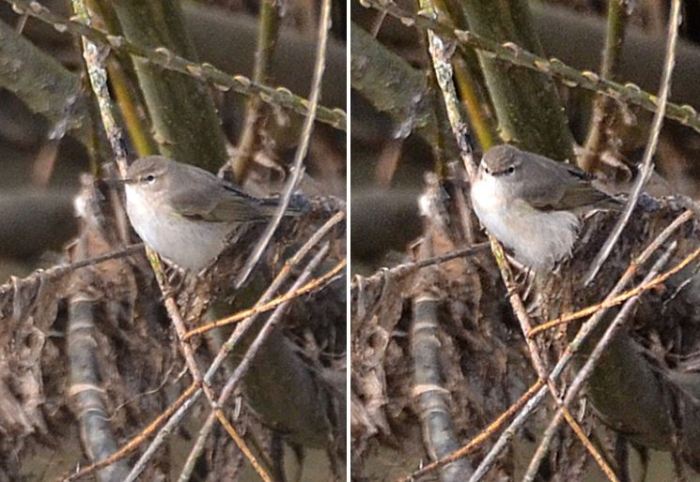
Double-figure counts of Sand Martins were made at several localities this week, Swallows were seen at seven localities and the first House Martins appeared on 26th, when one or two were at Daventry CP, followed by more at four further sites before the end of March. The first Willow Warbler was singing at Thrapston GP on 30th, quickly followed by others at Ditchford GP and Summer Leys the next day and a singing male Siberian Chiffchaff was found behind the dam at Daventry CP on 30th, although it did not linger. Single Blackcaps at Pitsford Res on 26th and Pitsford Res on 1st are likely to have been new arrivals from south-west Europe but a long-staying, wintering Central European female was still frequenting a garden at Barton Seagrave until 31st. Surprisingly few Northern Wheatears were discovered with two in Brampton Valley on 26th and one at Foxley on 30th, while the last of the wintering Stonechats was one still at Pitsford Res on 30th. Two more White Wagtails were located on 31st – at Stanwick GP and Clifford Hill GP and the first of the year’s Yellow Wagtails was on the dam at Boddington Res on 30th. Wintering Bramblings remained in gardens in Hanging Houghton, where there was one until 30th, at Geddington, where two were present on 31st-1st and at Warmington, where six were seen regularly all week.
The Week in Focus 19th to 25th March 2016

The period kicked off with chilly north-easterlies but became milder after the first three days as warmer weather systems pushed in from the Atlantic. More summer visitors appeared as migration visibly ramped up over the seven days.

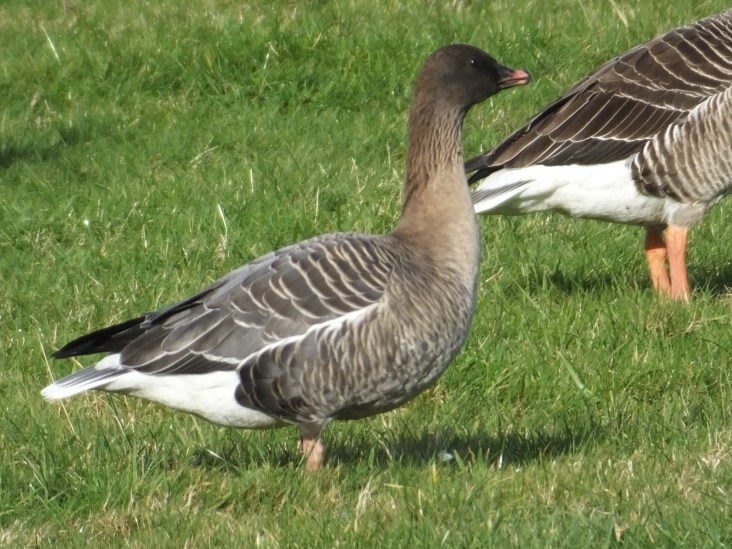
A Pink-footed Goose visited Summer Leys LNR briefly early on 25th, the Clifford Hill GP Barnacle Goose remained on station all week, as did Pitsford Reservoir’s Ruddy Shelduck, while the female Pintail was still at Stanwick GP on 21st. The year’s first Garganey arrived fleetingly in the form of a dapper drake at Summer Leys LNR on 20th,

Garganey, Summer Leys LNR, 20th March 2016 (Matt Hazleton)

quickly followed by three more (two of which were also drakes) at adjacent Earls Barton GP on 24th, at least one of which remained until the following day. Sywell CP produced a drake Red-crested Pochard on 20th, which was joined by a female there on 24th and another drake on 25th, while the Summer Leys Scaup was also still in residence on the main lake there on 24th.

Red-crested Pochard, Sywell CP, 24th March 2016 (Alan Francis)

A flock of eleven Common Scoters dropped into Pitsford Res early in the afternoon on 19th, remaining there into the early evening but they were nowhere to be seen the following morning. A drake Common Scoter found at Daventry CP during the morning of 23rd was seen to depart high to the north-west in the early evening.

Two out of last week’s three Nene valley Bitterns remained this week, with one at Summer Leys on 21st-22nd, while the Stanwick individual was seen to come into roost in the reedbed there just before dusk on 24th. Not to be outdone, Great White Egrets were still in evidence with the Thrapston GP bird making a reappearance on 20th and two returning to Summer Leys on 24th.

This week’s raptors included a male Marsh Harrier – the first since the almost wintering bird at Summer Leys – at Stanwick GP on 23rd with the latter site also producing a male Merlin on 20th. Other than that, the usual Peregrines were at large at Blueberry Farm (Maidwell), Earls Barton GP/Summer Leys, Harrington AF, near Holcot, Northampton, Stanwick GP and Thrapston GP.

Continuing last week’s build-up, wader numbers again rose. Golden Plovers were logged at five sites with a maximum of between two hundred and fifty and three hundred between Scaldwell and Brixworth on 24th – the same date that the first Little Ringed Plovers appeared at Stanwick GP and at another breeding site in central Northants. Stanwick GP also produced a Curlew on 21st, four more on 23rd and a Black-tailed Godwit on 22nd with two there the following day. Ten Black-tailed Godwits spent the day at Summer Leys on 20th with one remaining there until 22nd and another was present on 25th.

Black-tailed Godwit, Summer Leys LNR, 22nd March 2016 (Clive Bowley)

Although both Pitsford Res and Stanwick produced five Dunlins on 19th, and the same number was reported from Ditchford GP the following day, it was Stanwick which delivered the highest count of fifteen on 20th, with one remaining until 24th. The only Green Sandpipers this week were singles at Pitsford Res on 19th and by the River Nene at Upton Way (Northampton) on 25th, while eight Redshanks were at Stanwick GP from 19th to 22nd and six were counted at Summer Leys on 20th. This week’s Jack Snipe included four at Boddington Res on 22nd and two at Hollowell Res the following day, while Common Snipe were reported from Brixworth, Hollowell Res, Stanford Res, Stanwick GP Summer Leys but the maximum count consisted of approximately forty at Boddington Res on 22nd.

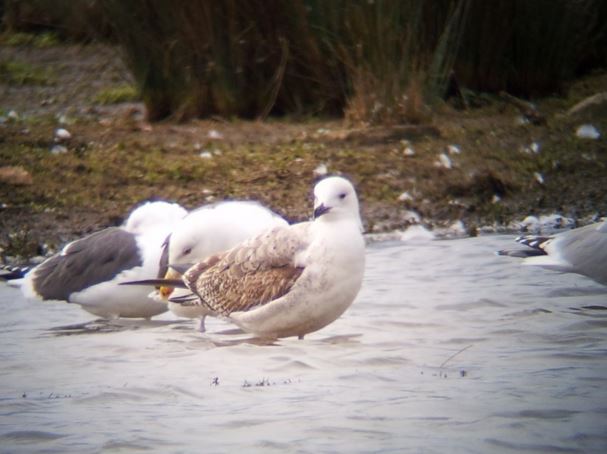
Scarce gulls were clearly on the menu this week with a first-winter Mediterranean Gull at Stanwick on 19th and an adult at Pitsford the same day, a second-summer at Summer Leys on 20th-21st and single first-winters at Boddington on 22nd and Daventry CP on 24th. The only Yellow-legged Gull reported this week was a first-winter at Daventry CP on 23rd-24th. On 21st an adult Caspian Gull visited Stanwick GP, which also played host again to the visiting adult Iceland Gull which flew east over the A45 Lay-by Pit there the same day. Arguably for some, though, bird of the week was an adult Kumlien’s Gull which spent twenty minutes bathing at Daventry CP during the early afternoon of 24th before flying off south. This would be only the second county record of this highly variable race of Iceland Gull and, despite searching for the remainder of the day, it was not relocated.

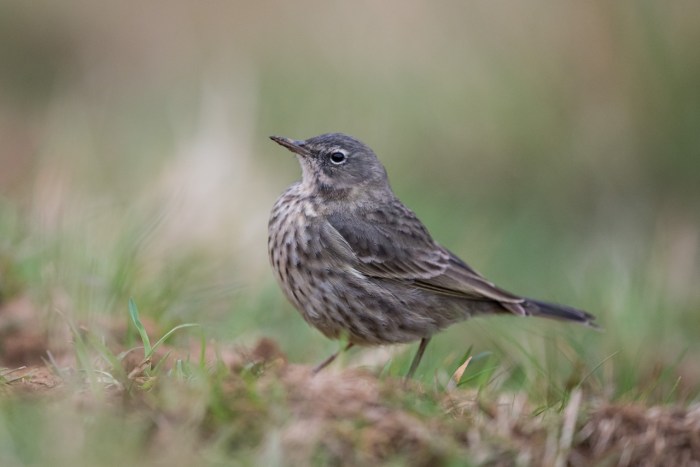
On 19th a ‘new’ Short-eared Owl was discovered at Harrington AF and the two from last week remained at Blueberry Farm until 20th. Anyone who though last week’s Woodford Starling murmuration was spectacular might be interested to know that another – estimated to number one hundred thousand birds – has built this week near Ford at Daventry. Does anyone have any images? After the first on 13th March, more Sand Martins arrived this week with one at Stanwick and two at Pitsford on 22nd and fourteen at Daventry CP and twenty-one at Pitsford on 24th. Swallows, too, made an appearance with one at Clifford Hill GP on 22nd preceding an arrival on 24th of singles at Daventry CP, Ditchford GP and Stanwick GP with two at Pitsford on the same date. And the first Northern Wheatear – a male – arrived at Clifford Hill GP on 25th. The only Stonechats appearing to remain this week were two at Sywell CP on 22nd but the at times very confiding Pitsford Res Rock Pipit, first discovered on the dam on 18th, took centre-stage, sparking a mini-twitch of local admirers on 19th-20th before last being seen on 23rd.

Rock Pipit, Pitsford Reservoir, 19th March 2016 (Angus Molyneux)

Capture

Rock Pipits, Northamptonshire, temporal distribution of records 1996-2015. Background image: Angus Molyneux
                   Rock Pipits, Northamptonshire, temporal distribution of records 1996-2015.                                       Background image: Angus Molyneux

Another was also at Hollowell Res on the latter date and the first spring White Wagtail was located – again at Pitsford – on 19th. Wintering Bramblings continued their presence in gardens in Thornby until 21st, Hanging Houghton, where there were four on 21st-22nd and at Warmington, where up to seven remained all week.  The East Hunsbury (Northampton) Mealy Redpoll continued to visit garden feeders there until at least 24th and, additionally, one was at Stanford Res on 19th and three at Yelvertoft on 20th, while four Crossbills were seen at Kelmarsh on 22nd.

The Week in Focus 12th to 18th March 2016

Lingering foggy beginnings to the first two days of the period and cool east to north-east winds were not enough to deter the first real summer visitors of the year, with Osprey and Sand Martin logged heading north along with a supporting cast of ‘new in’ singing Chiffchaffs. Passerine migration was also clearly underway, being most evident in the form of substantial flocks of northbound winter thrushes and a scattering of migrant waders at local wetland hotspots.

The lone Barnacle Goose was still at Clifford Hill GP this week and, on 18th, ten Dark-bellied Brent Geese were found north of the causeway at Pitsford Res before they relocated to an area off the dam later in the day.

Dark-bellied Brent Geese, Pitsford Res, 18th March 2016 (Bob Bullock)

Also in the vicinity the Ruddy Shelduck remained all week and two drake Smews were in Moulton Grange Bay there on 13th. At Summer Leys LNR the drake Chiloe Wigeon x Eurasian Wigeon hybrid reappeared on 14th before promptly disappearing again, while a female Pintail was at Stanwick GP on 14th-16th and the female Scaup remained throughout at Summer Leys.

Three localities produced Bitterns this week, which included the rarely encountered individuals at Summer Leys on 13th and Stanwick on 18th plus a new bird at Stortons GP on 16th. The first of these two sites was the only one to produce Great White Egrets with two there on 12th-13th – both flying over nearby Little Irchester on the first of these two dates – and one on 14th-15th.

The first summer visitor appeared in the shape of an Osprey, which was seen flying toward Hollowell Res on 12th, while Peregrines were at Blueberry Farm (Maidwell), Daventry CP, Higham Ferrers, Northampton, Stortons GP and Summer Leys. No other raptors were reported during the period.

Wader numbers ramped up this week. Sixteen Golden Plovers were near Scaldwell on 12th, three hundred and fifty were at Bozenham Mill on 15th, six flew over Blueberry Farm the following day and twenty were at Pineham Industrial Estate (Northampton) on 18th, the same day that two Ringed Plovers visited Clifford Hill GP. Four Curlews included singles at Pitsford Res on 12th, Thrapston GP on 13th, Bozenham Mill on 15th and over the A5 near DIRFT on 17th, while a Ruff was found on floodwater near Braunston on 17th and four more visited Stanwick the following day. But it was Dunlin which made an impact this week with Summer Leys producing one on 14th followed by three on 16th-17th, singles at Stanwick on 14th, 15th and 18th with four there on 16th, four over Boddington Res on 15th and four more through there on 18th, one at Daventry CP on 16th and eleven at Clifford Hill GP on 18th. A Green Sandpiper was discovered on a newly excavated pool at Haselbech on 12th, while the pool below the dam at Pitsford hosted another on 18th, two Redshanks were at Earls Barton GP on 13th with three at Summer Leys the following day, Stanwick GP held up to nine between 14th and 18th and one visited Daventry CP on 16th. At Stanford Res a Jack Snipe was found on 12th and another was discovered at Boddington Res on 15th, while Common Snipe numbered seven at Stanford Res and five at Blueberry Farm on 12th, fifteen were at Pineham and fifty-five at Boddington Res on 15th and eighteen at Pitsford Res on 16th.

Another Kittiwake arrived this week – an adult spent the early part of the afternoon of 12th on the main lake at Summer Leys before flying off west, while an adult

Kittiwake, Summer Leys LNR, 12th March 2016 (Adrian Borley)

Mediterranean Gull was found at Fawsley Park on 12th, before relocating to a field at nearby Preston Capes later in the day; staying in the west of the county, a first-winter visited Daventry CP on 16th. A first-winter Caspian Gull visited Stanford Res on 12th while, back at Stanwick, a third-winter on 15th was joined by a second-winter the next day when an adult Iceland Gull also dropped in to roost there on 16th.

Adult Iceland Gull, Stanwick GP, 16th March 2016 (Steve Fisher)

After a winter with below average records, two Short-eared Owls were found at Blueberry Farm on 16th, remaining until 18th, while the first spring Sand Martin appeared at Earls Barton GP on 13th and Chiffchaffs – several of them in song – were at six localities during the period. Two Central European Blackcaps continued to visit a garden in Barton Seagrave and one was in a Duston (Northampton) garden throughout the

Central European Blackcap, Barton Seagrave, 13th March 2016 (Geof Douglas)

week but it was from the back gardens of the village of Woodford that observers were able to witness a spectacular Starling murmuration said to number ‘thousands’ of birds, with the ‘cloud’ reported to be visible from a distance of 2 miles.

Starlings, Woodford, 11th March 2016 (Julie Wise)
Starlings, Woodford, 17th March 2016. Image taken at two miles range. (Leanne Tough)

A Stonechat was at Bozenham Mill on 14th, twos were in Brampton Valley and Sywell CP the following day and up to four were still at Blueberry Farm on 16th-17th.  Further evidence that spring migration was under way came in the form of three Rock Pipits, which included singles at Pitsford Res on 16th and 18th and one at Hollowell Res on the

Rock Pipit, Pitsford Res, 18th March 2016 (Bob Bullock)

second of these two dates. Wintering Bramblings hung on, though, with singles in gardens at Thornby on 12th and 17th, Scaldwell and Pitsford Res on 12th, up to two in

Brambling, Thornby, 12th March 2016 (John Hallam)

Hanging Houghton between 14th and 18th and six in Warmington all week, while the East Hunsbury (Northampton) Mealy Redpoll continued to visit garden feeders there until at least 17th.

Champions of the Flyway 2016

CaptureOn 29th March 2016, Birdwatch magazine’s team The Birdwatch-BirdGuides Roadrunners – of which I am a member – will take part in the third Champions of the Flyway bird race, a major international event which is now being staged annually in Eilat, Israel – home of one of the world’s most desirable birding destinations and famous migration spectacles.Last year, some twenty teams raced in the event attempting to find, identify and log as many species as possible in an intense 24 hour contest to win the coveted title ‘Champions of the Flyway’. While the racing might be light-hearted, the goal is serious – to raise conservation funding through sponsorship and donations that will help the BirdLife International Partnership tackle the illegal killing of birds in southern and eastern Europe.
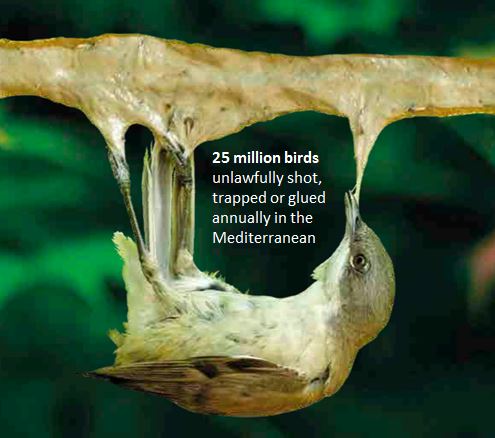
Shock image for Twitter

Although the event commences and finishes in Eilat, it covers a well-defined ‘field of play’ extending north-west to Nizzana in the western Negev Desert on the Egyptian border and north-east along the Jordanian border in the Arava Valley.

Champions of the Flyway Playing Field

Again, this is not just a bird race, but a massive fundraising campaign to support conservation work and the proceeds will be channelled this year into action to prevent the illegal annual slaughter of migrant birds in Greece

In 2015 The Birdwatch-BirdGuides Roadrunners (Josh Jones, Alan Tilmouth and myself) won the award ‘Guardians of the Flyway’ for raising the most funds – just over £4,700 – of all the teams entering! We would like to better the total this year and smash through the £5,000 barrier. The event hopes to raise $50,000 in total.

Award1

Guardians Trophy
Guardians Trophy

This year the team (David Callahan, Mark Avery, Andy Clements and myself) is looking for individuals and corporate sponsors/donors to support our fundraising efforts. If you care about the perils which are faced by ‘our’ birds as they migrate to and from the UK and elsewhere in northern Europe then please consider visiting our donation page and pledging even a small amount.

The link to the Champions site is http://www.champions-of-the-flyway.com/  (this gives all details of the scheme), our team’s page is at http://www.champions-of-the-flyway.com/birdwatch-birdguides-roadrunners from which there is a ‘Donate’ link to our fundraising page at https://www.justgiving.com/BWBGR16/

Many thanks in anticipation of your kind support!

The Week in Focus 5th to 11th March 2016

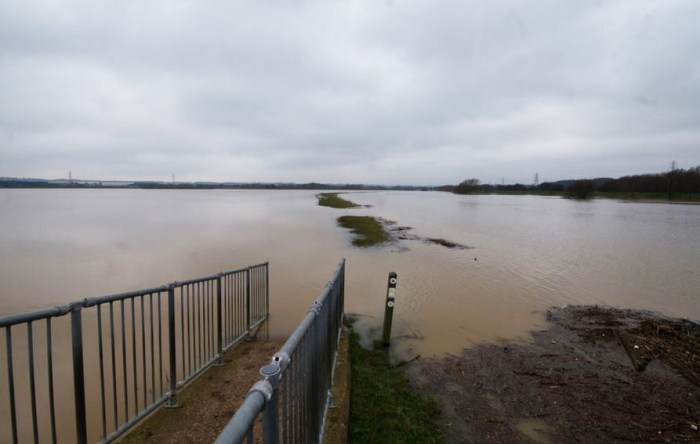
The early part of the week saw a northerly airstream, which depressed temperatures somewhat, resulting in overnight frosts for the first two days. This subsequently gave way to a rain-laden Atlantic low moving east across the country on 9th, delivering persistent heavy rain throughout the day, which ultimately resulted in significant flooding along the entire River Nene Valley. Despite parts of it resembling scenes from the Ouse Washes, the birds were unfortunately not there to match. Clifford Hill Gravel Pits lived up to its more recent moniker of Northampton Washlands, with the main barrage lake there disappearing entirely under water, while Hardwater Crossing along the access road to Summer Leys main car park was closed on 11th.

Clifford Hill GP's main barrage lake, 10th March 2016 (John Nicholls)
Clifford Hill GP’s main barrage lake, 10th March 2016 (John Nicholls)

Showing no signs of returning to wherever it originated, the Ruddy Shelduck remained at Pitsford Res until at least 8th, as did the two Smew at Stanwick GP, while the female Scaup at Summer Leys LNR stuck it out for the duration.

Female Scaup, Summer Leys LNR, 6th March 2016 (Martin Swannell)

At Stanwick the Bittern was seen only in flight again on 5th and 7th, while the Summer Leys individual – after posing nicely for photographers last week – put in a single brief appearance again on 6th. Two Great White Egrets were at the latter locality on 5th with just one remaining on 6th and 11th and one was still at Thrapston GP until 6th – the low number of records indicating that our small, local wintering population is now on the move.

There no raptors of note other than Peregrines, singles of which were at Northampton on 5th, 7th and 8th, Broughton on 6th and Summer Leys on 11th but the appearance of some ‘new’ waders provided further evidence of spring migration. Up to five Golden Plovers were at Harrington AF on 5th and 9th with fifty counted there on 10th, while four Ringed Plovers flew north over Stanwick GP on 9th. Two Curlews flew south over Walgrave on 10th, two were on floodwater in the River Tove Valley near Grafton Regis the following day and two Dunlin visited the flooded Clifford Hill GP also on 10th.
Dunlin, Clifford Hill GP, 10th March 2016 (John Nicholls)

Pitsford’s Green Sandpiper, on the pool below the dam, remained until at least 8th and, on 5th, five Redshanks were at Stanwick GP and two at Summer Leys, eight were at Stanwick again on 11th, with four Common Snipe at Upton on 9th representing the sole record of this species during the period.

Right on cue more Kittiwakes arrived in what is indisputably the peak month for this species locally. Five – all adults – included singles at Stanwick GP on 6th and in the gull roost at Pitsford Res on 8th followed by three again at the latter site the following evening. The same gull roost contained a first-winter Mediterranean Gull on 8th and a near-adult Caspian Gull was there again on 5th, the same date a first-winter visited Stanwick GP, followed by two third-winters on 7th-8th. Another Mediterranean Gull – an adult – was in the Boddington Res gull roost on 11th.

Third-winter Caspian Gull, Stanwick GP, 7th and 8th March 2016 (Steve Fisher)
Third-winter Caspian Gull, Stanwick GP, 8th March 2016 (Steve Fisher)

On 5th, a first-winter Yellow-legged Gull was at Pitsford Res and a second-winter visited Stanwick GP, while some interesting news relating to the red-ringed (G1NT) adult Glaucous Gull which had been visiting Stanwick until 2nd was received this week: it was seen at Sandbach Flashes in Cheshire on 8th and 10th, clearly on its way back up north.

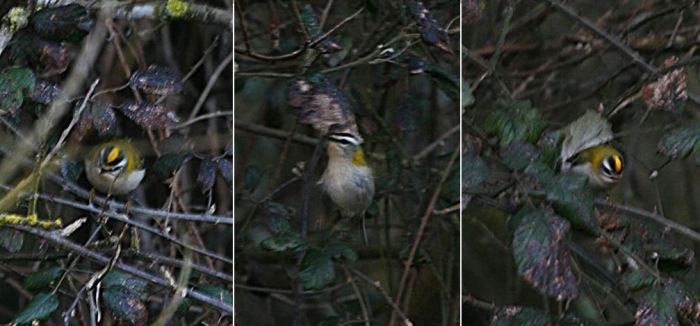
Firecrest, Stanwick GP, 8th March 2016 (Steve Fisher)

And staying with Stanwick … the Firecrest was still in the willow scrub by the A45 Lay-by Pit hide on 8th, up to three Central European Blackcaps were visiting a garden in Barton Seagrave until 6th, a female was still in a Duston (Northampton) garden all week and a Siberian Chiffchaff was found by the River Nene at Earls Barton GP on 5th, although it appeared to have moved on by the next day.

Siberian Chiffchaff, Earls Barton GP, 5th March 2016 (Stuart Mundy)

Single Stonechats were at Summer Leys between 5th and 7th and at Fawsley Park on 6th, while two were at Blueberry Farm (Maidwell) and four near Grendon on 7th.

Stonechat, Summer Leys LNR, 6th March 2016 (Martin Swannell)

Brambling numbers included just one in a Hanging Houghton garden on 5th, eight still in Warmington and one or two in gardens in Oundle throughout the week while, after an apparent ten-day absence, the East Hunsbury (Northampton) Mealy Redpoll reappeared on garden feeders on 5th and again on 11th.

The Week in Focus 27th February to 4th March 2016

The week in which meteorological spring fell commenced with cold easterlies but remained largely dry and partly sunny, with light snow showers on the final day. While no true summer visitors have yet arrived, a number of species have returned to breeding territories in some parts of the county.

Four Bewick’s Swans flew north over Pitsford Res on 4th and a Pink-footed Goose at Clifford Hill GP on 3rd may have been a new bird but was more likely to have been the same individual from late January, which also visited Summer Leys on 14th February. The Ruddy Shelduck remained at Pitsford Res all week, as did the female Scaup at Summer Leys LNR, while a drake Smew was still at Ravensthorpe Res on 28th and up to three remained at Stanwick GP throughout the period.

A Bittern was found at Summer Leys on 28th, remaining until at least 3rd and occasionally showing well from Pioneer Hide. Another was seen in flight over the reedbed at Stanwick GP on 1st.

Bittern, Summer Leys LNR, 28th February 2016 (Alan Coles)
Bittern, Summer Leys LNR, 3rd March 2016 (Douglas Goddard)

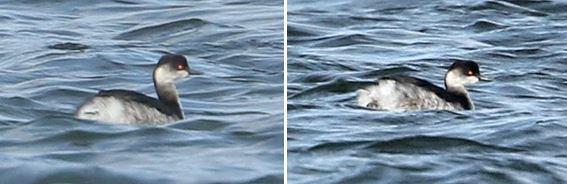
The two Great White Egrets continued to be reported at Thrapston GP until 27th, two were still at Ditchford GP on 28th and, after three weeks’ absence from Ravensthorpe Res, one was back again on 1st-3rd, while the long-staying Summer Leys individual remained there throughout. New for the week – and seemingly a one-day wonder – was a Black-necked Grebe on the main barrage lake at Clifford Hill GP on 28th.

Black-necked Grebe, Clifford Hill GP, 28th February 2016 (Bob Bullock)

A Merlin was at Pineham, Northampton on 2nd-3rd but the only other raptors of note were Peregrines at Higham Ferrers on 27th-28th and 2nd-3rd, Grafton Regis and Boddington Res on 29th, Stanwick GP on 2nd, Stortons GP and Daventry CP on 3rd and Summer Leys and Hollowell Res on 4th, while two adults at Boddington Res on 3rd were seen at nearby Woodford Halse, where they were joined by an immature on the same date.

The only Golden Plovers reported this week were fifty between Scaldwell and Brixworth on 4th, the same date on which a pair of Ringed Plovers returned to the only site where breeding was proven last year. Two Redshanks continued to be reported at Summer Leys until 27th while the only Green Sandpiper was the one on the pool below the dam at Pitsford Res, which remained until at least 2nd, and the only Common Snipe were just one at Harrington AF on 2nd and seven at Hollowell Res on 4th.

An adult Kittiwake arrived in the Boddington Res gull roost late in the afternoon of 2nd but was quickly harassed by Common Gulls, resulting in its apparent departure to the north at dusk. The same gull roost produced a run of Mediterranean Gulls with an adult and a first-winter there on 29th, a different adult and a first-winter on 1st, two first-winters on 2nd and one first-winter on 3rd-4th. In fact, it wasn’t a bad week for gulls at all with the Pitsford Res roost producing a near-adult Caspian Gull on 27th and a second-winter there the following evening, while an adult and a first-winter were at Stanwick GP on 28th and 3rd, an adult there on 29th and a first-winter on 4th.

First-winter Caspian Gull, Stanwick GP, 28th February 2016 (Dan Watson)
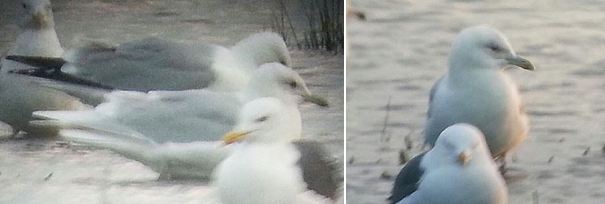
Caspian Gulls. Left, first-winter, Stanwick GP, 4th March 2016 (Steve Fisher). Right, near-adult, Pitsford Res, 27th February 2016 (Jacob Spinks)

The latter site also delivered a juvenile Iceland Gull on 3rd and the adult Glaucous Gull again on 2nd, while a juvenile Glaucous was discovered in the roost at Pitsford on 27th. Two Yellow-legged Gulls – an adult and a first-winter – were at Hollowell Res on 4th.

Firecrest, Stanwick GP, 3rd March 2016 (Steve Fisher)

After a notable absence the Stanwick GP Firecrest was again in the willow scrub by the A45 Lay-by Pit hide on 2nd, a male Central European Blackcap visited a garden in East Hunsbury (Northampton) on 27th and a female was in a Duston garden throughout, and the Summer Leys Stonechat remained there all week, three were at Blueberry Farm (Maidwell) on 28th and two at Hollowell Res on 4th. Two Bramblings were in a Hanging Houghton garden on 27th with one there on 2nd and 4th, one was in a Scaldwell garden on 29th, one at Sywell CP on 4th and up to six continued to visit feeders in Warmington all week.

The Week in Focus 20th to 26th February 2016

Strong westerly winds at the beginning of the period eventually gave way to a more northerly airstream by mid-week, bringing with it lower temperatures and overnight frosts. Local winter visitors remained firmly in place and few new birds were found during the week.

The Ruddy Shelduck remained at Pitsford Res until at least 24th and, suggesting an early spring movement, Pintails appeared at three sites, with five at Summer Leys and eight at Daventry CP on 20th plus two more at Ditchford GP on 22nd. Causing some momentary excitement, the smart drake Chiloe Wigeon x Eurasian Wigeon hybrid, first found at Summer leys LNR last November, was back there again on 20th while, unusually scarce this winter, four Red-crested Pochards were found at nearby Sywell CP on 23rd.

Red-crested Pochards, Sywell CP, 23rd February 2016 (Alan Francis)

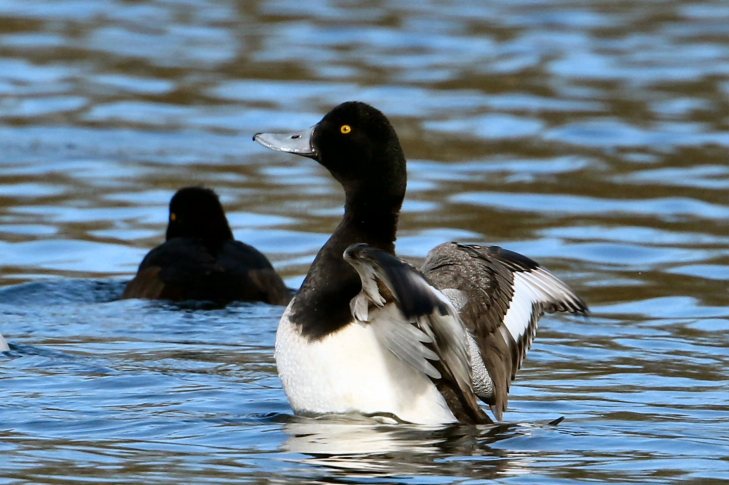
Back at Summer Leys the female Scaup remained on the main lake all week and a drake – presumably last week’s Hardingstone GP bird – was found on adjacent Mary’s Lake at Earls Barton GP on 24th. A drake Smew remained at Ravensthorpe Res until 21st and two were still at Stanwick GP throughout the week.

Female Scaup, Summer Leys LNR, 24th February 2016 (Bob Bullock)
Drake Scaup, Earls Barton GP, 24th February 2016 (Bob Bullock)

A Great White Egret remained at Summer Leys throughout – with two there on 20th – one was at Ditchford GP on 20th with two there the next day, two were at Thrapston GP on 21st and one flew east, then back west, at Stanwick GP on 25th, where there was also a Bittern on 24th.

Great white Egret, Thrapston GP, 21st February 2016 (Mark Tyrrell)

Peregrines were the only raptors noted during the period, with singles at Summer Leys on 20th and 24th and on the latter date at Boddington Res and at Stanwick GP on 24th and 26th. Waders were thin on the ground this week with Golden Plovers at Harrington AF, Summer Leys and Scaldwell with a maximum count of just fifty at the latter locality on 26th.  A Redshank was still at Pitsford Res on 20th and two were at Summer Leys on 20th-22nd while the only Green Sandpiper was one at Pitsford Res on 23rd and the only Common Snipe were just two at Harrington AF between 20th and 22nd.

The 24th saw an adult and a first-winter Mediterranean Gull in the roost at Boddington Res and one or two first-winters in the Pitsford Res roost, where there was also an adult Caspian Gull on 25th, while a third-winter visited Stanwick GP on 24th and three were there on 26th. Stanwick also produced an adult Glaucous Gull on the afternoons of 22nd-24th and 26th. This individual had a red ring and seems likely to be last year’s Pitsea bird again visiting the site. The only Yellow-legged Gulls were seen on 22nd, when a first-winter visited Boddington Res roost and a third-winter was at Daventry CP, and 26th, when one was at Stanwick GP.

Adult Glaucous Gull, Stanwick GP, 23rd February 2016 (Bob Bullock)

The Brixworth Firecrest was again reported in the border hedge at the sewage treatment works on 20th, although it continued to prove elusive, while a male Central European Blackcap remained throughout in a Barton Seagrave garden, occasionally joined there by a female and a female continued to visit a Duston garden all week. The Black Redstart was again in a Northampton garden on 20th and the Summer Leys Stonechat appears to have been the only one reported, remaining there all week. Aside from this, the Mealy Redpoll continued to pay sporadic visits to an East Hunsbury (Northampton) garden feeder throughout the week, while a Brambling was at Oundle on 21st, two visited a Hanging Houghton garden on 22nd when two were also in the nearby Brampton Valley and up to nine visited feeders in Warmington between 22nd and 25th.

Two Weeks in Focus 6th to 19th February 2016

Mild conditions ensued, broken only briefly by cold northerlies over the mid-point of the period with the coldest night of the winter so far on 15th/16th.

A Pink-footed Goose discovered with Greylags at Summer Leys LNR on 14th has not been reported subsequently, while the Ruddy Shelduck remained at Pitsford Res

Pink-footed Goose, Summer Leys LNR, 14th February 2016 (Douglas Goddard)

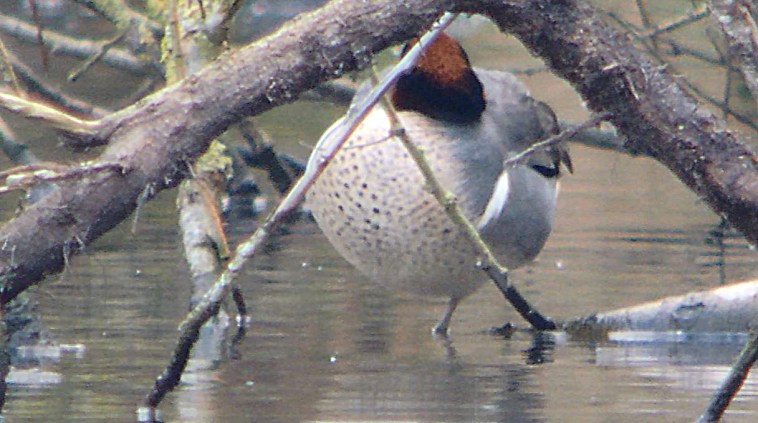
throughout, as did the drake Green-winged Teal at Daventry CP. A drake Scaup appeared at Hardingstone GP on 16th and a female was located on the main lake at

Green-winged Teal, Daventry CP, 12th February 2016 (Mike Alibone)
Green-winged Teal, Daventry CP, 15th February 2016 (Martin Swannell)
Green-winged Teal, Daventry CP, 16th February 2016 (John Nicholls)

Summer Leys LNR two days later, remaining until 19th, while Smews graced Ravensthorpe Res, where there were two on 7th, Stanwick GP, where up to four were present between 11th and 17th, and Pitsford Res, where up to three lingered between 12th and 17th.

Scaup, Hardingstone GP, 16th February 2016 (Bob Bullock)

The long-staying Ravensthorpe Great White Egret ceased to be reported beyond 8th, while up to two were at Thrapston GP throughout the period, one was still at Summer Leys until 19th – with two there on 11th – and one was at Ditchford GP’s Irthlingborough Lakes and Meadows Reserve on 17th (where there was also a Bittern the following day) and three were within the Ditchford GP complex on 19th.

Great White Egret, Summer Leys LNR, 11th February 2016 (Alan Coles)
Great White Egret, Thrapston GP, 13th February 2016 (Alan Francis)
Great White Egret, Thrapston GP, 19th February 2016 (Dave Holden)

Further down the Nene valley a ‘ringtail’ Hen Harrier flew east at Stanwick GP on 12th and a Merlin had a pop at the wintering Stonechat at Summer Leys on the same date. The only other raptors of note were Peregrines at six locations during the period.

On the wader front, Golden Plovers were noted at Walgrave, Harrington AF, Stanford Res and Scaldwell with a maximum of forty-six at the latter site on 13th. The first Black-tailed Godwit of the year appeared at Stanwick GP on 12th, where nine Redshanks were counted on 11th-12th, while singles were at Summer Leys on 8th and Pitsford Res on 16th – the latter location producing single Green Sandpipers on 11th and 17th. The only Common Snipe during the period were a dozen at Harrington AF on 7th, two at Brixworth STW and nine at Stortons GP on 11th and about forty at Pitsford Res on 17th.

Following singles at Daventry CP and Pitsford Res on the first day of the month, an adult  Kittiwake appeared at Boddington Res on 10th, while the roost at Pitsford Res produced adult Mediterranean Gulls on 6th, 11th and 19th plus a first-winter on 14th and a second-winter visited Stanford Res on 7th.  Pitsford also saw the usual adult Caspian Gull visiting the roost there on 6th, 13th and 14th, a first-winter was at Stanford Res on 7th followed by an adult there on 13th and single adults visited Stanwick GP on 12th and 17th. The latter site produced an adult Yellow-legged Gull on 11th, another was at Hollowell Res on 16th and a fourth-winter visited Daventry CP on 17th .

Included in the period’s scarce passerines was the return of the Brixworth Firecrest in the border hedge at the sewage treatment works on 11th and again a week later on 18th, while a male Central European Blackcap remained throughout in a Barton Seagrave garden, another male was in a Scaldwell garden on 12th and a male and female visited a Duston garden on 13th with the female still present on 19th.

Central European Blackcap, Duston, 13th February 2016 (Stuart Mundy)

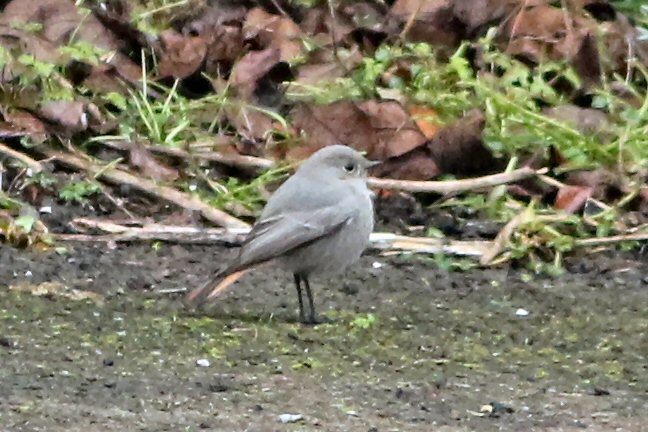
Last month’s Black Redstart returned to a Northampton garden on 13th-14th, where it was taking sunflower hearts from a feeder there.

Black Redstart, Northampton, 13th February 2016 (Bob Bullock)

Stonechats continued to be seen at Summer Leys, in the Brampton Valley, Pitsford Res, Ditchford GP, Thrapston GP and Hollowell Res with a maximum of six at the latter site on 16th.

Stonechat, Summer Leys LNR, 18th February 2016 (Alan Coles)

A Mealy Redpoll visited a garden feeder at Byfield on 6th – a different individual to that which was present there in January – three were on feeders at Thrapston GP’s Titchmarsh LNR on 14th and the East Hunsbury (Northampton) bird was seen again on 16th. Just one Brambling was still showing between Badby and Upper Catesby on 13th, a male visited a Hanging Houghton garden on 13th, 18th and 19th, four were at Woodford Halse on 13th and seven at Warmington on 19th.

The Week in Focus 30th January to 5th February 2016

The mild conditions continued throughout the week, dispelling any hope of late winter arrivals resulting from hard weather movements. As January – arguably the only migration-free month of the year – slipped into February, there was evidence of some northerly ‘spring’ movement at Daventry Country Park and Pitsford Reservoir.

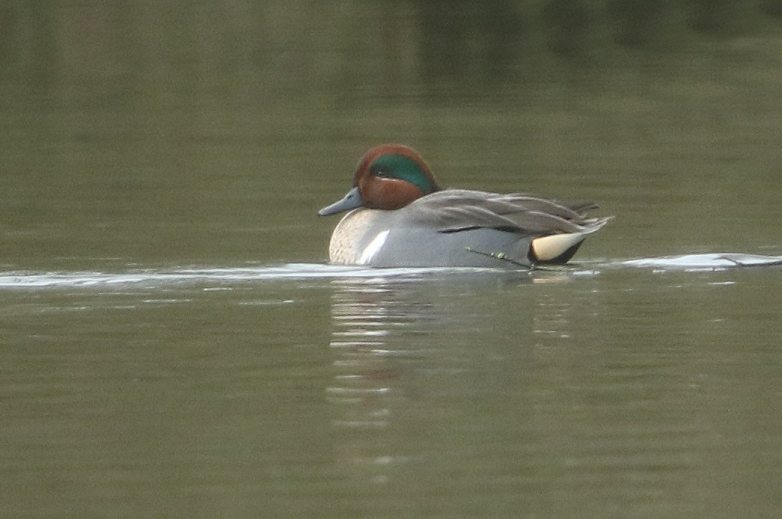
In the Nene valley the Barnacle Goose remained at Clifford Hill GP until at least 30th and the Ruddy Shelduck was still at Pitsford Res on 3rd. The bird of the week also turned out to be a duck, a drake Green-winged Teal, discovered at Daventry CP on 3rd and still present at the week’s end. This represents only the fifteenth record of this species for Northants, following the last at Stanwick GP in spring 2013.

Green-winged Teal, Daventry CP, 3rd February 2016 (Bob Bullock)
Green-winged Teal and Teal, Daventry CP, 3rd February 2016 (Bob Bullock)

On the last day of January a drake Red-crested Pochard was found at Blatherwycke Lake and, like last week’s, proved to be only a one-day bird, while single drake Smew were at Pitsford Res and Stanwick GP on the same date.

Wintering Great White Egrets remained throughout the week at Summer Leys LNR and at Ravensthorpe Res until at least 2nd, while the one at Thrapston GP was still present on 30th and the Ditchford GP bird also remained on 2nd. On the latter date a Bittern was seen flying over Swan Valley, Northampton toward the M1 motorway.

A Merlin was again at Blueberry Farm (Maidwell) on 2nd and this week’s Peregrines were singles at Rushden on 31st, Kettering on 5th and at both Blueberry Farm and Summer Leys on 2nd. Of the few Golden Plovers reported during the period one unfortunate individual ended up in the talons of the Peregrine there, while approximately four hundred and fifty were counted at Stanwick GP on 30th. The only Redshanks were eight at Stanwick GP on 31st and one at Summer Leys on 3rd-5th and the only Green Sandpiper was one at Pitsford Res between 1st and 4th.

Peregrine with Golden Plover, Summer Leys, 2nd February 2016 (Alan Coles)

Northbound Kittiwakes arrived at both Daventry CP and Pitsford Res on 1st, the Daventry individual departing north-west after little more than an hour. Unfortunately the Pitsford bird, a first-winter, was moribund and died there before midday. Pitsford also saw the usual adult Caspian Gull visiting the roost there on 31st, while two Yellow-legged Gulls were at Hollowell Res on 2nd.

Kittiwake, Daventry CP, 1st February 2016 (Bob Bullock)
First-winter Kittiwake, Pitsford Res, 1st February 2016 (Alan Francis)
Northamptonshire Kittiwakes 1996-2015. Totals reflect records, rather than individual birds. Background image first-winter Kittiwake, Daventry CP, 7th April 2012 (Mike Alibone)

The only Short-eared Owl of the review period was one over rough fields east of Warkton Lane at Barton Seagrave on 2nd. After an apparent absence of nearly four weeks, the Brixworth Firecrest was back in the border hedge at the sewage treatment works on 4th and the Stanwick GP Siberian Chiffchaff was also seen again on the same date, while three Central European Blackcaps included a male and female in a Barton Seagrave garden on 30th and a female in a Duston (Northampton) garden on 5th. Stonechats continued to be seen at Hollowell Res, Summer Leys and Blueberry Farm (Maidwell) with two new birds at Blatherwycke Lake on 1st. The Mealy Redpoll making sporadic visits to a garden feeder at East Hunsbury (Northampton) was seen again on 3rd and 4th while up to two Bramblings were at Hanging Houghton and at least six were still showing between Badby and Upper Catesby on 2nd, where a Corn Bunting was also still present on the same date.

The Week in Focus 23rd to 29th January 2016

Mild conditions again prevailed under the continuing influence of the Atlantic airstream and a relatively quiet week ensued on the birding front.

The Clifford Hill GP Pink-footed Goose lingered with Greylags there until at least 25th, as did the Barnacle Goose, while the Ruddy Shelduck continued to be seen – if only sporadically – at Pitsford Res. A female or first-winter Scaup was at Earls Barton GP’s

Caption Mary’s Lake on 23rd but it was not seen subsequently. Paying an equally brief visit to Clifford Hill GP, a drake Red-crested Pochard was a one-day bird on 24th, while Smew continued to remain both scarce and elusive with just single drakes at Pitsford Res on 23rd and Ravensthorpe Res on 26th and a ‘redhead’ at Thrapston GP on 29th.

Smew, Ravensthorpe Res, 26th January 2016 (Bob Bullock)

The latter site continued to host a long-staying Great White Egret throughout the week, as did Summer Leys LNR and Ravensthorpe Res, while one flew west over Ecton SF on 24th and singles were also at Ditchford GP on 25th and Pitsford Res the following day. Pitsford’s Red-necked Grebe became more mobile, venturing north to the opposite shore of the ‘big side’, where it was seen off the gorse bushes on 23rd.

Great White Egret, Ravensthorpe Res, 23rd January 2016 (Stuart Mundy)

Raptors were again poorly represented this week with just two reports of Peregrines comprising one at Thrapston GP on 23rd and two between Badby and Upper Catesby on 25th, while single Merlins were seen at Blueberry Farm (Maidwell) on 26th and between Walgrave and Holcot on 28th.

Meagre pickings for wader buffs included Golden Plovers at Harrington AF, Summer Leys, and Stanwick GP with a maximum of approximately five hundred at the latter site on 24th, while the only Redshanks were two at Pitsford Res on 23rd and up to nine at Stanwick GP between 26th and 28th. Two Green Sandpipers were located at Broadholme STW (Ditchford GP) on 24th and the WeBS count at Pitsford Res yielded forty Common Snipe on 23rd.

The county’s reservoirs produced an adult Mediterranean Gull at Ravensthorpe on 26th and a third-winter Caspian Gull flew south over Pitsford on 23rd, while an adult visited the roost there later the same day.

Adult Mediterranean Gull, Ravensthorpe Res, 26th January 2016 (Bob Bullock)

In what is proving so far to be a good winter for Firecrests another was found by the main observation hide overlooking the A45 Lay-by Pit at Stanwick GP on 24th, along with a Siberian Chiffchaff near to the visitor centre there on the same date. Just occasionally in winter a Black Redstart will put in an appearance but visits tend to be brief and long stays rare, so conforming to this pattern was one in Kingsthorpe (Northampton) on 23rd, which was not accessible to the public and it had departed by the following day.  Easier to get to grips with, however, were Stonechats which continued to be seen at Blueberry Farm, in the Brampton Valley, Summer Leys and Pitsford Res. The Mealy Redpoll making sporadic visits to a garden feeder at East Hunsbury (Northampton) was seen again on 23rd and 25th, while single Bramblings were at Harrington AF on 25th and in Hanging Houghton on 26th-27th with at least six still showing between 23rd and 28th between Badby and Upper Catesby, where the two Corn Buntings continued to be seen until 28th.