Two Weeks in Focus: 7th to 20th November 2015

The mild weather of the previous two weeks continued unabated as west to south-westerly winds helped to maintain unseasonally high temperatures, while also producing storm-force winds halfway through the review period.

The first Pink-footed Geese of the winter appeared on 20th, when five flew over Blueberry Farm, Maidwell. Having last been seen on 3rd, the Pitsford Ruddy Shelduck was again present on 17th, while up to five Pintails remained in the Summer Leys/Earls Barton GP area between 7th and 19th, one was still at Ravensthorpe Res on 9th and six at Pitsford Res on 20th.

Drake Pintail, Earls Barton GP, 14th November 2015 (Bob Bullock)

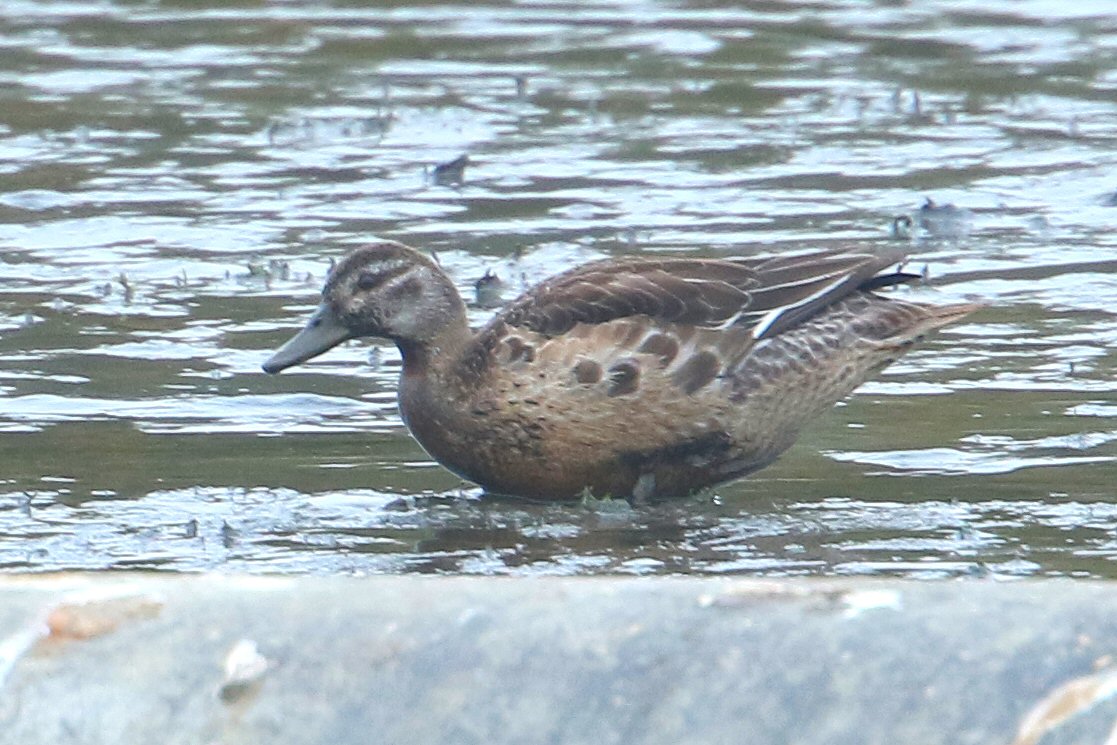
The two Garganeys remained, with the first-winter female at Pitsford Res until 8th and the young drake at Ravensthorpe Res until the following day, while a glut of hybrid ducks included a drake Tufted Duck x Pochard hybrid (resembling a drake Lesser Scaup) at

Drake Tufted Duck x Pochard hybrid, Summer Leys LNR, 8th November 2015 (Bob Bullock)

Summer Leys LNR on 8th, a drake Gadwall x Eurasian Wigeon hybrid at Stanwick GP on 9th and a drake Chiloe Wigeon x Eurasian Wigeon hybrid (resembling a drake American Wigeon) at Earls Barton GP on 14th-15th. Seven Red-crested Pochards visited Summer Leys on 7th, while four were at Stanford Res on the same date and three there on 18th, while five remained at Pitsford Res between 9th and 12th, rising to thirteen there on 20th.

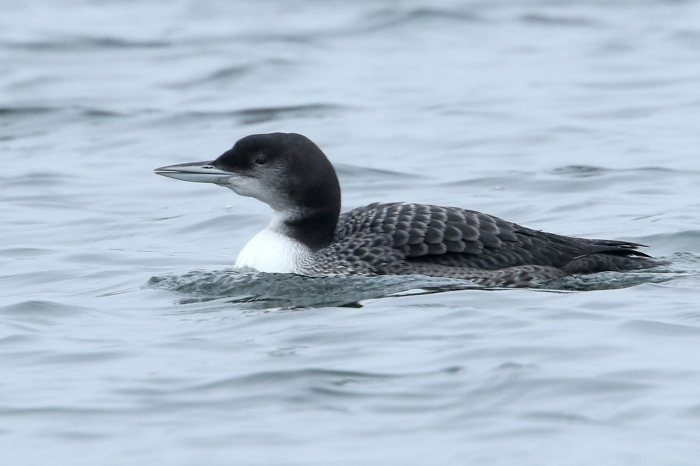
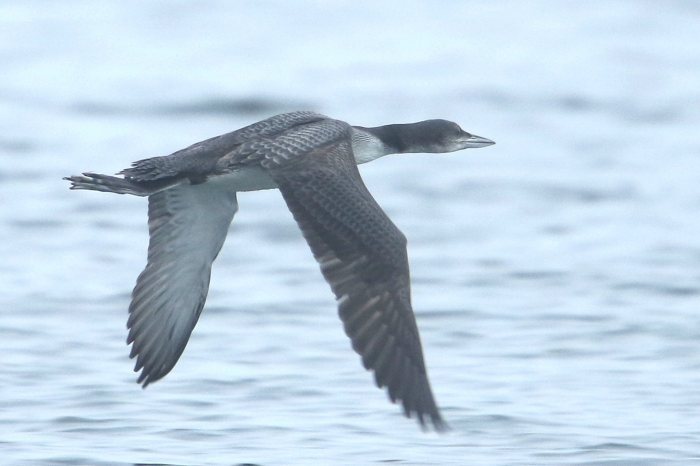
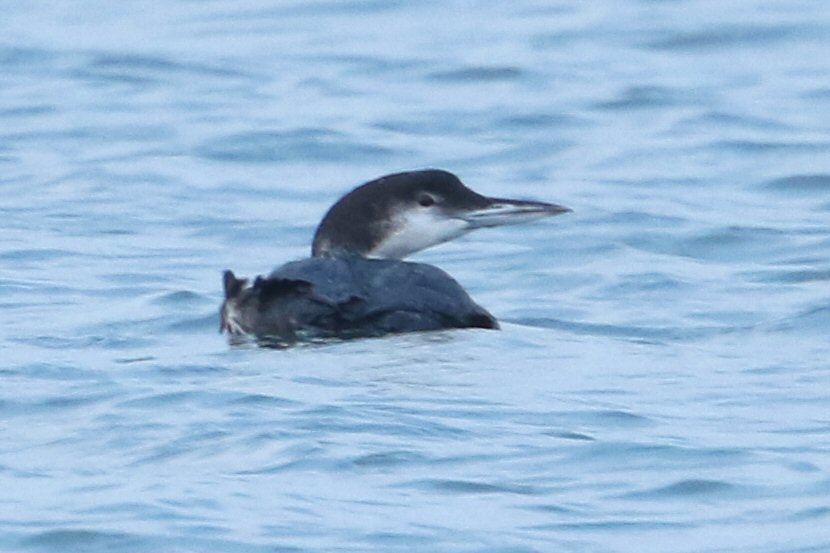
An adult Great Northern Diver which made a surprise visit to Stanwick GP on 11th was the first record for the site but it had departed by the following day. It would seem likely, then, that one found not too far away on Mary’s Lake at Earls Barton GP, just two days later, was the same individual. Amazingly, however, the latter proved to be a juvenile which stayed until the morning of 14th before departing south.
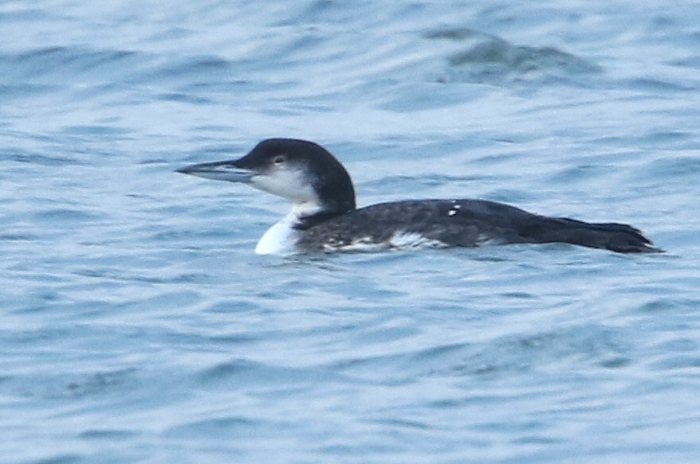
Adult Great Northern Diver, Stanwick GP, 11th November 2015 (Bob Bullock)
Juvenile Great Northern Diver, Earls Barton GP, 14th November 2015 (Bob Bullock)

In the same general area, the Summer Leys Bittern showed itself again on, or over, the scrape on 7th, 18th, 19th and 20th the same site also hosting a Great White Egret on 14th and 19th-20th, while another remained at Ravensthorpe Res between 16th and 19th. Pitsford Res also held up to four throughout the period and one visited Ditchford GP on 15th.
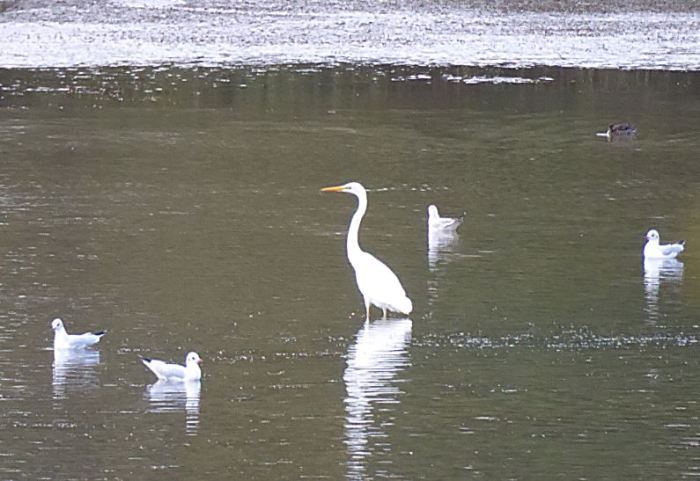
Great White Egret, Ravensthorpe Res, 16th November 2015 (Mike Simon)

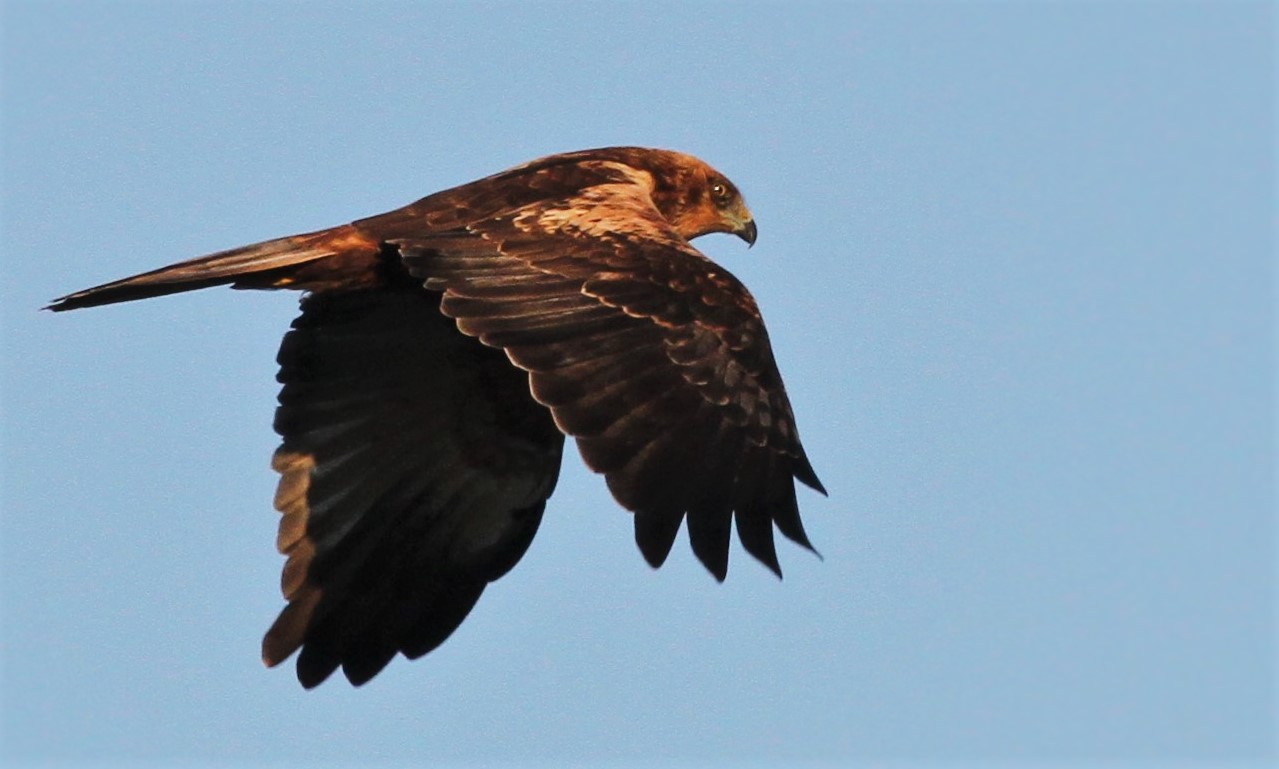
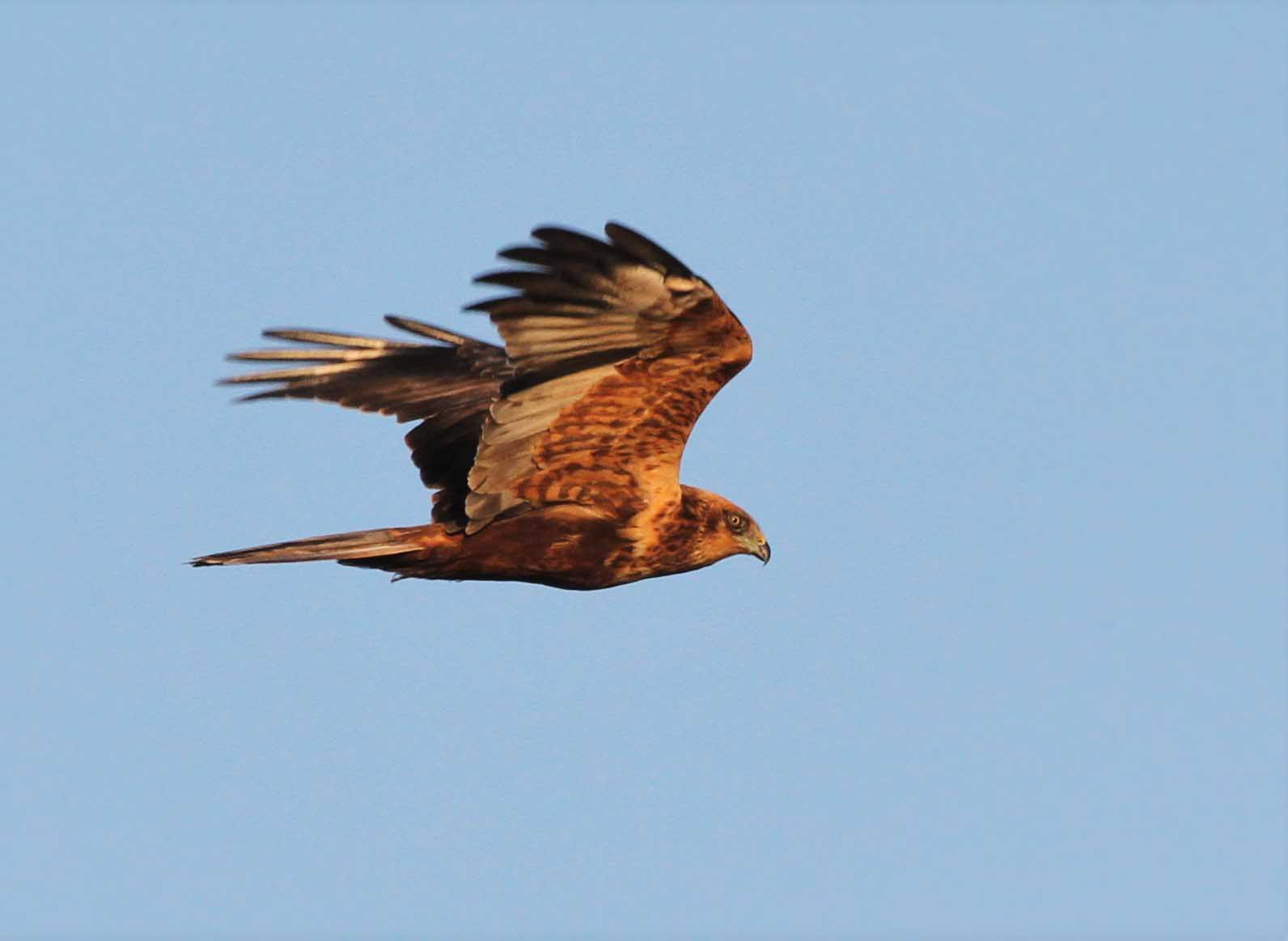
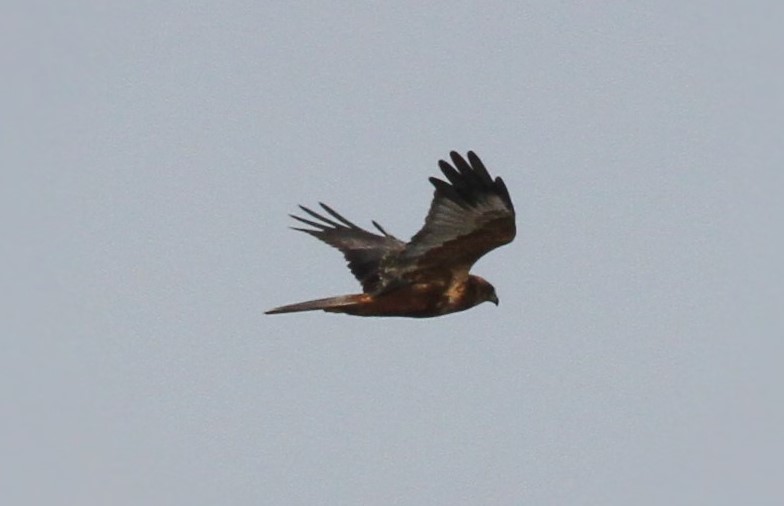
The second calendar year male Marsh Harrier, present at Summer Leys LNR since at least mid-October, remained throughout the period, while Peregrines were also seen here as well as at Higham Ferrers, Pitsford Res, Blueberry Farm and in the Brampton Valley. At least five Merlins were seen and included singles at Harrington AF, Pitsford Res and Stanford Res on 7th, Blueberry Farm Maidwell on 9th and 17th, Stortons GP on 15th and near Chapel Brampton on 20th.
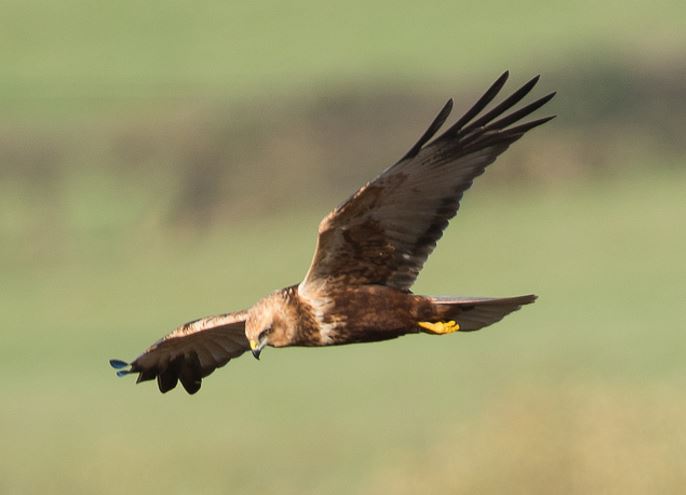
Second calendar year male Marsh Harrier, Summer Leys LNR, 20th November 2015 (John Nicholls)

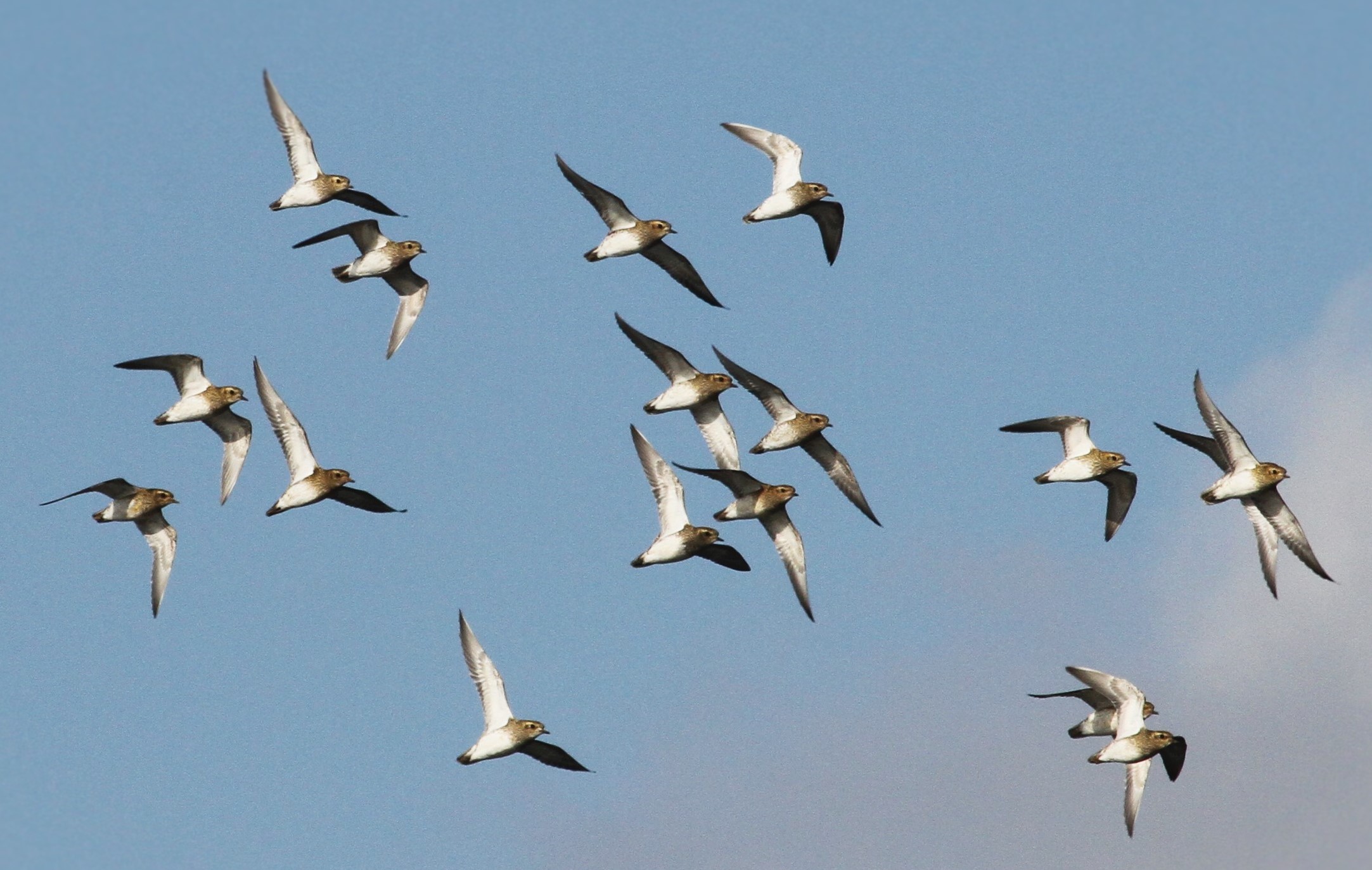
There were fewer Golden Plovers reported during the period with just over one hundred at Thrapston GP on 9th, at least twenty-five over Blueberry Farm on the same date, thirty-five between Moulton and Holcot on 20th and two at Pitsford Res on the same date. The only Common Snipe reported were eight at Earls Baron GP and one at Moulton Quarry – both on 15th – and forty-eight at Pitsford Res on 20th, where a Jack Snipe was also present at the same time. Other waders included a Curlew over Summer Leys on 19th, a Redshank at Pitsford Res between 14th and 20th and two Green Sandpipers at both Daventry CP on 7th and Ravensthorpe Res on 7th-9th, with one at Pitsford Res on 8th and four there on 20th.

Common Snipe, Earls Barton GP, 15th November 2015 (Martin Swannell)

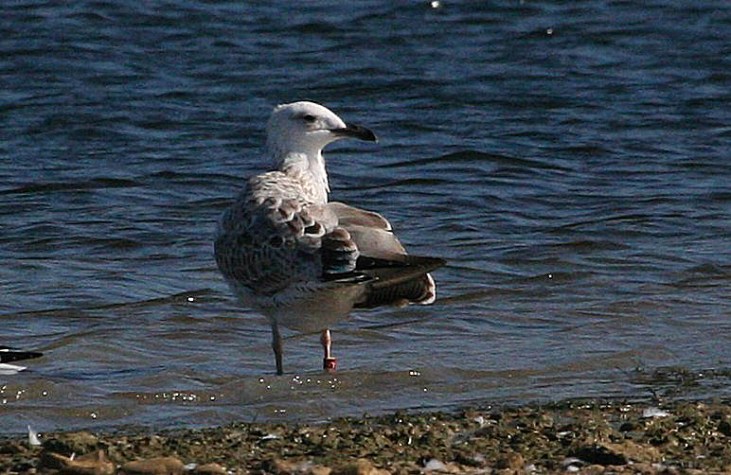
November is often a good month for the appearance inland of Kittiwakes and this one was no exception with two adults turning up at Stanford Res on the afternoon of 20th. An adult Mediterranean Gull also visited the same site on 16th, a first-winter was in the roost at Boddington Res on 10th and another adult appeared at Pitsford Res the following day. There were just two Caspian Gulls during the period – a first-winter at Stanwick GP on 15th, followed by an adult at Stanford Res on 16th and 18th, while the usual small numbers of Yellow-legged Gulls continued to linger, these including up to two adults at Pitsford Res on 9th and 14th, one at Ravensthorpe Res and two at Hollowell Res on 9th, eight in the Boddington Res roost on 10th with one there on 18th and two at Stanwick GP on 15th.

Short-eared Owl, Blueberry Farm, Maidwell, 20th November 2015 (Martin Swannell)

Short-eared Owls are now becoming more regularly seen at Blueberry Farm where up to two have been present between 10th and 20th, while a late House Martin was seen flying over the A509 on the county boundary near Warrington on 9th. A male Black Redstart appeared in Kettering, north of the town centre, on 19th but appeared not to be
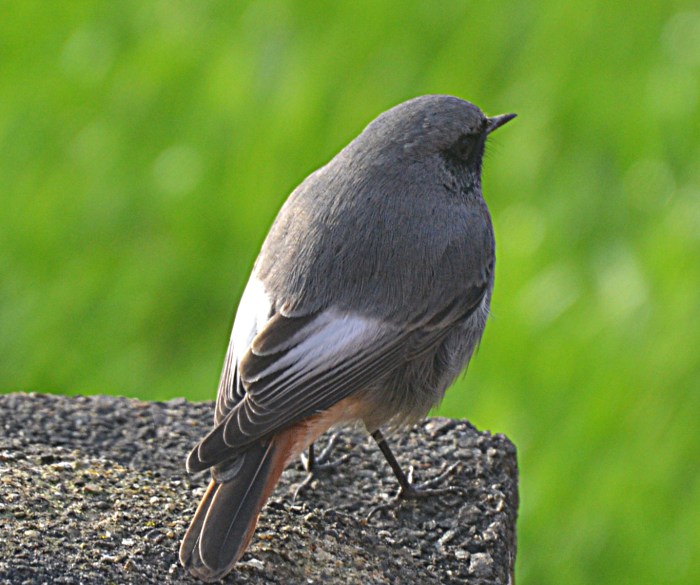
Male Black Redstart, Kettering, 19th November 2015 (Andrew Briggs)

present the following day and, looking like they are set to winter in the area, the number of Stonechats at Blueberry Farm reached double figures with ten there on 9th and 20th. Smaller numbers elsewhere included four at Hollowell Res, two at Pitsford Res and two near Harlestone Heath.

Stonechat, Pitsford Res, 16th November 2015 (Alan Francis)
Stonechat, Blueberry Farm, Maidwell, 20th November 2015 (Martin Swannell)

Several Bramblings were noted at Scaldwell, Pitsford Res/Brixworth CP and Blueberry Farm, while single Crossbills were seen over Scaldwell on 8th and 16th and at Brixworth CP on 20th.

Hybrid Wigeon

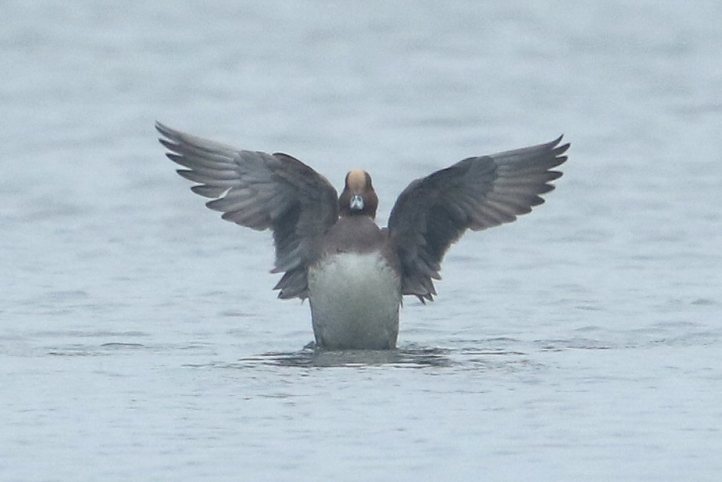
This very striking drake, found yesterday on Earls Barton GP’s Mary’s Lake by Kim Taylor, looked initially like it might be an American Wigeon x Eurasian Wigeon hybrid but it soon became clear it is actually a Chiloe Wigeon x Eurasian Wigeon.

Chiloe Wigeon x Eurasian Wigeon hybrid, Earls Barton GP, 14th November 2015 (Bob Bullock)

It’s an amazing-looking bird which matches known hybrids. A potential pitfall for American Wigeon, perhaps, but green area too extensive, crown yellowish and inextensive and flanks heavily suffused grey.

Chiloe Wigeon x Eurasian Wigeon hybrid, Earls Barton GP, 14th November 2015 (Bob Bullock)
Eurasian Wigeon, Earls Barton GP, 14th November 2015 (Bob Bullock)

But what would it look like in eclipse? Check the axillary colour: white in American, grey in Eurasian and in this individual, as Bob’s images, above, so neatly illustrate.

Great Northern Diver

At Stanwick GP on 11th November and uncharacteristically short-staying. They are not annual but November is the peak month for arrivals in the county and this one’s a bit special on two counts. Firstly it’s a first for Stanwick, which appears never to have been visited by any species of diver before. Secondly, it’s an adult.

Adult Great Northern Diver, Stanwick GP, 11th November 2015 (Bob Bullock)

Pretty plain upperparts without all those neatly pale-fringed feathers.  Nearly all those which visit the county are juvenile/first-winters and they frequently linger on into the winter, with Pitsford Reservoir producing 53% of the records over the past 30 years.

Northamptonshire Great Northern Divers. Occurrence pattern for the past 30 years, based upon arrival date. November is the peak month for arrivals.
Northamptonshire Great Northern Divers. Occurrence pattern for the past 30 years, based upon arrival date. November is the peak month for arrivals. Background image: juvenile Great Northern Diver, Pitsford Res, 24th December 2013 (Mike Alibone)

This one did a moonlight flit. Where is it now? Bizarrely, a juvenile was discovered today on Mary’s Lake at Earls Barton GP. These two will be about the 42nd and 43rd records for the county.

Stanwick Caspian Gull does Dunge!

Remember this juvenile Caspian Gull at Stanwick in September? Steve Fisher, the observer, has just had the news back on its origin.

Polish-ringed juvenile Caspian Gull in moult to first-winter, Stanwick GP, 10th September 2015 (Steve Fisher)

20150910_151423Its red ring, numbered 85P5, indicates it was ringed as a nestling in a Caspian Gull colony at ZB.KOZIELNO, PACZKÓW, OPOLSKIE, POLAND on 21st May this year by Jacek Betleja and Jakub Szymczak – a distance of 1230 km east-south-east from Stanwick. Even more interestingly, we know it’s still in the UK. It was seen only yesterday by Rich Bonser at Dungeness!

Starling murmurations

A number of people have been in touch to ask about the best place to see Starling murmurations in Northamptonshire. At present there appears to be only two sites – Titchmarsh LNR at Thrapston Gravel Pits, where one is currently building, and Summer Leys LNR, which produced a huge, swirling mass yesterday evening.  Simon Hales’ video, below, captures the Titchmarsh birds nicely and the Summer Leys flock, videoed by Matt Hazleton, can be viewed at http://bit.ly/1HmtQYo  Access to Titchmarsh via the track from the small car park at Aldwincle TL006814 and at Summer Leys view from main car park SP885634. Visit https://t.co/IRwvGXZTNs to complete Starling survey.

Lesser Black-backed Gull

Goofed!

Sorry for any confusion. I included the image below captioned ‘Yellow-legged Gull’ in the latest county round-up when it is actually a Lesser Black-backed Gull (albeit at the light-mantled end of the graellsii range!). Thanks to Neil McMahon for pointing this out!

Adult Yellow-legged Gull, Wicksteed Park Lake, 31st October 2015 (Alan Francis)
Adult Lesser Black-backed Gull, Wicksteed Park Lake, 31st October 2015 (Alan Francis)

Two Weeks in Focus: 24th October to 6th November 2015

An unseasonally mild two weeks saw record-breaking November temperatures on 1st as winds persisted from a largely southerly direction throughout the period.

Aside from the Pitsford Ruddy Shelduck remaining until 3rd, a mixed bag of wildfowl included more Pintails, with singles at Daventry CP, Ravensthorpe Res, Stanwick GP, Summer Leys LNR and Wicksteed Park Lake plus six at Pitsford Res on 31st and four at Earls Barton GP on 5th.

Drake Pintail, Wicksteed Park Lake, 29th October 2015 (Alan Francis)
Drake Pintail, Earls Barton GP, 27th October 2015 (Bob Bullock)

Two Garganeys remained into November – the first-winter female at Pitsford Res on 3rd and the young drake at Ravensthorpe Res until at least 4th, while Daventry CP bowled a curved ball in the shape of a first-winter drake American Wigeon x Eurasian Wigeon hybrid on 28th and Pitsford delivered a Ferruginous Duck x Red-crested Pochard hybrid on 31st. ‘Real’ Red-crested Pochards included up to seven at Stanford Res between 25th and 1st, up to ten at Pitsford Res on 31st-1st, one at Stanwick GP on 4th and up to six at Daventry CP on 4th-5th.

First-winter female Garganey, Pitsford Res, 3rd November 2015 (Bob Bullock)

A Bittern put in a brief appearance at Summer Leys LNR on 25th while up to five Great White Egrets remained at Pitsford Res throughout the period and one visited Stanford Res on 1st. Pitsford also produced a Slavonian Grebe on 30th-31st – only the third to be seen in the county this year.

Great White Egrets, Pitsford Res, 1st November 2015 (Bob Bullock)

The second calendar year male Marsh Harrier, present at Summer Leys LNR since at least mid-October, remained throughout, appearing with some regularity over the scrape, where it provided great photo opportunities for some. Peregrines were widespread this week with singles at Borough Hill, Brixworth CP, Ecton SF, Higham Ferrers, Stanwick GP and Summer Leys LNR, while twos were seen at both Ditchford GP and Hardingstone GP.

Second calendar year male Marsh Harrier, Summer Leys LNR, 1st November 2015 (Alan Coles)

On the wader front, Golden Plovers were reported from Daventry CP, Harrington AF, Harringworth, Hollowell Res, Summer Leys LNR, Thorpe Waterville and Tiffield with the largest count of three hundred and four coming from Daventry CP on 26th.

Golden Plovers, Summer Leys LNR, 26th October 2015 (Alan Coles)

A single Ringed Plover visited Pitsford Res on 30th, 2 Dunlin were at Stanwick GP on 4th and  Common Snipe were at six localities, with double-figure counts of fifteen at Ecton SF on 1st and twenty-three at Daventry CP on 6th. Green Sandpipers were found at Daventry CP, Ecton SF, Pitsford Res and Ravensthorpe Res with a maximum of three at the latter locality on 1st.

Common Snipe, Ecton SF, 1st November 2015 (Mike Alibone)

This week’s Mediterranean Gull was again a first-winter, this time in the roost at Pitsford Res on 24th, while single adult Caspian Gulls were Stanford Res on 25th and Daventry CP on 6th and a third-year visited Hollowell Res on 26th. The reservoirs of Boddington, Hollowell, Pitsford and Ravensthorpe all produced Yellow-legged Gulls as did Daventry CP with the latter site, along with Pitsford, producing the period’s maxima of four.

Just one Short-eared Owl was mobile around Harrington AF on 4th, while a seriously late Sand Martin was a surprise for one observer at Stanford Res on 1st – although it still has a long way to go to beat the latest record of a juvenile which remained around Islip SF from 17th to 22nd November 1976. Another Black Redstart was found during the period, at Wellingborough on 28th, while Stonechats continued to be seen in the Brampton Valley and at Hollowell Res, Pitsford Res, Summer Leys LNR and  Thrapston GP, with a maximum of six at Hollowell Res on 26th. Late October still continues to produce Rock Pipits and Hollowell Res held up to two on 26th-27th, while a Water Pipit flew south, calling, over Harrington AF on 4th. Small numbers of Bramblings were seen at Borough Hill, Catesby, Daventry CP, East Carlton CP, Pitsford Res, Woodford Halse and Harrington AF – the latter site producing the maximum of six on 3rd.

Blimey, it’s a blythi !

A Northamptonshire first

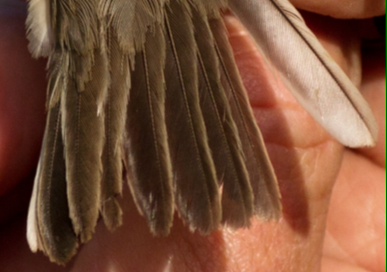
Confirmation came today that the ‘eastern’ Lesser Whitethroat trapped and ringed at Stanford Reservoir on 12th October was indeed of the race blythi – more commonly known as ‘Siberian’ Lesser Whitethroat. This is, therefore, the first confirmed record of this subspecies in Northamptonshire. Great news, broken this afternoon by Martin Collinson of the University of Aberdeen.

Siberian Lesser Whitethroat Sylvia curruca blythi, Stanford Res, 12th October 2015 (Paul Riddle)


Siberian Lesser Whitethroat Sylvia curruca blythi, Stanford Res, 12th October 2015 (Paul Riddle)
Siberian Lesser Whitethroat Sylvia curruca blythi, Stanford Res, 12th October 2015 (Paul Riddle)4
Siberian Lesser Whitethroat Sylvia curruca blythi, Stanford Res, 12th October 2015 (Paul Riddle)

A big thank you is due to ‘Doc Martin’ who undertook the DNA analysis on a couple of feathers which became dislodged during processing. Martin, Chairman of both the BOU Records Committee and the British Birds Editorial Board, was also instrumental in confirming the ID of Britain’s first Acadian Flycatcher in Kent, earlier this autumn after, analysing its poo collected on site at Dungeness!

But where does this leave the 2014 ‘eastern’ Lesser Whitethroat which frequented Dave Jackson’s Northampton garden on and off throughout the winter? It will go down as ‘showing characteristics of’, of course, but the Stanford bird clearly demonstrates they can occur locally and it surely was one …

Probable Siberian Lesser Whitethroat, Northampton, 11th March 2014 (Dave Jackson)

Marsh Harrier

When I saw my first Marsh Harriers at Minsmere in the early 70s I felt privileged. They were one of the rarest breeding species in Britain and records in Northamptonshire averaged one per year. Thankfully their numbers have increased, and with the current UK population numbering around four hundred pairs, they have become much more frequent in the county. If I see one locally, or anywhere else for that matter, I still feel privileged as they are magnificent birds and great to watch hunting over European meadows or migrating with other raptors high over the arid mountainous terrain of the middle east. That is one thing which will never change.

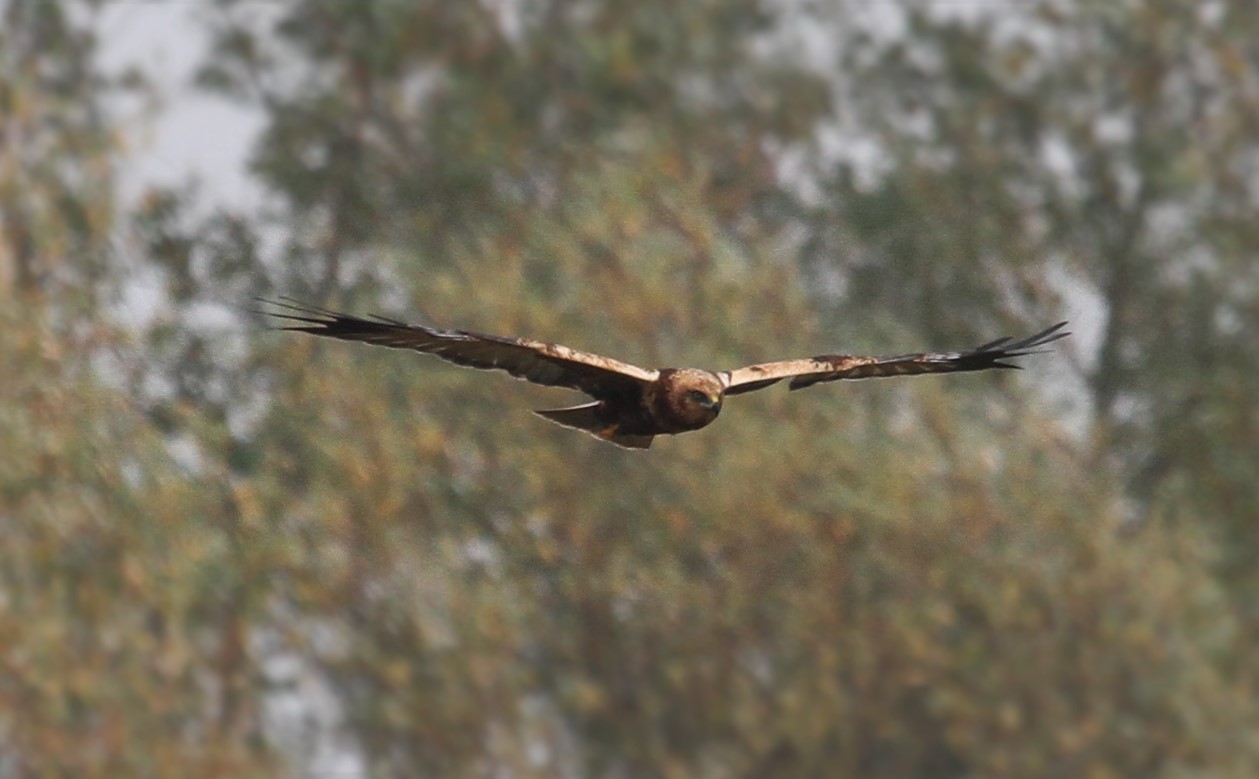
Down to earth and local. There are few good images of Marsh Harriers in Northants but yesterday Alan Coles managed to capture some of the second calendar year male which has been hanging around at Summer Leys, on and off, for the past couple of weeks.

Male Marsh Harrier, Summer Leys LNR, 26th October 2015 (Alan Coles)
Male Marsh Harrier, Summer Leys LNR, 27th October 2015 (Alan Coles). Note 'old' unmoulted outertail feather.
Male Marsh Harrier, Summer Leys LNR, 27th October 2015 (Alan Coles). Note ‘old’ unmoulted outertail feather.

This young male is still showing much immaturity – particularly on the upperparts, which retain extensive pale yellowish mottling on the mantle and forewing. Some male characteristics are clearly evident, though, with greyish-spotted primary coverts, and largely grey tail.

Male Marsh Harrier, Summer Leys LNR, 27th October 2015 (Alan Coles)

It still has a diffuse ‘female-type’ head pattern and largely dark underparts, although the ‘male’ pale greyish secondaries and inner primaries with broad blackish tips are prominent. Males are essentially polymorphic, with some adult males appearing identical to adult females.

Northamptonshire records of Marsh Harrier for the last 25 years with upward trend. Background image: Eastern x Western Marsh Harrier hybrid, Hong Kong, March 2011 (Charles Lam).
Northamptonshire records of Marsh Harrier for the last 25 years showing upward trend. Background image: Eastern x Western Marsh Harrier hybrid, Hong Kong, March 2011 (Charles Lam).

In Northants we have seen an increase in records over the past twenty-five years, with ‘good’ years producing in excess of thirty records, although individuals are mobile and may or may not be present for extended periods, so actual numbers are difficult to determine. Our first wintering bird was in the Nene Valley – predominantly at Stanwick GP – during 2001-2002.


The Week in Focus: 17th to 23rd October 2015

It was back to a week of westerlies, which also included one day of heavy rain. Migration, however, continued unabated with waves of winter thrushes, Skylarks and finches moving through the county along with a handful of new, scarcer arrivals.

Falling into the latter category – and part of a national movement – a Whooper Swan joined the Mutes at Blatherwycke Lake on 18th, while a Barnacle Goose was again at Clifford Hill GP on 20th and two were at Pitsford Res on 23rd. The latter site continued to host last week’s Ruddy Shelduck until 23rd, as well as producing the highest count of Pintails so far this autumn with twenty-four there on 23rd, while the drake remained at Wicksteed Park Lake on 20th, another visited Clifford Hill GP on the same date and one was at Daventry CP on 23rd. One juvenile Garganey remained into this week – the Ravensthorpe Res individual, which ultimately proved to be a male and was still present on 19th.

Juvenile male Garganey, Ravensthorpe Res, 19th October 2015 (Mike Alibone)

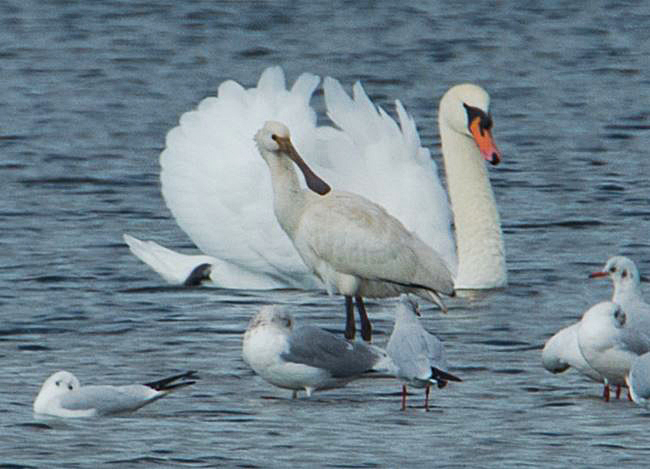
Up to thirteen Red-crested Pochards were at Pitsford Res on 21st, this location also continuing to host three Great White Egrets until 23rd, when five were counted north of the causeway – a record number for the site and equal to the county’s previous single site record at Summer Leys on 20th February this year. One also visited the latter site on 17th, followed there briefly on 20th by a first-winter Spoonbill, which had spent the previous three weeks at Eyebrook Res in Leicestershire.

First-winter Spoonbill, Summer Leys LNR, 20th October 2015 (John Nicholls)

Summer Leys also produced a Marsh Harrier between 17th and 19th, while a ‘ringtail’ Hen Harrier was seen at Harrington AF on the last of these dates. Single Merlins – or just one mobile individual – were in the Brampton Valley at Merry Tom crossing on 17th, near Brampton Halt on 18th and at Blueberry Farm on 18th-19th and Peregrines visited Harrington AF on 18th, Blueberry Farm on 19th-20th and Daventry CP on 23rd.

Numbers of Golden Plover ramped up this week with maximum site counts including three hundred at Thorpe Waterville on 18th, one hundred and sixty-five at Daventry CP on 23rd, one hundred and fifty at Harrington AF on 19th and thirty-four at Hartwell on 22nd. Other waders included two Ringed Plovers at Hollowell Res on 17th and 23rd, 2 Dunlin and three Common Snipe at Pitsford Res and 2 Common Snipe at Hollowell Res – all on 17th – and two Green Sandpipers at Ravensthorpe Res on 19th with three at Daventry CP on 23rd. Scarce larids included a first-winter Mediterranean Gull at Daventry CP and an adult Caspian Gull at Hollowell Res – both on 23rd and up to two adult Yellow-legged Gulls remaining at Pitsford Res and at Hollowell Res, while one was at Hartwell and three at Daventry CP on 22nd.

North Northants produced four Short-eared Owls – two each at Harrington AF and Blueberry Farm – all on 19th and the following day saw two Firecrests appear, one of which was a female trapped and ringed at Stanford Res and the other a male in a mobile tit flock at Hollowell Res. Another Black Redstart was found this week – one around ‘The Granary’ at Fawsley Park on 23rd, while a very late Whinchat was discovered at Stanwick GP on 20th, the same site also hosting up to two Stonechats on 20th-21st. More Stonechats included the regulars at Blueberry Farm, where up to three were present all week, two at Hollowell Res on 23rd and one at Harrington AF on 19th. As late autumn became even later more Bramblings were found this week and the quota included fourteen at Stanford Res on 17th, one at Polebrook AF on 18th, two at Harrington AF on 18th with eight there the following day, two at Blueberry Farm on 18th and 20th and at least four at Walgrave on the last of these dates. A Corn Bunting around the bunkers of Harrington AF on 18th would appear to be only the second record of this species in the county this year.