The Week in Focus: 11th to 17th April 2015

Following a blustery start, another week of light winds and above average temperatures ensued, providing ideal conditions for more north-bound migrants …

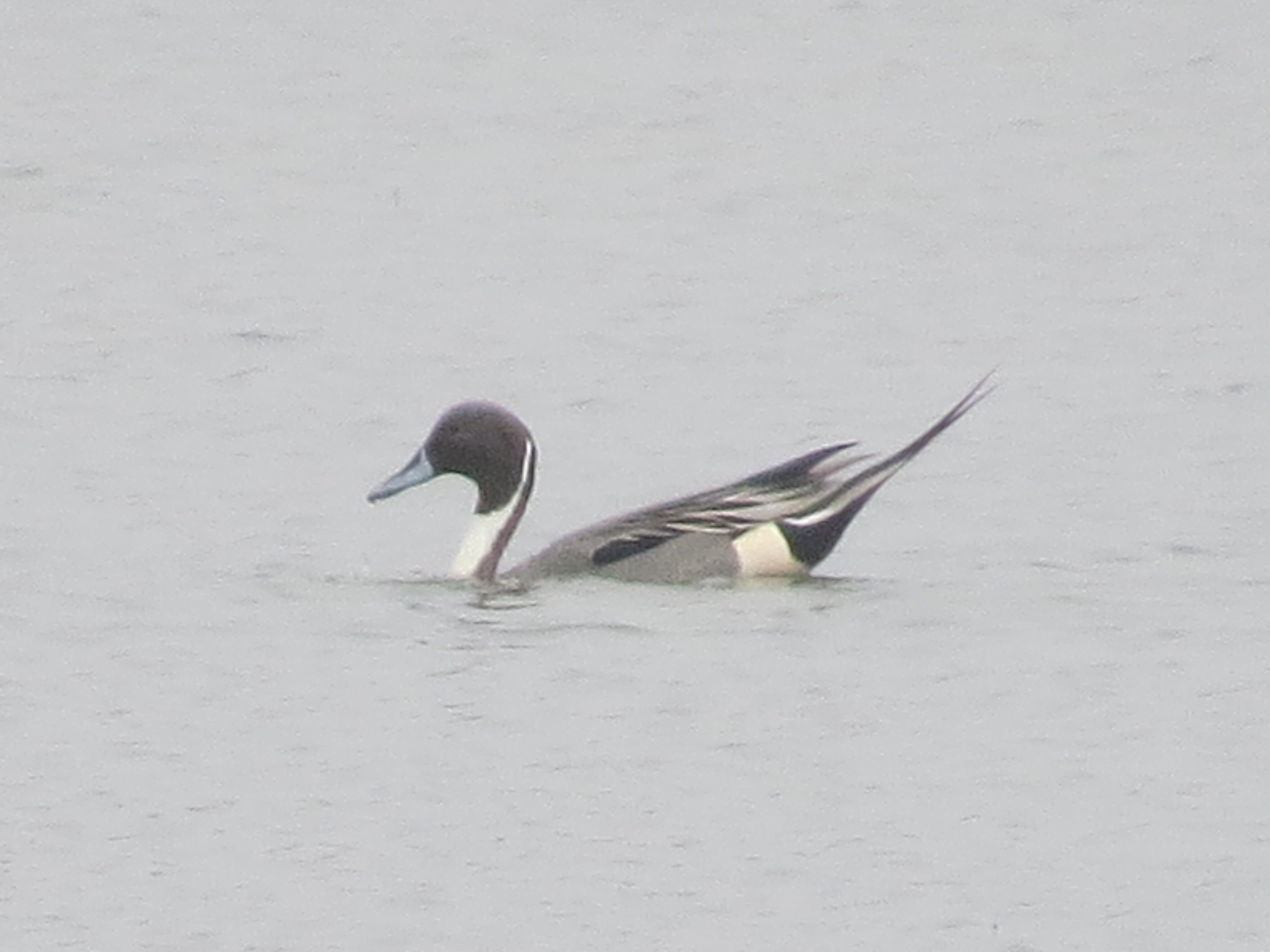
Departing winter ducks included four Pintails, which dropped into Daventry CP on 14th, while a pair of Garganeys arrived at Summer Leys LNR on 12th, remaining there until the following day.

Drake Garganey, Summer Leys LNR, 13th April 2015 (Bob Bullock)
Garganey, Summer Leys LNR, 13th April 2015 (John Moon)

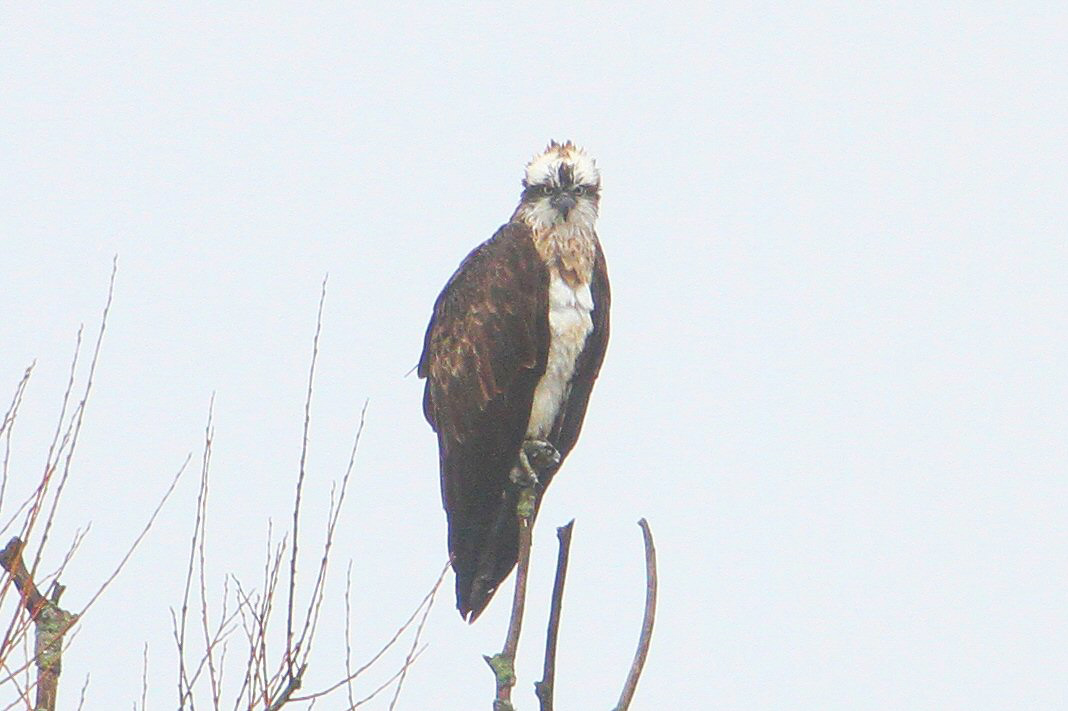
Another day, another Great White Egret – this time at Stanwick GP on 15th and it seems likely it will be the last one before the late summer dispersal brings more back to the county.  The Summer Leys Marsh Harrier was last seen on 11th and another was quartering the old Chelveston AF four days later, on 15th, when a female Goshawk was also seen over nearby Stanwick GP. Fewer Ospreys were recorded with just one drifting over Brixworth then Pitsford Res on 14th and another was over Daventry the following day, while Peregrines were seen at Daventry CP, Summer Leys and in the Brampton Valley and Merlins at Woodford Halse on 12th, Harrington AF on 14th and Newnham Hill on 16th.

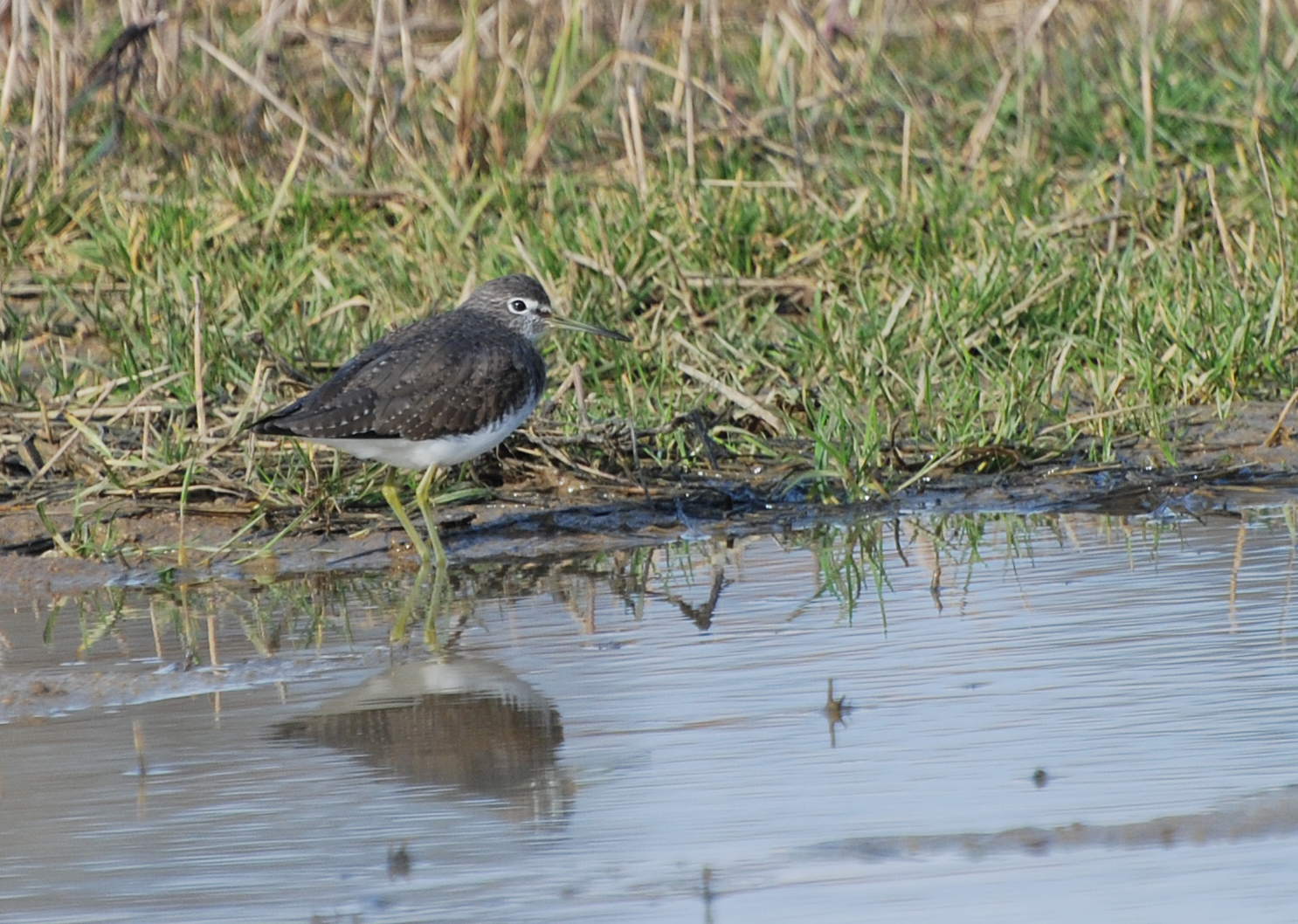
The only Golden Plovers this week were twenty at Harrington AF on 14th, while Little Ringed Plovers were seen at seven localities and a handful of Ringed Plovers included singles at Summer Leys, Clifford Hill GP, Thrapston GP and Hollowell Res with up to two at Stanwick GP.  More Whimbrels appeared this week with singles at Daventry CP on 14th and 17th and one at Summer Leys on 15th, where there was also a Curlew on the same date. Summer Leys also laid claim to a Ruff seen daily there all week, being joined by a second bird from 15th, while a trickle of Dunlins included four at Stanwick GP on 11th, three at Clifford Hill GP on 12th and 14th and singles again at Stanwick on 14th and at Summer Leys the following day. The first Common Sandpipers were at Stanwick GP and Daventry CP on 14th, followed by one at Summer Leys on 15th and two again at Stanwick the following day, while Green Sandpipers were at Upton Valley Way (Northampton) on 12th, Daventry CP on 14th and at Ditchford GP the following day. Summer Leys produced the week’s only Greenshank on 14th-15th and up to five Redshanks.

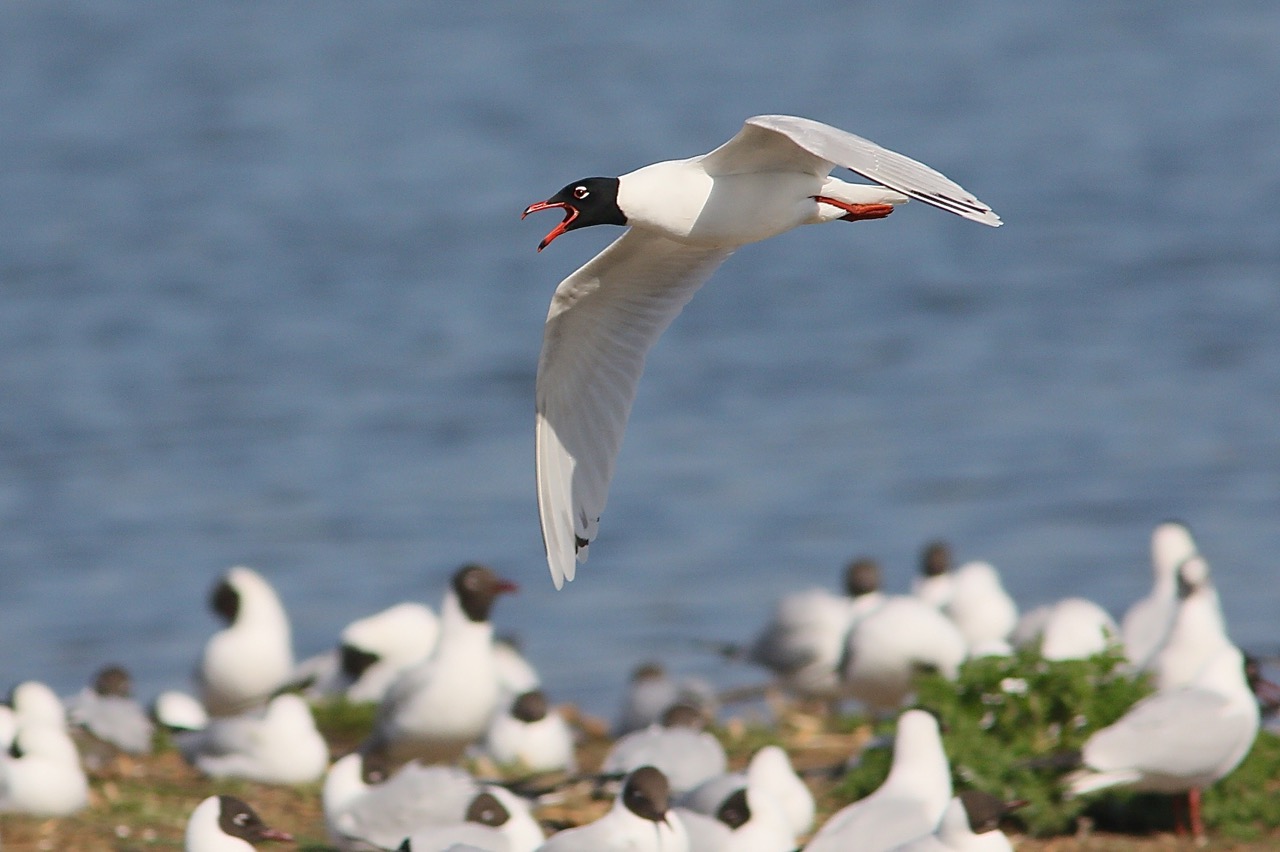
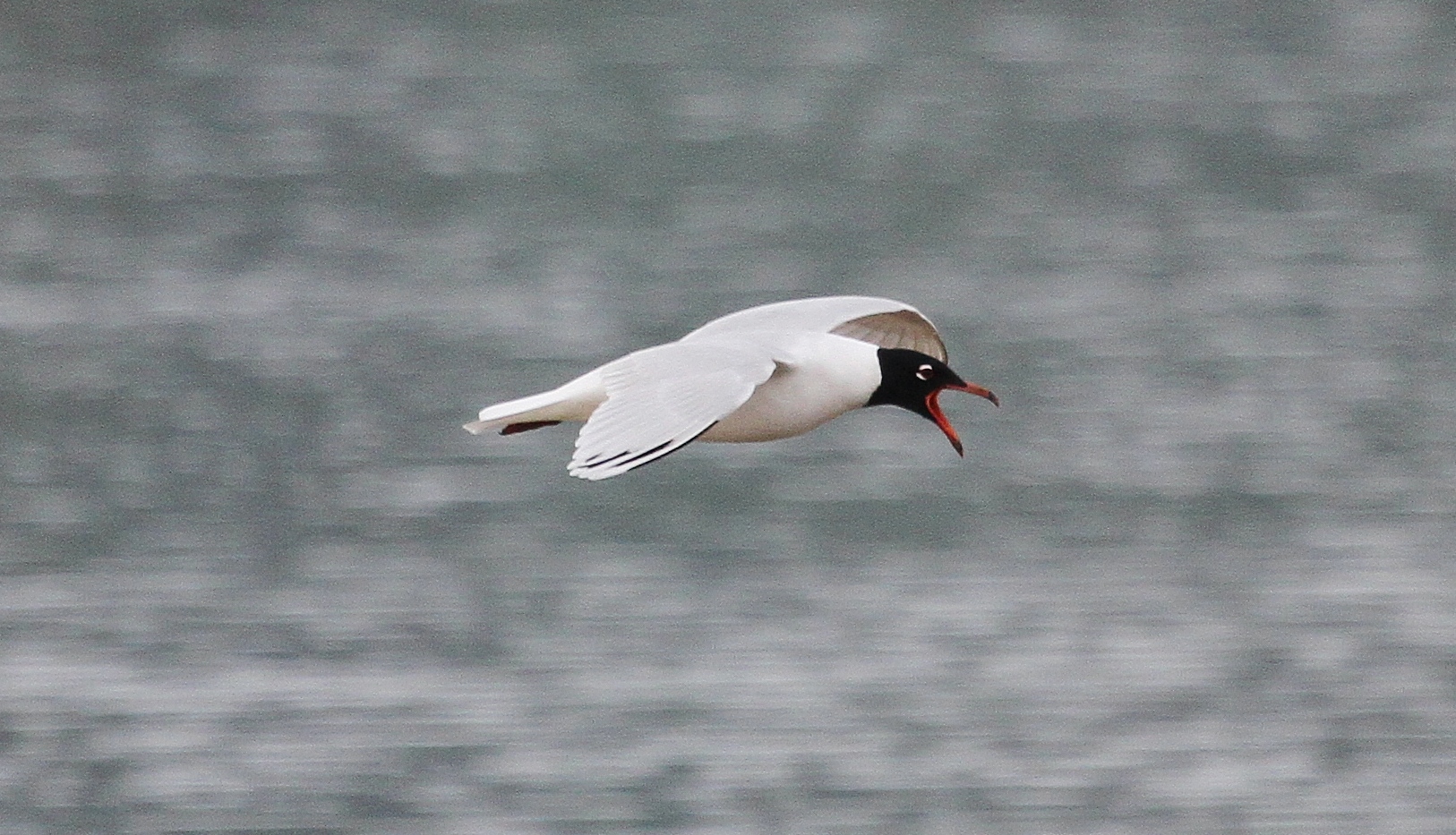
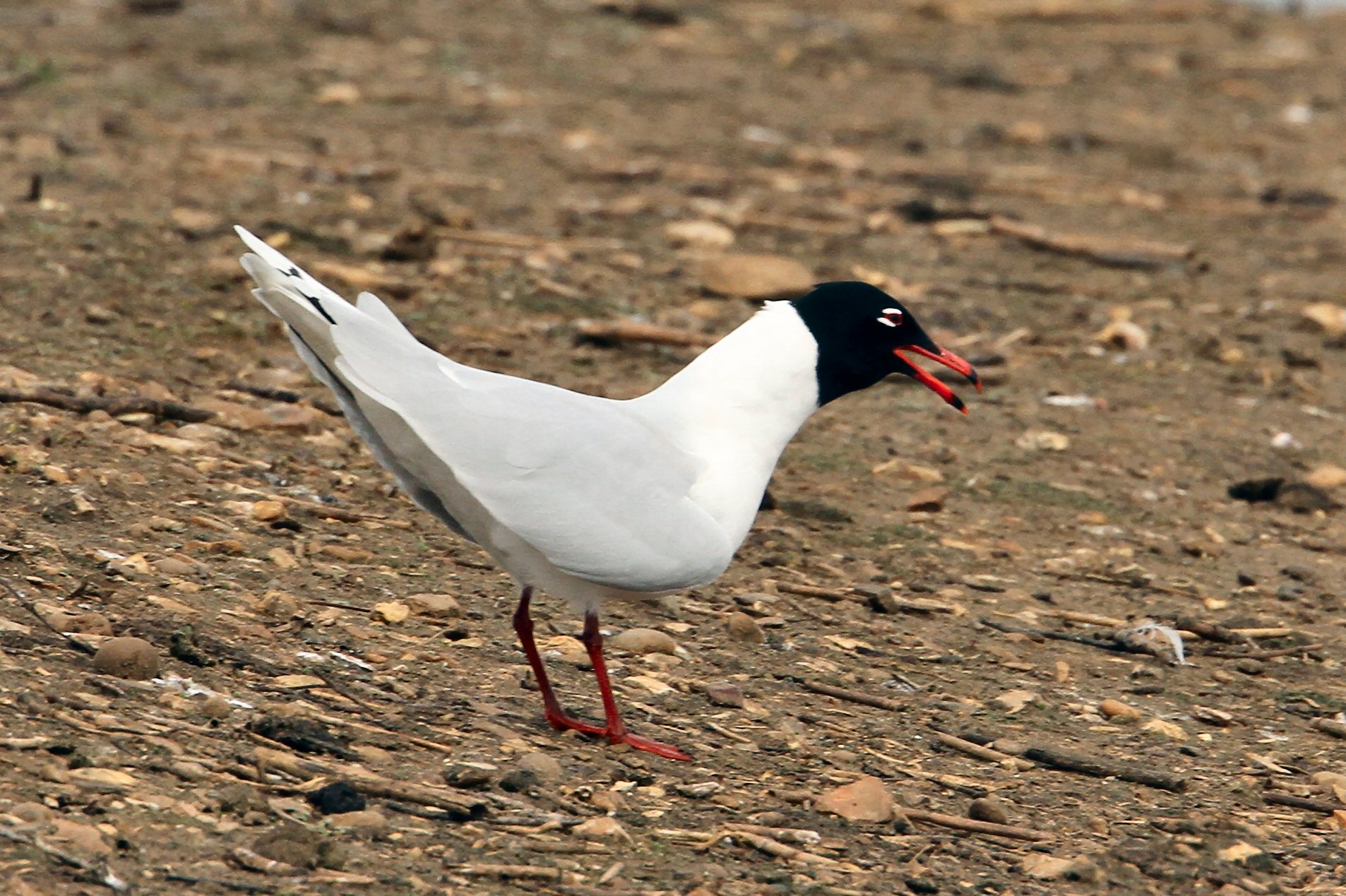
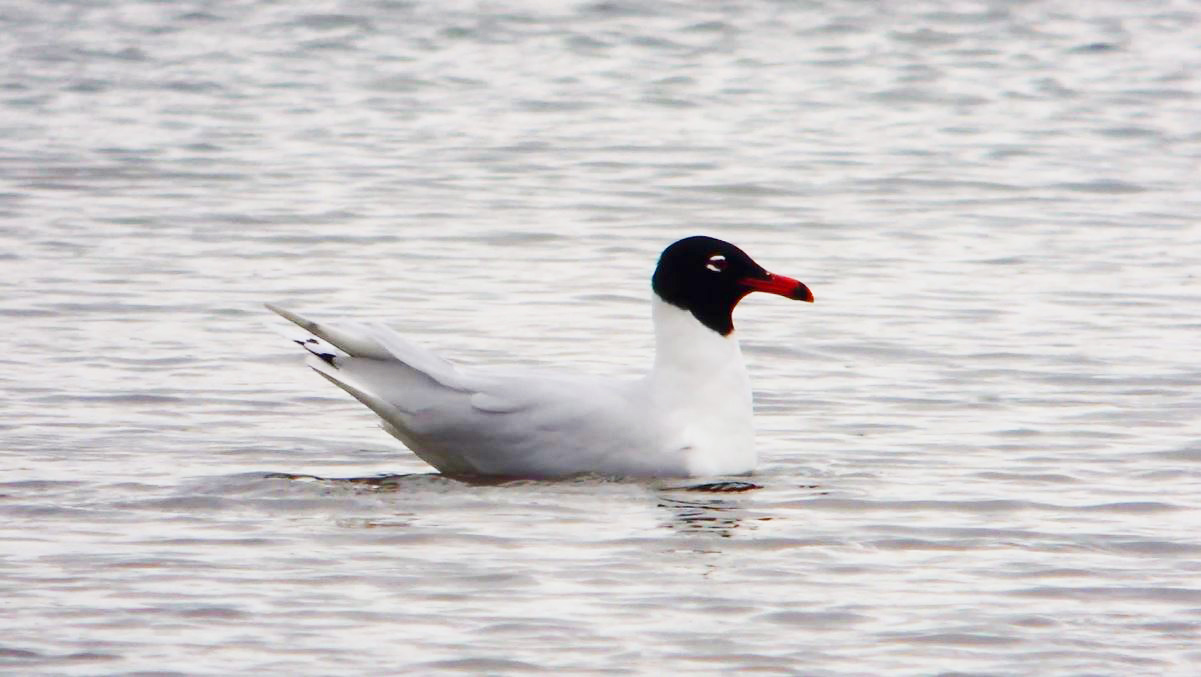
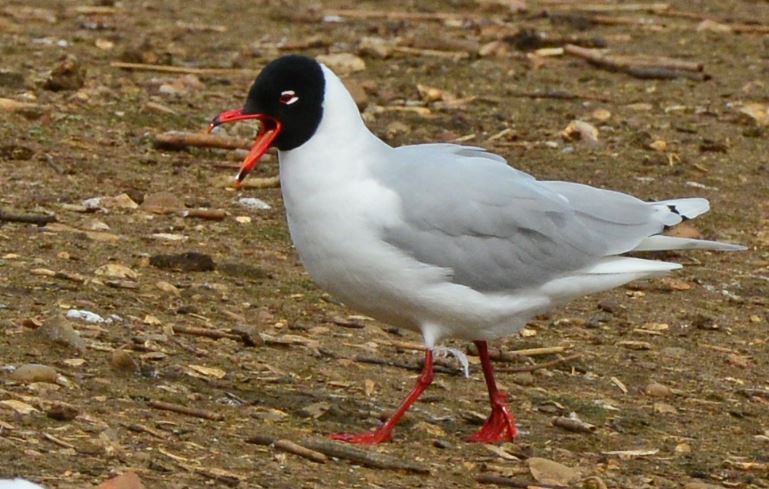
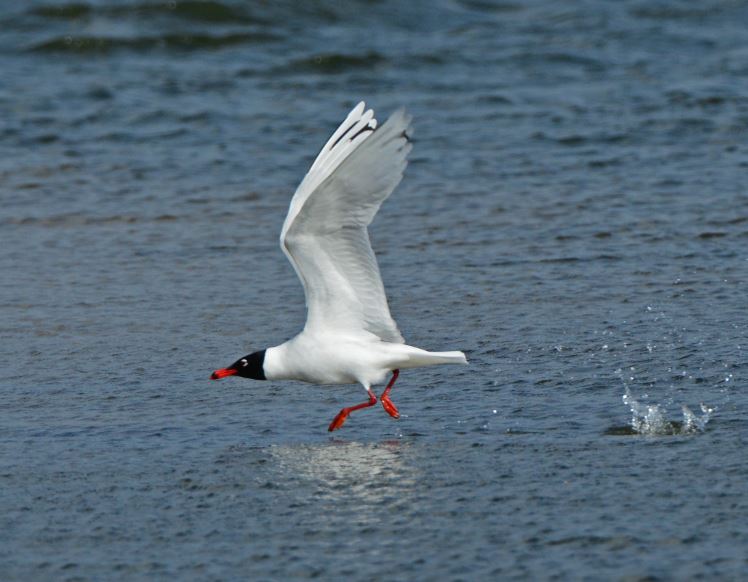
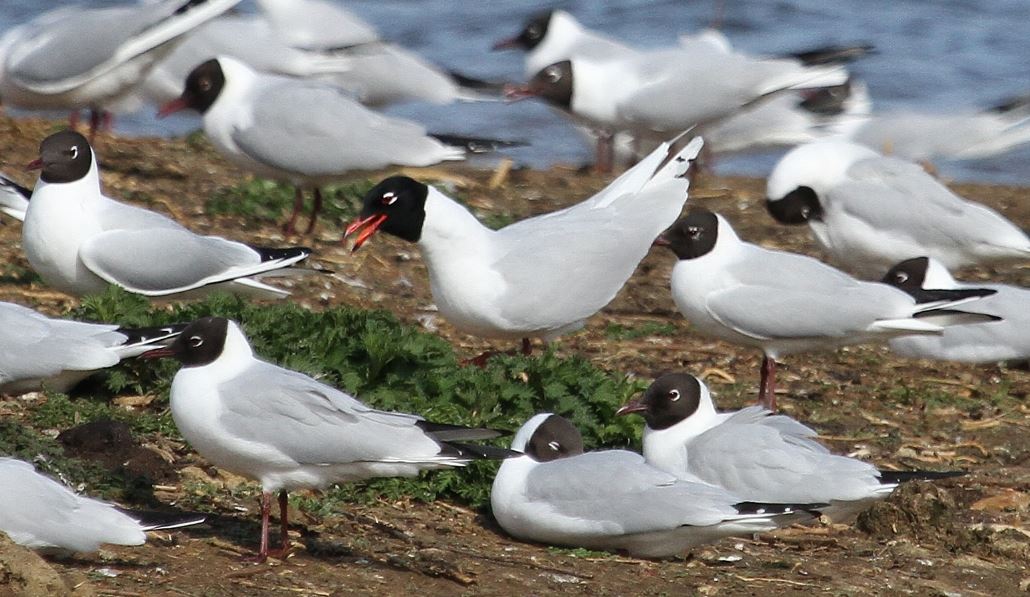
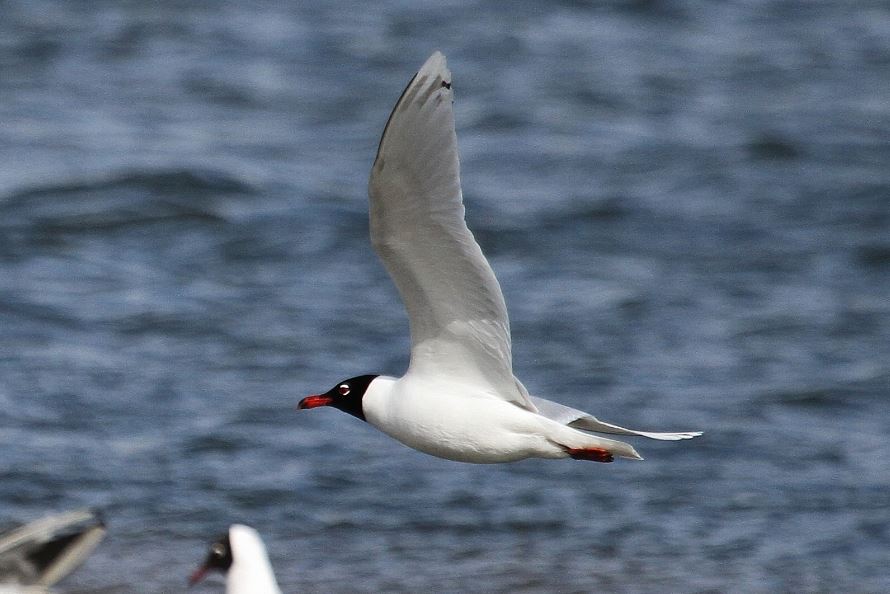
The same locality continued to host the second-summer Mediterranean Gull which was still holding territory in the Black-headed Gull colony at the week’s end,

Second-summer Mediterranean Gull, Summer Leys LNR, 12th April 2015 (Bob Bullock)

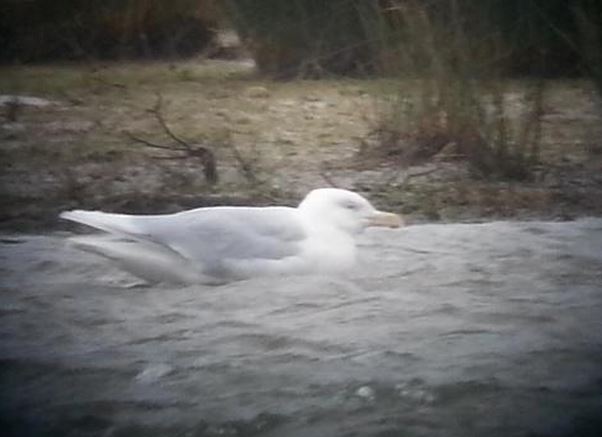
two adult Little Gulls were at Pitsford Res on 17th and Stanwick GP also hung on to a Little Gull all week as well as the Pitsea red-ringed adult Glaucous Gull all week at the same time attracting a second-summer Yellow-legged Gull on 11th. Also at Stanwick, the first Arctic Tern came through on 12th, swiftly followed by another at Pitsford Res on the same date, two at Summer Leys on 13th and three at Ditchford GP on 15th, while a Black Tern appeared at Pitsford Res on 17th.

Further summer visitor ‘firsts’ this week included Cuckoo in the Brampton Valley on 12th, Common Whitethroat at Bozenham Mill on 14th, Lesser Whitethroat at Ravensthorpe Res on 17th, Grasshopper Warbler at Stanwick GP on the same date and Reed Warbler at the same locality two days later, while a Nightingale was singing at Glapthorn Cow Pasture on 12th.

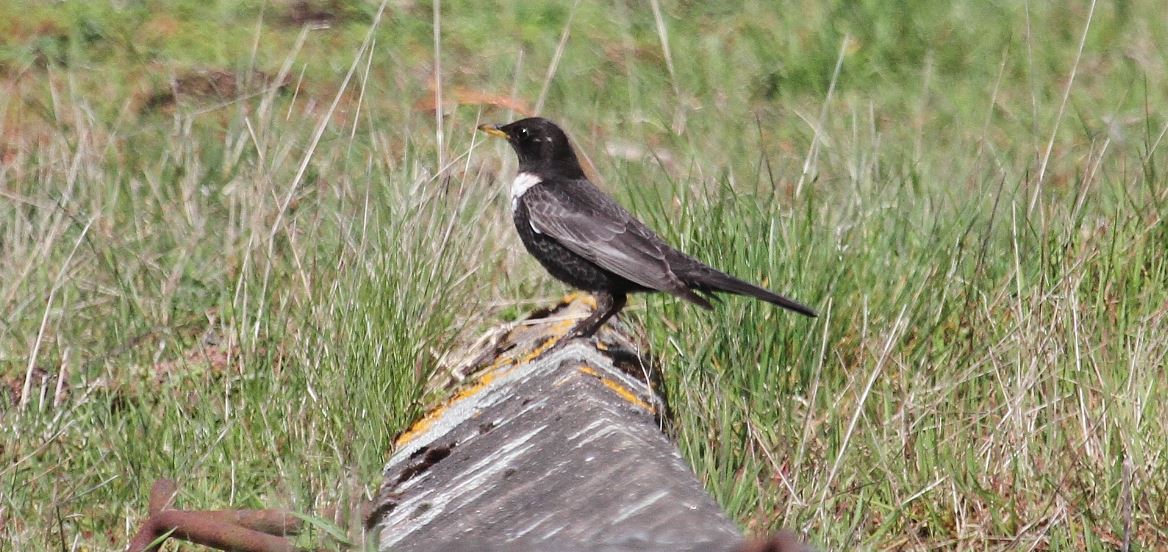
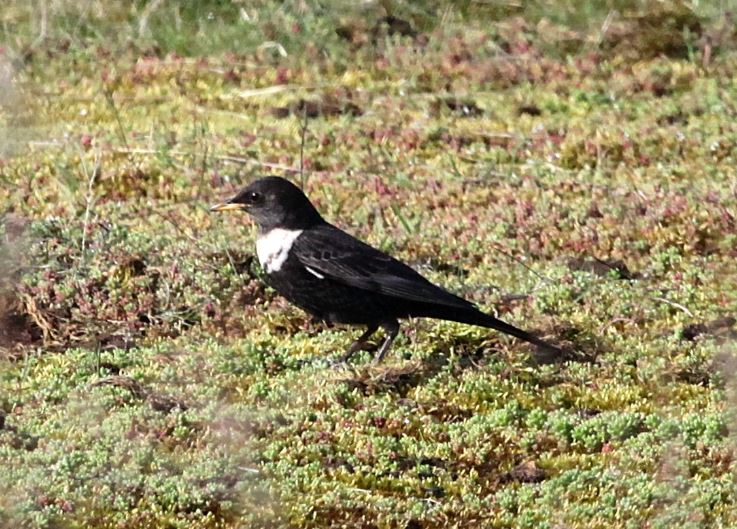
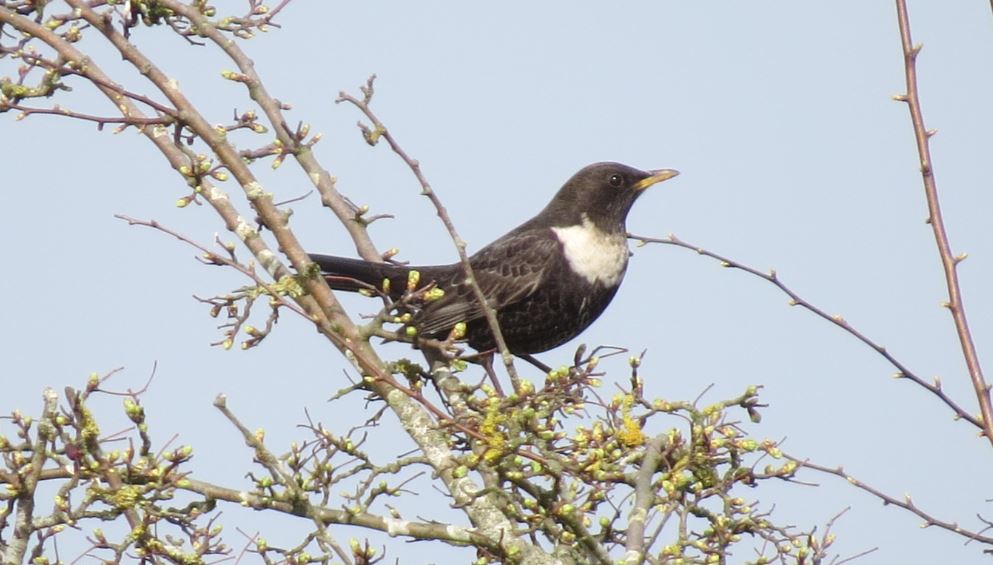
For the second week running Ring Ouzels maintained a locally heavy presence with up to seven on the lower slopes of Newnham Hill from 12th until the week’s end.
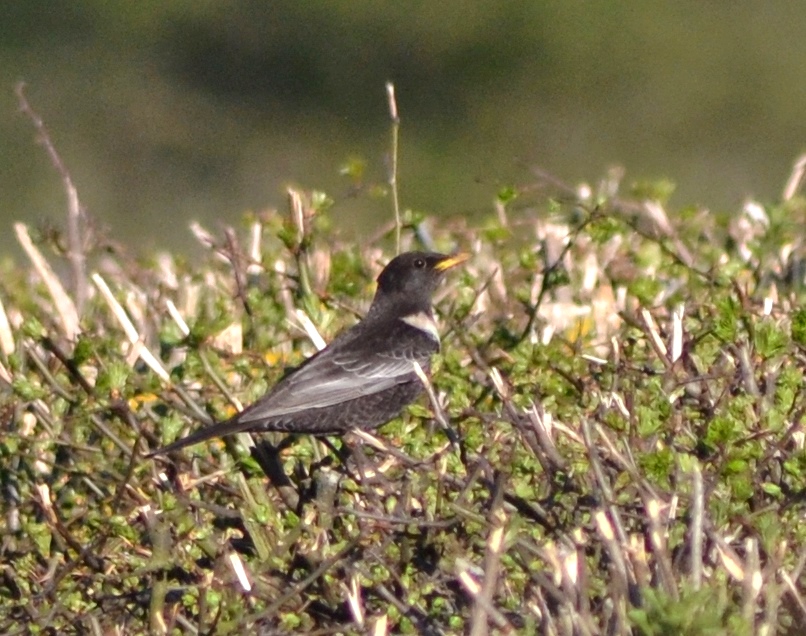
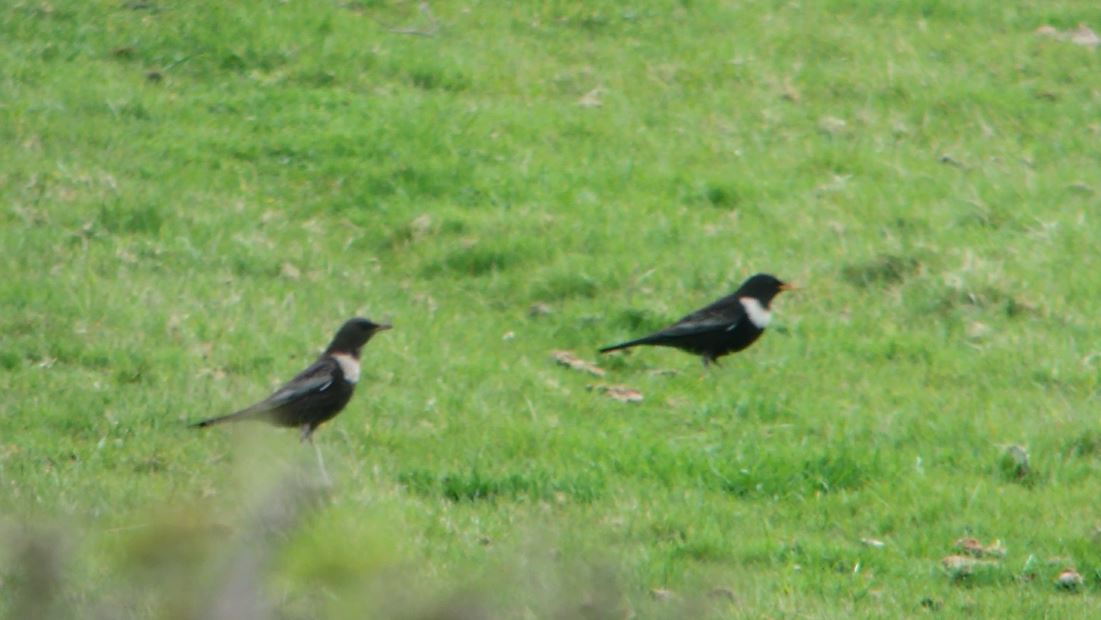
Ring Ouzel, Newnham Hill, 14th April 2015 (Stuart Mundy). One of seven present at this site.
Ring Ouzels, Newnham Hill, 12th April 2015 (Mike Alibone). Two of seven present at this site.

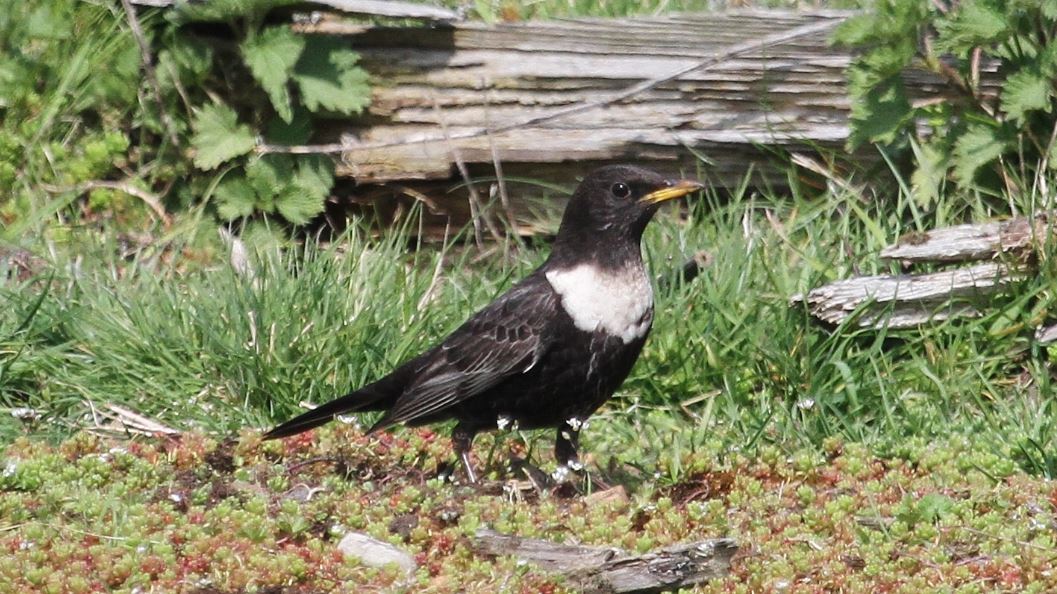
This represents the largest flock size to be recorded in Northants for a good many years. Away from Newnham single males were present at Harrington AF on 14th-16th and on private land near Hollowell Res on 17th.
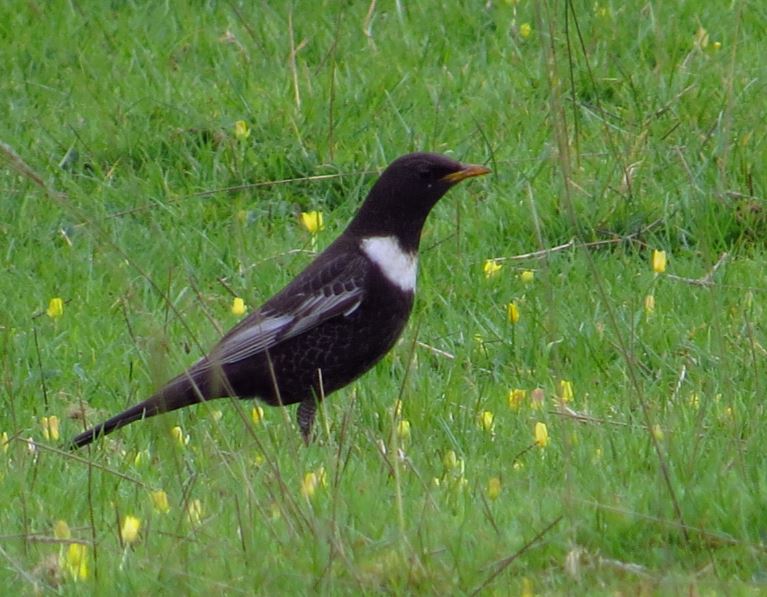
Male Ring Ouzel, near Hollowell, 17th April 2015 (Cathy Ryden)

With only one or two county records per year, a male Pied Flycatcher at Pitsford Res on 14th was a rare treat for one observer. Unfortunately it could not be found the following day.
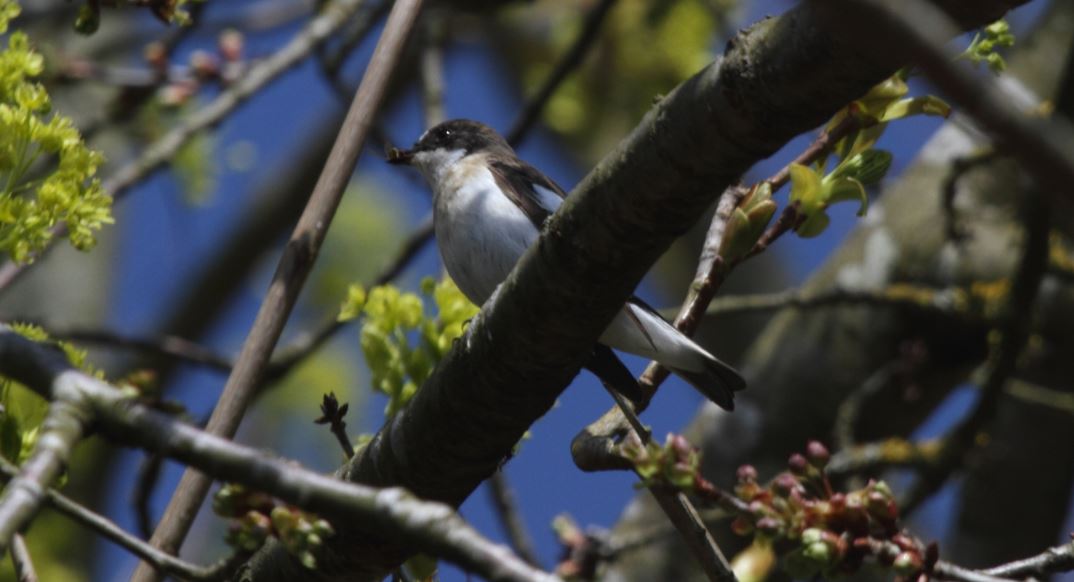
Male Pied Flycatcher, Pitsford Res, 14th April 2015 (Terry Armstrong)

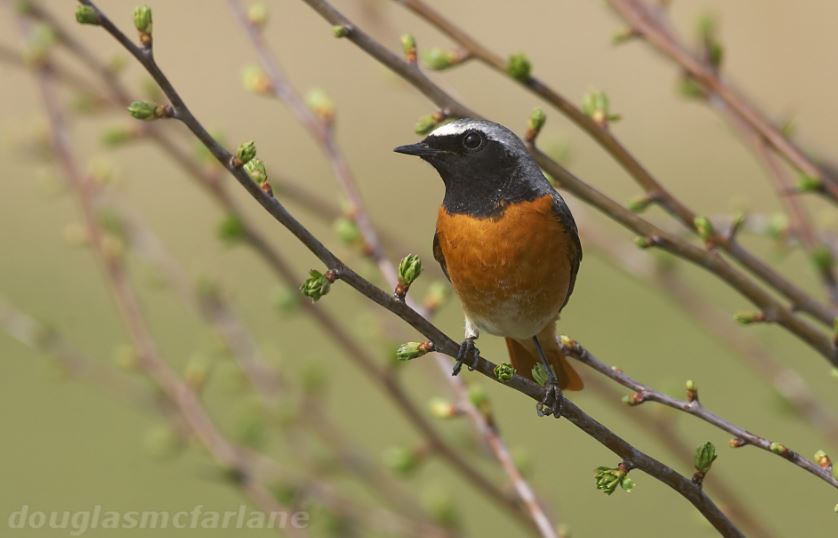
A small number of Common Redstarts continued to be found with singles at Byfield Pool on 11th, Borough Hill on 14th and Earls Barton GP on 17th, while up to three were present around Newnham Hill between 12th and 15th. The same site hosted the first migrant Whinchat of the spring on the last of these dates. In contrast to last week there were many more Northern Wheatears found, including singles at Clifford Hill GP, Stanwick GP and Summer Leys, two at Chelveston AF, three at Borough Hill and at Moulton Quarry, four at Newnham Hill and six at Harrington AF.

Northern Wheatear, Moulton Quarry, 14th April 2015 (Douglas Mcfarlane)

Migrant White Wagtails included five at Clifford Hill GP on 12th and singles at Stanwick GP on 13th and Boddington Res the following day.

The Week in Focus: 4th to 10th April 2015

A remarkably dry and settled week, which saw temperatures hit the low twenties and variable light south-westerly to south-easterly winds wafting Saharan dust our way at the week’s end. Such conditions proved, as ever, conducive to northbound migrants and the floodgates duly opened …

Another Pink-footed Goose put in an appearance this week – April is a classic month for this species to turn up, especially in the Nene Valley, where this one was seen at Stanwick GP on 10th. The only other wildfowl of note were three Pintails at Pitsford Res on 4th and singles at Welford Res on 5th and at Stanwick GP the following day.

Drake Pintail, Welford Res, 5th April 2015 (Douglas McFarlane)

One Great White Egret remained at Ditchford GP, where it was last seen on 4th. Hot on the heels of last week’s Ospreys were further singles over Corby on 4th, Welford Res on

Osprey, Welford Res, 5th April 2015 (Douglas McFarlane)

5th and at Hollowell Res and Earl Barton GP on 10th, while a male Hen Harrier visited Blueberry Farm (Maidwell) on 4th and a Marsh Harrier appeared to take up residence in the Summer Leys area, where it was seen almost daily between 4th and 10th. The first Hobby appeared over Spratton on 8th, quickly followed by another at Ravensthorpe Res on 10th, while Peregrines were seen at seven sites this week.

Marsh Harrier, Summer Leys LNR, 9th April 2015 (Douglas McFarlane)

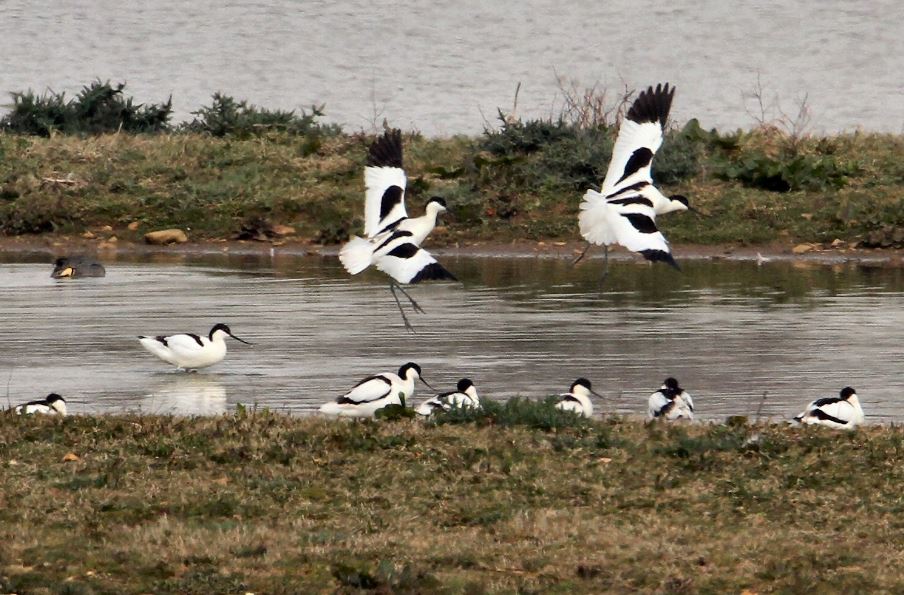
Amid several scattered UK records during the period, two Common Cranes were reported – one over Blueberry Farm on 5th and the other high over Towcester on 9th. A notable inland passage of Avocets also occurred, with one at Clifford Hill on 4th increasing to nine there – Northants’ largest flock for a good many years – the following day, which also saw two visiting Stanwick and Ditchford GPs before another remained elusive around Summer Leys LNR on 6th.

Avocets, Clifford Hill GP, 5th April 2014 (Bob Bullock)

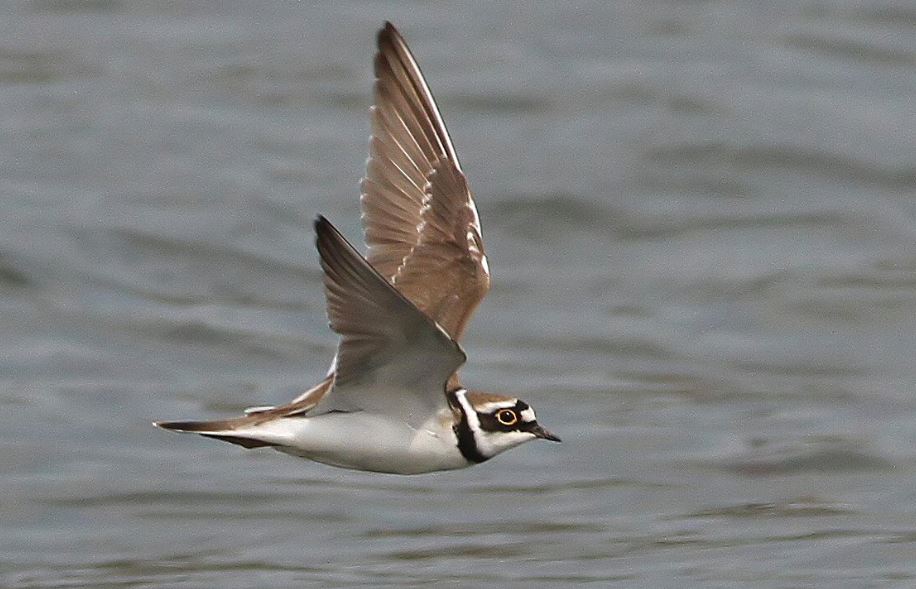
Clearly outnumbering the one Golden Plover – at Harrington AF on the 8th – Little Ringed Plovers appeared in ones and twos at Clifford Hill GP, Stanwick GP, Summer Leys, Hollowell Res and Upton Valley (Northampton).

Little Ringed Plover, Hollowell Res, 10th April 2015 (Bob Bullock)

The first spring Whimbrel was one or two birds calling at night over Oundle on 4th and single Curlews were seen at Bozenham Mill also on 4th, Pitsford Res on 5th and at Wadenhoe on 6th. Three Black-tailed Godwits visited Ditchford GP’s Irthlingborough Lakes and Meadows reserve on 10th and the only Common Snipe reported this week was also at Ditchford GP on 8th, while one Jack Snipe remained at Hollowell Res on 4th. A Ruff at Summer Leys on 9th-10th added further to the local wader passage, while single Green Sandpipers were found at Upton Valley Way (Northampton) on 5th and at Summer Leys on 8th and two were at Daventry CP on 10th.

Arriving almost en masse on the southerly winds, Common Terns appeared on 10th at Clifford Hill, Stanwick and Thrapston GPs as well as at Daventry CP and Summer Leys – the same day producing ten Little Gulls at Thrapston GP and one at Clifford Hill GP. Despite being well into April, rare gulls continued to feature, with the ever-showy second-summer Mediterranean Gull still holding territory in the Black-headed Gull colony on Summer Leys’ Rotary Island all week and with an adult at Thrapston GP on 10th.

Second-summer Mediterranean Gull, Summer Leys LNR, 6th April 2015 (Dave Jackson)
Second-summer Mediterranean Gull, Summer Leys LNR, 8th April 2015 (Alan Coles)

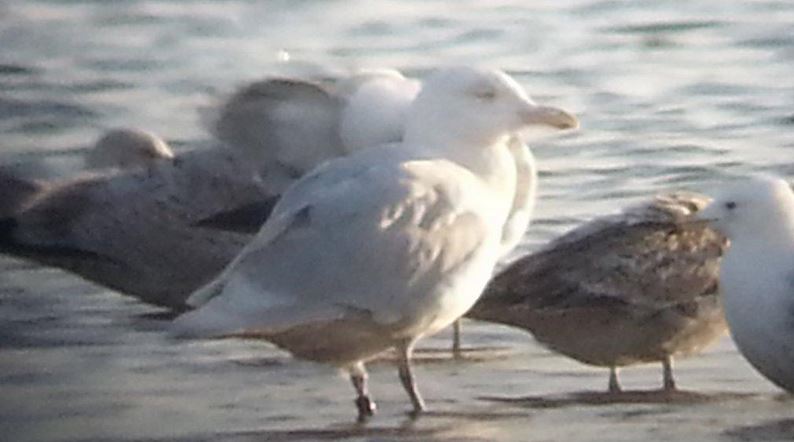
A good candidate for an adult Baltic Gull visited the gull mecca of Stanwick GP on the evening of 4th, the same site producing a second-summer Caspian Gull on 8th and the lingering, Pitsea red-ringed adult Glaucous Gull during the late afternoons/early evenings throughout the period.

Further summer visitor ‘firsts’ this week included House Martin at Wadenhoe on 10th, Sedge Warbler at Stanwick GP on 6th, with Willow Warbler there the following day and Yellow Wagtail at Hollowell Res on 8th. A significant inland passage of Ring Ouzels took place across southern England this week and resulted in singles appearing at Harrington AF on 5th and 10th, Coton on 8th and at Borough Hill on 9th and 10th.

Male Ring Ouzel, Harrington AF, 10th April 2015 (Alan Coles)

JFT Caption

A male Black Redstart was photographed on farmland at Braunston on 9th, the same day a male Common Redstart was found at Summer Leys, followed by further males at

Male Common Redstart, Summer Leys LNR, 9th April 2015 (Douglas McFarlane)

Hollowell Res and Blueberry Farm the next day. There were surprisingly few Northern Wheatears with just two at Harrington AF on 5th, followed by singles there on 6th and

Northern Wheatear, Harrington AF, 5th April 2015 (Bob Bullock)

10th, and two at Borough Hill on the last of these dates. Another ‘late’ Brambling was found this week – this time at Thrapston GP on 10th.

Oozing Quality

Shy, skulking, skittish. Migrant Ring Ouzels can be really hard to get good views of and often it’s just the tail-end of a chacking ‘black’ bird disappearing over a hedge, if you’re lucky. Sometimes, though, things can be quite different and today’s fabulous male, found by Phil Jackman by the second bunker at Harrington Airfield, appears to have been really quite showy, as the images below illustrate.

Male Ring Ouzel, Harrington AF, 10th April 2015 (Phil Jackman)
Male Ring Ouzel, Harrington AF, 10th April 2015 (Bob Bullock)
Male Ring Ouzel, Harrington AF, 10th April 2015 (Alan Coles)
Male Ring Ouzel, Harrington AF, 10th April 2015 (Simon Hales)

Ouzel captionMany thanks to Bob Bullock, Alan Coles, Simon Hales and Phil Jackman for their images.

Avocet ‘Invasion’ Sparks Mini-Twitch

Avocets are scarce passage migrants in Northants, mainly in spring, but they are by no means annual. When Bob Bullock found one at Clifford Hill Gravel Pits yesterday morning it seemed like we had achieved our year’s quota for 2015. Things took a turn for the better today, however, when I found two more on the islands in the A45 Lay-by Pit at Stanwick. I watched and videoscoped them between 08.50 and 09.10 after which they flew off.

I decided to take a look at the main pit and while walking round to it I received a text from Dave Warner saying he had found three Avocets on the main barrage lake at Clifford Hill GP. Fifteen minutes later he sent me another text  – apparently there were now nine! At about the same time, Tony Vials emailed to say he was watching two at Irthlingborough Lakes & Meadows. Minutes later they flew off west. I guessed they must have been the Stanwick birds – although not necessarily. Meanwhile, the appeal of the small flock at Clifford Hill was too great to resist so I headed off there to take a look. They were still there, roosting on one of the pools on the main peninsula and being watched by Bob Bullock and Dave, when I arrived.

Lovely birds, even if a bit distant! By now the news had got round and other birders were arriving in time to see the largest Avocet flock in the county for a good few years …

Avocet Twitch

Two Weeks in Focus: 21st March to 3rd April 2015

The first week of the period enjoyed relatively mild conditions facilitated by light south-westerlies – all this in stark contrast to the unsettled second week, which featured gale-force winds and intermittent squally showers.

With most of the winter wildfowl well out of the way, the focus for the period was on summer migrants. A few winterers lingered, however, including a Pink-footed Goose which dropped in with Greylags on Brooke Weston football pitch, Corby on 25th and up to three Pintails at Summer Leys LNR between 21st and 26th. The drake Red-crested Pochard also remained at Stanford Res until 21st and another appeared at Daventry CP on 3rd, while two were at Summer Leys on the same date. The long-staying female Ring-necked Duck was still at Billing GP until at least 2nd and what was presumably the last of the winter’s Smew – a ‘redhead’ – stuck it out at Stanwick GP until 25th.

Female Ring-necked Duck, Billing GP, 27th March 2015 (Bob Bullock)

DJ RND CaptionSimilarly, just one wintering Great White Egret remained at Summer Leys until 1st before moving to nearby Ditchford GP on 3rd. Spring would not be spring without an April migrant Black-necked Grebe and one turned up right on cue at Daventry CP on 3rd, as did the first Ospreys, with singles at Pitsford Res on 23rd, Scaldwell and two other sites on 24th, Boddington Res on 2nd and Ravensthorpe Res the following day. The latter bird was satellite-tagged and is known as ‘Yellow 30’ – a female from Rutland Water which was seen there the previous day, as well as being seen near Stamford and at Eyebrook Reservoir.

Female Osprey, Ravensthorpe Res, 3rd April 2015 (Bob Bullock)
Female Osprey, Ravensthorpe Res, 3rd April 2015 (Alan Coles)

Much rarer these days, however, was an immature Goshawk which sparred briefly with local Common Buzzards over Boddington Res before moving off on 30th. Not long to go before the first Hobby of the year finds its way into the county but until then a Merlin at Blueberry Farm (Maidwell) on 23rd and single Peregrines at five other sites will have to suffice.

Considering the low numbers of Golden Plovers in the county this winter, the largest count for months came from Preston Capes on 28th, when some 1500-2000 were estimated to be present there. Smaller numbers were at Harrington AF, Scaldwell, Boddington Res and Clifford Hill GP. Both Ringed Plovers and Little Ringed Plovers appear to be slow to come through this spring with just one Ringed at Stanwick GP on 24th and one Little Ringed over Daventry CP on 3rd. A Curlew visited Hollowell Res on 31st and two in the Tove Valley on 3rd were not unusual at this site but a Sanderling at Daventry CP on 26th was – they are not normally seen locally before May. Three Dunlins at Stanwick GP on 31st were the only ones during the period, between one and three Common Snipe were found at Hollowell Res and Summer Leys, while up to two Jack Snipe were at Hollowell Res between 21st and 27th and two were found at Boddington Res on 30th. Other waders included two to three Redshanks at both Stanwick GP and Summer Leys and two Greenshanks at the latter locality on 2nd were unusually early (but one turned up in Hertfordshire on the same date). Green Sandpipers appeared on floodwater near Everdon, at Upton Valley Way (Northampton), near Welford and at Pitsford Res.

It was a great time for gulls! Stealing the award for most showy Larid was a second-summer Mediterranean Gull which arrived in the Black-headed Gull colony on Summer Leys’ Rotary Island on 29th, staked its claim for territory and remained for the following five days. Other Meds included an adult at Stanwick GP on 23rd and single first-winters at Summer Leys on 27th and at Daventry CP on 31st.

Second-summer Mediterranean Gull, Summer Leys LNR, 30th March (Bob Bullock)

Better than this, though not as easy to get to grips with, was a first-summer Ring-billed Gull – only the fourteenth county record – which visited the gull roost at Boddington Res on 27th and 28th. Boddington has a track record for producing this species, more than half of the county records of which have been found by just one observer, Gary Pullan.

First-summer Ring-billed Gull, Boddington Res, 28th March 2015 (Bob Bullock)

Yellow-legged Gulls are relatively scarce at this time of year and the three records in the period were an adult at Stanford Res on 21st, a second-summer at Stanwick GP on 31st and a fourth-year at Daventry CP on 3rd, while the only Caspian Gulls were restricted to Stanwick GP with an adult on 24th-25th, a second-summer on 27th and two second-summers on 31st. After first being seen flying around Wellingborough Recycling Centre on 23rd, an adult Glaucous Gull became a regular late afternoon visitor to the main lake at Stanwick GP between 24th and 2nd. This individual had been ringed as recently as 21st March, at Pitsea Landfill in Essex, before making the journey north-west to Northants.

Adult Glaucous Gull, Stanwick GP, 31st March 2015 (Steve Fisher)

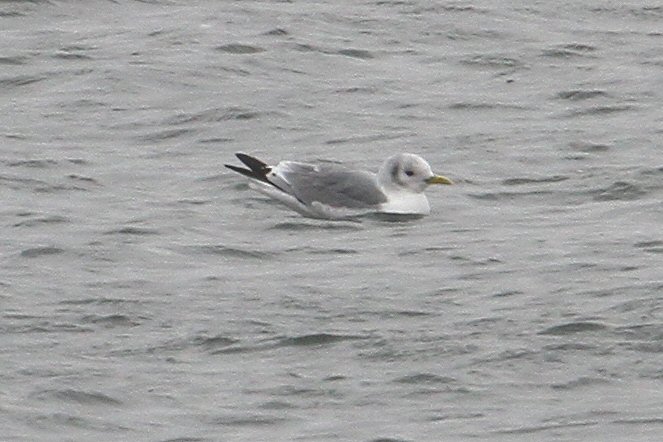
DJ Glauc CaptionLate March is also a prime time for inland Kittiwake passage and Pitsford Res featured two on 30th.

Adult Kittiwake, Pitsford Res, 30th March 2015 (Bob Bullock)

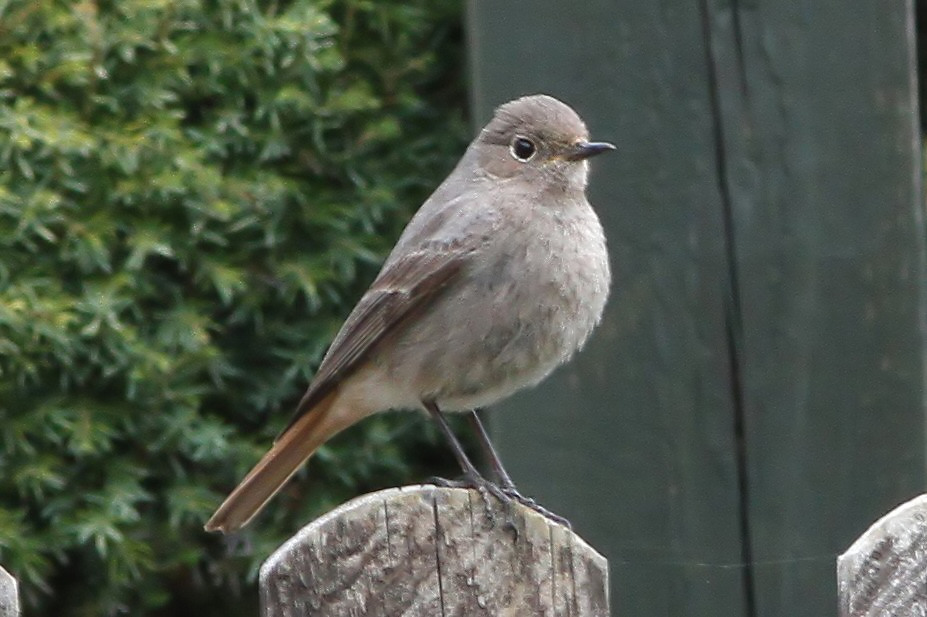
And so to landbirds, which appear to have been somewhat overshadowed during the period … Two outgoing Short-eared Owls were reported from the far eastern end of Stanwick GP on 27th, while incoming Swallows were at Stanford Res on 29th, Boddington Res on 2nd and Summer Leys on 3rd. The first northbound White Wagtails appeared, including singles at Stanford Res on 21st and 27th and at Summer Leys on 26th with two there on 3rd. A Black Redstart frequented gardens in Byfield on 21st, while two

Black Redstart, Byfield, 21st March 2015 (Bob Bullock)

Stonechats lingered at Blueberry Farm on 23rd but just one Northern Wheatear was found – a male at Clifford Hill GP on 3rd. Several Bramblings near Scaldwell on 28th was a sign that winter was not quite over …

The Magic of the Med

They rarely linger in Northants or oblige with such close, prolonged views. This second-summer Mediterranean Gull is currently doing both. Since I found it last Sunday morning it appears to have become a bit of a celebrity among the Black-headed Gulls in the colony on Rotary Island at Summer Leys LNR. The proximity of the hide means it can be seen well, approached and photographed with relative ease. Its aggressive posturing display, along with its long, heavy bill suggests it’s a male, defending a small territory and ready to breed, despite showing signs of immaturity (black inner webs of outer primaries). A truly inspirational bird. Get it before it goes!

Second-summer Mediterranean Gull, Summer Leys LNR, 29th March (Mike Alibone)

Capture1

Second-summer Mediterranean Gull, Summer Leys LNR, 30th March 2015 (Alan Coles)
Second-summer Mediterranean Gull, Summer Leys LNR, 30th March (Clive Bowley)

Capture2

Second-summer Mediterranean Gull, Summer Leys LNR, 1st April 2015 (Clive Bowley)
Second-summer Mediterranean Gull, Summer Leys LNR, 1st April 2015 (Alan Coles)

Many thanks to Clive Bowley, Alan Coles and Dave James for additional images.

From Pitsea to Stanwick: a Glaucous Gull with a chequered history

… and a story of collaboration

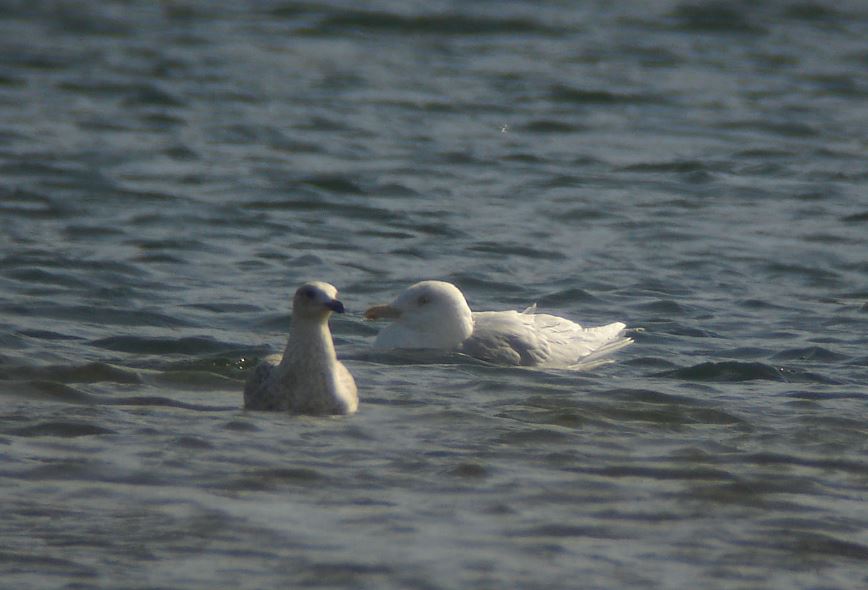
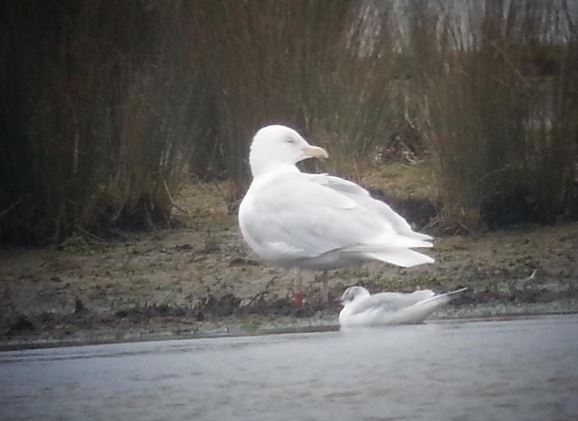
It was still there this evening. When Steve Fisher first found an adult Glaucous Gull at Stanwick Gravel Pits on 24th March, little did he know it would give rise to the unearthing of a movement trail with an ID story attached.

Adult Glaucous Gull, Stanwick GP, 27th March 2015 (Steve Fisher)
Adult Glaucous Gull, Stanwick GP, 27th March 2015 (Steve Fisher)
Adult Glaucous Gull, Stanwick GP, 27th March 2015 (Dave Warner)

This bird had been seen in flight the previous day by Stuart Page at Wellingborough Recycling Centre. Better views of it on the deck at nearby Stanwick revealed a red (actually orange) ring on its left leg, although any alphanumeric characters were not fully visible at the time. There was no sign of it on 25th, although it reappeared at Stanwick the following day and remained there, on and off, until 28th. It was not until that date that Steve was able to properly read the ring: G1NT.

Adult Glaucous Gull, Stanwick GP, 28th March 2015 (Steve Fisher)

An internet search initially revealed nothing concrete but, based on ring colour, the bird was thought probably to have originated from Svalbard. However, putting the details out on Twitter prompted a response from Richard Bonser, who recognised it as an individual which had been ringed the previous week at Pitsea Landfill in Essex … where it had been initially identified as an Iceland Gull.

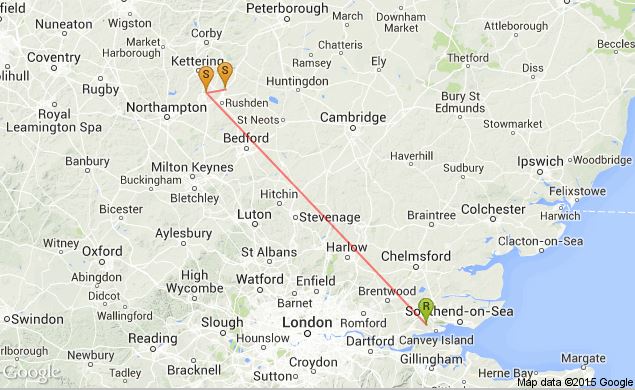
Recovery Map for adult Glaucous Gull GV15782, Ring No. G1NT

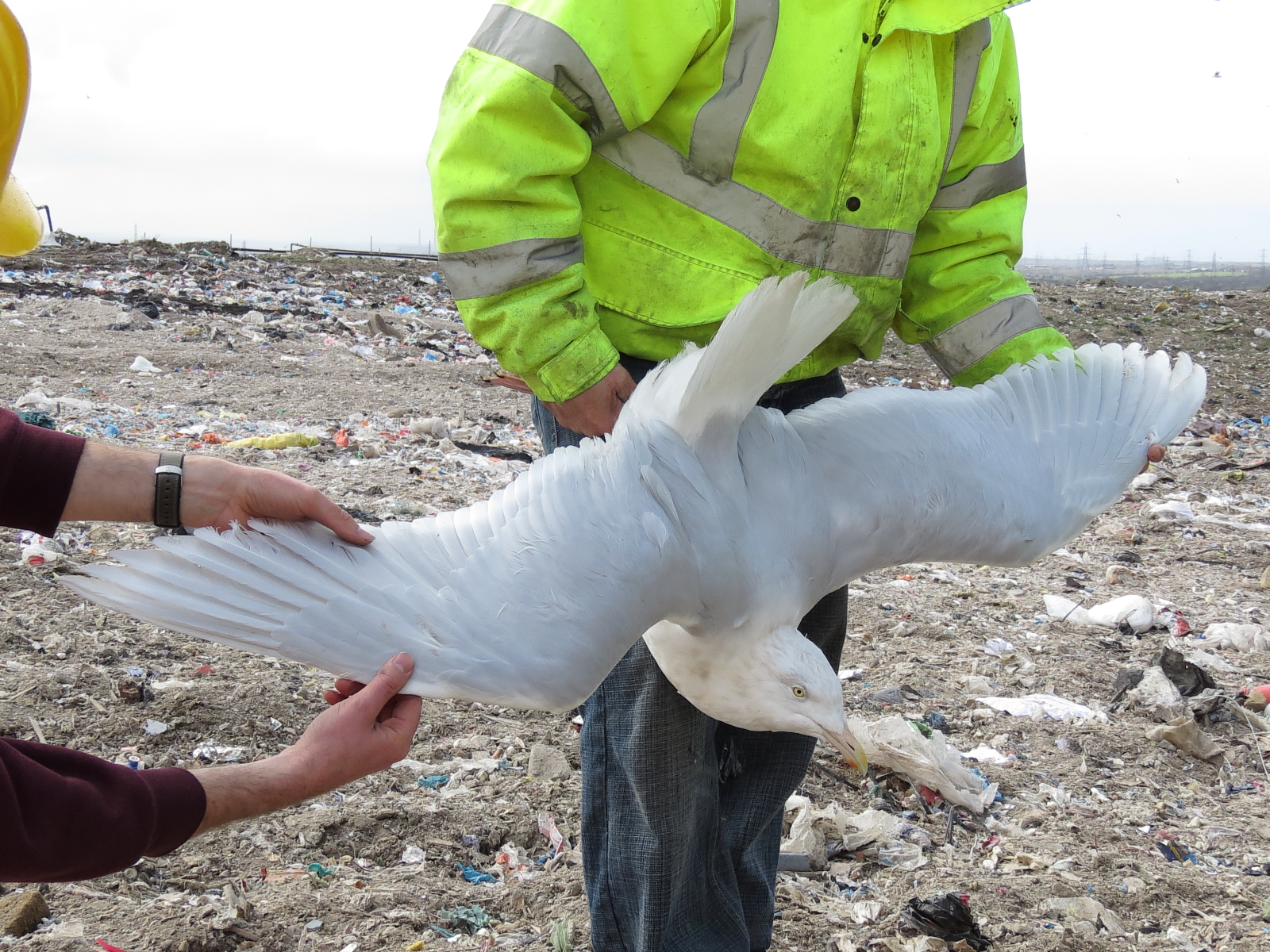
Paul Roper of the North Thames Gull Group, which ringed the bird on 21st March, has kindly provided some background and given permission for the use of the movement map and in-hand image reproduced here.  More details on this and other ringed gulls are available at the NTGG website http://www.ntgg.org.uk/map/GV15782 which provides an interesting insight into gull study and ringing activities at Essex Landfill sites.

To quote from Paul:

“The initial identification of this bird shows a couple of things. Firstly in the hand they can be quite difficult. This is a small bird and although out of the range of Iceland (which was a mistake made on the day) it is at the lower range end for Glaucous and in fact we measured and selected the ring size for Herring Gull – Glaucous tend to take Great Black-backed Gull size rings. In the hand you cannot get much of an idea of primary projection, jizz, etc and it can be very difficult. This bird had a gentle expression and not the angry look of a Glauc. It also had a comparatively small bill to the head which again suggested Iceland.

I questioned it on ringing it for a couple of reasons – bulk and the streaking on the head (which you can only see close up) which lean more towards Glauc but at the time it was believed to be in the range for a large male Iceland so that is what we decided it was!

The photos in the field from Northants prompted me to recheck all the measurements – and I found they were actually out of the range for Iceland and in the range for Glaucous.”

Adult Glaucous Gull, Pitsea Landfill, 21st March 2015 (Paul Roper)

So, in-hand birds, ‘lifted’ from their normal habitat, can appear quite different to how they look in the field.  Many thanks to Paul for sharing his comments, images and providing an insight into the activities of the NTGG.

The Week in Focus: 14th to 20th March 2015

A stiff east-northeasterly breeze ensured a cold start to the week, which then remained chilly but largely dry and bright. Early common migrants began to appear in some numbers including more Sand Martins and a noticeable large wave of Chiffchaffs, while some of our less common winter visitors maintained a presence.

Falling into the latter category the three European White-fronted Geese were still at Pitsford Res until at least 18th and the two Ruddy Shelducks – now sporadic in their appearances – were still at the same site on 15th. The drake Pintail also remained at Summer Leys LNR until at least 18th, as did the drake Red-crested Pochard at Stanford Res, while two were found at Sywell CP on 16th. The long-staying female Ring-necked Duck was still at Billing GP until at least 18th as were two Smew at Ravensthorpe Res and a ‘redhead’ at Stanwick GP on 20th.

Drake Pintail, Summer Leys LNR, 17th March 2015 (Simon Hales)

The two Great White Egrets remained at Summer Leys until 15th with one there until 20th, while two were found at Ditchford GP on 16th while the best on the raptor front was a ‘ringtail’ Hen Harrier hunting by the concrete track at Harrington AF on 19th and single Peregrines at Old Sulehay on 15th and Ditchford GP the following day.

Golden Plover records were restricted to the Brampton Valley, Harrington AF and Scaldwell with a maximum of one hundred and twenty-five at the latter locality on 14th – the same date that the first Ringed Plover of the spring was photographed at Earls Barton GP. A Curlew was in the Tove Valley on 18th-19th, Common Snipe were found at Brixworth STW, Stanford Res and Summer Leys, while eleven were counted on 14th at Hollowell Res, which also produced a Jack Snipe on the same date. Other waders included one to three Redshanks at Clifford Hill GP and Summer Leys and a Green Sandpiper at Stanford Res on 18th. This week saw rather more in the way of quality Larids. The gull roost at Boddington Res again produced adult Mediterranean Gulls on 16th and 18th as did Pitsford Res on 14th and 15th and further singles visited Daventry CP on 17th and Summer Leys the following day. The best, however, was an adult Iceland Gull in the Pitsford Res roost on 14th, followed by a second-winter Caspian Gull there on 18th, while the only other gulls of note were two adult Yellow-legged Gulls at Hollowell Res on 14th and a third-winter in the Pitsford Res roost on 17th.
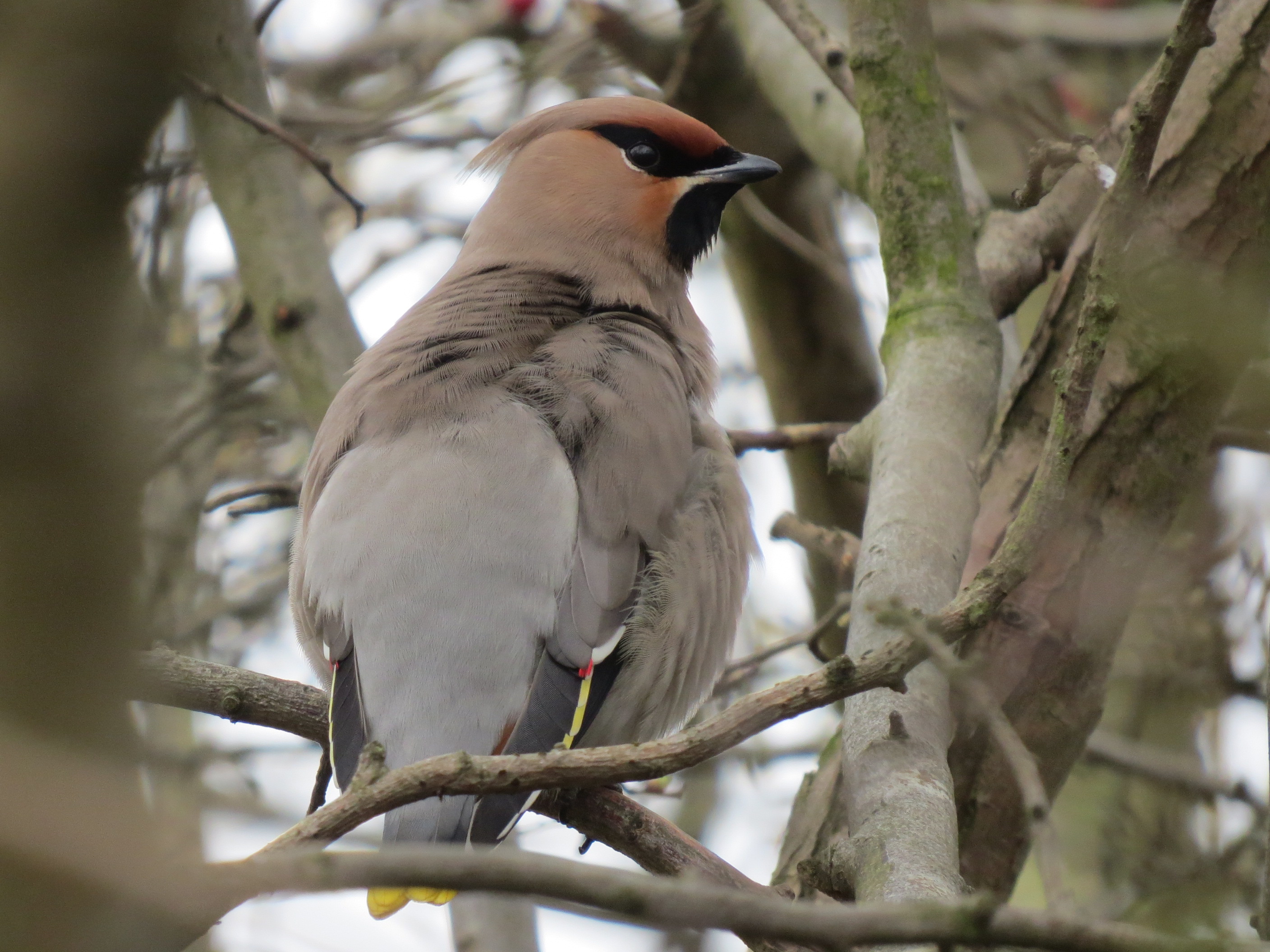
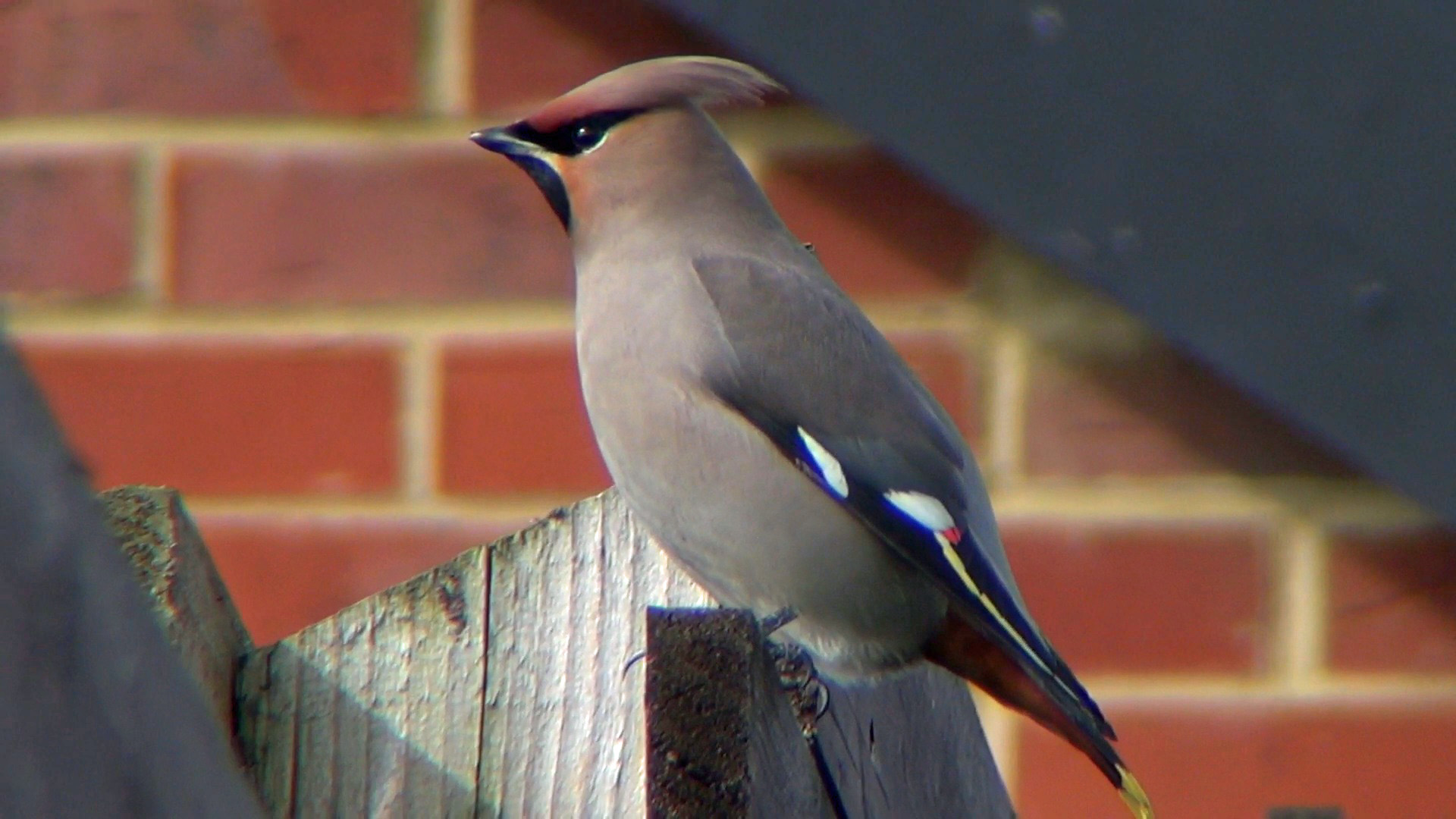
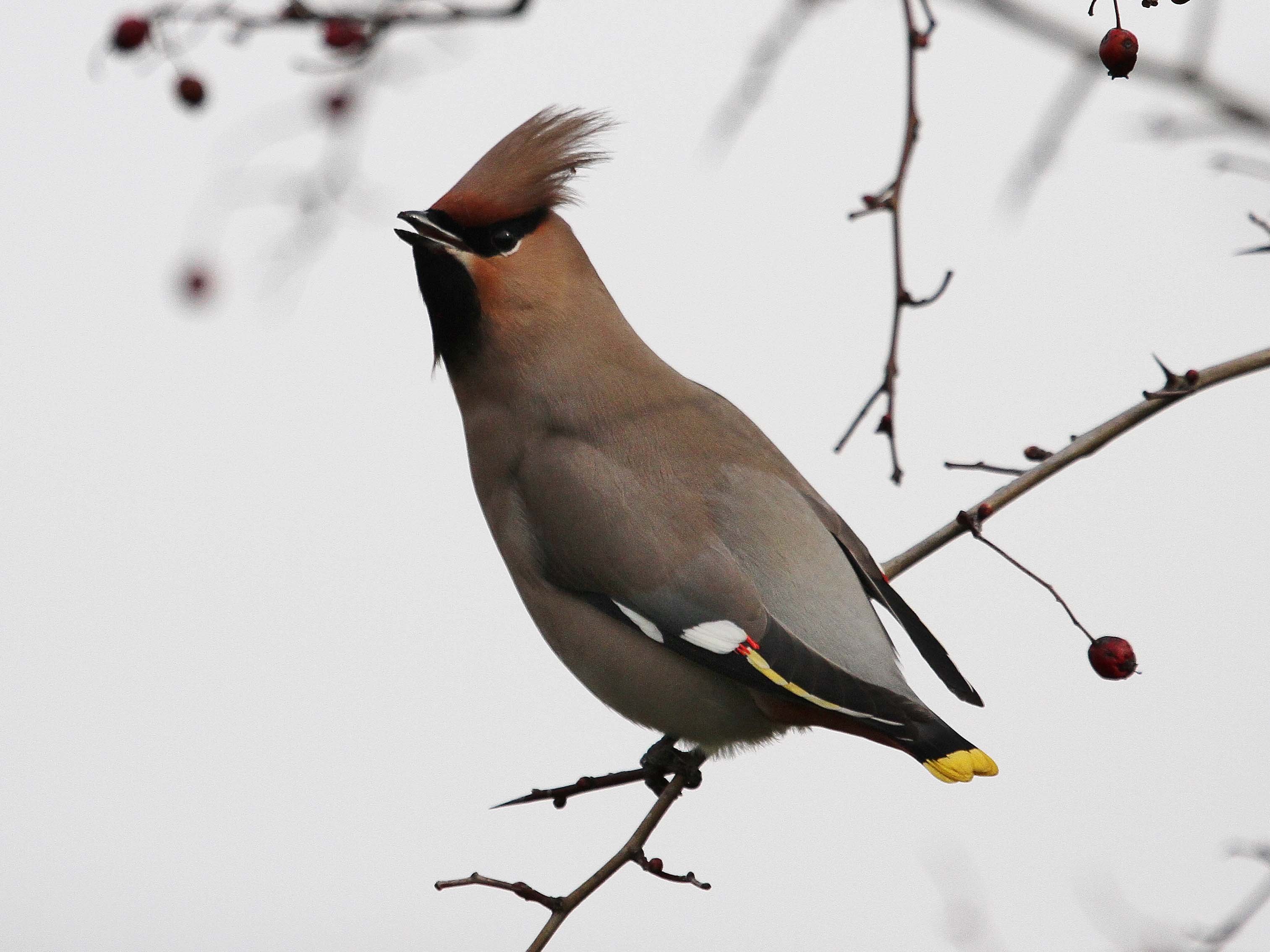
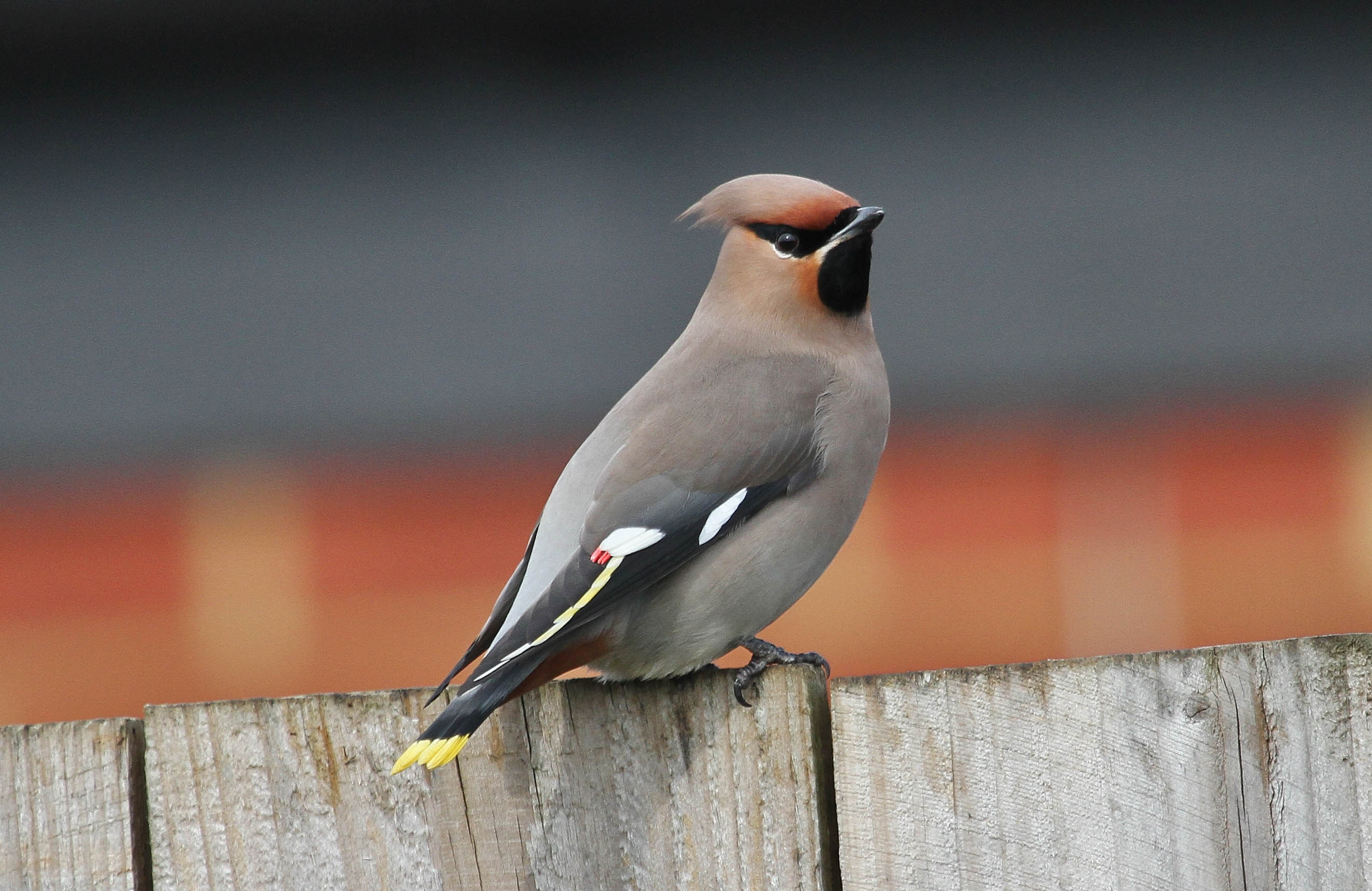
First-winter Waxwing, Corby, 15th March 2015 (Simon Hales)

Last week’s first-winter Waxwing remained in Corby until 15th and, arguably not in the same league, a Rock Pipit was found at Boddington Res on 16th and a Water Pipit at Summer Leys on 18th. Four Stonechats were still at Blueberry Farm on 14th and the first Northern Wheatears of the year were at Clifford Hill GP and Blueberry Farm (Maidwell) on 18th followed by singles at Harrington AF and in the nearby Brampton Valley the next day.

The Week in Focus: 7th to 13th March 2015

What a difference a week makes! South-westerlies, rising temperatures and largely mild conditions created ideal conditions for the northward movement of the first summer migrants into the UK, with Northants receiving at least a sprinkling. Other birds were also plainly on the move – a clear indication that spring migration is now well and truly underway.

They should surely have been on their way by now but the three European White-fronted Geese were still at Pitsford Res until at least 11th with the two Ruddy Shelducks remaining there on 7th. A drake Pintail was again at Summer Leys LNR on 7th-8th and the drake Red-crested Pochard remained at Stanford Res over the same two days, while the female Ring-necked Duck – after going unreported last week – was still at Billing GP until at least 11th.

Female Ring-necked Duck, Billing GP, 10th March 2015 (Bob Bullock)
Female Ring-necked Duck, Billing GP, 10th March 2015 (Bob Bullock)

R-n Duck CaptionIf we hadn’t enjoyed the generous helpings of wintering Long-tailed Ducks last year then the first-winter drake which paid a brief visit to Pitsford Res on its way north on 10th would perhaps have elicited more interest than it actually did; this species is still a rare visitor to the county on any account. Most of our wintering Smew have departed and those remaining this week included two at Pitsford Res on 7th, a ‘redhead’ at Stanwick GP on 10th and 11th, the two ‘redheads’ still at Stortons GP on the latter of these two dates and three at Ravensthorpe Res on 13th.

The only Great White Egrets to be found during the period were the Summer Leys duo, which remained until at least 12th. And then there was ‘Klio’. The name given to the White Stork which, having escaped from the Exotic Pet Refuge near Deeping St James last week, appeared in Northants by the River Nene near Nassington on 7th and then border-hopped to various sites in nearby Cambridgeshire the following day. On 11th ‘he’ was back – this time at Ditchford GP’s Irthlingborough Lakes and Meadows Reserve for an hour or two before flying to Brigstock and finally Lowick, where he was eventually recaptured on 12th. A smart bird with no rings which would surely have passed muster had its origin remained unknown …
White Stork, Lowick, 12th March 2015 (Dave Holden)

A grebe found on the main lake at Stanwick GP on 8th ultimately proved to be a Slavonian Grebe after giving rise to some debate over its initial identification as a Red-necked. It was not present the following day so this was another bird which had moved swiftly on. It, or another, was found at Ravensthorpe Res on 13th.

And so to the vanguard of our summer visitors. An Osprey moved north over Harrington AF on 10th, no doubt the first of many to come, while Peregrines at Greens Norton on 7th and at both Stanwick GP and Summer Leys on 13th, and single Merlins at both Daventry CP and Blueberry Farm on the latter date were the only other raptors reported during the week.

Golden Plovers were recorded from Harrington AF, Byfield, Bozenham Mill and Blueberry Farm (Maidwell) with a maximum of three hundred at the latter site on 10th. This has been a poor winter for this species with no four-figure counts anywhere. A Curlew visited Clifford Hill GP on 8th, Common Snipe were found at Blueberry Farm, Bozenham Mill, Stanwick GP and Pitsford Res, with a maximum of thirty-four at the latter locality on 11th, which also produced two Jack Snipe on the same date. After last week’s double-figure count at Stanwick GP, Redshanks appeared to be unduly scarce with just one at Clifford Hill GP on 7th, two at Summer Leys the following day and up to four there on 13th, while single Green Sandpipers were found at Stanford Res on 7th and 8th, Pitsford Res on 7th and 11th, at Upton Valley (Northampton) on 10th and between Everdon and Fawsley on 13h.

Green Sandpiper, between Everdon and Fawsley, 13th March 2015 (Ray Vessey)

The gull roost at Boddington Res is consistently the most reliable site in the county for passage Mediterranean Gulls when they come through in March. This week saw three adults there on 9th, two adults and a second-winter on 10th and an adult on 11th. No doubt more will be seen there as the month progresses. The only other gulls of note were an adult Yellow-legged Gull in the Pitsford Res roost on 12th and three at Hollowell Res on 13th.

Mediterranean Gull caption

Second-winter Mediterranean Gull, Boddington Res 10th March 2015 (Mike Alibone)

Rather more scarce this winter, a Short-eared Owl was at Blueberry Farm on 7th and again on 13th; other than passage birds it seems unlikely this species will be seen in any numbers now before next autumn. The same cannot be said for Sand Martin, the first of which appeared at Ditchford GP’s Broadholme SWT on 9th – arguably the first true summer migrant of the year, Chiffchaffs notwithstanding, of course, this week appearing to herald an arrival en masse with records from nine widely-scattered localities. Presumed Central European Blackcaps – it’s still a bit early for the return of Iberian winterers – were a female in a Wellingborough garden on 8th and a male in a garden in Barton Seagrave on 11th.

Male (presumed Central European) Blackcap, Barton Seagrave, 11th March 2015 (Geof Douglas)

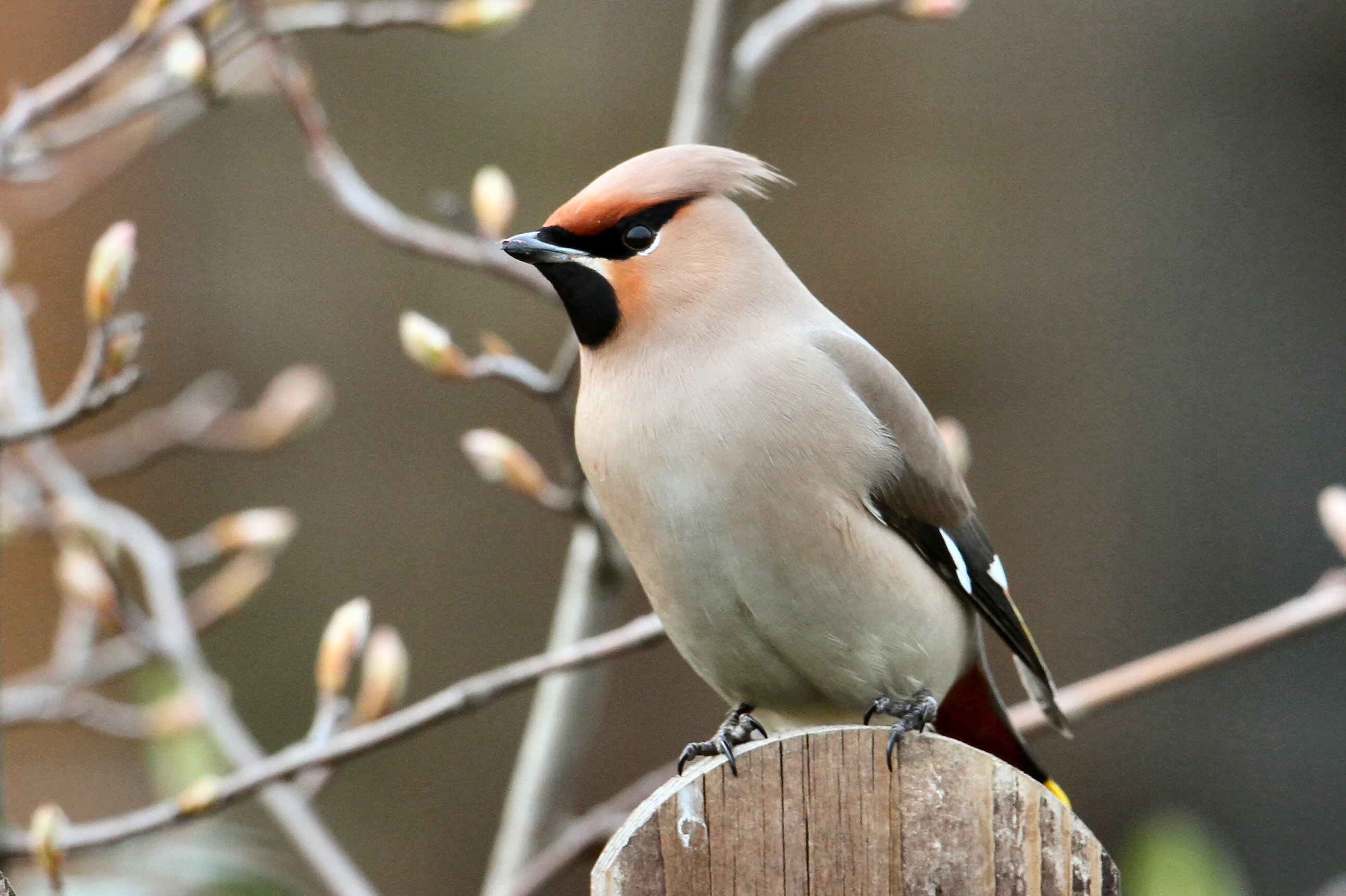
The main attraction on the passerine front this week, however, was the first-winter Waxwing which was found in Corby on 11th and remained, posing for the cameras, until 13th.

First-winter Waxwing, Corby, 12th March 2015 (Stuart Mundy)
First-winter Waxwing, Corby, 12th March 2015 (Bob Bullock)

Up to six Stonechats were still at Blueberry Farm all week and singles were also at Pitsford Res and Stanford Res on 7th.

The Corby Waxwing

They’ve been rare in the UK this winter and this one, a first-winter (probably a male based on clear-cut bib, intensity and width of yellow tail-band and number of waxy bits on the secondaries, although there is some overlap with young females), is the only one we’ve had in Northants. Thanks to Michael Tew for finding it!

Waxwing caption

First-winter Waxwing, Corby, 11th March 2015 (Michael Tew)
First-winter Waxwing, Corby, 12th March 2015 (Bob Bullock)
First-winter Waxwing, Corby, 13th March 2015 (Alan Coles)