A generally mild and dry week with low pressure to the south initially delivering a southerly/easterly airstream, later giving way to a high pressure system bringing north-easterly winds at the week’s end.
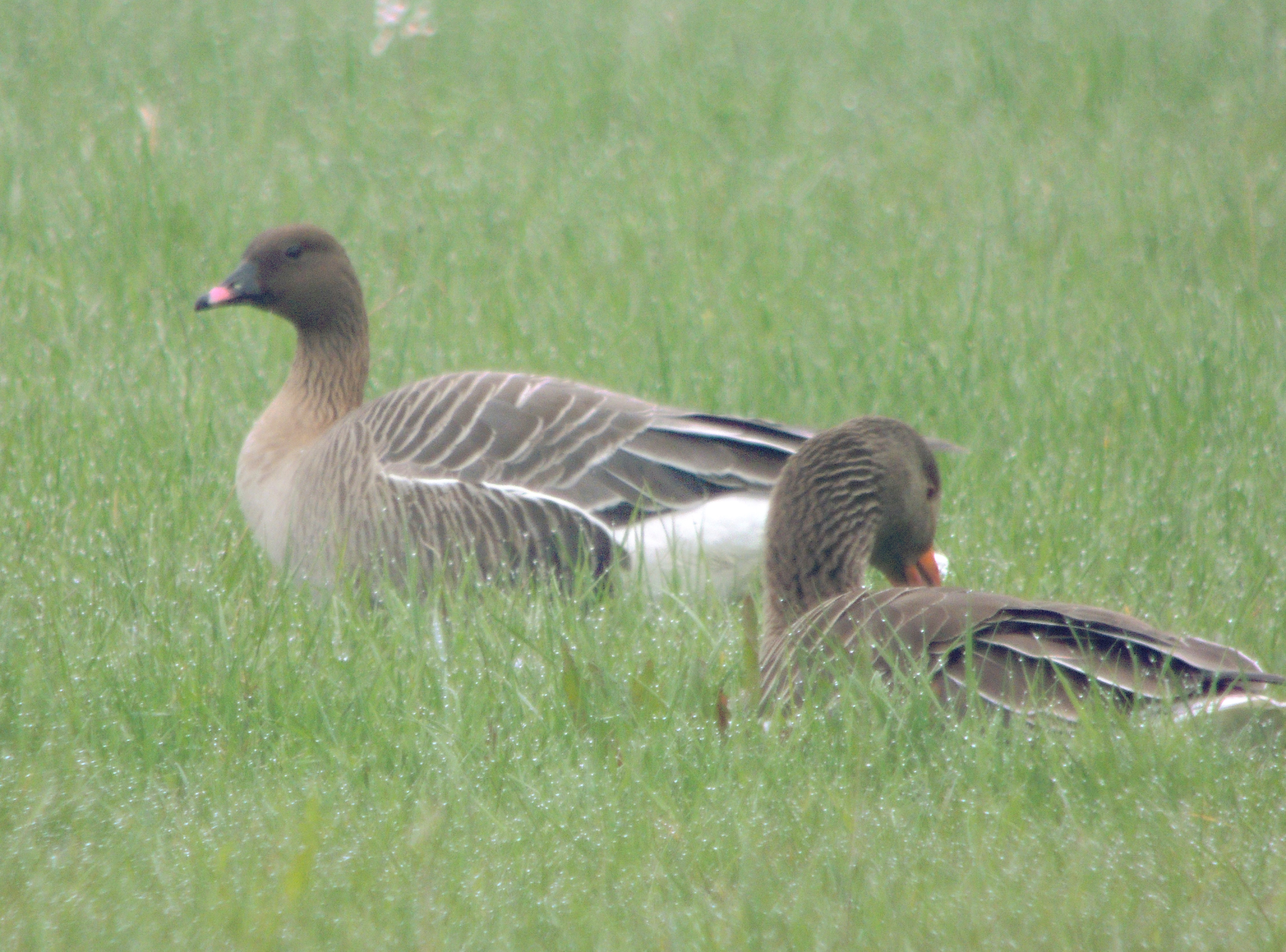
The Pink-footed Goose, which joined the resident Greylag flock at Thrapston GP in early April, was still there, appearing very settled, at the month’s end, while the Egyptian Goose remained at Clifford Hill GP until 26th and a pair with nine goslings was discovered at a locality in the north of the county on 30th. Garganeys have remained scarce so far this spring but a drake at Pitsford Res broke the six-week block on 2nd, while the drake Scaup found there on 19th was still present on 26th. A drake Goldeneye lingered at Thrapston GP until 2nd.
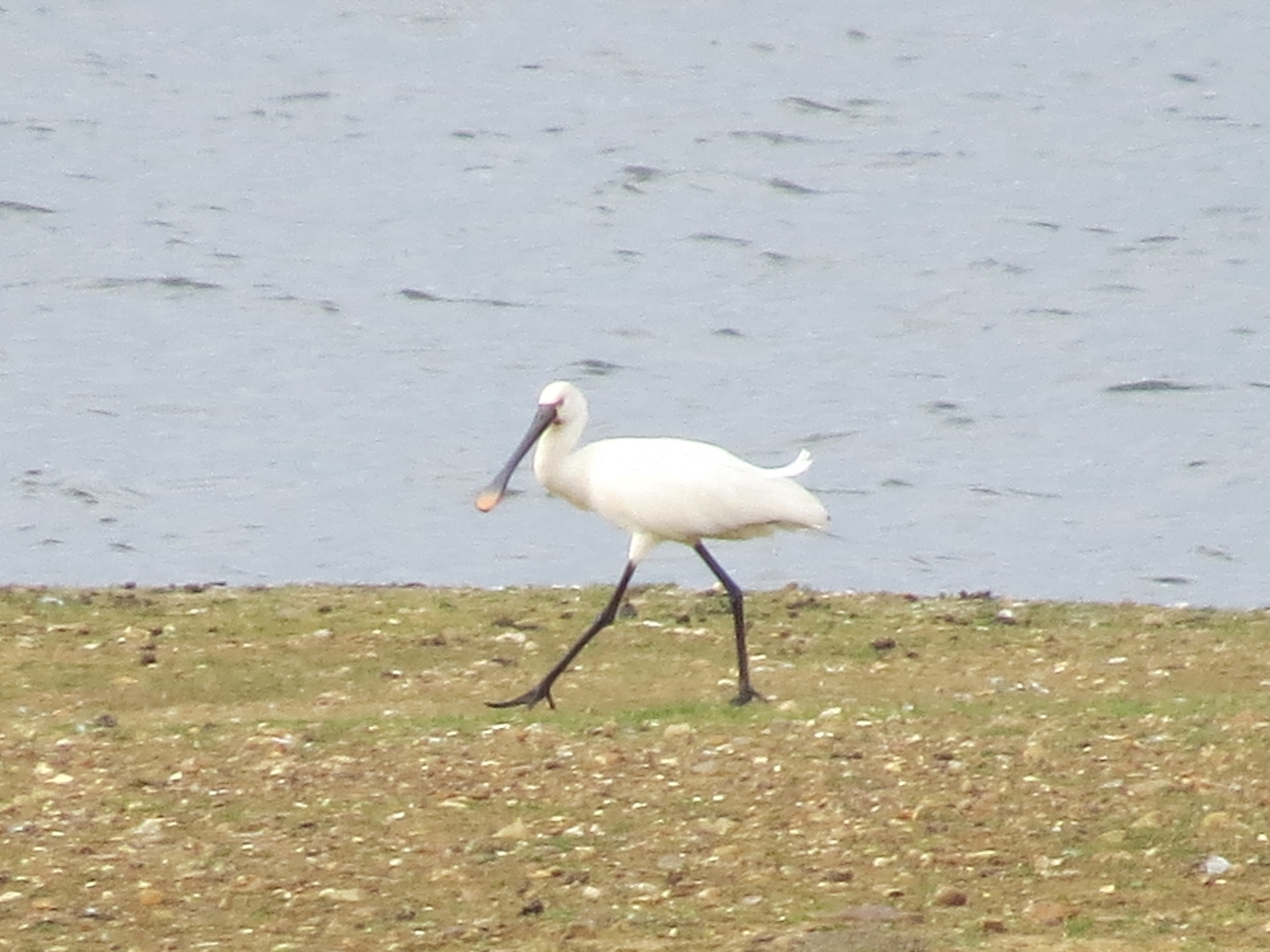
Heading the cast of rarities this week – well, the only rarity this week, in fact – was the immature Spoonbill which flew into Summer Leys in the early afternoon of 27th and stayed for forty minutes before continuing its journey up the Nene Valley. It was later discovered at Clifford Hill GP, where it remained for just over two hours before being flushed by fishermen.
Immature Spoonbill, Clifford Hill GP, 27th April 2014 (Mike Alibone)
This is the first in Northants since October 2011, when one was at Stanford Res. The only scarce raptor of the week was an Osprey reported fishing in the Elinor Trout Lake at Thrapston GP on 1st.
Little Ringed Plovers were reported from three locations in the Nene Valley, two Dunlins were at Clifford Hill GP on 27th, ten were present on 1st and six there on 2nd, while Summer Leys held two on 27th and four on 1st. Two Black-tailed Godwits were at the latter site on 26th and two Bar-tailed Godwits visited Clifford Hill GP on 29th and the week’s only Whimbrels were nine in the Brampton Valley on 27th. Other waders included single Common Sandpipers at Summer Leys on 1st and Daventry CP the following day while a Turnstone visited Clifford Hill GP on 27th.
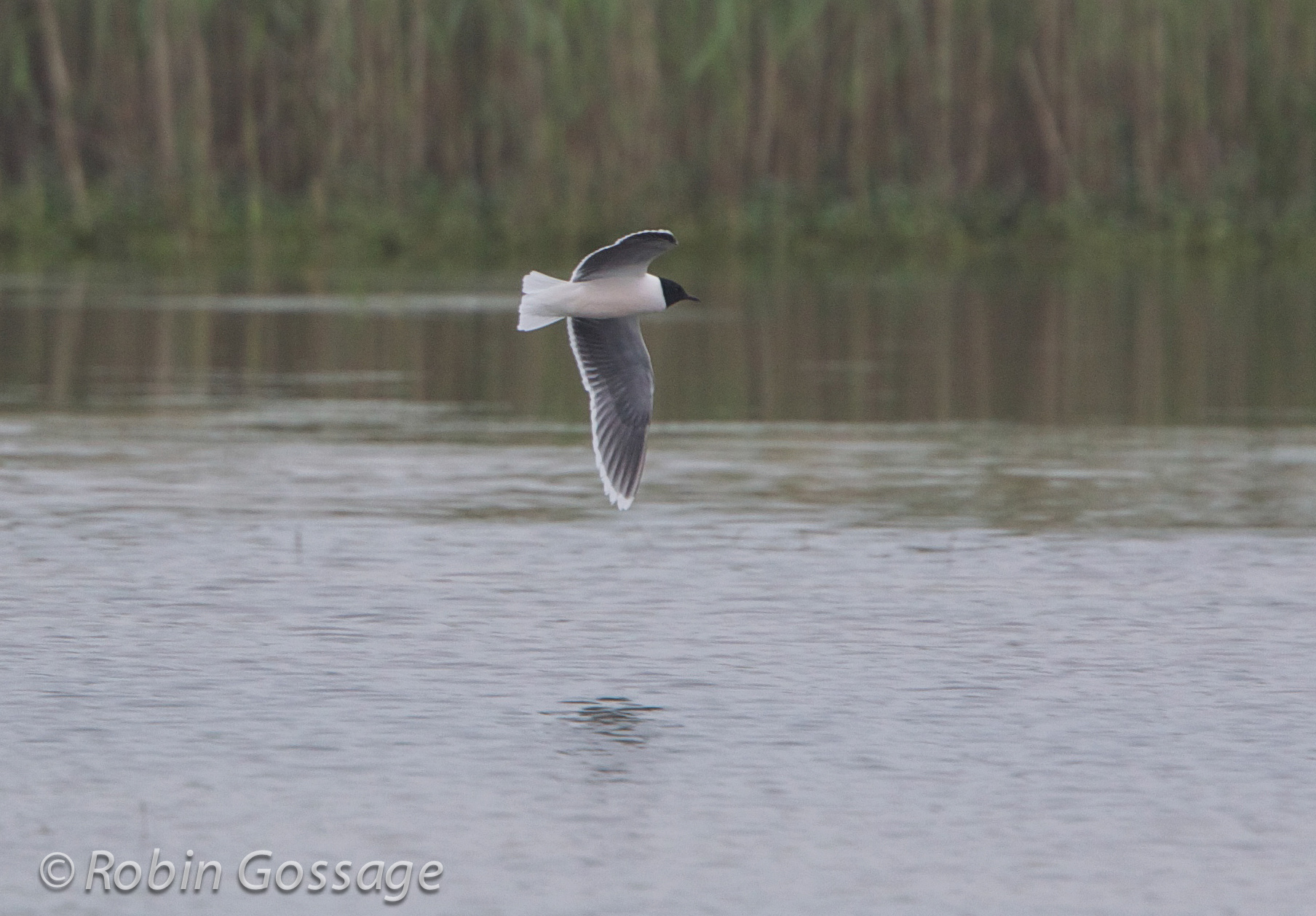
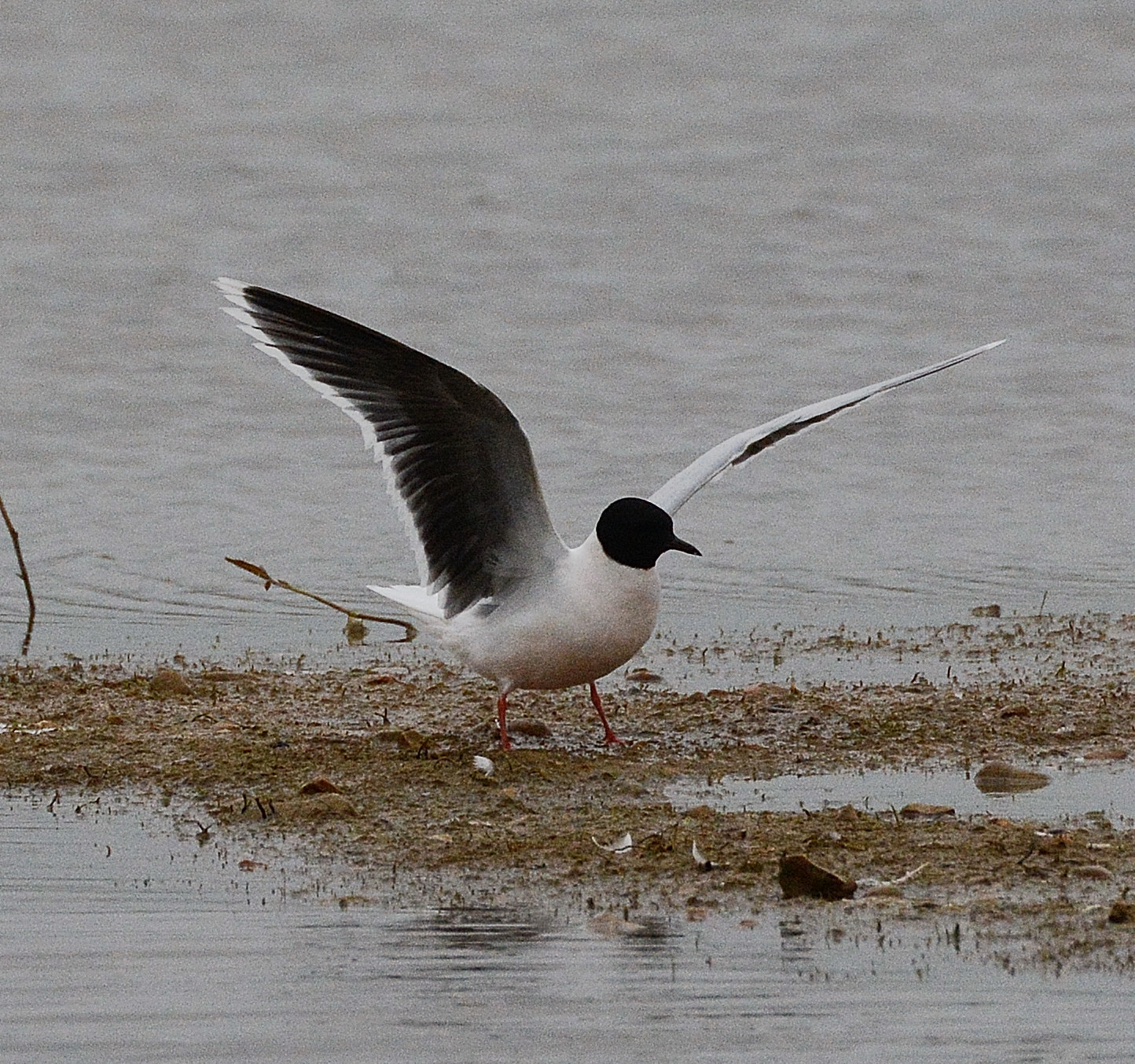
Apart from three first-summers at Clifford Hill GP on 29th, this week’s Little Gulls were all at Summer Leys, where at least four different birds occurred during the period, with a maximum of three on 29th-30th.
Second calendar year Little Gull, Summer Leys LNR, 27th April 2014 (Alan Coles)Adult Little Gull, Summer Leys LNR, 29th April 2014 (Robin Gossage)
The same site hosted a Black Tern briefly on 26th, while Arctic Terns were found at Pitsford Res, where there were three on 26th, Clifford Hill GP, where there were two on 27th, one on 1st and four on 2nd, Summer Leys, with two on 29th and Daventry CP, with seven on 2nd.
Passerines were thinner on the ground this week with a male Black Redstart in an area with no public access in Burton Latimer on 28th, a male Common Redstart at Harrington AF on 30th with a Whinchat there at the same time, another Whinchat at Sywell CP on 2nd and two Northern Wheatears at Hemington on 26th, two in the Brampton Valley on 26th-27th and one at Hardingstone GP on 28th.
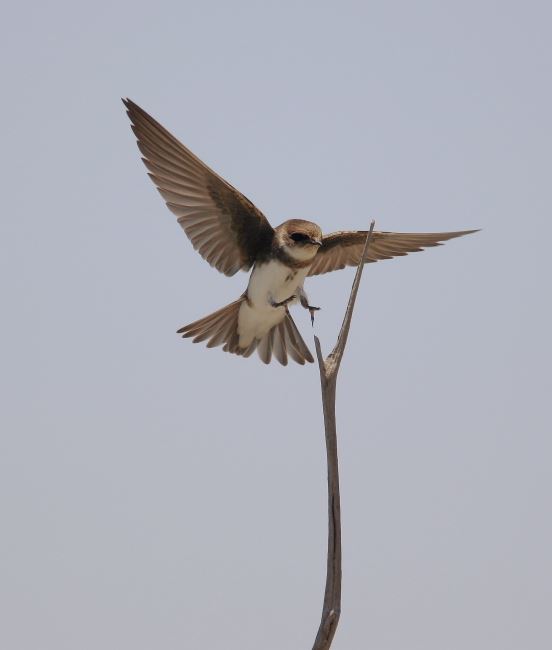
The satisfaction that comes from completing a project which yields instant results is, arguably, immeasurable and so it was in the case of the creation of a secure and permanent nesting site for Sand Martins at Summer Leys LNR.
Each year, Sand Martins have nested in the drainage holes in the old quarry conveyor loading ramp located on the permissive path along the disused railway, which is owned by Hanson UK and forms part of the Summer Leys perimeter walk. Numbers breeding here have ranged from one to five pairs.
Many Sand Martin nesting colonies are ephemeral affairs, with whole colonies frequently dispersing or shifting to new locations as suitable sand cliffs are created and destroyed over time. Therefore, in order to add a degree of habitat stability, local birders have for many years been keen to create a permanent, bespoke Sand Martin bank at Summer Leys so, at the end of March 2014, fifty new holes were drilled in the ramp wall to provide additional nesting opportunities for returning birds.
Loading ramp before drilling (Steve Brayshaw)
The ramp itself was built in the late 1970s/early 1980s to allow excavated gravel to be transferred from dumpers to a 3.5 km long conveyor belt that took the gravel to the Earls Barton processing plant. It was in use until the late 1990s and was originally planned to be removed at the end of its operational life, but later it was agreed that it should be retained as a potential location for a bird hide. A line of c.60 mm diameter drainage (weep) holes was built into the reinforced concrete headwall when the ramp was constructed and their use by sand martins was first noted in 2002 when “a few pairs” nested.
The wall was believed to be 200 mm thick but, after drilling, the first core was found to be 460 mm thick. The majority of the new holes are 64 mm in diameter (77 mm cores lined with 64 mm internal diameter pipe), but the central 11 holes on the top row are 62mm in diameter and are unlined. The cores extend through the concrete wall into the original “as-dug” gravel fill for around 800 mm. Gravel was scraped out behind the wall to create larger voids and these, and a short section of the core/pipe, were repacked with clean sand. The drilling work, which was funded by Hanson UK, was completed on 26th March and the whole project was conceived, designed, specified and managed by Steve Brayshaw on behalf of Hanson UK and the Wildlife Trust.
The completed wall (Steve Brayshaw)
Upon its completion, Sand Martins showed an immediate interest and Kim Taylor reported them going in and out of the pipes on 6th April. A week later Cathy Cassie of the Wildlife Trust took this video
Initially the martins showed a preference for the top tier of holes but by 26th April the second tier was also occupied.
Temporary fencing is currently guiding walkers around the northern side of the ramp to minimise disturbance at the new colony, but it is planned to erect permanent gates and fencing across the disused railway line to protect the nesting birds during future breeding seasons.
Many thanks to Steve Brayshaw, habitat creation guru, for providing background and project information and photagraphs and to Barry Boswellwww.britishbirdphotographs.comfor the kind use of his excellent Sand Martin images.
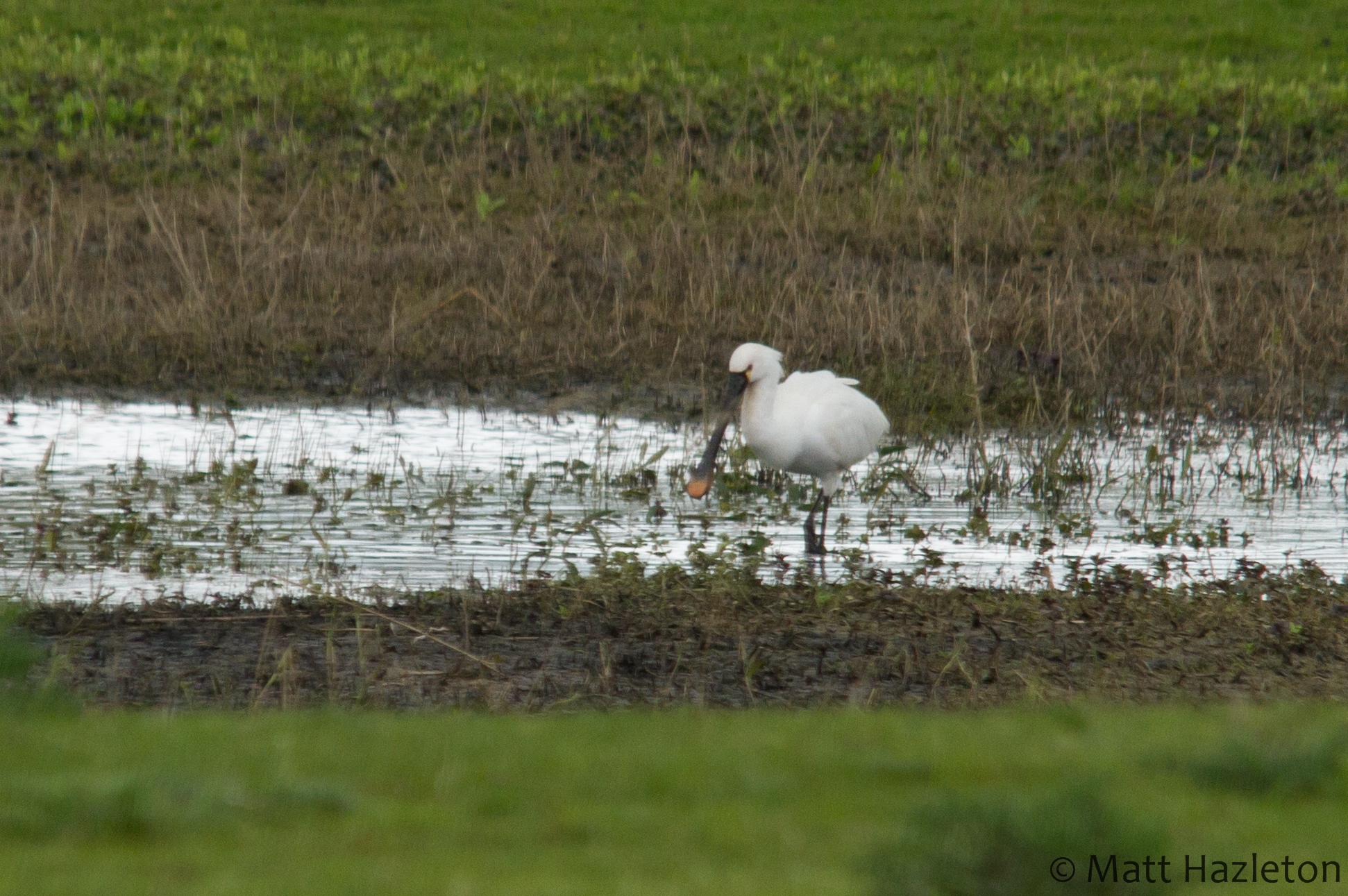
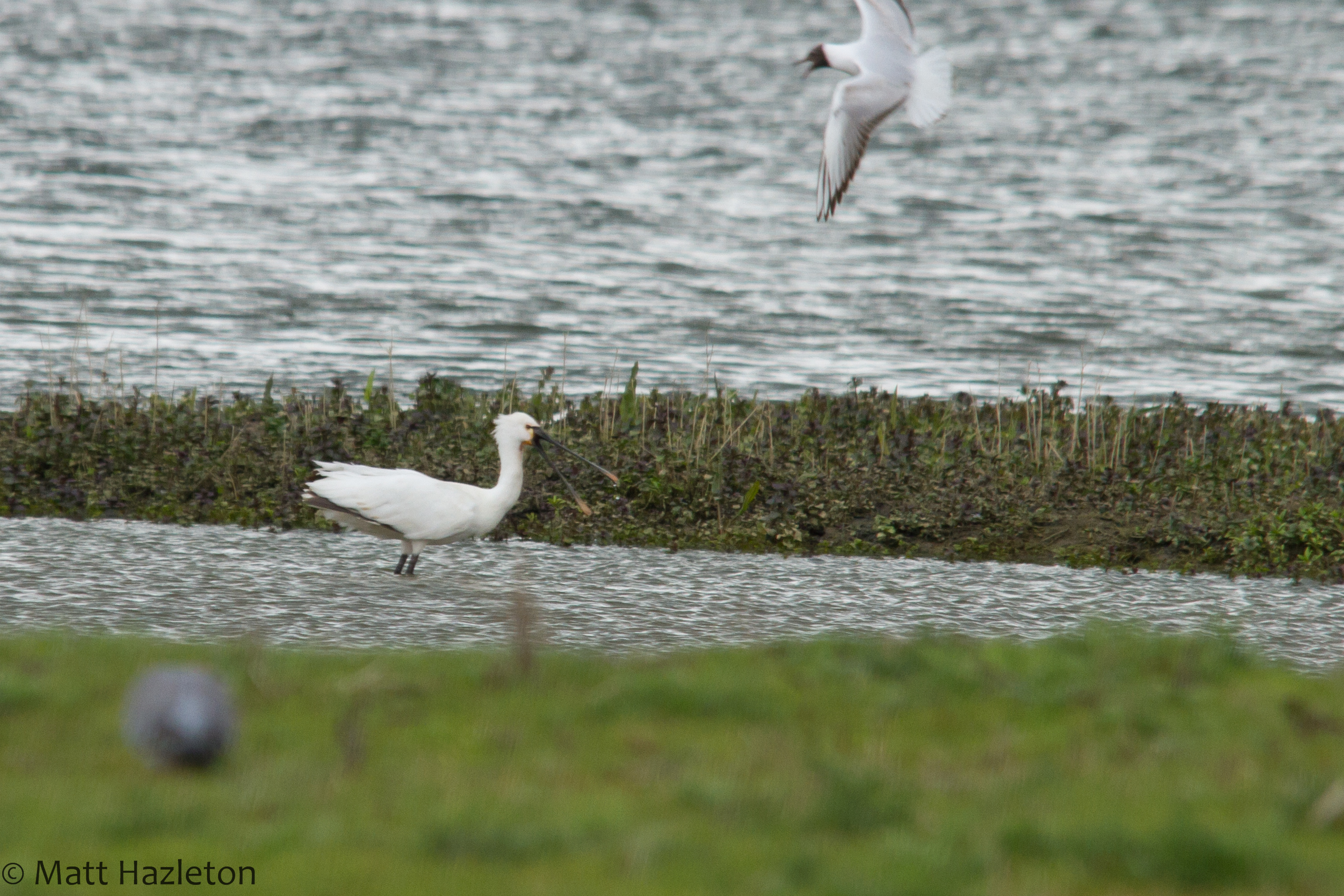
It was just before two o’clock this afternoon when Matt Hazleton picked up a Spoonbill flying in from the north-east before arriving on the main lake at Summer Leys. It landed in the Brayshaw’s Bund/Wader Bay area and seemed settled, giving Matt the opportunity for a few photos before he emailed me to let me know.
Spoonbill, Summer Leys LNR, 27th April 2014 (Matt Hazleton)Spoonbill, Summer Leys LNR, 27th April 2014 (Matt Hazleton)
After putting the news out, I made my way to Summer Leys only to discover upon arrival that it had flown off up the Nene Valley. Time was limited so I decided to head back home, calling in at Clifford Hill GP, just in case …
At 15.10, I arrived at the western end of the main barrage lake and quickly scanned the ‘new’ peninsular … and there it was! More news alerts then a bit of video before I had to leave at 15.40, leaving John Moon, Martin and Andrew Dove there to watch it.
Spoonbill, Clifford Hill GP, 27th April 2014 (Simon Hales)Spoonbill, Clifford Hill GP, 27th April 2014 (Simon Hales)
Spoonbill, Clifford Hill GP, 27th April 2014 (Mike Alibone). Black primary tips just visible, pale bill tip, no breast band and shortish crest make this a first- or second-summer bird.
It remained there for the next two hours, after which I heard it had been flushed by fishermen driving out on to the peninsular. So much for this being an SSSI …
Many thanks to Matt and to Simon Hales for the use of their images.
An area of low pressure to the south-east ensured a north-easterly airstream in the early part of the week, with outbreaks of rain and misty/murky conditions slowing and lowering a number of northbound migrants, particularly Arctic Terns, which were seen in some numbers on 20th.
Thrapston Gravel Pits continued to host the Pink-footed Goose until at least 21st, while the roving, escaped Ross’s Goose was seen again at Pitsford Res on the same date.
Pink-footed Goose, Thrapston GP, 21st April 2014 (Mike Alibone)
Considered by some to be fighting a losing battle with aesthetics, an Egyptian Goose was at Clifford Hill GP also on 21st, remaining there until at least 24th and a female Red-crested Pochard was discovered at the largely underwatched site of Thorpe Malsor Res – again on 21st. A drake Scaup found at Pitsford Res on 19th was still present there on 24th, the wintering Long-tailed Duck remained at Earls Barton GP all week and a female Common Scoter appeared at Thrapston GP on 24th. Other remnants of winter hung on in the form of 2 Goldeneyes at Thrapston GP on 21st and two were at Pitsford Res on 23rd and one at Summer Leys on 25th, while a drake Goosander was also at Thrapston GP on 21st and a female remained at Daventry CP on 20th.
Three fine, summer-plumaged Black-necked Grebes found their way to Pitsford Res on 19th but did not linger and a dip into the almost empty raptor bag pulled out only single Peregrines from Pitsford Res on 19th, Hardingstone on 20th and Hemington on 20th-21st.
Wader passage began to gain momentum but failed to produce anything to match the quality of last week’s Harrington Stone-curlew. Little Ringed Plovers were reported from four Nene Valley localities and dwindling Golden Plover numbers included two at Hemington on 20th and six in the Brampton Valley on 22nd. Six Bar-tailed Godwits spent the day at Ditchford GP’s Irthlingborough Lakes & Meadows Reserve on 20th with two Black-tailed Godwits at Summer Leys on 25th and the week’s only Whimbrel – which was also the first of the year – flew over Summer Leys on 22nd, while the same Green Sandpiper remained at Kislingbury Meadows on 19th, a lonely Common Sandpiper visited Clifford Hill GP on 22nd-23rd and the spring’s first Turnstone lingered at Summer Leys on 20th-21st.
Turnstone, Summer Leys LNR, 21st April 2014 (Simon Hales)
On 20th, a second-summer Yellow-legged Gull was again at Stanwick GP among ninety-two loafing Greater Black-backed Gulls but the only other gulls of note were single Little Gulls at Daventry CP on 21st and Summer Leys on 25th.
Adult Little Gull, Summer Leys LNR, 25th April 2014 (John Moon)
The spring’s first Black Terns, three, were at Daventry CP on 21st and the same site hosted twenty-four Arctic Terns on 20th, several went through Clifford Hill GP and two or three were at Summer Leys on the same date with two there again on 22nd.
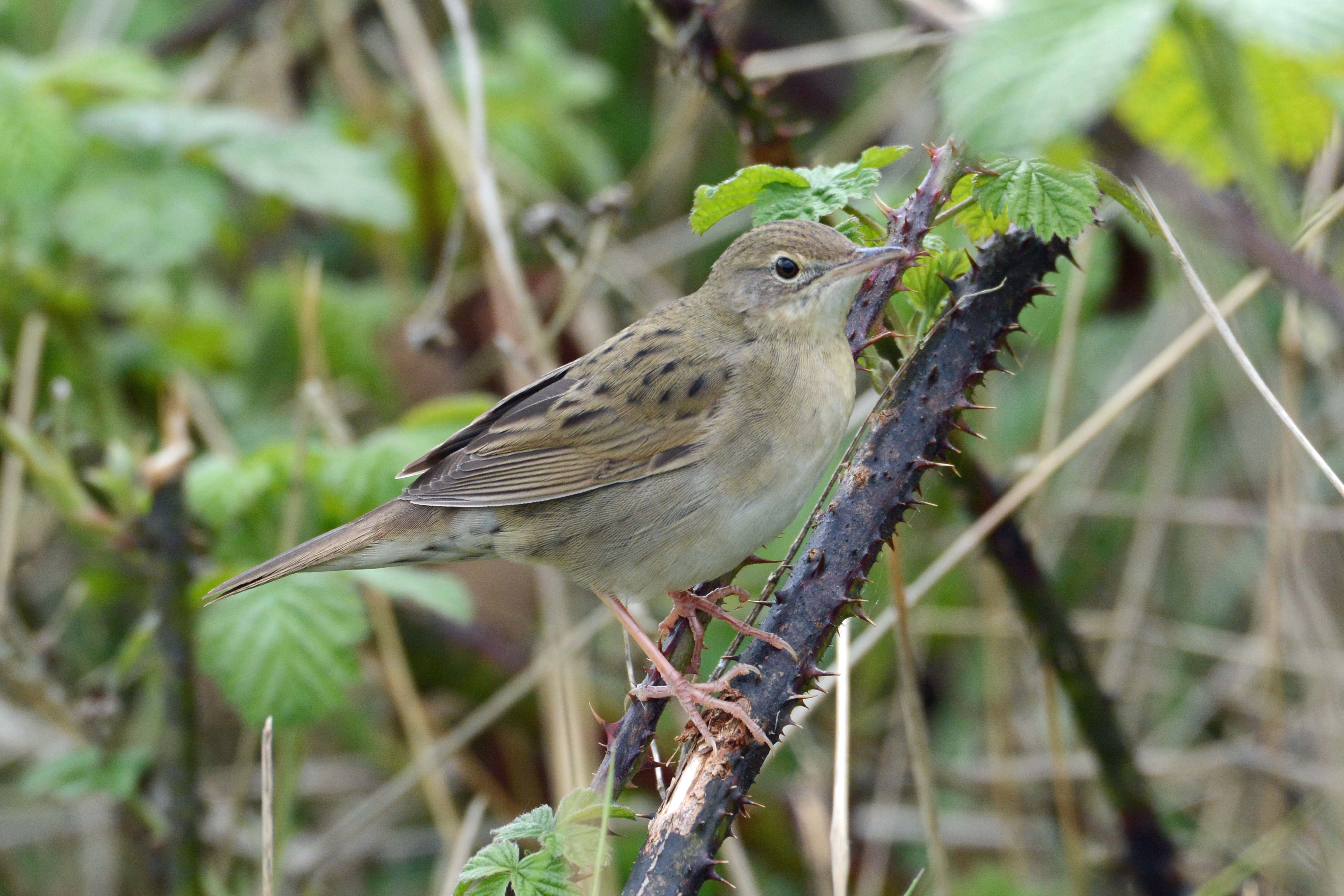
A Ring-necked Parakeet was at Stoke Bruerne on 20th, the spring’s first Common Swift appeared at Pitsford Res two days later and a Firecrest was discovered at Pitsford Res on 21st. With almost all the common summer warblers already in, the first Garden Warbler was found at Pitsford Res on 19th, quickly followed by others at Summer Leys on 21st and Daventry CP on 22nd but only one Grasshopper Warbler was located, a singing male at Stortons GP on 19th.
Grasshopper Warbler, Stortons GP, 19th April 2014 (John Moon)
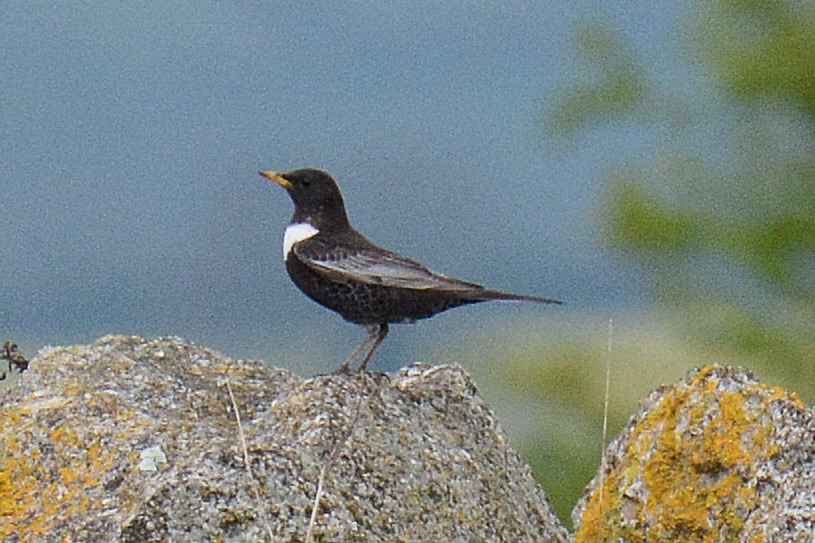
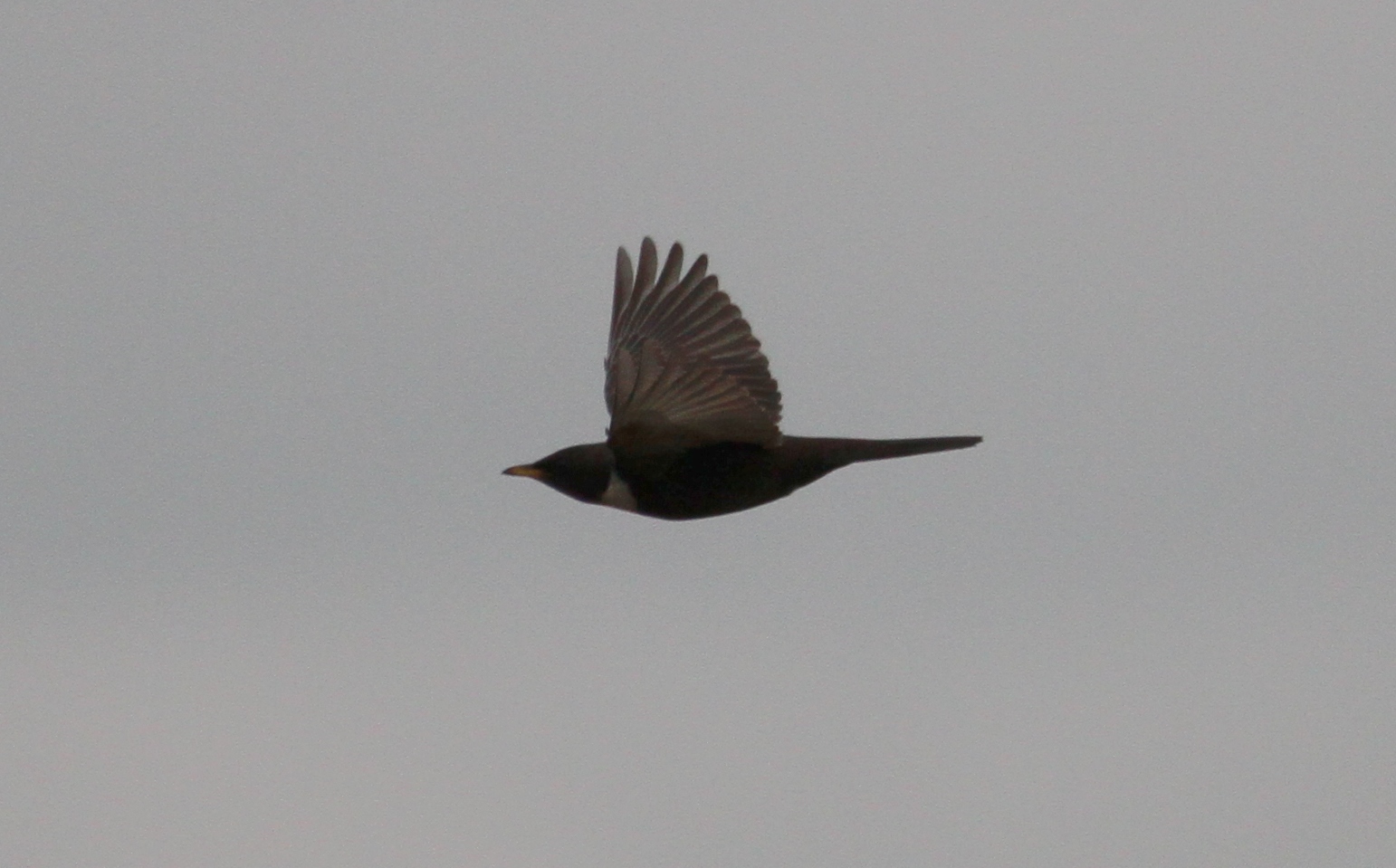
Up to three Ring Ouzels performed at Harrington AF between 19th and 24th and a male Black Redstart was discovered nearby in the Brampton Valley on 22nd, while
Male Ring Ouzel, Harrington AF, 22nd April 2014 (John Moon)Ring Ouzel, Harrington AF, 22nd April 2014 (Alan Coles)
Common Redstarts, all males, were at Clifford Hill GP on 22nd, Harrington AF on 23rd and in the Brampton Valley on 25th. Northern Wheatears were reported from four localities with a maximum of at nine at Hemington on 21st. Again, only two White Wagtails were found at this week – one at Hemington on 21st and one at Earls Barton GP on 22nd, while the only Brambling was one on a feeder in a Kettering garden on 20th.
Dominated by the presence of a slowly moving area of high pressure, the week remained dry and settled with variable light winds, initially from the west then north and southerly for a short time mid-week. The influx of summer visitors continued with one or two surprises among some notably early arrivals.
With the vast majority of winter wildfowl well on their way back to their summer breeding grounds we are now left with a handful of hangers-on and a few late passage birds stopping over briefly to break their journeys ‘up north’. Falling into the latter category a Pink-footed Goose joined the resident Greylag flock at Thrapston GP on 12th and was still present there on 18th. This species has been unusually scarce this year with no previous records this side of the New Year but its appearance at Thrapston is no great surprise as this site has an established track record for attracting small numbers of pinkfeet in spring.
Pink-footed Goose, Thrapston GP, 13th April 2014 (Mike Alibone)
Falling into the malingerers category, the wintering Long-tailed Duck remained at Earls Barton GP until at least 14th, three Goldeneyes were still at Thrapston GP on 13th with one still there on 18th and a drake Goosander was beside the River Nene at Oundle on 15th.
Raptors were in short supply this week with the most notable of the predatory elite being a male Goshawk flying over Woodford Halse in the direction of Eydon on 15th. This species remains an enigma in Northants. Believed to have bred here in the past, it is no longer being seen at localities favoured in the 80s and 90s so it’s a real local rarity these days, remaining a very difficult bird to catch up with in the county. Making less of a splash but still an essential piece in the summer jigsaw, the first Hobby was reported from Scaldwell on 15th, while single Peregrines were seen over Isham and Little Irchester on 13th and at Summer Leys LNR on 18th.
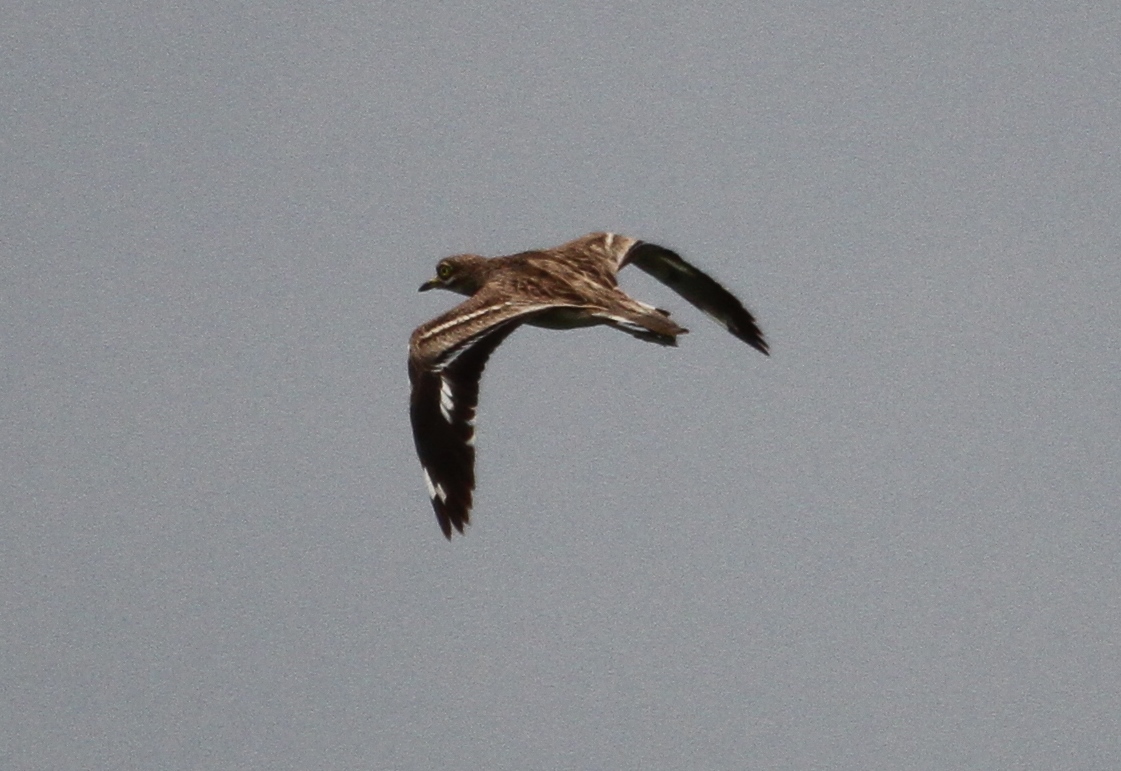
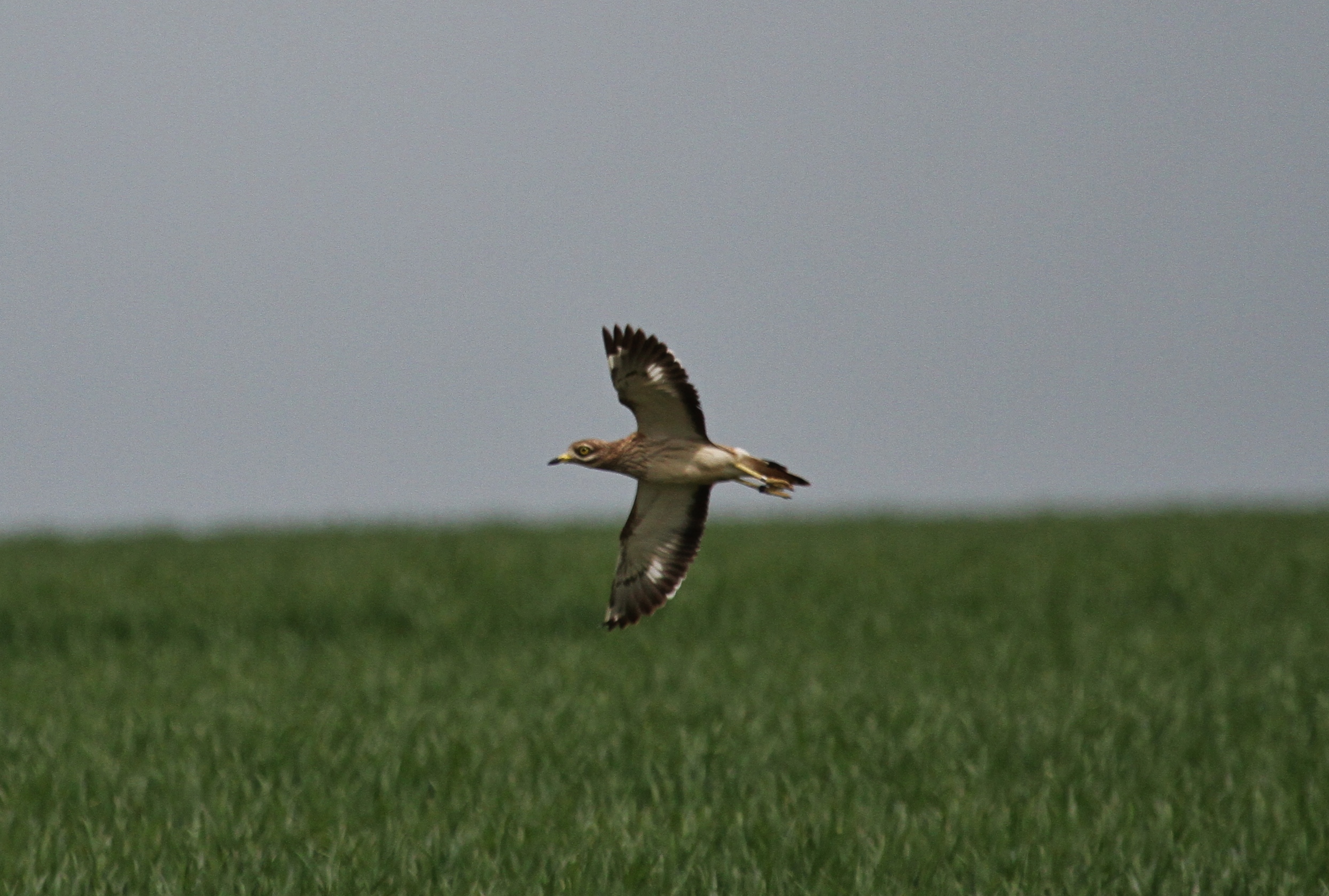
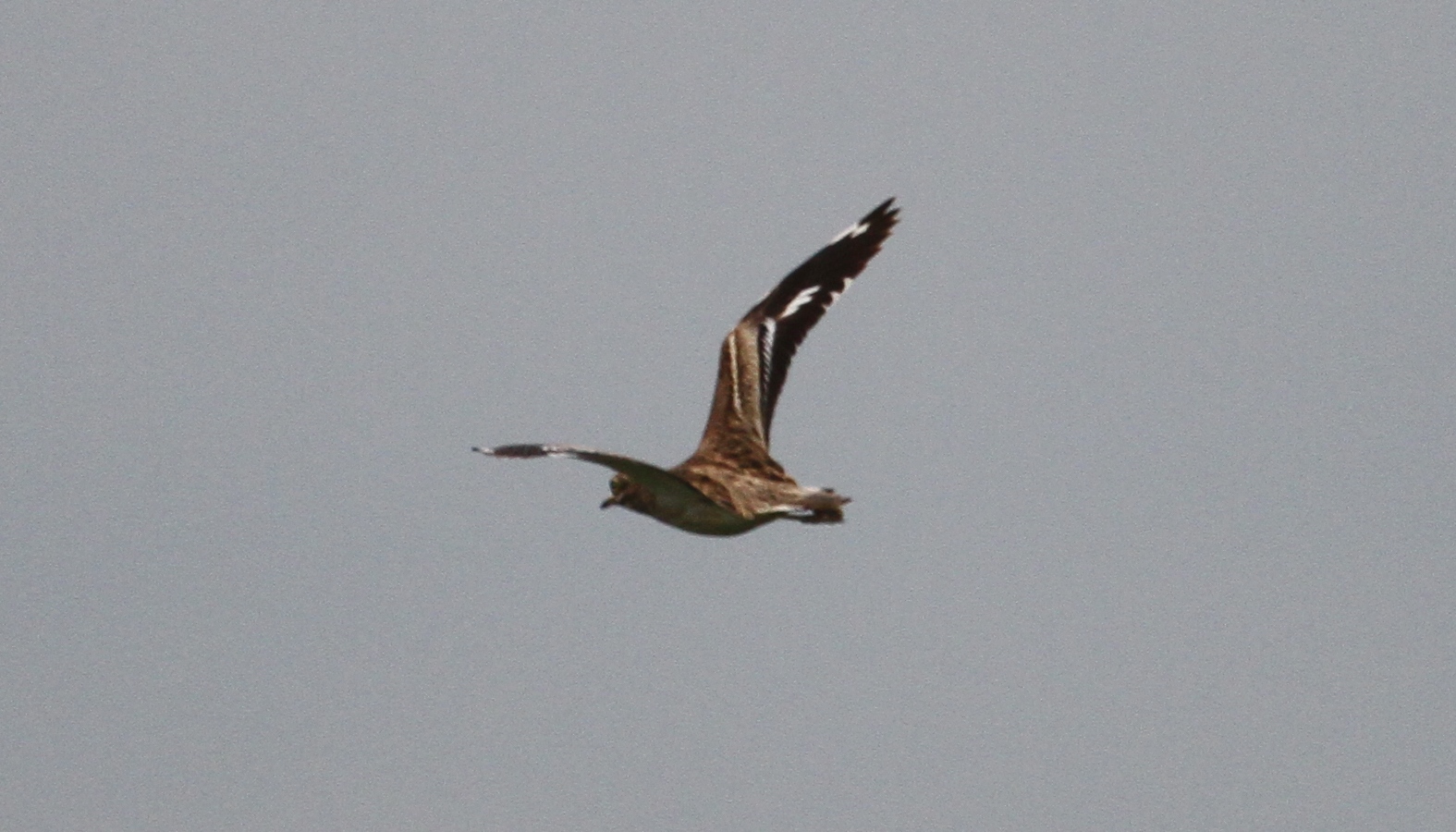
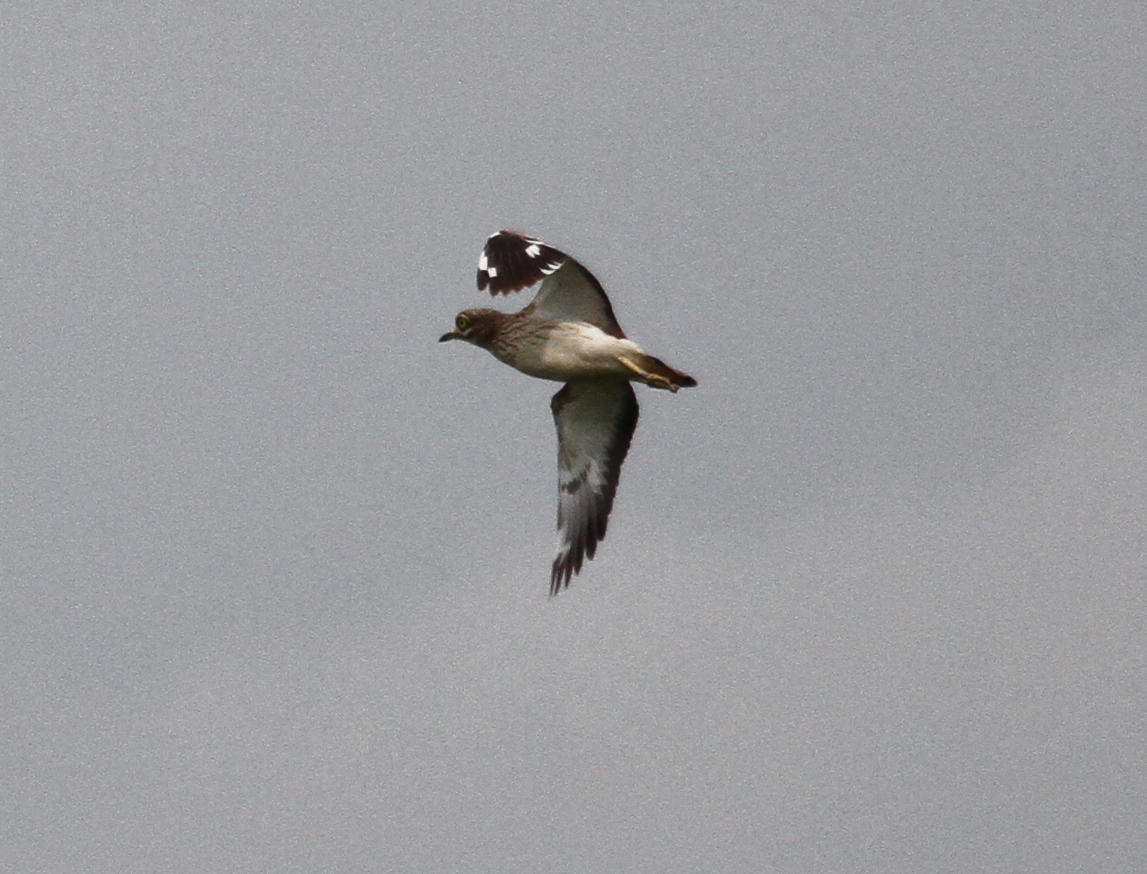
With the main thrust of passage waders still a couple of weeks away, the lack of quantity was amply made up for by quality in the shape of Northamptonshire’s twelfth-ever Stone-curlew, which was discovered at Harrington AF during the morning of 17th. Flighty and true to form, however, it did not stay long and promptly went AWOL after lunch.
Stone-curlew, Harrington AF, 17th April 2014 (Alan Coles)
Little Ringed Plovers were found at just three Nene Valley localities, the only Dunlin were five at Clifford Hill GP on 12th with four remaining on 17th-18th and the only Curlews were singles at the latter site on 12th and at Daventry CP on 17th. A Black-tailed Godwit was found at Summer Leys on 18th, while another flew northeast at Thrapston GP on the same date and single Green Sandpipers remained faithful to Pitsford Res on 13th-14th and Kislingbury Meadows on 15th.
With wintering gulls all but gone the only species of note were a second-summer Yellow-legged Gull at Stanwick GP on 13th and four Little Gulls which visited Daventry CP on 17th. With Common Terns rapidly becoming established back at traditional sites in the Nene Valley, transient Arctic Terns were a welcome addition to the local menu with two picked up heading northeast at Earls Barton GP on 14th.
An early Lesser Whitethroat was found at Harrington Airfield on 12th, rapidly followed by others at Denton Wood, Scaldwell and Summer Leys during the course of the next four days. Common Whitethroats also put in an appearance from 13th, with a male at Old, while the first Grasshopper Warbler was heard reeling at Earls Barton GP on the same day (the average date of first arrival for this species in the UK), quickly followed by others at Stortons GP on 15th and Salcey Forest on 18th. This species has been recorded as arriving as early as 1st April in the county but it is undergoing a long term decline in population and is now red-listed in conservation terms. The first Reed Warblers were heard singing at Thrapston GP also on 13th.
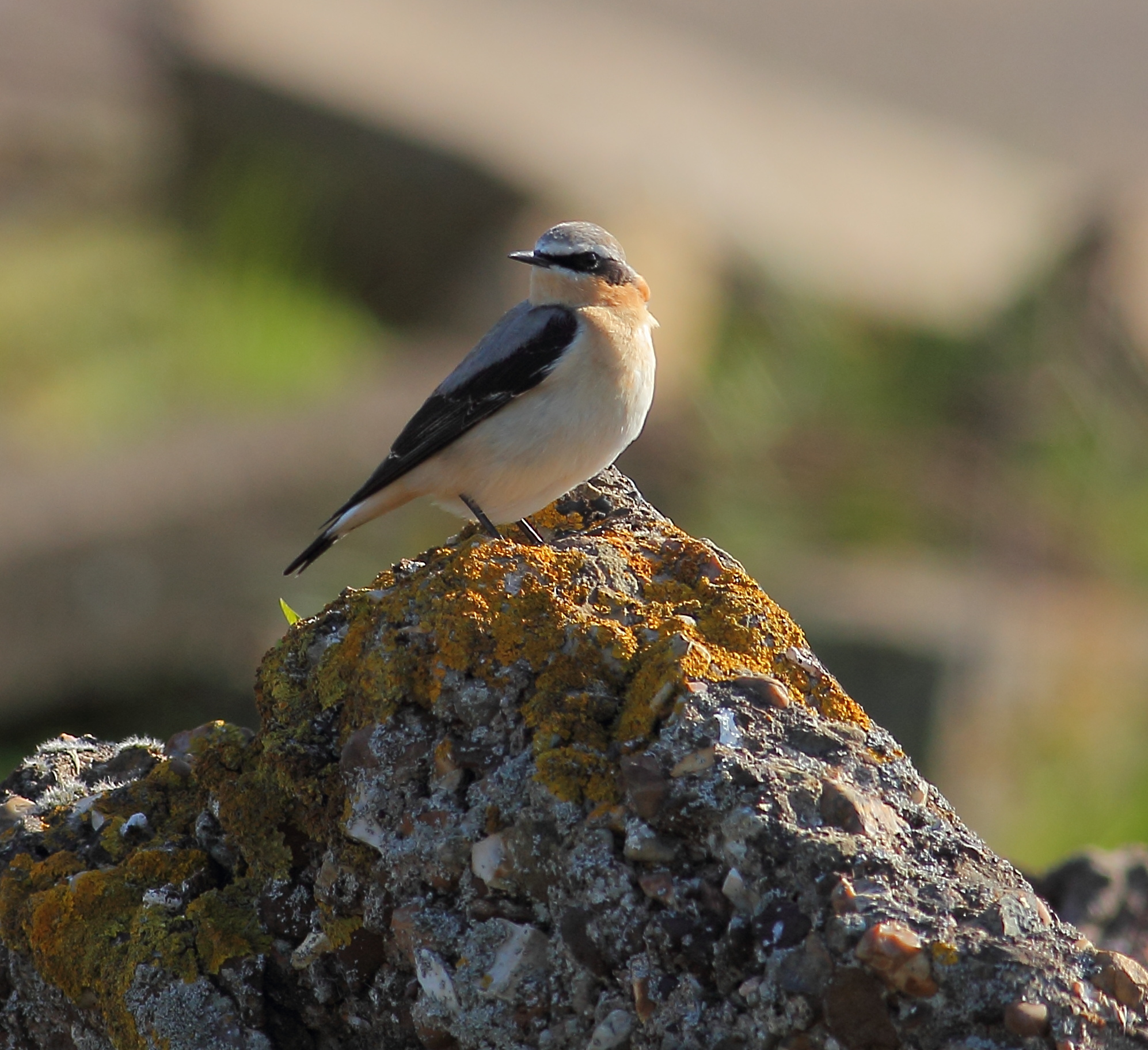
Two Ring Ouzels were located at Harrington AF on 14th, three were there the following day, remaining until at least 17th. One was also found at Blueberry Farm, Maidwell on 15th and another was seen at Borough Hill on 17th. The year’s first Nightingale was singing in a Blackthorn thicket alongside the River Nene at Thrapston on 17th, while more Common Redstarts continued to pour in with males located at Borough Hill and Clifford Hill GP on 12th, Foxholes Fisheries, Crick on 14th, Hellidon on 14th with two there on 18th, two at Blueberry Farm on 15th and one again at Clifford Hill GP on 18th. A male Whinchat put in a relatively early appearance at Borough Hill on 17th and was still present the following day, while Northern Wheatears were reported from seven localities with a maximum of at least eight (possibly ten) at Harrington AF on 17th.
Male Northern Wheatear, Harrington AF, 16th April 2014 (Pete Gilbert)
Only two White Wagtails were found at this week – both at Clifford Hill GP on 12th, while a Tree Pipit – now relegated (or promoted, depending upon your viewpoint) to a scarce local passage migrant, not having bred in the county for a couple of years. Most Bramblings have now departed but four were still at Harrington AF on 14th, one there on 15th and six still at Hellidon on 18th.
While out looking for Ring Ouzels, Gary Burrows found this rather nice Stone-curlew at Harrington Airfield this morning. It was still around – though flighty – early in the afternoon. Thanks to Alan Coles for the images below.
Sharp-eyed observers will have spotted the rings: metal on left leg and colour ring on right. Did anybody get the exact colour in the field?
We don’t get them very often. Although it breeds no further away than East Anglia, Stone-curlew is a vagrant to Northants. Including the last, in a field adjacent to Summer Leys LNR on 15th April 2009, there are eleven previous records dating back to 1880. Of these, four have been in April, two in July, and singles in May, August and October with two old records dated only to year of occurrence.
A run of relatively mild weather, with winds from a southerly quarter in the middle part of the period, served to further advance spring and to introduce a steady flow of migrants to the county.
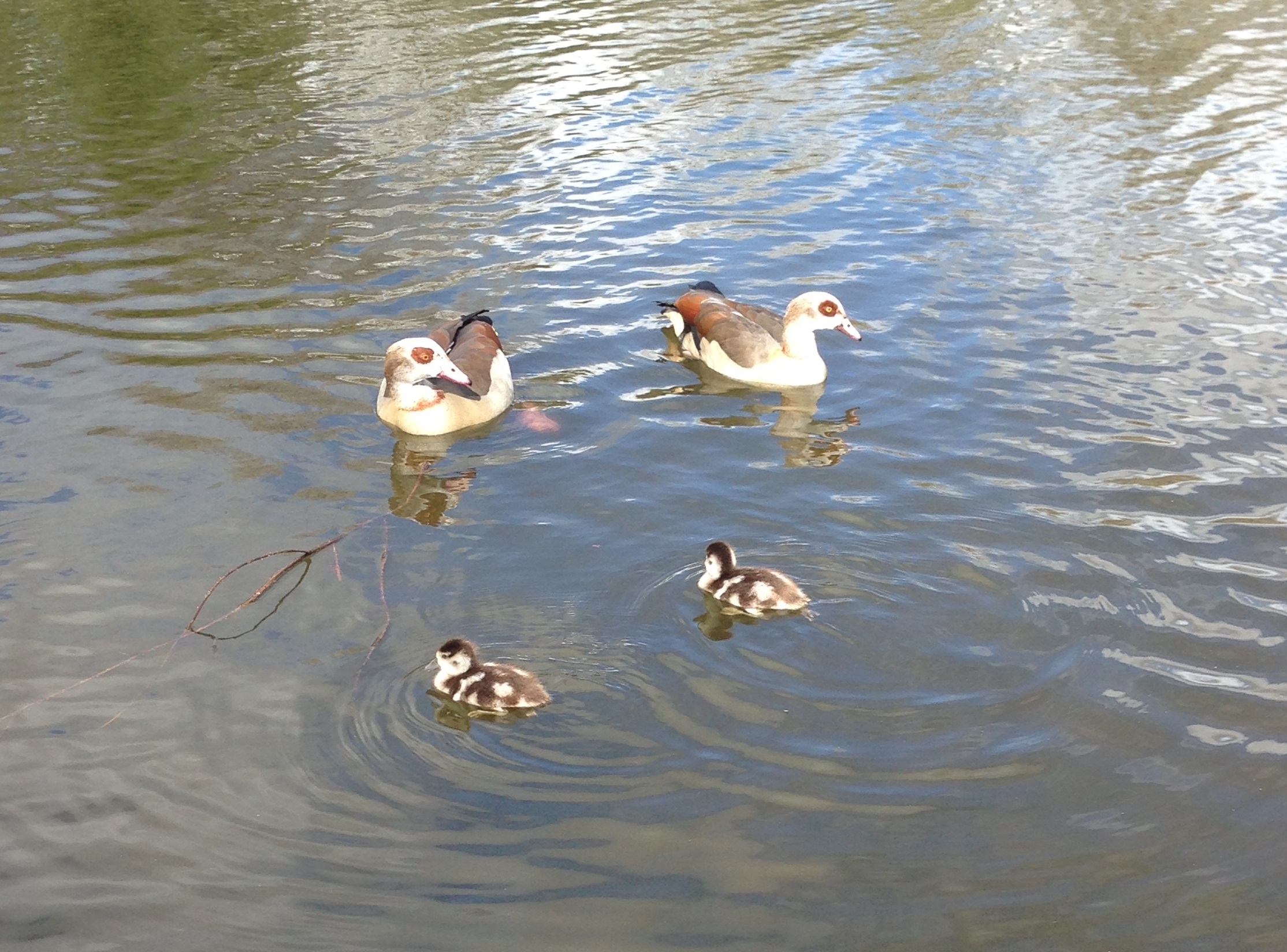
Two female Ruddy Shelducks were reported on the south bank of the River Welland, west of Rockingham on 10th – an interesting time of year for this species in not conforming to the usual pattern of late summer occurences of birds suspected of being from The Netherlands. If ever proof were needed that Egyptian Geese breed in Northants then here it is – a pair was discovered with two young goslings in the east of the County on 23rd
Egyptian Geese, site withheld, 23rd March 2014
while other, less auspicious, wildfowl remained in the shape of the unringed female Wood Duck on the River Nene at Northampton to 1st and the red colour-ringed Marbled Duck at Stanwick GP throughout the period. In a similar vein, the long-staying Ross’s Goose –
Ross’s Goose, Pitsford Res, 28th March 2014 (Dave Jackson)
now apparently paired with a Greylag Goose – commuted between Pitsford Res and Clifford Hill GP between 28th and 4th. A pair of Pintail visiting Summer Leys LNR on
Pintails, Summer Leys LNR, 2nd April 2014 (Bob Bullock)
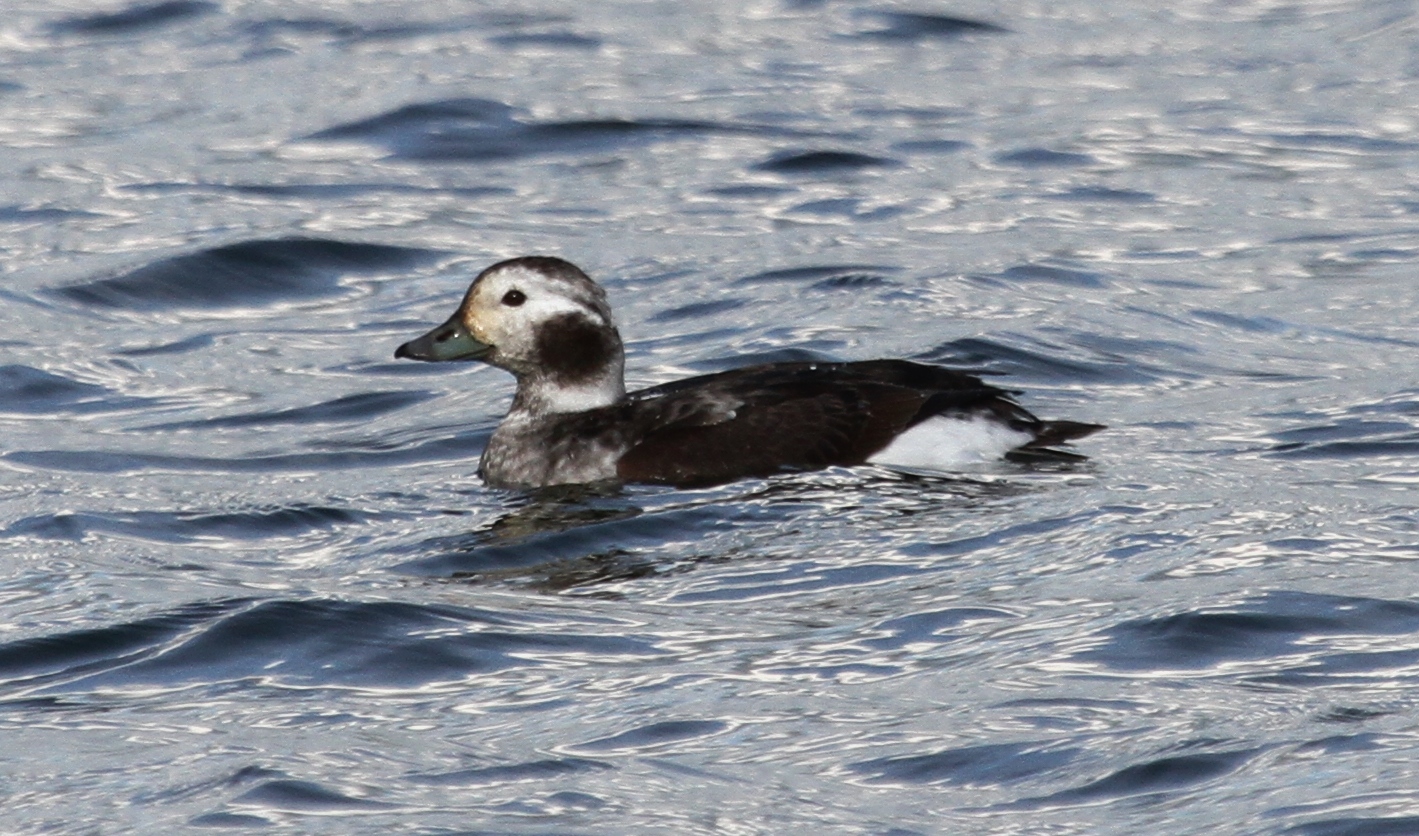
2nd were the only ones recorded but what is likely to be ‘bird of the month’ was a fine drake Blue-winged Teal which appeared only briefly at Stanwick GP on 1st before quickly departing to the north. Both wintering Long-tailed Ducks remained at Thrapston GP until 5th and at Earls Barton GP until 11th, while a handful of
Long-tailed Duck, Earls Barton GP, 24th March 2014 (Alan Coles)
Goldeneyes lingered and odd Goosanders remained at Clifford Hill, Stanwick and Thrapston GPs and at Daventry CP. The latter site hosted three Common Scoters (two drakes) from 4th to 8th and two drakes were also found at Stanwick GP on 4th and a single drake joined the Earls Barton Long-tailed Duck on Mary’s Lake from 6th to 8th.
The wintering second calendar year Great Northern Diver continued its long term winter residence at Pitsford Res until at least 5th while three Bitterns – presumably migrants – were found with one at Summer Leys on 23rd, another or the same at adjacent Earls Barton GP on 31st and another at Pineham (Northampton) on 6th. Great White Egrets remained very much in evidence with singles at Stanwick GP on 22nd, 2nd and 6th with two flying east there on 10th, while one was seen intermittently at Summer
Great White Egret, Summer Leys LNR, 5th April 2014 (Mark Hill)
Leys/Earls Barton GP between 24th and 5th with three roosting there on 30th and one visited Ditchford GP on 6th. The Red-necked Grebe discovered off the dam at Pitsford Res on 19th remained until 8th, after which it could no longer be located.
Migrant raptors on the move were a Marsh Harrier visiting Summer Leys on 24th and, on the same date, a ‘ringtail’ Hen Harrier flew west at Stanwick GP and another ‘ringtail’
Marsh Harrier, Summer Leys LNR, 24th March 2014 (Alan Coles)
flew east at Summer Leys on 2nd. More Ospreys came through during the period, singles being noted at Pitsford Res on 26th, Great Billing on 1st, Northampton on 3rd, Brampton Valley on 4th and two north-east over Harpole on 6th. A Merlin flew high north over Borough Hill on 9th and Peregrines were seen at Summer Leys on 6th, in the Brampton Valley on 8th and in Northampton on 8th and 10th.
The first Little Ringed Plovers were found at Clifford Hill GP and Kislingbury/Upton on 31st, quickly followed by others at Pitsford Res, Stanwick GP and Summer Leys, while the Brampton Valley continued to host good numbers of Golden Plovers with up to five hundred still there on 8th and a single Grey Plover flew over Daventry CP on 4th. The only Dunlin during the period were two at Clifford Hill GP on 7th, similarly one Ruff was seen at Stanwick GP on 10th and a Jack Snipe was at Summer Leys on 5th. Single Black-tailed Godwits visited Clifford Hill GP on 31st and Ditchford GP on 2nd and a Bar-tailed Godwit put in a brief appearance at Summer Leys on 29th. The latter site
Bar-tailed Godwit, Summer Leys LNR, xx March 2014 (Stuart Mundy)
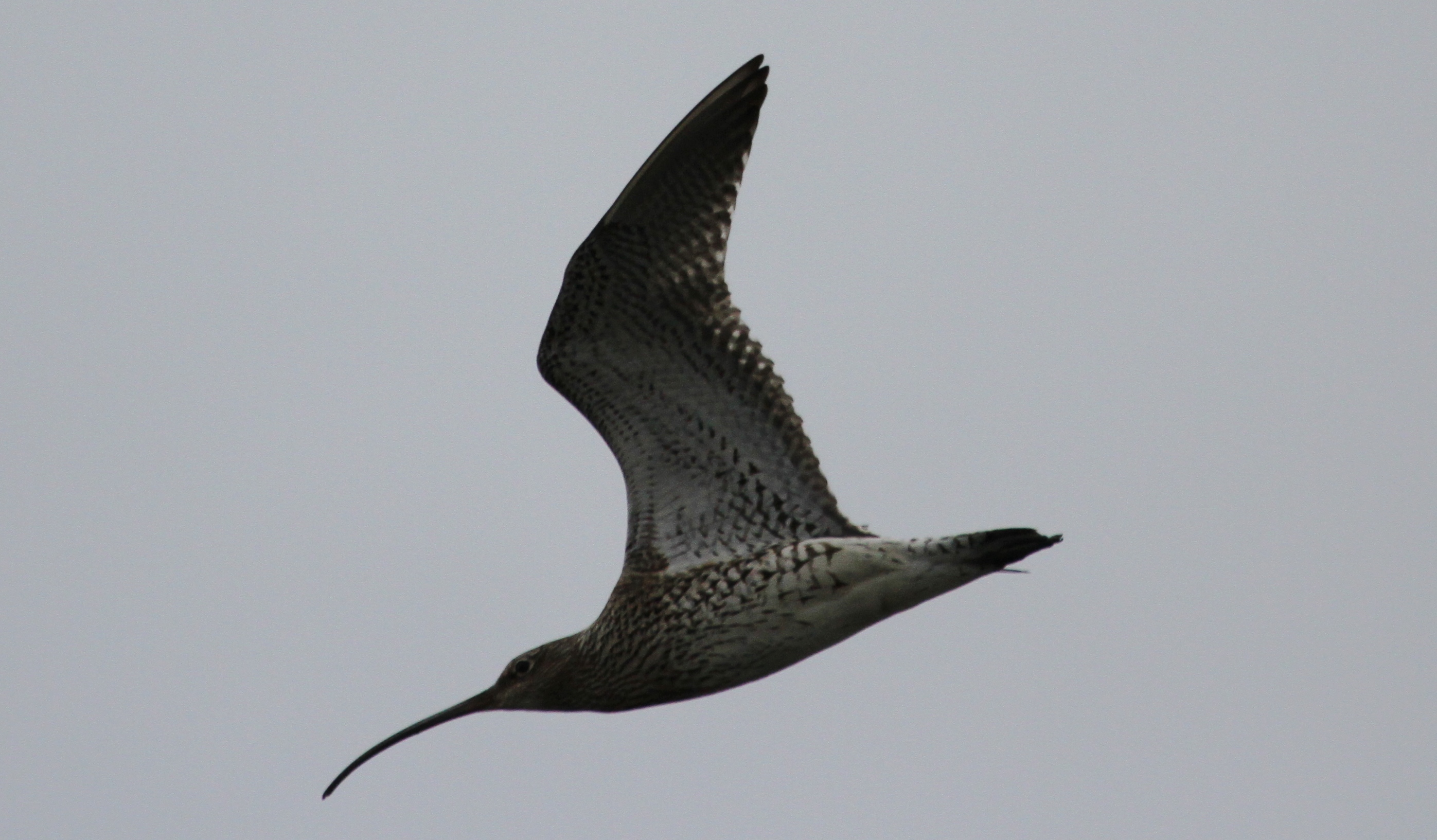
hosted a long-staying Curlew throughout the review period while others appeared at Thrapston GP on 30th and 6th, Stanwick GP on 6th and in the Brampton Valley, where there were two on 8th.
Curlew, Summer Leys LNR, 4th April 2014 (Alan Coles)
Single Green Sandpipers lingered throughout below the dam at Pitsford Res and on flooded pools at Upton/Kislingbury/Pineham, while the first Common Sandpiper appeared at Pitsford Res on 8th.
A first-winter Mediterranean Gull was at Stanwick GP on 22nd and 24th while others – all adults – turned up in reservoir roosts at Pitsford on 30th-31st and Boddington on 24th and (two) on 25th. A late second-winter Glaucous Gull put in a brief appearance at Clifford Hill GP on 6th and a first-winter Yellow-legged Gull visited the Boddington Res roost on 25th, when an adult Kittiwake was also present. An influx of Little Gulls occurred on 31st when thirteen were counted at Summer Leys, nine at Daventry CP and six at Pitsford Res; these were followed by singles at Summer Leys and Daventry CP on 2nd and 3rd respectively, with three more at the latter site on 7th and two at Stanwick GP the following day. Such high numbers are rare before mid-April.
Little Gull, Summer Leys LNR, 1st April 2014 (Bob Bullock)
Early sternas included single Sandwich Terns at Daventry CP on 31st, Stanwick GP the following day and at Boddington Res on 9th, while the first Common Tern was found at Daventry CP – again on 31st – quickly followed by others at Stanwick GP, Summer Leys and Thrapston GP from 5th. Single Arctic Terns appeared at Pitsford Res on 1st and Stanwick GP on 5th. The first Cuckoos were found at both Harrington AF and Stanwick GP on 6th, while a Woodlark – the first for several years – flew west over Daventry CP, while Swallows became evident from 31st and the first House Martin was at Byfield on 6th. More spring firsts came in the shape of Willow Warblers – widespread from 31st – and Sedge Warblers from 1st, while the first Common Redstart appeared at Hellidon on 11th and a Black Redstart was in Wollaston on 23rd. Northern Wheatears were reported from five localities with a maximum of seven at Borough Hill on 9th and three Ring Ouzels – all males – appeared in the Brampton Valley on 24th, Daventry CP on 4th and at Old Sulehay on 10th. Following last month’s very early Yellow Wagtails, small numbers were reported from five sites, while single White Wagtails were found at Summer Leys on 4th, Stanwick GP on 5th and 8th and at Braunston and Clifford Hill GP on 8th, while the wintering Water Pipit remained at Ditchford GP until 6th. Up to a dozen Bramblings continued to be seen at Harrington AF until 9th but a build-up in ‘pre-departure’ numbers at Hellidon reached an impressive eighty-two on 4th while a small
Brambling, Harrington AF, 30th March 2014 (Bob Bullock)
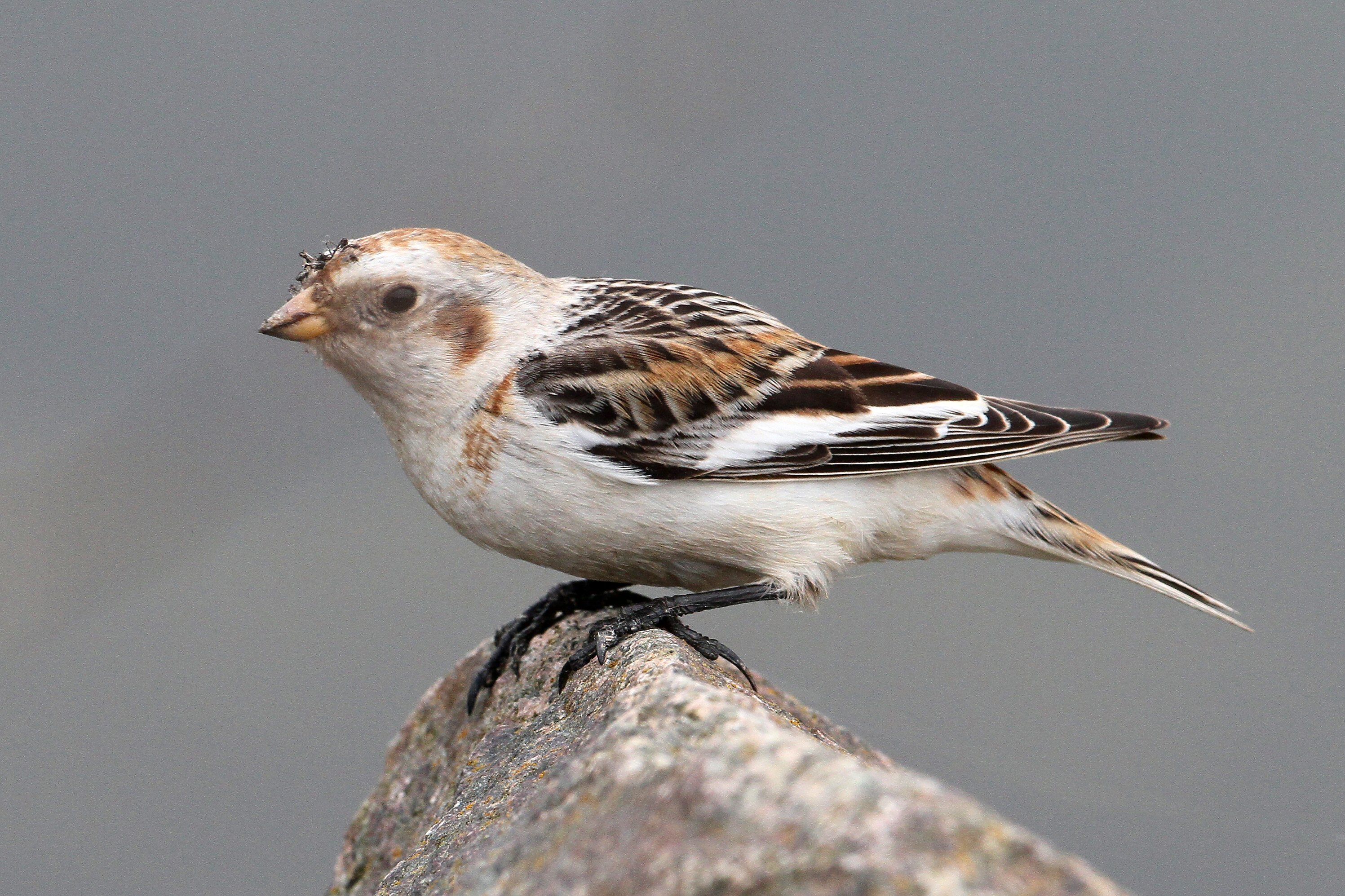
movement of Crossbills was noted at Pitsford Res on 30th with parties of two, eight and ten heading south-west. Finally, a very confiding Snow Bunting proved a popular
Snow Bunting, Daventry CP, 3rd April 2014 (Dave Jackson)
attraction at Daventry CP on 3rd. It was not present the next day but, amazingly, a different individual flew over the same site on 5th.
Snow Bunting, Daventry Country Park, 3rd April. A great find by Gary Pullan. This species has become rather erratic in its appearances in Northants over the past few years and now seems to be appearing here less frequently than it did in the last century.
Snow Bunting, Daventry CP, 3rd April 2014 (Bob Bullock)
Snow Bunting, Daventry CP, 3rd April 2014 (Mike Alibone)
Until 1992 it was recorded annually but, since then, it has been recorded in only seven out of the last twenty years. There have been forty-two records during the last thirty years with twenty-five (60%) falling in the month of November but only one of these was found in April during this period.
Snow Bunting, Distribution by month over the 30 years 1983-2012Snow Bunting, Daventry CP, 3rd April 2014 (Alan Coles)
This bird appears to be a female on wholly dark primary coverts but it may be a first-year male (contrasting blackish mantle with white ‘shawl’).
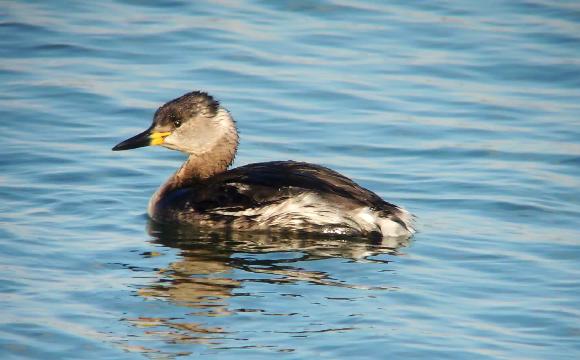
Last week’s Red-necked Grebe, found by David Arden at Pitsford Reservoir on Wednesday 19th March, is the first in Northamptonshire since 22nd November 2008, when one paid a brief visit to Stanwick GP. An analysis of the last thirty years’ records reveals that, prior to that date, this species was an annual visitor to the County, with up to half a dozen records per year, including several instances of summering. So, after an absence of five and a half years, the Pitsford individual proved to be a bonus for local birders, as well as a number of out of county visitors who also travelled to see it.
Still present today but not yet in full summer plumage, it has remained relatively close to the dam during its stay, providing good views and exceptional photo opportunities for all comers.
Red-necked Grebe, Pitsford Res, 20th March 2014 (Bob Bullock)Red-necked Grebe, Pitsford Res, 20th March 2014 (Bob Bullock)Red-necked Grebe, Pitsford Res, 20th March 2014 (John Moon)Red-necked Grebe, Pitsford Res, 21st March 2014 (Clive Bowley)Red-necked Grebe, Pitsford Res, 21st March 2014 (Clive Bowley)Red-necked Grebe, Pitsford Res, 21st March 2014 (Dave Jackson)Red-necked Grebe, Pitsford Res, 21st March 2014 (Dave Jackson)
Red-necked Grebe, Pitsford Res, 21st March 2014 (Mike Alibone)
Red-necked Grebe, Pitsford Res, 21st March 2014 (Mike Alibone). Ensure the ‘cogwheel’ is clicked on and the resolution 720p selected to watch in higher quality HD.
The week started warm, bright and dry under a continued south-westerly airstream, which turned more westerly with falling temperatures as the week progressed. However, it remained relatively mild and largely dry, providing ideal conditions for the arrival of more spring migrants.
A pair of Ruddy Shelduck was present near Slipton until 18th, having been present in the area since 12th. The reduction in wintering wildfowl numbers became more evident this week but the 2 Egyptian Geese were seen at Ditchford GP on 16th, the unringed female Wood Duck of unknown origin was still being seen on the River Nene at Northampton on 18th and the red colour-ringed Marbled Duck remained at Stanwick GP until at least 19th. The first Garganey arrived this week at Daventry CP, where four were found on 20th and two pairs of Red-crested Pochards dropped into Stortons GP on
Red-crested Pochards, Stortons GP, 17th March 2014 (Doug Goddard)
17th, while the drake Scaup remained at Ditchford GP on 16th, the same date that the Thrapston GP Long-tailed Duck was still on Town Lake and the ever popular Earls Barton GP individual remained on Mary’s Lake there until at least 20th. The only Smew left over from the winter were a pair at Stanwick GP until at least 19th while single-figure counts of Goosanders came from nine localities throughout the week.
The wintering juvenile Great Northern Diver continued its protracted stay at Pitsford Res all week and at least one Great White Egret remained faithful to Summer Leys LNR until at least 18th, while two were again at Ditchford GP on 16th. Bird of the week, for many, however, was the Red-necked Grebe discovered off the dam at Pitsford Res late on 19th and still showing well to all comers on 21st. Red-necked Grebe has become a bit of a local rarity in recent years, this individual being the first in the County since one put in a brief appearance at Stanwick GP on 22nd November 2008.
Red-necked Grebe, Pitsford Res, 20th March 2014 (Bob Bullock)
Hot on the heels of the first two Ospreys last week came two more – one over Brackmills, Northampton on and another over Ditchford GP on 21st. Four in the County already bears testament to the growing UK population, which is now estimated to be in the region of two hundred and fifty pairs. Aside from this, Peregrines were seen in the Brampton Valley, Ditchford GP, Hanging Houghton, Hardingstone GP and at Harrington AF.
The Brampton Valley continued to host up to 300 Golden Plovers throughout the week and six Jack Snipe were found at Hollowell Res on 16th, while 2 Dunlin were at Summer Leys on 16th-18th. A Curlew visited Thrapston GP on 19th, twelve Redshanks were at Stanwick GP on 17th with smaller numbers at Aldwinckle and Summer Leys, while a single Green Sandpiper was seen below the dam at Pitsford Res on 20th.
Winter gulls have begun to disperse but there are still good numbers moving through on passage with adult Mediterranean Gulls in reservoir roosts at Pitsford on 15th and two different individuals at Boddington on 20th and 21st. A second-winter Caspian Gull was again at Stanwick GP on 17th, and a first-winter Kittiwake visited Pitsford Res on 16th. The pair of ringed Bearded Tits at Stortons was seen again on 16th. Interestingly, the ringers on site believe there are two pairs present. More Sand Martins drifted through at several sites with approximately twenty at Stortons GP on 20th being the maximum count, while more and more Chiffchaffs piled inthis week, with singing males widely reported. Central EuropeanBlackcaps began to melt away with established long-stayers remaining in gardens at Barton Seagrave until 16th and Wellingborough, where there were two males and a female until 21st. Singing males in Wellingborough and Hardingstone may have been early summer visitors or winterers on the move. The first Ring Ouzel of the spring, a male, was found at Harrington AF on 17th and the first Northern Wheatears were found at Harrington AF and in the Brampton Valley on 18th and another was at Borough Hill on 20th. Hot on the heels of last week’s early Yellow Wagtail three more were seen – two at Middleton Cheney on 15th and one in the Brampton Valley on 18th, while Northamptonshire’s only know wintering Water Pipit showed itself again at Ditchford GP on 16th. Serving to remind us that winter is not yet over, Bramblings hung on all week at Harrington AF with sixteen still there on 18th and one was also at Kelmarsh on 17th.



















 Northants birds