The Week in Focus: 4th to 10th January 2014

Continuing on a theme, an established south-westerly airstream brought intermittent showers and occasional heavy rain throughout the week. Water levels rose at reservoirs and gravel pits and localised flooding occurred, particularly in the Nene Valley, although a significant amount had drained away by the week’s end. Northamptonshire again failed to attract any Glossy Ibises from the ongoing national influx, estimated to involve at least thirty-five mobile individuals, despite occurrences in the neighbouring counties of Lincolnshire, Bedfordshire and Oxfordshire. There is still time …

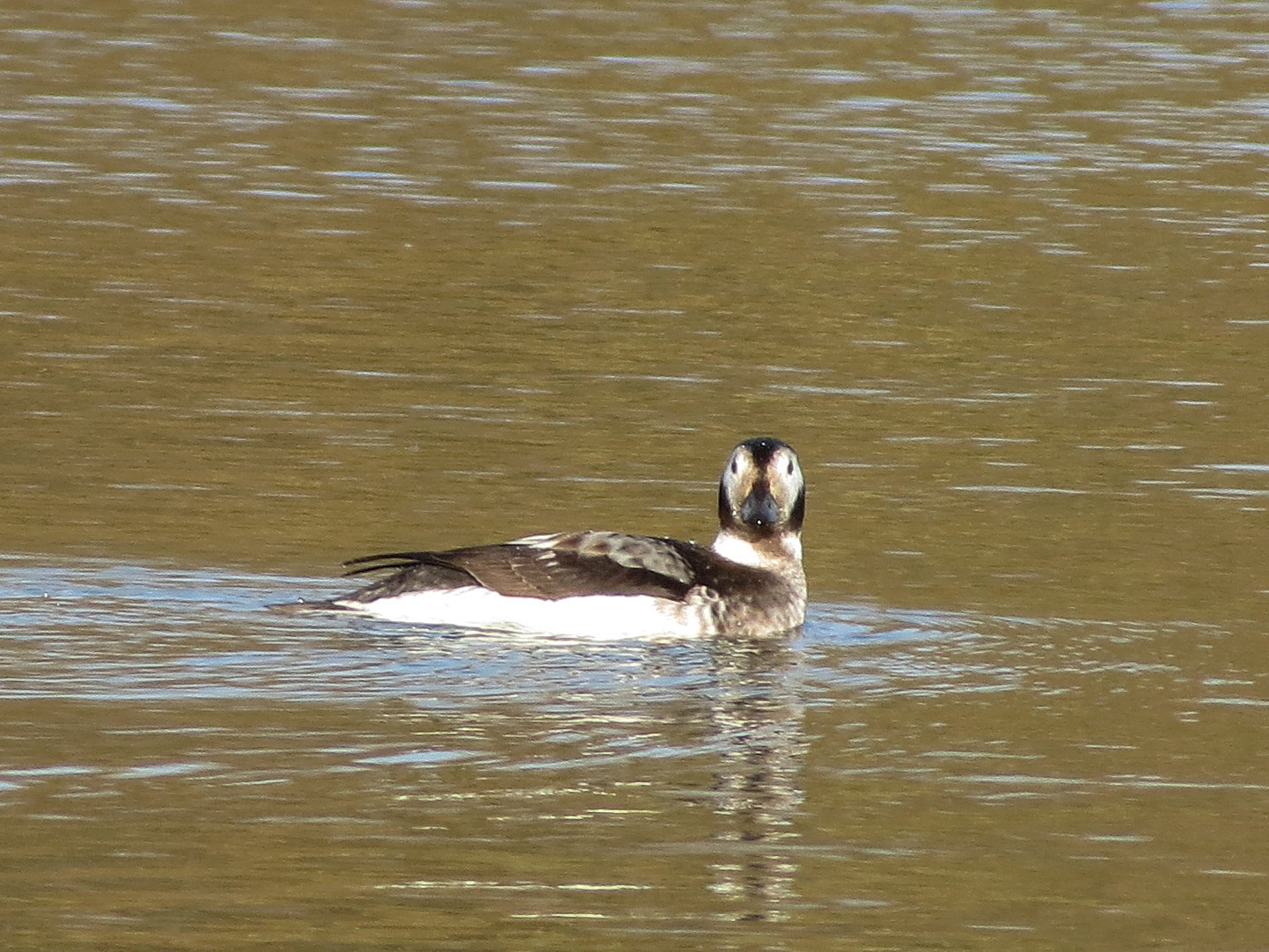
The blistering Barnacle Goose remained at Blatherwycke Lake until at least 7th, two Egyptian Geese visited Pitsford Res on 4th while the usual two were still mobile around Ditchford GP the following day. The only Pintail were one at Stanwick GP and two at Pitsford Res on 4th with just one at the latter locality again on 6th, where up to six Red-crested Pochards remained throughout the week with two more at Ringstead GP on 10th and the drake Scaup still at Ditchford GP on the same date. The three Long-tailed Ducks remained on Mary’s Lake at Earls Barton GP

Long-tailed Ducks, Earls Barton GP, January 2014 (Dave Jackson)

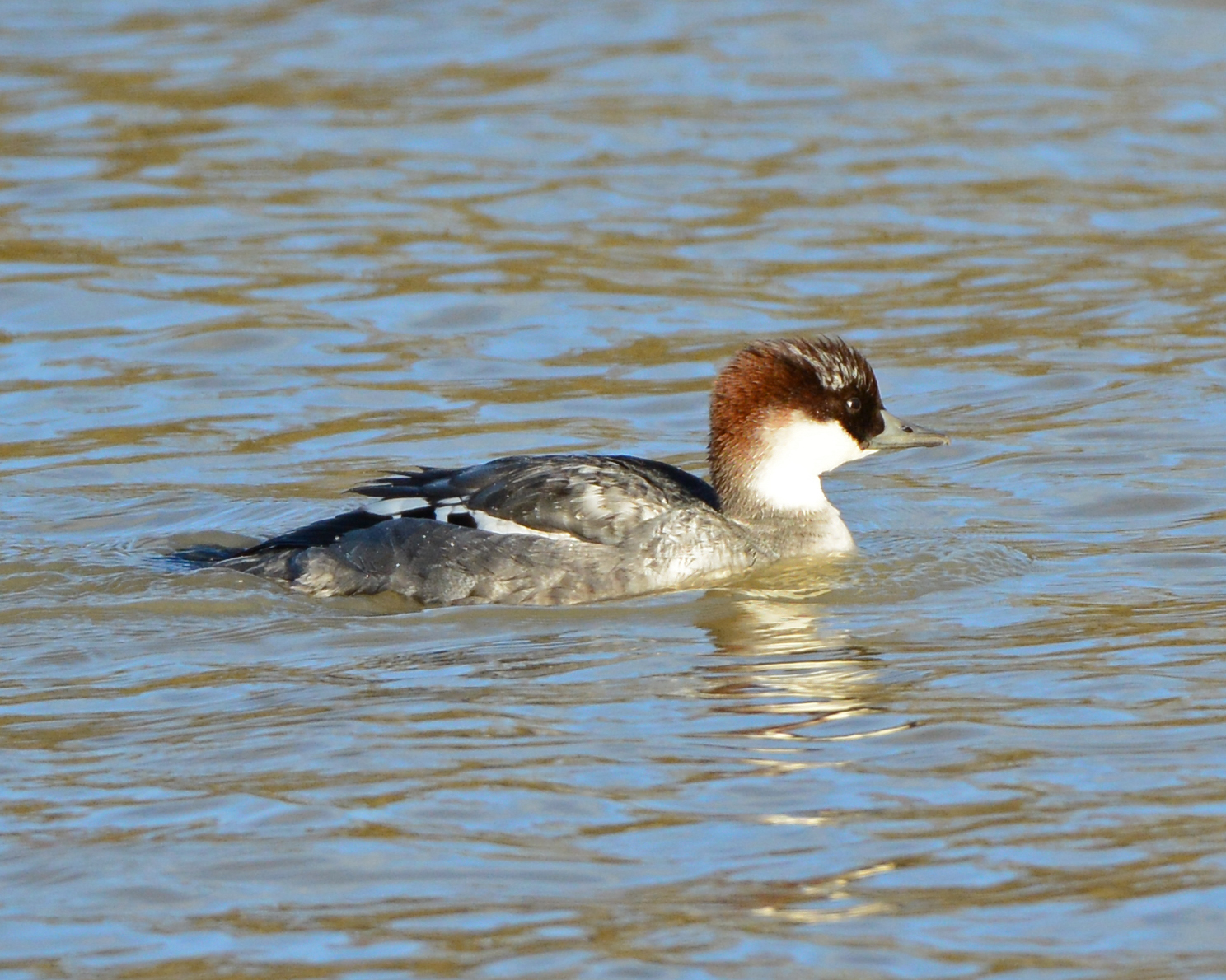
throughout the week, up to eight Smew, including three drakes, were present at Pitsford Res, while two visited Clifford Hill GP on 9th and Goosanders were reported from five localities with a maximum of eight at Abington Park Lakes, Northampton and Hardingstone GP on 6th.

Drake Smew, Pitsford Res, 10th January 2014 (Bob Bullock)
Drake Smew, Pitsford Res, 10th Jan 2014 (Bob Bullock)

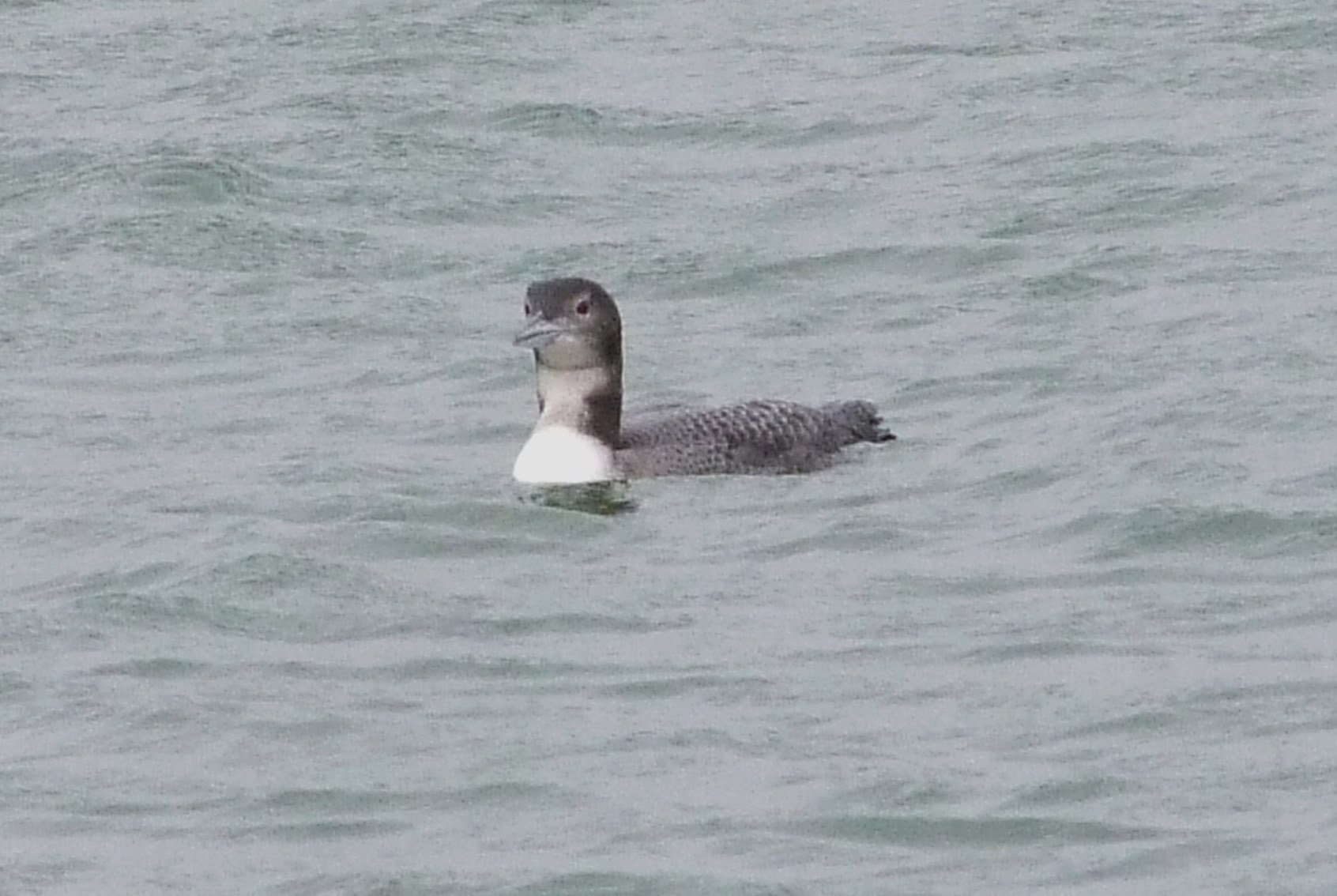
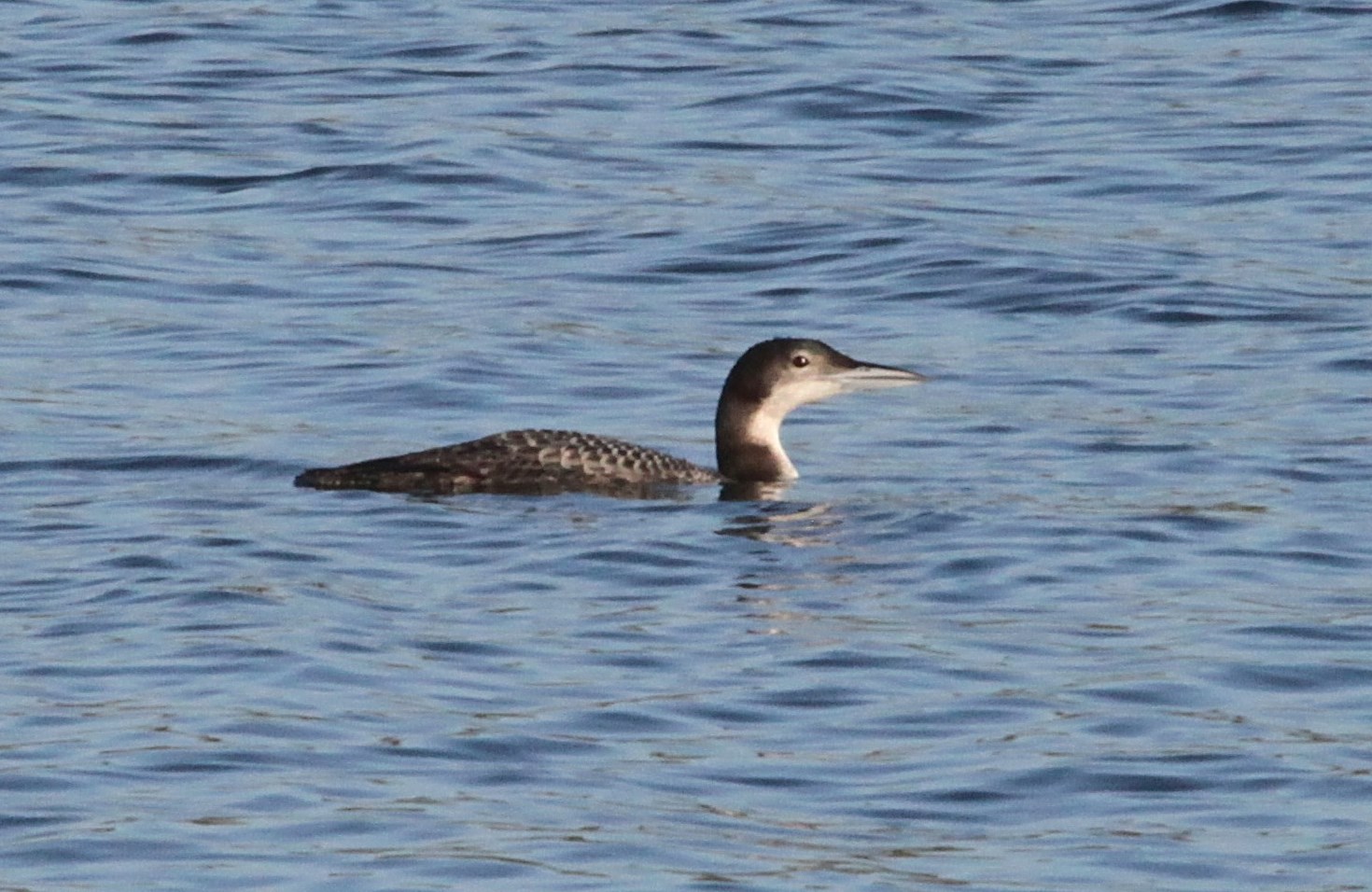
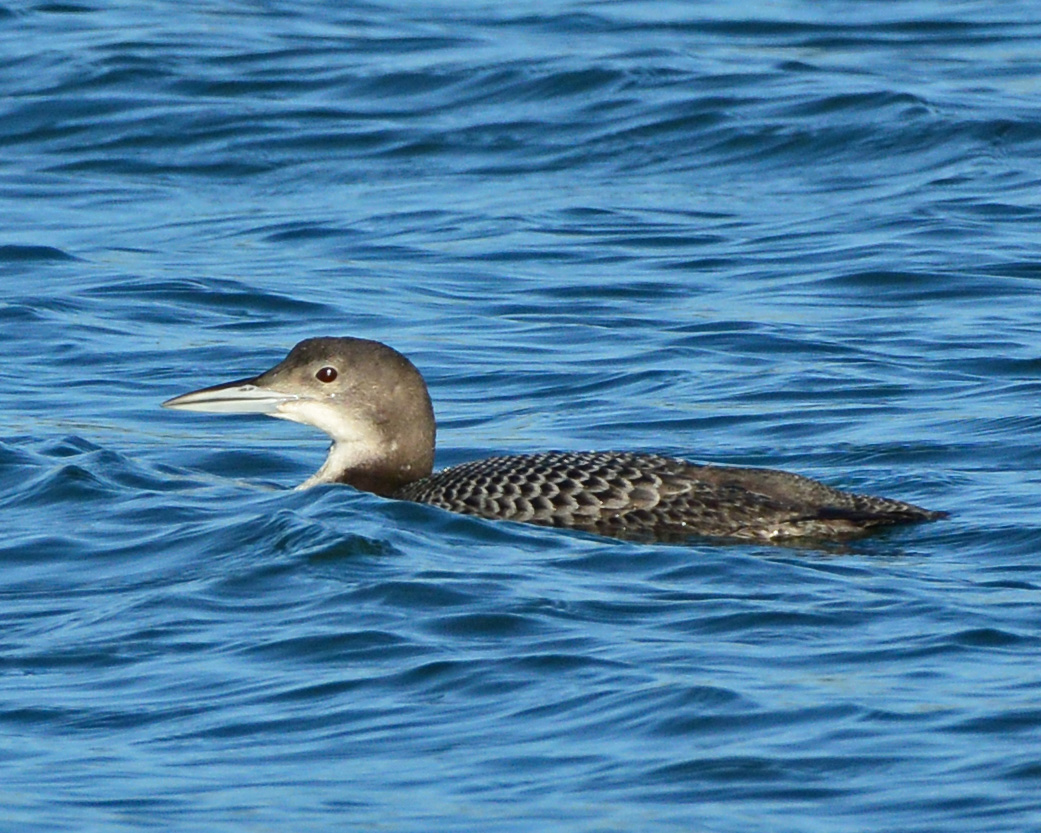
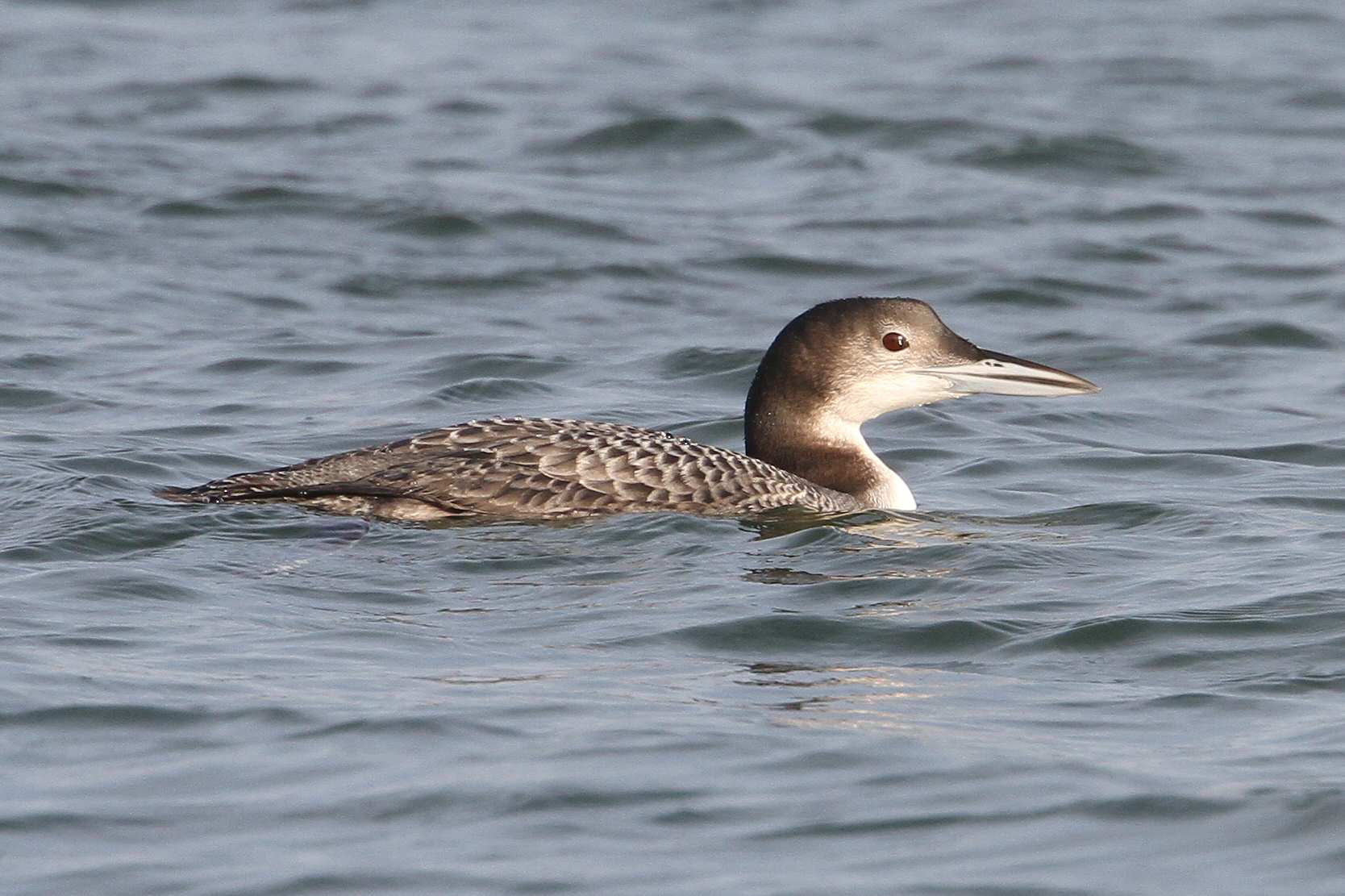
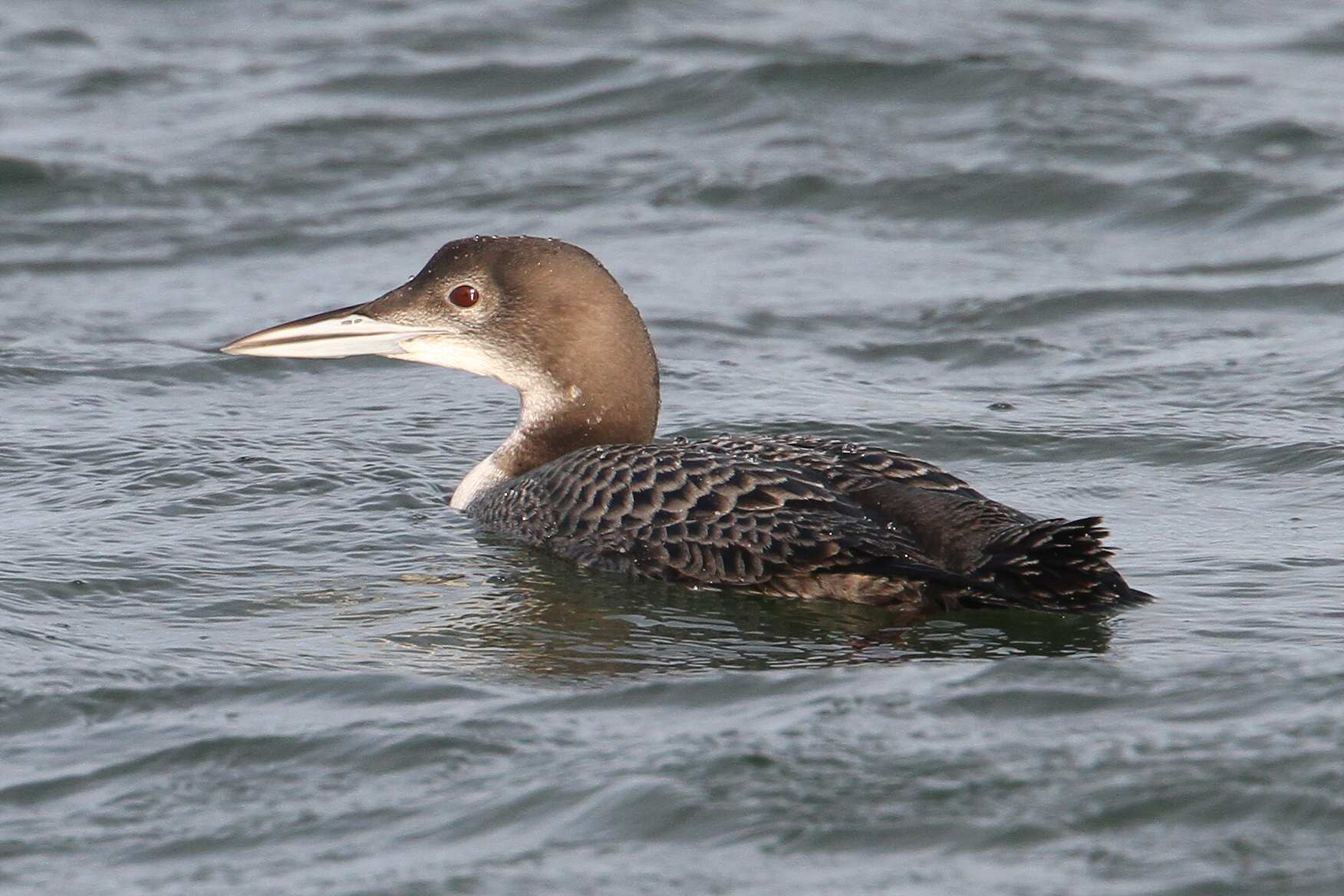
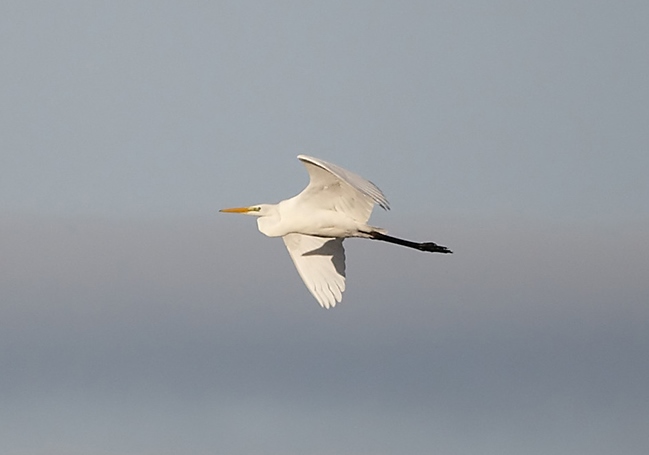
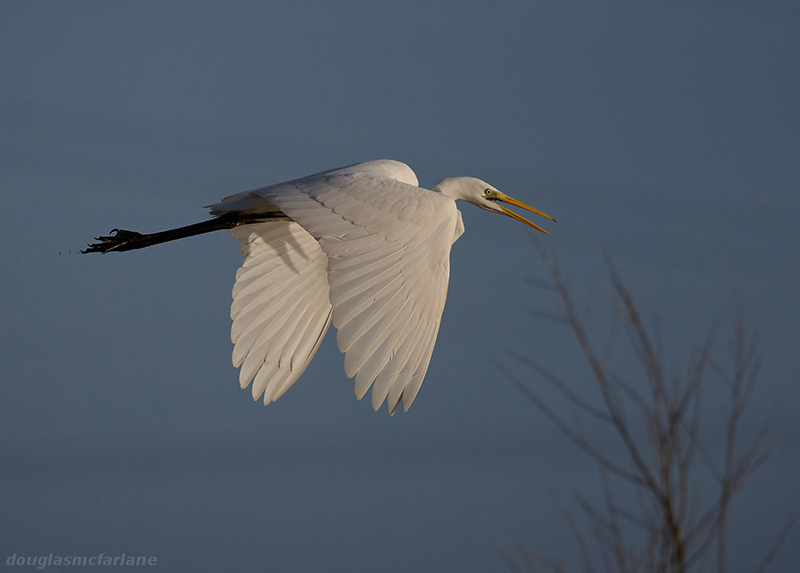
The wintering juvenile Great Northern Diver remained at Pitsford Res throughout the period and the elusive Bittern at Stortons GP was seen on 6th and 10th, while up to two Great White Egrets were still at Pitsford between 4th and 8th and one remained at Earls Barton GP all week with two present there on 5th. The only scarce raptors reported this week all happened to be Peregrines with singles at Earls Barton GP on 7th, Harrington AF on 7th-8th, Clifford Hill GP on 9th and Great Brington and Ditchford GP on 10th.

Bittern, Stortons GP, 10th January 2014 (Alan Coles)
Great White Egret, Earls Barton GP, 6th January 2014 (Doug McFarlane)

Waders were similarly in short supply with Golden Plovers recorded at three localities, a Jack Snipe at Pitsford Res on 10th, Green Sandpiper at Ditchford GP on 10th and ten Redshanks at Stanwick GP on 4th was a reasonable total. Stanwick GP produced the majority of the rarest gulls – albeit in small numbers – with an adult Glaucous Gull and an adult Caspian Gull on 10th plus 3 Yellow-legged Gulls on 4th and 10th, while a  Mediterranean Gull was at Ditchford GP on 8th and single Caspian Gulls there on 4th and 5th.

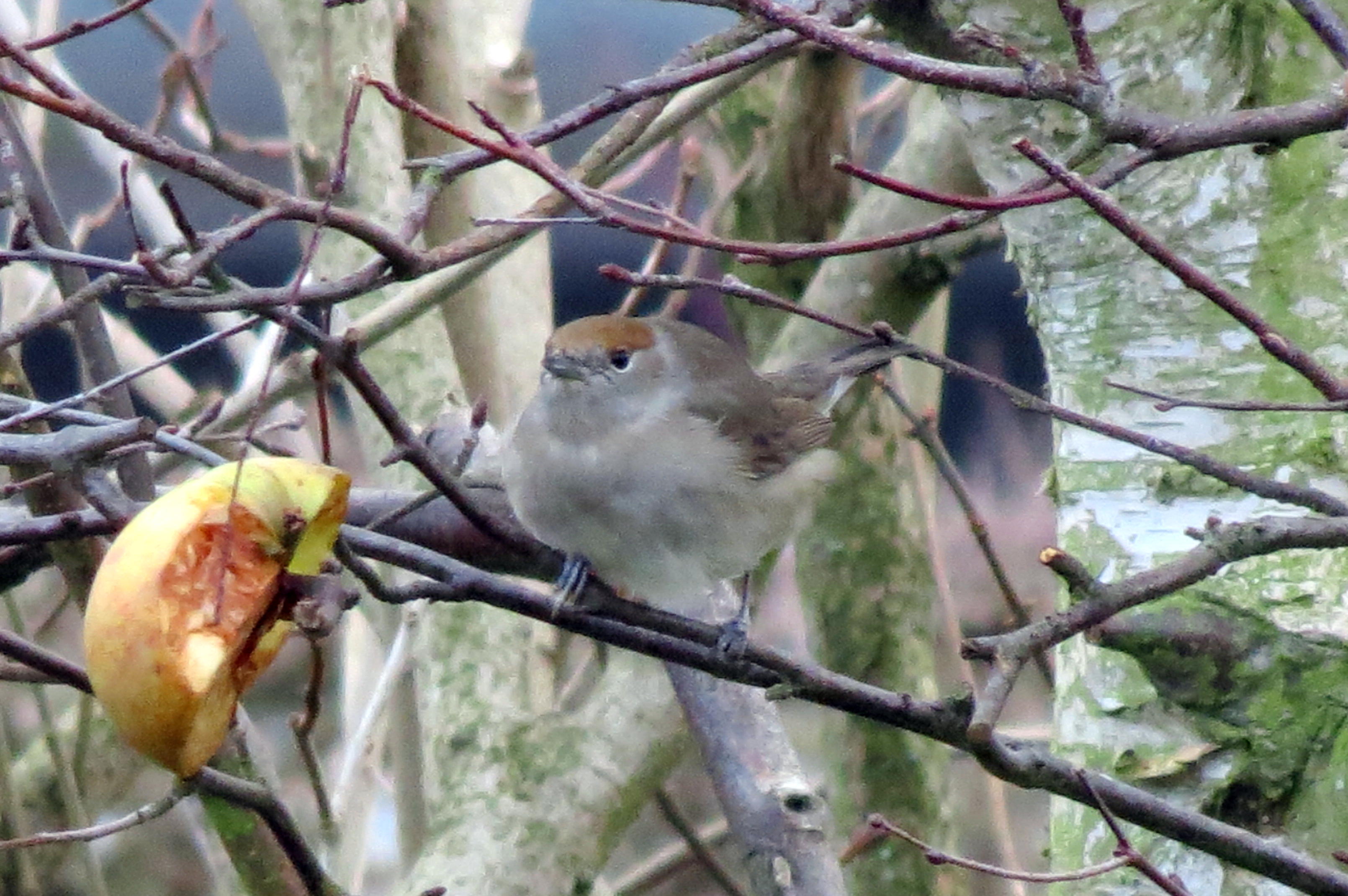
The only Chiffchaffs this week were three at Ecton SF on 5th and one at Pitsford Res on 10th, two female Central European Blackcaps were in a Sywell garden on 4th and males were in two Northampton gardens all week, while two or three Bearded Tits were still at Stortons GP on 5th-6th and 10th. The two wintering Stonechats were still in residence at Blueberry Farm, Maidwell on 10th and Bramblings were seen at five localities with a maximum of twenty to twenty-five near Badby Wood on 5th.
Two Weeks in Focus: 21st December 2013 to 3rd January 2014

For two weeks Britain has been in the grip of a series of low pressure systems which raced across the Atlantic bringing with them periods of strong south-westerly winds and rain. The deepest of these, a near-record low, occurred on 23rd although it had little influence on local birding.

A Barnacle Goose was again at Blatherwycke Lake on 21st and two Egyptian Geese were at Ditchford GP the following day while the only Pintail recorded during the period were at Pitsford Res, where there were up to two between 22nd and 2nd. The same site continued to host a sizeable Red-crested Pochard flock, the highest count of which was thirteen on 22nd, while a drake was at Stanwick GP between 26th and 28th. ‘Horrible hybrids’ included a Red-crested Pochard x Mallard also at Pitsford Res on 22nd and a drake Pochard x Ferruginous Duck at Stortons GP on 30th-31st. The drake Scaup remained at Ditchford GP, west of Ditchford Lane, until at least 1st and a female was at the other end of the complex, west of the A6 road bridge, on 27th with another female at Stortons GP on 30th. The three Long-tailed Ducks remained on Mary’s Lake at Earls Barton GP throughout the period.

Long-tailed Duck, Earls Barton GP, 3rd January 2014 (Martin Dove)

Varying numbers of Smew were present at Pitsford Res, where the maximum was eight, including two drakes, on 27th, while single ‘redheads’ visited Stanford Res on 28th and Stortons GP on 30th and two ‘redheads’ were at Sywell CP on the latter date.

First-winter drake Smew, Pitsford Reservoir, 24th December 2013 (Clive Bowley). By late winter, 'redheads' become assignable to sex. This individual is just beginning to acquire the white crest   feathers of a male.
First-winter drake Smew, Pitsford Reservoir, 24th December 2013 (Clive Bowley). By late winter, ‘redheads’ become assignable to sex. This individual is just beginning to acquire the white crest feathers of a male.

The rarest sawbill of the period was, however, a drake Red-breasted Merganser in Walgrave Bay at Pitsford Res on 26th while Goosanders were reported from seven localities with a maximum of fifteen at Stortons GP on 28th and 30th.

The juvenile Great Northern Diver found at Pitsford Res on 15th December remained throughout the period, as did up to three Great White Egrets while others put in sporadic appearances at Summer Leys LNR on 22nd and 2nd and another visited Cransley Res on 27th. A first-winter Shag was seen briefly at Stanford Res on 24th.

Little and Large. Little and Great White Egrets, Pitsford Res, 28th December 2013 (Alan Coles)
Little and Large. Little and Great White Egrets, Pitsford Reservoir, 28th December 2013 (Alan Coles)

This week’s raptor round-up included a ‘ringtail’ Hen Harrier at Blueberry Farm, Maidwell on 29th, female Merlins at Stortons GP on the same date and at Blueberry Farm on 2nd, while a run of Peregrines included singles at Corby on 21st, Pitsford Res on 27th, Harrington AF on 31st and 2nd, Ditchford GP on 1st, Earls Barton GP, Edgcote, Kelmarsh and Stanwick GP on 2nd and Clifford Hill GP on 3rd.

The early returning Oystercatcher was still at Stanwick GP on 1st, while Golden Plovers were recorded at five localities with a maximum of approximately two thousand at Clifford Hill GP on 3rd. Just one Dunlin was found during the period – at Pitsford Res on 22nd – two Jack Snipe were at Hollowell Res on 28th, up to three Redshanks were at Pitsford Res with eight at Stanwick GP, while a Green Sandpiper was at Pitsford Res on 22nd and 2nd-3rd and two were at Wicksteed Park Lake on 23rd.

The last two weeks have been surprisingly quiet for gulls with an adult Caspian Gull in the roost at Pitsford Res on 22nd and 26th, an adult at Stanwick GP on 31st and an adult plus a second-winter there on 1st. The rather dark juvenile Iceland Gull (image in last report) was again at Ditchford GP on 1st and the only Yellow-legged Gulls were all adults with two at Pitsford Res on 22nd and one on 26th and one at Stanwick GP on 1st.

Two Ring-necked Parakeets flew over Pitsford Res on 3rd, a ‘Nordic’ Jackdaw was seen at Hanging Houghton on 23rd and, not too far away, the Hume’s Warbler remained in residence on private land in north Northants until at least 22nd. Other warblers not shy of the (so far) mild British winter were Chiffchaffs, which were reported from Pitsford Res, Preston Deanery and Stanwick GP and Central European Blackcaps, which moved into gardens in Byfield, Northampton (East Hunsbury, Harlestone Road and Kingsthorpe) and Sywell.

Central European Blackcap, Sywell, 27th December 2013 (Jim Dunkley)

Three Bearded Tits appeared again at Stortons GP on 29th but potentially the rarest new bird to be found in the period was a Dipper, of which there was an unconfirmed report on the overflow at Sywell CP on 21st. The last record of Dipper in Northants was at Deanshanger on 20th April 1996 and another one staying for any length of time would no doubt be popular with local birders. The two Stonechats remained throughout the period at Blueberry Farm and a Water Pipit was again seen at Ditchford GP on 22nd and 1st, while Bramblings were seen only at Brixworth CP and Harrington AF, with a maximum of at least ten at the latter site on 2nd and a Snow Bunting put in a brief appearance at Pitsford Res on 22nd before quickly moving off south.

Pochard x Ferruginous Duck hybrid

While searching for the female Scaup reported from Sixfields Lake at Stortons GP yesterday, I came across this interesting-looking duck. It was obvious among the Pochards on the lake by virtue of its overall darkness compared to ‘standard’ drake Pochard, to which it bore a passing resemblance.Pochard x Ferruginous Duck hybrid, Stortons GP, 31st December 2013 (Mike Alibone)Pochard x Ferruginous Duck hybrid, Stortons GP, 31st December 2013 (Mike Alibone)1AThis individual exhibits characters associated with both Pochard and Ferruginous Duck. Approximately the same size and shape as Pochard, perhaps a fraction smaller. The head, neck and breast colours are close to, and are clearly ‘borrowed’ from, Ferruginous Duck, as is the head shape and, to some extent, the bill. The latter has a dirty wash across its basal third.Pochard x Ferruginous Duck hybrid, Stortons GP, 31st December 2013 (Mike Alibone)1B The golden/orange eye colour is neither Pochard (= red) nor Ferruginous Duck (= creamy-white) and the white secondary bar and dirty white undertail coverts are also lent by Ferruginous Duck although they are not as extensive or as distinctive as in that species. The body and wings (apart from the secondaries) appear to be Pochard derivatives.

Pochard x Ferruginous Duck hybrid, Stortons GP, 31st December 2013 (Mike Alibone)2Pochard x Ferruginous Duck hybrid, Stortons GP, 31st December 2013 (Mike Alibone)3Hybrids of similar appearance have been recorded before, e.g. at Alexandra Park, London in 2010 here and at Slimbridge on 21st March 2013 here with the latter individual appearing almost, if not completely, identical to the Stortons bird.

The Gill and the Gloss

It’s been thirty-three years since I last saw a Brϋnnich’s Guillemot. The towering cliffs looking out over the cobalt-blue Barents Sea at the mouth of Varangerfjord – wild, windswept and bustling with breeding seabirds – was the location with that ‘standing on the edge of the world’ feeling.  Time to get reacquainted.

It took less than three and a half hours for Gary Pullan, Frank Smith and myself to arrive at Portland Harbour, where a couple of hundred birders had already assembled.

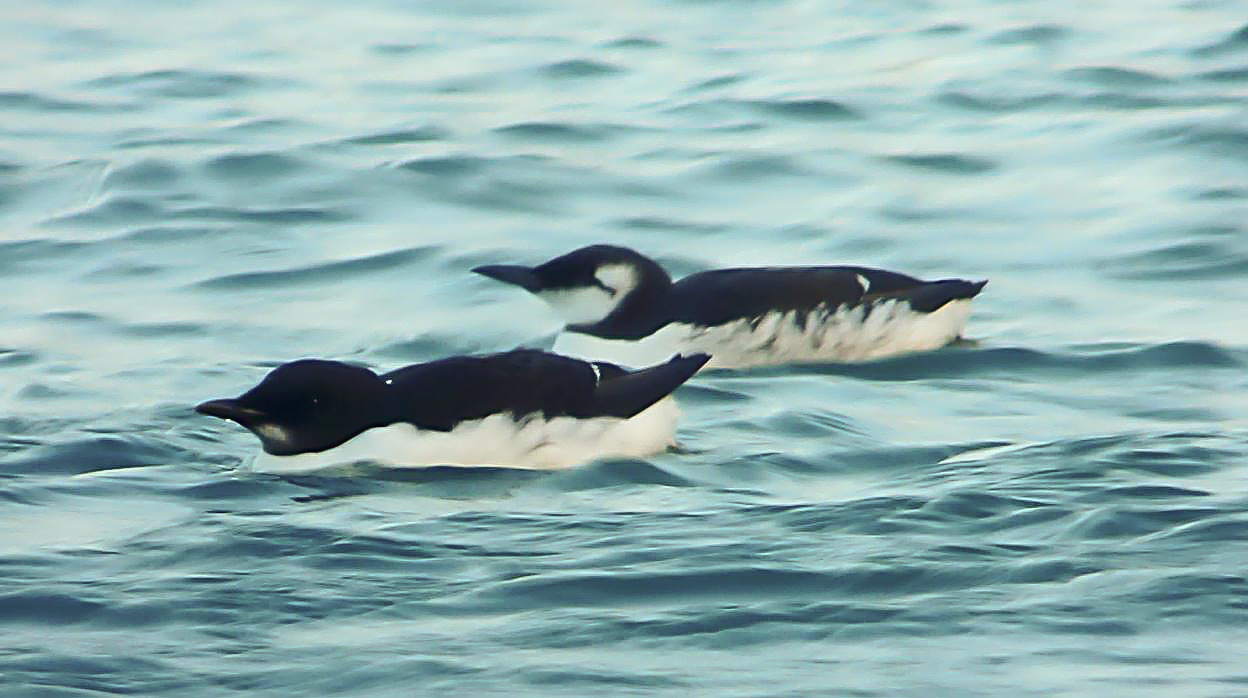
DSCN0295And there it was, just bobbing about like a black and white cork, sheltering in the lee of a moored boat from the rather strong, blustery wind and rain which started lashing the area as soon as we got out of the car. At fairly close range the identification was straightforward. Aside from the obvious diagnostic features, this bird appeared to have a noticeably longer primary projection than the accompanying Common Guillemot, which shows well in the photos below.

Brunnich's Mike Alibone4

Brunnich's Mike Alibone2Brunnich's Mike Alibone1Brunnich's Mike Alibone5Brunnich's Mike Alibone3

[click on the cogwheel and change resolution to 720 HD for marginally better definition]

After a while, it moved very rapidly to another part of the harbour, where it seemed settled and continued to attract a steady stream of admirers.

Birders at the Brunnich's 27 Dec 2013Other interesting species in the harbour at the same time were Great Northern and Black-throated Divers, Red-breasted Mergansers, Shag, Razorbill and Black Guillemot – all nice to see.

On the way home we swung by Radipole Park Drive, where a Glossy Ibis has been feeding on a flooded football pitch for the past couple of days.

A cold, blustery day out with some excellent festive season birding!

Portrait of a Diver: the Pitsford Great Northern

The juvenile Great Northern Diver, present at Pitsford Reservoir since 15th December, has been showing rather well, presenting superb photographic opportunities for visiting birders. Here are a few.

Juvenile Great Northern Diver, Pitsford Res, 17th December 2013 (Douglas Goddard)
Juvenile Great Northern Diver, Pitsford Res, 17th December 2013 (Frank Porch)
Juvenile Great Northern Diver, Pitsford Res, 19th December 2013 (Phil Jackman)
Juvenile Great Northern Diver, Pitsford Res, 19th December 2013 (Clive Bowley)
Juvenile Great Northern Diver, Pitsford Res, 20th December 2013 (Bob Bullock)
Juvenile Great Northern Diver, Pitsford Res, 20th December 2013 (Martn Dove)
Juvenile Great Northern Diver, Pitsford Res, 24th December 2013 (Mike Alibone)

… and some ropey video …

Juvenile Great Northern Diver, Pitsford Res, 24th December 2013 (Mike Alibone). Click on the cogwheel and change to 720pHD to view at higher resolution.

The broad, neat pale fringes to the upperpart feathers indicate it is a juvenile (plainer upperparts with distinct spotting on coverts and more prominent neck ‘gashes’ in adult). Great Northern Divers have appeared almost annually in Northants in recent years. They are the commonest diver to occur in the County with 29 records in the last 45 years, outnumbering Red-throated and the rarer Black-throated with 23 records and 10 records in the same period respectively.

The Week in Focus: 14th to 20th December 2013

The weather remained mixed and temperatures unseasonally high throughout the period, with a low pressure system centred just north of the UK bringing gale force west to south-westerly winds toward the week’s end. Another potential first for Northants was discovered on 14th, subsequently proving elusive.

Two Egyptian Geese were at Ditchford GP on 19th with a drake Red-crested Pochard there at the same time, while eight of the latter species were found at Ravensthorpe Res on 14th and eleven were still at Pitsford Res on 17th. The drake Scaup remained at Ditchford GP all week while another was discovered at Pitsford Res on 15th and was still present there on 18th and the three Long-tailed Ducks – now qualifying as ‘long stayers’ – remained on Mary’s Lake at Earls Barton GP all week. At the beginning of the period, six Smew (two drakes) were at Pitsford Res and two ‘redheads’ were found at Ditchford GP on 19th while Goosanders were reported from just three localities.

New in this week was a juvenile Great Northern Diver at Pitsford Res from 15th to 20th, occasionally posing well for photographers but remaining elusive for some would-be observers.

Juvenile Great Northern Diver, Pitsford Res, 20th December 2013 (Bob Bullock)

Up to three Great White Egrets remained at the same locality and another visited Summer Leys LNR on 15th and 17th. The only Merlin of the week was a male at Pitsford Res on 17th, while Peregrines were seen in the Brampton Valley on 16th and at Pitsford Res on 16th and 18th.

The same waders as last week’s were still around, including the early returning Oystercatcher at Stanwick GP on 15th-19th, the Pitsford Black-tailed Godwit reappearing on 15th, up to four Redshanks at the same locality throughout the week with seven at Stanwick GP on 19th and single Green Sandpipers at Pitsford Res on 16th and 18th and at Ditchford GP on 19th.

Ditchford GP was also the place to be for gulls this week, producing a potential County first in the shape of a probable second-winter American Herring Gull, which was found on the Watersports Pit late on 14th, reappearing there briefly the following day. The supporting cast comprised up to six different Caspian Gulls on various dates, a juvenile Glaucous Gull on 15th, 16th and 18th, a second-winter Iceland Gull on 16th and 18th and a juvenile on 19th plus three to five Yellow-legged Gulls and, for good measure, two

Juvenile Iceland Gull, Ditchford GP, 19th December 2013 (John Friendship-Taylor)

Glaucous x Herring Gull hybrids on 16th. Another Glaucous Gull was seen flying west at Thrapston GP’s Town Walk on 14th, while up to two adult and second-winter Caspian Gulls were at Stanwick GP between 15th and 19th, where there was also a first-winter Yellow-legged Gull on 17th.

At least one Short-eared Owl remained at Blueberry Farm on 17th and the Hume’s Warbler remained in residence on private land in north Northants all week, while Chiffchaffs were reported from Ecton SF, Ditchford GP, Kelmarsh, Pitsford Res and Stanwick GP with a maximum of three at the first of these localities on 14th. A single male Blackcap visited a garden in Kettering on 17th, two Stonechats were still at Blueberry Farm on 14th and 17th and a Water Pipit – locally very scarce this year – was located at Ditchford GP on 19th. Bramblings were seen only at Kelmarsh and Harrington AF, with a maximum of twelve at the latter site on 17th, while six Crossbills visited Brixworth CP on 18th, two were nearby at Pitsford Res and at least two at Sywell CP – both on 20th.

The probable American Herring Gull at Ditchford Gravel Pits

Yesterday, in the last hour of daylight, Martin Elliott found a promising candidate for a second-winter American Herring Gull on the Watersports Pit at Ditchford GP,  immediately west of Ditchford Lane. Fittingly, this was during one of Martin’s gull ageing and ID courses he is running throughout the winter, based out of Stanwick Lakes visitor centre a couple of miles east along the Nene Valley! 

Probable second-winter American Herring Gull, Ditchford GP, 14th December 2013 (Martin Elliott)

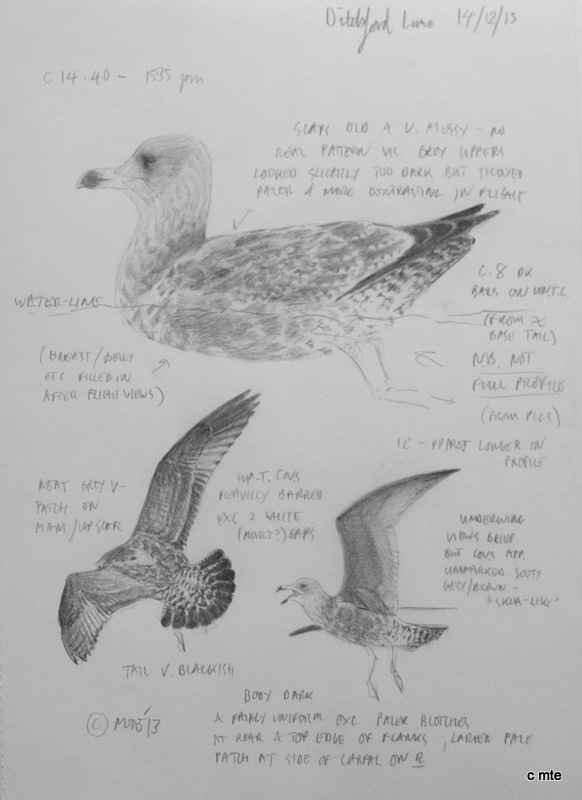
The bird was present again on the Watersports Pit, where I saw it albeit briefly, at 11.45 this morning before it flew off in the direction of Viaduct Pit, immediately to the west. It’s a distinctive and interesting-looking bird. Obviously dark compared to Herring Gulls of the same age, dark lower breast/belly, noticeably dark upperparts and black primaries, blackish tail with heavily barred uppertail coverts, bi-coloured bill, small grey ‘triangle’ of feathers on mantle and strikingly dark underwing. Martin’s notes say it all in detail and I would like to thank him for sharing them here.

robable second-winter American Herring Gull, Ditchford GP, 14th December 2013, sketches by Martin Elliott
Probable second-winter American Herring Gull, Ditchford GP, 14th December 2013, sketches by Martin Elliott
Tail pattern of probable second-winter American Herring Gull, Ditchford GP, 14th December 2013, sketch by Martin Elliott

Good quality photographs and/or video would be useful in helping to provide a fully detailed analysis and hopefully the bird will stick around long enough to allow this to be made possible.

The Week in Focus: 7th to 13th December 2013

A potential ‘first’ for Northamptonshire was identified at the beginning of a week which remained mild and mainly dry throughout with a warm south-westerly airstream bringing damp conditions towards its end.

Two Egyptian Geese remained at Thrapston GP until at least 8th and another visited Ditchford GP on 9th while a first-winter drake Scaup was found at the former locality on 8th and the adult drake was still at Ditchford GP the following day. The three Long-tailed Ducks remained on Mary’s Lake at Earls Barton GP until 11th with at least two of them still present on 13th, while one remained at Thrapston GP all week and two drake

Long-tailed Duck, Earls Barton GP, 11th December 2013 (Bob Bullock)

plus two ‘redhead’ Smew were at Pitsford Res until at least 10th and another ‘redhead’ visited Earls Barton GP on 13th.

Up to three Great White Egrets remained at Pitsford Res until at least 10th, last week’s individual at Summer Leys LNR remained until 9th and was probably the same bird which visited Ditchford GP on 9th.

Great White Egret, Earls Barton GP, 7th December 2013 (Doug McFarlane)

The only Merlin of the week was a female or immature at Stanwick GP on 12th, while Peregrines continued to be seen in the only to be expected localities of Blueberry Farm and Brixworth on 7th, Ditchford GP on 9th and near Maidwell on 13th.

Reports of waders dropped to a mere three: an unseasonal Oystercatcher at Stanwick GP on 8th (they do not normally return until very late winter) plus three Redshanks at Ditchford GP the following day, along with a Green Sandpiper there on 10th.

A first-winter Mediterranean Gull visited the A45 Lay-by Pit at Stanwick GP on 10th with the same site hosting an adult Caspian Gull on 8th, while another adult Caspian Gull was in the roost at Thrapston GP on 7th and an adult plus a second-winter were at Ditchford GP on 9th with a third-winter there on 13th. Ditchford also produced a juvenile Glaucous Gull on 8th and 9th plus a second-winter Iceland Gull on the latter date – which then put in a brief appearance at the Stanwick GP ‘pre-roost’ on 12th – and a juvenile on 13th. The only Yellow-legged Gulls this week were two at Stanwick GP on 8th and five at Ditchford GP the following day with one there on 13th.

Unusually scarce this year, a Ring-necked Parakeet paid a brief visit to a garden in Grange Park, Northampton on 13th, while Harrington Airfield produced two Short-eared Owls on 7th with one there again on 9th and another was at Blueberry Farm also on 7th. What must rank as Northamptonshire’s bird of the century so far (there are 87 years left!) was – if accepted by the British Birds Rarities Committee – the county’s first official record of Hume’s Warbler (but see further comment here), which was reidentified on 7th after being reported as a Yellow-browed Warbler last week, on 6th. The bird remained in residence on private land in north Northants all week and was seen well by numerous local visiting birders on a specially organised tour on 11th.

Hume’s Warbler, north Northants, 11th December 2013 (Jim Almond) www.shropshirebirder.blogspot.co.uk The first for Northamptonshire. Typically duller and plainer looking than Yellow-browed Warbler, lacking the latter’s darker lower border to the supercilium and darker bases to secondaries which, on Yellow-browed, lend contrast to the wing bars and supercilia, giving it a quite different character. Other pro-Hume’s features are the dark legs and bill, the latter with an extensive pale base to the lower mandible only.
Hume’s Warbler, north Northants, 11th December 2013 (Jim Almond) http://www.shropshirebirder.blogspot.co.uk  The first for Northamptonshire. Typically duller and plainer looking than Yellow-browed Warbler, lacking the latter’s darker lower border to the supercilium and darker bases to secondaries which, on Yellow-browed, lend contrast to the wing bars and supercilia, giving it a quite different character. Other pro-Hume’s features are the dark legs and bill, the latter with an extensive pale base to the lower mandible only.

Only one Chiffchaff was reported this week – at Ditchford GP on 9th while the two Stonechats remained at Blueberry Farm all week, Bramblings were seen only at Harrington AF, with a maximum of twelve there on 9th, while several Crossbills were at Pitsford Res on 10th and two at Harlestone Heath on 12th.

Twitching the Dutch Hawk Owl … on the fly

An out of county interlude – allowable, I think …

It was too good an opportunity to miss. A pre-planned business trip to Utrecht and a long-staying Hawk Owl less than an hour away (52 mins by train + 5 mins in a taxi). It all hinged on having enough daylight left and enough time to get back to the airport to catch the flight home. It was doable – kind of.

I went prepared. Bins, scope, camera and tripod centre column only (for what it was worth) stowed surreptitiously in one bag as hand-luggage. Bowling into to a customer’s premises with a tripod slung over my shoulder would have looked a bit odd. I wasn’t there for a photoshoot.

Visit concluded early afternoon. I could have gone and spent 3.5 hours sitting in the airport. The decision was easy: Zwolle here we come!

An hour later. Walking down Primulapad past the sports field where it is frequently seen. No sign. Then I catch sight of a guy with a tripod disappearing behind some bushes on the other side of Marsweg. He must be in the know. I crossed the road and followed him. As I rounded the bushes I could hear the whirs and clicks of camera shutters and was amazed to see some 20 birders with their equipment trained on some metal framework above an electricity substation. And there it was, ‘The Boy’, seemingly unfazed by the close proximity of its admirers.  Hawk Owl, Zwolle, 10th December 2013 (Mike Alibone) 253.21Hawk Owl, Zwolle, 10th December 2013 (Mike Alibone) 254.32Hawk Owl, Zwolle, 10th December 2013 (Mike Alibone) 255.27

Images & Video: Hawk Owl, Zwolle, The Netherlands, 10th December 2013 (Mike Alibone)

I have always wanted to see Hawk Owl – especially after missing them on a two-week trip to Scandinavia many years ago. Unique and charismatic. It was as beautiful as it was awesome (I hate that word – but it was!).  It spent much of its time loafing and looking and making a couple of short flights before flying off up Marsweg.  My photographic attempts won’t win any prizes. Camera attached to scope, scope rammed against chain-link fence and balanced on laptop bag, just off the ground.

In the excitement I had forgotten I had not moved the time on my watch forward to Dutch time. I had an hour less than I thought. Consequence: train arrives at airport 15 minutes after intended flight has departed. Recovery: caught next cheesyjet flight back to Luton late evening. Mission accomplished.