Seeing out the first full week of January was a host of last year’s leftovers, still on tap for those keen to kick off the New Year with a splash of quality. Perhaps unsurprisingly, wildfowl continued to top the bill, despite temperatures continuing to fall and many local bodies of water becoming ice-bound as a consequence. Being made of sterner stuff, they were clearly not for turning …
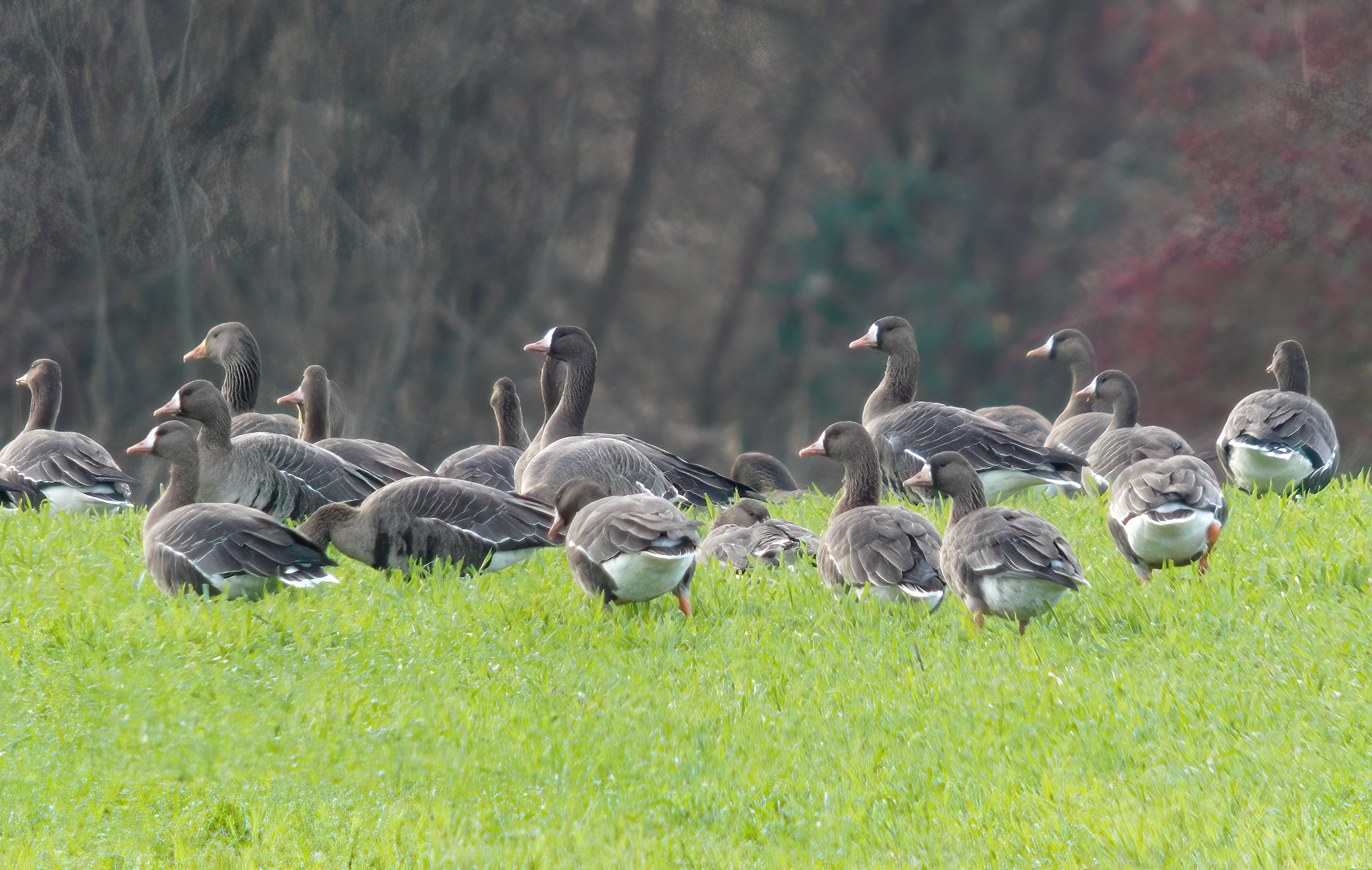
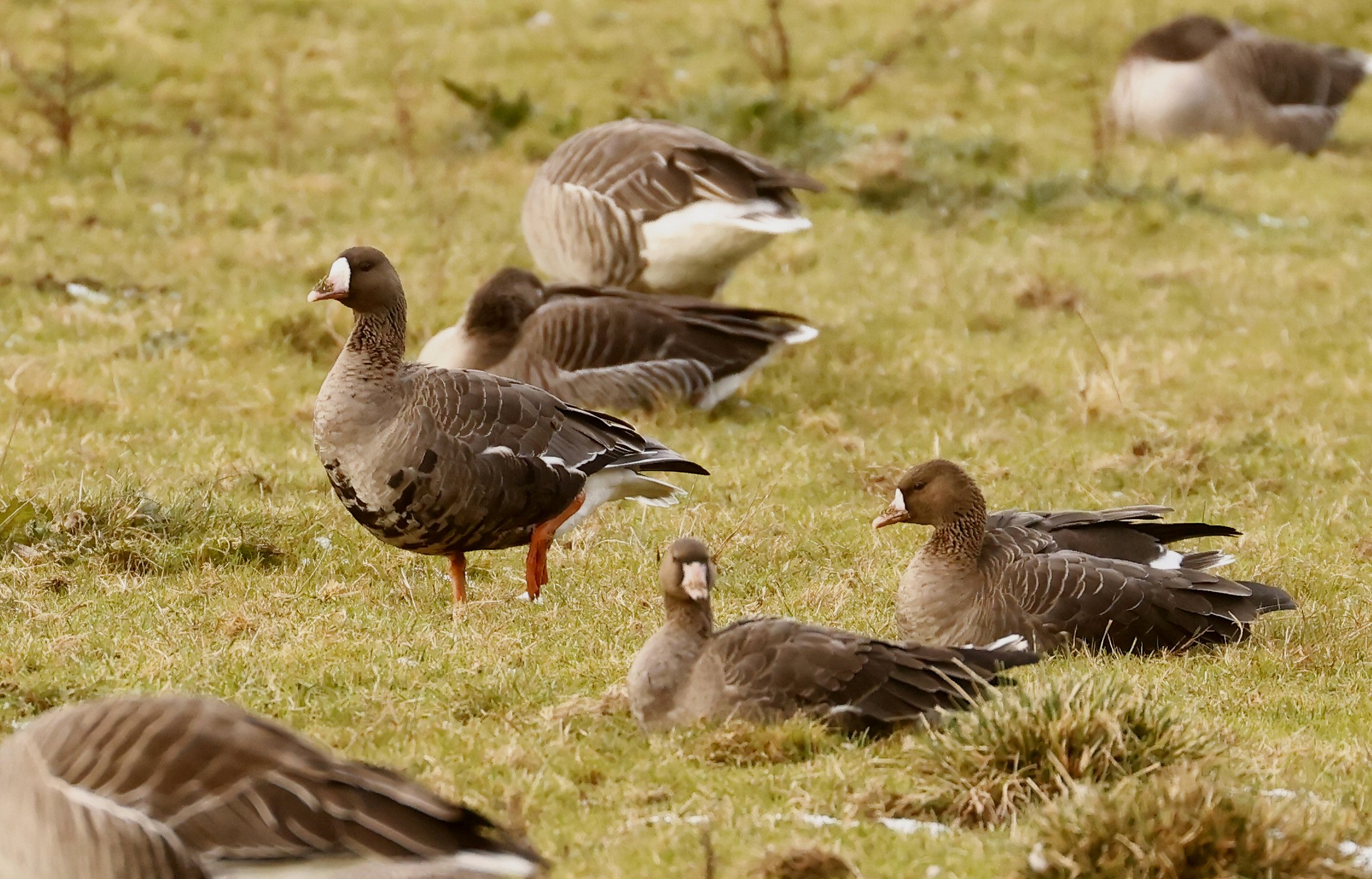
Tundra Bean Geese – or more likely one mobile bird – again proved a popular pull following the initial disappearance of the individual that briefly visited Ringstead GP, last week, on 2nd. Within spitting distance, just up the valley, it was Stanwick GP’s turn to deliver the goods on 6th, when one was found in company with ten White-fronted Geese. It remained there, between the northern end of the complex and the southern end of Ringstead over the next three days, the last of which also saw one, or it, during the afternoon at Islip Water Meadows, adjacent to Thrapston GP.
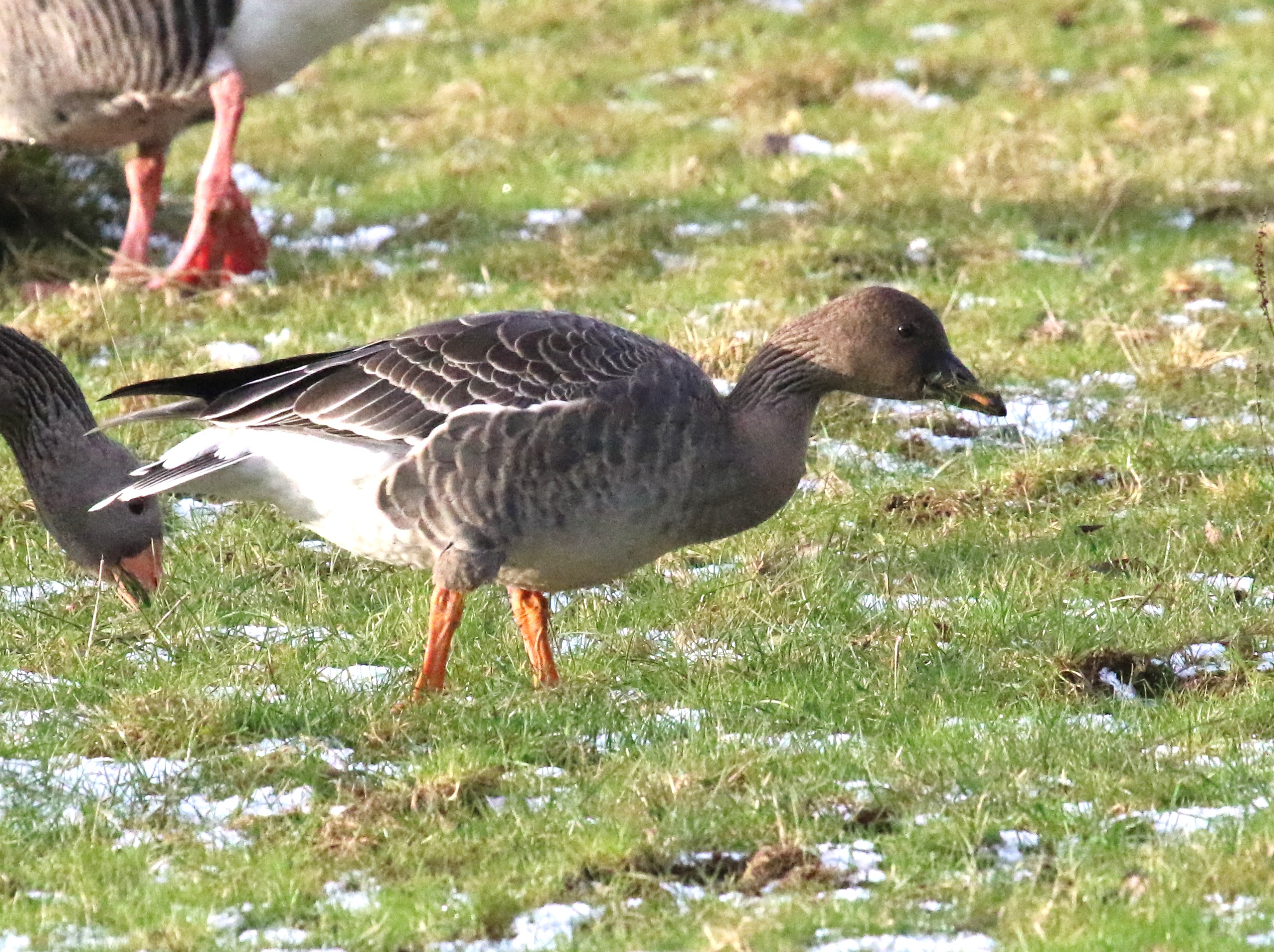
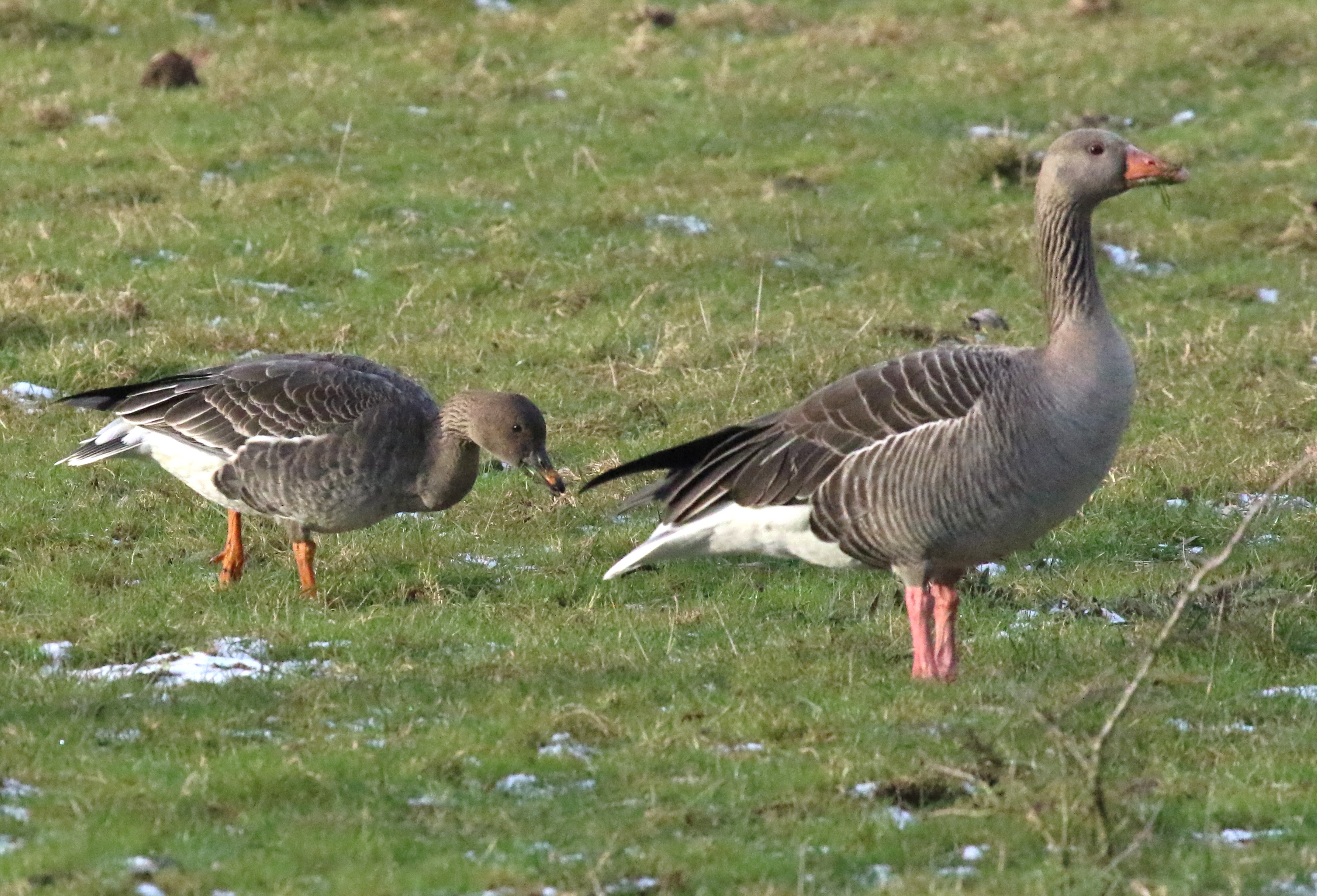
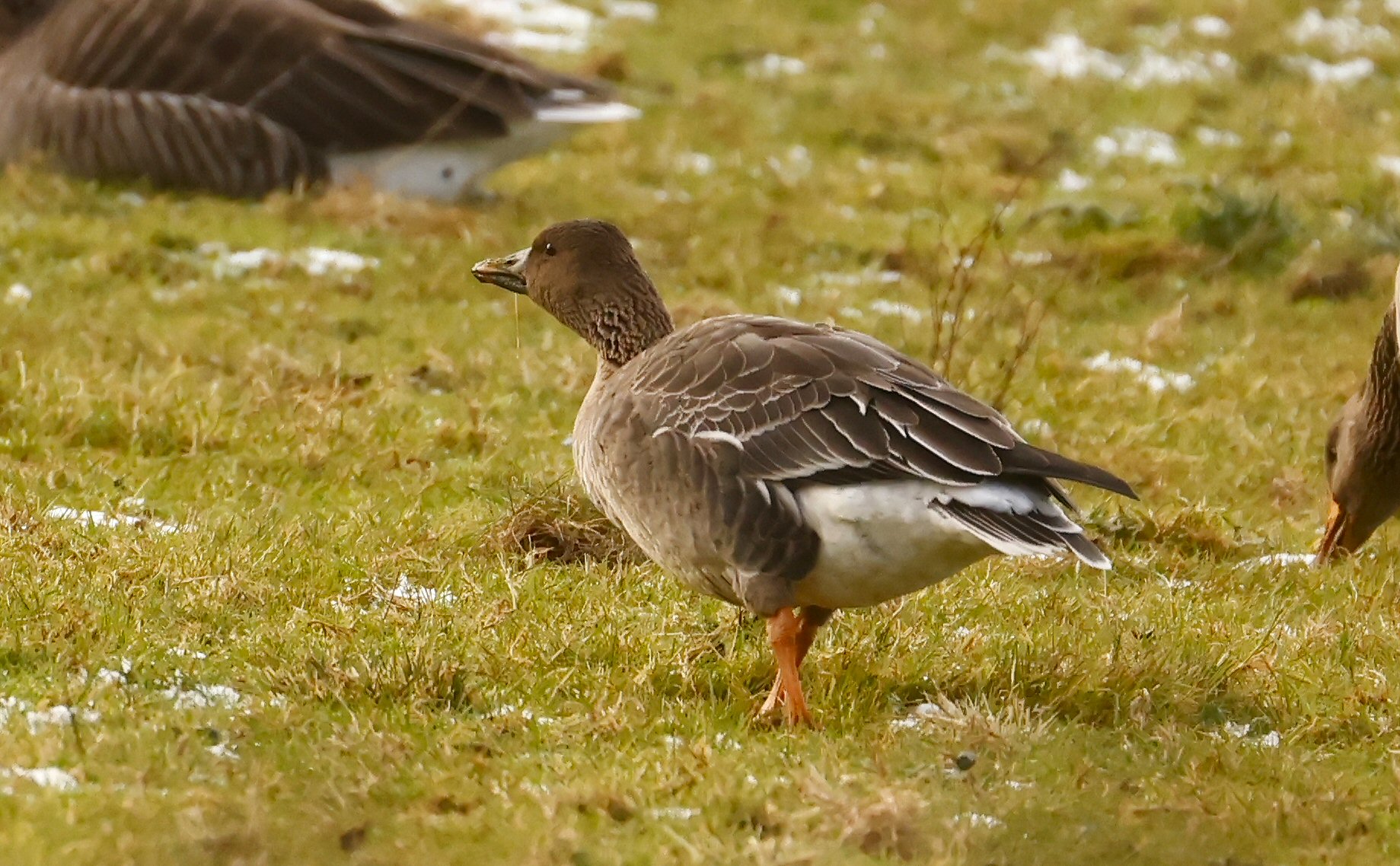
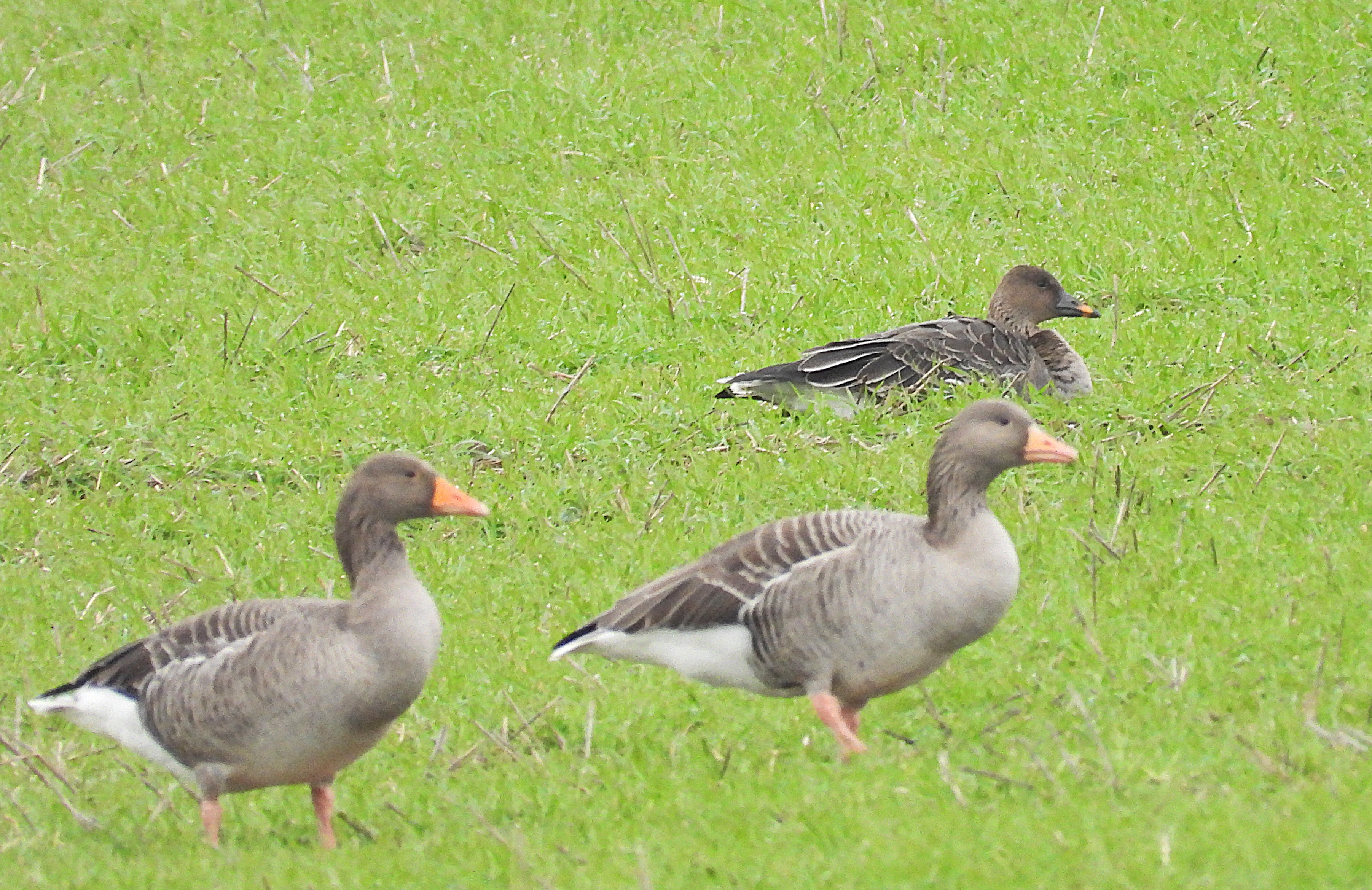
With eight briefly visiting Clifford Hill GP on 3rd and one at Pitsford Res on 5th, Pink-footed Geese were again overshadowed and outnumbered, thus proving hard to catch up with. Based on their current status, this scenario will no doubt change in due course. The same cannot be said for White-fronted Geese, which seem set to see the winter out at a number of localities. Once again, Stanford Res offered up the greatest number with a sizeable flock present there throughout the period, peaking at a maximum of sixty-four on 4th. Elsewhere, fifteen were found at Pitsford on 5th, subsequent counts dropping to eleven on 6th and nine on 7th-8th. Islip Water Meadows also produced fifteen on 9th, Stanwick ten on 3rd, 6th, 7th and 8th, Ringstead nine on 3rd (believed to have originated from Stanwick), Blatherwycke Lake six on 4th, Warmington Lock four on 3rd, Clifford Hill four between 3rd and 5th and Hollowell Res one on 4th.
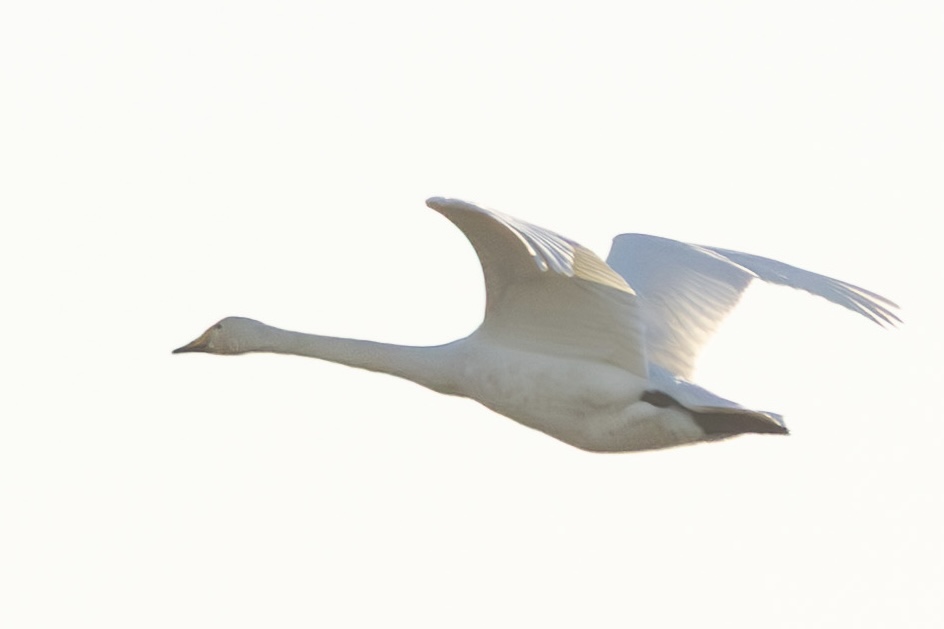
Keeping up appearances, a Whooper Swan paid a brief visit to Clifford Hill on 3rd.
And last seen on 13th November at Stanford, the now ageing female Ruddy Shelduck popped up again at Hollowell, where it was seen on 6th and 9th.
After its initial appearance at Titchmarsh NR last week, the drake American Wigeon was clearly in no hurry to move on, still to be found there at close of play on 9th, the hubbub surrounding it having died down.
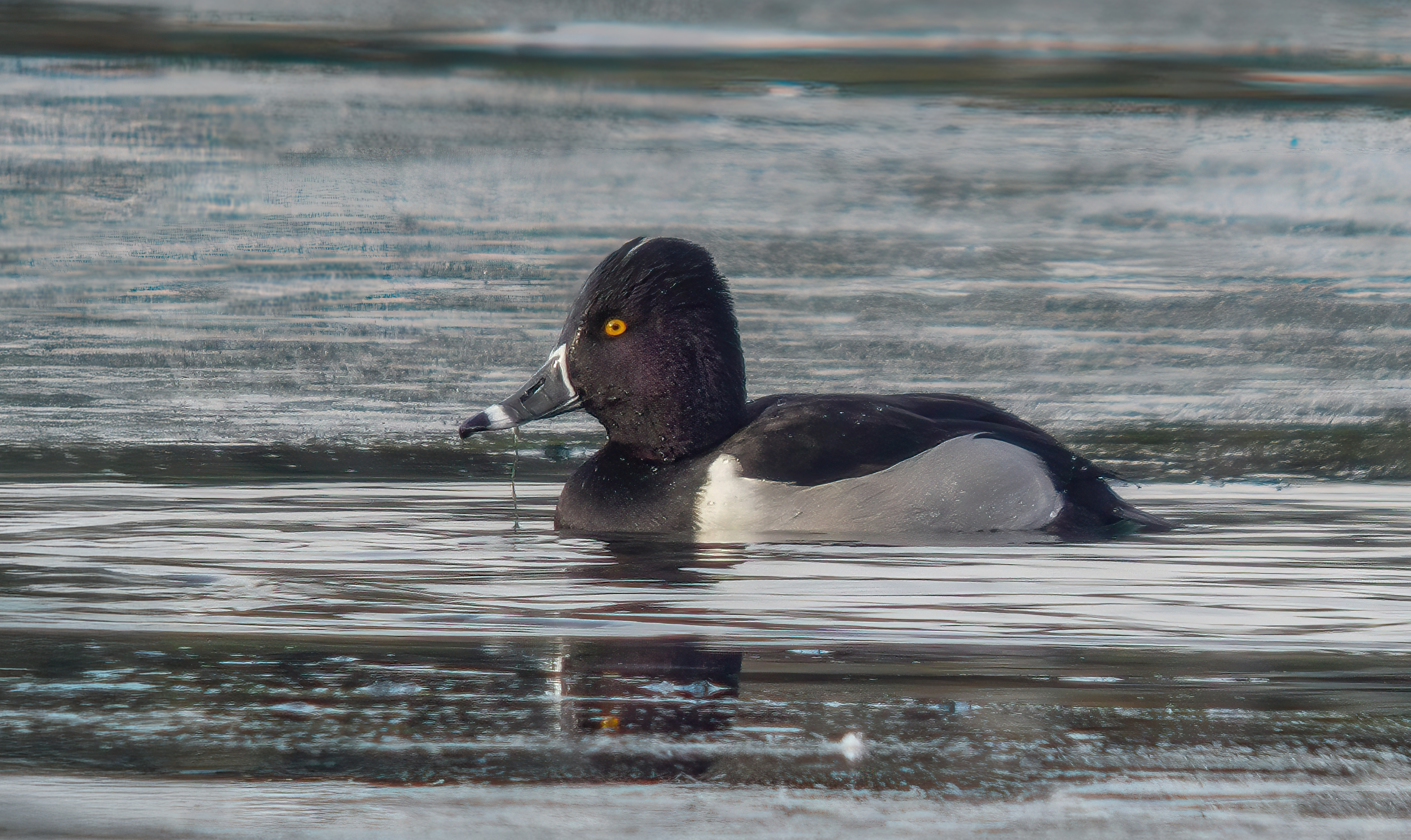
Also in the wider reaches of Thrapston GP, the drake Ring-necked Duck remained settled on Town Lake until at least 8th.
The four Greater Scaups at Stanford also stayed until 4th, after which a single female remained on 5th, while Thrapston’s first-winter drake and female saw another week out on Town Lake.
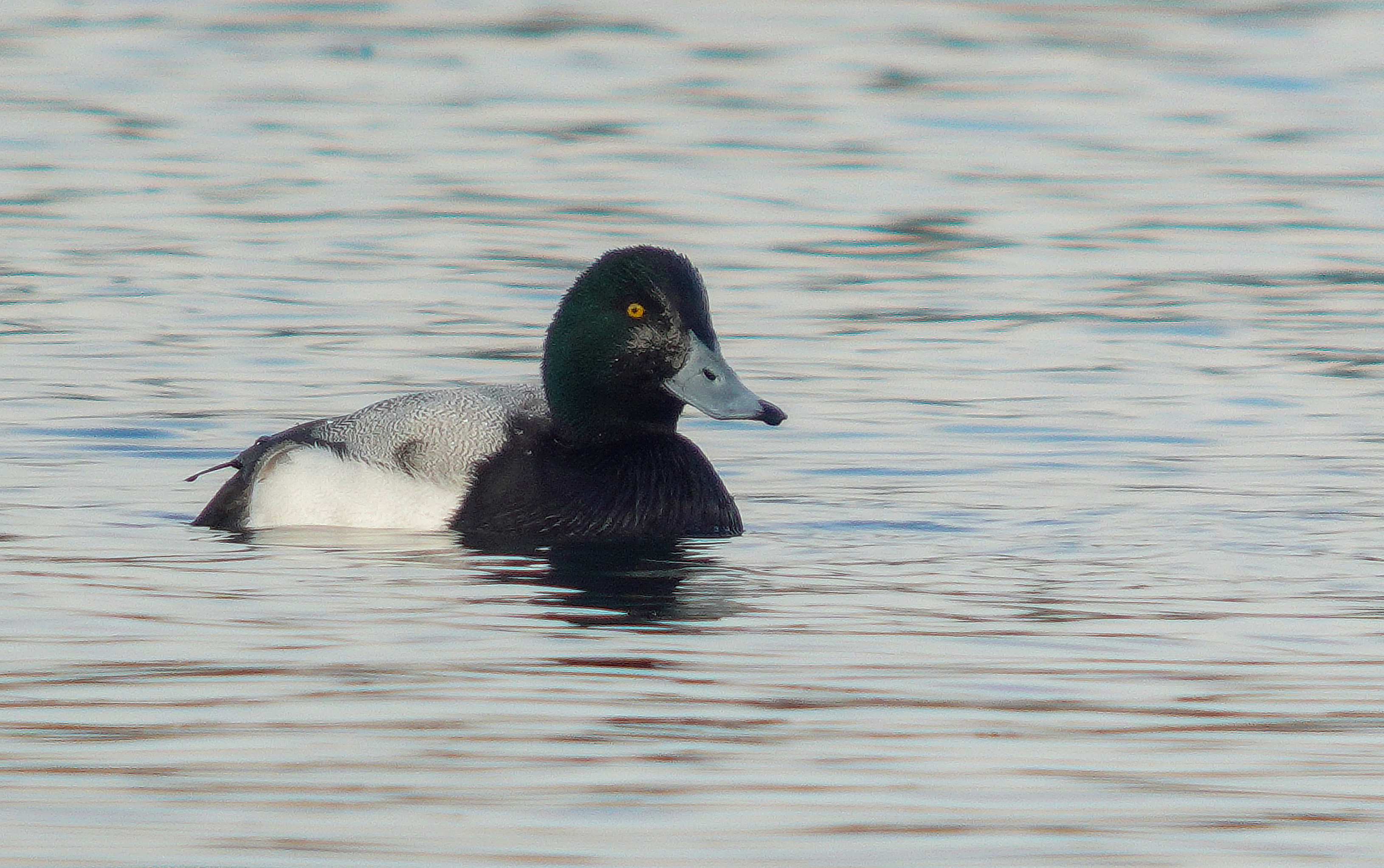
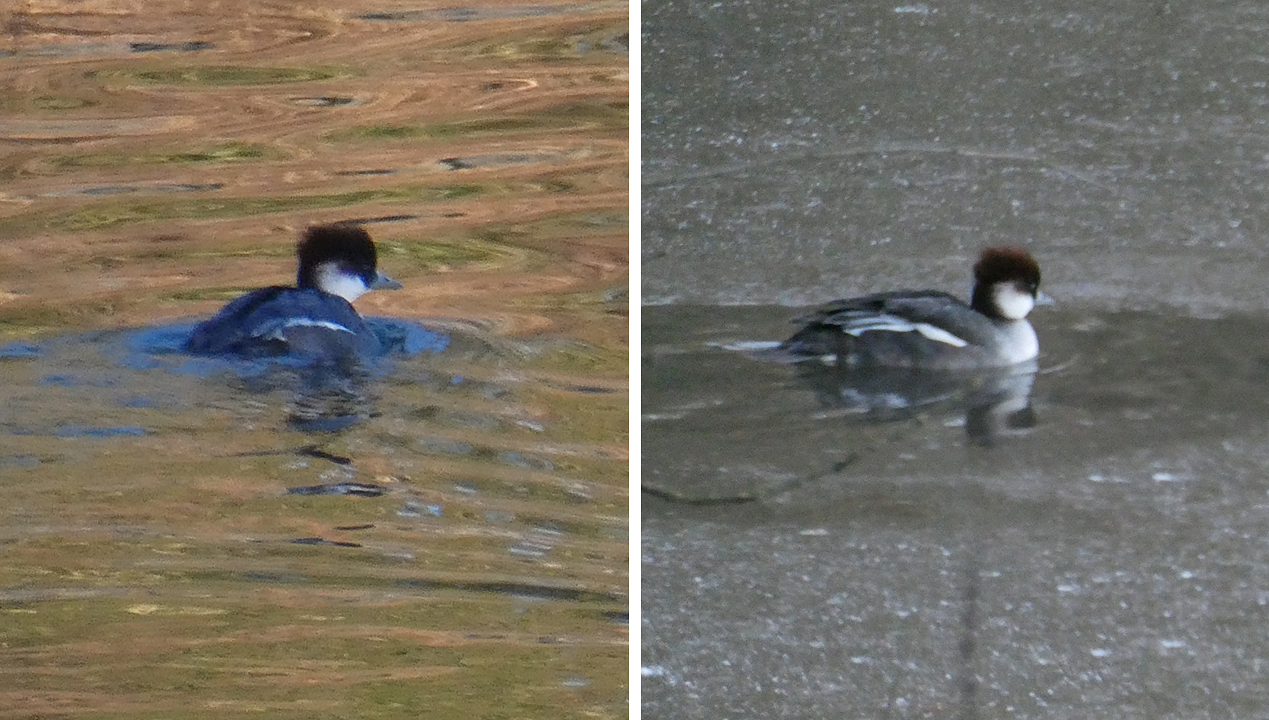
And believed to be last week’s individual from Clifford Hill, a drake Smew was found at Pitsford on 3rd after its apparent absence from the aforementioned location on the same date. Further sightings came again from Clifford Hill on 5th and again from Pitsford on 8th. Additionally, a ‘redhead’ Smew gave some birders the runaround at Pitsford between 5th and 7th.
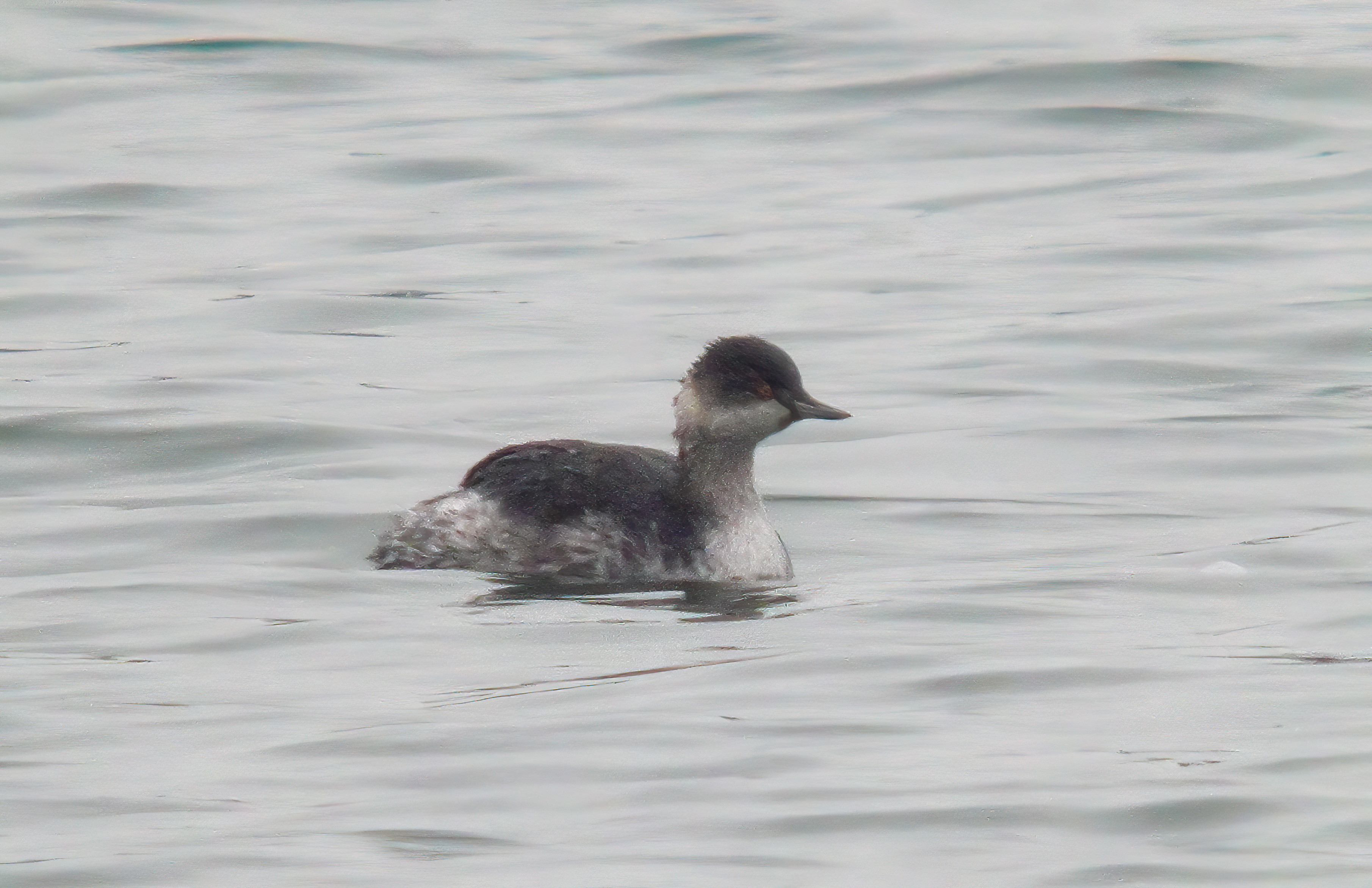
Pitsford was also the site chosen by the first visiting Black-necked Grebe of the year, a species which has produced a noteworthy run of records of late. Found and photographed on 6th, it was still present there at the week’s end.
Few waders are normally up for grabs at this early stage in the new year, so a Black-tailed Godwit at Summer Leys LNR briefly on 6th was unusual, as was an apparent wintering Common Sandpiper found at Pitsford on the same date, the latter still being present at the week’s end. More in keeping with the time of year, however, were single Jack Snipes at Thrapston on 5th and at both Hollowell and in the Brampton Valley between Cottesbrooke and Hanging Houghton on 9th.
And the gull roost at Stanford continued to bear fruit, dishing up two adult Caspian Gulls on 4th and 6th, one of which was the old favourite, German-ringed male ‘XLVH’, more often than not to be found loafing along the muddy shoreline of Naseby Res over the past few autumns. An adult also flew over Hollowell on 9th.
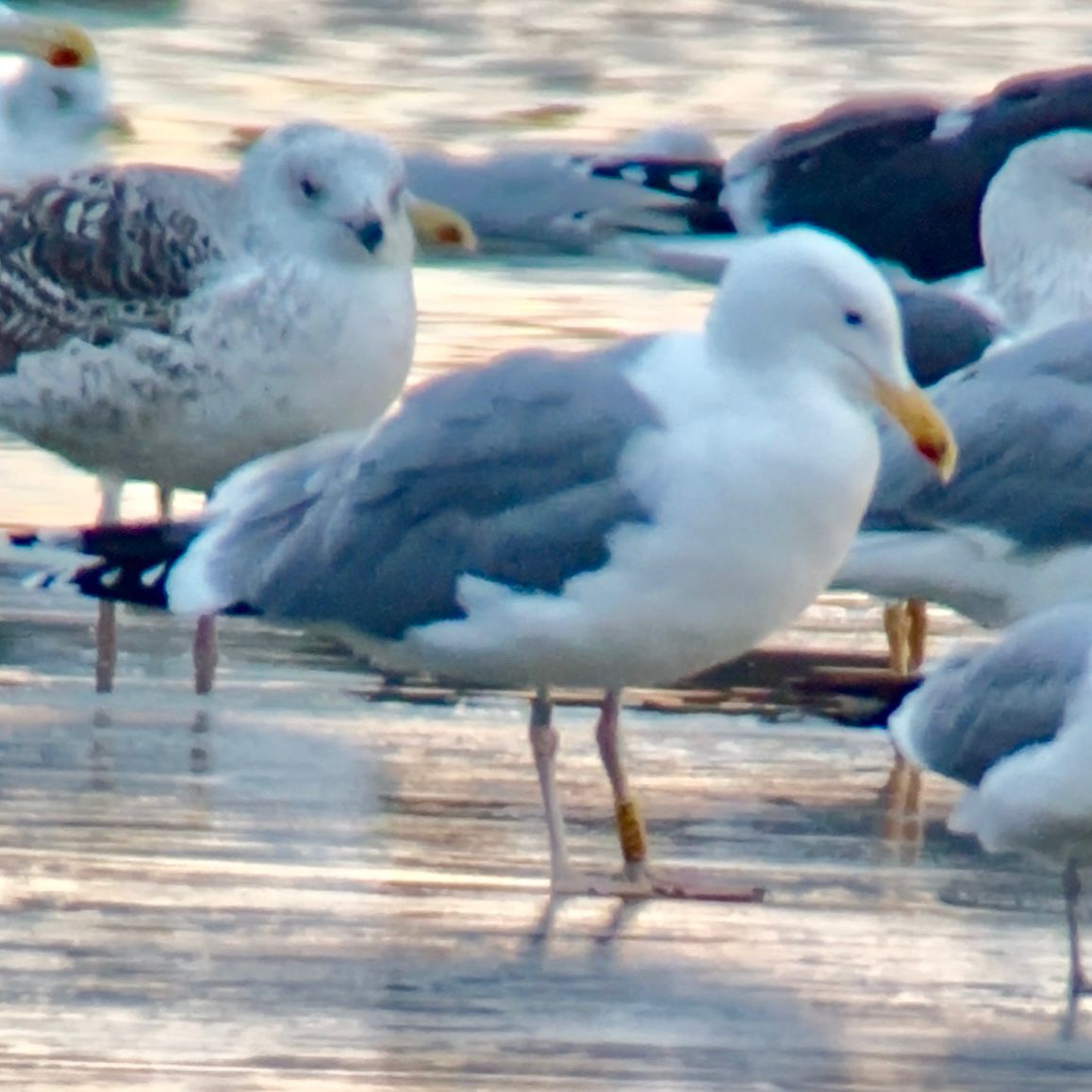
The above roost also produced an adult Yellow-legged Gull on 5th, while further sightings were confined to Pitsford, where one was seen on 5th-7th and 9th.
The week’s cold snap seems likely to have had an adverse effect on Glossy Ibis, numbers of which were down to two seen in flight over Summer Leys on 4th – Stanford’s puddle by the Settling Pond there having frozen solid, rendering it unattractive to the hitherto reliable one or two that have visited the site almost daily in recent weeks.
On the 8th, a Bittern was seen in flight at Ravensthorpe Res – not for the first time but previous sightings there have been few and far between.
Back in the Nene Valley and Summer Leys bagged a Cattle Egret on 5th, a bird whose numbers appear to have dropped considerably over the past year.
And carving up the week’s Marsh Harriers between them, Summer Leys/Earls Barton GP and Titchmarsh produced single birds on 3rd, 4th, 5th and 9th – one at the former locality was the wandering young male, wing-tagged ‘J4’.
In the nether reaches of Finedon, Neville’s Lodge had the honour of producing the first Short-eared Owl of the year, on 3rd.
In a wider context than normal, Merlins were to be found this week in the Brampton Valley on 4th and 8th, at Summer Leys on 5th and at Stanwick on 7th.
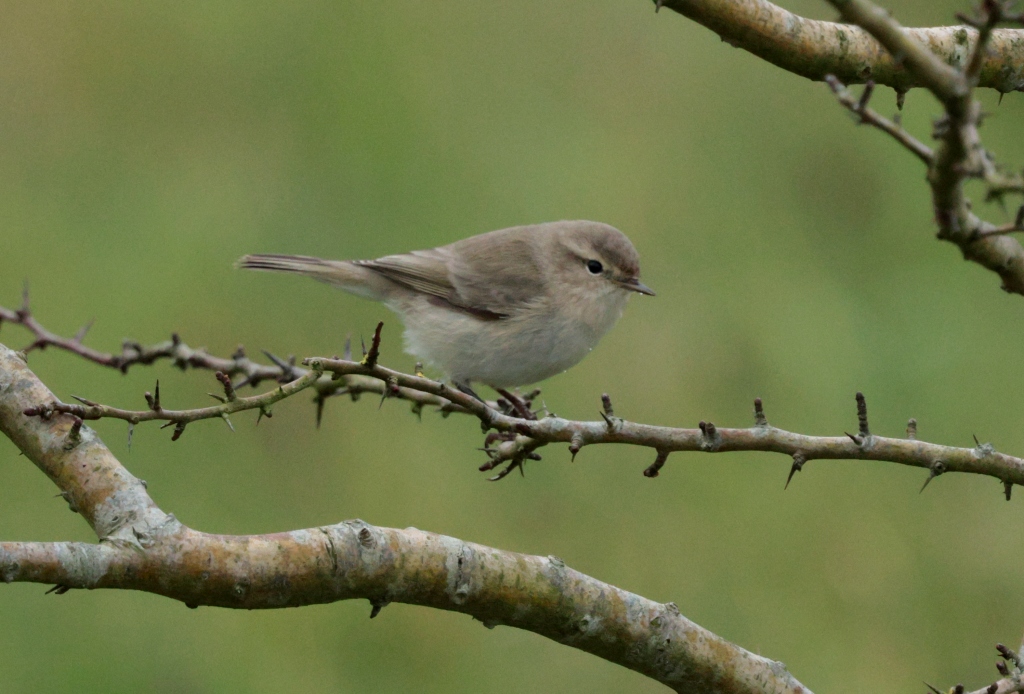
And the week’s top passerines kicked off with a Siberian Chiffchaff at Duston’s New Sandy Lane Attenuation Pond on 7th-8th, following what was presumably the same bird being present there in December last year.
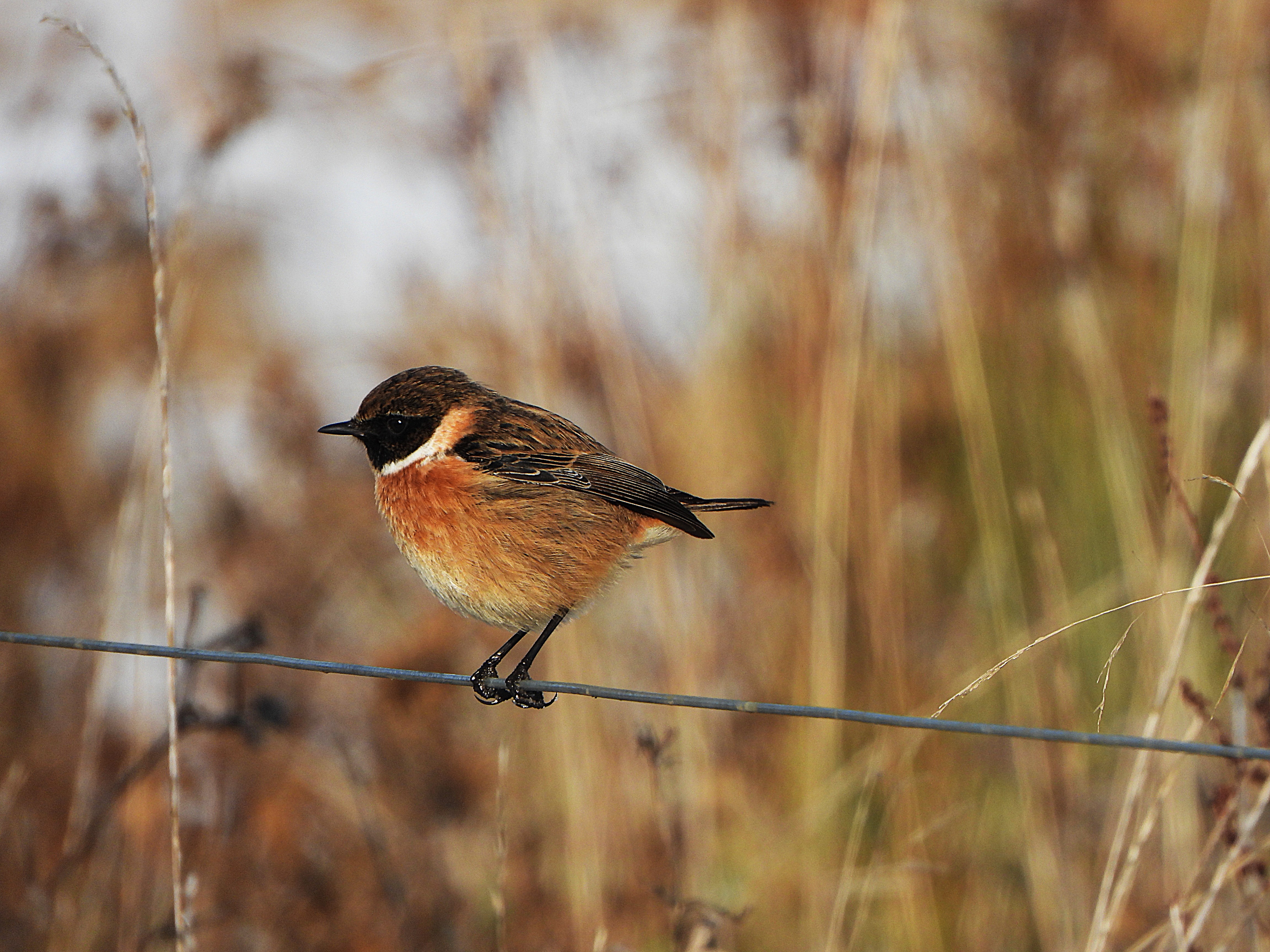
Wintering Stonechats were present at Pitsford, where there was a maximum of six on 5th, followed by two on 8th, two were in the Brampton Valley on 4th and singles were present at Clifford Hill on 3rd, at both Earls Barton GP and Upton CP on 6th and at Hollowell on 9th.
And while 2025 proved to be a good year for Crossbills, the new year looks set to continue in the same vein, with at least ten at Fineshade Wood on 6th and 8th, up to eight at Gamboro Plantation east of Cottesbrooke between 3rd and 8th, six at Salcey Forest and four at Wakerley Great Wood on 4th and one at Harlestone Firs on 5th.
Meanwhile, the fields along the footpath between Deanshanger and Wicken continued as the only site in the county currently to deliver Corn Buntings, nine being present there on 6th.

 Northants birds