In the world of gulls, things aren’t always what they seem …
And so it was with the apparent ‘Caspian’ Gull at DIRFT 3 on 23rd July. This bird was part of a day-roosting flock of approximately 150 large gulls, which also included 7 Yellow-legged Gulls. Based on structure alone, this bird was within the Caspian camp but there were some anomalies when it came to plumage and, potentially, leg colour.
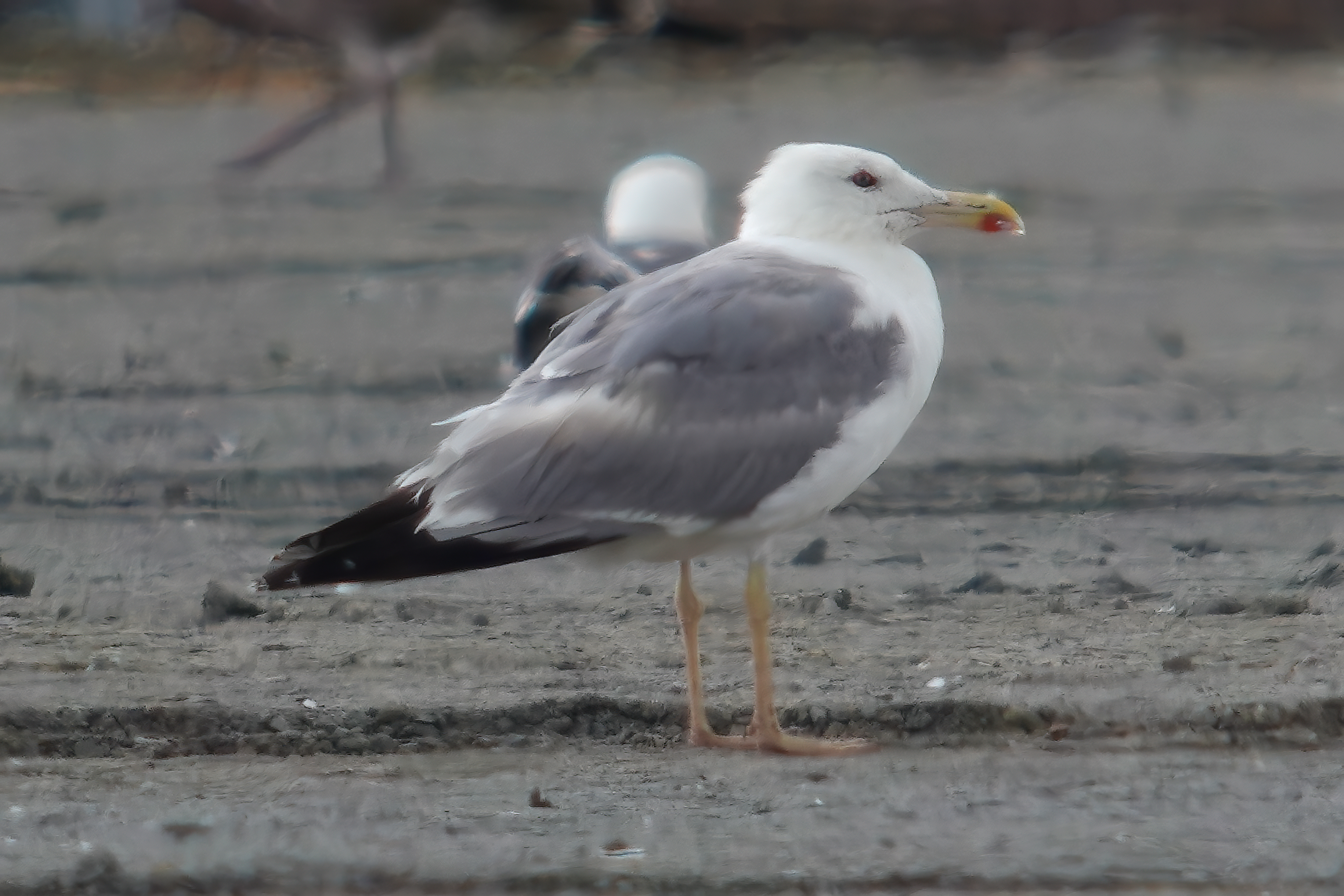
The upperparts and upper wings were darker than normal ‘western’ Caspian and as dark as nearby Yellow-legged Gulls, the legs dull/pale yellowish, flesh-coloured feet, it showed extensive black on the outer primaries while three inner primaries had been replaced with new ones which were still growing.

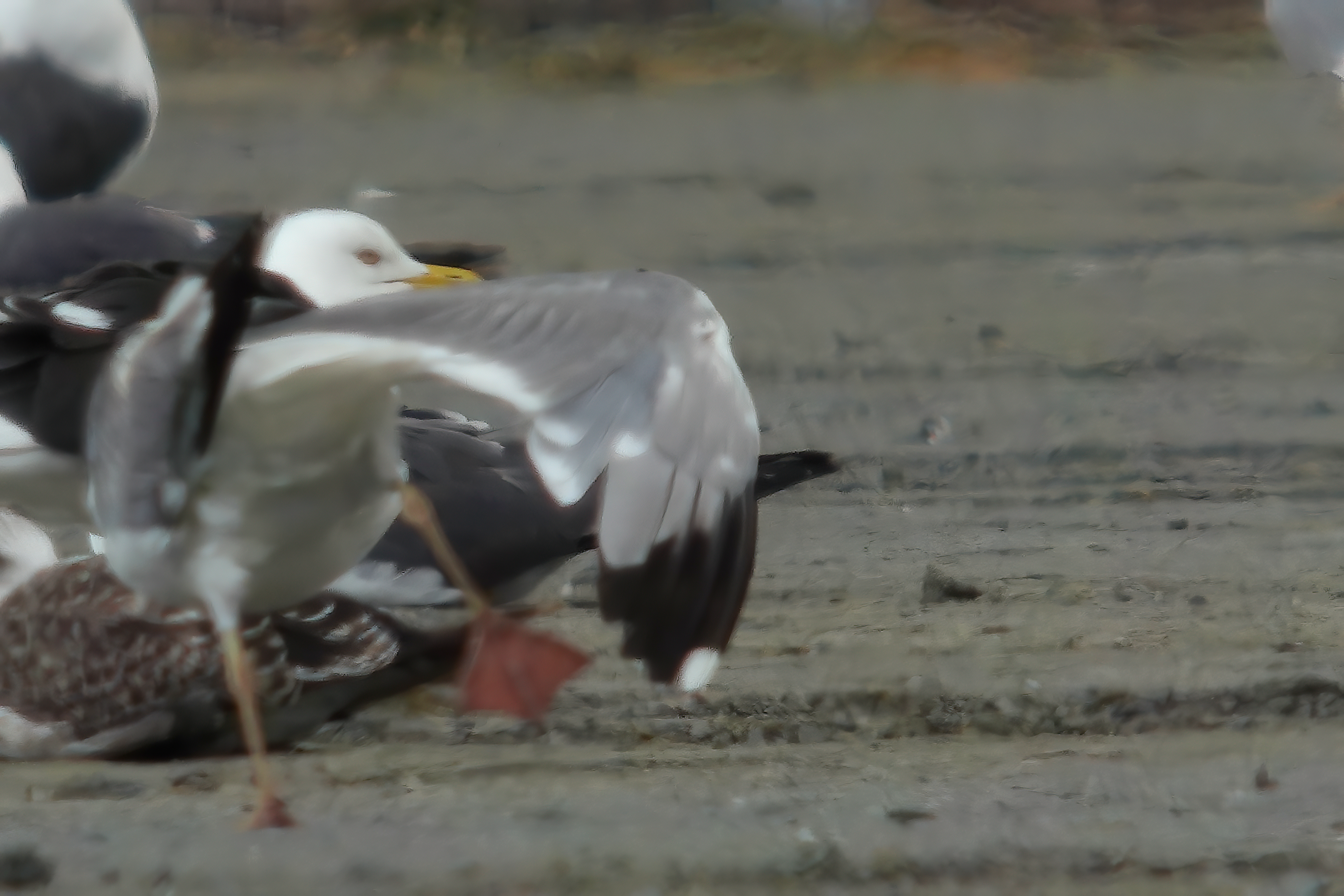
According to Malling Olsen & Larsson (Gulls of Europe, Asia and North America, 2004), these features seemed to fit reasonably well with Caspian Gulls from the eastern part of the species’ range. It did not go all the way to being a different race, not fitting barabensis in terms of the latter’s more compact structure, precise primary pattern and more intense yellow bare part colour.
After posting the images included here on the Western Palearctic Gulls Facebook page, out of 26 likes/comments, 4 were pro-Yellow-legged Gull and one pro-Caspian.
I also consulted Carl Baggott (Leicestershire Recorder and renowned gull expert). Here’s his take on it:
“Interesting looking beast. I can see where you are coming from, but it might be better to think of something closer to hand. Yellow-legged Gull is the most likely and I have seen some very Caspian Gull like birds in southern Europe. As you have gathered, the amount of black in the primaries is too extensive for a cachinnans, but it falls within the range of barabensis or michahellis. The leg colour is a bit insipid for a michahellis but within variation. The long legged small headed appearance can also be a result of the bird being a bit malnourished. Head moult can also alter a gull’s appearance. Can’t be certain but I would lean towards YLG. Another thing that seems to be an issue is Birdflu as some adult HGs now have black eyes and this might be affecting YLGs as well.”
However, given its Caspian-like features (parallel-sided bill, more gently curved distal part of upper mandible, consistently flattened head and long, sloping forehead, plus general jizz) I don’t think Caspian x Yellow-legged can be entirely ruled out, as hybrids have been recorded where the ranges of the two species overlap.
Carl kindly commented further:
“The hybrid idea may well be the answer.”
“ However, the long legs and flattish head do suggest Caspian Gull, but this isn’t always cast iron. There are a lot of YLGs in Eastern Europe and so hybrid Caspian x YLG should exist. I just can’t 100% rule out an odd ball YLG.”
Any further opinions welcomed …
Discover more from Northants birds
Subscribe to get the latest posts sent to your email.

 Northants birds
One thought on “Caspian Gull, yellow-legged gull, or hybrid?”