Edging that little bit closer to late autumn saw the arrival of large waves of winter thrushes pushing through the county, as well as the first Whooper Swans this side of the last winter period. Reluctant to move on, the Glossy Ibis dug its heels in, while yet more Yellow-browed Warblers seemed intent on making further advances on their already record high numbers.
Stanford was the top performing reservoir this week, with the birds on offer there including the locally roaming Pink-footed Goose again dropping in on 17th. Prior to this, four Whooper Swans flew east early on 13th, followed by what was believed to be a different quartet on the water there later in the afternoon. This latter herd remained overnight and was seen to depart to the east early the next day. Thrapston GP also got in on the action with four on Titchmarsh LNR on 13th, one of which bore rings – a white ‘65L’ on its right leg and a metal ring on its left. Observer research revealed it had been ringed as an adult male at Lake Sandvatn, Iceland on 8th August this year and that the Titchmarsh sighting was the first anywhere since this date.

Back at Stanford, Red-crested Pochard numbers fell from seven to four, all of which were still present at the week’s end. Elsewhere, the first-winter drake remained settled at Boddington Res throughout the period and two were present at Earls Barton GP’s New Workings (South) on 13th.

With waders well and truly off the radar, it fell to gulls to provide a little waterfront entertainment. Boddington Res and Stanwick GP were to carve up the Mediterranean Gulls between them, Boddington regularly producing a first-winter between 14th and 18th and Stanwick a second-winter on 14th-15th.

Stanwick also produced a first-winter Caspian Gull on 12th, while single adults visited both Boddington and Stanford on 15th and Hollowell Res held two adults on the latter date and one on 17th. The week’s Yellow-legged Gulls were found at three widely separated localities with singles at Stanwick on 12th, Boddington on 12th and 14th and Ravensthorpe Res on 17th, while five joined the roost at Boddington on 15th.
A late Black Tern was found at Pitsford Res, also on 15th.
Continuing its protracted stay, the Glossy Ibis notched up another week at Summer Leys LNR and surrounding area, where it has now been present for a solid 28 days. Interestingly, one was reported by a biodiversity survey team at Stanwick on 13th, which seems likely to be a different individual as the Summer Leys bird was being reported at, or about, the same time.


Stanwick was also the only site to record Bittern this week, with one there on 14th, while the same location saw three Cattle Egrets fly over on 12th and four on the ground there the following day. Further down the valley, fields immediately north-east of Ringstead GP produced the highest counts of the week, though, with one on 12th, eight on 15th and six on 18th, while one turning up to roost at Boddington on 14th was only the second record for the site.
Meanwhile, raptors were up on the last period with sightings of Marsh Harriers dominating. Seemingly now part of the Summer Leys furniture, one remained there throughout the week, also being seen in the wider area of the Earls Barton GP complex on 15th and 18th, while further reports came from Titchmarsh on 14th, Stanwick on 15th and Ditchford GP on 18th.
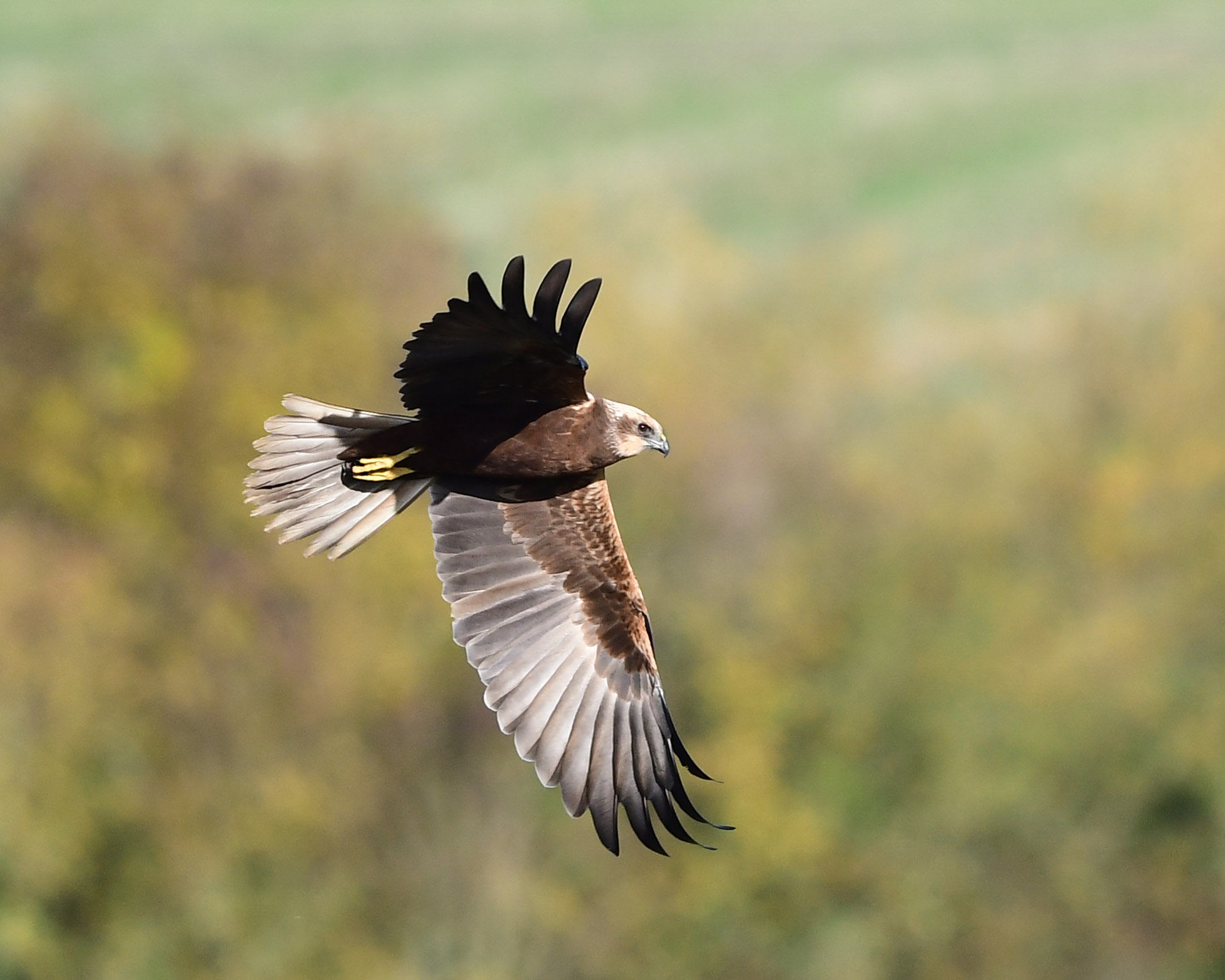
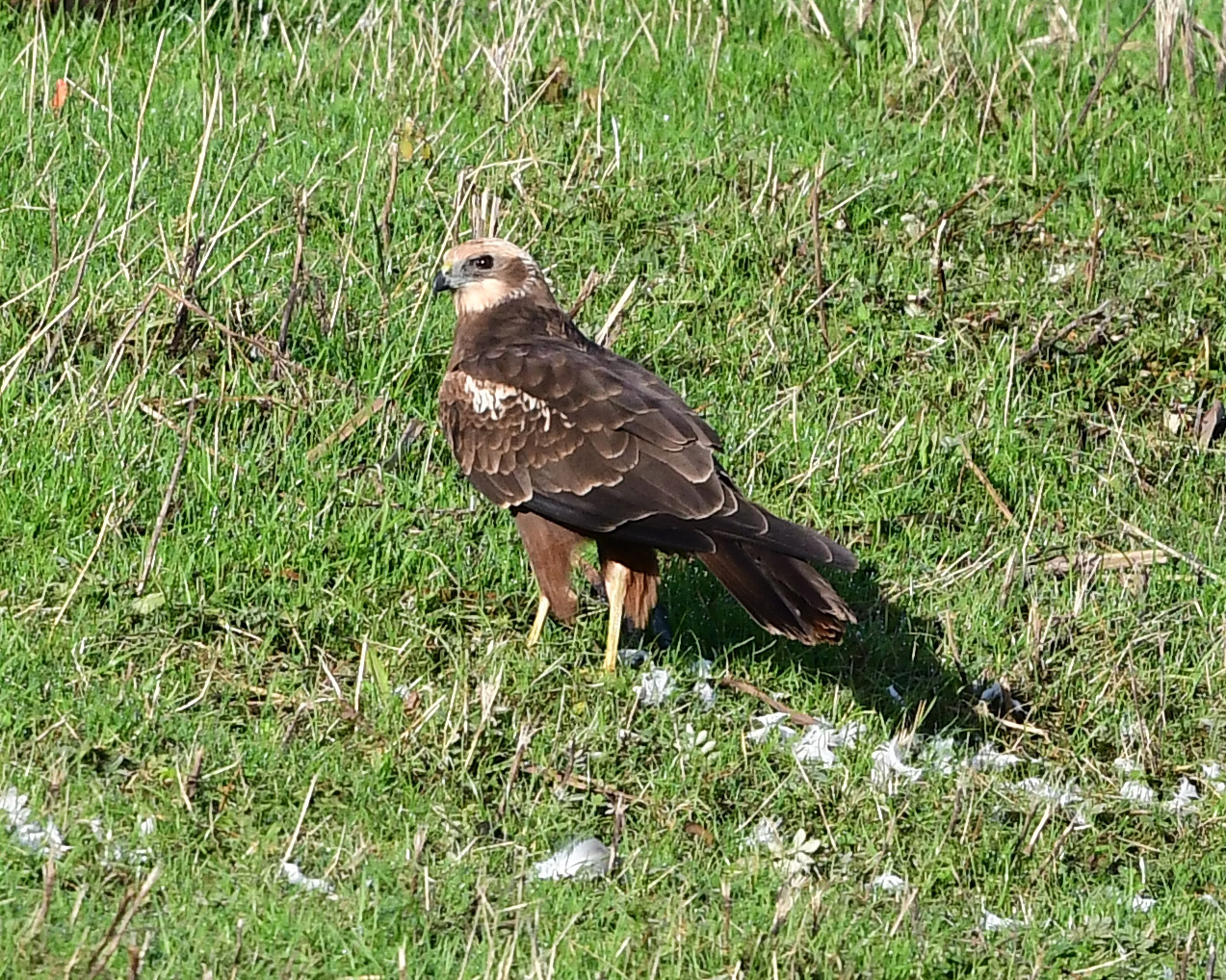
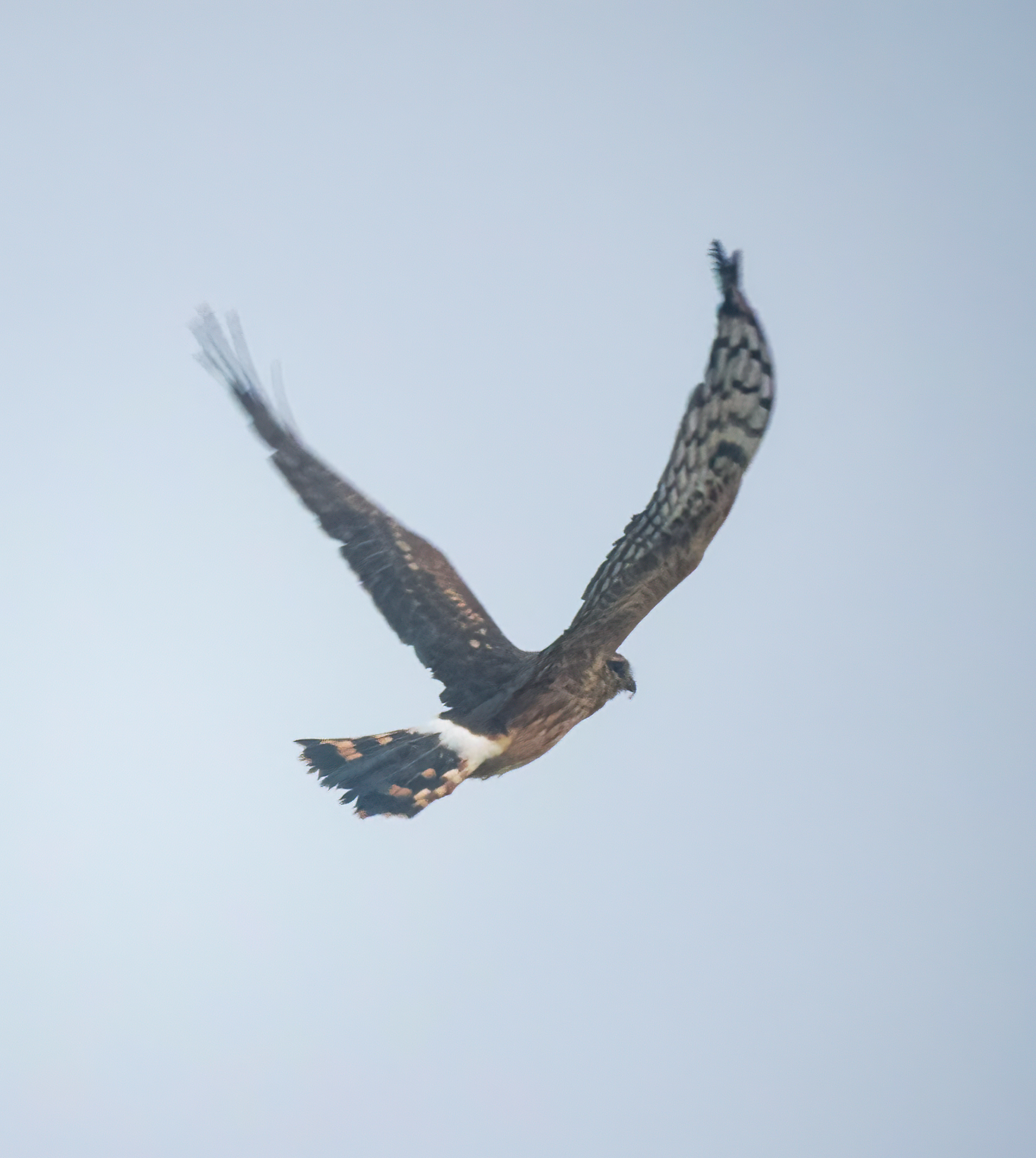
A Hen Harrier – the fifth of the autumn, so far – was present at Stanford on 17th-18th but was not seen thereafter and a Merlin stuck around in the Brampton Valley, between Cottesbrooke and Hanging Houghton, on 14th-15th.
After the last fortnight’s record-breaking four Yellow-browed Warblers, there was more to come and it seems we’re not done yet with this little Siberian gem. While the Ringstead bird was still to be had on the first day of the period, another was found at Stanford on 15th, followed by yet another at Earls Barton GP three days later, on 18th. And here’s the thing: over the last ten years (2014-2023) Yellow-broweds have outnumbered Wood Warblers in the county with a total of fourteen vs. thirteen of the latter. Throw in this year’s (2024) occurrences for both so far and Wood Warbler moves up one to fourteen, while Yellow-browed soars to nineteen – potentially twenty if this week’s individual at Stanford was indeed a new bird!
Rightly overshadowed, as well as likely overlooked, a Ring Ouzel at Harrington AF on 16th was about par for the autumn course as far as this species is concerned.
And as for other passerines, Stonechats were found in at least eight localities, comprising Brampton Valley, Ditchford, Earls Barton, Harrington, Hollowell, Pitsford, Stanford and Summer Leys, with maxima of six in the Brampton Valley and at Earls Barton.

It should be said that, given the numbers seen in the UK so far this autumn, ‘Eastern Stonechat’ is not impossible and, although it’s a bit of a long shot, inland records are not unprecedented …

Discover more from Northants birds
Subscribe to get the latest posts sent to your email.

 Northants birds