In contrast to the previous week, this week endured considerable precipitation over an already waterlogged landscape, resulting in rapidly developing floodwater – particularly in the Nene Valley – by the week’s end. The early part of the week, however, saw the arrival of another North American duck …
Yes, looking beyond the Pink-footed Goose that was still at Stanford Res as the week came to a close, Northamptonshire’s sixteenth Green-winged Teal was found at Stanwick GP on 6th by veteran Stanwickeer, Steve Fisher, during an early morning sortie around the site.
Drake Green-winged Teal, Stanwick GP, 6th February 2024 (Mike Alibone)
Stanwick (and Steve) has a track record for producing this species which, since the first county record at nearby Ditchford GP in 1980, has previously occurred there in five different years. In fact, early spring during the three consecutive years, 2007-2009, produced one that was considered to be the same returning individual and was therefore classed as only one record. It’s been an eight-year wait since the last, which was at Daventry CP in 2016 (details here and here).
Green-winged Teal was dropped from the BBRC list of species requiring submission from 1991 and it was considered a sub-species of ‘Eurasian’ Teal until 2001, when the BOU awarded it full species status.
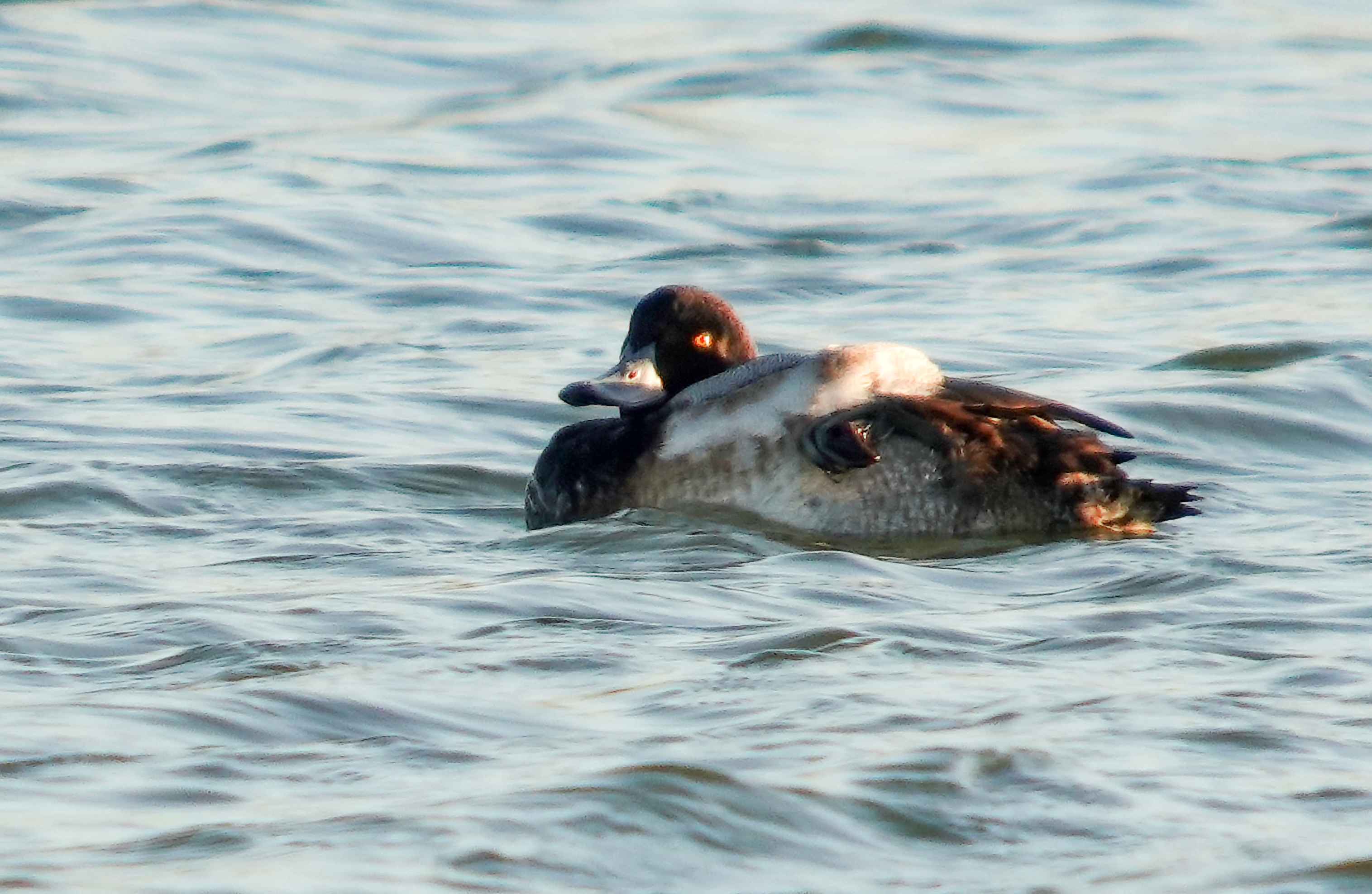
Aside from the above, both first-winter Greater Scaups remained in place at Hollowell Res and Grendon Lakes (Earls Barton GP) on 4th and 5th, respectively.
The week’s waders were limited to a Ruff at Stanwick on 7th and seven Jack Snipes at Daventry CP on 5th.
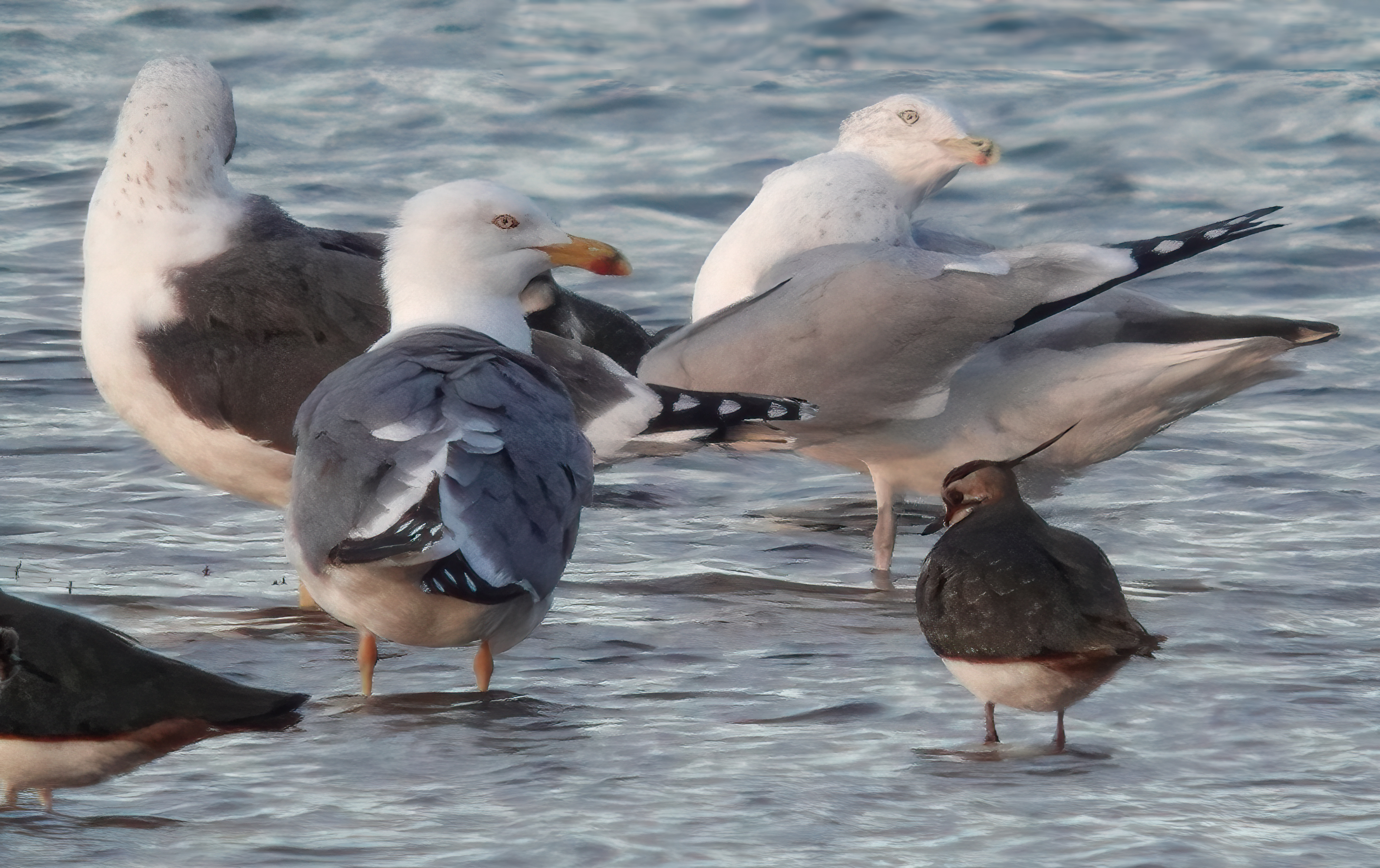
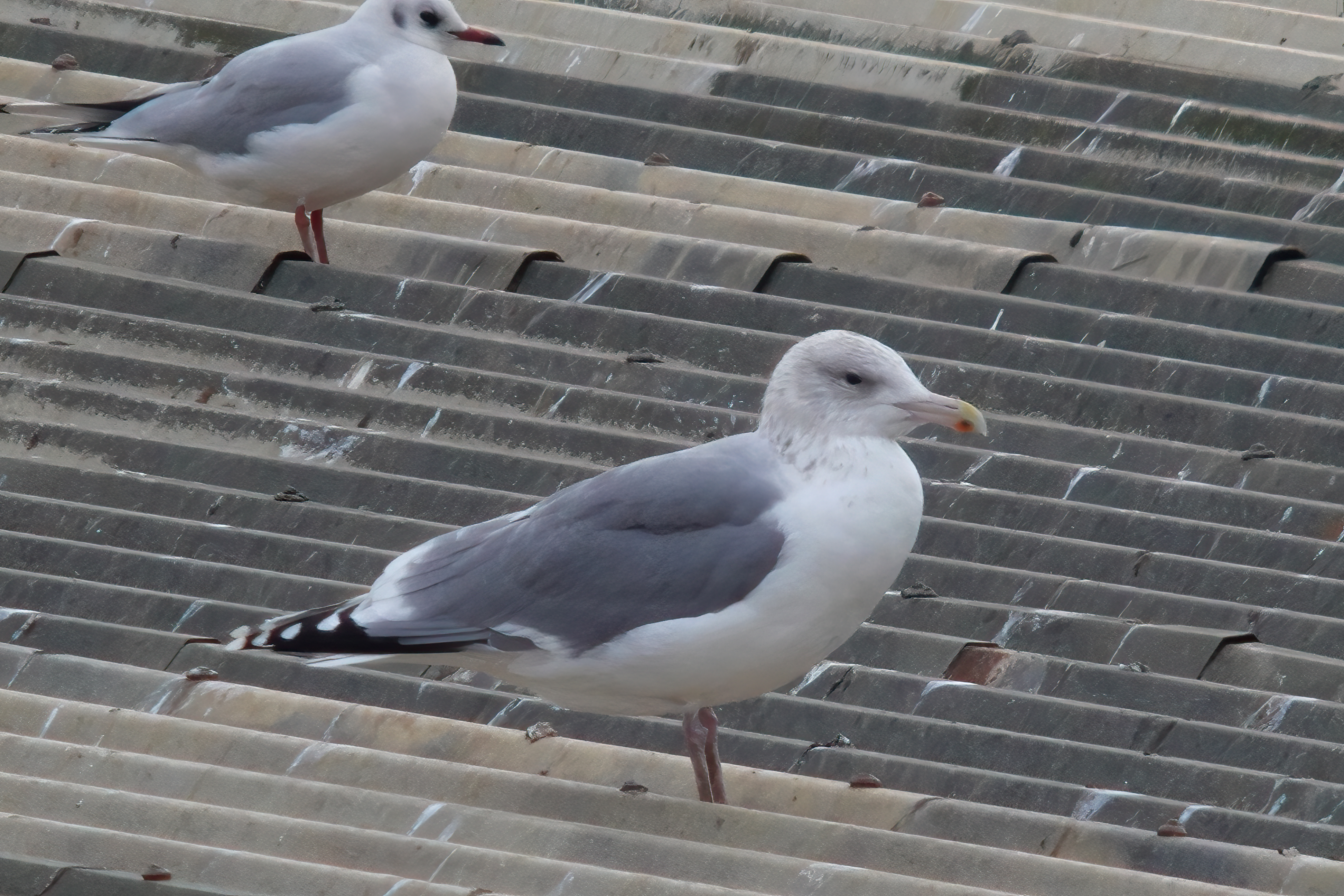
Gull numbers were down over the period with a Caspian Gull (unaged) reported from Summer Leys LNR on 3rd, three (an adult and two first-winters) at Daventry CP on 5th and just a first-winter at the latter site on 9th. Two Yellow-legged Gulls (unaged) were reported from Summer Leys on 3rd and a first-winter was at Daventry CP on 5th.
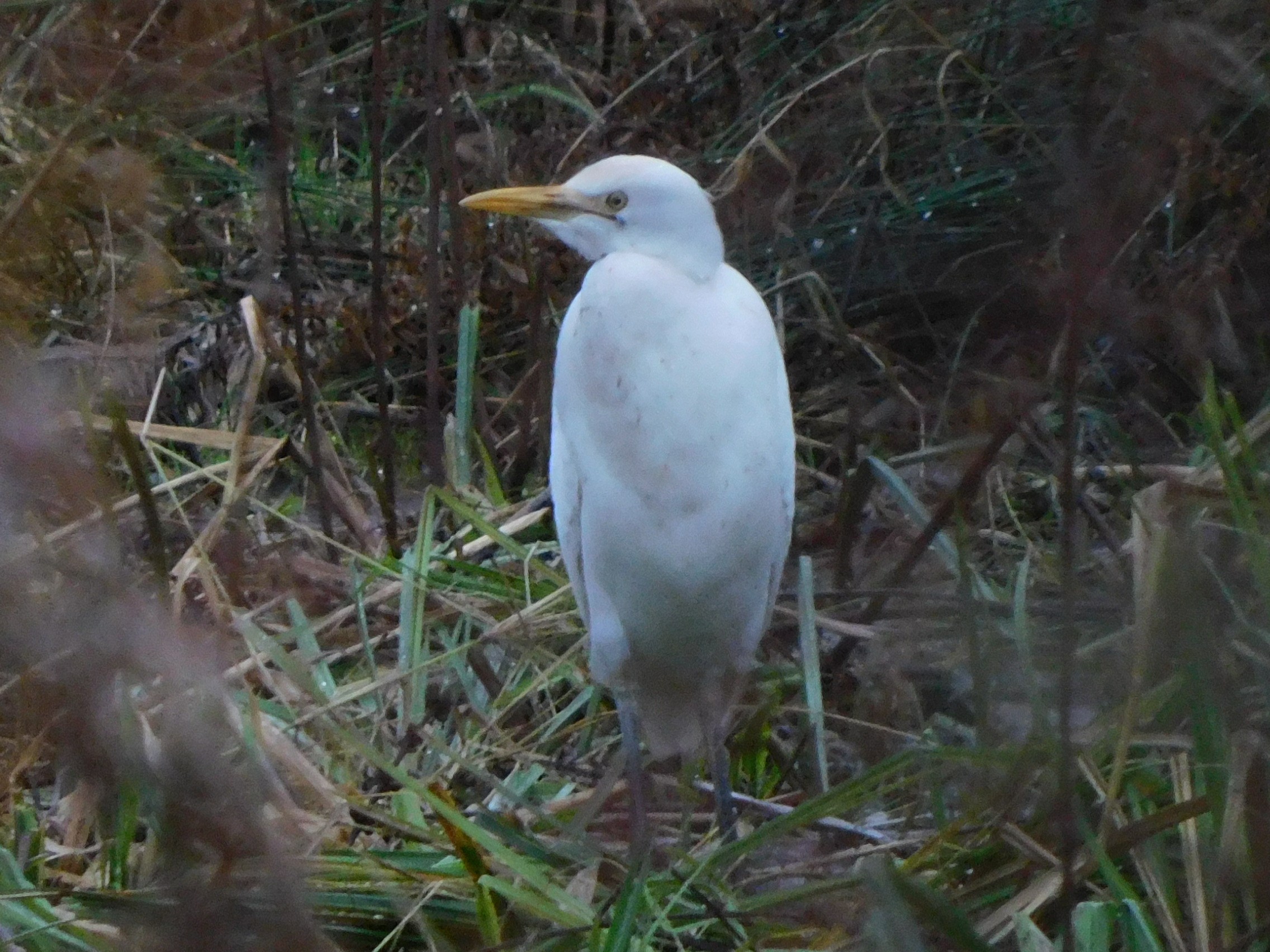
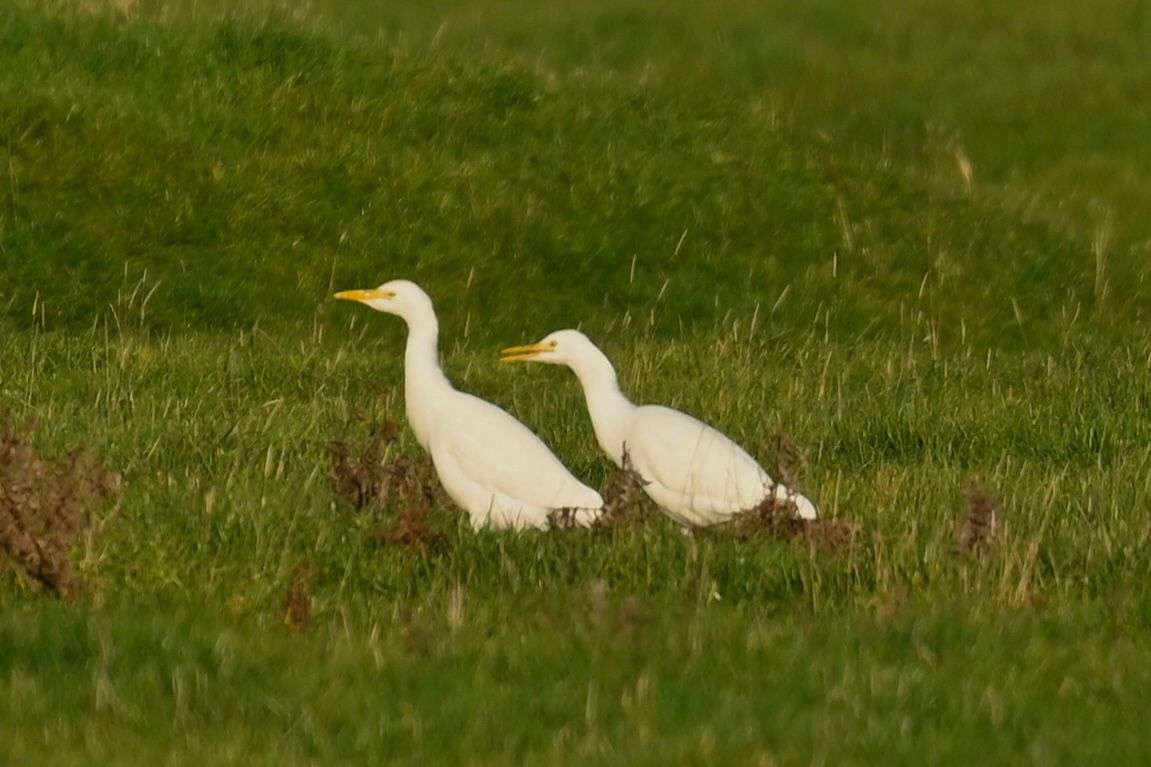
Cattle Egrets were seen on single dates only at Ditchford GP on 4th, Wicksteed Water Meadows NR on 7th and Summer Leys on 9th, nor were there any subsequent reports of a Glossy Ibis seen in flight at Thrapston GP’s Titchmarsh LNR in the fading light of 3rd.
After one there last week, Stanford produced the period’s only Marsh Harrier when one flew east on 7th.
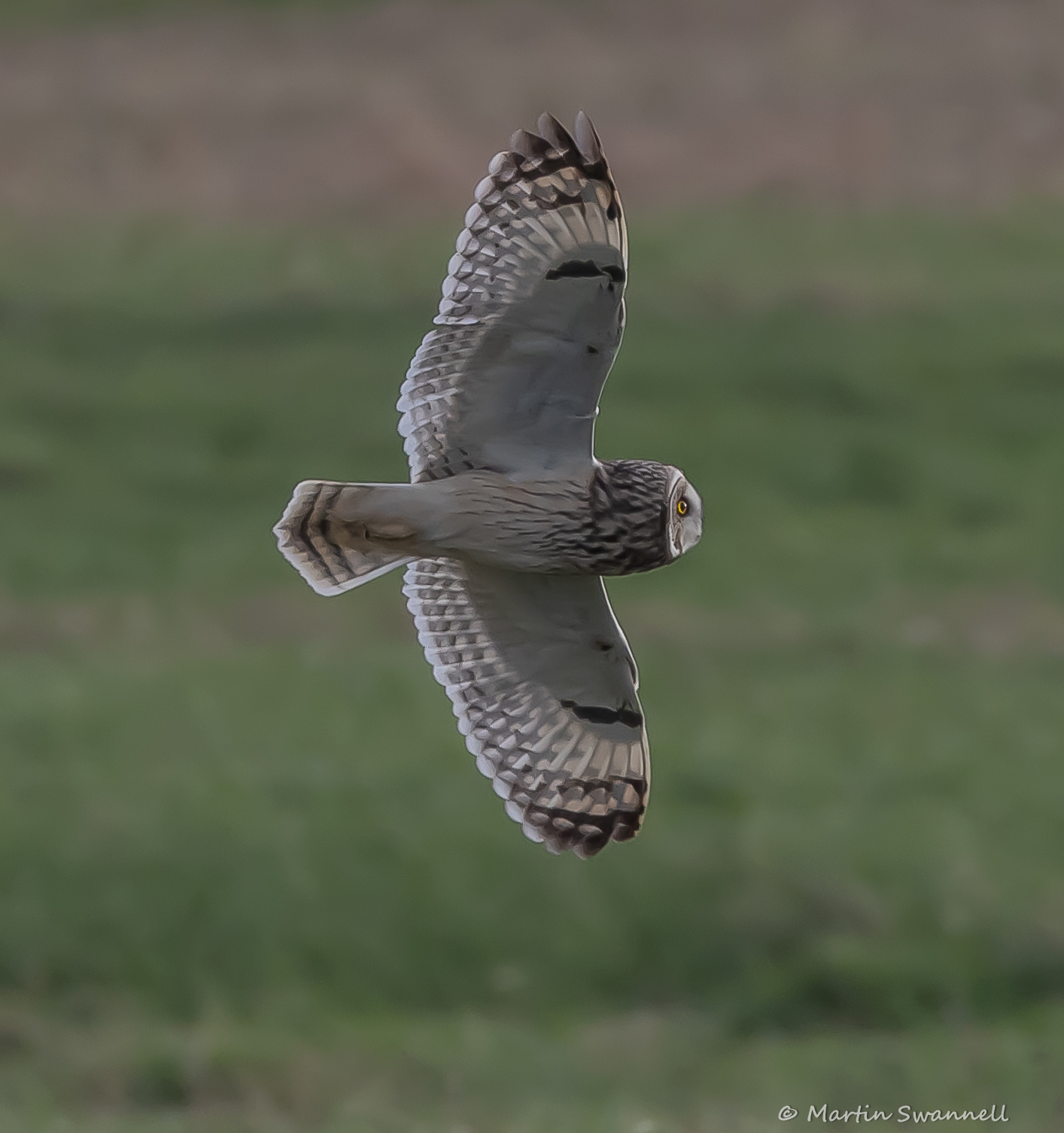
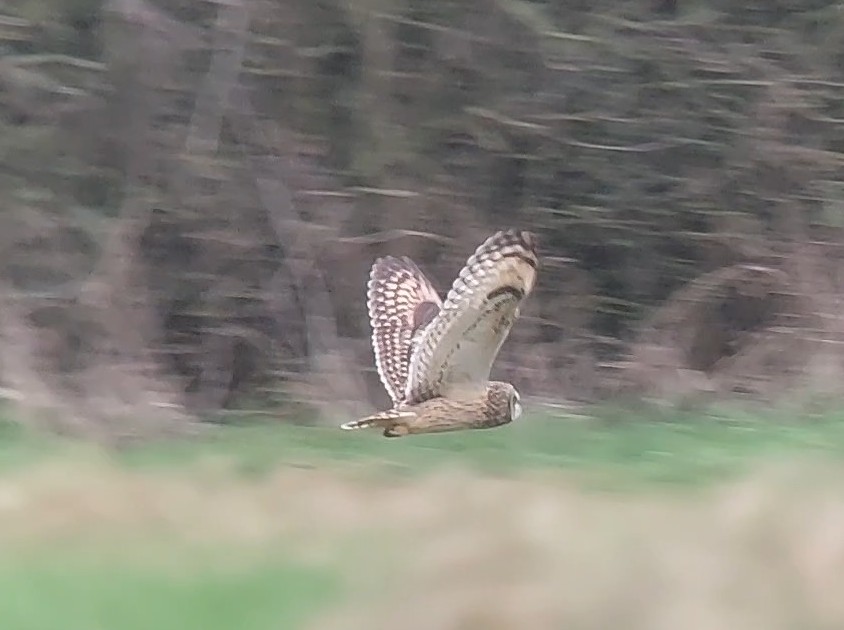
Short-eared Owls were again in evidence with one at Harrington AF on 4th, up to three at Blueberry Farm, Maidwell between 5th and 7th and, on the latter date, three at Neville’s Lodge, Finedon and one in the Brampton Valley between Cottesbrooke and Hanging Houghton.
Short-eared Owl, Northamptonshire, 7th February 2024 (Marin Swannell)Short-eared Owl, Northamptonshire, 7th February 2024 (Marin Swannell)
In line with last week, Blueberry Farm delivered a Merlin – this time a female – on 7th and a female/immature was also seen at Harrington AF on 4th.
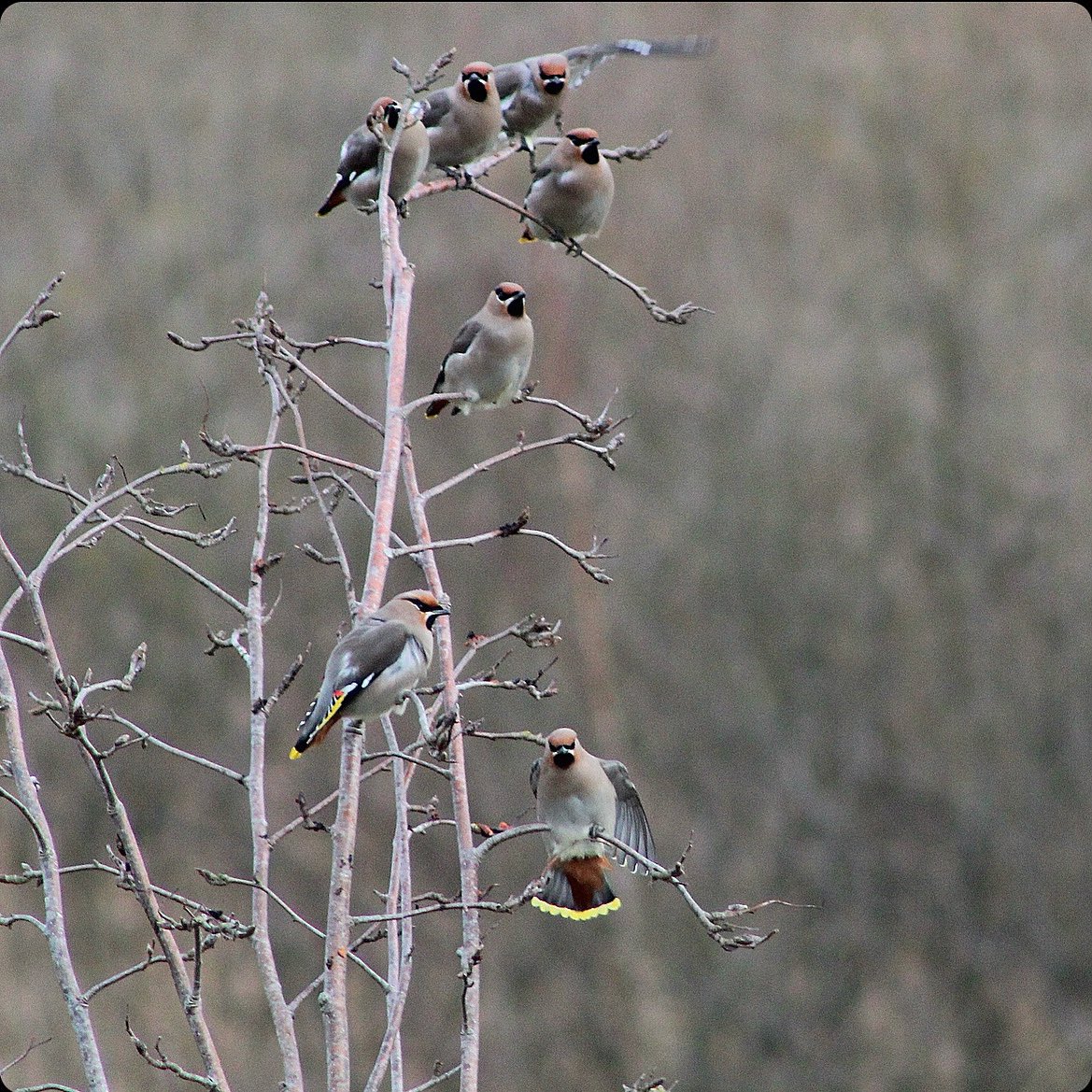
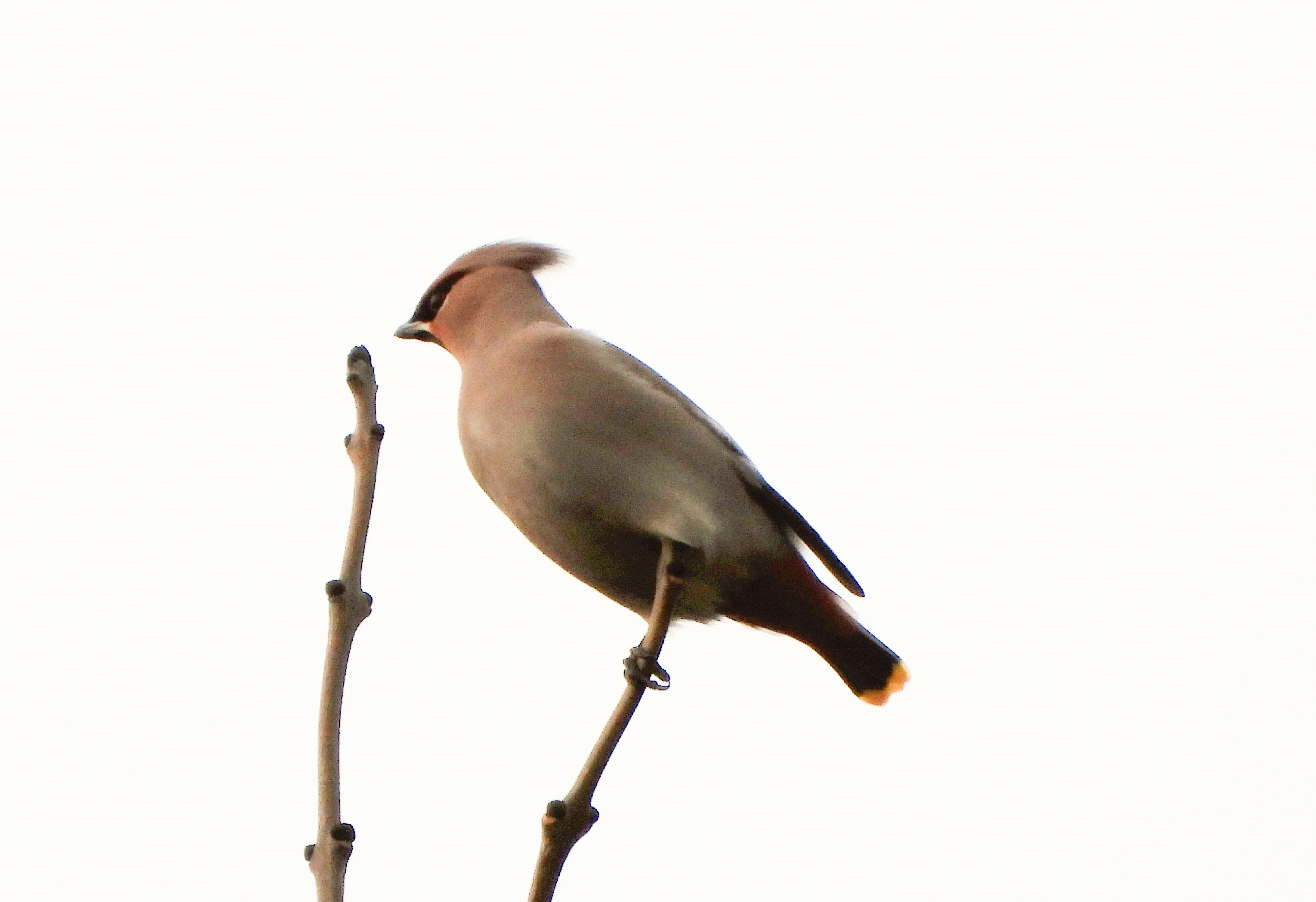
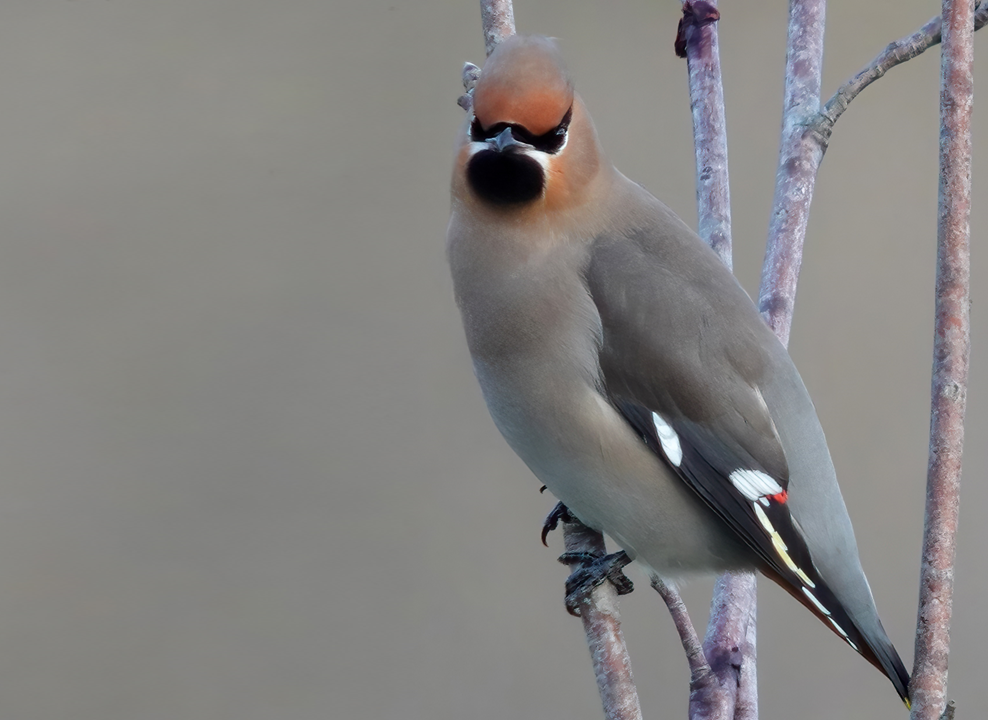
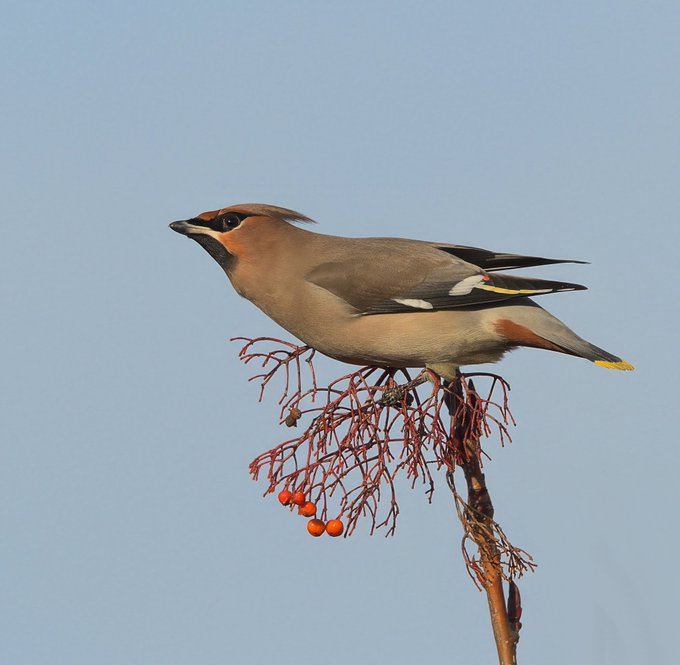
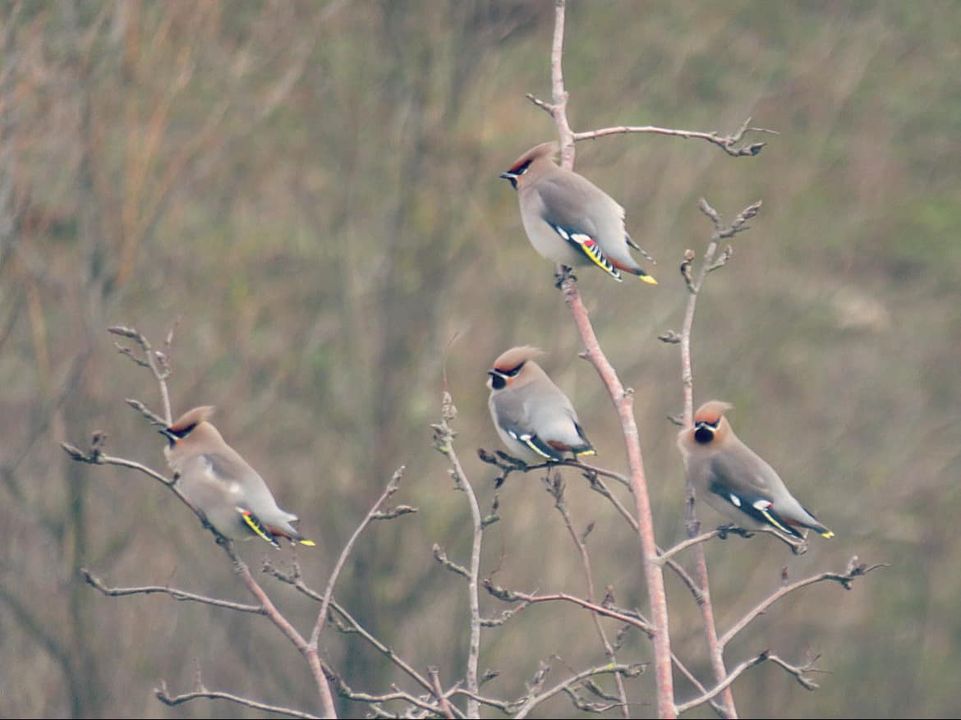
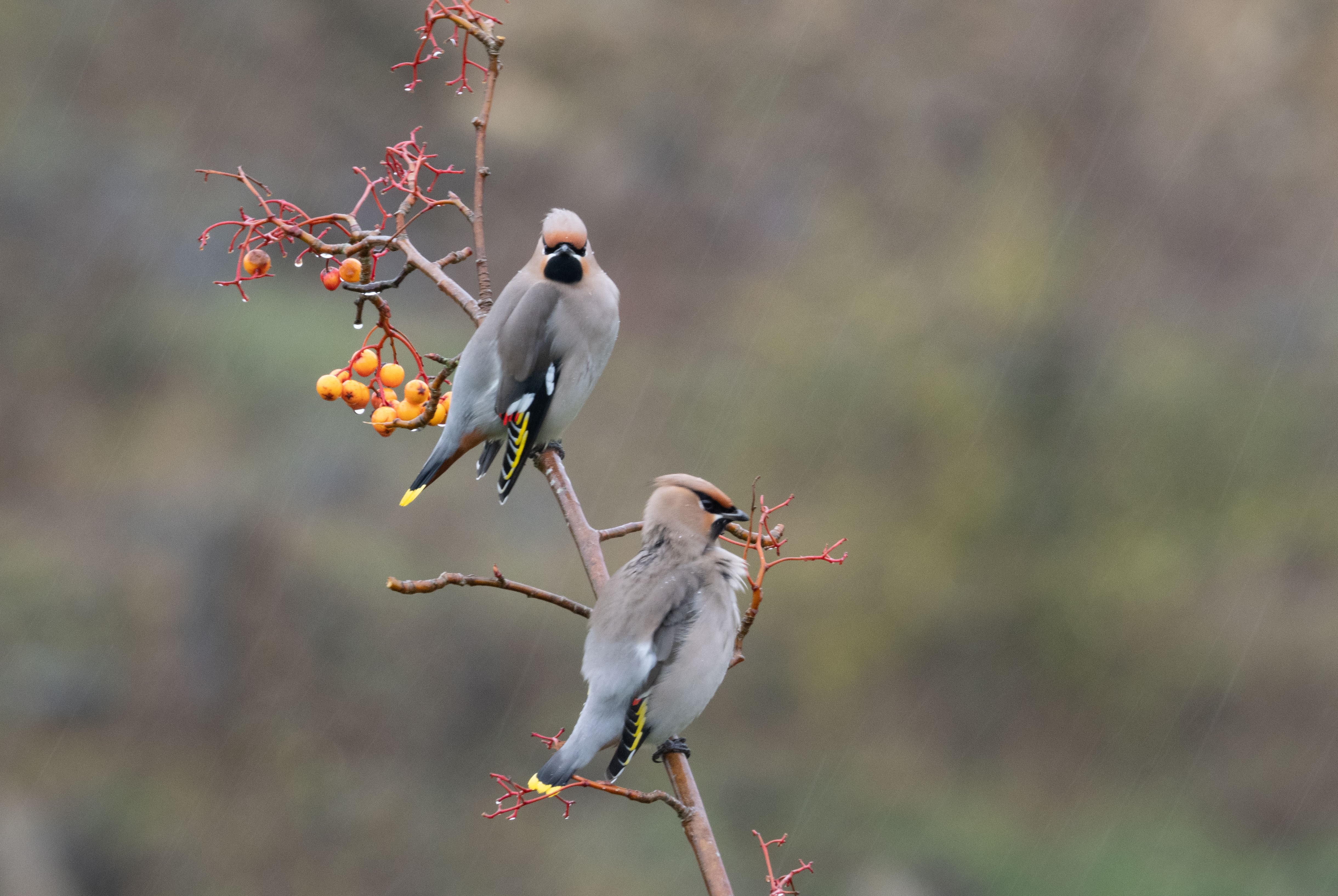
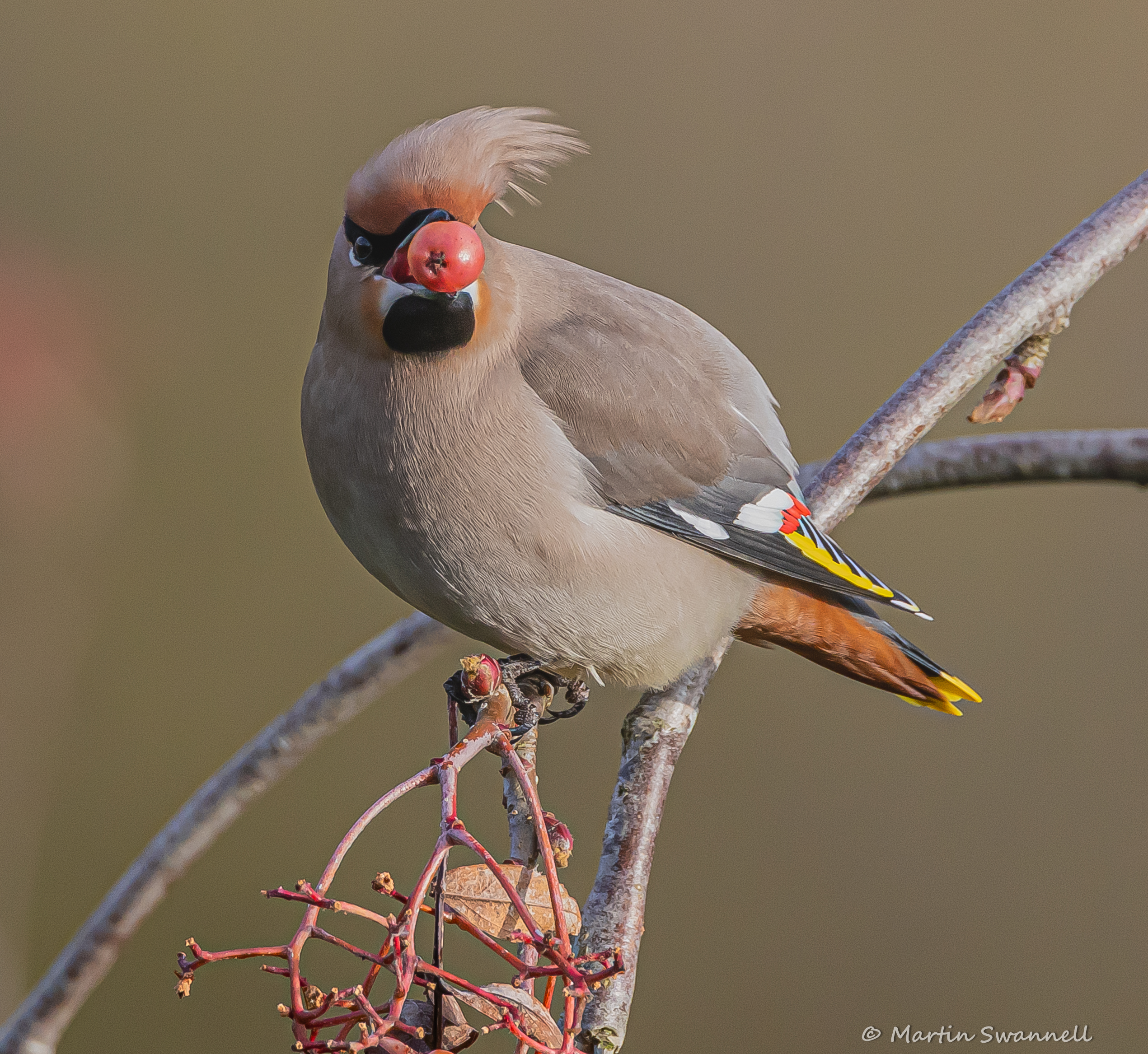
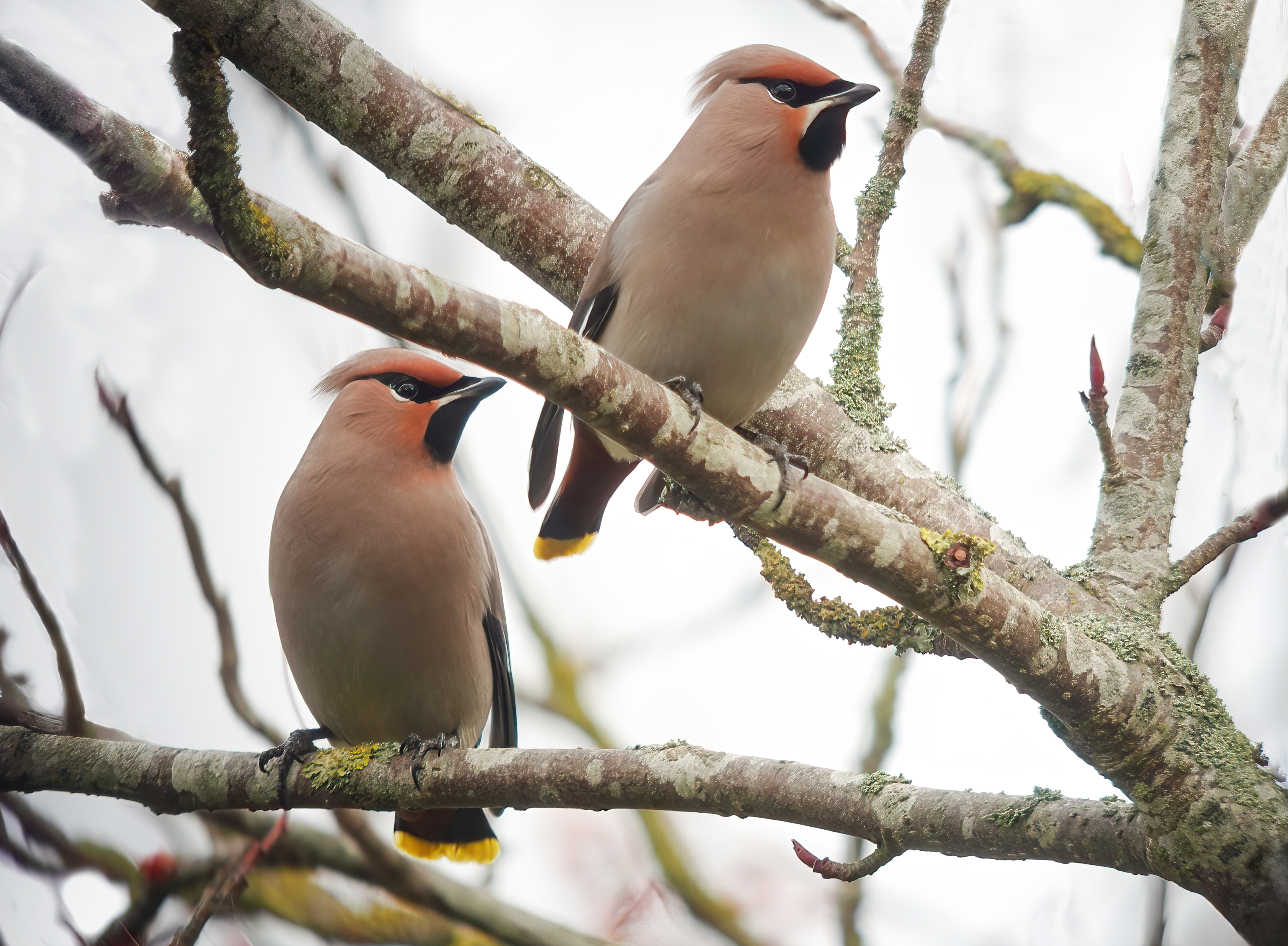
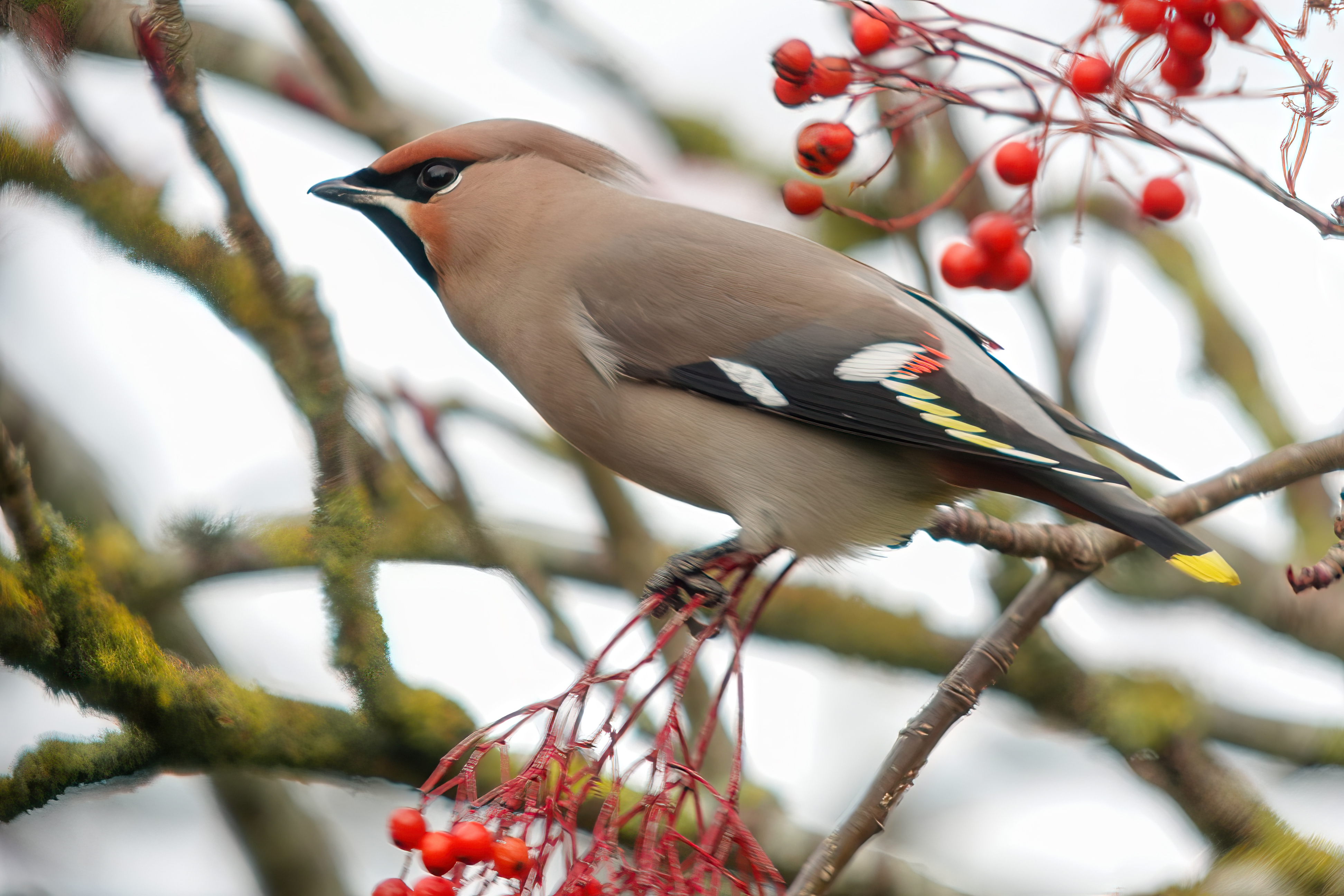
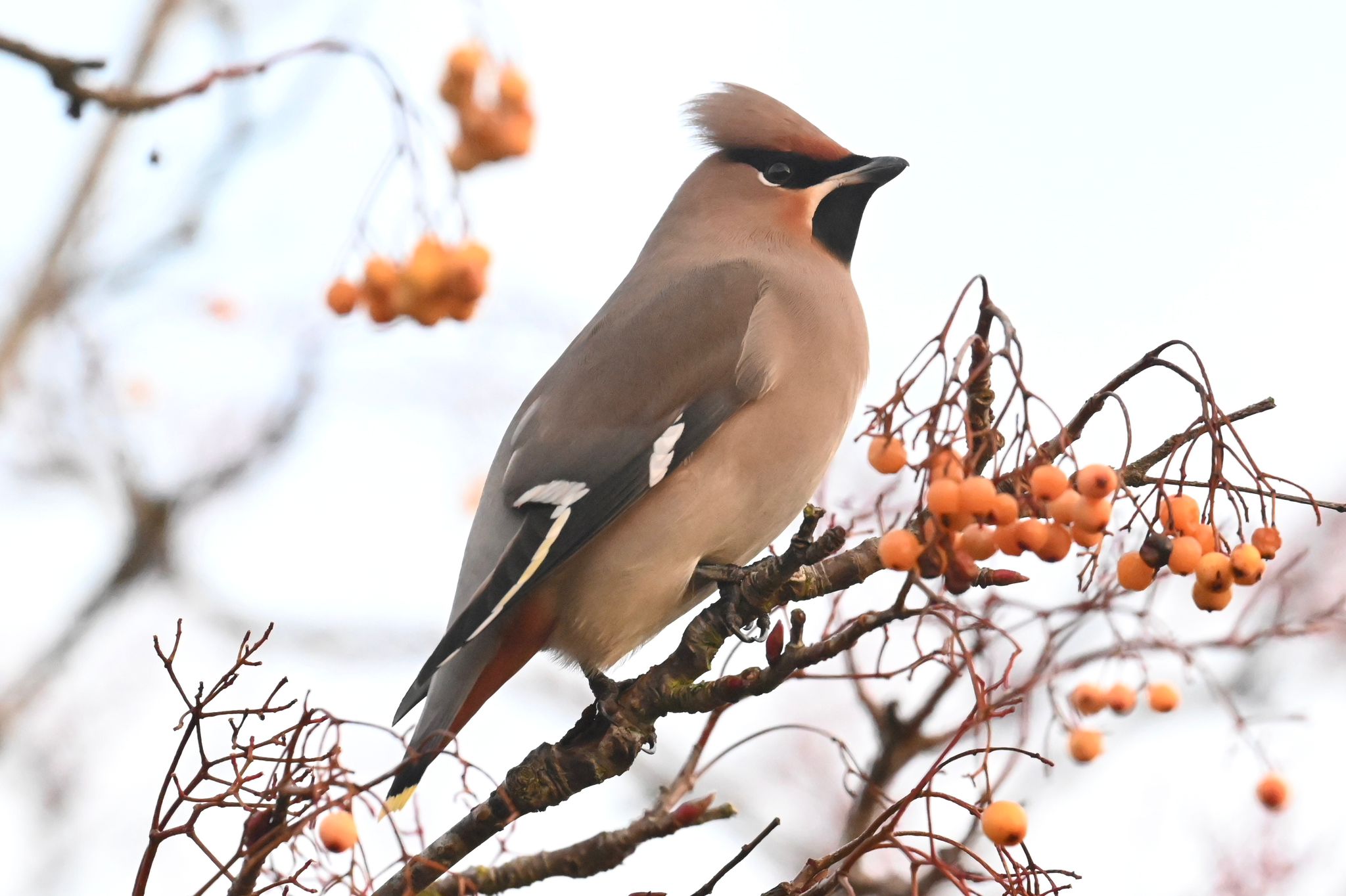
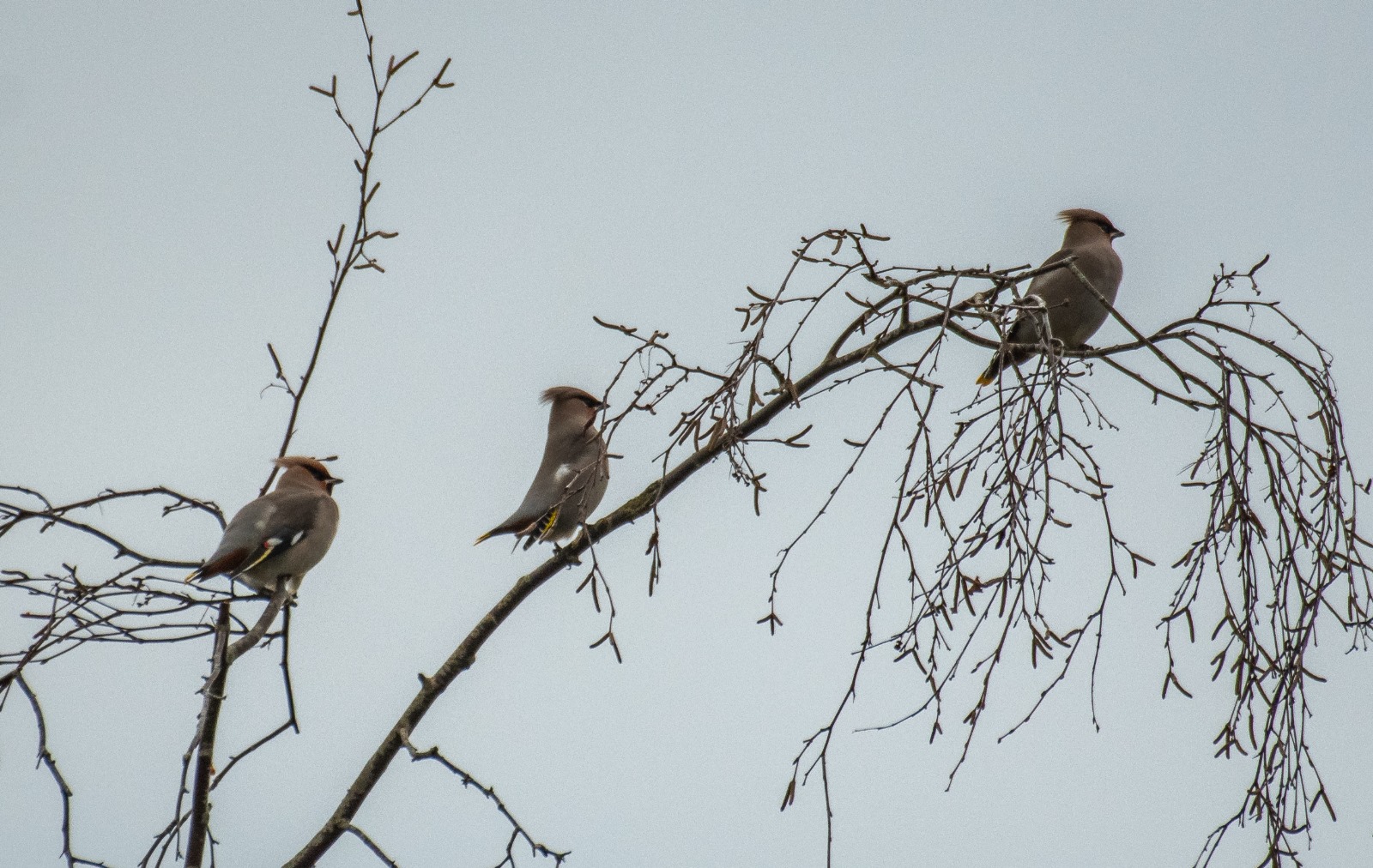
After 5th, it was all quiet on the Waxwing front, this being the last date on which the Corby seven were seen. Still, we can’t complain after their having enjoyed a good innings, being virtually nailed down at this site for more than five weeks.
Waxwings, Priors Hall Park, Corby, 4th February 2024 (Nisha Parmar)
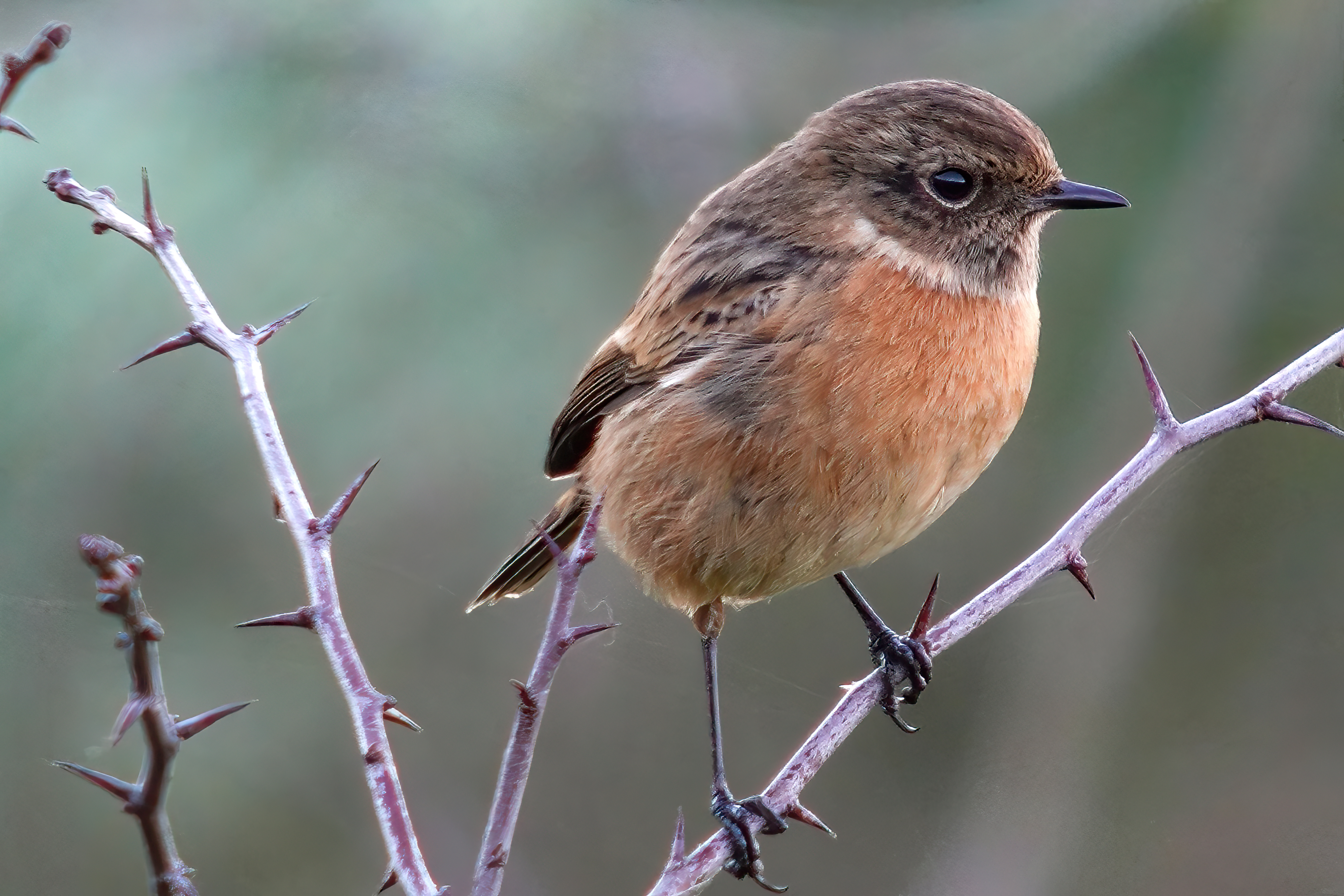
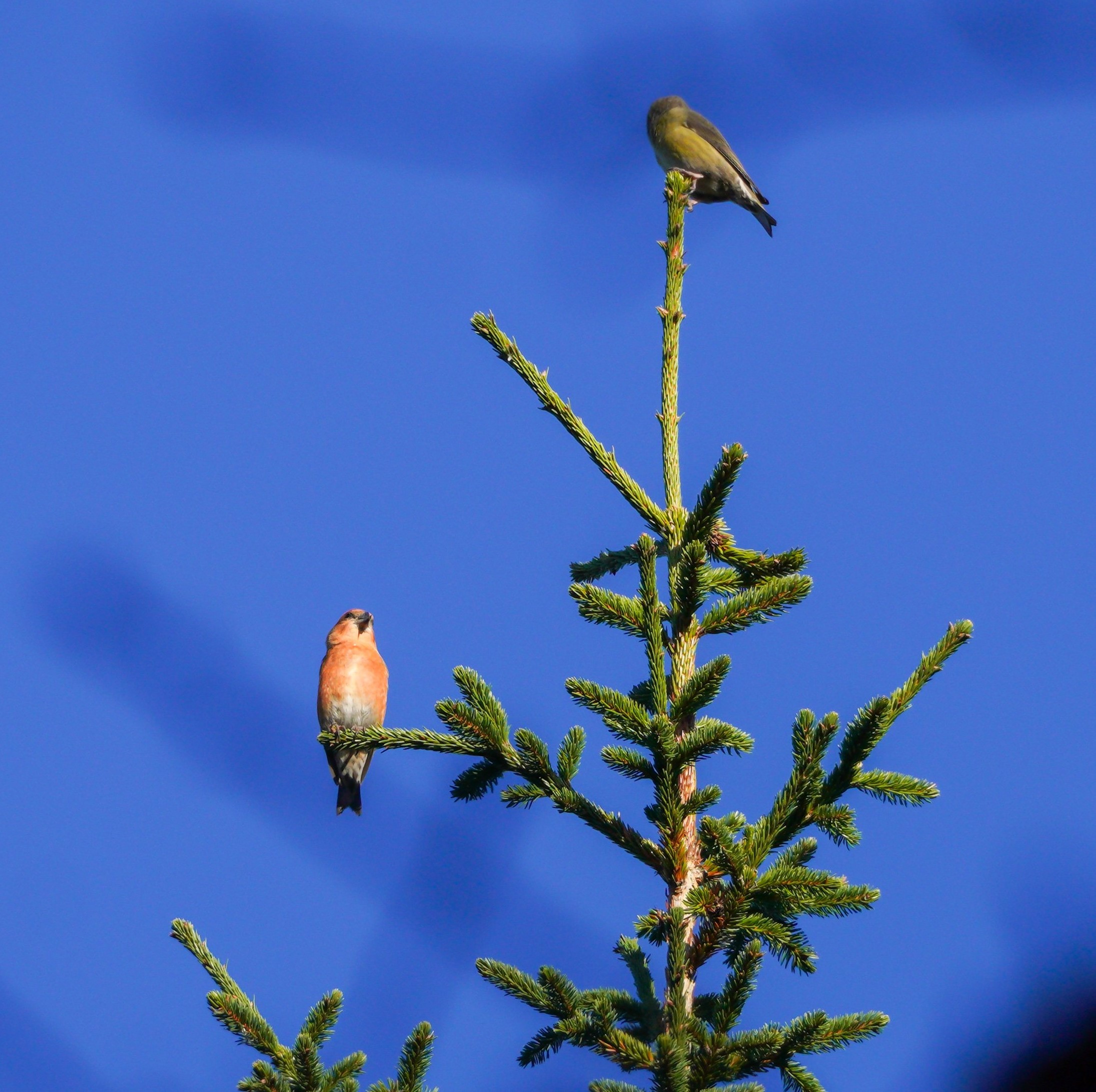
Stonechats were again found at five localities, the highest single site count being six at Earls Barton GP on 4th, while Crossbills crept back into double figures with up to twelve being seen at the ever-reliable Fineshade Wood until at least 7th.
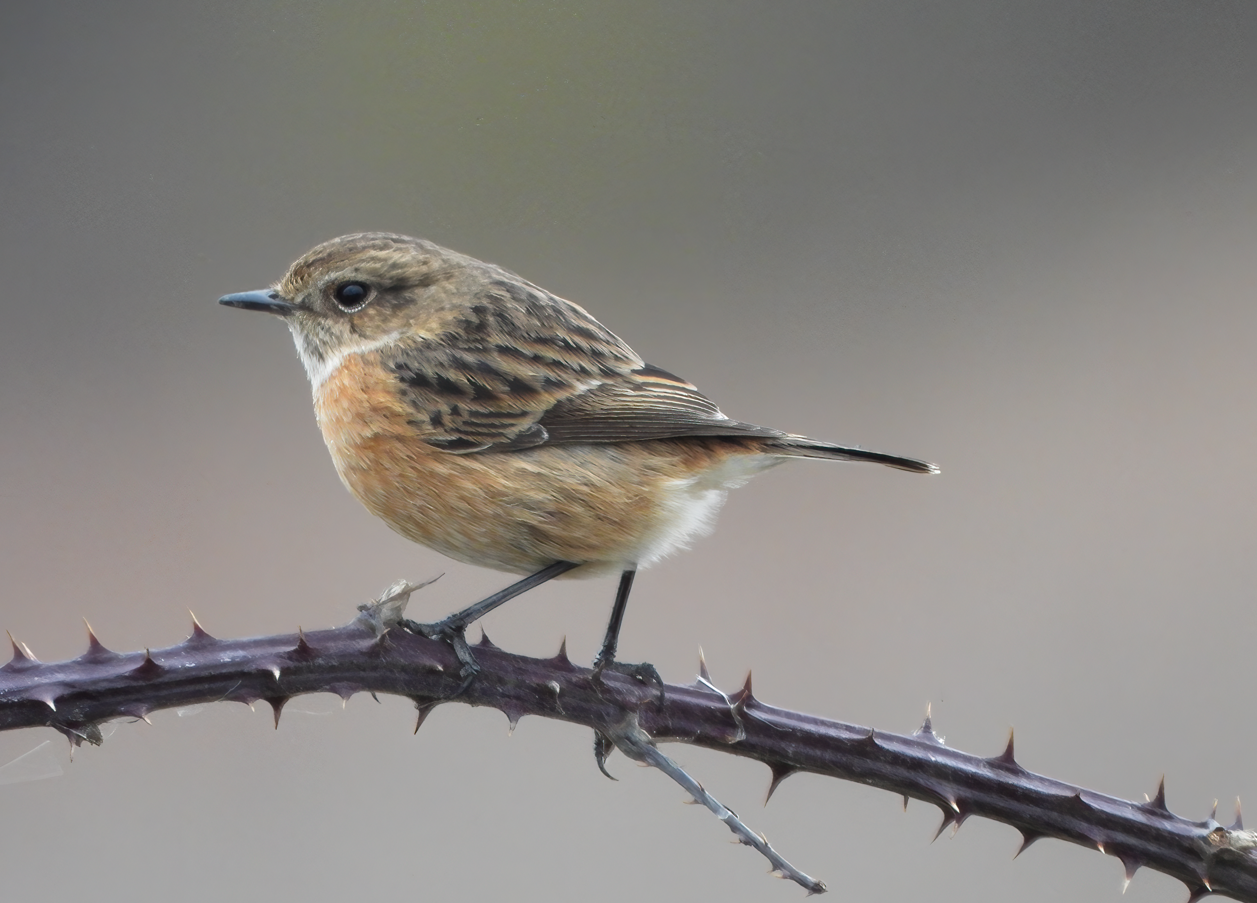
Stonechat, Summer Leys LNR, 7th February 2024 (Alan Coles)
A largely dry week – both weatherwise and new birdwise – saw higher-than-average temperatures in the latter half but there was still plenty of entertainment out there to keep the birding pace going.
There were few new wildfowl during the period and the Pink-footed Goose that appeared at Stanford Res on 2nd appears likely to be the Hollowell Res bird out on a jolly. A drake Red-crested Pochard was found on Ecton Lake, at Billing GP, on 27th, while the female Ring-necked Duck remained at Titchmarsh LNR (Thrapston GP) until 28th but was not seen thereafter. Hollowell hung on to its first-winter drake Greater Scaup throughout, as did Grendon Lakes its rather more advanced individual.
With numbers up on last week, Jack Snipe was again the only standout wader. A maximum of twelve at Daventry CP on 29th was the highest count, followed by two at Hollowell between 28th and 2nd and one at Barnes Meadow LNR, Northampton on 29th.
The scarcer gulls were still out there to be had and these included single adult Caspian Gulls in the roost at Stanford on 29th and 31st, a first-winter at Daventry on 29th and an adult roosting at Summer Leys LNR on 30th. With a notable absence of the formerly regular adult from Pitsford Res of late, the only Yellow-legged Gulls this week were a first-winter at Daventry on 29th, an adult at Summer Leys on 30th and a third-winter in the roost at Stanford on 31st.
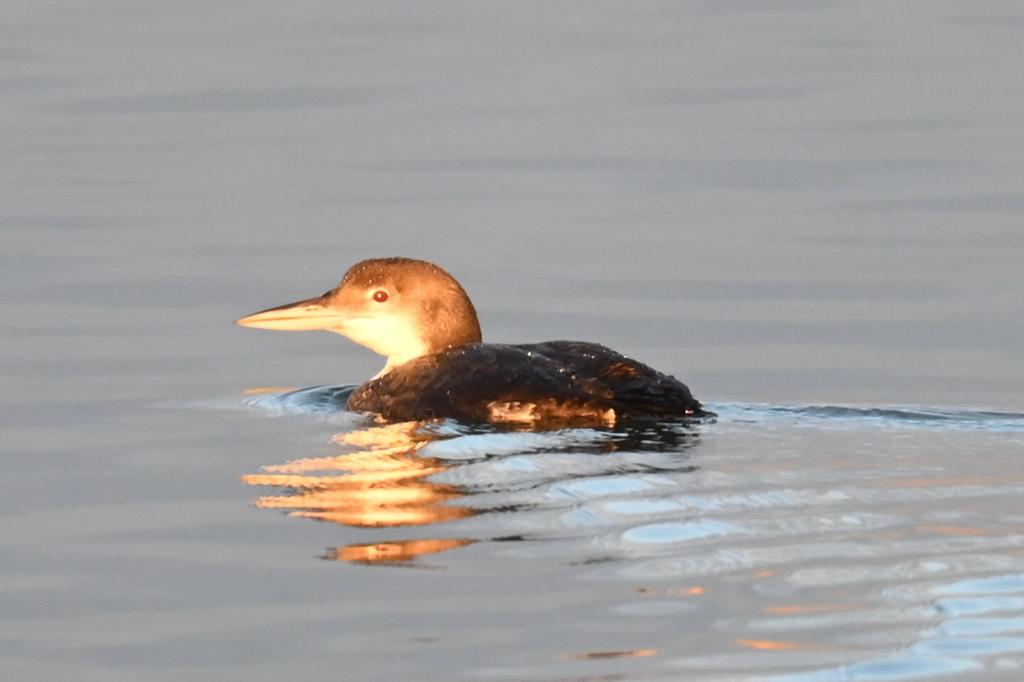
Nowadays less engaging and often prone to playing hide and seek, Pitsford’s Great Northern Diver was seen on 27th and 31st.
Cattle Egrets kept a surprisingly low profile and while one was seen at Stanford on 27th and 1st, it spent the intervening period in a nearby sheep field, over the border, in Leicestershire. One was also reported from Summer Leys on 29th.
Keeping up appearances, Marsh Harriers maintained their winter presence in the Nene Valley, where there were three independent sightings within the Earls Barton GP complex on 28th. One also provided observers at Stanford with a locally rare winter record when it flew east over the reservoir on the following day.
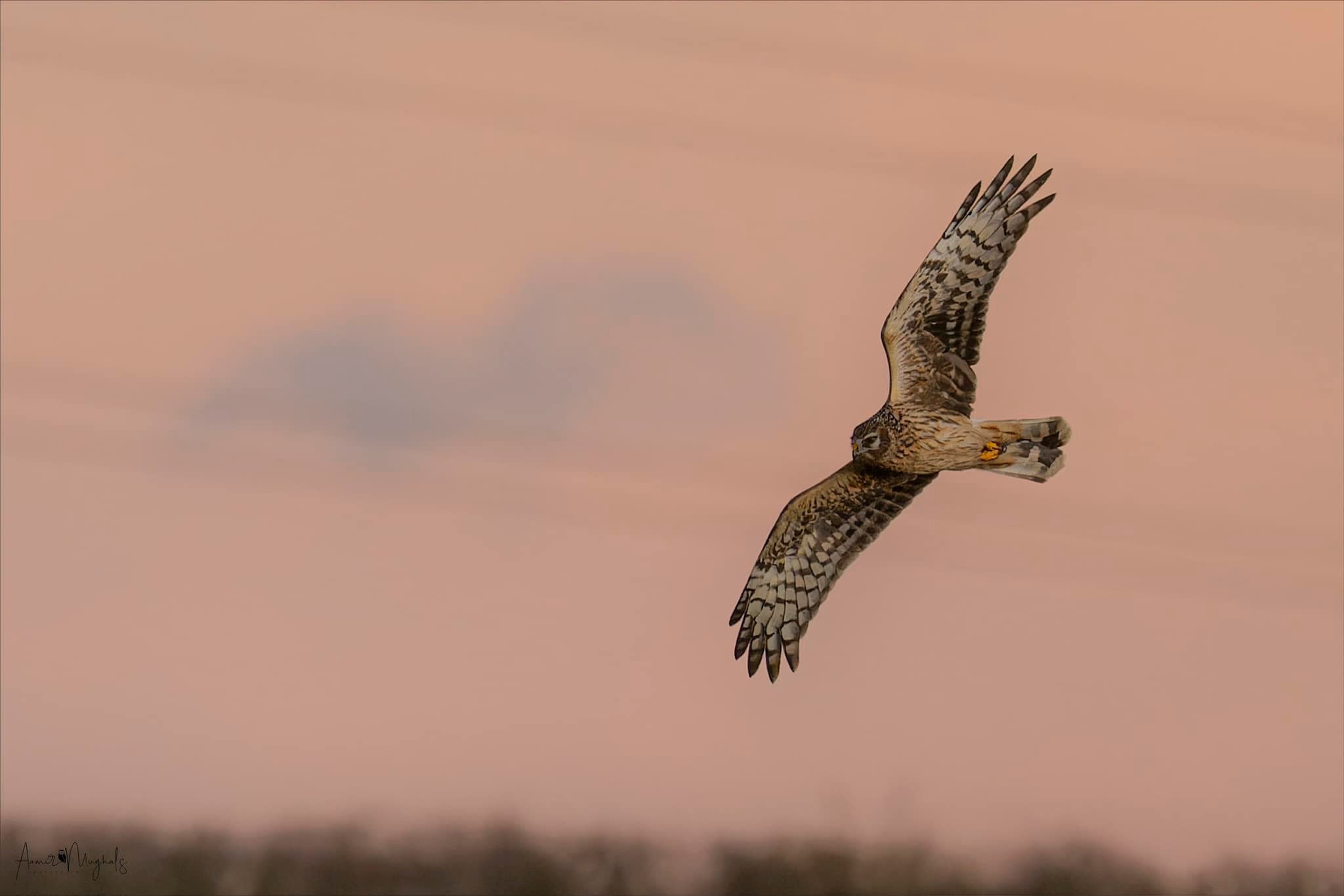
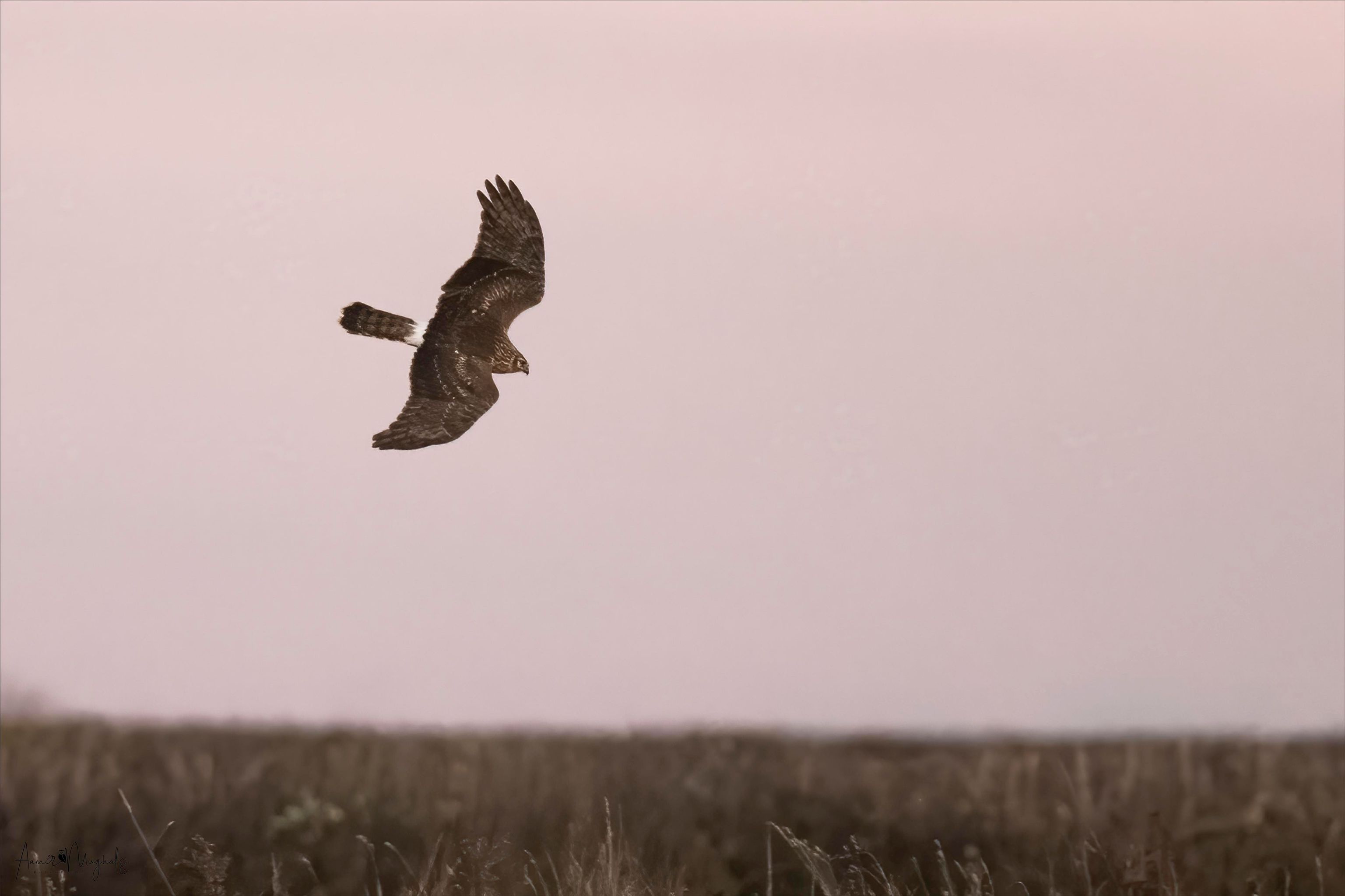
A ‘ringtail’ Hen Harrier was clocked over Harrington AF during the last hour of daylight on 30th, while the gathering dusk on 28th-29th also saw the emergence of four Short-eared Owls at Neville’s Lodge, near Finedon. In a bid to rival the Finedon four, Blueberry Farm, Maidwell delivered its own twilight quartet on 1st.
Short-eared Owl, Finedon, 28th January 2024 (Aamir Aziz Mughal)Short-eared Owl, Finedon, 28th January 2024 (Aamir Aziz Mughal)
Blueberry and the wider environs of the Brampton Valley also delivered a male Merlin on 29th-30th.
And so to Waxwings. Having increased to five birds in the latter part of last week, the Corby clan attracted a further new recruit on the first day of this one, only to move on up again to seven birds on 2nd. During this period, however, they became more mobile and unreliable, their appearances being more sporadic, with would-be observers going home empty-handed. That’s not to say they were the only ones available this week. A nice, Sunday afternoon find of twelve at Brackmills CP, Northampton proved to be a pull for those quick off the mark on 28th but their stay extended only until 09.15 the following morning, when they headed off south-west, toward Wootton. In addition to these, a lone bird was seen briefly in the vicinity of the entrance to the Hanson gravel processing plant at Earls Barton GP on 28th.
Waxwings, Brackmills CP, 28th January 2024 (Steve Brayshaw)Adult male Waxwing, Brackmills CP, 28th January 2024 (David James)Waxwing, Earls Barton GP, 28th January 2024 (Leslie Fox)
Stonechats were found at five localities – down from last week’s eleven – the highest count being a respectable seven at Hollowell on the last day of the week.
Female Stonechat, Corby, 2nd February 2024 (Mike Alibone)
With numbers also down, Crossbills crept into the week’s line-up with at least one bird present at Longcroft Road, Corby on 1st and a rather meagre two at Fineshade Wood the following day.
Things got fresh at the weekend when Storm Isha battered the UK, followed quickly in its wake by Storm Jocelyn. While they appeared to have little or no influence on what turned up locally, two species found themselves jostlin’ for position as bird of the week.
To get to the first of these requires a quick wade through the wildfowl which, this week, were in relatively short supply. Hollowell Res’s Pink-footed Goose remained there until at least 22nd, while further north, up on the Leicestershire border, two Red-crested Pochards appeared at Stanford Res on the last day of the period. Closer to the county town, a drake Red-crested Pochard x Pochard hybrid provided a flicker of interest at Sywell CP on 21st.
Drake Red-crested Pochard x Common Pochard hybrid, Sywell CP, 21st January 2024 (Angus Molyneux)
Back at Hollowell, the first-winter drake Greater Scaup remained settled throughout the week, while Earls Barton GP’s more advanced first-winter was still present at Grendon Lakes on 24th.
The first contender for bird of the week, however, was found ducking an’ diving at Thrapston GP’s Titchmarsh LNR on 25th. Step forward a/the female Ring-necked Duck. Not having been seen for a good seven days since disappearing from Stanwick, it was only a matter of time before it resurfaced somewhere nearby and Thrapston, having history, was the obvious choice. Of course, it may not have been the same bird …
Female Ring-necked Duck, Thrapston GP, 25th January 2024 (Mike Alibone)
Quality waders were all but missing, save for a Jack Snipe in the Brampton Valley, near Brixworth STW, on 20th and four of the same at Daventry CP on 22nd.
Homing in on some of the rarer gulls proved less of a challenge for those prepared to take a punt at a gull roost in the fading light of a winter’s afternoon. Stanford provided the lion’s share, with an adult Mediterranean Gull dropping in on 26th, adult and first-winter Caspian Gulls on 20th, a first-winter again on 22nd, a third-winter on 24th and an adult on 26th. A third-winter was also found at DIRFT 3 on 26th and the regularly visiting German-ringed (XLVH) adult was at its favoured site of Naseby Res on 21st. The only Yellow-legged Gull of the week was a second-winter at Billing GP on 24th.
First-winter Caspian Gull, Stanford Res, 20th January 2024 (Chris Hubbard)German-ringed adult Caspian Gull, Naseby Res, 21st January 2024 (Jon Cook)
Mobile south of the causeway, the juvenile Great Northern Diver chalked up another week at Pitsford Res.
Numbers of Cattle Egrets remained low and included two at Summer Leys LNR on 21st, two at Ditchford GP’s Irthlingborough Lakes & Meadows LNR on 26th and one roosting at Stanford on the same date.
Now only to be expected, Marsh Harrier sightings were restricted to the weekend, when a juvenile and a male were seen around Earls Barton/Summer Leys and one flew west at Chown’s Mill roundabout near Ditchford GP. A male Merlin was seen in the Brampton Valley, between Cottesbrooke and Hanging Houghton on 20th.
Regimented and reliable, the four Corby Waxwings had clocked up a 26-day stay by the end of the week, being joined there by a fifth bird for the last three of these. Their presence there for knocking a month must surely put them into the record books for the longest-stayers, locally, and having chosen a locality offering perfect viewing conditions, along with easy ‘roll up and see’ parking, they continue to attract a steady stream of admirers. As contender number two for bird of the week – and not classed as a rarity – in terms of pulling-power, they win hands down. Two were also briefly reported in East Hunsbury, Northampton, on 26th.
First-winter female Waxwing, Priors Hall Park, Corby, 24th January 2024 (Mike Alibone)
Stonechats were found at eleven localities, the highest count being five at Earls Barton GP on 26th.
Female Stonechat, Earls Barton GP, 26th January 2024 (Leslie Fox)
Finally, Fineshade – the week’s only site for Crossbills consistently produced single figures with a maximum of at least five on 20th.
With a continuing northerly airflow, sparse snow showers on 16th (but blink and you’d miss them) and local temperatures plummeting to -6°C overnight on 17th, it was a cold, cold week. So much so that many waterbodies became significantly icebound, leaving only small holes unfrozen, in most instances giving rise to large concentrations of wildfowl where they occurred.
And while the Hollowell Res Pink-footed Goose stayed put throughout the period, another was discovered at Blatherwycke Lake on 16th. Where Whooper Swans were concerned, last week’s run became this week’s trickle with an adult paying the briefest of visits to Ravensthorpe Res on 15th, followed by two flying south over the dam at Pitsford Res on 17th.
Adult Whooper Swan, Ravensthorpe Res, 15th January 2024 (Jon Cook)
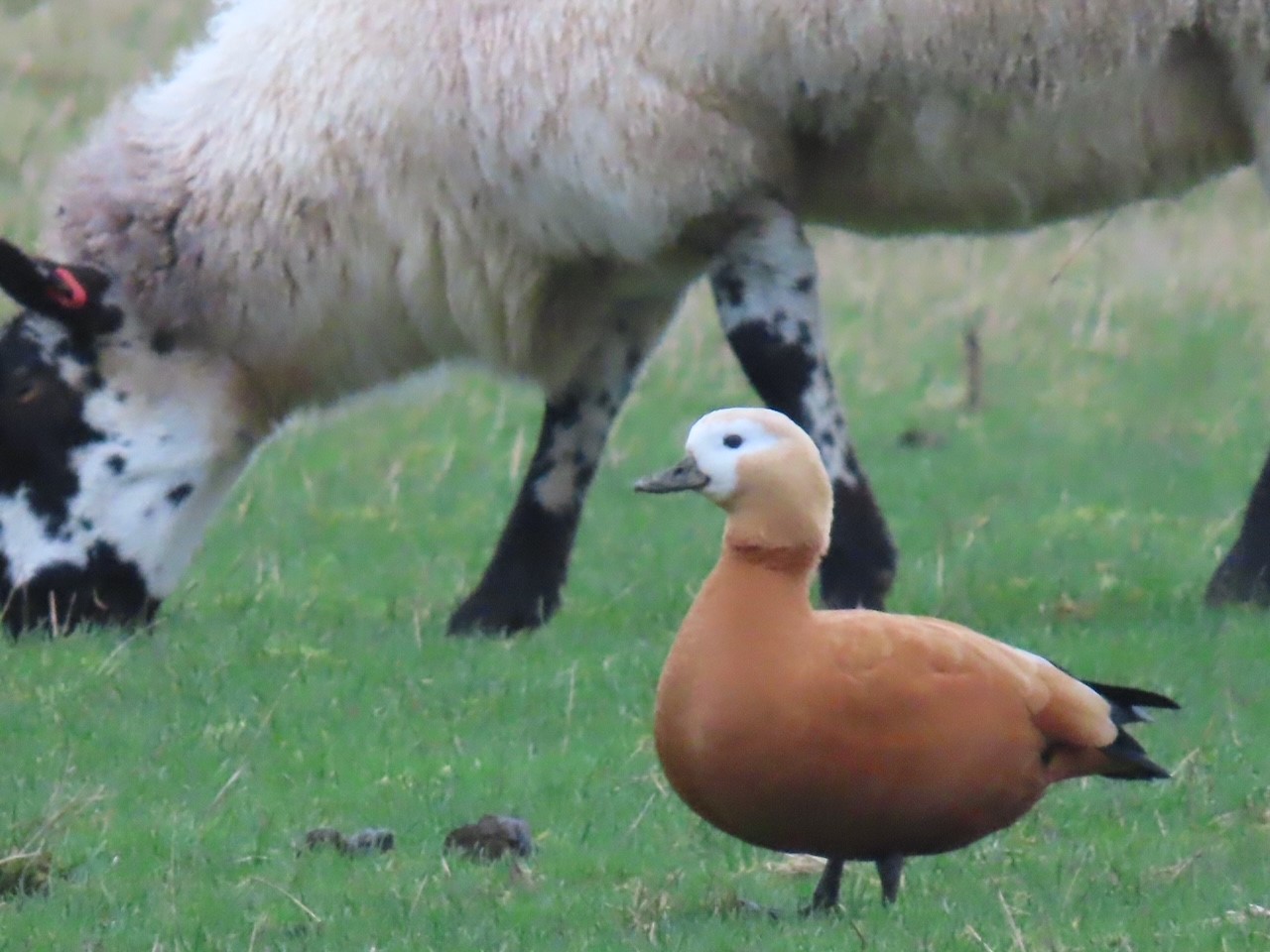
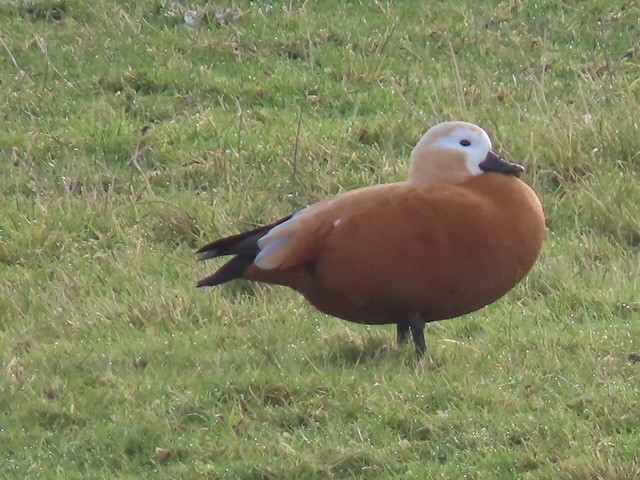
The regularly wintering female Ruddy Shelduck was still around, this week keeping company with Canada Geese at Hollowell on 17th-19th and the first Red-crested Pochard of the new year checked in at Earls Barton GP’s Grendon Lakes on 15th.
In terms of rarity value, Stanwick GP produced ‘bird of the week’ when a female Ring-necked Duck was found in an ice hole on the Main Lake there on 17th. Although there have been fewer than fifteen county records, a female is hardly a head-turner nowadays. Let’s face it, we’ve been spoiled rotten with them over the past couple of years, long-stayers and all that … It remained until the following day but was not seen subsequently.
Female Ring-necked Duck, Stanwick GP, 18th January 2024 (Mike Alibone)
Spilling over from last week, the first-winter drake Greater Scaup remained at Ravensthorpe Res, yo-yoing back and forth between nearby Hollowell throughout the period. Another first-winter drake was found in an ice hole at Grendon Lakes on 18th.
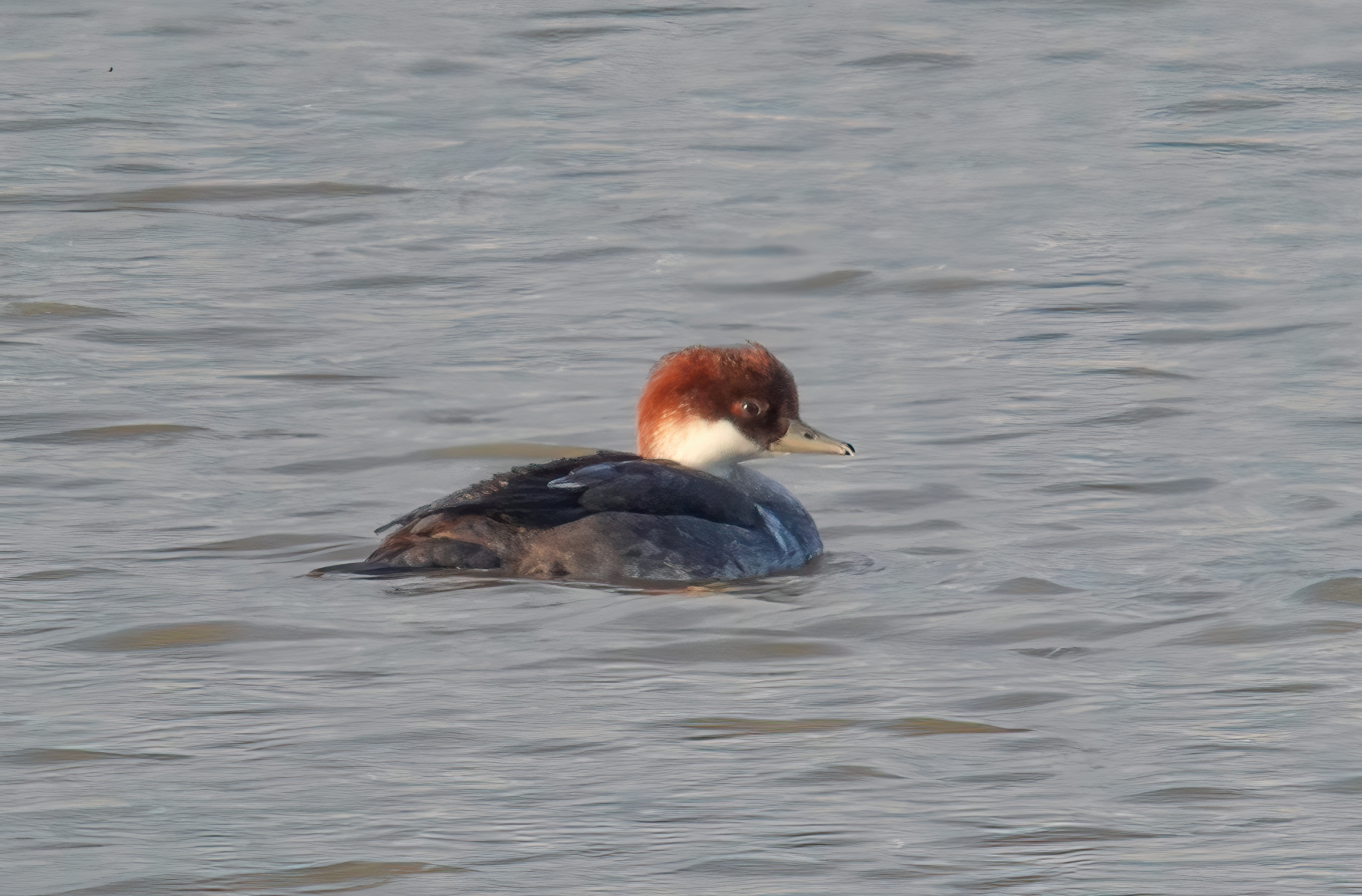
After several days’ apparent absence, the ‘redhead’ Smew was back at Clifford Hill GP between 14th and 16th.
This week’s waders were last week’s waders and included two Ruffs still at Stanwick on 13th-14th, having dwindled to one by 17th. Jack Snipes were found at three localities – singles being at Lilbourne Meadows NR on 14th and at Hollowell on 15th and 17th, while at least seven remained at Daventry CP on the latter date.
And with things settling down to normal, gulls caused far less of a rumpus this week with the roost at Boddington Res holding an adult and a second-winter Mediterranean Gull on 13th and the roost at Stanford Res still proving attractive to a second-winter on 15th-17th. Boddington’s roost also produced a first-winter Caspian Gull on 13th, while the latter date saw an adult at Naseby Res and further adults were seen at Hollowell on 15th, Stanford on 18th-19th and at Clifford Hill on 19th. Pitsford produced the only Yellow-legged Gulls of the period with an adult there on 13th and three in the roost on 17th.
The juvenile Great Northern Diver maintained its presence at Pitsford throughout the period.
Juvenile Great Northern Diver, Pitsford Res, 13th January 2024 (Jon Cook)
In comparison to recent weeks, Cattle Egrets kept a low profile – perhaps as a result of the freezing temperatures. One was seen at Stanwick on 14th and 17th and two were reported from adjacent Ditchford GP’s Irthlingborough Lakes & Meadows LNR on 16th and 19th.
There was no let-up in Marsh Harrier sightings, though, with singles at Stanwick on 13th, Earls Barton GP’s Quarry Walk on 14th and at Summer Leys LNR on 17th, while a ‘ringtail’ Hen Harrier was seen two days running, on 14th and 15th, at Harrington AF.
Numbers of Short-eared Owls were down, however, with just two near Finedon on 13th and one near Whilton Locks the following day.
Short-eared Owl, Finedon, 13th January 2024 (Paul Young)
The week’s Merlins were limited to a female at Ditchford GP on 14th and a male near Brixworth STW in the Brampton Valley on 17th.
Local birders were, this week, provided with a choice of venue in terms of where to watch Waxwings. Instead of heading to Corby where, it must be said, the long-staying four proved ever-reliable throughout, Northampton provided a more south-central setting for one, then two, in the open front garden of a house in East Hunsbury. Following the appearance there of a first-winter female on 15th, it was subsequently joined by an adult male on 17th, both birds remaining to see the week out. Although they proved a popular pull, they were not always on view and extended waiting times were often the order of the day.
First-winter female Waxwing, East Hunsbury, Northampton, 15th January 2024 (Alan Coles)Adult male Waxwing, East Hunsbury, Northampton, 19th January 2024 (Mike Alibone)
Elsewhere, three were in a private garden in Stanion on 14th and a first-winter female appeared in a Brixworth garden on the last day of the week.
First-winter female Waxwing, Brixworth, 19th January 2024 (Jon Philpot)
The weekly Stonechat tally saw birds at nine localities, including Ditchford, Earls Barton, Hollowell, Oundle, Pitsford, Polebrook AF, Summer Leys, Sywell CP and Upton CP, with a maximum of at least six at Earls Barton on 13th.
Not unexpected with decent numbers nationally at present, a Mealy Redpoll was a one-day bird at Daventry CP on 15th, following a belated report of one photographed at Stortons GP on 11th. These are the first in the county since one at Wakerley Great Wood on 2nd April 2021. Speaking of which, the woods at Fineshade and Wakerley carved up the week’s Crossbills between them, with up to twelve logged at Fineshade/Westhay Wood and a maximum count of forty-one at Wakerley on 16th.
Male Crossbill, Fineshade Wood, 19th January 2024 (Bob Bullock)
A calmer, drier and slightly brighter week, weatherwise, saw temperatures drop a little as a high pressure system took hold over north-east Europe and Russia, producing a cold, easterly airflow. While perhaps not directly responsible, along with it came a notable movement of Whooper Swans and a small increase in numbers of wildfowl at some locations. But the week belonged to a certain gull …
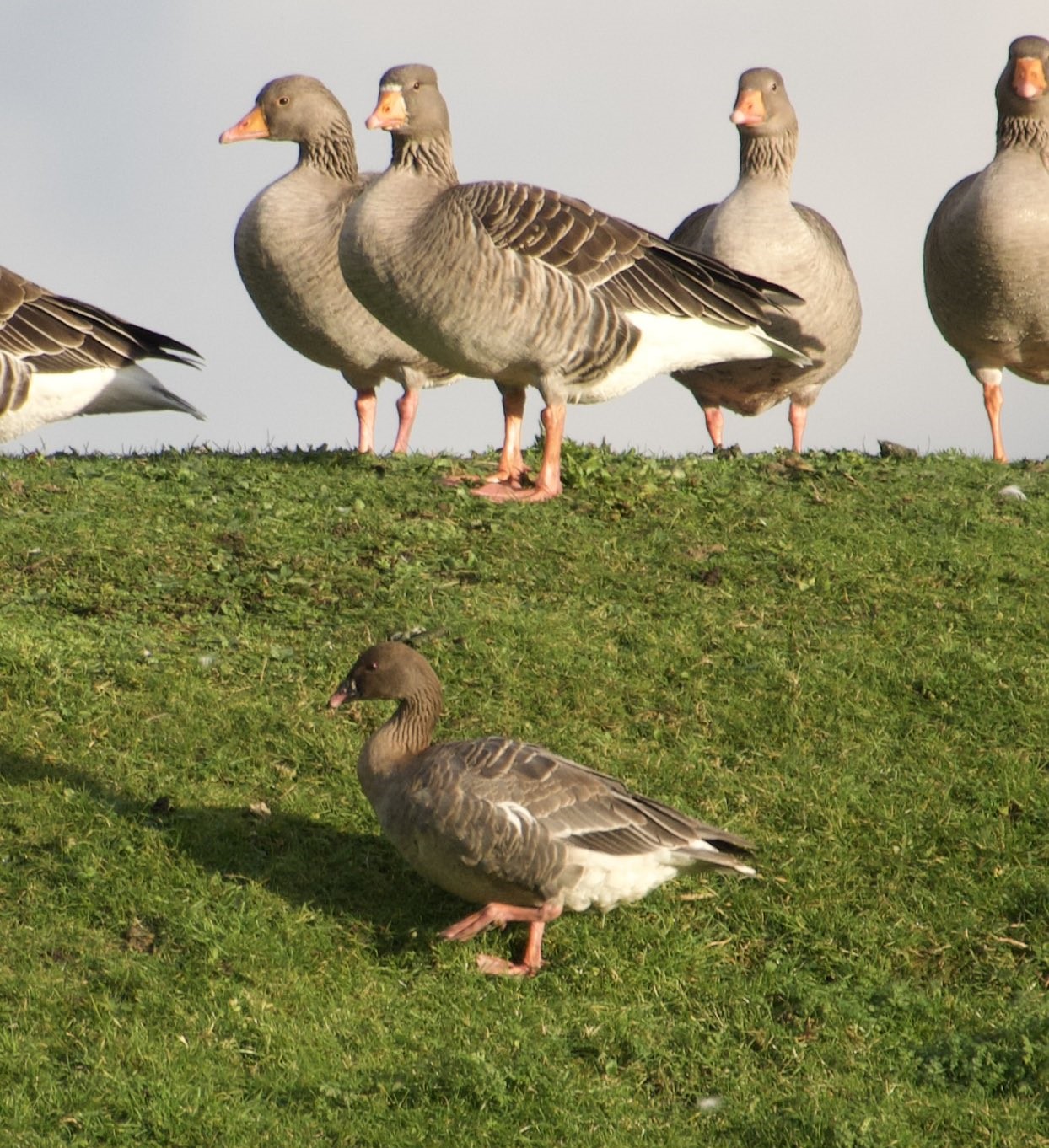
Possibly a new – or more likely the same – Pink-footed Goose was seen at Stanford Res on 6th-7th before relocating to nearby fields at Stanford on Avon on 8th and then returning to Hollowell Res on 10th.
Pink-footed Goose, Stanford Res, 6th January 2024 (Chris Hubbard)
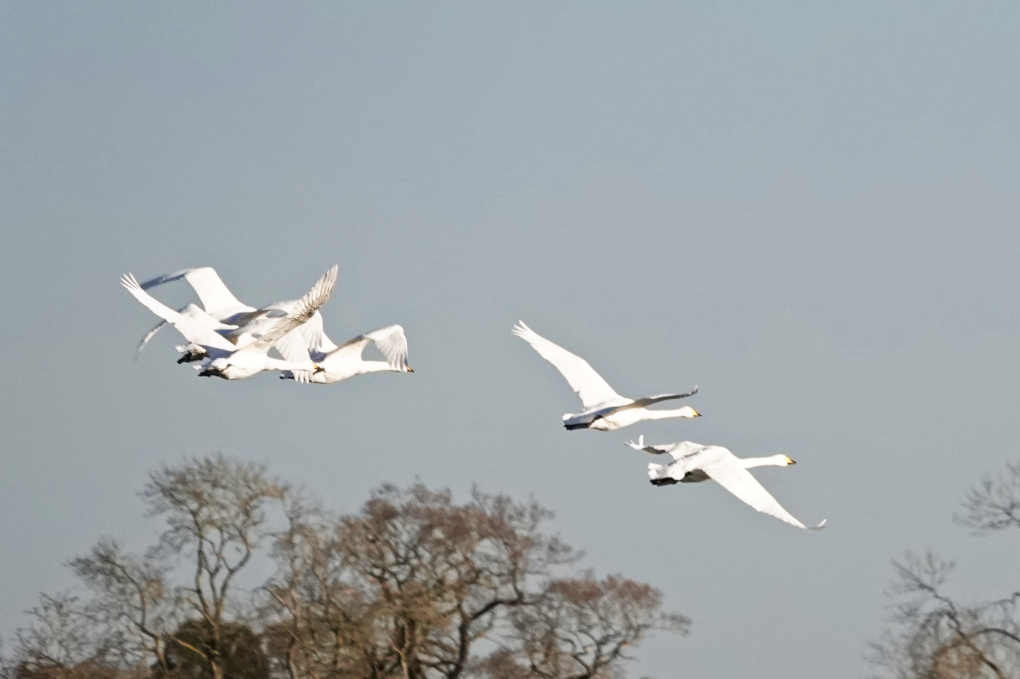
However, Whooper Swans were the order of the week on the wildfowl front, although all those found did not remain longer than one day at their respective locations. The first to arrive were two adults at Clifford Hill GP on 6th, where the number had doubled to four by the end of the day. Three adults visited Stanford Res on 7th and two adults and a juvenile flew north over Thrapston GP’s Titchmarsh LNR the following day. Seven were on floodwater east of Oundle, briefly, before flying south-east on 9th and three flew south over Harrington AF on 12th.
Adult Whooper Swans, Clifford Hill GP, 6th January 2024 (Bob Bullock)Adult Whooper Swans, Stanford Res, 7th January 2024 (Barry Silverman)Whooper Swans, Oundle, 9th January 2024 (Nick Penny)
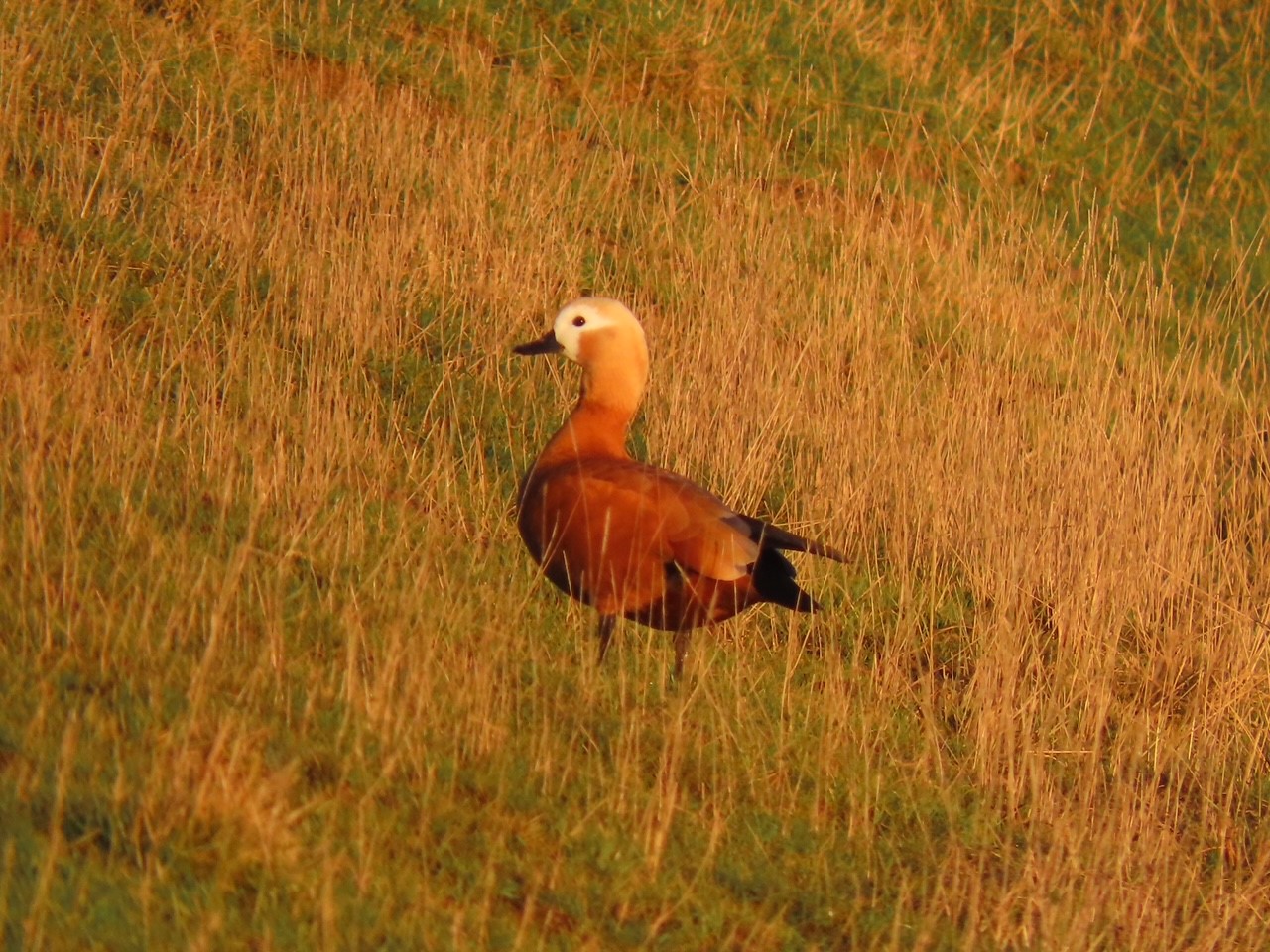
The regular Ruddy Shelduck put in its first appearance of the year at Winwick Pools on 10th.
Female Ruddy Shelduck, Winwick Pools, 10th January 2024 (Jim Urwin)
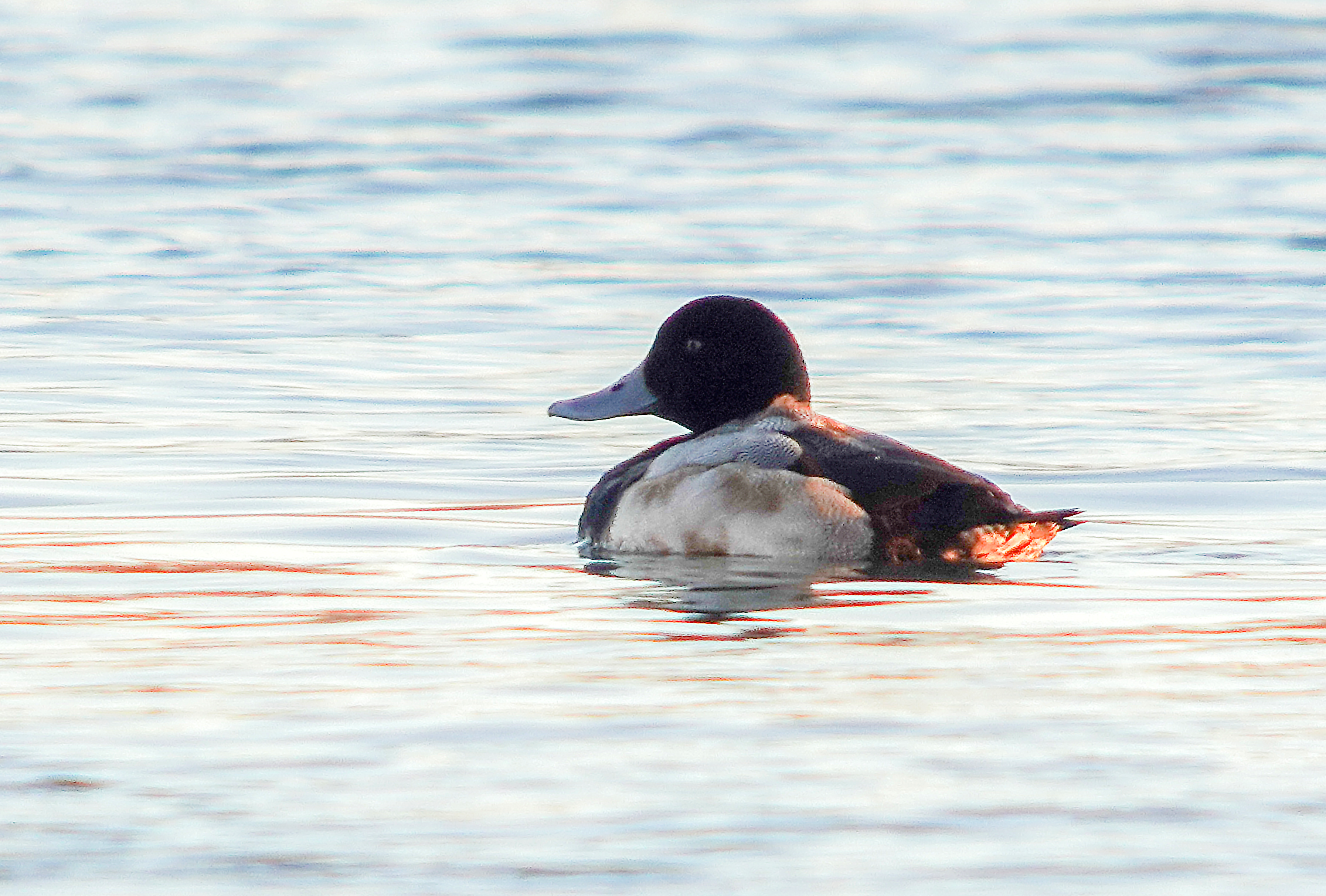
But hanging on from last week were the first-winter drake and female Greater Scaups at Clifford Hill on 6th-8th, the drake still present on 9th. Another first-winter drake was found at Ravensthorpe Res on the last day of the period.
First-winter drake Greater Scaup, Clifford Hill GP, 9th January 2024 (Mike Alibone)First-winter drake Greater Scaup, Clifford Hill GP, 9th January 2024 (Mike Alibone)
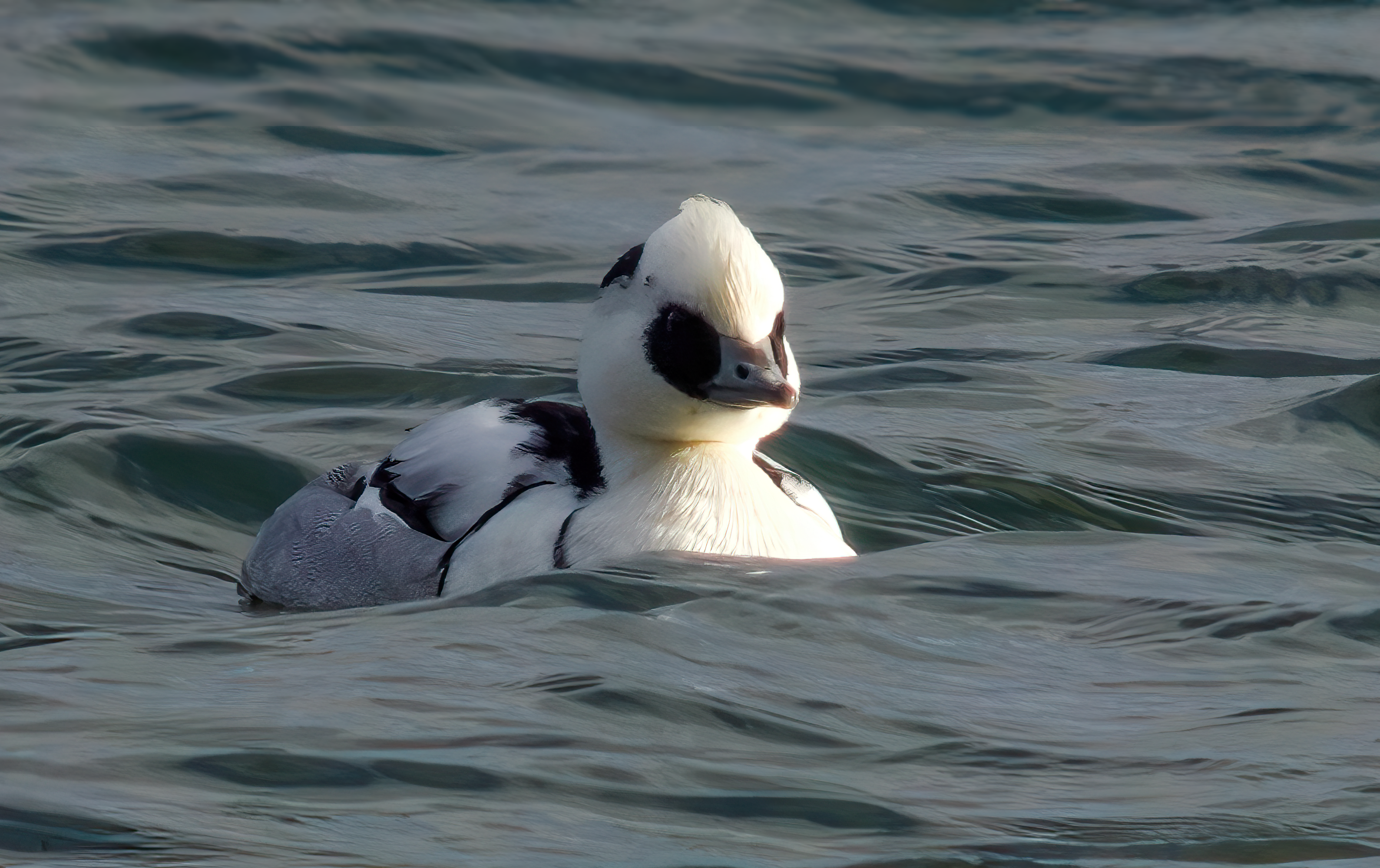
Also remaining was the ‘redhead’ Smew at Clifford Hill from 6th to 7th, after which there were no further sightings. It is now generally believed that milder winters mean Smews are no longer heading out to the UK, at the far western limit of its winter range, as much as in previous years, with more spending the coldest months in the Baltics, Germany or southern Scandinavia and it seems highly likely that this attractive little sawbill will become even more scarce in the UK as time progresses. For further details see here.
Smew, Clifford Hill GP, 6th January 2024 (Mike Alibone)
Waders during the period were limited to a surprise visit by four Ruffs to Stanwick GP on 12th and a healthy total of at least eighteen Jack Snipes at Daventry CP on 8th with fifteen there on 12th. One was also seen at Willowbrook Industrial Estate, Corby on 7th.
Gulls came very much to the fore this week, with the spotlight firmly on the roost at Stanford Res, which held a second-winter Mediterranean Gull on 6th and 12th.
Second-winter Mediterranean Gull, Stanford Res, 6th January 2024 (Chris Hubbard)
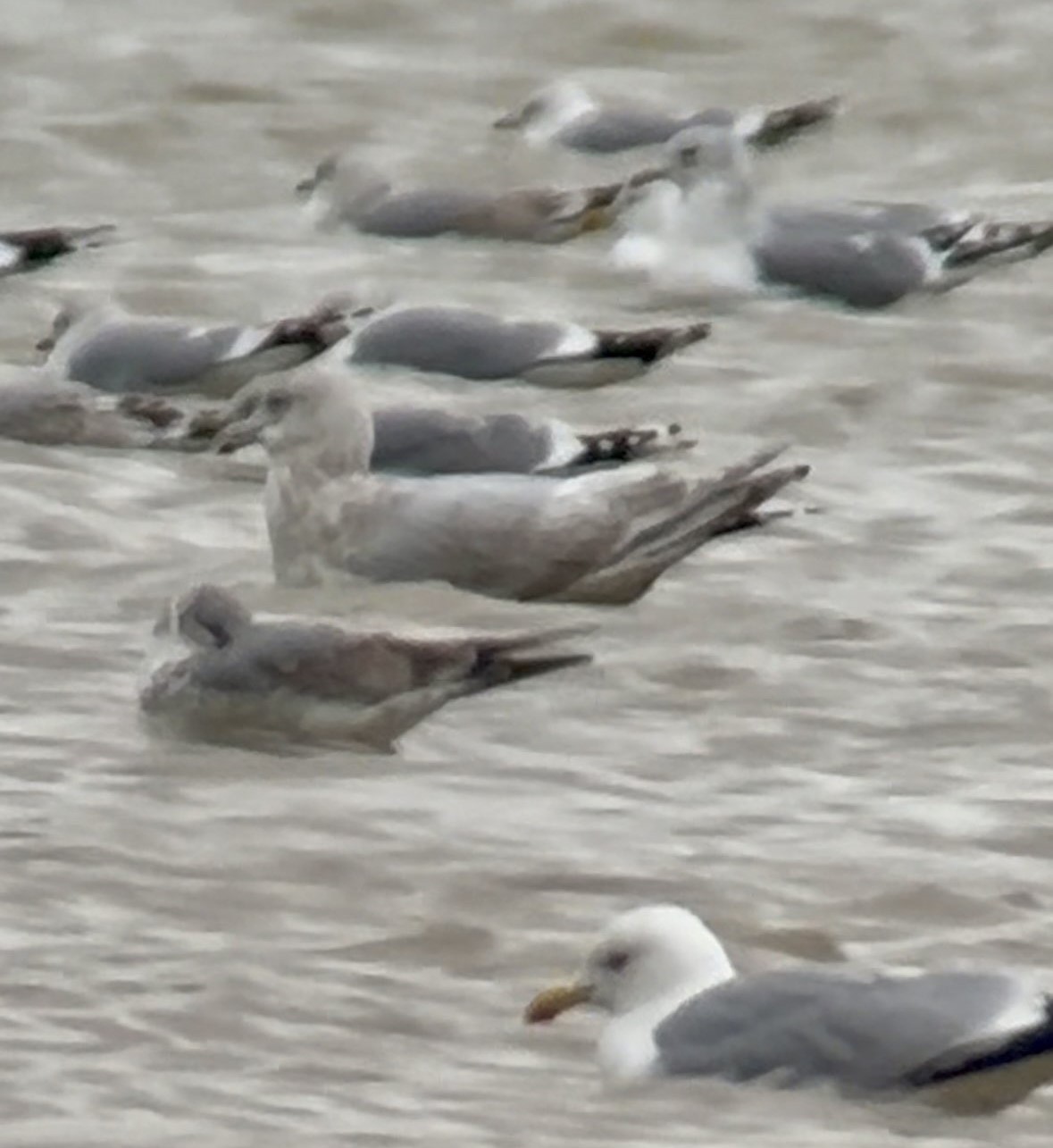
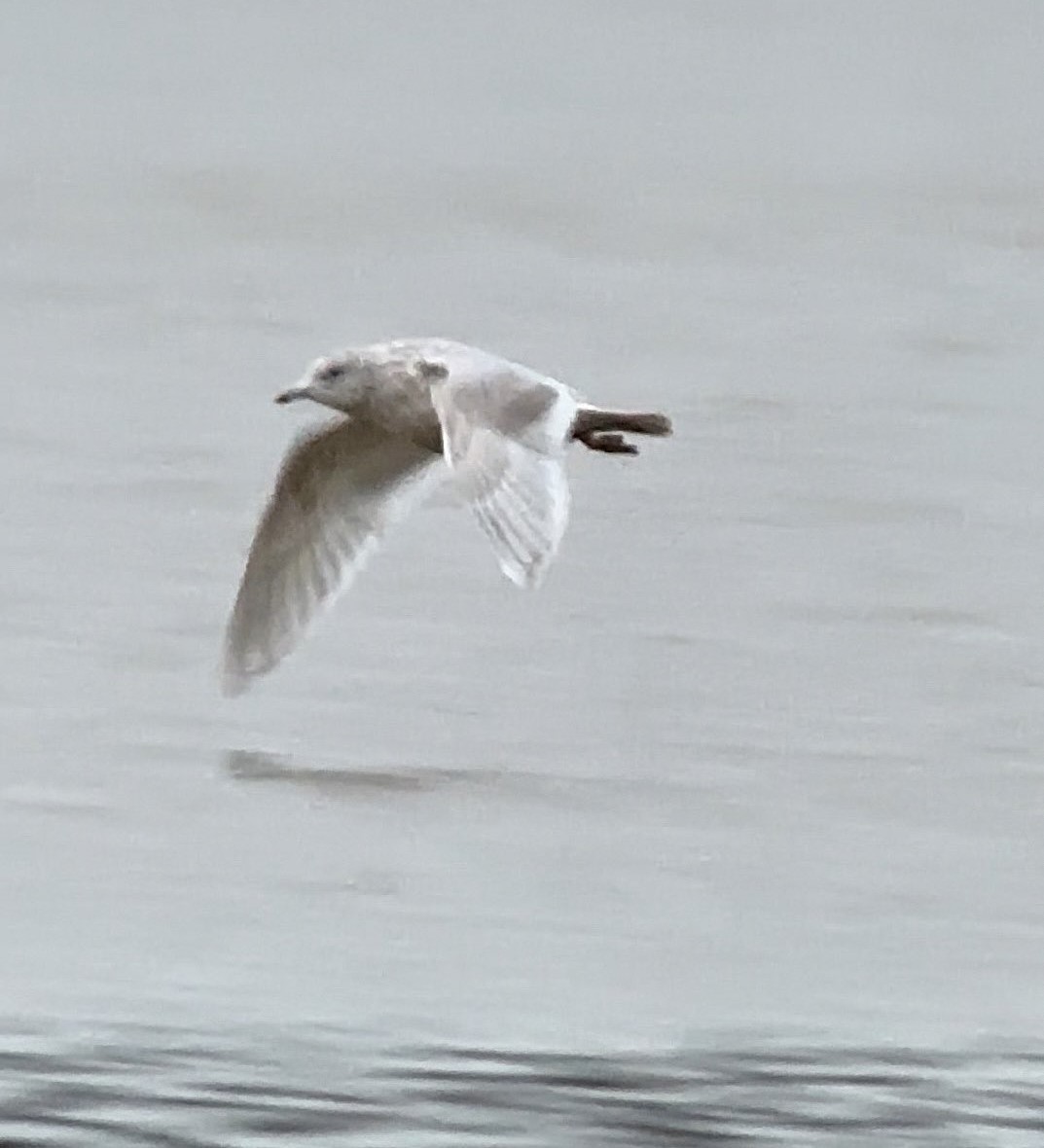
But it was in the approaching darkness of late afternoon on 11th that the arrival of an interesting-looking gull at Stanford caused a bit of a stir – a bird which was to spark much debate throughout the evening, with various laridophiles across three counties casting their votes into the identity hat. The bird’s identification would never have been established had it not been for the due diligence and unwavering resolve of the finder, Chris Hubbard, who was back on site at dawn the following morning. Having the good grace to stick around briefly after first light, the bird remained long enough to be videoed and have its identity firmly nailed as a second-winter Kumlien’s Gull, only the fourth record for Northamptonshire and the second for Stanford, following a third-winter there on 18th February 2020.
Second-winter Kumlien’s Gull, Stanford Res, 11th January 2024 (Chris Hubbard)Second-winter Kumlien’s Gull, Stanford Res, 12th January 2024, videograb (Chris Hubbard)
The two previous records were a second-winter at Sidegate Landfill on 13th January 2010 and an adult at Daventry CP on 24th March 2016. Alas, there are no longer any active landfill sites in the county, so the best chance of finding any of the scarce, ‘white-wingers’ from the high Arctic rests with visiting the Stanford gull roost or the flat expanse of mud and shallow pools at DIRFT 3, both of which are known to pull in gulls from Shawell Landfill, just over the border in neighbouring Leicestershire. With imminently approaching fronts from the north about to open the doors to Arctic air across the UK, we may yet see the arrival of more white-wingers as ‘winter proper’ gets underway.
Other gulls were, of course, available and Stanford’s roost also produced a third-winter Caspian Gull on 7th, while Hollowell continued to hold on to its regular adults, with two there on 8th and one on 10th. A single adult Yellow-legged Gull was found at Willowbrook Industrial Estate, Corby on 7th.
After an apparent ten-day absence, back on the menu this week was Great Northern Diver when one was found at Pitsford Res, late on 12th. Whether or not it’s the same bird having kept a low profile remains open to debate.
And then there were Cattle Egrets. Numbers at the currently surefire site of Stanwick rose to a respectable nine seen coming in to roost, late in the afternoon, on 6th. Three at Ditchford GP’s Irthlingborough Lakes & Meadows LNR the next day, followed by six at Stanwick on 8th and 12th suggests they are all part of the same group.
Marsh Harriers extended their stretch in the Nene Valley with singles – or perhaps just one wide-ranging individual – at Thrapston GP on 6th, Summer Leys LNR on 7th and at Stanwick on 12th.
Short-eared Owls, too, maintained their presence throughout the period at Neville’s Lodge, where up to four were seen on one date mid-week, while one also drifted high over Stanford Res, at dusk, on 12th.
The week’s Merlins were limited to singles at Stanwick and in the Brampton Valley – both on 9th.
Stanwick also produced the first Siberian Chiffchaff of the year, on 8th.
But after last week’s mini-surge, this week saw Waxwings on the wane, with only a brief visit by eight to an Oundle garden on 6th and the so-called ‘Fab (or famous) Four’ remaining reliable on the eastern outskirts of Corby throughout.
Adult male (top), female (left) and first-winter Waxwings, Priors Hall Park, Corby, 7th January 2024 (Nisha Parmar)Adult male Waxwing, Priors Hall Park, Corby, 7th January 2024 (Sukhdev Singh)
Six localities held Stonechats with a maximum of four at Earls Barton GP on 10th and the same number at Sywell CP on 12th, while Crossbills were ever-reliable at Wakerley Great Wood, where four were seen on 6th and at nearby Fineshade, where there were eight on 10th and twelve on 11th.
Male Stonechat, Earls Barton GP, 9th January 2024 (Leslie Fox)Male Crossbill, Fineshade Wood, 10th January 2024 (Tony Vials)
In a week which saw the masses out and the New Year in, it was Waxwings all the way …
But as the exceptionally wet and windy weather continued, parts of Northamptonshire faced worryingly rising water levels, particularly in low lying areas of the Nene Valley, where flood warnings resulted in a number of homes being evacuated.
Great weather for ducks, though, and while not forgetting the continuing presence of the Pink-footed Goose at and around Hollowell Res, new wildfowl popped up in the shape of two Greater Scaups and a ‘redhead’ Smew at the flooded-out Nene Barrage at Clifford Hill GP on the last day of the week. One day prior to this, a ‘redhead’ Red-breasted Merganser was reported at Ditchford GP’s Rushden Lakes area but there was no further sign on the following day.
Greater Scaups, Clifford Hill GP, 5th January 2024 (Nick Parker)
Stanford Res maintained its monopoly on roosting Mediterranean Gulls this week, with a first-winter on 30th, two first-winters on 2nd and a second-winter on 3rd. The same roost site also produced Caspian Gulls, including a first-winter on 30th and two adults on 2nd, while Hollowell held an adult and a first-winter on 1st and an adult on 3rd. Single adult Yellow-legged Gulls were at both Pitsford Res and Stanford on 2nd and at Hollowell on 3rd.
While there were unconfirmed reports of Pitsford’s Great Northern Diver still being present on 30th and 1st, it was a first-winter Shag which considerably raised the game there in the fading light of New Year’s Eve, before it was seen to depart shortly after being found. Following a juvenile present for one day at Stanford on 15th August, this is only the second record of a Shag in the county in 2023.
Cattle Egrets maintained their presence at the same three sites as in the preceding week, these including a peak count of at least five at Stanwick GP on 1st, two still at Stanford on Avon on the same date and one extending its stay at Wicksteed Water Meadows, Kettering to 30th. In addition, another was found at Summer Leys LNR on 31st, remaining there until 2nd.
Cattle Egret, Wicksteed Water Meadows, 30th December 2023 (James Underwood)
Looking set to see the winter out locally, Marsh Harriers kept up appearances with two at Summer Leys on 30th, plus (or including) one at nearby Earls Barton GP’s New Workings on the same date. Singles were again at Summer Leys on 1st and at Stanwick on 4th. With no further sign of the one at Neville’s Lodge, another showing by the ‘ringtail’ Hen Harrier in the Brampton Valley between Cottesbrooke and Hanging Houghton, on 31st, was the only one of the week.
There was an increase from one to three localities at which Short-eared Owls were seen this week. The standout site was, of course, Neville’s Lodge, where up to three were seen almost daily but Harrington AF got in on the action, producing two on 3rd and one on 4th-5th, while the Brampton Valley delivered one on 3rd.
Short-eared Owl, Neville’s Lodge, Finedon, 4th January 2024 (Nick Parker)Short-eared Owl, Neville’s Lodge, Finedon, 4th January 2024 (Nick Parker)
In an attempt to make up for the missing Hen Harrier, Neville’s Lodge also produced a Merlin on 30th and further sightings came from Harrington AF on 1st Wicksteed Park Lake on 2nd and the Brampton Valley on 4th.
But, once again, the stars of the week were Waxwings, and those which exerted the biggest pull were in the north of the county, at Priors Hall Park on the eastern outskirts of Corby, from 1st to 5th. Dubbed the ‘Fab Four’ – an accolade derived from the combination of their offering super-close range viewing, along with their length of stay – their sheer reliability for simply being there for long periods of time enabled prolonged observation and superb photographic opportunities. Roll up and they were there for the taking …
Waxwings, Priors Hall Park, Corby, 1st January 2024 (Alan Shorrock)Waxwings, Priors Hall Park, Corby, 2nd January 2024 (Paul Young)First-winter female Waxwing, Priors Hall Park, Corby, 3rd January 2024 (Mike Alibone)Adult male Waxwing, Priors Hall Park, Corby, 5th January 2024 (Martin Swannell)Adult male Waxwing, Priors Hall Park, Corby, 5th January 2024 (Martin Swannell)
Elsewhere, five were reportedly in the previous week’s suburban location, rich in rowans, at High Ferrers on the 30th, two visited a garden in Woodford Halse on 31st while, in Northampton on 2nd, three were mobile around the western extremity of Duston and one was a transient visitor to a front garden rowan in East Hunsbury.
First-winter female Waxwing, Woodford Halse, 31st December 2023 (Frances Shuttlewood)Waxwings, Duston Northampton, 2nd January 2024 (Ken Prouse)Waxwing, Duston, Northampton, 2nd January 2024 (Ken Prouse)Waxwing, East Hunsbury, Northampton, 2nd January 2024 (Chris Gibbs)
This week’s Stonechats included twos at Wicksteed Water Meadows, Kettering on 30th, at Summer Leys and in the Brampton Valley on 31st and 4th, while Hollowell Res held up to four between 1st and 3rd and five were at Sywell CP on 1st.
Female Stonechat, Wicksteed Water Meadows, 30th December 2023 (James Underwood)
Crossbills maintained a presence in the north-east of the county, where sixteen were at Fineshade Wood on 31st, while at nearby Wakerley Great Wood five were seen on 4th, this number rising to approximately twenty there the following day.
A mixed bag of largely mild weather this week ended with ferociously wet and windy conditions and, at long last, a small dollop of those long-awaited Waxwings.
But as ‘Storm Gerrit’ whirled out into the North Sea and with the curtain about to come down on 2023, it’s worth taking time to reflect on some of the birds that have shaped this action-packed year. A succession of top tier birds across the county kicked off with a lingering Yellow-browed Warbler at Earls Barton GP in January and a White Stork over Moulton during the same month. January also saw Ring-necked Ducks at Hollowell/Ravensthorpe and Thrapston followed by further appearances at Ringstead in March, Ditchford in April and again at Thrapston in October.
Summer Leys – 2023’s standout locality – produced a smart male Kentish Plover in April, the first for nearly thirty years and, for many, the icing on the spring cake which, during the same week, included a White Stork and two Common Cranes, followed by a Black-winged Stilt in May and a Purple Heron there in June. Irthlingborough Lakes & Meadows topped that, though, with no less than a flock of four Black-winged Stilts in May – part of a notable spring influx into the UK. Also in May, the year’s only Temminck’s Stint appeared at DIRFT 3 – a site still producing birds as it undergoes further building development.
Summer saw Caspian Terns drop in frustratingly briefly at Hollowell and Summer Leys during July, the latter site, along with Stanwick, producing single Pectoral Sandpipers in September and one or two Glossy Ibises apiece in October-November.
So, rounding off the year in the last full week of 2023, there were still birds to be had, be they long stayers or new arrivals. Falling squarely into the former category, the Pink-footed Goose remained at Hollowell Res and the female Ruddy Shelduck was again in residence at its apparently favoured locality of Winwick Pools, on 29th.
Female Ruddy Shelduck, Winwick Pools, 29th December 2023 (Jim Urwin)
Pitsford Res accounted for the best of the rest of the wildfowl with two Red-crested Pochards on 26th, along with the first-winter drake Greater Scaup still present there on the same date.
Leaping straight to Larids, this week’s Mediterranean Gulls were the sole preserve of Stanford Res, which appears to be enjoying a good run of them so far in the latter part of the year. Single first-winters were present in the roost on 24th, 27th and 29th while two first-winters were found there on 28th, one of which was also present during the daytime. The same roost also produced two adult Caspian Gulls on 27th and one the following evening. Elsewhere, Hollowell held two adult Caspians on 26th and an adult plus a first-winter on 29th, while single first-winters were at Ravensthorpe Res and Rushton Recycling Centre on the latter date.
Meanwhile, Pitsford’s Great Northern Diver saw another week out, mobile between the dam and the causeway.
Following suit, the Kettering Cattle Egret remained throughout at Wicksteed Water Meadows, as did the two in the vicinity of Stanford on Avon, while the Stanwick seven stood up to be counted on 28th.
Stanwick was also visited by a/the roaming Marsh Harrier on 24th and 29th, while one was clocked at Summer Leys on 26th and 28th. Keeping up appearances was the Neville’s Lodge ‘ringtail’ Hen Harrier, reliably putting on a show just prior to dusk between 23rd and 26th and presumably accounting for the sighting of one at not too distant Stanwick on 24th. Another ‘ringtail’ was also seen in the Brampton Valley, between Cottesbrooke and Hanging Houghton on the same date.
Juvenile female Hen Harrier, Neville’s Lodge, Finedon, 23rd December 2023 (Aamir Aziz Mughal)Juvenile female Hen Harrier, Neville’s Lodge, Finedon, 23rd December 2023 (Aamir Aziz Mughal)Juvenile female Hen Harrier, Neville’s Lodge, Finedon, 23rd December 2023 (Aamir Aziz Mughal)
Neville’s Lodge was also the venue for the continued late, late afternoon showings of Short-eared Owls. Four were seen there on 23rd and at least three were still present on 26th.
But if there was anything new to shout about, then the week belonged to Waxwings. After some brief and tantalising appearances in the run up to this last week, the time finally arrived for at least a couple to roll up and be nailed down. In this respect, two birds put Higham Ferrers firmly on the map after being discovered along a secluded rowan-lined walkway in a residential part of the town on Christmas Eve. From then on they remained faithful to the area, delighting a stream of admirers until the week’s end, although their appearances there became much more erratic with time. Interestingly, both birds were first-winters but, on 26th, an adult was photographed there and news also emerged that a single bird had been present during the preceding week.
First-winter male (right) and first-winter female Waxwings, Higham Ferrers, 24th December 2023 (Mike Alibone)First-winter male Waxwing, Higham Ferrers, 24th December 2023 (Mike Alibone)
But for those not wishing to venture as far afield as Higham, six were discovered in downtown Northampton on 26th with two still present early the following day. But, despite a ready supply of rowan berries, they did not stay … Step forward Brixworth, where another first-winter was discovered on 28th, remaining there the following day, although at times proving to be elusive.
First-winter female Waxwing, Brixworth, 28th December 2023 (Jon Cook)
Stonechats were more reliable, of course, with Borough Hill, Deene Lake, Earls Barton GP, Hollowell, Pitsford and Summer Leys all holding multiples, the maximum of which was six at Hollowell on 26th.
Male Stonechat, Summer Leys LNR, 28th December 2023 (Andy Howell)
The week also saw the highest number of Crossbills so far this year when at least forty were seen at Wakerley Great Wood on 23rd, when several were also at nearby Westhay Wood and two were at Fineshade.
And, as we end the year, a big thankyou to everyone in the birding community for sharing information across multiple platforms on sightings in Northamptonshire, and to those who have contributed news and images directly to Northants Birds. Wishing you all the best for the New Year!
Ending with the winter solstice, above average temperatures, and ‘Storm Pia’ packing a punch through its delivery of strong north-westerly gales, the week just gone turned out to be one of somewhat diminishing returns.
In fact, we were well down on wildfowl this week with just the first-winter drake Greater Scaup at Pitsford Res standing as the sole representative of the period.
In the Nene Valley, a Jack Snipe at Ditchford GP on 18th was the only wader of note.
Gulls continued to provide a staple source of interest with one of the two previous day’s first-winter Mediterranean Gulls again in the roost at Stanford Res on 16th, while an adult visited Daventry CP on 18th and 22nd.
Adult Mediterranean Gull, Daventry CP, 22nd December 2023 (Gary Pullan)
Stanford’s roost also pulled in an adult Caspian Gull on 22nd and further adults were found at DIRFT 3 on 20th and at Rushton Recycling Centre – the site of the now defunct landfill – on 20th and 22nd. On the first of these two dates there was an apparent adult Caspian Gull x Herring Gull hybrid also present. Colloquially known in some quarters as ‘Cactus Gull’, aptly named by the derivation from cachinnans x argentatus, conclusively resolving the identification of such individuals can often present quite a thorny problem.
Apparent adult Caspian Gull x Herring Gull hybrid, Rushton Recycling Centre, 20th December 2023 (Mike Alibone)
The week’s Yellow-legged Gull slot was filled by single adults in the roost at Stanford on 16th, at Pitsford on 16th-17th and at Daventry CP on 22nd, while a second-winter was at Wicksteed Park Lakes, Kettering on 16th, two first-winters visited Pitsford on 17th and two adults were found at DIRFT 3 on 20th.
Second-winter Yellow-legged Gull, Wicksteed Park, Kettering, 16th December 2023 (James Underwood)
After apparently flying off on 10th, the (or a) juvenile Great Northern Diver was back at Pitsford on 16th, where it remained until at least 21st. With year-round disturbance through various recreational activities south of the causeway having reached an all-time high in recent years, this bird must be a glutton for punishment …
On 22nd a Bittern was found at Fawsley Park Lakes, an unusual site for this species but consistent with the gradual increase in numbers recorded in the county of late. Five sites appeared to produce Cattle Egrets this week. Eight were reported by the River Nene from Nine Arches Bridge at Thrapston on 16th, when seven were also seen at Stanwick GP and two remained at Stanford on Avon. One extended its stay at Wicksteed Water Meadows throughout the period and one was seen in flight over the A45 near Wellingborough on 18th.
Cattle Egret, Stanford on Avon, 16th December 2023 (Jon Cook)Cattle Egrets, Stanford on Avon, 16th December 2023 (Jon Cook)Cattle Egret, Wicksteed Water Meadows, Kettering, 16th December 2023 (James Underwood)
The period’s Marsh Harriers were restricted to singles at Ditchford GP’s Irthlingborough Lakes & Meadows NR on 18th and Thrapston’s Titchmarsh LNR two days later, on 20th. Once again, a single Nene Valley drifter may well have accounted for both sightings. Also on the harrier front, the ringtail Hen Harrier, found last week north of Irthlingborough, appeared settled and was seen daily in the vicinity of Neville’s Lodge, Finedon, where a second bird was also seen on 16th.
The same site hosted up to three Short-eared Owls throughout and a male Merlin was also there on 20th, while further Merlins were seen at Ditchford on 18th and near Lamport Hall the following day.
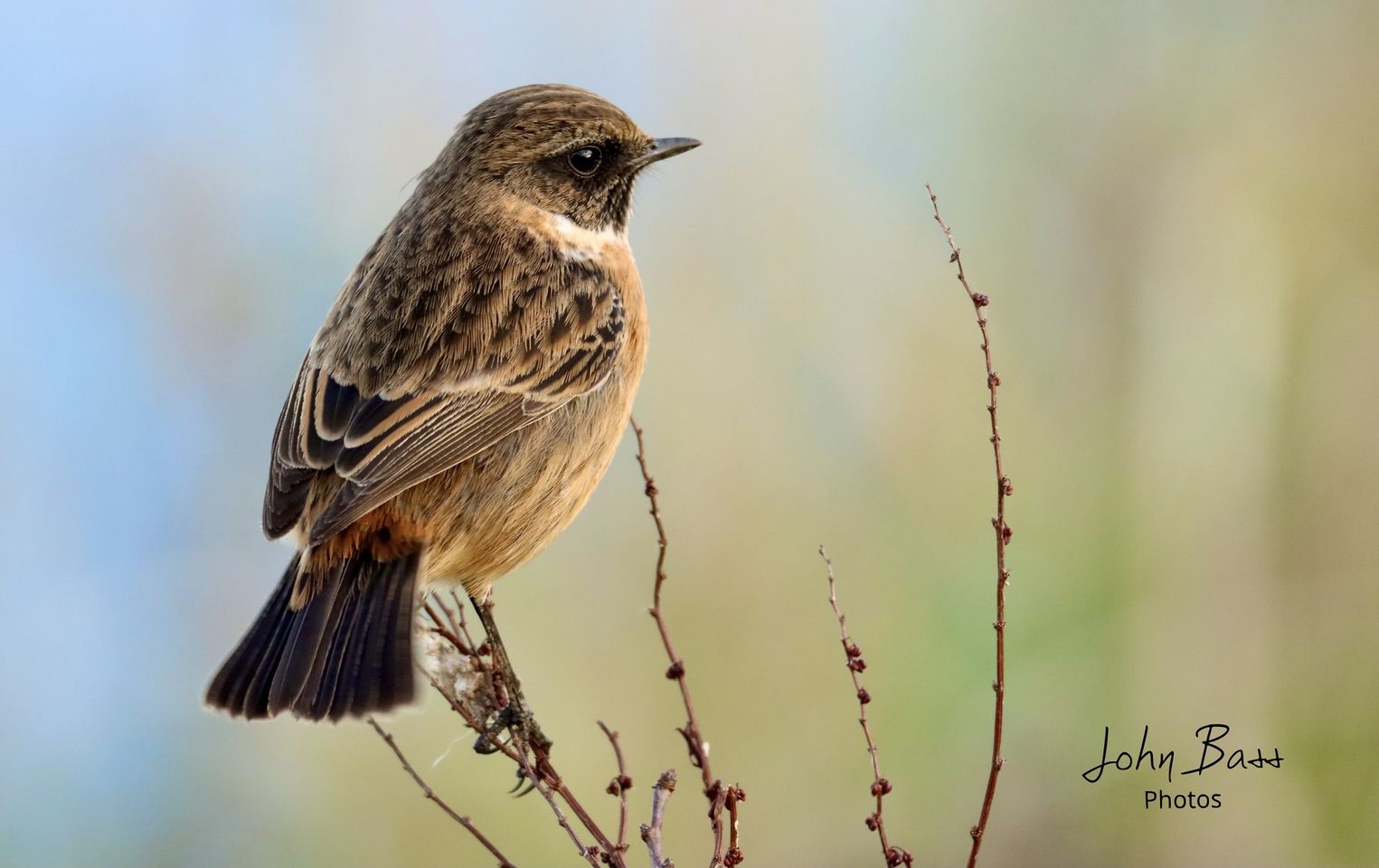
Male Stonechat, Summer Leys LNR, 16th December 2023 (John Bass)Female Stonechat, Earls Barton GP, 22nd December 2023 (Leslie Fox)
A paucity of passerines this week saw Stonechats down to twos at Pitsford on 16th, Ditchford on 18th, near Lamport on 19th and at Summer Leys LNR all week, while one was present at Earls Barton GP on 22nd.
Crossbills, Wakerley Great Wood, 20th December 2023 (Chris Sidebottom)Male Crossbill, Wakerley Great Wood, 20th December 2023 (Chris Sidebottom)
On 20th, two Crossbills were found at Lamport and up to twenty at Wakerley Great Wood on the same date maintained the species presence there into another week.
Continuing the mild weather theme, the week remained frost-free but rain was plentiful during the early part, creating temporary flooding of some river valley wetlands and raising water levels at local reservoirs. New birds arrived while some relatively longer stayers departed. And then there were those rather troublesome Waxwings …
Hollowell Reservoir’s Pink-footed Goose remained throughout the period, while ‘new’ Red-crested Pochards turned up at Pitsford Res, where a female was found on 11th, and at Clifford Hill GP, where a drake appeared on 15th. Pitsford also sported a first-winter drake Greater Scaup, north of the causeway, on 11th. The Ravensthorpe Res (ex-Pitsford) Common Scoter hung on there until 10th, after which there was no further sign of it.
The first of the winter, a rather showy and seductive drake Smew, initially found with a ‘redhead’ on 9th, enticed a steady stream of admirers into the causeway car park at Pitsford Res, where it was performing rather nicely on 11th.
Drake Smew, Pitsford Res, 11th December 2023 (Mike Alibone)Drake Smew, Pitsford Res, 11th December 2023 (Mike Alibone)
With two at Pitsford on 11th and one at Hollowell on 15th, Jack Snipes stood to relieve an otherwise waderless week.
There were no unexpected gulls during the period, the best being a first-winter Mediterranean Gull in the roost at Stanford Res on 11th-12th, joined there by a second bird on 15th. The same site held single adult Caspian Gulls on 11th and 13th, while further adults were seen flying north at Pitsford on the former date and at both Hollowell and Ravensthorpe on 15th. Pitsford produced the week’s only Yellow-legged Gulls, which included two on 10th-11th and one on 12th.
Staying with Pitsford, the Great Northern Diver made it into this week, although on 10th it became highly mobile, taking to the air on at least two occasions after having been disturbed by extensive recreational activity in its favoured area. It was last seen flying high north late in the day and, alas, it has not been seen since.
Down in the Nene Valley, Stanwick continued to host a bevy of Cattle Egrets, peaking at seven on 15th, while the two that visited Stanford Res sporadically during the third week of November were located in a field at nearby Stanford on Avon on 9th, remaining in the vicinity all week. Meanwhile, the singleton found last week at Wicksteed Water Meadows, Kettering was still in residence at the end of the period.
Cattle Egret, Wicksteed Water Meadows, Kettering, 14th December 2023 (Mike Alibone)Little Egret and Cattle Egret, Stanford on Avon, 15th December 2023 (James Urwin)
Keeping up appearances, Marsh Harriers were seen at Summer Leys LNR on 10th and daily at Stanwick between 11th and 14th although, in all probability, all sightings seem likely to relate to the same Nene Valley wanderer. Rarer still, a ‘ringtail’ Hen Harrier was discovered quartering fields immediately north of Irthlingborough on 11th, being seen again in the same general area on 13th, 14th and 15th – a female Merlin also being present there on 13th.
Hen Harrier, Irthlingborough, 14th December 2023 (Adrian Leybourne)
And after a week of high expectations on the Waxwing front, three were chanced upon, way down south in the Cherwell Valley, at King’s Sutton, on 11th. However, only those fleet of foot managed to successfully connect with them as, an hour after their discovery, they flew off north – never to be seen again. A source of further frustration came in the form of six at Greens Norton the following day. Said to be highly mobile around the village, and reported again there briefly on 13th, they never played ball for those who systematically combed the village on both days. Will we ever get any that are nailed down? The wait goes on …
Waxwings, King’s Sutton, 11th December 2023 (Theo de Clermont)
Lacking the above species’ legendary charisma, but nonetheless still full of appeal, Stonechats were present at Hollowell, King’s Sutton, Pitsford, Summer Leys, Upton CP and Wicksteed Water Meadows where there were no more than four at any location.
Crossbills maintained a presence at Wakerley Great Wood, where up to thirty-five were estimated to be on site on 10th-11th, while one flew west over Harrington AF on 14th.
In an about-turn in the weather this week, a series of low-pressure systems off the Atlantic brought a rise in temperatures, accompanied by overall wet and windy conditions, curtailing a fair proportion of birding activity. Despite this, new birds were still being pulled out of the bag, including a few surprises …
A decent flock of forty-six Barnacle Geese arrived at Stanford Res on 5th but their stay was a short one, having departed by the next day. British ferals or from lands further north, their origin is open to debate.
Barnacle Geese, Stanford Res, 5th December 2023 (Steve Nichols)
Conversely, Hollowell Reservoir’s Pink-footed Goose remained settled throughout the period, the mixed goose flock there also being joined by the female Ruddy Shelduck on 6th, after being seen on 4th at Winwick Pools and returning there by the week’s end.
Female Ruddy Shelduck, Winwick Pools, 8th December 2023 (James Urwin)
Two drake Red-crested Pochards appeared at Daventry CP on 4th, two visited Stanford Res the following day and last week’s trio of two drakes and a female remained at Pitsford Res until at least 6th. Also at the latter site, the first-winter drake Greater Scaup resurfaced on 5th-6th, having not been reported there for a week.
Clearly seeking pastures new, last week’s Common Scoter moved on from Pitsford, reappearing on 5th at Ravensthorpe Res, where it remained on show off the dam until the end of the period.
Female or first-winter Common Scoter, Ravensthorpe Res, 6th December 2023 (Jon Cook)Female or first-winter Common Scoter, Ravensthorpe Res, 8th December 2023 (Mike Alibone)
On the Larid front, an unseasonal visitor – at least to the county – was a first-winter Little Gull that arrived late in the day on 8th at DIRFT 3, where it briefly circled the area before departing to the east. The same date also saw a first-winter Mediterranean Gull turn up in the roost at Stanford. The usual two adult Caspian Gulls remained at Hollowell Res all week, while single adults were found at Daventry on 4th and in the roost at Boddington Res on 8th. An adult Yellow-legged Gull was also in the Boddington roost on the same date, following an adult and a first-winter at Pitsford on 5th and an adult there on 7th.
Sticking with Pitsford, the juvenile Great Northern Diver extended its stay, again remaining faithful to the area between The Narrows and the dam, until at least 7th.
Similarly settled, or so it would appear, Stanwick GP’s six Cattle Egrets were still in place at the end of the week, while another spotted at Wicksteed Water Meadows on 5th was again seen there on 8th.
Single Marsh Harriers flew east over Wellingborough Embankment on 2nd and north-east over Stanwick on 4th – in all likelihood, both sightings referring to the same individual.
While scarcer passerines were understandably few and far between, a Firecrest was discovered within a mobile tit flock at Summer Leys LNR on 3rd. Aside from any potential breeders during the summer, this would appear to be the only record in the county this year.
Borough Hill, Earls Barton GP, Hollowell, Pitsford, Summer Leys and Upton CP were the only localities to produce Stonechats this week, the single site maximum being eight at Hollowell on 3rd.
Crossbills, Fineshade Wood, 6th December 2023 (Tony Vials)
And, as for Crossbills, the number of sites was down from three adjacent woodland last week to just the one, Fineshade Wood, which held a respectable minimum of twenty birds in the vicinity of the Wildlife Hide on 25th.







































 Northants birds