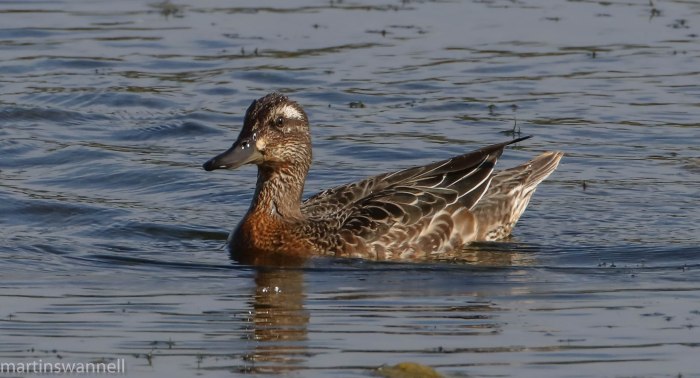
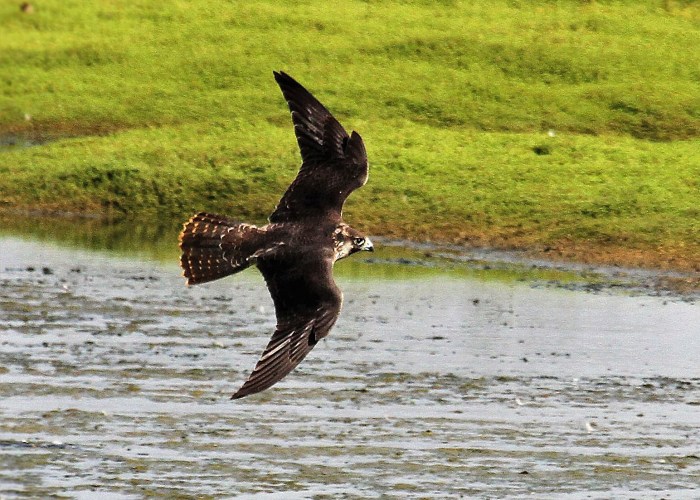
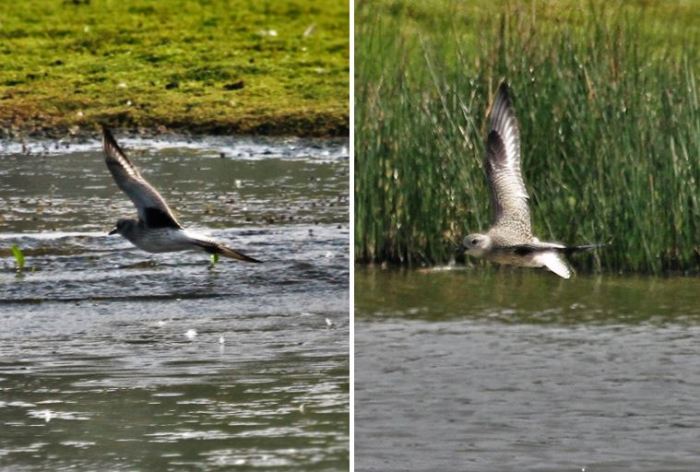
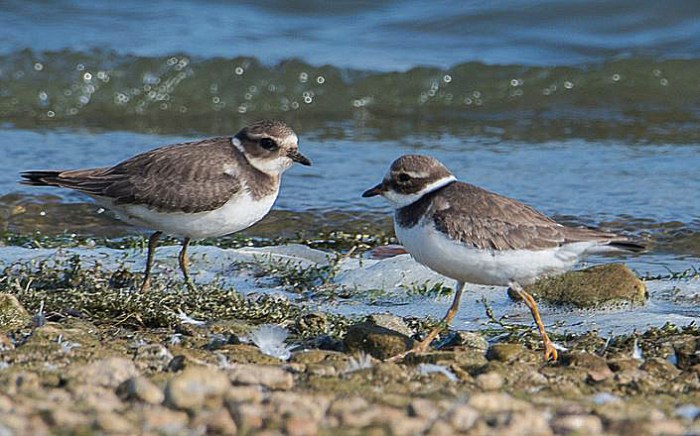
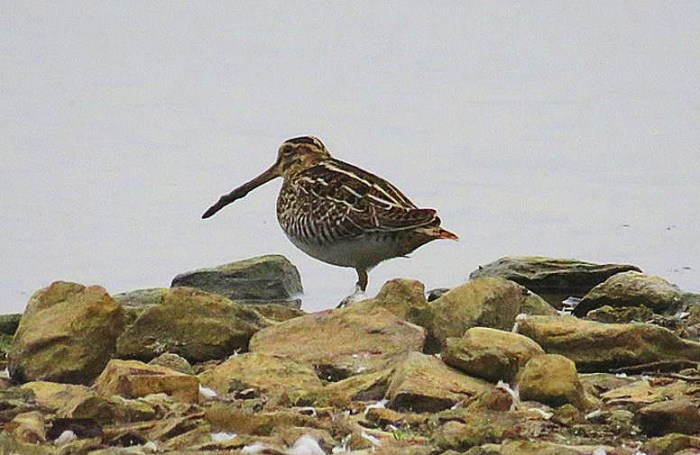
The Week in Focus 8th to 14th October 2016

The easterly airstream, resulting from a blocking area of high pressure over Scandinavia, continued throughout the week, bringing with it a substantial numbers of common migrants, along with potentially the highest number of eastern vagrants to be recorded in any one autumn in the UK. Meanwhile, Northamptonshire is still awaiting its first untrapped Yellow-browed Warbler for several years.

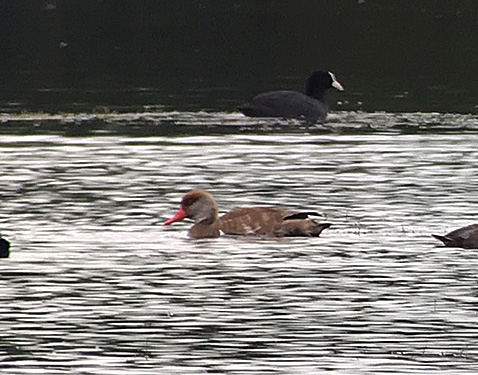
The first of the winter geese materialised in the shape of four Pink-feet flying south over Stanford Res on 14th, while the Ruddy Shelduck remained, as usual, by the sailing club at Pitsford Res throughout the period. Pintails became more widespread this week with five at Earls Barton GP on 8th and two still there three days later, one at Thrapston GP and two at Stanford Res on 9th, one at Boddington Res on 10th and another at Hollowell Res the next day. Hollowell also produced two Red-crested Pochards on 11th, the same date that four were also at Pitsford.

Patience and a potentially long vigil are likely to be required for those wanting to see the Bittern discovered at Stortons GP on 9th and which was still present the following day. Sitting on the bench on the south side of the reedbed, armed with a hip flask or copious amounts of coffee as sustenance, may produce the desired result of flight views for anyone who has all day – just don’t blink …

Bittern, Stortons GP, 8th October 2016 (Bob Bullock)

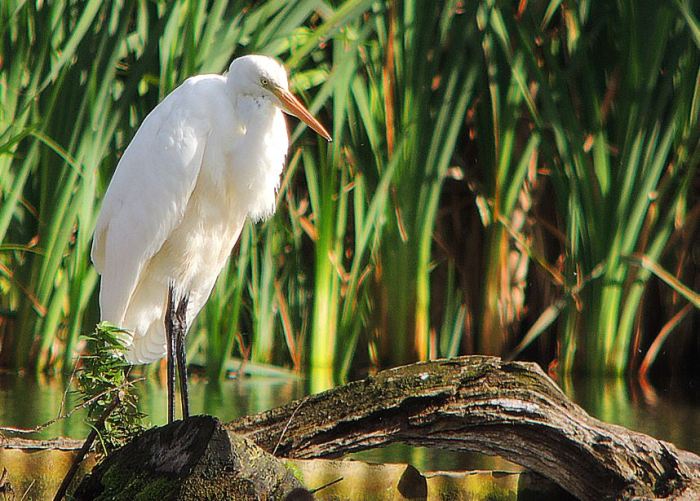
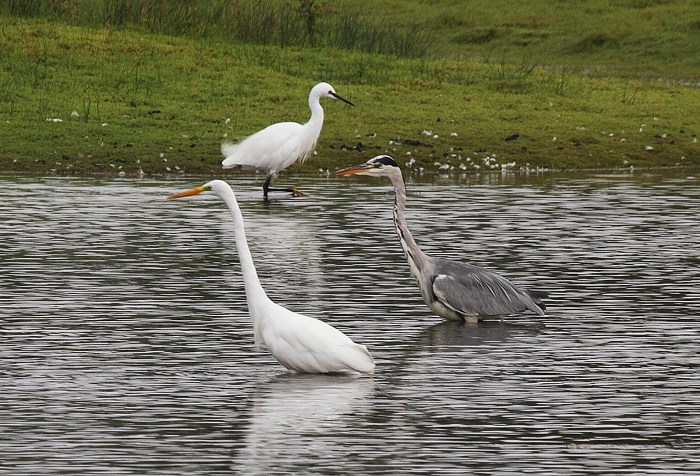
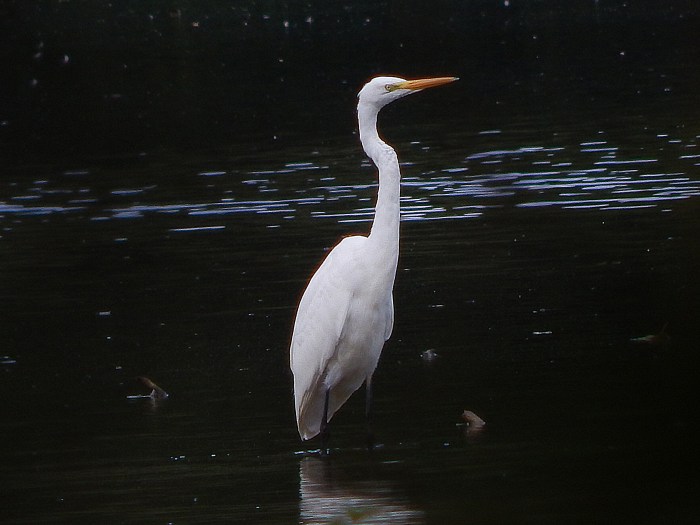
This week’s brace of Great White Egrets included one at Ringstead GP – the first record for this site – on 8th, one at Thrapston GP and the settled individual at Deene Lake on 9th, when there were also three at Pitsford Res, where the tally increased to five on 11th and one was at Daventry CP from 12th until the week’s end.
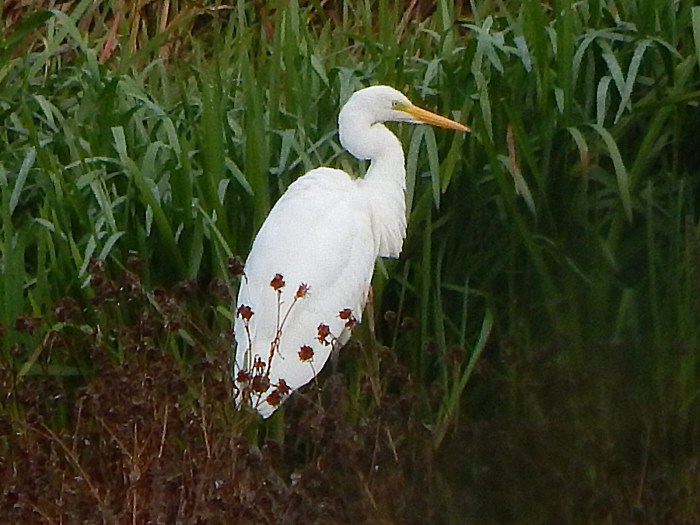
Great White Egret, Deene Lake, 9th October 2016 (James Underwood)

The latter site again continued to host last week’s Black-necked Grebe throughout the period. The only raptors reported this week were Peregrines – singles at Summer Leys and Harrington AF on 8th, two near Sidegate Lane, Wellingborough on the same date and one at Stanford Res on 12th.

With wader passage all but over, up to forty Golden Plovers were at Harrington AF during the week, two Dunlins were at Pitsford Res on 9th and one visited Summer Leys on 11th and surely, this time, the last Common Sandpiper of the year was at Daventry CP on 13th.
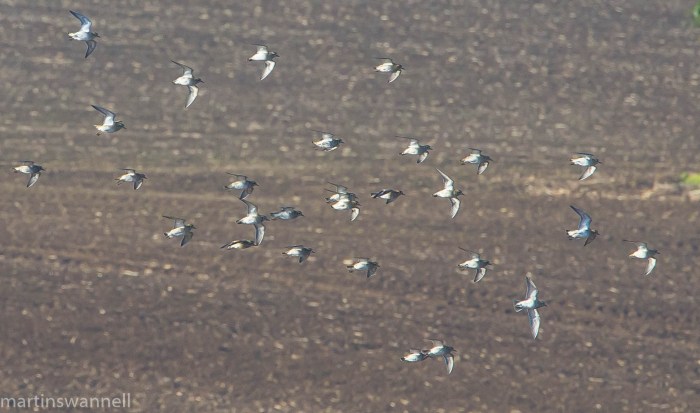
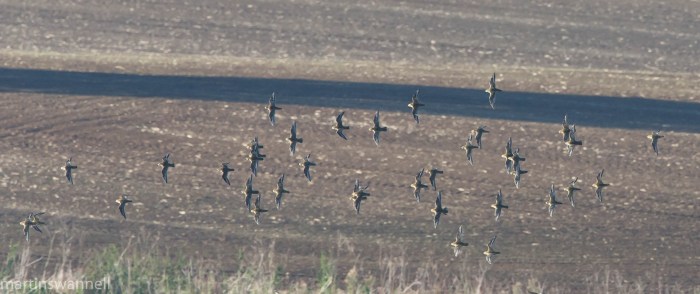
Golden Plovers, Harrington AF, 9th October 2016 (Martin Swannell)

Daventry CP also held a Green Sandpiper on the same date, while singles were at Ditchford GP and Deene Lake on 8th and 9th respectively and one was at Pitsford Res on 8th followed by two there on 11th. Small numbers of Common Snipe included singles at Ditchford GP and Summer Leys on 8th, fourteen at Deene Lake the following day, two at Hollowell Res and at least five at Pitsford Res on 11th and four at Boddington Res on 12th.

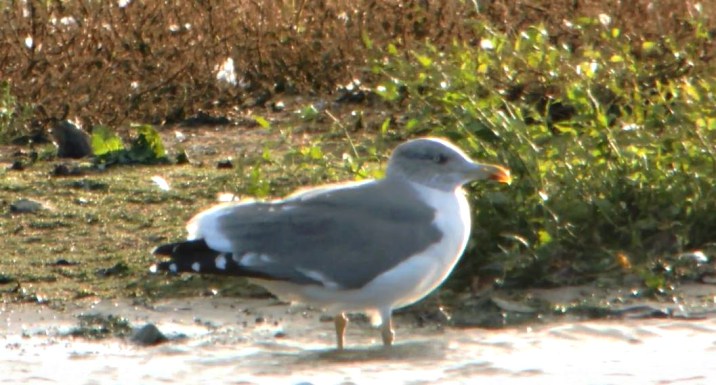
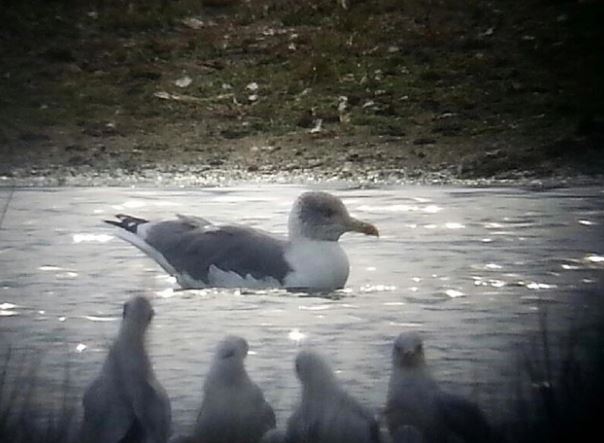
The potential highlight of the week would have been the Arctic Skua flying west, just south of Borough Hill on 10th but viewing conditions at the time precluded a positive ID. This is the first skua of any species in the county since 2011 when, again, an unidentified skua (thought probably to be a Long-tailed) was seen in flight near Weedon on 20th September. The few scarce larids included a first-winter Mediterranean Gull in the roost at Stanford Res on 12th and an adult Caspian Gull in the Pitsford Res roost the following evening, while the latter site produced single adult Yellow-legged Gulls on 8th, 13th and 14th while Boddington Res held three on 10th and two on 12th.

‘Pinging’ in the reedbed at Stortons GP, two Bearded Tits gave themselves away on 9th and there were at least four there the following day, while two were again at Summer Leys on 14th.
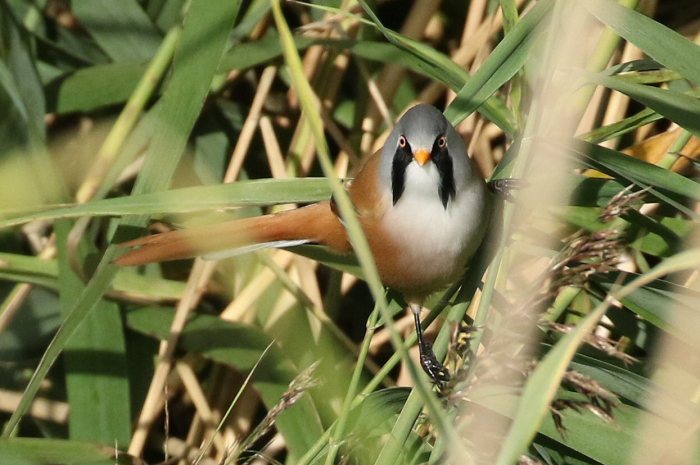
Male Bearded Tit, Stortons GP, 8th October 2016 (Bob Bullock)
Female Bearded Tit, Stortons GP, 8th October 2016 (Bob Bullock)

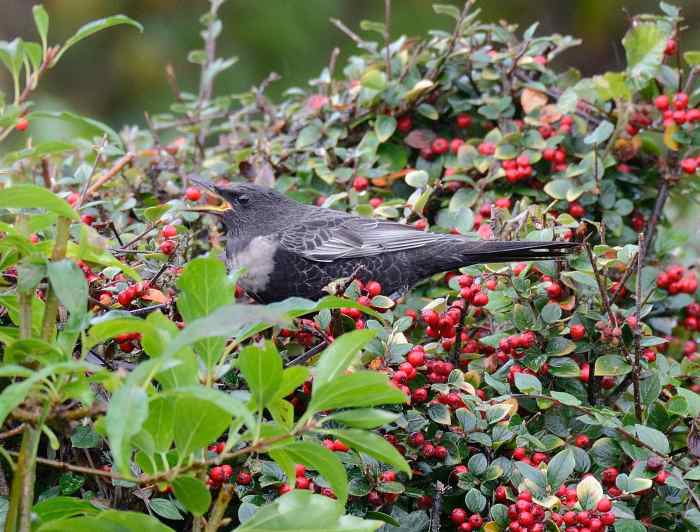
A Ring Ouzel was discovered in fields north-east of Long Buckby on 8th, a relatively late Whinchat was at Borough Hill on 10th and there were four Stonechats there on the same date. Elsewhere, between one and two Stonechats were seen at Blueberry Farm (Maidwell), Harrington AF, Hollowell Res, Pitsford Res, Stanford Res, Summer Leys and Sywell CP and two Northern Wheatears appeared at Harrington AF on 8th and one was at Preston Deanery the following day.

Northern Wheatear, Preston Deanery, 9th October 2016 (Mike Alibone)

Two more Rock Pipits were found this week – one at Stanford Res on 9th and the other at Boddington Res on 12th, with the latter site producing a Hawfinch briefly on 10th.

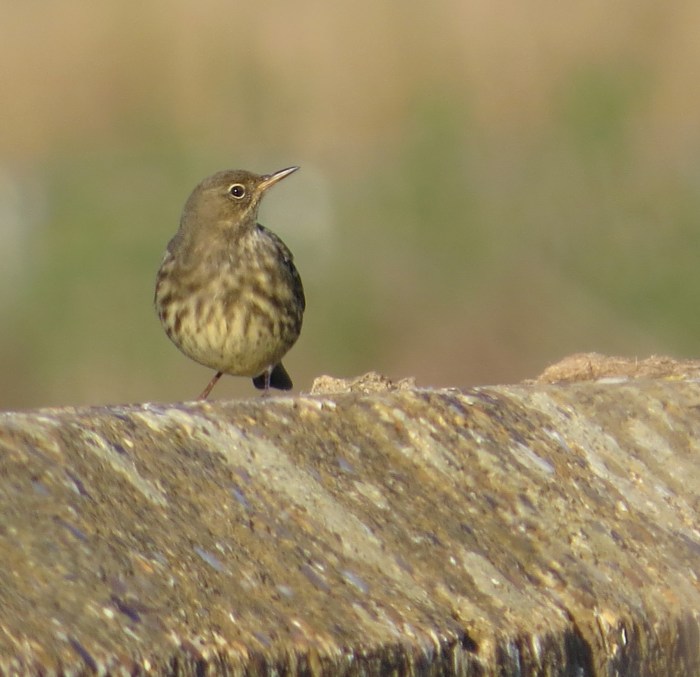
Rock Pipit, Stanford Res, 9th October 2016 (Chris Hubbard)

Suburban shocker!

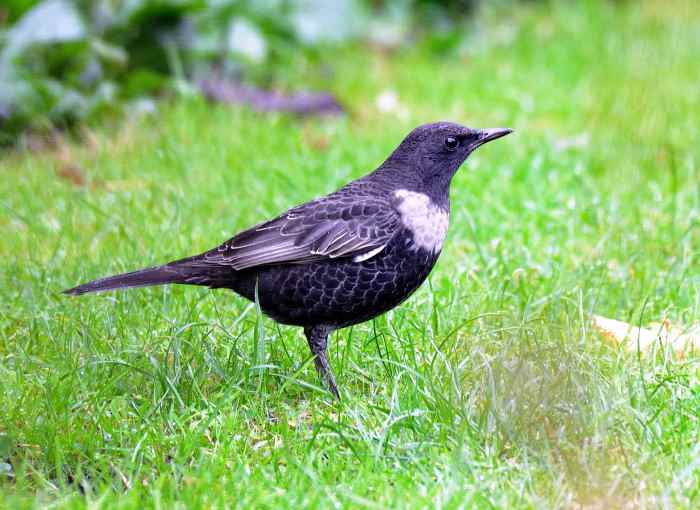
Ring Ouzel

It’s October, the east coast is brimming with migrant thrushes and many of us no doubt dream of something unusual finding its way to our garden. Today it happened for David and Sally Irven when this superb male Ring Ouzel dropped into their Bush Hill, Northampton garden with migrant Blackbirds during this morning’s rain. It remained for an hour or so before leaving when the rain lifted. Thanks for the superb photos, David!

Male Ring Ouzel, Northampton, 16th October 2016 (David & Sally Irven)


The Week in Focus 1st to 7th October 2016

Aside from some fast moving heavy showers accompanied by thunder and lightning on 1st, the remainder of the week was dry, largely sunny with the winds variable between north-east and south-east. The easterly airstream stretched from well beyond Scandinavia, bringing with it many scarce eastern migrants to coastal UK. With many Yellow-browed Warblers also making it well inland, Northamptonshire surely has one or two lurking somewhere not too far away …

The Ruddy Shelduck remained at Pitsford Res throughout as Pintail numbers there continued to rise to reach a total of twenty-one on 1st and one also visited Stanford Res on 7th. A Garganey was also present at Pitsford from 1st to 5th and another was found at Hollowell Res on 2nd, while up to three Red-crested Pochards were also at Pitsford between 1st and 5th and, on 1st, an eclipse drake was at Stanford Res and five visited Hollowell Res.

Eclipse drake Red-crested Pochard, Stanford Res, 2nd October 2016 (Chris Hubbard)

Totting up this week’s Great White Egrets brings us to a total of at least six. The bird from Hollowell Res was seen to depart in the direction of Pitsford Res late in the day on 1st, from when the Pitsford two became three, and singles also lingered on at Deene Lake until 2nd and at Summer Leys LNR intermittently between 3rd and 5th. Elsewhere, further singles visited Thrapston GP on 2nd, Stanwick GP on 4th and Daventry CP on 7th, with the latter site continuing to host the last week’s Black-necked Grebe throughout the period.

Great White Egret, Deene Lake, 2nd October 2016 (Mike Alibone)

caption

Great White Egret, Summer Leys LNR (Terry Armstrong)

A Honey Buzzard drifted low south over Pitsford Res on 1st and a Marsh Harrier between Upton Mill and Pineham (Northampton) on 5th were the only large raptors of note, while just two Peregrines – singles at Harrington AF on 2nd and Pitsford Res on 5th – quickly rounds off the raptor offering for this week.

On the wader front, around fifteen Golden Plovers were at Harrington AF on 2nd and a Grey Plover visited Hollowell Res on 1st but had gone by the next day. Small numbers of Ringed Plovers included two at Clifford Hill GP on 1st, followed by singles at Daventry CP on 4th and at both Boddington Res and Pitsford Res on 5th. Black-tailed Godwits continued to migrate through with three at Summer Leys on 1st which were seen later in the day flying east over Ditchford GP. Again, the week’s only Ruff was the Daventry CP individual, which remained until at least 3rd and, after an absence last week, Dunlin again appeared in small numbers with two at Clifford Hill GP on 1st, one at Hollowell Res on 1st-2nd, two at Ditchford GP on 2nd, four at Pitsford Res on 3rd and one at Daventry CP on 7th. Potentially the last Common Sandpiper of the year was one at Sywell CP on 5th, while between one and three Green Sandpipers were noted at Daventry CP, Deene Lake and Pitsford Res throughout the week.

Common Sandpiper, Sywell CP, 5th October 2016 (Alan Francis)
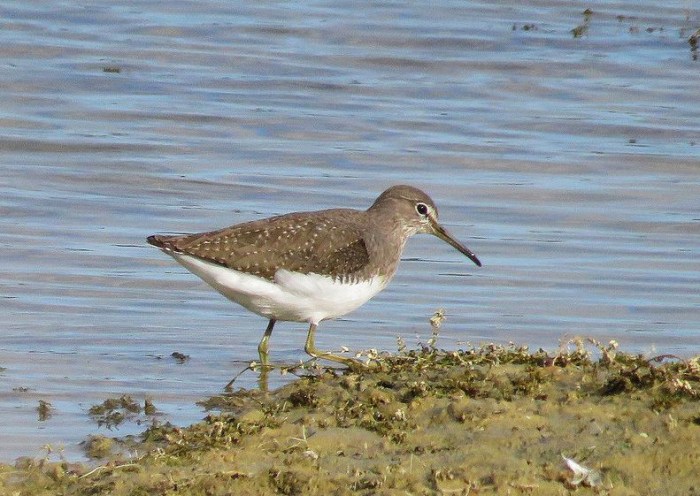
Green Sandpiper, Pitsford Res, 6th October 2016 (Alan Francis)

A couple of late Greenshank comprised singles at both Ditchford GP and Pitsford Res on 2nd, while Common Snipe numbers remained in single figures with three at Hollowell Res on 1st, six at Deene Lake on 2nd and two at Daventry CP on 7th.

Scarce gulls remained in short supply, with two adult Caspian Gulls in the roost at Pitsford Res on 2nd, up to two adult Yellow-legged Gulls were there on 1st-2nd and three at Boddington Res on 5th. A migrant Short-eared Owl at Harrington AF on 2nd was the first one of the autumn as were two Bearded Tits – perhaps the only ones of the autumn – at Summer Leys on 7th. The only hint of flavour from the east was a Siberian Chiffchaff trapped and ringed at Stanford Res on 5th.

Siberian Chiffchaff, Stanford Res, 5th October 2016 (Mick Townsend)

Whinchats were still being encountered in the early part of the week, with singles at Harrington AF and Pitsford Res plus two at Staverton – all on 2nd, while up to three Stonechats were at Stanford Res on 1st-2nd, one was at Ditchford GP on 2nd and up to two were at Harrington AF between 2nd and 6th.

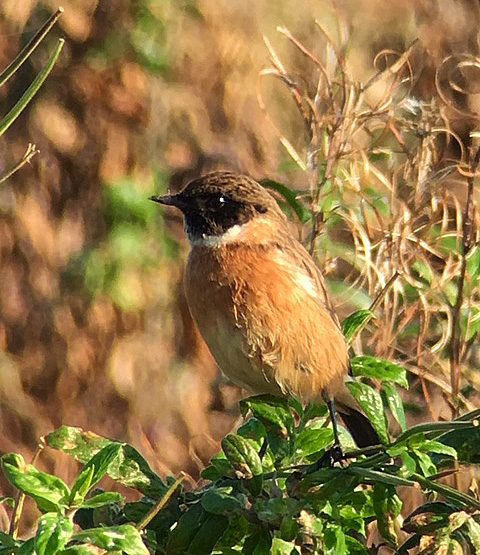
Male Stonechat, Stanford Res, 2nd October 2016 (Chris Hubbard)
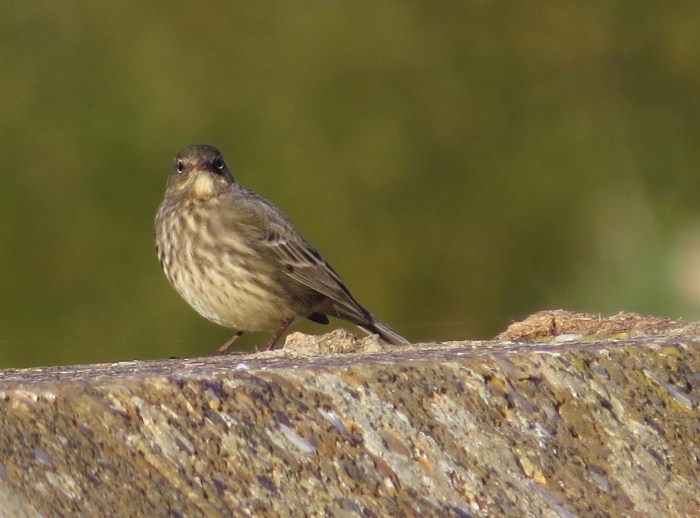
Rock Pipit, Hollowell Res, 3rd October 2016 (Cathy Ryden)

A Rock Pipit – another typical scarce autumn migrant and the first of the season – was found on the dam at Hollowell Res on 3rd and a male Brambling appeared at Stanford Res on 7th.

It’s official: Azorean Gull now on the Northamptonshire List

Azorean Gull, Azorean Yellow-legged Gull, Azores Gull – call it what you like but, following its acceptance by the BOU on to the British List earlier this year, Larus michahellis atlantis – currently considered to be a distinctive taxon – is now on the Northamptonshire List based on the acceptance by British Birds Rarities Committee of a returning adult to Stanwick GP during 2013, 2014 and 2015. The accepted records are as follows:

2013 27th September intermittently to 6th November (M. T. Elliott, S. P. Fisher)                                        2014 21st October (M. R. Alibone, S. P. Fisher, R. D. Webster)                                                                                        2015 10th October (S. P. Fisher)

Adult Azorean Gull, Stanwick GP, 27th September 2013 (Martin Elliott)
Adult'Azorean Gull, Stanwick GP, 21st October 2014 (Mike Alibone)
Adult Azorean Gull, Stanwick GP, 21st October 2014 (Mike Alibone)
Adult Azorean Gull, Stanwick GP, 10th October 2015 (Steve Fisher)

This individual is considered to be (and is treated as) the same returning bird which has been seen in various Midlands counties annually during autumn since its initial discovery in Oxfordshire in 2009. As such it constitutes only the second British Record. This autumn it appears to have again returned, being seen at Stanwick GP and at Grafham Water in Cambridgeshire. For a recap on the accepted Northants occurrences see: 2013  2014  2015

The Week in Focus 24th to 30th September 2016

Under the influence of a south to south-westerly airstream for the majority of the week, the county enjoyed largely dry weather with occasional heavy showers and temperatures in the low twenties on a couple of occasions. With the shorter day lengths and the nights rapidly drawing in, the amount of daylight time for birding is quickly being eroded – but the waiting game was over, at least for some, on 28th.

Still in the vicinity of the dam and sailing club, the Ruddy Shelduck remained at Pitsford Res as Pintail numbers there increased to fifteen by 29th, along with one at Daventry CP on the same date. The only Red-crested Pochards were also at Pitsford Res, where there were up to three all week and at Stanford Res, where two were present on 30th.

Ruddy Shelduck, Pitsford Res, 26th September 2016 (Alan Francis)

Stanford Res also added itself to the list of localities producing Great White Egrets this week with a fly-over moving south-west on 26th. Elsewhere it was business as usual with singles appearing settled at Hollowell Res and Deene Lake as well as two still at Pitsford Res all week, although the Summer Leys individual was nowhere to be seen during the period.

Great White Egret, Deene Lake, 25th September 2016 (James Underwood)

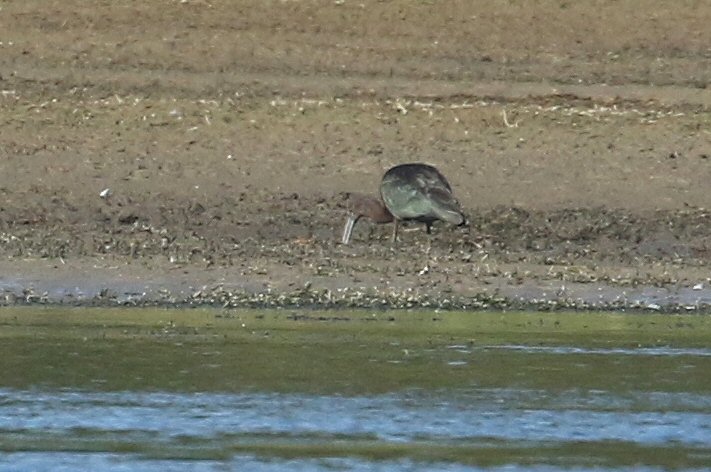
The dearth of rarities was finally broken – somewhat spectacularly – this week with the appearance of Northamptonshire’s fourth-ever Glossy Ibis at Daventry CP on the morning of 28th. A seriously glossy adult, true to form it did a bunk shortly after its discovery, allowing only a handful of quick off the mark locals to catch up with it before its hasty departure to the south.

Adult Glossy Ibis, Daventry CP, 28th September 2016 (Bob Bullock)

A Black-necked Grebe found at the same locality at the same time (and still present the following day) provided little in the way of a consolation prize for those who missed it.

Black-necked Grebe, Daventry CP, 28th September 2016 (Bob Bullock)

On the raptor front notables this week included a Marsh Harrier at Blueberry Farm, Maidwell 25th, an Osprey lingering at Ditchford GP’s Irthlingborough Lakes & Meadows on 29th, which was possibly the same individual seen leaving Clifford Hill GP and flying over Far Cotton, Northampton on 30th and the autumn’s first Merlin at Harrington AF on 25th. Hobbies were still very much in evidence with two regularly at Summer Leys LNR between 24th and 27th and singles at Stanwick GP on 24th and over Higham Ferrers on 27th and a Peregrine visited Summer Leys on 30th.

Juvenile Hobby, Stanwick GP, 24th September 2016 (Mike Alibone)
Juvenile Hobby, Summer Leys LNR, 26th September 2016 (Ricky Sinfield)

Wader numbers continued to dwindle. The long-staying juvenile Grey Plover at Boddington Res had departed on 24th, while the only Ringed Plovers were up to six at Pitsford Res between 25th and 28th.

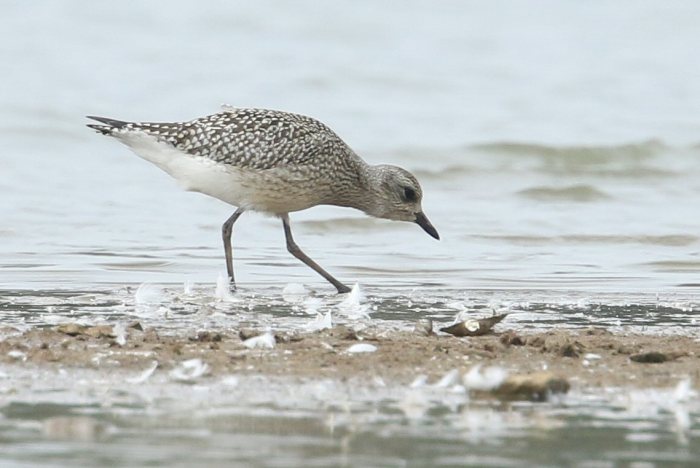
Juvenile Grey Plover, Boddington Res, September 2016 (Bob Bullock)

Eight Curlews flew east at Stanford Res on 24th, around twenty Black-tailed Godwits were flushed by a female Sparrowhawk at Ditchford GP’s Irthlingborough Lakes & Meadows and flew off west on 25th and six dropped in at Summer Leys just before dusk on 27th.

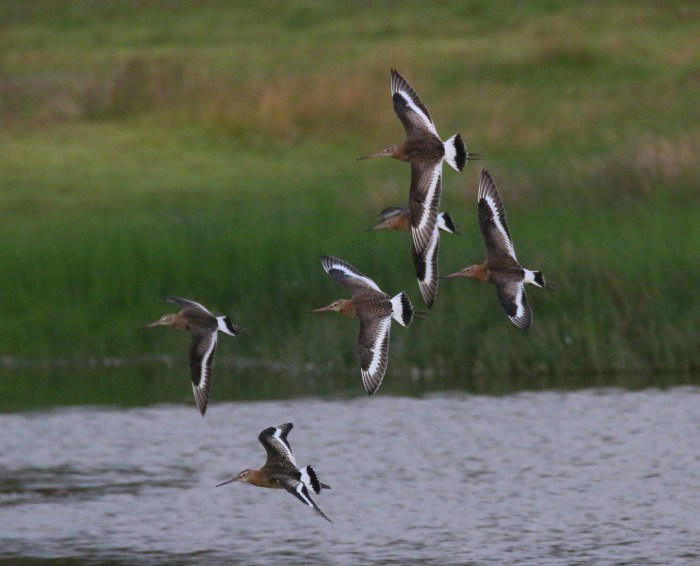
Black-tailed Godwits, Summer Leys LNR, 27th September 2016 (Ricky Sinfield)

The week’s only Ruff was an apparently injured bird at Daventry CP on 28th-29th, while Common Sandpipers were reduced to singles at Stanford Res on 24th, Naseby Res on 26th and Pitsford Res on 26th-27th with two at Boddington Res on 27th.

Juvenile Common Sandpiper, Pitsford Res, 26th September 2016 (Alan Francis)

A Green Sandpiper was at Pitsford Res on 25th, two were at Naseby Res the following day and up to three were at both Deene Lake until 27th and Daventry CP on 28th-29th. Eight Common Snipe at Deene Lake between 25th and 27th and three at Summer Leys on the latter date were the only ones reported this week.

Scarce gulls were in short supply, with a first-winter Caspian Gull at Boddington Res on 24th and a second calendar year individual at Pitsford Res the following day, while small numbers of Yellow-legged Gulls included two near Thenford and two at Boddington Res on 24th, one at Pitsford Res on 25th and six again at Boddington Res on 27th. Single juvenile Common Terns remained at Ditchford GP until 24th and at Hollowell Res until 28th.

Scarce migrant passerines were also difficult to find this week, with the only Whinchats being one at Hollowell Res on 24th and two at Blueberry Farm the following day, while the three Stonechats were still at the latter locality on the same date and a single Northern Wheatear remained at Summer Leys until 27th.

The Daventry Glossy Ibis

Wow! A Northamptonshire rarity, an adult Glossy Ibis, made landfall at Daventry Country Park today. Found by Mark Spirito on the southern shoreline, just after 09.20, the news was put out immediately and a handful of birders, quick off the mark, made it to Daventry just in time to see it before it took to the air at 10.43 and headed off south. I managed a few seconds of long distance video before it took to the air …

caption

Adult Glossy Ibis, Daventry CP, 28th September 2016 (Bob Bullock)

This is only the fourth county record, following singles at Ravensthorpe Reservoir on 20th September 2002, Pitsford Reservoir on 17th September 2010 and Stanwick GP on 12th October 2013. At least two others have been reported but the records have not been submitted.

A Trick of the Light

Autumn Northern Wheatear

I took these images of a Northern Wheatear at Preston Deanery last week. Despite looking like two different birds it’s the same individual. The photos were taken within minutes of each other, the bird moving from the heap of builder’s sand to a track only a few metres away.

Northern Wheatear, Preston Deanery, 21st September 2016 (Mike Alibone)

When the photo on the sand heap was taken the sun was behind a cloud and, with the light reflecting off the sand, the bird’s underparts appear quite richly-coloured as well as the upperparts appearing dark. When the wheatear was on the track the sun was out and the light reflected from the track’s surface was quite different, giving the plumage a wholly different tonal aspect altogether. Aside from a little sharpening, I have not altered the colour tones of the images. This serves to illustrate the difficulty associated with trying to assess plumage tones from photographs as well as in the field under variable light conditions.

All you ever wanted to know about Raptors …

Jennifer Anderson will shortly be running a course  on Raptors in the library at Higham Ferrers. The course consists of six modules and covers the Conservation, Ecology, Biology and  Anatomy, life cycles, endangered species and the history of mans association with birds of prey. The course starts on 7th October and runs for six Fridays from 1-2 pm.
The cost is £5 per session and tea and coffee will be provided. See below for contact details.
presentation1


The Week in Focus 17th to 23rd September 2016

The week kicked off with a drop in temperature, winds from the northern quarter, overcast skies and heavy drizzle – perfect skua weather but the reality of standing exposed on Pitsford causeway (no sitting in cars, remember) waiting, waiting, waiting, quickly lost its appeal for some of us at least. Aside from similar conditions on day 3, the week turned out mainly fine with the eastern side of the UK benefiting bird-wise from an easterly airstream, although there was no change in land-locked Northants – still waiting, waiting, waiting …

The Ruddy Shelduck remained, as expected, at Pitsford Res, and more Pintails arrived this week – not in any large numbers but up to two at each of Daventry CP, Hollowell Res, Pitsford Res, Stanford Res and Stanwick GP, while the only Garganey were two at Hollowell Res on 20th. A female Red-crested Pochard x Mallard hybrid was found at nearby Ravensthorpe Res on the same date. Up to three ‘thoroughbred’ Red-crested Pochards remained at Pitsford Res on 17th-18th and a drake Common Scoter visited Hollowell Res on 19th.

A Bittern was a surprise discovery on the ‘new diggings’ at Earls Barton GP on the WeBS count on 17th, nowadays much more difficult to see in the County than Great White Egret, more of which piled in this week.

Great White Egret, Summer Leys LNR, 17th September 2016 (Ricky Sinfield)
Great White Egret, Summer Leys LNR, 22nd September 2016 (Ricky Sinfield)
Great White Egret, Hollowell Res, 22nd September 2016 (Cathy Ryden)


Great White Egret, Summer Leys LNR, 23rd September 2016 (Martin Swannell)

Last week’s individual at Pitsford Res remained until at least 18th, when it was joined by a second bird, one remained all week at Summer Leys LNR, another was found at Deene Lake on 18th and, on the same date, another was discovered at Ravensthorpe Res and commuted between there and nearby Hollowell Res until at least 22nd. The partial summer-plumaged Black-necked Grebe remained for two more days off the feeding station at Summer Leys but had departed after the weekend.

Adult Black-necked Grebe, Summer Leys LNR, 17th September 2016 (Bob Bullock)

In a week notable for its absence of raptor reports Hobbies were still being seen – in most instances moving south – at Pitsford Res and Thrapston GP on 17th, Daventry CP and Stanford Res on 20th, Preston Deanery on 21st and Daventry CP again on 23rd.

As the end of September approaches, wader numbers begin to dwindle. The long-staying juvenile Grey Plover at Boddington Res remained all week, while Ringed Plovers included one at Stanwick GP on 17th, two at Hollowell Res on 18th increasing to five there on 22nd and, on 19th, twos at Pitsford Res and Daventry CP and four at Clifford Hill GP. A juvenile Icelandic Black-tailed Godwit visited Summer Leys on 18th – the same day that a juvenile Knot chose the unlikely location of the car park at Ravensthorpe Res to spend the day, albeit intermittently.

Juvenile Icelandic Black-tailed Godwit, Summer Leys LNR, 18th September 2016 (Martin Swannell)
Juvenile Icelandic Black-tailed Godwit, Summer Leys LNR, 18th September 2016 (Alan Coles)
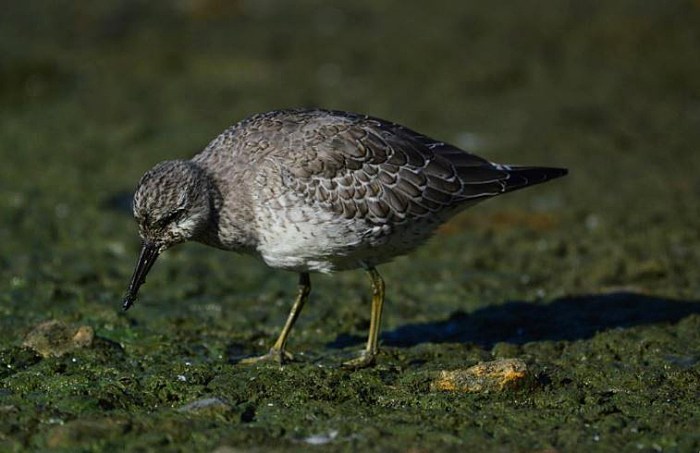
Juvenile Knot, Ravensthorpe Res, 18th September 2016 (Lee Loveridge)
Juvenile Knot, Ravensthorpe Res, 18th September 2016 (Allan Maybury)

The only Ruff were singles at Ditchford GP on 18th, Daventry CP on 19th-23rd and Naseby Res on 20th and the only Dunlin was one at Hollowell Res on 18th-19th, while Common Sandpipers were reduced to two at Boddington Res and one at Daventry CP on 17th and 23rd and singles at Naseby Res on 18th-20th, Hollowell Res on 19th, at Stanford Res the following day, with one again at Boddington Res on 23rd. Up to two Green Sandpipers were at Daventry CP between 17th and 20th and three on 23rd, one was at Pitsford Res on 17th, two were found at Deene Lake on 18th and one visited Naseby Res on 20th.  Common Snipe were recorded at seven localities with maxima of seven at Ditchford GP on 18th and at Hollowell Res on 20th.

Few scarce gulls were in evidence this week with the rarest of the few all being seen on 17th – these comprising a first-winter Mediterranean Gull at Boddington Res, a first-winter Caspian Gull at Daventry CP and an adult Caspian Gull at Pitsford Res. Small numbers of Yellow-legged Gulls were found at Boddington Res, Pitsford Res, Hollowell Res, Daventry CP and in the Brampton Valley with the first named of these site holding the maximum of five on 17th. Getting late now, single Common Terns visited Ditchford GP on 18th and Hollowell Res on 20th.

Most of our Common Redstarts have now moved through, reflected this week by just one, at Blueberry Farm, Maidwell on 17th. Similarly, the only Whinchats were two at the latter locality on the same date and one at Bozenham Mill on 23rd. There were also three Stonechats at Blueberry Farm, followed by further singles at Summer Leys on 19th and Sywell CP the next day.

Stonechat, Sywell CP, 20th September 2016 (Alan Francis)

Northern Wheatears also appeared in slightly smaller number with singles again at Blueberry Farm on 17th, at Summer Leys and Preston Deanery on 21st and 23rd followed by three between Quinton and Preston Deanery on 22nd.

Northern Wheatear, Preston Deanery, 21st September 2016 (Mike Alibone)

Much commoner in autumn than we probably believe, a White Wagtail was identified at Pitsford Res on 17th and, on the same date, a Tree Pipit was working its way across fields near the Grand Union Canal, north of Daventry and east of Welton.

The Week In Focus, 10th to 16th September

The warmest September day since 1911 saw temperatures rise to 34.4ºC on 13th, backed by a south to south-easterly airstream. Otherwise, largely dry weather prevailed locally until the week’s end, the wind having changed to west or south-westerly. The flow of migrants continued although, once again, the period produced little to write home about.

The Ruddy Shelduck remained throughout at Pitsford Res, principally by the dam, while single Pintails were at the same site on 14th and at Stanwick GP from 12th to 14th. Also remaining were the juvenile female Garganey at Daventry CP until 14th and the juvenile male at Summer Leys LNR until 16th, plus the eclipse drake Goldeneye at Stanford Res on 11th.

Juvenile drake Garganey, Summer Leys LNR, 14th September 2016 (Ricky Sinfield)
Juvenile drake Garganey, Summer Leys LNR, 14th September 2016 (Martin Swannell)

This week’s Red-crested Pochards included one at Hollowell Res on 14th and up to six at Pitsford Res, where the female Red-crested Pochard x Ferruginous Duck hybrid was also seen again on 14th.

A Great White Egret was found at Pitsford Res on 14th, remaining at the week’s end and a partial summer-plumaged Black-necked Grebe took up residence off the feeding station at Summer Leys from 15th. In contrast to last week, just one Marsh Harrier was seen on 11th and 13th, quartering fields in the Brampton Valley, below Hanging Houghton while, nearby, an adult Osprey visited Pitsford Res on 12th, another adult was seen flying south over Daventry on the same date and one flew south over Elton the following day.

Adult Osprey, Pitsford Res, 12th September 2016 (Alan Coles)

A Peregrine was at Rushden on 10th and a juvenile showed well at Summer Leys on 13th, while lingering Hobbies were still at six localities during the week.

Juvenile Peregrine, Summer Leys LNR, 13th September 2016 (Alan Coles)
Hobby, Summer Leys LNR, 10th September 2016 (Ricky Sinfield)

In terms of numbers there was a notable shortage of waders but variety was up this week, kicking off with single juvenile Grey Plovers – long-staying at Boddington Res from 11th and briefly at Summer Leys on 14th.

Grey Plover, Boddington Res, 14th September 2016 (John Friendship-Taylor)
Grey Plover, Summer Leys LNR, 14th September 2016 (Alan Coles)

Single Ringed Plovers visited Ditchford GP on 12th and Naseby Res on 14th, while Hollowell Res produced six on 16th and Pitsford Res held two on 14th with eight more flying south there on the same date.

Ringed Plovers, Pitsford Res, 14th September 2016 (John Nicholls)

Twenty-four Bar-tailed Godwits flying north-west over Boddington Res on the evening of 10th was a very unusual autumn record – this species is far more often seen in spring – and the second Turnstone to visit Stanwick GP this autumn appeared there on 14th, while a flock of seven flew west, just north of Daventry CP on 12th. Two Ruff were at Pitsford Res between 10th and 14th and a juvenile male visited Hollowell Res before moving to nearby Naseby Res on the latter date. This species has been much scarcer than usual in the county this autumn. Even more scarce, a juvenile Curlew Sandpiper was a one-day visitor to Daventry CP on 10th; despite record numbers on the east coast (and inland) earlier in the autumn we have not fared at all well for this species locally. Hollowell Res produced the week’s only Dunlins with up to three there during the period, while Common Sandpipers were again recorded from ten sites, with no more than two at any one locality. Six sites produced Green Sandpipers with a maximum of four Daventry CP on 13th and the same number at Naseby Res on 16th but Greenshank numbers remained low with just a 25-minute stopover being made by three at Summer Leys on the morning of 16th. A relatively late Wood Sandpiper flew south, calling, over Boddington Res on 13th, the same site holding the week’s only Redshank the following day, while small numbers of Common Snipe were recorded at this site as well as at Ditchford GP, Pitsford Res, Stanwick GP and Summer Leys with a maximum of eleven at the latter site on 16th.

Common Snipe, Pitsford Res, 15th September 2016 (Alan Francis)

After good numbers in spring, Black Tern is another species which has been scarce this autumn and six at Boddington Res on 12th did not linger. There was also a Sandwich Tern at Stanwick GP on 14th, which was part of a national inland movement and a juvenile Little Gull appeared at the Pitsford Res gull roost on the same date. Three first-winter Mediterranean Gulls comprised singles at Naseby Res on 12th, Daventry CP on 14th and Boddington Res on 16th, while three localities produced small numbers of Yellow-legged Gulls with Boddington Res holding two on 12th, four on 15th and one on 16th, Ditchford GP hosting three on 12th and Pitsford Res producing one on 12th, six on 14th and three on 16th. This week’s Caspian Gulls were limited to just three records of a juvenile and second-winter at Boddington Res on 12th plus a first-winter there on 15th and a fourth-winter at Naseby Res on 16th.

Adult Yellow-legged Gull, Pitsford Res, 12th September 2016 (Alan Coles)

A Turtle Dove – probably the last to be seen this year – was at Harrington AF on 10th, and the same site continued to produce Common Redstarts with two there from 10th to 13th, while the 11th saw singles near Walgrave and at Twywell Hills & Dales and four were together at Fawsley Park on the same date; one or two were also present at Blueberry Farm, Maidwell on 13th. Whinchats continued to trickle through with singles at Pitsford Res on 10th and 13th, Clifford Hill GP on 11th and Hollowell Res on 14th, while twos were at both Blueberry Farm and Harrington AF on 13th and reports of Northern Wheatears were restricted to singles at both Walgrave and Warmington on 11th, Pitsford Res on 12th-13th and at both Blueberry Farm and Harrington AF also on 13th.

Northern Wheatear, Pitsford Res, 12th September 2016 (Alan Coles)