The Week in Focus: 29th November to 5th December 2014

The balmy south-easterlies and relatively high temperatures of the last two days of November rapidly gave way to colder winds from the north and temperatures fell with the commencement of the final month of the year. As the curtain began to slowly fall on 2014, the arrival of more seasonal fare marked the advent of winter proper …

Five Whooper Swans at Hollowell Res on 3rd are the first – and probably the last – record of the year, while the two Ruddy Shelducks continued to tough it out at Pitsford Res until the week’s end; will they make it into the New Year?

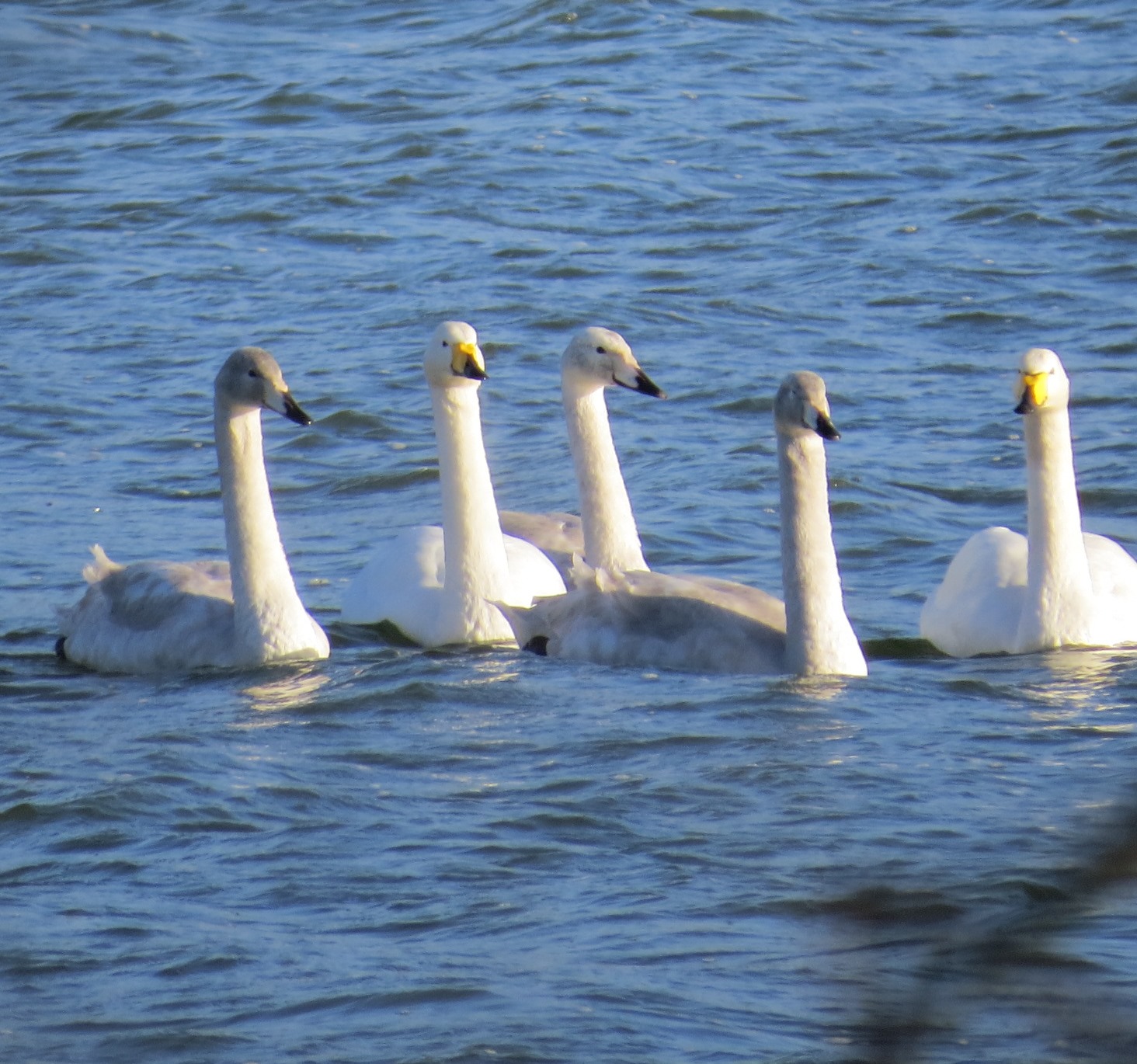
Adult Whooper Swan, Hollowell Res, 3rd December 2014 (Cathy Ryden)
Two adult and three juvenile Whooper Swans, Hollowell Res, 3rd December 2014 (Cathy Ryden)

Red-crested Pochard numbers remained low with up to five at Pitsford Res between 29th and 1st and the two Wicksteed Park Lake birds were still there on 2nd, while a female Scaup was found at Stanford Res on 29th and the first-winter drake was still at Hollowell Res on 2nd. Against a flush of Goldeneye, the first Smew of the winter – both of them ‘redheads’ – arrived this week, one at Pitsford Res on 30th-1st and the other at Earls Barton GP on 3rd.

Smew, Pitsford Res, 30th November 2014 (Clive Bowley)

All three Great White Egrets were still being seen intermittently at Pitsford Res, another was again at Summer Leys LNR on 29th and 5th and one – perhaps the same – was reported from Stanwick GP on 4th. The Black-necked Grebe was still on Town Lake at Thrapston GP on 30th and the only raptors this week were single fly-over Peregrines at Stanford Res on 29th and at The Lakes/Clifford Hill GP on 2nd plus a male Hen Harrier at Blueberry Farm, Maidwell on 4th.

Counts of Golden Plovers comprised approximately three hundred at both Summer Leys LNR on 29th and Stanwick GP on 4th and one hundred were at Harrington AF on 2nd, while a Dunlin and a first-winter Knot – scarce in the county, especially in winter – visited Hollowell Res on the same date. Thirty-seven Common Snipe was a good count at Pitsford Res on 1st and single Redshanks were found at Stanford Res on 29th, Wicksteed Park Lake and Pitsford Res on 3rd and at Stanwick GP the following day.

Rare larids this week were restricted to an adult Mediterranean Gull at Pitsford Res on 1st, two Caspian Gulls (an adult and a second-winter) at Stanwick GP on 4th and a Yellow-legged Gull at Pitsford Res on 1st-2nd with two at Stanwick GP, again on 4th.

Winter wouldn’t be the same without at least one Ring-necked Parakeet appearing in Abington Park, Northampton – and so it was, on 30th while, across town, a male Central European Blackcap visited a Kingsthorpe garden on 29th followed by a female there on 4th and another female was in a Kettering garden on 2nd. Wintering Chiffchaffs numbered two each at Stanford Res on 29th and Stanwick GP on 4th, the latter site continuing to host spectacular nightly Starling murmurations, with one flock size estimated to be in the region of fifteen thousand to twenty thousand birds and frequently attracting the attention of local Sparrowhawks.

Starling Murmuration with Sparrowhawk (top right) Thrapston GP 29th November 2014 (Stuart Mundy)
Starling Murmuration, Thrapston GP 29th November 2014 (Stuart Mundy)

By contrast the only Stonechats this week were one at Thrapston GP on 29th and the usual two at Hollowell Res on 2nd.

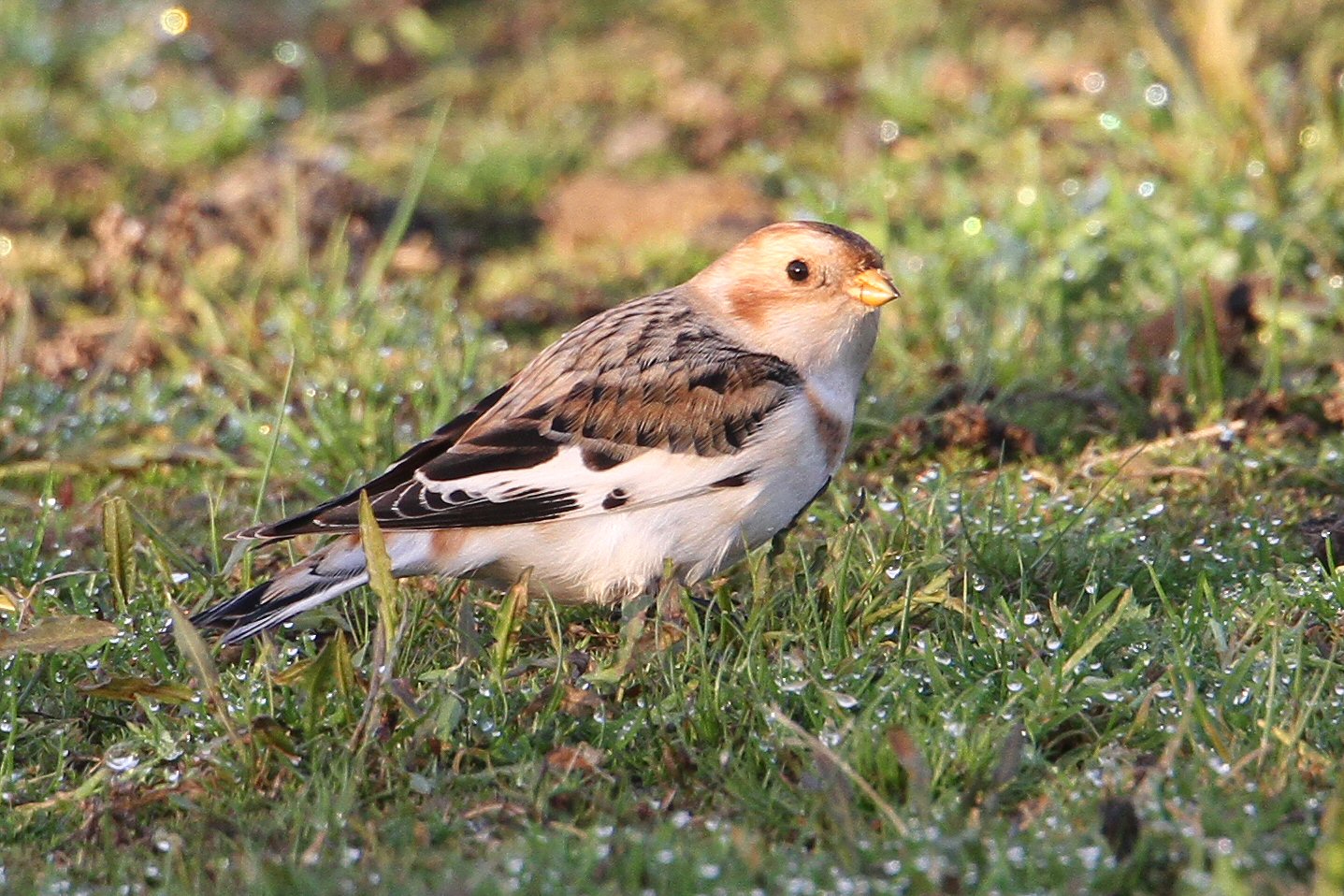
Hollowell Snow Bunting

Hollowell Res. Last week, 27th November. Just when you think they’ve gone rare, three turn up in one year. This one a stunner by all accounts and a shame it didn’t stay more than a day. Largely white primary coverts (with black tips) suggest male. As for race … they are difficult without good views of a suite of characters. Nominate nivalis from Greenland, Scandinavia and north-west Russia or insulae from Iceland … I don’t know. Thanks very much to Bob Bullock for the excellent series of images below.

37 Snow Bunting 27.11.14 Hollowell Res

092 Snow Bunting 27.11.14 Hollowell Res

061 Snow Bunting 27.11.14 Hollowell Res

098 Snow Bunting 27.11.14 Hollowell Res

052 Snow Bunting 27.11.14 Hollowell Res


The Week in Focus: 22nd to 28th November 2014

The country remained largely under the influence of a south-easterly airstream for much of the week, with overnight temperatures low enough to produce frost on two consecutive days in the early part. Otherwise, intermittent mist, fog and drizzle produced murky conditions which hampered birding to some extent.

The two Ruddy Shelducks remained mobile around Pitsford Res, being seen only on 27th this week, at the same time that Red-crested Pochard numbers appeared to have fallen to just three there, although Wicksteed Park Lake, Kettering still mustered two on the same date, remaining until 28th. Meanwhile, the Daventry CP female Scaup appears to have vacated the site while, up and over to the north-east a bit, a first-winter drake was discovered at Hollowell Res on 24th, remaining there throughout the week.

All three Great White Egrets were on show simultaneously at Pitsford Res on 23rd and another – presumably last week’s Nene Valley wanderer – but in a brief appearance at Summer Leys LNR on 26th. The Black-necked Grebe was still on Town Lake at Thrapston GP on 28th and raptors were again thin on the ground – and in the air – with just two Peregrines over Badby on 22nd and singles at both Stanwick GP and Summer Leys LNR on 24th.

Small numbers of Golden Plovers were reported intermittently from Clifford Hill GP while approximately two hundred were counted at Summer Leys LNR on 24th and a belated report of some four hundred last week on the recently reprofiled scrape at Ditchford GP’s Irthlingborough Lakes & Meadows reserve is encouraging for the site. On 22nd, three Sanderlings circling Clifford Hill GP’s main barrage lake before heading off west represented a most unseasonal record for this species in the county as most occur as spring passage migrants in May. The same site also held two or three Dunlins on the same date while two were at Hollowell Res on 24th. This week’s Green Sandpipers were two at Ravensthorpe Res on 24th and singles there on 28th, at Stanford Res on 27th and Ecton SF the following day, while twos of Common Snipe were at the latter site at the same time, at Pitsford Res on 26th and at Clifford Hill GP on 27th.

Adult Mediterranean Gulls were found at Wicksteed Park Lake on 22nd and at Hollowell Res on 27th with the latter site producing an adult Caspian Gull on 24th, two on 27th and one on 28th, while a third-winter Caspian visited Daventry CP on the last of these two dates. Yellow-legged Gulls were equally scarce with just singles at Hollowell Res on 24th and 27th with two there on 28th and one at Ravensthorpe Res on the same date.

Scarce passerines are always at a premium by the time we get to November but noteworthy this week were Central European Blackcaps – all males – with two in a Duston,

Male Blackcap, Northampton 22nd November 2014 (Stuart Mundy)

Northampton Garden on 22nd-23rd, two in a Kingsthorpe, Northampton garden on 25th and one in a Wellingborough garden on 27th-28th. The only other wintering warbler reported was a Chiffchaff at Clifford Hill GP on 22nd, although there must surely be more … A single Stonechat was at Summer Leys LNR on 23rd while the usual two were at Hollowell Res all week, the latter site producing a Snow Bunting on 27th.

Further Habitat Improvement for Wildfowl and Waders in the Nene Valley

It’s very satisfying to again see people working hard to improve habitat in our river valley wetlands! Following last year’s reprofiling of the peninsula on Clifford Hill Gravel Pits’ main lake, Northampton Washlands, and before that, the scrape at Summer Leys LNR, a new project has recently been completed to create habitat for wildfowl and waders further along the Nene Valley at Irthlingborough Lakes & Meadows.

The far eastern end of the old Ditchford Gravel Pits complex has just gone under the knife but the resultant effect is far more than simply cosmetic. The area has SSSI and SPA designations for overwintering wetland birds and, as there is floodplain meadow grassland adjoining some of the lakes, Natural England asked the Wildlife Trust for Bedfordshire, Cambridgeshire & Northamptonshire (Wildlife BCN) to prioritise work on the lakes and grasslands either side of the King’s Meadow Lane cycle path.

Ian Wilson, Reserves Officer, Wildlife BCN said “The management aims were pretty simple: to improve the site for overwintering ducks and waders by visually reconnecting the grassland to the lakes, starting summer grazing of the grassland to create a shorter sward, helping water to move through the site and off the grassland rather than being dammed by the cycle path and sitting on the grassland for months at a time and creating additional high quality habitat by providing scrapes and an island.”

Throughout September 2013 and 2014 contractors, staff and volunteers all removed huge amounts of ten-year-old self-set willow from the grasslands, lake margins and ditch banks. The willow was burnt on site and the stumps treated to minimise re-growth.

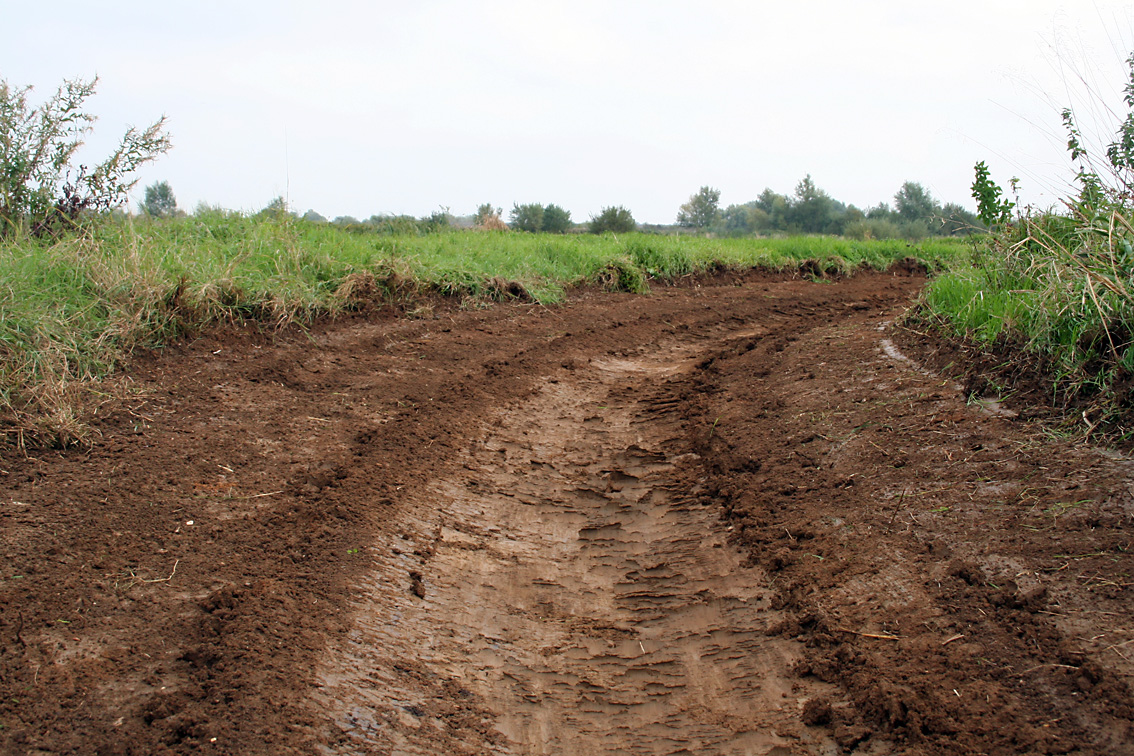
New scrape area, 27th November 2014 (Ian Wilson)
Scraping (Steve Brayshaw)

Over a two year period fencing and grazing infrastructure has been installed ready for grazing the site in spring 2015. This fencing also creates a disturbance-free area as it excludes dogs and people from the vicinity of the most wildlife-sensitive lakes.

Completing the scrape and shallows (Steve Brayshaw)

In July 2014 a bridge was installed and a channel cut across the cycle path to allow water to move on and off the site more quickly as well as clearing the back channel to help water flow through site.

In early August, Western Power removed three of the four lines of power cables crossing the grassland and lakes. These have been routed underground after a year of digging and mess and the fourth line will be removed next year. The removal of a large number of predator perches increases the potential for ground-nesting birds to use the grassland area to breed as well as eliminating bird-strikes on the wires and improving the look of the site no end.

The RSPB rotary ditcher was used to create a series of level foot-drains to allow water to flow on and off the grassland as well as creating good wader habitat.

Ditcher (Ian Wilson)
'Ditch 1' (Ian Wilson)
‘Ditch 1’ (Ian Wilson)

Under Steve Brayshaw‘s direction, contractors removed a large ridge of soil which was trapping floodwater on the grassland and visually separating the lake from the grassland. Steve also designed the scrape and island work from the planning phase some years ago to completion this September, managed the contractors on site and ensured the job came in on budget. Steve also gave much invaluable advice and consultative assistance with the back channel clearing, the bridge and channel on the cycle path and numerous other facets of the project.

The resulting bare ground now drops very gradually from the meadow to the lake and includes a couple of scrape areas as well as a very gently varying topography to create numerous small wet areas. At the same time a tree-covered spit was cleared, lowered and cut off from the mainland to create a new island in the middle of the lake.

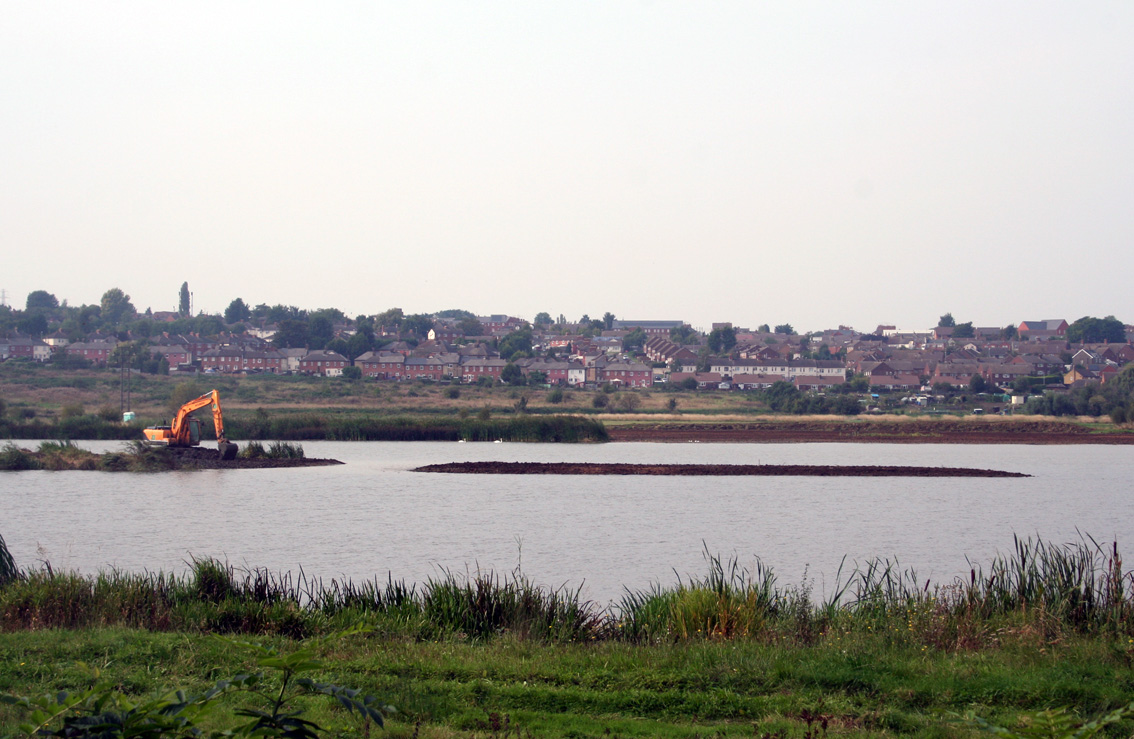
Island in the making (Ian Wilson)
Island completed (Ian Wilson)

Finally Ian’s team have cut some viewing ‘windows’ in the hedge along the old railway track to let people see across the area they have been working on as well as improving the state of the path along the old railway. The project was funded by the Heritage Lottery Fund and Sita.

Good numbers of Common Snipe and around four hundred each of Lapwing and Golden Plover last week serve to demonstrate that the scrape works are achieving their aims already! Hopefully once the weather gets colder we will see an increase in the number of ducks too.

Don’t forget the lakeside and meadow habitat is just one of many as there are some good mature hedges, mixed scrub, reed fringes, wet woodland and plenty of willow left to attract a broad spectrum of avian and other wildlife.

Access                                                                                                                                                                                                                The site map below provides a general overview of the area and the few yellow dots indicate where best to view the main area of improvement.

Site map (Ian Wilson)

Today’s photo – the first of the series above – was taken from the dot midway between the 11 and 12 labels. Note that the path around wader flats is prone to flooding and is often wet and slippery. The old railway and the new greenway are much better all-weather surfaces from which to explore the area. The site can be accessed most easily from Station Road at the Stanwick GP Lakes end or from St Peter’s way near to the town centre car park.

Many thanks to Ian Wilson for providing commentary, photographs and the map and to Steve Brayshaw for additional detail and photographs.

The Week in Focus: 15th to 21st November 2014

The country fell under the influence of an easterly or south-easterly airstream for much of the week, although it remained largely dry with temperatures around, or above, the seasonal norm.

This week’s round-up is, then, a subtle blend of predictability and paucity, with a fair proportion of last week’s and long-staying birds remaining and few new discoveries being made. The Stanford Res Pink-footed Goose was still present on 15th and the same site still held at least seven Red-crested Pochards until 20th, with six at Wicksteed Park Lake the following day. The two Ruddy Shelducks were also still present at Pitsford Res on 20th and just one female Scaup remained at Daventry CP on 18th, while the female Ring-necked Duck was still at Wicksteed Park Lake, Kettering on 16th, although there have been so subsequent reports.

At least two Great White Egrets seem set to winter at Pitsford Res, having been seen on and off throughout the week, while one visited Thrapston GP on 15th and Stanwick GP two days later. A Black-necked Grebe resurfaced on Thrapston GP’s Town Lake on 15th and the only Peregrine to put in an appearance was one further up the Nene Valley at Stanwick GP on 20th.

An Oystercatcher at Stanwick GP on 17th was unseasonal but six hundred Golden Plovers there at the same time was the highest number in the county so far this autumn.  A Green Sandpiper at Pitsford Res on 15th was the week’s only record, as were up to three Redshanks at Stanwick GP between 17th and 20th and three Common Snipe there on the last of these dates. Stanwick also produced a Yellow-legged Gull on 17th, while two were at Pitsford Res on 15th along with an adult Caspian Gull at the same time.

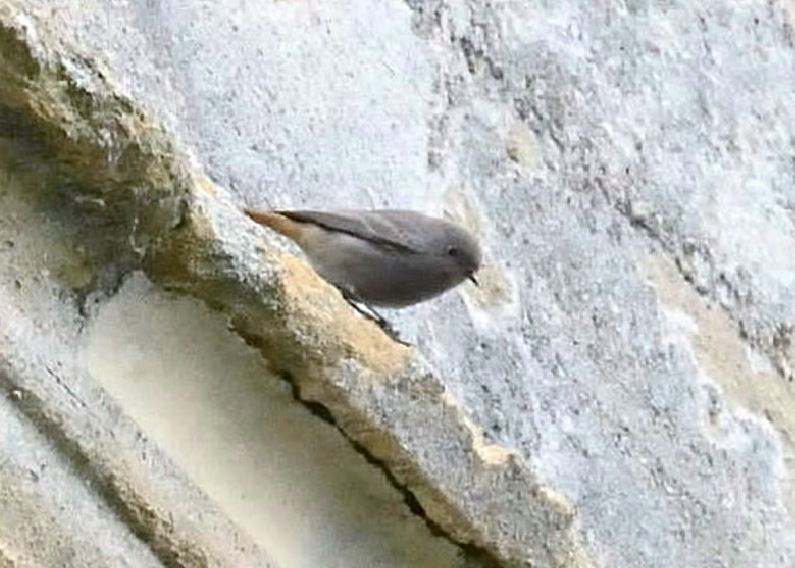
A Ring-necked Parakeet visited a garden in Aldwincle on 15th while, just up the road in Oundle, a late autumn Black Redstart spent two days on St Peters Church spire on 17th-18th.

Black Redstart, Oundle, 18th November 2014 (Alex Barclay)

More usual fare included returning Central European Blackcaps with two different birds on consecutive days, 16th and 17th, in one Northampton garden and a male in a Wellingborough garden on 17th. Other wintering warblers were three Chiffchaffs at Stanford Res on 15th (one on 16th) and one at Stanwick GP on 19th, while a Cetti’s Warbler at Spring Marsh in the Brampton Valley on 16th was an unusual find away from this species’ favoured Nene Valley locations.

Starling Murmuration and Sparrowhawk

The Starling murmuration at Thrapston Gravel Pits’ Titchmarsh Reserve continues to attract attention – not just from us birders but from predators, too. Alan Coles captured this Sparrowhawk on the edge of the flock, having a go, this evening.

Starling murmuration and Sparrowhawk, Thrapston GP, 21st November 2014 (Alan Coles)

One recent estimate has put the total of Starlings roosting in the reedbed at between fifteen and twenty thousand! To view, park in the Aldwincle car park, walk down the track to the gate, turn right and walk to the second hide.

The Week in Focus: 8th to 14th November 2014

The weather remained relatively mild and blustery with showers and occasional heavy rain as the initial south-south-westerly winds at the beginning of the period gave way to a south-easterly airstream for the majority of the week.

The Stanford Res Pink-footed Goose remained with the Greylag flock all week, while the two Ruddy Shelducks at Pitsford Res were still present on 12th, when ten Pintails were also there. Only nineteen Red-crested Pochards – a drop from last week’s record thirty – were counted there on the same date and a respectable twelve were at Stanford Res on 9th. The female Scaup remained at Daventry CP, being joined there by another on 13th, both birds being present the following day.

Female Scaup, Daventry CP, 14th November 2014 (John Moon)

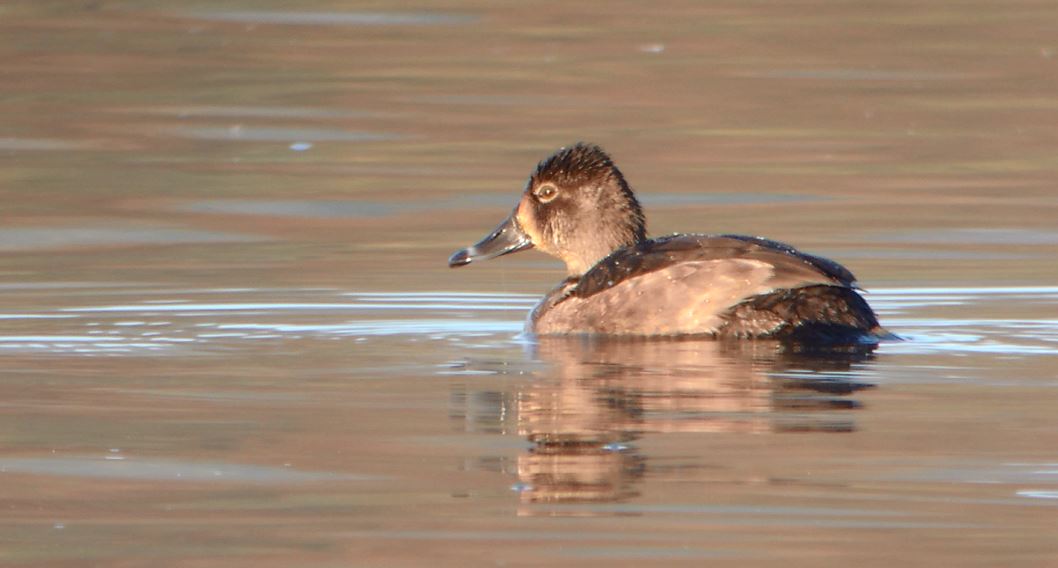
The ducks deluxe highlight of the autumn was, however, the female Ring-necked Duck discovered at Wicksteed Park Lake, Kettering on 8th and remaining throughout the week. This very obligingly showy individual, present with just a handful of Tufted Ducks and Pochards, represents only the fifth record for Northamptonshire, following hot on the heels of the fourth, at Stanwick GP, in November 2013. How many more of these need to occur before Northants gets its first Lesser Scaup – long overdue for the county list …?

Female Ring-necked Duck, Wicksteed Park Lake, 8th November 2014 (Mike Alibone)

Up to two Great White Egrets remained at Pitsford Res throughout the week, female Merlins were at Harrington AF on 9th and Pitsford Res on 12th, the only Peregrines were singles at Ditchford GP on 8th and Harrington AF on 10th, while the only other raptor of note was a ‘ringtail’ Hen Harrier between Brigstock and Lower Benefield on 9th.

The maximum number of Golden Plovers during the period was four hundred at Clifford Hill GP on 8th with the same number at Bozenham Mill on 12th, while up to fifty at Harrington AF was the only other recorded count of this species this week. Three Green Sandpipers at Ravensthorpe Res on 14th was the week’s only record, as were single Redshanks at Clifford Hill GP on 8th and Daventry CP on 13th, while fifty-nine Common Snipe at Pitsford Res on 12th was an impressive count by today’s standards.

A first-winter Mediterranean Gull at Daventry CP on 13th may have been a revisit by last week’s individual and no more than one Yellow-legged Gull was seen here or at reservoirs at Boddington, Hollowell, Pitsford and Ravensthorpe, while Stanwick GP saw four on 13th, with the same site hosting two adult Caspian Gulls on 13th with a sub-adult at Boddington Res on 12th.

The run of Short-eared Owl records from Blueberry Farm appears to have dried up in recent days, although two were at nearby Harrington AF on 10th, while Ring Ouzels just keep coming – this week’s being a first-winter over Daventry CP with Fieldfares on 8th and single males – also associated with Fieldfare movements – at Harrington AF on 9th and Boddington Res on 11th. This week’s Stonechats were singles at Ditchford GP and Clifford Hill GP on 8th, Pitsford Res on 9th and 12th and three at Hollowell Res on 14th, while a late Rock Pipit flew over Boddington Res on 9th, several Bramblings were over Harrington AF on the same date and a single Snow Bunting – the second of the year – visited Clifford Hill GP on 8th.

‘black-fronted’ Heron

Receiving far less attention than the nearby Ring-necked Duck, this ‘black-fronted’ Grey Heron proved to be quite a striking bird. At first sight it may be easy to assume it is oiled but closer examination reveals a rather uniform density of dark feather symmetry – not the patchy, uneven distribution of staining associated with a liquid, and this suggests it is natural pigmentation rather than the result of an oily encounter.

Aberrant Grey Heron, Wicksteed Park, Kettering, 9th November (Simon Hales)

Grey Herons with aberrant plumage occur from time to time. Structurally, the Wicksteed individual is a Grey Heron and is not likely to be a hybrid, unlike this bird, which it closely resembles in plumage but not structure. Interesting bird and thanks to Simon Hales for his image.

Bingo! It’s a Ringo!

This female Ring-necked Duck swam into the record books as Northamptonshire’s 5th when Nick Parker picked it up during heavy rain at Wicksteed Park Lake, Kettering yesterday afternoon. Poor light hampered serious photography and the identification was tentative.

Not so today, though, when the bird showed well all day on the south-east side of the lake. A nice adult female: defined, though narrow while subterminal bill band (less defined and more diffuse on juv/1st winter), restricted, dull yellow-tinged feathering around bill base (whiter and more extensive on juv/first-winter) and uniformly patterned underparts (patchy/whitish in juv/1st winter) offer clues to age and sex of this individual.

Female Ring-necked Duck, Wicksteed Park Lake, 9th November 2014 (Bob Bullock)
Female Ring-necked Duck, Wicksteed Park Lake, 9th November 2014 (Mike Alibone)

CaptureThis bird follows hot on the heels of last year’s female at Stanwick GP on 20th November, images and previous records here.