The Week in Focus: 16th to 22nd February 2013

The relatively high temperatures in the early part of the week rapidly gave way to a return to cold, wintry – though dry – weather during the latter half, when eight White-fronted Geese were found at Clifford Hill GP on 22nd. Six Egyptian Geese visited

White-fronted Geese, Cilfford Hill GP, 22nd February 2013 (Bob Bullock)

Ditchford GP on 16th and two were discovered close to the River Nene near Barnwell CP the next day. Up to three Shelduck were seen at Clifford Hill GP, Ditchford GP and

White-fronted Geese, Cilfford Hill GP, 22nd February 2013 (Mike Alibone)

  Summer Leys LNR and two Pintail at Stanwick GP on 20th were the only ones to be found during the period, this species having remained quite scarce so far this year. The long-staying Scaup remained at Ditchford GP, where there were two drakes on 19th and seven Smew remained at Ravensthorpe Res on 16th, two were at Earls Barton GP the same day and up to six were at Pitsford Res on 17th and 18th, while Goosanders were present at Summer Leys LNR, Ditchford GP and Clifford Hill GP, with a maximum of fourteen at the latter site on 17th.

Single Bitterns were found at Ditchford GP on 17th and at Earl Barton GP’s Quarry Walk on 20th while the Pitsford Great White Egret was seen on 17th, 18th and 19th. A Slavonian Grebe – perhaps the bird from Pitsford – appeared at Clifford Hill GP on 22nd and a pair of adult Peregrines was discovered at a suitable breeding site on 18th and one was seen over Lings Wood (Northampton) on 21st.

Slavonian Grebe, Clifford Hill GP, 22nd February 2013 (Bob Bullock)

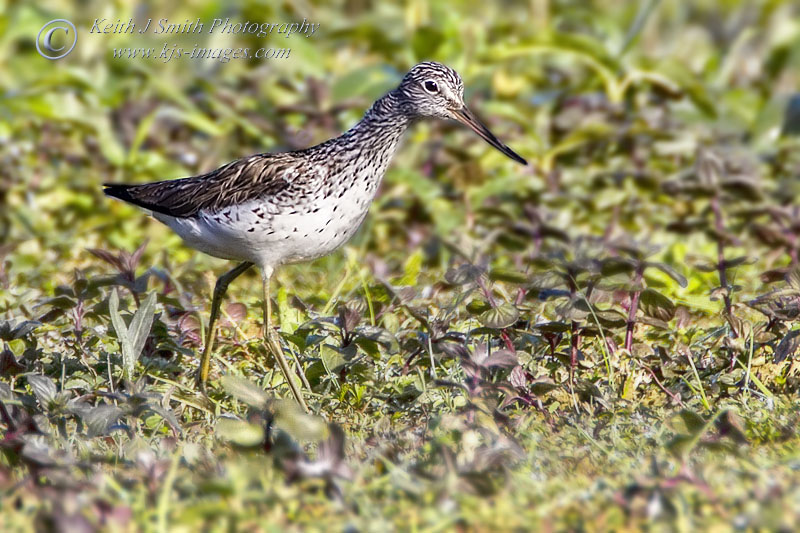
Oystercatchers were more in evidence this week with up to three now back at Clifford Hill GP, Ditchford GP, Stanwick GP and Summer Leys LNR, between seventy and eighty Golden Plovers were at Clifford Hill GP on 22nd and one visited Kingsthorpe LNR (Northampton) on 20th, the same day that there was a Dunlin and 9 Redshanks at Stanwick GP. Another Redshank was at Summer Leys LNR on 17th and a Green Sandpiper was at Ecton SF the same day.

Apart from a third-year Yellow-legged Gull in the roost at Pitsford Res on 20th, rare gulls were confined to the Nene valley with a near-adult Caspian Gull at Ditchford GP on 19th when a juvenile Glaucous Gull was also there, later visiting nearby Stanwick GP on 20th and 22nd with an adult Iceland Gull there on the latter date.

Adult Iceland Gull, Stanwick GP, 22nd February 2013 (Bob Bullock)

Stoke Bruerne has a track record in producing Ring-necked Parakeets and seven were seen there on 19th with two there next day while four flew over nearby Ashton on 17th. Lesser Spotted Woodpeckers were in evidence at Lings Wood (Northampton) on 16th, 17th, 19th and 21st and at Old Sulehay on the first of these dates while at least two male Bearded Tits continued their winter residence in the Phragmites bed at Ecton SF and up to two more were seen at Earls Barton GP’s Quarry Walk between 17th and 20th. At least ten Chiffchaffs remained at Ecton SF with up to two Siberian Chiffchaffs throughout the week and a total of five Central European Blackcaps visited gardens in Northampton, Weedon and Wellingborough, while four Waxwings remained in Corby on 16th and approximately twelve were seen in Great Brington the following day. Small numbers of Bramblings continued to be seen at the regular sites of Hanging Houghton, Harrington AF, and Kelmarsh with one in East Hunsbury (Northampton) on 16th and a

Mealy Redpoll, Polebrook, 18th February 2013 (Terry Wood)

maximum of at least twelve at Harrington AF on 21st, while single Mealy Redpolls visited garden feeders in Byfield on 17th and Polebrook on 18th.

A not so Mealy Redpoll

February is ‘Redpoll and Siskin time’ and every year I find the numbers visiting my feeders build throughout the month. At present up to two dozen Siskins and twelve Lesser Redpolls, along with Greenfinches, Goldfinches and Bullfinches, are emptying the feeders daily. Yesterday they were accompanied by one redpoll sp., which I have left unidentified.

redpoll sp., East Hunsbury (Northampton), 19th February 2013 (Mike Alibone)


It has some plumage  features associated with Mealy Redpoll and it may indeed be that species but, on balance, I think it is probably a pale first winter/female Lesser

as it has an extensive buff wash in greater coverts and supercilium (not readily apparent in the video) and the size and structure does not differ from Lesser Redpoll,

a male of which also presents a nice comparison in the second of the two videos here. Note the paleness of this individual is accentuated in the accompanying image and video; in life it was a shade darker.  I would welcome any comments.

The Week in Focus: 9th to 15th February 2013

A cold start to the week with intermittent light snow, which rapidly gave way to relatively mild conditions at the week’s end. Twenty-nine Shelduck at Deene Lake on 13th was an exceptionally high total for a single site in the County. Thirteen Smew, including one drake, remained at Ravensthorpe Res on 9th while two were at Thrapston GP on 10th, nine at Pitsford Res on 11th and one at Earls Barton GP on 13th. Single-figure counts of Goosanders were made at Abington Park Lake (Northampton), Clifford Hill GP, Hardingstone GP, Hollowell Res, Pitsford Res, Summer Leys LNR and Wicksteed Park Lake (Kettering) with a maximum of ten at Stanford Res on 9th.

The Pitsford Great White Egret was seen on 9th and 14th and on the latter date it was back on the marsh on the Holcot-Walgrave Road, by the Hannington turn. A Peregrine at Blueberry Farm (Maidwell) on 12th was the only raptor of interest this week but there were more waders reported with a Redshank and c1000 Golden Plovers at Clifford Hill GP on 12th and c600 there along with 2 Dunlins on 14th. Singles each of Black-tailed Godwit and Green Sandpiper were at Stanford Res and Ecton SF on 9th and 10th respectively. Another Redshank was  at Pitsford Res on 15th when there were also two Yellow-legged Gulls in the roost there.

The Hanging Houghton ‘Nordic’ Jackdaw was seen there again on 12th and at least twelve Chiffchaffs remained at Ecton SF with up to two Siberian Chiffchaffs throughout the week, as did at least two Bearded Tits. Single male Central European Blackcaps visited gardens in Duston (Northampton), Kettering, Pitsford and Towcester, while 2 males and a female were regularly in a Spratton garden and at least four also visited a garden in Wellingborough. A belated report of a Firecrest heard in a Pitsford garden on 8th attracted would-be observers on subsequent days but it was not relocated, while the long-staying male Stonechat at Hollowell Res was still present on 9th. On 11th, seventeen Waxwings flew over Pitsford Res, eight were in Cottesbrooke the next day and six in nearby Hanging Houghton on 14th, when at least fourteen were in Deanshanger and several were in Corby on 15th. Small numbers of Bramblings continued to be seen at the regular sites of Hanging Houghton, Harrington AF, Kelmarsh, and Pitsford Res but four were near Grimscote on 12th and two in East Hunsbury (Northampton) on the same date, while a Mealy Redpoll visited a Byfield garden on 11th.

The Week in Focus: 2nd to 8th February 2013

A relatively mild week with few new birds of note. A Dark-bellied Brent Goose was a one-day visitor to Ravensthorpe Res on 2nd and two Pintail were seen at Stanwick GP the next day. Ravensthorpe again held the highest number of Smew with up to twelve present there on 2nd, while up to three remained at Pitsford Res and two were seen at Thrapston GP on 4th. Twenty-seven Goosanders at Stanford Res on 2nd beat last week’s highest winter total of twenty-five at Thrapston GP, where there were just sixteen on 4th, while Stanwick GP held eighteen on 3rd and one was at Blatherwycke Lake on 7th.

After an apparent absence last week, the Great White Egret reappeared at Pitsford Res on 3rd, as did the Slavonian Grebe, which was seen there again on 2nd. Single female Peregrines seen at Brackmills (Northampton) on 2nd and at Blueberry Farm (Maidwell) on 4th and another at Stortons GP on 8th were the only raptors of note this week.

The first of the spring Oystercatchers returned to Stanwick GP on 7th, where there was approximately thirty Golden Plovers on 4th, sixty in the Brampton Valley on the same date and the same number at Clifford Hill GP on 5th. Five Jack Snipe at Barnes Meadow (Northampton) on 2nd was a high count for this suburban locality, nine Redshanks remained at Stanwick GP all week and a Green Sandpiper was at Ecton SF on 3rd and 4th.

On 3rd, an adult Mediterranean Gull visited Hollowell Res while a first-winter Caspian Gull was at Ditchford GP on 26th January (omitted from last week’s report) and two juvenile Glaucous Gulls visited the gull roost at nearby Stanwick GP on 6th. Two Yellow-legged Gulls were also at Stanwick on 3rd, a second-winter was in the Pitsford Res roost on 4th and two adults were there the following evening and a first-winter Kittiwake was also there on 2nd.

First-winter Caspian Gull, Ditchford GP, 26th January 2013 (John Friendship-Taylor)

Just one Short-eared Owl was seen at Blueberry Farm (Maidwell) on 3rd when a minimum of twenty Chiffchaffs – an unprecedented single locality winter count – was recorded at Ecton SF and up to three Siberian Chiffchaffs were still present there throughout the week.

Siberian Chiffchaff, Ecton SF, 8th February 2013 (Jim Dunkley)

At least four Bearded Tits were seen again in the Phragmites bed there on 2nd after having maintained a low profile since early January. Single male Central European Blackcaps visited gardens in Northampton at East Hunsbury, Duston and Kingsthorpe and beyond in Barton Seagrave, while a male and two females remained in a Wellingborough garden all week and at least three (2 males) have been present in a Spratton garden throughout the winter. Just one report of Waxwings concerned six in Deanshanger on 8th and the long-staying male Stonechat at Hollowell Res was still present on 2nd.  Single-figure counts of Bramblings were made at East Hunsbury (Northampton), Hanging Houghton, Kelmarsh, and Pitsford Res while up to twenty were at Harrington AF on 3rd and six Crossbills were in the usual location of the car park at Wakerley Great Wood on 2nd.

The Week in Focus: 26th January to 1st February 2013

Localised flooding followed a rapid snow thaw as temperatures rose significantly at the beginning of the week. Thirty-two Mandarin Ducks were counted at Blatherwycke Lake on 29th, Pintail remained scarce with just four at Ravensthorpe Res on 27th and two at nearby Hollowell Res on 29th and the mobile first-winter drake Scaup visited both reservoirs on 26th and 27th. What may have been a ‘new’ female Scaup was found at the Irthlingborough end of Ditchford GP on 30th, while the Aythya hybrid resembling a drake Lesser Scaup was still present on the watersports pit there on 26th. Varying numbers of Smew were present at Ravensthorpe Res throughout the week, peaking at an impressive thirteen (five drakes) on 30th, while up to three remained at Pitsford Res. Four out of five locations where Goosanders were found this week were suburban Northampton lakes, with four at Shelfley’s Lake and seven at Abington Park Lake on 26th and two at Thorplands Lake and four at Sixfields Lake on 31st while the highest count of the winter so far was made at Thrapston GP, where there were twenty-five on 26th.

Bitterns were found at four localities during the period: Pitsford Res on 26th, Billing GP on 27th, Ravensthorpe Res on 28th and Stanwick GP on 29th but there were no reports of the Great White Egret at Pitsford. In a poor week for raptors the only Merlins were a male and female at Ecton SF on 31st and the only Peregrines were singles at Ditchford GP on 26th and Harrington AF on 31st while the latter locality played host to the only Golden Plover, one, on 27th.  Other waders included a Jack Snipe at Hollowell Res on 29th and Green Sandpipers at Kirby Hall (Corby) on 26th and Ecton SF on 27th and 31st.

On 29th, an adult Mediterranean Gull was in the roost at Pitsford Res while Ditchford GP produced an adult Caspian Gull on 26th and a second-winter Yellow-legged Gull was in the Pitsford roost on 29th. No Short-eared Owls were reported from Blueberry Farm, Maidwell during the period but two were seen near Thorpe Waterville on 29th, while the ‘Nordic’ Jackdaw was seen again at Hanging Houghton on 27th.

Perhaps surprisingly, the ‘bird of the week’ slot was taken by a warbler and came in the shape of three Siberian Chiffchaffs, which were found along the sewage outfall stream

Siberian Chiffchaff, Ecton SF, 27th February 2013 (Bob Bullock)

at Ecton SF on 26th and remained there all week along with at least twelve Chiffchaffs. A total of four Central European Blackcaps, all males, was seen in gardens in Nether Heyford, Northampton and Weldon while Waxwing numbers continued to decline with just two in Wilby on 26th, 6 in Desborough on 28th and five or six in Wellingborough on 29th and 30th.

Central European Blackcap, East Hunsbury, Northampton 1st Feb 2013 (Mike Alibone)

The long-staying Stonechat at Hollowell Res was still present on 26th  while one to two Bramblings were seen at Brampton Valley, Hanging Houghton, Pitsford Res and Thrapston GP and numbers had built to twenty at Harrington AF by 1st. Approximately fifteen Crossbills were near the car park at Wakerley Great Wood on 29th and at least ten were still present on 1st while a male Hawfinch visited a garden in Great Billing briefly on the latter date. A Snow Bunting was a surprise visitor to Harrington AF on 26th and exceptionally high counts of around five hundred Yellowhammers and seven hundred Reed Buntings were made near Sybole Farm in the north of the County on 25th.

Siberian Chiffchaffs at Ecton Sewage Farm

The sewage outfall stream from Ecton Sewage Farm into the River Nene near Cogenhoe has long been a regular magnet for Chiffchaffs during the winter months although it, along with the adjacent extensive Phragmites reedbed, receives surprisingly little attention from local birders. In winter the temperature of the treated water from the processing works is a few degrees higher than the surrounding environment and, as a result, provides a microclimate favourable to various insects and other invertebrates, which act as a ready source of food for insectivorous species like Chiffchaffs.

I visited the site in early January and was delighted to find at least three Bearded Tits and four or five Chiffchaffs in the general area. When Bob Bullock went there on 25th, however, the number of Chiffchaffs had increased to at least a dozen, all concentrated along the banks of the outfall stream, probably as a result of the recent cold snap. On 26th Bob visited the site again and found three ‘non-conformist’ Chiffchaffs among them – individuals which, on plumage, were clearly not of the nominate race collybita and which looked good for having an origin from much further east.

Armed with a phoneload of Chiffchaff songs and calls, plus a Bluetooth-enabled, thumb-sized remote speaker, I visited the site the following day, 27th, where I met up with Bob and together we eventually had prolonged views of two ‘grey’ individuals along the 150 metre length of stream immediately before its discharge into the river.

On plumage alone these two birds, almost identical in appearance and, differing markedly from the accompanying ten or so ‘regular’ Chiffchaffs, looked good for the Siberian race tristis based on identification criteria recently published here by Martin Garner.

Siberian Chiffchaff Phylloscopus collybita tristis, Ecton SF, 27th January 2013 (Bob Bullock)
Siberian Chiffchaff Phylloscopus collybita tristis, Ecton SF, 27th January 2013 (Bob Bullock). A grey morph individual with a prominent supercilium and the hint of a wing bar on the greater coverts.

Racial identification of Chiffchaffs has endured a chequered history in recent years. Initially it was thought to be relatively easy: if a grey-brown Chiffchaff sporting supercilia and secondary covert wing bars of varying degrees of prominence greater than a nominate race Chiffchaff called with a distinctive “peep” note, sounding like a ‘lost chick’, then it was tristis.

Chiffchaff P. c. collybita (left) and Siberian Chiffchaff P. c. tristis, Ecton SF, 27th January 2013 (Bob Bullock)
Chiffchaff P. c. collybita (left) and Siberian Chiffchaff P. c. tristis, Ecton SF, 27th January 2013 (Bob Bullock). Photographed on the same piece of vegetation under the same light conditions within the space of a minute or so. The differences in general colour tone are obvious, as is the difference in supercilium size, shape and colour. The pale tips to the tertials and primaries are striking and more extensive on the tristis and, along with the contrasting blackish alula, this is cited by at least one author* as being a pro-tristis feature (but see image of another nominate race Chiffchaff below).

Then came the abietinus problem. This race, from Scandinavia/Western Russia, was believed to be greyer, prone to exhibiting wing bars, and was deemed a potential source of confusion with tristis. It was therefore believed that the only ‘good’ tristis were brown, buff or shades thereof. Then there was the tristis/abietinus hybrid zone with the potential to produce birds unassignable to race and which could wander to Britain …   With the publication of MG’s work on tristis identification it has come full circle. In it he outlines a study undertaken on trapped birds in The Netherlands. The bottom line result was that, in a small sample unit, all individuals identified as abietinus in the hand were actually tristis on subsequent DNA analysis! MG postulates that almost all abietinus probably migrate southeast in autumn and that this race is likely to be very rare in the UK. So tristis is back on the menu for British birders as being relatively straightforward to identify – especially if you hear the call.

Nominate race Chiffchaff P. c. collybita, Ecton SF, 27th January 2013, (Bob Bullock). Note pale tertial and primary fringes in comparison to the above nominate race individual.

Which brings me to an initial point of worry: neither of the Siberian Chiffchaffs was heard to call. I played recordings of calls and songs of all three races to them and, aside from one tristis and a couple of nominate collybita breaking cover just once to see what was going on when the regular Chiffchaff song was played, there was no reaction. None.

Siberian Chiffchaff, Ecton SF, 27th January 2013 (Bob Bullock). A different individual to the above. Changing light conditions can affect the colour tones. The supercilia in this head-on view appear very striking.

By good fortune MG was visiting the Bedfordshire Bird Club two days after the observation so, armed with numerous photos, Bob and I met up with him briefly to discuss the ID of the Ecton birds. Upon seeing Bob’s photos his view was we could confidently identify our birds as tristiswithout even hearing the call! 

Siberian Chiffchaff, Ecton SF, 27th January 2013 (Bob Bullock). The same bird as in the previous image. There is a hint of a wing bar which varied in prominence between virtual absence and being quite noticeable, according to light conditions.

So, moving forward, firstly, we should be on the lookout for more of these birds, especially this winter as there seems to be more about nationally than usual and, secondly all the past records of abietinus in Northants can surely be removed as it appears they are not even readily identifiable in the hand – let alone in the field! These include individuals which have occurred at Ecton in past winters as well as others elsewhere.

Siberian Chiffchaff, Ecton SF, 26th January 2013 (Bob Bullock). A browner-toned individual, seen only on one day.
Siberian Chiffchaff, Ecton SF, 26th January 2013 (Bob Bullock). A browner-toned individual, seen only on one day. The supercilium is duller and there is a prominent brown cheek patch.
Siberian Chiffchaff, Stanford Res, 6th December 2008 (Adam Homer). Another brown-type individual and probably one of the first in the UK to be identified by DNA analysis.
Siberian Chiffchaff, Stanford Res, 6th December 2008 (Adam Homer).

For the record, there have been a handful of sight records of presumed Siberian Chiffchaffs in Northants and one of a bird trapped at Stanford Reservoir on 6th December 2008, which was confirmed as tristis by DNA analysis of feather samples. Field identification, though seemingly a lot clearer now, is still probably a ‘work in progress’.

I would like to thank Martin Garner for his input on the ID of the above birds and Bob Bullock for his excellent series of photographs.

* Nils Van Duivendijk Advanced Bird ID Guide – The Western Palearctic

Optics Demonstration Day, Pitsford Res, 3rd February

The local Wildlife Trust in conjunction with Opticron is staging an optics demonstration day on Sunday, 3rd February, at Pitsford Reservoir between 10.00 and 16.00, enabling visitors to test a range of Opticron equipment under field conditions. Pitsford stalwarts, Neil Hasdell and Neil McMahon will be present with the task of finding some suitable subject matter for attendees to look at. There is no pressure to buy but a percentage of the profit on any product sales will be donated to the Wildlife Trust. Further details here.

The Week in Focus: 19th to 25th January 2013

The week continued cold with further snowfall and few new birds being discovered. Two Mandarin Ducks were at Astwell Mill on 19th and the only Pintail were two at Stanwick GP on 24th, and the three wintering Scaup were still present at Ditchford GP on 19th with two there on 24th.  The same site also held an Aythya hybrid resembling a drake Lesser Scaup on 19th. Last week’s ‘redhead’ Smew remained at Stortons GP until at least 21st, another was at Clifford Hill GP to 23rd, while Pitsford Res held six on the same date and eight or nine on 25th.  Single-figure counts of Goosanders were made at Abington Park Lake (Northampton), Clifford Hill GP, Ditchford GP, Hardingstone GP, Pitsford Res, Shelfley’s Lake (Northampton) and Stortons GP but the only double-figure total came from Stanwick GP, where there were fifteen on 24th.

Goosanders, Abington Park Lake, Northampton 23rd January 2013 (Doug Goddard)

The Pitsford Great White Egret was seen just once, on 23rd and the Slavonian Grebe was still at the same locality on the same date. At nearby Harrington AF the female Merlin was seen almost daily and another appeared at Hartwell on 24th, while single Peregrines were at Ditchford GP on 22nd and 24th and at Pitsford Res on 23rd. The only Golden Plovers this week were approximately thirty flying south over Ditchford GP on 19th and six at Harrington AF on 23rd, while two Jack Snipe were discovered at Thorpe Waterville on 22nd and one was at Ditchford GP on 24th. The Green Sandpiper was still at Ecton SF on 25th and seven Redshanks continued to be seen at Stanwick GP on 24th while one was at Pitsford Res on 19th and a single Dunlin was at Pitsford Res on 20th.

On 24th, the adult and fourth-winter Glaucous Gulls were seen together at Ditchford GP where two adult Caspian Gulls were also present on 19th and 24th, while two adult Yellow-legged Gulls were there on 23rd and three on 24th. Of interest is a Black-headed Gull found dead at Harlestone Lake on 20th which had been ringed as a juvenile at Fiskeholm, Hårby, Denmark on 4th June 2003, 791 km distant.

Short-eared Owl numbers at Blueberry Farm, Maidwell were higher this week with three there on 24th and five on 25th and, nearby, a flock of approximately two hundred Skylarks was at nearby Harrington AF on 21st with one hundred there on 23rd and another two hundred were at Hartwell on 24th. Single Chiffchaffs were found at Blueberry Farm, Maidwell on 20th and at Moulton on 22nd while a high total of twelve was counted at Ecton SF on 25th and a total of eight Central European Blackcaps was seen during the week in gardens in Northampton, Polebrook and Wellingborough. Waxwings were seen in lower numbers than last week, the highest totals being sixty at Brixworth on 23rd, twenty-eight opposite Northampton Garden Centre in Northampton on 22nd, twenty-six at Pineham (Northampton) on 21st and the same number at Desborough on 19th with at least twenty-five in Corby on the same date. Smaller numbers were seen in Barton Seagrave, Hanging Houghton, Moulton, Northampton, Stortons GP and Wellingborough.

The only Stonechat of the week was one at Ditchford GP on 19th while Bramblings continued to be seen at Harrington AF, with a maximum of approximately ten there on 19th but more than eighteen were at Fawsley on 25th and smaller numbers were recorded at Blakesley, Hanging Houghton, Hartwell, Kelmarsh, Northampton and Pitsford Res. Up to four Crossbills were at Harlestone Heath on 20th and 21st and a high count of three hundred Yellowhammers was made at Hartwell on 20th.

The Week in Focus: 12th to 18th January 2013

The first real snow of winter did not appear to give rise to any of the much hoped for significant hard weather movements this week. An adult White-fronted Goose visited Stanwick GP briefly on 12th but it did not linger and up to thirty Mandarin Ducks were counted at Blatherwycke Lake during the weekend of 12th-13th, clearly dispelling an earlier report that the entire population there had been shot! The only Pintail this week were two at Ditchford GP on 13th, when the three wintering Scaup were also still present there. The first-winter drake remained at Stanwick GP until at least 14th and another first-winter drake was found at Hollowell Res on 12th – presumably the individual from nearby Ravensthorpe Res which went missing after being found on 1st.

An Aythya hybrid resembling a drake Lesser Scaup was also seen at Hollowell Res on 12th after having been seen first at Ravensthorpe on 5th. Up to seven Smew (two drakes) were also at Ravensthorpe Res on 12th with at least a pair still present there on 16th, up to three were at Pitsford Res on the same date with eight (six drakes) there on 17th and single ‘redheads’ were at Clifford Hill GP on 13th and at Stortons GP on 16th and 17th. Small numbers of Goosanders continued to be seen at Clifford Hill GP, Pitsford Res, Stanford Res and Stortons GP with a maximum of twenty-five at the first of these localities on 12th.

A Bittern dropped into the reedbed at Stortons GP on 16th, while the Pitsford Great White Egret continued to be reported throughout the week. A Scared Ibis – whatever its origin – was an unexpected visitor to Summer Leys LNR, Stanwick and Ditchford GP on 13th and was seen again at Broadholme SWT at Ditchford the following day. At Pitsford Res, the Slavonian Grebe remained south of the causeway until at least 12th and a Black-necked Grebe was seen by the dam there on 15th. Merlins were at Harrington AF on 14th and at Little Irchester on 16th and Peregrines were in the Brampton Valley and at Raunds – both on 12th and an unseasonal (for Northamptonshire) Marsh Harrier flew east at Stanwick GP on 14th.

More than two hundred Golden Plovers were at Clifford Hill GP on 14th but few were reported elsewhere. The only Jack Snipe this week was at Hollowell Res on 13th and the only Green Sandpiper at Ecton SF on 12th while seven Redshanks were at Stanwick GP on 14th and one was at Clifford Hill GP on 13th and 14th.

What were undoubtedly last week’s adult and juvenile Glaucous Gulls from Stanwick GP were found together at nearby Ditchford GP on 15th and a fourth-winter was at nearby

Juvenile Glaucous Gull, Stanwick GP, January 2013 (Bob Bullock)
Juvenile Glaucous Gull, Stanwick GP, January 2013 (Bob Bullock). This individual was also seen at Ditchford GP.

Sidegate Landfill on 12th. Single adult Caspian Gulls visited Hollowell Res on 13th, Sidegate Landfill and Ditchford GP on the same date and one was again at the latter locality

Juvenile Glaucous Gull, Stanwick GP, January 2013 (Bob Bullock). The small bill, 'gentle' appearance and relatively small size suggest this is a female.
Juvenile Glaucous Gull, Stanwick GP, January 2013 (Bob Bullock). The small bill, ‘gentle’ appearance and relatively small size suggest this is a female.

on 15th, while adult Yellow-legged Gulls visited Stanford Res and Hollowell Res on 12th and another was near Sidegate Landfill on 13th.

A single Short-eared Owl at Blueberry Farm, Maidwell on 15th and 18th was in keeping with their relative scarcity so far this winter and, in the same area, the ‘Nordic’ Jackdaw was seen again on 14th and a flock of approximately 500 Skylarks at nearby Harrington AF on the same day was the largest recorded in the County for many years. At least two Chiffchaffs remained at Ecton SF on 12th and further singles were at Pitsford Res on 15th and 16th while female Central European Blackcaps were seen in two gardens in Wellingborough on 15th, 16th and 17th, a male was in an Oundle garden on the first of those three dates and male was in a Northampton garden all week, accompanied by a female on 18th.

Waxwings remained strongly in evidence throughout the week, the most reliable – and the most popular – of which were up to forty-five near Danes Camp Surgery on Rowtree Road, East Hunsbury, Northampton between 13th and 16th. Elsewhere, twenty-five were

Waxwing, Northampton, January 2013 (Bob Bullock)
Waxwing, Pineham, Northampton, January 2013 (Bob Bullock)

again at Pineham, Northampton on 12th with flocks of sixty, thirty-five and twelve along a stretch of the A43 between Fineshade and Blatherwycke the same day.  On 13th six were

Waxwing, East Hunsbury, Northampton, January 2013 (Clive Bowley)

between Yarwell and Wansford and twenty by the canal near Sixfields Lake; on 15th at least twenty-five visited Mawsley and twenty-two were still along the A43 between Fineshade and Blatherwycke while eighteen were in Swan Valley, Northampton the following day and, on 17th, thirty were in Burton Latimer.

The only Stonechat of the week was the long-staying male at Hollowell Res, which was seen on 12th and 13th, and Bramblings kept up their appearance at Harrington AF, with a maximum of eight there on 14th, while numbers between one and five were seen at

Male Brambling, Harrington Airfield, January 2013 (Steve Atkinson)

Hanging Houghton, Kelmarsh, Pineham and Pitsford Res  throughout the week. A dozen Crossbills were still at Wakerley Great Wood on 13th but more unusual was the surprise

Male Crossbill, Wakerley Great Wood, 13th January 2013 (Bob Bullock)

discovery of up to five Hawfinches by the church at Blatherwycke Lake on 12th,

Male Hawfinch, Blatherwycke Lake, 13th January 2013 (Bob Bullock)

drawing a steady trickle of admirers throughout the week.

The Week in Focus: 5th to 11th January 2013

Mild, dry conditions coincided with the discovery of a host of new birds this week. A Shelduck was at Earls Barton GP on 5th and 11th and six Mandarin Ducks were located at Blatherwycke Lake on 9th with a belated report of ten there on 2nd; another Mandarin was at Kettering Leisure Village Lake during the first week of the month. The only Pintail this week was at Foxholes Fisheries, Crick on 6th and up to three Scaup remained at Ditchford GP until at least 7th with a first-winter drake being found at Stanwick GP on 8th. Up to six Smew (two drakes) were at Ravensthorpe Res during the week, a drake and a ‘redhead’ were at Pitsford Res and another ‘redhead’ at Sywell CP at the same time, while small numbers of Goosanders were recorded at Blatherwycke Lake, Edgcote, Hardingstone GP, Pitsford Res, Stanford Res, Stanwick GP and Stortons GP with a maximum of nineteen at the latter locality on 10th.

Pitsford’s Great White Egret looks set to overwinter, still being present on 11th while, at the same locality, the Slavonian Grebe remained south of the causeway until at least 9th. More raptors were seen this week with single Merlins at Harrington AF on 6th and at Pineham (Northampton) on 9th and Peregrines at Earls Barton GP and Riverside Retail Park (Northampton) on 5th, at Ecton SF and Harrington AF on 6th and at Blueberry Farm (Maidwell), Harrington AF, Pitsford Res and Stanwick GP on 7th but raptor of the week was an adult male Hen Harrier at Harrington AF on 11th.

Slavonian Grebe, Pitsford Res, January 2013 (Mark Williams)

Four hundred Golden Plovers were at Earls Barton GP on 5th with just four at Stanford Res the same day, while one hundred and twenty-seven were roosting on ground levelled for construction at Pineham on 9th. Other waders of note were a Dunlin and a Black-tailed Godwit at Stanwick GP on 6th, with a belated report of another of the latter species at Summer Leys LNR on 2nd, a Green Sandpiper at Ecton SF from 6th to 9th and six Redshanks at Stanwick GP on 5th-6th with one at Pitsford Res on 7th.

The first of the winter’s ‘white-winged’ gulls – a juvenile Glaucous Gull – visited the gull roost at Stanwick GP from 5th to 9th where it was joined by an adult on the latter date with the adult again present on 10th. A juvenile Iceland Gull also visited the roost there on 6th while two Yellow-legged Gulls were at Stanford Res on 5th.

Three Bearded Tits were discovered in the Phragmites bed at Ecton SF on 6th and this number had grown to five by 9th with ‘several’ still present on 10th.

Male Bearded Tit, Ecton SF, 9th January 2013 (Pete Gilbert). One of at least two males at this site.

The same site also produced at least six wintering Chiffchaffs on 9th and another was at Earls Barton GP on 5th while presumed Central European Blackcaps continued to visit three Northampton gardens and one in Wellingborough during the week.

The week was again dominated by the continuing presence of Waxwings, the popularity of which appears never to wane. After a belated report of one hundred and ten near Blatherwycke on 2nd – with 44 there the next day and 25 there on 6th – the largest number was fifty at Pineham on 9th.

Waxwings, Pineham, Northampton, 9th January 2013 (Mike Alibone)

Elsewhere there were still thirteen remaining at Barton Seagrave on 5th, twenty at Northampton Garden Centre, Wootton on the same date with thirteen there next day and three in the vicinity on 11th, four were in an East Hunsbury garden on 5th with up to thirty at the nearby Danes Camp Surgery on the same date with twenty there the next day, singles at Fineshade Wood and Weldon on 6th with twenty-nine there the following day, dwindling to thirteen by 9th. One was in the Brampton Valley on 7th with twenty-five there the next day, four were at Harrington AF on 7th with two at nearby Hanging Houghton the next day, ten were at Harringworth AF on 9th with twenty-eight at nearby Laxton Hall on the same date, fifteen were again at Danes Camp Surgery, East Hunsbury on 10th with up to six in the vicinity on 11th and up to thirty were still near Pineham on the same date.

Waxwings, Wootton, 6th January 2013 (Doug Goddard)

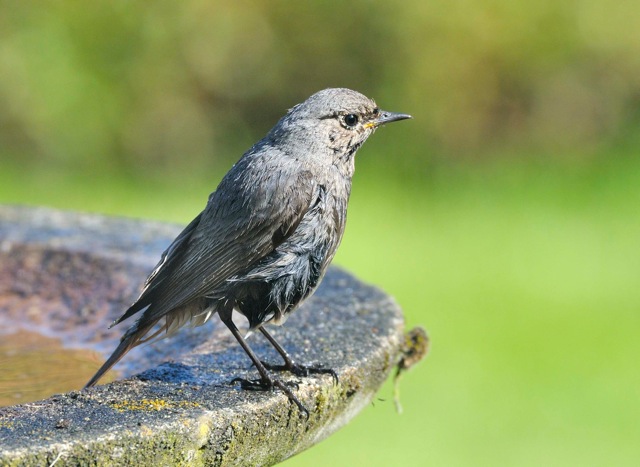
A male Black Redstart was seen briefly in Wellingborough on 10th and Stonechats were at Ditchford GP on 4th and Blueberry Farm on 7th and 8th, while small numbers of Bramblings were seen at Harrington AF throughout the week, increasing sharply to more than thirty on 11th. One was also at Badby Wood on 5th, two at Kelmarsh on 7th and one or two at Hanging Houghton and in the Brampton Valley on 11th. Up to fifteen Crossbills were at Wakerley Great Wood on between 6th and 9th, with seventeen seen flying over nearby Fineshade Wood on 6th and five at Harlestone Heath on 11th while three Hawfinches were found at Harringworth Airfield, on the edge of Wakerley Great Wood, on 9th.