Rarity Round-up, 30th December 2017 to 5th January 2018

Caught on the southern periphery of ‘Storm Dylan’, the first day of the week was marked by hefty south-westerly winds, the strength of which quickly subsided, before ‘Storm Eleanor’ brought further rain and gales from the same direction three days later. Temperatures remained above freezing all week. Local water bodies became flooded, with access limited in several places. Aside from movement between locations for some long-stayers there was little new to add to the week’s proceedings …

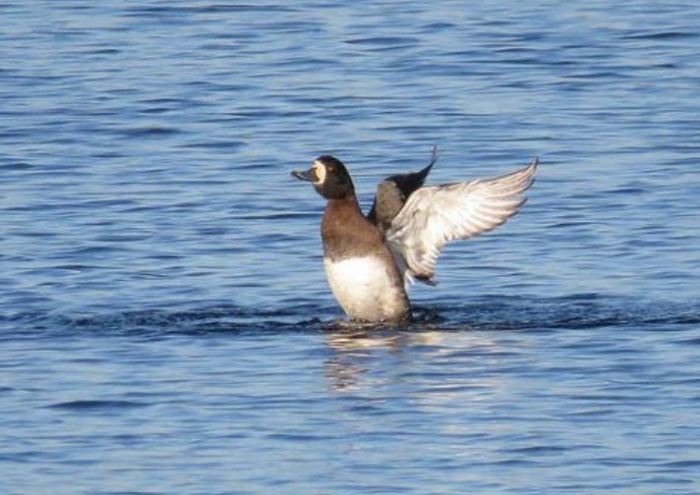
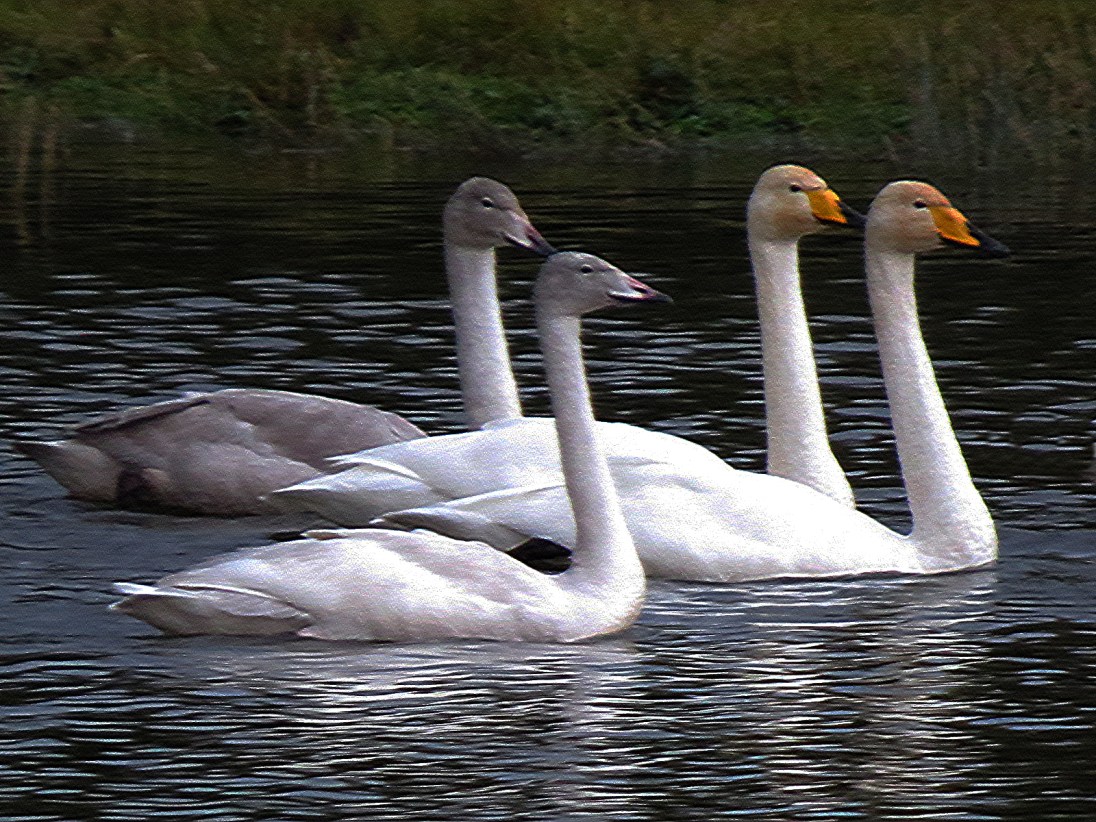
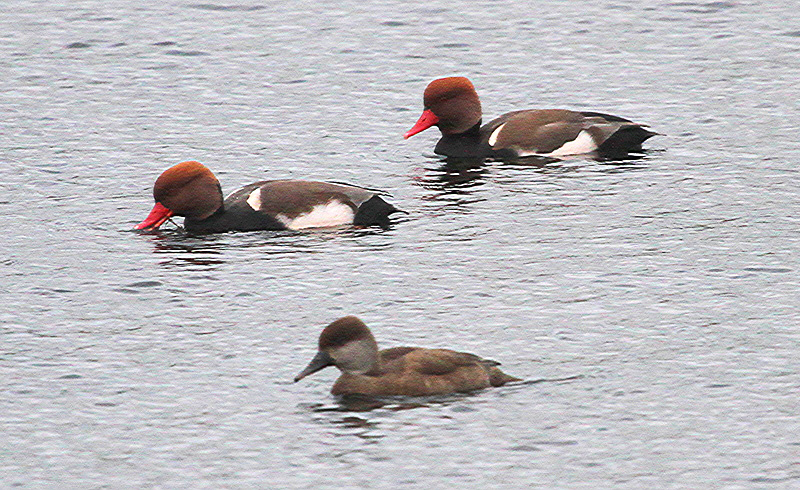
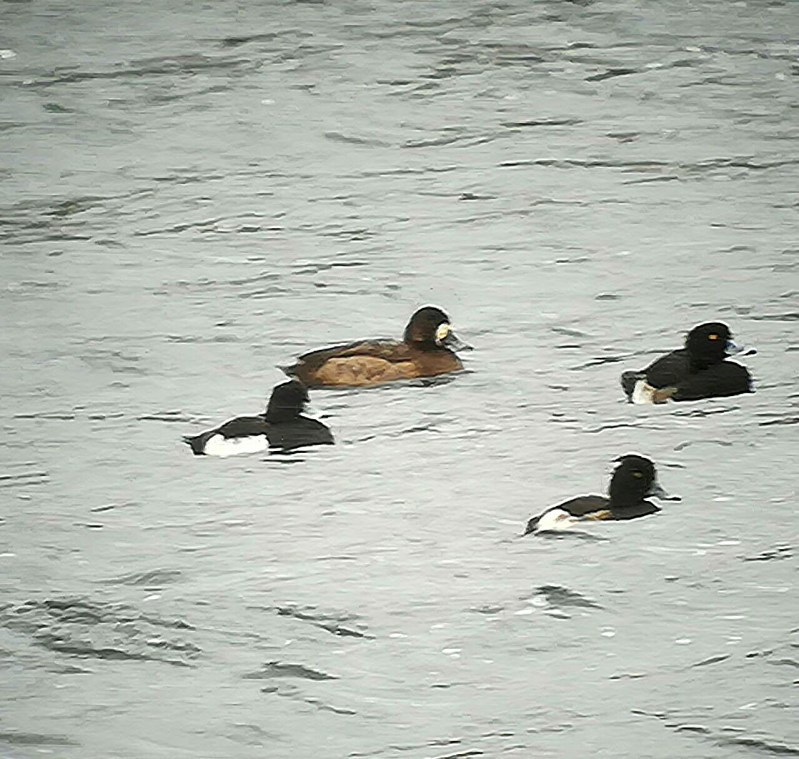
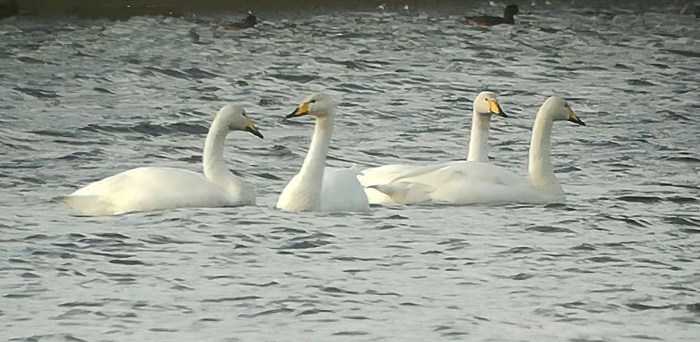
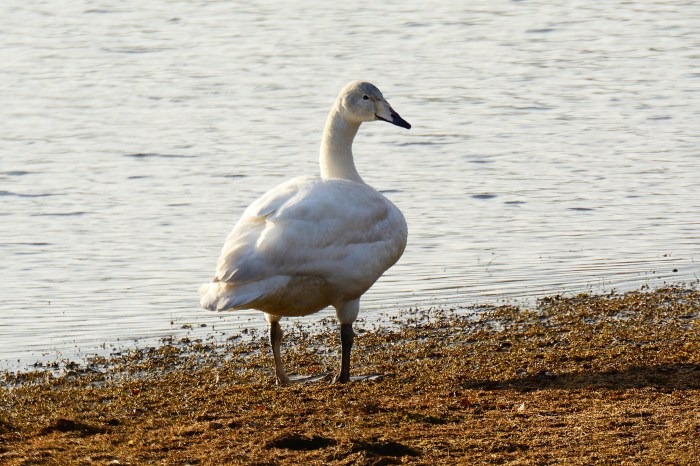
Looking like it’s going nowhere fast, the young Whooper Swan entered its second calendar year at Ravensthorpe Res this week and the Stanwick GP Pink-footed Goose was still visiting the site until 5th. Similarly long-staying, the female Scaup remained faithful to Sywell CP throughout the period but a drake Red-crested Pochard at Pitsford Res appeared to be new in on 1st, with the same site also producing two drake Smew on the same date.
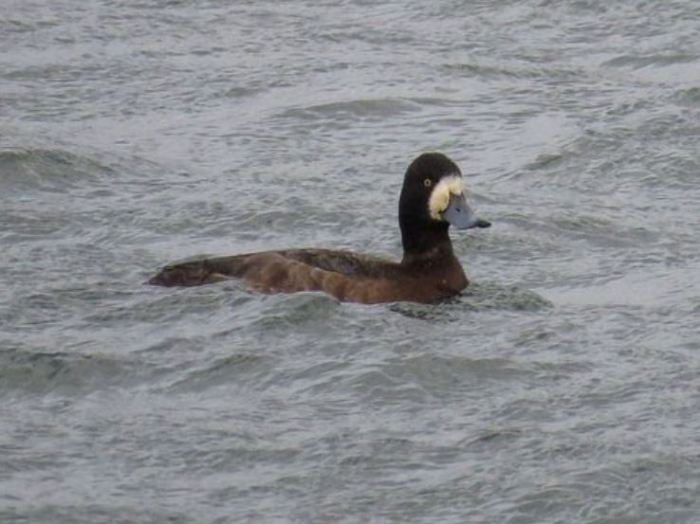
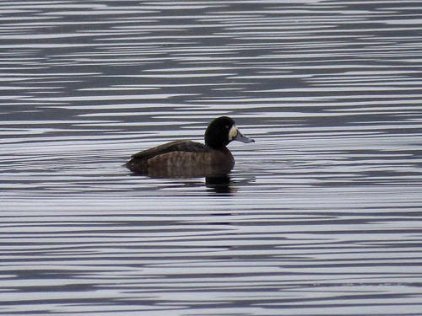
Female Scaup, Sywell CP, 4th January 2018 (Alan Francis)

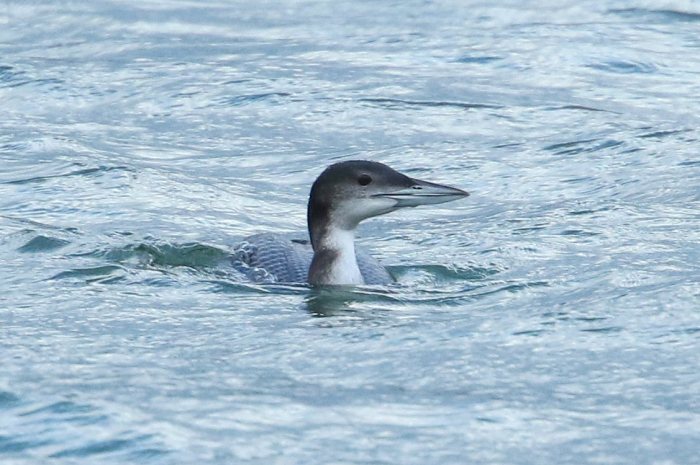
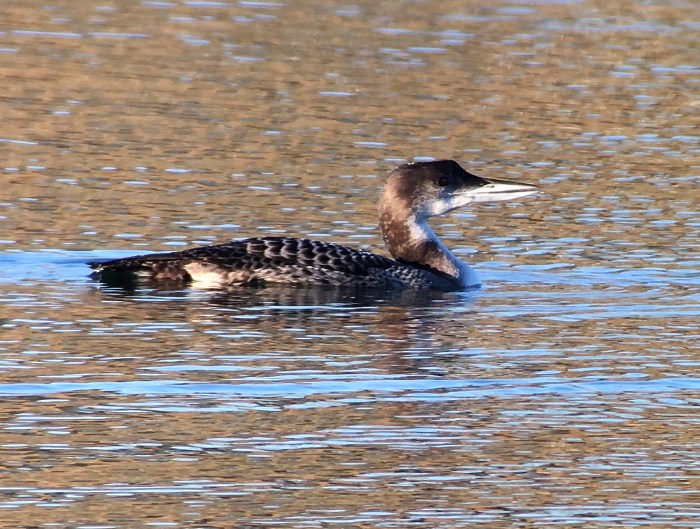
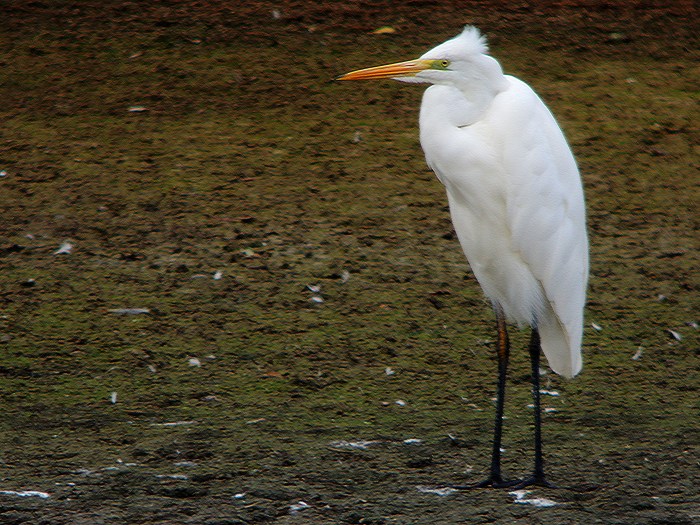
Hollowell’s juvenile Great Northern Diver got itchy feet, disappearing after 2nd and presumably relocating to Pitsford Res, where one was discovered late on 5th. Great White Egrets were still lumbering around in ones and twos at Hollowell, Pitsford and Ravensthorpe Reservoirs, Ditchford and Stanwick Gravel Pits and Summer Leys LNR, while an unidentified small grebe sp., discovered in the gathering dusk at Pitsford on 5th, is likely to morph during daylight hours into either a Slavonian or Black-necked – if it remains on site.

A Black-tailed Godwit, appearing at Stanwick GP on 5th, was a good winter record but single Jack Snipes at Hollowell on 30th and 2nd, Stanford Res on 31st and Welford Quarry on 2nd were more in keeping with the season.

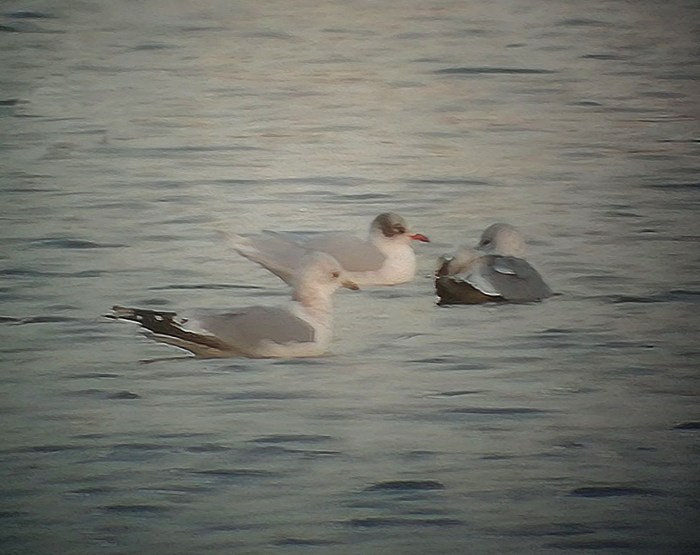
Now well into winter proper, we should be on the look-out for arctic gulls – so far in short supply – and scrutiny of reservoir gull roosts, landfills and daytime loafing flocks could well produce that sought after ‘white-winger’, as well as some of the more uncommon species, such as Yellow-legged Gull, of which there was one at Stanwick GP on 30th and two at Stanford Res roost on 2nd. Caspian Gulls are also seen most weeks, with the wintering adult still in residence at Hollowell Res throughout, a second-winter at Rushton Landfill on 30th and an adult there on 5th. The latter locality continued to host a juvenile Glaucous Gull, which temporarily vacated the site on 1st for a wash and brush up at nearby Thorpe Malsor Res, before returning to remain throughout the week.

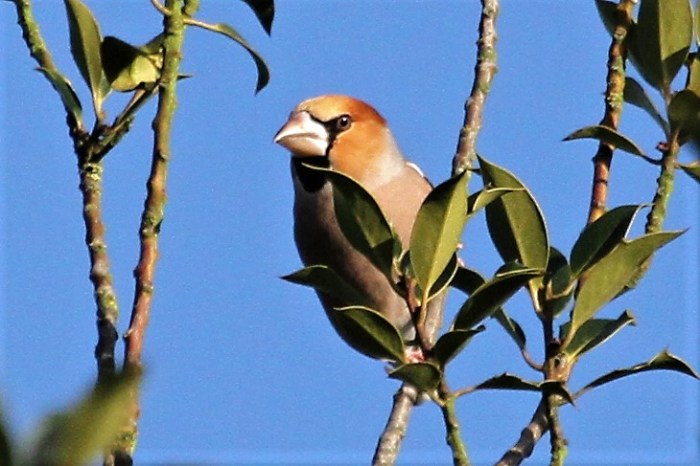
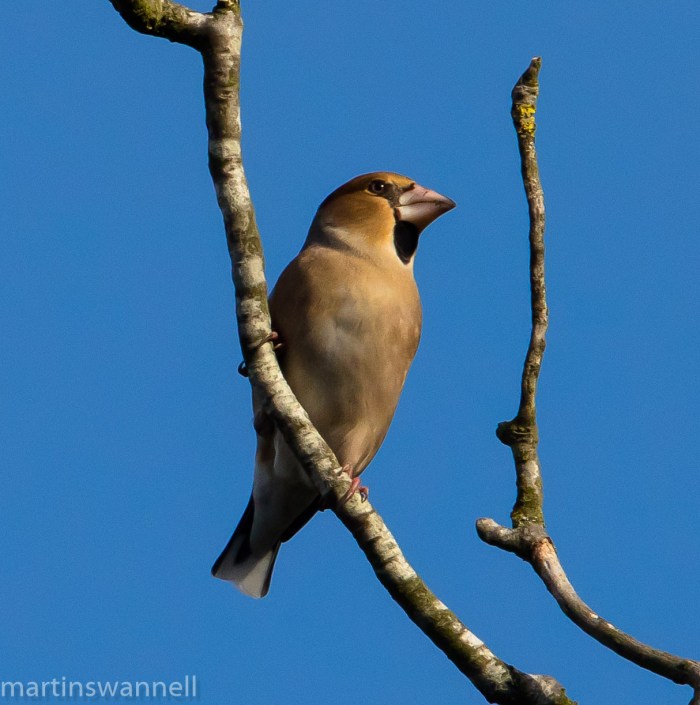
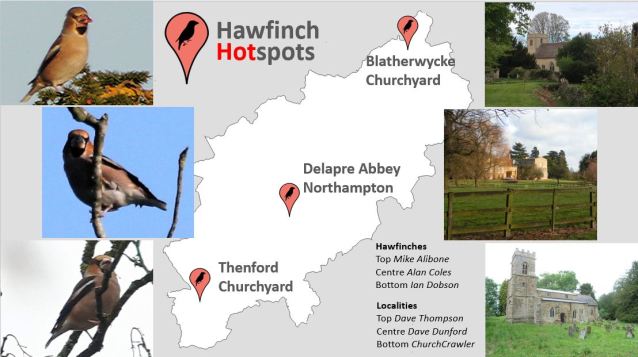
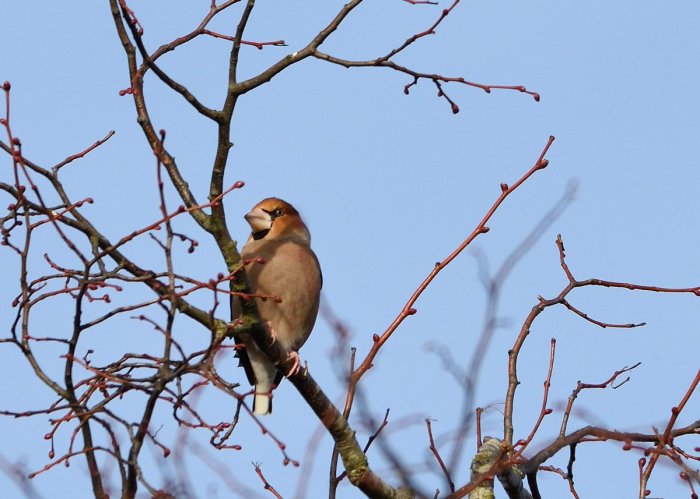
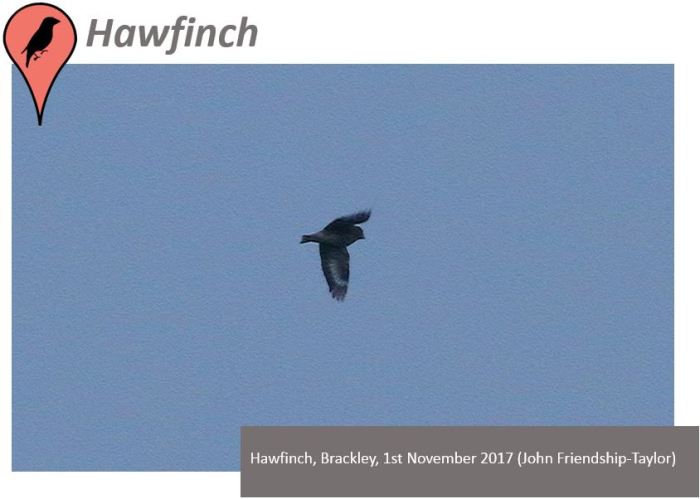
There was a little more passerine action during the period, commencing on 30th with the discovery of a Water Pipit at Stanwick GP, where it remained until 5th. A Mealy Redpoll was found in alders on the northern perimeter of Sywell CP on 3rd, while Hawfinches continued to feature, with singles at Fawsley Park on 30th-31st, Blatherwycke Churchyard on 31st and Charwelton on 1st and up to two at Thenford Churchyard until 5th. Most popular, however, was the small flock at Cottesbrooke, which peaked at fourteen on 1st, followed by single-figure counts daily there until the week’s end. Bizarrely rarer – at least for the moment – were two Corn Buntings found with Yellowhammers near Thorpe Mandeville on 31st.

Rarity Round-up, 23rd to 29th December 2017

Despite the week’s weather being influenced by a largely westerly airstream, resulting in a mild first half of the period, the winds turned northerly for a short spell during the second half, bringing low temperatures and snow, which was heaviest in northern parts of the county. The festive period slipped by quietly with no new birds being discovered.

Still in situ, Ravensthorpe Reservoir’s juvenile Whooper Swan was still on view to those walking off the Christmas excess on Boxing Day and the long-staying female Scaup was still present at Sywell CP on the same date.  The drake Smew, discovered at Ditchford GP’s Higham Lake on 18th, remained until 23rd before hopping across the A6 to Stanwick GP, where it was refound on the A45 Lay-by Pit (North) on 28th.

Hollowell’s juvenile Great Northern Diver remained throughout but Great White Egrets were reported from only three localities, with Pitsford Res, Ravensthorpe Res and Thrapston GP holding two a piece.

Great White Egret, Ravensthorpe Res, 24th December 2017 (Mike Alibone)

No unusual waders this week and winter gulls included two Yellow-legged Gulls at Stanford Res roost on 23rd, an adult at Hollowell Res on 24th and a first-winter at Pitsford Res on 25th plus a sub-adult in the roost there on 28th. The usual adult Caspian Gull was still at Hollowell Res on 23rd, being accompanied by a first-winter there, three days later, on 26th, while a second-winter was in the gull roost at Pitsford on 27th. Looking likely to be the only ‘white-winger’ of the first part of the winter, the juvenile Glaucous Gull found at Rushton Landfill on 22nd was seen there again on 24th and 28th, while the only Hawfinches reported this week were two at the regular site of Blatherwycke Churchyard on 26th and 28th.

With this being the last round-up of 2017, I would like to thank all who have contributed records and sightings via the various media channels and to extend a special thank you to all those who have sent in the photographs which bring the weekly reports to life. Happy New Year to all!

Rarity Round-up, 16th to 22nd December 2017

The cold, northerly airstream in place at the beginning of the week ultimately gave way to warm air from the Atlantic, resulting in damp, foggy conditions and a local daytime temperature peak of 11ºC, 5ºC above average, at the week’s end. This appeared to have little effect on local birds, with most of the scarce winter visitors staying put and the arrival of the first ‘white-winged’ gull of the winter more likely down to seasonality than weather conditions.

A sense of déjà vu ensued as Ravensthorpe Reservoir’s juvenile Whooper Swan remained throughout the week and, again, Stanwick GP’s juvenile Pink-footed Goose was reported only on one date, 17th, with the four first-winter/female Scaup also still there on the same day.

Juvenile Whooper Swan, Ravensthorpe Res, 20th December 2017 (John Moon)
Female Scaup, Sywell CP, 19th December 2017 (Alan Francis)

Sywell CP’s long-staying female Scaup was still present on 19th and a drake was discovered halfway between the causeway and the dam at Pitsford Res on 21st. Pitsford was also one of only two localities to produce Smew, with a ‘redhead’ from 18th to 20th being joined by a drake there on 19th. Another drake was at Ditchford GP’s Higham Lake from 18th to 20th.

The juvenile Great Northern Diver remained at Hollowell Res all week and, again, seven localities produced Great White Egrets, with no more than two at Pitsford, Ravensthorpe and Stanwick and singles at Summer Leys LNR, Billing GP, Thrapston GP and Ditchford GP.

Juvenile Great Northern Diver, Hollowell Res, 15th December 2017 (Andrew Cook)
Juvenile Glaucous Gull, Rushton Landfill, 22nd December 2017 (Mike Alibone)

A Black-tailed Godwit at the latter site on 20th was the only wader of note this week. Winter gulls were on the radar for some of us, although Yellow-legged Gulls again remained scarce, with just single first-winters at Rushton Landfill on 17th and 22nd and this week’s Caspian Gulls including the wintering adult at Hollowell Res on 16th and 21st, a third-winter in the gull roost at Pitsford Res on 16th, an adult and a first-winter at Rushton Landfill on 17th and two adults there on 22nd. Rushton also produced the first ‘white-winger’ of the winter – a juvenile Glaucous Gull on 22nd and with around four thousand large gulls now visiting the landfill when active, this locality is now clearly on the map as the county’s premier winter gull-watching site.

Female Hawfinch, Fawsley Churchyard, 18th December 2017 (Ian Dobson)

The world beyond wetland birds was relatively quiet, with just a Short-eared Owl at Harrington AF on 17th and a trickle of Hawfinch sightings comprising one in flight over Kelmarsh on 16th, two at Fawsley Park on 16th and 18th and one or more at Cottesbrooke on 19th.

Rarity Round-up, 9th to 15th December 2017

The low temperatures experienced at the end of last week continued well into the period with dramatic effect. Warm, moist, Atlantic air from the south-west met high Arctic air sweeping south over the Midlands, resulting in persistent snow across Northamptonshire on 10th, when deposits of 15 cm or more produced a ‘whiteout’ and made for hazardous driving conditions. Few birders ventured out on this date, or indeed over the following two days, when early morning temperatures down to -5ºC ensured the continued presence of icy road conditions and the freezing over of local bodies of water. The effect on bird movements was clearly apparent, with easterly movements of Redwings and Fieldfares noted at numerous localities and local waterbodies becoming frozen over – albeit for a very short period before temperatures rose and rainfall ate deeply into the laying snow.

Ravensthorpe Reservoir’s juvenile Whooper Swan remained all week, while Stanwick GP’s juvenile Pink-footed Goose was reported only on one date, 11th. Last week’s four first-winter/female Scaup were still present there until at least 12th and the long-staying female at Sywell CP remained off the dam all week. Back at Ravensthorpe, a ‘redhead’ Smew was found on 9th but promptly disappeared thereafter.

The juvenile Great Northern Diver remained in place off the dam at Hollowell Res until at least 12th and eight localities produced Great White Egrets, with site maxima comprising three at Ravensthorpe Res, two at Pitsford Res and singles at Ditchford GP, Stanford Res, Stanwick GP, Summer Leys LNR, Thrapston GP and between Wootton and Quinton.

Adult Medterranean Gull, Daventry CP, 14th December 2017 (Gary Pullan)

A Jack Snipe at Hollowell Res on 9th was the only wader of note, while this week saw the occurrence of two Mediterranean Gulls – a first-winter at Pitsford Res on 11th and an adult in the pre-roost at Daventry CP on 14th. Yellow-legged Gulls again remained scarce, with one at Pitsford Res on 11th and two in the roost at Boddington Res on 15th, while this week’s Caspian Gulls comprised the wintering adult at Hollowell Res, an adult at Sulby Res and a third-winter at Pitsford Res – all on 9th – and two adults at Rushton Landfill, plus an adult and a third-winter at Boddington Res roost on 15th.

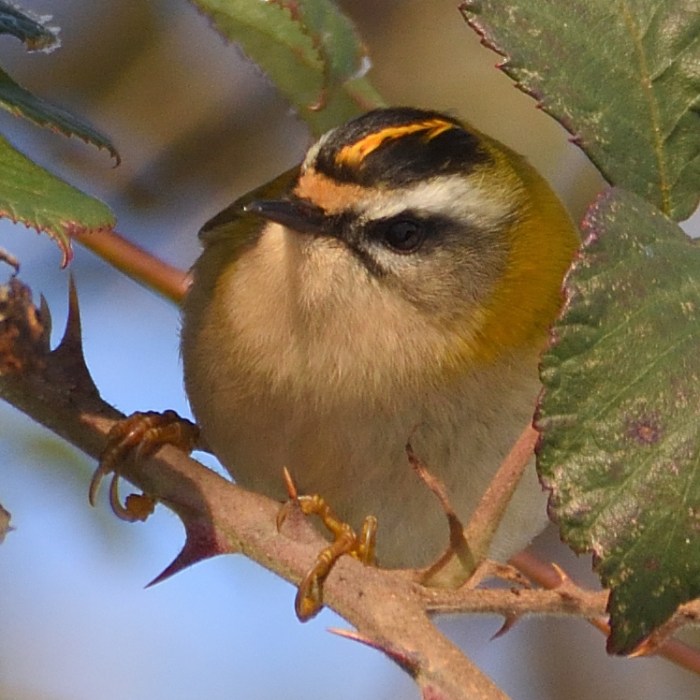
Firecrest, Shires Meadows, Towcester, 12th December 2017 (Nick Holder)

On the passerine front, a suburban Firecrest at Towcester’s Shires Meadows was a nice find on 12th but Hawfinch sightings continued to dominate, with twos at both Cottesbrooke and East Carlton CP on 9th, three just west of Blatherwycke Churchyard on 11th, two or three at Thenford Churchyard on 14th and singles at Bucknell Wood and in flight over Shires Meadows, Towcester the following day.

Hawfinches, Thenford Churchyard, 14th December 2017 (John Friendship-Taylor)

Rarity Round-up, 2nd 8th December 2017

A largely dry week, dominated in the first six days by north-westerly to south-westerly winds, culminated in a strong northerly airflow and plummeting temperatures on the last day. Highlights included a lingering Great Northern Diver, the first Smew of the winter and Snow Bunting.

Remaining all week, the juvenile Whooper Swan was ensconced at Ravensthorpe Res, as was Stanwick GP’s juvenile Pink-footed Goose and the female Scaup at Sywell CP. The Ravensthorpe Scaup put in one of its sporadic appearances on 2nd and four more, all females or first-winters, were found at Stanwick GP on 8th, while the first Smew of the winter – inevitably a ‘readhead’ – was north of the causeway at Pitsford, between 4th and 6th.

The juvenile Great Northern Diver remained at Hollowell Res all week, continuing to favour the area around the dam.

Six localities produced Great White Egrets, with site maxima comprising threes at Pitsford, Ravensthorpe and Stanwick, and singles at Ditchford GP, Summer Leys and Thrapston GP. An unconfirmed report of two Common Cranes south of Potterspury on 7th remained exactly that, with negative reports from the area the following day.

Great White Egret, Stanwick GP, 8th December 2017 (Steve Fisher)

This week’s one and only star wader was … a Jack Snipe at Stanford Res on 7th. Yellow-legged Gulls remained thin on the ground, with single adults at Boddington Res on 2nd and Ravensthorpe on 8th, again being outnumbered by Caspian Gulls, which included single adults at Rushton Landfill on 2nd, Pitsford on 7th and Hollowell all week, plus an adult and a third-winter at Sulby Res on 2nd and a third-winter – along with a first-winter Mediterranean Gull – in the roost at Boddington on the same date.

No longer in vogue, a ‘Nordic’ Jackdaw was present with the large corvid flock in fields on the approach to Fineshade Wood on 2nd, while Hawfinches were much diminished in numbers in comparison to previous weeks. On 3rd, one was at East Carlton CP and two were still at the traditional site of Blatherwycke Churchyard, followed the next day by one at Pitsford Res and another was photographed at Cottesbrooke on 8th. Single Snow Buntings – or perhaps the same one – were seen in flight, west-southwest over Pitsford Res on 4th and in the Brampton Valley two days later, on 6th.

Rarity Round-up, 25th November to 1st December 2017

Under the influence of an enduring northerly airstream, including light snow showers early on the first day, the week which dipped its toe into winter delivered no further surprises for local birders. An accessible Great Northern Diver and the continuing presence of Hawfinches were the star attractions.

Still present on 27th, the juvenile Whooper Swan looks settled enough to stay at Ravensthorpe Res for some time, while another long-stayer – Stanwick GP’s juvenile Pink-footed Goose – remained until at least 29th.  Last week’s two Red-crested Pochards hung on at Stanford Res until at least 25th, as did single Scaup at Ravensthorpe Res and Sywell CP, until 26th and 1st respectively, while up to two remained at Pitsford Res until at least 27th.

Female Scaup, Sywell CP, 29th November 2017 (Doug Goddard)

The juvenile Great Northern Diver, discovered on 24th at Stanford Res, was still present there early the next morning, on 25th, after which it promptly vanished and was not seen again, despite intense observer coverage. Later the same day, an unidentified diver sp. was seen in flight over the dam at Ravensthorpe Res prior to the discovery of a Great Northern Diver at nearby Hollowell Res on 27th, where it remained all week. The timing of the observations, coupled with the proximity of the three locations, suggest the same individual accounted for the sightings at all three sites, although this cannot be proven, of course.

Juvenile Great Northern Diver, Hollowell Res, 30th November 2017 (Bob Bullock)
Juvenile Great Northern Diver, Hollowell Res, 28th November 2017 (Jon Cook)

This week’s Great White Egrets were scattered in a pattern similar to last week’s, with up to three at Stanwick, three at Ravensthorpe, two at Pitsford and singles at Ditchford GP and Summer Leys LNR. A male Merlin near Brackley on 26th was the only rare raptor representative during the period, while a Black-tailed Godwit at Stanwick on 28th constituted the only scarce wader.

Surprisingly, just one Yellow-legged Gull was reported – at Pitsford on 30th – being outnumbered by Caspian Gulls, which included a first-winter at Stanford on 25th and the wintering adult at Hollowell all week, accompanied there by a third-winter on 27th.

Once again Hawfinches stole the show for many, with Delapre Abbey proving itself the most popular locality with visiting birders. Located less than a mile from the town centre, this site held up to four throughout the week, often providing excellent views and great photo opportunities.

Hawfinch, Delapre Abbey, Northampton, 29th November 2017 (Bob Bullock)
Hawfinch, Delapre Abbey, Northampton, 26th November 2017 (Alan Coles)
Hawfinch, Delapre Abbey, Northampton, 25th November 2017 (Martin Swannell)

Elsewhere, singles were at Bucknell Wood on 25th while, the next day, three were at East Carlton CP, at least two were in Fawsley Park and singles were seen at East Haddon, Rushton and Thenford.

Rarity Round-up, 18th to 24th November 2017

A mild mid-week, though windy with southerly gales, was sandwiched between two northerly blasts of cold Arctic air at both ends of the period. Visible migration dwindled further, being evidenced primarily by a continuing small, westward passage of winter thrushes. The autumn Hawfinch movement likewise diminished, with most reports now of small numbers in potential wintering habitats.

Last week’s showy juvenile Whooper Swan remained at Ravensthorpe Res until at least 21st, while the long-staying juvenile Pink-footed Goose was still present at Stanwick GP on 23rd. Numbers of Red-crested Pochards were restricted this week to a female at Pitsford Res from 18th to 21st and the two at Stanford Res until the latter date, while the female Scaup remained at Sywell CP all week. Three Scaup were still at Pitsford on 18th, with at least one still present until 21st and the same site sprung a female Common Scoter – initially reported north of the causeway and subsequently relocated in Pintail Bay – on 19th.

Scaup, Sywell CP, 24th November 2017 (Alan Francis). Extensive, clean white facial blaze, yellow iris and clean white belly age this as an adult.

November is the classic month for the arrival inland of Great Northern Divers and this month did not disappoint, with Stanford Res attracting a juvenile to the area by the dam on the last day of the week.

Juvenile Great Northern Diver, Stanford Res, 24th November 2017 (Chris Hubbard)

Another sign of the approaching winter was the appearance of a Bittern, seen coming in to roost at Stortons GP on 22nd. This suburban site has become established as a wintering site for two or the individuals over the past few years. Great White Egret were still ensconced in the usual sites, with maxima including five at Pitsford on 18th, four at Stanwick GP on 22nd, three at Ravensthorpe on 21st and two over Ditchford GP on 24th.

First-winter Little Gull, Boddington Res, 18th November 2017 (Gary Pullan)

In a similar vein to last week, there were few notable gulls around but a first-winter Little Gull managed a one-night stand at the Boddington Res gull roost on 18th, along with six Yellow-legged Gulls, while two Caspian Gulls were at Hollowell on 18th and two appeared in the Pitsford Res gull roost the following evening.

The latter site again produced a Water Pipit on 18th – no doubt the same which has been reported sporadically there of the past three weeks.

There has been no better time to be religious, but it’s unlikely when he wrote Take me to Church that Hozier had Hawfinches in mind. Churchyards have become a magnet for this species and, therefore, birders in recent weeks – primarily as a result of the tradition of growing Yew trees in them as evergreens are said to be linked with immortality. In England long before the Christian era, yew trees were planted on pagan temple sites, and they were eventually adopted by the church as “a holy symbol.” Traditions die hard, and although nonconformists did not follow the trend, modern British cemeteries still feature yew trees in their flora. Sermon over, then, but it’s no coincidence that BWP commences its list of Hawfinches’ favoured non-invertebrate food with Yew. Three popular localities continue to hold birds this week, fuelling speculation that they will stay throughout the forthcoming winter.

Hawfinch, Delapre Park, Northampton, 24th November 2017 (John Nicholls)
Hawfinch, Delapre Park, Northampton, 24th November 2017 (Alan Coles)
Hawfinch, Delapre Park, Northampton, 19th November 2017 (Ant Hall)

So, this week’s little (seed) crackers gave themselves up to photographers and came out into the open at Blatherwycke Churchyard, where up to two were present all week, Delapre Abbey (Northampton), where up to three remained throughout and Thenford Churchyard, where a minimum of four was present until at least 19th. Elsewhere on 19th, two were at Edgcote and singles were at Hinton-in-the-Hedges and Scaldwell and one flew over Bulwick on 23rd. Hopefully they will stick around …

Rarity Round-up, 11th to 17th November 2017

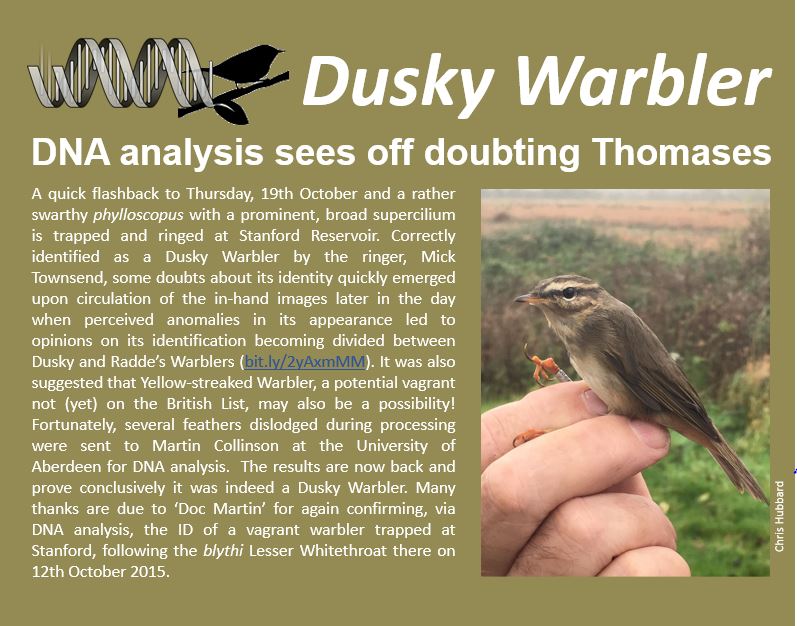
After a wet start, this week’s weather was predominantly dry and cold, with a north to north-westerly airstream keeping temperatures relatively low. Visible passerine migration continued and again included significant numbers of Hawfinches at various localities across the county. Further news on the Stanford Dusky Warbler also emerged this week …

It is panning out to be the best autumn locally for Whooper Swans for many years, with this week’s arrivals comprising seven – four adults and three juveniles – at Stanwick GP on 11th and a juvenile at Hollowell Res on 15th, later moving to nearby Ravensthorpe Res on 17th.

Whooper Swans, Stanwick GP, 11th November 2017 (Adrian Borley). Four of seven which arrived at this site on the above date.
Juvenile Whooper Swan, Ravensthorpe Res, 17th November 2017 (Gary Pullan)

The long-staying juvenile Pink-footed Goose remained at Stanwick GP all week, the same locality hanging on to is four Red-crested Pochards until at least 12th, when two were also still at Stanford Res. Just one – a drake – remained at Pitsford Res on 15th-16th, where up to five Scaup remained throughout the period, while one of these, or another, visited nearby Sywell CP from 14th to 16th.

Great White Egret counts held steady, with site maxima including five at Pitsford, four at Stanwick and two at Ravensthorpe – all on 17th – while this week’s raptors included a male Hen Harrier between Harrington AF and the Brampton Valley on 12th and single male Merlins at Stanford Res on 11th, Thenford on 13th and Newton Bromswold on 16th.

It’s still a little early for northern white-winged gulls and the only scarce larids this week were a first-winter Mediterranean Gull at Stanwick on 13th, a Yellow-legged Gull at Pitsford on 11th-12 and two and six in the roost at Boddington Res on 12th and 13th respectively. Caspian Gulls were at three localities, including one at Pitsford on 11th, two at Hollowell on 11th and 14th with one there on 15th and one in the roost at Boddington on 13th.

 
Apart from Hawfinches, scarce passerines were poorly represented but the appearance of a back garden Firecrest in Little Billing on 11th was the highlight of the weekend for one lucky observer. So, back to Hawfinches, then. Although predominantly fly-overs, two localities at opposite ends of the county – one in the far north, the other in the extreme south – stood out as the most reliable places to see them ‘on the ground’. These are Thenford churchyard and environs, at which there were two on 11th, one on 12th, six on 13th and three on 17th, and Blatherwycke churchyard, where up to two were seen on 11th, 14th and 16th and believed to be commuting to nearby Bulwick churchyard, where they have been seen on three separate occasions. Elsewhere, birds in transit included one over Pitsford Res and seven over Ditchford GP on 11th, one over Ravensthorpe Res on 12th, one over Hanging Houghton, thirteen at East Carlton CP and two at Wakerley Great Wood on 13th, three over Daventry CP and four at Wicken on 14th, two over Borough Hill, five over Sywell CP and three at Harrington AF on 15th and, on 16th, two at Harrington AF, three over Earls Barton and one over Upper Harlestone. Hopefully we are in for a good winter with this charismatic crusher of fruits and seeds …

Rarity Round-up, 4th to 10th November 2017

The weather for the period was again influenced by depressions from the Atlantic, with alternating northerly to south-westerly winds, resulting in widely fluctuating temperatures and a series of wet and dry days locally. Passerine migration was still very much in evidence and included the ongoing movement of Hawfinches which, this week, was dramatically overshadowed by the occurrence of yet another county ‘first’, again tantalisingly out of reach for all but a lucky few …


Associated with last week’s movement of Whooper Swans were two which arrived at Clifford Hill GP during the morning of 4th. They had disappeared by the following day, unlike the longer-staying juvenile Pink-footed Goose, which was still making sporadic appearances at Stanwick GP until the week’s end. Also lingering were up to four Red-crested Pochard at Pitsford Res until at least 7th, two visited Ravensthorpe on 4th, four were at Stanwick GP and two were at Stanford Res – both from 7th to 10th. Up to four Scaup were still at Pitsford Res between 4th and 7th and last week’s first-winter remained at Ravensthorpe Res until at least 7th.

Red-crested Pochards, Stanwick GP, 7th November 2017 (Steve Fisher). Three of the four present at this site.
First-winter Scaup, Ravensthorpe Res, 7th November 2017 (Gary Pullan)

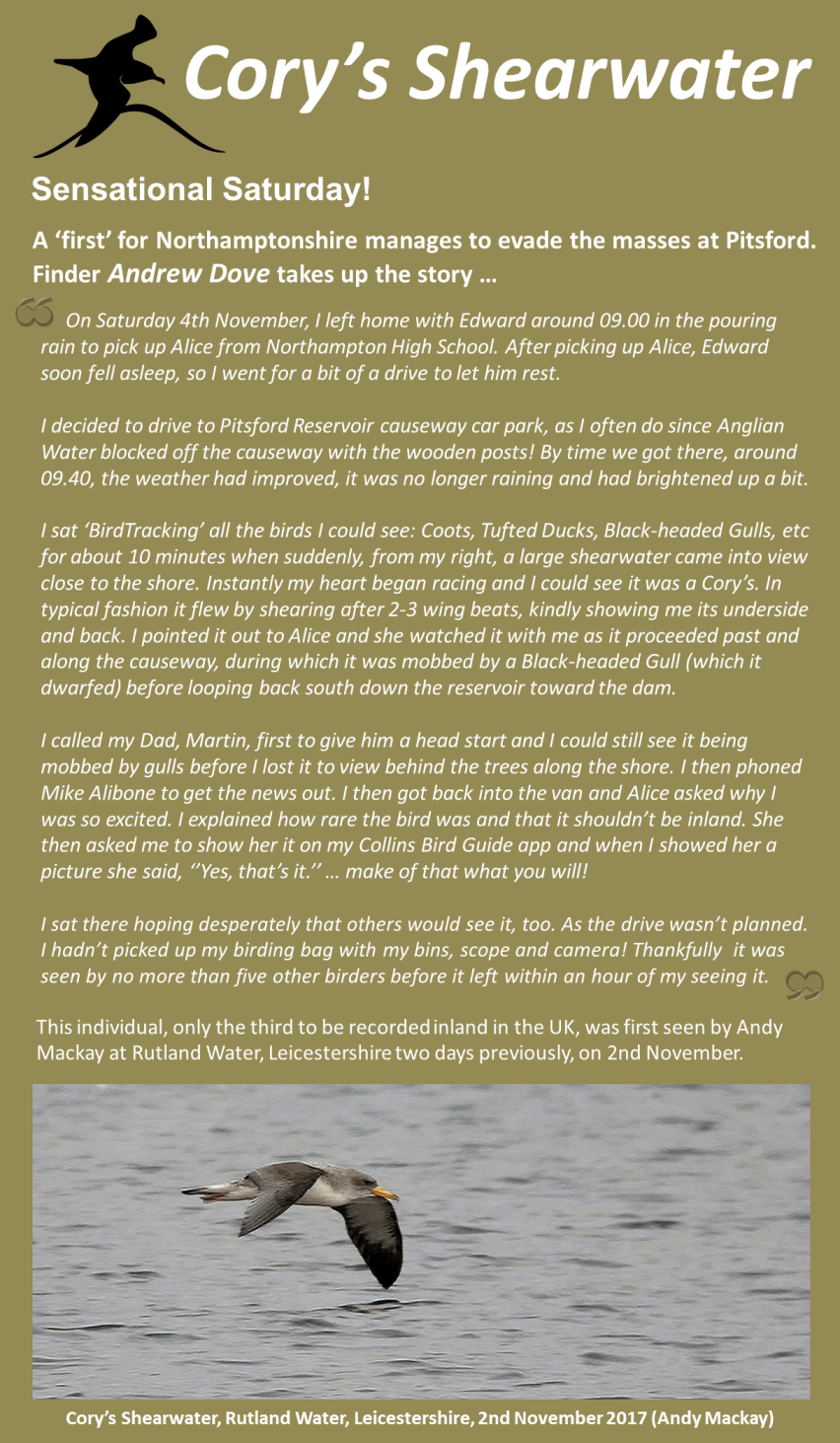
Potentially the biggest surprise of the autumn was the discovery of Northamptonshire’s first Cory’s Shearwater at Pitsford on 4th (see above). Unlike its one-day visit to Rutland Water, Leicestershire two days previously, it refused to play ball for Northamptonshire’s birders and the fact it did not stay resulted in a palpable sense of grief emanating from the fifty or so observers who turned up to see it …

More cryptic, but also much commoner, were the new Bitterns found this week – one at Boddington Res on 6th, still present on 8th, and another at Ditchford GP’s Wilson’s Pit, slap bang next to Rushden Lakes, on the latter date! Seemingly more Great White Egrets piled in during the week, with site maxima including five at both Pitsford and Stanwick on 9th, three at Ravensthorpe Res on 4th and one at Ditchford GP on 5th, with Ringstead’s Black-necked Grebe remaining on Kinewell Lake until at least the same date.

The north of the county produced two ‘ringtail’ Hen Harriers this week, both of which were fly-overs comprising one at Stanford Res on 5th and another between Kelmarsh and Great Oxendon the following day while a male Merlin at Spanhoe AF on 9th completed the raptor round-up for the period.

Putting Pitsford firmly back on the map this week (as if it was ever off!) was a Dotterel, which flew around with a small flock of Golden Plovers on 6th before they departed north. Subsequent searches of local fields failed to locate it, although there’s every chance it’s still out there … somewhere. This will be only the twelfth county record and only the second in the last twenty years, following one near Hemington on 5th May 2014. Apart from this, and in the absence of other uncommon waders, last week’s Black-tailed Godwit was still present at Stanford Res on 4th.

There was also a Little Gull at the same locality on the same date – perhaps the same individual as had been present there on 31st October paying a return visit but there was a further drop in numbers of other scarcer gulls. Just two Yellow-legged Gulls included singles at Ravensthorpe Res on 7th and Boddington Res the following day and a Caspian Gull was at Pitsford Res on 4th.

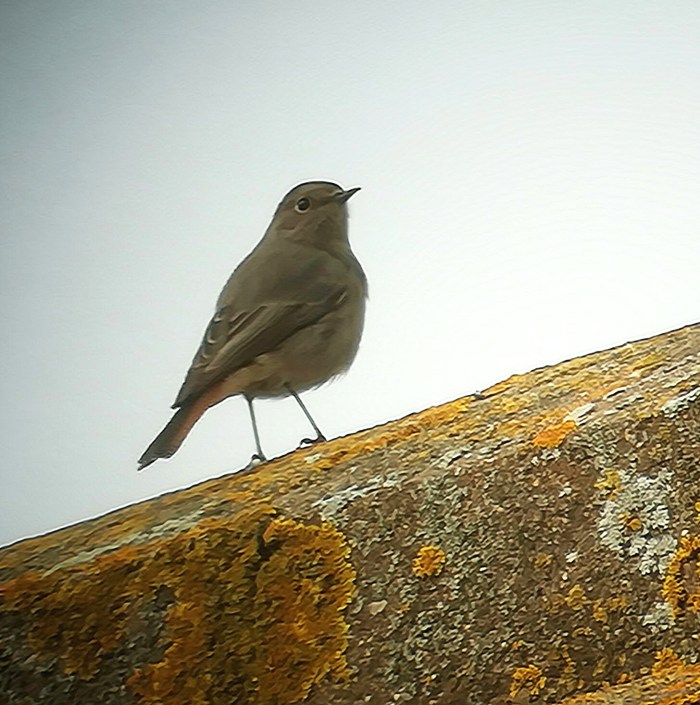
Hanging on in there from last week, although becoming much more elusive, was the Orlingbury Black Redstart, which was still present on 4th, while the same date produced a Water Pipit along the causeway at Pitsford, which remained in the vicinity until 6th. Meanwhile, the Hawfinch passage continued, with the south-west of the county producing two fly-overs at Brackley on 6th and at least two at Thenford churchyard on 9th-10th. Two more were in Bulwick churchyard on 8th, singles flew over Ravensthorpe Res on 7th and Pitsford Res on 9th and, the following day, eight flew west from Hanging Houghton and two paid a brief visit to Harrington AF before heading south.

Rarity Round-up, 28th October to 3rd November 2017

The weather for the period was largely settled, dry and again predominantly influenced by a westerly to south-westerly airflow, which was most intense during the first two days. Although mild conditions ensued, a short-lived northern element to the wind introduced low overnight temperatures on 29th, resulting in the first local frost of the autumn on the morning of 30th. As the magic month of October slipped away, the air was thick with migrants throughout the week, with an almost constant stream dominated by Woodpigeons, thrushes, Starlings and Chaffinches, obvious over both towns and open countryside.

Tied in with this movement, the ‘event’ of the autumn was undoubtedly the enormous movement of Hawfinches across the country, resulting in well over one thousand records nationally during the past two weeks or so. Northamptonshire fared well with twenty-one records involving sixty-five birds during the week. To be added to this, of course, are the figures from the preceding two weeks – a further seven records of fourteen birds – pushing the totals so far to twenty-eight records of seventy-nine birds from twenty-one localities. The majority of these have been fly-overs and, in the few instances where birds have made landfall, they have not lingered.


Hawfinches were not the only locally scarce migrants this week, of course, as there was clearly a movement of Whooper Swans taking place, with 29th seeing ten over Warmington, three over Bulwick, seven briefly at Blatherwycke Lake before moving off south-west and four at Daventry CP, which had departed by the following day. One also flew south over Ravensthorpe Res on 3rd.

Whooper Swans, Daventry CP, 29th October 2017 (Gary Pullan)

Other scarce wildfowl included a drake Red-crested Pochard at Daventry CP on 29th, joined there by another seven the following day. Pitsford Res attracted six more – or perhaps some of the same – on 3rd as well as three Scaup on 2nd, none of which appeared to linger. A first-winter Scaup also visited Ravensthorpe Res on 3rd.
Red-crested Pochard, Daventry CP, 29th October 2017 (Gary Pullan)
Scaup, Pitsford Res, 2nd November 2017 (Adrian Borley)

The wintering population of Great White Egrets continues to build, with up to four counted at Pitsford Res on 2nd, the Ravensthorpe duo present all week, at least three still at Thrapston GP on 29th and three in flight over Stanford Res on the same date, plus singles at Stanwick GP on 29th, near Harpole on 31st and at Ditchford GP on 2nd. Further along the Nene Valley, the Ringstead Black-necked Grebe remained on Kinewell Lake until at least 29th.

Great White Egret, Ravensthorpe Res, 28th October 2017 (Mike Alibone)

Raptors on the move included a Marsh Harrier south over Borough Hill on 28th and a ‘ringtail’ Hen Harrier over Sywell AF on 1st, while single fly-over Merlins were at both Hollowell Res and Evenley on 3rd. Wader numbers continued to dwindle with, as last week, single Black-tailed Godwits still at Stanford Res on 29th and at Pitsford Res on 29th and 3rd, while a Jack Snipe was found at the latter locality on 29th.

Adult Little Gull, Stanford Res, 31st October 2017 (Chris Hubbard)

Late autumn Little Gulls are almost to be expected so an adult at Stanford Res on 31st was clearly on trend, while Mediterranean Gull upheld its weekly occurrence status with two at Stanwick GP on 30th. Fewer Yellow-legged Gulls were reported, with just singles at Pitsford Res on 29th and 2nd and another at Ravensthorpe Res on 3rd, while the wintering adult Caspian Gull remained at Hollowell all week and a first-winter visited Pitsford Res on 30th.

Finding themselves in the shadow cast by the Hawfinch movement were some class passerines, the cast of which was headed by a showy vocal Siberian Chiffchaff at Boddington Res on 30th.

First-winter Black Redstart, Daventry, 2nd November 2017 (Gary Pullan)

Still present from last week was the Orlingbury Black Redstart, which remained faithful to two adjacent house roofs there until 30th, while another was discovered in Daventry on 2nd. Not far away, at Daventry CP, a Mealy Redpoll paid a brief visit to the area around the feeding station on 30th, the same date that a Snow Bunting flew low north at Pitsford Res – the latter the first in the county since 2014.