Rarity Round-up 1st to 7th July 2017

A largely dry week, during which temperatures nudged 30ºC under the influence of a light south-westerly airstream, saw the continued arrival southbound passage waders, the discovery of an immense tern and the surprise rediscovery of breeding Mediterranean Gulls.

A drake Red-crested Pochard visited Summer Leys LNR on 4th, with presumably the same bird relocating to Stanwick GP the following day, while the metal-ringed, escaped female Bufflehead was still present at Clifford Hill GP on 1st. Rare herons were limited to last week’s Bittern again at Summer Leys on 7th.

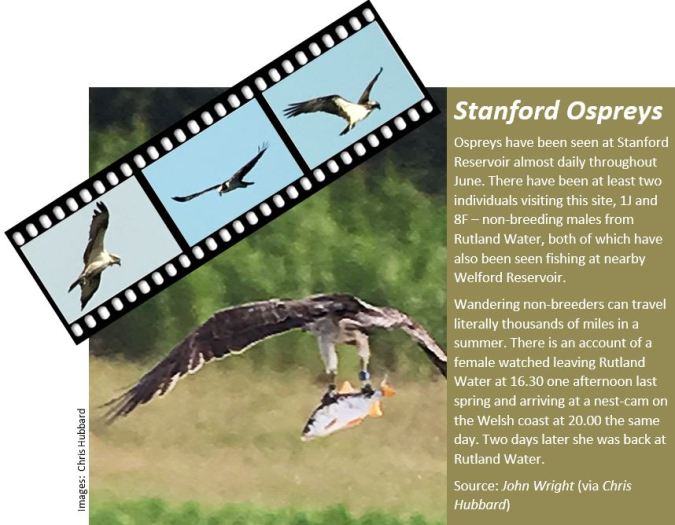
A female Honey Buzzard was an unexpected bonus for one observer as it drifted south-west over Sywell on 2nd, while there were reports of three Ospreys this week with two on 2nd, including one at Pitsford Res and one at Welford Res. Interestingly enough, the latter, a male, was ringed and proved to be a different individual to either of the two regularly visiting Stanford and Welford Reservoirs which were highlighted in last week’s feature.
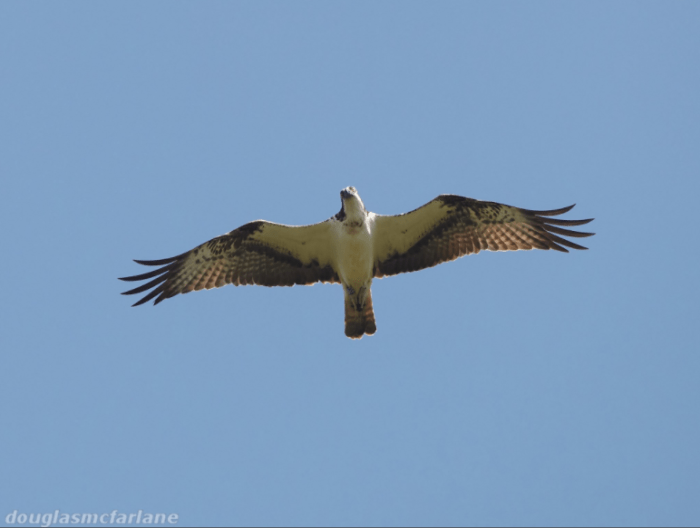
Male Osprey, Welford Res, 2nd July 2017 (Douglas McFarlane)

The third was watched flying south-west over Thrapston GP on 3rd.The flow of southbound Icelandic Black-tailed Godwits continued with singles at Stanford Res on 1st, 2nd and 6th, three at Thrapston GP on 3rd, two at Pitsford Res on 4th with three there the following day and one on 7th, two at Stanwick GP plus six at Summer Leys on 5th and one again at Stanwick on 7th.

Icelandic Black-tailed Godwit, Stanford Res, 6th July 2017 (Chris Hubbard)

Local birders were caught completely off guard by the totally unexpected arrival of Northamptonshire’s fifth Caspian Tern, a smart adult, located at Summer Leys on 1st.  This dagger-billed colossus pitched down on ‘The Slips’ and was viewable from the Screen Hide for 80 minutes, before disappearing off down the Nene Valley, only to return again 90 minutes later – this time for 40 minutes – before heading off west. Clifford Hill GP was the next stop, where it was on view for nearly 3 hours in the early evening, after which it flew high west toward the sunset and was gone. It bore a red ring on its left leg, which enabled it to be confidently identified as the individual that had been frequenting the National Wetlands Centre, Carmarthenshire until 29th June. After leaving Northants, it was located briefly the following day at Chew Valley Lake, Somerset, before returning bizarrely to the Wetlands Centre in Carmarthenshire on 3rd. But this is what Caspian Terns do! Proof, if ever there was, that Caspian Terns are really quite mad …

Caspian Tern, Summer Leys LNR, 1st July 2017 (Mike Alibone)

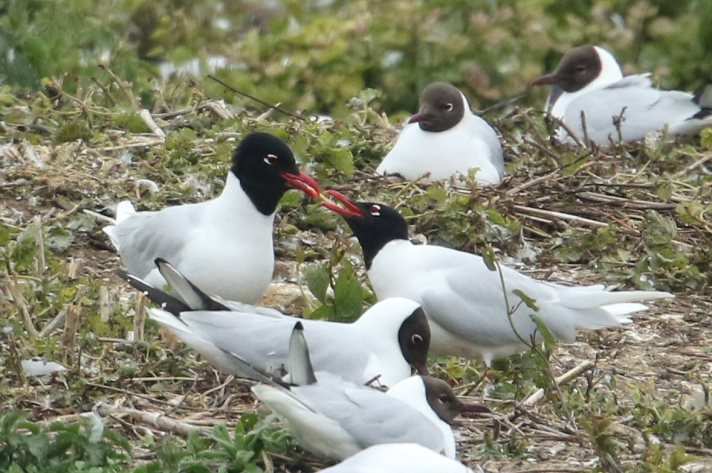
Another happy event was the surprise rediscovery of the breeding Mediterranean Gulls at Stanwick GP on 3rd. After a ‘missing, presumed dead’ status had been pronounced last month, there they were – bold as brass – in the middle of the Black-headed Gull colony again this week, the adults feeding two well-grown young. The local Lesser Black-backs are off the hook … for now. Elsewhere, single adults were seen at Ditchford GP’s Irthlingborough Lakes & Meadows reserve on 2nd and hawking insects over Daventry on 5th, again on 6th and one on 7th, while four adults visited the scrape at Summer Leys briefly on 3rd. July is the month when Yellow-legged Gull numbers begin to build and after one at Stanwick on 3rd, four were present there on 5th plus seven on 7th, four were at Pitsford Res and one at Daventry CP on 5th and a different individual visited the latter site the following day.

The male Common Redstart was still at Clifford Hill GP on 1st, otherwise the week was light in terms of migrant passerines.

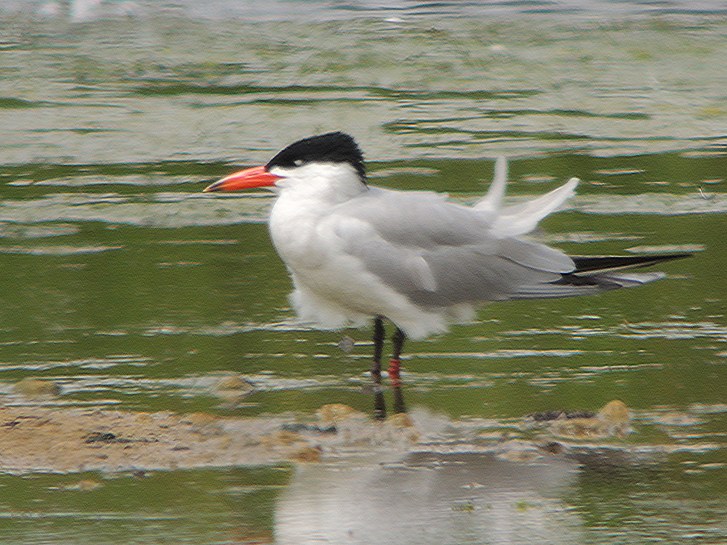
Caspian Tern

Full marks to Jon Lyles for finding Northamptonshire’s 5th Caspian Tern, loitering on ‘the slips’ at Summer Leys this morning. It was discovered around 10.40 and remained settled there until midday, when it took to the air and headed off north-east.

Caspian Tern, Summer Leys LNR, 1st July 2017 (Mike Alibone)
Caspian Tern, Summer Leys LNR, 1st July 2017 (Clive Bowley)

Gone? Unlikely. Caspian Terns have a habit of flying off – sometimes visiting sites many miles away – before returning hours later. Luckily, this one conformed and it was back and showing in the Wader Bay from 13.30 until 14.10, when it was off again. This time it appeared to fly south but it was seen shortly afterward heading west over nearby Hardwater Lake at 14.35. As luck would have it, it was relocated at Clifford Hill GP around 16.30, remaining there until at least 19.00 and putting on a good show as it flew up and down the River Nene close to the Weston Mill sluice. Twenty minutes later it had gone, heading off high to the west.

This bird had a red ring on its left leg and may have been ringed in Sweden.

Caspian Tern, as well as being a national rarity, remains a true rarity in Northants with just four previous records as follows:

1967: Pitsford Res, 2 on 12th July                                                                                                                                                      1968: Stanford Res, one on 3rd June                                                                                                                                      1998: Ditchford GP/Stanwick GP/Earls Barton GP, one on 1st August                                                                        2003: Stanwick GP/ Earls Barton GP, one between 16th and 20th July

Many thanks to Clive Bowley for supplying images.

Rarity Round-up 3rd to 30th June 2017

A mini heatwave, with temperatures hitting the low thirties during the penultimate week, sees spring merge with autumn as the first southbound Black-tailed Godwits and Greenshank arrive in the county and a small, brown duck causes a stir.

Continuing its reluctance to depart, the first-summer Eurasian White-fronted Goose moved from Stanford Res back to Pitsford, where it remained until 11th, while single drake Garganeys appeared again at Summer Leys LNR on 3rd and Stanwick GP on 15th. A drake Red-crested Pochard, now in eclipse, loitered at Ditchford GP’s Irthlingborough Lakes & Meadows LNR until at least 12th but the surprise discovery of a female with one young duckling at Thrapston GP, mid-month, turned out to be the first breeding of this species in Northamptonshire.

Eclipse drake Red-crested Pochard, Ditchford GP, 12th June 2017 (Simon Hales)
Female Red-crested Pochard with young, Thrapston GP, 16th June 2017 (Adrian Borley)

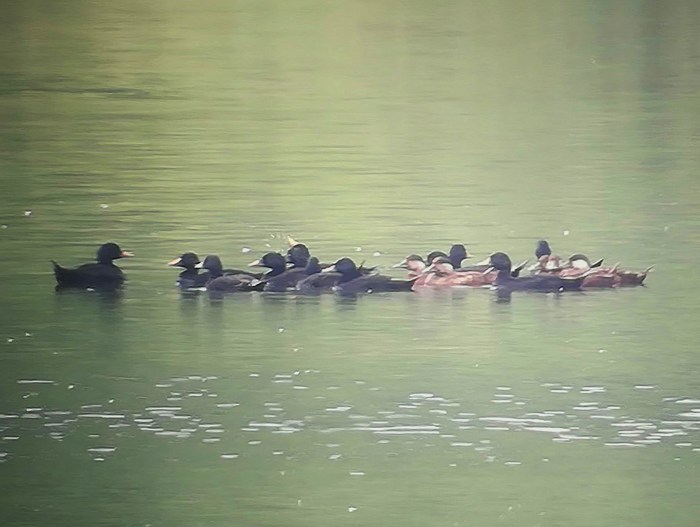
The origins of our Red-crested Pochards have never really been known for certain but the above discovery must surely be a case of feral breeding. The last day of the month produced seventeen Common Scoters at Daventry CP – the first decent-sized flock we’ve have locally for a long time and part of a large national overland movement taking place at this time.

Common Scoters, Daventry CP, 30th June 2017 (Gary Pullan)

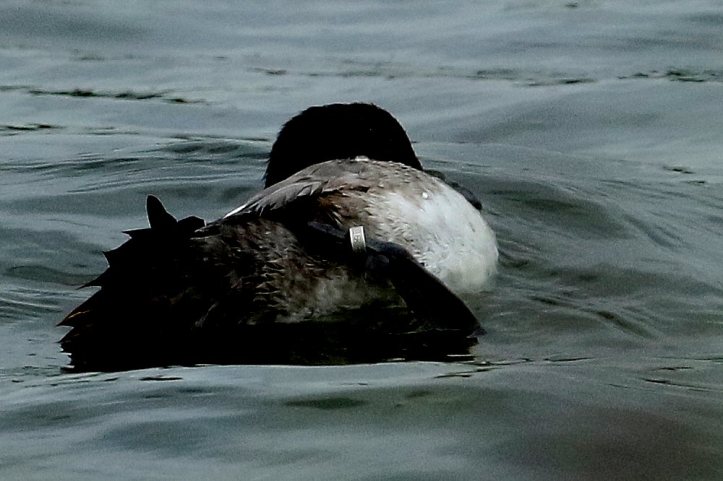
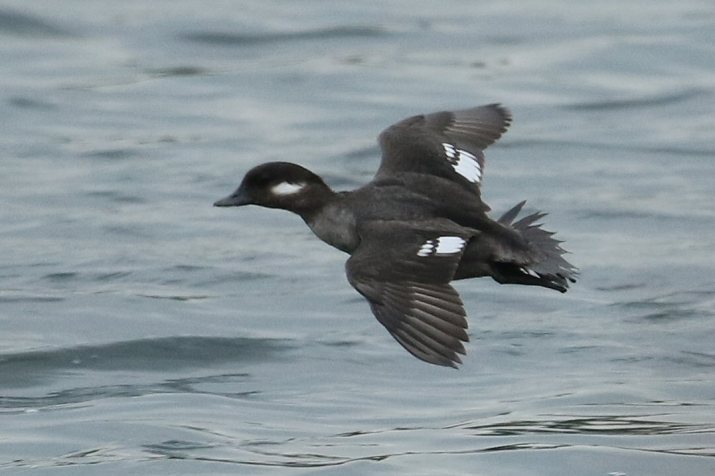
Nice though they were, they did not attract anything like as much attention as a certain diminutive diving duck, which appeared at Clifford Hill GP on 24th – a potential first for Northamptonshire in the form of a female Bufflehead. Not the best time of year but there has been a series of June occurrences, coupled with a cluster of previous Midlands records, so hopes ran high as local, and some not so local, birders descended on this Nene Valley site on the edge of suburbia. It quickly transpired our girl was wearing a ring – albeit a metal one – and the rot began to set in. With more than 22,500 Buffleheads historically having been ‘banded’ in Canada and the USA, the presence of a ring was still not necessarily a problem but the ring detail was far from clear until, that is, she upped and went to Daventry CP on 27th. It was there and then that she was snapped in close-up, the ring detail scrutinised and any potential credential immediately dismissed as she was duly pronounced an escape. Oh well, it was good while it lasted.

Escaped, metal-ringed female Bufflehead, Daventry CP, 27th June 2017 (Bob Bullock)

It has been a very poor spring for Quail, with just two singing males reported – both of which appeared to be one-day wonders. One was near the railway close to Kings Sutton on 9th and the other in a flax field near Burton Latimer on 18th. Summer Leys produced both of the period’s rare herons, which included a Great White Egret on the scrape on 14th and a Bittern in flight over the car park on 20th and again on the scrape the following day.
Bittern, Summer Leys LNR, 21st June 2017 (Alan Coles)

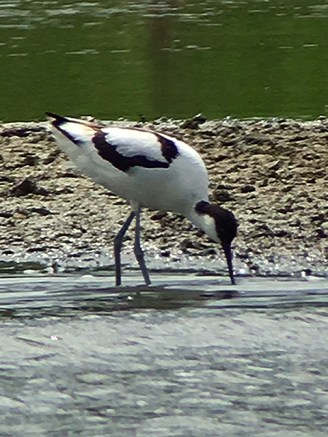
Wandering Ospreys featured at four localities during the month, including Welford Res on 3rd, 8th and 13th, three flew over Bulwick on the latter date and one visited Blatherwycke Lake on 16th but Stanford Res claimed the lion’s share. Stanford’s low water level continued to attract waders, including an Avocet for two days on 25th-26th, a late spring Grey Plover on 3rd and a presumably non-breeding first-summer Icelandic Black-tailed Godwit on 11th ahead of the first southbound Black-taileds – a nice flock of twenty-seven – on 25th.

Icelandic Black-tailed Godwits, Stanford Res, 25th June 2017 (Chris Hubbard). Part of a flock of twenty-seven.

One of these wore an Icelandic ring indicating it was a twelve-year old male and, thanks to Chris Hubbard’s research, its movement history is charted below. Clearly there was a Black-tailed Godwit movement taking place on 25th with further records of at least twenty-five at Summer Leys and one over St James, Northampton. More had arrived by the month’s end with 30th producing at least nine more at Stanford and singles at both Stanwick and Summer Leys. The autumn’s first Greenshank arrived at Stanford on 28th, lingering until the month’s end but further south, at Daventry CP, it was still spring when
five Sanderlings flew west on 6th.There was no avoiding Stanford’s pull for two Little Terns which arrived there on 28th but Pitsford – at which the water level is now looking enticingly low – attracted a Sandwich Tern to Scaldwell Bay on 19th. Both species are rarely recorded in the county in summer.

Avocet, Stanford Res, 25th June 2017 (Chris Hubbard)


Following the breeding of Mediterranean Gulls at Stanwick earlier this year, another adult visited the Black-headed Gull colony there on 19th and two adults flew over Byfield the following day. June records of Yellow-legged Gulls are few and far between but the month saw two at Stanford on 17th, one at Daventry CP on 26th and one at Boddington Res on 30th – all of which were immatures. We also had our first June records of Caspian Gull, with Pitsford Res producing a second-summer on 10th, two second-summers the following day and one on 18th, while a first-summer appeared at Daventry CP on 27th.

Common Redstart, Spratton, June 2017 (David Arden)


Finally, the only passerine migrants found anywhere this month presumably belonged to autumn and they were all Common Redstarts. A female was at Clifford Hill GP on 25th-26th followed by a male there on 30th and a male visited a garden in Spratton on 26th.


Clifford Hill Bufflehead goes west

Turning up and performing well in front of the hide at the southern end of Daventry Country Park yesterday, ‘Buffy’ was finally stripped of her celebrity status as she revealed more of that tell-tale ring detail.
Female Bufflehead, Daventry CP, 27th June 2017 (Bob Bullock). An escape from captivity with a non-conformist metal ring on the right leg.

Thanks to some excellent images from Bob Bullock, it became apparent that our Bufflehead’s ring format does not conform to any which is used in either Canada or the USA – either now or in recent history. Digits around the centre of the ring include random numbers 38, 58, 60 (or 09) and there is no alphanumeric contact detail in smaller text above or below these numbers.

Female Bufflehead, Daventry CP, 27th June 2017 (Bob Bullock). An escape from captivity with a non-conformist metal ring on the right leg showing number 58.
Female Bufflehead, Daventry CP, 27th June 2017 (Bob Bullock). An escape from captivity with a non-conformist metal ring on the right leg showing numbers 38 and possibly 09.
Female Bufflehead, Daventry CP, 27th June 2017 (Bob Bullock). An escape from captivity with a non-conformist metal ring on the right leg.

I am grateful to Chris Wood of the Cornell Lab of Ornithology, Ithaca, New York who, upon receiving copies of the above images, kindly commented as follows: “Honestly, I can’t imagine this ever being used by a researcher here. Bands have been standardized for a long time now and this just doesn’t look like anything we would use.”

Danny Bystrak, Wildlife Biologist at the Bird Banding Lab, Patuxent Wildlife Research Centre near Washington, USA, also commented: “The band looks narrow and over-sized is not something I have ever heard of anyone using in the US or Canada.” [via Chris Wood]

So, there we are. Our Bufflehead has indeed gone west … along with any chance of it being a new bird for the county.

Postscript: it is reportedly back at Clifford Hill GP today.

More on the Clifford Hill Bufflehead

The lady shows her ring …

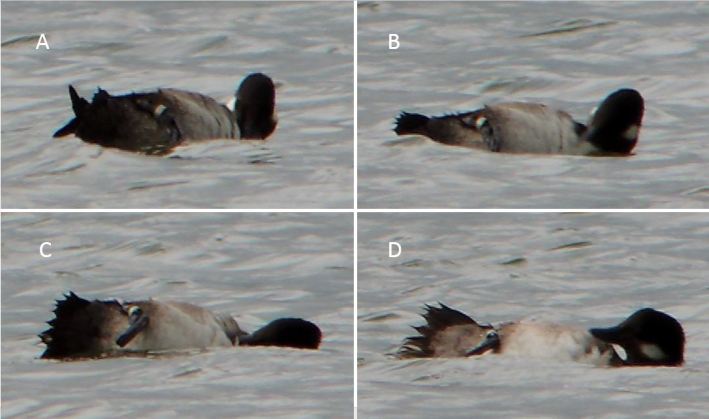
… but the detail is indiscernible. I spent some more time with the Bufflehead this afternoon, hoping to see some ring detail – any ring detail – which might help shed some light on its origin. At one point, it came out of the water and stood on the bank but its visit to land was all too brief and, before I could get the scope focussed for a digiscoped shot, it was off again and back into the water. It’s also difficult to capture any decent images or video as, most of the time, it seems to be very active, constantly diving and spending 80%-90% of its time below the surface.

However, I did manage some more video, from which I took a series of grabs showing the ring, which appear below. Image A would suggest there is some inscription in the middle section of the ring, but this is far from certain. Blow-ups don’t help, either.

Female Bufflehead, ring on right leg, Clifford Hill GP, 25th June 2017, videograb.

For comparison, here are two videograbs of the 2015 Bedfordshire bird, which was also ringed on the right leg. The proportions of the rings look similar but may not be.

Drake Bufflehead, ring on right leg, Priory CP, Bedfordshire, 29th October 2015, videograb (Mike Alibone)

They also appear to be similarly proportioned to Canadian duck rings, also illustrated below. None of this actually means, or proves, anything, of course, but it would be nice to get to the bottom of where this bird actually originated.

Persistence is required, waiting for the next time it sits out on the bank … Interestingly more Buffleheads have been seen in June than in any other month and in central England than any other area in the UK. Thanks to Andrew Cook and Mark Hill for pointing this out (source: Rare Bird Alert).
Northamptonshire’s first Bufflehead?

With some potentially serious negatives against it, what is ostensibly the first Bufflehead for Northants is likely to be an escape … or is it?

Late this morning, Terry O’dell discovered what later proved to be an adult female Bufflehead on the south side of the main barrage lake at Clifford Hill Gravel Pits. It was still present this afternoon, during which I managed to obtain some rather poor quality, wind-shaken, digiscoped video.


There have been two individuals deemed escapes reported recently: a yellow-ringed bird in Norfolk in April and a (presumed) metal-ringed bird in West Yorkshire last month. The Clifford Hill bird is metal-ringed on its right leg and, along with its having appeared in June, the odds are rightly stacked against it being a wild individual. Or are they?

Bedfordshire, 29th October 2015

Here are a few facts resulting from my research into the escape likelihood of the one in Bedfordshire in October 2015. I’d spent some considerable time looking at the Bedfordshire Bufflehead ring and doing some research.

Bufflehead, Priory CP, Bedfordshire, 29th October 2015 (Mike Alibone) and examples of American rings.

I have a contact who produces a lot of video material for the BBC and I sent him some footage to see if he could freeze the ring on my video of that bird better than I could. He tried but couldn’t. The characters on the ring appeared to occupy a good 50% of the depth of the ring and appear just as a dark area. Any smaller characters above or below, if they exist, are invisible. The format could match one or two of the smaller rings in the image attached, lifted from http://www.duckbands.com/ an American site.

I also spoke to James Lees at length about it. His view from a ringing perspective was that it was more likely to have been ringed in the wild than in captivity because most collections use plastic rings, not metal, and he believes that Slimbridge is the only collection (he knows of) which uses metal rings (same format as BTO rings) for individual ID because their collection is extensive and because they move birds around to other collections to breed and keep the gene pool healthy. He also pointed out that American-ringed ducks have been seen in the UK before and that they once had a ringed Ring-necked Duck visit from the states and it ultimately found its way back across the Atlantic, and was seen again in Newfoundland after leaving Slimbridge. All this I guess we know …

So, what we have for the pro-wild camp is:

  • Metal ring, indicating higher likelihood of wild than captive origin
  • Ring format could match that of Nearctic-ringed bird
  • 22.5 thousand Buffleheads ringed in Nearctic between 1951 & 2011
  • Buffleheads can live for 18 years (OK if it’s an adult drake coming out of eclipse)
  • October is the peak migration month for Bufflehead in the USA
  • The bird stayed for one day only and, so far, has not been reported anywhere else
  • No birds missing from local collections (but doesn’t rule out an escape from further afield)

And for the pro-escape camp:

  • It had a ring of any type

That’s my analysis concluded. Read into it what you will but unless it’s seen to haul itself out on to the bank or an island, where the ring can be properly seen, we’ll never know for sure.


Mediterranean Gull – a new breeding species for Northants

A new species is added to the list of birds breeding in Northamptonshire as Mediterranean Gulls nest for the first time at Stanwick Gravel Pits
Mediterranean Gulls, Stanwick GP, 6th May 2017 (Bob Bullock)

Mediterranean Gulls have been appearing with increasing frequency among Black-headed Gulls breeding in the Nene Valley – particularly within the well-established Summer Leys colony. This appears to be a recent phenomenon, principally involving single birds which are apparently not sexually mature. Most remain for only a short time during spring but in 2015, a second-summer was discovered in the Summer Leys colony on 18th March, remaining there until 29th June. During this period, it established and held territory, continually displaying to the local Black-headed Gulls. This was repeated in 2016, with another second-summer visiting the colony for only a short duration on 20th-21st March. However, two adults appeared there little more than five weeks later, on 28th April, before relocating the following day to the Stanwick colony, where they were seen again on 11th-12th May. There were no subsequent sightings.

Fast forward to this year, 2017 and 5th April, when a pair was displaying among the Black-headed Gulls at Stanwick, after which they promptly disappeared. On 24th April two were again present – both wore BTO rings and one sported a black leg tag ‘SA30’, which has not yet been traced to source. Again, they were not subsequently reported but then two – amazingly a different pair – arrived in the Black-headed Gull colony on Rotary Island at Summer Leys LNR on 3rd May. Appearing settled, they remained difficult to observe in the island’s vegetation until 5th May.

The following day, 6th May, what was assumed to be the same pair appeared in Stanwick’s Black-headed Gull colony, where they were observed copulating and defending territory.

Mediterranean Gulls, Stanwick GP, 6th May 2017 (Bob Bullock)

Nest construction ensued and eggs were laid, subsequently hatching, with the young visible within the colony. It was after this that fortune took a turn for the worse. During the first week in June the young had disappeared – assumed to have been predated by the local Lesser Black-backed Gulls – and by the end of the week both adults had also abandoned the site. Not a positive outcome for a first breeding attempt but, as this species continues to increase in the UK and indeed breeds in Cambridgeshire, we can surely look forward to further attempts in the future.

Thanks to Steve Fisher for providing information and to Bob Bullock for images.

Technology and innovation lend visibility to heronry survey

With special consent from Natural England, Assistant Warden Mischa Cross explains how specialist equipment was used with careful planning to accurately survey nesting Grey Herons at Pitsford.

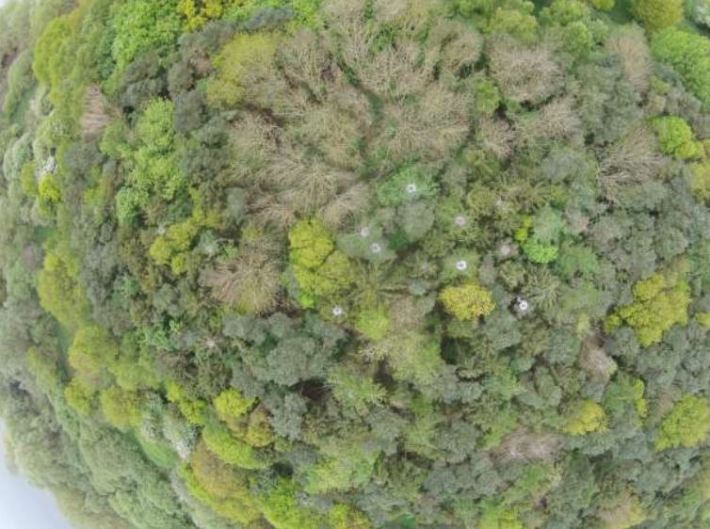
In early May 2017, the heronry at Pitsford Reservoir Nature Reserve was surveyed using a drone to see if a more accurate count of nests could be established with this method, rather than counting from on the ground. The trial proved very successful with 14 nests counted from the drone footage, compared with 10 nests counted from the ground.

Aerial footage of Pitsford Water Nature Reserve Heronry using a drone, May 2017. The nests are clearly visible and can easily be counted from the photographs. Young birds can be seen on the nests.

The survey was timed so that the eggs had hatched. This meant adult birds would not be sitting on the nests incubating eggs, as they may be inclined to leave the nest, risking damage or chilling of the eggs. One flight was sufficient to get the required footage and it lasted no longer than 10 minutes. The drone used was a DJI Phantom Vision 2+ v.3, which can fly up to a maximum height of 300ft. For this survey the height was set at 200ft so better quality images could be captured in an attempt to see if egrets were also using the area. It was hoped to get video footage but unfortunately this was unavailable on the day of the survey. The drone was piloted by fully qualified, CAA approved and insured pilot, Josh Hellon. The pilot was always in full manual control of the UAV/drone and it has a failsafe that returns it to the take-off point if there are any problems.

Observations were made from the ground while the drone was in the air to see how the birds in the area reacted to the presence of the drone. No obvious signs of disturbance were witnessed. As the eggs were hatched, the adult birds are likely to have been away from the nest collecting food.

Rarity Round-up 27th May to 2nd June 2017

The calm after the storm. After some sporadic heavy rain during the first forty-eight hours, warmer weather set in as winds swung between west and south-east and temperatures edged momentarily into the high twenties. As May turned into June, the northward flow of wetland migrants enjoyed by all in the preceding weeks almost dried up and we entered a quiet period, enlivened for some at least by the brief appearance of an Arctic Skua on 2nd.

At Stanford Res the first-summer Eurasian White-fronted Goose visited again on 30th but was not alone in being the only winter visitor lingering ludicrously late at this site. A drake Garganey continued a run of intermittent appearances at Summer Leys, showing there on 28th, 1st and 2nd, while two – presumably a pair – were at Stanwick GP on 29th. The only other wildfowl during the period were Red-crested Pochards, which included a drake and a hybrid female at Pitsford Res on 27th and two drakes bouncing back and forth between Ditchford GP’s Irthlingborough Lakes & Meadows LNR and Stanwick GP between 27th and 31st.

The latter site produced another late spring Bittern, which flew on to the A45 Lay-by Pit on 29th. On 2nd June, a Honey Buzzard was reported circling above Oundle before flying south-west, a Marsh Harrier flew east at Summer Leys on 27th, while an Osprey fishing at Stanford Res on 29th-30 and again on 2nd was perhaps not entirely unexpected, given the small number of breeding pairs in the region.

Grey Plover, Stanford Res, 2nd June 2017 (Chris Hubbard)

Above average numbers of Avocets have occurred this spring and more appeared this week, with two at Stanwick GP on the evening of 28th, although they were nowhere to be seen the following day. The trickle of waders continued with two more Grey Plovers – one at Pitsford Res on 29th and the other at Stanford Res between 31st and 2nd, while a Turnstone visited Pitsford Res on 27th, followed by two more there on 31st. Hollowell Res produced the week’s only Greenshank, on 28th, while last week’s potentially record-breakingly late Jack Snipe proved officially to be just that, remaining there until at least 1st.

Turnstone, Pitsford Res, 31st May 2017 (Stuart Mundy). One of two present at this site on the same date.
Jack Snipe, Stanford Res, 31st May 2017 (Chris Hubbard)

Bird of the week, however, was the light morph adult Arctic Skua, which circled high above Daventry CP, late in the morning of 2nd, before drifting off north-west. Spring records are not unprecedented but even a stayer in autumn would be kinda nice …

After the full-on spring passage of Black Terns there was just one, at Pitsford Res, on 30th, when two Yellow-legged Gulls were at the same site. More unusual was the fly-over of two Hawfinches at Harrington AF on 29th – probably the first record for the site.