Rarity Round-up 24th to 31st December 2016

The light west to south-westerly airstream continued throughout the eight-day ‘week’ extending the period to fit to the last day of 2016. The weather was generally mild, with slow-clearing thick fog a prominent feature during the latter half of the week. The Christmas highlight for most was the appearance of the first twitchable Waxwings between Boxing Day and the New Year.

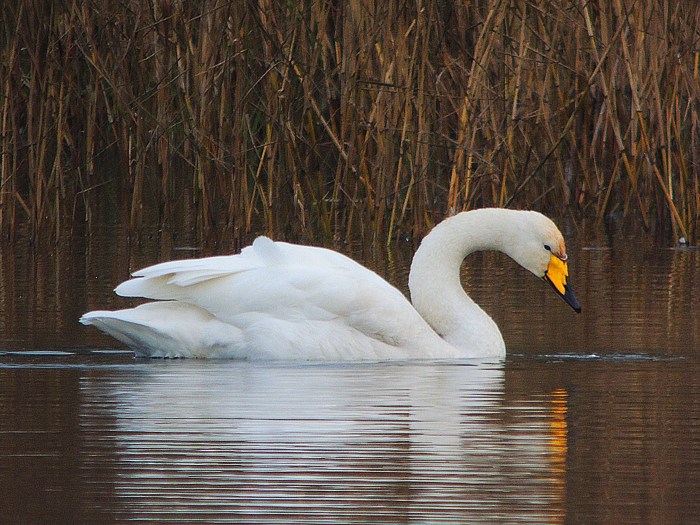
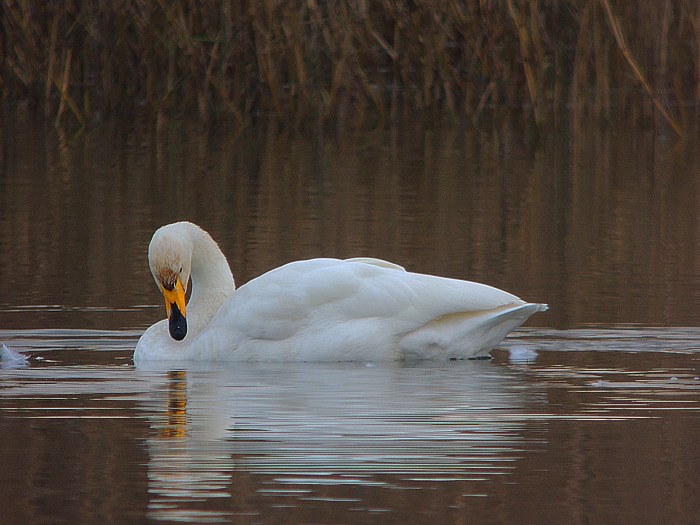
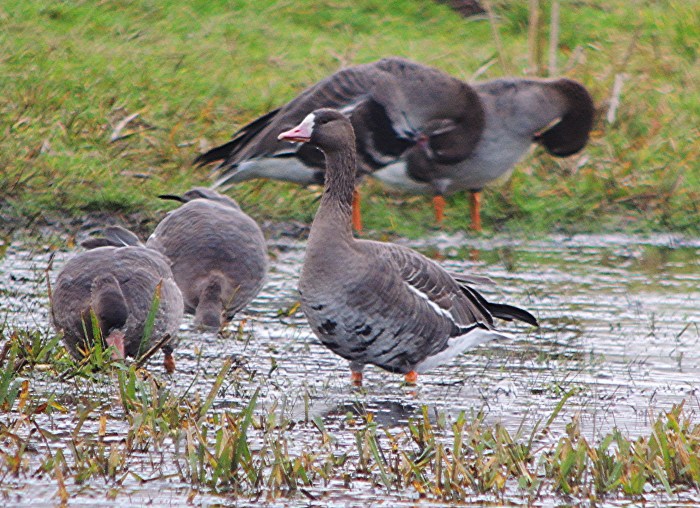
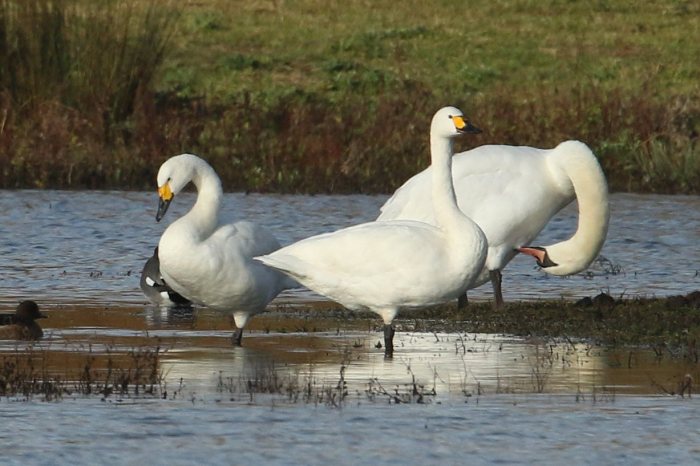
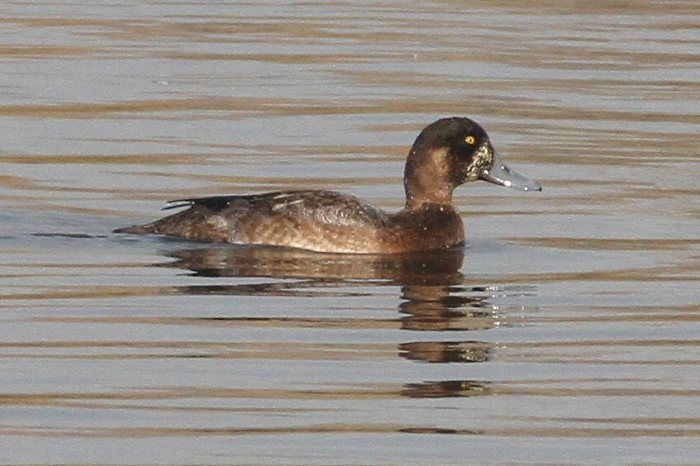
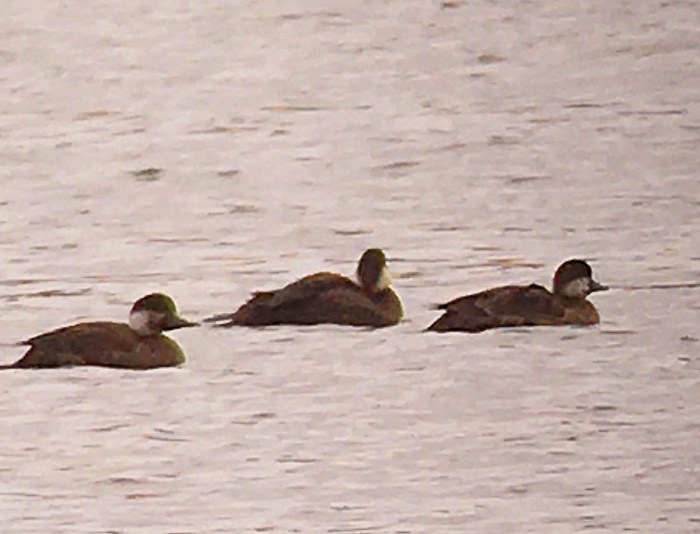
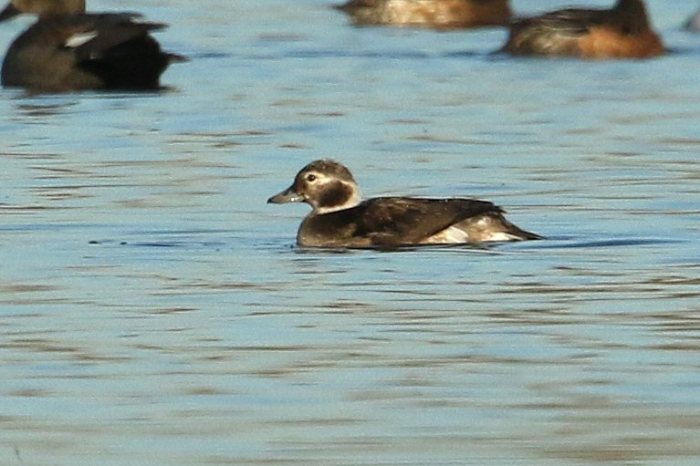
The adult Whooper Swan remained at Sywell CP until at least 29th, while at least twenty-three of the twenty-four Eurasian White-fronted Geese were still present by the River Nene at White Mills Marina, Whiston until the year’s end. Also present to 31st were up to four Red-crested Pochards at both Pitsford Res and Stanford Res with the latter site also producing a first-winter Scaup again on 30th, on which date another first-winter was also discovered at Ravensthorpe Res. Arguably, though, wildfowl of the week was the Long-tailed Duck found at Stanford on 27th, remaining there along with the ‘redhead’ Smew until 31st. Last week’s two drake Smew were also still present at Pitsford Res until at least 27th.

Long-tailed Duck, Stanford Res, 27th December 2016 (Chris Hubbard)

Perhaps one of the Stanwick birds relocating, a ‘new’ Bittern was viewable from the hide on Heron Lake at Thrapston GP between 27th and 30th, while Great White Egrets continued to feature throughout with daily reports from Pitsford Res, where four were seen together on 26th and Ravensthorpe Res, where three remained all week, while one was seen at Summer Leys LNR intermittently between 24th and 29th, with two there on 31st.

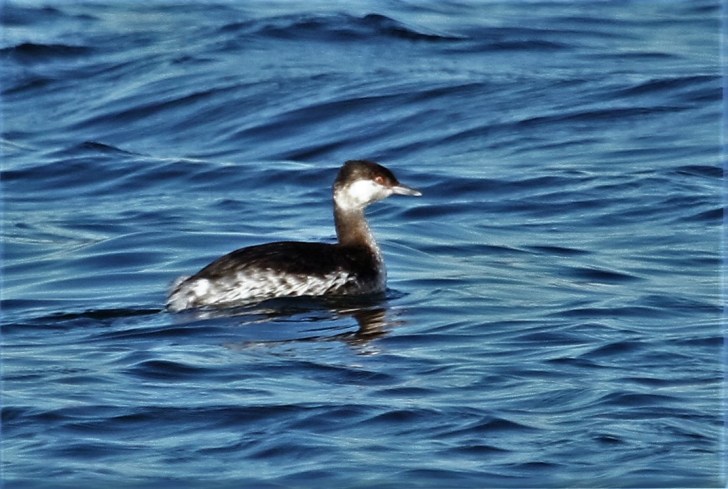
The Slavonian Grebe present at Pitsford Res from 19th was last seen there on 28th, by which time it had moved closer to Catwalk Bay and, at nearby Scaldwell, the only scarce raptor of the week, a male Merlin, appeared fleetingly on 27th. Similarly, the only uncommon wader during the period was a Jack Snipe at Boddington Res on the same date.

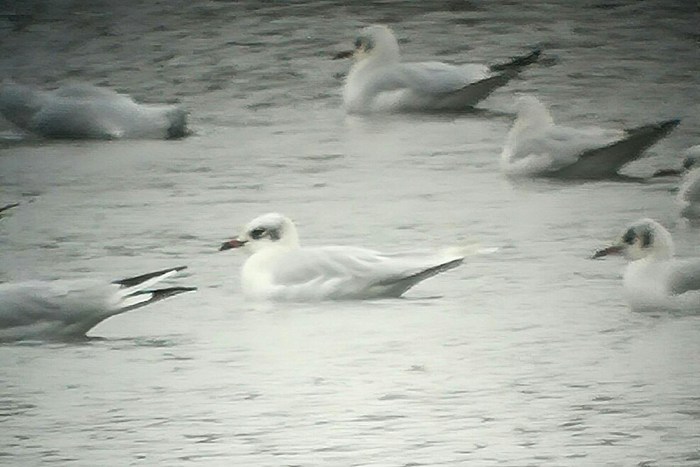
An adult Mediterranean Gull appeared at Stanford Res on 31st, while in the far south-west of the county, near Chacombe, the loafing, mixed gull flock again included a first-winter and second-winter Caspian Gull on 24th and a second-winter and third-winter on 27th. Additionally, a first-winter Caspian was at Pitsford Res on 24th and two – an adult and a third-winter – visited Hollowell Res on 30th.

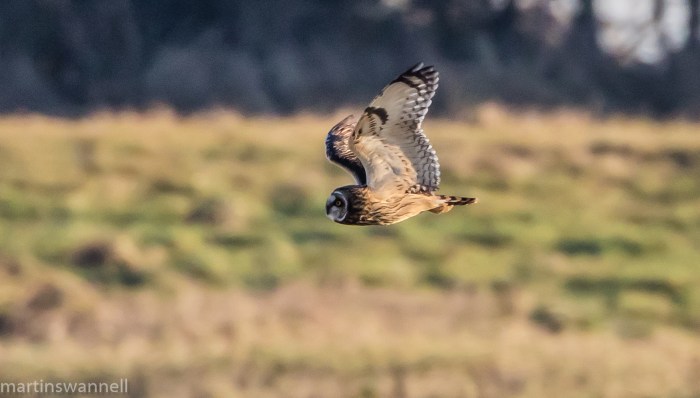
Short-eared Owl, Neville's Lodge, Finedon, 29th December 2016 (Martin Swannell)
Short-eared Owl, Neville’s Lodge, Finedon, 29th December 2016 (Martin Swannell)
Short-eared Owl, Neville's Lodge, Finedon, 29th December 2016 (Martin Swannell)
Short-eared Owl, Neville’s Lodge, Finedon, 29th December 2016 (Martin Swannell)

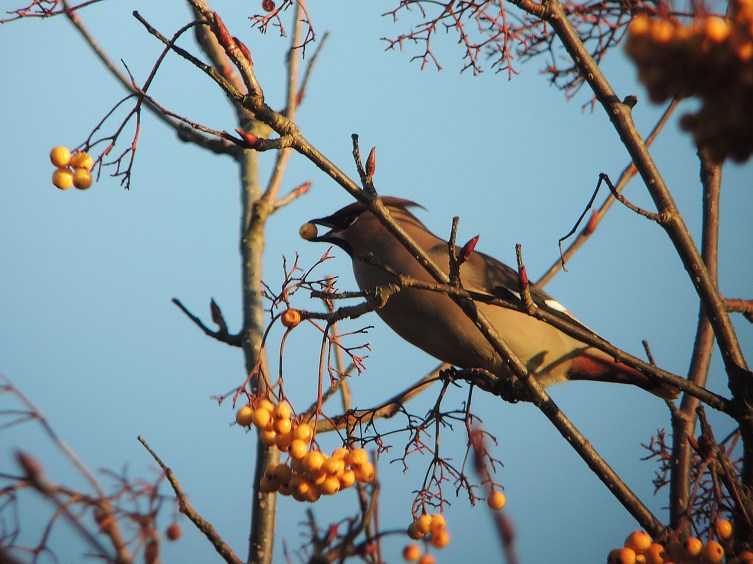
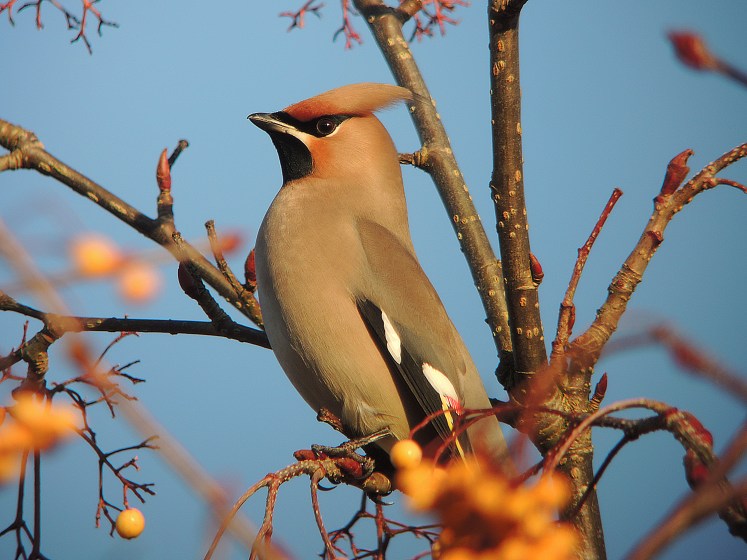
Neville’s Lodge, near Finedon, again proved a popular draw for observers of Short-eared Owls with four present throughout the period but their popularity was eclipsed by the arrival of the first twitchable Waxwings of the winter. Just one in a Rowan outside the Co-op at Woodford Halse on Boxing Day was enough to scramble birders from as far away as Northampton and Rugby and, although it performed well all day, it had departed by the following morning.
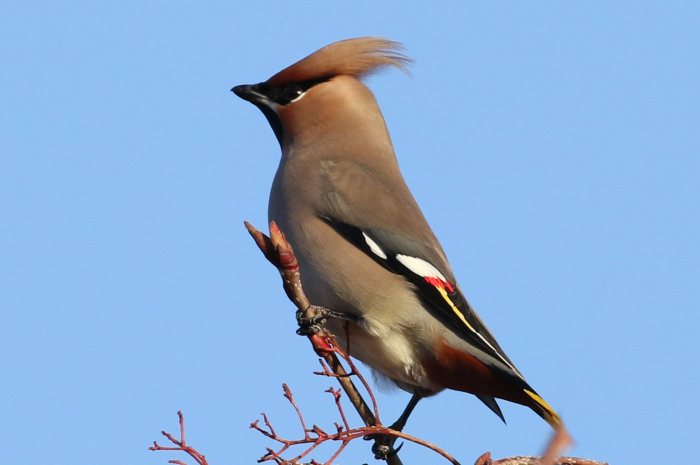
First-winter male Waxwing, Woodford Halse, 26th December 2016 (Bob Bullock)

Hot on its heels came three in Roade on 29th, the number there rapidly growing to ten, which drew a sizeable procession of spectators during their stay into the New Year.

Female Waxwing, Roade, 29th December 2016 (Mike Alibone)
Waxwing, Roade, 30th December 2016 (Alan Coles)

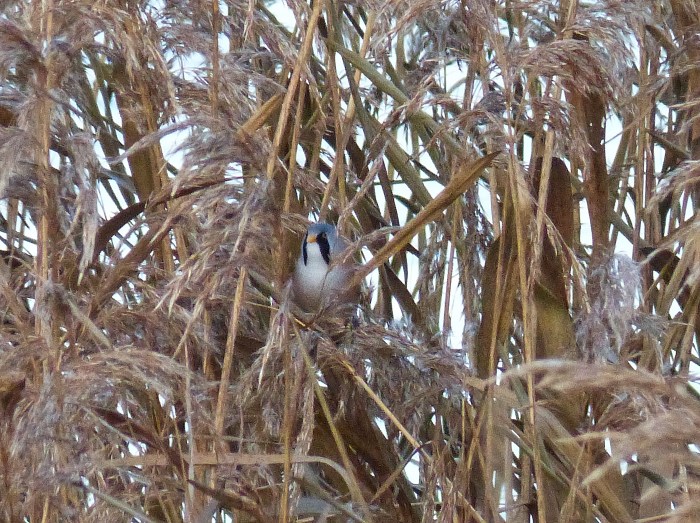
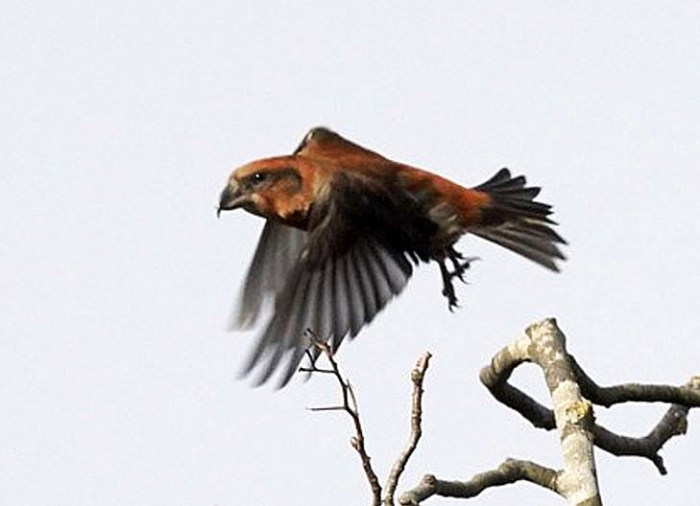
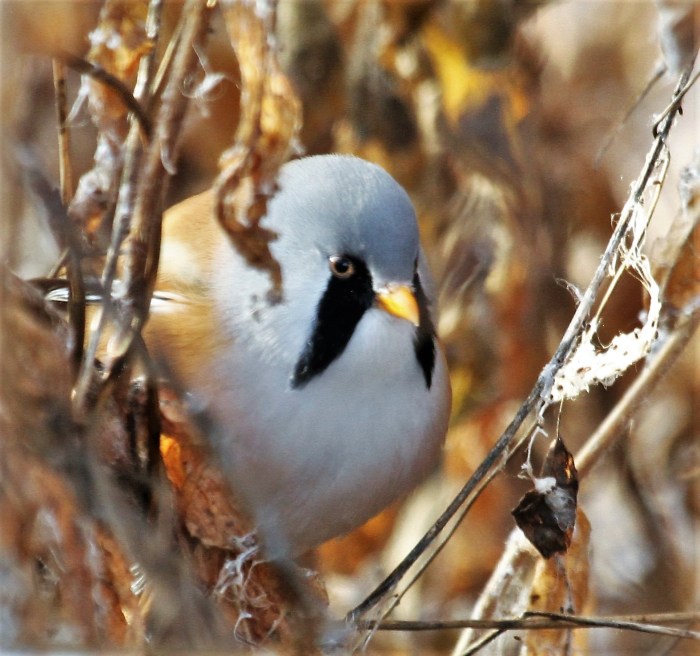
Down in the Nene Valley, the male Bearded Tit remained along the causeway at Stanwick GP’s A45 Lay-by Pit until at least 27th, while four Crossbills were found at Fineshade Wood on 26th.
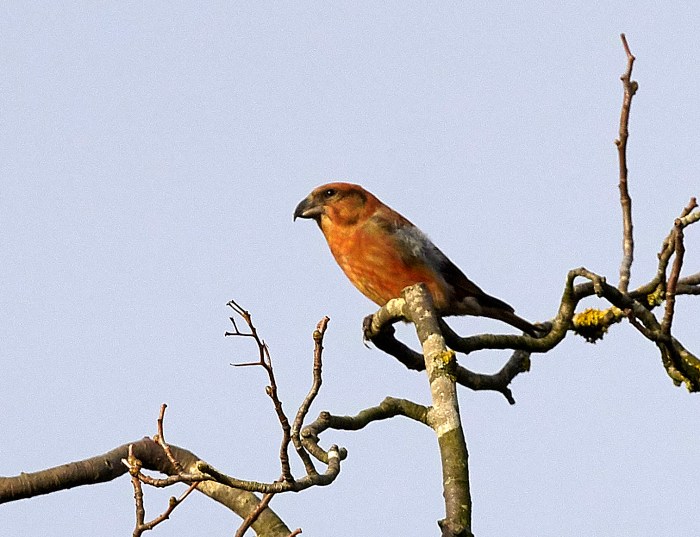
Male Crossbill, Fineshade Wood, December 2016 (Roger Eads)

Woodford Halse Waxwing

Couldn’t resist posting a few pics of the Woodford Halse Waxwing this afternoon. After the late autumn influx – chiefly ‘up north’ – and a few fleetingly fickle or fanciful fly-overs locally, this is the first twitchable individual in Northants this year. Clean-cut black bib and broad yellow tail-band sex it as a male and the reduced yellow feather edgings in the primaries age it as a first-winter. A big thank you to Donna Wise for putting the news out.

dscn3205-copy
dscn3227-copy

dscn3224

dscn3208-copy

Rarity Round-up 17th to 23rd December 2016

In the run up to Christmas the week remained mild and largely dry, although it was gloomy, dank and dull for the greater part of the period. The wind direction remained unchanged from last week’s light south to south-westerly airstream. The highlight of the week was the discovery of the largest flock of Eurasian White-fronted Geese locally for nearly twenty years.

The Sywell CP Whooper Swan continued to be reported throughout the period, now seemingly settled and showing all signs of being present for the winter.

Whooper Swan, Sywell CP, 18th December 2016 (Mike Alibone)

On 19th, a flock of twenty-four Eurasian White-fronted Geese was discovered alongside the River Nene, close to the new White Mills Marina, east of Whiston Lock, where they remained all week. While family parties, single-figure flocks and fly-overs are not unusual, this is the largest ‘on the ground’ flock in Northants since December 1998, when up to thirty-eight were present at Ditchford GP. Nevertheless, it remains scarce in the county but not as scarce as Greenland White-fronted Goose, for which there are only four records, in 1981 (2), 1991 and 2009. Another would undoubtedly be appreciated.

white-fronted-geese-caption

White-fronted Geese, Whiston, 21st December 2016 (Mike Alibone)
Eurasian White-fronted Geese, Whiston, 21st December 2016 (Mike Alibone)

Somewhat overshadowed by the birds at White Mills, another adult Eurasian White-front was found with Canada Geese at Fawsley Park Lakes on 20th and was still present there on 22nd.

White-fronted Goose, Fawsley Park, 22nd December 2016 (Angus Molyneux)
Eurasian White-fronted Goose, Fawsley Park, 22nd December 2016 (Angus Molyneux)

In a similar vein to last week the only other wildfowl of note were up to four Red-crested Pochards at Pitsford Res between 18th and 20th, with the two drake Smew still there on 23rd and a ‘redhead’ Smew at Stanford Res from the beginning of the week to 22nd.

The three Great White Egrets remained at Ravensthorpe Res on all week, while ones, twos and, on 20th, three, were reported from Pitsford Res and one was found at Ditchford GP on 18th. On 19th a ‘new’ Slavonian Grebe was discovered north-east of the dam at Pitsford Res, where it was still being seen on 23rd.

Slavonian Grebe, Pitsford Res, 21st December 2016 (Angus Molyneux)

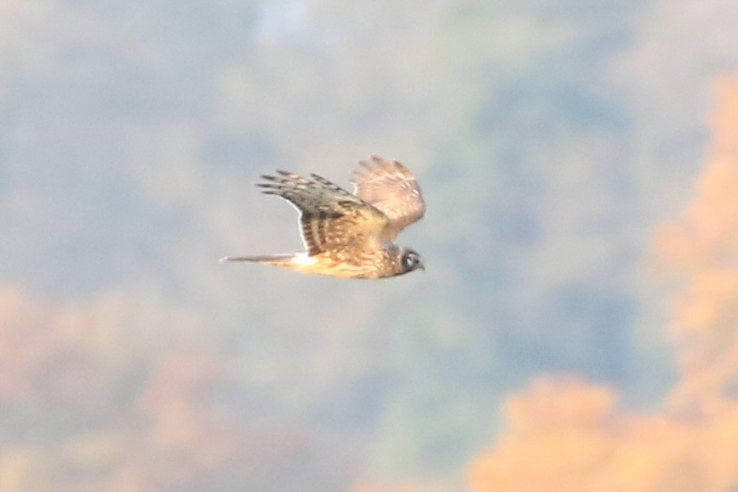
There were no reports of the wintering juvenile male Hen Harrier at Stanford Res this week, although a ‘ringtail’ was seen flying north, close to the A508 at Kelmarsh on 21st. A Curlew at Pitsford Res on 20th was the only notable wader during the period.

All the gull action was restricted to the west of the county where, at Daventry CP, a third-winter Mediterranean Gull was present on 19th and 23rd, followed by an adult and a first-winter in the pre-roost gathering there on 21st, while an adult Caspian Gull was in the roost at Boddington Res on 17th and single first-winters were in fields near Chacombe and at Daventry CP on 23rd.

Third-winter Mediterranean Gull, Daventry CP, 19th December 2016 (Gary Pullan)

Neville’s Lodge, near Finedon, remained the only reliable location to see Short-eared Owl this week, with up to two present there while, not too far to the south, the male

Short-eared Owl, Neville's Lodge, Finedon, 20th December 2016 (Geof Douglas)
Short-eared Owl, Neville’s Lodge, Finedon, 20th December 2016 (Geof Douglas)

Bearded Tit remained throughout the week along the causeway at Stanwick GP’s A45 Lay-by Pit and a ‘Nordic’ Jackdaw – of which there have been few reports in recent winters – was seen at Bozeat on 18th.

Rarity Round-up 10th to 16th December 2016

Under the influence of an Atlantic airstream, the mild and frequently wet weather continued throughout the week, pegging daytime temperatures in the low teens. Few new birds were discovered and perhaps the biggest surprise was an unseasonal Turnstone for one day at Stanwick GP.

The Sywell CP Whooper Swan remained all week and the only other wildfowl of note were a female Red-crested Pochard at Ravensthorpe Res on 10th and two drake Smew at Pitsford on 11th.

Whooper Swan, Sywell CP, 14th December 2016 (Alan Francis)

On the same date, one of two Bitterns was again seen at Stanwick GP, while the three Great White Egrets remained on show at Ravensthorpe Res all week, two were at Pitsford Res on 11th and one visited Summer Leys on 14th and 16th. In the north-east of the county, at Thrapston GP, a Slavonian Grebe was (re?)discovered on Aldwincle Lake on the morning of 11th but had promptly disappeared by the afternoon.

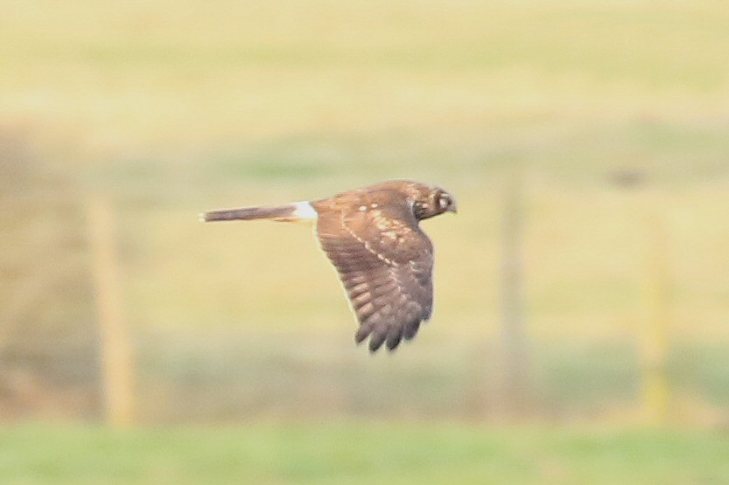
Becoming more erratic in its appearances, the wintering juvenile male Hen Harrier was again seen at Stanford Res on 14th, although the lack of reports probably relates to a lower level of observer coverage and diminishing interest following its initial discovery in November.

On the wader front, a Turnstone arrived at Stanwick GP on 11th but had departed by the next day. This is a most unusual time of the year for this species to occur, the peak months being May and August. Aside from this, single Jack Snipe were found at both Ditchford GP and Stanford Res on 10th.

There was little change from last week in the numbers of scarce gulls being found. A second-winter Mediterranean Gull visited Daventry CP on 11th and 15th and a first-winter Caspian Gull was at Pitsford Res on 11th and 13th, with an adult there on 14th and another adult at Hollowell Res on 13th.

Male Bearded Tit, Stanwick GP, 14th December (Geof Douglas)

Finedon continued to hold at least one Short-eared Owl in the Neville’s Lodge area on 11th-12th but the only other one this week was in the Brampton Valley on 14th. The male Bearded Tit remained throughout the period along the causeway at Stanwick GP’s A45 Lay-by Pit but a Siberian Chiffchaff, calling and showing well near the Bird Club Hide at Pitsford Res on 11th, was new.

Male Crossbill, Fineshade Wood, 11th December 2016 (Martin Dove)
Male Crossbill, Fineshade Wood, 13th December 2016 (Roger Eads)

Lastly, Crossbills can be a bit hit and miss to catch up with in the county but Fineshade Wood’s Wildlife Hide was the place to be to see a showy male present from 10th to 13th, being joined by a female there on 11th.

Rarity Round-up 26th November to 9th December 2016

The first week of the review period saw the coldest overnight temperatures of the autumn so far, with temperatures resulting from a northerly airstream falling to well below freezing on several occasions. The second week saw a swing to the west with daytime temperatures having hit the low teens by the period’s end. The spotlight fell firmly on wildfowl with the appearance of both species of wild swan constituting the highlight for those who managed to catch up with them.

First up were two adult Bewick’s Swans, which dropped into Summer Leys on 26th, remaining there for the afternoon only, and these were quickly followed by another one-day bird at Daventry CP, three days later, on 29th.

Adult Bewick's Swans, Summer Leys LNR, 26th November 2016 (Bob Bullock)
Adult Bewick’s Swans, Summer Leys LNR, 26th November 2016 (Bob Bullock)
Adult Bewick's Swans, Summer Leys LNR, 26th November 2016 (Bob Bullock)
Adult Bewick’s Swans, Summer Leys LNR, 26th November 2016 (Bob Bullock)

Also on 29th, a first-winter Whooper Swan was found at Stanford Res but it too, like the Bewick’s, remained for just one day. On 3rd, however, another Whooper was found – this time an adult at Sywell CP and, on this occasion, it remained until at least 8th.

Adult Whooper Swan, Sywell CP, 3rd December 2016 (Clive Bowley)
Adult Whooper Swan, Sywell CP, 7th December 2016 (Martin Dove)

Shorter-staying than any of the above, though, was an adult Dark-bellied Brent Goose, which was found at Clifford Hill GP on 26th but had disappeared within a couple of hours of its discovery. At Pitsford Res, two Red-crested Pochards were present between 29th and 2nd and three out of five relatively long-staying first-winter Scaups were still there on 30th, with at least one remaining until 7th. Stanford Res also continued to hold on to its Scaup – well, one of them at least – until 3rd, with some debate as to age and sex.

First-winter Scaup, Stanford Res, 30th November 2016 (Bob Bullock). Grey scapulars, the diffuse white surround to the bill and a greenish tinge to the head suggest this is a male.

The same site also produced three female or first-winter Common Scoters on 27th and, back at Pitsford, another was found the following day.

Common Scoters, Stanford Res, 26th November 2016 (Chris Hubbard)

Staying with the maritime theme, and locally scarcer than any of the above, a female Long-tailed Duck was discovered on Mary’s Lake at Earls Barton GP on 29th but it had gone by the following day.

Female Long-tailed Duck, Earls Barton GP, 29th November 2016 (Bob Bullock)

Up to three ‘redhead’ Smew arrived and were at Pitsford on 26th-29th, followed by a drake there between 3rd and 8th.

Bitterns featured at Stanwick GP during the period with one coming in to roost in the reedbed there, between16.00 and 16.30 almost nightly, from 1st to 8th and two present on 2nd. Four localities produced Great White Egrets this week with a minimum of two north of the causeway at Pitsford Res daily, although three or four were reported there on 29th. Ravensthorpe Res is now clearly being favoured by this species with records daily and three there on several dates between 27th and the end of the period, although it’s likely there is some commuting between there and Pitsford Res. Two Slavonian Grebes were found at Clifford Hill GP on 26th, remaining in the north-west corner of the main barrage lake where they were on view until 3rd.

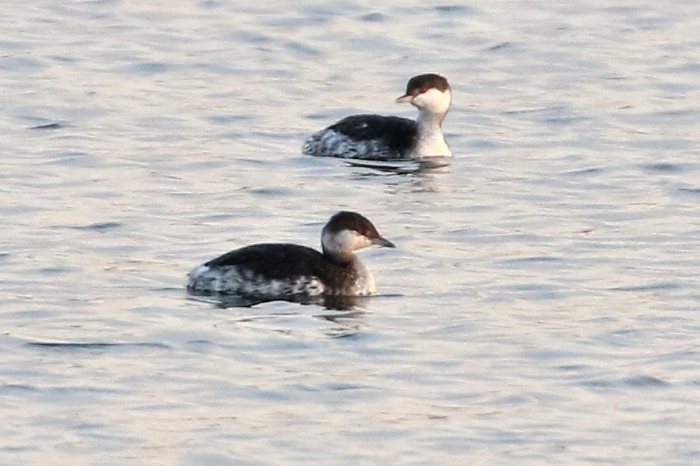
Adult (rear) and first-winter Slavonian Grebes, Clifford Hill GP, 26th November 2016 (Bob Bullock)
First-winter Slavonian Grebe, Clifford Hill GP, 27th November 2016 (Alan Coles)

Favouring the disused railway track and small area of set-aside east of Stanford Res, the wintering juvenile male Hen Harrier continued to be seen regularly between 26th and 6th and a Merlin was again present there on 9th, with another reported from the Brampton Valley area on 28th.

December is normally the first month of the winter in which white-winged gulls are found locally but this has not yet been the case. A single first-winter Mediterranean Gull at Hollowell Res on 9th with Caspian Gulls there on the same date and on 26th – plus two at Pitsford Res on 27th and one again on 3rd – reflects the current paucity of wintering scarce Larids in Northants.

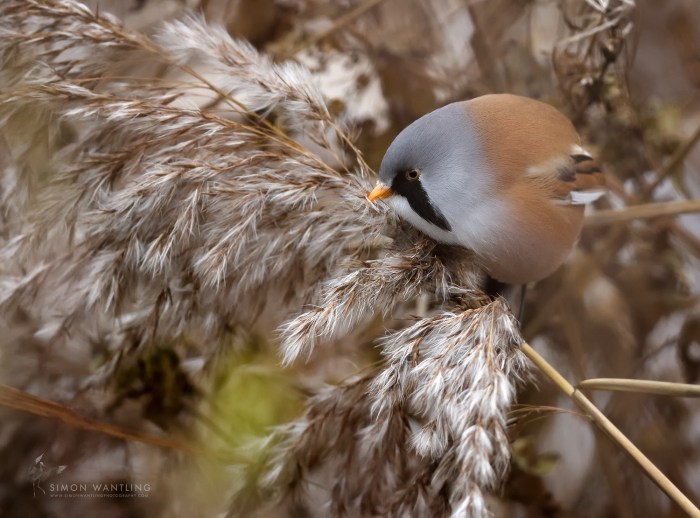
Short-eared Owls continued to be seen in the late afternoons at Neville’s Lodge, Finedon, with two on 27th, one on 29th and three on show on 8th while, elsewhere, singles were at Borough Hill on 26th, Sywell CP on 27th, in the Brampton Valley/Blueberry Farm area on 28th and 1st and at Harrington AF on 29th. The male Bearded Tit continued its presence throughout at Stanwick GP’s A45 Lay-by Pit, where it remained mobile along the causeway but at the same time occasionally providing remarkably close views.

Male Bearded Tit, Stanwick GP, 5th December 2016 (Alan Coles)


Male Bearded Tit, Stanwick GP, 9th December 2016 (Simon Wantling)
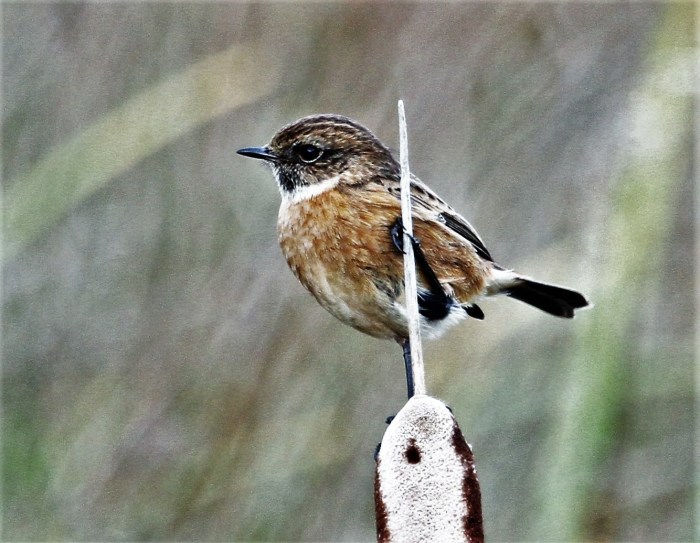
Male Stonechat, Summer Leys LNR, 9th December 2016 (Alan Coles). This species is enjoying a 'good' winter locally, with many records in the period including a maximum of 5+ at Hollowell Res on 9th.
Male Stonechat, Summer Leys LNR, 9th December 2016 (Alan Coles). This species is enjoying a ‘good’ winter locally, with many records in the period including a maximum of 5+ at Hollowell Res on 9th.

The only other passerines of note during the period were two Waxwings which flew south over Harrington AF on 26th.

Situation Vacant

After about ten years (it feels like more) I have decided to relinquish my post as Northamptonshire County Bird Recorder and I hereby give notice that I will no longer be doing the ‘job’ after 31st March 2017.

If anyone would like to step forward to take on this role then please feel free to contact me. If there are no volunteers prior to the above date then the county will be recorderless from 1st April.

I will not pretend the job is glamorous. There are hours of data input every week, supply of information to various organisations and journals, meetings to attend (which I don’t) and the rewards are meagre. With a more than full time job and other birding interests to juggle I simply don’t have the time to do the job justice.

I intend to continue with the Northantsbirds site and I will continue posting local bird news but the recorder’s job is better served by someone young, energetic and feisty with lots of energy or someone old, wise and wizened with lots of time. At present I fall into neither category.

I would like to take this opportunity to thank everyone for their support and record submissions over the last decade.

Slavonian Grebes at Clifford Hill Gravel Pits

While undertaking a WeBS count on 26th November, Bob Bullock found two Slavonian Grebes on the main barrage lake a Clifford Hill GP. Remaining faithful to an area in the north-west corner of the lake, they were still present two days later but there have been no reports since 28th. Are they still there?

Adult (left) and first-winter Slavonian Grebes, Clifford Hill GP, 27th November 2016 (Bob Bullock)

November proved to be a good month for this species in the county, with multiple arrivals on 14th including one at Thrapston GP, which remained until at least 19th, and another at Ravensthorpe Res, which was quickly joined by another the same day, both having departed by the following morning.

The two at Clifford Hill GP provided an opportunity for relatively close study and it was immediately evident that the two birds were quite different in plumage.

First-winter Slavonian Grebe, Clifford Hill GP, 27th November 2016 (Alan Coles)
First-winter Slavonian Grebe, Clifford Hill GP, 28th November 2016 (Alan Coles)

captureOne was an obvious textbook grey, black and white, winter-plumaged adult with a sharply demarcated black crown, white cheeks and a clean white foreneck. The other could be aged as a first winter, still retaining some juvenile plumage in the form of diffuse, dusky areas, most obvious on the rear cheeks as well as on the neck sides (which show a noticeable brownish hue), extending across the foreneck, which is also rather dirty-looking compared to that of the adult.
The Week in Focus 19th to 25th November 2016

The first and last days of the week were crisp, dry and sunny but the intervening period saw a low pressure system move rapidly across southern England, bringing wet and windy weather to Northants on 20th/21st, after which it was mainly dull, cold and showery. Few new birds were discovered in the seven-day period but there was still plenty to focus on, although the expected Waxwing invasion failed to materialise.

Up to twenty-five Pintails remained at Pitsford Res, where single male and female Red-crested Pochard x Mallard hybrids were found on 23rd and two drake Red-crested Pochards constituted a poor showing following regular double-figure counts there in previous weeks. Up to two female Scaup were at Stanford Res until at least 20th, with one remaining until 25th, and four of the original five remained at Pitsford Res until at least 23rd.

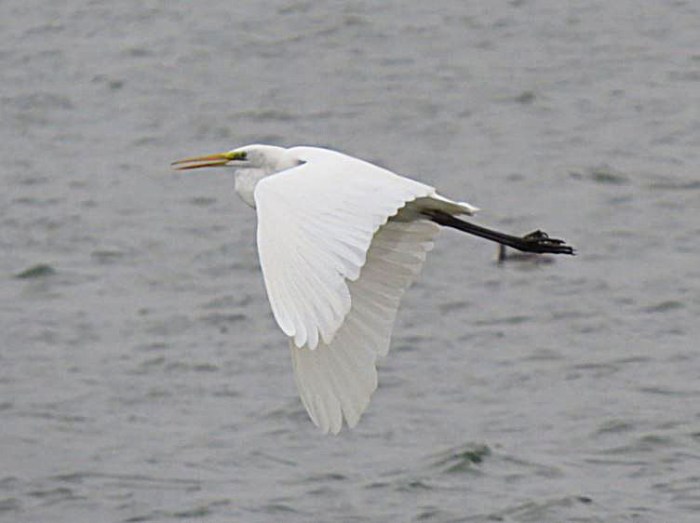
Six localities produced Great White Egrets this week with four regularly on view north of the causeway at Pitsford Res. This species was also recorded from Thrapston GP on 19th, Summer Leys LNR, where one was present on the same date, after which it or another was seen at nearby Ditchford GP on 20th and the long-staying individual remained at Ravensthorpe Res, visiting Hollowell Res on 24th.

Great White Egret, Pitsford Res, 20th November 2016 (Adrian Borley)

The Slavonian Grebe found last week at Thrapston GP remained on Titchmarsh LNR, visible from the North Hide, until at least 19th.

In the vicinity of Stanford Res, the ‘ringtail’ Hen Harrier continued to be seen regularly – if only fleetingly – throughout the week and was aged and sexed as a juvenile male from photographs taken on 23rd. Additionally, two more ‘ringtails’ were seen – one at Stanwick GP on 21st and the other the following day at Harrington AF.

Juvenile male Hen Harrier, Stanford Res, 23rd November 2016 (Bob Bullock)

Aside from a Merlin again at Stanford Res on 25th, Peregrines recorded from Ditchford GP, Harrington AF, Northampton and Pitsford Res constituted the only other raptor of note during the period.

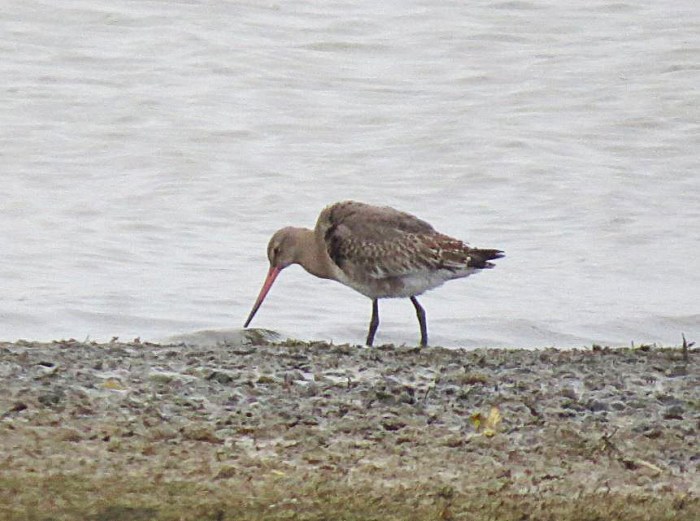
Just two localities produced Golden Plovers this week, but the lack of sites was more than made up for in numbers with one thousand five hundred counted near Grafton Regis on 23rd.  On 20th, three Black-tailed Godwits appeared at Pitsford Res, two Dunlins visited Stanwick GP on 24th, where four Redshanks were also present on the same date, while one continued to linger at Pitsford Res until at least 23rd.

Black-tailed Godwit, Pitsford Res, 20th November 2016 (Adrian Borley). One of three present on this date.

Two Green Sandpipers were also at Pitsford on this date with two more at Stanford Res and one at Ditchford GP on 20th. Single Common Snipe were at Ditchford GP on 20th and Grafton Regis on 25th but twenty-seven were counted at Pitsford on 23rd.

Pitsford also produced a second-winter Little Gull in the roost on 21st, while the usual adult Yellow-legged Gull remained there until at least 23rd. This week saw some new Short-eared Owls with one near Neville’s Lodge, Finedon on 22nd and 24th and two there on 23rd, while one was again in the Blueberry Farm (Maidwell)/Brampton Valley area on 24th-25th. Two Bearded Tits were again reported at Summer Leys LNR on 20th and the male Stanwick GP’s A45 Lay-by Pit, remained until at least 21st, while reports of Central European Blackcaps increased this week with singles at Summer Leys on 20th, Duston (Northampton), Kettering and Pitsford Res on 23rd and two near Kettering on 25th.

Female Central European Blackcap, near Kettering, 23rd November 2016 (Alan Francis)

Not increasing – much to the disappointment of many – were Waxwings which, after last week’s sprinkling of sightings of birds on the move, the much-anticipated local invasion simply did not happen but the flyover individual at Brackmills (Northampton) on 24th provided some consolation for one observer at least. Blueberry Farm/Brampton Valley and several, heard only, in Brixworth. Stonechat numbers were down in comparison to previous weeks with one at Pitsford Res on 23rd and up to four in the Blueberry Farm/Brampton Valley area all week, with Bramblings at the same locality on 19th.

The Stanford Hen Harrier

Hen Harrier with ‘Northern’ trait

First seen by Ian Bartlett on 13th November, this juvenile male Hen Harrier is as much stunningly well-marked as it is difficult to catch up with.

It was next observed on 17th and has since been seen almost daily, albeit briefly on each occasion, as it flies across the South Kilworth road between the settling pond and the old railway track, at the eastern end of Stanford Reservoir. Its regular hunting area is as yet unknown so prolonged observation has not been possible and all views to date have been fleeting.

However, a series of photographs taken by both Alan Coles and Bob Bullock on 23rd have nicely captured and revealed its resemblance to a juvenile Northern Harrier. With an extensively dark face and broad – though fragmented – boa, this is a Hen Harrier at the top end of the variation scale.

Juvenile male Hen Harrier, Stanford Res, 23rd November 2016 (Alan Coles)

Ageing and sexing it is not too difficult. The combination of a largely ochre ground colour to the underparts with relatively thin streaks, cold, dark brown upperparts and a more ‘solid’ face than an adult female puts it squarely in the juvenile camp. Adult females in comparison have a whitish ground colour to the underparts with broader, blotchier streaks, slightly warmer upperparts and a more open facial disc. Its already yellow eye indicates it is a male as juvenile females have dark eyes.

Juvenile male Hen Harrier, Stanford Res, 23rd November 2016 (Alan Coles)

Check out the contrast between the dark head/neck/boa/upper breast and the remainder of the pale underparts. It’s very marked and this is the initial, big, eye-catching, pro-Northern feature, as is the deeply solid dark brown face pattern with dark lores and the plain buff leading edge to the wing, formed by the underwing coverts.

Juvenile male Hen Harrier, Stanford Res, 23rd November 2016 (Bob Bullock)

While initially this may be enough to set pulses racing, more detailed examination reveals that there are only five dark bars on the longest primaries (Northern usually has 5-7, Hen 4-5), the dark subterminal tips to the underside of the inner primaries are strong (weaker and paler in Northern), the middle dark bar on the underside of the secondaries is broad (usually thin in Northern) and the ground colour of the underparts is too light (rustier in Northern).

Juvenile male Hen Harrier, Stanford Res, 23rd November 2016 (Bob Bullock)

So it’s an interesting-looking bird, an individual at the dark end of the Hen Harrier variation scale – and a nice bird for the county. It would be even nicer if it stuck around long enough to watch it hunting!

Northamptonshire records of Hen Harrier 2001-2015

Hen Harrier is a scarce migrant and winter visitor, which averages 7 records a year in Northamptonshire. Its status appears stable in this context, despite persecution on moorland further north.

2015 Northamptonshire Bird Report now out!

Northants Birds
nbr-2015-coverThe latest, limited edition, Northamptonshire Bird Report, with records for 2015, is now available. Contents include full Systematic List compiled using records from more than 320 observers, sections on Escapes and Ferals and Hybrids, as well as many photos and illustrations by local photographers and artists.

There are also reports from the Northants Ringing Group, as well as the full list of species recorded in Northants, tables of arrival and departure dates for summer and winter visitors and a County site map.

Copies and back issues from:

R W Bullock, 81 Cavendish Drive, Northampton NN3 3HL

Price £7.50 + £1.30 p&p

Also on sale at the Oundle Bookshop                                                                                                                          13 Market Place, Oundle PE8 4BA Phone:01832 273523

Cheques payable to ‘Northamptonshire Bird Report’