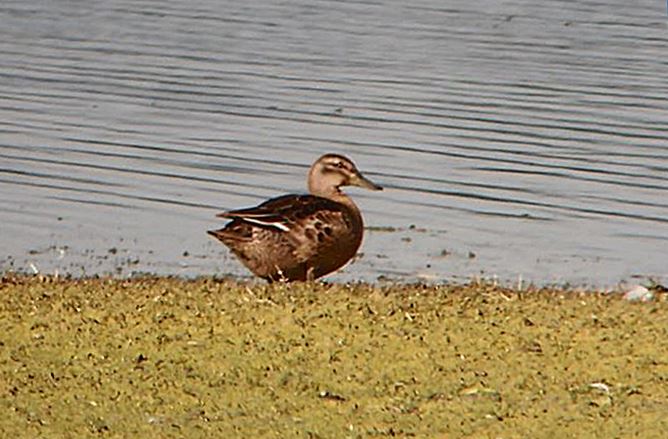
With most having long departed for Africa, there are probably fewer than ten Garganeys left in the UK at present. I first found this one at Ravensthorpe Reservoir on 20th September and, though not reported for a couple of weeks in late September/early October, it has a poorly marked face pattern and is readily identifiable as the same individual. It was still present yesterday.
To my eyes, juvenile Garganeys stand out from the crowd of Teal – with which they often loosely associate – even when the face pattern can’t be seen. That combination of dark, oily-rust breast and flanks, contrasting sharp, whitish edges to the tertials and no white line along the outer edge of the under tail coverts is really quite eye-catching. The feeding habit of swimming around with the head partly submerged and rarely up-ending like Teals do is also a useful initial pointer. This particular individual is clearly a juvenile based on plumage tone and the solid dark belly (female and eclipse drakes have a whitish belly) but a quick flap of the wings, revealing a greenish speculum bordered by very broad white borders, was enough to sex it as a male.
In the accompanying, rather ropey, video there also appears to be the beginnings of a male breast band – demarcated from the belly – coming through. This does not appear to be mentioned in the literature as appearing quite so early on in the autumn but I guess it has to start sometime.
As it’s been present for a month it will be interesting to see how long this bird stays around. Wintering birds are rare but not unheard of!
An established easterly airstream flowing from well beyond the Baltic persisted throughout the week, bringing a combination of low temperatures and largely dry weather as well as some interesting migrants from the east.
Back on the menu this week was one – presumably of the original two – Ruddy Shelduck which, after almost four weeks’ absence, was again by the dam at Pitsford Res
Ruddy Shelduck, Pitsford Res, 12th October 2015 (Stuart Mundy)
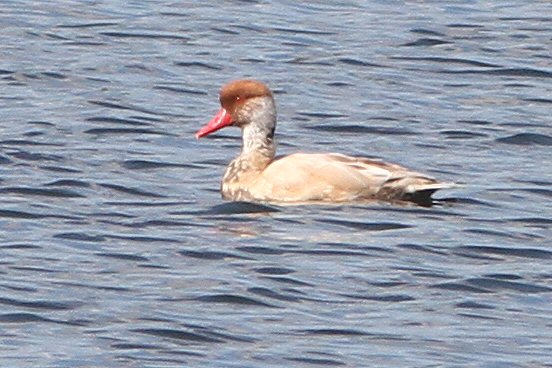
on 12th. Beyond this, however, there was little to write home about with just two Pintails at Pitsford Res and three at Earls Barton GP – both on 12th – plus two at Stanwick GP on 16th and the two juvenile Garganeys remaining at Pitsford Res and at Ravensthorpe Res until 10th. On 12th, five Red-crested Pochards visited Summer Leys LNR and a female was at Pitsford Res – both of these localities also hosting Great White Egrets with three at Pitsford on 10th-11th, of which at least one remained until 14th, and singles at Summer Leys on 11th and 16th. In the generally underwatched south of the county a Bittern was present in reeds on small lake just south of Farthinghoe NR before flying off low to the north-east on 13th.
This week’s raptors were few, but varied, and included possibly the twentieth county record of Rough-legged Buzzard, which flew low west over the chippings compound at Harrington AF at 10.30 on 12th. Interestingly one – possibly the same – was seen to arrive at Clayhanger Marsh, West Midlands, 80 km WNW of Harrington AF at 12.50 later that same day. Now, assuming a flight speed of 35 km an hour … There was also one in Cambridgeshire on 15th. Somewhat overshadowed by this event were Marsh Harriers at Summer Leys on 14th and 16th and a Merlin at Stanford Res on 14th.
Waders during the period were limited to a count of one hundred and twenty-five Golden Plovers at Daventry CP on 11th and forty at Stanwick GP plus a Dunlin on 16th, two Green Sandpipers at Ravensthorpe Res on 10th and one at Pitsford Res the following day, the first Jack Snipe of the autumn at Stanwick on 16th, plus a sprinkling of Common Snipe, which included approximately forty in a field between Pitsford Res and Scaldwell on 13th, up to seven at Pitsford Res proper on various dates to 14th and one at Hollowell Res on 10th.
A first-winter Arctic Tern arrived at Stanwick GP on 15th (late October records of this species are not unusual) and the same site produced a putative adult Azorean Gull on 10th – echoes of this time last year. Will we ever discover what they really are …
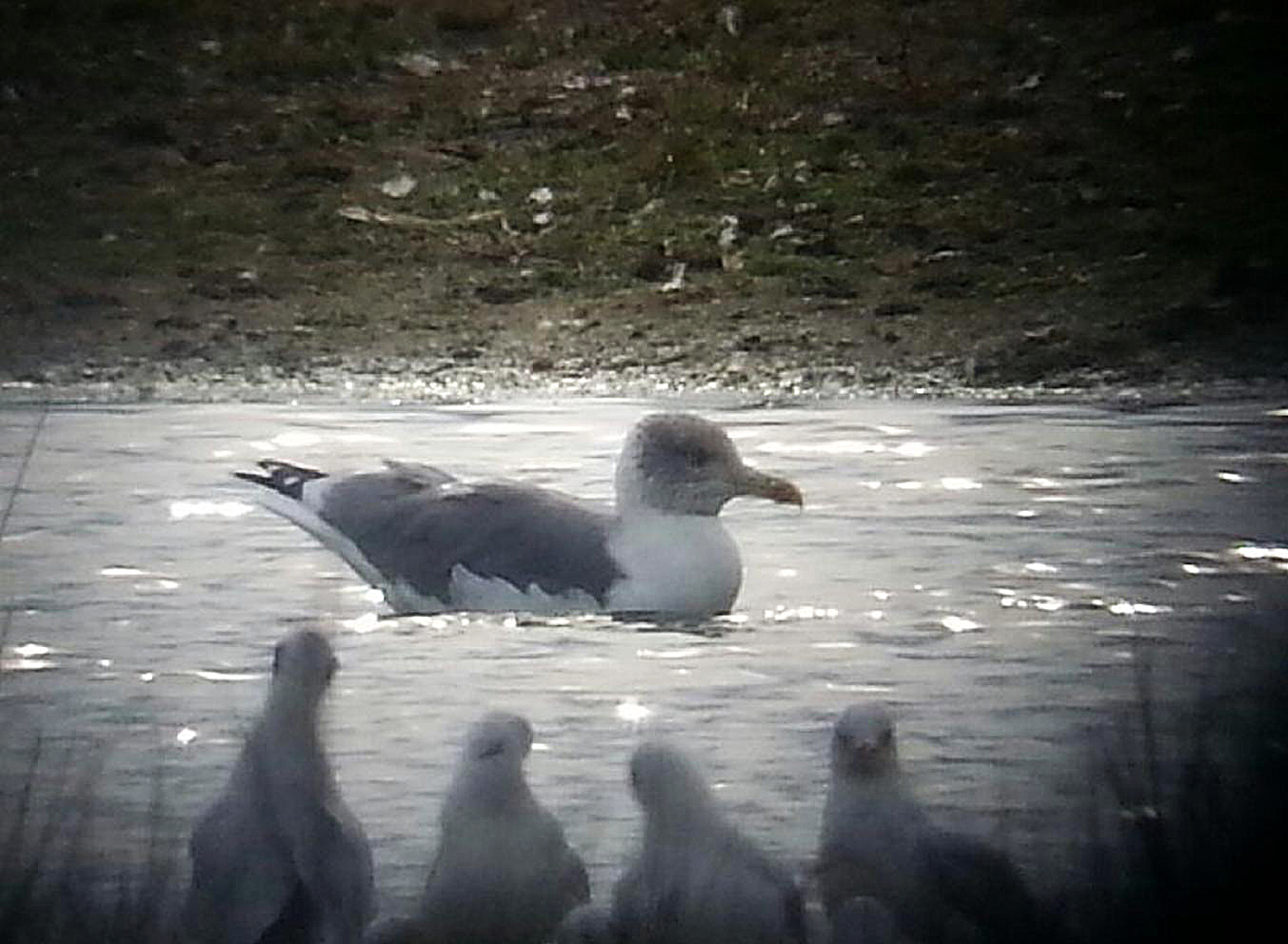
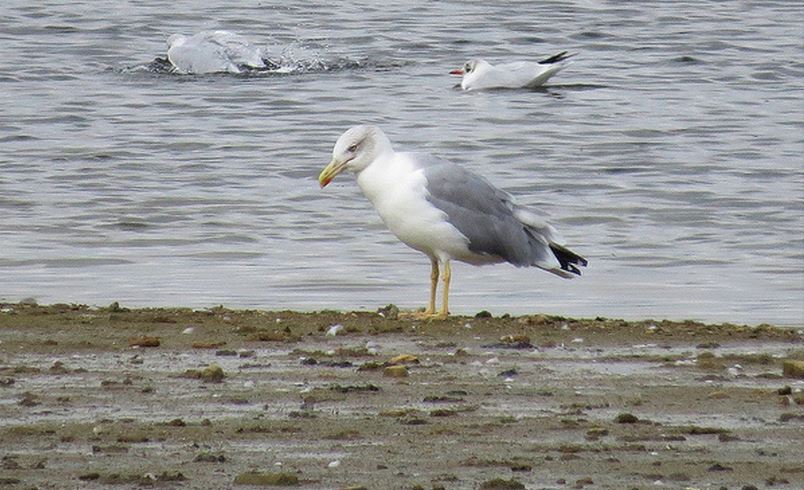
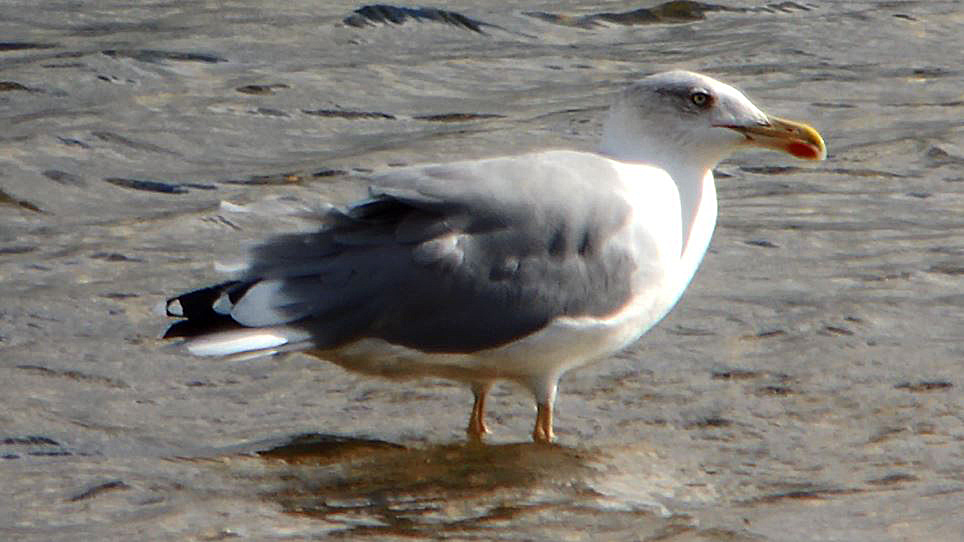
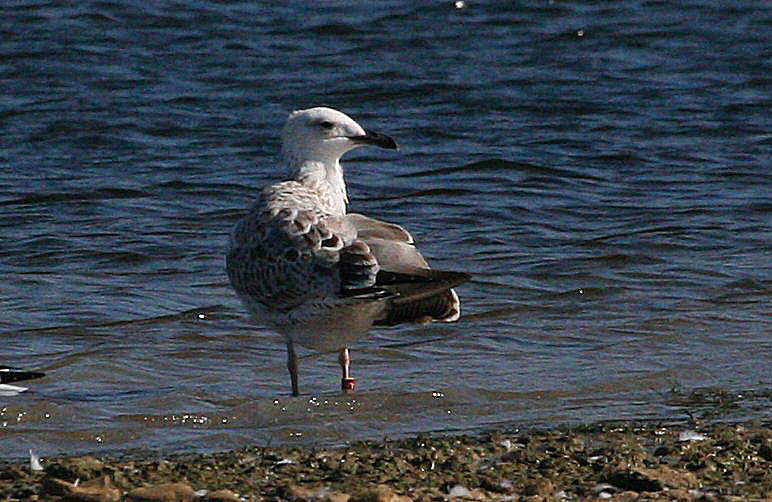
‘Standard’ Yellow-legged Gulls included ten at Stanwick GP on 10th, single adults at Hollowell Res on 10th, Wicksteed Park Lake on 12th-13th and one again at Stanwick on 16th plus two at Pitsford Res on 14th. A first-winter Caspian Gull visited Stanwick on 10th.
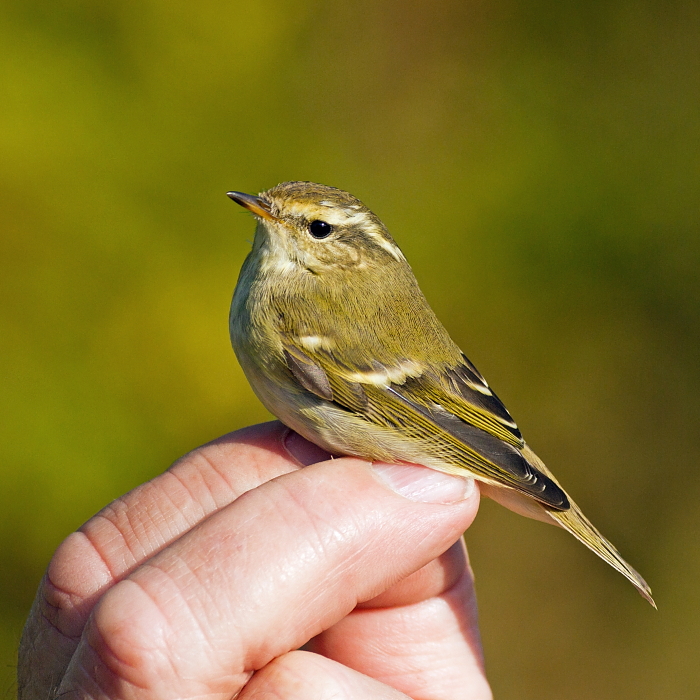
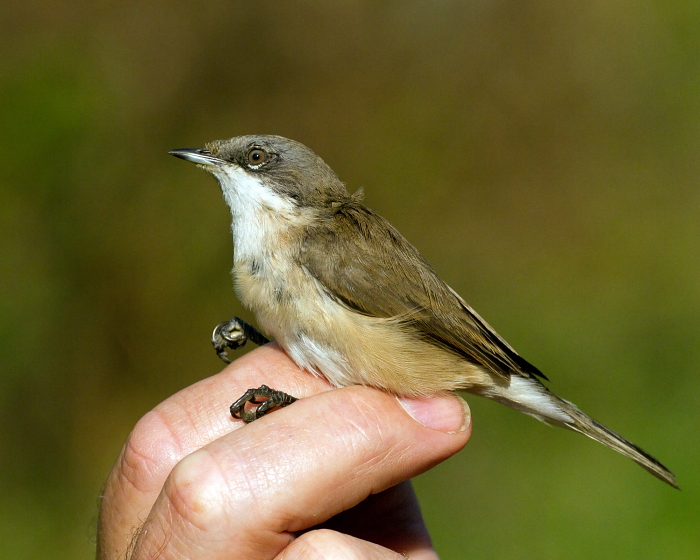
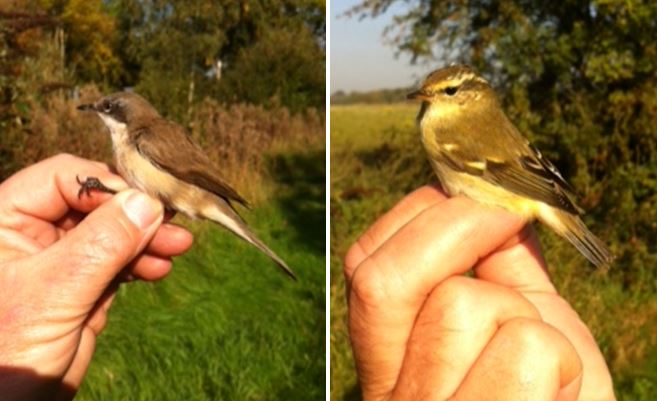
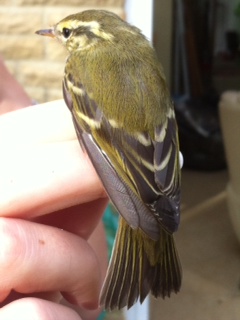
The remarkable run of scarce passerines trapped at Stanford Res over the years continued this week, bearing testament to the many hours spent on site and sheer persistence of the Stanford Ringing Group. With the winds full of eastern promise, the team struck silver (if not gold) on 12th with a Yellow-browed Warbler trapped and ringed, followed quickly by Northamptonshire’s second-ever ‘Eastern’ Lesser Whitethroat being pulled from
Yellow-browed Warbler, Stanford Res, 12th October 2015 (Paul Riddle)‘Eastern’ Lesser Whitethroat, Stanford Res, 12th October 2015 (Paul Riddle)
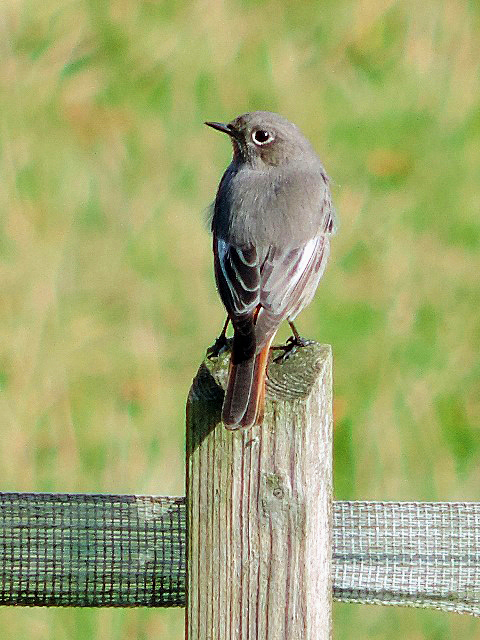
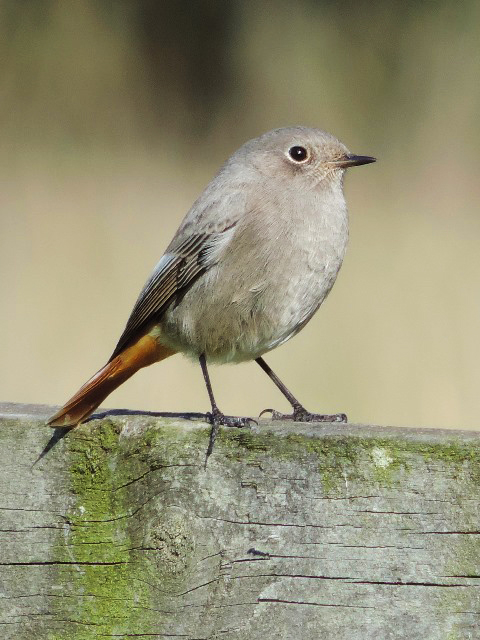
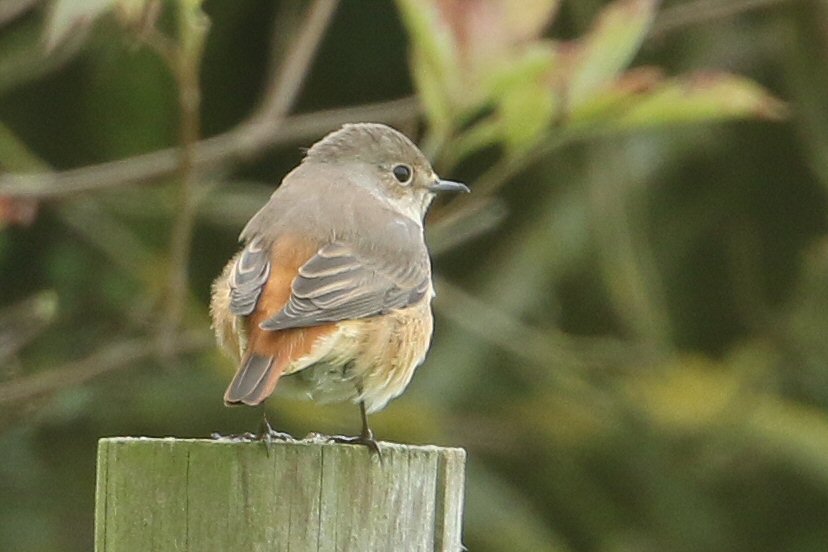
the net only an hour or so later. Subspecific identification of this species can be tricky – even in the hand – so a couple of feathers which became dislodged during processing were quickly despatched to the University of Aberdeen for DNA analysis … Looking dapper but a lot less rare was the Black Redstart which spent 12th-16th around Dentonwood Lodge
Black Redstart, Denton Wood, 12th October 2015 (Steve Brayshaw)Black Redstart, Denton Wood, 14th October 2015 (Steve Brayshaw)
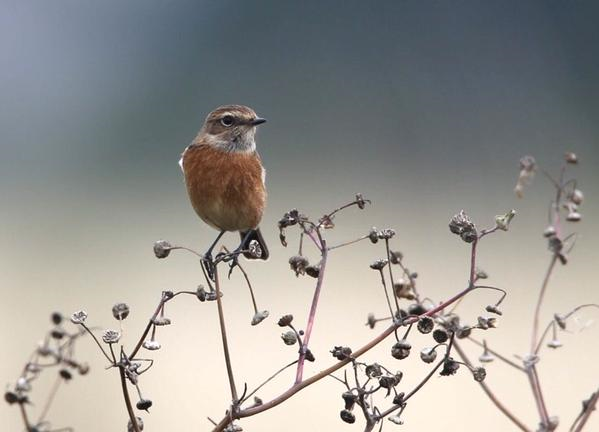
(Yardley Chase), while the only Stonechats reported this week were two/three in Brampton Valley on 12th. Joining a mixed finch flock at Geddington Chase on 12th, a Brambling served as a reminder that winter is surely on its way …
We are in the midst of a Siberian invasion. The fallout from the arrivals en masse on the east coast – and elsewhere – has clearly penetrated far inland with the county’s second Yellow-browed Warbler of the year being trapped today at Stanford Reservoir. But that’s not all. Also pulled from the net was an ‘eastern’ Lesser Whitethroat – this hot on the heels of the presumed blythi individual which wintered in Northampton in 2014.
‘Eastern’ Lesser Whitethroat and Yellow-browed Warbler, Stanford Res, 12th October 2015 (Adam Homer)
Adam Homer kindly provided some quick initial images (more to come) and an overview of the external features of the Lesser Whitethroat:
The biometrics pretty much matched up to the nominate race curruca so it looks likely to be blythi. We have ruled out halimodendri due to no white pattern on the 5th tail feather.
The bird was noticeably brown all over the mantle, rump and down to the tail.
The flanks were buff and belly was white. The head was brown with a slight greyish tone surrounding the black mask. Straight away whilst extracting it MickTownsend noticed that its eye was brown not unlike an adult Dunnock’s. Legs were slate-grey and soles of feet were cream. The upper mandible was blue-grey and lower was light grey at the base and blue-grey towards the tip.
Feathers which became detached during processing have been retained for DNA analysis, which Dr. Martin Collinson (the legendary ‘Doc Martin’) at the University of Aberdeen has kindly agreed to undertake to help determine subspecific identity. Results are eagerly awaited !
Sandwiched between two high pressure systems, an Atlantic low crossed the country mid-week, bringing heavy rain and a short burst of north-westerly winds before calm weather and easterly winds returned at the week’s end.
The three Barnacle Geese remained at Clifford Hill GP throughout the period, while up to six Pintails were at Pitsford Res from 3rd with singles again at Wicksteed Park Lake on 3rd and Daventry CP on 6th. Having been absent for a couple of weeks, Garganeys reappeared in exactly the same places at Pitsford Res on 6th and at Ravensthorpe Res on 7th. They appeared to be the same individuals as previously observed, so where had they been during the intervening period?
Garganey, Pitsford Res, 6th October 2015 (Mike Alibone)
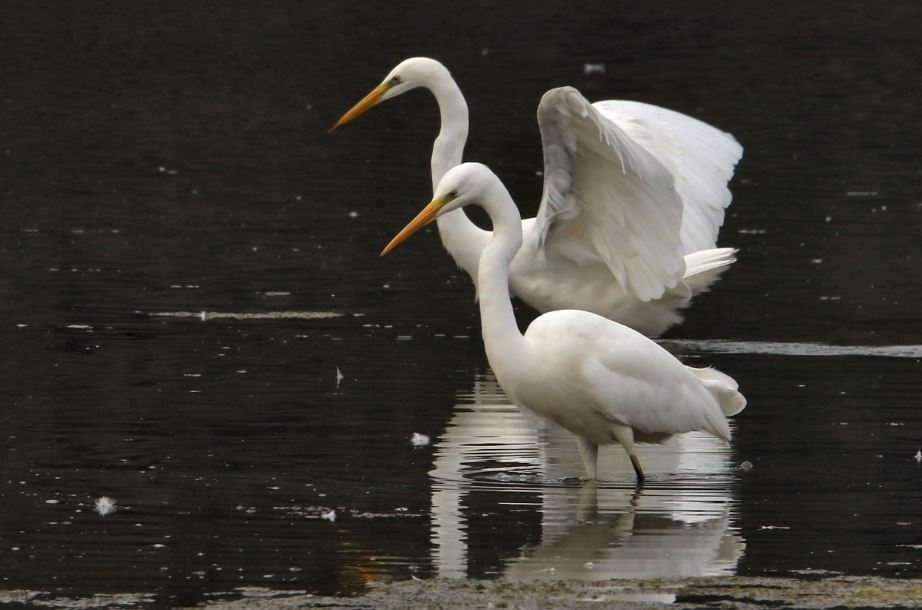
A Red-crested Pochard was found at Stanford Res on 3rd – the same date that the Pitsford flock increased to seven and a ‘surge’ in Great White Egret records occurred. On this date, one flew over Hollowell Res and two were found at nearby Ravensthorpe Res with the latter remaining in place at the same time that two more arrived at Pitsford Res, where one was already present. One remained at Ravensthorpe Res from 4th to 7th and three were at Pitsford Res on the latter date with at least two there to 9th. It appears, therefore, that at least five different individuals were present in the county this week.
Great White Egret, Ravensthorpe Res, 3rd October 2015 (Bob Bullock)Great White Egret, Ravensthorpe Res, 3rd October 2015 (Bob Bullock)Great White Egrets, Ravensthorpe Res, 3rd October 2015 (Bob Bullock)
One, possibly two, Marsh Harriers were present at Polebrook AF on 4th and another was seen near Raunds on the same date, while the week’s only Peregrine was at Higham Ferrers on 4th-5th and what may be the year’s last Hobby flew south over Harrington AF on 7th.
The latter site stumped up just three Golden Plovers on 6th and 7th but a more respectable one hundred and ninety-eight were counted at Daventry CP on the first of these two dates, while single Ringed Plovers visited Clifford Hill GP on 3rd and Pitsford Res on 6th. Pitsford also produced the week’s only Dunlin and Clifford Hill GP the only Common Sandpiper – both on 3rd. Green Sandpipers were still to be found at three sites with both Pitsford Res and Ravensthorpe Res producing one on 3rd-4th and three on 7th, while another was as Bozeat GP on 8th. A Spotted Redshank flew east at Clifford Hill GP on 3rd – the same date that three Redshanks visited Ravensthorpe Res and single Common Snipe were at Pitsford Res and Hollowell Res, while six were at Clifford Hill GP; eight more were counted at Bozeat GP on 8th. An adult Yellow-legged Gull was at Hollowell Res on 3rd and up to two adults remained at Pitsford Res throughout the week.
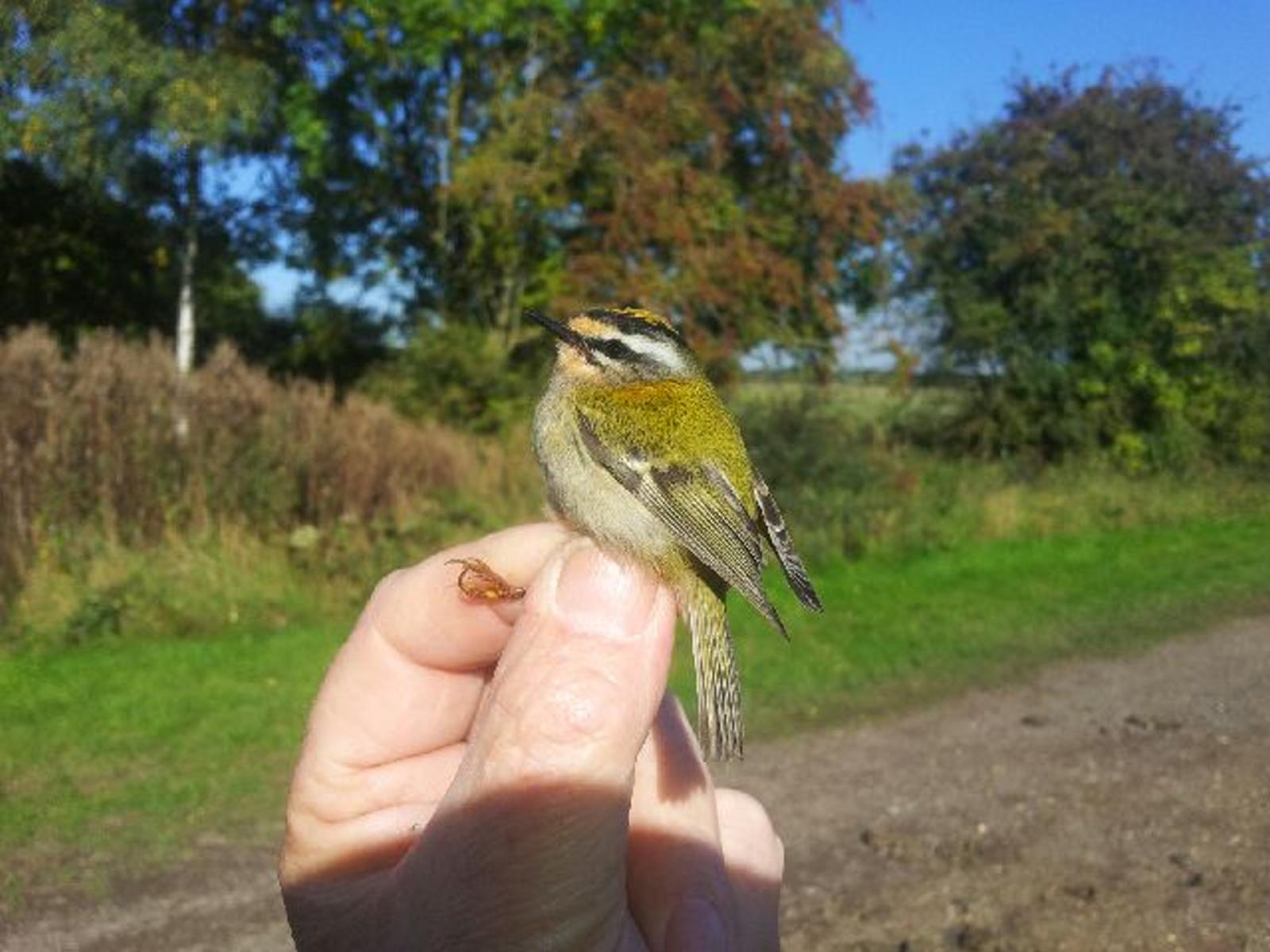
On the scarce passerine front, a Firecrest trapped and ringed at Stanford Res on 9th did its best to make up for the absence of any more of the much anticipated Yellow-browed Warblers resulting from the continuing nationwide invasion.
Firecrest, Stanford Res, 9th October 2015 (Mick Townsend)
Otherwise, there were single Stonechats at Thrapston GP on 3rd, Hollowell Res on 7th, Bozeat GP on 8th and Borough Hill on 9th with last week’s four remaining at Blueberry Farm, Maidwell until at least 3rd,
Stonechat, Blueberry Farm, Maidwell (3rd October 2015 (Mike Alibone)
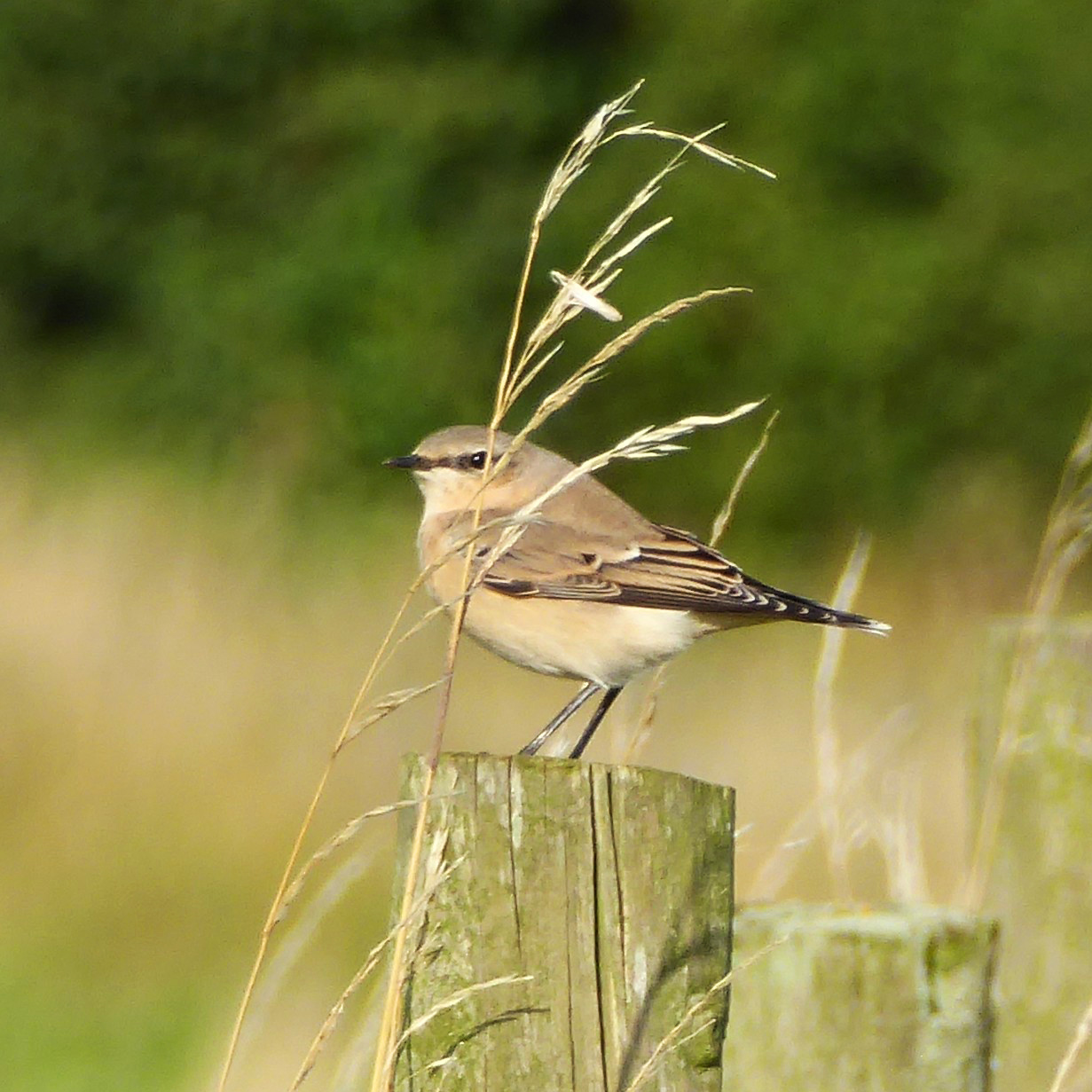
while four Northern Wheatears comprised singles at Clifford Hill GP on 3rd, Pitsford Res and Naseby Res on 7th and Harrington AF on 8th, with the Naseby individual identified as a Greenland race individual.
A high pressure system stationed over the UK brought the longest period of settled weather for some time, resulting in largely sunny days, dry conditions and a constant flow of light easterlies.
One Barnacle Goose at Clifford Hill GP had become three by 1st, while the week’s only Pintail was at Pitsford Res on 27th – the same site continuing to hold up to five drake and one female Red-crested Pochards, one of which was a leucistic individual.
North of the causeway there, two Great White Egrets remained from 26th until at least 1st.
An intriguing record of a ‘ringtail’ harrier at Abington Meadows LNR, adjacent to Clifford Hill GP, involved two sightings three hours apart on 29th. Unfortunately it remained unidentified, in contrast to the readily identified juvenile Marsh Harrier at Pitsford Res two days prior to this and another at Summer Leys LNR on 2nd. Three Peregrines were seen during the period with singles at Harrington Airfield on 26th and at both Higham Ferrers and nearby Ditchford GP on 30th.
This week’s waders included a surprise – and brief – visit to Stanford Res by an Avocet on 1st, while thirty Golden Plovers were near Warmington on 30th and Ringed Plovers were represented by five at Pitsford Res on 26th and one at Clifford Hill GP on 1st. Single Dunlins visited Pitsford Res on 26th and Hollowell Res on 30th while Green Sandpipers numbers held up to some extent with up to three at Pitsford Res on 26th-27th, one at Summer Leys LNR on 26th and three at Ditchford GP on 29th but the week’s only Common Snipe were two at Pitsford Res on 30th. The almost resident adult Yellow-legged Gull at Pitsford Res was reported between 27th and 1st but there were, apparently, no more this week.
Two late (or should that be too late?) Turtle Doves were at Harrington AF on 27th but the week’s star bird was a Yellow-browed Warbler, which was trapped and ringed at Kingswood, Corby on 29th. This was only the 7th County record and the first since 2010.
Yellow-browed Warbler, Kingswood, Corby, 29th September 2015 (Adam Homer)
The first of the autumn’s Black Redstarts was a first-winter at Desborough on 30th and, what must surely be the last now, two more Common Redstarts were trapped and ringed at Stanford Res on 28th and perhaps the last Whinchats were two at Blueberry Farm on 30th. The latter site continued to hold at least four Stonechats and another was present at Pitsford Res on 30th-1st, while the only Northern Wheatear was at nearby Harrington AF on 26th. The week ended with the autumn’s first Rock Pipits at Hollowell Res and Pitsford Res on 30th followed by two at the latter site on 1st.
Given the huge numbers of Yellow-browed Warblers present in Britain (more than 740, with 320 in Shetland alone) during the last week, it seems almost inevitable that at least one would find its way to Northants. And so it did. When Katie King was ringing at Kingswood, Corby yesterday she pulled this little sprite from the net.
Yellow-browed Warbler, Corby, 30th September 2015 (Katie King)
Despite their apparently increasingly common autumn occurrence on the coast, they are by no means annual in the County with only six previous records (two in 1981, 1992, 2001, 2004 and 2010).
Let’s hope more are found locally over the coming weeks!
After a quiet start, with two still and foggy weekend mornings, a largely westerly airflow brought a mixture of sunshine and heavy showers to the county but little in the way of new birds. Although mainstream wader passage is now clearly over for another autumn, historically, the last week of September has a track record for producing some class American shorebirds in the county … and another is long overdue.
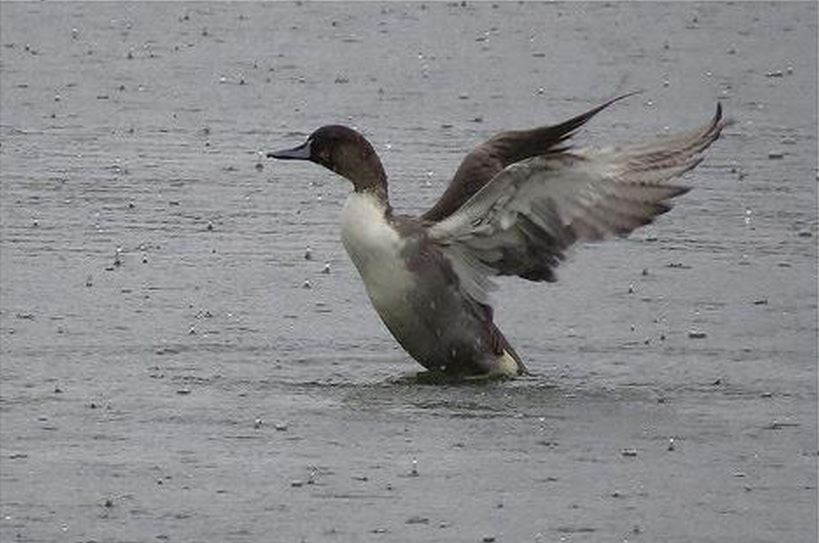
Despite the continuing autumn build-up of wildfowl – particularly evident at Pitsford Res – the recent WeBs count failed to produce any surprises with a Barnacle Goose again at Clifford Hill GP on 25th and last week’s drake Pintail remaining at Wicksteed Park Lake until at least 24th, while three were at Pitsford Res between 19th and 23rd.
Drake Pintail, Wicksteed Park Lake, 21st September (Alan Francis)
A ‘new’ Garganey (or perhaps the Hollowell bird relocating) was discovered at Ravensthorpe Res on 20th, remaining there until the next day and seven Red-crested Pochards were found at Ditchford GP on 19th, while four eclipse drakes remained at Pitsford Res all week with the latter site continuing to host a Great White Egret until at least 24th.
Bird of the week was undoubtedly the Honey Buzzard which drifted low south over Harrington AF late in the afternoon on 20th – the fourth to have occurred in the county this year – while, nearby, a juvenile Marsh Harrier was again seen in the Blueberry Farm, Maidwell/Brampton Valley area on 20th, 21st and 23rd. After a week with none, two Ospreys were seen – one flew over Sywell on 19th and the other flew south at Pitsford Res on 21st and this week’s Peregrines were at Higham Ferrers on 20th-22nd, Blueberry Farm on 20th and nearby in the Brampton Valley on 24th.
Wader numbers continued to plummet with four Ringed Plovers at Pitsford Res on 23rd-24th, single Dunlins at the same site on 19th and 24th and single Common Sandpipers at both Naseby Res and Hollowell Res on 20th. Green Sandpipers were still being seen at six localities with singles at Ditchford GP and Summer Leys LNR, two at Naseby Res and four at each of Pitsford Res, Ravensthorpe Res and Deene Lake. Large numbers of Common Snipe have yet to materialise and this week’s were two at Ditchford GP on 19th, four at Deene Lake the following day and the same number at Pitsford Res on 23rd. Small numbers of Yellow-legged Gulls included the regular adult at Hollowell Res on 20th, up to two adults daily at Pitsford Res between 20th and 24th with seven visiting the gull roost there on the latter date.
Adult Yellow-legged Gull, Pitsford Res, 22nd September 2015 (Alan Francis)
On terra firma, a late juvenile Cuckoo was discovered at Yelvertoft on 20th, a Short-eared Owl was reported at Summer Leys on 19th and, again on 20th, the autumn’s third Wryneck was watched ‘anting’ on the Cold Ashby road outside Stanford on Avon. After the tremendous autumn run of Common Redstarts there were just two at Blueberry Farm and one at Scaldwell on 19th and two still in a hedgerow between Pitsford Res and Walgrave on 20th-22nd. Whinchat numbers also dropped with one at Harrington AF on 20th and up to six at Blueberry Farm between 19th and 21st, being replaced there by up to four Stonechats there by 25th, while one was at the Northampton end of the Brampton Valley on 24th.
Stonechat, Blueberry Farm, Maidwell, 19th September 2015 (Martin Swannell)Stonechat, Brampton Valley, 24th September 2015 (Douglas McFarlane)
Northern Wheatears remained scarce with just singles at Duston and Blueberry Farm on 19th and at Harrington AF on 19th-20th.
Aside from a tornado hitting Duston on 14th, unsettled weather conditions – courtesy of a couple of low pressure systems crossing the UK – brought little in the way of scarcities to the county, although passerine migration was very much in evidence throughout the week.
The two Ruddy Shelducks remained at Pitsford Res until at least 16th while Pintail numbers doubled this week with one at Ravensthorpe Res from 12th to 16th and last week’s drake remaining at Wicksteed Park Lake on 15th. Two of last week’s Garganeys remained – the Pitsford Res juvenile until 13th and the Hollowell individual until 16th while five eclipse drake Red-crested Pochards at Pitsford Res on 13th and two at Stanford Res between 13th and 16th served to complete the week’s wildfowl line-up. After three weeks of relative prominence there was just one Great White Egret – at Pitsford Res on 13th, the day after the second of the autumn’s Black-necked Grebes was found at Summer Leys LNR. It did not stay.
Raptors provided slim pickings with just one juvenile Marsh Harrier at Blueberry Farm, Maidwell on 12th or 13th and, intriguingly, an unidentified ‘ringtail’ harrier at the same locality on 17th. This site also produced a Peregrine on 12th or 13th and further singles were seen at Pitsford Res on 13th, Higham Ferrers on 16th-17th, between Moulton and Holcot on 17th and in Northampton on 17th-18th.
The decline in numbers of passage waders continued with the four Ringed Plovers at Hollowell Res on 12th having increased to eight by 16th with the lingering juvenile Black-tailed Godwit at nearby Ravensthorpe Res until the same date. Just one Dunlin was at Hollowell Res on 12th, although six were found there on 16th, while the only Ruff was one at Naseby Res on 13th-14th. Common Sandpipers were limited to two at Pitsford Res on 12th-13th and singles at Stanford Res on 13th, Naseby Res on 14th-16th, Hollowell Res on 16th and Stanwick GP on 17th-18th, while Green Sandpipers mustered two at Pitsford Res on 13th and singles at Naseby Res on 13th-14th and Ravensthorpe Res on 16th. The week’s only Greenshank was the lingering individual in Pitsford Res’ Yacht Bay on 13th, while the only Common Snipe were singles at Pitsford Res on 12th and Stanwick GP on 17th.
On 13th a few more Black Terns appeared, including eight at Pitsford Res and two at Hollowell Res, the latter birds remaining to be joined by a third on 16th and a juvenile Little Gull paid a brief visit to Stanwick GP on 15th. Numbers of Yellow-legged Gulls were down compared to last week and included the regular adult at Hollowell Res, two adults and a juvenile at Pitsford Res on 12th with an adult there on 13th and 17th and two adults at Stanwick GP on the latter date.
Common Redstarts were still very much in evidence with up to five in a hedgerow between Pitsford Res and Walgrave all week, a first-winter trapped and ringed at Stanford Res on 13th, singles at Clifford Hill GP and Sulgrave on 14th, two at Harrington AF on 16th with five there the next day and two at Blueberry Farm on 17th-18th.
Male Common Redstart, between Pitsford Res and Walgrave, 13th September 2015 (Bob Bullock)Female Common Redstart, between Pitsford Res and Walgrave, 13th September 2015 (Bob Bullock)
The latter site continued to hold up to six Whinchats throughout the week, Harrington AF was close behind with at least four, while Clifford Hill GP produced at least three between 14th and 18th, the Pitsford Res/Walgrave hedge held two on 17th and singles were found at Hollowell Res on 12th, Sywell CP on 17th and Summer Leys the following day. The autumn’s first Stonechats appeared this week with two at Blueberry Farm on 17th, two at Stortons GP on 18th and one at Summer Leys on the same date, while single Northern Wheatears were at Hollowell Res on 12th-14th, Harrington AF on 16th, Pitsford Res, Blueberry Farm and Walgrave on 17th and two Tree Pipits overflew Harrington AF on 16th followed by another the following day.
The latest, limited edition, Northamptonshire Bird Report, with records for 2014, is now available. Contents include a full Obituary of bird report founder member and illustrator, Rod Ingram – who sadly died earlier this year – along with a collection of his illustrations, full Systematic List compiled using records from more than 320 local observers, sections on Escapes and Ferals and Corrections and Additions from previous years, as well as many photos and illustrations. There are also reports from the Northants Ringing Group, the Stanford Ringing Group and a WeBs Report, as well as the full list of species recorded in Northants, tables of arrival and departure dates for summer and winter visitors and a County site map.
On sale in Oundle Bookshop or copies and back issues from:
R W Bullock, 81 Cavendish Drive, Northampton NN3 3HL
After an initially damp start, high pressure system remained over the UK for much of the week, resulting in dry and settled conditions locally, giving way to a south-easterly airstream at the week’s end. Wader numbers began to tail off although passerine migration was very much in evidence throughout the period.
Last week’s Barnacle Goose was still at Clifford Hill GP on 7th and the two Ruddy Shelducks remained at Pitsford Res until the same date. Just one Pintail was seen this week – a drake at Wicksteed Park Lake on 10th and, while Garganey numbers remained low, new birds were found at Blatherwycke Lake on 8th and Pitsford Res on 11th, with the Hollowell Res bird present throughout the period. It’s difficult to assess just how many Great White Egrets have been present over the past week. Three, two or just one highly mobile individual? Singles were at Hollowell Res on 5th, Pitsford Res on 5th-6th and Summer Leys LNR 8th-9th.
Similarly, Marsh Harriers appeared at four localities but there may have been only two individuals which included one flying west at Summer Leys on 8th and a juvenile at Hollowell Res and nearby Blueberry Farm, Maidwell on 9th and at Harrington AF the following day. Blueberry Farm also featured Peregrines on 6th and 9th, one was seen at Higham Ferrers on 7th-9th and another visited Summer Leys on 8th.
Wader numbers appear to have dwindled this week with just four Ringed Plovers at Hollowell Res between 6th and 11th and three at Naseby Res on 10th, while the juvenile Black-tailed Godwit lingered at Hollowell Res until 6th, with it, or another, visiting nearby Ravensthorpe Res on 10th and another at Stanwick GP on 5th. Two Whimbrels flew over between Walgrave and Pitsford Res on 8th, a Curlew was at the latter locality on 6th and two more visited Clifford Hill GP the following day. Single Dunlins were at Stanwick GP on 5th and 11th, Naseby Res on 10th and Hollowell Res on 9th-11th with two there on 6th and three on 8th, while single Ruffs were at Stanwick GP on 5th and Summer Leys on 11th with Naseby Res producing seven on 6th, falling to five on 10th. A Turnstone visited Hollowell Res on 6th and Common Sandpipers were found at Pitsford, Hollowell, and Naseby reservoirs as well as at Clifford Hill GP and Stanwick GP, with a maximum of three at the latter locality on 5th. Green Sandpipers occurred at Daventry CP, Harrington AF, Pitsford, Ravensthorpe and Naseby reservoirs with a maximum of four at the latter locality on 8th-10th and in a seemingly good year (by local standards) for Spotted Redshanks another was found this week at Daventry CP on 10th. Greenshank scarcity continued with just singles at Pitsford Res on 5th-6th and Naseby Res on 6th-8th and the only Redshanks were singles at Pitsford Res on 5th and Hollowell Res on 8th plus two at Daventry CP on 11th.
Black Terns have also been hard to come by this year and the only one for this week’s roll-call presented itself at Thrapston GP on 5th, while the only Mediterranean Gull was an adult at Pitsford Res on 7th. Caspian Gulls, on the other hand, continued their long run of occurrence and site-faithfulness at Stanwick GP with four – including an apparently Polish-ringed juvenile – there on 10th, while an adult was at Pitsford Res on 7th.
Apparent Polish-ringed juvenile Caspian Gull in moult to first-winter, Stanwick GP, 10th September 2015 (Steve Fisher)
The latter site continued to host up to two adult Yellow-legged Gulls throughout the week as did Hollowell Res, while an adult and a first-winter visited nearby Ravensthorpe Res on 8th but Stanwick again claimed the lion’s share with approximately forty present there on 10th.
An early Short-eared Owl was seen at Blueberry Farm, Maidwell on 5th and again on 9th and last week’s juvenile Cuckoo lingered at Brixworth CP/Pitsford Res until at least 6th. Whinchats were recorded throughout the period, from eight localities, with a maximum of eleven at Blueberry Farm on 6th and the remarkable run of Common Redstarts continued with up to thirty individuals recorded from a total of eleven localities. Notable among these was a series of birds trapped and ringed at Stanford Res, which comprised singles on 7th, 8th and 10th plus two on 9th. During the thirty-nine year period 1976 – 2014 the Stanford Ringing Group had trapped and ringed only eighteen Common Redstarts and this year alone has already seen eight processed through the nets.
Northern Wheatear, near Cold Ashby, 5th September 2015 (Mike Simon)
By contrast, single Northern Wheatears were found near Cold Ashby on 5th, Pitsford Res/Walgrave on 6th, Blueberry Farm on 6th and 9th and at Hollowell Res on 10th-11th and migrant Tree Pipits were logged at Pitsford Res on 6th (trapped and ringed), Blueberry Farm on 6th and 8th, Hollowell Res on 10th and two over Sulgrave the following day.

 This particular individual is clearly a juvenile based on plumage tone and the solid dark belly (female and eclipse drakes have a whitish belly) but a quick flap of the wings, revealing a greenish speculum bordered by very broad white borders, was enough to sex it as a male.








 Northants birds