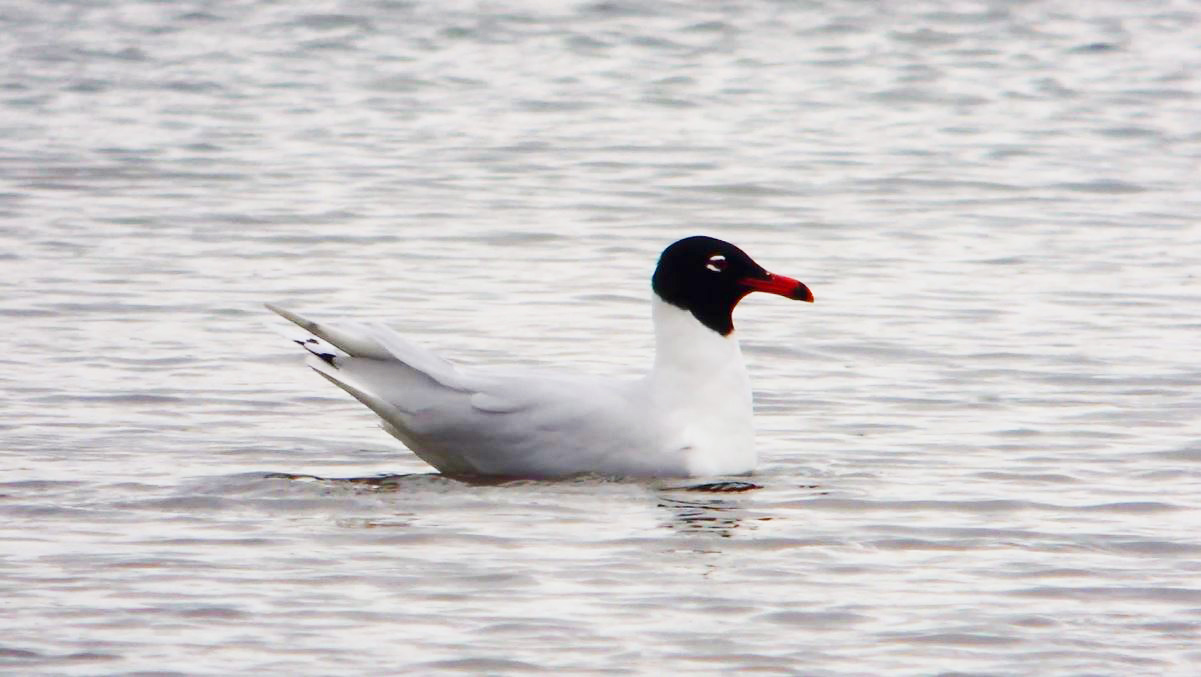
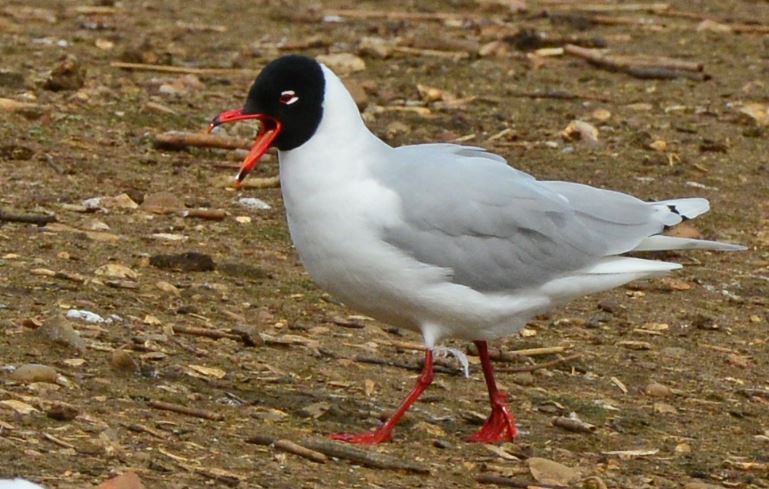
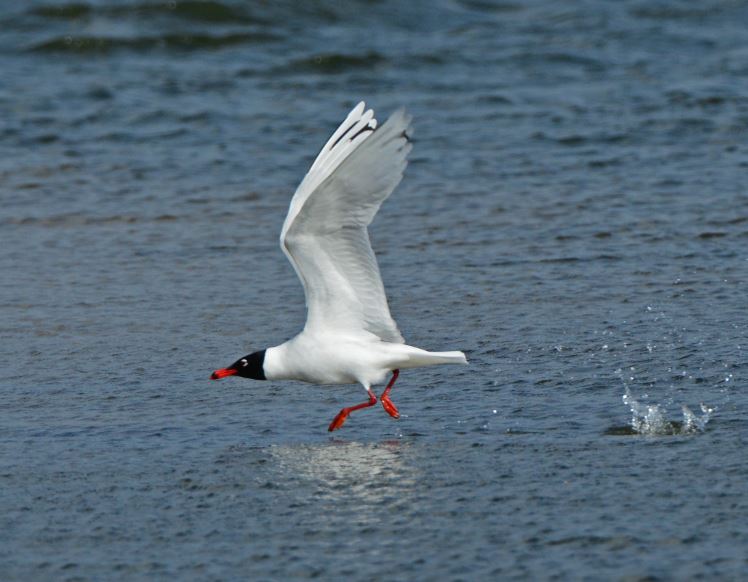
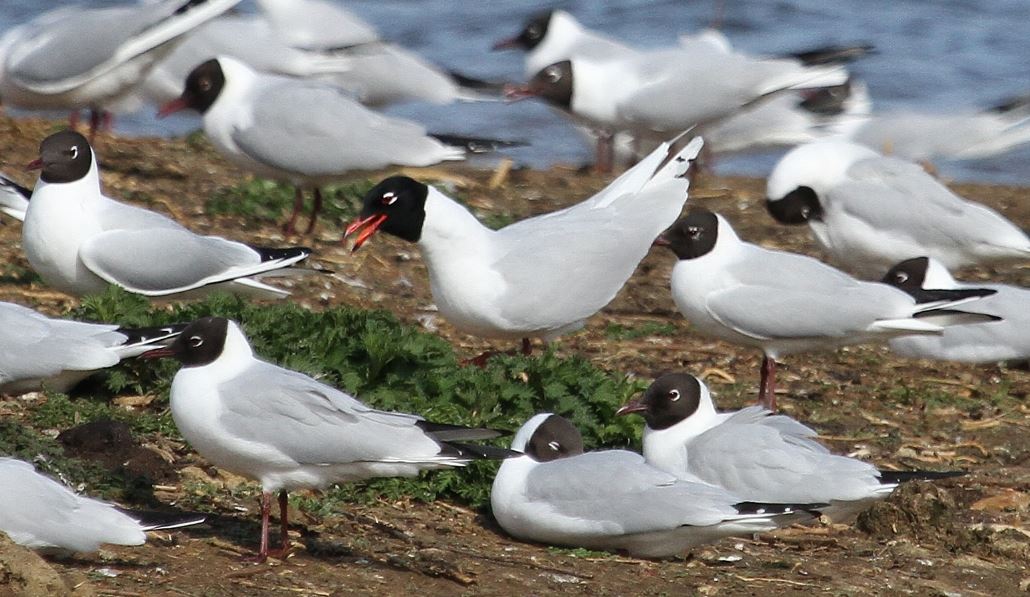
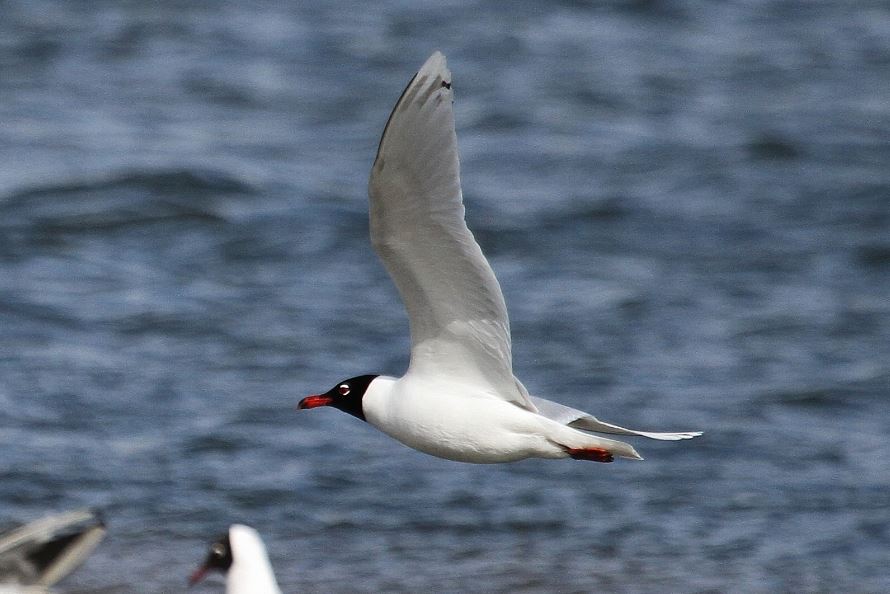
They rarely linger in Northants or oblige with such close, prolonged views. This second-summer Mediterranean Gull is currently doing both. Since I found it last Sunday morning it appears to have become a bit of a celebrity among the Black-headed Gulls in the colony on Rotary Island at Summer Leys LNR. The proximity of the hide means it can be seen well, approached and photographed with relative ease. Its aggressive posturing display, along with its long, heavy bill suggests it’s a male, defending a small territory and ready to breed, despite showing signs of immaturity (black inner webs of outer primaries). A truly inspirational bird. Get it before it goes!
Second-summer Mediterranean Gull, Summer Leys LNR, 29th March (Mike Alibone)
Second-summer Mediterranean Gull, Summer Leys LNR, 30th March 2015 (Alan Coles)Second-summer Mediterranean Gull, Summer Leys LNR, 30th March (Clive Bowley)
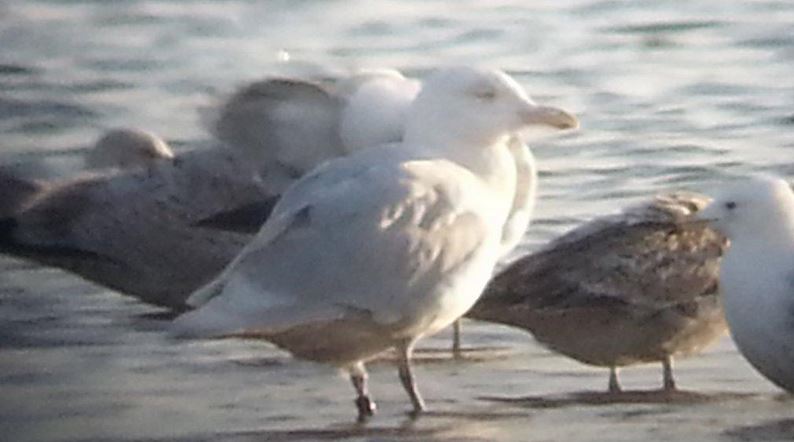
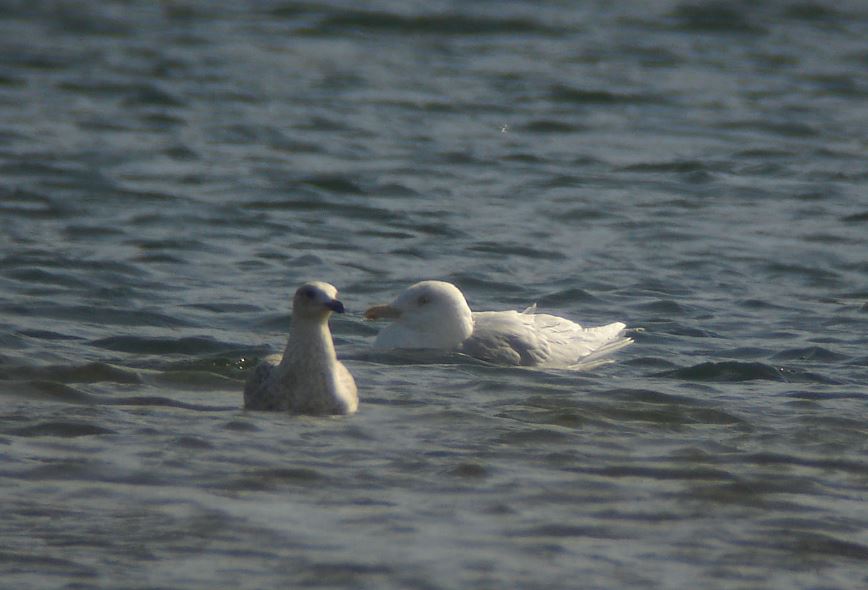
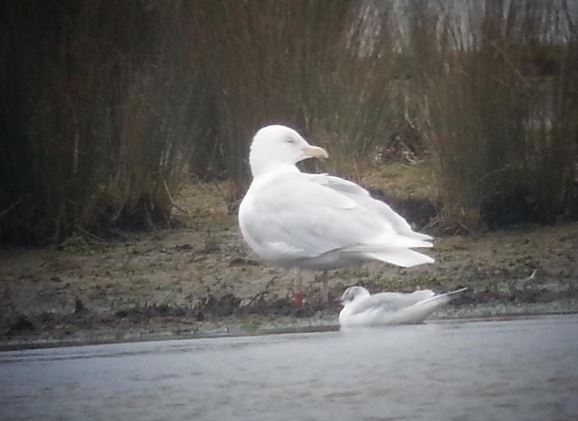
It was still there this evening. When Steve Fisher first found an adult Glaucous Gull at Stanwick Gravel Pits on 24th March, little did he know it would give rise to the unearthing of a movement trail with an ID story attached.
Adult Glaucous Gull, Stanwick GP, 27th March 2015 (Steve Fisher)Adult Glaucous Gull, Stanwick GP, 27th March 2015 (Dave Warner)
This bird had been seen in flight the previous day by Stuart Page at Wellingborough Recycling Centre. Better views of it on the deck at nearby Stanwick revealed a red (actually orange) ring on its left leg, although any alphanumeric characters were not fully visible at the time. There was no sign of it on 25th, although it reappeared at Stanwick the following day and remained there, on and off, until 28th. It was not until that date that Steve was able to properly read the ring: G1NT.
Adult Glaucous Gull, Stanwick GP, 28th March 2015 (Steve Fisher)
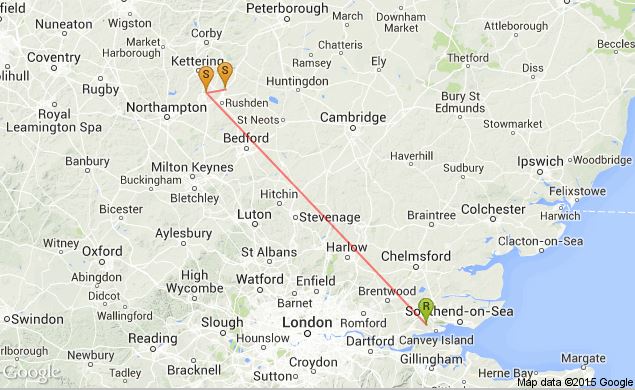
An internet search initially revealed nothing concrete but, based on ring colour, the bird was thought probably to have originated from Svalbard. However, putting the details out on Twitter prompted a response from Richard Bonser, who recognised it as an individual which had been ringed the previous week at Pitsea Landfill in Essex … where it had been initially identified as an Iceland Gull.
Recovery Map for adult Glaucous Gull GV15782, Ring No. G1NT
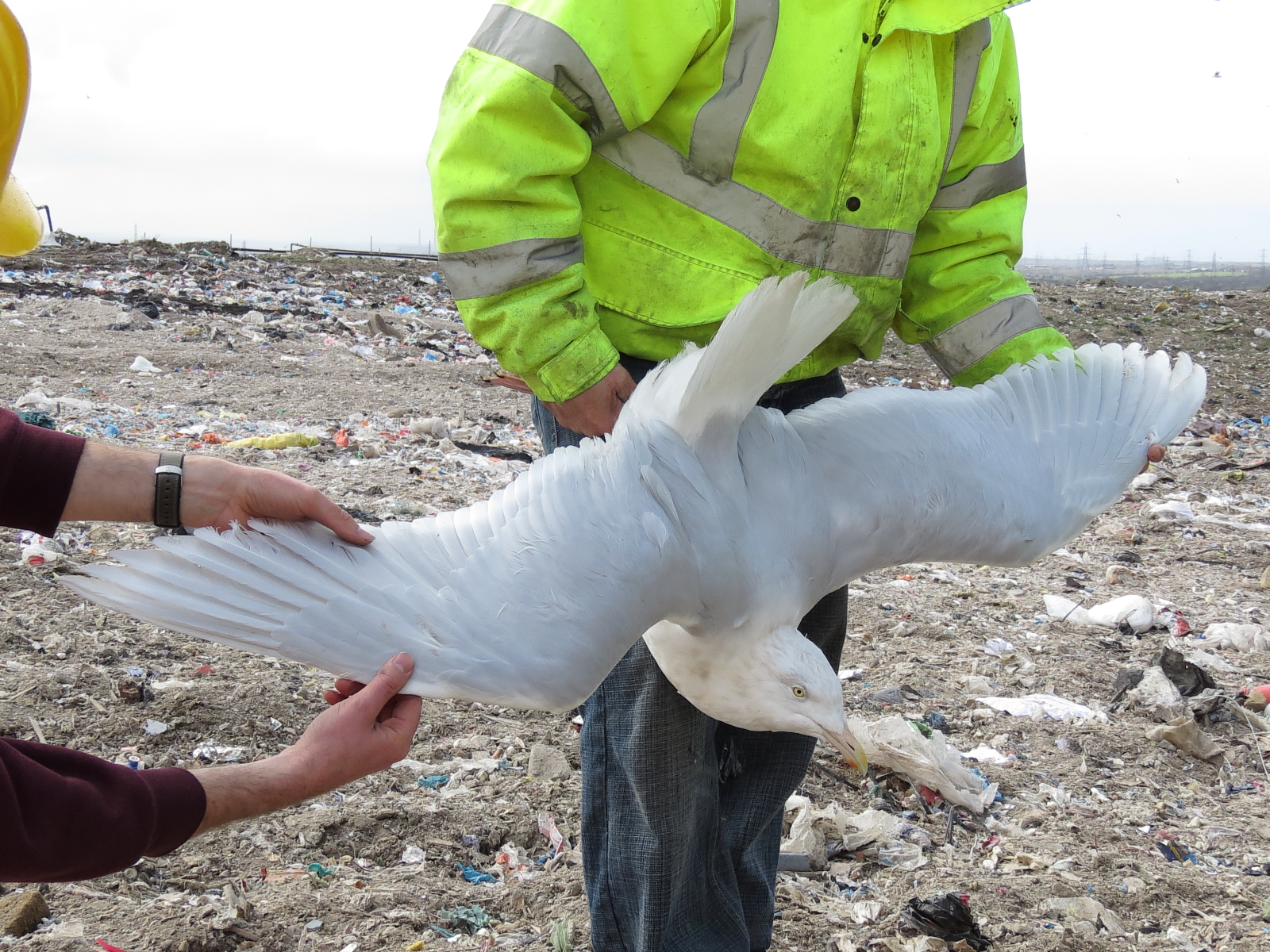
Paul Roper of the North Thames Gull Group, which ringed the bird on 21st March, has kindly provided some background and given permission for the use of the movement map and in-hand image reproduced here. More details on this and other ringed gulls are available at the NTGG website http://www.ntgg.org.uk/map/GV15782 which provides an interesting insight into gull study and ringing activities at Essex Landfill sites.
To quote from Paul:
“The initial identification of this bird shows a couple of things. Firstly in the hand they can be quite difficult. This is a small bird and although out of the range of Iceland (which was a mistake made on the day) it is at the lower range end for Glaucous and in fact we measured and selected the ring size for Herring Gull – Glaucous tend to take Great Black-backed Gull size rings. In the hand you cannot get much of an idea of primary projection, jizz, etc and it can be very difficult. This bird had a gentle expression and not the angry look of a Glauc. It also had a comparatively small bill to the head which again suggested Iceland.
I questioned it on ringing it for a couple of reasons – bulk and the streaking on the head (which you can only see close up) which lean more towards Glauc but at the time it was believed to be in the range for a large male Iceland so that is what we decided it was!
The photos in the field from Northants prompted me to recheck all the measurements – and I found they were actually out of the range for Iceland and in the range for Glaucous.”
Adult Glaucous Gull, Pitsea Landfill, 21st March 2015 (Paul Roper)
So, in-hand birds, ‘lifted’ from their normal habitat, can appear quite different to how they look in the field. Many thanks to Paul for sharing his comments, images and providing an insight into the activities of the NTGG.
A stiff east-northeasterly breeze ensured a cold start to the week, which then remained chilly but largely dry and bright. Early common migrants began to appear in some numbers including more Sand Martins and a noticeable large wave of Chiffchaffs, while some of our less common winter visitors maintained a presence.
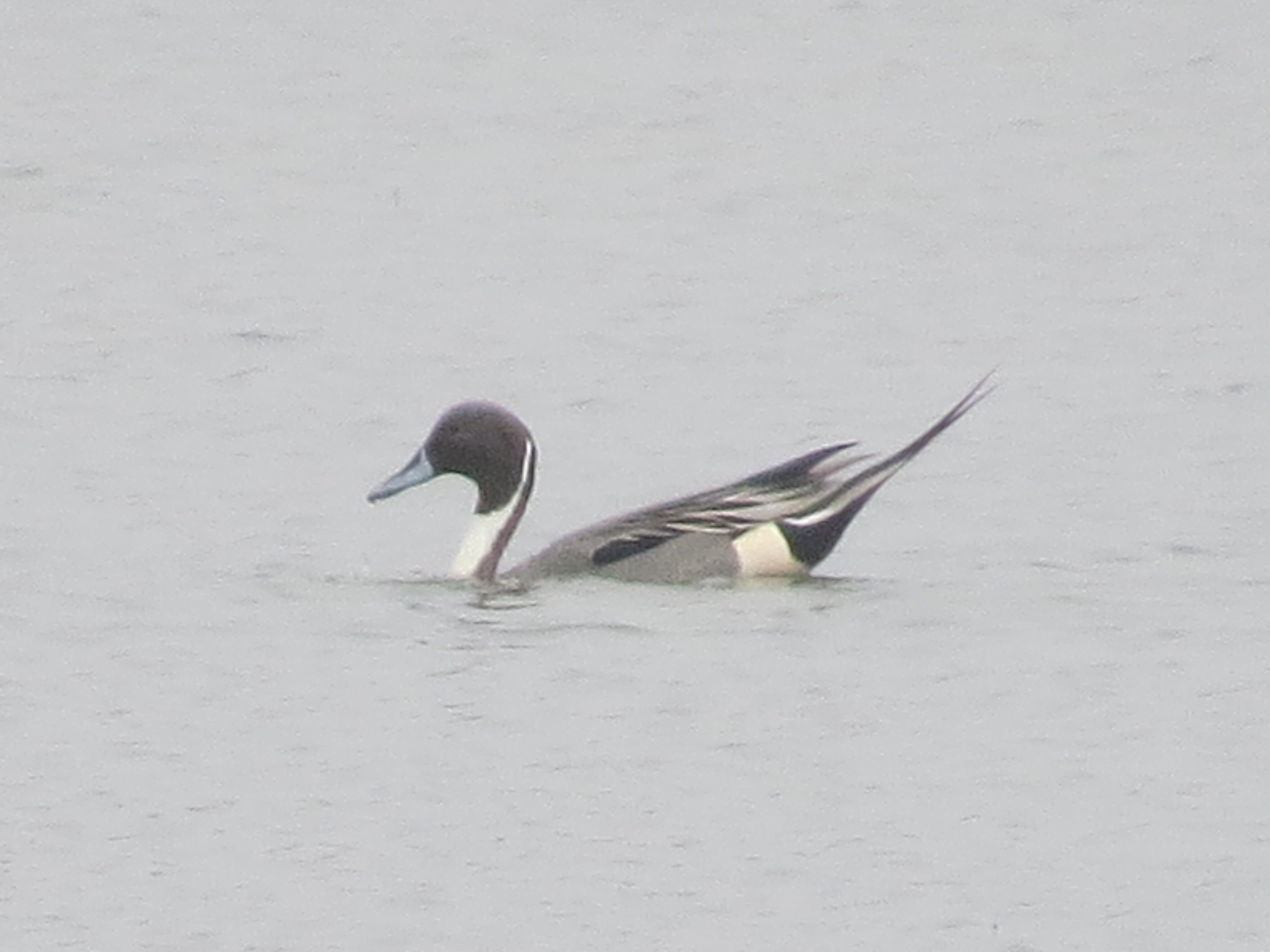
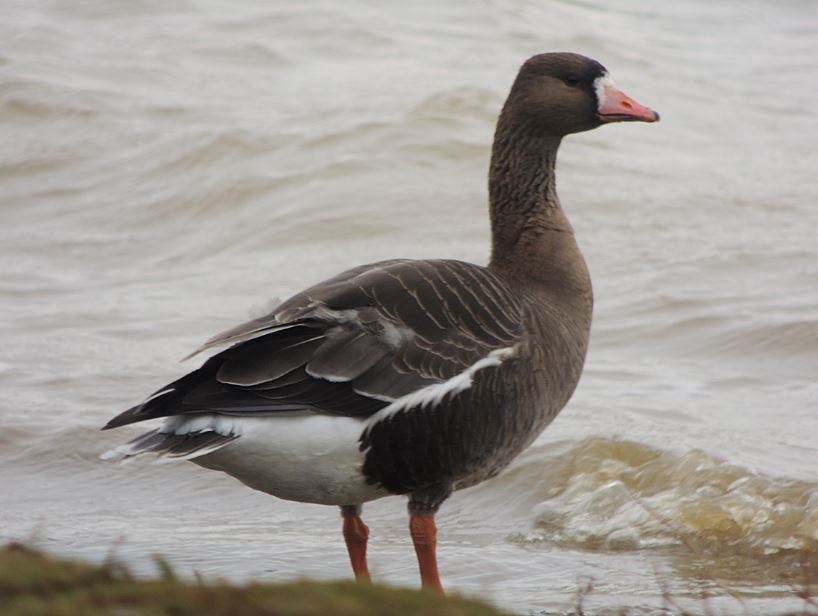
Falling into the latter category the three European White-fronted Geese were still at Pitsford Res until at least 18th and the two Ruddy Shelducks – now sporadic in their appearances – were still at the same site on 15th. The drake Pintail also remained at Summer Leys LNR until at least 18th, as did the drake Red-crested Pochard at Stanford Res, while two were found at Sywell CP on 16th. The long-staying female Ring-necked Duck was still at Billing GP until at least 18th as were two Smew at Ravensthorpe Res and a ‘redhead’ at Stanwick GP on 20th.
Drake Pintail, Summer Leys LNR, 17th March 2015 (Simon Hales)
The two Great White Egrets remained at Summer Leys until 15th with one there until 20th, while two were found at Ditchford GP on 16th while the best on the raptor front was a ‘ringtail’ Hen Harrier hunting by the concrete track at Harrington AF on 19th and single Peregrines at Old Sulehay on 15th and Ditchford GP the following day.
Golden Plover records were restricted to the Brampton Valley, Harrington AF and Scaldwell with a maximum of one hundred and twenty-five at the latter locality on 14th – the same date that the first Ringed Plover of the spring was photographed at Earls Barton GP. A Curlew was in the Tove Valley on 18th-19th, Common Snipe were found at Brixworth STW, Stanford Res and Summer Leys, while eleven were counted on 14th at Hollowell Res, which also produced a Jack Snipe on the same date. Other waders included one to three Redshanks at Clifford Hill GP and Summer Leys and a Green Sandpiper at Stanford Res on 18th. This week saw rather more in the way of quality Larids. The gull roost at Boddington Res again produced adult Mediterranean Gulls on 16th and 18th as did Pitsford Res on 14th and 15th and further singles visited Daventry CP on 17th and Summer Leys the following day. The best, however, was an adult Iceland Gull in the Pitsford Res roost on 14th, followed by a second-winter Caspian Gull there on 18th, while the only other gulls of note were two adult Yellow-legged Gulls at Hollowell Res on 14th and a third-winter in the Pitsford Res roost on 17th.
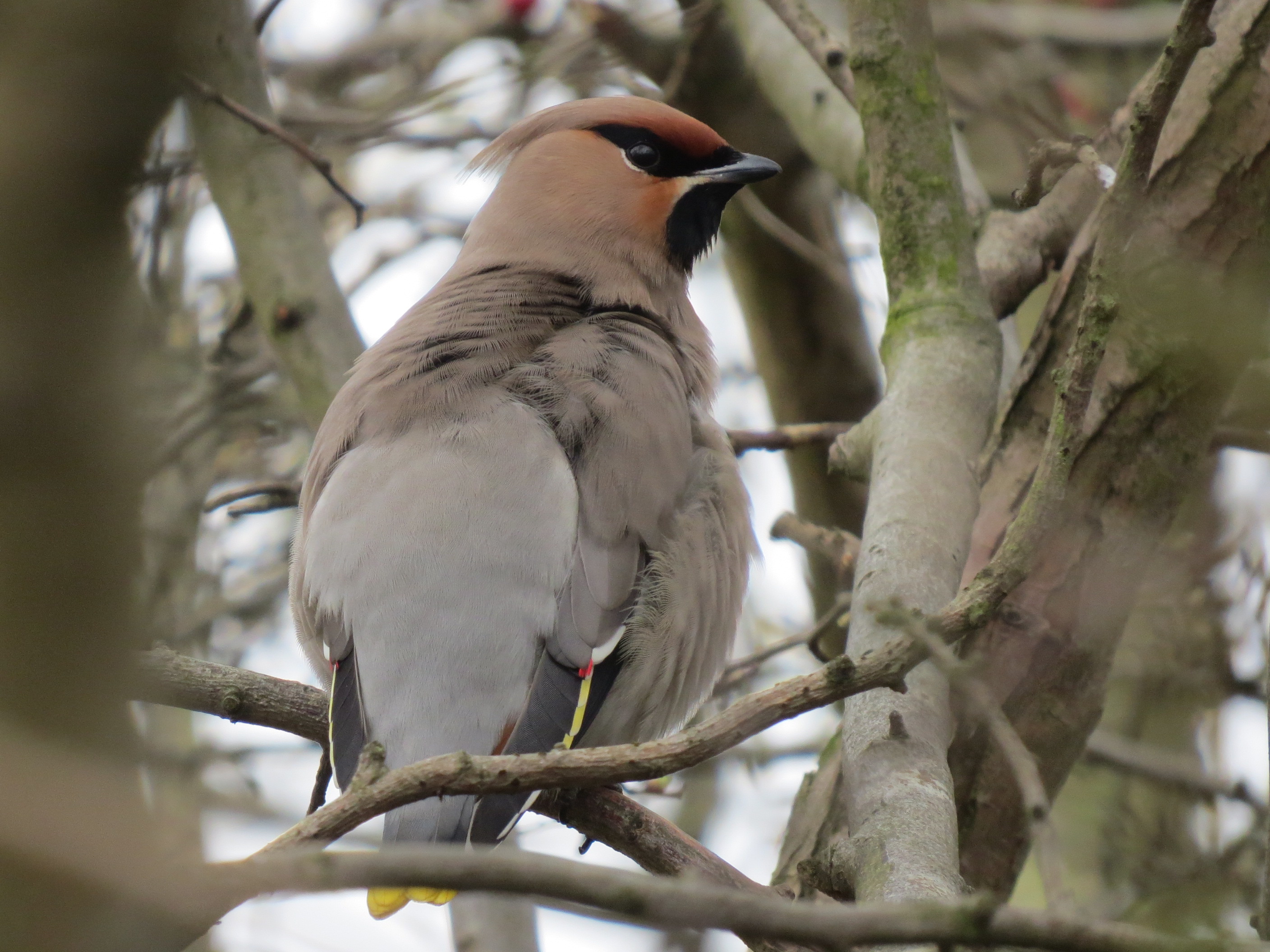
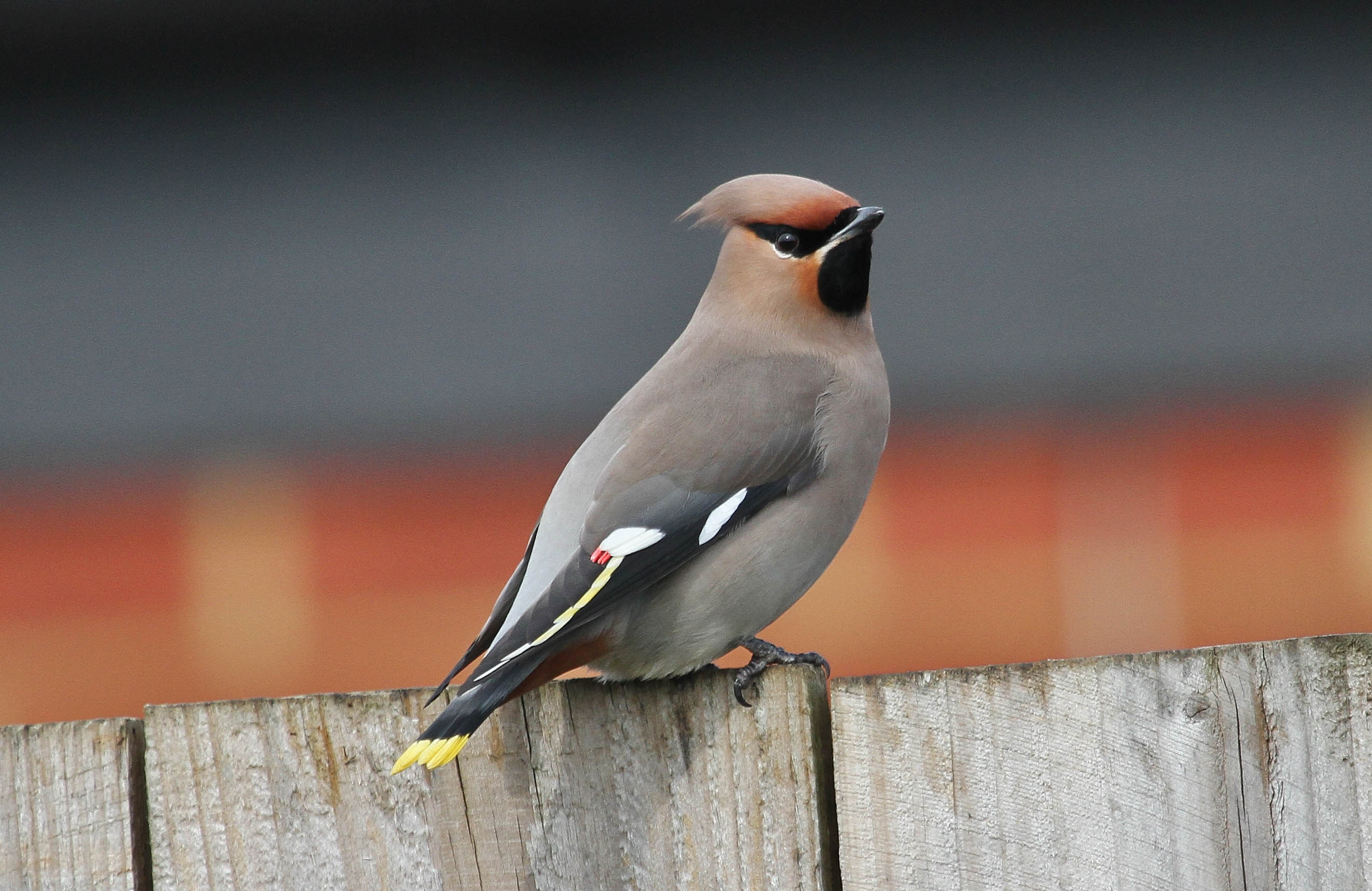
First-winter Waxwing, Corby, 15th March 2015 (Simon Hales)
Last week’s first-winter Waxwing remained in Corby until 15th and, arguably not in the same league, a Rock Pipit was found at Boddington Res on 16th and a Water Pipit at Summer Leys on 18th. Four Stonechats were still at Blueberry Farm on 14th and the first Northern Wheatears of the year were at Clifford Hill GP and Blueberry Farm (Maidwell) on 18th followed by singles at Harrington AF and in the nearby Brampton Valley the next day.
What a difference a week makes! South-westerlies, rising temperatures and largely mild conditions created ideal conditions for the northward movement of the first summer migrants into the UK, with Northants receiving at least a sprinkling. Other birds were also plainly on the move – a clear indication that spring migration is now well and truly underway.
They should surely have been on their way by now but the three European White-fronted Geese were still at Pitsford Res until at least 11th with the two Ruddy Shelducks remaining there on 7th. A drake Pintail was again at Summer Leys LNR on 7th-8th and the drake Red-crested Pochard remained at Stanford Res over the same two days, while the female Ring-necked Duck – after going unreported last week – was still at Billing GP until at least 11th.
Female Ring-necked Duck, Billing GP, 10th March 2015 (Bob Bullock)
If we hadn’t enjoyed the generous helpings of wintering Long-tailed Ducks last year then the first-winter drake which paid a brief visit to Pitsford Res on its way north on 10th would perhaps have elicited more interest than it actually did; this species is still a rare visitor to the county on any account. Most of our wintering Smew have departed and those remaining this week included two at Pitsford Res on 7th, a ‘redhead’ at Stanwick GP on 10th and 11th, the two ‘redheads’ still at Stortons GP on the latter of these two dates and three at Ravensthorpe Res on 13th.
The only Great White Egrets to be found during the period were the Summer Leys duo, which remained until at least 12th. And then there was ‘Klio’. The name given to the White Stork which, having escaped from the Exotic Pet Refuge near Deeping St James last week, appeared in Northants by the River Nene near Nassington on 7th and then border-hopped to various sites in nearby Cambridgeshire the following day. On 11th ‘he’ was back – this time at Ditchford GP’s Irthlingborough Lakes and Meadows Reserve for an hour or two before flying to Brigstock and finally Lowick, where he was eventually recaptured on 12th. A smart bird with no rings which would surely have passed muster had its origin remained unknown …
White Stork, Lowick, 12th March 2015 (Dave Holden)
A grebe found on the main lake at Stanwick GP on 8th ultimately proved to be a Slavonian Grebe after giving rise to some debate over its initial identification as a Red-necked. It was not present the following day so this was another bird which had moved swiftly on. It, or another, was found at Ravensthorpe Res on 13th.
And so to the vanguard of our summer visitors. An Osprey moved north over Harrington AF on 10th, no doubt the first of many to come, while Peregrines at Greens Norton on 7th and at both Stanwick GP and Summer Leys on 13th, and single Merlins at both Daventry CP and Blueberry Farm on the latter date were the only other raptors reported during the week.
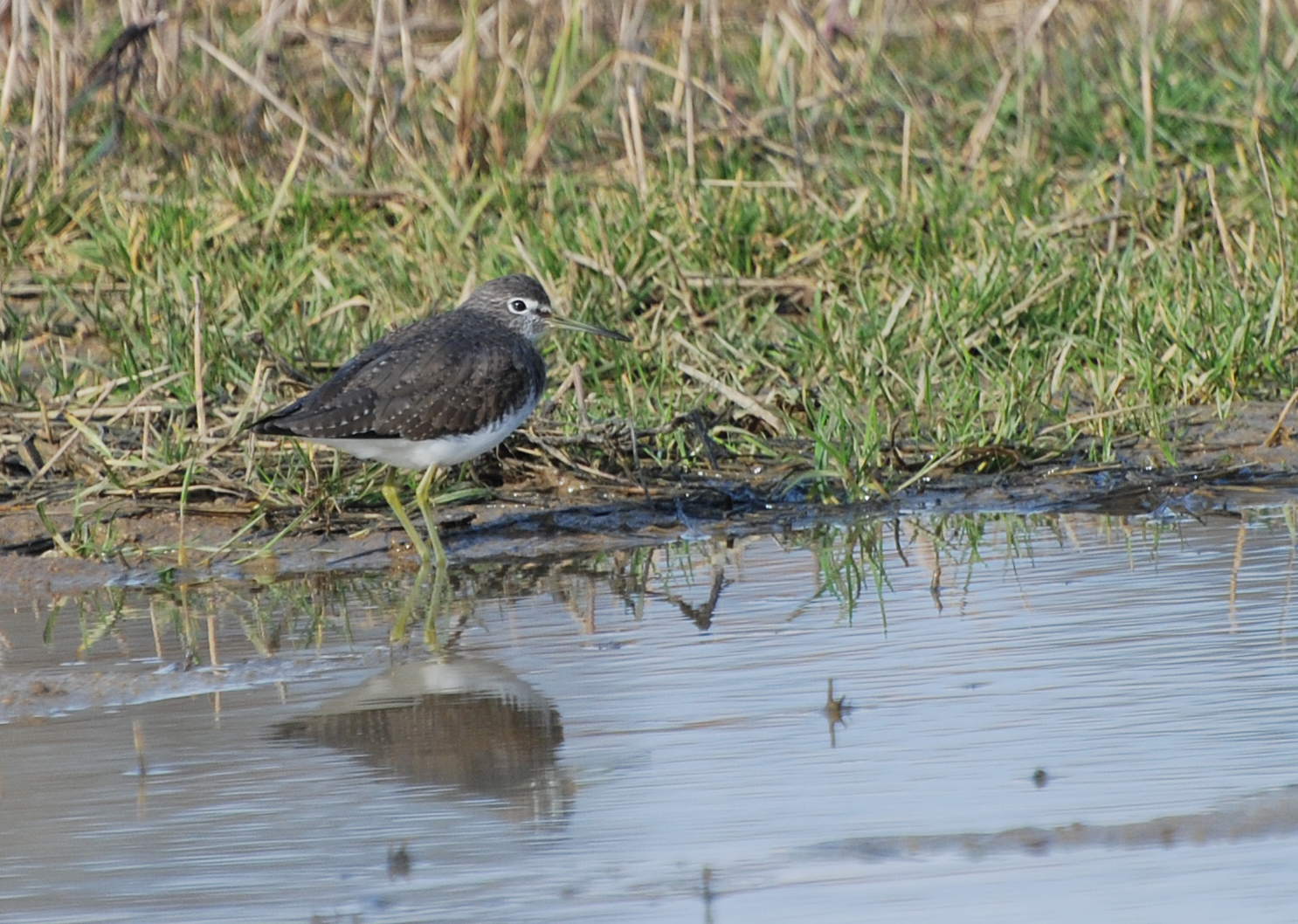
Golden Plovers were recorded from Harrington AF, Byfield, Bozenham Mill and Blueberry Farm (Maidwell) with a maximum of three hundred at the latter site on 10th. This has been a poor winter for this species with no four-figure counts anywhere. A Curlew visited Clifford Hill GP on 8th, Common Snipe were found at Blueberry Farm, Bozenham Mill, Stanwick GP and Pitsford Res, with a maximum of thirty-four at the latter locality on 11th, which also produced two Jack Snipe on the same date. After last week’s double-figure count at Stanwick GP, Redshanks appeared to be unduly scarce with just one at Clifford Hill GP on 7th, two at Summer Leys the following day and up to four there on 13th, while single Green Sandpipers were found at Stanford Res on 7th and 8th, Pitsford Res on 7th and 11th, at Upton Valley (Northampton) on 10th and between Everdon and Fawsley on 13h.
Green Sandpiper, between Everdon and Fawsley, 13th March 2015 (Ray Vessey)
The gull roost at Boddington Res is consistently the most reliable site in the county for passage Mediterranean Gulls when they come through in March. This week saw three adults there on 9th, two adults and a second-winter on 10th and an adult on 11th. No doubt more will be seen there as the month progresses. The only other gulls of note were an adult Yellow-legged Gull in the Pitsford Res roost on 12th and three at Hollowell Res on 13th.
Second-winter Mediterranean Gull, Boddington Res 10th March 2015 (Mike Alibone)
Rather more scarce this winter, a Short-eared Owl was at Blueberry Farm on 7th and again on 13th; other than passage birds it seems unlikely this species will be seen in any numbers now before next autumn. The same cannot be said for Sand Martin, the first of which appeared at Ditchford GP’s Broadholme SWT on 9th – arguably the first true summer migrant of the year, Chiffchaffs notwithstanding, of course, this week appearing to herald an arrival en masse with records from nine widely-scattered localities. Presumed Central European Blackcaps – it’s still a bit early for the return of Iberian winterers – were a female in a Wellingborough garden on 8th and a male in a garden in Barton Seagrave on 11th.
Male (presumed Central European) Blackcap, Barton Seagrave, 11th March 2015 (Geof Douglas)
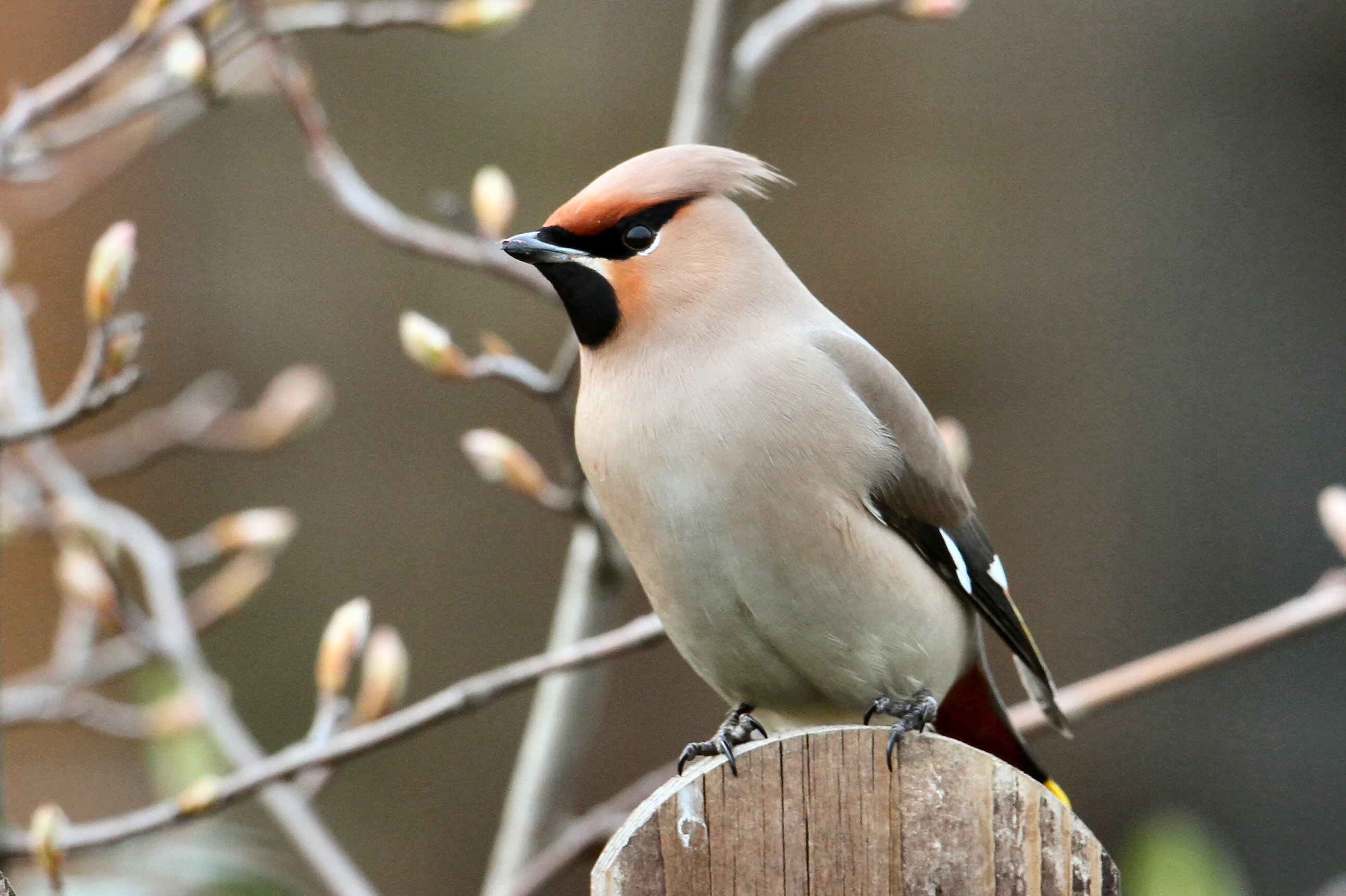
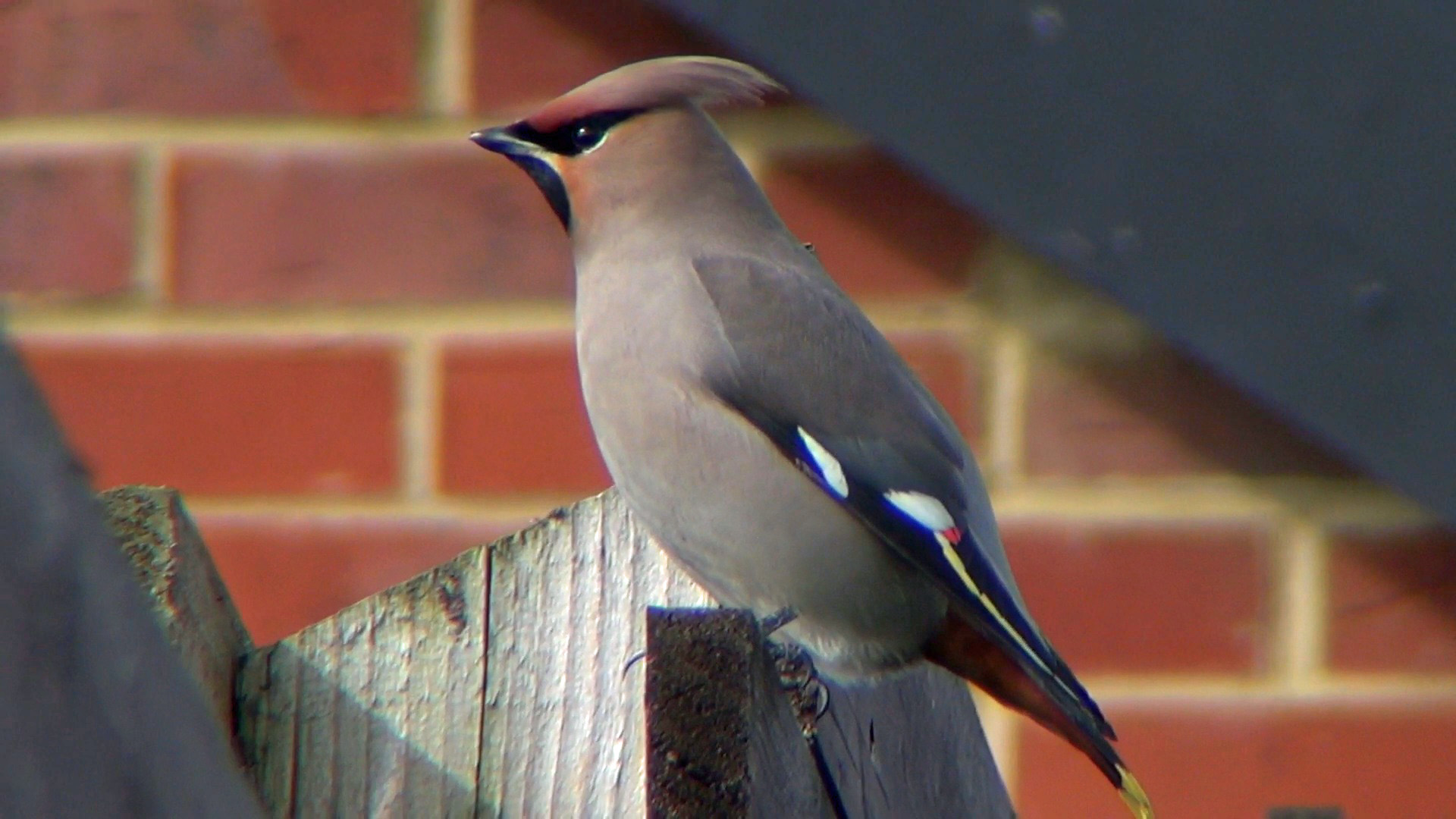
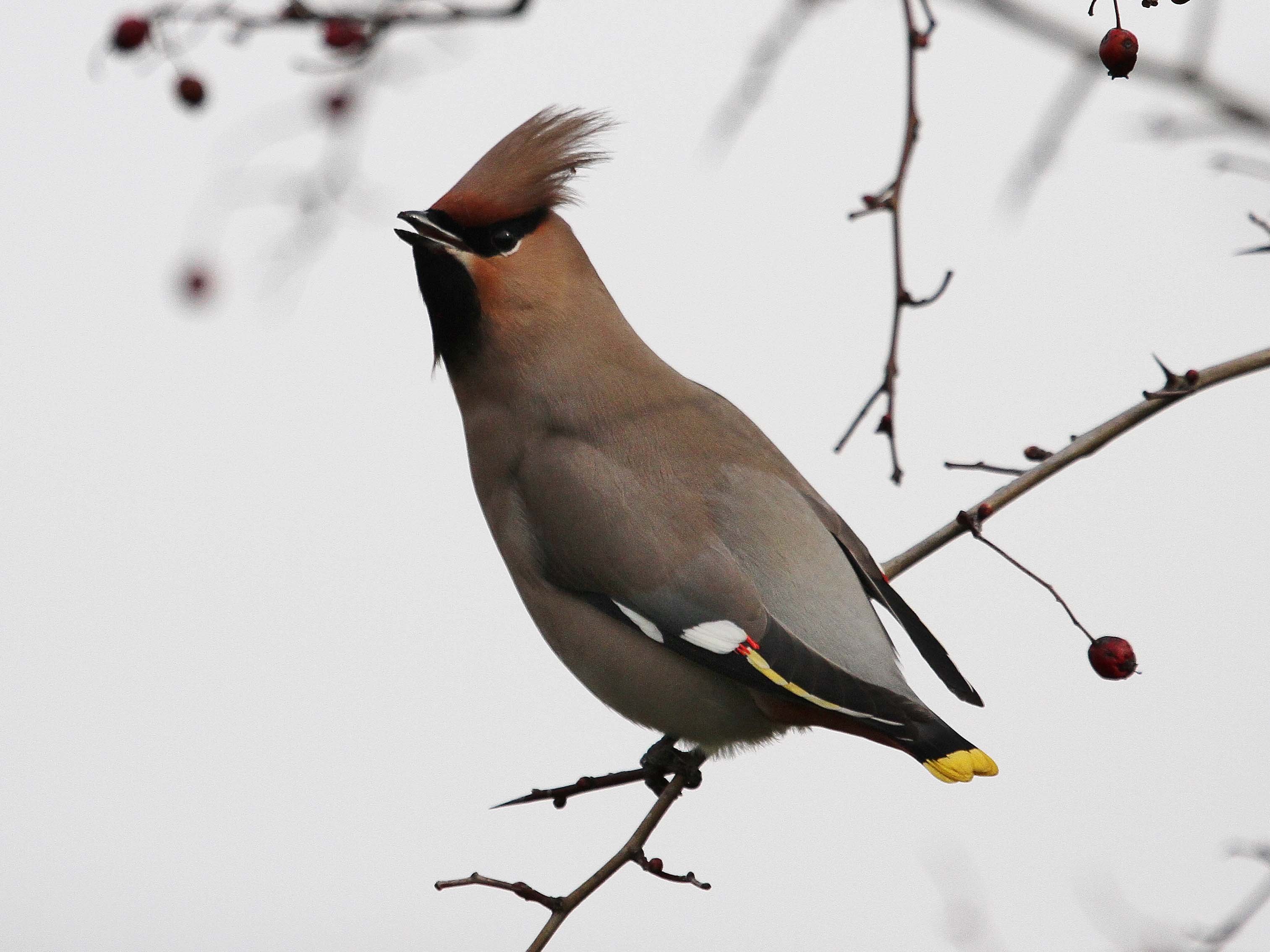
The main attraction on the passerine front this week, however, was the first-winter Waxwing which was found in Corby on 11th and remained, posing for the cameras, until 13th.
First-winter Waxwing, Corby, 12th March 2015 (Stuart Mundy)First-winter Waxwing, Corby, 12th March 2015 (Bob Bullock)
Up to six Stonechats were still at Blueberry Farm all week and singles were also at Pitsford Res and Stanford Res on 7th.
They’ve been rare in the UK this winter and this one, a first-winter (probably a male based on clear-cut bib, intensity and width of yellow tail-band and number of waxy bits on the secondaries, although there is some overlap with young females), is the only one we’ve had in Northants. Thanks to Michael Tew for finding it!
First-winter Waxwing, Corby, 11th March 2015 (Michael Tew)First-winter Waxwing, Corby, 12th March 2015 (Bob Bullock)First-winter Waxwing, Corby, 13th March 2015 (Alan Coles)First-winter Waxwing, Corby, 13th March 2015 (Alan Coles)First-winter Waxwing, Corby, 13th March 2015 (Alan Coles)
Bland and generally flat. Another treacle week in which long-stayers stuck, with not even the sniff of a Sand Martin on the rising temperatures to lift the spring spirits.
A ‘new’ Pink-footed Goose was found at Thrapston GP on 4th and the Ravensthorpe Res individual was present again on 6th, while the three European White-fronted Geese continued to stick it out with the two Ruddy Shelducks at Pitsford Res, now becoming disconcertingly tame on the waterline along the dam.
European White-fronted Geese, Pitsford Res, 1st March 2015 (Simon Hales)
Eight Barnacle Geese which dropped into Stanwick GP briefly on 28th were surely from feral stock but you never know … Just one Red-crested Pochard was reported this week – a drake at Stanford Res on 1st and the only Smew were five still at Ravensthorpe Res on 28th, falling to three there on 6th, and two – both drakes – at Stanwick GP the following day.
Up to two Great White Egrets remained at Summer Leys LNR all week and singles were at Ditchford GP on 3rd and at Stanwick GP the next day. The only raptor of note was a Peregrine at Hollowell Res on 6th.
Few waders were reported with just one Golden Plover in flight over Ravensthorpe Res on 28th and thirty near Hanging Houghton on 6th, single Common Snipe at Hollowell Res and Stanford Res on the same date with another at Harringworth AF and at least fifteen at Stanwick GP the following day. The first day of March also saw twelve Redshanks at the latter locality, when there was also a Green Sandpiper at Stanford Res, followed by another at Pitsford Res on 2nd and another at Lower Benefield on 4th.
The gull roosts of Pitsford and Boddington Reservoirs produced single adult Mediterranean Gulls on 2nd and 5th respectively and another was at Hollowell Res on 6th, while two adult Yellow-legged Gulls were again at Hollowell Res on 28th and another visited Stanford Res on the same date.
The only Chiffchaff this week was one, also at Stanford Res on 28th, and the only Central European Blackcap, a male, frequented a garden in East Hunsbury (Northampton) until at least 4th. Other wintering passerines included the up to three Stonechats at Hollowell Res, five in the wider Maidwell Vale and one at Pitsford Res and
Female Stonechat, Pitsford Res, 1st March 2015 (Simon Hales)
a male Brambling – scarce this winter – near Burn Coppice (Deenethorpe) on 1st with another flying east over Hollowell Res on 6th.
On 1st April last year I was fortunate to take part in the inaugural Champions of the Flyway bird race, a major new international event which will be staged annually in Eilat, Israel – home of one of the world’s most desirable birding destinations and famous migration spectacles.
Thirteen teams raced in the international section of the event, including The Birdwatch-BirdGuides Roadrunners, comprising Ian Lycett, Dominic Mitchell, Morten Bentzon Hansen and myself, attempting to find, identify and log as many species as possible in an intense 24 hour contest to win the coveted title ‘Champions of the Flyway’.
Birdwatch-BirdGuides Roadrunners 2014. Left to right: Mike Alibone, Dominic Mitchell, Morten Bentzon Hansen, Ian Lycett.
A quick bit of video lends the flavour of last year’s race.
While the racing might be light-hearted, our goal was serious – to raise conservation funding through sponsorship and donations that will help the BirdLife International Partnership tackle the illegal killing of birds in southern and eastern Europe.
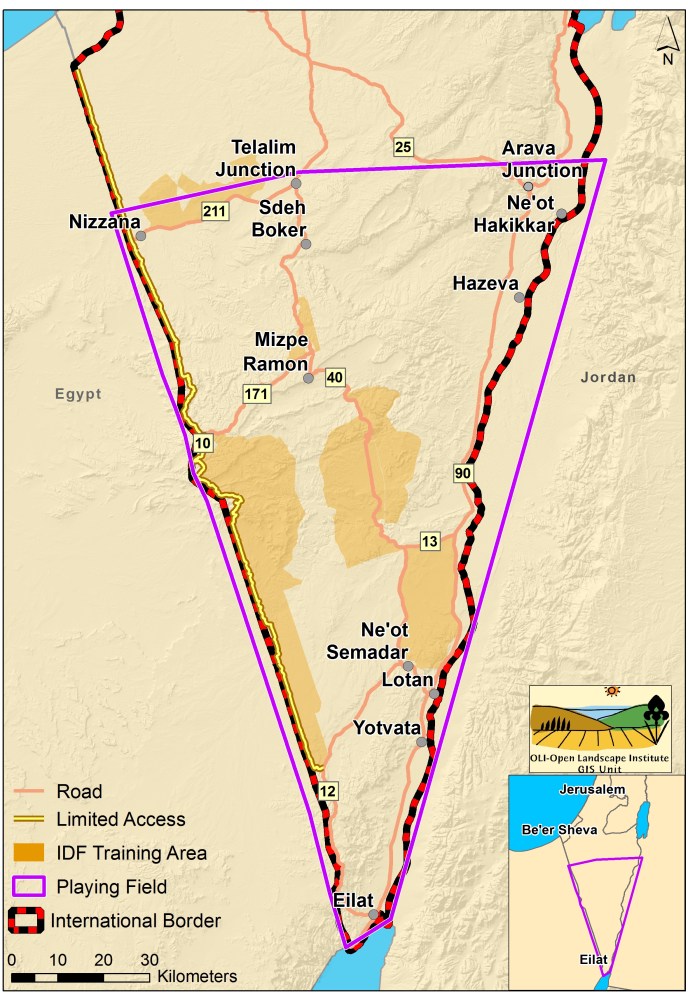
Although the event commenced and finished in Eilat, it covered a well-defined ‘field of play’ extending north-west to Nizzana in the western Negev Desert on the Egyptian border and north-east along the Jordanian border in the Arava Valley.
Champions of the Flyway Playing Field
While the habitat was principally desert, we were able to visit some arable and wetland areas to help boost the diversity and numbers of the species recorded on the day.
We accumulated a respectable 132 species between 03.00 and 20.00, the first of which was a pre-dawn Scops Owl and the last being three Lichtenstein’s Sandgrouse, which came in at dusk to drink at a small pool a few kilometres north of Eilat. As well as seeing most of the local desert species we caught up with some more unusual migrants, including Caspian Plover and Black Bush Robin.
Pied Stonechat, Neot Smadar, Israel (Mike Alibone). About 13th for Western Palearctic – conveniently disappeared the day before race day …
Despite our best efforts, hacking around in the searing heat, we did not win the title but we were one of the strongest performing fundraisers, achieving £2640 of our £3000 target. In all, the event raised some £36,000 for conservation and I would like to thank all who donated generously to the cause.
This year the race will take place on 25th March 2015, starting and ending in Eilat. Again, this is not just a bird race, but a massive fundraising campaign to support conservation work and this year the proceeds will be channelled into action to prevent the illegal annual slaughter of some 3,000,000 migrant birds in Cyprus. These are trapped and sold and are likely to end up like this.
A plate of Ambelopoulia (grilled, pickled or boiled songbirds) served illegally in a Cypriot restaurant.
Once more I am a member of the Birdwatch-BirdGuides Roadrunners team (Josh Jones, Alan Tilmouth and myself) and we are looking for sponsors/donors to support our fundraising efforts. Our team’s target is again to raise £3000 – more if we can! If you care about the perils which are faced by ‘our’ birds as they migrate to and from the UK and elsewhere in northern Europe then please consider visiting our donation page and pledging even a small amount. Many thanks for your kind support!
No drama. This applies to both weather and birds this week, during which everything appears to have come to a painful standstill. Hopefully it’s the calm before the storm. Next week it’s March and that first Wheatear can’t be far away …
The rarely there Pink-footed Goose paid one of its brief visits to Ravensthorpe Res on 25th, while at Pitsford Res the three European White-fronted Geese remained all week, as did the two Ruddy Shelducks and the drake Pintail was still there on 22nd.
First-winter European White-fronted Goose, Pitsford Res, 22nd February 2015 (Mike Alibone)
Up to five Red-crested Pochards were still being seen at Ringstead GP throughout the period, while the ‘redhead’ Smew at Stortons GP was joined there by a second one from 22nd to 25th, three to five were at Pitsford Res on 23rd with five (three drakes) at Ravensthorpe Res the next day and up to three remained at Stanwick GP to 26th.
Compared to last week, the number of Great White Egrets was down with just one at Ditchford GP on 21st and two at Summer Leys LNR on the same date, followed by singles there on 22nd and 25th. Similarly, raptor records were restricted to single Peregrines at Hanging Houghton on 21st and Higham Ferrers on 26th.
Waders were also at a low ebb with Golden Plovers numbering sixty-five at Kelmarsh on 22nd, seventy-five at Hollowell Res on 25th and approximately one hundred at Hellidon on 27th. In addition to these, two Common Snipe were at Moulton Quarry on 27th and a Curlew visited Stanwick GP on 26th. The week’s rare gulls were limited to two adult Caspian Gulls at Rushton Landfill on 22nd and a Yellow-legged Gull at Stanwick GP on 24th with two at Hollowell Res on 25th.
Wintering Chiffchaff numbers held up with at least twelve along the outflow stream at Ecton SF on 23rd and eleven around Broadholme SWT, Ditchford GP the following day. A male and female Central European Blackcap frequented a garden in Byfield during the week while Stonechats were seen between Deenethorpe and Benefield, at Hollowell Res, Pitsford Res and Blueberry Farm (Maidwell), with a maximum of four at the latter site on 23rd and 25th.
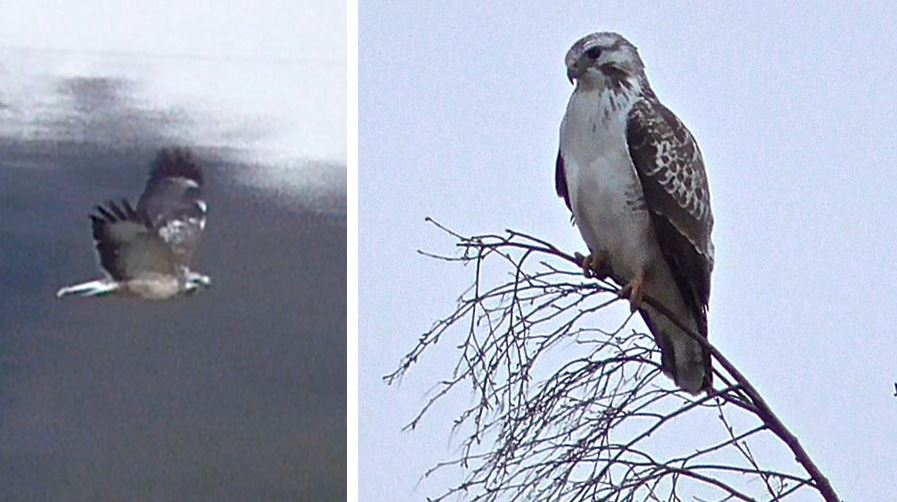
A couple of weeks ago there was a report of a ‘probable’ Rough-legged Buzzard flying across the A428 between Yardley Hastings and Denton in the direction of Yardley Chase. There appears to have been no further reports – until yesterday, that is. Thanks to Graham Bentley we now have some nice images. And here it is.
Common Buzzard, near Yardley Hastings, 25th February 2015 (Graham Bentley)
A Common Buzzard at the pale end of the colour morph spectrum. A stunning-looking individual with white underparts, a wholly whitish tail and virtually no dark carpal patches. This looks very much like one I saw in the same area about ten years ago, so likely to be the same bird. If so, where has it been all this time … ?
With no dramatic Atlantic systems on the horizon, calm and uneventful was the order of the week as far as the weather was concerned. In fact it was positively spring-like for a couple of days, all of which did little to usher in any stunningly new arrivals.
At Pitsford Res the three European White-fronted Geese remained all week, as did the two Ruddy Shelducks and a single drake Pintail was also present on 18th.
The two female Red-crested Pochards were still at Stanford Res on 15th at least with five again at Ringstead GP two days later and the long-staying first-winter drake Scaup seemed settled at Ravensthorpe Res on 14th-15th. The female Ring-necked Duck was back at Billing GP on 14th, although access restrictions and difficult viewing conditions at this site may mean it was present beyond this date. At least one Smew remained at Ravensthorpe Res on 17th, up to four were at Stanwick GP all week and three were at Pitsford Res on 14th.
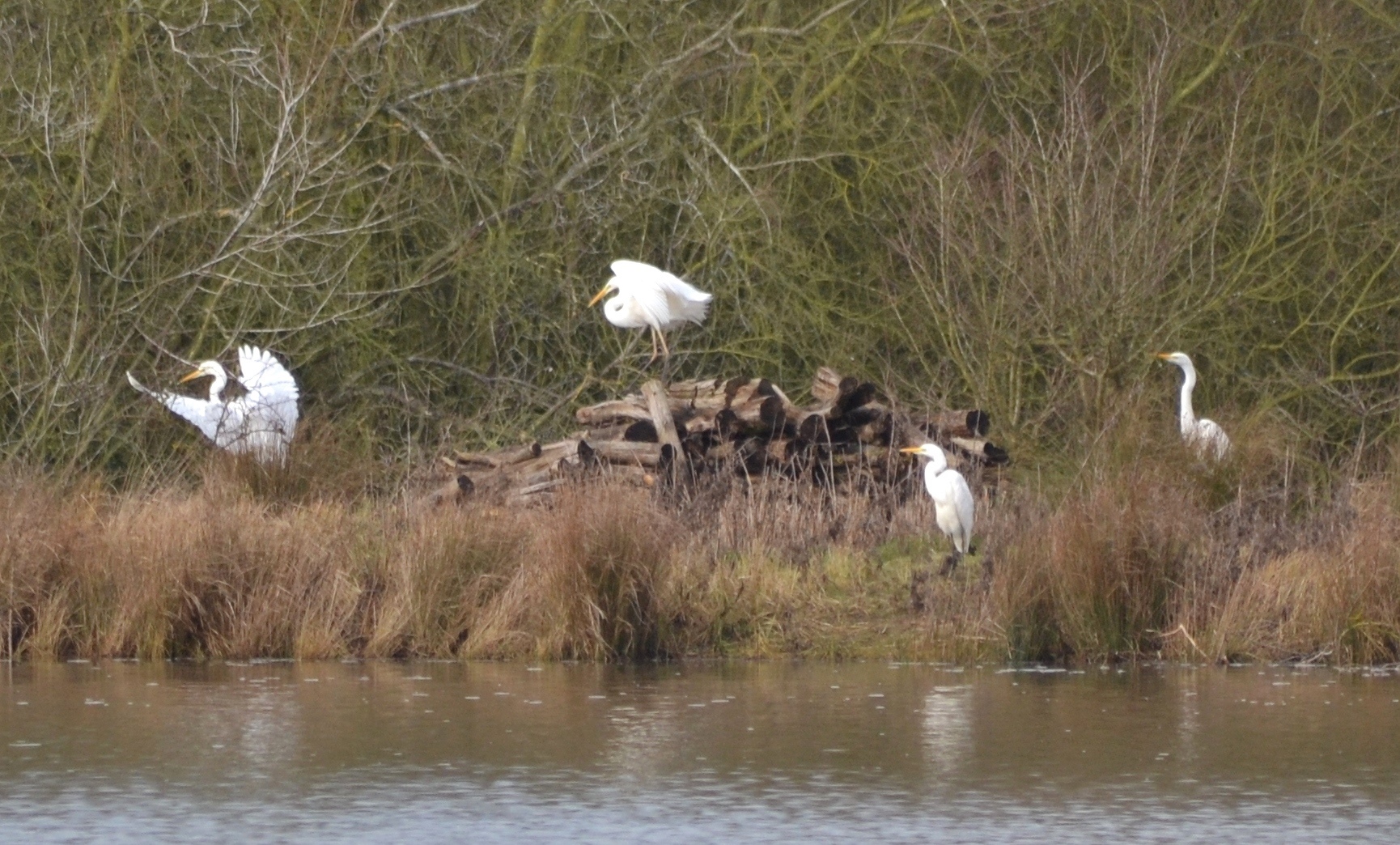
In the Nene Valley, Great White Egrets were present all week, being recorded in ones, twos and threes from Thrapston GP, Ditchford GP and Summer Leys LNR respectively but movement of individuals between sites made it almost impossible to assess just how many birds were present – until 20th, that is, when a record five were together at the latter of the three locations. With one still at Pitsford Res on 15th and 17th it is highly likely there were at least six in the county this week.
Great White Egrets, Summer Leys LNR, 20th February 2015 (Stuart Mundy). Four of the five present at this site on this date.
Another poor week for raptors saw single Merlins at Stanford Res on 15th and again at Deenethorpe AF on the same date, while a Peregrine at Higham Ferrers was the only one reported during the period.
Waders were again in short supply with just six Golden Plovers over Ravensthorpe Res on 14th, fifteen at Harrington AF on the same date with 65 there and 300 at Summer Leys on 20th, while the same date saw one or two Jack Snipe at Barnes Meadow (Northampton) and one at Hollowell Res. Single-figure counts of Common Snipe came from Barnes Meadow, Moulton Quarry and Summer Leys but 15+ were at Stanwick GP on 20th, nine Redshanks were still at Stanwick GP on 15th and one visited Summer Leys LNR on 19th while a Green Sandpiper was also at Stanwick GP on 14th.
An unconfirmed report of an adult Iceland Gull in the roost at Pitsford Res on 19th remained exactly that (it would be the first of this species at this locality for many years), while the only Yellow-legged Gull was an adult at Stanford Res on 14th. A Common Gull showing characteristics of the race heineiwas present in the Pitsford roost on 20th.
Up at Deenethorpe the Great Grey Shrike continued to be seen at Burn Coppice until at least 17th, although it appears to have taken up a position further away from the road, becoming more difficult to see well. Rumours of argy-bargy with the landowner have recently emerged so pursuing it across the fields is probably not the best course of action to take in attempting to obtain better views … The outflow stream at Ecton SF continues to hold good numbers of wintering Chiffchaffs with ten counted there on 14th, although the chances of their being joined by a tristis are now looking very slim indeed; elsewhere, single Chiffchaffs were at Stanford Res on 14th and Stanwick GP the following day. Other wintering passerines of note were single female Central European Blackcaps in gardens in East Hunsbury (Northampton) throughout and three Stonechats at Hollowell Res on 14th, two at Blueberry Farm (Maidwell) on the same date, with four there on 20th, and two at Thrapston GP on 27th.

















 Northants birds