The Marbled Duck, first discovered by Steve Fisher at Stanwick GP’s main lake on 13th January and still present today, promptly disappeared almost immediately until rediscovery on 19th February. Or did it? With persistent inclement weather, rising water levels and less than ideal viewing conditions, it appears it may have been there, somewhere, all the time as it is now known to hide among the overgrown islands on the western side of the lake.
Marbled Duck, Stanwick GP, 20th February 2014 (Bob Bullock)
Despite being recorded sporadically in the UK, this species remains on category D of the British List as it is common in captivity but an established pattern of records suggests it is likely that some wild individuals occur. Vagrants have been recorded in Northern Spain and in the Camargue in Southern France with most French records in August-September and a secondary spring peak in April. The pattern of British records also reflects this and Marbled Duck has been accepted as a genuine vagrant in the Netherlands.
Pouring at least some cold water on the vagrancy hypothesis, analysis of the stable-hydrogen isotope content of feathers taken from a first-winter shot in Essex on 1st September 2007 suggested that the bird originated from outside of the normal breeding range of the species and was most likely to have been of captive origin (see British Birds).
Although thought to be in decline, the global population is estimated at c.50,000-55,000 individuals, based on estimates of 3,000-5,000 in the west Mediterranean and West Africa, 1,000 in the east Mediterranean 5,000 in south Asia, and at least 44,000 individuals counted in Iraq in 2010 according to BirdLife International.
There has been one previous record of Marbled Duck in the county – coincidentally at Stanwick GP, on 29th June to 3rd July 1990.
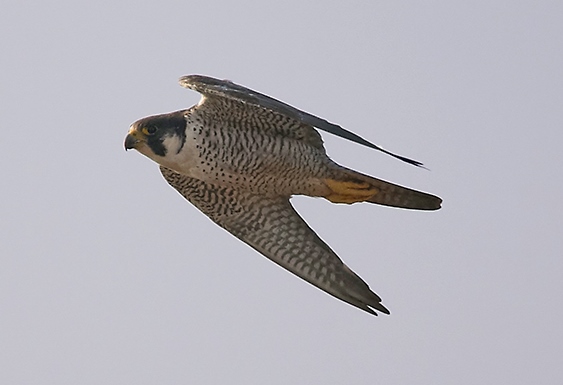
Peregrine, Summer Leys LNR, 27th September 2013 (Doug McFarlane)
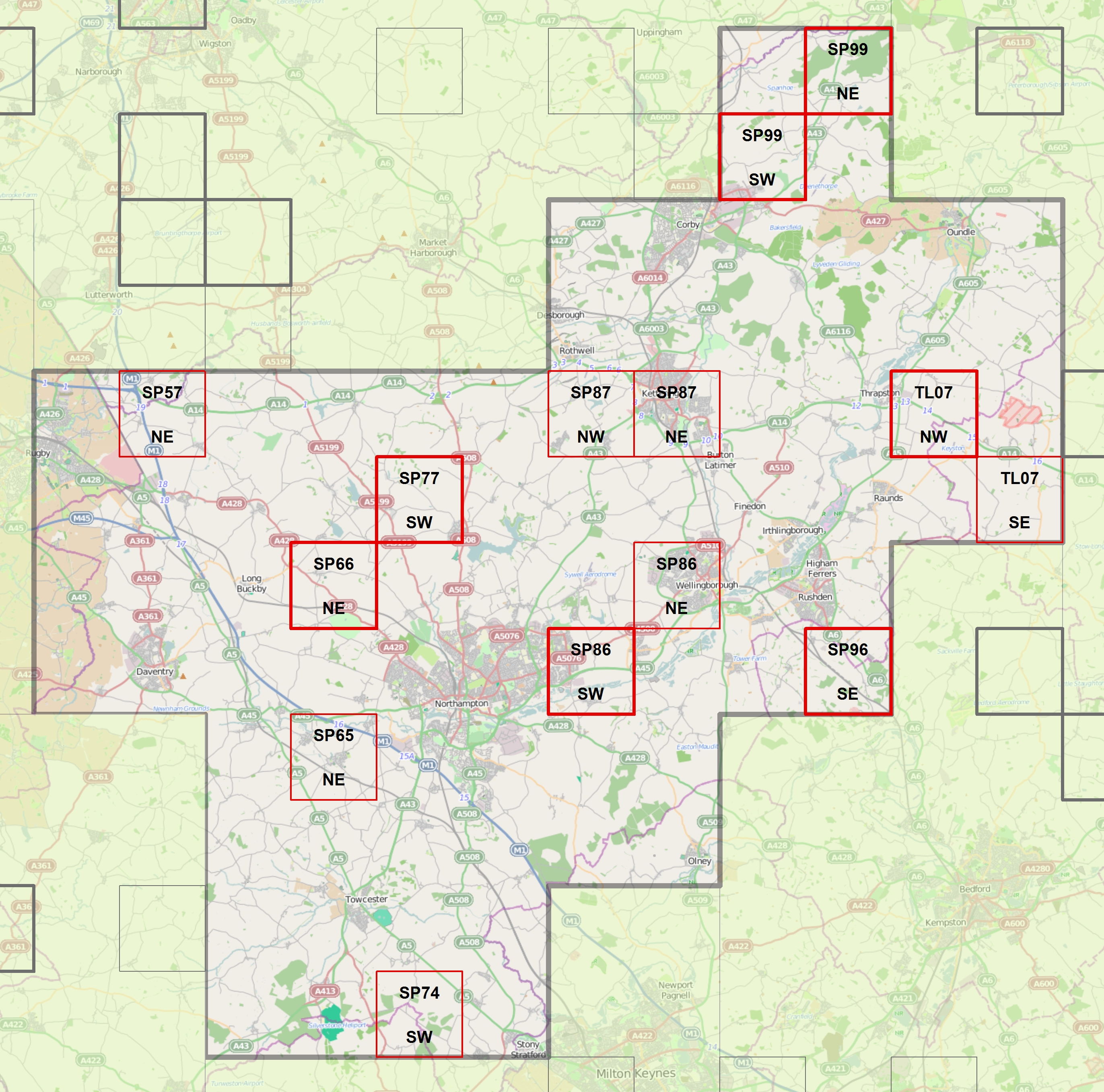
This spring the BTO is organising a nationwide Peregrine survey to record the number of occupied territories in the UK, Isle of Man and the Channel Islands. Details are on the BTO website here and they will be working closely with established groups that study raptors to complete a comprehensive survey of all known territories. Another aspect of the survey is checking for possible breeding in randomly selected 5×5 km squares and there are 14 of these squares in Northants (below).
So far volunteers are lined up to cover 10 of these squares – the remaining vacant squares are in the centre of the county:
SP77_SW
Cottesbrooke, Creaton, Brixworth
SP66_NE
East Haddon, Holdenby, Gt Brington
SP86_NE
Wellingborough
SP86_SW
East Edge of Northampton, Ecton
The aim will be to search each square for suitable habitat (e.g. quarries, pylons, industrial buildings, church towers) and to look for the presence of Peregrines. Apparently in some regions Peregrines will also nest in trees. Three visits to the square are recommended between March and mid-July. The first and second visits will be used to establish the presence or otherwise of Peregrines and the third visit to look for evidence of breeding success or as a further check for Peregrine presence in squares in which Peregrine detection may be particularly challenging.
Volunteers are required for the four remaining squares. If you would like to help, then please contact Barrie Galpin, BTO Regional Representative for Northants, 15 Top Lodge, Fineshade, Corby NN17 3BB barrie.galpin@zen.co.uk
I am delighted to be taking part in the Champions of the Flyway bird race in Israel, which is being staged by The Society for the Protection of Nature in Israel (BirdLife’s national partner in Israel) and is a BirdLife International Migratory Birds & Flyways Programme initiative. The race will take place on April 1st 2014, starting and ending in Eilat. In the course of just 24 hours, a number of international teams will compete to see the highest number of bird species in southern Israel. This is not just a bird race, but a massive fundraising campaign to support conservation work and, while the race will be fun, the goal is serious – to raise funds to help BirdLife International tackle the illegal killing of birds in southern and eastern Europe.
I am a member of the Birdwatch-BirdGuides Roadrunners team and we are looking for sponsors/donors to support our fundraising efforts. Our team’s target is to raise £5000. If you care about the perils which are faced by ‘our’ birds as they migrate to and from the UK and elsewhere in northern Europe then please consider visiting our donation page and pledging even a small amount. Many thanks for your kind support!
I received a nice letter today from Jan Pickup, daughter of AJB (‘Tommo’) Thompson, who was an eminent Northamptonshire birder in the latter part of the last century. Jan and husband, Tony, had kindly given me some literature which formerly belonged to AJBT and Jan had posted me a ‘missing’ bird report from 1969 – the very first edition of the Northamptonshire Bird Report, the forerunner of today’s annually produced Northants Birds.
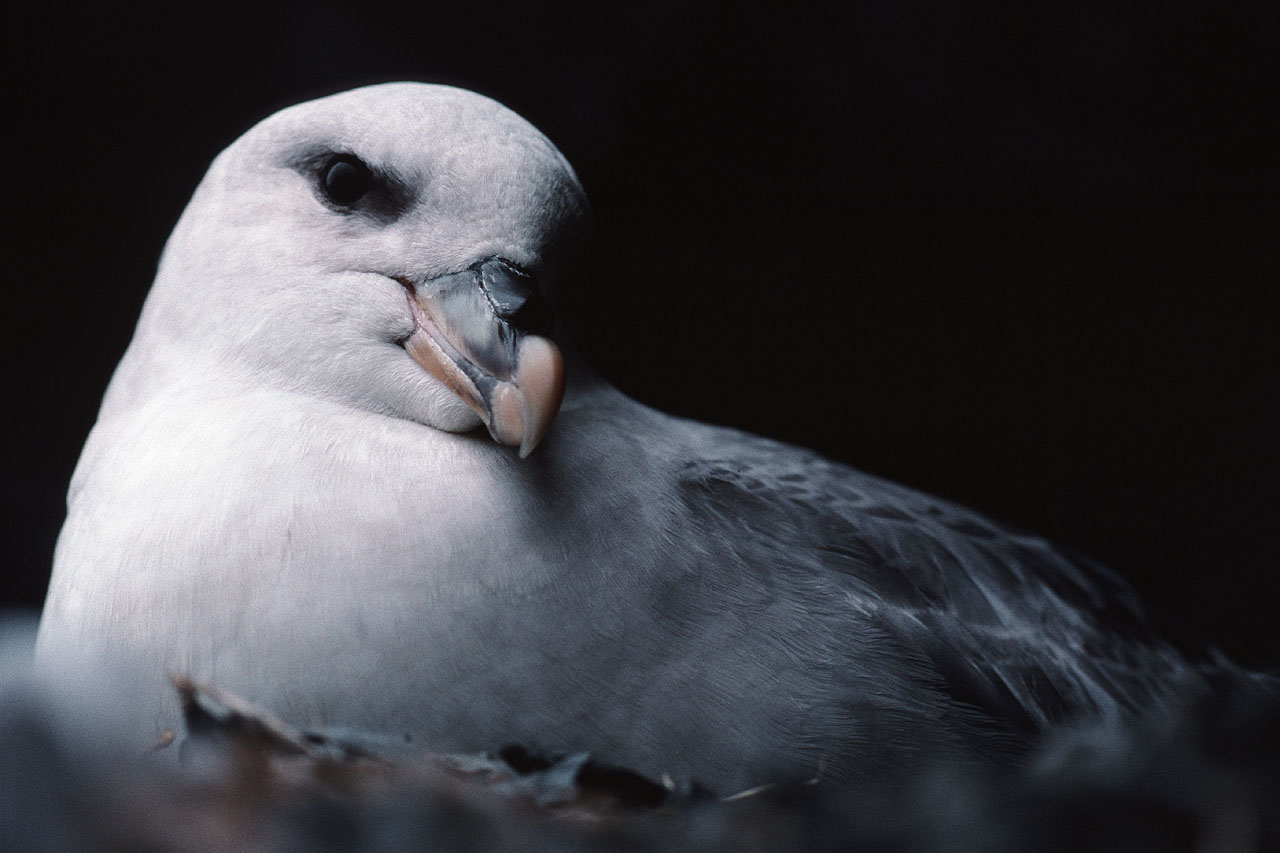
In her letter she drew my attention to a note relating to an interesting local encounter with a Fulmar in May 1961, published by Laurie Taylor in British Birds in 1962, a transcript of which is reproduced below. What was not published, however, was the personal account from the Thompson family perspective, which Jan remembers well and recounts as follows:
Laurie lived in Bush Hill, quite close to us in The Headlands and came round and knocked on the door. He said to Dad, “I’ve got something to show you.” Dad said, in protest, “I can’t come now, I’m listening to Beethoven’s Seventh.” Laurie said “Blow Beethoven, I’ve got a new breeding record for the County.” So Dad went!
And this is what it was all about …
Fulmar laying egg in Northamptonshire garden. – On 27th May 1961, I was told by my aunt that a “sea-gull” had laid an egg in her garden in Northampton and that the bird was still there. Very dubiously I investigated and to my astonishment I was confronted with a Fulmar (Fulmarus glacialis). I captured the bird and released it at Pitsford Reservoir, Northamptonshire that evening. It settled on the water to preen and bathe before flying off in a southerly direction. The egg, which is now in my possession, was also seen by A. J. B. Thompson and M. Goodman. It is a typical Fulmar’s egg, white with a rough surface and slightly pyriform, measuring 73 mm. x 53 mm. It seems extraordinary that a Fulmar in breeding condition should be so far inland during the nesting season, but this hardly constitutes a breeding record for Northamptonshire! British Birds (1962) Vol 55: 164
The relentless, fast moving depressions from the Atlantic continued to batter Britain while local floodwater levels continued to rise in the Nene Valley and elsewhere. The first signs of early spring passage were evident on 10th.
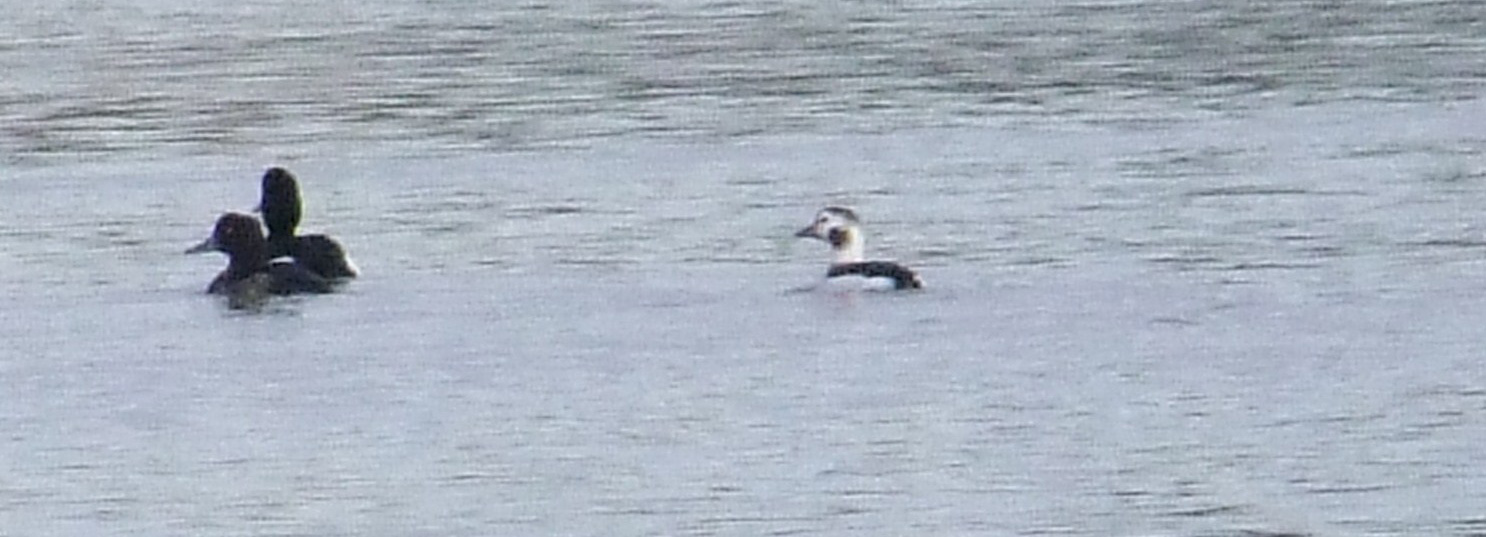
Great weather for ducks, although nothing new was found during the period. Four Pintail were at Pitsford Res on 11th, the same site continuing to host at least two Red-crested Pochards and the drake Scaup until at least 9th, while the Earls Barton Long-tailed Duck had moved to Clifford Hill GP by 10th and the long-staying individual resurfaced at Thrapston GP’s Town Lake on 13th.
Long-tailed Duck, Clifford Hill GP, 10th February 2014 (Doug Goddard)
All three sawbills were available this week, with a maximum of eight Smew at Pitsford Res on 8th, one at Earls Barton GP on 9th, two at Sywell CP on 12th and five at Ravensthorpe Res the following day, while a Red-breasted Merganser reappeared at Stanford Res between 8th and 12th and Goosanders were again reported from just four localities, with a maximum of thirteen at Stanford Res on 8th.
The wintering juvenile Great Northern Diver remained at Pitsford Res all week as did at least one Great White Egret while two remained at Summer Leys/Earls Barton GP until 8th. Raptors continued to prove scarce with single Merlins at Pitsford Res on 8th and near Sulgrave on 11th and Peregrines were seen at Blueberry Farm, Maidwell and Ravensthorpe Res on 8th, Summer Leys on 9th and at Kingsthorpe LNR and Harrington AF on 13th. Scarce waders were limited to single Jack Snipes at, Stanford Res, Pitsford Res and Hollowell Res on 8th and again at the latter site on 13th.
Similarly, scarce gulls comprised adult Mediterranean Gulls at Pitsford Res on 8th, 11th and 14th, an adult and a first-winter in the gull roost at Boddington Res on 8th and 10th and a second-winter at Daventry CP on 9th with an adult Glaucous Gull in the Ise Valley near Wellingborough on 8th. The 10th produced adult Kittiwakes at Stanford Res and Boddington Res – part of a series of early storm-driven migrants inland, on their way back to breeding areas further north.
Kittiwake, Stanford Res, 10th February 2014 (John Moon)
The only Chiffchaff this weekwas one at Stortons GP on 10th, while six wintering Central EuropeanBlackcaps were in gardens in Northampton, Sywell, Kettering and Wellingborough, a new Mealy Redpoll was found at Daventry CP on 11th and Bramblings were present at Harrington AF, Hanging Houghton, Hollowell Res and Stanwick GP.
The week remained mild as an incessant onslaught of depressions in off the Atlantic brought more rain and gale force winds. Few new birds were found locally.
Escapes maintained the status quo this week with the Ross’s Goose still at Clifford Hill GP on 2nd, the long-staying Bar-headed Goose at Pitsford Res still on 4th and the female Wood Duck on the River Nene in Northampton on 1st. Dapper dabblers were represented only by a drake Mandarin at Kettering Leisure Village Lake on 4th and eight Pintail at Ringstead GP on 6th with twenty over Earls Barton GP on the same date. The only Red-crested Pochards reported this week were single drakes at Ringstead GP on 4th and Ditchford GP on 7th and the only Scaup a drake at Pitsford Res on 3rd and 4th,
Drake Scaup, Pitsford Res, 3rd February 2014 (Doug Goddard)
while the Long-tailed Duck remained in residence on Mary’s Lake at Earls Barton GP all week, being joined there by a drake Smew for the same duration. The only other Smew were a ‘redhead’ at Clifford Hill GP on 2nd and three (one drake) at Pitsford Res all week, while Goosanders were reported from four localities, with a maximum of sixteen at Boddington Res on 7th. Unfortunately, the cat was out of the bag with regard to the pair of Ruddy Ducks wintering in Pitsford’s Scaldwell Bay, the government’s special boat squadron was duly despatched and it seems likely that these two met their fate on the afternoon of 4th.
Drake Ruddy Duck, Pitsford Res, 2nd February 2014 (Simon Hales). The last of the few.
The wintering juvenile Great Northern Diver remained on station at Pitsford Res all week and the same locality continued to host at least one Great White Egret while two remained at Summer Leys/Earls Barton GP throughout the period.
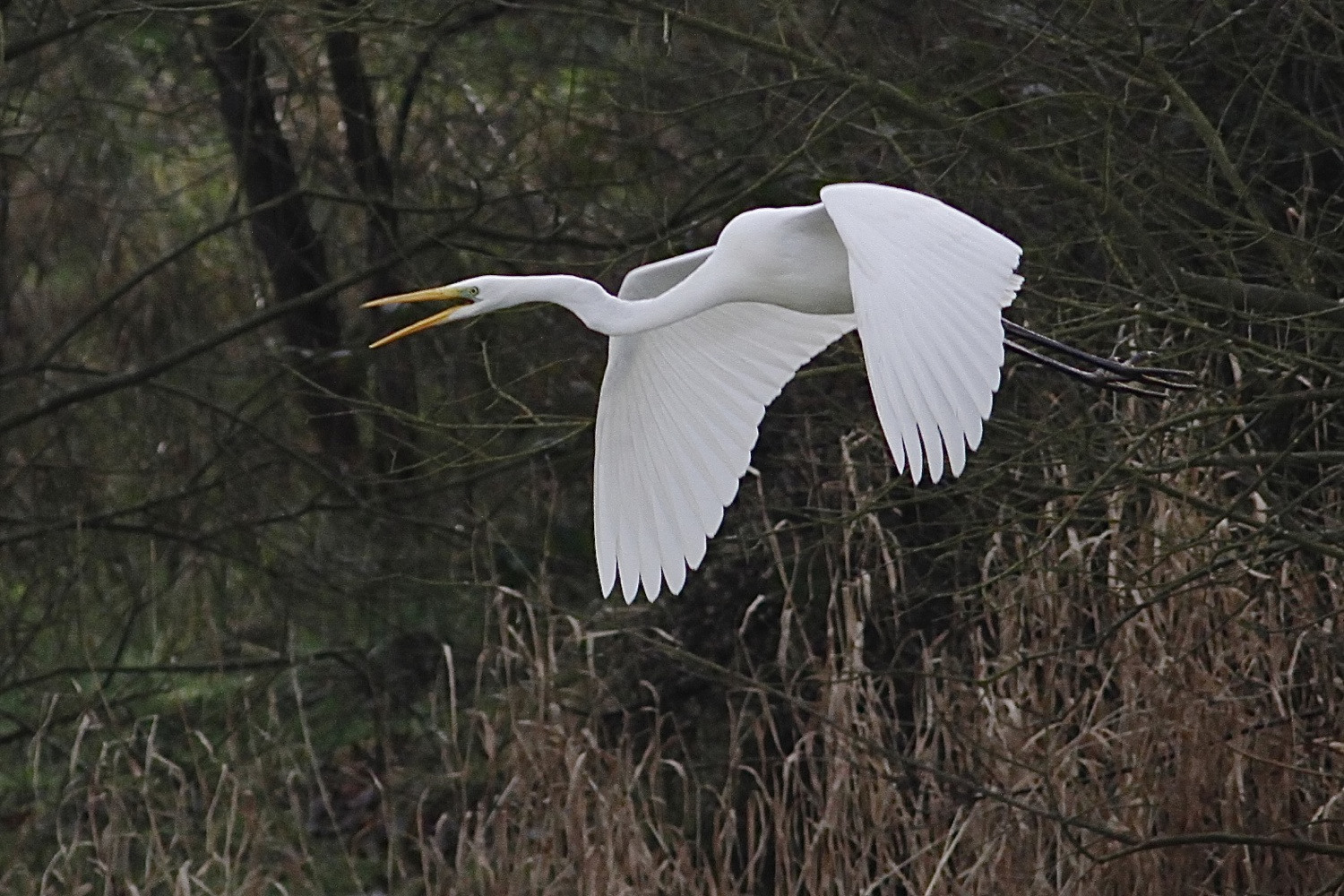
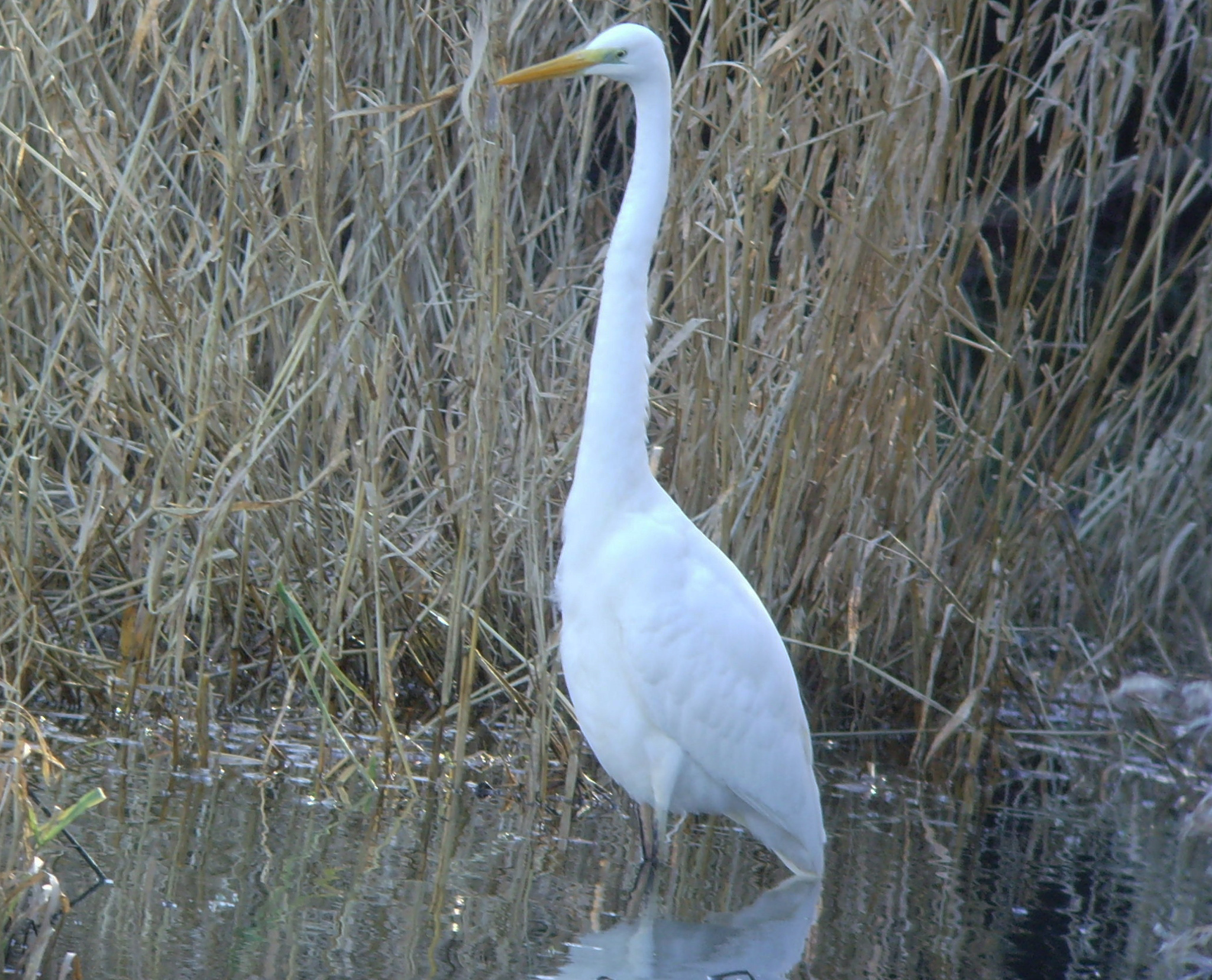
Great White Egret, Pitsford Res, 4th February 2014 (Dave Jackson)Great White Egret, Pitsford Res, 4th February 2014 (Geof Douglas)
Raptors were again scarce with a male Merlin over fields north of Badby on 7th and single Peregrines at Summer Leys on 2nd, Kingsthorpe LNR on 4th and Blueberry Farm, Maidwell on the same date and again on 7th, while a pair was present at an undisclosed locality throughout the week.
Waders hit an all-time low this week with just three Redshanks at Clifford Hill GP on 2nd and a Green Sandpiper at Pineham, Northampton on the same date, while approximately two thousand Lapwings at Stanwick GP on1st was an encouragingly high count.
Similarly, scarce gulls were poorly represented by just two Mediterranean Gulls – an adult and a first-winter – in the gull roost at Boddington Res on 3rd and 7th, a juvenile Glaucous Gull flying over Wellingborough on 1st and an adult in the usual flooded field in the Ise Valley there on 3rd.
Male Central European Blackcap, Northampton, February 2014 (Stuart Mundy)
The only Chiffchaff this weekwas one at Pitsford Res on 3rd, while five wintering Central EuropeanBlackcaps were in gardens in Northampton, Kettering and Wellingborough, up to two Mealy Redpolls were in alders at Daventry CP between 3rd
Mealy Redpoll, Daventry CP, 7th February 2014 (Bob Bullock). A striking individual at the easy to identify end of the range of variation in this species.
and 7th and single-figure counts of Bramblings were made at Summer Leys, in the Brampton Valley and at Harrington AF which hosted the week’s maximum of eight on 1st.
Brambling, Summer Leys LNR, 2nd February 2014 (Douglas McFarlane)
A mild start to the week included an unseasonal thunder & lightning storm on 25th, before turning briefly colder under the influence of an easterly airstream mid-week.
Escapes featured heavily this week with the Ross’s Goose again at Clifford Hill GP on 27th, the long-staying Bar-headed Goose at Pitsford Res still on 31st and the new kid on the block – a female Wood Duck – on the River Nene in Northampton all week.
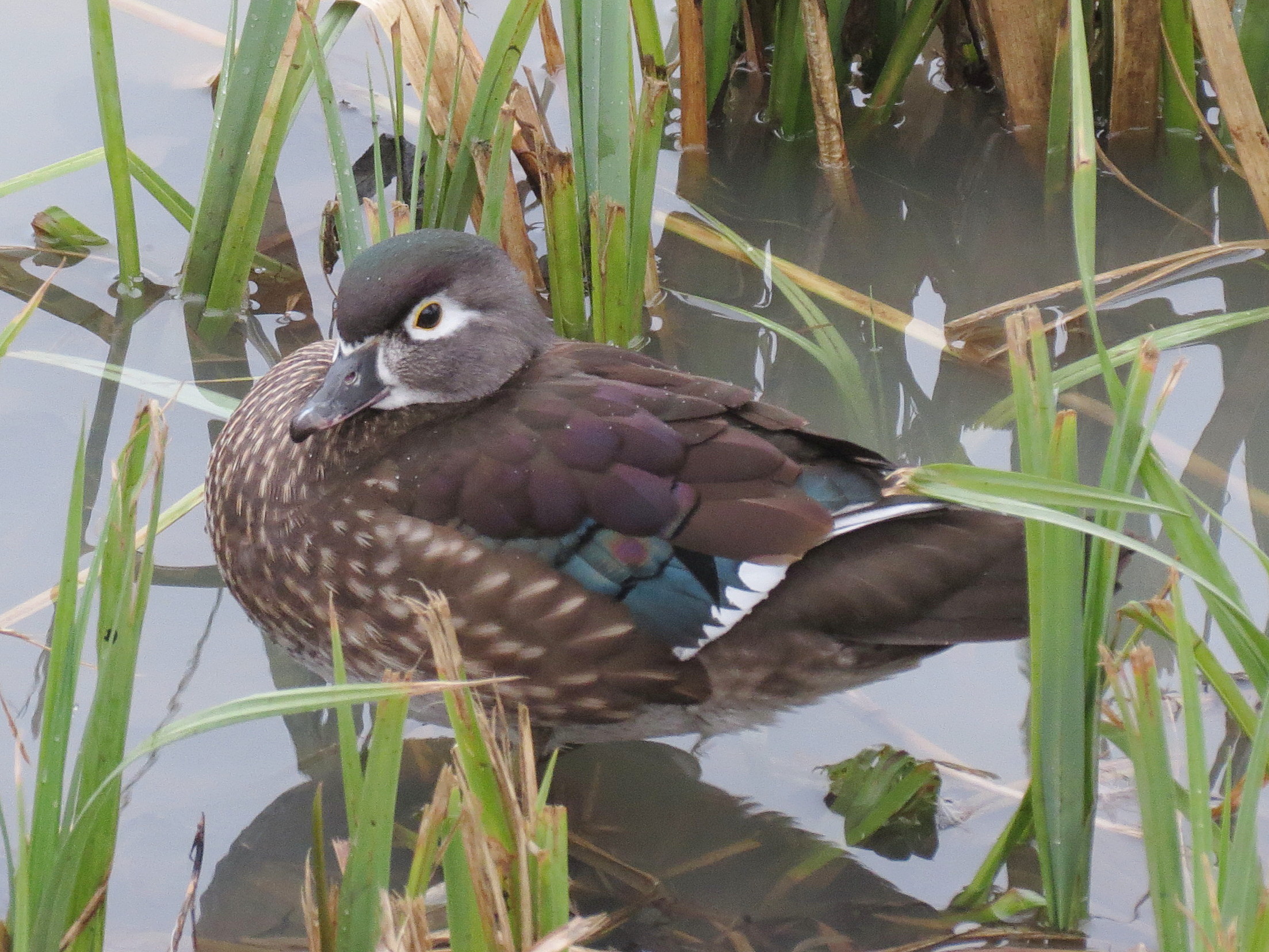
Adult female Wood Duck, Northampton, 31st January 2014 (Martin Dove)
Otherwise, six Red-crested Pochards were at Stanford Res on 25th, while six remained at Pitsford Res until at least 29th with a Scaup at the same locality on 29th and 31st and the Long-tailed Duck remained at Earls Barton GP on 25th. Smew were reported from three localities, with three at Ravensthorpe Res on 25th, the ‘redhead’ still at Clifford Hill
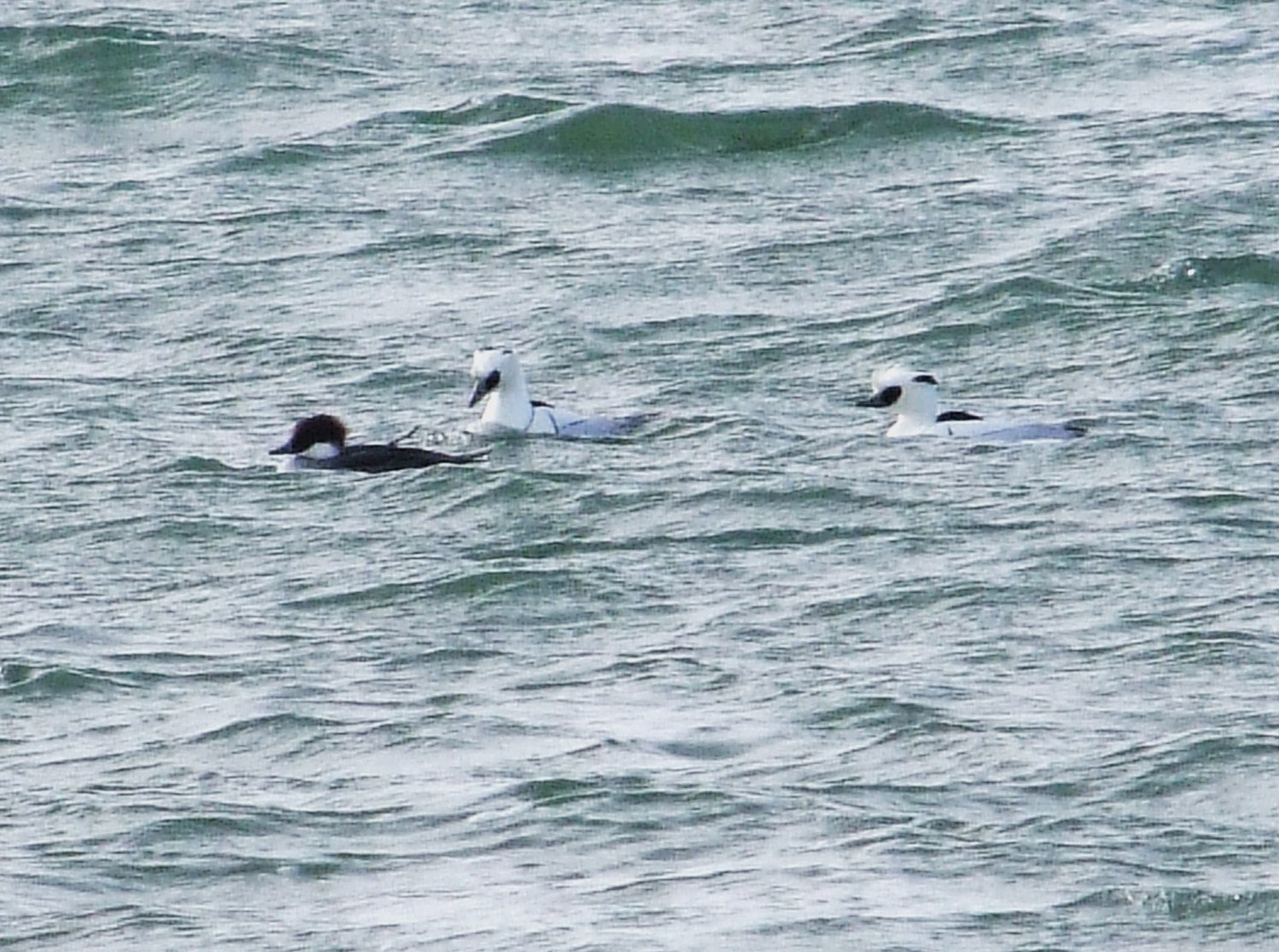
Smew, Pitsford Res, 27th January 2014 (Douglas Goddard)
GP on 26th-27th and up to six at Pitsford Res all week, while a ‘redhead’ Red-breasted Merganser at Stanford Res on 25th was noteworthy and Goosanders were reported from five localities, with a maximum of thirty-five at Clifford Hill GP on 26th.
The wintering juvenile Great Northern Diver was still at Pitsford Res on 31st and it appears that there are at least five Great White Egrets wintering in the county: two at Ditchford GP, one or two at Summer Leys/Earls Barton GP and two at Pitsford Res with one also seen in flight over Stanwick GP on 30th. Raptors were in short supply with just one Peregrine at Pitsford Res on 25th and a Merlin was at Denton the following day.
The week’s waders included the two Oystercatchers at Stanwick GP all week, approximately one thousand Golden Plovers at Clifford Hill GP on 27th with the same number estimated at Stanwick GP on 30th and smaller numbers at three further sites. A count of approximately seventy-eight Common Snipe at Pitsford Res on 25th was one of the highest totals there in recent times, five Dunlins visited Stanwick GP on 30th, where twelve Redshanks were counted the previous day – with two at Pitsford Res on 25th and three at Clifford Hill GP on 27th – and a Green Sandpiper was at Pitsford Res on 25th.
White-winged gulls were again very much in evidence this week but an albino Black-headed Gull at Ditchford GP on 29th was, well, all white. The flooded field between Wellingborough and Sidegate Landfill produced three Caspian Gulls with a first-winter on 25th, an adult on 26th and a second-winter on 28th, while a second-winter was at Stanwick GP on 29th and three were there the following day. The latter site hosted two Yellow-legged Gulls on 30th, while the Wellingborough flood produced two adults on 26th and a second-winter on 28th, the same site hosting an adult Iceland Gull on 26th and a second-winter Glaucous Gull on 25th and an adult on 28th. A different adult – along with a juvenile – visited the pre-roost at Stanwick GP on 29th and a juvenile was there again the following evening.
A Chiffchaff was at Pitsford Res on 25th and two were found at Stanwick GP on 29th, while at least seven wintering Central EuropeanBlackcaps were scattered among gardens in Duston, Spratton, Kettering and Wellingborough and six Bramblings remained at Harrington AF during the week.
Found by Jack Douglas, this female Wood Duck has been present along an overgrown stretch of the River Nene, between B&Q and Carlsberg, Northampton, for approximately two weeks and is still present today.
Adult female Wood Duck, Northampton, January 2014 (Mike Alibone). The iridescent blue extending on to the third row of coverts ages this as an adult.
Although common in the USA, where it is also an east coast migrant south to Mexico, Wood Duck is kept commonly in captivity and the many documented records from UK counties refer overwhelmingly to escapes but with individuals appearing in Iceland, the Azores and Canary Islands the potential for transatlantic vagrancy should not be dismissed.
As with most presumed escapes there is always the nagging fear that this might actually be a wild bird 🙂
The week started mild and ended more or less on the same note, with a series of uneventful depressions bringing showers from the west intermittently throughout the period.
The wandering escaped Ross’s Goose visited Clifford Hill GP on 20th and nearby Hardingstone GP on 22nd, while two Egyptian Geese remained at Ditchford GP on the same date and another was at Barnwell CP on 19th, when the first three Shelducks of ‘spring’ returned to Summer Leys LNR. The only Pintail this week were two at Stanwick GP on 22nd and the same site produced a striking bird considered to be a hybrid drake Baikal Teal x Eurasian Teal on the same date.Four Red-crested Pochards visited Summer Leys on 20th, the drake Scaup remained at Ditchford GP until at least 22nd as did single Long-tailed Ducks at Thrapston GP until 19th and Earls Barton GP until 24th. The three reports of Smew this week consisted of five at Pitsford Res on 18th, one at Clifford Hill GP on 20th and two at Ditchford GP on 22nd and Goosanders were reported from six localities, with a maximum of seventeen at Hardingstone GP on 22nd.
The wintering juvenile Great Northern Diver was still at Pitsford Res on 22nd but it has now become difficult to assess how many Great White Egrets are now wintering in the county, with just one reported from Pitsford between 18th and 22nd, singles at Summer Leys LNR on 19th, 21st and 24th with two there on 20th and two at nearby Ditchford GP on 18th, 22nd and 24th with one there on 19th. Breaking the Peregrine monopoly, a Merlin was seen at Thrapston GP on 19th but Peregrinescontinued to outnumber with singles at Brixworth on 18th, Blueberry Farm, Maidwell on 20th, 22nd and 24th and at Ditchford GP on 22nd.
The week’s few waders included two Oystercatchers at Stanwick GP on 22nd, Golden Plovers at four sites, with a maximum exceeding five hundred at Summer Leys on 20th, a Green Sandpiper at Ditchford GP on 18th and 22nd and up to eleven Redshanks at Stanwick GP all week. A count of approximately one thousand Lapwings at Ditchford GP on 24th was noteworthy.
Scarce gulls were at a low ebb this week with an adult Mediterranean Gull visiting Daventry CP on 24th, single adult Caspian Gulls at Stanwick GP on 22nd and near Sidegate Landfill on 24th, a juvenile Glaucous Gull visited Broadholme Sewage Works (Ditchford GP) on 24th and adult Yellow-legged Gulls were in the same area on 22nd and 24th. A probable juvenile Kumlien’s Gull at Ditchford GP on 22nd will be only the second county record if it is eventually pinned down and the identification confirmed.
Great Grey Shrike, Lowick, 18th January 2014 (Alex Holt)
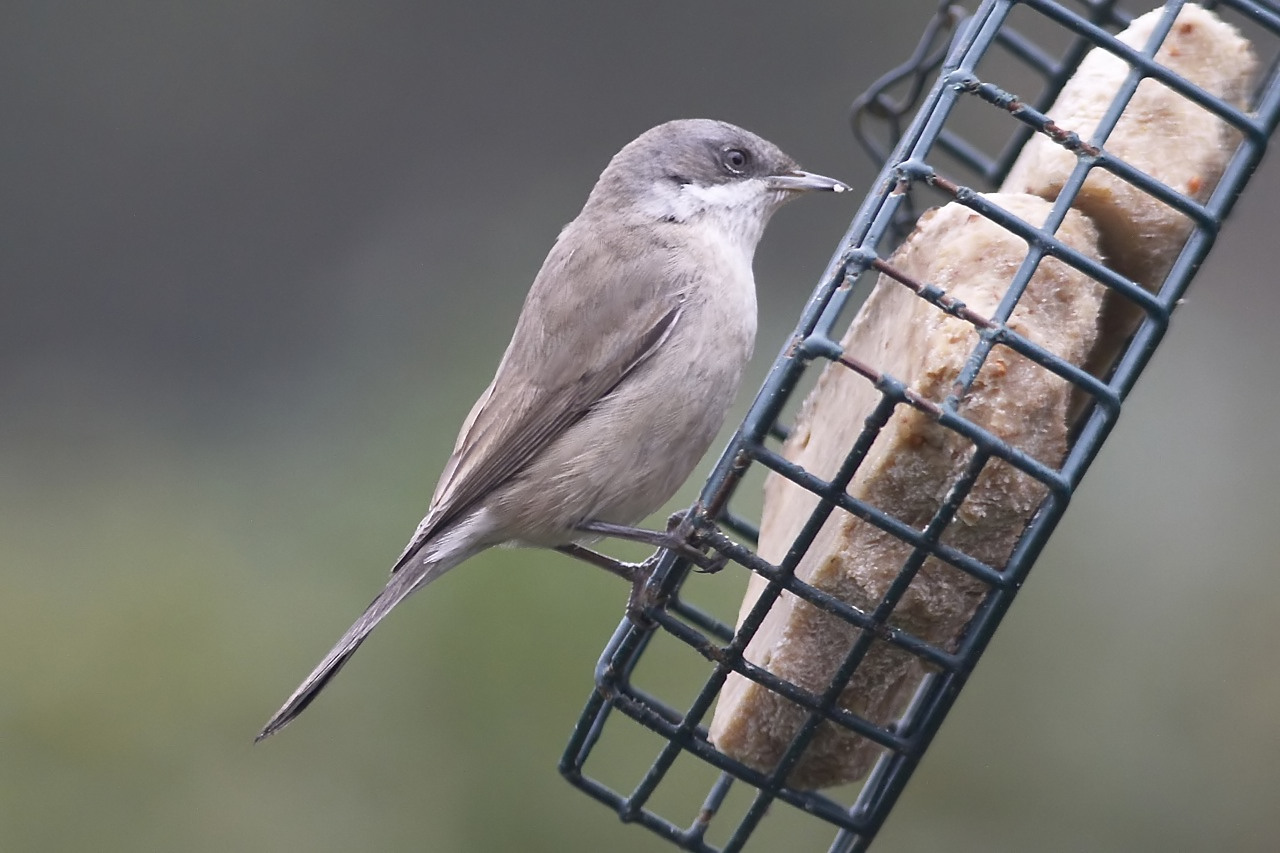
Last week’s Great Grey Shrike remained near Lowick until at least 23rd and ten Chiffchaffs were counted at Ditchford GP on 22nd, while wintering Central EuropeanBlackcaps included two in a Wellingborough garden and singles in Irthlingborough and Northampton all week. The ‘Eastern’ Lesser Whitethroat, discovered in a Northampton garden last week, continued to visit feeders there intermittently until 22nd. Its subspecific identity has yet to be resolved, with some authorities favouring Central Asian halimodendri while others suggesting blythi as a possible candidate.
Eastern Lesser Whitethroat, Northampton 18th January 2014 (Dave Jackson)
An unconfirmed report of two Waxwings in a car park on Northampton’s Lodge Farm Industrial Estate on 24th remains just that, while the two wintering Stonechats continued their winter residence at Blueberry Farm, Maidwell all week, a Water Pipit was again at Ditchford GP on 24th and six Bramblings were at Harrington AF on 19th with one at Hanging Houghton on 22nd.
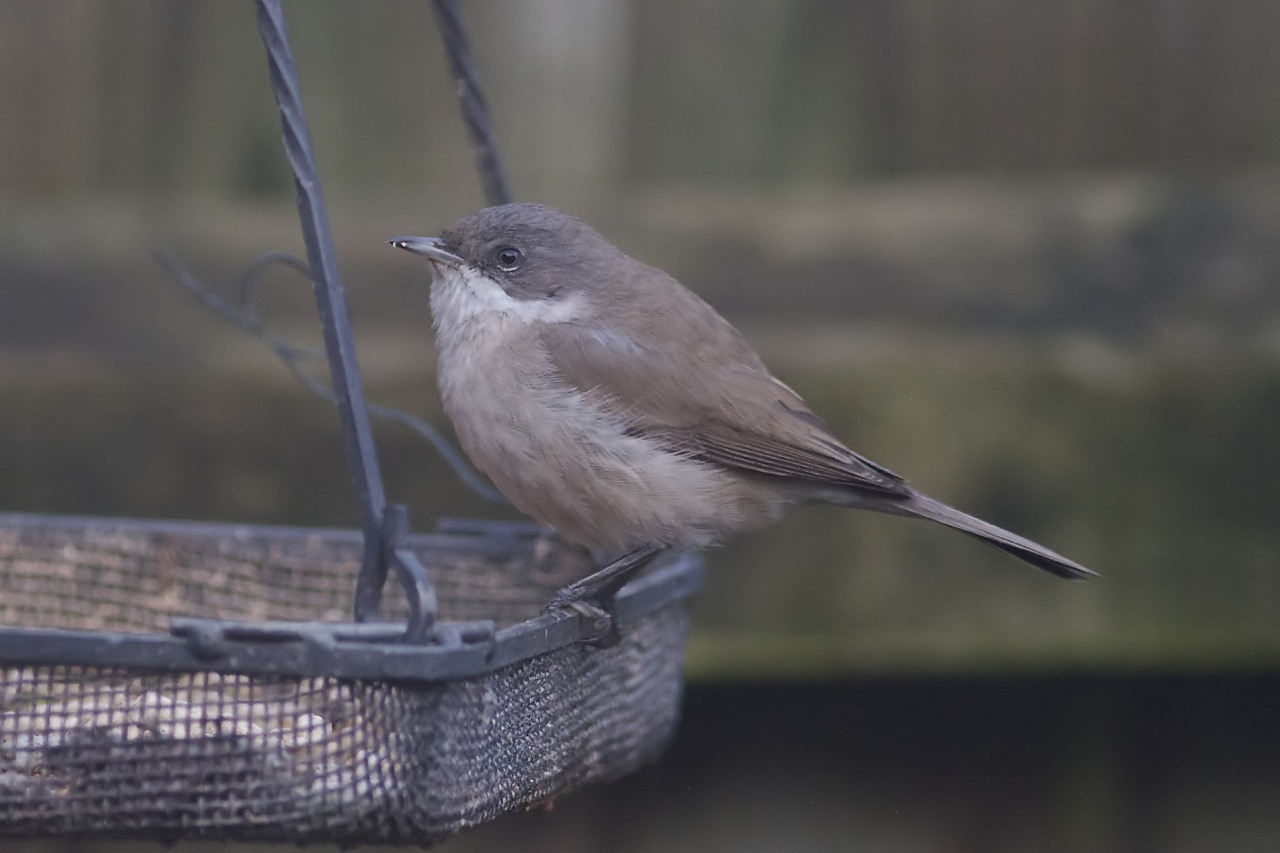
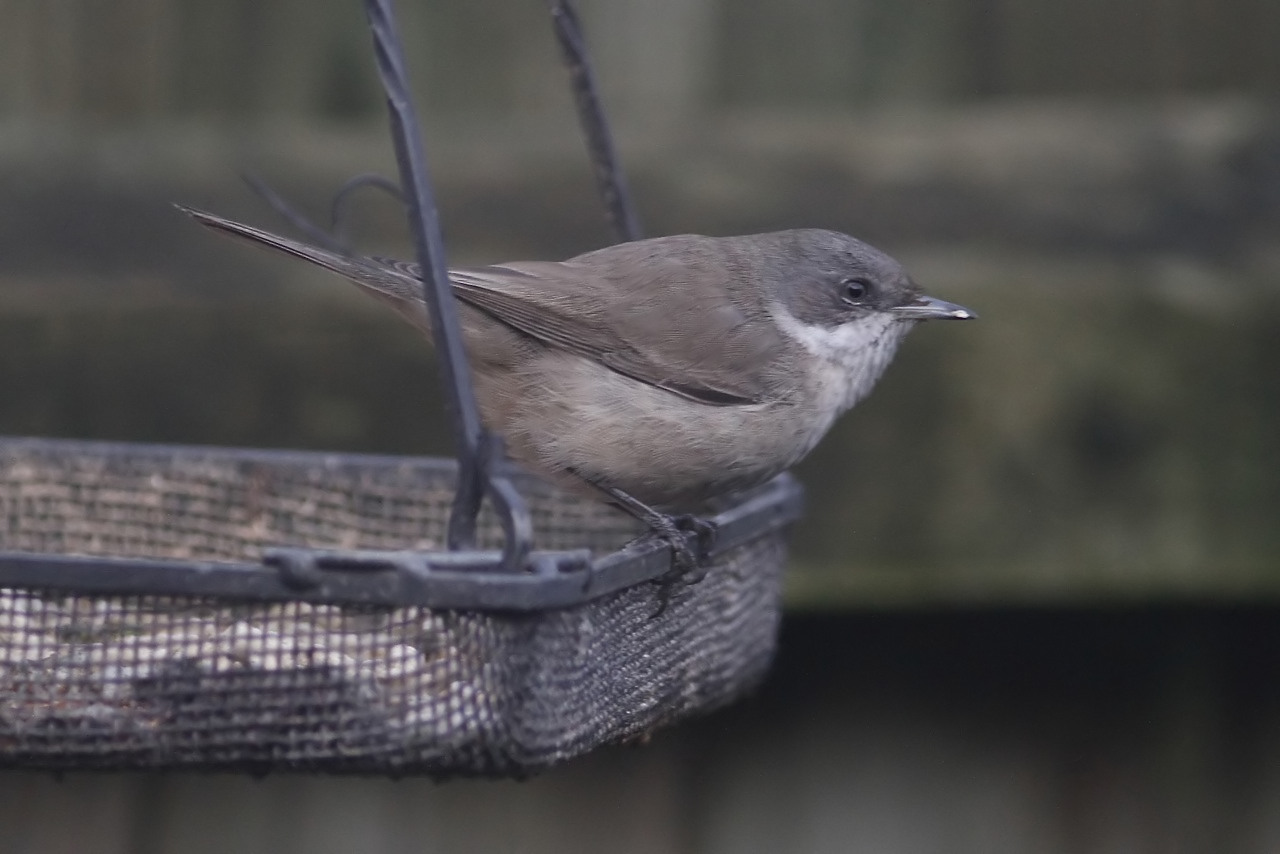
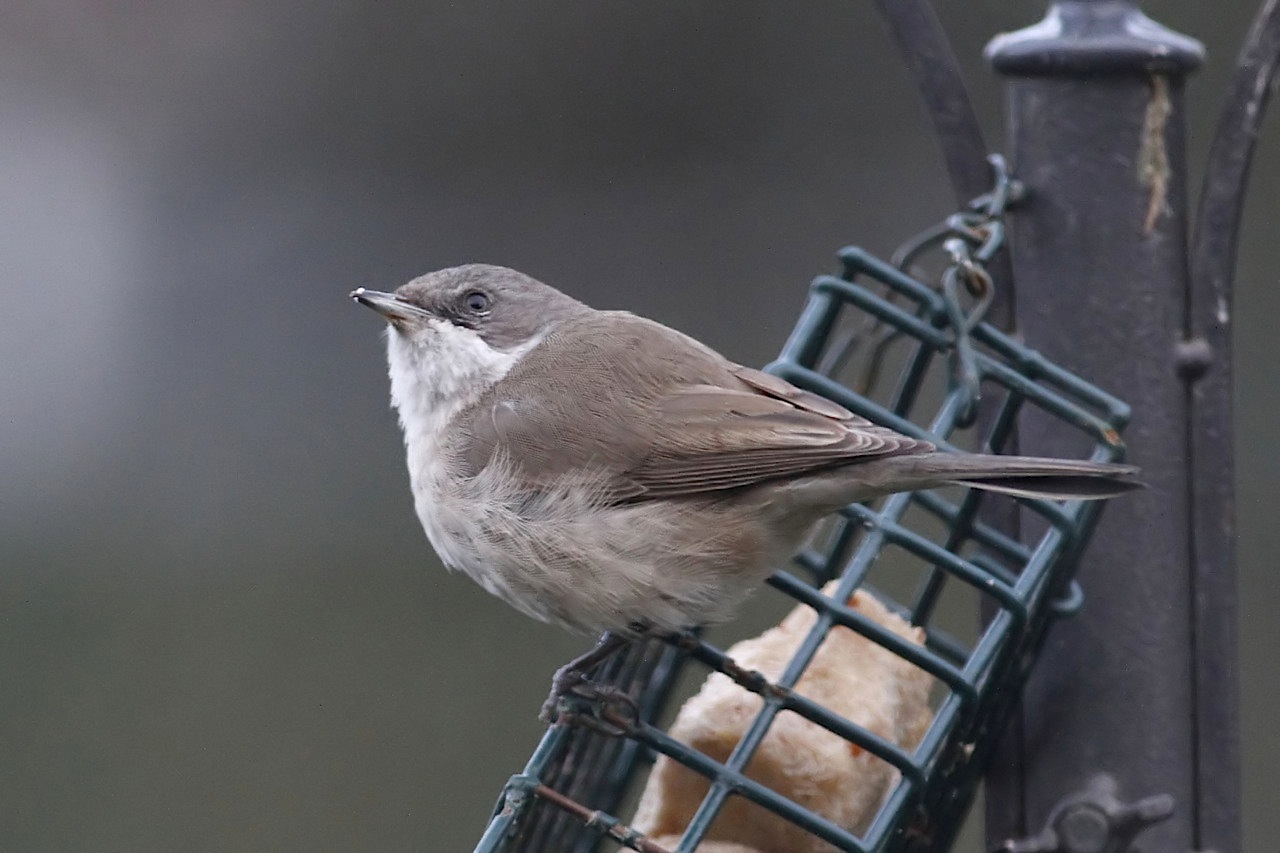
The wintering Lesser Whitethroat made sporadic appearances in Dave Jackson’s garden again today, being seen only briefly once in the early morning, again at 11.50 and then again at 15.10, after which it appeared on three more short occasions with the last at about 15.50, which was just long enough for Dave to capture some more images and for me to snatch some video.
Eastern Lesser Whitethroat, Northampton 18th January 2014 (Dave Jackson)
Eastern Lesser Whitethroat, Northampton 18th January 2014 (Dave Jackson)Eastern Lesser Whitethroat, Northampton 18th January 2014 (Dave Jackson)
Eastern Lesser Whitethroat, Northampton 18th January 2014 (Mike Alibone)
What a difference a day makes! The lighting was different today and the bird looked much, much browner – sandier even – than yesterday, adding weight to its likely eastern origin. Thinnish bill, very brown, almost ginger-toned, tertials and primary projection possibly on the short(ish) side. Still unable to get a view of the outer tail feathers to assess the extent of white. This bird could also appear quite long-tailed, a little pinched in toward the base, giving it almost spoon-like appearance at times.
After some research it’s now looking pretty good for halimodendri (Central Asian Lesser Whitethroat), a view forwarded by Gary Pullan, who also saw the bird today. Its pro-‘eastern’ features include brownish nape merging into grey of crown, sandy-brown upperparts, minimal dark mask, white throat contrasting with noticeably peachy-buff flanks and breast and apparently shortish wings, with the primary projection c.50% of the length of the tertials (nominate curruca said to be c.70%). But it could still be Siberian blythi …
Thanks once again to Dave Jackson for more images. I would welcome any comments or thoughts on the bird’s racial identification.









 Northants birds